Afghan data leak: how selective state secrecy and cover-ups can harm civilians

Source: The Conversation – UK – By Victoria Canning, Professor of Criminology, Lancaster University

In 2022, somebody in the UK Ministry of Defence (MoD) mistakenly shared a spreadsheet containing the personal information associated with 18,714 Afghans and their family members. This data breach, and the efforts to cover it up, raises serious questions about state secrecy, blame-shifting and accountability.

After discovering the mistake in August 2023, the government covered up their spectacular error with an unprecedented injunction “contra mundum (against the world). This “superinjunction” prohibited journalists and others in the know – like one author of this article (Professor Sara de Jong) – from reporting the breach and even the very existence of the injunction.

When the superinjunction was finally lifted on July 15, John Healey, the defence secretary, revealed that the MoD had operated a secret resettlement scheme for Afghans whose data had been leaked at risk from the Taliban. To date, 900 Afghans and 3,600 family members have been flown to Britain or are currently in transit via this scheme. A further 600 people and their immediate family members are still in Afghanistan, being promised evacuation. Many thousands of others on the list were already resettled in the UK via two other official routes.

The spectacular nature and impact of this data leak should not distract from the fact that it is not entirely unique. The personal data of Afghan applicants had already been exposed by the MoD in an earlier series of data breaches in September 2021.

The superinjunction is only the latest in a string of silences that have prevented accountability on Afghanistan and other issues to do with national security.


Want more politics coverage from academic experts? Every week, we bring you informed analysis of developments in government and fact check the claims being made.

Sign up for our weekly politics newsletter, delivered every Friday.


In the wake of the dramatic Nato withdrawal from Afghanistan in August 2021, the foreign affairs select committee was dependent on whistleblowers to get to the truth about then prime minister Boris Johnson’s prioritisation of an animal charity for evacuation, over others at acute risk. Political accountability over the chaos of the evacuation was compromised by the foreign office who, according to then committee chair Tom Tugendhat, “repeatedly has given us answers that, in our judgement, are at best intentionally evasive, and often deliberately misleading”.

The Ministry of Defence – including Healey in his statement on the data breach – routinely cites the deaths of 457 British soldiers as the “costs of war” in Afghanistan. But the department only released the data on how many Afghan interpreters died alongside them after a freedom of information request by Sara de Jong. The MoD, even after several freedom of information Requests and appeals, refuses to provide further details about the circumstances of their deaths.

Even the latest shocking revelations didn’t end with the lifting of the superinjunction. A secondary injunction was lifted on July 17, revealing that the leaked list also contained the identities of dozens of British officials, including spies and special forces.

Selective secrecy

In the wider context of government leaks and secrecy, critical questions need to be asked about which secrets are kept, by whom and why.

In his judgement lifting the superinjunction, Mr Justice Chamberlain credited media organisations and individual journalists involved with the fact that they had kept the leak confidential. Like Sara, some had become aware of the breach several months before Healey (the then-shadow defence secretary was informed in December 2023). But all kept quiet to keep Afghans at risk safe, not to cover up their own errors.

The government invests in secrecy when it also has its own embarrassment to hide, whether it is an extraordinary superinjunction or secrecy about the prioritisation of a pet charity during the Afghanistan evacuation.

Appeals to national security routinely obstruct media, legal and public access to information to hold the government to account. Meanwhile, many Afghans are left wondering why their and their loved ones’ data was on a spreadsheet that could be emailed around with a click of the wrong button.

Effects on Afghans

The consequences of the cover-up will be felt most acutely by Afghans – those on the leaked list still waiting for evacuation, including family members of Afghans already in the UK, whose own presence may be complicated further by anti-immigration sentiment.

Following the revelations, Healey announced that the secret relocation scheme was now closed, following the sudden decision to close the two official Afghan resettlement schemes.

The decision to shut down the two publicly known resettlement schemes, he claimed, was based on “policy concerns about proportionality, public accountability, cost and fairness”, as well as a commissioned report on the impact of the leak.

He defended his decisions saying that “the taxpayer should be paying £1.2 billion less over the next few years, and that around 9,500 fewer Afghans will come to this country”. In the context of ongoing anti-immigration rhetoric, the mention of costs combined with refugees is as unsurprising as it is inflammatory.

On the day of announcement, affected Afghans were sent a notice by the MoD and a link where they could find out if their data had been compromised. The email said very little about what the MoD could offer, and said a lot about what measures Afghans were now supposed to take: use a virtual private network, limit who can see your social media profiles.

Afghans unlucky enough to be Afghanistan were simply advised that, “If you are outside the UK, please do not try to travel to a third country without a valid passport and visa. If you do so, you will be putting yourself at risk on the journey, and you may face the risk of being deported back to Afghanistan”.

It is almost impossible for Afghans to travel legally without international assistance. And, since the Taliban are not recognised as a legitimate government, embassies are closed for citizens to even obtain legal travel documentation.

Given that the British government recognises the real risk of rights violations in Afghanistan, as well as the ongoing assault on women’s rights by the Taliban, it seems contradictory – and a remarkable abdication of responsibility – to close routes to safety.

The Conversation

Victoria Canning has received funding from UKRI and British Academy.

Sara de Jong has received funding from the British Academy (Mid-Career Fellowship 2022) for research on Afghan interpreters and their claims to protection and rights. She is the chair of the board of trustees of the Sulha Alliance CIO, which advocates for and supports Afghan interpreters employed by the British Army.

ref. Afghan data leak: how selective state secrecy and cover-ups can harm civilians – https://theconversation.com/afghan-data-leak-how-selective-state-secrecy-and-cover-ups-can-harm-civilians-261394

Lions rugby tour: why visual training, including juggling, can be a secret weapon in elite sports

Source: The Conversation – UK – By Zoe Wimshurst, Senior Lecturer of Sport Psychology, Health Sciences University
Odua Images/Shutterstock

Much of the pre-series attention on the 2025 British and Irish Lions tour of Australia has been on injuries, player omissions and personal rivalries.

One of those rivalries involves the Australian sensation Joseph-Akuso Suaalii facing Lions centre player, Sione Tuipulotu, with whom he had a fiery encounter in a match last year.

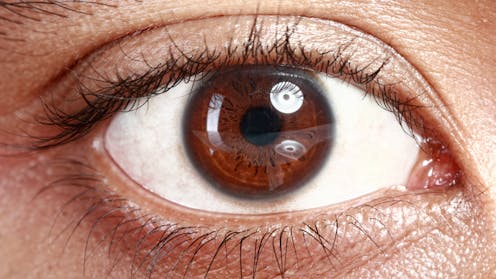
Suaalii only switched codes from rugby league to rugby union in 2023 and has just five international caps to his name. But despite his lack of union experience, he has been catching attention lately for more than just his powerful runs and physicality. In recent weeks, Suaalii’s unusual pre-match warm-up has also sparked curiosity, most notably, his use of juggling and peripheral awareness drills to prepare his visual system.

For many spectators, seeing a player showing off their juggling skills is more suited to a circus performance than international rugby. But there is science behind his bizarre approach. This preparation could be giving him an edge the Lions should fear.

Growing evidence

Visual performance in elite sport remains an under-applied area of sport science, yet the evidence for its effectiveness is growing.

My own research has found that a county cricket team which underwent six weeks of visual training improved their basic cricket skills more than a control group which did extra cricket skills exercises. This demonstrates that we need to be looking beyond the confines of the sport itself to bring about maximal performance.

Visual skill in sport is about more than just 20/20 vision. Each sport has its own specific demands, and rugby requires skills such as peripheral awareness, depth perception, rapid eye movement, reaction speed, dynamic visual acuity and eye-body coordination.

Joseph-Akuso Sua’ali’i .
Joseph-Akuso Suaalii.
wikipedia, CC BY-SA

Combining these visual skills will allow the most accurate information to be sent to the brain for processing – helping players to make the best decisions, even under intense pressure and high levels of fatigue.

By using exercises such as juggling, Suaalii is training several of these visual skills at once. Juggling requires excellent eye-body coordination, the use of the peripheral system and reaction speed. These are all skills which are also used in rugby for catching high balls kicked by opponents, reading attacking threats and spotting the movement of teammates and opposition players.

Juggling has also been shown to bring about positive structural changes in the human brain – particularly in areas linked to processing visual information – and integrating this with motor control.

This demonstrates that this relatively simple exercise can lead to improvements not only in the eyes, but also the brain. In rugby, the visual array will be constantly changing. A shift in the defensive line, a looping support run, a player slightly slow to recover from a ruck, or a spiralling high kick – the ability to spot, process and respond to these visual cues can be the difference between success and failure.

Suaalii is by no means the first rugby player to train his visual system. Former coach Clive Woodward famously brought in a visual performance coach to work with the England team – and they went on to win the 2003 Rugby World Cup.

I also worked with the Harlequins rugby team in the English Premiership as a visual performance coach. We won three trophies in my first three seasons with the team, which is known for free flowing, creative play. This style of play places extremely high demands on the players’ visual systems.

Lions test series

So what particular visual skills can you look out for over this Lions test series and how might they impact the outcome?

When defending close to their own try line, players should be scanning across the width of the pitch to ensure that they do not become outnumbered on either side of the field. Conversely, the attackers should be making rapid scans to quickly identify any mismatch (for example, a slow front row forward versus a swift and agile winger) they can take advantage of.

In these situations, players can often focus too much on the ball, allowing opposition players to craftily reposition themselves unseen. The best players will, wherever possible, be looking at everything, everywhere, all at once, improving their spatial awareness and enabling them to maintain an overview of the game in their minds.

To catch a kicked spiralling highball, a fullback or winger needs exceptional tracking ability and depth perception. Players in this situation are sometimes let down by “convergence issues”, where as the eyes track an object moving towards them, they can drift outwards or become misaligned. This can cause players to mistime their jump, or for the ball to hit their chest before being caught, wasting vital milliseconds. Training these convergence issues has been shown to bring about improvements in sports performance.

As a scrum-half is collecting the ball from a breakdown, they need quickly to scan the positions of teammates on either side of them, and be aware of the depth of the defensive line. Having this visual information will lead to better decisions and creating faster attacking opportunities.

A crunching tackle may seem like a purely strength-based skill. But to ensure it is both perfectly timed and legal, a defender must perfectly anticipate the speed and direction of the oncoming player. They can then use this information to precisely position their own body to impart their full momentum, while using their reaction speed to make last-second adjustments to ensure they do not put their opponent in danger.

Subtle visual advantages, honed through practice, can influence these moments. During this test series, they may well be the difference between winning and losing. Suaalii’s juggling may seem better suited to the circus, but it could be the secret weapon Australia need to secure the series.

The Conversation

Zoe Wimshurst is the owner and director of Performance Vision Ltd, a company which provides visual training and consultancy services.

ref. Lions rugby tour: why visual training, including juggling, can be a secret weapon in elite sports – https://theconversation.com/lions-rugby-tour-why-visual-training-including-juggling-can-be-a-secret-weapon-in-elite-sports-261424

Britain’s ban on lead ammunition could save tens of thousands of birds from poisoning

Source: The Conversation – UK – By Deborah Pain, Visiting Academic, University of Cambridge; Honorary Professor, University of East Anglia, University of Cambridge

CHUYKO SERGEY/Shutterstock

The UK’s environment minister Emma Hardy has announced a ban on toxic lead ammunition to protect Britain’s countryside. This ban includes the sale and use for hunting of both lead shotgun ammunition (each cartridge of which contains hundreds of small lead pellets called “shot”), used mainly for hunting small game animals like gamebirds, and large calibre lead bullets, used for hunting large game animals like deer.

This is great news for Britain’s birds because the ban will eventually prevent the deaths and suffering of the vast numbers affected by lead poisoning each year after ingesting lead from ammunition.

Most shot fired do not hit their targets and thousands of tonnes of lead shot are scattered in the environment every year.

Waterbirds and land-based gamebirds mistakenly eat these because they look like food or the grit they ingest to help grind up their food. Shot are retained in their gizzards (a muscular part of the stomach), ground up, and the lead dissolved and absorbed into the bloodstream.

Lead poisoning kills an estimated 50,000-100,000 waterbirds annually in the UK. These birds suffer considerably before they die. Many more birds are poisoned, but not killed.

While this additional “sublethal” poisoning does not kill birds directly, they may be more likely to die of other causes. This is because lead poisoning affects the immune system and behaviour.

dead pheasants hanging along black door
Gamebirds will no longer be able to be killed using lead shot under a new ban in Britain.
AdamEdwards/Shutterstock

The use of lead shot for hunting waterfowl and over certain wetlands is already banned in England and Wales. It is also banned for shooting over all wetlands in Scotland.

However, compliance with the regulations in England is only about 30%, and is also low in Scotland, although has not been measured in Wales. This new comprehensive ban should dramatically improve the situation across all habitats throughout Britain.

Birds of prey, including eagles, common buzzards and red kites ingest lead fragments when they scavenge flesh from animals killed by lead ammunition, or prey on animals wounded by lead ammunition. The acidic conditions in their stomachs help dissolve the lead.

Our research shows that while fewer birds of prey than waterbirds are estimated to die of lead poisoning, it can have a far greater effect on their populations, especially for species that first breed at a later age, produce fewer young, and would otherwise have higher annual adult survival rates.

The lead ban will benefit birds that live in Britain permanently or for just part of the year. But it will not entirely solve the problem for migratory species. If lead shot continues to be used elsewhere, these species may still ingest it on migration or on their breeding or wintering grounds.

Beyond borders

To protect all species, lead ammunition needs to be replaced by non-lead alternatives everywhere. The use of lead shot is already banned in many wetlands globally. Across the EU, a ban on the use of lead shot in or close to wetlands came into force in February 2023.

Denmark was the first country to ban lead ammunition across all habitats. In 1996, it banned the use of lead shot and in April 2024, it banned lead bullets. Our research shows that the lead shot ban in Denmark has been very effective, with good levels of compliance.

Now, Britain is set to become the second country to ban most uses of lead ammunition. This has been made possible by the increasing availability of safe, efficient and affordable non-lead ammunition alternatives, primarily steel shot and copper bullets.

In February 2025, the European Commission published a draft regulation banning most uses of lead ammunition and fishing weights. This awaits approval under EU processes – if successful, it will represent a major step forward.

Beyond birds

Birds are particularly susceptible to the effects of ingested lead from ammunition due to their muscular gizzards and stomach acidity. But it also puts the health of many other animals at risk, including pets and people.

In the UK, we found average lead concentrations in raw pheasant dog food from three suppliers to be tens of times the legal maximum residue limit for lead in animal feed.

The UK government based its decision to ban lead ammunition on a report by the Health and Safety Executive which highlighted risks to the health of young children and women of pregnancy age if they frequently eat meat from game hunted with lead ammunition. Children’s developing nervous systems are particularly sensitive to the effects of lead.

We recently urged the EU’s committee of member states for Reach (the chemicals regulation), the European parliament and council to fully support the European Commission’s proposal to restrict lead ammunition.

We also encouraged the European Food Safety Authority to recommend that the European Commission set a legal maximum level for lead in game meat marketed for human consumption. This maximum level should be similar to the one already set for meat from most farmed animals.

Until this happens, and more countries follow suit by banning all use of lead ammunition for hunting, the health of wildlife, domestic animals and vulnerable groups of people will continue to be threatened by the toxic effects of lead from ammunition.


Don’t have time to read about climate change as much as you’d like?

Get a weekly roundup in your inbox instead. Every Wednesday, The Conversation’s environment editor writes Imagine, a short email that goes a little deeper into just one climate issue. Join the 45,000+ readers who’ve subscribed so far.


The Conversation

Deborah Pain is an Honorary Professor at the University of East Anglia (Biological Sciences) and a Visiting Academic in the Department of Zoology, University of Cambridge. She has been an independent scientist since April 2018. She has received no remuneration for research on lead poisoning since that time, but, along with colleagues, has received funding for the costs of research and chemical analysis from a number of sources, as acknowledged in published papers. She was a member of the UK REACH Independent Scientific Expert Pool (RISEP) and within this the Challenge Panel on Lead in Ammunition and received payment for that work. However, her published research on lead poisoning was independent of that process.

Rhys Green has received funding for research from several organisations including the RSPB, where he was principal conservation scientist until 2017. He is now retired. He is an unpaid volunteer research scientist at RSPB and Emeritus Honorary Professor of Conservation Science in the Department of Zoology, University of Cambridge. He is a member of the UK REACH Independent Scientific Expert Pool (RISEP), which is an expert group set up by a UK government agency, the Health & Safety Executive. He receives occasional payments for work done on behalf of RISEP. He is on the Board of Trustees of Chester Zoo.

Niels Kanstrup does not work for, consult, own shares in or receive funding from any company or organisation that would benefit from this article, and has disclosed no relevant affiliations beyond their academic appointment.

ref. Britain’s ban on lead ammunition could save tens of thousands of birds from poisoning – https://theconversation.com/britains-ban-on-lead-ammunition-could-save-tens-of-thousands-of-birds-from-poisoning-260958

Scroll, watch, burn: sunscreen misinformation and its real‑world damage

Source: The Conversation – UK – By Rachael Kent, Senior Lecturer in Digital Economy & Society Education, Department of Digital Humanities, King’s College London

Krakenimages.com/Shutterstock

On a sunny afternoon, I was scrolling through social media when I came across a video of a young woman tossing her sunscreen into a bin. “I don’t trust this stuff anymore,” she said to the camera, holding the bottle up like a piece of damning evidence.

The clip had been viewed over half a million times, with commenters applauding her for “ditching chemicals” and recommending homemade alternatives like coconut oil and zinc powder.

In my research on the effect of digital technology on health, I’ve seen how posts like this can shape real-world behaviour. And anecdotally, dermatologists have reported seeing more patients with severe sunburns or suspicious moles who say they stopped using sunscreen after watching similar videos.

Sunscreen misinformation created by social media influencers is spreading and this isn’t just a random trend. It’s being fuelled by the platforms designed to host influencer content.


Get your news from actual experts, straight to your inbox. Sign up to our daily newsletter to receive all The Conversation UK’s latest coverage of news and research, from politics and business to the arts and sciences.


In my book, The Digital Health Self, I explain how social media platforms are not neutral arenas for sharing information. They are commercial ecosystems engineered to maximise engagement and time spent online – metrics that directly drive advertising revenue.

Content that sparks emotion – outrage, fear, inspiration – is boosted to the top of your feed. That’s why posts questioning or rejecting science often spread further than measured, evidence-based advice.

Health misinformation thrives in this environment. A personal story about throwing out sunscreen performs well because it’s dramatic and emotionally charged. Algorithms reward such content with higher visibility: likes, shares and comments all signal popularity.

Each second a user spends watching or reacting gives the platform more data – and more opportunities to serve targeted ads. This is how health misinformation becomes profitable.

In my work, I describe social media platforms as “unregulated public health platforms”. They influence what users see and believe about health, but unlike public health institutions, they’re not bound by standards for accuracy or harm reduction.

If an influencer claims sunscreen is toxic, that message won’t be factchecked or flagged – it will often be amplified. Why? Because controversy fuels engagement.


Read more:
Misinformation lends itself to social contagion – here’s how to recognize and combat it


I call this environment “the credibility arena”: a space where trust is built not through expertise, but through performance and aesthetic appeal. As I write in my book: “Trust is earned not by what is known, but by how well one narrates suffering, recovery, and resilience.”

A creator crying on camera about “toxins” can feel more authentic to viewers than a calm, clinical explanation of ultraviolet radiation from a medical expert.

This shift has real consequences. Ultraviolet rays are invisible, constant and damaging. They penetrate cloud cover and harm skin even on cool days.

Decades of research, especially in countries like Australia with high skin cancer rates, show that regular use of broad-spectrum sunscreen dramatically reduces risk. And yet, myths spreading online are urging people to do the opposite: to abandon sunscreen as dangerous or unnecessary.

This trend isn’t driven solely by individual creators. It’s embedded in how content is designed, framed and presented. Algorithms prioritise short, emotionally-charged videos. Interfaces highlight trending sounds and hashtags. Recommendation systems push users toward extreme or dramatic content.

These features all shape what we see and how we interpret it. The “For You” page isn’t neutral. It’s engineered to keep you scrolling, and shock value outperforms nuance every time.

That’s why videos about “ditching chemicals” thrive, even as posts on other aspects of women’s health are shadowbanned or suppressed. Shadowbanning refers to when a platform limits the visibility of content – making it harder to find, without informing the user – often due to vague or inconsistently applied moderation rules.

The system rewards spectacle, not science. Once creators discover that a particular format, like tossing products into a bin, boosts engagement, it’s replicated over and over again. Visibility isn’t organic. It’s manufactured.

Those who throw away their sunscreen often believe they’re doing the right thing. They’re drawn to creators who feel relatable, sincere and independent — especially when official health campaigns seem cold, patronising or out of touch. But the consequences can be serious. Sun damage accumulates silently, raising skin cancer risk with every hour spent unprotected.

Sunscreen isn’t perfect. It needs to be reapplied properly and paired with shade and protective clothing. But the evidence for its effectiveness is clear and robust.

The real danger lies in a system that not only allows misinformation to spread, but also incentivises it. A system in which false claims can boost an influencer’s reach and a platform’s revenue.


Read more:
Four ways you can design social media posts to combat health misinformation


To resist harmful health trends, we need to understand the systems that promote them. In the case of sunscreen, rejecting protection isn’t just a personal decision – it’s a symptom of a digital culture that turns health into content, and often profits from the harm it causes.

The Conversation

Rachael Kent does not work for, consult, own shares in or receive funding from any company or organisation that would benefit from this article, and has disclosed no relevant affiliations beyond their academic appointment.

ref. Scroll, watch, burn: sunscreen misinformation and its real‑world damage – https://theconversation.com/scroll-watch-burn-sunscreen-misinformation-and-its-real-world-damage-261137

Why did the government hide a data leak about Afghans working with British forces and why did the courts finally reveal it?

Source: The Conversation – UK – By Alexandros Antoniou, Senior Lecturer in Media Law, University of Essex

William Barton/Shutterstock

When thousands of Afghans were quietly flown to the UK under a secret relocation scheme, few knew it was triggered by an error. A defence official had accidentally leaked the personal data of nearly 19,000 Afghan nationals who had worked with British forces and were at risk of Taliban reprisals.

It has now also been revealed that the leaked list contained the identities of UK special forces and spies.

Even fewer knew that this misstep was being kept from the public by a rare and powerful legal device: a superinjunction. Now, after nearly two years of legal wrangling, the High Court has lifted that order, reopening the conversation about when secrecy in the justice system goes too far.

What is a superinjunction?

An injunction is a court order that stops someone from doing something (like publishing a story) or requires them to do something (like taking down an online post or handing back confidential documents).

A superinjunction goes one step further and does two things: it bans the publication of certain information (usually to protect privacy, safety or national security) and also bans anyone from revealing that the court order even exists.

In essence, it is a tool that provides legal invisibility: the story is hidden and so is the fact that it is being hidden. While an injunction works like a padlock on a filing cabinet, a superinjunction means you cannot even tell anyone the cabinet is even there.

Superinjunctions are exceptionally rare and controversial, precisely because they run counter to the principle of open justice. This is the idea that courts must operate in public, and that their decisions can be seen, scrutinised and questioned. Any derogation from open justice must be continuously justified and treated with considerable caution, especially where media freedom is curtailed.


Want more politics coverage from academic experts? Every week, we bring you informed analysis of developments in government and fact check the claims being made.

Sign up for our weekly politics newsletter, delivered every Friday.


Historically, superinjunctions have been used sparingly in cases involving blackmail, risks of violence against witnesses, the protection of children or to prevent tipping-off a subject before an order can be served (such as in fraud investigations), always with the aim of preventing harm or ensuring that justice is done.

The superinjunction committee (which was established in 2010 by Lord Neuberger to review growing concerns about such orders) made clear that the use of these legal tools must meet strict tests of necessity and proportionality. And, that they are only granted where serious harm (for example to life, safety or the administration of justice) is credibly at stake.

Why was a superinjunction granted in the Afghan data breach case?

In this case, the government argued that revealing the data leak could put lives in danger. The leaked spreadsheet contained names, contact details and, in some cases, family information of Afghan nationals who had applied to resettle in the UK. Many feared Taliban retaliation.

So, in September 2023, the Ministry of Defence asked the High Court for an injunction to stop media outlets from reporting on the leak. The judge did not just grant that request, he escalated it to a superinjunction, banning any mention of the case or the fact of the order.

It was described at the time as “unprecedented” in its scope. Journalists, even those who had already discovered the breach, were effectively gagged. The public had no idea any of it was happening.

Why did the court later decide to lift the secrecy?

After multiple hearings and appeals, High Court judge Mr Justice Chamberlain ruled on July 15 2025 that the superinjunction should be discharged once and for all. A government-commissioned review found that the leak may not have spread as widely as initially feared, and that Taliban reprisals were unlikely to be triggered solely by someone appearing on the leaked list.

The judge concluded that while the leak was deeply serious, continued secrecy was no longer necessary, and that the harm of suppressing public debate and scrutiny now outweighed the risks of disclosure. To put it plainly, the balance tipped.

Protection v cover-up

Superinjunctions are not inherently wrong. There are situations where short-term secrecy is essential, for instance for the purposes of shielding vulnerable parties like children or genuinely guarding national security.

But the Afghan case exemplifies the dangers of allowing secrecy to persist too long or too broadly. For nearly two years, the public was kept in the dark about a data breach involving tens of thousands of lives – including British citizens – and a government response that may ultimately cost the taxpayer “several billion pounds”.

In this context, secrecy risked becoming a form of institutional self-protection, shielding the Ministry of Defence and the government from political fallout, legal scrutiny and accountability, rather than safeguarding people from actual harm.

The principle of open justice is at the heart of democratic life. Superinjunctions, by their nature, run directly against that principle. There are times when secrecy might be seen as necessary, but it must always be tightly scoped and justified with evidence while serving the public interest; not convenience or image. By lifting this superinjunction, the courts affirmed that the British public has a right to know not only what went wrong, but that something went wrong at all.

The Conversation

Alexandros Antoniou does not work for, consult, own shares in or receive funding from any company or organisation that would benefit from this article, and has disclosed no relevant affiliations beyond their academic appointment.

ref. Why did the government hide a data leak about Afghans working with British forces and why did the courts finally reveal it? – https://theconversation.com/why-did-the-government-hide-a-data-leak-about-afghans-working-with-british-forces-and-why-did-the-courts-finally-reveal-it-261437

The beauty of coral reefs is key to their survival – so we came up with a way to measure it

Source: The Conversation – UK – By Tim Lamont, Research Fellow, Marine Biology, Lancaster University

Why do people care about coral reefs? Why does their damage cause such concern and outrage? What drives people to go to great lengths to protect and restore them?

Of course, it’s partly because of their ecological importance and economic value – but it’s also because they are beautiful. Healthy coral reefs are among the most visually spectacular ecosystems on the planet – and this beauty is far from superficial. It underpins cultural heritage value, supports tourism industries, encourages ocean stewardship and deepens people’s emotional connections to the sea.

But how can such beauty be measured? And when it is destroyed, can it be rebuilt?


Get your news from actual experts, straight to your inbox. Sign up to our daily newsletter to receive all The Conversation UK’s latest coverage of news and research, from politics and business to the arts and sciences.


Traditionally, many coral reef monitoring and restoration programmes overlook their beauty, considering it too subjective to measure. And as a team of scientists, that frustrated us. We knew that to most effectively draw on this key motivator for coral conservation, we had to be able to measure beauty.

In some ways, it’s an impossible task. But our new study grapples with this challenge, delivering a way of quantifying the aesthetic value of a coral reef, as well as measuring its recovery when previously damaged reefs are restored.

Our international team of marine scientists has been working at the Mars coral restoration programme (the largest project of its kind) in central Indonesia. Here, local communities and international businesses have collaborated for over a decade, rebuilding reefs that were once decimated by dynamite fishing. This illegal fishing method uses explosives to stun and kill fish for easy collection, while shattering coral reefs into rubble – wiping out entire reef communities in seconds.

This Indonesian project has already successfully regrown coral reefs. But we wanted to explore whether this programme had been able to recreate the visual appeal of a natural reef ecosystem.

We took standardised seabed photos using settings that automatically adjust white balance and colour to compensate for underwater light conditions. This enabled us to capture accurate colours under consistent shallow-water conditions across healthy, degraded and restored reef sites.

Then we conducted online surveys with more than 3,000 participants, asking them to compare pairs of photographs and choose which they found more beautiful – enabling us to derive a rating for each photograph. Our results showed that people from very different backgrounds consistently shared similar opinions on which reefs were beautiful.

Whether respondents were young or old, from countries with coral reefs or without, or had different levels of education and familiarity with the ocean, they tended to favour images with high coral cover, vibrant colours and complex coral structures. This suggests there is a shared human appreciation for the beauty of thriving reefs.

We also used these ratings to train a machine-learning algorithm based on AI to reliably predict people’s visual preferences for photographs of different coral habitats.

The results of people’s survey responses and the machine learning algorithm were the same. Images of restored reefs were consistently rated just as beautiful as those of healthy reefs, and far more aesthetically pleasing than degraded reefs. This is encouraging, and important. It shows that efforts to rebuild these charismatic ecosystems can recreate the beauty that makes them so highly valued.

Tracking recovery

We found that beauty was strongly linked to the number of colours present in the picture, the proportion of the image taken up by living coral, and the complexity of shapes exhibited by the corals. Meanwhile, images showing grey rubble fields of dead corals with little life were consistently rated lowest.

Our results suggest that promoting a range of different coral colours and shapes will not only help marine life, but also restore the visual, cultural and tourism value of thriving coral reefs. Reef restoration experts can achieve this by choosing donor corals – healthy corals transplanted to degraded sites to aid recovery – to add colour and variety to the reefs they plant.

This also means that coral reef recovery can be tracked using simple photo-based monitoring, like that used in our study.

Coral reefs need long-term care to help them survive, thrive and maintain their beauty and ecological function. To ensure that initial restoration gains are not quickly lost, such efforts need to be paired with ongoing monitoring and maintenance. Any tourism development around restored reefs also needs to be managed carefully and sustainably.

Restoration and sustainable tourism practices can help protect and sustain the ecological and social benefits of beautiful, healthy reefs. Ultimately, restoring beautiful reefs will be crucial for communities that rely on marine tourism, and for inspiring people to care for the ocean.


Don’t have time to read about climate change as much as you’d like?

Get a weekly roundup in your inbox instead. Every Wednesday, The Conversation’s environment editor writes Imagine, a short email that goes a little deeper into just one climate issue. Join the 45,000+ readers who’ve subscribed so far.


The Conversation

Tim Lamont receives funding from the Royal Commission of 1851 and the Fisheries Society of the British Isles.

Gita Alisa receives funding from Friends of Lancaster University in America and Sheba Hope Advocate Program.

Tries Blandine Razak receives funding from the Pew Charitable Trust and the Fisheries Society of the British Isles.

ref. The beauty of coral reefs is key to their survival – so we came up with a way to measure it – https://theconversation.com/the-beauty-of-coral-reefs-is-key-to-their-survival-so-we-came-up-with-a-way-to-measure-it-261013

Japan and South Korea can show governments how to compete with China and US

Source: The Conversation – UK – By Robyn Klingler-Vidra, Vice Dean, Global Engagement | Associate Professor in Political Economy and Entrepreneurship, King’s College London

Governments around the world are hustling. European policymakers, for example, are eager to boost the region’s industrial relevance in a world where the US and China dominate cutting-edge technologies. They want to move beyond the adage that “the US innovates, China replicates and the EU regulates”.

As part of this, policymakers worldwide are striving to foster their own versions of Silicon Valley. They have invested to create ecosystems abundant with ambitious startups backed by venture capital investors. Their ultimate aim is to see these firms develop into what are known as scale-ups and compete in global markets.

But if governments – from Berlin and Brussels to Ho Chi Minh City – are to find their edge, I argue they should follow a model closer to Seoul or Tokyo’s playbook than that of Silicon Valley.

South Korean and Japanese policymakers have long understood that the proliferation of startup activity should not be an isolated aim. In our 2025 book, Startup Capitalism, my colleague Ramon Pacheco Pardo and I revealed that the approach of these countries sees national champion firms like Samsung and Toyota use startups as resources to help them compete internationally.

As the head of a government-backed startup centre in Seoul told me, a key aim of South Korean government policy for startups is to “inject innovative DNA” into the country’s large firms. Policies attempt to embed startups into the fabric of lead firms, and do not try to disrupt their competitive positions.

The 'traitorous eight' group of employees sat at a table.
The ‘traitorous eight’ group of employees.
Wayne Miller / Magnum Photos

For this objective, the Silicon Valley playbook is sub-optimal. US government policy has enabled venture capital investment through regulatory changes and has ensured that talented people are free to challenge their former employers. Classic examples include the so-called “traitorous eight” who left Shockley Semiconductor Laboratory in 1957 to found Fairchild Semiconductor.

A more recent example is Anthony Levandowski, who left Google’s self-driving car project to start his own company, Otto, in 2016. The competition was so close that Google sued Uber – as it had acquired Otto – in 2019 over the trade secrets Levandowski allegedly used to develop his self-driving truck company. Uber eventually paid Google a “substantial portion” of the US$179 million (£134 million) it was awarded initially in arbitration.

Injecting innovative DNA

The Japanese and Korean formula is distinct. South Korea’s 17 Centres for the Creative Economy and Innovation, established about ten years ago to drive innovation and entrepreneurship, each have one of the country’s large firms (chaebol) as an anchor partner. The chaebol’s industrial focus – whether it’s shipbuilding, electronics or heavy machinery – is reflected in the focus of the startups engaging with that centre.

The startups work on issues “that keep the large firm up at night” and, in return, the startups have unparalleled access to distribution channels, marketing and proof-of-concept testing. While the centres have not produced volumes of globally competitive scale-ups, they have delivered on the aim of injecting innovative ideas and talent into large companies like Hyundai, LG Electronics and SK Group.

In Japan, tax incentives encourage big businesses to acquire startups. The “open innovation tax incentive” allows a 25% deduction from the price of the acquisition. The aim here is to encourage Japan’s national champion firms to integrate startups into their core businesses. In 2024, for example, Toyota integrated high-tech wheelchair startup, Whill, into its mobility services offering.

Various government initiatives also aim to provide coaching and mentoring for startups around raising venture capital funding and sharpening a pitch for demo day. In Japan and Korea, these initiatives embed big business throughout.

In J-Startup, an initiative aimed at creating a cohort of so-called unicorns (startups valued at over US$1 billion), the Japanese government involves industrial leaders as judges that help select applicants for the programme. These people then act as coaches and mentors to the startups. Japan’s lead firms are, in return, exposed to innovative technologies and startup culture.

In a similar way, Korea’s K-Startup Grand Challenge connects participating foreign startups with the country’s chaebol for proof-of-concept development. The Korean government cites partnership and licensing agreements between the parties as an important outcome of the programme. Through these connections, Korea’s big businesses have another mechanism for accessing innovative ideas and talent from abroad.

A Samsung sign in Ho Chi Minh City.
Samsung Electronics is the largest chaebol in South Korea.
Sybillla / Shutterstock

Governments that want to compete with China or the US cannot continue on their existing path. They need to do something different, and Japan and South Korea’s approach offers an alternative.

These approaches are not without downsides. There is, of course, the risk of well-resourced corporations operating “kill zones” around their business lines. This might involve early low-value mergers and acquisitions, or even copying their products in a bid to eliminate them.

The central position of large firms to the economy also means that the innovation agenda of startups is set by incumbent firms. This fosters complementary products, and not those that disrupt – and ultimately improve – domestic firms or technologies. There’s also the worry of perceived corruption.

But I argue that pursuing a half-committed strategy is riskier. If governments maintain a wall between big business and startups, believing this is essential to minimise corruption and that large firms will innovate just as startups will scale-up into larger firms, they risk underwhelming outcomes on all levels.

We may see flailing productivity in the sectors in which countries have excelled. And scale-ups will fail to materialise while populations of “zombie startups”, that simply stagnate while propped up on state largesse, increase.

Startups should be considered as resources to boost nationwide industrial capabilities, not efforts aimed at seeding a country’s answer to Silicon Valley’s Google or OpenAI.

The Conversation

Robyn Klingler-Vidra does not work for, consult, own shares in or receive funding from any company or organisation that would benefit from this article, and has disclosed no relevant affiliations beyond their academic appointment.

ref. Japan and South Korea can show governments how to compete with China and US – https://theconversation.com/japan-and-south-korea-can-show-governments-how-to-compete-with-china-and-us-260623

In Reframing Blackness, Alayo Akinkugbe challenges museums to see blackness first

Source: The Conversation – UK – By Wanja Kimani, Associate Curator, The Fitzwilliam Museum, University of Cambridge

In Reframing Blackness, writer and curator Alayo Akinkugbe explores the way that art history is taught, and the impact this has had on what we see in national museums in western cities. This teaching has often led to the exclusion of blackness from mainstream art spaces. Akinkugbe challenges this by shifting our gaze – to see blackness first.

Her book interrogates the place of blackness in relation to art history in several ways. First, she observes that the lack of black curators within national museums in western cities means that blackness is subject to “reactive responses”.

For example, when there was a global outcry after the murder of George Floyd in 2020, institutions reacted by foregrounding their efforts to support black artists and pledging commitments for future initiatives.

But many of these initiatives remain on the surface level and temporary, rather than permanently embedded into the institutional fabric. In my experience, long-term change is unlikely to occur when progress is measured by individual projects, while the decision-making remains in the same hands.

Next, the book draws on Akinkugbe’s experience as a history of art student at the University of Cambridge, during which time there was a call to “decolonise” the curriculum.

She then explores the intersection of race, gender and class, highlighting the double-bind of racial and gender bias that black women may encounter. She suggests ways to shift the gaze by focusing on people of colour depicted in historic artworks, including Portrait d’une Femme Noire (Portrait of a Black Woman) (1800) by Marie-Guillemine Benoist.

Along the way, we are acquainted with figures that have always been present on museum and gallery walls – albeit often ignored or faded into obscurity. Akinkugbe speculates about who some of these unnamed figures were, and what worlds they inhabited.

In Jacques Amans’ painting, Bélizaire and the Frey Children (1837), for example, Bélizaire, a black enslaved child, was over time painted over and faded into the background.


Looking for something good? Cut through the noise with a carefully curated selection of the latest releases, live events and exhibitions, straight to your inbox every fortnight, on Fridays. Sign up here.


Akinkugbe provides an overview of exhibitions held between 2022 and 2024 at the Royal Academy in London and the Fitzwilliam Museum in Cambridge. And she has conversations with curators at other museums, whose work contributes to the understanding of the complexity of black life experiences reflected in contemporary art.

These include Antwaun Sargent (curator of The New Black Vanguard: Photography Between Art and Fashion) and Ekow Eshun (curator, In the Black Fantastic and The Time is Always Now: Artists Reframe the Black Figure). Akinkugbe also discusses the late Koyo Kouoh’s When We See Us: A Century of Black Figuration exhibition. Kouoh, who died in May, was the first African woman to curate the Venice Biennale.

By engaging in dialogue with the curators of these pivotal exhibitions, Akinkugbe demonstrates a shared commitment to uncovering what has been overlooked – and a commitment to deepening the discourse around blackness.

Cautious optimism

Reframing Blackness draws attention to important considerations for museums, curators and higher education institutions. There’s also food for thought for students who are keen to understand some of the factors that have contributed to the historic exclusion of blackness within museum walls and art education.

The book raises key questions that black cultural producers have grappled with in the UK since the 1960s, at the height of the Caribbean artists movement, and during the British black arts movement of the early 1980s. These movements created vital opportunities for discussion around issues of racial justice, visibility and representation.

Following the resurgence of the Black Lives Matter movement in mainstream media in 2020, institutions reacted with pledges for self-reflective work that would lead to more black artists’ work being exhibited and collected. Numerous large exhibitions across national museums followed – some of which are discussed in the book, as are the departmental overhauls of art curricula within higher education.

Portrait of a black woman wrapped in white cloth
Portrait d’une Femme Noire by Marie-Guillemine Benoist (1880).
Louvre Museum

I share in some of Akinkugbe’s optimism – but I do so cautiously.

Following the call to decolonise the curriculum, some art departments in UK higher education have expanded their geographic focus beyond the west. Others have stated their intention to address the legacies of enslavement and colonialism through a commitment to diversity and equality in their job advertisements. Some have done both.

But there are a few hurdles that may limit these efforts. First, newer courses that may not attract sufficient interest are often the first to be cut when budgets are constrained.

Second, if courses offer additional modules that attempt to cover vast areas in the global south, there is a risk of overgeneralising entire continents, marginalising them further. Such symbolic gestures fall short in an attempt to challenge art historical frameworks.

Finally, by adding works by black scholars to reading lists as supplementary instead of core reading, their contributions are treated as being on the margins rather than key producers of knowledge.

Museums have a responsibility to reflect the communities they serve, in a way that respects the individual and collective autonomy of that community. This may be counterintuitive to the museum’s original purpose, which may have been to serve the upper class, showcasing its founders’ interests.

Museums are better equipped to engage communities as partners in shaping their future when permanent staff reflect the diversity of these communities across the intersections of race, gender, class, sexuality and disability. Museum directors have a duty to serve these communities with a long-term commitment to care and accountability.

This book asks us to see blackness first. Akinkugbe guides us closer to a vision that does not require black people to reinsert ourselves, but insists on our resolute presence – both then and now.


This article features references to books that have been included for editorial reasons, and may contain links to bookshop.org. If you click on one of the links and go on to buy something from bookshop.org, The Conversation UK may earn a commission.

The Conversation

Wanja Kimani does not work for, consult, own shares in or receive funding from any company or organisation that would benefit from this article, and has disclosed no relevant affiliations beyond their academic appointment.

ref. In Reframing Blackness, Alayo Akinkugbe challenges museums to see blackness first – https://theconversation.com/in-reframing-blackness-alayo-akinkugbe-challenges-museums-to-see-blackness-first-260734

Why some ‘biodegradable’ wet wipes can be terrible for the environment

Source: The Conversation – UK – By Daniel James Jolly, PhD candidate, University of East Anglia

Daniel James Jolly, CC BY-NC-ND

Have you felt disgust when taking a walk along the riverside or plunging into the sea to escape the summer heat, only to spy a used wet wipe floating along the surface? Or shock at finding out that animals have died choking on plastic products or that the seafood we eat may be contaminated with microfibres?

These pollutants are common in our waterways because of the mismanagement of sewage and inappropriate disposal that flush hygiene products and microfibres into rivers and oceans. In the UK alone, more than 11 billion wet wipes are thrown away annually. Wet wipe litter was found on 72% of UK beaches in 2023.

They persist because they’re made of plastic, a durable material that won’t easily degrade. Plastic can last for decades to hundreds of years. Therefore, governments and manufacturers are eagerly encouraging the use of non-plastics as more “sustainable” alternatives, with the UK banning plastic in wet wipes in 2024.

These textiles can be made from plant or animal fibres such as cotton and wool, or they may be chemically and physically modified, such as rayon or viscose. They are often labelled “biodegradable” on product packaging, suggesting they are environmentally friendly, break down quickly, and are a safe alternative to plastics. But is this really the case?


Get your news from actual experts, straight to your inbox. Sign up to our daily newsletter to receive all The Conversation UK’s latest coverage of news and research, from politics and business to the arts and sciences.


My research focuses on investigating the environmental impact of these non-plastic textiles and their persistence in waterways. My colleagues and I have found that some non-plastic microfibres can be just as problematic or even more harmful than plastic.

While non-plastic textiles are not as long-lived as plastics, with many composting within weeks to months, they can last long enough to accumulate and cause damage to plants, animals and humans. Studies by scientists at the University of Stirling show that biodegradable wet wipes can last up to 15 weeks on beaches, where they can act as a reservoir for faecal bacteria and E.coli. Other studies have highlighted non-plastic textiles lasting for two months or more in rivers and oceans, where they break up into hundreds of thousands of microfibres.

woman in white top golds wet wipes
Non-plastic wet wipes can cause as much an environmental hazard as plastic ones.
Adam Radosavljevic/Shutterstock

These microfibres are so prevalent in waterways that they have contaminated animals across the food chain, from filter-feeding mussels and oysters to top predators such as sharks and the seafood we eat.

They are also found in remote locations as far away as the Arctic seafloor and deep sea, thousands of miles from civilisation. These discoveries highlight that non-plastics last longer than we think.

The dangers of non-plastics

Once exposed to aquatic life, non-plastic microfibres can be easily ingested or inhaled, where they can become trapped in the body and cause damage. During their manufacture, textile fibres can be modified with various chemical additives to improve their function, such as flame retardants, antibacterials, softeners, UV protection and dyes.

It is known that several toxic synthetic chemicals, including the plastic additive bisphenol A (BPA), are used for this purpose. These additives can be carcinogenic, cause neurotoxic effects or damage hormonal and reproductive health.

Researchers like me, have only just begun to explore the dangers of non-plastics. Some have shown that non-plastic microfibres and their additives can damage the digestive system, cause stress, hinder development and alter immune responses in animals such as shrimp, mussels, and oysters. However, other studies have shown little to no effect of non-plastic microfibres on animals exposed to them.

We do not yet know how much of a threat these materials are to the environment. Only the manufacturers know exactly what’s in the textiles we use. This makes it hard to understand what threats we are really facing. Nevertheless, assumptions that non-plastics are environmentally friendly and an easy alternative to plastic materials must be challenged and reconsidered.

To do this, we need to push for greater transparency in the contents of our everyday items and test them to make sure that they are truly sustainable and won’t harm the world around us. So next time you are browsing the supermarket aisles and come across a pack of “biodegradable” or “environmentally friendly” wet wipes, just question, are they really?


Don’t have time to read about climate change as much as you’d like?

Get a weekly roundup in your inbox instead. Every Wednesday, The Conversation’s environment editor writes Imagine, a short email that goes a little deeper into just one climate issue. Join the 45,000+ readers who’ve subscribed so far.


The Conversation

Daniel James Jolly receives funding from the University of East Anglia, Centre for Environment, Fisheries and Aquaculture Science, and the NERC ARIES doctoral training pathway as part of his PhD studentship.
He is a student member of the UK Green Party.

ref. Why some ‘biodegradable’ wet wipes can be terrible for the environment – https://theconversation.com/why-some-biodegradable-wet-wipes-can-be-terrible-for-the-environment-258836

Will Donald Trump get Vladimir Putin (before Maga gets Trump)?

Source: The Conversation – UK – By Jonathan Este, Senior International Affairs Editor, Associate Editor

This article was first published in The Conversation UK’s World Affairs Briefing email newsletter. Sign up to receive weekly analysis of the latest developments in international relations, direct to your inbox.


You know when the Kremlin is worried about something – it starts talking about nuclear weapons. And so it was, just two days after Donald Trump revealed he had decided to lift his administration’s pause on the supply of US-made weapons to Ukraine, that Vladimir Putin’s spokesperson, Dmitry Peskov, raised Russia’s nuclear doctrine. In response to a handy question from a friendly reporter as to whether Russia’s nuclear doctrine was still active, Peskov said: “Russia’s nuclear doctrine remains in effect, and thus, all its provisions continue to apply.”

By saying “all its provisions”, he was emphasising the changes made in December last year which significantly lowered the bar for Russia to use its nuclear deterrent. It states that Russia “reserves the right to employ nuclear weapons” in response to nuclear weapons or “other types of weapons of mass destruction” against itself or its allies.

Whether Putin and his team consider the sorts of weapons the US is prepared to allow Ukraine to use against Russia as weapons of mass destruction is not clear as yet. The US president specifically said that a fresh supply of Patriot systems was already en route to Ukraine from Germany. But he also hinted that other more offensive weapons could also be in the mix. And in a July 4 phone call he is reported to have asked the Ukrainian president, Volodymyr Zelensky, whether he could hit Moscow or St Petersburg, to which Zelensky replied: “Absolutely. We can if you give us the weapons.”

Trump is reported to have gone on to say that it was important to “make [Russians] feel the pain”.

At the beginning of the week, the US president was also keen for Russia to feel the economic pain of indirect sanctions, with 100% tariffs promised against any country buying Russia’s oil. Could this be a turning point?


Sign up to receive our weekly World Affairs Briefing newsletter from The Conversation UK. Every Thursday we’ll bring you expert analysis of the big stories in international relations.


Interesting question, says David Dunn. Dunn, professor of international relations at the University of Birmingham, says Trump’s decision – if he follows through with it – pretty much brings the US back in line with its policy under the Biden administration. Particularly now that Trump appears to have ruled out, for the time being, allowing Ukraine to use long-range offensive missiles against targets in Moscow.

As Dunn points out, there’s no sense that Trump has changed his overall tack on what he is looking for from Putin: a ceasefire, rather than, as Biden repeatedly insisted, a settlement that respects Ukrainian sovereignty and restores the land occupied illegally by Russian troops.

Meanwhile the economic pain he promised to inflict on Russia has been scheduled to begin in 50 days. This – as many commentators have been quick to point out – has irresistible echoes of his off-again, on-again tariff regime. So will these sanctions actually happen?


Read more:
What Trump’s decision to send more weapons to Ukraine will mean for the war


The Russian stock market certainly wasn’t that worried. Shortly after trump made his announcement, the Moscow stock exchange increased by 2.7% and the rouble strengthened. Oil markets also appear to have relaxed, suggesting traders see no imminent risks. Maybe this is another case of “Taco” (Trump always chickens out)?

Patrick O’Shea, an international relations and global governance specialist at the University of Glasgow, believes that the markets’ reaction is more than just indifference to what Trump was threatening. It was relief.

“Trump’s threat isn’t just non-credible, the positive market reaction in Russia suggests it is a gift for Moscow,” O’Shea writes. “The 50-day ultimatum is seen not as a deadline but as a reprieve, meaning nearly two months of guaranteed inaction from the US.”

What has not been widely reported in the UK is that a bipartisan bill making its way through the US congress would have been far more punitive that anything Trump is threatening. Now this has been paused pending Trump’s initiative in 50 days’ time.


Read more:
Why Russia is not taking Trump’s threats seriously


Back in Europe, meanwhile, Ukraine’s allies got together in Rome last weekend to discuss what will be needed to rebuild the war-torn country and how to raise the necessary funds. Stefan Wolff was watching proceedings and believes that while countries in the “coalition of the willing” are ready to open their coffers to help Ukraine get back on its feet, the funds so far pledged will not touch the sides.

Ukraine’s allies at the conference have pledged more than €10 billion (£8.7 billion). But, Wolff – an expert in international relations at the University of Birmingham who has contributed regular analysis of the war in Ukraine – points out that this sum looks minuscule alongside the World Bank’s latest assessment that Ukraine will need at least US$524 billion (£388 billion) over the next decade to fund its recovery.

There have been some fairly upbeat forecasts about Ukraine’s potential for growth. The IMF forecasts growth for Ukraine of between 2% and 3% for 2025, which is likely to grow to over 4% in 2026 and 2027. But it cautions that this will not happen without considerable overseas support. And an end to the war. Neither is certain anytime soon.


Read more:
Over €10 billion has now been pledged for Ukraine’s recovery. It’s nowhere near enough


Maga moves – but will Trump take responsiblity?

To Washington, where the US president is having what would probably count as the worst week of his second administration so far. Large sections of his faithful Maga base are in almost open revolt at his seeming reluctance to release what have become known as the “Epstein files”. You may remember he littered his election campaign last year with dark hints about the revelations the files must surely contain about the possible involvement of the rich and powerful in child-sex exploitation. But this week he essentially said it was old news, which was “pretty boring”, adding that “I think, really, only pretty bad people, including fake news, want to keep something like that going.”

This is not only at odds with what he spent much of 2024 saying. It also flies in the face of what his own attorney general, Pam Bondi, said in February when she said Epstein’s client list was “sitting on [her] desk right now to review”. Now of course, the justice department says there is no list. This is not what much of his base wants to hear.

Rob Dover, an intelligence specialist at the University of Hull who has researched conspiracy theories and the people who obsess about them, says this is a dangerous moment for the Trump presidency. He points to Maga unrest over Trump’s decision to bomb Iran and to resume military aid to Ukraine, both of which appear to contradict his pledge to keep the US out of foreign conflicts. Trump’s “big beautiful bill”, which has cut medicaid and other benefits to the poorest people in the US, will also inflict hurt on many is his base. Even his recent musing that he agrees with his health secretary’s questionable assertion that Coca-Cola should be made with sugar cane not corn syrup to “make America healthy again” is sure to anger corn farmers in the Midwest, another core Trump constituency.

“Maga is not a uniform group in belief or action. But if Trump loses either the loyalty of some or they refuse to flex their beliefs as they have done before, it will be politically dangerous for him,” Dover concludes.


Read more:
Trump’s changing stance on Epstein files is testing the loyalty of his Maga base


Trouble brewing in Bosnia

I had the great good fortune to visit Sarajevo in December last year where I spent a few days exploring, taking a walking tour of the old town and a wider tour of the whole city which took us across the notional border with the Republika Srpska, one of the two main constituent parts of the state of Bosnia and Herzegovina.

Panoramic view of Sarajevo, inclujding the old city.
Sarajevo: a beautiful but troubled city.
Julian Nyča via Wikimedia Commons, CC BY-NC-SA

The country was created by the Dayton accord, bringing an end to the ethnic conflict in the mid-1990s that saw whole populations displaced as ethnic Serbs and Croats sought to create new pure mini-states by expelling mainly Muslim Bosniaks.

When visiting, I felt a pervading sense that the two parts of the new country sit uncomfortably next to each other – and in recent months the friction has intensified considerably. Birte Julia Gippert of the University of Liverpool, who has researched extensively the conflict in the Balkans and the attempts to bring peace to the region, explains how the situation has become so tense.


Read more:
Bosnia and Herzegovina in crisis as Bosnian-Serb president rallies for secession


Why is Israel bombing Syria?

Conflict in Syria escalated again this week, with Israeli warplanes launching airstrikes against government buildings in Damascus this week. A Netanyahu government minister, Amichai Chikli, referred to Syria’s leader, Ahmed al-Shara, as “a terrorist, a barbaric murderer who should be eliminated without delay”.

Mixed up in all this is sectarian fighting in southern Syria was has been going on sporadically since al-Shara took power at the end of last year. But, as Ali Mamouri of Deakin University explains, Israel wants to see the emergence of a federal Syria, which the new regime has ruled out. It also want to retain influence in the region and secure its northern border with Syria.

While a ceasefire is in place for now, Mamouri sees the situation as extremely fragile with further clashes “not only possible but highly probable”.

World Affairs Briefing from The Conversation UK is available as a weekly email newsletter. Click here to get updates directly in your inbox.


The Conversation

ref. Will Donald Trump get Vladimir Putin (before Maga gets Trump)? – https://theconversation.com/will-donald-trump-get-vladimir-putin-before-maga-gets-trump-261416