40 years on from the disaster, why there are foxes, bears and bison again around Chernobyl

Source: The Conversation – UK – By Nick Dunn, Professor of Urban Design, Lancaster University

Wikimedia, CC BY

In the novel When There Are Wolves Again by E.J. Swift, the Chernobyl disaster and its legacy is extrapolated to a near future where natural habitats are depleted and precarious.

This work of eco-fiction deftly explores issues of possible paths to a future where animals return to a nature depleted area. In the real world, a parallel version of this story has been unfolding as nature is thriving around former nuclear power plants.

This is especially evident at the former Chernobyl plant in Ukraine, where the absence of human activity has enabled wildlife to flourish despite continuing radiation, 40 years after the nuclear disaster there.

A 2,600km² exclusion zone was established following the world’s worst civilian nuclear accident at Chernobyl in 1986, which released a radioactive cloud across Europe and led to the evacuation of around 115,000 people from the surrounding area. Almost immediately, radiation poisoning killed 31 plant workers and firefighters.

It is 40 years since the Chernobyl disaster that led to the creation of the Chernobyl Exclusion Zone (CEZ). Since 1986, it has turned into a thriving, unintentional wildlife sanctuary and a vast rewilding “laboratory”. The CEZ prohibits people living there, commercial activities, natural resource extraction and public access. Now the area is home to flourishing populations of large mammals.

Populations of wolves, foxes, Eurasian lynx, elk and wild boar have significantly increased here. Species such as brown bears and European bison, meanwhile, have returned. This is rewilding in its most extreme form, given the inability of humans to intervene and it has resulted in several unexpected effects in the CEZ.

Studies indicate that the lack of human hunting, agriculture and development has a more positive impact on animal numbers than radiation has a negative one.

Large mammal populations in the Belarusian sector of the zone are comparable to or higher than those in uncontaminated nature reserves. There is no doubt that initial radiation caused major damage to flora and fauna, most notably in the “red forest”, a 10km² area near the nuclear power plant.

This area earned its name after pine trees died and turned red-brown due to high radiation absorption. Yet long-term studies show that biodiversity has increased in the absence of humans.

Return of rare species

A range of endangered species have returned to the exclusion zone. This includes Przewalski’s horses, reintroduced in 1998 as a conservation experiment. They are now thriving, and the population has grown to over 150 animals within a distinct area of the Ukrainian part of the zone.

Both Eurasian lynx and European bison, which had disappeared from the area, have returned and established their populations. Several different bird species have returned, such as black storks, white storks and white-tailed eagles.

Chernobyl’s black frogs.

Most significant, is the return of the globally endangered greater spotted eagle, which depends on wetland habitats to hunt and is very sensitive to human disturbance. It had vanished from the area at the time of the nuclear accident.

In 2019, four pairs were recorded at the study site, and at least 13 pairs were documented nesting in the Belarusian part of the zone. Today, this region is the only place in the world where the population of this rare species is growing.

Frogs change colour

There is also scientific evidence that some species appear to be adapting to the radioactive environment. For example, tree frogs in the zone are darker, as higher melatonin levels seem to protect against radiation damage.

There also appears to be resilience evolving in wolves as research on Eurasian wolves indicates potential adaptations to survive chronic radiation and reduce cancer risks.

Such adaptation is not limited to animals. A black fungus was first discovered in 1991 using remotely piloted robots growing inside reactor 4 of the former power plant. It appears to use melanin, which can protect against ultra-violet light, to convert gamma radiation into energy to grow faster than normal.

What happened in the Chernobyl nuclear accident.

In addition, some plants in the nearby zone are demonstrating DNA repair as a response to the high levels of radiation. Such adaptation means the vegetation has evolved to survive, with some plants showing enhanced ability to manage heavy metals and radiation.

It is now one of Europe’s largest nature reserves, providing an important site for ecological research, particularly for how ecosystems recover when undisturbed.

The zone has undoubtedly been shaped by radiation but also, crucially, by abandonment and time. As a consequence, the usual ecological rules no longer apply and this has meant Chernobyl now has some remarkable wildlife. For example, the hundreds of pet dogs abandoned in the aftermath of the disaster have become feral dogs that have evolved to be genetically distinct from populations elsewhere in Ukraine.

Despite the evidence supporting rewilding here, it is apparent that not all outcomes of the disaster have been beneficial for flora and fauna. There is evolutionary pressure with some species showing reduced reproductive success and high mutation rates, resulting in some health issues for animals.

But it is not only at Chernobyl where these nuclear zones are encouraging animals to return. Around other damaged nuclear reactors, such as Fukushima, mammals, including bears, raccoons and wild boars have now returned in high numbers transforming exclusion zones into unexpected sanctuaries. At some operating nuclear plants, local wildlife has been encouraged through habitat creation and protection of large, undisturbed exclusion areas.

Clearly, the situation is complicated, and it should not take a nuclear accident to stop humans pushing other species towards existential risk, let alone the continuing environmental degradation occurring around the globe. There are lessons to be learned from such catastrophes, and no neat conclusions, even 40 years after the disaster.

Wildlife has largely returned to the area around Chernobyl due to the absence of people, although not predictably or evenly. It does illustrate, however, how ecosystems can respond and still flourish when the usual rules do not apply.

The Conversation

Nick Dunn receives funding from various UKRI funding councils and UK government bodies. He is a Director of DarkSky UK.

ref. 40 years on from the disaster, why there are foxes, bears and bison again around Chernobyl – https://theconversation.com/40-years-on-from-the-disaster-why-there-are-foxes-bears-and-bison-again-around-chernobyl-280300

The Blue Trail is a dystopian ‘coming-of-old-age’ gem

Source: The Conversation – UK – By Danielle Reid, Postgraduate Researcher, Women, Ageing, and Machine Learning on Screen, University of Leeds

The Blue Trail offers a bold and refreshing vision of ageing – one driven by agency, quiet defiance and profound transformation. Set against the awe-inspiring landscapes of north-west Brazil, the film weaves together dystopian sci-fi with a striking “coming-of-old-age” journey, redefining what it means to grow older.

The film follows 77-year-old Tereza (Denise Weinberg). She lives in a chilling near-future where a totalitarian regime forcibly removes anyone over 75, relocating them to remote colonies without consultation or consent.

Faced with this looming threat of unwanted exclusion and invisibility, Tereza refuses to comply. Instead, she embarks on a surreal journey along the Amazon river to chase one final dream before she is “put out to pasture”.

On her picturesque journey through the Amazon, Tereza meets Cadu (Rodrigo Santoro), an enigmatic boat navigator with shady origins, and Ludemir (Adanilo), a fickle pilot with a clouded sense of judgment. Most importantly, however, she meets Roberta (Miriam Socarras), a secretly atheist preacher who sells Bibles. Roberta is older than Tereza, and brings an exciting and alluring sense of hope and freedom to her otherwise oppressive reality.

The trailer for The Blue Trail.

The two women connect in a powerfully intimate way, sharing new experiences and arriving at unexpected revelations. Together, they embody an almost Thelma and Louise-like bond. The Blue Trail is a thoroughly original story, in which two older women are capable of newness, independence and transformation against all odds.

Interrogating ageism

Amid its dystopian backdrop, the film reveals moments of astonishing beauty through its fantastical visual language – drifting between surreal, dreamlike images of the Amazon’s waterways, northern Brazilian river towns and striking urban jungles.

The collision of water and land, as well as jungle and urban environments, serve as powerful visual expressions of the story’s underlying tensions. Tereza’s character experiences her greatest sense of escape and liberation when she is at one with nature.

The film also lingers on stunning close-ups of animals, their presence quietly echoing Tereza’s journey in unexpected ways. Most notably, the fictional blue drool snail serves as a driving force in the plot. Often dismissed as slow and unassuming, the snail is reimagined in director Gabriel Mascaro’s world as a creature capable of profound and unexpected things.

At its core, the film serves as a critique of ageist assumptions, imagining an Orwellian future where today’s stereotypes calcify into authoritarian policy. In this world, the supposed logic of care mutates into control, unsettlingly blurring the line between protection and punishment.

We see Tereza subjected to a series of legal and social infantilisations. She is ordered to rest, despite having no desire or need to do so. She must obtain her daughter’s consent for everyday tasks like booking travel or buying lunch. She is forced to wear adult nappies despite being fully continent. These humiliations reveal the harm in treating old age as a singular, generalised state.

In this way, the film powerfully exemplifies the influential claim made by anti-ageist activist Margaret Gullette that we are “aged by culture”. It exposes how the acceptance of reductionist attitudes towards ageing can materialise as harmful, systemic ageist practices.

Despite these harsh realities, Mascaro constructs a character who commands our admiration rather than our pity. This creative choice feels particularly significant in a cultural landscape where older people are too often framed as weak, dependent, or diminished in capacity.

Tereza is presented as both physically and mentally capable – strong-willed, perceptive, and open to the possibility of a different future. Her age never defines the limits of her identity.

Instead, her quick wit becomes a subtle-yet-entertaining form of resistance, particularly when she turns ageist assumptions about incontinence back on those who impose them, gaining the upper hand in the process. These moments also offer brief light-hearted relief within the film’s broader narrative.

A final striking element of Mascaro’s film is his use of lingering close-ups on Tereza’s face. These moments showcase an intimacy rarely afforded to ageing women’s bodies on the big screen.

Through both characterisation and visual style, The Blue Trail quietly but powerfully resists the notion of ageing as taboo, and challenges the cultural tendency to overlook or erase older people altogether.

The Conversation

Danielle Reid receives funding from The Leverhulme Trust as part of the Women, Ageing and Machine Learning on Screen project.

ref. The Blue Trail is a dystopian ‘coming-of-old-age’ gem – https://theconversation.com/the-blue-trail-is-a-dystopian-coming-of-old-age-gem-280947

Robots just captured a Russian position in Ukraine – but don’t worry about real-life Terminators just yet

Source: The Conversation – UK – By Jacob Parakilas, Research Leader, Defence, Security, and Justice Group, RAND Europe

Ukraine’s president Volodymyr Zelensky recently announced that ground robots (also known as unmanned ground vehicles) had captured a Russian position. Zelenskyy said it was the first time in the Ukraine war that an enemy position had been taken exclusively by robots.

Ukraine’s increasing use of drones in its defence has received a great deal of attention as Russia’s invasion has dragged on. While most of this has focused on aerial and maritime drones, the army’s use of ground robotics has been a quieter story – but one with growing significance.

Military ground robotics are rapidly transforming battlefield tasks. However, for the foreseeable future, their greatest impact will be in supporting roles rather than directly replacing infantry soldiers. So, while this capture of the enemy position by robots is a milestone moment, it shouldn’t be over-interpreted.

When it comes to ground robots taking on infantry combat, there are a set of serious obstacles. The first is, quite literally, obstacles. Anyone who has watched increasingly sophisticated robotics demonstrations online will have seen machines navigating complex and difficult terrain.

However, operating in a controlled environment in front of a camera is a world away from crossing broken ground under fire. Most ground robots continue to rely either on wheels or tracks for a variety of very good reasons: mechanical simplicity, availability of spare parts, and cost.

But they have sharp limits on the types of terrain they can traverse, and not all enemy strongpoints are built at the end of paved driveways.

Even accounting for combat loads and the nature of the battlefield, human infantry can climb, jump, wade and otherwise traverse a large variety of obstacles unassisted, in ways that robots still cannot match.

Human in control

The second major obstacle is the electromagnetic environment. While the term robot is often used to describe uncrewed ground vehicles, they are mostly still remotely operated, which means the operator must maintain a constant control link with the vehicle.

This can be done via radio link. However, these links can be interrupted by enemy jamming, or by unfavourable weather or terrain.

The operator can also control the robot by a fibre-optic cable, which cannot be jammed but limits how far the robot can travel from its operator. A cable can also be severed by a blast, shrapnel or just adverse terrain.

The alternative is autonomy, and these ground robots do increasingly have some autonomous capabilities. But so far, this tends to be for specific tasks such as highlighting identified enemy positions, rather than being autonomous in the sense of driving and controlling themselves.

Autonomous driving is a massive challenge. Residents of London may have seen Waymo autonomous cabs in recent weeks, moving through the city’s streets ahead of their public rollout. But following traffic laws and (more-or-less) consistent road markings is still a huge and complex task.

Navigating a battlefield in a complex 3D environment is at least as complex, requiring a huge amount of processing power. That power can either be put aboard the robot itself, which significantly increases its cost and complexity, or done remotely and transmitted – which brings us back to the issue of control link vulnerability.

Support roles

While these are serious challenges for ground robots in an infantry role, they pose less of an issue in a range of critical support tasks. Robots have, for example, been extensively used by Ukraine for battlefield casualty evacuation, front-line resupply, combat engineering, mine laying and mine clearing.

In these instances, their smaller size, substantially lower cost, versatility and lower profile relative to traditional crewed vehicles (which makes them harder to detect) hold benefits that substantially outweigh the drawbacks. And while they are remotely operated so do not drastically reduce overall personnel requirements, if the ground robot is destroyed, its operator is not.

For Ukraine, the strategic imperative to rapidly roll out ground robots is enormous. Four years of war against a numerically larger opponent has imposed huge challenges on its ability to continue recruiting and deploying a large enough force to safeguard its sovereignty.

On a battlefield where the enemy can see and hit almost anything moving within 20 kilometres of the front line, swapping irreplaceable humans for cheap and replaceable robots is a necessary condition for staying in the fight long enough to win it.

But for the immediate future at least, robots are more likely to support that fight, rather than lead it.

The Conversation

Jacob Parakilas does not work for, consult, own shares in or receive funding from any company or organisation that would benefit from this article, and has disclosed no relevant affiliations beyond their academic appointment.

ref. Robots just captured a Russian position in Ukraine – but don’t worry about real-life Terminators just yet – https://theconversation.com/robots-just-captured-a-russian-position-in-ukraine-but-dont-worry-about-real-life-terminators-just-yet-280959

Why the ceasefire in Lebanon is unlikely to change much on the ground

Source: The Conversation – UK – By Tarek Abou Jaoude, Lecturer in Comparative Politics, Queen’s University Belfast

Following direct talks between Lebanese and Israeli officials, a ten-day ceasefire has been agreed between the two countries. It is currently unclear whether Hezbollah, the Iran-backed group that has been fighting Israel in southern Lebanon since early March, has agreed to observe the temporary cessation of hostilities.

If it holds, the ceasefire will be welcomed by the Lebanese government. This latest conflict has brought the state to its knees. Not only is Lebanon’s government logistically and administratively stretched, having to find shelter for and relocate over a million displaced citizens, it is also in a fragile position politically.

Having taken the decision to ban Hezbollah’s military activities and restrict its role to the political sphere on March 2, the government is now attempting to establish full control over the capital of Beirut. The cessation of hostilities between Israel and Hezbollah is thus essential to avoid a complete breakdown in state authority.

The ceasefire also comes despite Israel’s seemingly mixed stance on ending its conflict with Hezbollah. Hours after the signing of an earlier ceasefire between the US and Iran, Israel launched over 100 missiles towards Lebanese territory. The attacks, which came amid confusion over whether Lebanon was covered by the deal, killed more than 300 people in what has become known as “Black Wednesday” in Lebanon.

There has been much speculation about the strategy behind this attack. Some argued the Israelis were taking advantage of the unclear situation. Others saw the attack as a deliberate tactic to derail the entire negotiation process, knowing Iran would insist on Lebanon’s inclusion in any talks. But it soon became clear that the Trump administration preferred for hostilities to, at the very least, de-escalate in Lebanon.

With the US insisting that Israel preserves “its right to take all necessary measures in self-defense, at any time, against planned, imminent or ongoing attacks”, it is unclear what kind of ceasefire will be implemented. The most likely outcome is a scenario in which Israeli attacks on Beirut end, while troops continue their skirmishes with Hezbollah in and around the southern villages.

Hezbollah has already insisted the ceasefire must not allow Israeli troops freedom of movement in the south. However, the Lebanese army has reported that there have been “several Israeli attacks” in southern Lebanon since the ceasefire took effect.

Long road ahead

With ten days to seek further agreements, there is still much left to be negotiated. An ultimate goal for the Lebanese government will be to secure full Israeli withdrawal from the territories it has captured along the border.

The Israeli military has taken full control of the first line of villages and towns along the border and is currently sitting a few kilometres inside Lebanese territory. There has been irreparable damage to buildings in the villages it has occupied, leading some to compare the destruction to that seen in Gaza.

But there is no obvious reason for Israel to withdraw. Local media has reported that Israel is insisting on a long-term security zone in Lebanon of up to 0.8km to provide protection from future Hezbollah rocket attacks. A second zone up to the Litani River – around 30km from the border – would remain under Israeli control and would be “gradually” handed back to the Lebanese armed forces.

A 2006 UN resolution demanded the withdrawal of all armed groups, except for the Lebanese army and UN peacekeepers, from this area. However, the resolution has been violated repeatedly both by Israel and Hezbollah. Israel’s defence minister, Israel Katz, has previously stated that this larger security zone is an objective for his country’s military.

There is also no real bargaining chip the Lebanese government can play. The only resistance to Israel’s presence on Lebanese soil in the current conflict is being provided by Hezbollah, which is not represented in the direct talks. And it is clear by now that Israeli officials simply do not trust the Lebanese state’s ability to control or rein in the Iran-backed party.

There are rumours that Israeli and Lebanese officials may be working on a possible peace treaty, emulating the 1978 Camp David accords. These accords allowed Egypt to reclaim the Sinai peninsula in exchange for peace with Israel. A similar treaty could make Israeli withdrawal from Lebanon possible.

But there are three factors that make a peace treaty unlikely. First, the issue of peace with Israel remains highly divisive in Lebanon. In 2022, surveys implied that roughly 17% of Lebanese people supported normalisation with Israel, a relatively high percentage among Arab countries.

After two conflicts since then, it is unclear how these numbers now break down. But recent Shia-dominated protests in Beirut show just how divided the country remains over this issue. At a protest on April 13, demonstrators called Lebanon’s Sunni prime minister, Nawaf Salam, a “Zionist” for agreeing to engage in talks.

Second, it is unclear that the Israelis themselves are looking for peace. There is considerable division among members of the Israeli cabinet on this issue. While the foreign minister, Gideon Saar, has insisted that “peace and normalisation” are desired, the more extreme right-wing minister Bezalel Smotrich has continued to call for the permanent annexation of southern Lebanon.

And third, what remains an insurmountable reality for both countries is Hezbollah itself. The party’s reason for existence is to resist Israeli occupation and it has said over the years that it would only hand over its weapons in exchange for full Israeli withdrawal and if a Lebanese state emerges that showcases an ability to repel Israeli forces on the border.

The fact that the Lebanese armed forces have not entered the current fight with Israel and have evacuated positions in the south ahead of Israeli incursions will not encourage Hezbollah or its base to trust any peace process and lay down its arms peacefully.

All of this leaves Lebanon with few realistic outcomes. What people inside the country now fear is a return to the status quo: a fragile and unobservable ceasefire, Israeli troops stationed in Lebanese territory and a state stuck in gridlock.

The Conversation

Tarek Abou Jaoude receives funding from The Leverhulme Trust.

ref. Why the ceasefire in Lebanon is unlikely to change much on the ground – https://theconversation.com/why-the-ceasefire-in-lebanon-is-unlikely-to-change-much-on-the-ground-280851

Lee Cronin’s The Mummy – an uninspired, unscary gore fest that demonises disability and leans into stereotypes of Egypt

Source: The Conversation – UK – By Matt Jacobsen, Senior Lecturer in Film History in the School of Society and Environment, Queen Mary University of London

Production company Blumhouse has taken a gamble by featuring director Lee Cronin in top billing in his third film’s marketing campaign. Announcing Cronin as a horror auteur, the film’s full title is Lee Cronin’s The Mummy. This is an odd move for a director with only two (admittedly strong) previous features under his belt. It is perhaps a strategy to differentiate the film from the Brendan Fraser-led adventure series or the abysmal Tom Cruise vehicle from 2017.

Lee Cronin’s The Mummy features little that ties it to the long legacy of previous films with the same title. The template for The Mummy was established by Boris Karloff’s looming Imhotep of 1932 and Christopher Lee’s Kharis of 1959, both Ancient Egyptians who return to life after being exhumed by Western archaeologists. Lee Kronin’s The Mummy is less about the plundering of Ancient Egyptian tombs and more about tapping into the elemental fears of parenthood – as Cronin explored to great effect in his previous two films.

Cronin’s first feature was the independent horror film The Hole in the Ground (2019), which was a confident and capable outing. Like several other first-time filmmakers of independent horror film in the 2010s (Mike Flanagan, Corin Hardy, Rose Glass) Cronin was rapidly courted by Hollywood. He was then handed the reins of the most recent instalment of Sam Raimi’s well-loved Evil Dead series. Cronin wrote and directed the savvy, elementally terrifying Evil Dead Rise (2023), which transported that franchise from its familiar cabin-in-the-woods setting to an urban high rise with brilliant results. His third feature isn’t up to par with these, sadly.

In The Mummy’s harrowing opening, every parent’s worst nightmare is realised as nine-year-old Katie is snatched by a stranger who entices her with sweets at the bottom of the family’s garden in Cairo. The action cuts to eight years later and Katie is found alive having been mummified – buried in an Egyptian sarcophagus wrapped in bandages. The returned Katie is erratic, non-verbal and animalistic, needing attentive care.

In the build-up to revelations about what Katie has endured and how she has remained alive, her parents face the challenges of caring for a child with significant physical and behavioural needs. Played differently, this theme could be explored with sensitivity and insight. However, in an early scene that foreshadows the kind of excessive body horror that Cronin is heading towards in the film’s climactic scenes, the parents try to clip Katie’s overgrown toenail, resulting in the gruesome peeling off of her leg’s atrophied skin.

This harrowing scene sets the film’s tone. Cronin is far more interested in pummelling his audience with relentless gore and shallow shock tactics that seriously exploring the story’s themes.

The Mummy revisits familiar tropes from horror classics rather than searching for its own identity. Eventually, and far too conventionally, the film’s focus on the creepy possessed child owes far more to the well-worn tactics of The Exorcist(1973). Like The Exorcist’s Regan, Katie’s body contorts and she becomes vicious and foul-mouthed. Modern special effects bring to life her abject bodily fluids vividly. While Cronin drew from The Exorcist enjoyably in Evil Dead Rise, threats to the American family are rehashed less successfully here.

Horror can be a powerful way to explore themes of parental sacrifice and struggle sensitively and meaningfully. Jennifer Kent’s sublime and influential The Babadook (2014) reworked the conventions of uncanny horror to produce an empathetic and moving depiction of a grieving mother caring for a child with psychological needs. Cronin’s breakout The Hole in the Ground was reminiscent of Kent’s film for its depiction of a mother faced with her son’s increasingly erratic and disturbing behaviour. It is difficult to imagine, however, how a horror film in The Mummy’s mode of intense gore and aggressive violence could bear the weight of the topic.

Troublingly, the film derives spectacle from representing disability with unsettling horror. For instance, when Katie’s wheelchair hovers and clatters its wheels menacingly against the ground, it moves uncomfortably towards the criticism of the wider genre for using disability as shorthand for wickedness and immorality.

The characterisation is also disappointingly facile and shallow. Cronin’s script’s attempts to humanise his traumatised family, before the inevitable frenzy of violent set-pieces, fall flat. This is not helped by contrived moments and one-dimensional performances across the board.

Given the notoriety of prior horror films that present Egyptian history and culture as strange and exotic, playing into anxieties around “foreignness”, we should reasonably expect this film to work hard to avoid stereotypes and cliches. But it doesn’t.

The familiar laying on of sandstorms, hieroglyphics, beetles, scorpions and other tired signifiers of Egyptian culture do little to work against a white western gaze. The casting of Egyptian actors may have offset issues with cultural representation. But the main Egyptian actor plays a barely fleshed-out detective (May Calamawy, Marvel TV’s Moon Knight) who is investigating the mystery of Katie’s disappearance. She also adds little beyond tired police movie tropes.

Cronin’s third film continues the kind of punk rock horror aesthetic that the director is becoming known for. But, it is not a showcase for the evident talent that he displayed in his first two films. In the search for fairground-style gasp-out-loud horror moments, The Mummy becomes unhinged and unruly, descending into a formless barrage of gory body horror and careening violence.

The film is overlong at 133 minutes and outstays its welcome. Despite its length, there is surprisingly little suspense and little that is actually scary. Its sharp shocks would have been better delivered within the tighter structure usually expected from a genre film like this, or the running time could be better employed to build tension and character.

The Conversation

Matt Jacobsen does not work for, consult, own shares in or receive funding from any company or organisation that would benefit from this article, and has disclosed no relevant affiliations beyond their academic appointment.

ref. Lee Cronin’s The Mummy – an uninspired, unscary gore fest that demonises disability and leans into stereotypes of Egypt – https://theconversation.com/lee-cronins-the-mummy-an-uninspired-unscary-gore-fest-that-demonises-disability-and-leans-into-stereotypes-of-egypt-280957

New advice on avoiding British cod: how to make sure your fish and chips are sustainably sourced

Source: The Conversation – UK – By Mara Fischer, PhD Candidate, School of Environment, University of Exeter

Stepanek Photography/Shutterstock

Diners may soon need to rethink a staple of the classic English fish supper. The Marine Conservation Society, an environmental charity in the UK, recently downgraded all UK cod stocks and removed them from its list of sustainable seafood.

The Marine Conservation Society’s Good Fish Guide, a tool designed to help consumers make sustainable seafood choices, now lists Atlantic cod from the Arctic, northern shelf, and British seas with the worst possible rating: “avoid”. This reflects severe declines in population status.

The guide recommends that cod lovers seek out fish from further north, from Icelandic waters, where it’s still available in quantity. But the cod served up in most fish and chip shops right now should be considered under threat and avoided, unless specified as Icelandic.

This warning echoes one of the most dramatic collapses in fisheries history, the collapse of Newfoundland cod stocks in Canadian waters in 1992. Despite mounting scientific warnings, fishing continued until stocks crashed, triggering a moratorium that put tens of thousands out of work. More than 30 years later, recovery remains incomplete. The lesson is clear: once a fishery collapses, recovery is slow and uncertain. Yet current trends suggest that we are not heeding the lessons of history.

The rise of cod

The English love affair with cod goes back a long way. Archaeological evidence shows that cod was traded as early as the Viking age, driven in part by the rise of Christianity across Europe. Dried and salted cod – a protein-rich food which could be stored for months without spoiling – offered an alternative to meat on Fridays and during Lent, fuelling the growth of the cod trade.

Even centuries ago, consumer demand may have outstripped local supply. Analysis of fish provisions from the sunken Tudor warship Mary Rose suggests some cod was sourced from distant waters, including Iceland.

dried fish hanging
Traditional drying of cod in the Lofoten Islands, Norway.
ArtBBNV/Shutterstock

This demand intensified with industrialisation. As cities expanded, so did the need for cheap protein. Enter the national dish: fish and chips. Cod was no longer salted or dried but fried. Its dominance was enabled by the introduction of steam-powered trawlers and the use of ice in the late 19th century, which allowed British fleets to fish further and more intensively.

Cod landings subsequently boomed, drawing heavily on stocks in northern Atlantic waters. Following the mid-20th century cod wars, the cod eaten in the UK was increasingly imported from locations such as Iceland, although local fisheries continued to contribute to our beloved fish supper. But poorly managed fisheries, with fishing quotas often set above scientific advice, led to declines in stocks around the UK.

Why are cod not recovering?

Today, cod populations around the UK are so depleted that the International Council for the Exploration of the Sea (ICES) has advised zero catches for some stocks for several years. Yet catch limits have consistently been set above scientific advice, for example, allowing catches of around 14,000 tonnes of North Sea cod in 2026. This is no exception as 58% of all UK fishing quotas for 2026 exceed recommendations from ICES.

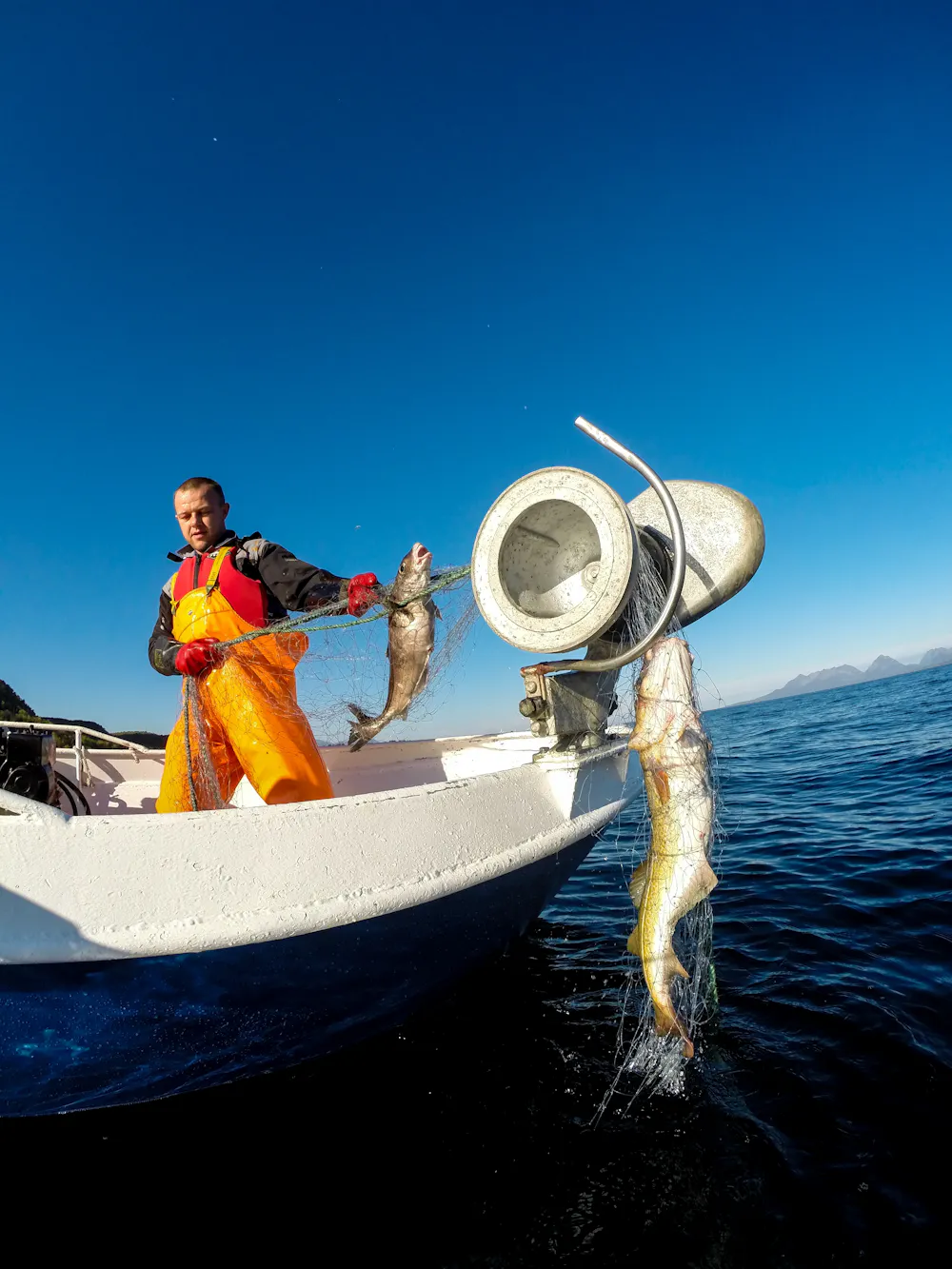
man standing in boat pulling out fish from sea
Cod have been overfished.
Birgit Ryningen/Shutterstock

Even where quotas are reduced, recovery is hampered by how many fisheries operate in practice. Cod are frequently caught in mixed fisheries that primarily target other species such as haddock. However, the use of unselective and destructive gears such as bottom trawls (heavy fishing nets that get dragged along the seabed) means that cod continues to be removed from the ecosystem, even when it is not the intended target.

Climate change adds further pressure. As waters warm, cod are forced northwards or into deeper waters, disrupting ecosystems and fisheries. Warmer seas can also affect reproduction, reducing the survival of eggs and larvae, while changes in ocean currents and availability of prey make it harder for populations to recover.

Together, these factors mean that the outlook for local cod stocks is increasingly dire.


Read more:
Half the UK’s fish stocks are overfished – but the evidence shows how they can be revived


The future of cod in the UK

Despite these challenges, cod is likely to remain on the menu. But where it comes from – and how it is managed – matters. Not all cod stocks are in crisis.

Atlantic cod that is caught in Iceland’s waters by long lines and nets, for example, remain a “best choice” on the Good Fish Guide. This reflects the use of fishing gears with lower risk of damage to ocean habitats plus strong management aligned with scientific advice. Similarly, other fisheries show that recovery is possible when limits are set and followed appropriately, although climate change adds increasing uncertainty for many species. In contrast, Atlantic cod caught from stocks in the Arctic, North Sea and other seas around Britain are all labelled “avoid”, regardless of how they are caught.

This makes our roles as consumers that much more complex – and important. Asking where fish comes from and how it was caught can help drive demand towards better managed stocks. If that information is unavailable, switching to alternatives, such as hake, can reduce pressure on depleted cod populations. If you are not sure, check for the stocks and catch methods labelled green on the Good Fish Guide, or that have been awarded a blue tick from the Marine Stewardship Council.

Our long relationship with cod has shaped diets, economies and cultures. But history shows that without stronger alignment between science, policy and informed consumer choice, the future of cod in the UK may be far from guaranteed.

The Conversation

Mara Fischer receives funding from the Convex Seascape Survey.

Ruth H. Thurstan works for The University of Exeter. She receives funding from the Convex Seascape Survey and the European Research Council (ERC) under the European Union’s Horizon 2020 research and innovation programme (grant agreement no. 856488).

ref. New advice on avoiding British cod: how to make sure your fish and chips are sustainably sourced – https://theconversation.com/new-advice-on-avoiding-british-cod-how-to-make-sure-your-fish-and-chips-are-sustainably-sourced-280667

How accelerating evolution could help corals survive future heatwaves – new study

Source: The Conversation – UK – By Liam Lachs, Postdoctoral Research Associate in Climate Change Ecology and Evolution, Newcastle University

As global warming accelerates, extreme heatwaves are causing widespread death of tropical reef corals. Most corals rely on tiny algae cells living within their tissues that photosynthesise and produce energy. Corals use this energy to build their skeletons that create the reef structure.

In our warming world, evolution of heatwave tolerance will be critical for coral populations to persist. Natural adaptation occurs over many generations and is probably already under way. But these adaptation rates could be outpaced by ocean warming.

Scientists and reef managers are now calling for “assisted evolution” to help accelerate adaptation. One promising approach is selective breeding to enhance heatwave tolerance.

Our new study explores how such interventions could help corals withstand future heatwaves.

By examining the genetic basis of heat tolerance and other important life history traits including growth, energy reserves and reproduction, we reveal both the potential, and limits, of evolutionary adaptation to extreme heat stress. This work focuses on a captive-bred coral population we reared over eight years in Palau, an archipelago in the west Pacific.

The field of quantitative genetics can shed light on complex traits such as growth and heat tolerance, which are typically influenced by hundreds to thousands of genes. These tools can help us maximise evolutionary responses to selection, and have long been used in agriculture and animal breeding – from the crops we eat to the dogs we have at home.

Two key concepts are central. “Genetic merit” describes the value of an individual for breeding, and “genetic correlations” describe how traits share their underlying genetic basis.

Estimating these requires measuring certain traits like heat tolerance, and collecting information about relatedness among individuals, such as full- or half-siblings. But this is difficult in wild corals, which disperse widely and are typically unrelated to neighbouring individuals on the reef.

Our captive population, containing both related and unrelated individuals, provides a rare opportunity to apply quantitative genetics to adult corals.


Read more:
We’ve bred corals to better tolerate lethal heatwaves, but rapid climate action is still needed to save reefs


Imagine a major heatwave has caused widespread coral mortality. Which corals should we select for propagation or breeding?

Choosing survivors seems intuitive, but survival alone does not guarantee a genetic predisposition for heat tolerance. A coral could survive by chance – perhaps it was shaded or had higher energy reserves, while all its relatives died. Selecting such individuals for breeding would fail to improve heatwave tolerance of future generations.

However, if entire families tend to survive or perish together, that indicates a genetic basis for heatwave tolerance. Using quantitative genetics in such cases can help make more informed choices.

But if no natural heatwave occurs, how can we proactively identify good corals for management? To do this, we need a proxy: an easy-to-measure trait that is genetically correlated with — and so predicts — an individual’s genetic merit for heatwave survival.

We tested coral heat tolerance under four different temperature exposures, ranging from a month-long exposure of 32.5°C to a rapid heatshock reaching 38.5°C.

These high experimental temperatures go beyond what happens in nature. As the simulated conditions grew hotter, we found ever weaker genetic correlations with marine heatwave survival. These tolerance traits exhibit somewhat distinct underlying biology, so careful trait choice is essential. Testing the wrong proxy traits to identify target corals will fail to deliver any heatwave survival enhancement.

two people in outside lab with containers full of coral
Liam Lachs and Adriana Humanes in the coral lab.
Tries Razak, CC BY-NC-ND

But adaptation involves more than just heat tolerance. Individual growth, energy reserves and reproduction are all critical for healthy populations. If enhancing heat tolerance comes at the cost of traits like these, it would undermine population viability.

Encouragingly, we found no detectable negative genetic correlations among any of the traits we studied.

Matching future stress

To explore how assisted evolution could enhance heat tolerance over time, we developed a computer simulation.

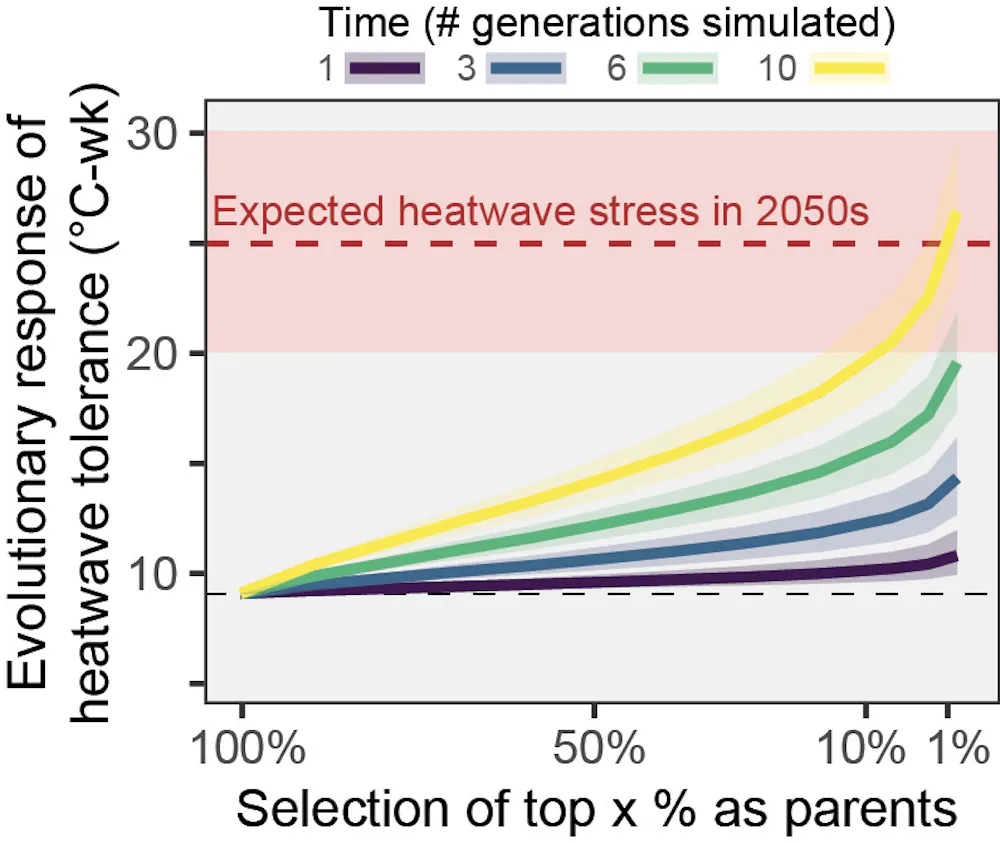
This showed us it was possible to reach tolerance levels capable of withstanding future heatwaves, but only under certain conditions.

Selection needed to directly target long-term heatwave survival. This meant choosing only the top 5% most tolerant corals as parents for breeding, and it had to be repeated over multiple generations.

graph showing changes in heatwave tolerance over time for coral, red zone shows heatwave stress
Evolution of heatwave tolerance in response to selection across ten simulated generations (blue-yellow). Expected future heatwave stress is shown in red.
CC BY-NC-ND

But such intense selection introduces other challenges, such as maintaining genetic diversity and scaling up selection efforts. If we need to breed from 50 corals to maintain genetic diversity and do only top-5% selection, then we need to test 1,000 corals. That becomes logistically very challenging.

Our modelling results show assisted evolution can deliver meaningful gains in coral heatwave tolerance. But success will depend on careful trait choice and strong, sustained selection.

Reducing greenhouse gas emissions remains essential to mitigate future warming. Alongside this, strategic management of local ecosystems — from conservation to assisted evolution — will be crucial to help key species adapt and persist in our rapidly warming world.

The Conversation

The authors would like to acknowledge contributions to this research from Alistair J. Wilson at the University of Exeter.

Adriana Humanes and James Guest do not work for, consult, own shares in or receive funding from any company or organisation that would benefit from this article, and have disclosed no relevant affiliations beyond their academic appointment.

ref. How accelerating evolution could help corals survive future heatwaves – new study – https://theconversation.com/how-accelerating-evolution-could-help-corals-survive-future-heatwaves-new-study-280487

Iran’s AI memes are reaching people who don’t follow the news – and winning the propaganda war

Source: The Conversation – UK – By Adam R. North, Early Career Researcher, Religions and Theology Department, University of Manchester

Screenshot of an AI-generated video produced by Iran’s Explosive Media. Explosive Media/X

A Lego-style Iranian military commander raps over a gangster beat: “Our inbox is flooded with Americans saying they don’t watch the news. They listen to our songs instead since your media is full of shit.”

This is the opening line of an AI-generated video which is part of Iran’s meme campaign – built around Lego-style animation and rap soundtracks, which have accumulated billions of views online. The line captures the strange reality of contemporary politics: news is often most effectively disseminated not through journalism but humour, memes and entertainment.

Since late February, pro-Iranian media groups – most notably, the X account Explosive Media – have flooded social media with AI-generated video content mocking Donald Trump, Benjamin Netanyahu and US foreign policy. It has been dubbed “slopaganda” – but the sophistication is striking.


Read more:
Slopaganda wars: how (and why) the US and Iran are flooding the zone with viral AI-generated noise


These videos contain disinformation and antisemitic tropes but do not look or feel like state propaganda – despite the spokesperson for Explosive Media admitting to the BBC that the Iranian government is a client. They capture the internet zeitgeist: fast, funny, visually familiar and designed for virality.

Trojan horses

The success of these memes lies in their audience strategy. They do not target people actively seeking news. Instead, they mimic the language of everyday internet culture to reach those who are not following events in the Middle East at all.

Humour is the mechanism they use to get reach. These videos function as Trojan horses, drawing viewers in with recognisable imagery, references and music – while communicating a narrative about American overreach, dysfunction and corruption.

As Emerson Brooking, a US-based expert in disinformation, notes, this kind of content reaches “politically uninvested people who otherwise wouldn’t have engaged with war-related content”.

The key insight here is not geopolitics but audiences. Conventional political communication, including press conferences, policy statements and traditional news coverage, reaches people who are already paying attention. These AI meme videos are designed to reach everyone else: the millions of people whose understanding of international conflict extends no further than what happens to appear in their social media feed.

Humour is the primary mechanism these videos have harnessed to conquer the social media algorithms. The joke is not the message – it is the delivery system. By packaging geopolitical arguments inside “diss tracks”, pop culture references and shareable clips, these videos communicate political ideas before audiences have even registered they are consuming political content.

What makes audiences receptive to ‘slopaganda’?

But this raises a deeper question. Why are people so receptive to receiving political information in this form? The answer is that they have been primed for it.

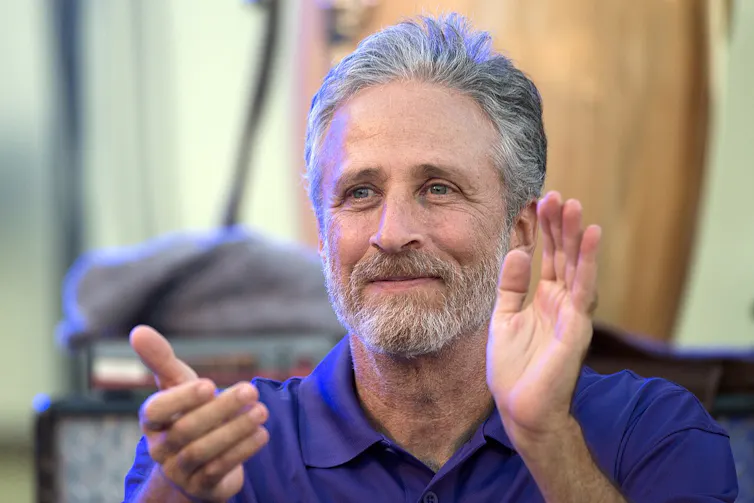
For two decades, a generation of Americans – and increasingly British and European viewers – have learned to process political news through satire. Jon Stewart’s The Daily Show became, for many younger viewers, a more trusted source of political information than the nightly news.

The likes of Stephen Colbert, John Oliver, Seth Meyers and Jimmy Kimmel also built enormous audiences by making politics funny, accessible and emotionally engaging in ways that conventional journalism often failed to do. The implicit message, repeated nightly, was that humour was not merely a gloss on political commentary. It was a more honest form.

US comedian Jon Stewart.
Late-night political satirists such as Jon Stewart blurred the distinction between news and entertainment.
DoD News/Flickr/Wikimedia Commons, CC BY-SA

This was largely a progressive phenomenon. The targets were politicians and large institutions, both government and private sector – and the satirists positioned themselves as holding power to account. But this created an expectation that political content should be entertaining, and that comedy is a legitimate vehicle for political understanding.

Iran is copying populist strategy

Since 2008, many populists have recognised the power of using humour in their election campaigns – none more so than Trump. His campaign appearances on comedy podcasts, his garbage truck and McDonald’s drive-through stunts, and his endless memes are not distractions from his political strategy – they are his political strategy.

Trump reached, and mobilised, millions of disaffected and typically uninterested voters who had long since stopped engaging with political news in any traditional form.

Iran has been paying attention. The American scholar of propaganda Nancy Snow has noted that Iran is now “using popular culture against the No.1 pop culture country, the United States”.

The Lego aesthetic, the rap beats, the 1980s pop covers, the selection of jokes are not random choices. They demonstrate a precise calibration of what can effectively reach online audiences in the western attention economy.

The result is content that is not immediately visible as foreign propaganda, and instead looks like entertainment. For audiences already accustomed to learning about politics through comedy, the distinction barely registers.

There is a profound irony here. The cultural conditions that produced shows like The Daily Show and Last Week Tonight – the erosion of trust in mainstream political communication and the demand for authenticity and humour over formal rhetoric – have produced a media environment in which a foreign state can distribute propaganda to millions of Americans, and have it feel indistinguishable from domestic entertainment.

This is not to say that late-night satire and Iranian AI content is equivalent. But they are operating in the same media ecosystem – one in which humour has become a primary method of political communication.

The most unsettling thing about what is happening right now is what this means for our information environment.

If propaganda is indistinguishable from satire, and satire accumulates millions of views while news does not, the line between political entertainment and political persuasion has seemingly collapsed. And the people most affected are those who think they are not following the war at all.

The Conversation

Adam R. North does not work for, consult, own shares in or receive funding from any company or organisation that would benefit from this article, and has disclosed no relevant affiliations beyond their academic appointment.

ref. Iran’s AI memes are reaching people who don’t follow the news – and winning the propaganda war – https://theconversation.com/irans-ai-memes-are-reaching-people-who-dont-follow-the-news-and-winning-the-propaganda-war-280944

How we worked out a fossilised ‘pterosaur’ was actually a fish – new research

Source: The Conversation – UK – By David Unwin, Reader in Palaeobiology, School of Heritage and Culture, University of Leicester

Artist’s impression of a pterosaur with a fish in its mouth. Fossils of one have sometimes been mistaken for the other. Warpaint/Shutterstock

Georges Cuvier, the 19th-century French anatomist who first recognised pterodactyls as flying reptiles, wrote that “of all the beings whose ancient existence has been revealed to us, [they are] the most extraordinary”.

Now known as pterosaurs, this extraordinarily diverse, highly successful group lived alongside dinosaurs for more than 150 million years, occupying habitats around rivers, lakes, coasts and even the open ocean. While some species were quite small (no bigger than a pigeon), a few evolved into flying giants with wingspans exceeding ten metres.

The Upper Jurassic pterosaur Rhamphorhynchus
The Upper Jurassic pterosaur Rhamphorhynchus (Bürgermeister-Müller-Museum, Eichstatt Germany).
David Unwin, CC BY

Pterosaurs are unlike any other animal, living or extinct. Despite this, a surprisingly long list of fossils have been misidentified as pterosaurs – including a specimen of the earliest bird, Archaeopteryx, and an extinct aquatic reptile, Tanystropheus, which had extraordinarily long neck vertebrae like some pterosaurs.

One of the most renowned misidentifications occurred in 1939 when Ferdinand Broili, a Munich-based palaeontologist, described a new pterosaur, Belonochasma, based on what appeared to be the remains of jaws bearing hundreds of long, fine teeth.

Several decades later, Franz Mayr, founder of the Jura Museum in Eichstätt, Germany, recognised the true nature of these remains. The “teeth” were actually gill filaments. More complete fossils, including remains of the body, showed unequivocally that Belonochasma was actually a fish.

Back in the 1930s, it could be years before publications became widely known and decades before errors were corrected. The gentle pace of research meant misidentifications usually had little impact.

Contrast that with today’s digiverse. Now, most palaeontologists are aware of newly published research within days or even hours of publication – and can immediately start downloading datasets that include it.

This rapid dissemination and repurposing of data – in the case of palaeontology, relating to age, geographic location and bodily structure – mean that errors can also spread very quickly.

A highly unusual fossil

In November 2025, a team of Brazilian palaeontologists led by Rodrigo Pêgas, based in the Museum of Zoology at the University of São Paulo, described what they took to be a new pterosaur. Bakiribu waridza had been found in 110 million-year-old Early Cretaceous rock of Araripe in northeast Brazil.

This highly unusual fossil apparently comprised several small fish plus the remains of not one but two pterosaurs – each represented by what were claimed to be fragmentary remains of jaws, plus hundreds of fine teeth.

Fossil remains of the ‘pterosaur’ Bakiribu reinterpreted as a fish.
Fossil remains of the ‘pterosaur’ Bakiribu, which has been reinterpreted as a fish (scale bar 50mm).
David Unwin, CC BY

Pêgas and colleagues speculated that these specimens were contained in dinosaur vomit (known as regurgitalite) so large that it could only have been produced by a huge predator – perhaps a Spinosaurus-like theropod dinosaur. Enthusiastically promoted, the newly announced Bakiribu drew much attention, including numerous palaeoartists’ impressions and its own Wikipedia page.

However, a group of us who study pterosaurs – including David Martill and Roy Smith from the University of Portsmouth, and Sam Cooper from the Stuttgart State Museum of Natural History – soon spotted some problems.

Bakiribu (top) compared with the Upper Jurassic fish Belonochasma.
Bakiribu (top) compared with the Upper Jurassic fish Belonochasma (scale bar: 10mm).
David Unwin, CC BY

Comparing our extensive collection of high-resolution digital photographs of pterosaur fossils with published images of Bakiribu, it appeared that its “teeth” did not extend along both sides of the jaw in symmetric fashion, as with all toothed pterosaurs. They also lacked a root, which is omnipresent in pterosaur teeth. Moreover, features such as dentine and dentine tubules, typical of pterosaur teeth, appeared to be absent.

We also noticed that bone fragments associated with the supposed jaws did not match any cranial element of pterosaurs, and their coarse external texture was unlike the smooth finish typical of pterosaur bone.

So, what was Bakiribu? Martill recalled the 1939 Belonochasma episode, which prompted me to examine the original fossil during a visit to Munich earlier this year. It was immediately clear that Belonochasma and Bakiribu were remarkably similar.

Comparing Bakiribu with the fossil remains of ancient bowfins discovered in the same rocks, and taking advantage of Cooper’s expertise in fossilised fish, we were able to identify the supposed teeth of Bakiribu as gill filaments, and the associated bony elements as branchials (structures that support the gills). Like Belonochasma, the Bakiribu fossil was in fact a collapsed gill arch of a large fish, preserved alongside two smaller fish.

The bowfin Amia calva.
Zachary Randall, CC BY

A paper detailing our findings has just appeared in the Annals of the Brazilian Academy of Sciences. Pegas and colleagues, who disagree with our conclusions, were offered an opportunity to publish a response in the same issue of the journal, but did not take up this invitation.

Misidentifications matter more now

All palaeontologists – myself included – have misidentified at least one fossil during their careers. The fragmentary, incomplete nature of many fossil remains means erroneous identifications are as inevitable as death and taxes.

But in today’s world of rapid international communication, it is all the more important that they are highlighted as quickly as possible. Fortunately, the digiverse can also help do this.

Within five weeks of the first appearance of Bakiribu, our team flagged the possibility of a misidentification by posting a reinterpretation as a non-peer reviewed “preprint” article. And only five months later, our fully peer-reviewed account was published.

The speed of the digiverse means this alleged regurgitalite has rapidly been regurgitated. But doubtless many other misidentified fossils remain unsuspected, and more mistakes will be made in the future.

Once spotted, however, at least we have the tools to quickly verify such errors, in order to restrict their impact on the body palaeontologic.

The Conversation

David Unwin does not work for, consult, own shares in or receive funding from any company or organisation that would benefit from this article, and has disclosed no relevant affiliations beyond their academic appointment.

ref. How we worked out a fossilised ‘pterosaur’ was actually a fish – new research – https://theconversation.com/how-we-worked-out-a-fossilised-pterosaur-was-actually-a-fish-new-research-280848

Want to cut your energy bills? Here’s how five experts are doing it

Source: The Conversation – UK – By Stuart Mills, Assistant Professor of Economics, University of Leeds

Monkey Business Images/Shutterstock

Rising prices are putting pressure on people to try and use less energy. But what are the most effective ways of cutting bills? We asked five experts for their practical advice.

1. Insulate your home

Upgrading loft insulation to current standards, typically 27–30cm thick for mineral wool, improves energy efficiency, comfort and long-term cost savings. It acts as a thermal barrier, as up to 25% of a home’s heat can escape through an uninsulated roof. Installing cavity wall insulation in older homes improves efficiency by reducing heat loss through walls by up to 35%.

Using draught excluders, keeping internal doors closed on cold days, and installing a smart energy controller also help retain warmth and optimise energy use. All these measures can help lower heating bills, maintain warmer indoor temperatures, reduce draughts, minimise condensation, and improve a home’s energy performance certificate rating.

The cheapest energy is the energy we do not use. That’s why the International Energy Agency describes energy efficiency as the “first fuel”. Buildings account for around 30% of global energy demand, so homes are a critical part of both affordability and energy security.

In the UK, 420,600 energy-efficiency measures were installed in 2024 through government support schemes. There is clearly strong demand for more measures like this.

Farooq Sher is a senior lecturer in sustainable energy engineering

A person wearing gloves unrolls some insulation.
Adding insulation can help keep heating bills down.
irin-k/Shutterstock

2. Go fully electric

Almost everything in our house is now electric, including our heating, cooking and car. This makes environmental sense because electricity can easily be generated from low-emission sources, whereas gas, petrol and diesel can only really come from extracting and refining fossil fuels. In the UK, we generate electricity from a range of sources including solar, wind, tidal, and from burning gas.

Currently, close to 50% of the electricity on the national grid is from renewable sources. Providing heat from a heat pump has about 70% lower greenhouse gas emissions, compared with heat from a gas boiler.

As well as reducing emissions, electrification can reduce bills. Our heat pump replaced an old and relatively inefficient gas boiler, and our annual heating bill has fallen by about 10%. Though electricity is more expensive than gas, heat pumps can reduce bills because for every unit of electrical power they consume, they deliver between two and four times that in heat.

A well-designed and carefully installed system will improve performance. We upgraded our insulation at the same time, and in winter closed off the spare room completely. An added bonus of full electrification is that there’s no need to pay a gas standing charge, which can save about £128 per year.

Another thing to consider is using materials that reduce need for heating – for instance, double glazing. And try to minimise your demand for energy as much as possible, then install the smallest system which meets that demand. We’ve found that doing all of this leads to a warmer, nicer and cheaper home.

Stuart Walker is a research fellow in sustainabilty assessment

air source heat pump outside a home
Heat pumps can bring down annual heating bills.
Wozzie/Shutterstock

3. Increase your energy payments

The conflict in the Gulf is just the latest shock to the energy supply chain. And the tricky thing with supply chains is disruption takes time to be felt. Even if a peace deal sticks, consumers and businesses can still expect higher prices to ripple through the energy market for months.

As such, think about the behavioural economics of what’s known as “intertemporal choice” – your spending over time. People often excessively discount the future and focus on the present when choosing how to spend money. This is known as “present bias”.

Today, there are widespread expectations of higher energy prices, but (for now) they remain around pre-war prices. In the future – when the war is over – there will be widespread expectations of lower prices, but the current disruptions will still be rippling through the system. This mismatch between expectations and reality could leave people with a nasty surprise when their bill comes through.

So, pay it forward. Don’t fall into the trap of present bias. If you can, increase your energy bill payments today. Economists call this “smoothing out” your consumption. When higher bills bite, you’ll be (psychologically) better off for it.

Stuart Mills is a lecturer in economics

4. Sort out any draughts

In our home, we have removed the fireplace, blocked it completely and insulated inside it to cut out draughts. As it is now not so draughty, the heating isn’t required as much and we’re not losing heat through the chimney stack.

This has improved indoor air quality, partly because we no longer have to dispose of ashes and don’t have to do extra cleaning after fires. This is an indirect saving that some may not realise.

Another benefit is that we’re not exposing ourselves to particulate air pollution that results from open or stove-based fires. Home heating contributes significantly to urban air quality, and my motivation has been to improve both indoor and outdoor air quality.

I’m also not storing or buying and transporting fuel – another cost saving. I have bought a cargo ebike to commute to work, carrying my children and their belongings. It also has a bread basket on the front, which is fantastic for shopping and carrying bags. This has cut my short car trips.

We are fortunate to live in an area with good cycling infrastructure. I am aware these choices are not an option for everyone, especially those in rented or temporary accommodation.

Yvonne Ryan is an associate professor in environmental science

5. Crack on with home improvements

A good way to protect yourself against rising bills next winter is to crack on now with projects to make your home more energy efficient. One option is to stop the heat you have paid for escaping through your windows and doors.

The Energy Saving Trust estimates that upgrading your windows could save up to £140 a year. But research has shown that, while households frequently research the options and get quotes, they often stall at the final decision on a project and fail to go ahead.

One reason for this is over-reacting to “sludge” – the barriers that increase uncertainty and effort, such as difficulty finding information and contractors. This can overwhelm our understanding of the benefits of going ahead, leaving us stuck with the status quo.

But the good news is, it is perfectly possible to override these behavioural biases. Rising and volatile fuel bills may be the nudge we need to do that.

Jonquil Lowe is a visiting academic in economics

The Conversation

Stuart Walker receives funding from the Grantham Foundation for the Protection of the Environment. He is affiliated with Hope Valley Climate Action.

Farooq Sher, Jonquil Lowe, Stuart Mills, and Yvonne Ryan do not work for, consult, own shares in or receive funding from any company or organisation that would benefit from this article, and have disclosed no relevant affiliations beyond their academic appointment.

ref. Want to cut your energy bills? Here’s how five experts are doing it – https://theconversation.com/want-to-cut-your-energy-bills-heres-how-five-experts-are-doing-it-280182