Black Grape: It’s Great When You’re Straight… Yeah at 30 – one of music’s greatest comeback stories

Source: The Conversation – UK – By Glenn Fosbraey, Associate Dean of Humanities and Social Sciences, University of Winchester

In the late 1980s and early 1990s, Shaun Ryder had the world at his feet. His band, The Happy Mondays, had been key players in the UK “Madchester scene” and had scored a platinum selling album with 1990’s Pills ‘n’ Thrills and Bellyaches. Bands everywhere had tried to imitate the new “baggy” sub-genre it had created.

Only a few years later, though, Ryder’s career looked like it was over. The fractious and drug-addled recording of 1992 album Yes Please had caused the Mondays to split up soon after its release, and its poor sales – described by critics as a “commercial car crash” – bankrupted their label, Factory.

Ryder’s addictions to heroin and crack cocaine were also now so bad that he’d quite literally resorted to selling the (Hugo Boss) shirt off his back to fuel his habit.

Never one to shy away from a fight, however, Ryder actually seemed motivated by people saying he was “finished as a creative force”, and now only under the influence of “Guinness, Es and Temazis”. He set about forming a brand new band in his living room – Black Grape.

The music video for Kelly’s Heroes.

Joining him and the ever-present Bez (official role: “vibes”) were guitarist Paul “Wags” Wagstaff and drummer Ged Lynch. Ryder’s “smack buddy” Kermit (real name Paul Leveridge) was on co-vocal and songwriting duties, having previously been one third of Hulme-based hip hop group The Ruthless Rap Assassins.

Work on their debut album It’s Great When You’re Straight…Yeah! began soon after. Ryder and Kermit collaborated face to face, bouncing ideas off each other on the soon-to-be hit singles Reverend Black Grape and Kelly’s Heroes. They sharing the microphone on both tracks to create the unforgettable and unique sound so many of us have returned to again and again during the past three decades.

A brand new sound

Some critics have since dismissed Black Grape as merely a continuation of The Happy Mondays’ “formula”. But, for me, this ignores how genuinely groundbreaking, fresh, and unique their sound was.

Under the production of Danny Saber, Stephen Lironi and Ryder himself, Black Grape somehow fused rock, hip-hop, acid house, melodic pop, dub, reggae into a dazzling psychedelic whole. The result was both immediately accessible and yet nothing like anyone had ever heard before. Ryder puts it best when he wrote in his autobiography that the album “sounds like the best house party”.

Indeed, at different house parties and indie club nights across the country, the opening bars of Kelly’s Heroes were enough to send people leaping to their feet in drunken excitement. But only three songs later, the moodily atmospheric and downbeat A Big Day in the North would cause those very same people to sit back down in brooding introspection.

Kelly’s Heroes by Black Grape.

Then there were the lyrics. During his time with The Happy Mondays, Ryder had largely satisfied himself with the humorous stream-of-unconsciousness flow of surrealist street talk. But with Black Grape, he seemed to push himself further.

His signature sprechgesang (a vocal technique that combines speaking and singing) remained intact. As did the abstract imagery and humour, with lines like “Touche, Toshack, pineapple with a smile, en coule, big apple” (A Big Day in the North) and “You used a Rolex to roll up your keks” (Shake Well Before Opening). But there was more serious work here, too, sometimes even in the same song.

Just after the “Toshack” line on A Big Day in the North, for example, Ryder tells us that “Sticks and stones may break your bones, but love will always hurt you”. In Yeah Yeah Brother, before the throwaway line “open the trunk for the pineapple chunk”, he rails against an unnamed adversary, spitting: “You sit at my table, eat and drink like you were my brother, I would never ever in this world believe you were a backstabber.”

It’s on Reverend Black Grape that Ryder really ups the ante, though, with one of the most scathing and inflammatory lyrics I’ve ever come across. Taking aim at the Catholic Church, he declares that the “Pope he got the Nazis to clean up their messes, in exchange for gold and paintings he gave them new addresses”. How this flew under the radar and didn’t lead to a lawsuit has always amazed me, but it’s perhaps indicative of how little anything Ryder said was taken seriously.

Reverend Black Grape by Black Grape.

One of music’s greatest comeback stories, It’s Great When You’re Straight… Yeah! was an immediate commercial success. It topped the UK charts and achieved platinum certification. But it was also a favourite for many critics. Reverend Black Grape was declared best track at the 1995 NME awards, and the album was shortlisted for 1996’s Mercury Prize.

Sadly, the band would go the way of The Mondays, splitting a few years later after the disappointing follow-up album Stupid Stupid Stupid (1997). This time, though, there’s a happy ending. After reuniting two decades later and releasing new albums Pop Voodoo (2017) and Orange Head (2023), Kermit and Ryder will be celebrating the 30th anniversary of their finest work with the It’s Great When You’re Straight, Yeah 30th anniversary UK tour later this year. I, for one, can’t wait.


Looking for something good? Cut through the noise with a carefully curated selection of the latest releases, live events and exhibitions, straight to your inbox every fortnight, on Fridays. Sign up here.


The Conversation

Glenn Fosbraey does not work for, consult, own shares in or receive funding from any company or organisation that would benefit from this article, and has disclosed no relevant affiliations beyond their academic appointment.

ref. Black Grape: It’s Great When You’re Straight… Yeah at 30 – one of music’s greatest comeback stories – https://theconversation.com/black-grape-its-great-when-youre-straight-yeah-at-30-one-of-musics-greatest-comeback-stories-261893
Five things I wish everyone knew about weight loss – by an expert in nutrition

Source: The Conversation – UK – By Rachel Woods, Senior Lecturer in Physiology, University of Lincoln

voronaman/Shutterstock

Weight loss continues to dominate public discourse – often framed as a matter of personal responsibility. But after nearly 15 years working in and around health and nutrition research, I’ve seen how weight is treated differently from almost every other health issue.

People are routinely blamed for their body size, even though robust evidence shows that weight is shaped by a complex mix of genetics, biology, environment and socioeconomic factors. Limited access to affordable healthy food, lack of safe places to exercise, long working hours and chronic stress – all more common in disadvantaged areas – can make maintaining a healthy weight significantly harder.

Here are five things I wish more people understood about weight loss.

1. It goes against our biology

Obesity has been recognised as a national health priority in England since the 1990s, with numerous policies introduced in response. Yet obesity rates have not declined. This suggests that current approaches, which tend to focus on personal responsibility, are not working.

Even when weight loss methods are successful, the results often don’t last. Research shows that most people who lose weight eventually regain it, and the chances of someone with obesity reaching and maintaining a “normal” body weight are very low.

That’s partly because our bodies fight back when we lose weight – a response rooted in our evolutionary past. This process is called metabolic adaptation: when we reduce our energy intake and lose weight, our metabolism slows, and hunger hormones like ghrelin increase, encouraging us to eat more and regain the lost weight.

This biological response made sense in our hunter-gatherer past, when feast and famine were common. But today, in a world where high-calorie, ultra-processed food is cheap and accessible, these same survival traits make it easy to gain weight – and difficult to lose it.

So if you’ve struggled to lose weight or keep it off, it’s not a personal failure – it’s a predictable physiological response.

2. It’s not about willpower

Some people seem to maintain a stable weight with relative ease, while others struggle. The difference isn’t just about willpower.

Body weight is influenced by a host of factors. Genetics play a major role – for example, affecting how quickly we burn calories, how hungry we feel, or how full we get after eating. Some people are genetically predisposed to feel hungrier or crave high-energy foods, making weight loss even more challenging.


Read more:
Obesity care: why “eat less, move more” advice is failing


Environmental and social factors also play a part. Having the time, money, or support to prepare healthy meals, be active, and prioritise sleep makes a real difference – and not everyone has those resources.

When we overlook these complexities and assume weight is purely a matter of self-control, we contribute to stigma. This stigma can make people feel judged, ashamed, or excluded, which ironically can increase stress, reduce self-esteem, and make healthy habits even harder to adopt.

3. Calories aren’t the whole story

Counting calories is often the default weight loss strategy. And while creating a calorie deficit is essential for weight loss in theory, in practice it’s far more complicated.

For starters, calorie labels on foods are just estimates, and our own energy needs vary from day to day. Even how much energy we absorb from food can differ based on how it’s cooked, how it’s digested, and the makeup of our gut bacteria.

There’s also the persistent idea that “a calorie is just a calorie” – but our bodies don’t treat all calories the same. A biscuit and a boiled egg might contain similar calories, but they affect our hunger, digestion, and energy levels very differently. A biscuit may cause a quick blood sugar spike and crash, while an egg provides longer-lasting satiety (fullness) and nutritional value.

These misunderstandings have fuelled the rise of fad diets – like only drinking shakes or cutting out entire food groups. While they can lead to short-term weight loss by creating a calorie deficit, they’re rarely sustainable and often lack essential nutrients.

A more realistic and balanced approach is to focus on long-term changes: eating more whole foods, reducing takeaway meals, cutting back on alcohol and building habits that support overall wellbeing.

4. Exercise is great for your health – but not necessarily for weight loss

Many people assume that the more they exercise, the more weight they’ll lose. But the science tells a more complex story.

Our bodies are very good at conserving energy. After a tough workout, we may unconsciously move less for the rest of the day, or feel hungrier and eat more – offsetting the calories burned.

In fact, research shows that total daily energy expenditure doesn’t keep rising with more exercise. Instead, the body adjusts by becoming more efficient and reducing energy use elsewhere, making weight loss through exercise alone more difficult than many expect.

That said, exercise still offers a huge range of benefits: it boosts cardiovascular health, improves mental wellbeing, maintains muscle mass, enhances metabolic function, strengthens bones and lowers the risk of chronic diseases.

Even if the number on the scale doesn’t change, exercise is still one of the most powerful tools we have to improve health and quality of life.

5. Health improvements don’t always require weight loss

You don’t have to lose weight to get healthier.

While intentional weight loss can reduce the risk of conditions like heart disease and some cancers, studies also show that improving your diet and being more active can significantly improve health markers – like cholesterol, blood pressure, blood sugar and insulin sensitivity – even if your weight stays the same.


Read more:
Why you can’t judge health by weight alone


So if you’re not seeing big changes on the scales, it may be more helpful to shift your focus. Instead of chasing a number, focus on behaviour: nourishing your body, moving regularly in ways you enjoy, sleeping well and managing stress.

Weight is just one piece of the puzzle – and health is about so much more.

The Conversation

Rachel Woods does not work for, consult, own shares in or receive funding from any company or organisation that would benefit from this article, and has disclosed no relevant affiliations beyond their academic appointment.

ref. Five things I wish everyone knew about weight loss – by an expert in nutrition – https://theconversation.com/five-things-i-wish-everyone-knew-about-weight-loss-by-an-expert-in-nutrition-262100

Did the Sun boycott make Liverpool more leftwing? My study indicates it may have shifted views

Source: The Conversation – UK – By Lucas Paulo da Silva, PhD Candidate, Political Science, Trinity College Dublin

Most newspapers in the UK tend to represent a political perspective. It is difficult to measure the extent to which someone’s media consumption affects their political views – but what if you take one newspaper out of the equation?

In a recent study, I sought to examine how the longstanding boycott of the rightwing tabloid the Sun in Liverpool affected people’s political attitudes up to 2004. I found that the Sun – and its removal from the media landscape in Liverpool – held considerable sway.

On April 15 1989, a tragic stadium crush at the FA Cup semi-final football match between Liverpool FC and Nottingham Forest led to 97 deaths and hundreds of injuries. The Sun inaccurately blamed Liverpool supporters for what came to be known as the Hillsborough disaster.

Many newsagents and readers in Liverpool subsequently boycotted the Sun, cutting its circulation in Merseyside to about a quarter of what it had been. Audience and newsagent surveys show that people in Liverpool who had bought the rightwing Sun, often replaced it with more neutral or leftwing newspapers (primarily the Daily Mirror).

In neighbouring parts of the country, there was no such shift in readership. A boycott remains in effect in Liverpool today, despite apologies from the paper in 2004, 2012 and 2016.


Read more:
Why The Sun newspaper will never shine in Liverpool


Now, you’ve probably heard the phrase “correlation is not causation”. There were many other changes that occurred in northern England and Liverpool during the period that I study from 1983 to 2004.

My research sought to avoid confusing the effects of those changes with the effects of the boycott. For example, the period was marked by the Thatcher governments, de-industrialisation and their aftermath. For many in Liverpool those policies of that era were to blame for extremes of poverty and deprivation in the area. Amid that, the Labour party’s Militant faction rose to prominence in Liverpool, taking control of the city council from 1983 to 1986.

These events are central to the politics and social picture of Merseyside that emerged. But to what degree did the boycott of The Sun play a part in shaping it?
My study used a statistical method called triple differences. This meant calculating how political attitudes changed among the Sun’s core audience in Liverpool (the group which was exposed to the boycott) compared to people in Liverpool who were not in the Sun’s core audience, and relative to similar parts of northern England (the control group, which was not exposed to the boycott). I also controlled for other factors that could shift between these groups over time, such as parliamentary constituencies, gender, class, ethnicity, religion, education, union membership and home ownership.

These methods helped me assess the possible effect of the boycott on ideological positions, perceptions of Labour party positions, and Labour party support. I also conducted additional studies to consider whether these shifts began before the boycott, which would suggest that they were due to other factors. The results indicate to me that these shifts in political attitudes began during the boycott (although the data did not permit this test for perceptions of party positions).

I used data from the annual British Social Attitudes surveys administered by the National Centre for Social Research to measure social and political attitudes and demographics. The sample is composed of 12,771 northern English respondents between the years 1983 to 2004, which includes several years both before and during the boycott.

The study identified three main changes in the aftermath of the boycott (and the shift to more leftwing media). First, the boycott may have caused the Sun’s previous audience in Liverpool to perceive the Labour party as less “extreme”. This was compared to other people in Liverpool (whose perceptions of Labour as extreme stayed level) and northern England. It is of course worth noting that this was a period of considerable change in the party, as Tony Blair’s leadership moved it significantly to the centre, though my statistical methods attempt to address this.

The period also saw those former Sun readers in the city adopt more opinions traditionally regarded as left wing, including being in favour of increasing the power of trade unions. “Non-audiences” in Liverpool and other people in northern England were less likely to express a change of view. (Other ideological opinions, about redistribution and European integration, did not shift as much.)

Third, support for the Labour party increased among the Sun’s former core audience in Liverpool, compared to other people in Liverpool (who actually slightly reduced their support for Labour) and people who were not exposed to the boycott. These shifts happened from the beginning of the boycott in 1989 until 1996 (before the Sun endorsed Labour) and continued until at least 2004 (when my data ends).

My study makes use of a real-world change in media consumption that spans many years. The value of the Sun boycott as a “natural experiment” (observing real-world events) was first identified by researchers who found that the boycott reduced Euroscepticism.

Media influence

The Sun famously ran the 1992 headline “It’s The Sun Wot Won It”, claiming credit for the Conservative general election victory. Clearly, newspaper publishers then felt they could influence political views.

But perhaps a more interesting finding from my study is how this may happen. My results suggest to me that media influences how people perceive party positions. This is something that governments, publishers, and critically voters should take into account if they want to address the effects of media on elections.

The Conversation

Lucas Paulo da Silva does not work for, consult, own shares in or receive funding from any company or organisation that would benefit from this article, and has disclosed no relevant affiliations beyond their academic appointment.

ref. Did the Sun boycott make Liverpool more leftwing? My study indicates it may have shifted views – https://theconversation.com/did-the-sun-boycott-make-liverpool-more-leftwing-my-study-indicates-it-may-have-shifted-views-259488

Virtual Beauty exhibition – is our sense of beauty changed by new technologies?

Source: The Conversation – UK – By David Bate, Professor at Westminster School of Arts, University of Westminster

Virtual Beauty is the summer show at Somerset House, London, featuring a fascinating collection of visual work by artists dealing with the connection between technology and beauty. As you might expect, it focuses on the human form and the reshaping of the body and face through computational processes.

While humans have contemplated their self-image through mirrors and pictures of themselves for hundreds of years, digital inventions have reconfigured all this. Today, people regularly use mobile phone screens as mirrors and the camera to record themselves. Posting these images online only affirms that identity to their wider community and networks.

The rectangular shape of a phone screen is used extensively in the exhibition by digital artists to show the new malleability of human identity and how we can reimagine ourselves through digital technologies.

The artist Orlan, for example, conducted cosmetic surgery and recorded it live on video, originally live-streaming it into galleries in 1992. Astonishingly in the video she is seen awake and even discussing the aesthetics of her facial surgery with special guests while the surgeons work with a scalpel on the dotted lines on her face.

But today you don’t need a surgeon to change your image, you can use your phone and apps to “try out” new identities. This is our new digital world and the questions about what these processes mean is what concerns the artists here.

In visual anthropologist Mathilde Friis’s excellent accompanying essay to the exhibition From the Selfie to the Avatar: Beauty, Bias and the Digital Self, she suggests that the actual body no longer limits beauty thanks to our online lives.

In this online presentation of self, she argues, is a tension between our offline identity, the facets of ourselves we inherit and literally inhabit, and the freedom to escape these fixed features in how we present ourselves online.

Do you want to look like a well known model, an exotic anime character or something else? These are all possibilities in the digital world, but what kind of change do they represent? Such are the lingering questions for the viewer at the exhibition.

The artworks explore the trials and tribulations of identity and its relation to traditional notions of beauty and attempts at liberation from them. This point is strongly made in Filip Custic’s installation Pi(x)el (2022), where a 3D silicone mannequin has tiny screens attached in front of the key features of the body.

The screen images flicker between different images of eyes, ears, mouth, nose, genitals and fingernails to demonstrate the potential choices one might make to change them.

I was particularly drawn into Qualeasha Wood’s intriguing textile work It’s All For U (If U Rlly Want It), (2024). The tapestry looks like a photo-collage. At the centre is a black woman who reaches towards a phone screen.

Around her are the tools used to construct the digital self, the phone camera the screen of the selfie, its menu buttons, texts and her hand that taps out this creation. These facets are all beautifully scrambled together into a single work that invites the viewer to linger and meditate on them.

At the same time the many artworks that do use screens tend to play with traditional expectations of them. Some of these images can seem uncanny or confronting while other conform to more traditional ideas of what a digital avatar can be.

An example of one of these works in Angelfire’s XENA (2021), which is inspired by the TV series character Xena: Warrior Princess (1995-2001). This take on the character shows a powerful hyper hybrid figure, a kind of masculine and feminine, neither firmly one nor the other and maybe not even both.

Another is Lil Miquela’s Rebirth of Venus (2020), which presents a virtual figure who looks like a real person. Beautiful butterflies fly around and settle on her, as if to emphasise her beauty. Although Lil Miquela does not exist beyond her digital space, she has a massive following online as a viral influencer as well as a virtual avatar.

The exhibition is a welcome engagement with ideas of virtual beauty and into the growth of digital identities that are at once a part and separate or different from our offline selves. It shows how hybridity is a feature of virtual space and how we tend to sometimes subtly merge our own ideals with the computer images that we see.

It has been said that photography and cinema had a similar effect during the 20th century. The exhibition also offers great insight how these virtual spaces have allowed people to present identities online which might be challenged offline.

All in all, its is an interesting presentation of the tension between the animation of new selves and the palpable anxiety and questions about where we are all headed.

Virtual Beauty is on at Somerset House in London until September 28 2025


Looking for something good? Cut through the noise with a carefully curated selection of the latest releases, live events and exhibitions, straight to your inbox every fortnight, on Fridays. Sign up here.


The Conversation

David Bate has received funding from The Arts Council and The British Council.

ref. Virtual Beauty exhibition – is our sense of beauty changed by new technologies? – https://theconversation.com/virtual-beauty-exhibition-is-our-sense-of-beauty-changed-by-new-technologies-262454

From arthritis to nausea: five ways ginger could benefit your health

Source: The Conversation – UK – By Dipa Kamdar, Senior Lecturer in Pharmacy Practice, Kingston University

From warming winter teas to zesty stir-fries, ginger (Zingiber officinale) has long been a kitchen staple. But beyond its culinary charm, this spicy root has a rich history in traditional medicine – and modern science is catching up. Studies now show that ginger may offer a wide range of health benefits, from easing nausea and relieving colds to reducing inflammation and supporting heart health.

Here’s what you need to know:

1. Nausea relief

Multiple clinical trials have shown consistent evidence that ginger can reduce nausea and vomiting, particularly when compared to a placebo. The NHS even recommends ginger-containing foods or teas for easing nausea.

Ginger seems especially effective for nausea during pregnancy. In small doses, it’s considered a safe and effective option for people who don’t respond well to standard anti-nausea treatments.

There’s also promising evidence that ginger can help with chemotherapy-induced nausea, though results are mixed when it comes to motion sickness and post-surgery nausea.

Researchers believe ginger’s anti-nausea effects may work by blocking serotonin receptors and acting on both the gut and brain. It may also help by reducing gas and bloating in the digestive tract.

2. Anti-inflammatory benefits

Ginger is rich in bioactive compounds, such as gingerol and shogaol, which have strong antioxidant and anti-inflammatory properties.

Recent research suggests ginger supplements may help regulate inflammation, especially in autoimmune conditions. One study found that ginger reduced the activity of neutrophils — white blood cells that often become overactive in diseases like lupus, rheumatoid arthritis and antiphospholipid syndrome.

Neutrophils produce extracellular traps (NETs), which are web-like structures used to trap and kill pathogens. But when NETs form excessively, they can fuel autoimmune diseases. In the study, taking ginger daily for one week significantly reduced NET formation.

While this study used ginger supplements, it’s unclear whether fresh ginger or tea has the same effect. Still, the findings suggest ginger may be a helpful, natural option for people with certain autoimmune conditions – though more research is needed.

Ginger also has antimicrobial properties, meaning it can help combat bacteria, viruses and other harmful microbes. Combined with its anti-inflammatory effects, this makes ginger a popular remedy for easing cold and flu symptoms like sore throats.

3. Pain management

When it comes to pain, the research on ginger is encouraging – though not conclusive. Some studies show that ginger extract can reduce knee pain and stiffness in people with osteoarthritis, especially during the early stages of treatment. However, results vary, and not everyone experiences the same level of relief.

For muscle pain, one study found that taking two grams of ginger daily for 11 days reduced soreness after exercise.

Ginger may also ease menstrual pain. In fact, some studies suggest its effectiveness rivals that of non-steroidal anti-inflammatory drugs like ibuprofen.

Researchers believe ginger works by activating pathways in the nervous system that dampen pain signals. It may also inhibit inflammatory chemicals like prostaglandins and leukotrienes.

4. Heart health and diabetes support

High blood pressure, high blood sugar and elevated “bad” cholesterol (low-density lipoprotein or LDL cholesterol) are all risk factors for heart disease. Ginger may help with all three.

A 2022 review of 26 clinical trials found that ginger supplementation can significantly improve cholesterol levels — lowering triglycerides, total cholesterol and LDL cholesterol, while raising HDL (“good”) cholesterol. It may also lower blood pressure.

For people with type 2 diabetes, ginger could offer additional benefits. A review of ten studies found that taking one to three grams of ginger daily for four to 12 weeks helped improve both cholesterol levels and blood sugar control.

These benefits appear to come from multiple mechanisms, including improved insulin sensitivity, enhanced glucose uptake in cells, and reduced oxidative stress. Ginger’s anti-inflammatory actions may also contribute to its heart-protective effects.

Some early research suggests that ginger may also offer benefits for sexual health, though evidence in humans is still limited. Animal studies have found that ginger can boost testosterone levels, improve blood flow, and enhance sexual behaviour. In traditional medicine systems, it has long been used as an aphrodisiac. While there’s not yet strong clinical evidence to confirm a direct impact on libido, ginger’s anti-inflammatory, circulatory and hormonal effects could play a supportive role, particularly for people managing conditions like diabetes or oxidative stress.

5. Brain health and cancer research

Emerging evidence suggests ginger may also offer neuroprotective and anti-cancer benefits. Lab-based studies show that ginger compounds can help protect brain cells from oxidative damage – a key factor in neurodegenerative diseases like Alzheimer’s.

Other in-vitro research has found that ginger can slow the growth of some cancer cells. However, these findings are still in early stages and more research is needed to confirm their relevance in humans.

Ginger is generally safe when consumed in food or tea. But like any supplement, it should be used in moderation.

Doses above four grams a day may cause side effects such as heartburn, bloating, diarrhoea or mouth irritation. These are usually mild and temporary.

Certain groups should use caution with high doses. Ginger may increase bleeding risk in people on blood thinners (like warfarin, aspirin or clopidogrel), and it can enhance the effects of diabetes or blood pressure medications, potentially leading to low blood sugar or blood pressure. Pregnant women should also consult a doctor before using high doses.

So ginger isn’t just a fragrant kitchen spice – it’s a natural remedy with growing scientific support. For most people, enjoying ginger in food or tea is a safe and effective way to tap into its therapeutic potential. If you’re considering taking supplements, it’s always best to speak with your doctor or pharmacist first, especially if you’re managing a medical condition or taking medication.

The Conversation

Dipa Kamdar does not work for, consult, own shares in or receive funding from any company or organisation that would benefit from this article, and has disclosed no relevant affiliations beyond their academic appointment.

ref. From arthritis to nausea: five ways ginger could benefit your health – https://theconversation.com/from-arthritis-to-nausea-five-ways-ginger-could-benefit-your-health-261506

Our DNA analysis of 75,000-year-old bones in Arctic caves reveals how animals responded to changing climates

Source: The Conversation – UK – By Samuel Walker, British Academy Postdoctoral Fellow, Zooarchaeology, Bournemouth University

Scientists excavating bones in Arne Qvamgrotta, a cave in the Norwegian Arctic. Trond Klungseth Lødøen, CC BY-NC-ND

As the Arctic warms faster than anywhere else on Earth, animals that have evolved to survive the cold face unprecedented challenges. While scientists are learning more about how modern wildlife responds to environmental change, we still know little about how species coped in the past.

Our new study investigates the oldest-known diverse animal community from the European Arctic, dating back 75,000 years. Preserved deep inside a cave in northern Norway, it offers a rare insight into how Arctic ecosystems functioned during a slightly warmer phase of the last ice age.

The Arctic region underwent repeated advances and retreats of glacial ice throughout the last ice age (118,000-11,000 years ago) – a sequence of colder full-glacial conditions (stadials) and warmer phases (interstadials), during which the glaciers retreated to higher elevations. These fluctuating conditions resulted in successive migrations and retractions of animals and plants, eventually shaping the animal communities we see today.

A consequence of being in a glacially active area is that sediment deposits are easily destroyed, as glaciers carve across the landscape and meltwater flushes the caves bare. This has left very few records of the animals and ecosystems prior to the end of the last ice age, around 11,000 years ago.

But remarkably, one sediment deposit has survived intact for more than 75,000 years within Arne Qvamgrotta, a branch off the larger Storsteinhola karst cave system in Norway.

This cave is tucked just within the Arctic Circle in the shadow of Norway’s national mountain, Stetind, on the outskirts of the small coastal town of Kjøpsvik, Nordland. The region is home to thousands of karst caves formed through water dissolving the underlying bedrock, resulting in a dramatic and breathtaking landscapes both above and below ground.

inside the cave in Norway
The sediment profile in Arne Qvamgrotta, Norway, after excavation.
Trond Klungseth Lødøen, CC BY-NC-ND

The intact sediment deposit with preserved bones in Arne Qvamgrotta was first discovered in the early 1990s, during industrial mining activity for limestone. In 2021 and 2022, our team – led by the University of Oslo – returned to the cave to explore these sediments and excavate and recover bone material, to better understand the species diversity in this unusual deposit. Our analyses provide a rare ecological snapshot of the last ice age.

We recovered more than 6,000 bone fragments, on which we used comparative osteology (comparing bone shape and structure to identify species) and ancient-DNA metabarcoding (identifying fragmented bones by analysing DNA strands and matching them to a database of species). Using these techniques, we identified 46 different kinds of animal (to family, genus and species levels) including mammals, birds and fish living both on land and in the sea.

These species include the third-oldest polar bear ever discovered, plus walrus, bowhead whale and seabirds such as king eider and puffin. We found fish including the Arctic grayling and Atlantic cod. One of the most important finds is the now-regionally extinct collared lemming, an animal not previously been identified in Scandinavia.

bone in cave, next to measure rule
Researchers found this well-preserved polar bear vertebra during the cave excavation.
Trond Klungseth Lødøen, CC BY-NC-ND

We used various dating techniques that show the bones are around 75,000 years old – dating back to a slightly warmer (interstadial) phase of the last ice age.

The animals we found show that, during this time in this part of Norway, the coastal land was ice-free – enabling the easy northward movement of migratory reindeer and freshwater fish, for example. We also found a rich mix of marine and coastal animals that support the presence of seasonal sea ice.

This animal community is distinctly different from the most commonly found ice-age megafauna. These include the woolly mammoth and musk ox that are typically associated with the mammoth steppe – the cold, dry grasslands that stretched across much of Europe, North America and northern Asia during the last ice age.

This difference probably reflects the unique coastal setting and landscape surrounding Arne Qvamgrotta, which would have supported a different kind of ecosystem.

Further ancient-DNA analyses from some of the bones reveal that the lineages of the polar bear, collared lemming and Arctic fox from this time and place are now extinct. This suggests these animals could not follow the changing habitats or find refuge during later cold periods of the last ice age – highlighting how vulnerable nature can be under changing climate conditions.


Don’t have time to read about climate change as much as you’d like?

Get a weekly roundup in your inbox instead. Every Wednesday, The Conversation’s environment editor writes Imagine, a short email that goes a little deeper into just one climate issue. Join the 45,000+ readers who’ve subscribed so far.


The Conversation

Samuel Walker receives funding from the British Academy.

Sanne Boessenkool receives funding from The Research Council of Norway.

ref. Our DNA analysis of 75,000-year-old bones in Arctic caves reveals how animals responded to changing climates – https://theconversation.com/our-dna-analysis-of-75-000-year-old-bones-in-arctic-caves-reveals-how-animals-responded-to-changing-climates-261409

What your pet’s poo can reveal about the spread of antibiotic-resistant superbugs

Source: The Conversation – UK – By Matthew B Avison, Professor of Molecular Bacteriology, University of Bristol

Antibiotic-resistant _Escherichia coli_ is one of the most common superbugs found in UK dogs’ poo. otsphoto/ Shutterstock

Bagging up and disposing of your pet’s poo is a necessary, albeit unpleasant, part of responsible pet ownership. But a new UK government initiative will be asking people to send them their pets’ poo instead of throwing it away.

As strange as that might sound, the aim of this initiative is to test for antibiotic-resistant superbugs.

A growing number of bacterial species are evolving resistance to the antibiotics designed to kill them. This means that many common infections which were once easily treated are now becoming harder to get rid of.

The World Health Organization lists antimicrobial resistance as one of the top global public health threats, given estimates that antibiotic resistant bacteria were directly responsible for 1.27 million deaths worldwide in 2019.

Antibiotic-resistant superbugs are all around us. We even carry them on our skin and in our gut. You mainly pick antibiotic resistant bugs up from other people – but you can also pick them up from food, or by accidentally swallowing them if they get on your fingers and you haven’t washed your hands before touching your mouth.

There are plenty of documented examples of superbugs being passed from pet to person, as well.

Superbugs find their way into our pets’ bodies through similar means. Our pets swallow them either when eating, drinking, licking or chewing contaminated objects. Once swallowed, they enter the animal’s gut and multiply – then get passed out in its poo.

It then only takes a tiny amount of your pet’s poo to be accidentally swallowed by you for the bacteria to end up in your gut. This could happen during routine moments with your pet – such as when it licks your face, or if you forget to wash your hands after cleaning up after them.

A man picks up his dog's poo in the park, while his small brown and white dog watches.
The superbugs in your pet’s poo can be passed to you.
Lucky Business/ Shutterstock

Bacteria such as Escherichia coli, Klebsiella and Enterococci can be found in pet and human poo, and can cause infections in both.

These bacteria are normally harmless when present in the gut, but problems occur when, by chance, they get into places they don’t belong – such as the urinary tract, a wound or the bloodstream. The bacteria can then cause what’s known as an “opportunistic infection”.

Such infections are a particular risk for people whose immune systems are not functioning very well, and can be serious. Opportunistic infections kill over a million people globally each year.

We use antibiotics to treat opportunistic infections. But if the causative bacterium is a superbug that has evolved resistance to the antibiotic, this makes infections longer-lasting, more serious and more likely to kill.

Clues in poo

Because pet owners pick up some of their gut bacteria from their pets, this is why it’s useful to know whether the bacteria in a pet’s poo are antibiotic-resistant superbugs.

The UK initiative is the first formalised, nationwide attempt to monitor for antibiotic resistant bacteria in pets’ poo. However, it isn’t the first time researchers have studied pet poo to understand antibiotic resistance.

For example, my team recruited 600 adult dogs and almost 250 16 week-old puppies for a series of studies looking at the levels of antibiotic resistant Escherichia coli in their poo. We found them in almost every poo sample we analysed.

One benefit of measuring the levels of superbugs in pet poo is that it can help you figure out probable risk factors. Understanding where pets might have picked up these superbugs can potentially help reduce their risk of picking up more in future.

The new UK initiative may also help researchers identify which bacterial species are resistant to antibiotics, and pinpoint how many antibiotics a specific bacterium is resistant to.

Studies from my research group and others have demonstrated that the biggest risk factor associated with dogs having antibiotic-resistant Escherichia coli superbugs in their poo is that they’re fed raw meat.

This is because resistant Escherichia coli can also be found in the poo of farm animals. Meat can become contaminated with these bacteria at slaughter. Cooking kills the bacteria – but if a pet eats the meat raw, these farm-origin superbugs can get into its gut.

The new monitoring study will work out how best to measure superbug levels, and will monitor levels for up to four years to see if they’re changing. The results might help us work out how to make superbugs go away.

How to reduce your risk

Even without waiting for its findings, there are things you can do if you want to reduce your risk of picking up superbugs from your pet.

Take hygiene seriously when cleaning up or after touching your pet. It’s highly likely your pet’s poo contains antibiotic-resistant superbugs. So make sure to wash your hands after cleaning up after or touching your pet. And don’t let your pet lick your face.

Minimise known risk factors. Since raw meat feeding can increase a pet’s likelihood of picking up superbugs, feed them cooked meat or kibble. Never feed cooked meat that has bones because cooking can make the bones break during chewing, which can cause serious harm.

Finally, follow your vet’s advice when your pet gets sick. If your pet is prescribed antibiotics, follow their advice to ensure your pet is properly treated.

Only a small proportion of the superbugs in your pet’s gut (and poo) will ever be picked up by you. Most of the superbugs that find their way in your gut will come from other people. So don’t put your pet in the dog house.

The Conversation

Matthew B Avison receives funding from UK Research and Innovation; National Institute for Health and Social Care Research; Welsh Government; Medical Research Foundation

ref. What your pet’s poo can reveal about the spread of antibiotic-resistant superbugs – https://theconversation.com/what-your-pets-poo-can-reveal-about-the-spread-of-antibiotic-resistant-superbugs-262397

The hubris arc: how visionary politicians turn into authoritarians

Source: The Conversation – UK – By Trang Chu, Associate Fellow, Saïd Business School, University of Oxford

Shutterstock/Pandagolik1

What turns a democratically elected leader into an authoritarian? The process is rarely abrupt. It unfolds gradually and is often justified as a necessary reform. It is framed as what the people wanted. All this makes it difficult for citizens to recognise what is happening until it’s too late.

Consider Viktor Orbán’s transformation in Hungary. Once celebrated as a liberal democrat who challenged communist rule, Orbán now controls 90% of the Hungarian media and has systematically packed the country’s constitutional court. His trajectory is now widely recognised as a textbook case of democratic backsliding.

Turkish president Recep Tayyip Erdoğan was initially praised for showing that democracy and Islamic governance could coexist. In early reforms, he lifted millions from poverty by challenging Turkey’s secular establishment – a feat that required exceptional confidence and a bold vision. Now, a decade on, Erdoğan has turned Turkey into what political scientists call a competitive authoritarian regime.

In the US, Donald Trump rose to power promising to “drain the swamp”. In Brazil, Jair Bolsonaro campaigned as an anti-corruption crusader who would restore the country’s moral foundations. Both have since weaponised democratic institutions to consolidate their own power.

Part of this shift is a psychological process we term the hubris arc. This sees a visionary leader become increasingly myopic once in office. Their early successes bolster their belief in their transformative capabilities, which gradually diminishes their capacity for self-criticism.

The visionary stage typically coincides with systemic failure. When established institutions prove inadequate for addressing public grievances, it provides fertile ground for leaders with exceptional self-confidence to emerge. These outsiders succeed precisely because they possess the psychological conviction that they can challenge entrenched systems and mobilise mass support through bold, unconventional approaches.

Such leaders excel at crafting compelling narratives that enable them to to transform public frustration into electoral momentum. They offer simplified solutions to complex problems, providing certainty where establishment politicians offer only incrementalism and compromise.

Losing perspective

But as visionary capacity increases, so too does myopia. Seeing a singular path with exceptional clarity necessitates narrowing one’s perceptual field.

These leaders initially succeed because their heightened focus cuts through the paralysis of nuanced thinking. But they quickly reach an inflection point where they face a fundamental choice: accept institutional constraints as necessary feedback mechanisms or redefine them as obstacles to their vision.

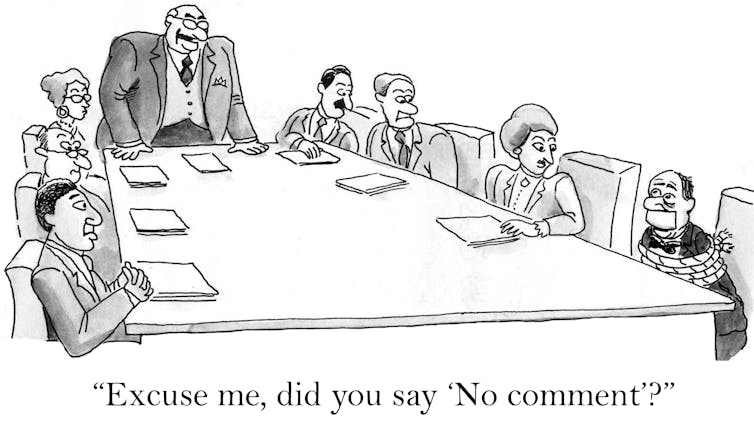
A cartoon of a group of people round a board table with one person gagged and bound. The leader of the meeting is asking,
When dissenting voices magically drop away.
Shutterstock/Cartoon Resource

Those who maintain a productive vision actively build systems for honest feedback. They allow formal channels for dissent to continue and construct diverse advisory teams.

Where strong democratic institutions endure – independent media, empowered legislatures, autonomous courts – leaders must continue negotiating and compromising. This tends to keep their confidence grounded. Some leaders successfully work within these constraints, which proves that the descent into myopia is actually more a reflection of institutional weakness than psychological destiny.

Where institutions lack strength or leaders resist self-discipline, electoral success may embolden rather than restrain authoritarian tendencies. As leaders become increasingly convinced of their transformative vision, their ability to perceive alternatives diminishes.

This psychological narrowing manifests in predictable behaviours, notably eliminating dissenting voices. With every election victory, Orbán has replaced independent-minded allies with loyalists. Trump’s first presidency featured constant turnover among advisers who challenged him. His second is populated by people who can be trusted to toe the line.

Myopic decline follows when hubris reaches saturation. Once leaders systematically eliminate feedback mechanisms, they lose all capacity for self-correction. As their ability to process contradictory information deteriorates, they may increasingly conflate personal power with national interest.

This conflation appears most pronounced in cases where leaders have systematically weakened independent media and judicial oversight.

When leaders achieve complete institutional capture, this self-conception becomes institutionalised. Orbán’s declaration, “We have replaced a shipwrecked liberal democracy with a 21st-century Christian democracy,” reveals how personal vision becomes indistinguishable from national transformation.

Institutional capture occurs through different methods but serves similar purposes. Orbán’s control of the media and courts means he has created parallel institutions that exist solely to validate his vision. Erdoğan used emergency powers after a 2016 coup attempt to instigate mass purges.

In both cases, motivated reasoning becomes institutionalised: leaders come to control the institutions that usually determine what information is legitimate and enable forms of dissent.

The endpoint is a transformation in which opposition becomes an existential threat to the nation. When Orbán positions himself as defender of “illiberal democracy” against EU values, or when Erdoğan arrests his rivals, they frame dissent as treason.

Opposition is a threat not just to their power but to the nation’s essence. Maximum vision has produced maximum blindness. Institutions have been redesigned to perpetuate rather than puncture the delusion.

Resisting the decline

The robustness of democratic institutions is decisive in determining whether hubristic tendencies can be contained within democratic bounds or whether they culminate in authoritarian consolidation.

Hungary and Turkey display a more linear model of democratic erosion. Both Orbán and Erdoğan leveraged initial electoral mandates to systematically capture state institutions. Their hubris evolved from a tool for challenging establishments into a self-reinforcing system in which the regime’s vast sway over state institutions eliminated feedback mechanisms.

Bolsonaro’s slide toward authoritarianism – denying COVID science, attacking electoral systems, attempting to overturn his 2022 defeat – triggered immediate institutional pushback. Unlike Hungary or Turkey, where courts and civil society gradually bent to executive pressure, Brazilian institutions held firm.

Bolsonaro’s trajectory from populist outsider to authoritarian to electoral defeat and institutional rejection suggests that robust federal structures and an independent judiciary can function as circuit breakers. They can prevent permanent democratic capture.

The American experience presents a third model: democratic resilience under stress. Unlike Hungary and Turkey, where institutional capture succeeded, Trump’s first presidency tested whether these patterns could emerge in a system with deeper democratic roots and stronger institutional checks.

While his efforts to pressure state election officials and weaponise federal agencies followed recognisable authoritarian scripts, American institutions proved more resistant than their Hungarian or Turkish counterparts. Courts blocked key initiatives, state officials refused to “find votes,” and congressional oversight continued despite partisan pressures.

Yet even this institutional resistance came under severe strain, suggesting that democratic durability may depend more on specific design features and timing than general democratic culture.

The Trump stress test has revealed vulnerabilities. The erosion of democratic norms – when parties prioritise loyalty over constitutional obligations – creates openings for future exploitation.

The second Trump term could systematically target the weaknesses identified during his first: expanded emergency powers, strategic appointments to undermine the administrative state, and novel statutory interpretations to bypass Congress. The critical question is whether American institutions retain sufficient strength to again disrupt Trump’s trajectory.

The hubris arc appears inherent in populist psychology, underscoring why constitutional constraints and institutional checks are indispensable. Democracies survive not by finding perfect leaders but by constraining imperfect ones.

The Conversation

The authors do not work for, consult, own shares in or receive funding from any company or organisation that would benefit from this article, and have disclosed no relevant affiliations beyond their academic appointment.

ref. The hubris arc: how visionary politicians turn into authoritarians – https://theconversation.com/the-hubris-arc-how-visionary-politicians-turn-into-authoritarians-262562

Fear built the nuclear bomb – only trust can ensure it is never used again

Source: The Conversation – UK – By Nicholas John Wheeler, Professor of International Relations, Department of Political Science and International Studies and Non-Resident Senior Fellow at BASIC, University of Birmingham

The world entered its nuclear epoch 80 years ago on August 6 1945. The US dropped an atomic bomb on the Japanese city of Hiroshima, killing between 70,000 and 140,000 civilians by the end of that year.

A stark reminder of this immense destructive power came recently. On August 1, US president Donald Trump announced the redeployment of two submarines – presumably Ohio-class subs carrying ballistic missiles – in response to what he called “highly provocative statements” by Russia’s former president Dmitry Medvedev.

It may have been empty posturing by Trump. But one Ohio-class submarine (the US Navy has 14 in its fleet) carries approximately 90 warheads, each with destructive power many times greater than the bombs dropped on Hiroshima and, three days later, Nagasaki.

As the world remembers the devastation wrought by these bombings, the threat of nuclear conflict remains a persistent threat to humanity.

Frisch-Peierls memorandum

For many years it was believed that building an atomic weapon was not feasible given the amount of uranium-235 required for a bomb. This assumption changed in March 1940 when two refugee physicists – Rudolf Peierls and Otto Frisch, who both worked at the University of Birmingham – produced in secret what became known as the Frisch-Peierls memorandum.

Their memorandum showed that a powerful atomic bomb could be built using only a small amount of uranium-235. What drove Frisch and Peierls was fear that Nazi Germany might build the bomb first.

They wrote: “If one works on the assumption that Germany is, or will be, in the possession of this weapon … The most effective reply would be a counter-threat with a similar bomb. It would obviously be too late to start production when such a bomb is known to be in the hands of Germany, and the matter seems, therefore, very urgent.”

The Frisch-Peierls memorandum was submitted to the British government as a warning. Prime Minister Winston Churchill heeded the message, establishing the Maud committee a month later to investigate the military potential of atomic energy.

It reported in secret in July 1941, urging production of a bomb and Britain’s cooperation with the US in this endeavour. In a now-famous line, the committee said: “No nation would care to risk being caught without a weapon of such decisive possibilities.”

The demonstration of what the atomic bomb was capable of at Hiroshima, and then at Nagasaki, spurred others to follow the committee’s logic. The Soviet Union, fearing a US atomic monopoly, tested its first bomb in 1949. Britain joined the nuclear club in 1952, followed by France in 1960 and China in 1964.

It is widely accepted that Israel had developed nuclear capability by the early 1970s, though it has maintained a position of ambiguity. India and Pakistan became declared nuclear powers in 1998 and North Korea followed in 2006.

While factors such as national ambition and status played a role in proliferation, a key driving force was fear, fear of adversaries achieving a lasting strategic advantage and, in the case of North Korea, an external attack.

Fear’s centrality to the nuclear story is not only in relation to its role as a driver of proliferation. Nuclear fear has also been a key source of restraint. The most dramatic manifestation of this was the October 1962 Cuban missile crisis.

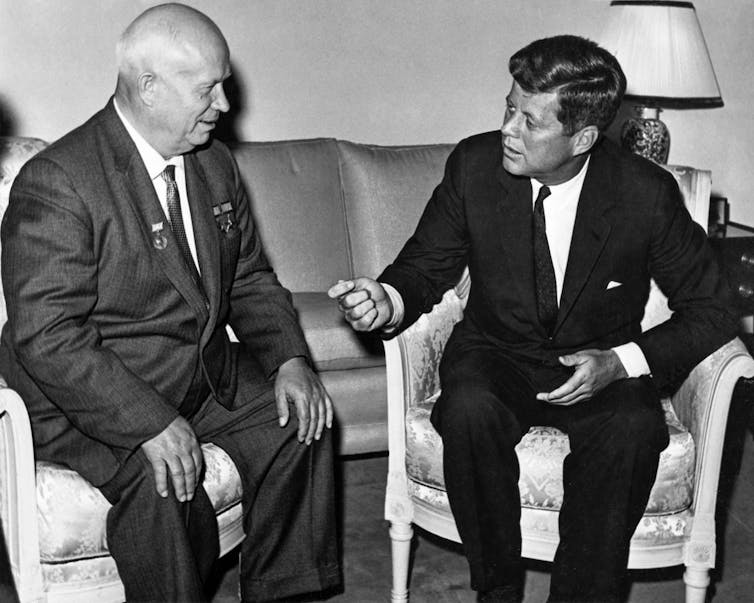
As I have argued elsewhere, shared fear of nuclear catastrophe led the then US president, John F. Kennedy, and his Soviet counterpart Nikita Khrushchev to develop empathy and trust. This was a key factor in the peaceful resolution of the crisis.

John F. Kennedy meeting with Nikita Khrushchev.
John F. Kennedy meeting with Nikita Khrushchev during a 1961 summit held in Vienna.
US Department of State

However, nuclear fear – and the deterrence it makes possible – is a fragile basis on which to safeguard humanity’s future. The world may have avoided the use of nuclear weapons since August 1945 through a combination of prudent statecraft and good luck. But how long is it before some combination of bad luck and reckless risk-taking leads to the use of nuclear weapons once again?

Russian nuclear sabre-rattling over Ukraine and the May 2025 conflict between India and Pakistan, unleashing military force between two nuclear-armed states, are warnings that the ever-present threat of nuclear weapons still hangs over humanity.

In the cold war’s climate of deep distrust and nuclear fear, the US and Soviet Union at least had some shared guardrails and channels of communication. Arms control agreements agreed after the Cuban missile crisis limited superpower competition through the 1960s and 1970s. They continued to restrain US-Soviet competition in the early 1980s.

Nowadays, however, arms control has all but collapsed while reliable and trusted channels of communication between major nuclear adversaries are virtually non-existent. The prospects for regulating the nuclear arms competition between Russia, the US and China are bleak.

Replacing fear with trust

To mark the 80th anniversary of the advent of the nuclear epoch, the Nobel Laureate Assembly – a gathering of Nobel laureates and nuclear experts at the University of Chicago – warned in its 2025 Declaration for the Prevention of Nuclear War that: “Ultimately, security cannot be built on fear.”

If the bomb was born out of fear, then ensuring it is never used again requires replacing fear with trust. Ten years into the nuclear epoch, Albert Einstein and philosopher Bertrand Russell issued a manifesto signed by 11 signatories. It was created principally as a trust-building project between the east and west.

The manifesto concluded: “We appeal as human beings to human beings: remember your humanity, and forget the rest. If you can do so, the way lies open to a new paradise; if you cannot, there lies before you the risk of universal death.”

We now face the same choice the manifesto laid bare. One path leads to annihilation, the other to survival through a recognition of our common humanity.

Japan gives expression to that common humanity every August when Hiroshima and Nagasaki hold their peace memorial ceremonies. Remembering the victims and those who continue to suffer from the effects of the atomic bombings, these memorials look to a future where nuclear weapons no longer exist.

The nuclear bomb may have been born in fear. But only the building of trust, which may spring from that fear, can ensure it is never used again.

The Conversation

I have received past funding from the Economic and Social Research Council and the Open Society Foundations.

ref. Fear built the nuclear bomb – only trust can ensure it is never used again – https://theconversation.com/fear-built-the-nuclear-bomb-only-trust-can-ensure-it-is-never-used-again-262637

Plastics and human health: what’s at stake in the global treaty talks in Geneva

Source: The Conversation – UK – By Cat Acheson, Research Associate, School of Social and Political Science, University of Edinburgh

Plastics are everywhere – they’re even in you right now – and are making many of us sick. Now, global negotiators are fighting over whether that matters.

As 180 countries meet in Geneva to seek agreement on a global treaty on plastic pollution, a landmark review published in medical journal The Lancet has made the stakes clear. Plastics, the evidence shows, are a threat to human health – from womb to grave.

They’re linked to miscarriages, birth defects, heart disease and cancer. Plastics are harming people at every stage of the plastics lifecycle – from initial oil extraction to the production and use of plastic products, and their eventual disposal via landfill, incinerator or just being left in the environment.

Yet the possibility of a strong, health-centred treaty hangs in the balance. Campaigners, scientists and healthcare groups are pushing for strong measures to cap production and ban hazardous chemicals. But petrochemical producers and industry lobbyists are pushing back – arguing, against mounting evidence, that plastics are essential to saving lives.

The UN meeting in Geneva is the culmination of several years of negotiating. In theory, delegates will agree on a global treaty by August 15.

The current draft text, which will be the basis for these negotiations, contains provisional elements which could make a real difference. These include cutting plastic production (Article 6), banning plastic products and chemicals that are hazardous to humans or the environment (Article 3), and a section dedicated to protecting human health (Article 19).

But some negotiators oppose these elements, and there is a risk they will be watered down or scrapped entirely in the final treaty.

The so-called Like-Minded Group of countries – many of whose members are petrochemical producers including Saudi Arabia, China, Iran, and Russia – has led the opposition to a health-centred treaty. They have done so by arguing that plastics are in fact essential for protecting health, due to the role of single-use plastic in modern medicine.

For example, Kuwait’s submission to the previous negotiating round in Busan, South Korea, last year called concerns about plastic “not inclusive”, and cited medical devices as proof that plastic saves lives. Saudi Arabia has opposed the inclusion of a dedicated article on health, arguing that this would divert the treaty away from its core purpose of managing plastic waste.

Since almost all plastic is made from oil or gas, these petrostates have a clear incentive to maintain the status quo of plastic production and dependency. No wonder they want to focus on managing waste, rather than making less in the first place.

Huge bales of plastic waste
Less than 10% of the world’s plastic is recycled.
Clare Louise Jackson / shutterstock

Plastics industry lobbyists have also been accused of “infiltrating” the negotiations and wielding outsized influence. They too have pushed the narrative that plastics are essential for human health – for example, with posters displayed in Busan which claimed “plastics save lives”.

These lobby groups are pushing for healthcare plastics to be exempted from the treaty entirely, which would provide a significant loophole for plastic producers.

As evidence grows of the ways plastics are harming humans, claims they are necessary to safeguard our health are looking increasingly far-fetched. Of course, plastics are everywhere in modern healthcare. But in most cases, and especially with single-use plastics, they can and should be replaced with a less harmful alternative.

Civil society groups, scientists and healthcare professionals are building momentum for a strong health-centred treaty. The international nongovernmental organization Health Care Without Harm has coordinated an open letter rejecting exemptions for the health sector. Signed by 65 organisations representing 48 million health workers across 88 countries, it calls for a treaty that tackles the full plastics lifecycle – and says cutting unnecessary plastic in healthcare is both possible and necessary to protect patients.

The Scientists’ Coalition, made up of independent experts, has been instrumental in bringing evidence of plastics’ health effects into the debate, while groups like the Global Alliance for Incinerator Alternatives have been pushing for the treaty to recognise that plastics, and especially their disposal, affect marginalised populations hardest. They argue that justice for the most affected people and places should be at the heart of the treaty.

The global plastics treaty is an unprecedented opportunity to take decisive, coordinated action to tackle one of the planet’s biggest threats. At stake in Geneva is whether health will stay at the heart of this treaty – or be sacrificed under pressure from industry and petrostates.

The Conversation

Cat Acheson receives funding from The Wellcome Trust for a project which partners with Health Care Without Harm.

Alice Street received a Wellcome Discovery Award for the project: ‘After the Single Use: Rethinking Medical Devices for Reuse, Resilience and Renewal’, which partners with Health Care Without Harm.

Rob Ralston is a member of Scientists’ Coalition for an Effective Treaty.

ref. Plastics and human health: what’s at stake in the global treaty talks in Geneva – https://theconversation.com/plastics-and-human-health-whats-at-stake-in-the-global-treaty-talks-in-geneva-262593