Why losing weight or cutting alcohol isn’t always best after illness strikes

Source: The Conversation – UK – By Justin Stebbing, Professor of Biomedical Sciences, Anglia Ruskin University
Grinny/Shutterstock.com

The health advice that keeps you from getting sick might actually harm you once you’re already ill. This counterintuitive medical reality has a new name: “Cuomo’s paradox”, coined by Professor Raphael Cuomo at UC San Diego School of Medicine after analysing findings across numerous studies.

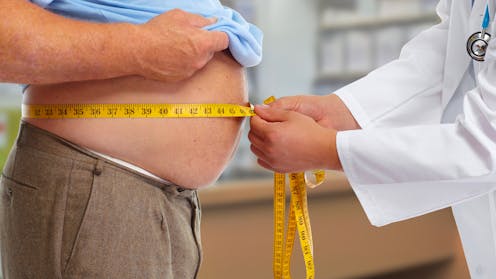
The paradox describes how behaviour long considered unhealthy – carrying extra weight, drinking moderate amounts of alcohol, having elevated cholesterol – sometimes correlates with better survival in people who already have cancer or heart disease. It’s a phenomenon that challenges the one-size-fits-all approach to medical advice.

This doesn’t mean throwing prevention guidelines out the window. Rather, it suggests nutrition should be treated as stage-specific medicine. Before diagnosis, the goal is clear: reduce your risk of getting sick. After diagnosis, the priorities shift dramatically to preserving strength, tolerating harsh treatments and avoiding dangerous complications.

The distinction matters enormously for the millions living with advanced cancer or heart disease. Too often, doctors apply prevention-focused advice – lose weight, eliminate alcohol, slash cholesterol levels – to patients whose immediate battle is surviving chemotherapy or managing frailty. These competing goals can point to entirely different dietary strategies.

Cuomo argues for personalised nutrition after diagnosis rather than copying prevention guidance. What keeps a healthy 40-year-old disease-free may not help a 70-year-old cancer patient get through treatment.

The pattern isn’t entirely new. Researchers have long documented the obesity paradox in cardiovascular and cancer care, where heavier patients sometimes survive longer once they’re ill. These observations have sparked years of debate, with critics pointing to measurement timing, unintentional weight loss from illness, and statistical quirks that might explain the findings.

Although careful study design can reduce some paradoxical signals, they don’t always disappear. Cuomo’s contribution is connecting these recurring reversals across multiple factors – weight, alcohol, cholesterol – and multiple diseases, creating a unified framework for stage-specific nutrition.

The findings don’t negate established science. Obesity and alcohol clearly increase cancer risk and worsen heart health. But once illness strikes, the survival equations change, and rigid prevention targets may not suit every patient undergoing treatment.

The paradox in practice

Why might extra weight help cancer survival? The answer lies in the brutal reality of cancer treatment. Chemotherapy, radiation and surgery are physically punishing, breaking down muscle and tissue. Patients with greater reserves – both fat and crucially, muscle mass – may be able to weather these assaults better and resist the rapid weight loss that signals declining health.

When a person was last weighed matters too. A person who is underweight now – at diagnosis – may have been overweight before they became ill, but is at a higher risk of death compared with an overweight person for the reasons stated above.

Similar patterns appear with alcohol. Although drinking clearly increases cancer risk in proportion to consumption and duration, some studies suggest light-to-moderate drinkers show better or equivalent post-diagnosis outcomes compared to non-drinkers. The interpretation remains murky – light drinkers may have different social or health behaviour, while some may quit alcohol due to illness, skewing comparisons.

A person offering a drink and another refusing the drink.
Some people quit alcohol when they become ill, but before their diagnosis.
Pormezz/Shutterstock.com

Cholesterol presents another puzzle. In advanced heart disease, extremely low cholesterol sometimes signals broader health problems: inflammation, malnutrition and liver dysfunction. In these cases, low cholesterol is more likely to reflect underlying illness rather than directly cause poor outcomes, meaning that sicker patients often show low levels. This creates a U-shaped pattern where both very high and very low cholesterol are linked to an increased risk of death.

Cuomo’s message isn’t that “high cholesterol is good” but that aggressively pursuing prevention targets in frail patients might not improve survival and could conflict with maintaining strength and quality of life. Treatment decisions require individualisation and careful monitoring.

For doctors, this means separating prevention from survival goals. Before diagnosis, standard guidance applies: maintain healthy weight, limit alcohol, manage cholesterol. After diagnosis, targets should reflect disease stage, treatment plans, body composition and other health conditions. The focus shifts to avoiding unintentional weight loss while maintaining muscle and energy during active treatment.

Cuomo’s paradox doesn’t upend health advice. It emphasises context. The behaviour that prevents disease isn’t always that which best supports survival once serious illness arrives. That’s not permission for unhealthy habits – it’s a call for individualised care that balances survival, strength and quality of life through careful medical oversight.

The Conversation

Justin Stebbing does not work for, consult, own shares in or receive funding from any company or organisation that would benefit from this article, and has disclosed no relevant affiliations beyond their academic appointment.

ref. Why losing weight or cutting alcohol isn’t always best after illness strikes – https://theconversation.com/why-losing-weight-or-cutting-alcohol-isnt-always-best-after-illness-strikes-263315

Zone zero: the rise of effortless exercise

Source: The Conversation – UK – By Tom Brownlee, Associate Professor, Sport and Exercise Science, University of Birmingham

It can look almost too easy: athletes gliding along on a bike, runners shuffling at a pace slower than most people’s warm-up, or someone strolling so gently it barely seems like exercise at all. Yet this kind of effortless movement is at the heart of what’s becoming known as zone zero exercise.

The idea runs counter to the “push yourself” culture of gyms and fitness apps. Instead of breathless effort, zone zero exercise is all about moving slowly enough that you could chat very comfortably the whole time. For some people, it might mean a gentle stroll. For others, it could be easy yoga, a few stretches while the kettle boils, or even pottering about the garden. The point is that your heart rate stays low; lower even than what many fitness trackers label as zone 1.

In the language of endurance training, zone 1 usually means about 50-60% of your maximum heart rate. Zone zero dips beneath that. In fact, not all scientists agree on what to call it, or whether it should be counted as a separate training zone at all. But in recent years, the term has gained traction outside research circles, where it has become shorthand for very light activity, with surprising benefits.

One of those benefits is accessibility. Exercise advice often leans towards intensity: the sprint intervals, the high-intensity classes, the motivational “no pain, no gain”. For anyone older, unwell, or returning to movement after injury, this can feel impossible. Zone zero exercise offers an alternative starting point.

The quiet power of easy effort

Studies have found that even very light activity can improve several health markers including circulation, help regulate blood sugar, and support mental wellbeing. A daily walk at a gentle pace, for example, can lower the risk of cardiovascular disease.

There’s also the question of recovery. High-level athletes discovered long ago that they couldn’t train hard every day. Their bodies needed space to repair. That’s where easy sessions came in. They aren’t wasted time, but essential recovery tools.

The same applies to people juggling work, family and stress. A zone zero session can reduce tension without draining energy. Instead of collapsing on the sofa after work, a quiet half-hour walk can actually restore it.

A woman lies on the floor, balancing her daughter on her shins.
Every bit counts.
PH888/Shutterstock.com

Mental health researchers have pointed to another benefit: consistency. Many people give up on exercise plans because they set the bar too high. A routine based on zone zero activities is easier to sustain. That’s why the gains – better sleep, a brighter mood, and lower risk of chronic illness – keep adding up over months and years.

There are limits, of course. If your goal is to run a marathon or significantly increase fitness levels, gentle movement alone won’t get you there. The body needs higher-intensity challenges to grow stronger. But the “all or nothing” mindset, either training hard or not at all, risks missing the point. Zone zero can be the base on which other activity is built, or it can simply stand on its own as a health-boosting habit.

The fact that researchers are still debating its definition is interesting in itself. In sports science, some prefer to talk about “below zone 1” or “active recovery” instead of zone zero. But the popular name seems to have stuck, perhaps because it captures the spirit of effortlessness. The idea of a “zero zone” strips away pressure. You don’t need fancy equipment or the latest wearable. If you can move without strain, you’re doing it.

That simplicity may explain its appeal. Public health messages about exercise can sometimes feel overwhelming: how many minutes per week, what heart rate, how many steps. Zone zero cuts through that noise. The message is: do something, even if it’s gentle. It still counts.

And in a world where many people sit for long stretches at screens, it might be more powerful than it sounds. Evidence shows that long sedentary periods raise health risks even in people who exercise vigorously at other times. Building more light, frequent movement into the day may matter just as much as the occasional intense workout.

Zone zero exercise, then, isn’t about chasing personal bests. It’s about redefining what exercise can look like. It’s not a test of willpower but a way to keep moving, to stay connected to your body, and to build habits that last. Whether you’re an elite cyclist winding down after a race or someone looking for a manageable way back into movement, the same principle applies: sometimes, the gentlest pace is the one that gets you furthest.

The Conversation

Tom Brownlee does not work for, consult, own shares in or receive funding from any company or organisation that would benefit from this article, and has disclosed no relevant affiliations beyond their academic appointment.

ref. Zone zero: the rise of effortless exercise – https://theconversation.com/zone-zero-the-rise-of-effortless-exercise-263365

It’s 25 years since London got a mayor – and our polling reveals discontent

Source: The Conversation – UK – By Elizabeth Simon, Postdoctoral Researcher in British Politics, Queen Mary University of London

In 1998, British prime minister Tony Blair was bullish about his government’s vision for local democracy in London. A city-wide referendum had just firmly endorsed New Labour’s plan to give London a mayor. Though only a third of the electorate turned out, 72% of them were in favour – much healthier than the 50% of Welsh voters who ensured, by a hair’s breadth, the creation of their devolved assembly the year before.

Blair held up the UK’s capital city as a trailblazer. “Once they see how much London is benefiting from having a mayor,” he predicted, “I am confident that people in many other cities and towns of Britain will want to follow.”

Two years later, and a quarter of a century ago this year, Blair’s government created the London mayoralty, the Greater London Authority (GLA) and the London Assembly. Since then, the mayoralty has become, in the words of local government expert Tony Travers, one of the “biggest prizes in British politics”. Former prime minister Boris Johnson, who was mayor from 2008 to 2016, embodies the career-boosting potential of the office.

Coming alongside a sweep of constitutional reforms, the mayoralty, authority and assembly were supposed to address a perceived democratic deficit.

True, through Westminster, London was unquestionably the geographical centre of British political power – and dominant economically too. But after the 1986 abolition of the Greater London Council by Margaret Thatcher’s government (a council led, not coincidentally, by outspoken socialist and future inaugural mayor Ken Livingstone), one of the world’s great cities lacked its own democratically elected authority. This was a running sore. New Labour’s reforms were supposed to address it.

But 25 years on, the evidence that these institutions adequately represent the capital’s 9 million citizens is, at best, mixed.

Admittedly, as Blair predicted, more mayors have been added to the UK’s political landscape since London first took the plunge. But the UK capital’s particular institutional setup has not proven popular.

Our poll of a representative sample of adults in London shows, shockingly, that just 30% of people living in the capital feel they have “some” or “a lot” of influence over decision-making in the UK. Even when asked how much control they felt they had over decisions in London, only 31% of Londoners said “some” or “a lot”. The same figure emerged when we asked how much control they had over decisions in their constituency.

Admittedly, Londoners are slightly more trusting of local than national government to act in their interests. We found that 32% trust the mayor and nearly four in ten trust their borough council, compared with only a quarter who trust the national government. But those numbers are hardly ringing endorsements.

And it is striking that Londoners do not feel they have more influence over local than national decision-making. On existing evidence, that is not the case elsewhere in the country.

Some are particularly dissatisfied. White Londoners and those on lower social grades, with lower incomes and lower levels of educational attainment, are all less trusting than average that the government – at both local and national levels – will act in the best interests of Londoners.

We should be cautious when drawing conclusions. We cannot compare our findings with polling conducted prior to devolution, because no polls in that period asked Londoners comparable questions to those we used. And much of the dissatisfaction we pick up clearly reflects wider alienation from, and volatility in, British politics – patterns which have begun to manifest themselves in London, just as they have in other parts of the country.

Bizarre contradictions

In cities outside London, the mayor plays a “convenor” or “team captain” role for clusters of councils. But London’s unusual 32-borough structure – a reflection of its size and population density – makes this difficult. In contrast, Greater Manchester’s mayor, Andy Burnham, only has to convene ten councils.

Yet London borough leaders have recently demanded decentralising reform so the London mayoralty looks more like its counterparts. These calls may not be entirely motivated by governance concerns: frustration with perceived GLA incompetence and animosity towards the current mayor, Sadiq Khan, are also probably at play. But some advocates genuinely believe that City Hall is overpowered.

Others take a different position. Though the mayor and the GLA can make significant decisions in areas like transport (think, for example, of the congestion charge), they lack the chunky institutional and taxation powers of comparable cities such as New York and Paris.

This leads to bizarre situations. Formally, the mayor is responsible for the critical service of policing, yet cannot even appoint the commissioner for the Metropolitan Police. City Hall is caught between borough councils delivering core services and successive national governments determining budgets – including the Met’s. As declassified government papers reveal, such a situation was a worry even before the role existed: a young Pat McFadden, then political adviser to Blair, privately expressed such concerns about the draft plans in 1997.

Unfinished business

It does not appear, then, that devolution has made Londoners feel empowered over their capital’s politics. Add this to the frequent attacks on “Sadiq Khan’s London” from prominent national and international politicians, especially from the right, and it seems the future of London’s democratic institutions is as contentious as it has ever been.

A quarter of a century since the capital got its first mayor, Londoners still don’t feel as though they are adequately represented, and that they can trust their politicians to deliver for them.


Want more politics coverage from academic experts? Every week, we bring you informed analysis of developments in government and fact check the claims being made.

Sign up for our weekly politics newsletter, delivered every Friday.


The Conversation

The authors do not work for, consult, own shares in or receive funding from any company or organisation that would benefit from this article, and have disclosed no relevant affiliations beyond their academic appointment.

ref. It’s 25 years since London got a mayor – and our polling reveals discontent – https://theconversation.com/its-25-years-since-london-got-a-mayor-and-our-polling-reveals-discontent-263359

The Life of Chuck: Stephen King adaptation celebrates the richness of ordinary life

Source: The Conversation – UK – By Andrew Dix, Senior Lecturer in American Literature and Film, Loughborough University

“I’m still excited when somebody makes a movie out of something that I’ve done,” Stephen King recently told The Guardian. This openness to exhilaration on King’s part is remarkable, given that he is such a widely adapted writer. To date, more than 90 of his novels and short stories have been adapted for cinema and television (and more adaptations are currently in production).

Variations in the scale of his works have proved no barrier for potential adaptors of King. The 1,100 pages of The Stand (1978) have been processed for the screen. But so too have been the 110 of Rita Hayworth and Shawshank Redemption (1982). Genre shifts across the long arc of King’s work have also been accommodated by adaptors. While early ventures in horror such as Carrie (1974) and Misery (1987) were rapidly taken up by Hollywood, equal haste has been expended recently to bring to American TV King’s crime novels featuring the likeable sleuth Holly Gibney from the Holly series.

In all of this furious adaptive activity, differences in quality are only to be expected. For every screen treatment with the lustre of Kubrick’s The Shining (1980), there is a dull or clumsy transposition such as John Power’s two-part miniseries of The Tommyknockers (1993).

Even King’s involvement in a project is not a guarantor of success. His role as executive producer failed to prevent Salem’s Lot (1975), his horrifying tale of vampires in Maine, from being defanged when it was adapted for cinema in 2024.


Read more:
Salem’s Lot: a faithful but shallow adaptation of Stephen King’s classic vampire novel


Now King is back as an executive producer, this time attached to The Life of Chuck, a film adapting one of the novellas included in his 2020 collection, If It Bleeds. Here, however, he is working alongside something of a King specialist (if not a King obsessive), the screenwriter and director Mike Flanagan. He has already adapted two novels by the author: Gerald’s Game (1992) and Doctor Sleep (2013).

Happily, The Life of Chuck proves to be a thoughtful adaptation, shot through with King’s sensibility while augmenting the original novella through its own cinematic choices.

The Life of Chuck trailer.

The Life of Chuck showcases King’s continuing interest in narrative experimentation, even in this late phase of a long writing life. Three acts, structured in reverse chronology, consider moments in the seemingly unremarkable life of Chuck Krantz (Tom Hiddleston), a New England everyman. Flanagan’s adaptation sensibly preserves this design.

There are a few instances in the film where the director appears inhibited by his source material. In his Guardian interview, King reveals himself to be pleasingly without any sense of proprietorship about the adaptative process, saying he thinks of his novels and short stories and the films made from them as “two different things, like oranges and apples”. But where Flanagan draws verbatim on the novella for sustained passages of voice-over, especially in act one, he is in danger of not sufficiently differentiating his apple from King’s orange.

Elsewhere in the film, however, Flanagan frees himself from King’s storytelling. More is done on screen than on the page to weave together the three acts, as when characters restricted in the novella to one segment only appear in other places in the film (a roller-skating girl, for example, or high school English teacher Marty Anderson, played by Chiwetel Ejiofor).

New motifs are included in one strand by Flanagan so as to prepare us, subtly, for another part of the story. Most notably, an allusion in act three to the 19th-century poet Walt Whitman, great celebrator of everyday American experience, who is an animating presence in act one.

In praise of ordinariness

Film is a mixed or “composite” medium, having at its disposal not only the visuals of photography but the resources of other forms such as architecture, dance, music and theatre. All are mobilised effectively in Life of Chuck.

A low-key score by the Newton Brothers is heard throughout, further endowing the several sections of the film with narrative continuity and atmospheric unity. The drumming that figures prominently in the middle section is echoed in act one when Chuck’s rock‘n’roll-loving grandmother bangs the rim of a saucepan.

Dance, too, is central to The Life of Chuck as a screen experience. This is not an especially kinetic film: the camera tends to move smoothly, while editing transitions are generally stately (rationing the terrifying jump cuts common elsewhere in King adaptation). But there is vivid movement in the film’s middle section.

Recalling the extended set-pieces of Fred Astaire and Ginger Rogers musicals that we catch glimpses of when characters are watching TV, the adult Chuck frees himself from the constraints of life as a be-suited accountant and spontaneously dances.

The dance is one of many moments in which The Life of Chuck celebrates the ordinary, uncovering its richness. Ordinariness has a long tradition in American writing (a field in which King, as a former English teacher, is expert). Consider John Williams’s novel Stoner (1965), perhaps, or Raymond Carver’s short story A Small, Good Thing (1983). But Flanagan has succeeded in the challenge he sets himself to bring ordinariness to a cinema screen that often, these days, is populated instead by images of the super-heroic and fantastical.


Looking for something good? Cut through the noise with a carefully curated selection of the latest releases, live events and exhibitions, straight to your inbox every fortnight, on Fridays. Sign up here.


The Conversation

Andrew Dix does not work for, consult, own shares in or receive funding from any company or organisation that would benefit from this article, and has disclosed no relevant affiliations beyond their academic appointment.

ref. The Life of Chuck: Stephen King adaptation celebrates the richness of ordinary life – https://theconversation.com/the-life-of-chuck-stephen-king-adaptation-celebrates-the-richness-of-ordinary-life-263691

Israel opens new front in Gaza war

Source: The Conversation – UK – By Sam Phelps, Commissioning Editor, International Affairs, The Conversation

This article was first published in The Conversation UK’s World Affairs Briefing email newsletter. Sign up to receive weekly analysis of the latest developments in international relations, direct to your inbox.


The next phase of the war in Gaza has begun. Israel’s military is carrying out the early stages of an assault to capture Gaza City, with 60,000 reserve troops expected to be called up for the offensive. Hundreds of thousands of Palestinians will evacuate south.

World leaders have condemned the assault. The French president, Emmanuel Macron, said it “risks plunging the entire region into a cycle of permanent war”. Belgium’s foreign ministry added it would “lead to more death, destruction and mass displacement”.

These developments come days after Hamas officials accepted a new ceasefire proposal to pause the war. The offensive scuppers any hopes of such a deal moving forward, says Julie Norman of University College London.

Norman, associate professor in politics and international relations, sees this as an all-too familiar situation. Hamas has responded positively to various ceasefire proposals over the past year that have subsequently broken down.

Beyond a ceasefire, the two warring parties also remain far apart on what “ending the war” actually includes. There are major sticking points around the disarmament of Hamas and Israel’s intention to maintain “security control” in Gaza after the war.

So don’t expect the violence to end anytime soon, writes Norman. As one Israeli reservist told her during a recent trip to the region: “Last year at this time, I didn’t imagine there could possibly be another year of war. Now, it’s hard to imagine there not still being a war in another year from now.”


Read more:
No end to the violence as Israel launches its assault on Gaza City


The Israeli government has meanwhile approved the construction of a new settlement in the West Bank, comprised of about 3,500 new dwellings. Leonie Fleischmann, senior lecturer in international politics at City St George’s, University of London, lays out why the plan is particularly controversial.

She writes that the settlement’s construction, deemed illegal under international law, “would cut the West Bank into two separate parts, rendering it impossible to establish a contiguous Palestinian state with East Jerusalem as its capital”.

This certainly seems to be the intention of the Israeli government. Bezalel Smotrich, Israel’s hard-line finance minister, declared that the approval of construction plans “buries the idea of a Palestinian state”. He added: “Every town, every neighbourhood, every housing unit is another nail in the coffin of this dangerous idea”.


Read more:
Israel’s plan for massive new West Bank settlement would make a Palestinian state impossible


Trump the peacemaker?

Elsewhere, we have interrogated Donald Trump’s claim that he resolved six conflicts in a matter of months. We interviewed six experts on those regions to find out what Trump actually did, and whether it made a difference.

Some of Trump’s claims hold up, to an extent. In the case of Thailand and Cambodia, for example, his threat to suspend trade talks with both countries was the breakthrough that paused hostilities.

His mediation between Armenia and Azerbaijan has also resulted in the warring countries coming together to agree a possible pathway to peace after decades of conflict. But our experts were unanimous in their verdict that, ultimately, Trump’s claim doesn’t fully stand up.


Read more:
Did Trump really resolve six conflicts in a matter of months? We spoke to the experts to find out


One war Trump cannot claim to have solved is in Ukraine, which was the focus of two high-stakes summits over the past week. The first saw Trump roll out the red carpet for Vladimir Putin in Alaska. He signalled afterwards that the pair had discussed Ukraine ceding land to Russia in order to end the war.

Trump then met with Ukrainian president Volodymyr Zelensky and the leaders of some of Ukraine’s European allies at the White House a few days later. Zelensky will have left this hurriedly arranged meeting feeling a sense of relief.

There seems to have been no real pressure put on Ukraine to give land to Russia, and Trump even appeared to accept the European position that security guarantees for Kyiv will be vital if any peace deal is to stick. But the results of this meeting were still far from perfect, says Stefan Wolff.

Wolff, professor of international security at the University of Birmingham and a regular contributor to this newsletter, explains that Trump is hailing the fact that a direct meeting between Putin and Zelensky has not been ruled out as a major success of the past week’s diplomatic efforts.

However, as Wolff notes, a peace process remaining somewhat intact is a far cry from an actual peace agreement. Even then, he says, any further progress towards peace is likely to happen at a snail’s pace. Russia already looks to be dragging its feet.

Putin reportedly suggested to Trump that Zelensky could travel to Moscow for talks. This is an option Kyiv could not possibly have agreed to. Meanwhile, Russian foreign minister Sergei Lavrov has watered down hopes of any such meeting taking place, saying it would have to be prepared “gradually”.


Read more:
Transatlantic unity at the White House disguises lack of progress towards just peace for Ukraine


Security guarantees

Equally unclear are the details of security guarantees for Ukraine. Zelensky has praised Trump’s indication that the US is ready to be part of that guarantee, and says he hopes it will be “formalised in some way in the next week or ten days”. But what are the options?

One proposal includes western allies offering Ukraine what Italy’s prime minister, Giorgia Meloni, has called an “article 5-style” protection. We spoke to Mark Webber, professor of international politics also at the University of Birmingham, about what that means.

As Webber writes, Meloni was alluding to Nato’s collective defence pledge that treats an attack on one member as an attack on all. However, the route to an article 5 security guarantee through Ukrainian membership of Nato has been expressly ruled out by the Trump administration, he says.

A much more likely option is that Europeans will be “the first line of defence”, with the US instead offering intelligence, weapons and air support of some kind. Trump was clear there would be no US “boots on the ground”, writes Webber.

In any case, it remains doubtful whether a security guarantee for Ukraine can be reached. Lavrov has said discussing security guarantees without Russia’s involvement “is a road to nowhere”. He has since said proposals to deploy European troops in Ukraine would be unacceptable for Russia. In the meantime, Russia’s advance in eastern Ukraine continues to gather momentum.


Read more:
Ukraine war: what an ‘article 5-style’ security guarantee might look like


It’s from eastern Ukraine that Frank Ledwidge, a military strategist at the University of Portsmouth, has just returned from a week-long trip. He has provided this account of daily life in Ukraine’s eastern capital, Kharkiv, where air-raid sirens sound at all hours but shopping malls remain busy and bars lively.

Despite all this, Ledwidge notes, there was an abiding sense of emptiness in what has come to be known as Ukraine’s “unbreakable city”. No official figures are available, but Ledwidge estimates that more than half of Kharkiv’s pre-war population of 1.5 million have left since the war began in 2022. Many of these people may never return.


Read more:
Kharkiv: what I saw in Ukraine’s ‘unbreakable’ eastern capital


Sign up to receive our weekly World Affairs Briefing newsletter from The Conversation UK. Every Thursday we’ll bring you expert analysis of the big stories in international relations.


The Conversation

ref. Israel opens new front in Gaza war – https://theconversation.com/israel-opens-new-front-in-gaza-war-263484

The UK’s year of climate U-turns exposes a deeper failure

Source: The Conversation – UK – By Kevin Anderson, Professor of Energy and Climate Change, University of Manchester

Aerial-motion/Shutterstock

We’re now halfway through the UK government’s critical decade for tackling climate change – and 2025 is fast becoming a year of climate U-turns.

Airport expansions have been approved, the phaseout of gas-fired boilers shelved and, under the government’s latest industrial strategy, green levies on industrial energy bills that support renewables have been slashed. All while key indicators of global climate stability are deteriorating.

As carbon budget and energy policy researchers, we believe the UK’s official climate advisers, the Climate Change Committee (CCC), are failing to hold the government accountable for backsliding on climate action.

Worse still, the CCC’s recommendation that the UK reach net zero emissions by 2050 does not align with international commitments to limit global warming to 1.5°C and “well below 2°C”. It also fails to reflect the UN principle of fairness and equity whereby wealthier nations like the UK cut emissions earlier and faster than poorer countries.

In fact, it systematically undermines these promises, with the CCC’s 2025 seventh carbon budget (a landmark report that advises the UK government how to tackle its emissions for the period 2025-2050) a case in point.

Hiding carbon colonialism

As a signatory to UN climate agreements, the UK is obligated to “take precautionary measures” based on “best available scientific knowledge” to prevent “threats of serious or irreversible damage” to the climate. This includes setting carbon budgets rooted in the principles of equity and with a high chance of limiting warming to 1.5°C. Yet, scientists warn this window is closing fast.

Recent research concludes that from 2025, the world can emit no more than 160 gigatonnes of carbon dioxide (GtCO₂) for a 50% chance of not exceeding 1.5°C. Despite this, the CCC uses a global carbon budget almost 50% higher, at 235GtCO₂.

Internationally, the UK ranks tenth in wealth, fourth in historical cumulative emissions, and has per capita historical emissions four times the global average. Yet, the CCC disregards the UN principle that wealthy nations, whose prosperity was built on fossil fuels, must shoulder greater responsibility to rapidly cut emissions.

With just 0.84% of the global population, the UK’s equal share of the remaining 1.5°C carbon budget (160 GtCO₂) would be 1.34 GtCO₂. The CCC allocates it 3.7 GtCO₂ – nearly three times its equal per person share. However, even an equal share allocation would fall far short of the UN’s equity framework. Past CCC analyses have likewise embedded significant inequities.

Such misappropriation of the carbon budget shifts the burdens of climate change on to more vulnerable communities globally, prioritising the UK’s high-carbon norms over the right of low-income nations to sustainable development. The CCC’s departure from the UN’s core equity principle reveals how colonial norms remain deeply embedded in climate policy.

Net zero, explained by UCL’s climate scientist Mark Maslin.

Carbon removal roulette

Major societal transformations, such as moving from private car to public transport, are largely absent from the CCC’s recommendations. In contrast, large-scale engineered removals of carbon dioxide from the atmosphere and fossil fuel carbon capture and storage are assumed to be technically and socio-economically feasible.

The CCC definition of “feasible” prioritises near-term political convenience over scientific integrity and climate stability.

Despite a 4% decline in car travel over the past decade, the CCC estimates a per person increase of 10% by 2050. By avoiding pathways that challenge consumption norms, the CCC sidelines proven approaches like reducing car dependence or enforcing robust energy efficiency standards.

This highly cautious approach to behavioural change contrasts sharply with its assumptions on the future deployment of CDR, projecting UK engineered removals to increase from 0-13MtCO₂ by 2035, and 36MtCO₂ by 2050 – or nine and 26 times the total global level in 2024.

This scale of expansion contradicts historical trends. Similar heroic assumptions underpin CCS projections in electricity and blue hydrogen production (from natural gas). The CCC proposes the UK capture and store 33 MtCO₂ annually by 2050, triple the current global rate – for a technology that has barely advanced despite decades of promises and investment.

While some carbon removal is necessary to offset “impossible to mitigate” emissions from agriculture – for example, nitrous oxide from fertiliser use – using CDR to justify ongoing fossil fuel use is a high-risk approach that undermines the Paris climate commitments.


Read more:
Climate tipping points are nearer than you think – our new report warns of catastrophic risk


Nature-based carbon removal options are also overstated. The CCC projects removing 30 MtCO₂ per year by 2050 but insufficiently addresses the impacts on food security and land conflicts. Though reforesting offers ecological benefits, climate-driven wildfires, droughts and pests can rapidly re-release stored carbon. Such insecure carbon storage cannot offset guaranteed emissions from burning fossil fuels.

Ultimately, the CCC is deeply conservative on near-term changes to consumption norms, while embracing dangerously optimistic projections of future carbon removal technologies. It accepts temperatures will overshoot global targets significantly, and banks on future correction – despite the risk of triggering irreversible climate tipping points.

Hard truth

The allure of the CCC’s net zero 2050 advice is that it claims to offer a pathway to avoid both major social transformation and a rapid phaseout of fossil fuels, yet still meet the UK’s fair share of the 1.5°C commitment.

This politically appealing interpretation is scientifically flawed, downplays the gravity of climate risks and disregards principles of international justice. The CCC and others must stop being silent on these critical issues and end the carbon colonialism at the heart of the climate agenda.

The UK’s net zero 2050 framing isn’t just delaying urgent action, it normalises ecological breakdown while maintaining the illusion of responsible stewardship. It worsens climate impacts and undermines preparedness by presenting inadequate measures as 1.5°C compatible. A fundamental rethink of the UK’s climate policy requires a consensus that is grounded in equity, scientific integrity and transformative ambition.


Don’t have time to read about climate change as much as you’d like?

Get a weekly roundup in your inbox instead. Every Wednesday, The Conversation’s environment editor writes Imagine, a short email that goes a little deeper into just one climate issue. Join the 45,000+ readers who’ve subscribed so far.


The Conversation

Kevin Anderson is presenting views here that belong to the named authors, and do not necessarily reflect those of researchers within the Tyndall Centre for Climate Change Research.

Chris Jones has received funding from UKRI. The views in this article are of the author and do not necessarily reflect those of the Tyndall Centre for Climate Change Research.

Gaurav Gharde does not work for, consult, own shares in or receive funding from any company or organisation that would benefit from this article, and has disclosed no relevant affiliations beyond their academic appointment.

ref. The UK’s year of climate U-turns exposes a deeper failure – https://theconversation.com/the-uks-year-of-climate-u-turns-exposes-a-deeper-failure-254499

Hay fever: new immunotherapy approved in England for people with severe birch pollen allergies

Source: The Conversation – UK – By Heba Ghazal, Senior Lecturer, Pharmacy, Kingston University

Birch pollen allergy symptoms can sometimes last from January to June. Dragana Gordic/ Shutterstock

Around 25% of hay fever sufferers in the UK are allergic to birch tree pollen. This means that for a good chunk of the population, the arrival of spring and summer means sneezing, itchy eyes, blocked sinuses and days spent indoors avoiding pollen. But the recent approval of a new drug could mean relief from these symptoms for thousands living in England with severe allergies to birch pollen.

Birch pollen is the most common allergy-causing tree pollen across most parts of Europe and the UK. Pollen from birch-related trees including alder, hazel, oak, hornbeam and beech trees can also trigger symptoms – ranging from coughing, congestion and sneezing to itchy, watery eyes.

Symptoms are usually at their peak in April and May, but can sometimes last up to six months – from January to June. Research investigating UK pollen trends has also found that climate change – specifically rising temperatures – is making the UK birch pollen season longer and more severe.

Birch pollen allergies are triggered when the immune system mistakes pollen proteins for harmful pathogens. This causes the immune system to make immunoglobin E (IgE) antibodies – a type of immune defender that attaches itself to immune cells.

This means that the next time the body is exposed to the allergen, the IgE antibody will tell the immune cells to release the immune chemicals histamine, leukotrienes and prostaglandins to destroy the perceived pathogen. Histamine acts within seconds to cause itching, sneezing, swelling of blood vessels and mucus production.

New treatment

The standard treatment for birch pollen allergies include oral antihistamine and corticosteroid nasal sprays. However, a UK study found that even with both, only 38% reported good symptom control. That means up to 62% of people spend birch pollen allergy season fighting to control their symptoms.

But the National Institute for Health and Care Excellence (Nice) has just approved a new oral treatment for adults with severe allergies to birch tree pollen. The tablet, called Itulazax (betula verrucosa), is a type of immunotherapy.

Immunotherapy differs from standard allergy medications by targeting the root cause. The idea is simple: treat the allergy with the allergen that causes it – in this case birch pollen extract. Repeated exposure to tiny, controlled doses of the allergen then trains the immune system to build tolerance over time. The goal with immunotherapy is to change how the body reacts to the allergen entirely rather than just ease the symptoms.

A birch tree with pollen-producing flowers.
The new immunotherapy uses birch pollen extract to treat the allergy.
Animaflora PicsStock/ Shutterstock

Itulazax raises immune tolerance to birch pollen by reducing the number of IgE antibodies the immune system makes when exposed to birch pollen and increasing the number of protective antibodies the body makes. This significantly reduces major pollen allergy symptoms and prevents the body from mounting an immune response against birch pollen in the future.

The treatment is specifically approved for adults with severe birch pollen allergies who have not responded to regular allergy treatments. To qualify for treatment, a confirmed diagnosis is required through a skin prick or blood test showing a reaction to birch-related trees.

Clinical studies show the treatment is generally safe, with the most common side-effects being mild to moderate itching in the mouth and throat irritation – both linked to how it is taken under the tongue. As such, the first tablet must be taken under medical supervision – with at least 30 minutes of monitoring for immediate side-effects.

Though the treatment is effective, it’s not a quick fix. To see results treatment should start at least 16 weeks before the birch pollen season begins and continue through the season. So for people with severe symptoms, this means they may need to start taking the treatment in November. The course also lasts around three years.

Still, for the thousands of people in the UK who experience birch pollen allergies, this new treatment offers a solution for symptoms that can range from annoying to debilitating. The approval of this immunotherapy also offers hope that immunotherapies to treat other types of hay fever will someday be approved.

The Conversation

Heba Ghazal does not work for, consult, own shares in or receive funding from any company or organisation that would benefit from this article, and has disclosed no relevant affiliations beyond their academic appointment.

ref. Hay fever: new immunotherapy approved in England for people with severe birch pollen allergies – https://theconversation.com/hay-fever-new-immunotherapy-approved-in-england-for-people-with-severe-birch-pollen-allergies-263286

Football fans will see Nigel Farage’s branded kit for the cynical move it is

Source: The Conversation – UK – By Josh Bland, ESRC-DTP PhD Researcher, University of Cambridge

As a new season begins, Nigel Farage’s Reform UK is making a play for the affections of the nation’s football fans by launching its very own football shirt. It’s a move that has already proven popular among Reform supporters. According to Zia Yusuf, a leading figure in the party, thousands were sold on their first day of retail.

Reform’s move to exploit the cultural capital of football speaks to a wider trend in British society: the explosion of the football shirt as a cultural behemoth.

Quite simply, football shirts are everywhere. They have been incorporated into high fashion as part of the nostalgic 90s “blokecore” trend. They are used by bands such as Oasis and Fontaines DC as forms of branded merchandise. And now they are being mobilised by political movements, such as Palestinian solidarity organisation FC Palestina, to spread specific messaging.

Instead of being merely the domain of football supporters, football shirts have become cultural canvases.

Crucially, I believe football shirts are a symbolic medium that is tailor-made for Reform’s current political purposes. Ahead of the 2029 election Farage’s goal is clear. His aim is to win over and mobilise a largely working-class, provincial voting base who feel alienated by “mainstream” politics.

It appears that Reform see football as a potential weapon in this task. From its origins in the industrial cities of late Victorian England, modern football has long been a central pillar of working-class culture in Britain. In particular, it has played a potent role in binding communities around shared sentiments of local tribalism. Given that Farage’s political campaigning to date has often been based around a narrative of fighting for authentic, local community interests against out-of-touch metropolitan elites, the appeal of football in the context of Reform’s politics seems straightforward.

The efficacy of football shirts as a culturally loaded tool of communication means that Farage and Reform may feel they have found their own iteration of the Maga hat: a way for followers to embody their political allegiances with a loud, brash piece of statement clothing that also signals deep roots in the nation’s working-class culture.

But there’s a level of hypocrisy at work here. In the lead up to the Uefa Euro 2020 championship, Farage denounced the England team for taking the knee before games, imploring them to “keep politics out of football”. This was followed by another episode of public pearl clutching in 2024 when Farage decried England’s kit design for featuring a technicolour version of the England flag that bore “no relationship to St. George’s cross whatsoever”.

Now Reform has produced a shirt that both explicitly politicises football culture and features a turquoise Union Jack.

But beyond the flagrant double standards of the launch, Reform’s move into football merchandise is potentially a political miscalculation, too.

As the Labour party continues to flail, offering no resolution to the country’s gaping inequality or fixes for its failing public services, let alone a cure for the divisiveness that increasingly define contemporary Britain, it feels that the 2029 election will be won and lost in England’s football loving provinces.

Football and pride

Football’s roots in working-class culture, pride in place and patriotism means that the hard right has always seen the sport as fertile ground. In this sense, Reform’s kit launch is part of a long tradition of attempted infiltrations of the game by the hard right. Most notoriously, the National Front used terraces as recruitment grounds in the 1970s and the Football Lads Alliance attempted similar when it launched in 2017.

But here lies the problem for Reform. These attempts have largely failed. Even at the peak of the National Front’s influence in the 1970s and early 80s they only ever succeeded in establishing themselves as a fringe group on the terraces – albeit a noisy and intimidating one – and have often faced fierce and organised anti-fascist resistance.

Equally, the establishment of the Premier League in 1992 has seen professional football in the UK embrace a more cosmopolitan future. Progressive anti-racist organisations such as Kick It Out have gained significant influence. The cast of players and managers who populate elite level football is now impressively international. In short, despite its roots in local working-class communities, British football increasingly embodies many of the globalist, progressive ideals that Farage so vehemently rejects.

Even more crucially, as I have found in my own research on football supporting communities in the north-east, football culture prizes authenticity.

For the communities I work with, support of a football team is starkly different to support of a political cause. It is a form of living, breathing heritage. It is a tradition that is passed between generations of a family like an heirloom. It is a culture within which supporters constantly perform their own authenticity through a lifetime of ritual – match attendance, shirt wearing and suffering with the team through thick and thin.

The transparency of Farage’s hijacking of football culture for his own ends may therefore be his downfall. Farage’s credibility as a voice on football will simply not measure up to supporters’ lofty standards. They will be aware that he has openly declared his love of cricket over football. They will be cognisant of his lack of interest in the game other than when there’s a nationalist point to make. Above all, they will see through his cynical attempts to exploit the symbols of the football supporting culture they cherish so dearly for his own political cause.

Of course football is an everyday working-class tradition. Of course it has huge cultural salience in the provincial constituencies Farage will target to win in the 2029 election. But Reform should take heed that just because football is popular, that doesn’t mean it is inevitably populist.

The Conversation

Josh Bland receives funding from The Economic and Social Science Research Council.

ref. Football fans will see Nigel Farage’s branded kit for the cynical move it is – https://theconversation.com/football-fans-will-see-nigel-farages-branded-kit-for-the-cynical-move-it-is-263513

Edinburgh TV festival: James Harding’s MacTaggart lecture is a passionate defence of the BBC

Source: The Conversation – UK – By Paul Tucker, Senior Lecturer in Broadcast Production, University of the West of Scotland

The agenda-setting centrepiece of every Edinburgh TV Festival is the MacTaggart lecture, celebrating its 50th anniversary in 2025. This year’s lecture was delivered by former BBC news director James Harding, and billed as a speech that would examine challenges to truth and trust in the media.

Co-founder of Tortoise Media – the “slow news” organisation that has recently bought The Observer – Harding has enjoyed a long career as a journalist and was also once editor of The Times newspaper.

He isn’t really a “TV person”, so Harding seems a strange choice to deliver the 50th MacTaggart. Why not someone who has TV running through their veins, like presenter and producer Richard Osman? Or someone who might reflect the MacTaggart’s beginnings as part of a festival that sought to offer a Scottish-based perspective to the the London-centric TV industry? Or someone who could at least ask the most pressing question facing TV: does it have any kind of future?

However, the organisers of the Edinburgh TV Festival promised the lecture would be “a provocative, kick-ass and insightful view from a visionary leader”.

However, as you might expect from someone who named their company after the humble tortoise, it was much gentler than that, poking its head out of its shell and gently tearing off some conversational topics rather than ripping into things. That said, the lecture was a passionate defence of the BBC that argued for a drastic increase in its funding.

Harding started by describing the BBC as “the most important source of information in this country and around the world”. It was time for the government to give real independence to the BBC in the same way it did with the Bank of England in 1997.

He expressed concern that as things stand, the BBC chair is in essence appointed by the prime minister with a budget set by the chancellor. He also pointed out that should parliament choose not to renew the charter in 2027, the BBC would cease to exist.

Harding argued for change that would see the BBC chair and board of directors appointed by the board itself (which does seem a somewhat circular process) and then approved by Ofcom. The charter, once renewed, would be open-ended (much like those for universities) and any funding – licence fee or otherwise – would be agreed by an independent panel that impartially advises government and is scrutinised by parliament.

That funding, Harding said, needs to be doubled to allow the BBC to function properly. He cited the iPlayer and Media City in Salford as being bold, successful developments of the kind the BBC can only make when properly financed. He admitted that this rise in funding could not come from an increase in licence fee alone, and said something must be done about the 2.5 million households that currently don’t pay it, underlining his support for the “every household pays” model.

Harding also suggested that the quasi-independent and still-developing work of BBC Studios, and in particular the monetising of the BBC archive, could be ways of increasing income for the corporation.

He made an impassioned plea for the BBC World Service to be properly funded, pointing out that it already has a bigger worldwide audience than Netflix. It could, he said, reach over a billion people in the next decade, fighting misinformation globally and providing a real source of soft power for the UK.

Harding’s arguments as to what the BBC could be in the future are perhaps more daring and contentious. He imagines “a BBC that thinks of itself more as the ‘people’s platform’ as well as a public service broadcaster, one that’s home to more varied thinking, but holds true to standards of truth and accuracy, diversity of opinion and fair treatment of people in the news”.

It would, he said, be an open platform that “would invite the BBC to think not just about how it informs and entertains, but how it educates too” – a kind of YouTube run by BBC editorial policy. This, he summed up, would be “a national investment in our future that will come back to reap multi-platform rewards that an investment in no other UK organisation can”.

I don’t think there is much I would argue with in James Harding’s MacTaggart lecture. I would just ask how all this is actually going to happen – how the debate moves out of the conference rooms of the TV festival. Harding obviously believes in the BBC. Yet when he was editor of The Times, a journalist of influence and power, he couldn’t stop the paper’s – and Rupert Murdoch’s – relentless criticism of the BBC.

We also now have an unofficial government opposition in Reform that believes, as Harding reminded the audience, that the BBC is out of touch and institutionally biased, and will be scrapped by Farage’s party should they come to power.

I agree with Harding that in a fragmented media world we must fight to preserve and properly fund the BBC. But that fight won’t be easy.


Looking for something good? Cut through the noise with a carefully curated selection of the latest releases, live events and exhibitions, straight to your inbox every fortnight, on Fridays. Sign up here.


The Conversation

Paul Tucker is a member of The Royal Television Society and a voting member of BAFTA.

ref. Edinburgh TV festival: James Harding’s MacTaggart lecture is a passionate defence of the BBC – https://theconversation.com/edinburgh-tv-festival-james-hardings-mactaggart-lecture-is-a-passionate-defence-of-the-bbc-263661

The UK Space Agency has been absorbed into the science department. The potential effects are still unclear

Source: The Conversation – UK – By Bleddyn Bowen, Associate Professor in Astropolitics and Space Warfare, School of Government and International Affairs (SGIA), Durham University

Tim Peake Fred Duval / Shutterstock

The UK Space Agency (UKSA) has become part of the government’s Department for Science, Innovation and Technology (DSIT). The announcement was made on August 20 2025 by Chris Bryant MP, minister of state for data protection and telecoms.

Cutting red tape and duplicative bureaucracy within DSIT and UKSA seems to be the main rationale in the press release – that and bringing “together the people who shape space policy and those who deliver it”.

Though it sounds like a demotion for UKSA, what the changes mean in practice for the crafting of UK space policy, and the direction of UK space policy itself, remain uncertain. More importantly, rearranging the deckchairs of DSIT and UKSA will not resolve the chronic problems facing British space policy.

The first problem is that UKSA has lacked a clear identity and responsibility over policy, regulation and research within civil space activities. It is not like Nasa or the European Space Agency (Esa) – UKSA does not operate satellites, nor conduct major research and development projects by itself.

UKSA has competed with the Civil Aviation Authority (CAA) over licensing and regulatory powers for satellite launches from the UK, which the CAA has possessed since the mid-2010s.

On research, UKSA acted mostly as a research council, rivalling the work traditionally performed by the UK Research and Innovation’s and Science and Technology Funding Council (STFC).

STFC apportions funding for space science and research for universities and industry. UKSA is also the main point of contact for distributing Esa funding for British industry and university contributions to Europe-wide space projects.

UK space policymaking

UK space policy has always been an interdepartmental and Cabinet Office concern, and UKSA has traditionally only factored into consultations on the regulatory and civil space research dimensions of UK space policies. Since 2021, DSIT has taken on more space policy responsibilities regarding industrial strategy, further eroding a unique role for UKSA.

UKSA therefore has not carved out a clear niche that other departments or executive agencies cannot already claim competency within. The UK government’s position that duplication needs to be addressed is not an unreasonable one. The devil is in the details – which are missing at this time.

It is hard to say whether the bureaucratic changes will be better or worse for the creation and implementation of civil UK space policy and space science research.

The optics of this move can be easily seen and inaccurately spun as a negative in cancelling the UK space programme. No actual space projects are being cancelled.

Saxavord is one of several launch sites under development in the UK.
AlanMorris / Shutterstock

The UK government has clearly recognised this, stressing that UKSA will retain a distinctive and recognisable branding in its new role, which has been effective at home and abroad in space science, industry promotion, and facilitating high-profile projects.

The second chronic problem that pre-dates UKSA – and will continue regardless of the musical chairs in Whitehall – is the lack of a coherent, joined-up national UK space programme with the funding to match. UKSA could never resolve these problems.

For example, the UK government has long pursued a policy of encouraging small satellite launch companies, yet has never allocated the funds necessary to deliver a tangible capability within any reasonable schedule, nor has it created a national UK satellite programme (civil or military) tailored to a high latitude launch profile, which could in turn create concrete demand for such a launcher.

After 15 years of drift, UK launch has gone from being ahead of the curve in Europe (with UK-based companies such as Skyrora and Orbex) to falling behind France, Sweden, or Spain as possibly the first new European small satellite launch providers.

This is a basic lesson in space programme design that seems lost on generations of British policymakers, but one that established satellite launching countries have taken to heart.

Modestly sized space powers have focused on crucial long-term national capability programmes and stumped up the cash for them, such as France’s Spot or India’s Insat programme. Such priorities are not evident in the UK across the civil and military space sectors.

As I explained to the UK House of Lords Select Committee’s UK Engagement with Space inquiry earlier this year, British space policy spreads out too little money in too many directions on small research projects rather than bold national infrastructural space programmes.

The government must also consider the security and military dimensions of space, which cannot exclude UKSA or the civil, industrial and research dimensions as they in turn provide the capability and know how to build British space systems.

The Boris Johnson government formed the National Space Council to drive and coordinate these partnerships, yet it was abolished by the Truss government and reinstated during the Sunak government. There have been no announcements from the Starmer government yet on any meetings of the council. This bureaucratic chaos has not helped efforts to cohere a strategic direction in space.

While the Ministry of Defence claims it wishes to invest in all manner of new space capabilities in the 2025 Strategic Defence Review, it cannot do so without a large injection of new funding, far beyond the billions already allocated for the military satellite Skynet 6 and defence satellite system ISTARI. More than funding, a clear decision on a specific capability is needed, rather than doing a little bit of everything.

Developing one kind of new satellite constellation, such as radar imagery for military operational needs – numbering in dozens of new satellites – would be the biggest undertaking for the MoD in space since the Skynet satellite communications system.

Doing the same for other capabilities at the same time, such as optical imagery, signals intelligence, or laser communications relays, would be as big a challenge again, and perhaps too much to take on at the same time.

For space policy wonks, academic researchers and the space industry, this rearrangement will not change much in the short term – for good and bad. UKSA was never fully independent to begin with, so the changes are likely to be more esoteric, subtle and bureaucratic.

That would require courageous policy decisions at the top of government to deliver a coherent, focused, joined-up and fully funded UK civil and defence space programmes.

The Conversation

These are the author’s own views and not that of any institution or organisation.

ref. The UK Space Agency has been absorbed into the science department. The potential effects are still unclear – https://theconversation.com/the-uk-space-agency-has-been-absorbed-into-the-science-department-the-potential-effects-are-still-unclear-263563