How citizens’ assemblies could improve animal welfare

Source: The Conversation – UK – By Heather Browning, Lecturer in Philosophy, University of Southampton
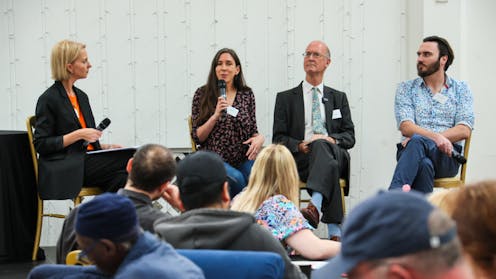
Heather Browning speaks about animal welfare and ethics as part of the Citizens’ Assembly for Animal Welfare opening event in Birmingham. RSPCA, CC BY-NC-ND

As an animal lover, should you visit zoos? Should you have pets? Should you make your garden friendly for birds, pollinators and other wildlife? Should you try to reduce meat in your diet or avoid consuming all animal products? Should you write to politicians about changing the laws for animals?

As a lecturer in animal ethics and animal welfare science, and someone who’s spent a lot of time working with animals, these are the sorts of questions I think about.

There are lots of ways to be kinder to animals. All have their merits. But the big question is: what sort of future do we want to see for animals in our society?

We live in a time where animals are facing some of their biggest challenges, from the climate crisis to industrial farming. Combined with other social issues such as the cost of living crisis and global conflicts, we as citizens and consumers have many other competing claims on our capacity to care. This can mean less attention for animals and the harms they face.


Get your news from actual experts, straight to your inbox. Sign up to our daily newsletter to receive all The Conversation UK’s latest coverage of news and research, from politics and business to the arts and sciences.


This creates a big problem. Alongside the ethical reasons for improving animals’ lives, good animal welfare can benefit everyone – among other things, care for and connections with animals improves our own mental health, fosters compassion in our communities, and can lead to improvements in our natural environment. We don’t want to lose sight of the progress we’ve made in our thinking about and treatment of animals.

It’s undeniable that there have been many welfare gains for animals over the years, but in the face of how far we still have to go, perhaps new approaches are needed. How can we conceive of new, and perhaps more radical, ways to help animals? And importantly, how do we keep animal welfare on the agenda, both socially and politically?

For over two centuries, the Royal Society for the Prevention of Cruelty to Animals (RSPCA) has played a central role in this fight. Alongside their animal rescue work, they have campaigned for changes in over 400 laws, and worked with the public to find ways to improve welfare for pets, farmed animals and wildlife.

This year they are stepping into a new frontier and have commissioned what is possibly the first ever citizens’ assembly focused entirely on animal welfare in the world, delivered with the assistance of experts from the New Citizen Project, a consultancy that specialises in citizen-led engagement. The assembly is part of the RSPCA’s Animal Futures project, which aims to examine what the future may hold for animals by 2050, and most importantly how everyone (citizens, consumers and policymakers) has a role in influencing this.

chickens farmed outside, green grass and open air
Citizens’ assemblies are being held to debate animal welfare issues, such as chicken farming for eggs.
Dewald Kirsten/Shutterstock

Citizens’ assemblies bring together a randomly selected representative sample of the population, who learn about and debate issues and make recommendations. It’s a form of deliberative democracy, where the people can have their say on important social and political issues.

Assemblies are a means of overcoming some of the current problems with the democratic process, like the exclusion of people who often aren’t heard in politics (such as those with less money or education, or racial and religious minorities) and polarisation between major government parties that can slow down decision-making and action.

Beyond just a focus group asking for existing opinions, citizen’s assemblies provide opportunities for members to learn and shape their thinking, to build expertise on the topics they deliberate.

Assemblies have already been used around the world on issues as diverse as abortion rights, electoral reform and food waste. As they are independently facilitated, they don’t just follow the accepted institutional narratives and can instead encourage organisations and policymakers to envision new directions for thought and action – in line with the realities of what the public believe and value.

There are now several examples of the recommendations coming from such assemblies successfully driving policy change, such as climate change reform in France.

While organisations such as the RSPCA may know a lot about animals, hosting this assembly is an acknowledgement that they don’t have all the answers about what is best for society as a whole, as we consider our interactions with animals. The scope of this problem is far larger than any one organisation can tackle alone, and through initiatives such as the citizens’ assembly, we can gain a greater insight into the possible solutions for the future.

Animal assembly

I recently attended this assembly’s opening session in Birmingham, where members were gathered from all around England and Wales (neatly marked by pins scattered across a map of the country). Looking around the room there was obvious diversity in demographics and backgroun and as I spoke with the members it was also apparent there was a wide range of opinions and beliefs on the topics we discussed.

What everyone shared was a commitment to the process – to learn from the experts who were there to introduce the topics, to deliberate and discuss carefully and thoughtfully – and a desire to contribute and influence the process. Being there felt like being part of an important moment for the future of animal welfare.

In the weeks that followed, the members of the assembly met again several times to absorb and consider huge amounts of information about topics such as farming, responsible pet ownership, wildlife, and nature. Based on this, they will make a series of recommendations that will drive change at the RSPCA.

What they produce will be used to shape its future direction, how it works, and how it lobbies governments. What these assembly members recommend could have a substantial and lasting impact on animal welfare in the UK.

Like many animal welfare experts from academia, industry or charities, I might think I have the answers on what animals need. But successful solutions require public backing to have real impact. Improving the future for animals is something that everyone has a role in and a citizens’ assembly can be a catalyst for positive change.


Don’t have time to read about climate change as much as you’d like?

Get a weekly roundup in your inbox instead. Every Wednesday, The Conversation’s environment editor writes Imagine, a short email that goes a little deeper into just one climate issue. Join the 45,000+ readers who’ve subscribed so far.


The Conversation

Heather Browning does not work for, consult, own shares in or receive funding from any company or organisation that would benefit from this article, and has disclosed no relevant affiliations beyond their academic appointment.

ref. How citizens’ assemblies could improve animal welfare – https://theconversation.com/how-citizens-assemblies-could-improve-animal-welfare-259755

Pets can get sunburned too – what you need to know

Source: The Conversation – UK – By Jacqueline Boyd, Senior Lecturer in Animal Science, Nottingham Trent University

While there is good awareness of the potential dangers of pets overheating in high temperatures during summer months, recognising that the sunburn itself can be a source of harm is also important.

We might think that our furry friends are protected from the sun’s harmful rays thanks to their typical hairiness, but in reality, we need to protect them too.

This is especially important for pets with light-coloured hair, pale, pink skin or those with fine or thin coats such as the sphynx cat or the xoloitzcuintle dog that lack natural protection.

For pets that live outdoors or spend a lot of time in the sun, this can also be a significant problem.


Get your news from actual experts, straight to your inbox. Sign up to our daily newsletter to receive all The Conversation UK’s latest coverage of news and research, from politics and business to the arts and sciences.


Pink skin lacks the pigment, melanin, that provides a natural level of protection from sunlight. As a result, pets with exposed areas of pink skin can become painfully sunburned, even on days that might not appear overly sunny. The tips of cats’ ears are commonly affected, as are horses with pink muzzles and other lightly pigmented areas of their body.

Dogs can also be affected on their noses and bellies – I have even known one unfortunate pooch to suffer sunburn on his scrotum after a period of garden sunbathing. Essentially, just like us, any unprotected area of skin that is exposed to the sun can become painfully burned, with both short and more prolonged effects.

Even minor areas of sunburn are associated with reddening of the skin, irritation and discomfort. More severe cases of sunburn can cause blistering, crusting and scabs to form on affected areas. While these signs typically heal and resolve quickly, they can be painful and distressing for our pets.

The longer-term consequences can include significant damage to the skin and may increase the risk of certain forms of skin cancer developing.

There is also the potential for thermal burns to occur after exposure to intense sunlight, especially over the backs of animals. These can be severe, affecting the full thickness of the skin and causing significant distress.

Consequently, protecting our pets from the pain of sunburn is important.

How to protect your pet

An easy way to keep your pet safe both from the damaging UV radiation in sunlight and high temperatures, is to limit their access outdoors during the sunniest and warmest times of the day. This might mean exercising your dog early in the morning and later in the evening, providing shade and shelter for horses and encouraging cats to sunbathe safely indoors.

The use of sunscreen can be a useful protective method to limit harm to exposed areas of skin, but do select a pet-safe sunscreen. Many human sunscreen preparations contain ingredients that can be toxic for our pets, especially if accidentally licked and ingested.

Reapply sunscreen regularly and don’t forget to apply it to the areas most likely to be exposed, such as ears, noses and pink-skinned or lightly coated areas of the body.

For some pets, suitable protective clothing and coverings, including UV eye protection might be appropriate, although do take time to get your pet used to wearing and moving in these before use.

What if your pet has been sunburned?

If your pet gets a mild sunburn but seems comfortable and not in distress, a cold compress can offer some soothing relief. Gently apply it to the affected area to help ease discomfort. Keep a close eye on the healing process, and be sure to protect your pet from further sun exposure.

In more severe cases, contact your vet for advice and additional treatment. Painkillers or antibiotics might be needed and these can only be prescribed for your pet by a veterinary surgeon.

Equally, if you find unusual areas on your pet’s skin such as non-healing or unusually crusty sores and are concerned that it could be a sign of skin cancer, speak to your vet for guidance and support.

Global UV levels are increasing. This means that in the same way that we have increased exposure to potentially harmful levels, our pets do too. By managing how our pets experience sunshine and by using protective options where possible, we can go some way to avoiding the pain and distress of sunburn, as well as the more serious possible long-term consequences such as skin cancer.

The Conversation

In addition to her academic affiliation at Nottingham Trent University (NTU) and support from the Institute for Knowledge Exchange Practice (IKEP) at NTU, Jacqueline Boyd is affiliated with The Kennel Club (UK) through membership, as advisor to the Health Advisory Group and membership of the Activities Committee. Jacqueline is also a full member of the Association of Pet Dog Trainers (APDT #01583). She also writes, consults and coaches on canine matters on an independent basis.

ref. Pets can get sunburned too – what you need to know – https://theconversation.com/pets-can-get-sunburned-too-what-you-need-to-know-260076

The forgotten 80-year-old machine that shaped the internet – and could help us survive AI

Source: The Conversation – UK – By Martin Rudorfer, Lecturer in Computer Science, Aston University

Many years ago, long before the internet or artificial intelligence, an American engineer called Vannevar Bush was trying to solve a problem. He could see how difficult it had become for professionals to research anything, and saw the potential for a better way.

This was in the 1940s, when anyone looking for articles, books or other scientific records had to go to a library and search through an index. This meant drawers upon drawers filled with index cards, typically sorted by author, title or subject.

When you had found what you were looking for, creating copies or excerpts was a tedious, manual task. You would have to be very organised in keeping your own records. And woe betide anyone who was working across more than one discipline. Since every book could physically only be in one place, they all had to be filed solely under a primary subject. So an article on cave art couldn’t be in both art and archaeology, and researchers would often waste extra time trying to find the right location.


Get your news from actual experts, straight to your inbox. Sign up to our daily newsletter to receive all The Conversation UK’s latest coverage of news and research, from politics and business to the arts and sciences.


This had always been a challenge, but an explosion in research publications in that era had made it far worse than before. As Bush wrote in an influential essay, As We May Think, in The Atlantic in July 1945:

There is a growing mountain of research. But there is increased evidence that we are being bogged down today as specialisation extends. The investigator is staggered by the findings and conclusions of thousands of other workers – conclusions which he cannot find time to grasp, much less to remember, as they appear.

Bush was dean of the school of engineering at MIT (the Massachusetts Institute of Technology) and president of the Carnegie Institute. During the second world war, he had been the director of the Office of Scientific Research and Development, coordinating the activities of some 6,000 scientists working relentlessly to give their country a technological advantage. He could see that science was being drastically slowed down by the research process, and proposed a solution that he called the “memex”.

The memex was to be a personal device built into a desk that required little physical space. It would rely heavily on microfilm for data storage, a new technology at the time. The memex would use this to store large numbers of documents in a greatly compressed format that could be projected onto translucent screens.

Most importantly, Bush’s memex was to include a form of associative indexing for tying two items together. The user would be able to use a keyboard to click on a code number alongside a document to jump to an associated document or view them simultaneously – without needing to sift through an index.

Bush acknowledged in his essay that this kind of keyboard click-through wasn’t yet technologically feasible. Yet he believed it would be soon, pointing to existing systems for handling data such as punched cards as potential forerunners.

Woman operating a punched card machine
Punched cards were an early way of storing digital information.
Wikimedia, CC BY-SA

He envisaged that a user would create the connections between items as they developed their personal research library, creating chains of microfilm frames in which the same document or extract could be part of multiple trails at the same time.

New additions could be inserted either by photographing them on to microfilm or by purchasing a microfilm of an existing document. Indeed, a user would be able to augment their memex with vast reference texts. “New forms of encyclopedias will appear,” said Bush, “ready-made with a mesh of associative trails running through them, ready to be dropped into the memex”. Fascinatingly, this isn’t far from today’s Wikipedia.

Where it led

Bush thought the memex would help researchers to think in a more natural, associative way that would be reflected in their records. He is thought to have inspired the American inventors Ted Nelson and Douglas Engelbart, who in the 1960s independently developed hypertext systems, in which documents contained hyperlinks that could directly access other documents. These became the foundation of the world wide web as we know it.

Beyond the practicalities of having easy access to so much information, Bush believed that the added value in the memex lay in making it easier for users to manipulate ideas and spark new ones. His essay drew a distinction between repetitive and creative thought, and foresaw that there would soon be new “powerful mechanical aids” to help with the repetitive variety.

He was perhaps mostly thinking about mathematics, but he left the door open to other thought processes. And 80 years later, with AI in our pockets, we’re automating far more thinking than was ever possible with a calculator.

If this sounds like a happy ending, Bush did not sound overly optimistic when he revisited his own vision in his 1970 book Pieces of the Action. In the intervening 25 years, he had witnessed technological advances in areas like computing that were bringing the memex closer to reality.

Yet Bush felt that the technology had largely missed the philosophical intent of his vision – to enhance human reasoning and creativity:

In 1945, I dreamed of machines that would think with us. Now, I see machines that think for us – or worse, control us.

Bush would die just four years later at the age of 84, but these concerns still feel strikingly relevant today. While it’s great that we do not need to search for a book by flipping through index cards in chests of drawers, we might feel more uneasy about machines doing most of the thinking for us.

A phone screen with AI apps
Just 80 years after Bush proposed the Memex, AIs on smartphones are an everyday thing.
jackpress

Is this technology enhancing and sharpening our skills, or is it making us lazy? No doubt everyone is different, but the danger is that whatever skills we leave to the machines, we eventually lose, and younger generations may not even get the opportunity to learn them in the first place.

The lesson from As We May Think is that a purely technical solution like the memex is not enough. Technology still needs to be human-centred, underpinned by a philosophical vision. As we contemplate a great automation in human thinking in the years ahead, the challenge is to somehow protect our creativity and reasoning at the same time.

The Conversation

Martin Rudorfer does not work for, consult, own shares in or receive funding from any company or organisation that would benefit from this article, and has disclosed no relevant affiliations beyond their academic appointment.

ref. The forgotten 80-year-old machine that shaped the internet – and could help us survive AI – https://theconversation.com/the-forgotten-80-year-old-machine-that-shaped-the-internet-and-could-help-us-survive-ai-260839

Pallets are the backbone of global trade but supplies are threatened by theft, loss – and giant bonfires

Source: The Conversation – UK – By Liz Breen, Professor of Health Service Operations, School of Pharmacy & Medical Sciences, University of Bradford

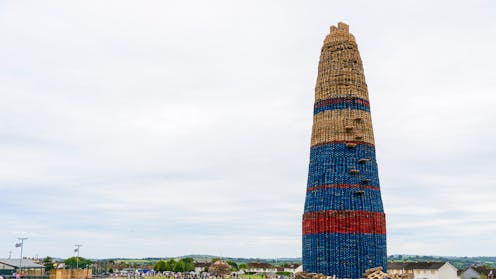
Craigyhill bonfire was declared the world’s tallest at a height of 203 feet (63 metres) in 2022. Thousands of pallets were used to build it. Stephen Barnes/Shutterstock

Pallets don’t usually make headlines. But amid fresh controversy around the traditional July bonfires held in Northern Ireland this year, they’ve suddenly become a talking point. Wooden pallets used in these bonfires are popular due to their stacking ability, and also their colours – which include the red, white and blue of Britain.

Ordinarily, pallets are used to transport products from manufacturers to retailers. But their numbers are shrinking due to theft and loss – and of course, they cost money to buy, store, use and replace. A study by one of us (Liz) in 2006 quoted a logistics firm that estimated 14 million pallets were generally missing throughout Europe, costing £140 million. And it’s an ongoing problem: millions of products such as pallets and packaging containers are still stolen each year across the continent.

Just one bonfire in Larne, County Antrim, in July 2021 reportedly used 17,000 pallets in its construction. This year, police are investigating where the pallets used in the same community’s bonfire originated from. Amid speculation that some may belong to Australia-based supply chain firm Chep, that company has stated its pallets can never legally be bought, sold or destroyed.


Get your news from actual experts, straight to your inbox. Sign up to our daily newsletter to receive all The Conversation UK’s latest coverage of news and research, from politics and business to the arts and sciences.


Pallet losses can lead to logistical disruptions, delayed orders and bare shelves in supermarkets. And the impact is felt by pallet owners, manufacturers, customers and end-users alike.

Pallets are big business. In the US, around 513 million – mainly wooden, some plastic – are produced each year. In 2021, 48.6 million wooden pallets were produced in the UK, up 8.3% from 2020.

Rental companies can hold high numbers of pallets, which support the movement of “fast-moving” customer goods – including food, drinks and toiletries. North American firm Peco, for example, manages stock of over 20 million distinctive red wooden pallets across its 90 depots.

Manufacturers rely on pallets being available to fulfil orders and distribute them to customers quickly. Also known as “returnable transit packaging”, they are valuable assets as they can be maintained and reused. They are usually owned by a pallet pooling agent, which must absorb the loss when they are not returned from customers.

Why steal pallets?

Good-condition pallets have a resale value. Both wood and plastic pallets can be deconstructed and sold as components to other industries. Some people even use them to create furniture for homes and gardens.

Customers may feel these are legitimate upcycled products and won’t think to check where the pallets came from. However, some do have distinctive identification stamps that may remain in upcycled pallet products.

The organised theft of these products takes its toll on companies. Cargo crime (which includes consumer goods and transportation pallets and containers) is said to cost the UK economy £700 million each year.

If pallets are not available, production lines may be slowed down or stopped. And it may take longer to produce items, potentially leading to unnecessary transportation as well as greater fuel consumption and emissions.

But it can also be challenging to map pallet movements and know, at any given time, how many are in transit, with retailers, or lost. Digital tracking solutions such as radio frequency identification can be expensive to implement and are not foolproof. This can make it easy for pallets to go “missing in action”.

Pallets are a staple mechanism for stock to be received into retailers’ warehouses and distribution centres. Both the size of the pallets and their ownership can be colour-coded – at least some of the blue pallets making headlines this summer in Larne’s red, white and blue tower are thought to be owned by Chep. Warehouse bays are designed with specific pallets in mind – so changes to the pallets can bring extra costs.

Similarly, replacing lost or stolen pallets comes at a price – which could ultimately be felt by consumers if these costs are passed on by retailers.

Reducing theft and loss

Pallet owners cannot afford to continue losing them to theft. Firms that are found using non-compliant or untracked pallets because they have bought them from unauthorised sources can face shipment fines, while other initiatives, such as deposit or voucher schemes or one-for-one exchange plans, could incentivise the return of pallets.

These practices may influence corporate return behaviour, but the theft of pallets by organised crime gangs is increasing. Changing the materials used to construct pallets could reduce their financial attractiveness and resale value.

At first glance, a used pallet might look no more useful than discarded wood and be considered fair game for reuse or selling on. But businesses or individuals who collect, sell or purchase stolen pallets are putting themselves at legal risk. Firms found stockpiling or selling-on pallets without permission have faced legal action and even jail in Europe.

Aside from the legal implications, there are other operational and environmental costs. Each pallet taken out of circulation must be replaced, increasing demand for virgin timber, straining forest resources, and increasing labour costs.

The humble pallet is the backbone of global trading, and businesses rely on a steady and dependable supply. Pallet services function only if they continue to circulate – but theft and losses undermine this. Without this simple product, everyone from producers to retailers and consumers could end up paying more for the goods they take for granted.

The Conversation

The authors do not work for, consult, own shares in or receive funding from any company or organisation that would benefit from this article, and have disclosed no relevant affiliations beyond their academic appointment.

ref. Pallets are the backbone of global trade but supplies are threatened by theft, loss – and giant bonfires – https://theconversation.com/pallets-are-the-backbone-of-global-trade-but-supplies-are-threatened-by-theft-loss-and-giant-bonfires-260948

What would it take for a new British leftwing party to succeed?

Source: The Conversation – UK – By Colm Murphy, Lecturer in British Politics, Queen Mary University of London

Last week, the MP for Coventry South, Zarah Sultana, made an audacious decision. Having already lost the Labour party whip for opposing the two-child benefit cap, Sultana announced she would co-lead a new leftwing party with Jeremy Corbyn, who was expelled from Labour in 2024.

From one angle, her decision may seem simple. Discontent with Keir Starmer’s Labour government, on everything from welfare cuts to Gaza, has never been higher, and Sultana is a vocal critic. Yet, launching a (still unnamed) new party is bold. It tackles head-on an old and vexing question for socialist critics of capitalism in the UK.

In 1976, the socialist theorist Ralph Miliband (yes, Ed and David’s dad) described the faith in Labour’s capacity to become a socialist vehicle as “the most crippling of all illusions”. But socialists who agree with Miliband senior then have an almighty problem.

Writing months after the 2019 defeat of Corbyn’s Labour party, the veteran “New Left” academics Colin Leys and Leo Panitch echoed Miliband in their book Searching for Socialism. But they also saw few immediate alternatives with “any prospect of electoral success”. This, they wrote, is the “central dilemma” for British democratic socialists.


Get your news from actual experts, straight to your inbox. Sign up to our daily newsletter to receive all The Conversation UK’s latest coverage of news and research, from politics and business to the arts and sciences.


The reaction to Sultana’s announcement from the British left has been accordingly mixed. Leaks revealed that Corbyn’s team was caught off guard. Responses from prominent potential supporters were reserved. Momentum, the leftwing grassroots organisation, hastily distributed the pamphlet Why Socialists Should Be in the Labour Party.

It’s too early to know whether these issues are teething problems or portents. But the barriers to Sultana’s venture are formidable. What would it take for a new leftwing party to succeed? What would “success” even look like?

A careful reading of political history can help us answer these questions. This is not the first time that new parties have emerged from Labour factionalism. Many readers will be aware of the 1981 departure of the “gang of four” Labour figures, who founded the Social Democratic party (SDP) that later merged with the Liberal party to form the Liberal Democrats.

Nor is it the first time that smaller parties have appeared on Labour’s left. Between 1920 and 1991, the Communist party of Great Britain was a potent force in the trade union movement. From the 1990s to the 2010s, several vehicles contested local and national elections against Labour, from the Socialist Alliance to Left Unity.

Challenges for a new party

Each of these iterations had its historical peculiarities. But stepping back, we can identify three recurring challenges that any leftwing insurgent party must confront.

First, they must agree on an electoral strategy and purpose, given the institutional brutality of British democracy. The UK has some proportional elections, including in Scotland and Wales (expected to be next contested in 2026). Councils are also possible avenues of influence.

But there is no avoiding the fact that legislative and executive power is hoarded in the House of Commons, elected by first past the post. Labour will discourage possible defectors by warning that a split in the left vote will let in the right. Neil Kinnock, Labour’s former leader who found himself fighting off the SDP while trying to evict Thatcher in the 1980s, dubbed Sultana and Corbyn’s venture the “Farage assistance party”.

Left of Labour parties are often aware of the risk. Indeed, far left activists have in the past advocated voting Labour, with “varying degrees of (un)enthusiasm”.

Advocates of a new party will note that Labour is only polling in the low 20s, suggesting a pool of ex-Labour voters potentially interested in shopping around. However, there are others it could torpedo too.

One recent poll on support for a hypothetical Corbyn-led party – which we should take with some salt – found that its 10% support comes partly from eating into the Green vote. An electoral arrangement with the Greens, on the other hand, may require shared policy platforms, raising the question of why a separate party is needed.

A poll from More in Common conducted specifically about a Sultana-Corbyn party found 9% of Labour voters and 26% of current Green voters saying that would vote for such a party.

The Socialist Labour party (SLP) – founded in 1996 by the prominent trade unionist Arthur Scargill in reaction to Tony Blair’s New Labour – is the obvious cautionary tale. Scargill wanted a purer, better Labour party. Yet, Labour looked set to kick out an 18-year-long Conservative government.

Scargill could not convince many sympathetic activists to join. As historian Alfie Steer argues, the SLP instead became dominated by socialists hostile to the Labour party. The party could not overcome the resultant contradictions in its purpose and collapsed into acrimony.

The SLP also illustrates the second key consideration: timing. The SLP struggled partly because it launched just as Labour was sweeping triumphantly into power. Sultana’s timing is arguably more astute. She has waited for Starmer’s bubble to burst and for disillusionment to fester.

However, the broad left within Labour has also just found its voice by rebelling against government policy. The temptation for a risk-averse Labour activist may be to leap onto this critical bandwagon without taking the more dangerous step of defecting.


Read more:
The mistakes Keir Starmer made over disability cuts – and how he can avoid future embarrassment


Starmer and Corbyn side by side
Keir Starmer, then shadow Brexit secretary, accompanies then-Labour leader Corbyn to Brussels in 2019.
Alexandros Michailidis/Shutterstock

The final challenge is securing institutional durability without debilitating splits. It is telling that Sultana felt compelled to include Corbyn’s name despite his reported reservations.

Sultana herself has an impressive political profile, especially on TikTok. Any new party will rely heavily on prominent spokespeople to force it into the national conversation. Yet, such vehicles can become trapped by their dependence on individuals. The Respect party of the 2000s, for example, was reliant on the charismatic but polarising figure of George Galloway.

The fledgling party will also need a lasting structure that determines how candidates are selected and policy is formed. This risks dragging it into dreaded constitutional debates. It is already reportedly divided over the existence of co-leaders.

Intra-party democracy is off-putting to outsiders. But as constitutional scholar Meg Russell argues, it speaks to fundamental questions about the extent, and limits, of democracy. Such disputes have frequently wracked the left (and the radical right, as Reform’s recent constitutional changes show).

To what extent should policy be “democratically” decided? Should a new party limit who can join, and if so, on what criteria? How will leaders be selected? From the CPGB to the SLP, these questions have proven divisive in the past. They could easily prove so again.

The new party faces severe challenges, but it would be unwise to write it off completely. In a volatile context, it has a chance to make its mark if it is clear in its strategic electoral purpose, cultivates an institutional and activist base and times its interventions astutely. But the obstacles to success are enormous – and with Reform currently polling top, the risks are high.

The Conversation

Colm Murphy is currently a member of the Labour Party, but he is writing purely in an academic capacity.

ref. What would it take for a new British leftwing party to succeed? – https://theconversation.com/what-would-it-take-for-a-new-british-leftwing-party-to-succeed-260599

How UK-France ‘one in, one out’ migration deal will work – and what the challenges could be

Source: The Conversation – UK – By Matilde Rosina, Assistant Professor in Global Challenges, Brunel University of London

After weeks of rising Channel crossing figures, the UK government has agreed on a long-awaited migration deal with France. Keir Starmer and Emmanuel Macron announced a “one in, one out” pilot – and the UK prime minister said the “groundbreaking” scheme could start returning migrants to France within weeks. The deal was announced alongside a separate agreement to coordinate the use of French and British nuclear weapons.

The migration agreement will allow the UK to return selected numbers of small boat arrivals to France. In exchange, the UK will admit an equal number of asylum seekers with legitimate ties to the UK (such as family), who have not previously attempted to enter the country illegally.

The plan will start as a pilot, with initial reports suggesting the UK could return up to 50 people per week (2,600 per year). That is roughly 6% of small boat arrivals in 2024. The remaining arrivals will continue to be processed under the UK’s existing system.

The “one in, one out” system appears similar to an agreement in 2016 between the EU and Turkey. Under that scheme, for every irregular migrant returned from the Greek islands to Turkey, one Syrian refugee who had stayed in Turkey could be legally resettled in the EU. Under the EU–Turkey deal, only 2,140 migrants were returned to Turkey by 2022, compared with over 32,000 who were resettled in the EU.

The British government’s hope is that this pilot will lay the groundwork for a broader EU-UK return framework that would allow it to return more people. Before Brexit, the UK was part of the EU’s asylum framework, the Dublin regulation. This allowed any EU country, including the UK, to return asylum seekers to the first EU country they entered or passed through.

From 2008 to 2016, the UK was a net sender of asylum seekers: it returned more people to EU states than it accepted, receiving fewer than 500 people annually. The trend reversed after 2016, with the UK accepting more migrants than it returned.

But southern EU countries could complicate any expansion or permanent implementation of the pilot. Italy, Spain, Greece, Malta and Cyprus have opposed a UK–France agreement, fearing it would lead to more people being sent back to them – southern European states are where migrants typically arrive in the EU first.

Challenges ahead

The deal is a significant step for a UK government that has struggled to control the narrative on migration. Losing ground to Reform, the government has recently proposed tightening legal immigration rules, including by making it harder and longer to acquire British citizenship, and by cutting legal migration routes.

It also marks a notable shift in the UK’s post-Brexit migration strategy. But questions remain about the details and implementation.

The French president hailed it as a “major deterrent” to Channel crossing, as migrants would not remain in the UK but be returned to France. Macron said that one-third of arrivals in France are heading towards the UK. So it follows that any deterrent from Channel crossings would also lead to a reduction in people coming to France.

Yet, as I have shown in my research, deterrence is rarely effective. This is because information about deterrence factors does not necessarily reach the asylum seekers or stop smugglers. It also does not address the underlying drivers of migration, such as poverty, conflict and corruption.

Moreover, returns are notoriously difficult to enforce. Many asylum seekers lack documentation, and complex legal processes raise administrative and financial costs.

Scalability also poses a challenge, given EU countries’ divided stances on an EU-wide deal.

It is, however, promising that the UN refugee agency has given the agreement its backing, stating: “If appropriately implemented, it could help achieve a more managed and shared approach, offering alternatives to dangerous journeys while upholding access to asylum.”

The last UK government’s attempts to deter Channel crossings, such as the Rwanda scheme, had led to the agency raising serious concerns.

How many asylum seekers does the UK take?

This deal comes amid an increase in asylum applications in the UK. Annual applications rose from 38,483 in 2018 to over 108,000 in 2024.

In just the first half of 2025, small boat arrivals increased 48% compared with the same period in 2024, exceeding 20,000. By contrast, irregular arrivals to the EU decreased by 20% in the first half of 2025, mainly driven by a drop in arrivals to Greece and to Spain’s Canary Islands.

When accounting for population, the UK receives fewer asylum applications – 16 for every 10,000 people living in the UK – than the EU average (22 per 10,000).

Data shows that between 2018 and 2024, 68% of small boat asylum applications processed in the UK were approved, indicating that most were made by people in genuine need.

UK–France migration cooperation dates back to the 1990s, but since 2019, the focus has been on addressing the rise in Channel crossings.

A significant step was the UK-France joint declaration of March 2023, under which the UK committed €541 million (approximately £476 million) between 2023 and 2026. Funds were allocated for assets including drones, helicopters and aircraft, and for the creation of a migration centre in France. Importantly, the agreement sought to increase surveillance along the French border, rather than return migrants.

This cooperation deepened in February 2025, when both countries agreed to extend their partnership to 2027 and reallocate €8 million for new enforcement measures.

Joint maritime activities have played a role too: since October 2024, UK Border Force vessels have entered French waters on three occasions to assist boats in distress and return people to the French coast.

Overall, this new agreement represents a milestone in UK–France migration cooperation, and the UK’s first significant post-Brexit returns scheme with an EU country. While questions remain over its scalability – given the modest return numbers, legal and logistical hurdles, and European political divides – it is a crucial step in cross-Channel cooperation on migration and asylum, making progress on what has been an intractable problem for UK governments.

The Conversation

Matilde Rosina does not work for, consult, own shares in or receive funding from any company or organisation that would benefit from this article, and has disclosed no relevant affiliations beyond their academic appointment.

ref. How UK-France ‘one in, one out’ migration deal will work – and what the challenges could be – https://theconversation.com/how-uk-france-one-in-one-out-migration-deal-will-work-and-what-the-challenges-could-be-260864

From athlete’s foot to smelly soles: why daily washing is key to healthy feet

Source: The Conversation – UK – By Dipa Kamdar, Senior Lecturer in Pharmacy Practice, Kingston University

Anastasia1507/Shutterstock

Washing your feet might not top your list of daily priorities – but it should.

While most of us shower regularly, our feet are often forgotten. Letting water run over them isn’t enough. To keep them healthy, you need to actively wash your feet with soap and water, paying close attention to the soles and the spaces between your toes. This helps remove sweat, dead skin and microbes that build up throughout the day and helps prevent infections, irritation – and that all-too-familiar smell.

Feet, particularly the spaces between toes, are a breeding ground for bacteria and fungi. Thanks to socks, shoes, and sweaty soles, they spend most of the day in a warm, humid environment that’s perfect for microbial growth. This can lead to common conditions like athlete’s foot, fungal nail infections, and bromodosis (smelly feet).

Stinky feet

Sweat itself doesn’t smell. But when bacteria break down sweat on your feet, they release smelly compounds called volatile fatty acids (VFAs). Staphylococcus bacteria are key players here, feeding on amino acids in sweat and producing isovaleric acid, which smells distinctly cheesy or sour (fun fact: it’s the same compound found in certain cheeses).

A study found that 98.6% of bacteria on the soles of participants’ feet were Staphylococci, and the intensity of foot odour was directly linked to how much of this bacteria was present.

Good foot hygiene isn’t just about avoiding odour, though; it also helps prevent infections. Athlete’s foot, a fungal infection, thrives in the damp space between your toes. It causes itching, redness, cracked skin and sometimes blisters. And despite the name, you don’t have to be an athlete to get it. The infection spreads easily in communal places like swimming pools, showers and changing rooms, particularly if you go barefoot.

If left untreated, the fungus can spread to the toenails, making them thick, yellow and brittle. Catching it early makes treatment much easier.


Read more:
Fighting fungal nail infections: simple steps for healthier toenails


Bacterial infections are also a concern, especially when Staphylococcus or Pseudomonas enter through small cuts or cracked skin. Washing regularly helps reduce the number of bacteria living on the surface, lowering the risk of infection for anyone with vulnerable or damaged skin.

Diabetic foot care

If you have diabetes, foot care becomes even more important. People with diabetes are more prone to ulcers and infections and wounds often heal more slowly, particularly when blood sugar levels are poorly controlled.


Read more:
Five ways to save your legs – by a vascular surgery specialist


This is due to several factors: poor circulation means less oxygen and fewer nutrients reach the site of the wound, the immune response is weaker, and inflammation may persist. Nerve damage (diabetic neuropathy) in the feet can also mean that injuries go unnoticed – and untreated.

According to Diabetes UK, daily foot washing is a key part of diabetes care; not just to reduce infection risk, but to check for any early signs of damage, such as redness, swelling, or breaks in the skin.

Too clean?

If you’ve been in closed shoes all day, or exercising, a proper wash is a good idea. For most people, once a day is enough, particularly during warm weather.

But not everyone needs to scrub their feet daily. The skin is home to a healthy community of beneficial microbes that defend against harmful bacteria and support the skin’s natural barrier. Overwashing, particularly with hot water or harsh soaps, can strip these helpful organisms and remove natural oils, leaving skin dry, irritated and more prone to cracking.

This is especially problematic for people with skin conditions like eczema where the skin barrier is already weakened.

The use of antibacterial soaps can also disrupt the skin’s microbial balance, killing off friendly bacteria and potentially encouraging the growth of more harmful, antibiotic-resistant strains. Some scientists also suggest that excessive hygiene might reduce the immune system’s exposure to everyday microbes; exposure that helps build a healthy immune response.

How to wash your feet properly

Here’s how to do it right, according to NHS guidance:

  • use warm (not hot) water and a mild soap

  • wash thoroughly, paying close attention to the soles and between the toes

  • dry your feet completely, including the spaces between your toes

  • apply moisturiser to keep the skin soft and less likely to crack — but skip the areas between the toes, as added moisture there can encourage fungal growth

  • inspect your feet regularly for any signs of redness, swelling, or blisters — vital for those with diabetes.

If you notice persistent itching, unusual odours, or signs of infection, speak to a pharmacist. They can recommend over-the-counter treatments or refer you to a podiatrist if necessary.

Whether you’re active, managing a chronic condition, or just trying to stay fresh in summer, proper foot hygiene matters. It might seem like a small step – but it makes a big difference to your overall health.

The Conversation

Dipa Kamdar does not work for, consult, own shares in or receive funding from any company or organisation that would benefit from this article, and has disclosed no relevant affiliations beyond their academic appointment.

ref. From athlete’s foot to smelly soles: why daily washing is key to healthy feet – https://theconversation.com/from-athletes-foot-to-smelly-soles-why-daily-washing-is-key-to-healthy-feet-259301

What’s the forever chemical TFA doing in the UK’s rivers?

Source: The Conversation – UK – By Daniel Drage, Associate Professor of Environmental Health, University of Birmingham

The river Kelvin runs through Glasgow, Scotland. Jeff Whyte/Shutterstock

Most UK rivers are contaminated by a chemical called trifluoroacetic acid (TFA). This is a type of human-made chemical known as perfluorinated alkyl substances (PFAS), often called “forever chemicals”.

This widespread contamination highlights the extensive scale of work required to remove synthetic forever chemicals from our environment.

Many PFAS are known to be toxic (including associations with altered liver and thyroid function and various cancers). PFAS all contain at least two carbon-fluorine (C-F) chemical bonds, one of the toughest bonds to break so they tend to be persistent. Once they are released to the environment, they don’t easily degrade.

The PFAS class incorporates a vast but unknown number of different chemicals – estimates vary from around 5,000 to 6.5 million. TFA is just one of many PFAS.


Get your news from actual experts, straight to your inbox. Sign up to our daily newsletter to receive all The Conversation UK’s latest coverage of news and research, from politics and business to the arts and sciences.


TFA enters the environment from different sources. It’s used to make blowing agents (used to make things like expanded foams and plastics such as packaging materials), pesticides and pharmaceuticals. So it is intentionally used for some useful applications.

But it can also be produced unintentionally as a by-product from various processes that involve “pre-cursor” PFAS chemicals. The biggest environmental source of TFA is as a by-product from manufacturing “F-gases” or flourinated greenhouse gases – these are used as refrigerants instead of CFCs (chlorofluorocarbons) and HCFCs (hydrochlorofluorocarbons) which are known to cause ozone depletion.

While F-gases may not deplete ozone, they are greenhouse gases with extremely high global warming potential with some several thousand times more potent then CO₂. An F-gas called fluoroform has a global warming potential of 14,800. This means that when fluoroform is released into the atmosphere, it will trap 14,800 times more heat for an equivalent amount of CO₂.

TFA is highly persistent so it resists most forms of physical, chemical and biological degradation. TFA is also highly mobile so it can enter waterways and move around them easily, while remaining in the environment for hundreds of years. This is why it’s now accumulating and cropping up in our environment more often, contaminating our rivers, food and even our wine.

gloved hand holding glass jug with water sample, river in background
Scientists have analysed levels of a particular forever chemical in 32 UK rivers.
Inessa Boo/Shutterstock

TFA has been found in rivers across the globe including the US, China, Germany and Switzerland. These findings have triggered joint research between environmental charity Fidra and scientists at the University of York to sample water from and analyse the TFA levels in 32 UK rivers, streams and lakes. They found TFA present in 31 of the 32 sites investigated, including an exceptionally high level in the River Kelvin, Glasgow (the second highest recorded globally to date). This is approaching levels where TFA has been previously observed to start having adverse effects on aquatic organisms.

The trouble with TFA

Apart from its major source being as a breakdown product from the production of greenhouse gases (and knock on climate change effects), the presence of TFA in our environment represents a genuine threat to human and environmental health.

Currently there is no guidance for safe levels of TFA in drinking water, and it is not something that is measured. However, if it is present in our rivers and lakes, then there is a potential pathway for it to enter our drinking water. This needs to be addressed so that our levels of exposure, and the level of threat that TFA poses, can be assessed by scientists, industries and regulators.

While evidence is limited on human toxicity of TFA, studies dating back more than 25 years have highlighted its potential effects on aquatic organisms, including effects on development of zebrafish, as well as various algaes, which act as important food sources in aquatic ecosystems. Studies on mammals have that continuous TFA exposure could lead to shown increased liver sizes (suggesting the possibility of a significant underlying, unknown medical condition) and potential disruption to reproductive hormones, causing fertility and foetal development issues.

The EU’s chemical regulator, the European Chemicals Agency is responsible for ensuring chemical safety in Europe. They suggest TFA poses a low threat if exposure is short term. However, longer-term exposure effects remain unknown. With other PFAS, recommended weekly maximum intakes have been substantially reduced as knowledge has advanced.

While TFA pollution continues unabated, levels in the environment beyond those 32 rivers – and in our food and drink – remain difficult to quantify. It is also hard to confidently suggest methods to reduce personal TFA exposure. However, work by myself and colleagues has shown that exposure to many PFAS can be reduced by filtering tap water with activated carbon or charcoal filters. Other researchers have suggested that this could be an effective way to remove TFA from drinking water, as long as filters are changed regularly.


Don’t have time to read about climate change as much as you’d like?

Get a weekly roundup in your inbox instead. Every Wednesday, The Conversation’s environment editor writes Imagine, a short email that goes a little deeper into just one climate issue. Join the 45,000+ readers who’ve subscribed so far.


The Conversation

Daniel Drage has previously received funding from the Natural Environment Research Council, DEFRA, Environmental Protection Agency of Ireland. He is an Associate Professor at University of Birmingham and an Honorary Research Fellow at the University of Queensland.

ref. What’s the forever chemical TFA doing in the UK’s rivers? – https://theconversation.com/whats-the-forever-chemical-tfa-doing-in-the-uks-rivers-259411

Johnny Depp’s new film about Modigliani is in danger of downplaying his importance as an artist – an art expert’s verdict

Source: The Conversation – UK – By Frances Fowle, Personal Chair of Nineteenth-Century Art, History of Art, University of Edinburgh

In 2018 an oil painting of a nude by the Italian artist Amedeo Modigliani broke a world record when it sold at Sotheby’s for US$157.2 million (£115.2m). It was created in 1917, at a time when Modigliani was unable to sell his pictures for more than a few francs.

Johnny Depp’s new film Modi: Three Days on the Wings of Madness explores the artist’s struggle to sell his work, and the tension that existed between his own idealism and the need to be commercially minded.

The film also addresses Modigliani’s mental instability, brought on by self-medication while suffering from tuberculosis. He took refuge in hashish and alcohol (including absinthe), and this movie pulls out all the stops when it comes to visualising the horrors and hallucinations that afflicted him as the illness progressed and the drugs took hold.

Set against the background of Paris during the first world war, the action takes place over three days in 1916. It takes its inspiration from Modigliani – A Play in Three Acts by Dennis McIntyre and remains remarkably faithful to the plot.


Looking for something good? Cut through the noise with a carefully curated selection of the latest releases, live events and exhibitions, straight to your inbox every fortnight, on Fridays. Sign up here.


This revolves round Modigliani’s friendship with the artists Chaïm Soutine (Ryan McParland) and Maurice Utrillo (Bruno Gouery); his tempestuous relationship with the English poet and writer Beatrice Hastings (Antonia Desplat); and his reliance on the art dealer Léopold Zborowski (Stephen Graham). It is Zborowski who sets up a much-anticipated meeting with an important collector, Maurice Gangnat (Al Pacino).

Modigliani, brilliantly and energetically portrayed by Riccardo Scamarcio, comes across as a passionate, idealistic and irresistible genius. However, he is also haunted by ghosts, and a slave to his drug addiction, perhaps echoing Depp’s own past.

Depp’s film – his second as director – never loses pace. In one scene Modigliani plunges through a stained-glass window. In another he shocks potential buyers by setting fire to a painting; in a third he trashes his studio, destroys his most recent sculptures and slashes several canvases.

The title of the film, Modì, was the artist’s nickname, but is also a play on the French word maudit, meaning cursed. As a young man Modigliani was an avid reader of the German philosopher Nietzsche, whose own descent into madness was punctuated by periods of lucidity.

Nietzsche saw no clear distinction between dreaming and waking, and the film reflects this in the way in which hallucination, memory and reality become confused. Modí masks his increasing pain with alcohol, drinking with his artist friends Utrillo and Soutine in the seedy Bateau Lavoir in Montmartre.

Of Belarusian extraction, Soutine, like Modigliani, was a Jewish outsider. In 1916 the two artists occupied neighbouring studios in La Ruche, a down-at-heel artists’ residence in the 15th arrondissement of Paris. Before he achieved commercial success, Soutine lived in abject poverty, forced to sleep rough in stairways and on park benches. He suffered from depression and anxiety, and his internal turmoil is reflected in his highly expressive work.

The third member of the triumvirate, Maurice Utrillo, also suffered from mental health issues, and took up art to ward off depression. The movie alludes to this as the reason he was unable to enlist during the war. Instead, he spent regular periods in hospitals and mental institutions and painted many of his views of Paris from postcard images.

Modigliani, too, tried to join up, but was refused due to poor health. In the film this memory sparks an episode of disturbing hallucinations, featuring walking wounded with horrific injuries, and a plague doctor doubling as a spectre of death, a leitmotif for Modigliani’s own fear of dying.

Following such nightmarish episodes, Modigliani turns to Beatrice Hastings, who adopts the role of carer (and, as the film implies, substitute mother) as well as lover. She was however, motivated as much by Modigliani’s genius, as by her own burgeoning career as a poet, literary critic and co-editor of the British avant-garde magazine The New Age.

In the film she is frustrated by Modigliani’s idealism. She encourages him to be more pragmatic and commercially minded and berates him, not for embracing life, but for constantly “running from death”.

She is also the artist’s muse, the model for his “masterpiece”, a reclining nude, and an unfinished sculpted head of a woman. Both are cinematic devices; there is no evidence that Beatrice ever posed nude, while the sculpted head was produced in 1911-12, before the two had even met. Despite this, both works play a central role in the film’s denouement, sparking the artist’s falling out with Zborowski.

The climax of the movie is the artist’s much-anticipated meeting with Gangnat, a rich industrialist and significant figure in art history, whose collection included 160 works by Auguste Renoir. The meeting, predictably, is a disaster, but, even though he leaves without a penny, Modigliani has the last word: “I am much richer than you, Monsieur Gangnat,” he insists, “You have merely existed…I have lived”.

Was Modigliani as idealistic as the film portrays? Possibly, but perhaps not, for by 1916 he had already met a new and influential dealer, Paul Guillaume, who would ensure a commercially successful future, not only for our hero, but also for Soutine and Utrillo.

In the end, the film is an enjoyable romp, even if it is in danger of downplaying Modigliani’s importance as an artist in favour of the more sensational aspects of his life.

And yet it is undeniable that his life really did read like a film script. He died of tuberculosis in January 1920 at the age of 35. Two days later his common-law wife, Jeanne Hébuterne, pregnant with their second child, took her own life. Soon after, however, thanks to dealers such as Zborowski and Guillaume, the importance of Modigliani’s work was finally recognised, and today he is remembered as one of the most significant artists of his generation.

The Conversation

Frances Fowle does not work for, consult, own shares in or receive funding from any company or organisation that would benefit from this article, and has disclosed no relevant affiliations beyond their academic appointment.

ref. Johnny Depp’s new film about Modigliani is in danger of downplaying his importance as an artist – an art expert’s verdict – https://theconversation.com/johnny-depps-new-film-about-modigliani-is-in-danger-of-downplaying-his-importance-as-an-artist-an-art-experts-verdict-260340

What would it take for a new British left-wing party to succeed?

Source: The Conversation – UK – By Colm Murphy, Lecturer in British Politics, Queen Mary University of London

Last week, the MP for Coventry South, Zarah Sultana, made an audacious decision. Having already lost the Labour party whip for opposing the two-child benefit cap, Sultana announced she would co-lead a new left-wing party with Jeremy Corbyn, who was expelled from Labour in 2024.

From one angle, her decision may seem simple. Discontent with Keir Starmer’s Labour government, on everything from welfare cuts to Gaza, has never been higher, and Sultana is a vocal critic. Yet, launching a (still unnamed) new party is bold. It tackles head-on an old and vexing question for socialist critics of capitalism in the UK.

In 1976, the socialist theorist Ralph Miliband (yes, Ed and David’s dad) described the faith in Labour’s capacity to become a socialist vehicle as “the most crippling of all illusions”. But socialists who agree with Miliband senior then have an almighty problem.

Writing months after the 2019 defeat of Corbyn’s Labour party, the veteran “New Left” academics Colin Leys and Leo Panitch echoed Miliband in their book Searching for Socialism. But they also saw few immediate alternatives with “any prospect of electoral success”. This, they wrote, is the “central dilemma” for British democratic socialists.


Get your news from actual experts, straight to your inbox. Sign up to our daily newsletter to receive all The Conversation UK’s latest coverage of news and research, from politics and business to the arts and sciences.


The reaction to Sultana’s announcement from the British left has been accordingly mixed. Leaks revealed that Corbyn’s team was caught off guard. Responses from prominent potential supporters were reserved. Momentum, the left-wing grassroots organisation, hastily distributed the pamphlet Why Socialists Should Be in the Labour Party.

It’s too early to know whether these issues are teething problems or portents. But the barriers to Sultana’s venture are formidable. What would it take for a new left-wing party to succeed? What would “success” even look like?

A careful reading of political history can help us answer these questions. This is not the first time that new parties have emerged from Labour factionalism. Many readers will be aware of the 1981 departure of the “gang of four” Labour figures, who founded the Social Democratic party (SDP) that later merged with the Liberal party to form the Liberal Democrats.

Nor is it the first time that smaller parties have appeared on Labour’s left. Between 1920 and 1991, the Communist party of Great Britain was a potent force in the trade union movement. From the 1990s to the 2010s, several vehicles contested local and national elections against Labour, from the Socialist Alliance to Left Unity.

Challenges for a new party

Each of these iterations had its historical peculiarities. But stepping back, we can identify three recurring challenges that any left-wing insurgent party must confront.

First, they must agree on an electoral strategy and purpose, given the institutional brutality of British democracy. The UK has some proportional elections, including in Scotland and Wales (expected to be next contested in 2026). Councils are also possible avenues of influence.

But there is no avoiding the fact that legislative and executive power is hoarded in the House of Commons, elected by first past the post. Labour will discourage possible defectors by warning that a split in the left vote will let in the right. Neil Kinnock, Labour’s former leader who found himself fighting off the SDP while trying to evict Thatcher in the 1980s, dubbed Sultana and Corbyn’s venture the “Farage assistance party”.

Left of Labour parties are often aware of the risk. Indeed, far left activists have in the past advocated voting Labour, with “varying degrees of (un)enthusiasm”.

Advocates of a new party will note that Labour is only polling in the low 20s, suggesting a pool of ex-Labour voters potentially interested in shopping around. However, there are others it could torpedo too.

One recent poll on support for a hypothetical Corbyn-led party – which we should take with some salt – found that its 10% support comes partly from eating into the Green vote. An electoral arrangement with the Greens, on the other hand, may require shared policy platforms, raising the question of why a separate party is needed.

A poll from More in Common conducted specifically about a Sultana-Corbyn party found 9% of Labour voters and 26% of current Green voters saying that would vote for such a party.

The Socialist Labour party (SLP) – founded in 1996 by the prominent trade unionist Arthur Scargill in reaction to Tony Blair’s New Labour – is the obvious cautionary tale. Scargill wanted a purer, better Labour party. Yet, Labour looked set to kick out an 18-year-long Conservative government.

Scargill could not convince many sympathetic activists to join. As historian Alfie Steer argues, the SLP instead became dominated by socialists hostile to the Labour party. The party could not overcome the resultant contradictions in its purpose and collapsed into acrimony.

The SLP also illustrates the second key consideration: timing. The SLP struggled partly because it launched just as Labour was sweeping triumphantly into power. Sultana’s timing is arguably more astute. She has waited for Starmer’s bubble to burst and for disillusionment to fester.

However, the broad left within Labour has also just found its voice by rebelling against government policy. The temptation for a risk-averse Labour activist may be to leap onto this critical bandwagon without taking the more dangerous step of defecting.


Read more:
The mistakes Keir Starmer made over disability cuts – and how he can avoid future embarrassment


Starmer and Corbyn side by side
Keir Starmer, then shadow Brexit secretary, accompanies then-Labour leader Corbyn to Brussels in 2019.
Alexandros Michailidis/Shutterstock

The final challenge is securing institutional durability without debilitating splits. It is telling that Sultana felt compelled to include Corbyn’s name despite his reported reservations.

Sultana herself has an impressive political profile, especially on TikTok. Any new party will rely heavily on prominent spokespeople to force it into the national conversation. Yet, such vehicles can become trapped by their dependence on individuals. The Respect party of the 2000s, for example, was reliant on the charismatic but polarising figure of George Galloway.

The fledgling party will also need a lasting structure that determines how candidates are selected and policy is formed. This risks dragging it into dreaded constitutional debates. It is already reportedly divided over the existence of co-leaders.

Intra-party democracy is off-putting to outsiders. But as constitutional scholar Meg Russell argues, it speaks to fundamental questions about the extent, and limits, of democracy. Such disputes have frequently wracked the left (and the radical right, as Reform’s recent constitutional changes show).

To what extent should policy be “democratically” decided? Should a new party limit who can join, and if so, on what criteria? How will leaders be selected? From the CPGB to the SLP, these questions have proven divisive in the past. They could easily prove so again.

The new party faces severe challenges, but it would be unwise to write it off completely. In a volatile context, it has a chance to make its mark if it is clear in its strategic electoral purpose, cultivates an institutional and activist base and times its interventions astutely. But the obstacles to success are enormous – and with Reform currently polling top, the risks are high.

The Conversation

Colm Murphy is currently a member of the Labour Party, but he is writing purely in an academic capacity.

ref. What would it take for a new British left-wing party to succeed? – https://theconversation.com/what-would-it-take-for-a-new-british-left-wing-party-to-succeed-260599