Gene therapy restores hearing in toddlers and teenagers born with congenital deafness – new research

Source: The Conversation – UK – By Maoli Duan, Associate Professor, Senior Consultant, Karolinska Institutet
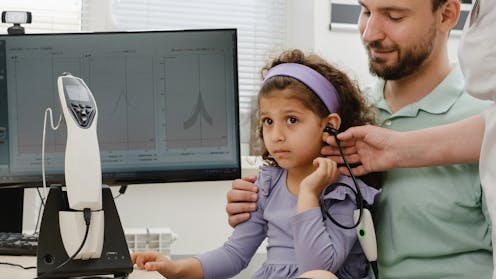
Hearing improvements were both rapid and significant after patients received the gene therapy we developed. Nina Lishchuk/ Shutterstock

Up to three in every 1,000 newborns has hearing loss in one or both ears. While cochlear implants offer remarkable hope for these children, it requires invasive surgery. These implants also cannot fully replicate the nuance of natural hearing.

But recent research my colleagues and I conducted has shown that a form of gene therapy can successfully restore hearing in toddlers and young adults born with congenital deafness.

Our research focused specifically on toddlers and young adults born with OTOF-related deafness. This condition is caused by mutations in the OTOF gene that produces the otoferlin protein –a protein critical for hearing.

The protein transmits auditory signals from the inner ear to the brain. When this gene is mutated, that transmission breaks down leading to profound hearing loss from birth.


Get your news from actual experts, straight to your inbox. Sign up to our daily newsletter to receive all The Conversation UK’s latest coverage of news and research, from politics and business to the arts and sciences.


Unlike other types of genetic deafness, people with OTOF mutations have healthy hearing structures in their inner ear – the problem is simply that one crucial gene isn’t working properly. This makes it an ideal candidate for gene therapy: if you can fix the faulty gene, the existing healthy structures should be able to restore hearing.

In our study, we used a modified virus as a delivery system to carry a working copy of the OTOF gene directly into the inner ear’s hearing cells. The virus acts like a molecular courier, delivering the genetic fix exactly where it’s needed.

The modified viruses do this by first attaching themselves to the hair cell’s surface, then convincing the cell to swallow them whole. Once inside, they hitch a ride on the cell’s natural transport system all the way to its control centre (the nucleus). There, they finally release the genetic instructions for otoferlin to the auditory neurons.

Our team had previously conducted studies in primates and young children (five- and eight-year-olds) which confirmed the virus therapy was safe. We were also able to illustrate the therapy’s potential to restore hearing – sometimes to near-normal levels.

But key questions had remained about whether the therapy could work in older patients – and what age is optimal for patients to receive the treatment.

To answer these questions, we expanded our clinical trial across five hospitals, enrolling ten participants aged one to 24 years. All were diagnosed with OTOF-related deafness. The virus therapy was injected into the inner ears of each participant.

We closely monitored safety during the 12-months of the study through ear examinations and blood tests. Hearing improvements were measured using both objective brainstem response tests and behavioural hearing assessments.

From the brainstem response tests, patients heard rapid clicking sounds or short beeps of different pitches while sensors measured the brain’s automatic electrical response. In another test, patients heard constant, steady tones at different pitches while a computer analysed brainwaves to see if they automatically followed the rhythm of these sounds.

A digital illustration of the AAV virus, used in gene therapy.
The therapy used a synthetic version of a virus to deliver a functional gene to the inner ear.
Kateryna Kon/ Shutterstock

For the behavioural hearing assessment, patients wore headphones and listened to faint beeps at different pitches. They pressed a button or raised their hand each time they heard a beep – no matter how faint.

Hearing improvements were both rapid and significant – especially in younger participants. Within the first month of treatment, the average total hearing improvement reached 62% on the objective brainstem response tests and 78% on the behavioural hearing assessments. Two participants achieved near-normal speech perception. The parent of one seven-year-old participant said her child could hear sounds just three days after treatment.

Over the 12-month study period, ten patients experienced very mild to moderate side-effects. The most common adverse effect was a decrease in white blood cells. Crucially, no serious adverse events were observed. This confirmed the favourable safety profile of this virus-based gene therapy.

Treating genetic deafness

This is the first time such results have been achieved in both adolescent and adult patients with OTOF-related deafness.

The findings also reveal important insights into the ideal window for treatment, with children between the ages of five and eight showing the most pronounced benefit.

While younger children and older participants also showed improvement, their recovery was less dramatic. These counter-intuitive results in younger children are surprising. Although preserved inner-ear integrity and function at early ages should theoretically predict a better response to the gene therapy, these findings suggest the brain’s ability to process newly restored sounds may vary at different ages. The reasons for this are not yet understood.

This trial is a milestone. By bridging the gap between animal and human studies and diverse patients of different ages, we’re entering a new era in the treatment of genetic deafness. Although questions still remain about how long the effects of this therapy last, as gene therapy continues to advance, the possibility of curing – not just managing – genetic hearing loss is becoming a reality.

OTOF-related deafness is just the beginning. We, along with other research teams, are working on developing therapies that target other, more common genes that are linked to hearing loss. These are more complex to treat, but animal studies have yielded promising results. We’re optimistic that in the future, gene therapy will be available for many different types of genetic deafness.

The Conversation

Maoli Duan does not work for, consult, own shares in or receive funding from any company or organisation that would benefit from this article, and has disclosed no relevant affiliations beyond their academic appointment.

ref. Gene therapy restores hearing in toddlers and teenagers born with congenital deafness – new research – https://theconversation.com/gene-therapy-restores-hearing-in-toddlers-and-teenagers-born-with-congenital-deafness-new-research-258112


Virgin by Lorde is a layered work of performance art – her smartest references explained

Source: The Conversation – UK – By Lillian Hingley, Postdoctoral Researcher in English Literature, University of Oxford

With her latest album, Virgin, Lorde is stretching the concept of the virgin beyond the common definition. Some may consider the album’s title and its cover art – an X-ray of Lorde’s pelvis showing an IUD – to be contradictory.

But while Lorde could still be using contraception for purposes beyond birth control, its presence shows that the album doesn’t shy away from discussions of sexual activities and the risk of pregnancy (two themes that are clearly discussed in the track Clearblue).

As she also shows with her approach to gender in the album’s opening song, Hammer (“Some days, I’m a woman, some days, I’m a man”), Lorde is testing and muddying common dualisms.

The scientific perspective offered by the album art forces the viewer to look through Lorde’s body, but we are also looking beyond her reproductive organs. Certainly, Lorde sometimes conceptualises virginity as something that can only be given once, as she explains on David.


Looking for something good? Cut through the noise with a carefully curated selection of the latest releases, live events and exhibitions, straight to your inbox every fortnight, on Fridays. Sign up here.


In Hammer, her quip “don’t know if it’s love or if it’s ovulation” is a comedic musing on whether an experience is profoundly transcendental or just the product of hormones. But what strikes me is the fact that her concepts and themes are not static or singular.

This album is exploring the idea of being made, or even remade, through experience. In If She Could See Me Now, Lorde recounts how painful moments “made me a woman”.

Like French philosopher Simone de Beauvoir’s phrase “one is not born, but rather becomes, a woman”, Lorde is exploring how her body is being changed by what she has been through. As she sings in What Was That?: “I try to let whatever has to pass through me pass through.”

Again, while she on the one hand describes something moving through her body, she’s also describing an attempt to move through something that has happened to her – turning a passive experience into one of acceptance and action. Here we might think of another notion of virginity: a substance before it is processed. Virginity is part of the experience of being changed, or reborn, into something else.

This is not to say that Virgin is uninterested in the body. Lorde’s discussion of her eating disorder in Broken Glass is a case in point.

Lorde as performance artist

The visuals accompanying Virgin emphasise Lorde’s status as a performance artist. The crescendo of the What Was That video is a spontaneous public performance of Virgin’s first single.

The music video for What Was That.

When Lorde released the second single, Man of the Year, she posted on her website:

TRYING TO MAKE IT SOUND LIKE A FONTANA, LIKE PAINTING BITTEN BY A MAN, LIKE THE NEW YORK EARTH ROOM. THE SOUND OF MY REBIRTH.

The simile here, or the idea of making music sound “like” visual art, emphasises the tactility of Lorde’s work. Each artistic piece referenced here is concerned with physically intervening into the conventional art gallery set-up.

Italian artist Lucio Fontana’s Spacial Concept series (1960) included slashed canvases a disruption of the body of the artwork with yonic – in other words, vulva-like – imagery (indeed, it challenges how “damaged” artworks are usually hidden from audiences, waiting to be restored).

Similarly, American artist Jasper Johns’ Painting Bitten by a Man (1961) is an encaustic painting (derived from the Greek word for “burned in”), which shows off the markings of someone who has bitten into the canvas.

The video for Man of the Year.

The music video for Man of the Year is filmed in a room that is filled with dirt. This is a clear nod to American sculptor Walter de Maria’s New York Earth Room (1977). The piece also fills a white room in New York with this unexpected material: earth inside a building, where mushrooms can grow.

The video for Man of the Year may also be referencing another artwork. Lorde is shown using duct tape to bind her breasts. While this points to Lorde’s exploration of her body and gender identity, the material also recalls Italian artist Maurizio Cattelan’s duct-taped banana artwork, Comedian.

Offering phallic imagery to Fontana’s yonic imagery, Cattelan’s piece mirrors Lorde’s concern with ontology, or definition. What makes something art?

Prometheus (Un)bound?

But just as Lorde is binding herself in new ways, she is unbinding herself in others. In If She Could See Me Now, Lorde declares: “I’m going back to the clay.”

Here that the album recalls the Prometheus myth: the ancient Greek story that Prometheus fashioned humans out of mud (or clay) and gave his creations fire.

The closing track, David, offers another ancient allusion, this time about David and Goliath. David – who, as a harpist, is a musician like Lorde – kills the giant man with stones. This reference furthers the song’s discussion of the problem of treating a man, a lover, like a god.

In David Lorde explores similar themes to Mary Shelley.

This subtle reference to the killing of Goliath adds another layer to the euphemism for male testicles explored in Shapeshifter: “Do you have the stones?”. Perhaps Virgin is doing what Mary Shelley’s Frankenstein (1818) did with the Prometheus tale: both exploring what happens when a man tries to create and determine the fate of another being, whether nature or nurture make a person, and how a new body can be refashioned from old ones.

After listening to the entire album, I was struck by how Lorde is exploring different facets of another question: who, exactly, is Lorde? Especially now that she is embracing who she is beyond the yoke of other people – or the demons – that have shaped her? Virgin shows that Lorde now wants to return “to the clay”, or to remake who she is, now that she is unbound by Prometheus.

This article features references to books that have been included for editorial reasons, and may contain links to bookshop.org. If you click on one of the links and go on to buy something from bookshop.org The Conversation UK may earn a commission.

The Conversation

Lillian Hingley does not work for, consult, own shares in or receive funding from any company or organisation that would benefit from this article, and has disclosed no relevant affiliations beyond their academic appointment.

ref. Virgin by Lorde is a layered work of performance art – her smartest references explained – https://theconversation.com/virgin-by-lorde-is-a-layered-work-of-performance-art-her-smartest-references-explained-260181

Can you spot a ‘fake’ accent? It will depend on where you’re from

Source: The Conversation – UK – By Jonathan R. Goodman, Research Associate, Public Health, University of Cambridge


Cast Of Thousands/Shutterstock

We all need to learn how to place trust in others. It’s easy to be misled. Someone who doesn’t deserve trust can appear a lot like someone who does – and part of growing up in a society is developing the ability to tell the difference.

An important part of this is learning about the signals people give about themselves. These might be a smile, a style of dressing or a way of speaking. In particular, we use accents to make decisions about others – especially in the UK.

But what if people adapt or change their accents to fit into a certain social group or geographical area? Our past research has shown that native speakers are pretty good at spotting such speech. We’ve now published a follow-up study that supports and further strengthens our original results.


Get your news from actual experts, straight to your inbox. Sign up to our daily newsletter to receive all The Conversation UK’s latest coverage of news and research, from politics and business to the arts and sciences.


We associate accents with places, classes and groups. Research shows that even infants use accents to determine whether they think someone is considered trustworthy. This can be a problem – studies have demonstrated that accents can affect someone’s odds of getting a job – and potentially the likelihood of being found guilty of a crime.

As with most topics in the social sciences, evolutionary theory has a lot to say about this process. Scientists are interested in understanding how people send and receive signals like accents, how those signals affect relationships between people and how, in turn, those relationships affect us.

But because accents can affect how we treat each other, we’d expect some people to try to change them for personal gain. A social chameleon who can pretend to be a member of any social class or group is likely to win trust within each – assuming they are not caught.

If that’s true, though, then we’d expect people to also be good at detecting when someone is “faking” it – what we call mimicry – setting up a kind of arms race between those who want to deceive us into trusting them and those who try to catch deceivers out.

Over the last few years, we’ve looked into how well people detect accent mimicry. Last year we found that generally speaking, people in the UK and Ireland are strong at this, detecting mimicked accents in the UK and Ireland better than we’d expect by chance alone.

What was more interesting, though, was that native listeners from the specific places of the imitated accent – Belfast, Glasgow and Dublin – were a lot better at this task than were non-natives or native listeners from further away in the UK, like Essex.

Beyond the UK

Our new findings went further, though. Of the roughly 2,000 people that participated, more than 1,500 were this time based in English-speaking countries outside the UK, including the US, Canada and Australia. And on average, this group did a lot worse at detecting mimicked accents from seven different regions in the UK and Ireland than did people from the UK.

In fact, people from places other than the UK barely did better than we’d expect by chance, while people who were native listeners were right between about two-thirds and three-quarters of the time.

As we argued in our original article, we believe it’s local cultural tensions — tribalism, classism or even warfare — that explain the differences. For example, as someone commented to me some time ago, people living in Belfast in the 1970s and 80s – a time of huge political tension – needed to be attuned to the accents of those around them. Hearing something off, like an out-group member’s accent, could signal an imminent threat.

This wouldn’t have put the same pressures on people living in a more peaceful regions. In fact, we found that people living in large, multicultural and largely peaceful areas, such as London, didn’t need to pay much attention to the accents of those around them and were worse at detecting mimicked accents.

The further you move out from the native accent, too, the less likely a listener is to place emphasis on or notice anything wrong with a local accent. Someone living in the US is likely to pay even less attention to an imitation Belfast accent than is someone living in London, and accordingly will be worse at detecting mimicry. Likewise, someone growing up in Australia would be better at spotting a mimicked Australian accent than a Brit.

So while accents, and our ability to detect differences in accents, probably evolved to help us place trust more effectively at a broad level, it’s the cultural environment that shapes that process at the local level.

Together, this has the unfortunate effect that we sometimes place a lot more emphasis on accents than we should. How someone speaks should be a lot less important than what is said.

Still, accents drive how people treat each other at every level of society, just as other signals, be they tattoos, smiles or clothes, that tell us something about another person’s background or heritage.

Learning how these processes work and why they evolved is critical for overcoming them – and helping us to override the biases that so often prevent us from placing trust in people who deserve it.

The Conversation

Jonathan R. Goodman receives funding from the Wellcome Trust (grant no. 220540/Z/20/A).

ref. Can you spot a ‘fake’ accent? It will depend on where you’re from – https://theconversation.com/can-you-spot-a-fake-accent-it-will-depend-on-where-youre-from-260238

‘Gas station heroin’: the drug sold as a dietary supplement that’s linked to overdoses and deaths

Source: The Conversation – UK – By Michelle Sahai, Computational Biochemist, Brunel University of London

US Food and Drug Administration, Office of Regulatory Affairs, Health Fraud Branch

The US Food and Drug Administration (FDA) has issued an urgent warning about tianeptine – a substance marketed as a dietary supplement but known on the street as “gas station heroin”.

Linked to overdoses and deaths, it is being sold in petrol stations, smoke shops and online retailers, despite never being approved for medical use in the US.

But what exactly is tianeptine, and why is it causing alarm?


Get your news from actual experts, straight to your inbox. Sign up to our daily newsletter to receive all The Conversation UK’s latest coverage of news and research, from politics and business to the arts and sciences.


Tianeptine was developed in France in the 1960s and approved for medical use in the late 1980s as a treatment for depression.

Structurally, it resembles tricyclic antidepressants – an older class of antidepressant – but pharmacologically it behaves very differently. Unlike conventional antidepressants, which typically increase serotonin levels, tianeptine appears to act on the brain’s glutamate system, which is involved in learning and memory.

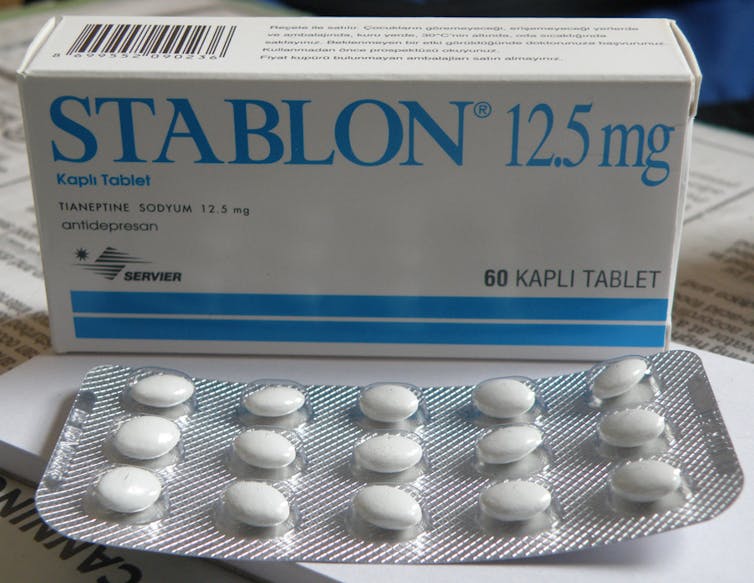
It is used as a prescription drug in some European, Asian and Latin American countries under brand names like Stablon or Coaxil. But researchers later discovered something unusual, tianeptine also activates the brain’s mu-opioid receptors, the same receptors targeted by morphine and heroin – hence it’s nickname “gas station heroin”.

A box of Stablon pills.
As a prescription drug, tianeptine is sold under various brand names, including Stablon.
Wikimedia Commons

At prescribed doses, the effect is subtle, but in large amounts, tianeptine can trigger euphoria, sedation and eventually dependence. People chasing a high might take doses far beyond anything recommended in medical settings.

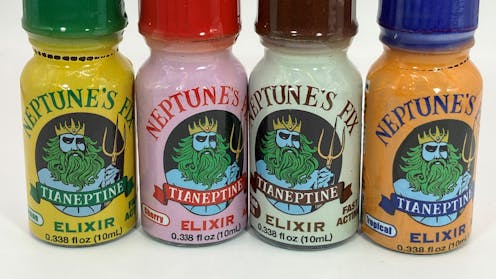
Despite never being approved by the FDA, the drug is sold in the US as a “wellness” product or nootropic – a substance supposedly used to enhance mood or mental clarity. It’s packaged as capsules, powders or liquids, often misleadingly labelled as dietary supplements.

This loophole has enabled companies to circumvent regulation. Products like Neptune’s Fix have been promoted as safe and legal alternatives to traditional medications, despite lacking any clinical oversight and often containing unlisted or dangerous ingredients.

Some samples have even been found to contain synthetic cannabinoids and other drugs. According to US poison control data, calls related to tianeptine exposure rose by over 500% between 2018 and 2023. In 2024 alone, the drug was involved in more than 300 poisoning cases. The FDA’s latest advisory included product recalls and import warnings.

Users have taken to the social media site Reddit, including a dedicated channel, and other forums to describe their experiences, both the highs and the grim withdrawals. Some report taking hundreds of pills a day. Others struggle to quit, describing cravings and relapses that mirror those seen with classic opioid addiction.

Since tianeptine doesn’t show up in standard toxicology screenings, health professionals may not recognise it. According to doctors in North America, it could be present in hospital patients without being detected, particularly in cases involving seizures or unusual heart symptoms.

People report experiencing withdrawal symptoms that resemble those of opioids, like fentanyl, including anxiety, tremors, insomnia, diarrhoea and muscle pain. Some have been hospitalised due to seizures, loss of consciousness and respiratory depression.

UK legality

In the UK, tianeptine is not licensed for medical use by the Medicines and Healthcare products Regulatory Agency and it is not classified as a controlled substance under the Misuse of Drugs Act 1971. That puts it in a legal grey area, not formally approved, but not illegal to possess either.

It can be bought online from overseas vendors, and a quick search reveals dozens of sellers offering “research-grade” powder and capsules.

There is little evidence that tianeptine is circulating widely in the UK; to date, just one confirmed sample has been publicly recorded in a national drug testing database. It’s not mentioned in recent Home Office or Advisory Council on the Misuse of Drugs briefings, and it does not appear in official crime or hospital statistics.

But that may simply reflect the fact that no one is looking for it. Without testing protocols in place, it could be present, just unrecorded.

Because of its chemical structure and unusual effects, if tianeptine did show up in a UK emergency department, it could easily be mistaken for a tricyclic antidepressant overdose, or even dismissed as recreational drug use. This makes it harder to diagnose and treat appropriately.

It’s possible, particularly among people seeking alternatives to harder-to-access opioids, or those looking for a legal high. With its low visibility, online availability and potential for addiction, tianeptine ticks many of the same boxes that once made drugs like mephedrone or spice popular before they were banned.

The UK has seen waves of novel psychoactive substances emerge through similar routes, first appearing online or in head shops, then spreading quietly until authorities responded. If tianeptine follows the same path, by the time it appears on the radar, harm may already be underway.

The Conversation

Michelle Sahai does not work for, consult, own shares in or receive funding from any company or organisation that would benefit from this article, and has disclosed no relevant affiliations beyond their academic appointment.

ref. ‘Gas station heroin’: the drug sold as a dietary supplement that’s linked to overdoses and deaths – https://theconversation.com/gas-station-heroin-the-drug-sold-as-a-dietary-supplement-thats-linked-to-overdoses-and-deaths-259194

Trump wins again as ‘big beautiful bill’ passes the Senate. What are the lessons for the Democrats?

Source: The Conversation – UK – By Dafydd Townley, Teaching Fellow in US politics and international security, University of Portsmouth

Donald Trump is continuing his run of political wins after his keynote legislation, nicknamed the ‘big beautiful bill’, squeaked through the Senate.

While the bill, which includes major cuts in tax and government spending, must now go back to the House of Representatives for another vote, passing the upper house is highly significant. Trump lost the support of just three Republican senators, and with the help of a tie-breaking vote from Vice-President J.D. Vance managed to push the bill forward.

Democrats, the minority in both the House and Senate, have been unable to do anything but sit by and watch as Trump claims victory after victory. These include progress in his attempt to end birthright citizenship, the claimed destruction of significant Iranian nuclear sites (yet to be independently verified) and the convincing of Nato member states to increase defence spending to 5% of their GDP. Trump may even be getting closer to a peace deal between Israel and Hamas.

And now the Democrats have failed in their desperate attempts to stop this bill. In the Senate, it was felt that there could be enough Republican senators concerned about cuts to Medicaid (the US system that provides essential healthcare to those on low incomes), the closure or reduction of services at rural hospitals, and the increase in national debt to potentially hinder the bill’s progress. However, Democrats were unable to do anything apart from delaying the voting process, and the bill is progressing with some changes but not enough to be severely weakened.

It had seemed likely that the Democrats could work with the Maga-focused Freedom Caucus group of representatives, whose members include Marjorie Taylor Greene, in the early stages in the House to stop its initial passage. But Speaker Mike Johnson managed to calm most of their fears about the rise in the deficit to get the bill through the House.

The lack of effective opposition from the Democrats reflects their congressional standing. The Republicans control the Senate 53-47, and they also have a majority of 220-212 in the House, with three vacancies.

While Democrat numbers in Congress is the primary issue in opposing this bill, their future congressional power will rely on strong leadership within the party and, more importantly, a clear set of policies with appeal that can attract more support at the ballot boxes. Failure to address this will probably allow Republicans to dominate Congress and shape American domestic and foreign policy any way they wish for longer.

Trump’s agenda has now passed the Senate.

What could Democrats do differently?

While Democrat Hakeem Jeffries has been a diligent minority leader in the House, he has attempted to operate as an obstacle to Republican policies with little success, rather than reaching across the political divide to create a consensus with dissenting Republicans.

Outside of Congress, California governor Gavin Newsom, widely touted as a potential candidate for the next presidential election, has offered some resistance to the Trump administration, particularly over Trump’s assumption of national command over the state-controlled National Guard to deal with protests in California against the Immigration and Customs Enforcement agency. However, Newsom’s reputation is still relatively regional, although it is on the rise.

Zohran Mamdani has won the Democratic nomination for New York mayor.

There will be jostling over the next couple of years for the Democratic presidential nomination, and this will have an impact on the platform that the party runs on. Party members and those voting for the next presidential nominee will need to decide whether to continue with the mainly centrist position that the party has adopted since the 1990s or adopt something more left-wing.

A more radical candidate, such as New York representative Alexandria Ocasio-Cortez, might offer a substantially different proposal that could seem attractive to Democratic voters and those Trump supporters who may feel dissatisfied with the current Republican administration.

However, democratic socialist Zohran Mamdani, recently selected as the Democratic nominee for the New York mayoral election, has already been vilified by some in the Republican party.

Concerns about such a supposedly “radical” candidate may concern many voters in red states in middle America. However, getting elected is one thing but implementing progressive, left-leaning policies is another thing entirely. They also need to deliver solutions to major issues, such as crime, at all levels, to show their abilities to solve problems.

It is not just the policies that matter for the Democrats, but who they want to represent. Last year’s election suggested that the Democrats had been ousted as the representatives of the working class. Some significant labour unions, a foundation of Democratic support for the majority of the 20th century, failed to endorse Kamala Harris.

Mamdani’s success in New York stemmed from the mobilisation of a grassroots campaign that used social media effectively. It targeted young working-class voters disenchanted with the Democratic party. He also resonated with voters in areas that had seen an increase in Republican voters in the 2024 election.

All this may offer some lessons to the Democrats. They need to reassess their policies, their image and their tactics, and show Americans that they can solve the problems that the public sees as most important, including the high cost of living. While they can expect to gain seats in the House in next year’s midterms, they need to look for a leader and policies that will capture the public’s hearts.

The Conversation

Dafydd Townley does not work for, consult, own shares in or receive funding from any company or organisation that would benefit from this article, and has disclosed no relevant affiliations beyond their academic appointment.

ref. Trump wins again as ‘big beautiful bill’ passes the Senate. What are the lessons for the Democrats? – https://theconversation.com/trump-wins-again-as-big-beautiful-bill-passes-the-senate-what-are-the-lessons-for-the-democrats-260038

UK may be on verge of triggering a ‘positive tipping point’ for tackling climate change

Source: The Conversation – UK – By Kai Greenlees, PhD Candidate, Sustainable Futures, University of Exeter

Nrqemi/Shutterstock

The UK is now more than halfway (50.4%) to achieving a net zero carbon economy, which means it has reduced its national emissions significantly compared to 1990.

We should even celebrate that 0.4%. Why? Because every tonne of carbon saved from the atmosphere and every fraction of a degree celsius of warming avoided saves lives and leaves more life-sustaining ecosystems intact for our children and grandchildren.

It also reduces the risk of triggering irreversible, devastating tipping points in the Earth system. We absolutely do not want to go there. Though, it may already be too late to save 90% of warm-water coral reefs, on which hundreds of millions of people depend for food and protection from storms.

Luckily, tipping points can also work in our favour. Researchers like us call them positive tipping points, which kickstart irreversible, self-propelling change towards a more sustainable future.


Get your news from actual experts, straight to your inbox. Sign up to our daily newsletter to receive all The Conversation UK’s latest coverage of news and research, from politics and business to the arts and sciences.


Solar energy has already crossed a tipping point, having become the cheapest source of power in most of the world. Because it is quick to deploy widely and in a variety of formats and settings, solar is expanding exponentially, including to the roughly 700 million people who don’t have electricity.

Electric vehicle sales have also crossed tipping points in China and several European markets, as evidenced by the abrupt acceleration of their shares in national vehicle fleets. The more people buy them, the cheaper and better they get, which makes even more people buy them – a self-propelling change towards a low-carbon road transport system.

Recent findings from the Climate Change Committee, independent advisers to the UK government on climate policy, show that the UK too may be on the cusp of a positive tipping point for electric vehicles (EVs), but that further work is needed to reach a tipping point for heat pumps.

EV sales are racing ahead

According to the CCC, more than half of the UK’s success in decarbonising its economy since 2008 can be attributed to the energy sector. Here, the transition from electricity generated by coal to gas and, increasingly, renewable sources like solar and wind, has occurred “behind the scenes”, without much disruption to daily life.

However, over 80% of the greenhouse gas emission cuts needed between now and 2030 (the UK aims to reduce emissions by 68% by 2030) need to come from other sectors that require the involvement and support of the public and businesses.

The adoption of low-carbon technologies by households, including the buying of EVs and installing of heat pumps, is a critical next step to determining the success or failure of the UK’s ability to achieve net zero. Cars account for about 15% of the UK’s emissions and home heating a further 18%.

Encouragingly, and despite concerted misinformation campaigns to discredit EVs, sales in the UK accounted for 19.6% of all new cars in 2024, which puts this sector close to the critical 20-25% range for triggering the phase of self-propelling adoption, according to positive tipping points theory.

This rise in EV sales is happening for two main reasons. First, the UK has a rule that bans the sale of new petrol and diesel cars from 2035, which gives carmakers and buyers a clear deadline to switch.

Second, they are becoming a better choice all round. They’re getting cheaper (some are expected to cost the same as petrol cars between 2026 and 2028), more appealing (with longer ranges and faster charging), and easier to use (thanks to more charging points and better infrastructure).

If this positive trend continues, emissions saved by EV adoption will be sufficient to achieve the UK road transport sector’s 2030 emissions target.

Where is the heat pump tipping point?

Heat pumps have been slower on the uptake in the UK, leading the CCC to identify their deployment as one of the biggest risks to achieving the 2030 emissions target.

Heat pumps use electricity to pump warmth from outside into a home (like a reverse refrigerator) and can be between three and five times more efficient than gas boilers, with approximate emissions savings of 70%.

The UK government has set a target of installing 600,000 heat pumps a year by 2028. But despite 90% of British homes being suitable for a heat pump, only 1% have one.

There are signs that installations are picking up pace, however. In 2024, 98,000 heat pumps were installed – an increase of 56% from 2023. Deployment will need to be increased more than six times its current rate over the next three years to reach the installation target. In other words, we urgently need to trigger a positive tipping point in this sector.

The triggering of self-propelling change depends on the relative strength of feedbacks that either resist change (damping or negative feedback) or drive it forward (positive feedback).

One important negative feedback highlighted by the CCC is the UK’s high electricity-to-gas price ratio, which increases the running costs of a heat pump on top of the high upfront cost of buying and installing one. Addressing this issue has been at the top of the CCC’s policy recommendations for the last two years.

One positive feedback that needs to be strengthened is the perception among installers of household demand for heat pumps. When installers perceive demand, they are more likely to invest in the training and certifications needed to meet it.

Two ways the CCC suggests the government could encourage installer confidence are to extend the boiler upgrade scheme (which provides grants to households to install heat pumps) and clean heat mechanism (which obliges manufacturers and installers to prioritise heat pumps) and to reinstate the 2035 phase-out rule for new fossil fuel boilers.

An understanding of positive tipping points helps us identify key leverage points where intervention can be most effective in tackling the remaining half of the UK’s emissions. When implemented as part of a coherent national strategy, positive change can be accomplished at the pace and scale required. There is no time to lose.


Don’t have time to read about climate change as much as you’d like?

Get a weekly roundup in your inbox instead. Every Wednesday, The Conversation’s environment editor writes Imagine, a short email that goes a little deeper into just one climate issue. Join the 45,000+ readers who’ve subscribed so far.


The Conversation

Kai Greenlees receives funding from the Economic Social Research Council, through the South West Doctoral Training Partnership.

Steven R. Smith does not work for, consult, own shares in or receive funding from any company or organisation that would benefit from this article, and has disclosed no relevant affiliations beyond their academic appointment.

ref. UK may be on verge of triggering a ‘positive tipping point’ for tackling climate change – https://theconversation.com/uk-may-be-on-verge-of-triggering-a-positive-tipping-point-for-tackling-climate-change-260212

The US and Israel’s attack may have left Iran stronger

Source: The Conversation – UK – By Bamo Nouri, Honorary Research Fellow, City St George’s, University of London

Israel’s attack on Iran last month and the US bombing of the country’s nuclear facilities, the first-ever direct US attacks on Iranian soil, were meant to cripple Tehran’s strategic capabilities and reset the regional balance.

The strikes came after 18 months during which Israel had effectively dismantled Hamas in Gaza, dealt a devastating blow to Hezbollah in Lebanon, weakened the Houthis in Yemen, and seen the collapse of the Assad regime in Syria – a longstanding and key Iranian ally.

From a military standpoint, these were remarkable achievements. But they failed to deliver the strategic outcome Israeli and US leaders had long hoped for: the collapse of Iran’s influence and the weakening of its regime.

Instead, the confrontation exposed a deeper miscalculation. Iran’s power isn’t built on impulse or vulnerable proxies alone. It is decentralised, ideologically entrenched and designed to endure. While battered, the Islamic Republic did not fall. And now, it may be more determined – and more dangerous – than before.


Get your news from actual experts, straight to your inbox. Sign up to our daily newsletter to receive all The Conversation UK’s latest coverage of news and research, from politics and business to the arts and sciences.


Israel’s attack – dubbed “operation rising lion” – began with attacks on Iranian radar systems, followed by precision airstrikes on Iranian enrichment facilities and senior military officers and scientists. Israel spent roughly US$1.45 (£1.06 billion) billion in the first two days and in the first week of strikes on Iran, costs hit US$5 billion, with daily spending at US$725 million: US$593 million on offensive operations and US$132 million on defence and mobilization.

Iran’s response was swift. More than 1,000 drones and 550 ballistic missiles, including precision-guided and hypersonic variants. Israeli defences were breached. Civilian infrastructure was hit, ports closed, and the economy stalled

The day after the US strikes, the Israeli prime minister, Benjamin Netanyahu, spoke with Donald Trump about a ceasefire. He and his generals were reportedly keen to bring the conflict to a speedy end. Reports suggest that Netanyahu wanted to avoid a lengthy war of attrition that Israel could not sustain, and was already looking for an exit strategy.

Crucially, the Iranian regime remained intact. Rather than inciting revolt, the war rallied nationalist sentiment. Opposition movements remain fractured and lack a common platform or domestic legitimacy. Hopes of a popular uprising that might topple the regime expressed by both Trump and Netanyahu were misplaced.

In the aftermath, Iranian authorities launched a sweeping crackdown on suspected dissenters and what it referred to as “spies”. Former activists, reformists and loosely affiliated protest organisers were arrested or interrogated. What was meant to fracture the regime instead reinforced its grip on power.

Most notably, Iran’s parliament voted to suspend cooperation with the International Atomic Energy Agency (IAEA), ending inspections and giving Tehran the freedom to expand its nuclear programme – both civilian and potentially military – without oversight.

Perhaps the clearest misreading came from Israel and the US treating Syria as a template. The 2024 fall of Bashar al-Assad was hailed as a turning point. His successor, Ahmed al-Sharaa – a little-known opposition figure, former al-Qaeda insurgent and IS affiliate – was rebranded as a pragmatic reformer, who Trump praised as “attractive” and “tough”.

For western and Israeli strategists, Syria offered both a way to weaken Iran and a blueprint of how eventual regime change could play out: collapse the regime, install cooperative leadership in a swift reordering process. But this analogy was dangerously flawed. Iran’s stronger institutions, military depth, resistance-driven identity and existence made it a fundamentally different and more resilient state.

Tactical wins, strategic ambiguity

While Iran’s regional network has taken significant hits over the past year –Hamas dismantled, Hezbollah degraded, the Houthis depleted, and the Assad regime toppled – Tehran recalibrated. It deepened military cooperation with Russia and China, secured covert arms shipments, and accelerated its nuclear ambitions.

Both Israel and Iran, however, came away with new intelligence. Israel learned that its missile defences and economic resilience were not built for prolonged, multi-front warfare. Iran, meanwhile, gained valuable insight into how far its arsenal – drones, missiles and regional proxies – could reach, and where its limits lie.

Most of Iran’s drones and missiles were intercepted — up to 99% in the cases of drones — exposing critical weaknesses in accuracy, penetration, and survivability against modern air defenses. Yet the few that did break through caused significant damage in Tel Aviv, striking residential areas and critical infrastructure.

This war was not only a clash of weapons but a real-time stress test of each side’s strategic depth. Iran may now adjust its doctrine accordingly – prioritising survivability, mobility and precision in anticipation of future conflicts.

Israel’s vulnerabilities

Internally, Israel entered the war politically fractured and socially strained. Netanyahu’s far-right coalition was already under fire for attempting to weaken judicial independence. The war has temporarily united the country, but the economic and human toll have reignited deeper concerns.

Israel’s geographic and demographic constraints have become clear. Its high-tech economy, tightly integrated with global markets, could not weather prolonged instability. And critically, the damage inflicted by the US bombing was more limited than hoped for. While Washington joined in the initial strikes, it resisted deeper involvement, partly to avoid broader regional escalation and largely because of the lack of domestic appetite for war and high potential for energy inflation, if Iran was to close the Strait of Hormuz.

What happens now?

The war of 2025 did not produce peace. It produced recalibration. Israel emerges militarily capable but politically shaken and economically strained. Iran, though damaged, stands more unified, with fewer international constraints on its nuclear ambitions. Its crackdown on dissent, withdrawal from IAEA oversight, and deepening ties to rival powers suggest a regime preparing not for collapse, but for survival, perhaps even confrontation.

The broader lesson is sobering. Regime change cannot be engineered through precision strikes. Tactical brilliance does not guarantee strategic victory. And the assumption that Iran could unravel like Syria was not strategy, it was hubris.

Both sides now better understand each other’s strengths and limits, a clarity that could deter future war – or make the next one more dangerous. In a region shaped by trauma and shifting power, mistaking resistance for weakness or pause for peace remains the gravest miscalculation.

The Conversation

Bamo Nouri does not work for, consult, own shares in or receive funding from any company or organisation that would benefit from this article, and has disclosed no relevant affiliations beyond their academic appointment.

ref. The US and Israel’s attack may have left Iran stronger – https://theconversation.com/the-us-and-israels-attack-may-have-left-iran-stronger-260314

Motion sickness drug linked to cases of robbery and assault – here’s what you need to know about ‘devil’s breath’

Source: The Conversation – UK – By Dipa Kamdar, Senior Lecturer in Pharmacy Practice, Kingston University

Scopolamine is extracted from brugmansia MaCross-Photography/Shutterstock

Scopolamine, more chillingly known as “devil’s breath,” is a drug with a dual identity. In medicine, it’s used to prevent motion sickness and nausea. But in the criminal underworld, particularly in parts of South America, it has gained a dark reputation as a substance that can erase memory, strip away free will and facilitate serious crimes. Now, its presence may be sparking fresh concerns in the UK.

While most reports of devil’s breath come from countries like Colombia, concerns about its use in Europe are not new. In 2015, three people were arrested in Paris for allegedly using the drug to rob victims, turning them into compliant “zombies”.

The UK’s first known murder linked to scopolamine was reported in 2019 when the Irish dancer Adrian Murphy was poisoned by thieves attempting to sell items stolen from him. In a more recent case in London, a woman reported symptoms consistent with scopolamine exposure after being targeted on public transport.


Get your news from actual experts, straight to your inbox. Sign up to our daily newsletter to receive all The Conversation UK’s latest coverage of news and research, from politics and business to the arts and sciences.


Scopolamine, also known as hycosine, is a tropane alkaloid, a type of plant-derived compound found in the nightshade family (Solanaceae). It has a long history: indigenous communities in South America traditionally used it for spiritual rituals due to its potent psychoactive effects.

In modern medicine, scopolamine (marketed in the UK as hyoscine hydrobromide) is prescribed to prevent motion sickness, nausea, vomiting and muscle spasms. It also reduces saliva production before surgery. Brand names include Kwells (tablets) and Scopoderm (patches).

As an anticholinergic drug, scopolamine blocks the neurotransmitter acetylcholine, which plays a vital role in memory, learning, and coordination. Blocking it helps reduce nausea by interrupting signals from the balance (vestibular) system to the brain. But it also comes with side effects, especially when used in high doses or outside a clinical setting.

How it affects the brain

Scopolamine disrupts the cholinergic system, which is central to memory formation and retrieval. As a result, it can cause temporary but severe memory loss: a key reason it’s been weaponised in crimes. Some studies also suggest it increases oxidative stress in the brain, compounding its effects on cognition.

The drug’s power to erase memory, sometimes described as “zombifying”, has made it a focus of forensic and criminal interest. Victims often describe confusion, hallucinations and a complete loss of control.

Uses and misuses

In clinical settings, scopolamine is sometimes used off-label for depression, excessive sweating, or even to help quit smoking. But outside these uses, it’s increasingly associated with danger.

Recreational users are drawn to its hallucinogenic effects – but the line between tripping and toxic is razor thin.

In Colombia and other parts of South America, scopolamine, also known as burundanga, has been implicated in countless robberies and sexual assaults. Victims describe feeling dreamlike, compliant, and unable to resist or recall events. That’s what makes it so sinister – it robs people of both agency and memory.

The drug is often administered surreptitiously. In its powdered form, it’s odourless and tasteless, making it easy to slip into drinks or blow into someone’s face, as some victims have reported. Online forums detail how to make teas or infusions from plant parts, seeds, roots, flowers – heightening the risk of DIY misuse.

Once ingested, the drug works quickly and exits the body within about 12 hours, making it hard to detect in routine drug screenings. For some people, even a dose under 10mg can be fatal.

Devil’s Breath documentary trailer, Journeyman Pictures.

Signs of scopolamine poisoning include rapid heartbeat and palpitations, dry mouth and flushed skin, blurred vision, confusion and disorientation, hallucinations and drowsiness.

If you experience any of these, especially after an unexpected drink or interaction, seek medical attention immediately.

The Conversation

Dipa Kamdar does not work for, consult, own shares in or receive funding from any company or organisation that would benefit from this article, and has disclosed no relevant affiliations beyond their academic appointment.

ref. Motion sickness drug linked to cases of robbery and assault – here’s what you need to know about ‘devil’s breath’ – https://theconversation.com/motion-sickness-drug-linked-to-cases-of-robbery-and-assault-heres-what-you-need-to-know-about-devils-breath-259720

The mistakes Keir Starmer made over disability cuts – and how he can avoid future embarrassment

Source: The Conversation – UK – By Thomas Caygill, Senior Lecturer in Politics, Nottingham Trent University

Labour MPs have forced a major government climbdown over disability benefit cuts, in an embarrassing turn of events for Keir Starmer. The prime minister has blown a hole in his budget by agreeing to scrap plans to tighten eligibility criteria for disability benefits via the universal credit and personal independence payment bill.

In return, MPs passed what was left of the bill – although 49 of them still rebelled, voting against the government. The bruising encounter bodes poorly for the future. Starmer’s Number 10 operation has been shown to be unable to communicate effectively with MPs. The team was neither able to win MPs over when the bill was being developed, nor bring them into line when agreement could not be reached.

The question now must be whether Starmer will ever be able to push through any difficult legislation in the future. He now needs to give serious attention to his relationship with MPs.


Want more politics coverage from academic experts? Every week, we bring you informed analysis of developments in government and fact check the claims being made.

Sign up for our weekly politics newsletter, delivered every Friday.


The government has insisted that welfare costs are becoming unsustainable. Back in March, it unveiled plans to cut sickness and disability benefits in order to save £5 billion a year from the welfare budget by 2030. However, the government’s own figures suggested that 250,000 people could be pushed into poverty because of the changes, which led to criticism from many Labour MPs and disability charities.

The threat of rebellion forced a partial u-turn by the government which appeased the vast majority of rebels. Although the remaining rebels failed to pass their wrecking amendment in the end, the fact the government was continuing to negotiate and offer concessions well into the debate on the night of the vote shows that the whips still felt there was a prospect of defeat. This behaviour during the debate is highly unusual and could all have been prevented.

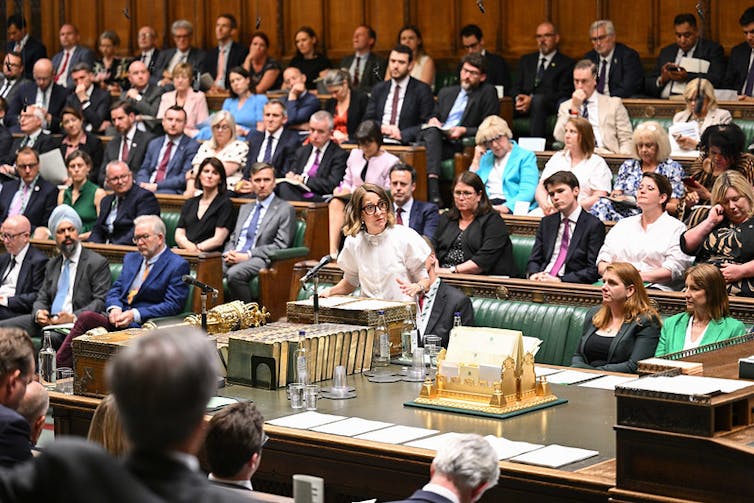
Labour MPs in the House of Commons.
Labour MPs on the night of the vote.
UK Parliament/Flickr, CC BY-NC-ND

Whenever there is disagreement between the government and its own backbench MPs, the role of the whips becomes even more vital. The whips have an important role in informing backbench MPs of which way the party leadership expects them to vote during divisions in the House of Commons.

However, this is in fact a two-way channel of communication. Whips are also responsible for reporting concerns and dissension among MPs to the chief whip, who then has a duty to report such issues to the prime minister and cabinet.

There has clearly been a breakdown in this two-way channel of communication in the case of the disability benefits cuts. Reports suggest that whips were warning that trouble was brewing to ministers but were being ignored.

How to avoid a repeat incident

A key complaint among Labour backbenchers was that they were not consulted on the proposals before they were announced. As the potential consequences of the changes became clearer, more MPs raised concerns about them.

A lesson for the government here is that adequate groundwork is needed to get MPs on side with policies. That might mean allowing select committees to have more insight into the government’s thinking. It’s notable that select committee chairs were leading figures in this rebellion.

It might also mean making greater use of departmental groups within the Parliamentary Labour Party to allow backbench MPs to feed into discussions at an earlier stage. Crucially, it also means more one-to-one, informal conversations.

All this helps MPs feel like they have a vested interest in the policy and have had their voices heard. If you implement such a safety valve early on, the need for views and frustrations to be expressed so publicly later on in the process is reduced. Instead, in this case, we’ve had Labour backbenchers revealing to the media that, a year into office, they’ve still never even met Starmer.

We have seen a trend in recent years of MPs becoming more focused on their constituency role. This, combined with the large rise in the number of MPs who hold marginal seats (meaning they are at greater risk of losing those seats at the next election) means that they prioritise constituents concerns over the party line. MPs who are worried about holding their seat at the next election have little to lose from threats about losing the whip.

Labour’s position in the polls over recent months has exacerbated this problem. An analysis by the Disability Poverty Campaign Group in April suggested that for dozens of Labour MPs, the number of people claiming the benefits that were to be cut in their constituencies was greater than the size of their majority. In other words, there was a direct line to be drawn between voting for the bill and election loss.

An additional factor that must be considered is that the sheer number of Labour MPs currently in parliament means that the usual incentives for loyalty don’t necessarily apply. Loyalty is often negotiated with promises of ministerial office in the future, but Starmer doesn’t turn over his team often and, in any case, there simply aren’t enough such carrots to dangle in front of everyone when a party has more than 400 MPs.

Labour would also have to win a second term for such promises to be meaningful and that is currently in jeopardy. All this means there are fewer incentives for MPs to play the long game.

What is clear is that Starmer’s approach to party management is not working. Given how the changing nature of politics in the UK, MPs are likely to get a taste for rebellion – particularly if, as happened in this case, rebellions deliver results. This is something any government should seek to avoid.

Clearly there is a need for more groundwork to give MPs a sense of ownership over policy. There is also an argument for the prime minister and senior members of the cabinet to spend more time doing the rounds in the House of Commons tearooms, speaking to the parliamentary party at large and listening to their concerns directly. This might improve parliamentary party relations and keep the lid on future rebellions.

The Conversation

Thomas Caygill is currently in receipt of a British Academy/Leverhulme Small Research Grant for research on post-legislative scrutiny in the Scottish Parliament and has previously received funding from the Economic and Social Research Council.

ref. The mistakes Keir Starmer made over disability cuts – and how he can avoid future embarrassment – https://theconversation.com/the-mistakes-keir-starmer-made-over-disability-cuts-and-how-he-can-avoid-future-embarrassment-260254

Euro 2025: women’s football has exploded – here’s how it can grow even more

Source: The Conversation – UK – By Christina Philippou, Associate Professor in Accounting and Sport Finance, University of Portsmouth

Aside from victory and sporting glory, the players in the women’s Euro 2025 football tournament are playing for more money than ever before. The prize fund of €41 million (£35 million), to be shared among the 16 participating sides, is more than double what it was last time around.

It’s still a long way off from the prize money on offer to the men’s equivalent tournament (€331 million), but is a clear indication of the continuing rise of interest and investment in women’s football, particularly within England.

The English team’s hosting and victory of the 2022 women’s Euros were rightly credited with providing a massive boost to the game three years ago. But interest in women’s club football was already on the rise, with an almost sixfold increase in revenue between 2011 (the first season of the Women’s Super League (WSL)) and 2019.


Get your news from actual experts, straight to your inbox. Sign up to our daily newsletter to receive all The Conversation UK’s latest coverage of news and research, from politics and business to the arts and sciences.


Other numbers are encouraging too. Generally, match-day attendances have seen a dramatic rise including for the sport’s second tier (now named WSL2).

Broadcasting income for WSL was up 40% in 2023-24 compared to the previous season. And a new five-year deal with Sky Sports and the BBC, worth £65 million, is worth almost double the previous arrangement.

However, there’s room for improvement.

Research suggests that well-considered scheduling (weekend games are best) can have a marked effect on attendances (as does weather and pricing). And stadium capacity matters too, partly because more people can attend but also because a larger (often iconic) stadium tends to act as an attraction in itself.

For example, Arsenal’s women’s side saw average crowds of just under 29,000 in 2024-25 compared to a WSL average of 6,662. They have the highest revenue from match-day income, with nine games being played at the Emirates stadium last season and all WSL games scheduled to be played there in the next.

Facilities within the stadiums are another concern, as they were traditionally built for mostly male spectators, so do not cater as well to the more female and family demographic of women’s football.

This means, for example, that there are often not enough women’s toilets available, while refreshment options may be geared towards drinkers rather than children. Even the gates seem designed for a steady entry trickle of fans over an hour rather than a mass turnout of time-pressured families arriving just before kick-off.

Some good news on this front is that Brighton and Hove Albion FC are now building a stadium specifically for use by their women’s team, due to be in use by 2027. And Everton have decided to repurpose Goodison Park for use by its women’s side following the men’s move to a new stadium.

Commercial break

But aside from people actually watching the matches, the biggest chunk of income for women’s teams comes from commercial enterprises. And while affiliated teams (those linked to a men’s side) can benefit from sharing a brand, there are also a large number of commercial partners emerging specifically in the women’s game.

Companies selling makeup, baby products, sports bras and period pants are all involved in the business side of women’s football. More will probably follow.

But while commercial and competition success stories are something to celebrate, women’s football still faces challenges. One of the big ones is to do with building a legacy – the idea that just hosting a major tournament should not be the end goal, but something which ensures lasting change and development.

Building a legacy is not straightforward, but after England’s success in Euro 2022, the side used their platform to ensure change on issues including access to football for girls in schools and availability of kit.

As for the club game, attitudes to building a legacy by offering financial support to women’s teams are mixed. Some clubs view the women’s team as different (in terms of marketing, say) but integrated as part of the club (in terms of ticketing and sharing of resources). Others seem to consider a women’s side as good PR or community outreach rather than a genuine commercial opportunity.

In the last couple of years, we have seen both Reading and Blackburn women’s teams withdraw from the WSL2, while Wolves failed to apply for license to the league.

All of those teams mentioned worries over costs. And most women’s teams do lose money.

But men’s teams tend to lose money too, with the majority not only making losses but also being technically insolvent (meaning owners need to pump money in to keep clubs going).

The difference is that women’s football is essentially in a start-up phase, with lots of commercial, broadcasting and match-day potential, as showcased by annual revenue growth rates. In contrast, the men’s football market is a mature one that has been professional for decades, and shows much lower annual revenue growth.

Euro 2025 then, needs to play its part in keeping up momentum. It needs to keep the crowds, the commercial partners, the broadcasters and fans on board and committed.

For while women’s football is connected to men’s football, it is a different business. And celebrating that difference could do the women’s game a world of economic good.

The Conversation

Christina Philippou does not work for, consult, own shares in or receive funding from any company or organisation that would benefit from this article, and has disclosed no relevant affiliations beyond their academic appointment.

ref. Euro 2025: women’s football has exploded – here’s how it can grow even more – https://theconversation.com/euro-2025-womens-football-has-exploded-heres-how-it-can-grow-even-more-257864