Don’t cut them out: lymph nodes may be key to cancer treatment

Source: The Conversation – UK – By Justin Stebbing, Professor of Biomedical Sciences, Anglia Ruskin University

Oleksandra Bolotina/Shutterstock.com

Removing lymph nodes during cancer surgery has saved countless lives in many tumour types. Yet recent research is challenging parts of this long-standing practice.

Imagine your body’s immune defences as a city, and lymph nodes as the hubs where police and firefighters gather fresh intel to launch their attack on criminals. What happens if you remove too many of these hubs? This is a new question at the centre of modern cancer surgery.

When surgeons remove lymph nodes, it’s usually for two reasons: to find out whether cancer has spread, and to prevent further spread to other organs. For decades, this approach represented the best standard of care.

If a tumour escapes its original site, cancer cells often travel through lymph vessels and settle in the nearest lymph nodes, which act as biological filters. Detecting cancer cells in lymph nodes signals that a patient’s disease may be more likely to return after treatment.

Removing these nodes allows doctors to “stage” the disease accurately, and potentially increase the chances of eradicating all tumour cells – while also telling oncologists like me to treat the cancer more aggressively.

But lymph nodes are not just passive waystations. They play an active role in the body’s immune response, acting as meeting points for immune cells to share information about cancer. Recent scientific discoveries have led researchers to rethink how crucial these hubs are for sparking powerful, lasting immune reactions.

One of the newest studies shows lymph nodes help maintain a special type of immune cell called “CD8 positive T cells”, which can destroy cancer cells. These immune cells are primed and kept ready to act by the environment inside the lymph nodes.

Without these hubs, the body’s anti-cancer immune response, especially during immunotherapy treatment, may be weaker than previously imagined. The research shows how the specific cells in the lymph nodes make an initial anti-cancer burst of activity. However, this has only been demonstrated in the laboratory, not in humans as yet.

Removing lymph nodes is not without drawbacks. Patients can experience swelling (lymphoedema), increased risk of infection in the affected limb, and sometimes chronic pain or mobility problems. There’s also concern that removing lymph nodes, while reducing short-term risks of cancer spread, might inadvertently weaken the body’s long-term immune defences – especially as modern treatments increasingly rely on the patient’s natural immunity. This is in line with the new study findings.

How lymph nodes work.

Why do surgeons still remove lymph nodes, then?

For many types of solid tumour, the risk of metastatic spread remains high, and lymph node involvement is one of the best predictors of cancer recurrence.

Lymph node removal also provides vital information for choosing the most effective post-surgical treatments. In breast cancer, doctors often use a “sentinel node biopsy”. This means removing only the first lymph node that fluid from the tumour drains into. Checking just this sentinel node helps doctors see if the cancer has spread, while reducing the number of nodes removed and lowering the risk of side-effects.

Medical researchers are learning more about how lymph nodes work during long-term illnesses. The new study shows that lymph nodes aren’t just passive filters; they’re active training grounds where special immune cells grow, multiply and become powerful fighters. This is especially important during treatments that boost the immune system, such as checkpoint blockade treatments which are now used for many types of cancer.

These results suggest that taking out lymph nodes doesn’t just block cancer’s spread; it also removes important hubs where the immune system monitors the body and gets reactivated to fight disease.

Over the last decade, hospitals have adopted gentler, more targeted lymph node surgeries. Instead of removing all the nodes in a region, the focus is now on minimising disruption: taking only the nodes most likely to harbour cancer.

This approach reduces complications for patients and may help keep their immunity strong. Some patients with early-stage cancers may even avoid node removal altogether, instead relying on imaging and biopsies to monitor for spread.

For those worried about the consequences of major lymph node removal, emerging therapies offer hope. Immunotherapy drugs, targeted treatments and even cancer vaccines are being developed that can “re-educate” the immune system, even if some lymph nodes have been lost.

Still, there is growing evidence that patients do best when at least some hubs remain – preserving the body’s ability to mount and sustain a defence against lingering cancer cells.

In the future, cancer surgery may become even more personalised. By mapping the activity inside lymph nodes – tracking which ones are essential for immune function and which are most likely to seed new tumours – doctors can tailor surgery so each patient gets maximum benefit with minimum harm.

The recent discoveries challenge surgeons and oncologists to weigh every decision carefully: not just for what is removed today, but for the immunity and future defences left behind.

Is removing lymph nodes in cancer surgery a bad idea? The answer is complex. For many patients, it’s still a good idea and can be lifesaving. But new science teaches us that lymph nodes are more than just staging posts; they may be indispensable for long-term immune protection. The future promises smarter, more strategic surgery, keeping more of the body’s natural defence system intact while targeting cancer with precision.

The Conversation

Justin Stebbing does not work for, consult, own shares in or receive funding from any company or organisation that would benefit from this article, and has disclosed no relevant affiliations beyond their academic appointment.

ref. Don’t cut them out: lymph nodes may be key to cancer treatment – https://theconversation.com/dont-cut-them-out-lymph-nodes-may-be-key-to-cancer-treatment-265557

When mental health apps become worry engines: how digital ‘care’ can hijack our anxieties

Source: The Conversation – UK – By Mikael Klintman, Professor of Sociology, Lund University

voronaman/Shutterstock

It’s 2:47 am and your phone buzzes on the nightstand. The notification suddenly glows in the darkness: “You’re on a 7-day streak!”; “Don’t break your streak!”. You feel the need to open the app right away for an emergency breathing exercise. Half-awake, you fumble for the device, chest tightening. Another buzz: “What’s your positive intention for the day?”

The app that promised to ease your anxiety has just jolted you into a state of micro-panic. Have you fallen prey to some kind of toxic, digital positivity?

Research shows that smartphone notifications from various types of apps can contribute to stress, anxiety and depression, with users receiving dozens of push notifications daily.

A recent meta-analysis found that while mental health apps can help improve clinical outcomes, there are some concerns around too much engagement leading to frustration and stress.

These apps, sometimes marketed as “therapist in your pocket” and “a sort of 24-7 mobile therapist” are employing strategies closely resembling what social media platforms use to maximise psychological engagement. But when the product is mental wellbeing, what happens when the cure becomes part of the disease?

To understand why app design choices matter, we need to consider how our minds process threats, whether positively or negatively framed. In my new book Framing – The Social Art of Influence, I examine topics ranging from caviar ads to public‑health campaigns, asking which kinds of signalling strike a chord with different audiences in particular situations. While mental‑health apps are not directly investigated in my book, there are plenty of parallels to them backed up by research.

One key idea is the distinction between “rough” and “smooth” textures of framing in communication. Rough framing uses threat cues, surveillance language and urgency to capture attention. It’s the difference between a gentle reminder and a fire alarm. These apps systematically deploy rough framing through their notification systems.

Consider how these notifications exploit what evolutionary psychologists call our “hypervigilance bias” — the ancient tendency to overreact to potential threats that once kept our ancestors alive. Research shows that throughout human evolution, diverse environmental threats shaped our brain’s fear response, resulting in cognitive mechanisms that prioritised survival.

When an app warns that your stress is spiking, it’s using the same neural pathways that once alerted us to predators. But unlike a rustling bush that might hide a tiger, these digital warnings can create threats where none existed.

By sending alerts about “detected stress” or “mood dips,” mental health apps create micro-crises that only the app can resolve. User reviews consistently praise the “instant reassurance” these apps provide, yet studies tell a different story about long-term engagement patterns.

Research on mental health app notification timing and frequency reveals concerning patterns. One study found that people using a certain app receiving daily notifications showed higher engagement initially. Still, some users described experiencing frustration with repetitive notification content, with one participant noting: “n the end it got me a bit annoyed, ‘cause I was like, ‘Oh, I’ve done this already.’”

Analysis of push notifications showed that frequent users become less responsive to suggestion-based prompts over time.

Hot and cold framing

In my book’s framework of social influence, I also distinguish between “hot” and “cold” framing temperatures. Hot framing creates urgency and emotional intensity — think breaking news alerts or emergency warnings. Cold framing allows space for reflection and considered response.

Mental health apps have become masters of hot framing. Haptic buzzes accompany streak warnings. Red badges accumulate on home screens. Animation effects show wilting flowers when you miss a meditation session. One popular app even sends notifications styled like text messages: “Hey! Your anxiety score is climbing. Let’s chat?”

The informal tone masks the manipulative design — you’re not chatting with a friend but with an algorithm optimised for engagement.

This matters because mental health recovery often requires the opposite approach. Decades of research in cognitive behavioural therapy emphasise the importance of creating distance from anxious thoughts, not constant monitoring of them. When we’re repeatedly prompted to check our stress levels, we’re training ourselves to become more, not less, aware of every physiological fluctuation.

How to improve design

The solution isn’t to demonise technology or abandon digital mental health tools altogether. Instead, we need to reframe how these apps operate radically. Research suggests several promising approaches that shift from hot to cool, rough to smooth framing.

First, notification caps work. A study on smartphone notification batching found that limiting alerts to three times daily reduced stress and increased wellbeing. Moreover, research on mental health app notifications warns that “a lot of annoying reminders can lead to disengagement” and recommends allowing users to customise reminder frequency and timing.

Second, opt-in rather than default biometric monitoring reduces the surveillance feel while maintaining functionality for those who genuinely benefit. Third, what designers call “intentional friction” — small barriers to obsessive checking — can break compulsion cycles. Such barriers may include limiting how often data is refreshed or using batching notifications.

Colour psychology matters too. Research on healthcare design shows that blue environments can lower blood pressure, reduce heart rate and decrease cortisol levels. A study on mental health app design found that young people “favoured a subtle use of colour” for wellbeing apps, warning against “overly intense colours”.

Language shifts make a difference. “When you’re ready, you might enjoy a breathing exercise” lands differently than “URGENT: Manage your stress NOW!”

What you can do

The next time your mental health app sends an urgent notification, pause before responding. Ask yourself: is this alert serving my wellbeing or the app’s engagement metrics? Are these “insights” about my stress creating more worry than wisdom? The power to reframe these digital interactions lies first in recognising how they frame us.

Perhaps the most radical act of digital self-care is the simplest: turning off notifications altogether. True mental wellness might begin not with another app alert, but with the confidence to trust our own minds, in their own time, at their own pace. Now that would be revolutionary — an app that knows when to stay quiet.

The Conversation

Mikael Klintman does not work for, consult, own shares in or receive funding from any company or organisation that would benefit from this article, and has disclosed no relevant affiliations beyond their academic appointment.

ref. When mental health apps become worry engines: how digital ‘care’ can hijack our anxieties – https://theconversation.com/when-mental-health-apps-become-worry-engines-how-digital-care-can-hijack-our-anxieties-263930

Starmer has enabled the far-right – promises of ‘progressive patriotism’ are no longer enough

Source: The Conversation – UK – By George Newth, Lecturer in Politics and member of Reactionary Politics Research Network, University of Bath

Faced with an insurgent UK far right backed by a billionaire oligarch, Prime Minister Keir Starmer’s pledge to lead the progressive fightback is long overdue. If Starmer’s speech, however, is to be anything but empty rhetoric, he must abandon his failed strategy of chasing the Reform vote in favour of a bolder, more hopeful narrative.

Based on his government’s actions and discourse so far, the signs are far from promising. He has helped embolden the very politics he claims to oppose.

Starmer’s speech comes hot on the heels of Britain’s largest ever far-right mobilisation. Between 110,000 and 150,000 people descended on London for the so-called “Unite The Kingdom” march, organised by Stephen Yaxley-Lennon (better known as Tommy Robinson).

In line with far-right great replacement theory, the principal target of those speaking at the event was Islam and immigration – but there were plenty of examples of placards targeting other marginalised groups such as LGBTQ+ people.

Appearing via video link, the billionaire oligarch Elon Musk warned of the need “to fight back or die” in the face of “massive uncontrolled migration”. Starmer’s home secretary, Shabana Mahmood labelled Musk’s words as abhorrent and Starmer said some of the views expressed at the rally did not reflect a “nation proudly built on tolerance, diversity and respect”. The government, however, arguably shares significant responsibility for legitimising the politics behind the rally.

Starmer’s denunciation of “loutish behaviour” mimics his decision to attribute the summer 2024 riots to “far-right thuggery”. Countering far-right figures such as Yaxley-Lennon is vitally important. However, on its own, such reactive discourse is not enough. Associating far-right ideas with the margins of society ignores the way in which so-called mainstream politicians have normalised such politics .

The Unite the Kingdom march was the climax of “operation raise the colours”, which saw people all over the country putting up flags wherever they felt like doing so. Bearing all the hallmarks of a carefully coordinated “astroturf” campaign (stimulating grassroots support for a cause and then using that support to legitimise other activities), raise the colours contributed to an emboldening of the far right.

Further to “just” raising the union flag and St George’s cross, there were acts of vandalism against mosques and ethnic food restaurants as well as racist graffiti. It is hard not to also see the link between those putting up flags in the streets and those waving them outside so-called “asylum hotels”.

Most of this has since been condemned by Starmer, yet he initially embraced raise the colours wholeheartedly, even calling himself a “big supporter of flags”. Meanwhile, the (at the time) home secretary Yvette Cooper made the somewhat bizarre assertion that her entire home was bedecked with St George’s crosses and Union Jacks and said that people should “put ‘em up anywhere”.

The violent rhetoric and actions on display at the rally reveal the severe limitations of this attempt to co-opt the flag waving initiative to attract its backers.

I would argue this also illustrates how Starmer’s attempt to pivot towards a more “progressive” form of patriotism is doomed to fail. Because patriotism is so often tied to exclusion and the policing of national boundaries, it ultimately undermines broader commitments to empathy, equality and solidarity.

A losing game

In the longer term, Starmer’s own policies since taking office have tried to outflank Reform on the right. Starmer has framed Reform as Labour’s official opposition. In line with this, the Labour party has made immigration, and Channel boat crossings in particular, one of its top priorities.

On taking office, Labour’s prioritisation of “secure borders” has been encapsulated by the violent slogan of “smash the criminal gangs”. Starmer has accused past Conservative governments of running an “open-borders experiment” and has allowed images of deportations to be made public – a technique most notoriously used in the Trump administration’s racially charged deportation videos that are shared with the public in the knowledge that they will be widely circulated on social media.

Starmer cannot defeat the far right by using its language and tactics. This much is evident not only in the chants and placards which target him at far-right rallies, but also his disastrous polling figures.

In the words of journalist Nesrine Malik, “we need new stories” when addressing the socioeconomic and sociopolitical challenges facing the UK. A key example is the way we talk about immigration. It is telling that just 5% of overall migration to the UK is classified as illegal yet it almost entirely dominates the national conversation.

Starmer has done nothing to counter that imbalance. Indeed, his speech, intended to mark a fightback of progressive values, has doubled-down on anti-migrant rhetoric.

In particular, the introduction of digital ID cards is framed as a way of ensuring Britain takes back control of its borders. Claiming Britain has been “squeamish” about talking about illegal immigration, Starmer has said ID cards would help protect working people’s wages against those who “slip into the shadow economy and remain here illegally”.

Academic research consistently illustrates that the way in which immigration is framed by politicians and the media has a significant impact on how and whether people view it as a “legitimate concern”. It is incumbent on a supposedly “social democrat” prime minister to lead this change in narrative.

Starmer’s intervention on the side of progressive values might be a welcome one, were it not premised on a dead duck narrative of “progressive patriotism”. It is, though, effectively meaningless if he continues to lead a government which oversees and manages the “division” he ostensibly seeks to address.

The Conversation

George Newth is a Lecturer in Politics at University of Bath and is a member of the Green Party

ref. Starmer has enabled the far-right – promises of ‘progressive patriotism’ are no longer enough – https://theconversation.com/starmer-has-enabled-the-far-right-promises-of-progressive-patriotism-are-no-longer-enough-266036

Why Charli XCX might be Gen Z’s answer to the Romantic poets

Source: The Conversation – UK – By Katie MacLean, PhD Student, University of Stirling

Popstar Charli XCX is turning her hand to acting in the new film Erupcja. In it, she recites Lord Byron’s poem Darkness. Charli and Byron may be 200 years apart, but the legacies of Romantic poetry are alive in Brat, the singer’s sixth studio album.

Byron has often been described as the first modern celebrity, notorious in regency England for rumours of incest, homosexuality and vampirism. Irish writer Marguerite Gardiner, Countess of Blessington, wrote in 1823 that “Byron had so unquenchable a thirst for celebrity, that no means were left untried that might attain it.”


Read more:
Brat by Charli XCX is a work of contemporary imagist poetry – and a reclamation of ‘bratty’ women’s art


Brat is similarly concerned with the self-construction of identity and celebrity in Charli’s “party girl” image. Her interest in fame is reflected both in her album’s extensive branding and in lyrics like, “When I go to the club I wanna hear those club classics/I wanna dance to me”.

In Might say Something Stupid, Charli admits that she is “famous but not quite” and doesn’t know if she “belong[s] here anymore”. This echoes John Keats’ 1818 poem When I have fears that I may cease to be, in which he laments that he might die before he experiences true literary achievement and fame. Charli has inherited the identity of lonely artist obsessed with creative genius from the Romantics.

Anxieties around legacy resurface in Apple. Charli uses the apple as a Gothic metaphor for inheritance and cursed fate, not unlike Byron’s On Leaving Newstead Abbey, in which he imagines his ancestors haunting him until death. Romantic poetry is full of this tension between inheritance and decay, and Charli’s lyrics show how those anxieties still haunt us today.

Romantic poets were obsessed with the archaic and classical through Greek and Roman mythology, ruins, and medievalism, like John Keats’ poem Ode to a Grecian Urn. Similarly, Brat frequently looks back with references to Y2K aesthetics and early 2000s culture.

Charli romanticises nostalgia in the song Rewind:

Used to burn CDs full of songs I didn’t know
Used to sit in my bedroom, puttin’ polish on my toe
Recently, I’ve been thinkin’ ‘bout a way simpler time
Sometimes, I really think it would be cool to rewind.

In both cases, romantic nostalgia becomes a creative lens to explore our relationship with the past.

Romantic poets were fascinated by the sublime, characterised as the overwhelming power of nature. In Wordsworth’s Lines Composed A Few Miles Above Tintern Abbey, he contrasts “the din/Of towns and cities” against awe-inspiring “steep and lofty cliffs”.


Read more:
How to resolve friendship tension like Lorde and Charli XCX


In the song, Everything is Romantic, Charli instead finds beauty in juxtaposing symbols: the man-made (“Bad tattoos on leather tan skin/Jesus Christ on a Plastic sign”) contrasts nature (“Lemons on thе trees and on the ground/[…] Pompeii in the distance”). Where the Romantics rejected the artificial, Charli embraces it, extending Romantic ideas into the 21st century.

The most explicitly romantic song on Brat is So I, an elegy for the producer Sophie, who died suddenly in 2020. Just as in romantic elegies, Charli laments the loss of genius: “Your star burns so bright/ […] You had a power like a lightnin’ strike”.

Percy Shelley’s elegy Adonais, written on the death of Keats, concludes that the genius of Keats lives on through his poetry. Similarly, Charli sings: “Your sounds, your words live on, endless.” The influence of Romantic elegies can still be seen in popular culture through music, particularly songs which immortalise fellow artists and explore contemporary understandings of grief.

The media studies academic David Tetzlaff argues that, “Romanticism remains the common language of middle-class rebelliousness.” Brat rebels most obviously in its neon green branding, hyperpop tracks and aggressive autotune, becoming one of Rolling Stone’s 250 greatest albums of the 21st century so far. So, Brat Summer’ may been a neon green Tik-Tok trend, but the album perfectly showcases how Romanticism influences art and culture today.

As Matt Sangster, an expert in 18th-century literature and material culture, writes in David Bowie and the Legacies of Romanticism, “[t]he ways that texts happened in the past are hugely important, but texts and the idea clusters they spawn are also fascinating for the complex ways that they continue to happen in our lives.” Concerns inherited from the Romantics are evident in Brat, with its exploration of celebrity, nostalgia, nature, legacy and loss. Romanticism isn’t stuck in the 19th century – it is alive today in the very places you may least expect.


Looking for something good? Cut through the noise with a carefully curated selection of the latest releases, live events and exhibitions, straight to your inbox every fortnight, on Fridays. Sign up here.


The Conversation

Katie MacLean does not work for, consult, own shares in or receive funding from any company or organisation that would benefit from this article, and has disclosed no relevant affiliations beyond their academic appointment.

ref. Why Charli XCX might be Gen Z’s answer to the Romantic poets – https://theconversation.com/why-charli-xcx-might-be-gen-zs-answer-to-the-romantic-poets-266088

Booker shortlist 2025: six novels (mostly) about middle age that are anything but safe and comfortable

Source: The Conversation – UK – By Jenni Ramone, Associate Professor of Postcolonial and Global Literatures, Nottingham Trent University

The Times has described the 2025 Booker Prize shortlist as “revenge of the middle-aged author”“. If the phrase sounds derogatory, it isn’t meant that way: the review also describes the shortlist as “novels for grown-ups”, with the prize privileging “maturity over novelty” and supporting “unpretentious, old-fashioned literary fiction”.

This is reinforced by the Booker Prize website, which highlights the previous winner (Kiran Desai) and two previously shortlisted authors (Andrew Miller and David Szalay) on the list, while noting that all six authors have long-established literary careers.

A book prize should reward novelty, though – and the Booker is, after all, a book prize, not an author prize like the Nobel. But if novelty isn’t obvious from the authors themselves, it can be detected in their books.

Their ages should not be a big surprise. Several literary prizes focus on older writers, including the newly launched Pioneer Prize for female writers over 60, established by Bernardine Evaristo to “acknowledge and celebrate pioneering British women writers” in all genres. Evaristo notes that the prize intends to correct the problem that “older women writers tend to be overlooked” – 91-year-old Maureen Duffy was its first recipient.

Perhaps these prizes and Booker nominations respond in part to society’s emphasis on youth, reflected in publishing initiatives such as Granta’s best young novelists, Penguin’s authors under 35 to watch and previously, The New Yorker’s 20 under 40 list.

It will be interesting to see whether the Booker winner this year reflects the suggested trend of overlooking older women writers, or responds to it. Three of the shortlisted authors are women, and according to my students and the bookies’ odds, Desai’s The Loneliness of Sonia and Sunny and Susan Choi’s Flashlight are likely contenders for the prize, with Ben Markovits’ The Rest of Our Lives behind them.

My students were drawn to the specific historical context of Flashlight, which conveys the lives of several generations of a family beginning in 1940s Japan, then moving through suburban America and North Korea. They valued the less-documented migration story, and suggested the mystery fiction aspect added wide appeal.

Markovits’ The Rest of Our Lives was seen as a typical Booker shortlist by my students, who identified the extra-marital affair, the road trip across America, and the internal-monologue narration of the eloquent and thoughtful university lecturer protagonist as factors which might make the book very popular.

Beyond this, the plot shares with Flashlight a fundamental uncertainty, with characters feeling out of place in their own lives. In The Rest of Our Lives, Tom’s life is gradually unbuttoned when he and his wife decide to stay together until their youngest child leaves home, following her affair. Rather than a dramatic upheaval, the narrator decides to undertake a picturesque road trip.

An extra-marital affair is also at the centre of Miller’s The Land in Winter, in which the harsh winter of 1962-63 in England’s West Country forces two couples to confront their uncomfortable relationship dynamics, when they are forced to stay indoors to avoid the weather.

Disaster looms in the countryside through unpredictable people like Alison Riley, who is “the kind of person who might choose to bring the house down simply to find out what kind of noise it made”.

The uncertainty of individual identity, driven by unconventional and challenging family relationships, is the fundamental connecting factor between all six books, and Katie Kitamura’s Audition expresses this most directly.

Written in two parts, the novel considers the relationship between its protagonist and a younger adult male who may or may not be her son. The novel suggests, as the Booker judges note, that we play roles every day, like the actor protagonist of this novel – who first rejects the suggestion that the young man is her son, then later changes position to live alongside him as if he were.

But perhaps the novel that stands out most to me is Szalay’s Flesh. While this book likewise conveys the unravelling of life into uncertainty and risk, its plot concerns a 15-year-old boy in a relationship with a woman of his mother’s age. Flesh is written in lengthy dialogue, rendering the story sparse and sharp.

Having written about both of Desai’s previous novels as a scholar of post-colonial studies, I am eager to read The Loneliness of Sunny and Sonia, which was published on the day of the Booker shortlist announcement – an auspicious sign perhaps.

Only her third novel in a long career, it is described as a romance. Publishers have recently pointed to an upturn in the popular romance genre fiction, including subgenres like romantasy. This might offer favourable conditions for the book – helped by judge Sarah Jessica Parker’s association with romance, and a new wave of literary romance screen adaptations including Emerald Fennell’s Wuthering Heights and a new Netflix series of Pride and Prejudice in 2026.

The Loneliness of Sunny and Sonia begins with a 55-year-old protagonist whose parents control minute details of her life, but is centrally concerned with the epic and transnational love affair of its two eponymous characters.

The novel maintains Desai’s trend of changing literary direction between novels. Having herself lamented Hullaballoo in the Guava Orchard as “exoticist”, she responds to that accusation in The Loneliness of Sunny and Sonia, where protagonist Sonia is accused of writing “orientalist nonsense”. In a Guardian interview, Desai explained that the character expresses her own concern about how to write about India for a western readership.

Desai’s second novel, The Inheritance of Loss, was set in the aftermath of violence resulting from the claim for a separate state in post-Partition India. It won the Booker Prize in 2006 when Desai was 35, then the youngest woman to win the award – in 2013, it went to an even younger Eleanor Catton. This statistic suggests the Booker winner, at least, tends to be an older author.

The novels in this year’s shortlist all convey the overwhelming impact of uncertainty and change, and privilege introspective responses to disruptions that are sometimes hidden for decades. While (mostly) stories about middle age, they are anything but safe and comfortable.


Looking for something good? Cut through the noise with a carefully curated selection of the latest releases, live events and exhibitions, straight to your inbox every fortnight, on Fridays. Sign up here.


The Conversation

Jenni Ramone does not work for, consult, own shares in or receive funding from any company or organisation that would benefit from this article, and has disclosed no relevant affiliations beyond their academic appointment.

ref. Booker shortlist 2025: six novels (mostly) about middle age that are anything but safe and comfortable – https://theconversation.com/booker-shortlist-2025-six-novels-mostly-about-middle-age-that-are-anything-but-safe-and-comfortable-266184

Sauna competitions have gone from dangerous endurance to therapeutic showmanship

Source: The Conversation – UK – By Daniel Brayson, Lecturer, Life Sciences, University of Westminster

When the British Sauna Society promises “multisensory theatre and dazzling skills” at the national Aufguss championships, you might wonder what on earth they’re talking about. The German word Aufguss means “infusion”, but don’t let that fool you into thinking this is some gentle aromatherapy session.

The idea of a sauna “championship” is likely to conjure visions of stubborn people engaging in dangerous endurance contests. Thankfully, Aufguss is nothing like that. Instead, it’s more akin to figure skating than speed skating – a choreographed performance where infusion masters compete to create the most immersive sauna experience.

These Aufguss meisters combine carefully selected essential oils, which they aerosolise on hot stones, with music and light shows while skilfully manipulating the steam using towels and body movements.

Their ten-to-20-minute performances are judged on professionalism, heat distribution, waving techniques, fragrance usage, theme implementation, atmosphere and team spirit – yes, audience participation is expected.

But is this theatrical sweating actually good for you? The health benefits are surprisingly substantial. Sauna use is a form of passive heat therapy that typically involves multiple sessions of five to 20 minutes followed by cooling activities. Studies often report reduced blood pressure and lower cardiovascular disease risk, along with decreased inflammation throughout the body.

The reason lies in how repeated heat exposure challenges our cardiovascular system in a similar way exercise does. When we’re exposed to extreme temperatures, our bodies redistribute blood from core organs to the extremities, such as the arms and legs, where the increased surface area helps dissipate heat more effectively. Blood vessels in our skin dilate to bring heat closer to the surface, while our hearts work harder to pump blood around this expanded network.

There’s even evidence that regular sauna use prepares us for our warming planet. Heat acclimatisation increases blood volume, creating a sweat reserve we can access at lower core temperatures, promoting better cooling through evaporation – a handy adaptation given the inevitable increase in heatwaves we’ll face, thanks to the climate crisis.

The aromatherapy element adds another layer of benefit. While often dismissed as fringe medicine, there’s growing evidence that essential oils like lavender can be beneficial for mental health by reducing depression and anxiety. Music, too, has demonstrable mood-altering effects, with certain frequencies shown to reduce blood pressure and slow heart and breathing rates.

However, nature gives with one hand and takes with the other. Recent research shows that while heat exposure makes us resilient, it also accelerates biological ageing. Still, this seems a reasonable trade-off compared to the alternative.

UK Aufguss championship 2023.

Old-school sauna championships were less salubrious

The alternative, sadly, was demonstrated at the old competitive sauna world championships. Unlike today’s artistic Aufguss competitions, these events tested pure endurance – whoever stayed longest without collapsing won. This dangerous format inevitably ended in tragedy when a finalist died and another nearly perished at the 2010 championships. Unsurprisingly, it was the last time such an event was held.

The difference is crucial. Our bodies constantly generate heat through metabolism, and in normal temperatures we lose it through radiation, conduction, convection and evaporation.

In extreme heat, most of these mechanisms become ineffective, except evaporation – hence, sweating becomes critical. Curiously, one rule of the old endurance competitions forbade wiping sweat away, essentially sabotaging the body’s primary cooling method.

When heat exposure continues beyond our cooling capacity, core temperature rises above 40°C. Here, the body is on a point of no return as heat generated by metabolism increases. The chemical reactions keeping our cells alive begin breaking down, leading to organ failure and ultimately death.

Which brings us back to the choice between two very different types of competitive sauna. One celebrates skill, artistry and the therapeutic benefits of controlled heat exposure, combined with aromatherapy and music. The other was a deadly test of stubborn endurance that rightfully belongs in the dustbin of history.

I know which type of competitive sauna I prefer.

The Conversation

Daniel Brayson has received funding from The British Heart Foundation and Muscular Dystrophy UK. He was previously on the board of Trustees of the Physiological Society.

ref. Sauna competitions have gone from dangerous endurance to therapeutic showmanship – https://theconversation.com/sauna-competitions-have-gone-from-dangerous-endurance-to-therapeutic-showmanship-265349

Why scientists may be fearful of speaking out about Trump’s autism claims

Source: The Conversation – UK – By Padraig Murphy, Associate Professor in Communications, Dublin City University

“Are you making good health decisions?” reads one Robert F. Kennedy Jr. meme on social media, a slogan printed against an image of a smiling US health secretary. Such social media posts invariably invite lively comments beneath them, but the situation is deadly serious.

On 22 September, Donald Trump and RFK Jr. publicly proposed a link between paracetamol – commonly referred to in the US by the brand name Tylenol – and autism. The paracetamol link has also been shown, through rigorous research, to be false.

It’s far from the first falsehood about science to be presented at the highest levels of the US government. While RFK Jr. denies being anti-vaccination, he has repeatedly stated debunked claims about supposed vaccine harm.

The highly politicised nature of such claims and the current political environment may lead to a reluctance among some scientists to speak out publicly. But it’s imperative that they continue to defend science in the public arena.

With wall-to-wall coverage of such issues, it is easy for the considered views of experts to get drowned out – and headlines rarely lead with the perspectives of researchers. The speed of the news cycle can also mean that the story has moved on by the time they are in a position to comment.

Science communicators weigh up the published evidence on a topic of controversy, factoring in multiple perspectives. They also talk about when science gets it wrong – and when retractions of journal articles are needed.

Toxic environment

But online toxicity and hostility on social media have increased to the extent that both scientists and, indeed, science journalists have a real fear of writing about topics even where they have strong expertise. And with the US government making major cuts to research funding and targeting politicised areas such as climate science in particular, some may be inclined to stay quiet or self-censor to avoid losing their grants.

We’ve also seen government scientists removed from their positions by the Trump administration. In June 2025, RFK Jr. removed all 17 members of a committee that issues official government recommendations on immunisations.

In August 2025, the director of the US Centres for Disease Control and Prevention, Susan Monarez, was fired for what she says was refusing to dismiss vaccine policy officials. The health secretary says it was because he didn’t trust her.

Political decisions such as these and others can have a chilling effect on scientists and the media, where commentators may feel the need to tread carefully. Yet this makes it all the more urgent that everyone involved in communicating science to the public ups their game and defend expertise.

Nevertheless, when the politics are combined with the toxicity of debate in the public sphere, particularly on social media, it can make conveying expert opinions very challenging. Science communicators have often developed valuable and thoughtful methods to put the message across to the public.

Platforms like Bluesky, which give users greater control over their interactions, have been one such attempt for a civil space to discuss science. Yet, on other platforms, it is easy to see how valuable efforts such as these could sour amid the kinds of vitriolic attacks come from anonymous sources who seem to act with impunity online.

There is arguably a place to fight fire with fire, including with the use of ridicule. Examples include California governor Gavin Newsom’s mockery of Trump tweets or South Park satirising the US administration in the basest of fashions.

The longer-term goals in controlling false scientific statements involve increasing media literacy, prebunking– debunking myths and conspiracy theories before they spread rapidly – and setting out “nudge” effects, where there are several choices offered to people that eventual lead to a change of behaviour, as happens in advertising.

If a scientific or innovation programme has the resources, subvertising techniques – where spoofs and parodies of corporate ads are created to critique their messages – have been used effectively against the tobacco lobby and oil companies.

It may help for professional bodies, universities and other institutions involved in communicating science to maintain vigilance on contentious claims so that they are well prepared when these topics blow up in the media. The tylenol-autism claim is not something that had been widely shared in mainstream publications before now. But science communicators should be ready for the next time it comes up.

The Conversation

Padraig Murphy does not work for, consult, own shares in or receive funding from any company or organisation that would benefit from this article, and has disclosed no relevant affiliations beyond their academic appointment.

ref. Why scientists may be fearful of speaking out about Trump’s autism claims – https://theconversation.com/why-scientists-may-be-fearful-of-speaking-out-about-trumps-autism-claims-265985

Andy Burnham’s leadership ambitions: what is the path to mounting a challenge against Keir Starmer?

Source: The Conversation – UK – By Thomas Caygill, Senior Lecturer in Politics, Nottingham Trent University

Manchester mayor Andy Burnham has triggered a blazing row by telling the Telegraph that MPs want him to mount a leadership challenge against prime minister Keir Starmer.

Starmer’s poll ratings are dire and for some weeks, discussion within some sections of the Labour Party has turned to who is his most likely successor.

Up until early September, the assumption was that it would be Angela Rayner. But her resignation as deputy prime minister and deputy leader of the party over a financial scandal has made that less certain. Attention therefore turned to Burnham.

Burnham is popular within the party – and has been for a long time. A poll of party members conducted by Survation back in June for the website LabourList placed him just above Rayner as the top choice to be the next leader. He is also seen as plain-spoken and direct – a quality that Nigel Farage also has but which Starmer lacks.

However, he does face several hurdles if he does wish to become the leader of the labour party one day, whether through Starmer’s resignation or some other turn of events.

The first challenge is that you must be a Labour MP to stand for the leadership of the party – and Burnham is not an MP. For Burnham to become an MP before the next general election (expected in 2029), there will need to be a vacancy (ideally in his home region, Manchester) and currently there isn’t one. There have been suggestions that a sitting MP in Manchester could stand down triggering a by-election that Burnham could stand in, although none of those MPs currently seem keen.

Burnham would also then need to be shortlisted as a candidate for the seat, which will require approval from the national executive committee (NEC). Starmer currently has a majority on that committee. Given that Burnham is a former MP and the mayor of Greater Manchester, it would be odd if the NEC were to block him, but in theory it is possible. He would then need to win the shortlisting vote in the constituency Labour party where he stood. Again, I would imagine if he was standing in a Manchester seat, that the local party would approve him, but it is a further hurdle nonetheless.

The next hurdle is the need to win the by-election. While Manchester is a Labour stronghold and remains so, given the support for Reform UK in the polls, victory is not guaranteed. Parties can pour resources into by-elections as there is only one vote taking place (as opposed to 650 taking place on the same day in general elections) so activists can be bussed in and campaign finance is not so thin on the ground. You can guarantee that Reform UK will throw the kitchen sink at any by-election where they have a chance of victory, regardless of whether Burnham is standing or not.

If he clears all these hurdles, a further one remains. Currently to challenge Starmer for the leadership of the party, any challenger would need the backing of 80 MPs. This is a high threshold, as we have seen during the deputy leadership election and again there is no guarantee that enough MPs would back him. There has been some backlash to his criticism of Starmer and the party, particularly as the labour party annual conference approaches. Starmer’s allies (and investors) have also been quick to point out that his suggestion to borrow more to fund increased public spending would trigger a similar run on the pound that we saw during Liz Truss’ time as prime minister.

It is for these reasons that a challenge to Starmer from Burnham is unlikely at least in the short term. However, if Labour’s poll ratings do not improve over the course of the next 12 months, discussion of succession will only ramp up further.

Any challenge to Starmer’s leadership in the short term will likely come from within the parliamentary Labour party. The next key moment of danger will be after the 2026 local elections (in England) and devolved parliamentary elections (in Scotland and Wales). However, we should note that Labour is not as regicidal as the Conservative party. It has far less of a history of toppling even unpopular leaders.

Labour MPs should also remember the public’s reaction to the Conservative party going through three leaders in the last parliament – it did play a part in their defeat last year.


Want more politics coverage from academic experts? Every week, we bring you informed analysis of developments in government and fact check the claims being made.

Sign up for our weekly politics newsletter, delivered every Friday.


The Conversation

Thomas Caygill has previously received funding from the British Academy/Leverhulme Trust and the Economic and Social Research Council.

ref. Andy Burnham’s leadership ambitions: what is the path to mounting a challenge against Keir Starmer? – https://theconversation.com/andy-burnhams-leadership-ambitions-what-is-the-path-to-mounting-a-challenge-against-keir-starmer-266160

Could your urine predict your dementia risk?

Source: The Conversation – UK – By Hong Xu, Assistant Professor at Division of Clinical Geriatrics, Karolinska Institutet

My Stockers/Shutterstock.com

A simple urine test could reveal your risk of developing dementia decades before symptoms appear, a new study shows. For the study, my colleagues and I tracked 130,000 people and found that protein in the urine may act as an early warning sign for memory problems.

Our research showed that people with higher levels of protein leaking into their urine – a condition known as albuminuria – had a significantly greater chance of developing dementia. The association was strongest for vascular dementia, the second most common form after Alzheimer’s, and mixed dementia, which combines features of both types.

Crucially, this connection held true regardless of how well participants’ kidneys were functioning overall. In other words, protein in urine appears to predict dementia risk independently, even when standard kidney tests appear normal.

Our findings highlight how closely the kidneys and brain are connected. Both rely on networks of tiny, delicate blood vessels to function properly. When these vessels are damaged – by high blood pressure, diabetes, or other factors – the same damage that causes protein to leak into urine can also reduce blood flow to the brain.

Your kidneys act like filters, keeping useful proteins in your blood while filtering out waste. When those filters are damaged, albumin protein starts leaking through.

The brain has its own protective barrier – the blood-brain barrier – made of tightly packed cells that prevent harmful substances from entering brain tissue. Just as damaged kidney filters become leaky, a compromised blood-brain barrier allows toxins and inflammatory molecules to pass through, potentially triggering the brain changes that lead to dementia.

This discovery opens exciting possibilities for prevention. Several medications already used to protect kidneys may also protect memory. Ace inhibitors and Arbs, blood pressure drugs that reduce protein leakage, could potentially do double duty for brain health.

Even newer drugs show promise. GLP-1 drugs such as semaglutide (better known as Ozempic) and SGLT2 inhibitors such as dapagliflozin were originally developed for diabetes but also reduce protein in urine. Whether they prevent dementia remains to be proved, but early signs are encouraging.

While we cannot yet prove that treating kidney problems will prevent dementia – that would require following participants for decades in controlled trials – the biological pathway makes sense, particularly given how blood vessel damage affects both organs.

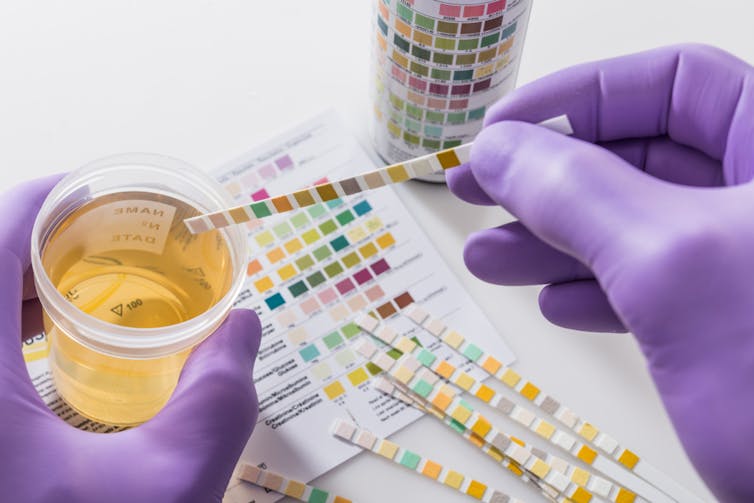
Gloved hands holding a urine sample and a dipstick.
One day, a simple urine test might predict dementia.
Lothar Drechsel/Shutterstock.com

An ounce of prevention

So when should you start caring about this? Vascular damage accumulates over years, so earlier intervention is better. For most people, focusing on kidney and heart health from middle age onwards is sensible, especially if you have diabetes, high blood pressure, kidney disease, obesity, or a family history of these conditions.

Currently, doctors mainly test urine protein in people with diabetes or high blood pressure. But our findings raise questions about whether everyone over 50 should be screened, particularly those with multiple risk factors. That is a public health question requiring more research and policy discussion.

The good news is that you do not need to wait for new guidelines to take action. Lifestyle changes that protect kidneys also benefit the brain. Quitting smoking, controlling blood pressure and blood sugar, eating a balanced diet and exercising regularly can reduce your risk of both kidney disease and dementia.


Read more:
Poor sleep may nudge the brain toward dementia, researchers find


If confirmed by future studies, urine protein testing could become a standard part of dementia risk assessments. It is cheap, non-invasive and can be performed with simple dipstick tests in any doctor’s office.

While there is still no cure for dementia, early detection and prevention remain our best tools. By recognising that protein in urine signals more than just kidney trouble, we may be able to identify and protect those at risk long before memory problems begin. Sometimes the most important clues about your brain’s future health are found in the most unlikely places.

The Conversation

Hong Xu receives funding from the Swedish Research Council .

ref. Could your urine predict your dementia risk? – https://theconversation.com/could-your-urine-predict-your-dementia-risk-265262

Not all diabetes is about sugar – understanding diabetes insipidus

Source: The Conversation – UK – By Dan Baumgardt, Senior Lecturer, School of Psychology and Neuroscience, University of Bristol

RA fotografia / Shutterstock.com

Diabetes mellitus – known to many as type 1 and type 2 diabetes – gets all the attention with its rising global prevalence and connection to lifestyle and autoimmunity. Meanwhile, its lesser-known relative – diabetes insipidus – more quietly affects hundreds of thousands of people worldwide, but is an altogether different condition, unrelated to blood sugar.

Both forms share the same defining symptom: excessive urination. The word diabetes comes from ancient Greek meaning “passing through”, which perfectly captures what happens to newly affected patients.

In the more-familiar diabetes mellitus, sugar builds up in the blood because the body either doesn’t make enough insulin or can’t use it properly. When this happens, extra sugar enters the urine, and that sugar pulls water out of the body along with it.

People with diabetes may notice that they need to urinate more often and in larger amounts than usual. Sometimes, the urine can even have a sweet smell. Legend has it that Hippocrates, the “father of medicine”, used to taste his patients’ urine to make the diagnosis. Thankfully, we now use dipstick tests instead.

Diabetes insipidus is very different from diabetes mellitus. It has nothing to do with blood sugar. Instead, the problem is with a hormone called arginine vasopressin (AVP), also known as anti-diuretic hormone (ADH), which normally helps the body control how much water it keeps or loses.

This chemical messenger, produced by the pituitary gland at the base of your skull, acts like your body’s water conservation system. When you need to hold on to fluid – say, when you’re dehydrated – AVP tells your kidneys to reabsorb water rather than letting it escape in urine.

When this system breaks down, the results are dramatic. Without enough AVP, or when the hormone fails to function properly, your kidneys lose their ability to conserve water. No matter how much you drink, you remain perpetually thirsty and dehydrated, producing large volumes of pale, diluted urine. It’s a frustrating cycle that affects around 2,000 to 3,000 people in the UK alone.

The most common culprit is AVP-deficiency (formerly called central diabetes insipidus), where the problem lies in AVP production itself. It’s actually made in a brain region called the hypothalamus before being transported to the pituitary gland, from where it is released.

Brain tumours can damage this delicate system, as can head injuries or brain surgery. Genetics sometimes plays a role, and neurological infections like syphilis or tuberculosis can also disrupt hormone production. In some cases, however, doctors are unable to identify a clear cause.

Pregnancy brings its own unique version called gestational diabetes insipidus. The growing placenta produces an enzyme that breaks down AVP in the bloodstream before it can do its job. Fortunately, this rare condition typically resolves after birth.

For AVP-deficiency, treatment is more straightforward. Patients can take desmopressin, a synthetic version of AVP available as tablets, injections, or even a nasal spray. This replacement therapy effectively restores the body’s ability to conserve water.

Things get trickier with AVP-resistance (formerly called nephrogenic diabetes insipidus), where the kidneys themselves fail to respond to AVP.

Sometimes present from birth, this form can also develop later due to kidney damage from electrolyte imbalances or certain medications. Lithium, commonly used to treat bipolar disorder, is one such example. Since the problem is the kidneys’ inability to respond to AVP, different medications are used. Low-salt diets and careful attention to staying hydrated are also key.

When thirst goes wrong

Perhaps most puzzling is dipsogenic diabetes insipidus, where the brain’s thirst centre goes haywire.

Also located in the hypothalamus, this control centre can be damaged by tumours, trauma, or infections, leading to an insatiable urge to drink water. The excessive fluid intake then suppresses AVP production, creating a vicious cycle. Dangerously, it can dilute blood sodium levels, causing headaches, confusion and even seizures.

The symptoms of this condition sometimes overlap with psychogenic polydipsia, where mental health disorders – particularly schizophrenia – drive compulsive water drinking. The consequences can be severe, as seen in one documented case where a young patient suffered complications after consuming an astounding 15 litres of water per day.

These extreme examples of pathological water intake stand alongside wellness trends promoting excessive hydration as part of a healthy lifestyle. NFL quarterback Tom Brady has famously recommended drinking around two gallons daily – nearly eight litres.

Tom Brady wearing a football helmet.
Tom Brady recommends drinking two gallons of water a day.
Steve Jacobson / Shutterstock.com

While we’re often told to drink more water to avert dehydration, constipation, kidney stones and the like, there’s clearly a dangerous level. Sustained or unexplained high water consumption is not only toxic to the body but may be a sign of an underlying health problem.

Diabetes insipidus reminds us that the term “diabetes” encompasses more than blood sugar problems. This other diabetes may be less common, but for those affected, the consequences of leaving the condition untreated may prove severe. Anyone experiencing persistent excessive thirst, water consumption, and urination should seek medical attention promptly. The cause may turn out to be sugar, hormones, or something else entirely.

The Conversation

Dan Baumgardt does not work for, consult, own shares in or receive funding from any company or organisation that would benefit from this article, and has disclosed no relevant affiliations beyond their academic appointment.

ref. Not all diabetes is about sugar – understanding diabetes insipidus – https://theconversation.com/not-all-diabetes-is-about-sugar-understanding-diabetes-insipidus-265108