No more resets, reboots and reshuffles: brand experts on why Labour now needs a total overhaul

Source: The Conversation – UK – By Christopher Pich, Associate Professor in Marketing, University of Nottingham

Labour is holding its 2025 conference against a backdrop of Andy Burnham, mayor of Manchester, calling for “wholesale change”. Burnham is making a clear attempt to use the government’s record of scandal, u-turn and general identity crisis as fuel for his own leadership bid. But he is far from alone in attacking Keir Starmer’s Labour for lacking ideological clarity.

Starmer and his team have repeatedly tried to reset the party’s image, reframe its message, and reassure voters that Labour represents competence, stability and pragmatic change. These efforts have amounted to two of the three classic branding strategies: brand repair and brand reboot.

Labour has so far stopped short of the third and most consequential option: a full brand overhaul. But this is precisely what is now required. Surface-level resets and tactical communication tweaks cannot solve a deeper problem: voters remain unclear about Labour’s ideological core, its long-term vision, and its promise to UK voters.

Unless the party embraces a bold, comprehensive rebranding strategy – one that redefines who it is, what it stands for, and why it matters – Labour’s historic return to power risks becoming a short-lived chapter rather than the foundation of a durable political future.

In politics, as in business, repairing a brand involves rebuilding trust by returning to old positioning – in Labour’s case, competence and accountability – and apologising for past mistakes. This approach often involves messaging changes, policy tweaks or symbolic gestures.

Rebooting entails shifting the narrative, such as toward innovation, younger voters or new priorities, even if it risks alienating some traditional supporters.

Brand replacement (the overhaul option) means launching a fundamental rebrand with a new narrative, visual identity, messaging platform – and possibly leadership. This would be a radical reset aimed at shedding old baggage and redefining what the party stands for.

The resets and reboots to date

To be fair to Starmer, he hasn’t sat by idly in the face of this problem. He has attempted to recapture and rearticulate his political brand.

A reset strategy emerged in May, following the dismal results of England’s local elections and Labour’s defeat to Reform UK in the Runcorn byelection. The reset was designed to reassure voters that Starmer understood why people had turned away from the party at the polls. In an attempt to clarify his message, he vowed to go “further and faster” in delivering change.

However, it had little impact in reviving the fortunes of the Labour brand. Voters remained unconvinced the party could address deep-rooted societal issues.

This initial reset strategy, an attempt at a classic form of brand repair, failed for a simple reason: it was too superficial. Rather than articulating a bold new direction, the messaging focused narrowly on “delivery” and competence, without addressing deeper questions about identity or purpose.

Resetting the message does little if the audience no longer trusts the messenger. Voters weren’t rejecting Starmer for being unclear about logistics – they were rejecting a party that still hadn’t told them who it was and what it believed in.

Starmer had to bring forward the implementation of the second rebranding strategy in the wake of the downfall of the deputy prime minister, Angela Rayner: a brand reboot in mid-September. Broader than the repair-reset strategy, this involved an attempt to clarify Labour’s message, communicating clear dividing lines with its political competitors including Reform and the Conservatives.

Starmer wanted to demonstrate he had the answers to the big issues of concern to the British public: immigration, welfare and the cost of living. This was supported by a cabinet reshuffle, which sought to demonstrate that the most effective ministers with the right personalities were in charge to “deliver, deliver, deliver”.

However, news of this reboot was quickly drowned out by fresh controversy around the now sacked UK-US Ambassador Peter Mandelson, who had been close friends with Jeffrey Epstein.

Go big or go home

In truth, neither of these previous efforts represented a real reset or reboot in the branding sense. Both were reactive attempts to contain crises and manage headlines. They were not proactive efforts to rebuild the party’s underlying narrative architecture.

A full overhaul would be risky, but may now be the only option left. And Labour has been here before. Between 1992 and 1997, Tony Blair and Gordon Brown implemented a major rebrand of Labour – and secured three election wins.

In business, a full brand overhaul is typically done when an organisation wants to fundamentally change how it is perceived, or reach out to an entirely different customer base. International brands to have taken this path include Airbnb, Burberry, Shell and Altria (formerly Phillip Morris), as well as Facebook, which shifted to being Meta, and Dunkin’ Donuts, which became simply Dunkin’.

Sometimes, a full brand overhaul strategy is adopted to respond to deep crises, to rebuild after failed resets, or to modernise. It must include both style and substance.

The risk is that a total overhaul can alienate parts of the existing customer base and create internal divisions. It can spark accusations of inauthenticity or opportunism.

But these risks can be mitigated if the brand overhaul is grounded in genuine substance, not just cosmetic changes. For Labour, that means linking it to real policy priorities, and communicating consistently and transparently about what the party stands for.

Labour keeps repainting the walls but the foundations are crumbling. A meaningful overhaul would begin with articulating a clear, values-driven vision for Britain that goes beyond technocratic “delivery” to offer a sense of purpose and direction.

It would involve aligning party messaging, policy and leadership around this vision, so that every communication reinforces the same story. And it would see leadership involving party members, communities and voters in the process – turning a top-down rebrand into a collaborative renewal. Done right, a bold reimagining of Labour’s identity could not only restore trust, but secure its place as the natural party of government for a generation.

The Conversation

The authors do not work for, consult, own shares in or receive funding from any company or organisation that would benefit from this article, and have disclosed no relevant affiliations beyond their academic appointment.

ref. No more resets, reboots and reshuffles: brand experts on why Labour now needs a total overhaul – https://theconversation.com/no-more-resets-reboots-and-reshuffles-brand-experts-on-why-labour-now-needs-a-total-overhaul-266127

How can Europe fight back against incursions by drone aircraft?

Source: The Conversation – UK – By Matthew Powell, Teaching Fellow in Strategic and Air Power Studies, University of Portsmouth

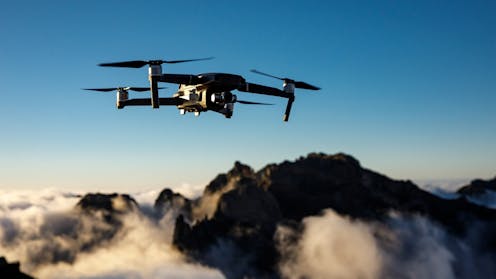
An increasing number of drones have been spotted around Denmark’s airports in recent weeks. The most recent incidents around Aalborg and Billund airport caused considerable disruption followed as scheduled flights were prevented from landing or taking off.

These incidents follow several others, including at Copenhagen Airport. This is similar to the disruption that was experienced around London Gatwick airport in 2023, again causing widespread disruption.

In addition to drones being spotted around civilian airports, there have also been sightings around military airbases where the Danish F-16 and F-35 combat aircraft are based.

A civilian drone flights have been banned for a week in advance of a European Union summit in Copenhagen on October 1.

Given the widespread disruption that has been caused, questions are now being raised about what can be done to either suppress or destroy drones and prevent future attacks. There is also a risk to civilian aircraft from mid-air collisions with the drones and the potential for civilian deaths and injuries.


Read more:
Zelensky says a destructive drone arms race looms – but dystopia isn’t inevitable


The Danish government has claimed that these most recent drone flights have been conducted by someone trying to spread fear among the Danish population. There have also been claims that they are part of wider Russian hybrid operations, which aims to disrupt Danish defence.

Suspicions of increased Russian activity has been fostered by an increasing number of incursions by drones into several other nations’ airspace This is something that has been strenuously denied by the Kremlin.

Lasers, bullets and missiles

Ukrainian forces have used fishing nets to try to catch Russian drones deployed against their positions. Some drones have even been engineered to fire nets in a bid to snag other drones.

Another way of reducing or removing this relatively new threat is to directly shoot down the drones that are around the airspace of airports and airbases. This could potentially be done with combat aircraft, but also with high-powered lasers. But this is not as straightforward as it sounds.

One of the biggest challenges in taking this action is that it usually requires new legislation to be passed by national parliaments. Even with emergency legislation this can take time, meaning that it is not the immediate response to the threat that is clearly necessary. Similar legislation to that being considered by the Danish parliament was passed in the UK in 2018.

But once legislation has been passed the challenges do not end. Given the relatively small size of the drones causing the disruption, they can often be very difficult to target through traditional military means. Even if drones can be targeted, an additional risk is then posed – when a drone is shot out of the sky, there is little control over its trajectory as it falls to earth.

Once destroyed, it could easily land on airport infrastructure, on civilian property or in a worst-case scenario on people, causing injury or death.

Decisions whether to target drones causing this disruption must therefore be taken after a great deal of thought and consideration,. But other methods are available and new technologies are being developed that may provide more effective solutions in the future.

Jamming technology

Instead of using so-called kinetic methods to physically destroy drones that are posing this problem, the use of jamming technology could be used to disrupt the communications link between the drone and the operator. As with kinetic attack, this response poses the challenge of what happens to the drone itself once the signal has been jammed and it falls out of the sky.

There are, however, several advantages to this approach. The first and most important advantage is that jamming can work for relatively long distances. This, disincentivises further attacks as, in theory at least, any drone being flown cannot get within sufficient range to cause the level of disruption that has been seen in Denmark.

In addition to this, the lack of physical destruction from kinetic engagement means that, in theory at least, the drone can be recovered and information about its operation and whether it is a civilian or military asset can be discovered.

But using jamming technology to prevent drones from flying around civilian airports and military airbases has its own drawbacks. Jamming technology, as it is currently exists, cannot be targeted against individual aircraft. This means that any other aircraft within the vicinity of the airport or airbase where jamming technology is being used is also vulnerable to disruption. Due to this, closure of airspace would still be required to remove the threat of the drone, but this should be for a vastly reduced amount of time than is currently required.

There are, however, potential future technologies that might be incorporated into the defence of civilian airports and military airspaces. One such technology is currently being developed by the Royal Navy and has been named DragonFire. This uses the power of a long-range laser to physically destroy a drone in the sky from distances of up to three miles.

A further technology that is being developed by the British army, is jamming technology that can be directed on to targets with greater precision than is currently available outside of the British military.

These new technologies will take time to be widely used in civilian applications. So the sort of disruption we’ve been seeing lately will probably continue in the near future.

The Conversation

Matthew Powell does not work for, consult, own shares in or receive funding from any company or organisation that would benefit from this article, and has disclosed no relevant affiliations beyond their academic appointment.

ref. How can Europe fight back against incursions by drone aircraft? – https://theconversation.com/how-can-europe-fight-back-against-incursions-by-drone-aircraft-266256

Port Talbot, one year on: steelworks closure shows why public is losing trust in net zero

Source: The Conversation – UK – By Nicholas Beuret, Lecturer in Management and Ecological Sustainability, University of Essex

The rolling mills are still working, but the furnaces are long cold. Of the 4,000 people previously employed at the steel mill in Port Talbot, Wales, only half still work there. Despite union protests and local rallies, one year ago on September 30 2024, the plant’s last coal-burning blast furnace was shut down.

This ended more than a century of steelmaking in the UK’s biggest plant – one of the largest in Europe. The owner, Tata Steel, blamed high energy prices and competition from cheaper Chinese steel, claiming ongoing losses of around £1 million a day. It warned the plant would close entirely unless the UK government stepped in to help replace its ageing furnaces with lower-emissions electric arc furnaces.

Steel manufacture contributes around 7% of global climate emissions, and Port Talbot alone accounted for 1.5% of the UK total. Faced with the choice between the closure of the mill and supporting its transition to greener production, the government committed £500 million to this transition.

Tata Steel then announced 2,800 job losses – around one in ten jobs in the town of 35,000. Up to 9,500 more could be lost in the supply chain and broader sector.

This is not how successive governments have sold the transition to a net zero economy. Both Labour and the Conservatives promised net zero would create skilled, well-paid work that would not only make up for losses elsewhere, but generate economic growth and lower bills.

Some data suggests they were right: the UK’s net zero sector is growing far faster than the rest of the economy at 10% per year, and already supports close to 700,000 jobs.

However, polling shows only about one in five voters think the energy transition will create jobs in their area, while only one in three think the transition will have a positive impact on jobs anywhere in the UK.

So why does no one believe the politicians? And where are the jobs?

A series of betrayals

Partly this is about geography. Old centres of industry like Port Talbot are struggling to retain jobs, while net zero businesses tend to be far more dispersed nationally, with many in London and the south-east. As the transition progresses, industrial towns will feel even more abandoned.

The jobs themselves are also different. Many new net zero jobs are in installation, waste processing and other services, often for small businesses and with worse working conditions than those that predominate in heavy industry.

Even within heavy industry, low-carbon technologies tend to mean fewer jobs, as greener versions generally employ fewer workers. Electric furnaces need less labour than coal-burning furnaces, for instance. Facilities tend to be more automated, and supply chains are shorter.

And where there could be a pipeline from fossil fuel jobs to renewable industries, as in Scotland, most workers say there is far too little support from government and industry for them to make this change.

Political fallout

Reform has been quick to seize on the closure of Port Talbot, with its leader Nigel Farage declaring he’d open the furnaces again, despite this being physically impossible.

Reform more generally has declared net zero to be an expensive farce, one that costs jobs and drives up energy bills. Across a swathe of local councils where Reform has overall control, it has promised to cancelled net zero policies and renewable energy projects.

Though critics suggest Reform’s promises threaten billions in investment and upwards of 1 million jobs, the party’s claims are finding a welcome home among workers in industry, with unions warning that their members are increasingly drawn to Reform as they desert Labour.

The steel industry isn’t the only one undergoing job losses. From oil and gas facilities to fertiliser and car plants, heavy industry is shedding jobs under pressure from high energy costs, competition, and the need to reduce greenhouse gas emissions. As the transition continues, these losses are likely to mount.

The household budget myth

It is not just the “jobs gap” that generates the sense of betrayal among workers. Since the 2008 financial crisis, the myth that the UK government’s finances work in the same way as a household budget, thus justifying one of the most dramatic programs of government austerity seen among the world’s wealthier countries, has become a well-established common-sense framework.

And this mindset associated with austerity has also come to haunt the UK’s net zero transition.

Surveys repeatedly list local decline as among the main reasons why people are turning away from the major parties and towards Reform. And when the UK government hands hundreds of millions to companies like Nissan or Tata Steel, only for them to cut hundreds of jobs, this feeds a sense that money is flowing to corporations, not communities.

Reform has capitalised on this by contrasting supposed subsidies for solar farms with the closure of vital services in those same towns and regions. When combined with the steady flow of commentaries in the right-wing media declaring net zero a burden on the taxpayer and a waste of scarce government resources, the narrative that net zero is a “con”, taking money and jobs from the British public to give to big business, seems more credible.

The bitter irony here is that not only do most people in the UK, including most Reform supporters, still back taking action on climate change, but that climate change will hit deprived areas hardest. Yet without visible local benefits, warnings about future risks won’t cut through.

One year on from the Port Talbot closure, I believe it’s vital that the net zero transition comes to mean something more than broken promises and betrayed communities. Reform’s anti-net zero rhetoric is no panacea. Yet without a program to ensure a just transition, we risk this becoming hostage to such reactions – a transition to nowhere that anyone wants to go.

The Conversation

Nicholas Beuret does not work for, consult, own shares in or receive funding from any company or organisation that would benefit from this article, and has disclosed no relevant affiliations beyond their academic appointment.

ref. Port Talbot, one year on: steelworks closure shows why public is losing trust in net zero – https://theconversation.com/port-talbot-one-year-on-steelworks-closure-shows-why-public-is-losing-trust-in-net-zero-265906

The eye in the sky: what Denmark’s drone sightings tell us about power and fear down the years

Source: The Conversation – UK – By Kathrin Maurer, Professor , Department of Cultural and Linguistic Studies, University of Southern Denmark

All-seeing ‘eye in the sky’: drones make us uneasy because we don’t know who is controlling them. Piotr Piatrouski/Shutterstock

Red and blue lights blink in the Danish sky. Is it a plane, a satellite, or a drone hovering overhead? Over the past few weeks, more and more Danes have been scanning the skies for mysterious flying objects, caught between curiosity and unease as sightings across the country spark fresh concern.

Drones have been sighted over airports and military bases all over Denmark. Air traffic has been delayed, politicians have gathered for crisis meetings, and Nato has been called on to act.

We speak about drones in our coffee breaks, exchanging newly acquired expert knowledge about flight heights and battery power. We talk to our children about “hybrid warfare”. And many of us walk around with a strange and eerie feeling that something in the sky is watching us.

Although Russia’s role in the recent drone incidents remains unconfirmed, the sightings come against a backdrop of escalating tensions between the two countries, and just after Copenhagen announced it would acquire long-range precision weapons, drawing sharp threats from Moscow. Indeed, analysts have suggested the drone flyovers may form part of a wider Russian strategy to sow fear, test Nato’s defences, and erode Danish support for Ukraine.


Read more:
Zelensky says a destructive drone arms race looms – but dystopia isn’t inevitable


That monstrous stare

As a professor of culture and technology, my research focuses on surveillance, drones and how we talk about war. In this sense, surveillance from above is a tale as old as time. Think of that godly “eye in the sky”, mentioned by the Old Egyptians and in the Bible. That celestial all-seeing entity with superhuman powers to decide whether you should live or die, much like the drone itself.

This connection is not only highlighted in popular culture, such as in the title of the 2015 film Eye in the Sky about military drone strikes, but also by the military industry itself.

There is, for example, a US military drone, Gorgon Stare, named after a monstrous figure from Greek mythology, most famously represented by the three sisters Stheno, Euryale and Medusa. The latter is known for turning anyone who looks at her into stone. The Gorgon Stare is equipped with many cameras and armed with Hellfire missiles.

Trailer for 2015 film, Eye in the Sky.

But it’s not only the assumed drone’s power of hypervision that gives us the creeps. It’s also precisely its opposite feature: its invisibility. Although we might see some dots and shadows in the sky, the drone pilot stays invisible. Who steers this Unmanned Aerial Vehicle (UAV)? Who controls it – or does it even control itself? It is deeply rooted in our human instincts that when we feel observed by an invisible force, we feel alarm and our nervous system enters defence mode.

In this context, another Greek myth comes to mind: Gyges. The Greek philosopher Plato wrote about the shepherd Gyges, who discovered a magical ring that could make him invisible. Armed with this new power, Gyges became king and ruler over the country. Drones operate in a similar way to Gyges’s strategy, as their pilots also remain hidden in the shadows.

Threatening sky

Humans tend to thrive on eye contact. But drones are not about seeing each other. When it comes to fighting, there is no duel anymore. Drones do not announce themselves. They disregard international treaties, break laws of war, and fly under the radar.

The drone flyovers in Denmark expose our vulnerabilities and erode the sanctity of our airspace. Many have been left wondering if we are prepared for this new type of warfare. Nevertheless, within all this hype about drones, we have to remember that aerial reconnaissance has been around for centuries. Think of kites, hot air balloons and spy planes.

A military command centre showing a man operating drones.
Who is controlling the drone in the sky above you?
Gorodenkoff/Shutterstock

It’s also important to point out that new technologies frequently spark public unease. The first cars were met with great anxiety and fear. Electricity was seen as something supernatural. These examples do not aim to normalise the high levels of drone activity we’ve seen over Denmark, or the feelings of fear and uncertainty these aerial vehicles have induced.

But by looking at how new technologies have been viewed historically, it opens up space for critical and nuanced dialogue about their societal implications and how we navigate their presence in our everyday lives.

The history of surveillance from above shows us that human unease with aerial reconnaissance is nothing new. But in today’s climate of geopolitical tension, drones are more than symbols of technological change – they are markers of the fragile balance between visibility, power, and trust. And right now, that balance feels more precarious than ever.


This article was commissioned with Videnskab.dk as part of a partnership between it and The Conversation.

The Conversation

Kathrin Maurer receives funding from DFF research grant project 2 “Drone Imaginaries and Communities” 2019-2022

ref. The eye in the sky: what Denmark’s drone sightings tell us about power and fear down the years – https://theconversation.com/the-eye-in-the-sky-what-denmarks-drone-sightings-tell-us-about-power-and-fear-down-the-years-266296

The ancestors of ostriches and emus were long-distance fliers – here’s how we worked this out

Source: The Conversation – UK – By Klara Widrig, Postdoctoral research fellow, Smithsonian Institution

Oleksii Synelnykov/Shutterstock

Aside from being a delight to watch, flight in birds is regarded by many cultures as a symbol of freedom, and a source of inspiration for humans to build our own flying machines. This makes those birds that have given up flight for a land-based way of life seem all the more intriguing.

In our new study of a 56 million-year-old fossil bird, my colleagues and I show that the distant ancestors of ostriches and other large flightless birds once flew great distances.

Many flightless birds belong to Palaeognathae, a taxonomic group containing ostriches, rheas, emus, cassowaries and kiwi, as well as the tinamous of Central and South America.

Unlike their large flightless relatives, tinamous can fly – but not very far. Spending most of their lives on the ground, they tend to fly only if startled by a predator. If you have ever been on a walk and startled a grouse or pheasant, this type of flight, known scientifically as burst flight, will be familiar to you.

Close up of bird with colourful head and neck
Cassowaries are related to ostriches.
Nikolay Hristakiev/Shutterstock

Because they are flightless (or can’t fly far), the fact that palaeognaths are found on many different continents – South America, Africa, Australia and New Zealand – has been difficult for scientists to explain.

When the theory of plate tectonics became widely accepted in the 1960s, an answer seemed within reach. All of the continents were once united as the supercontinent Pangea, which slowly broke apart during the time of the dinosaurs, starting to split around 200 million years ago. Scientists wondered whether different populations of flightless palaeognaths could have just drifted apart from each other along with the continents they lived on.

However, this once-popular theory has since been discredited for two reasons. One is that the flying tinamous are genetically closer to some flightless palaeognaths than they are to others. This means that ostriches, rheas, emus, cassowaries and kiwi did not share a flightless common ancestor. Instead, in a remarkable case of parallel evolution, they all became flightless separately from each other.

The second reason is that genetic research shows palaeognath lineages started to separate many millions of years after Pangea broke up – far too late for the continental drift theory to be true.

This means palaeognaths had to have made it to South America, Africa,
Australia and New Zealand under their own power. Only able to fly in short bursts, a tinamou doesn’t stand a chance of flying across an ocean – but what about palaeognaths from the distant past? Could the ancestors of today’s palaeognaths have made these long journeys?

Small brown bird walking in grassland.
Tinamous can only fly in short bursts.
Foto 4440/Shutterstock

The collections of the Smithsonian National Museum of Natural History in Washington DC include an almost perfectly preserved sternum, or breastbone, belonging to an ancient palaeognath called Lithornis promiscuus that lived 56 million years ago. It was a fairly large bird, about the size of a grey heron.

Other researchers had determined that the sternum is a key piece of the skeleton for determining the flight style of a bird, so this fossil was our best chance to determine what this ancient bird was capable of.

Using a technique called geometric morphometrics, we compared the shape of the Lithornis sternum to those of over 150 living bird species. Our results show that Lithornis was not a burst flier like today’s tinamous. Instead, its sternum is most similar in shape to birds that fly huge distances, such as egrets and herons. This means means that, unlike their living relatives, Lithornis and other ancient palaeognaths would have been capable world travellers, able to establish new populations on different continents.

Why did these birds become flightless over and over again?

No matter how beautiful or inspiring we think flying is, it is also hard. If a bird species finds itself in a situation where it can get all of its food on the ground and doesn’t need to fly to escape predators, it will probably evolve towards being flightless.

Ostrich running across plain.
This bird wasn’t always stuck on the ground.
Paula French/Shutterstock

Nowadays, these conditions are only met on islands, with the dodo being perhaps the most famous example. The dodo was a flightless bird that roamed Mauritius until it became extinct in the 1600s.

Dodos had no natural predators until humans arrived in the late 1500s (bringing with them other animals including rats). This meant dodos had not evolved a fear response, and there are records of them happily approaching humans.

Back when Lithornis and its relatives were alive, the world was very different. Just a few million years before, the dinosaurs had gone extinct. With no major predators around, birds were safe on the ground on continents as well as islands. And with a specialised bill tip organ as well as a keen sense of smell, Lithornis was well suited for probing for food in the soil, so it had no need to fly up into the trees to feed.

Therefore, ancient palaeognaths were set on a course towards flightlessness or low flight capacity wherever they went around the world. New mammalian predators evolved slowly, over millions of years, giving these flightless birds plenty of time to evolve new ways to escape and defend themselves.

After these long-distance flying ancestors went extinct, we were left with a puzzling distribution of these birds that could only be explained by the fossil record.

The Conversation

Klara Widrig received funding from the Gates Cambridge Trust.

ref. The ancestors of ostriches and emus were long-distance fliers – here’s how we worked this out – https://theconversation.com/the-ancestors-of-ostriches-and-emus-were-long-distance-fliers-heres-how-we-worked-this-out-266081

A second runway at Gatwick airport could improve efficiency and bring down fares – an economist’s view

Source: The Conversation – UK – By Marwan Izzeldin, Senior Lecturer in Economics, Lancaster University

Steve Travelguide/Shutterstock

The £2.2 billion plan for a second runway at London’s Gatwick airport has divided opinion over environmental concerns and its ability to kickstart the economic growth the UK so badly needs. Critics have said that the economic benefits are overstated and the environmental harms unavoidable.

These concerns – including from leading economists – are an important part of the debate. But they don’t tell the whole story. Looking at Gatwick’s northern runway proposal in particular, the evidence suggests that expansion can improve safety, reduce waste and deliver real benefits to travellers and the local community. As long as it is managed responsibly, of course.

Gatwick is Europe’s busiest single-runway airport, handling more than 43 million passengers a year and around 260,000 aircraft movements on just one operational runway.

This creates bottlenecks – during peak hours, aircraft go into “holding stacks” (vertical formations of planes that circle until it’s their turn to land). A typical Boeing 737 burns 2.5 to three tonnes of jet fuel per hour, so just 15 minutes of unnecessary holding adds nearly a tonne of CO₂ emissions into the atmosphere.

With an average of 3.24 minutes lost per flight into Gatwick in holding stacks and to other inefficiencies, the waste is significant, both environmentally and economically. Economists call this a “congestion externality”. That is, costs imposed on society with no corresponding benefit. Adding runway capacity directly reduces these inefficiencies.

Critics argue that more flights automatically mean more emissions. Yet the data show that efficiency matters too. Absorbing delays at cruise altitude rather than in low-level holding stacks has been shown to cut waste significantly.

At Gatwick, an arrival management scheme introduced in 2019 was expected to save more than 26,000 minutes of holding per year. If realised, this would translate into around 1,200 tonnes of fuel and 3,800 tonnes of CO₂ avoided annually.

Pairing those measures with the northern runway – which reduces stacking – compounds the savings. In welfare terms, this is a clear case of lowering emissions intensity per movement (a more useful measure than a company’s overall emissions). It should ensure that growth is not just about more traffic but also cleaner, more efficient traffic.

The case for consumers

There are also important consumer benefits. Gatwick competes heavily in the leisure and short-haul market, where families are most sensitive to price. By expanding to two runways, airlines will be able to schedule more services at peak times, bringing down fares.

Research shows that a scarcity of slots adds a premium to air fares. At Europe’s busiest airports – which include Gatwick – it’s estimated that by 2035 congestion will add €10.42 (£9.10) on average to each ticket.

Expansion also supports local and national economies. Gatwick forecasts that the northern runway project could create 14,000 jobs and contribute nearly £1 billion a year to the regional economy.

These jobs span construction, airport operations, tourism and supply chains, directly benefiting communities in the south-east of England. It’s what economists call a distributional gain – the benefits are spread broadly through employment and regional growth, rather than to a narrow group.

Of course, the costs – noise, air quality and climate – cannot be ignored and will have to be managed. Expansion plans retain the strict 11pm-6am night flight quota, implement quieter continuous descent operations (a technique that allows planes to descend more smoothly, creating less noise), and aim to encourage more travellers to arrive at the airport by rail.

Around 44% of Gatwick passengers already arrive by train, and it has more direct train connections than any other European airport.

woman wearing a red t-shirt reading gatwick neighbour from hell.
Gatwick expansion plans are likely to come up against strong opposition from locals.
Dinendra Haria/Shutterstock

With timetable integration and new fare types, Gatwick aims to push the percentage of passengers arriving and leaving by rail well above 50%. This would cut road traffic emissions. It is an attempt to ensure that those who generate environmental costs (airlines and airports) also bear responsibility for reducing them.

The real test is not whether Gatwick grows, but how it grows. With verifiable baselines – such as average stack minutes per arrival, go-around rates (where pilots abandon a landing attempt and circle back), and CO₂ per movement – expansion can be monitored and airport bosses held to account.

If the promised gains are delivered, the net effect could include safer skies, lower emissions intensity, cheaper fares, more jobs and stronger regional growth. Welfare economics teaches us that policy should maximise the wellbeing of the many, not preserve the convenience of a few. By that measure, Gatwick’s northern runway expansion could well be a welfare-enhancing choice.

The Conversation

Marwan Izzeldin does not work for, consult, own shares in or receive funding from any company or organisation that would benefit from this article, and has disclosed no relevant affiliations beyond their academic appointment.

ref. A second runway at Gatwick airport could improve efficiency and bring down fares – an economist’s view – https://theconversation.com/a-second-runway-at-gatwick-airport-could-improve-efficiency-and-bring-down-fares-an-economists-view-265995

Chickenpox: why the UK has approved the MMRV vaccine in under-fours but the US is preparing to restrict it

Source: The Conversation – UK – By Helen McDonald, Senior Lecturer, Life Sciences, University of Bath

Two countries, two different approaches to protecting children from chickenpox. While the UK prepares to introduce a combined vaccine covering measles, mumps, rubella and chickenpox (MMRV) in a single jab, the US is moving in the opposite direction – restricting parents’ ability to choose that same combination for their youngest children.

Just as the US has just celebrated 30 years of chickenpox vaccination, advisers to its health secretary, Robert F. Kennedy Jr, voted against the use of the MMRV vaccine for children under four years old. Meanwhile, from January 2026, the UK will offer children their first dose of the combined MMRV vaccine at 12 months and a second dose at 18 months old.

This divergence reflects more than just different medical opinions; it highlights how the political climate can shape health policy. In June 2025, RFK Jr dismissed all members of the US Advisory Committee on Immunization Practices and replaced them with advisers who have made a series of recommendations restricting vaccination in the US.

Currently, children in the US receive two doses of measles, mumps, rubella and chickenpox (varicella) vaccines – the first at 12-15 months, and the second at four to six years old. For the first dose, separate chickenpox and MMR vaccines are advised unless parents prefer the combined shot. The new restrictions would eliminate that parental choice.

The US panel’s concern is about febrile seizures – fits caused by high temperatures that can occur in young children after vaccination. Chickenpox (also known as varicella) vaccine can be delivered as a standalone vaccine, or combined with measles, mumps and rubella in a single shot. The combined MMRV vaccine slightly increases the risk of a febrile seizure in the seven to ten days after vaccination, compared with giving separate vaccines.

But this risk needs context. For every 2,300 children who receive a first dose of MMRV, there might be one extra febrile seizure, compared with separate vaccines. There’s no extra risk for the second dose.

Febrile seizures happen in around 2% of children before age five – regardless of vaccines. During a febrile seizure, a child may become stiff, twitch or shake, and be unresponsive. These are frightening to watch but usually harmless, typically resolving within a few minutes without treatment.

This small risk must be weighed against chickenpox’s considerable harms. Though commonly seen as a mild childhood illness, chickenpox causes significant disruption.

A Bristol study found that even mild cases reduce quality of life, disrupting sleep and causing tiredness and pain. More seriously, chickenpox can lead to severe complications including bacterial skin infections, pneumonia, brain inflammation, sepsis, stroke and death.

In England, there are around 4,500 hospital admissions a year due to chickenpox – and this may be an underestimate, as it relies on chickenpox being identified and recorded as the underlying cause.

People with weakened immune systems face particularly high risks.

Chickenpox in pregnancy affects around three in 1,000 pregnancies. In the first trimester, there is a rare but serious risk of a condition called foetal varicella syndrome, which affects the development of the foetus. Pregnant women are at increased risk of severe pneumonia, and foetuses and newborns are also at risk of severe chickenpox infection. While rare, it can be fatal.

Shingles

The virus also creates long-term problems. After infection, it lies dormant and can reactivate as painful shingles later in life.

Countries with chickenpox vaccination programmes have seen dramatic improvements. The US programme has prevented 91 million cases of chickenpox, 238,000 hospitalisations and almost 2,000 deaths.

Hospital admissions have fallen for all age groups in countries such as the US, Australia, Canada and Germany. Beyond health benefits, vaccination saves time off school and work – every dollar spent on chickenpox vaccination in the US saves US$1.70 (£1.26), creating a net saving of US$23.4 billion over 25 years.

You might wonder why the UK hasn’t vaccinated sooner. There was concern that natural chickenpox virus circulating in the population helped boost adult immunity against shingles. Thirty years of US data suggest this belief was unfounded.

An adult with a shingles rash.
Shingles is a painful condition caused by the reactivation of the chickenpox virus in later life.
Suriyawut Suriya/Shutterstock.com

Vaccinating children has not been seen to increase shingles in older adults. We also now have effective shingles vaccines for older people.

So why is the UK choosing the combined MMRV approach that the US is restricting? The combined vaccine works just as well as separate shots and offers practical advantages. Babies receive fewer injections.

Surveys in the UK suggest around 85% of parents would accept a chickenpox vaccine and may prefer a combined MMRV vaccine to multiple jabs. Fewer needles and appointments can encourage vaccine uptake. While UK vaccine coverage is high, delays can stack up with each additional appointment.

Vaccine uptake matters enormously. Vaccines protect not just the child who receives them, but everyone in the community by reducing disease circulation – known as “herd immunity”. This is key to eliminating diseases such as measles, but only works with high vaccination rates. The US changes restrict parental choice about using the MMRV vaccine, and risk undermining the public trust that successful vaccination programmes depend on.

The Conversation

Helen McDonald has previously received research funding from the NIHR (National Institute for Health Research) Health Protection Research Unit in Immunisation. She is a member of the varicella/zoster subcommittee for the Joint Committee on Vaccination and Immunisation. She is writing in a personal capacity, and views are her own.

ref. Chickenpox: why the UK has approved the MMRV vaccine in under-fours but the US is preparing to restrict it – https://theconversation.com/chickenpox-why-the-uk-has-approved-the-mmrv-vaccine-in-under-fours-but-the-us-is-preparing-to-restrict-it-265796

From ‘refrigerator mothers’ to paracetamol: why harmful autism myths are so common

Source: The Conversation – UK – By Lindsay O’Dell, Professor of critical developmental psychology, The Open University

Nicoleta Ionescu/Shutterstock

US president Donald Trump’s claim that pregnant women should avoid paracetamol – a statement that is both harmful and not backed by the science – fits into a long and damaging tradition of blaming parents, especially mothers, for autism.

Despite decades of research and a far richer understanding of autistic lives, two myths persist: that parents’ behaviour can somehow cause autism, and that autism is a temporary condition that can be “cured” or simply “outgrown.” Large, long-term studies – and the experiences of autistic people – have repeatedly debunked both claims, yet they continue to surface in public debate.


Read more:
We need to stop perpetuating the myth that children grow out of autism


From the earliest theories of autism, researchers looked for someone or something to blame. In the 1950s and 1960s, psychiatrists such as Leo Kanner – an Austrian-American physician who first described autism as a distinct condition in 1943 – and Bruno Bettelheim – a Viennese-born American psychologist known for his controversial theories on child development – promoted the now-discredited notion of the “refrigerator mother”.

This is the idea that autism was the result of emotionally cold parenting. This theory led to guilt, shame and even the forced separation of children from their families, causing immense harm.

That pattern of blaming mothers set the stage for later false claims. In the 1990s Andrew Wakefield, a British gastroenterologist, alleged that the measles, mumps and rubella (MMR) vaccine caused autism. His work was later exposed as fraudulent; the paper was retracted and his medical licence revoked.

Extensive international research has since shown conclusively that there is no link between MMR and autism. Yet the damage continues. Vaccination rates dropped, outbreaks of preventable disease followed, and some children died or suffered serious complications.

Since then, other supposed causes – ranging from gluten and cow’s milk to caesarean sections and even ultrasound scans – have been proposed and later disproved. All these theories share the same misplaced blame: they pin autism on something a parent, most often the mother, is alleged to have done or failed to do.

Recycling harmful false claims

When people in positions of power claim, without evidence, that an everyday substance is linked to autism, it inevitably sows doubt. History shows how damaging that doubt can be.

The US president’s recent comment about paracetamol resurrects earlier myths that were thoroughly discredited, yet remain surprisingly influential. Like the false claims about vaccines or cow’s milk, it risks causing real harm to children and parents alike.

When such statements come from prominent political figures rather than scientific experts, they spread quickly across social media, where algorithms amplify sensational content and make it harder to correct.

In reality, the evidence does not support Trump’s claim. A large international body of research shows no link between taking paracetamol during pregnancy and autism. The few studies that raised concerns were small, often based on animal experiments or limited observational data. Their findings have never been replicated in large-scale human research.


Read more:
Paracetamol, pregnancy and autism: what the science really shows


This pattern is familiar from other autism “scares”. Early studies that suggested a link between ultrasound scans or prenatal stress and autism also relied on animal models and were not confirmed by large population studies.

Myths that outlive the evidence

Even when false claims are debunked, their impact can persist for years. Research shows that many people still believe vaccines cause autism: in 2021, almost one-quarter of respondents were unsure whether the MMR vaccine was safe. Parents of autistic children were more likely to believe in a vaccine link, suggesting that some have internalised the idea of parental “blame”.

This kind of messaging frames autism as something “gone wrong” in the womb – something that could and should have been prevented. It deepens stigma and discrimination against autistic people and their families. It also positions all forms of autism as a defect rather than natural human neurodiversity.

Rising autism diagnoses do not reflect a sudden surge in cases but a better understanding and recognition of autistic people. Instead of asking “What causes autism?”, the more useful question is how to create a world that supports autistic children and adults.

The Conversation

The authors do not work for, consult, own shares in or receive funding from any company or organisation that would benefit from this article, and have disclosed no relevant affiliations beyond their academic appointment.

ref. From ‘refrigerator mothers’ to paracetamol: why harmful autism myths are so common – https://theconversation.com/from-refrigerator-mothers-to-paracetamol-why-harmful-autism-myths-are-so-common-266075

Prediabetes remission possible without dropping pounds, our new study finds

Source: The Conversation – UK – By Andreas L. Birkenfeld, Professor, Diabetology, Endocrinology and Nephrology, University of Tübingen

New Africa/Shutterstock.com

There’s a long-held belief in diabetes prevention that weight loss is the main way to lower disease risk. Our new study challenges this.

For decades, people diagnosed with prediabetes – a condition affecting up to one in three adults depending on age – have been told the same thing by their doctors: eat healthily and lose weight to avoid developing diabetes.

This approach hasn’t been working for all. Despite unchanged medical recommendations for more than 20 years, diabetes prevalence continues rising globally. Most people with prediabetes find weight-loss goals hard to reach, leaving them discouraged and still at high risk of diabetes.

Our latest research, published in Nature Medicine, reveals a different approach entirely. We found that prediabetes can go into remission – with blood sugar returning to normal – even without weight loss.

About one in four people in lifestyle intervention programmes bring their blood sugar back to normal without losing any weight. Remarkably, this weight-stable remission protects against future diabetes just as effectively as remission achieved through weight loss.

This represents a significant shift in how doctors might treat overweight or obese patients at high risk for diabetes. But how is it possible to reduce blood glucose levels without losing weight, or even while gaining weight?

The answer lies in how fat is distributed throughout the body. Not all body fat behaves the same way.

The visceral fat deep in our abdomen, surrounding our internal organs, acts as a metabolic troublemaker. This belly fat drives chronic inflammation that interferes with insulin – the hormone responsible for controlling blood sugar levels. When insulin can’t function properly, blood glucose rises.

In contrast, subcutaneous fat – the fat directly under our skin – can be beneficial. This type of fat tissue produces hormones that help insulin work more effectively. Our study shows that people who reverse prediabetes without weight loss shift fat from deep within their abdomen to beneath their skin, even if their total weight stays the same.

A woman pinching her belly, showing a roll of subcutaneous fat.
Subcutaneous fat can be beneficial.
polkadot_photo/Shutterstock.com

We’ve also uncovered another piece of the puzzle. Natural hormones that are mimicked by new weight-loss medications like Wegovy and Mounjaro appear to play a crucial role in this process. These hormones, particularly GLP-1, help pancreatic beta cells secrete insulin when blood sugar levels rise.

People who reverse their prediabetes without losing weight seem to naturally enhance this hormone system, while simultaneously suppressing other hormones that typically drive glucose levels higher.

Targeting fat redistribution, not just weight loss

The practical implications are encouraging. Instead of focusing only on the scales, people with prediabetes can aim to shift body fat with diet and exercise.

Research shows that polyunsaturated fatty acids, abundant in Mediterranean diets rich in fish oil, olives and nuts, may help reduce visceral belly fat. Similarly, endurance training can decrease abdominal fat even without overall weight loss.

This doesn’t mean weight loss should be abandoned as a goal – it remains beneficial for overall health and diabetes prevention. However, our findings suggest that achieving normal blood glucose levels, regardless of weight changes, should become a primary target for prediabetes treatment.

This approach could help millions of people who have struggled with traditional weight-loss programmes but might still achieve meaningful health improvements through metabolic changes.

For healthcare providers, this research suggests a need to broaden treatment approaches beyond weight-focused interventions. Monitoring blood glucose improvements and encouraging fat redistribution through targeted nutrition and exercise could provide alternative pathways to diabetes prevention for patients who find weight loss particularly difficult.

The implications extend globally, where diabetes represents one of the fastest-growing health problems. By recognising that prediabetes can improve without weight loss, we open new possibilities for preventing a disease that affects hundreds of millions worldwide and continues rapidly expanding.

This research fundamentally reframes diabetes prevention, suggesting that metabolic health improvements – not just weight reduction – should be central to clinical practice. For the many people living with prediabetes who have felt discouraged by unsuccessful weight-loss attempts, this offers renewed hope and practical alternative strategies for reducing their diabetes risk.

The Conversation

Federal Ministry of Research, Technology and Space via the German Center for Diabetes Research (DZD e.V.). Deutsche Forschungsgemeinschaft (DFG; GRK2816). Innovative Health Initiative (IHI) of the European Union: CAREPATH

Reiner Jumpertz-von Schwartzenberg receives funding from the Federal Ministry of Research, Technology and Space via the German Center for Diabetes Research (DZD e.V.), the Helmholtz Association and Helmholtz Munich and the DFG-funded Cluster of Excellence “Controlling Microbes fo Fight Infections” (CMFI).

ref. Prediabetes remission possible without dropping pounds, our new study finds – https://theconversation.com/prediabetes-remission-possible-without-dropping-pounds-our-new-study-finds-265996

New hope for Huntington’s families as gene therapy shows remarkable results

Source: The Conversation – UK – By Åsa Petersén, Professor of Neuroscience, Lund University

kazoka/Shutterstock.com

A company called uniQure has announced promising results from a trial of a new gene therapy for Huntington’s disease. The news has spread quickly through families affected by this condition, who have been desperately waiting for a treatment that can stop or slow down this devastating illness.

Huntington’s disease is a fatal brain disorder that runs in families, caused by a faulty gene that produces a protein called huntingtin. The disease typically begins to cause symptoms in people between 30 and 50 years old.

People with the condition experience problems with movement, thinking abilities and mental health. The disease gets worse over time and typically leads to death about 20 years after symptoms first appear.

In this study, neurosurgeons delivered the treatment called AMT-130 directly into the brain using precise surgery guided by MRI scans. They targeted the striatum – the brain region most damaged by Huntington’s disease.

The treatment requires a single injection delivered during a complex 12- to 20-hour brain operation, which means it will probably be expensive.

AMT-130 uses a modified virus to carry genetic material that can reduce the amount of harmful huntingtin protein in brain cells. Scientists believe this faulty protein plays a key role in causing the disease.

The results showed that patients who received the high dose of AMT-130 (12 people) experienced significant benefits. The treatment appeared to slow disease progression by 75% over 36 months, compared with a carefully matched group of patients who didn’t receive the therapy and were from another study that investigates how the disease develops over time.

Disease progression was measured using a standard scale that tracks movement problems and thinking abilities in Huntington’s disease patients.

The high-dose treatment also showed benefits on another scale that measures how well people can carry out daily activities. Additionally, levels of neurofilament – a substance that indicates brain cell damage – decreased in patients’ spinal fluid after 36 months.

Crucially, the treatment appeared to be safe, and patients tolerated it well. UniQure plans to apply for approval from US regulators in early 2026.

There is an urgent need for treatments that can change the course of Huntington’s disease. Several clinical trials are currently testing ways to target huntingtin and other factors involved in the disease.

Some previous trials have had to be stopped early because of dangerous side-effects, so it’s particularly encouraging that AMT-130 appears safe.

Huntington’s disease explained.

Results need careful interpretation

However, these positive results need to be viewed with some caution. Only 12 patients received the high dose, which is a small number.

Comparing results to an external control group doesn’t account for the placebo effect – the improvement some patients experience simply from believing they’re receiving treatment. There might also be differences in how symptoms are rated between observational studies and treatment trials.

The company hasn’t yet presented results from more objective measures like brain scans or precise movement tests, and the findings have not been independently reviewed by other scientists.

The results show that this method of delivering gene therapy to the brain appears safe, which strengthens the potential for similar treatments – not only for Huntington’s disease but for other brain conditions.

The positive AMT-130 results have certainly created optimism and raised hope among many families living with Huntington’s disease.

Hope is vital for coping with the daily challenges this condition brings. This study, alongside other research happening worldwide, demonstrates the dedication and hard work of the Huntington’s disease community in their fight for new and effective treatments.

The Conversation

Åsa Petersén is affiliated with European Huntington Disease Network as deputy-chair of the executive committee.

ref. New hope for Huntington’s families as gene therapy shows remarkable results – https://theconversation.com/new-hope-for-huntingtons-families-as-gene-therapy-shows-remarkable-results-266158