As long as the cybercriminals’ business model works, companies are vulnerable to attack

Source: The Conversation – UK – By Ayman El Hajjar, Senior Lecturer & Head of the Cyber Security Research Group, University of Westminster

Tero Vesalainen/Shutterstock

When cybercriminals targeted the UK nursery chain Kido, it represented a disturbing new low for the hackers. They threatened to expose personal data about young children and their families, shocking parents and cybersecurity experts alike.

The Kido hack is far from an isolated incident. Cyberattacks have struck organisations across many sectors in the last year, disrupting businesses from retail to manufacturing.

These recurring attacks highlight an important reality – cybercrime has become a very profitable activity. While the official advice is not to pay hackers, the frequency of these attacks suggests that many companies do. They will want to avoid losing their data or having their business and reputation damaged. But most will never admit to paying up.

Whenever there is money involved, more criminals want to participate – which has led to cybercrime becoming an organised industry. Cybercrime has shifted from individual and uncoordinated group attacks to an established business model that generates revenue and mirrors genuine companies.

This model has its own supply chains, affiliates (for example, criminals who use the malware rather than developing it) and even customer support.

The cybercrime ecosystem has evolved to run using the “as-a-service” model. For legitimate businesses, this is an efficiency model that lets them pay to use something “as a service”, rather than purchasing it. Just as businesses use software or security as a service, criminals have mirrored this model into an similar underground economy of cybercrime.

In this underground market, hackers sell ready-made malware, rent out botnets (networks of infected devices), and run payment platforms. They even go as far as providing customer support and help pages for the criminals they serve.

Their customers may shop for ransomware as a service when looking to extort ransoms from victims. Others, looking to cause disruption rather than financial gain, rent botnets to conduct “denial of service” attacks that flood the victim’s systems with traffic and disables them.

In the cybercrime economy, criminals known as “initial access brokers” act as middlemen. These are skilled cybercriminals who break into systems, providing the initial access and selling it as a package for others to use.

The packages often include stolen data, usernames and passwords, or even direct access to compromised networks. This essentially opens the door for cybercriminals with fewer skills to compromise businesses.

Business is booming

This business model is not only thriving right now – it will also persist. That’s just simple economics – everyone involved in the “business” benefits. This includes the experienced hackers and malware developers who take their cut, the brokers selling bundled services and the service-hosting and payment-platform providers taking their share. It also includes the affiliate criminals carrying out attacks and collecting their profits.

This makes it low-risk and profitable, effectively the definition of a successful business. Societal attitudes towards hackers often glamorise them as genius outsiders, while hacking itself – particularly when large corporations are the target – can mistakenly be seen as a lesser crime.

But the truth is that when the cybercrime business model succeeds, it has a lasting impact on the wider economy. Trust in businesses in the UK and beyond is damaged.

The attacks on UK retailers such as M&S and Co-op were carried out using a cybercrime service called DragonForce. This is available for a fee, reportedly set at 20% of the ransom payment. In the case of M&S and Co-op, it caused major disruption to their operations, and millions of pounds in losses.

Meanwhile, the attack on the Jaguar Land Rover (JLR) caused production at the carmaker to be halted for weeks, resulting in a huge loss.


Read more:
Cyber-attackers slammed the brakes on Jaguar Land Rover’s manufacturing – here’s why the UK government should step in


The JLR attack caused a ripple effect on sales, deliveries, the workforce and smaller businesses in the supply chain. These companies may face bankruptcy if proceeds from the loan underwritten by the government do not reach them all.

To interrupt this recurrence of attacks, it’s vital to break the cybercriminals’ model by addressing the two fundamentals that make it successful.

First, businesses should stop paying the criminals. As long as they pay, criminals will try their luck. But it is reported that nearly 50% of companies do pay up. This is money that will fuel this crime and encourage the hackers.

Second, companies must build better resilience into their infrastructure and operations. While companies’ security has improved greatly, they are still not investing enough in things such as AI to improve their resilience to attack and their ability to keep operating (or at least to minimise disruption).

This was evident in the attacks on UK businesses. It took M&S four months to restore all of its services, while JLR’s production will not be at full capacity for several weeks.

Both Harrods and Co-op maintained operations during their incidents. This minimised interruptions, prevented large data losses and reduced the financial hit to the businesses.

Empty shelves in a co-op store behind a sign explaining that the chain is working through some technical challenges.
Co-op kept things running after its cyber attack, but the challenges were there for all to see.
Brian Minkoff/Shutterstock

There are no quick fixes, but there are steps businesses can take to make cybercrime less profitable for criminals and less disruptive for victims. The UK government is heading in the right direction with the Cyber Security and Resilience Bill and its consultations on ransomware payments.

But the real change must come from companies themselves. Without commitment, the strongest policy and legislation will remain words on paper. While prevention remains critical for a company, resilience if the worst happens is what really decides how much damage an attack can cause.

If companies can maintain operations and refuse to pay ransoms, cybercriminals lose their extortion power. And without that power there will be less profit and so less interest. But maybe most importantly, fewer families like those affected by the Kido attack will worry about their children’s data being held hostage.

The Conversation

Ayman El Hajjar does not work for, consult, own shares in or receive funding from any company or organisation that would benefit from this article, and has disclosed no relevant affiliations beyond their academic appointment.

ref. As long as the cybercriminals’ business model works, companies are vulnerable to attack – https://theconversation.com/as-long-as-the-cybercriminals-business-model-works-companies-are-vulnerable-to-attack-266521

Caught in Nepal’s protests, I witnessed how sport can bring people hope during times of crisis

Source: The Conversation – UK – By Ross Walker, Lecturer in Sports Management, University of Stirling

On September 8, the day before my holiday in Nepal was scheduled to end, police in the capital, Kathmandu, and other cities opened fire on young members of the public who were protesting against government corruption. At least 19 people were killed across Nepal that day, and over 300 more injured. Images of police brutality quickly spread throughout the country and internationally.

More people took to the streets the following morning to show their dissatisfaction with the government. My walk from the tourist area of Thamel in Kathmandu to Tribhuvan International Airport put me in the front lines of these protests.

The country descended into anarchy. Nepal’s parliament and the homes of several politicians were set alight, and 13,500 inmates escaped from prisons. For the best part of a day, the sky was filled with smoke and all I could hear was constant gunfire.

Protesters gathered at the airport to try to stop government officials fleeing the country. Alongside the smoke from burning buildings, this forced flights to be suspended indefinitely. With nowhere to go, I befriended some local people who helped me find somewhere to stay.

A plume of smoke rising from a street in Kathmandu.
For the best part of a day, the sky above Kathmandu was filled with smoke.
Ross Walker, CC BY-NC-ND

Next morning, heading back to my hotel in Thamel, we travelled through a local housing area. Between the buildings was a large, muddied patch of land with people of all ages playing football.

Throughout my time in Nepal, which also saw me travel to the Everest region in the country’s north-east, this was the most I had seen anyone playing sport in public. In general, public spaces seemed to be used for anything but sport, often becoming car parks during the day.

However, as the tensions escalated, I saw more people playing sport across the Kathmandu valley. Almost all of the Nepalis I spoke to suggested they were out enjoying sport because, after the protests and police crackdowns, people needed a purpose – something to fill them with joy, because the past 48 hours had been an expression of sadness.

For those who indulged, sport had become a beacon of hope during a time of uncertainty. Two of my most compelling memories were seeing people out on their morning run, and a local football team practising on a rural, mountainous pitch.

A grassroots football team practising on a rural pitch in Nepal.
A grassroots football team practising on a rural pitch in the Kathmandu valley.
Ross Walker, CC BY-NC-ND

The power of sport

Research, including my own, suggests that sport can play a role in improving the quality of life for people and communities – and even build the capabilities of entire nations. The power of sport as a tool for development and peace – especially during times of civil unrest, conflict and tension – has been evident for decades.

One famous example occurred during the first world war. Soldiers along the western front arranged unofficial ceasefires around Christmas 1914, five months after the hostilities had begun, before meeting in no man’s land to play football.

A more recent example can been found in war-torn South Sudan. The success of the men’s national basketball side, which qualified for the 2023 Basketball World Cup and 2024 Paris Olympics, has seen the country forge a new identity. South Sudan remains unstable, but basketball is now one of the country’s most celebrated exports.

The impact was highlighted by Luol Deng, a South Sudanese former professional basketball player, who told BBC Sport Africa ahead of the Olympics: “Since I was born, I have known nothing but conversations about war.” Yet now, he said, people in South Sudan can’t wait to tell you about basketball, even if they don’t play the game. “It’s a relief. Finally, we have something positive to say.”

During my extended stay in Kathmandu, I got to know a local gym owner and competitive bodybuilder, members of a Kathmandu boxing club, and several trekking guides. People also approached me in the street.

These conversations taught me about the passion and pride Nepalese people are starting to take in sport. At the Paris Paralympics, Palesha Goverdhan won a bronze medal in para-taekwondo – Nepal’s first ever Paralympic or Olympic medal.

Cricket is one of the fastest-emerging sports in Nepal. In 2024, its men’s team qualified for the T20 World Cup for only the second time, and they are currently playing the West Indies in a T20 series. In the new year, Kathmandu will host a 21-day qualifying tournament for the 2026 women’s T20 World Cup.

A group of Nepalese people clearing debris from a street in Kathmandu.
Nepalese people clearing a street in Kathmandu damaged during the demonstrations.
Ross Walker, CC BY-NC-ND

Some of the Nepalese people I spoke to fear that images of the protests will discourage people from visiting their country, which is heavily dependent on tourism. At a time when the Nepal’s future remains unclear, sport can unite the country and make a statement for its people on the world stage.

Not long ago, Nelson Mandela used the 1995 Rugby World Cup to help unite a divided post-apartheid South African nation. As the first president of South Africa, he famously wore the country’s green rugby jersey during the tournament. Mandela also delivered the trophy to the team’s captain, Francois Pienaar, after South Africa won the final.

These powerful symbols laid the foundation for the Rainbow Nation, the term now used to reflect South Africa’s diverse and multicultural society. The legacy of Mandela’s efforts remain evident, despite the various societal challenges South Africa continues to face.

Siya Kolisi became the first black captain of the South African rugby team in 2018, leading his nation to World Cup victory the following year. I hope that sport can, in a similar a way, help build a more united Nepal in the future.

The Conversation

Ross Walker does not work for, consult, own shares in or receive funding from any company or organisation that would benefit from this article, and has disclosed no relevant affiliations beyond their academic appointment.

ref. Caught in Nepal’s protests, I witnessed how sport can bring people hope during times of crisis – https://theconversation.com/caught-in-nepals-protests-i-witnessed-how-sport-can-bring-people-hope-during-times-of-crisis-263295

October 7 two years on: Israelis and Palestinians caught between two conflicting ideas of peace

Source: The Conversation – UK – By Yuval Katz, Lecturer in Communication and Media, Loughborough University

Bartolomiej Pietrzyk/Shutterstock

When US president Donald Trump recently announced his 20-point peace plan for Israel and Hamas, he claimed the moment was: “Potentially, one of the great days ever in civilisation … and I’m not just talking about Gaza … the whole deal, everything getting solved. It’s called peace in the Middle East.” But there’s a massive gap between the diplomatic stage and the harsh reality faced by ordinary people in both Israel and Gaza.

Two years after October 7, one Israeli wrote on X about the shock he experienced when the war began: “When the first reports started rolling in that the [IDF] outposts had been captured … I, a former observation platoon commander, knew that in those outposts there were also young female observers, without weapons, without real protection.

“A few months earlier, I managed to quit using [anxiety drug] Clonazepam. When I read the messages, heard the voices, I felt I was going to pass out. I took two tablets. On the same day, in the afternoon, I found myself checking the door to my flat multiple times. Not to lock it, just to make sure, as if checking would protect me.”

This personal story, from a person in Tel Aviv, who was geographically far away from where the Hamas attack was taking place, is common among Israelis. To a people raised on stories of countless pogroms and the horror of the Holocaust, October 7 brought echoes of Israel’s collective memories of innocents being yanked out of their homes by brutal killers.

The atrocities of October 7 and their horrific and detailed documentation, ubiquitously disseminated on traditional and social media have created a nation stuck in a loop, unable to move on and largely unable to acknowledge all the horrific things it has done since. The reason for this inability to move forward and reflect backwards is the endlessness of the war.

Another Israeli wrote the following on X: “The 7th of October will never end (at least not in our lifetime); it is a wound that will remain … Even in 15 or 50 years, we will feel those itches in our bodies as the date approaches … But amidst all this, our most basic desire is to try and heal, because that’s what humans do – things get destroyed and ruined, and people try to rebuild. As long as the war continues and the hostages are still in Gaza, even that attempt cannot happen.”

In the meantime, the destruction and death in Gaza Israeli soldiers have witnessed or taken part in haunts them when they return home after their tours of duty. PTSD and suicide cases have spiked. Thousands are in treatment in military hospitals, while many thousands more are thought to be suffering untreated.

Palestinians struggle to survive

But for the people of Gaza, returning home is currently an impossibility. Hungry, exhausted and repeatedly displaced, ordinary people are fighting a daily struggle to survive. A video posted on X by Arab 48 (a Palestinian news website based in Haifa) provides powerful testimonials collected during the war.

One person from Rafah, sitting outdoors with his family to cook food, explains (in Arabic – my translation): “If the occupation ends, there will be no wars or struggles … we can live in peace, we [the Palestinians] will have a state, they [the Israelis] have a state, there will be no problem, the suffocating [situation] will end, our lives will stabilise.”

In one particularly heartbreaking scene in this report, one Palestinian family roaming Gaza with the few belongings they have left stops next to a pile of rubble which was once their home. The father reflects on: “A year of war, a year of anxiety, a year of sorrow, of fear, of homelessness. We left our beautiful, calm, safe, stable home, for a life of homelessness, suffering and anxiety, carrying all that we have with us. [We suffer from] a lack of food, poor health, and have no security.”

Another video within this report shows a man returning with a backpack to a big tent where his wife is waiting for him. He immediately collapses on a chair, dehydrated, as she splashes water on his face to help him regain strength. The caption to this segment reads: “His ‘peaceful’ return to his tent after trying to secure food for his family from the relief trucks.”

A Palestinian man carries a rucksack as he walks into a tent.
One man’s daily mission: find food and stay alive.
X

Peace for this man has been reduced to coming home alive from a trip to the food distribution centres, now dangerous places where many Palestinians have been shot by IDF soldiers.

After two years of conflict, there must be a way to bridge the unfathomable distance between these two visions of peace. Trump’s grandiose vision of peace as the “greatest day in civilisation” for which he is congratulating himself in advance. And the reality for two million people in Gaza, for whom peace is merely living to see another day without starvation.

The Conversation

Yuval Katz does not work for, consult, own shares in or receive funding from any company or organisation that would benefit from this article, and has disclosed no relevant affiliations beyond their academic appointment.

ref. October 7 two years on: Israelis and Palestinians caught between two conflicting ideas of peace – https://theconversation.com/october-7-two-years-on-israelis-and-palestinians-caught-between-two-conflicting-ideas-of-peace-266922

Bob Vylan Glastonbury complaints upheld: here’s what viewers complain to Ofcom and the BBC about most

Source: The Conversation – UK – By Matt Walsh, Head of the School of Journalism, Media and Culture, Cardiff University

The BBC’s livestreaming of the Glastonbury performance by punk-rap duo Bob Vylan broke editorial guidelines on preventing harm and offence to viewers, according to the corporation’s complaints unit. More than 5,000 people complained about the broadcast after the duo chanted “death, death to the IDF” and made other derogatory comments.

However, the BBC’s Executive Complaints Unit cleared the BBC of breaching rules on impartiality, saying: “Coverage of a music festival is clearly not on the same footing as coverage of news and current affairs; […] a wide tolerance for expressions of opinion by performers or audiences would be in keeping with audience expectations for events it does cover.”

This aligns with a pattern revealed by our ongoing research into impartiality at Cardiff University – viewers have significant concerns about BBC impartiality and frequently lodge complaints about it. But those complaints are rarely upheld.

We tracked all the complaints to Ofcom and the BBC between January and August 2025.

Ofcom received 33,108 complaints about all UK broadcasters. Of those, 71.7% were about ITV programming, with over 50% related to Love Island. In the latest series, audiences made thousands of complaints alleging gaslighting and bullying on screen. The regulator rejected all of the complaints.

By comparison, news programming such as GB News – which often attracts headlines for allegedly breaching rules on impartiality – and Sky News received far fewer complaints (making up 5.1% and 4.7%, respectively).

Ten most complained about broadcasters (Ofcom)

The most common complaint category was “generally accepted standards”. This is an Ofcom complaint category designed to protect the public from harmful or offensive material, including offensive language, discrimination, and sexual or violent content. More than half of all complaints fell into this category.

By contrast, there were far fewer complaints related to the impartiality of broadcasters: due accuracy (4.5%), due impartiality/bias (3.3%), and due impartiality (just four cases).

BBC complaints

Unlike other UK broadcasters, the BBC operates its own complaints process, BBC First. Under this system, concerns must be raised with the BBC directly before they can be escalated to Ofcom.

If broadcasters are found in breach of the rules, Ofcom can impose a range of penalties including fines and even revoking a broadcaster’s licence.

Between January and August 2025, the BBC received 9,602 complaints. More than half (52.5%) concerned BBC iPlayer, followed by BBC One (19.6%), BBC Radio 4 (12.6%) and BBC News (8.7%).

Ten most complained about services (BBC)

As with Ofcom, entertainment and music were the biggest drivers of complaints for the BBC. These were dominated by Glastonbury and Bob Vylan’s performance, which made up 52% of complaints. News and current affairs followed (32.5%), with BBC News and Today among the frequently complained about.

Ten most complained about series (BBC)

Our analysis reveals a major difference in the types of complaints the BBC receives about its output compared to those made to Ofcom about other broadcasters.

For the BBC, impartiality overwhelmingly dominated, accounting for 72.9% of all complaints. By comparison, fairness (4.6%), gender discrimination/offence (4.4%) and accuracy (4.4%) were far less prominent.

This suggests audiences strongly associate the BBC with impartiality, and complaints are more likely where it is believed one party or political issue was favoured over another.

Complaints rarely upheld

Despite differences in what audiences complain about to the BBC and Ofcom, the outcome of complaints was broadly similar across both organisations. In both cases, it was extremely rare for the regulator or broadcaster to uphold the complaints (find the content to have breached standards).

At Ofcom, only eleven complaints were upheld (0.03%). At the BBC, 4.6% were upheld and 0.2% upheld in part. However, outcomes for 21.9% of BBC complaints remain unknown, as the organisation does not always publish full details online.

Our review of the specifics finds that complaints which are upheld are often concerning concrete, provable breaches. For Ofcom, this included offensive language likely to be heard by children, and programming giving undue prominence to a product. At the BBC, upheld complaints were most often about accuracy, such as the misrepresentation of political figures.

When it comes to impartiality specifically, the majority of complaints were halted early.

Complaints dealt with by Ofcom, show 97.9% related to due accuracy, 100% related to due impartiality, and 77.4% related to due impartiality/bias were not pursued. At the BBC, 98.8% of impartiality complaints, 99.5% of bias complaints, and 83.4% of accuracy complaints were resolved at the initial stage.

A small number of cases did progress. Between 2021 and 2025, Ofcom recorded just ten confirmed breaches of impartiality. GB News accounted for five of these cases, followed by the BBC with three, and then isolated incidents involving other broadcasters such as Times Radio and ITV.

Our systematic examination of complaints and whether they were upheld reveals a clear distinction between the importance of impartiality in the public’s perception of broadcasters and actual regulatory outcomes. Despite thousands of complaints, audience concerns are rarely deemed to officially be breaches of broadcasting standards.

The Conversation

Matt Walsh receives funding from the AHRC for research into broadcasters’ impartiality.

Keighley Perkins receives funding from the AHRC for research into broadcasters’ impartiality.

Maxwell Modell receives funding from the AHRC for research into broadcasters’ impartiality.

ref. Bob Vylan Glastonbury complaints upheld: here’s what viewers complain to Ofcom and the BBC about most – https://theconversation.com/bob-vylan-glastonbury-complaints-upheld-heres-what-viewers-complain-to-ofcom-and-the-bbc-about-most-266726

Labour wants to restrict repeat protests – but that’s what makes campaigns successful

Source: The Conversation – UK – By David J. Bailey, Associate Professor in Politics, University of Birmingham

The UK government has announced plans for police to get new powers to restrict “repeat protests”, including banning such protests outright. The home secretary, Shabana Mahmood, said that police should be able to consider the “cumulative impact” of protest activity when placing conditions on where and when protests can take place.

The move comes after two people were killed at a Manchester synagogue on October 2. Following the attack, pro-Palestine groups were asked to reconsider planned marches and “respect the grief of British Jews”. The demonstrations nevertheless went ahead. The organisers said that cancelling a peaceful protest would be to “let terror win”.

The home secretary then announced the plans for new powers over the weekend, saying that large and repeated protests left communities “feeling unsafe and intimidated”.

Having researched protest and dissent over many years, I find the the position the government is taking on repeat protests, and the threat it poses to democratic rights, highly concerning.

Sustained campaigns are widely considered necessary for democracies to function. Successful attempts by the public to influence politicians are often the direct result of repeated actions seeking to hold the powerful to account through protest.

In recent research I conducted into environmentalist protest campaigns, “perseverance” was one of the most important factors determining whether a campaign would be successful. Those campaigns that lasted for at least one year, and staged repeated protests throughout their campaign, were highly likely to be successful.

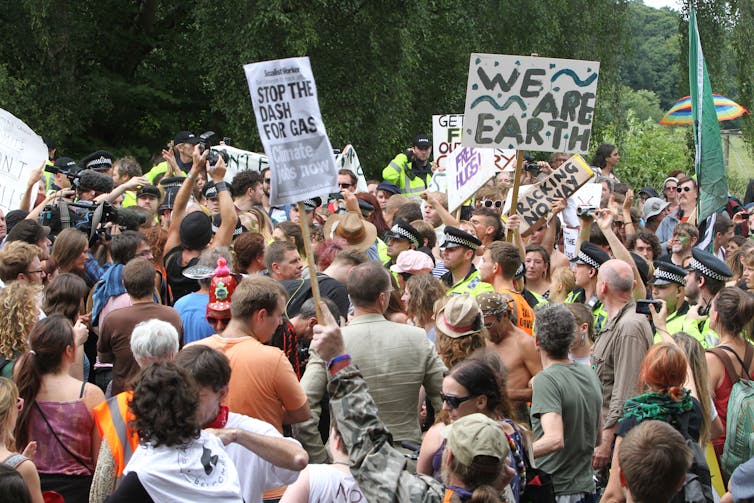
The decision to halt fracking in the UK in 2019 came at the end of an anti-fracking campaign that involved repeated protests over the course of a decade. The controversial drilling method was ended once it became clear that it risked causing earthquakes for nearby residents.

The Reclaim the Power campaign against the UK’s largest opencast coal mine in Ffos-y-fran, south Wales, involved multiple protests over several years. Eventually the Merthyr Tydfil council refused the mine operator’s licence extension. Now that the mine has been closed, its full impact – on local residents’ wellbeing and on the environment – is finally being acknowledged.

A group of protesters with signs reading 'we are earth'
Regular anti-fracking protests took place over the course of a decade before fracking was banned in 2019.
Marcella2024/Shutterstock

There are plenty of similar examples both in the UK and elsewhere. Earlier this year, the government announced it would hold the Battle of Orgreave national inquiry. This followed sustained pressure by the Orgreave Truth and Justice Campaign that lasted 13 years and involved multiple repeat protests and demonstrations.

In Israel, massive national protests took place from January to October 2023, in opposition to judicial reforms that threatened to weaken the power of the country’s supreme court. While the reforms went ahead, they remained contested, and were subsequently reversed.

History is full of prolonged protest campaigns producing significant democratic outcomes. The national independence movement in India lasted for three decades. The fall of the Berlin Wall was partly due to an ongoing campaign of weekly Monday demonstrations.

The suffragette protest campaign calling for the vote for women in Britain lasted for nearly ten years. The British state repeatedly imprisoned and force fed protesting women before eventually granting them the vote.

The important contribution to democratic life that sustained and repeated protests can have – typically as a direct result of their “cumulative impact” – is not only recognised by academics and civil liberty campaigners.

The current deputy prime minister, David Lammy, made exactly the same point in 2021 when Labour opposed the first attempt to curtail protest by the previous Conservative government. At that time he remembered how the “anti-apartheid movement, of which I was part, marched continuously on Trafalgar Square for black and white people to be treated as equal”.

The (restricted) right to protest

The home secretary has argued that the latest proposals are not a ban on protest, but “about restrictions and conditions”.

Similar language was also used by the previous Conservative government when it introduced a first round of anti-protest legislation in 2022. In defending that legislation, the Conservative government repeatedly promised that it was not banning peaceful protest.

Conservative home office minister Victoria Atkins claimed at the time: “Peaceful protest is absolutely fundamental to a free society. The right to peaceful protest will not be, and will never be, in question by this Government.”

Yet, the Police, Crime, Sentencing and Courts Act 2022 introduced a range of restrictions to prevent noisy or disruptive protests. This has had a concerning impact on the right to protest, and led to some of the most draconian sentences for environmental protest that the UK has ever seen.

The Labour party opposed that earlier anti-protest law. David Lammy (then shadow justice secretary) described how the legislation was “giving the police the power to prohibit the fundamental freedoms of protest that the British public hold dear”.

Since entering office, however, the Labour government has further tightened restrictions on the right to protest. The crime and policing bill currently going through parliament will ban the wearing of face masks during certain protests.


Read more:
Banning face coverings, expanding facial recognition – how the UK government and police are eroding protest rights


The recent proscription of Palestine Action as a terrorist organisation has led to hundreds of arrests of peaceful protesters, and been widely criticised by civil liberties groups. The UN’s high commissioner for human rights described the banning of the organisation as “at odds with the UK’s obligations under international human rights law”.

If “cumulative impact” is now to be grounds for limiting or prohibiting protest, it could mean certain protests are only allowed on a restricted number of occasions. As the evidence suggests, this risks permitting only those protests that have no chance of success. In curtailing or removing the potential for those in power to be held to account through public demonstration, the UK would lose a crucial democratic and human right.


Want more politics coverage from academic experts? Every week, we bring you informed analysis of developments in government and fact check the claims being made.

Sign up for our weekly politics newsletter, delivered every Friday.


The Conversation

David J. Bailey does not work for, consult, own shares in or receive funding from any company or organisation that would benefit from this article, and has disclosed no relevant affiliations beyond their academic appointment.

ref. Labour wants to restrict repeat protests – but that’s what makes campaigns successful – https://theconversation.com/labour-wants-to-restrict-repeat-protests-but-thats-what-makes-campaigns-successful-266825

Reform and Green party members the most ideologically removed from the average voter

Source: The Conversation – UK – By Paul Whiteley, Professor, Department of Government, University of Essex

Against the backdrop of a fragmenting political system, the 2025 party conference season in the UK has been an unusual one. The Greens and Reform, having secured strong results in the 2024 election, enjoyed an unprecedented level of interest in their events. Members were interviewed in the media and party leaders’ speeches were scrutinised.

Attention is almost always squarely focused on Labour and the Conservatives, perhaps with some Liberal Democrat coverage too. And there have been times when party members have seemed very out of sync with the general public. This was a strong theme during the years of Jeremy Corbyn’s leadership of the Labour party. But it has also affected the Conservatives. Party members strongly supported Brexit at a time when the Conservative leadership opposed it.

But these days, it’s Reform and Green party members who are most ideologically at odds with the voting public – something their leaders will need to be mindful of as they prepare for the next election. Labour and Liberal Democrat party members are the most aligned, followed by the Conservatives.

To show this, we can use data from a large-scale national survey conducted just prior to the general election in 2024 by the British Election Study. With more than 30,000 respondents the survey makes it possible to compare the views of party members with those of voters to see how much they differ.

Percentages of party members in the BES Panel Survey 2024:

A chart showing how many members of each party were represented in the 2024 British Election Study.
A breakdown of the party members in the survey.
P Whiteley, CC BY-ND

The survey asked respondents if they were members of a political party and a total of 1,191 said they were, making up 4% of all respondents. The chart shows the percentage shares of these members in each of the five national parties at that time.

Labour membership was twice as large as that of the Conservatives and they in turn were just over twice as large as the Liberal Democrats. Reform and the Greens had the same percentage of members.

To judge whether party members were extreme in their views compared to the average population, we can use responses to a question which asked: “In politics people sometimes talk of left and right. Where would you place yourself on the following scale?” The scale runs from 0 (far left) to 10 (far right).

The ideology scores on the left-right scale for voters in 2024:

A chart showing how party members rate themselves on the ideological spectrum.
Where party members sit on the political spectrum.
P Whiteley, CC BY-ND

Most voters place themselves at the centre of the left-to-right ideological spectrum, with a mean score of 4.8 on the scale. There is an important strand of academic research in political science which suggests that voters will support the party that is closest to them on this ideological scale.

This is the so-called spatial model of party competition. The distance between the voters and the party members on the scale measures how “extremist” party members are in relation to voters as a whole.

The third chart shows the scores of party members on this left-right scale. It shows that the Liberal Democrat members are closer to the voter mean of 4.8 than any other party. They have a score of 3.8. The second closest party is Labour on 2.7, followed by the Conservatives on 7.6.

The two clear outliers are the Greens on 1.8 who are well to the left of Labour and Reform on 8, which is well to the right of the Conservatives.

Mean scores of party members on the left-right ideological scale:

A chart showing the mean score for party members on the left right spectrum.
Reform and the Greens are furthest from the general public.
P Whiteley, CC BY-ND

Political polarisation can weaken the relationship between ideology and voting because it flattens the distribution of voters on the left-right scale. It creates more extremists so that the distribution has fatter tails.

That said, the chart does not show large numbers of extremists in the British electorate, since the great majority of voters are clustered in the centre. This makes it unwise for any party to be too leftwing or rightwing – something which is likely to cause problems for both Reform and the Greens.

“Performance politics” also plays a role. This refers to the extent that incumbent parties deliver on their promises.

This has been a major problem for the Conservatives in the past and it is now affecting the Labour government. Voters want fast action to solve their problems, making this an issue for centre parties as much as for fringe parties.

Both Reform and the Greens have not had to struggle with delivery at the national level, although their recent successes in local government elections will provide evidence of this by the time of the next general election.

Overall Reform and the Greens should note that it is better to be close to what the electorate want than far away when voters start to look at what the parties are offering during an election campaign.


Want more politics coverage from academic experts? Every week, we bring you informed analysis of developments in government and fact check the claims being made.

Sign up for our weekly politics newsletter, delivered every Friday.


This article contains references to books that have been included for editorial reasons, and this may include links to bookshop.org. If you click on one of the links and go on to buy something from bookshop.org The Conversation UK may earn a commission.

The Conversation

Paul Whiteley has received funding from the British Academy and the ESRC.

ref. Reform and Green party members the most ideologically removed from the average voter – https://theconversation.com/reform-and-green-party-members-the-most-ideologically-removed-from-the-average-voter-266923

Nobel physics prize awarded for pioneering experiments that paved the way for quantum computers

Source: The Conversation – UK – By Rob Morris, Professor of Physics, School of Science and Technology, Nottingham Trent University

The 2025 Nobel prize in Physics has been awarded to three scientists for the discovery of an effect that has applications in medical devices and quantum computing.

John Clarke, Michel Devoret and John Martinis conducted a series of experiments around 40 years ago which would go on to shape our understanding of the strange properties of the quantum world. It’s a timely award, since 2025 is the 100th anniversary of the formulation of quantum mechanics.

In the microscopic world, a particle can sometimes pass through a barrier and appear on the other side. This phenomenon is called quantum tunnelling. The laureates’ experiments demonstrated tunnelling in the macroscopic world – in other words, the world that’s visible to the naked eye. They showed that it could be observed on an experimental electrical circuit.

Quantum tunnelling has potential future applications in improving memory for mobile phones and has been important for the development of “qubits”, which store and process information in quantum computers. It also has applications in superconducting devices, those that conduct electricity with very little resistance.

British-born John Clarke is Professor of Physics at the University of California, Berkeley. Michel Devoret was born in Paris and is the F. W. Beinecke Professor of Applied Physics at Yale University. John Martinis is Professor of Physics at the University of California, Santa Barbara.

What is quantum tunnelling?

Quantum tunnelling is a counter-intuitive phenomenon where the tiny particles which make up everything we can see and touch can appear on the other side of a solid barrier, which you would otherwise expect to stop them.

Since it was first proposed in 1927, it has been observed for very small particles and it is responsible for our explanation of the radioactive decay of large atoms into smaller atoms and something else called an alpha particle. However, it was also predicted that we might be able to see this same behaviour for larger things. We call this macroscopic quantum tunnelling.

How can we see quantum tunnelling?

The key to observing this macroscopic tunnelling is something called a Josephson junction, which is essentially a fancy broken wire. The wire is not a typical wire which you might use to charge your phone, instead it is a special type of material known as a superconductor. A superconductor has no resistance, which means that a current can flow through it forever without losing any energy. They are used, for example, to create the very strong magnetic fields in magnetic resonance imaging (MRI) scanners.

So how does this help us to explain this strange quantum tunnelling behaviour? If we put two superconducting wires end to end, separated by an insulator, we create our Josephson junction. This is normally manufactured in a single device which, with a basic understanding of electricity, shouldn’t conduct electricity. However, thanks to quantum tunnelling we can see that current can flow across the junction.

The three prize winners demonstrated quantum tunnelling in a paper published in 1985 (it’s common to have such large gaps in time before Nobel prizes are awarded). Quantum tunnelling had previously been suggested to be caused by a breakdown in the insulator. The researchers started by cooling their experimental apparatus to within a fraction of a degree of absolute zero, the coldest temperature which can be achieved.

Heat can give the electrons in conductors just enough energy to get through the barrier. So it would make sense that the more the device is cooled, the fewer electrons would escape. If however quantum tunnelling is taking place, there should be a temperature below which the number of electrons which escape should no longer decrease. The three prize winners found exactly this.

Why is this important?

At the time, the three scientists were trying to prove this developing theory about macroscopic quantum tunnelling through experiments. Even during the announcement of the 2025 prize, Clarke downplayed the importance of this discovery, even though it has been pivotal in so many developments which are at the forefront of quantum physics today.

Quantum computing remains one of the most exciting opportunities which is promised for the near future, and is the source of significant investment worldwide. It comes with much speculation about the risks to our encryption technologies.

It will also ultimately solve problems which are outside the reach of even the largest of today’s supercomputers. The handful of quantum computers which are in existence today, rely on the work of the three 2025 physics Nobel laureates and no doubt will be the subject of another physics Nobel prize in the coming decades.

We are already exploiting these effects in other devices such as superconducting quantum interference devices (Squids) which are used to measure small variations in magnetic fields from the Earth, allowing us to find minerals below the surface. Squids also have uses in medicine. By detecting extremely weak magnetic fields, they can improve on the images from MRI and provide high resolution images of tumours. They can also be used to map electrical activity in the brain, helping to manage epilepsy.

We can’t predict if and when we will have quantum computers in our homes, or indeed in our hands. One thing that is for certain, though, is that the speed of development of this new technology is thanks in no small part to the winners of the 2025 Nobel prize in physics, demonstrating macroscopic quantum mechanical tunnelling in electric circuits.

The Conversation

Rob Morris does not work for, consult, own shares in or receive funding from any company or organisation that would benefit from this article, and has disclosed no relevant affiliations beyond their academic appointment.

ref. Nobel physics prize awarded for pioneering experiments that paved the way for quantum computers – https://theconversation.com/nobel-physics-prize-awarded-for-pioneering-experiments-that-paved-the-way-for-quantum-computers-266911

Tory plan to scrap net zero target puts UK climate leadership at risk

Source: The Conversation – UK – By Sam Fankhauser, Professor of Climate Economics and Policy, Smith School of Enterprise and the Environment, University of Oxford

In the mid-2000s, soon after becoming Conservative leader, David Cameron hugged a husky on a trip to the Arctic, in what was widely described as an attempt to “detoxify” the Tory brand. Eighteen years later, Kemi Badenoch has promised to scrap the law that once made that rebranding credible.

Her announcement that the Conservatives will repeal the 2008 Climate Change Act if they win the next general election has the potential to be a major own goal – politically, environmentally and economically.

To understand why, we need to remember how the Climate Change Act came about. The bill was put forward by the Labour government of Gordon Brown, but it had enthusiastic support from the Conservative opposition, which tabled several amendments to strengthen it. Cameron had concluded that green policies were a good way to modernise his party and lead it back into power.

It worked, both for Cameron, who became prime minister in 2010, and for UK climate policy, which has enjoyed a unique period of consensus and stability. Over seven governments, multiple economic crises, Brexit, COVID-19 and the war in Ukraine, there has been clarity about Britain’s climate change objectives. Policies were chopped and changed, often to the frustration of investors, but the institutional framework was stable and widely appreciated.

The Climate Change Act gives the UK a statutory long-term emissions target – initially an 80% cut from 1990 levels by 2050, strengthened to net zero by 2050 by Theresa May, another Tory prime minister.

Progress is managed through a series of five-year carbon budgets, legislated 12 years in advance and monitored by a powerful independent body, the Climate Change Committee (CCC). For much of its existence, the CCC has been chaired by yet another environmentally-minded Tory, Lord Deben (John Gummer). It is this framework the Conservatives now say they want to dismantle.

Yet the Climate Change Act has delivered, both in terms of process and substance. Indeed, the UK model has been emulated around the world. Nearly 60 countries have UK-style climate change laws and over 20 countries have CCC-style advisory bodies, cementing the UK’s position as a climate leader.

The act gives the UK a steady institutional rhythm. Relevant businesses and other organisations know the formal set pieces, such as the CCC’s annual report to parliament, and can time their interventions accordingly.

When colleagues and I interviewed people from business and civil society about the act a few years ago, they emphasised the predictable process, the clear rules on accountability and the evidence-based discourse it has enabled. This all reduces uncertainty and enables long-term planning.

Importantly, the Climate Change Act has delivered environmentally too. Compared to 1990, UK greenhouse gas emissions are down by 50%. The UK economy now uses three times less carbon per unit of economic output than in 1990. Emissions are at their lowest level since 1872.

This trend started before the act, but it was helped and accelerated by it. This is perhaps most noticeable in the radical transformation of the electricity sector: coal has been completely phased out, while offshore wind and other renewables have flourished.

Most people want climate action

Voters value this progress more than politicians appreciate. A University of Oxford survey found that internationally public support for climate action is almost twice as high as policymakers assume. In the UK, three out of four people are fairly or very concerned about climate change.

Badenoch’s announcement comes just as households are starting to reap the financial benefits of clean technology. Colleagues and I have estimated that four out of five UK households, particularly those owning a car, would be better off if net zero was achieved. The typical savings are £100-£380 per household and year.

It is true that households do not yet see the benefits of renewables on their energy bills. We are still paying for the high costs of early investments in clean power, before technology and sheer scale brought the price down.

Successive governments have chosen to recoup these learning costs through electricity bills, rather than general taxation, which would have been easier on most households. But recent analysis suggests renewables are now cutting electricity prices by up to a quarter.


Read more:
We surveyed British MPs – most don’t know how urgent climate action is


The policy uncertainty generated by the Tory announcement and similar pronouncements by Reform UK will eventually find its way into the risk premiums for investors, though for the time being this effect is still small.

But the reputational damage is immediate. Undoing the act would signal that the UK no longer values the long-term stability that has driven clean investment and made its climate policy admired around the world.

Climate policy requires debate. Deeply political choices need to be made about different decarbonisation strategies, how to pay for necessary investments or the role of controversial technologies like nuclear energy. The past 17 years have shown that these debates are best had within an agreed framework, with support from all major parties. That is what the Climate Change Act provides.


Don’t have time to read about climate change as much as you’d like?

Get a weekly roundup in your inbox instead. Every Wednesday, The Conversation’s environment editor writes Imagine, a short email that goes a little deeper into just one climate issue. Join the 45,000+ readers who’ve subscribed so far.


The Conversation

Sam Fankhauser does not work for, consult, own shares in or receive funding from any company or organisation that would benefit from this article, and has disclosed no relevant affiliations beyond their academic appointment.

ref. Tory plan to scrap net zero target puts UK climate leadership at risk – https://theconversation.com/tory-plan-to-scrap-net-zero-target-puts-uk-climate-leadership-at-risk-266853

Children are capable of extreme bravery from a young age – a psychologist explains how

Source: The Conversation – UK – By Kirsten Antoncich, Senior Lecturer in Psychology, Birmingham City University

afotostock/Shutterstock

Developmental research often tells us how ego centric children are. Yet all too often we hear of children who are forced to demonstrate great courage and care in in a crisis.

The ongoing inquiry into the 2024 mass stabbing of young girls in Southport, England, has produced accounts of extreme bravery among the children subjected to the attack. Indeed, the report of a child standing in front of her sister to protect her from knife blows shows a level of courage many adults might not have possessed in the same circumstances.

Details have also emerged of young children holding the door open to allow other children to escape from their attacker first and of children helping others not draw attention to themselves by running or screaming. Similar accounts often emerge from school shootings in the US – take, for example, the report of a teenager confronting a gunman who attacked pupils at a high school in Colorado in September 2025.

How could such young people conduct themselves with so much composure and selflessness? Psychological research shows that children develop the cognitive, personal and emotional skills needed earlier than people might realise.

Although much of our understanding of human courage comes from the adult field, developmental psychology professor Peter Muris’s 2009 study examined the link between fear and courage in children aged eight to 13. His interviews and studies with his young participants found there may be a link between increased courage and the personality traits of extroversion, openness and intellect.

He also found 94% of the children in his study had already carried out at least one courageous action in their lives, such as dealing with an animal they were afraid of or defending a friend from bullies.

And a 2021 study found that extroversion in teenagers seemed to protect them from developing anxiety. It could be that many of the young children who have acted bravely in a crisis had higher scores of this protective trait.

Experimental psychologist, Joana Viera, and her colleagues in their 2020 study explored how humans react when faced with a threat in the form of an electric shock and the option to help another person avoid the shock. They found that as the likelihood of the threat increased, humans were more likely to go to the aid of another, even at risk of a shock to themselves. Their study suggests that defensive states of mind also activate cognitive processes which promote care giving.

Psychologists Tony Buchanan and Stephanie Preston explored how stress can promote altruism, in their 2014 analysis. They emphasised that the neural circuits that support care-taking under stress overlap with brain circuits associated with reward and motivation. These two areas act together during times of stress, helping shift the persons response away from avoidance of threat towards the protection of others.

This care taking mechanism is seen in many animals from rats to gorillas. Social psychologist Daniel Batson suggested there are two types of responses to acute threat, one motivated from personal distress which is self focused and another based upon sympathetic or empathic responding linked to altruism. We all have the potential to respond in either way, which makes the courage of these children all the more impressive.

Several psychologists have found children as young as 12 months old can recognise and respond with empathy to distress in other humans. A 2011 study found that children as young as two years old could respond to others’ distress with verbal comfort, advice and distraction. The researchers also demonstrated that infants responded with heightened distress when presented with the sounds of distress in others.

The hands of a little child holding rocks painted like birds.
Very young children can respond with empathy to others’ distress.
Christin Lola/Shutterstock

In order to remember instructions and to show higher order skills such as empathy and the care of others over oneself, the children needed to draw on their developing executive function and areas of the brain’s limbic region. This system is a group of connected brain structures that helps regulate emotions and behaviour. These areas are typically fully developed by young adulthood.

Diagram of the brain's limbic region
The limbic region.
VectorMine/Shutterstock

In the stories that have emerged, you can hear how the children seem to have internalised advice from adults about how to act in an emergency. Repeated instructions are actually easier to recall under acute stress.

These structures are developing throughout childhood. But research has persistently shown that children of preschool age perform executive functioning tasks such as the ability to perceive and respond to another person’s emotional state. Rather than respond from a instinctive fight or flight response, the children who stay calm during critical moments contain their fear enough to care for others.

A 2010 study investigated the areas of the brain in adults associated with increased bravery. Participants with a fear of snakes had to bring a live snake close to their head. The study found courage was associated with the dissociation of fear and sensory arousal. This means that those people who show courage during stressful situations may disconnect from their feelings of fear and their physiological experiences of fear in the body.

The combination of dissociation and instruction retrieval could help explain how they were able to stay so calm and come to the aid of others. Indeed, caring for others in times of distress can distract us from our own acute distress.

Self efficacy, or the ability to act during times of threat can also protect people against the development of post traumatic symptoms. And a 2019 study found that positive traits such as hope, competence and optimism may also protect people against the development of post traumatic stress disorder.

In all instances where children are faced with such great adversity, one can only hope the bravery and mastery they show offers some protection against the immense psychological trauma the endure.

The Conversation

Kirsten Antoncich does not work for, consult, own shares in or receive funding from any company or organisation that would benefit from this article, and has disclosed no relevant affiliations beyond their academic appointment.

ref. Children are capable of extreme bravery from a young age – a psychologist explains how – https://theconversation.com/children-are-capable-of-extreme-bravery-from-a-young-age-a-psychologist-explains-how-265523

Jilly Cooper: why readers still cherish her ‘fat, fun, frothy novels’

Source: The Conversation – UK – By Amy Burge, Associate Professor in Popular Fiction, University of Birmingham

The author Jilly Cooper has died aged 88. Cooper’s books were “bonkbusters” – a form of blockbuster fiction that was most popular in the 1980s and 1990s, characterised by explicit sex, scandalous plots and large casts of characters.

In her 1993 novel, The Man Who Made Husbands Jealous, a reporter rings famous singer Georgie to tell her that her husband Guy had been voted “hubby of the year”. She elaborates: “To be quite honest there wasn’t a lot of choice. Faithful husbands are an endangered species.” This quote is emblematic of the writing that made Cooper famous. It’s full of irreverent wit, tongue-in-cheek scrutiny of British society – and misbehaving men.

Cooper was one of the four major bonkbuster authors, alongside Jackie Collins, Shirley Conran and Judith Krantz. Her racy, ribald romps through the fictional county of Rutshire reached millions of readers. And as we discovered when talking with bonkbuster readers while researching our forthcoming book, they continue to be beloved by many.

The author was born in Essex on February 21 1937, educated in Yorkshire and Wiltshire, and, at the age of 20, became a junior reporter for The Middlesex Independent. This was the beginning of what would be a highly successful career in journalism. Cooper went on to write long-running columns in The Sunday Times Magazine and The Mail on Sunday, which offered a light-hearted look at women’s domestic lives.

Jilly cooper holding a cat
Cooper in 1974.
Allan Warren, CC BY-SA

These columns formed the basis of many of her non-fiction books, such as How to Stay Married (1969) and How to Survive from Nine to Five (1970).

However, she was also busily writing fiction, and after some success publishing short fiction in magazines, Cooper published a series of romantic novels in the 1970s and 1980s, all with women’s names in their titles.

These works offered an account of the urban zeitgeist for young single women of the time, discussing issues like rape, marriage, pregnancy and careers.

But Cooper is best known for her Rutshire Chronicles (1985-2023), a classic bonkbuster series set in the Cotswolds. Characterised by her trademark tongue-in-cheek style, the 11 novels in the series share a huge cast of characters – anchored around the arrogant, irresistible Rupert Campbell-Black – and a wide range of settings.

These books are best known, in the words of one of the readers we talked to, as “full, fat, fun, frothy novel[s] set around class and privilege and horses”. Many of the Rutshire Chronicles blend interpersonal drama with the social drama of the equestrian world: from show-jumping and sex in Riders (1985), polo and illegitimate daughters in Polo (1991), and horse racing and even more sex in Jump! (2010) and Mount! (2016).

However, horses weren’t the only focus. Other novels in the Rutshire Chronicles explored regional television rivalries, bad husbands and infidelity, orchestral drama, murder and opera, art theft, British schools and premier league football.

Sex is good for women (or should be)

Cooper’s books are famous for their sex scenes. From the scandalous (the naked tennis match in Rivals) to the sticky (characters using grass to wipe themselves clean after an al fresco romp), she did not shy away from putting sex on the page.

Many of Cooper’s depictions of sex are very funny. However, there is a clear message throughout – women are entitled to good sex, and it is the job of their (usually male) partners to give it to them.

Rupert Campbell-Black is Cooper’s most famous stud (horses aside), but he is very bad at satisfying his first wife Helen. In Riders, Cooper wrote that Helen “longed for love but, having been married to Rupert for six and a half years … felt she had become what he kept telling her she was: boring, prissy, brittle and frigid”. However, the problem is not Helen. With a different, more attentive partner – Rupert’s rival Jake – Helen has a sexual awakening.

The trailer for The Rivals, a recent Disney adaptation of Cooper’s novels.

The entire premise of The Man Who Made Husbands Jealous revolves around male neglect (sexual and otherwise). Unsatisfied wives engage the services of a man named Lysander in the hope that some competition will reengage their neglectful, philandering husbands.

Along the way, they have considerably better sex with Lysander, whose consideration in bed has his partners “bubbling like a hot churn of butter”. The titular husbands eventually learn that they must do better in order to keep their wives, sexually and otherwise.

Sex aside, what became clear from our research was how much Cooper’s works meant to their readers. Former prime minister Rishi Sunak might be Jilly Cooper’s most famous reader, but many of the readers we spoke to were particularly fond of her books, re-reading them repeatedly for comfort and familiarity. One described her books as “like a friend”.

For some, the appeal was escapism “into this incredibly glamorous world that you … could have some ambition of being part of yourself when you grew up”. For others, Cooper’s books were educational, teaching readers about how to navigate the unfamiliar world of the British upper classes, or providing a form of sex education. Several of our readers noted the unusual (for the time) frankness of Cooper’s novels.

Cooper was the last living “big four” bonkbuster author. Her death marks the end of an era. However, the recent television adaptation of Rivals seems to have attracted a new audience. Filming for a second season commenced in May 2025 – it seems Cooper’s stories live on.


Looking for something good? Cut through the noise with a carefully curated selection of the latest releases, live events and exhibitions, straight to your inbox every fortnight, on Fridays. Sign up here.


The Conversation

The authors do not work for, consult, own shares in or receive funding from any company or organisation that would benefit from this article, and have disclosed no relevant affiliations beyond their academic appointment.

ref. Jilly Cooper: why readers still cherish her ‘fat, fun, frothy novels’ – https://theconversation.com/jilly-cooper-why-readers-still-cherish-her-fat-fun-frothy-novels-266881