Chemical pollutants affect wildlife and human behaviour. But industry toxicologists are reluctant to carry out tests, new survey reveals

Source: The Conversation – UK – By Alex Ford, Professor of Biology, University of Portsmouth

Ambiento/Shutterstock

Most environmental scientists believe that chemical pollution can and is negatively affecting people and wildlife, according to my team’s recent survey.

We surveyed 166 environmental scientists across academia, government and industry and found that industry scientists working in environmental toxicology were reluctant to use behavioural studies when assessing the risk posed by chemicals. There are several possible reasons for their reticence.

As a society we have known for centuries that chemical pollutants can affect our behaviour. The terms “mad as a hatter” and “crazy as a painter” entered the English language due to observations of psychotic behaviour caused by occupational exposure to mercury and lead. Around the world, lead has been removed from water pipes because it can reduce cognitive ability in children.

Restrictions of alcohol and drug consumption exist while people are driving because it increases the risk of accidents. But previous research highlights that behaviour is rarely used to assess the effects of pollution on wildlife.

There are approximately 350,000 different chemicals in everyday domestic and industrial use. Before these chemicals are licensed for use, governments or industries conduct experiments to assess the potential risk to the environment.

Unfortunately in many incidences, chemicals have reached the market without a thorough assessment of the harm they may cause to the environment. That includes plastic additives – chemicals added to plastics to give them certain properties such a flexibility, heat resistance, colour and UV protection.

Scientists have estimated that there are over 16,000 chemicals known to be within plastics or used to make them. Two-thirds of these chemicals do not have sufficient data on their toxicity.


Read more:
Lobbying in ‘forever chemicals’ industry is rife across Europe – the inside story of our investigation


Toxicity tests typically involve a limited number of animals including fish, crustaceans and algae. They are exposed to particular chemicals to assess their effects on survival, growth and reproduction. As as means of protecting the wider environment, risk assessments determine what the safe levels of these chemicals might be in the environment.

yellow rapeseed crop, bee, blue sky
Many insects play a vital role in pollination, but this is compromised by agricultural chemical use.
LeicherOliver/Shutterstock

However, they aren’t assessed to determine whether they change an animal’s behaviour. Studies into the effects of prescribed and illegal drugs taken to deliberately alter human behaviour has driven questions over their environmental consequences.

Many pollutants that mimic and act like hormones also alter behaviour. For example, synthetic oestrogens and androgens can alter the reproductive behaviour of fish. Antidepressants and anti-anxiety medications alter the behaviour of many aquatic organisms.

An animal’s behaviour is critical to its survival. A split-second decision while driving on the road may cause or prevent a traffic collision and could mean the difference between life or death. Similarly, if an animal isn’t behaving normally, it might struggle to escape predators, find food or attract mates.

Reasons for reluctance

We found there could be many reasons why industry toxicologists are reluctant to embrace behavioural studies.

First, industry scientists were more sceptical that behavioural studies are repeatable. Some expressed concern about the reliability of toxicity metrics.

While some scientists share these concerns, efforts are being made internationally to standardise methodology. The pharmaceutical industry already uses behavioural tests in drug design which suggests some acceptance to their credibility.

Second, all of the scientists we questioned agreed that adding behavioural tests to existing chemical contamination assessments would increase costs for both industry and government. Although it may affect profit margins, we argue that not adding behaviour to the suite of tools to assess chemical safety comes with cost to human health and the environment.

Industry may also be apprehensive about adopting behavioural testing due to fear of what scientists may find out about existing chemicals. Could there be a chemical in our everyday products that increases the likelihood of dementia, anxiety or depression?

For example, some scientists are starting to link pollution with incidences of neurological disorders, anxiety and some have correlated even higher rates of crime.

Developing internationally standard toxicity tests can take years if not decades, so existing tests need to incorporate behaviour. This will hopefully reduce time, costs and ethical concerns while at the same time maximising the available information to protect human health and the environment.


Don’t have time to read about climate change as much as you’d like?

Get a weekly roundup in your inbox instead. Every Wednesday, The Conversation’s environment editor writes Imagine, a short email that goes a little deeper into just one climate issue. Join the 45,000+ readers who’ve subscribed so far.


The Conversation

Alex Ford has received funding from research councils, european union, regulatory authorities, NGOs and industry

ref. Chemical pollutants affect wildlife and human behaviour. But industry toxicologists are reluctant to carry out tests, new survey reveals – https://theconversation.com/chemical-pollutants-affect-wildlife-and-human-behaviour-but-industry-toxicologists-are-reluctant-to-carry-out-tests-new-survey-reveals-266919

Malorie Blackman’s Noughts and Crosses uses critical dystopia to challenge us to build a better future

Source: The Conversation – UK – By Blanka Grzegorczyk, Senior Teaching Associate, Faculty of Education, University of Cambridge; Manchester Metropolitan University

Between 2013 and 2015, Malorie Blackman was Britain’s first black children’s laureate. Her young adult series Noughts and Crosses (2001-21) at once challenges and plays with the prevailing racial ordering of western life and thought.

Blackman’s series is set in an alternative Britain called Albion, where power is held by a dominant, black majority known as the “Crosses”, while the white “Noughts” are stigmatised minority subjects. In doing so, Blackman suggests that if we see difference as threatening or inferior, then any alternative worlds we imagine will just reflect our own culture. The upending of racial formations, the books seem to suggest, could result in an equally powerful, reverse form of oppression.

Most contemporary criticism and the book’s most well-known adaptations (at the Royal Shakespeare Company and for the BBC) treat Blackman’s series as a case study of anti-racist political allegory, counterfactual historical, or dystopian fiction. Their focus tends to be on the forbidden romance between Callum McGregor, an increasingly disaffected and conflicted working-class Nought, and a Cross politician’s wealthy and privileged daughter, Persephone “Sephy” Hadley.

But it is also possible to read Noughts and Crosses specifically as an attempt to show systems of oppression at work: how they prop up (neo-)imperialist power, enable racial segregation and traumatise people.


This article is part of Rethinking the Classics. The stories in this series offer insightful new ways to think about and interpret classic books and artworks. This is the canon – with a twist.


Noughts and Crosses isn’t just a dystopian story – it’s a critical dystopia, meaning it aims to inspire political thought and change. Critical dystopias don’t usually show us a better world; instead, they make us think about how one might be created.

What makes a critical dystopia powerful is how it mixes everyday life with moments of fear or tension. This mix makes familiar situations feel unsettling, encouraging readers to see the world differently. It pushes them to question unfair or harmful systems and imagine better alternatives.

The power of secrets

In Noughts and Crosses, Callum and Sephy repeatedly come up against suppressed truths and hidden histories. The truth behind Callum’s sister Lynette’s fragile mental state, for example, is revealed to be a vicious racist attack on her and her Cross boyfriend prior to the events of the novel. But by the time Callum learns this secret, it is too late to stop the events leading to Lynette’s suicide, which draws Callum’s family deeper into a terrorist militia.

Malorie Blackman
Author Malorie Blackman in 2007.
Wiki Commons, CC BY

The novel’s constant use of hidden knowledge draws attention to the atomised condition of life in a racially divided state. Particularly significant here is a picture of the family unit in which dreams, aspirations and motivations are only partially knowable – and never completely fulfilled. Tragedies such as those experienced by the McGregor family galvanise the tribalist rhetoric of a segregated society.

On the other hand, the novel shows that through discovery, its young characters become more sceptical about any stories that they have been handed by that social order. When Sephy learns that she has an older half-brother, she concludes: “Nothing in [her] life was a fact. There was nothing to cling on to.”

This is also the case when Callum struggles to “find something of sense to hold on to” after his brother Jude’s admission that he became more radicalised due to learning another crucial family secret – that their great-grandfather was a Cross.

Noughts and Crosses does explore, at times, what happens when marginalised voices are repositioned as central. But it also seeks to heal society’s divisions while challenging its self-defeating logic and suggests that one way to do so is by revealing the truth.

In the novel’s final passages, the reader learns that Sephy has defied her parents’ wishes and given birth to her and Callum’s baby. This can be read as a suggestion that their – and perhaps our – social divisions can be healed, eventually, and that a less divided future is possible.

The trailer for the BBC adaptation of Noughts and Crosses (2020).

At the same time, however, Blackman sometimes seems to make the truths told in the novel – like what Callum reveals to Sephy as the “biggest secret of them all” – clearer to us, the readers, than her own characters. This is not just a matter of plot, but one of effect. As readers, we start to become immersed in a rush of twists and unravellings, crossings and unwindings, until we can almost glimpse a different kind of reality, beyond the segregated world of the novel.

In the end, the novel is not recentring one part of society at the expense of another – it is recentring us, the reader, and how we think about its world and ours, by inducting us into the secrets of others. In this context, the act of writing – and reading – is an act of hope.

This is the art of the critical dystopia: the further we read, the more we become engrossed in the shadow texts, or truths of which the characters themselves might be unaware, about how society could be fractured, transformed and remade.

Beyond the canon

As part of the Rethinking the Classics series, we’re asking our experts to recommend a book or artwork that tackles similar themes to the canonical work in question, but isn’t (yet) considered a classic itself. Here is Blanka Grzegorczyk’s suggestion:

Haunted by real-world histories, and specifically by the repeat patterns of the colonial past and neocolonial present, S.F. Said’s alternative Britain in his critical dystopia Tyger (2022) is one where the British empire still rules the world, and slavery was never abolished.

The novel brings its exposé of the terrors of the imperial past to bear on the present moment.

In its exploration of art- and story-based forms of oppositional agency, the novel highlights British Muslim characters Adam and Zadie’s calls for a future where a truly sustainable and equal way of living might be possible. At the same time, it shows them acting as if that hoped-for, radically transformed world already exists in the present.


Looking for something good? Cut through the noise with a carefully curated selection of the latest releases, live events and exhibitions, straight to your inbox every fortnight, on Fridays. Sign up here.


This article features references to books that have been included for editorial reasons, and may contain links to bookshop.org. If you click on one of the links and go on to buy something from bookshop.org The Conversation UK may earn a commission.

The Conversation

Blanka Grzegorczyk does not work for, consult, own shares in or receive funding from any company or organisation that would benefit from this article, and has disclosed no relevant affiliations beyond their academic appointment.

ref. Malorie Blackman’s Noughts and Crosses uses critical dystopia to challenge us to build a better future – https://theconversation.com/malorie-blackmans-noughts-and-crosses-uses-critical-dystopia-to-challenge-us-to-build-a-better-future-253879

Gaza ceasefire and Donald Trump’s ‘dead cat diplomacy’

Source: The Conversation – UK – By Jonathan Este, Senior International Affairs Editor, Associate Editor, The Conversation

This newsletter was first published in The Conversation UK’s World Affairs Briefing email. Sign up to receive weekly analysis of the latest developments in international relations, direct to your inbox.


There were emotional scenes in both Gaza and across Israel this week as people celebrated the prospect of an end to a war which has cost so many lives. Israel and Hamas agreed the first phase of a ceasefire deal which, if it holds, will bring an end to nearly two years of bitter conflict in the Gaza Strip.

The latest casualty count is devastating. On the Palestinian side, more than 67,000 people, most of them civilians and among them an estimated 20,000 children. Israel lost more than 1,800 people: about 1,200 – mainly civilians – during the Hamas attack of October 7 2023 and the rest killed during the assault on Gaza.

Footage and images from both sides show relief, joy and hope that this deal, for which Donald Trump can rightly claim much credit, will hold, that the Israeli hostages will be returned and that a process of healing can begin. For Palestinians there is also the hope that they can return to their homes and begin the process of rebuilding.

But what comes next is far from certain, as Scott Lucas, an expert in Middle East politics from University College Dublin, explains. For the ceasefire to hold, particularly once the 22 remaining live hostages and the bodies of 26 who have died in captivity are released to Israel, assumes a great deal of good faith on both sides. But particularly from Israel.

The release of the hostages removes any leverage Hamas might have had, Lucas writes. And the fact that Israel was still hitting Gaza with airstrikes hours after the US president announced that a deal had been done must cast some doubt on that good faith.

Nevertheless, the ceasefire is due to begin on Friday, after Israel’s cabinet meets to sign off on the hostage agreement. This is when the hard part begins, says Lucas. Hamas will be unwilling to comply with Israel’s demand to disarm and disband and take no further part in Palestinian politics. We don’t know how the future governance covered in Trump’s 20-point plan will work. We don’t know when and to what extent Israel will withdraw its troops.

And Israel’s prime minister, Benjamin Netanyahu, still has to get the deal past the two far-right cabinet ministers, Itamar Ben-Gvir and Bezalel Smotrich. Smotrich has already said he will oppose the deal.

But, for now at least, there is reason to hope. And this is something that has been in painfully short supply in Gaza of late.


Read more:
Israel and Hamas agree ceasefire deal – what we know so far: expert Q&A


Trump’s idiosyncratic style of diplomacy may often appear hasty, clumsy and ill-judged. But it’s questionable whether this particular deal could have happened without him. Asaf Siniver believes Trump was key to getting both Israel and Hamas into line. Siniver, an expert in international security from the University of Birmingham, highlights Trump’s apparent mastery of what is known as “dead cat diplomacy”.

This is a foreign policy approach identified by James Baker, former US secretary of state, in the late 1980s. He recalled in his memoir that he employed it during his own attempts at securing a peace deal between Israel and a delegation of negotiators from Palestine.

Siniver says dead cat diplomacy requires three things: “It must be perceived by the intransigent parties as a last-chance threat, it must be perceived as a credible move by the third party and there must be internal factors which limit the intransigent party’s capacity to ignore the threat.”

All three of these were met in the case of the recent negotiations between Israel and Hamas. It was just a case, to paraphrase Baker, of “laying the dead cats at Israel’s and Hamas’s doorsteps”. In other words, to publicly blame and shame both parties for any reluctance to advance the deal.

Trump did this famously by reporting he’d told the Israeli prime minister he was “always fucking negative” about the peace process. He made sure that everyone knew that he’d forced Netanyahu to apologise to Qatar for launching the airstrikes in early September to try to kill Hamas leaders.

His constant social media messaging to Hamas that it was the major obstacle to Middle East peace fulfilled the same principles. He told Hamas that he’d given Netanyahu carte blanche to “finish the job” and was aware of quite how isolated Hamas had become – not just from its former allies in the Arab states, but with the people it was ostensibly fighting to protect, the Gazans themselves.


Read more:
How Donald Trump’s ‘dead cat diplomacy’ may have changed the course of the Gaza war


Two years of tragedy

There can be no doubt that, whatever the leaders on both sides thought, most ordinary people in Israel and Gaza just wanted the war to end. This week marked the second anniversary of the brutal October 7 Hamas attack on southern Israel. Yuval Katz, whose research has involved speaking to a lot of Israeli citizens about the war and examining social media reports from Gaza, feels that both sets of people were caught between two visions of what peace might mean.

For the politicians, particularly for Donald Trump, a solution for Gaza was part of something else. Trump saw it as the cornerstone of a broader US-sponsored deal for the Middle East: “I’m not just talking about Gaza … the whole deal, everything getting solved. It’s called peace in the Middle East.”

For the Israeli prime minister, the war was part of a delicate political manoeuvre to retain the backing of his far-right allies and keep himself in power.

Neither gave the impression they were in touch with the trauma of the ordinary people. Israelis felt the October 7 massacre and the hostages as a constant pain. Cases of PTSD and suicide among those who served in the military have soared over the two years.


Read more:
October 7 two years on: Israelis and Palestinians caught between two conflicting ideas of peace


Two years of war have also reshaped the Middle East, writes Simon Mabon. Mabon, a scholar of Middle East politics at Lancaster University, outlines the profound ways the region has changed over two years. Iran and its proxies have had their wings severely clipped. In Lebanon, Hezbollah has been crippled. In Syria, Israel has taken advantage of the turmoil following the fall of Assad in December 2024 to carve itself out a buffer zone around the Golan Heights in the south.

Meanwhile, normalisation between Israel and Saudi Arabia – an extension of the Abraham accords which Trump saw as one of his major foreign policy achievements in his first term – has been set back considerably, certainly for years. A lot, says Mabon, will hang on what happens next in Gaza.


Read more:
The two years of fighting since October 7 have transformed the Middle East


Donald Trump: Nobel peace laureate?

It’s highly unlikely Trump would be recognised at Friday’s Nobel peace prize announcement for a ceasefire deal that hasn’t even yet come into force. But if it does lead to a lasting peace, there will be plenty of speculation about whether the Nobel committee will recognise the US president in the future.

After all, there have arguably been more controversial choices. Colin Alexander, an expert in political communication at Nottingham Trent University, walks us through some of them.


Read more:
The Nobel peace prize has a record of being awarded to controversial nominees


Sign up to receive our weekly World Affairs Briefing newsletter from The Conversation UK. Every Thursday we’ll bring you expert analysis of the big stories in international relations.


The Conversation

ref. Gaza ceasefire and Donald Trump’s ‘dead cat diplomacy’ – https://theconversation.com/gaza-ceasefire-and-donald-trumps-dead-cat-diplomacy-267155

AI, drone ships and new sensors could leave submarines with few places to hide in the ocean

Source: The Conversation – UK – By David Stupples, Professor of Electrical and Electronic Engineering and Director of Electronic Warfare Research, City St George’s, University of London

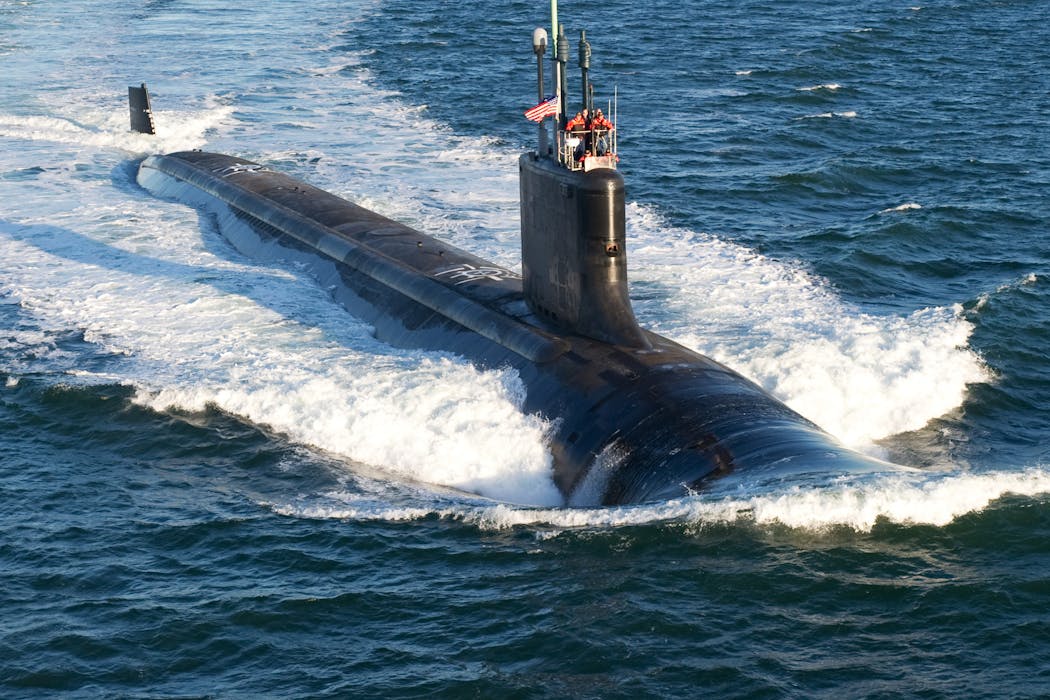
A US Virginia-class attack submarine during sea trials in the Atlantic Ocean. US Navy courtesy of General Dynamics Electric Boat

For over a century, the ocean has been the ultimate refuge for those who wished to disappear. From the U-boats of the first world war to the nuclear-powered leviathans that glide through today’s deep waters, the submarine has thrived on one simple principle: stealth.

Sound waves travel further and faster in water than light or radar waves. This means sound is the most effective way to detect underwater objects. Modern anti-submarine warfare (ASW) is an ongoing cat-and-and-mouse game of detecting, tracking and deterring enemy submarines. With sound as the ocean’s only reliable language, ASW has primarily been a contest of listening.

But the game is changing. Advances in artificial intelligence (AI), sensor networks, and autonomous vehicles are eroding the acoustic monopoly that submarines once enjoyed.

A new generation of tireless, networked and increasingly intelligent machines is beginning to patrol the seas. This promises a future where even the quietest submarine will find it harder to remain unseen.

As the ocean’s soundscape becomes more crowded, navies are increasingly turning to non-acoustic methods. These technologies detect the effects of a submarine rather than its noise. Satellites equipped with synthetic aperture radar can detect subtle ripples and temperature gradients on the sea surface caused by subsurface movement.

Until recently, magnetometers, which can measure the minute disturbances a submarine creates in Earth’s magnetic field, were constrained by physics and sensitivity limits. The magnetic anomaly detectors used for ASW could only operate effectively at low altitude and at short range.

Emerging quantum magnetometers, which make use of the strange science of quantum mechanics, promise orders-of-magnitude improvements in sensitivity. They could, in theory, detect the presence of a steel hull tens of kilometres away, especially when deployed in swarms aboard uncrewed aircraft or sea surface vessels.

A technique called distributed acoustic sensing (DAS) could turn ordinary undersea cables – primarily used for internet traffic – into vibration sensors. It works by measuring subtle changes in strain in the cables’ optical fibres.

Through DAS, a single transoceanic cable could, in effect, become an enormous underwater microphone (hydrophone). In principle, this would allow a submarine crossing a major ocean basin to be detected by subtle pressure waves recorded in the fibres beneath it.

Autonomous vessels

At the heart of the revolution in ASW are uncrewed surface vehicles (USVs). These autonomous vessels range from small, solar-powered craft to large, long endurance ships capable of spending weeks or months at sea.

Unlike crewed ships, USVs can be built cheaply and in large numbers. Armed with sonar, radar, magnetometers and communications links, they are the mobile nodes of an ocean-scale sensor network that can listen, learn and adapt in real time.

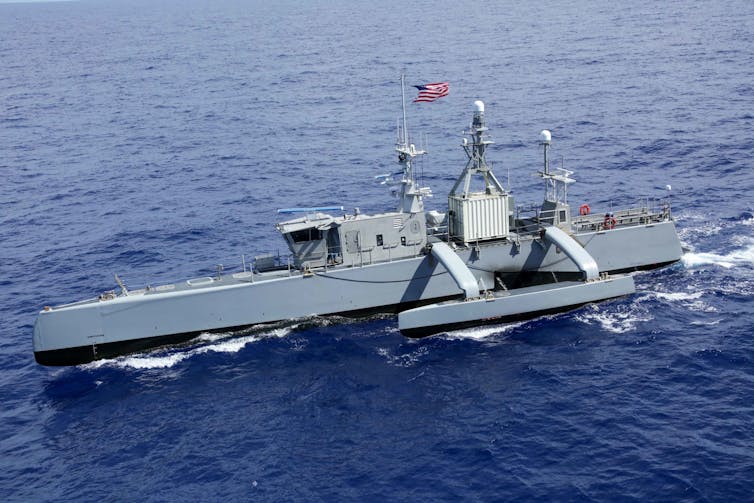
US Navy Sea Hunter
The Sea Hunter is an autonomous anti-submarine vessel built for the US Navy.
Petty Officer 3rd Class Aleksandr Freutel.

The US Navy’s Sea Hunter, an autonomous trimaran, has demonstrated its ability to track a diesel-electric submarine for extended periods without human intervention. In the UK, the Royal Navy’s Cetus project and its experimental uncrewed fleet at Portsmouth are exploring similar ideas.

But it is the integration of AI with autonomy that reshapes the picture. A single USV, even a sophisticated one, can only observe a small patch of ocean. A swarm of hundreds, each communicating via satellite, laser, or acoustic link, can share information and act cooperatively.

AI is a game changer

AI does things that human operators and legacy systems cannot. It fuses data from multiple sources into a coherent picture. A single acoustic anomaly may mean little, but when combined with other data, it may form a high confidence detection.

AI operates continuously and without fatigue. Persistence is vital when hunting for the fleeting signature of a submarine designed to operate silently for weeks.

And by learning how submarines navigate, avoid detection, and exploit environmental features, algorithms can forecast likely positions and movements. This could prompt ASW to move from being primarily reactive to predictive – a shift comparable to how meteorology evolved from observation to forecasting.

Through these capabilities, AI could move from simply assisting detection to orchestrating it.

Humans are not leaving the loop, however. The role of human operator is shifting from hands-on detection to oversight, strategy, and what’s known as trust management.

Trust is a key challenge: in this context, it’s about ensuring human decision makers understand what AI is doing and why it recommends certain actions.

Navies are therefore investing heavily in explainable AI – systems that can account for their decisions – and robust communications systems that allow human operators to intervene when needed.

A connected ocean

By the 2030s, the world’s oceans may become as transparent to sensors as the skies became to radar in the 20th century. With help from AI, multiple transmitters and receivers – mounted on ships, aircraft and USVs – will be able to triangulate the positions of submarines in real time.

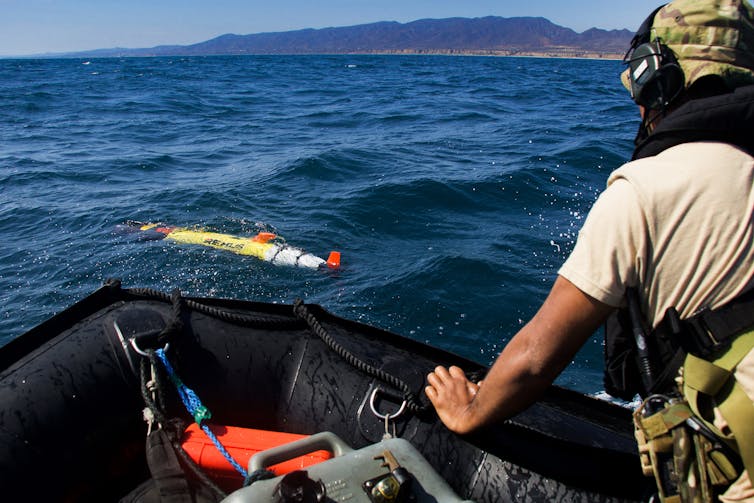
Swarms of autonomous underwater vehicles – relatively small robotic drones – will patrol close to shore, relaying data to surface craft. Satellites will flag anomalies for local sensor networks to investigate. And the fibre-optic infrastructure that spans the seabed may double as a global array of undersea microphones.

Autonomous underwater vehicle
Autonomous underwater vehicles could patrol areas near the shore.
US Navy

For now, such a vision remains technically ambitious. The ocean is extraordinarily complex: temperature gradients, salinity layers, and seabed topography all distort signals and confound algorithms. But with every incremental improvement in AI modelling and computational power, those obstacles shrink.

As detection grows more sophisticated, so too will the submarines. The future may see submarines using propulsion systems and materials in their hulls that leave minimal thermal or acoustic signature. Decoy drones could be used to confuse detection systems.

Some analysts predict that submarines will operate deeper and slower to evade wide-area surveillance. A shift towards autonomous undersea drones that can saturate defences through sheer numbers is also possible.

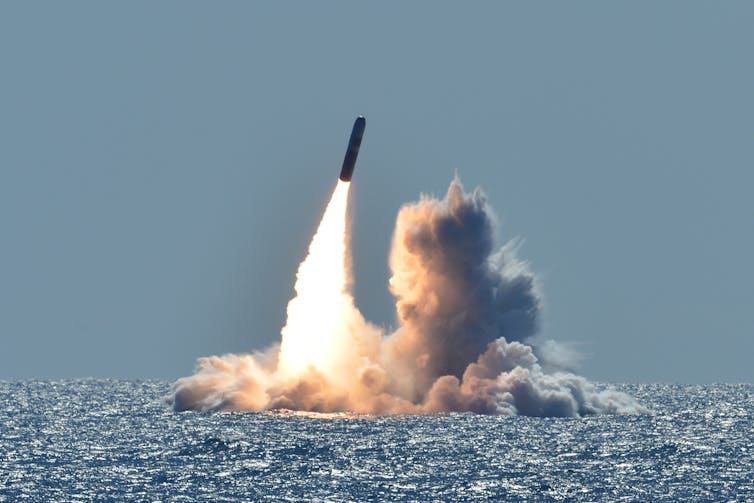
An unarmed Trident II D5 missile launches from the USS Nebraska
An unarmed Trident II D5 missile launches from the USS Nebraska. Submarines have long been the cornerstone of nuclear deterrence.
US Navy photo by Mass Communication Specialist 1st Class Ronald Gutridge

The strategic implications are profound. Submarines have long been the cornerstone of nuclear deterrence and covert power projection. Their ability to vanish beneath the waves gave nations second-strike capability (the ability to retaliate after absorbing a nuclear attack) and freedom of manoeuvre.

The result of AI-driven transparency could be greater stability – reducing incentives for surprise attack – or, paradoxically, new instability as nations race to preserve secrecy.

The submarine will remain a formidable weapon, but it will no longer move unseen. The ocean, once humanity’s final hidden frontier, is becoming transparent to the eyes of machines.

The Conversation

David Stupples does not work for, consult, own shares in or receive funding from any company or organisation that would benefit from this article, and has disclosed no relevant affiliations beyond their academic appointment.

ref. AI, drone ships and new sensors could leave submarines with few places to hide in the ocean – https://theconversation.com/ai-drone-ships-and-new-sensors-could-leave-submarines-with-few-places-to-hide-in-the-ocean-266973

What could burst the AI bubble?

Source: The Conversation – UK – By Richard Whittle, University Fellow in AI and Human Decision Making, University of Salford

Tada Images/Shutterstock

Some of the world’s biggest tech firms have soared in value over the last year. As AI evolves at pace, there are hopes that it will improve lives in ways that people could never have imagined a decade ago – in sectors as diverse as healthcare, employment and scientific discovery.

OpenAI is now worth US$500 billion (£373 billion), compared with US$157 billion last October. Another firm, Anthropic, has almost trebled its valuation. But the Bank of England has now warned of a possible rapid “correction” due to its concerns about these staggering valuation rises.

The question is whether these values are realistic – or based on hype, excitement and unfounded optimism for the potential of AI. Put simply, is AI’s value today a product of what AI will do in future or what people hope it may do? Ultimately, we will only really know if it’s a bubble if it bursts – though the warning signs are evident today.

With hindsight, many things that happen in a bubble may sound exceedingly optimistic. If you take many headlines and replace the word AI with the word computers it often sounds a lot more naive.

But, predicting the path of technological change is hard. Back in 2000 the Daily Mail declared the internet could be a passing fad. Just a few months earlier the dotcom boom had peaked.

A burst bubble may not change the end of the journey. The internet was not a passing fad. However, bubbles are extremely disruptive and affect people in very real ways. Stocks fall, pensions suffer, unemployment rises and investment is wasted. Real potential is crowded out in the hype and mania to focus all investment in a small number of stocks and firms.

Right now, we have the first sign of a bubble – a rapid rise in valuations. If these correct and fall we will have a bubble. If these valuations continue to rise we could be seeing a new sustained market that is focused on the technology of the future.

Of course, it might be that these valuations plateau. What happens then depends on whether people have invested in the belief that prices will always rise.

Consider a situation where people believe – as the Bank of England does – that AI firms’ valuations may be “stretched”. It’s helpful to consider what these valuations are based on. Investment is simply a bet that AI increases profitability for the firms involved. These massive valuations are bets that AI will hugely increase future profitability.

In some cases these are bets that AI will improve in capabilities towards some kind of “artificial superintelligence” that can do everything a human can do – or more. This could raise the living standards of everyone on Earth. Leading computer scientist Stuart Russell estimates the value of that at US$14 quadrillion – investors are buying a claim on that outcome too.

If investors begin to fear that AI profits won’t materialise then they will try to get their money back. This realisation can appear quite suddenly and can be prompted by seemingly minor events. It doesn’t require a big needle to pop a bubble.

close-up of a 1990s desktop computer screen as it connects to internet.
Excitement at easy internet access in the 1990s fuelled the dotcom bubble.
Gorodenkoff/Shutterstock

A US article published in March 2000 warned that internet companies were fast running out of money. This caused many people to rethink their investments

At this stage of the bubble, investment excitement had spread to everyday investors. These regular people balanced their fear of missing out with a fear that they were investing in something new that they didn’t know much about. For many, an article in a popular magazine suggesting they may have made a mistake tipped the scales towards caution. They began to sell their dotcom stocks.

In search of profit

It may come as a surprise to some that, despite its increasing valuations, OpenAI does not yet make a profit. It may require ten times more revenue to do so.

A US$500 billion valuation is quite something for a company that reportedly lost US$7.8 billion in the first half of this year. Some of this value appears to flow from a new deal between OpenAI and Nvidia where Nvidia will invest in OpenAI and OpenAI will buy Nvidia chips. This circular financing keeps everything afloat for now, but at some point investors will need to see returns.

AI firms more generally do not appear to be profitable at the moment. Investors are not putting their money into today’s losses – they are betting on an AI future.

It is of course perfectly feasible that AI firms will develop business models to increase their profitability. OpenAI is exploring advertising options and allowing chatbots to recommend products.

Using AI to deliver these messages is a viable option, though they will have to avoid the tricks and manipulations associated with online platforms, such as when hotel websites announce that rooms are about to sell out. We believe that AI can increase the power of these manipulations and we wonder how persuasive chatbots may be in their recommendations.

However, the big four – Meta, Alphabet, Microsoft and Amazon – are this year spending the equivalent of the GDP of Portugal on AI infrastructure. This is not investment in new targeted ads, it is investment in an AI future. The bubble will burst if and when this future is in doubt.

The Conversation

Richard Whittle receives funding from several standard sources including UKRI and Research England. No funders are likely to benefit from, or influence this work

Stuart Mills does not work for, consult, own shares in or receive funding from any company or organisation that would benefit from this article, and has disclosed no relevant affiliations beyond their academic appointment.

ref. What could burst the AI bubble? – https://theconversation.com/what-could-burst-the-ai-bubble-267136

Should we decide by lottery who gets a medical treatment first?

Source: The Conversation – UK – By Philip Clarke, Professor of Health Economics, University of Oxford

Belish/Shutterstock.com

For decades, ethicists have argued that lotteries could be the fairest way to decide who gets life-saving treatment when there isn’t enough to go around. Yet our research suggests that most people would rather leave the choice to medical experts than to luck.

Our recent study involving more than 15,000 people across 14 countries found that the public preferred allocation by expert medical committees over lotteries for scarce COVID vaccines.

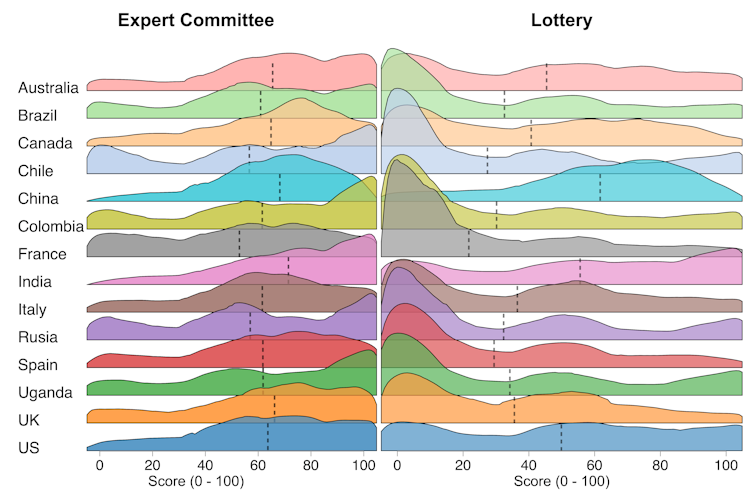
Respondents were presented with a scenario: a hospital wanted to vaccinate all 1,000 of its nurses but had only 500 doses of a COVID vaccine available. Some were asked whether they agreed that an expert committee was an appropriate way to make the decision; others were asked whether they agreed that a lottery was an appropriate way. Agreement with each method was measured on a scale from zero (strongly disagree) to 100 (strongly agree).

On average, expert committees scored 61, compared with just 37 for lotteries. While expert allocation was more acceptable everywhere, support for lotteries varied sharply across countries – from strikingly low in France and Chile to relatively high in China, India and the US.

Distribution of agreement with the appropriateness of allocation by lottery and expert committee.
CC BY

In theory, lotteries are fair when used for people who would benefit equally from treatment. They treat people with equal need equally and avoid rewarding those who happen to live closer to hospitals or who are better connected.

Many ethicists have proposed using them when it is hard to make decisions about life-saving treatments. For example, when kidney dialysis first became available in the 1960s, lotteries were discussed as a tie-breaker for equally eligible patients.

While ethicists often focus on fairness in principle, our results suggest that fairness alone may not be enough to persuade the public if the process feels random or impersonal.

During the early COVID pandemic, ethicists again argued for random allocation of potentially life-saving treatments. In the US, several National Academies even recommended lotteries for prioritising vaccines when “no further identifiable risk-based differences” existed between groups – that is, patients of the same age and health status.

Despite these arguments, lotteries were rarely used in practice during the pandemic. Our study suggests that the public was not supportive.

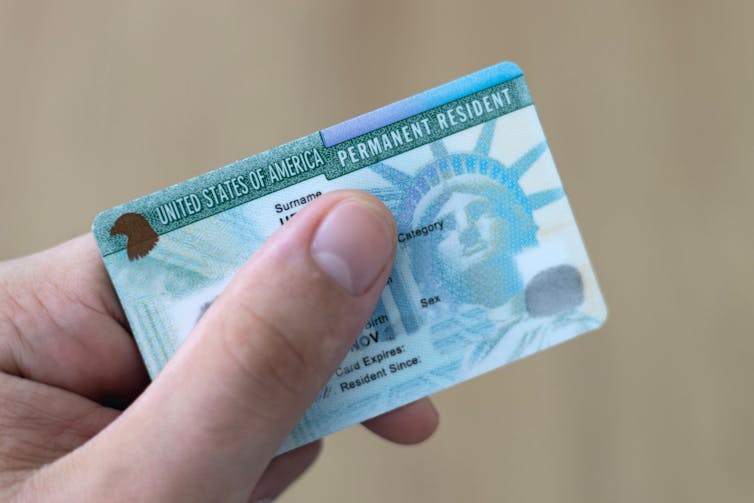
But cultural familiarity with lotteries also matters in terms of which nations will or won’t accept them. In India, lotteries are used to allocate school places and public housing. In China, they decide who gets car licence plates in crowded cities. And in the US, a green card lottery allocates immigration visas. In these countries, support for healthcare lotteries was noticeably higher.

A hand holding a green card.
In the US, some green cards are allocated by lottery.
kurgenc/Shutterstock.com

Luck of the draw

It is difficult to know whether existing lotteries for public services create acceptance, or whether they were introduced because public attitudes were already favourable. Either way, familiarity seems to make lotteries more acceptable.

Scepticism about healthcare lotteries is understandable. Yet committees are not perfect either – they can be slow, inconsistent, or swayed by politics or prejudice. Importantly, during the COVID pandemic, government expert committees in different countries came up with a wide variety of recommendations on who should be prioritised to receive the vaccine first.

If used, lotteries should be implemented in conjunction with medical guidelines. For example, during the COVID pandemic, the UK government prioritised access to vaccines largely based on five-year age bands starting with the oldest groups.

While allocating COVID vaccines based on age criteria was seen as appropriate medically, the order in which people should be vaccinated within an age group is less clear. For example, when rolling out the initial COVID vaccine, there were around 3 million people aged 65 to 69 in the same risk-based priority group, and vaccinating them all simultaneously was impossible.

To avoid vaccinating on a “first-come, first-served” basis that could reward proximity or privilege, a lottery could have been used to decide when each person in this group would receive their vaccine. Such a vaccine lottery featured in the 2011 film Contagion, but was hardly used during the actual pandemic.

The COVID pandemic is over, but future disease outbreaks are inevitable. We should think now about whether lotteries should play a role in allocating scarce treatments or vaccines next time.

For lotteries to be seen as a legitimate way to allocate healthcare, governments need to engage with the public and trial the approach. In 2008, the US state of Oregon used a lottery to select participants for limited Medicaid (a public health insurance programme) slots.

Lotteries remain one of the fairest tools we have when medical differences are otherwise equal. Next time, rather than treating lotteries as unthinkable, we should be ready to use them, with public understanding and trust already in place.

The Conversation

Philip Clarke receives funding from the NIHR Oxford Biomedical Research Centre and Oxford Health Biomedical Research Centre and previously the Department of Health and Social Care, for the evaluation of the COVID-19 Oxford Vaccine Trial.

Rhys Thomas declared no potential conflicts of interest with respect to the research, authorship, and/or publication of this article. The study presented in this article was supported by the National Institute for Health Research (NIHR) Oxford Biomedical Research Centre and the COVID-19 Oxford Vaccine Trial.

ref. Should we decide by lottery who gets a medical treatment first? – https://theconversation.com/should-we-decide-by-lottery-who-gets-a-medical-treatment-first-265454

Attachment to our home town runs deep – so what happens when it faces dramatic change?

Source: The Conversation – UK – By Aled Mark Singleton, Lecturer in Human Geography, Cardiff University

When the news broke in the autumn of 2023 that the blast furnaces at the steelworks in Port Talbot, south Wales, were closing, the headlines were laced with emotion: “devastating”, “fear”, “end of an era”. For many in the town, it wasn’t just the loss of 3,000 jobs, it was as though part of the town’s identity was being taken away.

Such emotional reactions are not just nostalgia or sentimentality. They’re a powerful example of what researchers call “place attachment”, the deep, often unspoken bonds we form with the places that shape our lives.

My own research has explored how people in Newport formed emotional attachments to the former Llanwern steelworks from when it was built in the 1960s.

We develop attachment to the places where we grow up, live, work and socialise. They could be your childhood street, the corner shop where you bought sweets, or the estate where you raised your children. These places hold memories, routines and milestones.

But our attachments aren’t just personal. As we age, they can become shared and tied to a town, a city, or a region. In south Wales, where industries like coal and steel once shaped generations, those attachments are often linked to pride, identity and social connection.

Sometimes, they’re hopeful, but other times they carry a sense of loss.

An uncertain future

In September 2024, the giant blast furnaces in Port Talbot were shut down, marking the end of traditional steelmaking in the town. A new, greener arc furnace is being built in its place, but the transition has brought fear and uncertainty. Will the next generation have jobs here? Will the town still feel like the place people knew?

Even before the closure, Cardiff University researchers described a “lingering sense of indignity and insecurity left by recent history” in the area. The emotional bonds people have with Port Talbot aren’t just rooted in the past; they’re being tested by what the future promises – or fails to.

To understand how people form and carry place attachments over time, I carried out research in Newport in 2019, nearly 50 miles east of Port Talbot. In 1962, a vast steelworks opened in Llanwern, just outside the city. Thousands of people moved there for work, and entire neighbourhoods were built around the promise of a better life. The plant remained a major employer for nearly 40 years, before most of it closed in 2001.

I wanted to understand how people who had lived through that era remembered it and how their feelings about the area had changed over time. Instead of conducting conventional interviews, I walked with residents through their neighbourhoods. We revisited places from the 1960s and 1970s, letting memories rise to the surface.


Read more:
Walking is a state of mind – it can teach you so much about where you are


To share public feelings, I curated two events in the community that also included guided walking tours. An important component was public performances that brought people’s stories to life, made by artist Marega Palser.

The walks and events revealed powerful stories.

A man remembered the feeling of something being taken away as habitats were destroyed to make way for houses. Another described the thrill of buying a first home near the steelworks, when “everything seemed possible”. One woman pointed out the exact spot where a car once crashed into her garden.

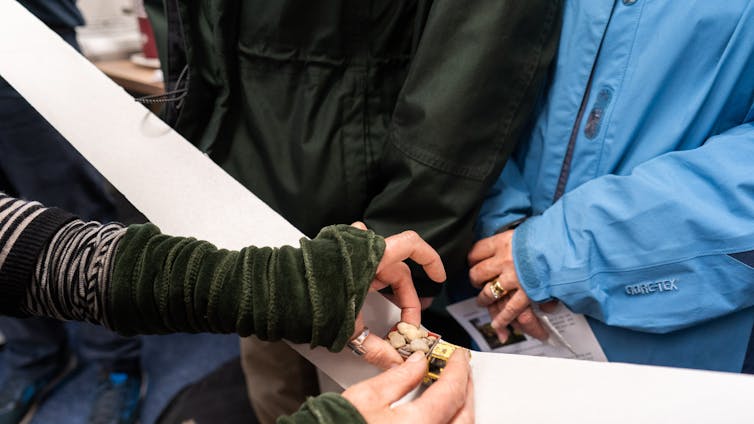
A close up of people's hands with a small toy lorry in the middle.
Artist Marega Palser creates a paper roadway with toy lorry to depict Llanwern steelworks opening in the 1960s.
Jo Hayock, CC BY-NC

One participant recalled how, in the early 1970s, “people were almost fulfilling their dreams: home ownership … people getting access to cars, things like tellies”. Others remembered the chaos caused by shale lorries rumbling through the nearby town of Caerleon in the 1960s, delivering material for the foundations of the steelworks.

For many, the steel industry hadn’t just shaped their town, it had shaped their life story. But these stories weren’t only about loss. They were also about pride, belonging and everyday joys.

Why these stories matter

Place attachment helps explain why people feel so strongly when things change. It’s why the closure of a factory, the demolition of a housing estate, or the decline of a high street can hit so hard. It’s not just about jobs or buildings but identity, memory and meaning.

In Port Talbot, these feelings are still raw. The town’s future is being recast by government policy, corporate decisions and global economics. But the emotional landscape mustn’t be overlooked. Understanding how people feel about a place can help us listen more carefully to what’s at stake when that place changes.

In Newport, where the industrial decline came earlier, the picture is more mixed. The city’s population is growing, and employment levels are above the national average. Today, people may form attachments through the independent music scene, or events connected to the city’s radical history, such as the Newport Rising festival.

These newer narratives matter just as much. Without them, older identities can become frozen in time, and communities may find it harder to imagine a different future.

Of course, our homes and neighbourhoods will always matter. But we also carry bigger attachments, to towns and cities, to shared pasts and imagined futures. Understanding those attachments means looking beyond headlines about economic loss or regeneration. It means listening to what people remember, what they still cherish and what they fear losing.

As Port Talbot’s steelworks are greatly reshaped and Newport continues to evolve, one thing is clear – we don’t just live in places. We feel them too.

The Conversation

Aled Mark Singleton received funding the Economic and Social Research Council: Grant Number ES/W007568/1. This work was supported by Swansea University Geography Department.

ref. Attachment to our home town runs deep – so what happens when it faces dramatic change? – https://theconversation.com/attachment-to-our-home-town-runs-deep-so-what-happens-when-it-faces-dramatic-change-263667

The Nobel peace prize has a record of being awarded to controversial nominees

Source: The Conversation – UK – By Colin Alexander, Senior Lecturer in Political Communications, Nottingham Trent University

The Nobel peace prize is rarely awarded to the most humble, modest or compassionate nominee. Instead, it all-too often ends up in the hands of high-profile figures who want it.

US president Donald Trump has said several times that he thinks he is deserving of it. And calls for him to win the award have only intensified since Israel and Hamas signed off on the first phase of Trump’s peace plan for Gaza.

The predicament is that, if the Nobel committee were to give the prize to Trump, they would be awarding it to a man whose administration has armed Israel’s continuing aggression in Gaza. This has led to devastating loss of life and, as confirmed by UN humanitarian chief Tom Fletcher, the area suffering famine.

Still, he has managed to engineer at least a ceasefire, which after two years of bitter conflict feels like a significant achievement.

But as a political communications analyst, I often worry that the Nobel peace prize committee has been too hasty to judge. I also worry that, while the institution might want to claim it is fully independent and works on the principle of group consensus, the reality is that its decision is often a political one.

Indeed, many previous recipients of the Nobel peace prize have, like Trump, not been the most peace-loving of people either.

High-profile controversies

In Nobel’s more than 120 years of awarding its prize, one of its most controversial decisions came in 1973. The award that year was given to Henry Kissinger, the then-US secretary of state. It is a decision that still divides opinion today.

Kissinger had been instrumental in the withdrawal of US troops from Vietnam in 1973. But he had also spent much of his political and academic career advocating for the proliferation of nuclear weapons and the development of a smaller “battlefield” range – Kissinger’s thesis that nuclear weapons could be used and were not just for deterrence.

He was a key decision-maker in the US’s “secret war” in Laos, which ran parallel to its operations in Vietnam, and in the US military’s invasion of Cambodia in 1970. More broadly, though, Kissinger’s political philosophy of realpolitik – politics based on practical objectives rather than ideals – appeared to have had little care for individual human life and saw global politics as a game between superpowers.

Kissinger was a man of great ego – the epitome of someone who wanted his own actions to be important and remembered.

Four decades later, the 2013 Nobel peace prize was awarded to the Organisation for the Prohibition of Chemical Weapons (OPCW). When the announcement was made, it seemed a fitting acknowledgement for an organisation that had been trying to do good in the world.

It felt like an apt award at a time when western political leaders and news media had roundly condemned the use of chemical weapons in Syria’s civil war. A gas attack in the Ghouta suburb of Damascus in August 2013 was widely condemned on the international stage.

However, the credibility of the OPCW has come under scrutiny since then. In 2019, British journalist Peter Hitchens published several articles about how the OPCW had suppressed the findings of its own staff to support its conclusion that the regime of Bashar al-Assad had used chemical weapons in an attack on the Syrian city of Douma.

Hitchens and others who sought to bring this to public attention, most notably a small group of academics called the Working Group on Syria, Propaganda and Media, were targeted by a smear campaign in which they were called “war crime deniers” and “apologists for Assad”.

But the Nobel committee’s most controversial decision has perhaps not been in who to award the prize to, but in who it did not award one to. From the 1920s until his assassination in 1948, Mohandas “Mahatma” Gandhi’s philosophy of non-violent civil disobedience against British colonial rule in India inspired many around the world. It led to his imprisonment on several occasions.

As I have detailed in my own work on the end of colonial rule in India, many British administrators privately acknowledged their deep admiration of Gandhi despite the extent to which his methods threatened their power. Gandhi is surely the individual most deserving of a peace prize who did not receive one.

The Conversation

Colin Alexander does not work for, consult, own shares in or receive funding from any company or organisation that would benefit from this article, and has disclosed no relevant affiliations beyond their academic appointment.

ref. The Nobel peace prize has a record of being awarded to controversial nominees – https://theconversation.com/the-nobel-peace-prize-has-a-record-of-being-awarded-to-controversial-nominees-267152

How vaping primes the lungs for COVID damage

Source: The Conversation – UK – By Keith Rochfort, Assistant Professor, School of Biotechnology, Life Sciences Institute, Dublin City University

Vitaliy Abbasov/Shutterstock

As colder months set in, respiratory infections begin to climb: everything from the common cold and flu to COVID. It’s a time when healthy lungs matter more than ever. Yet the very tissue that lets oxygen pass from air to blood is remarkably delicate, and habits such as vaping can weaken it just when protection is most needed.

The lungs are often pictured as two simple balloons, but their work is far more intricate. They act as a finely tuned exchange system, moving oxygen from inhaled air into the bloodstream while releasing carbon dioxide produced by the body’s cells.

At the centre of this process lies the blood–air barrier: a paper-thin layer where tiny air sacs called alveoli meet a dense network of hair-thin pulmonary capillaries. This barrier must remain both strong and flexible for efficient breathing, yet it is constantly exposed to stress from air pollution, microscopic particles and infectious microbes.

Vaping can add another layer of strain, and growing evidence shows that this extra pressure can damage the surface that makes every breath possible.


Read more:
Want to quit vaping this year? Here’s what the evidence shows so far about effective strategies


The cloud from an e-cigarette carries solvents such as propylene glycol, flavouring chemicals, nicotine (in most products) and even trace metals from the device itself. When this cocktail reaches the lungs it doesn’t stay on the surface. It seeps deeper, irritating the endothelium – the thin layer of cells lining the blood vessels that mesh with the air sacs.


Read more:
What’s in vapes? Toxins, heavy metals, maybe radioactive polonium


Healthy endothelium keeps blood flowing smoothly, discourages unnecessary clotting and acts as a selective gatekeeper for the bloodstream – controlling which substances, such as nutrients, hormones and immune cells, can pass in or out of the blood vessels while blocking harmful or unnecessary ones.

Studies show vaping can disrupt these defences, causing endothelial dysfunction even in young, otherwise healthy people. Controlled human exposure experiments reveal rises in endothelial microparticles – tiny cell fragments released when vessel linings are under stress.

My own research group has linked these changes to surges in inflammatory signals and stress markers in the blood after exposure to vaping aerosols. Together these findings indicate that the endothelium is struggling to maintain its protective role.

Laboratory work shows that vaping aerosols (even without nicotine) can loosen the tight seal of pulmonary endothelial cells. When the barrier leaks, fluid and inflammatory molecules seep into the alveoli. The result: blood–gas exchange is disrupted and respiratory infections become harder to fight.

COVID is usually thought of as an infection of the airways, but the SARS-CoV-2 virus also injures blood vessels. Doctors now describe the condition as causing endotheliopathies – diseases of the blood-vessel lining. In severe cases, capillaries become inflamed, leaky and prone to clotting. That helps explain why some patients develop dangerously low oxygen levels even when their lungs are not full of fluid: the blood side of the barrier is failing.


Read more:
How COVID-19 damages lungs: The virus attacks mitochondria, continuing an ancient battle that began in the primordial soup


The virus exploits a key protein called ACE2, normally a “thermostat” that helps regulate blood pressure and vessel health. SARS-CoV-2 uses ACE2 as its doorway into cells; once the virus binds, the receptor’s protective role is disrupted and vessels become inflamed and unstable.

Vaping and COVID: a dangerous combination

My team is using computer models to investigate how vaping may affect COVID infections. Evidence already shows vaping can increase the number of ACE2 receptors in the airways and lung tissue. More ACE2 means more potential entry points for the virus – and more disruption exactly where the blood–air barrier needs to be strongest.

Both vaping and COVID drive inflammation. Vaping irritates and inflames the blood-vessel lining while COVID floods the lungs with pro-inflammatory molecules. Together they create a “perfect storm”: capillaries become leaky, fluid seeps into the air sacs and oxygen struggles to cross the blood–air barrier. COVID also raises the risk of blood clots in the lung’s vessels, while vaping has been linked to the same, compounding the danger.


Read more:
Is lung inflammation worse in e-cigarette users than smokers, as a new study suggests?


Vaping can also hinder recovery after a bout of COVID. Healing the fragile exchange surface requires every bit of support the lungs can get. Vaping adds extra stress to tissues the virus has already damaged, even if the vaper feels no immediate symptoms. The result can be prolonged breathlessness, persistent fatigue and a slower return to pre-illness activity levels.

The blood–air barrier is like a piece of delicate fabric: it holds together under normal wear but can tear when pushed too hard. Vaping weakens that weave before illness strikes, making an infection such as COVID harder to overcome. The science is still evolving, but the message is clear: vaping undermines vascular health. Quitting, even temporarily, gives the lungs and blood vessels the cleaner environment they need to heal and to keep every breath effortless.

The Conversation

Keith Rochfort receives funding from Research Ireland.

ref. How vaping primes the lungs for COVID damage – https://theconversation.com/how-vaping-primes-the-lungs-for-covid-damage-266162

Environmental defenders are being killed for protecting our future – the law needs to catch up

Source: The Conversation – UK – By Damien Short, Director of the Human Rights Consortium and Reader in Human Rights, School of Advanced Study, University of London

Three environmental defenders – people who take action against the exploitation of natural resources – are murdered or disappeared somewhere in the world every week. The latest report by Global Witness, an NGO that investigates environmental and human rights abuses, has recorded more than 2,250 such cases since 2012.

The vast majority of the 146 land and environmental defenders killed in 2024, according to the report, were murdered in Latin America. Many were opposing large-scale mining, logging or agribusiness projects.

Colombia recorded the highest number of deaths, with 48 defenders killed across the country. But Guatemala proved the most dangerous country per capita, with 20 killings that year. Indigenous people and small-scale farmers in Latin America are particularly exposed. Their lives and livelihoods place them in direct conflict with extractive and criminal interests.

Afro-descendant communities there face the same elevated risk. Many, including Brazil’s Quilombola communities, hold collective ancestral territories and have safeguarded forests and rivers for generations. This custodianship makes them targets.

Women accounted for approximately 10% of victims in 2024, with cases concentrated in Mexico. And multiple attacks killed entire families, including children, suggesting systematic intimidation rather than isolated violence.


Wars and climate change are inextricably linked. Climate change can increase the likelihood of violent conflict by intensifying resource scarcity and displacement, while conflict itself accelerates environmental damage. This article is part of a series, War on climate, which explores the relationship between climate issues and global conflicts.


In a conflict-affected context, or a situation where information is tightly controlled, killings and disappearances are hard to document. Families and witnesses also often stay silent for fear of reprisals. Impunity compounds the problem.

The Global Witness report notes that in Colombia, where environmental defenders have been at risk for decades, only 5% of killings since 2002 have resulted in convictions. Without justice, deterrence is absent, and cycles of violence continue.

Violence against environmental defenders also persists because it works. Removing a community leader, for example, can disrupt resistance for months or years. For corporations, defending against a lawsuit that arises due to violence against environmental defenders costs less than losing a mining concession. And for governments dependent on resource revenues, silencing critics preserves foreign investment.

According to the Global Witness report, nearly one-third of the murders in 2024 were linked to criminal networks. State security forces were directly implicated in others. This dual threat of criminal violence and official complicity is enabled in part by a shrinking ability for people to participate freely in public life.

Civicus, an alliance of civil society organisations that works to strengthen citizen action and civil rights globally, rates more than half of the countries where defenders were killed as “repressed” or “closed”. This means the authorities actively restrict freedoms of association, assembly and expression.

Violence is predictable in such environments. Defenders face not only physical attacks but also criminalisation, harassment and strategic lawsuits designed to exhaust resources and silence dissent. Ecuador demonstrates how quickly this repression can escalate.

In September 2025, the government charged people protesting fuel subsidy cuts and mining expansion with terrorism and froze the bank accounts of dozens of environmental activists without warning. Efraín Fueres, an Indigenous land defender, was shot and killed by security forces during the protests.

The Ecuadorian government is also moving to rewrite the country’s constitution, the world’s only charter recognising nature’s intrinsic rights, ostensibly to combat drug trafficking. But defenders say the real aim is to eliminate legal barriers to extractive industries.

Regional protection

Regional protection mechanisms do exist. But they remain incomplete. The Escazú agreement, a binding treaty signed in 2018 covering Latin America and the Caribbean, requires that states guarantee public access to environmental information, ensure meaningful participation in decisions and actively protect defenders.

Eighteen of the region’s 33 states have ratified the agreement. In April 2024, parties also adopted an action plan that includes free legal aid for defenders, legal training and monitoring through to 2030.

Whether Escazú can reduce killings depends on implementation. Brazil and Guatemala, both high-risk countries where defenders face lethal threats, have not ratified the treaty. Without participation from the deadliest jurisdictions, regional frameworks offer limited protection.

Protection mechanisms frequently fail, not because they are poorly designed but because they operate within systems that structurally favour extractive industries. Police assigned to protect defenders may be drawn from the same units that secure mining sites or suppress protests.

Prosecutors tasked with investigating attacks often depend on governments whose economic prospects rely on the very projects defenders oppose. Judges hearing cases against corporations, for example, may face political pressure when ruling against major investors. Around half of judges in Latin America are political appointees.

Mining and logging companies also fund local employment, infrastructure and sometimes entire regional economies. This creates dependencies that make meaningful accountability nearly impossible. Even well-intentioned protection schemes cannot compensate for the fact that defending land often means obstructing projects that generate revenue for underfunded state institutions.

There is also a critical legal gap at the international level. When severe environmental destruction occurs during peacetime, existing law struggles to hold individuals accountable.

The International Court of Justice addresses state responsibility but cannot prosecute individuals. And while the International Criminal Court prosecutes genocide, crimes against humanity, war crimes and aggression, environmental harm outside armed conflict falls beyond its reach.

A growing coalition led by Vanuatu, Fiji and Samoa is urging recognition of ecocide as a fifth international crime under the Rome Statute. The proposed definition, developed by an independent expert panel in 2021, would criminalise “unlawful or wanton acts committed with knowledge of a substantial likelihood of severe and either widespread or long-term damage to the environment”.

This would create personal criminal liability for individuals in positions of authority whose decisions lead to mass environmental harm. The theory is that when individual decision-makers face prosecution risk, projects relying on violence and intimidation become personally dangerous to authorise.

Ecocide law would not replace existing regulation or regional treaties but would serve as a backstop when harm reaches catastrophic scale. For defenders, the promise is accountability that reaches beyond hired security to the individuals who profit from or politically enable destruction.

People will always stand up for the places that sustain them. If environmental defenders can operate without fear, everyone benefits. Protecting environmental defenders is not idealism, it is the most pragmatic investment a civilisation can make.

The Conversation

Damien Short is a member of the Green party in the UK.

ref. Environmental defenders are being killed for protecting our future – the law needs to catch up – https://theconversation.com/environmental-defenders-are-being-killed-for-protecting-our-future-the-law-needs-to-catch-up-266396