Criminal psychologists are profiling a different kind of killer – environmental offenders

Source: The Conversation – UK – By Julia Shaw, Research Associate, Criminal Psychology, UCL

After years of trying to understand the minds of people who hurt others, I have recently turned my attention as a criminal psychologist from violent crimes to the less well-known world of green crime.

While researching for my new book, Green Crime: Inside the Minds of the People Destroying the Planet and How to Stop Them, I wanted to understand those who pose a threat to us on a much larger scale, at times even an existential level. Why do people choose to destroy the Earth and what can we do to stop them?

When I tell people that I am interested in environmental crimes, they often query two things. First, some ask whether I’m talking about environmental activists. No, people who take to the streets to raise awareness for the planet, even those who commit crimes like vandalising a building, are committing crimes for the environment, not against it. It is a problem that so many people think of the protesters who want to protect the planet before they think of those destroying it.

Second, people often conflate environmental crime and environmental harm. In other contexts, we understand that not all harms are crimes. For example, we know the difference between an aggressive argument and murder. Both are harmful, but only one is a crime. The same goes for environmental issues. There are many things that a company or person can legally do that are harmful to the Earth but are not crimes. Often it is only the most serious forms of environmental harm that are criminalised.

An environmental crime is when someone breaks a law related to destroying or contaminating our earth, air or water, or killing off biodiversity like trees and animals. These green crimes include acts like burning down a protected nature reserve, poaching an endangered species, or releasing toxic untreated water into rivers and lakes that makes people sick.

Alberto Ayala, executive director at the Sacramento Metropolitan Air Quality Management District, exposed what is alleged to be one of the biggest corporate fraud and environmental crime cases of all time: the dieselgate scandal in 2015 when diesel cars were found to be emitting far more toxic air pollution on the roads than when they passed regulatory tests.

When I interviewed him, Ayala made it clear to me that we need people to check that companies aren’t poisoning our air, or selling us things that make us sick or that might explode. Industry has repeatedly proven that it isn’t always going to have our, or the planet’s, best interests in mind. Regulators make sure there are guardrails.

It’s also not just companies we need to pay attention to. A lot of large-scale environmental crime is committed by organised crime syndicates. Some are armed and murder people in the process of committing environmental crimes.

Undercover agents, like those working with the Environmental Investigation Agency (a charity based in London and New York), infiltrate these organised crime networks. Agents gain the criminals’ trust, catch them on hidden cameras, and give evidence bundles to local police or Interpol so they can further investigate and press charges. Environmental lawyers then make sure those charges are turned into convictions.

Once these environmental criminals are caught, there are researchers who help shed light on their mindsets and motivations. Examples include Vidette Bester, who studies illegal miners, and Ted Leggett, who has led research for the UN’s report into world wildlife crime.

Six pillars

By synthesising research like theirs with wider work from the social sciences, I have developed a psychological profile of environmental criminals. I call it the six pillars model. The profile helps to show that their motivations are more nuanced, and at times relatable, than it first appears.

People commit green crimes because they feel it is easier to do something illegal than to do it legally (ease), because they feel they will get away with it (impunity), and because they take more than they need – and take it away from others (greed). Environmental criminals also convince themselves that what they are doing isn’t that bad (rationalisation) and that everyone else is doing it too (conformity). Feeling like there is no other option, either because the person is destitute or because they feel incredibly pressured at work, is also an important factor (desperation).

By understanding these factors we can hopefully recognise the moments when we are at risk of becoming environmental criminals ourselves, or of making other harmful decisions. In the fight for nature, it remains important to reduce our environmental footprint by choosing more plant-based meals, avoiding unnecessary flying, buying vintage rather than new, and insulating our homes.

I do all of these things because I know that not only do they help reduce the harm to nature I personally contribute to, but also because I want to normalise these behaviours in my own social circle. That being said, I also know that me doing these things won’t make nearly as much difference as catching environmental criminals.

We need to include green crime in conversations about how to save our planet. And we need to better acknowledge, and celebrate, the people who are holding environmental criminals accountable.

This article features reference to a book that has been included for editorial reasons, and may contain links to bookshop.org. If you click on the link and go on to buy something from bookshop.org, The Conversation UK may earn a commission.


Don’t have time to read about climate change as much as you’d like?

Get a weekly roundup in your inbox instead. Every Wednesday, The Conversation’s environment editor writes Imagine, a short email that goes a little deeper into just one climate issue. Join the 45,000+ readers who’ve subscribed so far.


The Conversation

Julia Shaw does not work for, consult, own shares in or receive funding from any company or organisation that would benefit from this article, and has disclosed no relevant affiliations beyond their academic appointment.

ref. Criminal psychologists are profiling a different kind of killer – environmental offenders – https://theconversation.com/criminal-psychologists-are-profiling-a-different-kind-of-killer-environmental-offenders-262633

How to use AI to guide your holiday plans – by a tourism expert

Source: The Conversation – UK – By Joseph Mellors, Research Associate in Management and Marketing, University of Westminster

icemanphotos/Shutterstock

If you ask an AI service like ChatGPT or Google Gemini to recommend a destination for your next summer holiday, it will happily provide you with a list of attractive destinations. But many of them will be very familiar.

Paris, Venice, Santorini and Barcelona are all likely to feature, because the AI algorithm is nudging you towards the same old places. The illusion of personalised advice is what makes people less likely to question it – and why AI risks intensifying overtourism.

And the use of AI for holiday inspiration is growing fast. A recent survey found it has doubled in the past year, with uptake strongest among younger travellers. Nearly one in five Britons aged 25–34 now turn to AI tools to plan their trips.

In my own research, I analysed ChatGPT’s travel recommendations and found that it gravitates towards the most visited destinations by default. Lesser-known or more sustainable locations only tend to appear when travellers explicitly ask for them.

This could easily exacerbate the overtourism which is already testing the limits of many residents in highly visited places. In Mallorca, locals are demanding limits on flights and holiday rentals, while Venice introduced a day-tripper fee in an attempt to manage visitor pressure.

AI will quickly add to that pressure if millions of holiday makers make plans using the same online filters and tips. These algorithms are trained on what’s most visible online – reviews, blogs and social media hashtags – so quickly focus on what’s already popular.

And if travellers simply accept the defaults, the result will be more of the same, and more strain on places already under pressure.

But consumers aren’t entirely powerless. With a bit more intent, AI research can yield different and fascinating destinations.

My research suggests that discerning travellers need to start by asking better and more searching questions. Generic prompts such as “the best beaches in Europe” or “beautiful city” lead straight to the same results.

Instead, try something like: “Which towns are reachable by train but overlooked in most guides?” Or maybe: “Where can I go in July that’s not a major tourist hotspot?”

Push the system, ask follow-up questions and scroll past the first few results. That’s where the surprises often lie.

You could also change your timings. AI tends to focus on peak season because that’s when the most online reviews are posted and the most travel content is published.

Asking about off-peak months is a simple way to beat this built-in bias, so perhaps specify the Italian lakes in October or the Greek islands in May.

Or ask AI to dig a little deeper for its source material. AI draws heavily on English-language content, which favours international hot spots, but is also capable of finding independent travel blogs or local tourism cooperatives.

Type in something like “Spanish-language blogs about Asturias” or “community-run agritourism in Slovenia” and you could unearth something rewarding and off the beaten track. This is the kind of thing that can really unearth the vast potential benefits of AI and its capabilities.

The road less travelled

It could also easily help you to compare the costs and timings of various travel options, and assess the carbon footprint of your journey. It just requires a little bit of digging to get past the surface layer.

After all, these systems are designed to serve up the most obvious and well-documented suggestions, not what’s diverse or sustainable. (Although the same technology could just as easily be coded slightly differently to show rail travel before air for example, or to prioritise locally run independent businesses.)

So while the convenience of AI is seductive, it can also be predictable. If your holiday plans could be copy-pasted from Instagram, any sense of adventure can easily get left behind.

Secluded beach.
AI can help to get away from it all.
organtigiulia/Shutterstock

Consider using AI as a starting point, not the final word. Guidebooks, local media and conversations with residents restore the unpredictability that makes travel memorable.

By asking sharper questions, shifting their timing, checking footprints and seeking local voices, travellers can use AI as a tool for discovery rather than congestion. Every prompt is a signal to the system about what matters.

The next time you ask ChatGPT where to go, make it work a bit harder. Test it, argue with it and use its extraordinary capabilities to find somewhere new – or settle for the same crowded itinerary as everyone else.

The Conversation

Joseph Mellors does not work for, consult, own shares in or receive funding from any company or organisation that would benefit from this article, and has disclosed no relevant affiliations beyond their academic appointment.

ref. How to use AI to guide your holiday plans – by a tourism expert – https://theconversation.com/how-to-use-ai-to-guide-your-holiday-plans-by-a-tourism-expert-267277

How this year’s Nobel winners changed the thinking on economic growth

Source: The Conversation – UK – By Antonio Navas, Senior Lecturer in Economics, University of Sheffield

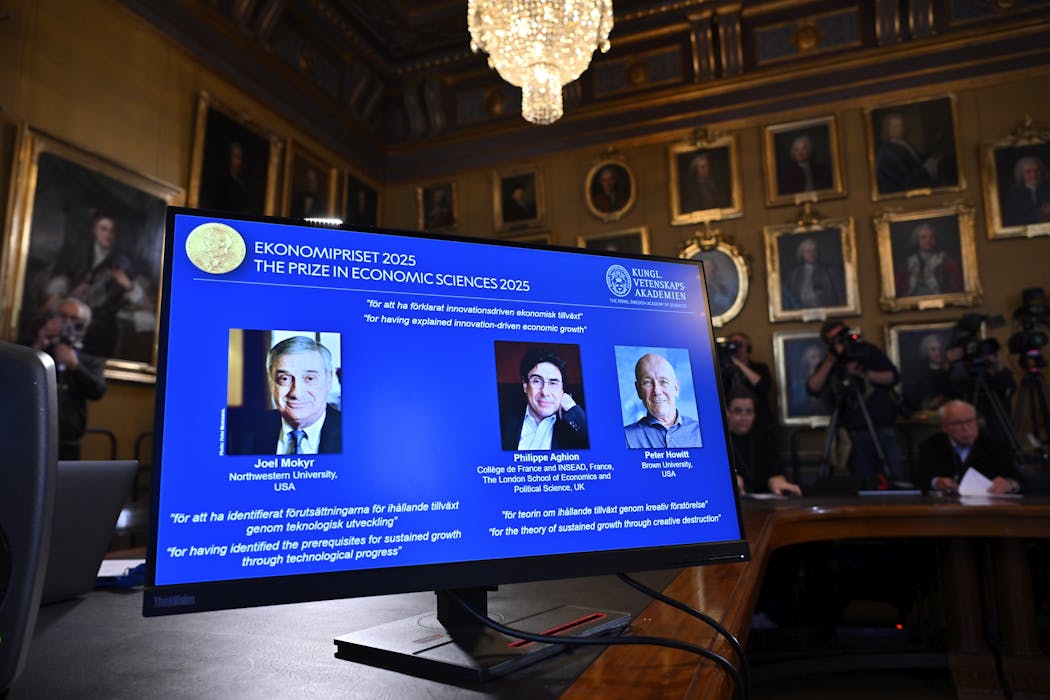
The prizewinners were announced at a ceremony in Stockholm. EPA/ANDERS WIKLUND SWEDEN OUT

What makes some countries rich and others poor? Is there any action a country can take to improve living standards for its citizens? Economists have wondered about this for centuries. If the answer to the second question is yes, then the impact on people’s lives could be staggering.

This year’s Sveriges Riksbank Prize in Economic Sciences (commonly known as the Nobel prize for economics) has gone to three researchers who have provided answers to these questions: Philippe Aghion, Peter Howitt and Joel Mokyr.

For most of human history, economic stagnation has been the norm – modern economic growth is very recent from a historical point of view. This year’s winners have been honoured for their contributions towards explaining how to achieve sustained economic growth.

At the beginning of the 1980s, theories around economic growth were largely dominated by the works of American economist Robert Solow. An important conclusion emerged: in the long-run, per-capita income growth is determined by technological progress.

Solow’s framework, however, did not explain how technology accumulates over time, nor the role of institutions and policies in boosting it. As such, the theory can neither explain why countries grow differently for sustained periods nor what kind of policies could help a country improve its long-run growth performance.

It’s possible to argue that technological innovation comes from the work of scientists, who are motivated less by money than the rest of society might be. As such, there would be little that countries could do to intervene – technological innovations would be the result of the scientists’ own interests and motivations.

But that thinking changed with the emergence of endogenous growth theory, which aims to explain which forces drive innovation. This includes the works of Paul Romer, Nobel prizewinner in 2018, as well as this year’s winners Aghion and Howitt.

These three authors advocate for theories in which technological progress ultimately derives from firms trying to create new products (Romer) or improve the quality of existing products (Aghion and Howitt). For firms to try to break new ground, they need to have the right incentives.

Creative destruction

While Romer recognises the importance of intellectual property rights to reward firms financially for creating new products, the framework of Aghion and Howitt outlines the importance of something known as “creative destruction”.

This is where innovation results from a battle between firms trying to get the best-quality products to meet consumer needs. In their framework, a new innovation means the displacement of an existing one.

In their basic model, protecting intellectual property is important in order to reward firms for innovating. But at the same time, innovations do not come from leaders but from new entrants to the industry. Incumbents do not have the same incentive to innovate because it will not improve their position in the sector. Consequently, too much protection generates barriers to entry and may slow growth.

But what is less explored in their work is the idea that each innovation brings winners (consumers and innovative firms) and losers (firms and workers under the old, displaced technology). These tensions could shape a country’s destiny in terms of growth – as other works have pointed out, the owners of the old technology may try to block innovation.

This is where Mokyr complements these works perfectly by providing a historical context. Mokyr’s work focuses on the origins of the Industrial Revolution and also the history of technological progress from ancient times until today.

Mokyr noted that while scientific discoveries were behind technological progress, a scientific discovery was not a guarantee of technological advances.

It was only when the modern world started to apply the knowledge discovered by scientists to problems that would improve people’s lives that humans saw sustained growth. In Mokyr’s book The Gifts of Athena, he argues that the Enlightenment was behind the change in scientists’ motivations.

illustrated headshots of the 2025 nobel prizewinners in economics.
The 2025 winners Joel Mokyr, Philippe Aghion and Peter Howitt.
Ill. Niklas Elmehed © Nobel Prize Outreach

In Mokyr’s works, for growth to be sustained it is vital that knowledge flows and accumulates. This was the spirit embedded in the Industrial Revolution and it’s what fostered the creation of the institution I am working in – the University of Sheffield, which enjoyed financial support from the steel industry in the 19th century.

Mokyr’s later works emphasise the key role of a culture of knowledge in order for growth to improve living standards. As such, openness to new ideas becomes crucial.

Similarly, Aghion and Howitt’s framework has become a standard tool in economics. It has been used to explore many important questions for human wellbeing: the relationship between competition and innovation, unemployment and growth, growth and income inequality, and globalisation, among many other topics.

Analysis using their framework still has an impact on our lives today. It is present in policy debates around big data, artificial intelligence and green innovation. And Mokyr’s analysis of how knowledge accumulates poses a central question around what countries can do to encourage an innovation ecosystem and improve the lives of their citizens.

But this year’s prize is also a warning about the consequences of damaging the engines of growth. Scientists collaborating with firms to advance living standards is the ultimate elixir for growth. Undermining science, globalisation and competition might not be the right recipe.

The Conversation

Antonio Navas does not work for, consult, own shares in or receive funding from any company or organisation that would benefit from this article, and has disclosed no relevant affiliations beyond their academic appointment.

ref. How this year’s Nobel winners changed the thinking on economic growth – https://theconversation.com/how-this-years-nobel-winners-changed-the-thinking-on-economic-growth-267455

Growing cocktail of medicines in world’s waterways could be fuelling antibiotic resistance

Source: The Conversation – UK – By April Hayes, Microbiologist, Public Health and Sport Sciences, University of Exeter

tawanroong/Shutterstock

Scientists have long been worried about the buildup of antibiotics in the environment.

But in a recent study I led, we wanted to know what happens when bacteria are exposed not just to antibiotics, but to antibiotics and another type of medicine – together, at the low concentrations now typically found in nature.

Up to 90% of the medicines we take pass straight through our bodies, and most are not removed by wastewater treatment plants. These drug residues end up in rivers, lakes and other freshwater systems. In fact, traces of medicines have now been detected on every continent, at concentrations that vary from place to place.


Read more:
Environmental antibiotic resistance unevenly addressed despite growing global risk, study finds


Even tiny amounts of antibiotics can help bacteria evolve defences that make them harder to kill later. These bacteria become fitter, more adaptable, and able to survive doses strong enough to treat human infections. When that happens, the result is antibiotic resistance – a major global health threat. Already, over a million people die each year from infections that no longer respond to treatment, and that number is expected to rise.

What’s less well known is that many other medicines, including drugs for diabetes, depression and pain relief, can also encourage bacteria to become resistant to antibiotics.

Most previous studies, however, have focused on single drugs in isolation. For example, researchers might test how one antidepressant affects bacterial resistance to antibiotics and usually at doses much higher than those found in the environment.

But in the real world, medicines mix together in complex cocktails at low levels, and we still know little about how those combinations behave.

In our latest research, we tested whether a community of bacteria would become more resistant to antibiotics after being exposed to a mixture of drugs. These mixtures included ciprofloxacin – a common antibiotic frequently detected in waterways – combined with one of three other medicines: diclofenac (a widely used painkiller), metformin (a diabetes medication) and an oestrogen hormone used in hormone replacement therapy.

All three combinations changed how the bacteria behaved. We analysed how the bacterial community shifted: which species declined, which thrived and what resistance genes became more common.

We found that these mixtures made the bacterial community less able to grow overall, but also more likely to contain genes that conferred resistance to multiple antibiotics – not just ciprofloxacin, but others that were chemically different. The bacterial mix itself also changed: new species flourished in the presence of the drug combinations that hadn’t done so under antibiotic exposure alone.

I’d tested these same medicines individually in an earlier study, using the same bacteria and similar experimental conditions. On their own, none of the non-antibiotic drugs increased bacterial resistance. But when combined with an antibiotic, the story changed.

Taken together, these studies reveal something important: medicines that seem harmless on their own can amplify each other’s effects when mixed. That’s a big deal, because scientists often test pharmaceuticals one by one and if a single drug shows no obvious effect, it’s typically ignored. Our findings suggest we shouldn’t be so quick to dismiss them.

In the environment, where countless drugs and chemicals coexist, these mixtures may be quietly shaping the evolution of antibiotic resistance. Understanding this hidden interaction is crucial if we want to protect both our health and our ecosystems in the years ahead.

The Conversation

April Hayes receives funding from the Natural Environment Research Council. Her PhD work was supported by AstraZeneca but all work was carried out without input from any funder.

ref. Growing cocktail of medicines in world’s waterways could be fuelling antibiotic resistance – https://theconversation.com/growing-cocktail-of-medicines-in-worlds-waterways-could-be-fuelling-antibiotic-resistance-266945

Could further education colleges get involved with university mergers? It might help meet Keir Starmer’s education goals

Source: The Conversation – UK – By Chris Millward, Professor of Practice in Education Policy, University of Birmingham

Rawpixel.com/Shutterstock

The merger of Kent and Greenwich universities is set to produce the UK’s first “super-university”. This structure will help the universities manage financial risks, while sustaining their distinctive identities. And the merger could also provide a model for the prime minister’s vision for post-compulsory education, outlined recently at the Labour party conference.

Keir Starmer wants two-thirds of young people to enter higher or technical education or apprenticeships. This embraces both further and higher education, and it demands coherence between them. Building on the model agreed between Kent and Greenwich, that could be achieved by colleges joining universities within a single group.

Further education colleges offer a high proportion of the nation’s technical qualifications and apprenticeships, which are central to the prime minister’s target. In towns without universities, colleges provide the route through post-compulsory education. This is often within group structures.

Some already have links with higher education. London South East Colleges, for instance, has seven campuses, which reach south from Greenwich. The group also has a partnership with the University of Greenwich.

Colleges have experienced equal financial challenges to universities, but for longer. They might be wary of joining universities because it could dissipate their distinctive vocational mission. But the model agreed by Kent and Greenwich shows how that can be sustained.

Combining different traditions

While both are universities, the merger of Kent and Greenwich shows it is possible for institutions with very different identities to combine.

Group of students in a study space
Mergers mean institutions can share resources.
Rawpixel.com/Shutterstock

The University of Kent was established in 1965, in the wake of the meritocratic vision for higher education laid out in the 1963 Robbins Report.

This report, produced by the government’s Committee on Higher Education, stated that “university places should be available for all who are qualified by ability and attainment”. It argued that universities should provide a liberal education, rather than meeting employers’ immediate needs. This was embodied in the new maps of learning developed by universities like Kent and their greenfield residential campuses.

Greenwich originates from Woolwich Polytechnic. This was the site from which Labour education minister Tony Crosland announced the expansion of polytechnics in 1965.
Crosland wanted to meet “an ever-increasing need and demand for vocational, professional and industrially based courses”. He also opposed the hierarchy of post-compulsory education, which diminished the status of these courses.

Polytechnics became universities from 1992. Their applied courses then made a pivotal contribution to Tony Blair’s 2001 target for 50% of young people to enter higher education. Blair argued that this would create a society “genuinely based on merit”.

By the time this threshold was passed in 2017, Conservative-led governments had established more universities. Citing Robbins, they expected this to drive higher education expansion through competition and student choice.

Reducing polarisation

Starmer’s speech to the Labour conference signals a different approach. “While you will never hear me denigrate the aspiration to go to university, I don’t think the way we currently measure success in education – that ambition to get to 50% … is right for our times,” he said.

Part of the motivation for this approach comes from a desire to counter Reform UK. People without higher education qualifications are more likely to vote for Reform.

Tackling the dissatisfaction of Reform supporters with highly educated elites requires Starmer to depart from previous assumptions about higher education and meritocracy – that a university education is superior to other pathways through lives and careers. That means placing a higher value on apprenticeships and technical education.

Mergers can improve the financial sustainability of universities and colleges by pooling their risks, operations and investment capacity. For example, a recruitment shortfall in one part of a group can be absorbed by others. Services can be provided at greater scale and lower cost within a group. If investment is needed to build provision in one location, that may be secured through the balance sheet of the whole group.

Investment of this kind is crucial for enhancing teaching quality, learner experiences and reputational standing. But group structures can also minimise course duplication and improve progression arrangements. Rather than competing with each other, colleges and universities within a group can agree course content and admissions requirements.

That enables learners to move seamlessly between different levels and types of education. It also builds connections between towns with colleges and the cities where most universities are based, broadening both study options and job prospects.

Group structures could advance separately in higher and further education. That would encourage competition and hierarchy, rather than coherence and progression. But bringing the two streams of post-compulsory education closer together could help achieve Starmer’s ambition to reduce polarisation. It might also give both universities and colleges some financial breathing room.

The Conversation

Chris Millward does not work for, consult, own shares in or receive funding from any company or organisation that would benefit from this article, and has disclosed no relevant affiliations beyond their academic appointment.

ref. Could further education colleges get involved with university mergers? It might help meet Keir Starmer’s education goals – https://theconversation.com/could-further-education-colleges-get-involved-with-university-mergers-it-might-help-meet-keir-starmers-education-goals-266820

Almost 75,000 farmed salmon in Scotland escaped into the wild after Storm Amy – why this may cause lasting damage

Source: The Conversation – UK – By William Perry, Postdoctoral Research Associate at the School of Biosciences, Cardiff University

When Storm Amy battered the Scottish Highlands in early October, it tore through a salmon farm’s sea pens, releasing around 75,000 fish into open water in Loch Linnhe. The scale of the escape is alarming. It comes at a time when wild Atlantic salmon – already classified as “endangered” in Great Britain – are in decline.

For an animal so central to the UK’s ecology, culture and economy, the incident has serious implications.

At first glance, it might sound like a rare bit of good news: thousands of fish freed from captivity, perhaps even helping to bolster wild populations. But the reality is far less heartwarming.

These fish are not wild salmon in any meaningful sense. They are highly domesticated animals, selectively bred over decades for traits that make them profitable in captivity but poorly equipped for survival in the wild.

Aquaculture – the farming of fish and other aquatic species – has become one of the fastest-growing forms of food production in the world. The most valuable of all farmed marine species is the Atlantic salmon, which accounted for 18% of global marine aquaculture production value in 2022. The UK is the third largest producer, with almost all production centred around Scotland’s coast.

Modern salmon farming typically involves rearing young fish in freshwater hatcheries before transferring them to sea cages or pens. Each farm may hold six to ten large nets, each containing up to 200,000 fish.

Having salmon nets open to strong tidal currents is key to their design, allowing clean oxygenated water to enter and waste to be removed. However, this also means that they are vulnerable to adverse weather conditions.

To combat this, more sheltered coastal regions are used, like fjords or lochs, but this only offers so much protection. Storm Amy demonstrated that vulnerability all too clearly.

From wild fish to livestock

Atlantic salmon farming began in the 1970s. Since then, the species has undergone intensive selective breeding, much like sheep, dogs or chickens. Fish have been chosen for faster growth, delayed sexual maturity, disease resistance and other commercially desirable traits.

Around 90% of the salmon used in Scottish aquaculture originate from Norwegian stock. After 15 generations of selection, these farmed salmon are now among the most domesticated fish species in the world. They no longer resemble their wild relatives in important ways.


Read more:
Wild salmon are the Zendayas of the fish world – what that tells us about conservation


Farmed salmon differ genetically, physiologically and behaviourally. They are often larger, mature differently and feed on pellets instead of hunting live prey. Changes which make them more vulnerable to predators.

Farmed salmon even have traits which will make them less attractive to wild counterparts. Many would struggle to survive for long in the wild.

The problem isn’t just that farmed salmon die when they escape but what happens when some of them don’t. Studies show that in certain Scottish and Norwegian rivers, more than 10% of salmon caught are of farmed origin, with numbers highest near intensive farming areas.

Although these fish are maladapted to wild conditions, a few survive long enough to reach rivers and attempt to spawn.

When they breed with wild salmon, their offspring inherit a mix of traits – neither truly wild nor farmed – leaving them less suited to their natural environment. This process, known as “genetic introgression”, gradually damages the genetic integrity of wild populations.

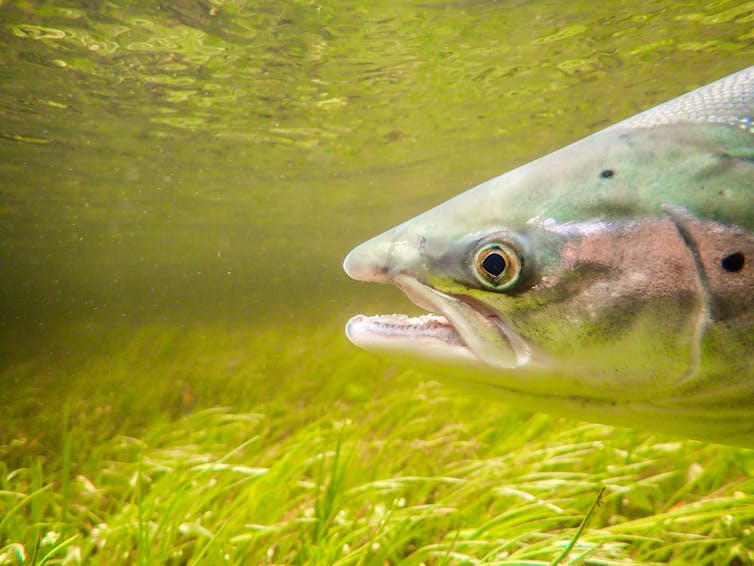
An underwater portrait of a wild Atlantic salmon
A wild Atlantic salmon.
willjenkins/Shutterstock

Timing makes this latest incident particularly concerning. Wild salmon are now returning to Scottish rivers to spawn. The sudden influx of tens of thousands of farmed escapees increases the chance of interbreeding, and of long-term genetic damage.

The scale of this single escape is extraordinary. Scotland’s total returning wild salmon population is estimated at around 300,000 fish. The release of 75,000 farmed salmon represents roughly a quarter of that number.

Even if only 1% of the escapees survive and breed, that would mean around 750 fish entering rivers and potentially mixing with wild populations. A 2021 Marine Scotland report found that rivers near some fish farms are in “very poor condition”, with evidence of major genetic changes. Worryingly, other nearby rivers previously classed as being in “good condition” could now be at risk too.

Wild Atlantic salmon already face multiple human-driven threats like climate change, habitat loss, pollution and invasive species. Genetic pollution from farmed escapees is yet another blow. It’s one that undermines the species’ resilience to other forms of environmental change.

The release caused by Storm Amy may be one incident, but it’s symptomatic of a wider problem. As storms intensify with a changing climate, the likelihood of future escapes grows. Without tighter regulation, better containment measures and effective genetic monitoring of wild populations, these events could continue to erode what’s left of UK’s wild salmon.


Don’t have time to read about climate change as much as you’d like?

Get a weekly roundup in your inbox instead. Every Wednesday, The Conversation’s environment editor writes Imagine, a short email that goes a little deeper into just one climate issue. Join the 45,000+ readers who’ve subscribed so far.


The Conversation

William Perry does not work for, consult, own shares in or receive funding from any company or organisation that would benefit from this article, and has disclosed no relevant affiliations beyond their academic appointment.

ref. Almost 75,000 farmed salmon in Scotland escaped into the wild after Storm Amy – why this may cause lasting damage – https://theconversation.com/almost-75-000-farmed-salmon-in-scotland-escaped-into-the-wild-after-storm-amy-why-this-may-cause-lasting-damage-267354

Young people around the world are leading protests against their governments

Source: The Conversation – UK – By Sanwal Hussain, PhD Candidate in the Department of Politics and Society, Aston University

The spate of public demonstrations against unemployment, corruption and low quality of life around the world is striking because of who is leading them. Young people have used social media platforms such as Facebook, TikTok, Instagram and YouTube to spread information and arrange their demonstrations.

While some of these protests have remained peaceful, others – such as the youth-led demonstrations in Indonesia and Nepal – have become violent. Ten people died in Indonesia’s protests in late August, when public anger over the cost of living and social inequality boiled over after police killed a delivery driver.

And 72 people were killed in Nepal, which saw demonstrations against a government social media ban in early September escalate into widespread protests over political instability, elite corruption and economic stagnation. The gen Z groups leading these protests said the movement had been hijacked by “opportunist” infiltrators.

Here are three more places where young people, apparently inspired by the youth-led movements in Indonesia and Nepal, have been demonstrating against their governments in recent weeks.

Peru

Hundreds of young people marched in the Peruvian capital, Lima, in late September against the government’s introduction of pension reforms which require young Peruvians to pay into private pension funds. These protesters were joined a week later by transport workers, who marched towards Congress in the centre of Lima.

In a clash on September 29 – during a protest organised by a youth collective called Generation Z – crowds threw stones and petrol bombs at the police, who responded with tear gas and rubber bullets, injuring at least 18 protesters.

These protests came a few months after Peru’s president, Dina Boluarte, issued a decree doubling her salary. The move, which came despite Boluarte’s historically low approval rating of only 2%, was declared “outrageous” by many observers on Peruvian social media.

Young people there are facing job insecurity and high unemployment, while many say the government is not doing enough to combat extortion by gangs, corruption and rising insecurity.

Reports of extortion in Peru have increased sixfold over the past five years. Figures released by Peru-based market research company Datum Internacional in 2024 suggest around 38% of Peruvians have reported knowing about cases of extortion in their area.


Read more:
Peru is losing its battle against organised crime


The recent pension reforms added fuel to existing anger. On October 9, after weeks of calls for Boluarte’s government to resign, lawmakers in Peru voted to remove her from office. New elections are due to be held in April 2026.

Morocco

An anonymous collective of young people called Gen Z 212 – a reference to Morocco’s international dialling code – has been at the centre of protests that have spread across ten Moroccan cities since September 27.

The group has organised and coordinated demonstrations through TikTok and Instagram, as well as the gaming and streaming platform Discord. Membership of Gen Z 212 on Discord grew from fewer than 1,000 members at its launch on September 18 to more than 180,000 by October 8.

This movement began in August after eight women died while receiving maternity care in a public hospital in Agadir, a city on Morocco’s southern coast. This sparked outrage over the state of public services in the country.

World Bank statistics from 2023 suggest there are only 7.8 doctors in Morocco for every 10,000 people – far below the 23 doctors for every 10,000 inhabitants recommended by the World Health Organization.

At the same time, Morocco is spending US$5 billion (£3.7 billion) to build the world’s biggest football stadium, as part of its preparations to co-host the 2030 World Cup with Portugal and Spain. Moroccans see their government as having got its priorities wrong. Crowds have chanted slogans such as “We want hospitals, not football stadiums”.

Police have responded to these protests by arresting hundreds of people, with clashes with protesters becoming violent in some parts of the country. Three people were killed on October 1 in what authorities described as “legitimate defence”, after protesters allegedly tried to storm a police station in the village of Lqliâa, near Agadir.

Morocco’s prime minister, Aziz Akhannouch, has invited Gen Z 212 to participate in dialogue with his government, and the group has shared a list of demands focused on basic needs such as education, healthcare, housing, transportation and jobs. However, the protest movement has continued.

Madagascar

At least 22 people were killed and more than 100 injured in anti-government protests across Madagascar in the first week of October. These protests were coordinated by an online movement known as Gen Z Mada – although labour unions, civil society organisations and several politicians became involved once the protests began.

The movement was sparked by the arrest of two Malagasy politicians, Clémence Raharinirina and Baba Faniry Rakotoarisoa, on September 19. Both politicians had publicly called for citizens to stage peaceful demonstrations in the capital, Antananarivo, against water and power supply problems on the island.

The demonstrations focused initially on shortages of basic necessities, an electricity crisis, unemployment and corruption. But they soon escalated into calls for the Malagasy president, Andry Rajoelina, to resign. Protesters have held him responsible for the problems facing their country.

Rajoelina attempted to satisfy the protesters by dissolving his government and calling for “national dialogue” with Gen Z Mada. In a speech on state broadcaster Televiziona Malagasy, he said: “We acknowledge and apologise if members of the government have not carried out the tasks assigned to them.”

However, this move did not stop the demonstrations. Rajoelina subsequently appointed Ruphin Fortunat Zafisambo, an army general, as his prime minister and imposed a strict curfew in Antananarivo, with a heavy presence of security forces, in a bid to end the protests.

The protesters have vowed to continue their struggle and, at time of writing, some are still waving flags with the words “Rajoelina out”. Rajoelina has now fled the country after factions of the army rallied behind the protesters.

In leading the fight against inequality, young people in developing countries are following a well-trodden path. Youth-led protests in Sri Lanka and Bangladesh have both toppled governments in recent years. These movements seem to have encouraged others across the globe to empower themselves and demand more from entrenched elites.

The Conversation

Sanwal Hussain does not work for, consult, own shares in or receive funding from any company or organisation that would benefit from this article, and has disclosed no relevant affiliations beyond their academic appointment.

ref. Young people around the world are leading protests against their governments – https://theconversation.com/young-people-around-the-world-are-leading-protests-against-their-governments-266950

The medieval folklore of Britain’s endangered wildlife ‘omens’ – from hedgehogs to nightjars

Source: The Conversation – UK – By Jessica Lloyd May, PhD Candidate in History, University of Nottingham

A hedgehog illustration from a medieval bestiary (1270) by an unknown illuminator. Courtesy of Getty’s Open Content Program, CC BY-SA

As the seasons turn and the nights draw in, the countryside of the British Isles seems alive with omens: an owl’s screech, or a bat above the hedgerows.

For centuries, such creatures were cast as messengers of fate, straddling the boundary between the natural and the supernatural. Yet today, the omens these animals bring are no longer warnings of ghosts or witchcraft, but of something far more tangible: their own survival.

The very species that once haunted our imagination and foretold ill-fated futures are now haunted by habitat loss, climate change and pressure from urbanisation. In the stories of these creatures, we glimpse both our fear of the wild past and our responsibility for the future. Now is the time to revisit some of Britain’s iconic “omen animals”, tracing their folklore and asking what their fate tells us about our shared environment.

Hedgehogs

Hedgehogs, though voted Britain’s favourite mammal, were previously deemed to be milk thieves.

A medieval illustration of a hedgehog
A hedgehog in the medieval Recueil des Croniques d’Engleterre (1471-1483).
Quirk Books

A widespread folkloric belief of the early modern period, likely exacerbated by the European witch hunts, was that witches would transform into hedgehogs to steal milk from cows’ udders. This belief was so prevalent that a campaign to hunt and eradicate hedgehogs was backed by English parliament, with a bounty of a tuppence placed on the head of each hog.

Though their public image has recovered in recent years, hedgehogs are now classed as “vulnerable” to extinction in the UK. Their key threats are linked with habitat loss and fragmentation. Their natural prey, insects and invertebrates, are also in decline due to increased use of pesticides.

Declines in hedgehogs have been particularly steep in rural habitats, with populations reduced by 30–75% since 2000. Conservation priorities focus on restoring lost habitats for hedgehogs and understanding how best to protect them.

Adders

As the only venomous snake in the UK, it is unsurprising that the adder would attract some negative publicity over the years. The species is increasingly a conservation concern and now locally extinct across much of England due to habitat loss.

An “adder’s fork” was a spell ingredient listed by the witches in Shakespeare’s Macbeth (1606). He invoked them too in A Midsummer Night’s Dream (1600) as a way for one character to accuse another of treachery and deceit.

A man fighting a snake
Snakes frequently appear in medieval manuscripts.
British Library Harley MS

Even more sinister, finding an adder on your doorstep was considered a death omen. It is now unlikely for your threshold to be crossed by an adder, as they are now mostly found in small, isolated populations. Even they could be lost by 2032.

Conservation efforts are focusing on the creation, restoration and management of suitable grassland, but are not currently widely implemented. Increasing public awareness and appreciation of the species is a key goal for adder preservation.

Wildcats

Once widespread across Britain, wildcats are now considered our most endangered animal species. They have a long reputation in Scottish folklore for being untameable, serving as the namesake of the Pictish province of Cataibh when it was formed in 800BC. They were often adopted as symbolic emblems or mascots in early clan lore due to their fierce fighting spirit. Their ominous cry is thought to have inspired ghost stories across the ages.

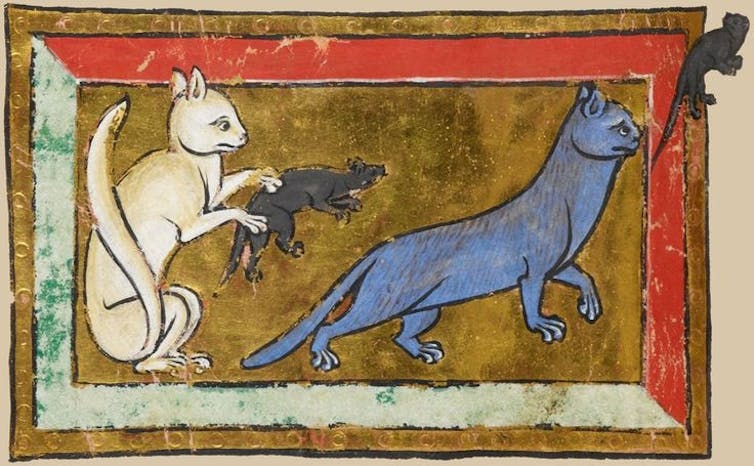
two cats hunting mice in a medieval illustration
Cats hunting mice in a 13th-century manuscript.
British Library, Royal 12 C XIX

Deforestation and persecution, especially by Victorian gamekeepers, eradicated wildcats from England, Wales and much of Scotland. In 2019, experts concluded that breeding with feral domestic cats has compromised their genetic integrity and that the remnant populations are too small, isolated and genetically degraded to have a long-term future.

But some hope does remain for the wildcat. Saving Wildcats, a European partnership project dedicated to wildcat conservation, is leading efforts to breed the species in captivity. As of 2023, a number of wildcats have been into Scotland’s Cairngorm National Park.

Mountain hares

The mountain hare is the UK’s only native member of the hare and rabbit family. Once widespread across Britain, mountain hares are now confined to upland regions of Scotland and the Peak District.

An illustration of a hare hunt
Dogs shown hunting a hare in an illustration from a medieval Bestiary manuscript.
The Medieval Bestiary

Hares have a long history of superstitious and folkloric attachments. They were seen as shape-shifters, or familiars of witches, which would bring doom and misfortune to any person unfortunate enough to have their path crossed. Their shape-shifting abilities were referenced in The Mabinogion, a collection of Welsh stories compiled in the 12th and 13th centuries, across Celtic folklore before. Numerous regional hare-witches were referenced across England.

While fear of wronging a witch historically offered hares some protection, they have faced decline and range reduction from competition with brown hares, hunting pressures and land use change. Recent surveys suggest a 70% crash in the Peak District population over just seven years. Under current rates of decline, the mountain hare will become extinct from the region within five years.

Nightjars

Summer visitors to the UK, nightjars were once thought to drink milk from goats and in doing so poison them and cause their udders to wither away. These birds were also said to snatch up lost souls wandering between worlds with their unearthly call.

illustration of a bird drinking from a goat's udder
A nightjar drinks from a goat’s udder in an illustration from a medieval Bestiary manuscript.
The Medieval Bestiary

Nightjars suffered a catastrophic population decline in excess of 50% and range contraction of around 51% during the latter half of the 20th century. However, surveys conducted in 1992 and 2004 saw welcome population increases of 50% and 36% respectively. Nightjar were recorded making use of new clear-felled and young conifer plantations and benefiting from long-term habitat management projects in their southern strongholds. Although recent recoveries offer hope, nightjars have reclaimed only a fraction of their former range – around 18%.

These species, and far more besides, have been instrumental in the stories people have woven across time. So the next time you hear the screech of an owl outside your bedroom window or glimpse the wings of a bat flapping over your garden, pause to think about the omens of our wild country – and how their stories might yet continue.


Looking for something good? Cut through the noise with a carefully curated selection of the latest releases, live events and exhibitions, straight to your inbox every fortnight, on Fridays. Sign up here.


The Conversation

The authors do not work for, consult, own shares in or receive funding from any company or organisation that would benefit from this article, and have disclosed no relevant affiliations beyond their academic appointment.

ref. The medieval folklore of Britain’s endangered wildlife ‘omens’ – from hedgehogs to nightjars – https://theconversation.com/the-medieval-folklore-of-britains-endangered-wildlife-omens-from-hedgehogs-to-nightjars-267085

Introducing Jane Austen’s Paper Trail – a new podcast from The Conversation

Source: The Conversation – UK – By Anna Walker, Senior Arts + Culture Editor, The Conversation

CC BY-ND

Most of us think we know something about Jane Austen. As I began research for Jane Austen’s Paper Trail – a new podcast from The Conversation marking 250 years since her birth – I certainly believed I did.

Perhaps, like me, you’ve read her novels or enjoyed one of the many screen adaptations. Maybe you’ve seen her portrait, painted by her sister Cassandra, hanging in the National Portrait Gallery – or gazing serenely from a £10 note. But the more I learned about Austen, the more she seemed to slip away.

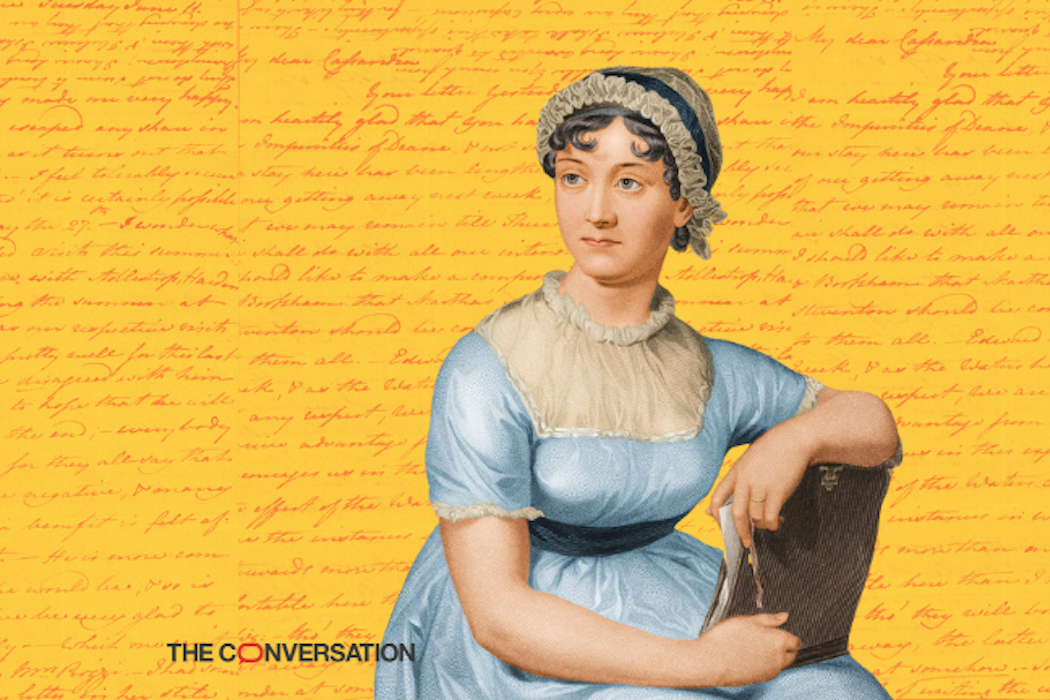
The image that adorns countless books, tea towels and souvenirs isn’t actually Cassandra’s painting at all. It’s an embellished copy: a Victorian engraving by William Home Lizars, who took the unfinished original and softened Austen’s features – uncrossing her arms and adjusting what some have called her “sour look”.

Even in her own day, Austen was hard to pin down. One acquaintance recalled her as “fair and handsome”, while her nephew remembered “bright hazel eyes and brown hair”. A niece, however, insisted that her aunt had “long, long black hair down to her knees”.

Accounts of her character differ just as wildly. One older woman who knew Jane in her youth described her as “the prettiest, silliest, most affected, husband-hunting butterfly she ever remembers”. Others said she had a “certain critical aloofness”, and was particularly shy in company.

The difficulty of knowing Jane is made worse by one peculiar act. In 1841, 25 years after Jane’s death, Cassandra Austen crouched by the fireplace and burned nearly all of her sister’s letters. Only 160 survived. Why did she do it? To protect Jane’s privacy? To preserve her image? Or was Jane’s famously sharp pen simply too dangerous for posterity?

That mystery – and many others – drives Jane Austen’s Paper Trail.

Over six episodes, one for each of her novels, we take you on a journey through Austen’s life and times with the help of the UK’s top experts. We’ll head to a scandal-filled tearoom in Bath to ask whether Jane was a gossip, visit a glittering Regency ball to find out whether she was a romantic, and visit her house in Hampshire to find out what she thought about being a writer.

Along the way, we’ll unpack the characters and themes that have made her work so enduring – and uncover the real Jane Austen.

Episode 1 of Jane Austen’s Paper Trail will be published on November 4. If you’re craving more Austen, check out our Jane Austen 250 page for more expert articles celebrating the anniversary.


Jane Austen’s Paper Trail is hosted by Anna Walker with reporting from Jane Wright and Naomi Joseph. Senior producer and sound designer is Eloise Stevens and the executive producer is Gemma Ware. Artwork by Alice Mason.

Listen to The Conversation Weekly via any of the apps listed above, download it directly via our RSS feed or find out how else to listen here.

The Conversation

ref. Introducing Jane Austen’s Paper Trail – a new podcast from The Conversation – https://theconversation.com/introducing-jane-austens-paper-trail-a-new-podcast-from-the-conversation-266533

Can you catch shingles? A GP explains what people get wrong about this common virus

Source: The Conversation – UK – By Dan Baumgardt, Senior Lecturer, School of Psychology and Neuroscience, University of Bristol

ThalesAntonio/Shutterstock

The idea that you can “catch” shingles is one of the more common misconceptions I hear from patients who arrive worried they’ve got it. Often, they’ve recently been near a child with chickenpox or someone else with shingles, and are understandably anxious they’ve picked it up.

As a GP, I encounter this misunderstanding all the time. In fact, a study from my own University of Bristol found that while most patients had heard of shingles, few actually understood what it is.

Shingles isn’t something you catch from someone else. It’s the reactivation of a virus already inside your body: the varicella zoster virus, the same one that causes chickenpox. After you recover from chickenpox, the virus doesn’t leave; it hides in the nerve cells that supply sensation to your skin, lying dormant for years, sometimes decades. Shingles is what happens when that virus “wakes up”.


Read more:
Chickenpox vaccine recommended for NHS – here’s why a jab is better than getting the disease


When it reactivates, it causes clusters of small, fluid-filled blisters known as vesicles. Before the rash appears, people can feel tingling, burning or pain in one area of the body – sometimes two or three days beforehand. The skin can become unusually sensitive, and you might feel generally tired, feverish or unwell.

Shingles is common, affecting about one in 25 people. It tends to follow a characteristic pattern. The rash usually appears in a strip or band on one side of the body, corresponding to a dermatome (an area of skin served by one spinal nerve). It’s rare for shingles to appear on both sides of the body.

The blisters eventually burst, scab over and heal within three to four weeks, sometimes leaving small scars. Until each blister has crusted, a person with shingles is considered infectious, meaning they can transmit the virus to others – but not in the way most people think.

1. You can catch chickenpox from someone with shingles

To develop shingles, you must already have had chickenpox. For some patients though, chickenpox can be mild or have happened so long ago that they may struggle to recall having it.

When the shingles blisters burst, the fluid inside them contains the same, live varicella zoster virus. If someone who has never had chickenpox (or hasn’t been vaccinated against it) comes into direct contact with that fluid, they can become infected and develop chickenpox – but not shingles. Shingles only occurs when the dormant virus reawakens inside someone who has already had chickenpox.

For that reason, people with shingles should keep their rash covered (with clothing or a non-adherent dressing) until all the blisters have crusted over and healed.

It’s important to avoid contact with anyone for whom chickenpox could be particularly dangerous. That includes pregnant women – as varicella can sometimes cause complications for the mother and may harm the unborn baby. Newborn infants, whose immune systems are not yet strong enough to fight the infection are also at risk. Other patients with weakened immune systems (such as the elderly, those undergoing chemotherapy or living with conditions like HIV) may also struggle to fight the virus. Chickenpox can become a severe illness in these people, leading to complications like pneumonia.

2. Shingles can occur at any age

Although shingles becomes more likely as we age, it can occur at any time after you’ve had chickenpox – even in young adults or children. It’s more common when the immune system is weakened, which can happen with age, and in people receiving chemotherapy or other immunosuppressive treatments.

3. It can affect more than just your torso

Most cases appear on the chest or back, but shingles can occur anywhere on the body, including the face, limbs and even the genitals. When it affects the face, it can involve the eyes through nerve branches that extend there. This form, known as ophthalmic herpes, can threaten vision and cause blindness if not treated promptly. It can also affect the facial nerve which controls your facial muscles – otherwise known as Ramsay Hunt syndrome.

Some people develop pain, tingling, or sensitivity without a visible rash. The appearance of shingles can also vary by skin tone, making it harder to spot in darker skin.

4. Early treatment helps

If you suspect shingles, see a clinician promptly. Antiviral medications can help shorten recovery time and reduce complications, but they work best when started within 48-72 hours of the rash appearing.

Certain groups, including young, pregnant and breastfeeding patients, people with weakened immune systems and anyone with shingles affecting the face, nose, eyes (including the eye’s surface) or any visual changes, should definitely seek medical attention urgently.

5. The story doesn’t always end when the rash heals

For some, shingles can cause problems even after the visible rash clears. Open blisters can become infected with bacteria, sometimes requiring antibiotics. The virus can also damage nearby nerves, leading to post-herpetic neuralgia – persistent nerve pain that can last for months or even years after the skin has healed. It can feel like burning, stabbing or throbbing pain in the same area where the rash appeared.

Unfortunately, shingles can return again, sometimes in a different part of the body. The shingles vaccine significantly reduces both the risk of developing shingles and the chance of long-term nerve pain like post-herpetic neuralgia, though it doesn’t remove the risk entirely.

Think of shingles not as something you “catch”, but as something that can wake up again within your own body. It’s a reminder that viruses don’t always leave when we think they do. And that protecting yourself and others means recognising the signs early, covering the rash, and getting prompt medical advice.

The Conversation

Dan Baumgardt does not work for, consult, own shares in or receive funding from any company or organisation that would benefit from this article, and has disclosed no relevant affiliations beyond their academic appointment.

ref. Can you catch shingles? A GP explains what people get wrong about this common virus – https://theconversation.com/can-you-catch-shingles-a-gp-explains-what-people-get-wrong-about-this-common-virus-266653