Could tactical voting could block Reform in future elections? Lessons from the Caerphilly byelection

Source: The Conversation – UK – By Thomas Lockwood, PhD Researcher in Politics, York St John University

Plaid Cymru’s overwhelming victory in the recent Caerphilly Senedd byelection shattered over a century of political tradition. Lindsay Whittle took the seat with 15,691 votes. Labour, which had held the seat since it was created, came away with just 3,713 votes.

Reform came second to Plaid, with 12,113 votes. And while this was an impressive performance, the fact that it failed to win Caerphilly even after vast amounts of time and money spent on the campaign has led to speculation that tactical voting played a part in this byelection.

A big clue that tactical voting was at work in Caerphilly was the recorded turnout. Typically, byelections in Wales have been low-key affairs. Turnouts are low and incumbents generally win. The national average for a Senedd vote in a constituency has never tipped over 50%. In Caerphilly, turnout climbed from 44% in the 2021 election to 50.4% in this byelection.

And while local voters clearly backed Plaid Cymru for plenty of reasons, the extremely low vote count for other parties does suggest at least some lent their vote to Plaid to keep out Reform. The Conservative vote collapsed to fewer than 700 votes and the Lib Dems and Greens, so often the recipients of tactical votes themselves, each took just 1.5% of the votes in Caerphilly.

Anecdotes from the vote count support this. The BBC recounted “extraordinary stories” of habitual supporters of the Conservatives, a pro-union party, voting Plaid to block Reform.

The increased turnout and Plaid’s 27.4% swing both suggest a mobilisation, triggered by polling and a wider national narrative which persuasively contends that Reform is ahead of other parties. Does the result therefore imply that Reform can be beaten elsewhere if voters take the right approach to tactical voting?


Read more:
How England’s new Reform councillors compare in their views to other parties


The limits of Reform’s surge

Reform entered the Caerphilly race with no prior foothold in the constituency. The party mobilised heavily and, it had seemed, effectively. Nigel Farage and other senior Reform figures made multiple visits to the area to campaign for their candidate, Llŷr Powell. Pre-election polls, including one by Survation which had Reform leading Plaid by 42% to 38%, raised expectations of a breakthrough.

And it is true that Reform’s ultimate 36% vote share reflects its growing appeal among disaffected working-class voters. It did capitalise on the same anti-establishment sentiment that has seen the party top UK-wide polls for much of the past year.

Yet, the result also exposes Reform’s vulnerabilities. As with the Hamilton, Larkhall and Stonehouse byelection for the Scottish parliament earlier in the summer, Reform failed to convert intensive campaigning into victory.

The role and reach of tactical voting

Underneath the hype, Farage is unpopular. Polls suggest as many as 60% of voters are opposed to him being prime minister. That presents an opportunity for opponents to unite behind a more broadly acceptable candidate.

In this volatile political era, where voters show little loyalty to tradition, smaller parties like Plaid Cymru, the SNP, Greens and even Pro-Gaza independents could frame themselves as the “real alternative” to Reform. Depending on local dynamics, they could attempt to draw tactical support.

It should be noted, however, that tactical voting cuts both ways. While it denied Reform a victory in Caerphilly, the party could attract tactical support from Conservative voters eager to oust Labour governments.

In England, without equivalents to Plaid or the SNP to siphon anti-establishment sentiment, Reform may consolidate its grip on working-class disillusionment. This trend was evident in Labour’s collapse in the Runcorn and Helsby Westminster byelection in May 2025, which enabled Reform to take the seat.

In Caerphilly, Labour’s vote fell amid grievances including the slow pace of change to improve living standards, policy u-turns and a fatigue with Welsh Labour, which has been in power in the Senedd since its creation in 1999.

Such grievances can be felt across the UK more broadly – with winter-fuel policy u-turns, and a general dissatisfaction with how long it is taking Labour to deliver on promises to improve living standards. Concern about immigration is also used to punish Labour in both the regular voting intention polls and at the ballot box in council byelections.

An anti-Reform majority does exist – and it has shown up in several contests, including in races Reform has ultimately won but on less than 50% of the vote. Harnessing this anti-Reform majority, however, requires a level of co-ordination rarely seen in the UK’s electoral history.

Unlike the 1997 anti-Conservative wave, there is no single opposition brand. Instead, the anti-Reform vote is split across Labour, Liberal Democrats, Greens, nationalists and independents – and, arguably, the Conservatives too.

In Caerphilly, we saw this fragmentation briefly turn into coalescence. This implies that a clear polling trigger, showing Reform ahead in a seat, can focus the minds of voters and drive tactical thinking. It also helped that these voters were offered a Plaid candidate with deep community roots and a strong, progressive message.

What is potentially harder in a general election is the presentation of a local contest as extremely high stakes in the media. Caerphilly drew unprecedented attention precisely because it was being framed as a test case for Reform in Wales, which may explain the level of anti-Reform vote.

In a multi-polar UK, the anti-Reform majority is real – but not pro-any one party by default. Importantly, it is anti-populist, anti-incumbent and regionally variable. Nearly all of the mainstream parties on the centre ground and left wing of politics are claiming to be the real alternative to Reform.

Reform’s path to power lies in building a lead that is too large for tactical voting to overcome, or in electoral systems which reward vote share over seat efficiency. This is why it remains hopeful of success in May 2026 in Wales, where the election is being held under a proportional voting system.

As the UK heads towards the 2026 devolved elections and a likely 2029-30 general election, Caerphilly offers a blueprint for resistance to Reform’s national surge. It also offers a warning for the other parties: stopping Reform is not the same as winning.

The Conversation

Thomas Lockwood does not work for, consult, own shares in or receive funding from any company or organisation that would benefit from this article, and has disclosed no relevant affiliations beyond their academic appointment.

ref. Could tactical voting could block Reform in future elections? Lessons from the Caerphilly byelection – https://theconversation.com/could-tactical-voting-could-block-reform-in-future-elections-lessons-from-the-caerphilly-byelection-268411

Keeping up with the Kardashians? Why owning more can leave us feeling less

Source: The Conversation – UK – By Cathrine Jansson-Boyd, Professor of Consumer Psychology, Anglia Ruskin University

The Kardashians are back with a new season of their reality series The Kardashians on Disney Plus.

As a researcher of consumer psychology, I have written about consumer neuroscience and how brands and media shape behaviour and self-perception. Watching The Kardashians through that lens reveals more than entertainment. It exposes how luxury and aspiration are woven into identity and sold back to us as self-worth.

The first episode is a materialistic feast. There are close-ups of Dior and Chanel handbags and belts, diamond jewellery and a house sign that reads: “Need money for Birkin.” The Kardashians drive luxury cars, wear designer sunglasses indoors and chat about their Saint Laurent outfits.

Even the camera lingers on the glittering shop windows of Rodeo Drive in Beverly Hills, home to some of the world’s most exclusive designer stores, though no one is actually shopping. If you haven’t seen it, you probably get the idea. In the Kardashian universe, the unspoken motto seems to be: “To have is to be.”

In their world, material possessions are woven into identity and presented as something to aspire to. But is it really all that glamorous?

Overconsumption can lower our wellbeing. Young people, in particular, often turn to excessive consumption to fit in, boost confidence or gain prestige. Teenagers who idolise others for their wealth or possessions are more likely to struggle with their sense of identity later in life.

Research shows that children and adolescents who place strong importance on material possessions often struggle to develop a clear sense of identity. Without learning who they are beyond what they own, they may find it harder to build lasting self-worth and life satisfaction.

Rather than helping us define who we are, possessions can get in the way. They can obscure or distort our sense of self, leading us to equate value with visibility. On top of that, materialism is linked to depression, likely because people often fail to achieve the identity and happiness they hope consumption will bring.

The Kardashian-Jenners have a massive following. Sisters Kylie, Kim and Khloé each have more than 300 million Instagram followers, a clear sign of their influence.

When we admire someone, we naturally compare ourselves to them, a process known as social comparison. It helps us judge where we stand, whether we are better or worse off than others. In this context, owning the same bag, car or outfit becomes a way to measure worth, since possessions often symbolise status and make the buyer feel closer to the celebrity, as if buying into their world.

Social comparison is known to drive materialism. It can start to feel like a competition to “catch up” with those we look up to through conspicuous consumption.

When we fail to keep up with the Kardashians, we may feel inadequate, even if we know deep down we were never in the same race. The Kardashian brand cleverly capitalises on this very idea.

The original series title, Keeping Up With the Kardashians, puns on the human instinct to compare and compete. This dynamic fuels not only the show’s popularity but also its beauty, fashion and lifestyle empires, which invite fans to buy into the brand both literally and symbolically.

You might think the solution is simply to choose better role models, but it is not that straightforward. People often compare themselves to others without realising it, automatically relying on social comparison when processing information about other people. This tendency does not stop at television.

Social media platforms intensify the same dynamic, giving us endless opportunities to measure our worth against curated snapshots of other people’s lives. Research from 2024 shows that heavy exposure to idealised social-media content is associated with increased materialism, lower life satisfaction and greater stress.

Another study found that engagement with influencer content featuring luxury goods can trigger upward social comparison – the tendency to compare ourselves with people we see as better off – leading to feelings of envy and a stronger urge to buy similar products in order to close that gap.

From influencer “unboxings,” where people film themselves opening luxury purchases, to filtered “day in the life” videos, social media users are constantly exposed to lifestyles that appear effortlessly perfect. When we scroll through feeds full of luxury, beauty and success, we can become more materialistic without ever consciously deciding to.


Read more:
Social media: how to protect your mental health


Seeing the extreme wealth of people like the Kardashians surrounded by luxury can spark feelings of envy and relative deprivation, leading to dissatisfaction with our own lives. That dissatisfaction can then trigger compulsive shopping as we try to soothe those uncomfortable emotions and project wealth ourselves.

Unsurprisingly, compulsive buying is closely tied to materialism. If you value possessions and feel envy toward others, you are far more likely to buy impulsively in an attempt to catch up.

Watching glamorous lifestyles where people seem to have it all can be fun escapism, but it also blurs the line between aspiration and insecurity. Shows like The Kardashians offer a fantasy of perfection that few can match, yet they invite us to measure ourselves against it.

In the end, the pursuit of luxury may leave us feeling emptier, not richer. After all, when having becomes being, it is worth asking what is left of the self once the shopping stops.

The Conversation

Cathrine Jansson-Boyd does not work for, consult, own shares in or receive funding from any company or organisation that would benefit from this article, and has disclosed no relevant affiliations beyond their academic appointment.

ref. Keeping up with the Kardashians? Why owning more can leave us feeling less – https://theconversation.com/keeping-up-with-the-kardashians-why-owning-more-can-leave-us-feeling-less-268367

How the first animals evolved – a new clue from a tiny relative

Source: The Conversation – UK – By Max Telford, Jodrell Professor of Zoology and Comparative Anatomy, UCL

The next time you go wild swimming, whether in a lake, river or sea, you are probably sharing the water with one of your tiniest, yet closest relatives.

This near-family member is a microscopic, single-celled organism called a choanoflagellate. Scientists are still puzzled by how animals evolved from such simple beginnings. But a new paper describes the discovery of an important new clue.

Choanoflagellates, like most single celled organisms can only survive in water where they live much of their life as a single cell, no more complex than an amoeba.

They are nevertheless more closely related to our own kingdom of life than any other kind of organism is – choanoflagellates are cousins of the animals. Engraved in the structure and function of choanoflagellate cells and written in their DNA code, scientists are finding evidence showing how the very first animals evolved.

Before we get to the new clue, it is worth thinking about what makes animals unique. As I describe in my new book, the simple answer is that, compared to most of the rest of life, animals have large and complicated bodies built from many cells. Your own body contains tens of trillions of cells and even a tiny fruit fly has close to a million.

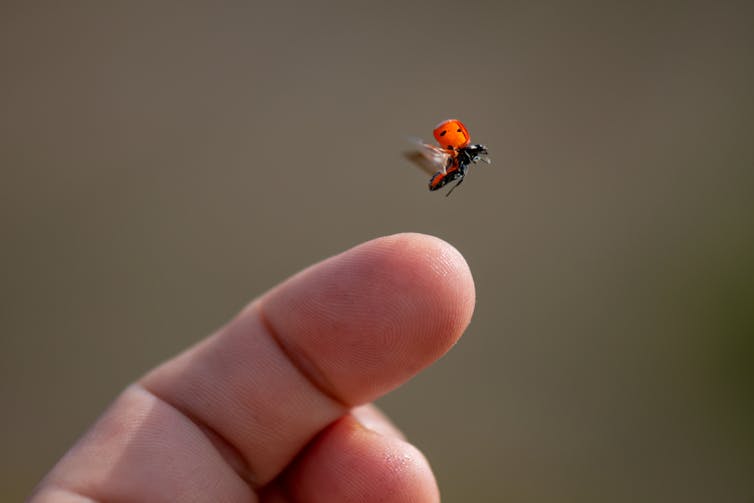
Ladybird taking flight from a person's finger.
Even a tiny insect like this ladybird has millions of cells in its body.
Pazargic Liviu/Shutterstock

Our oldest animal ancestor must have evolved a way for its many cells to stick together and form a super-organism from a host of cooperating cells.

The first animals must also have invented ways to produce the many different kinds of cells we have today; muscle cells, nerve cells, egg cells and sperm to name a few. The division of labour among different kinds of cells is one aspect of arguably the biggest invention of the first animals which is embryogenesis.

This is the earliest period of an animal’s life when, starting from a single fertilised egg cell, cell division begins to create all the cells that will make up the animal. These cells then each take on their own specific task and finally the many cells get carefully organised to make a functioning organism.

Scientists are hoping that studying choanoflagellates will help them learn how these skills first evolved.

Choanoflagellates don’t have large, complex bodies and they don’t have embryogenesis. They do, however, have a few animal like qualities. Their cells, for example, can adopt a handful of different shapes with different roles.

Just as our cells can take the form of a nerve or a muscle, theirs can switch from the standard funnel and flagellum form to become amorphous, shape-shifting blobs like an amoeba.

Choanoflagellates can also make tiny multi-celled colonies. In the presence of certain species of bacteria their cells stick together to make little groups of cells called rosettes. The rosettes seem to form because they are better at catching the bacteria (which the choanoflagellates eat) than single cells are.

The rosettes can grow a little, but when they reach a size of about ten cells the bonds between the cells stretch and snap, splitting the rosettes down the middle to form two smaller rosettes of cooperating choanoflagellates.

The resemblance of these rosettes to the earliest stages of an animal embryo seems like a coincidence, however. Unlike an animal embryo, they are not destined to develop into anything else. The new study is about the growth of these rosettes.

In many animals, from mice to flies, there is small group of genes that work together to control how big different organs get – how many cells they contain. Named Hippo, Warts and Yorkie, these genes sound like a mob of gangsters.

They are known collectively as the Hippo pathway. When genes in the Hippo pathway mutate in a growing fly or mouse embryo, the result is flies with huge eyes or newborn mice with monstrous livers.

In adult humans, when Hippo genes mutate, they can produce cancerous growths of uncontrollably dividing cells.

Choanoflagellates have a host of genes in common with animals. Although they don’t have organs like eyes or livers (or embryos or cancer), they do have the genes of the Hippo gang. The new paper first describes how the researchers developed a new technique that lets scientists target any gene in a choanoflagellate so that it can be deliberately mutated.

When the Warts gene was mutated, the rosettes of cells grew twice as large so that they ended up containing 20 cells or more. This uncontrolled growth is strikingly similar to what had been seen in previous studies of flies, mice and some human cancers.

The details of just how the Hippo genes control rosette size are not yet know. But the new work adds to the picture we are building of the single celled precursor of the animals. It is another animal-like characteristic of the choanoflagellates.

If we travelled back in time to meet this tiny beast, we would never mistake it for a member of the animal kingdom. But we would nevertheless find in its repertoire a handful of skills that were going to prove useful in the evolution of animals.

Evolution took the materials that were available – the ability to make different kinds of cells; to stick those cells together; to regulate the number of cells and so on – and tinkered with them. From these beginnings, natural selection would then do its thing, resulting, 600 million years later, in the amazing diversity of the animal kingdom from jellyfish to flies, tapeworms, starfish and you.


This article features references to books that have been included for editorial reasons, and may contain links to bookshop.org. If you click on one of the links and go on to buy something from bookshop.org The Conversation UK may earn a commission.

The Conversation

Max Telford does not work for, consult, own shares in or receive funding from any company or organisation that would benefit from this article, and has disclosed no relevant affiliations beyond their academic appointment.

ref. How the first animals evolved – a new clue from a tiny relative – https://theconversation.com/how-the-first-animals-evolved-a-new-clue-from-a-tiny-relative-268238

Climate change is becoming an insurance crisis

Source: The Conversation – UK – By Meilan Yan, Senior Lecturer in Financial Economics, Loughborough University

oleschwander/Shutterstock

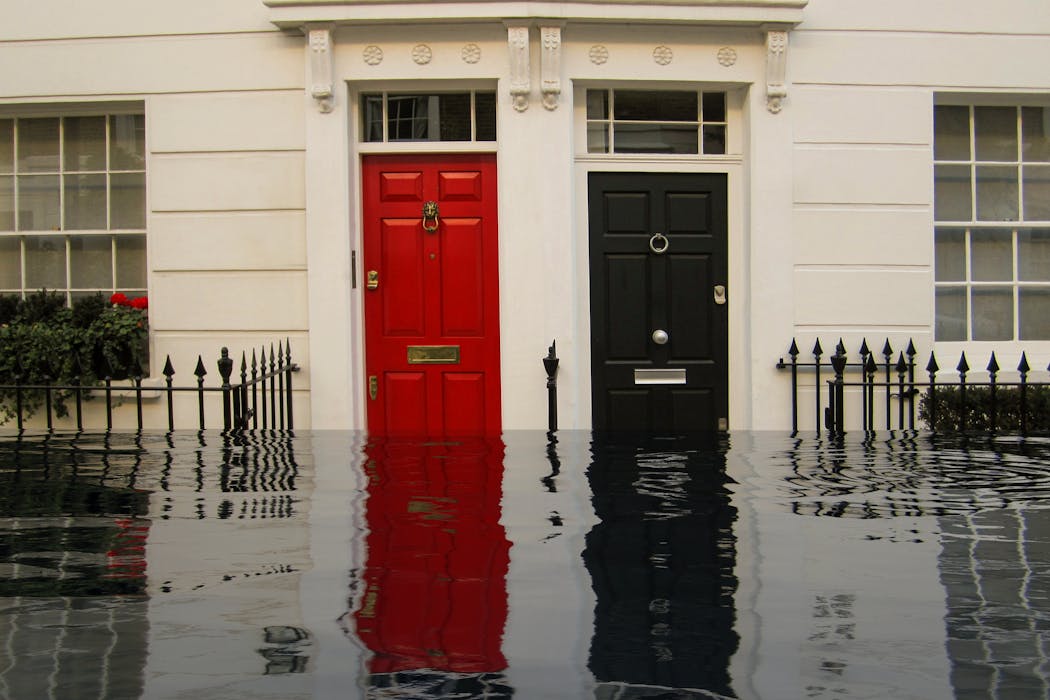
Imagine waking up to find your living room underwater for the second time in five years. You try to claim insurance, only to be told your property is now uninsurable. Premiums have tripled. Your mortgage lender is concerned. And your biggest asset, your home, is rapidly losing value.

This isn’t just a personal disaster. It’s a warning sign of a much broader crisis.

The risks associated with climate change are breaking the insurance industry. In the past decade alone, flood frequency has increased fourfold in the tropics and 2.5 times in mid-latitude regions). In the UK, at least one in six people already live with flood risk, heavy-rainfall extremes are increasing, and expected annual damages could rise by 27% by the 2050s.

Insurance claims from extreme weather are surging. The Association of British Insurers (the UK insurance and long-term savings trade body) reports a record £585 million in home weather-damage payouts for 2024.

Climate change is driving more frequent and severe events, pushing traditional insurance models to their limits. Insurers are left with little choice but to raise premiums sharply or withdraw coverage entirely. When insurance becomes unaffordable or unavailable, households are exposed, property values fall, mortgages become harder to secure, and the risk of a wider financial crisis grows.


Ever wondered how to spend or invest your money in ways that actually benefit people and planet? Or are you curious about the connection between insurance and the climate crisis?

Green Your Money is a new series from the business and environment teams at The Conversation exploring how to make money really matter. Practical and accessible insights from financial experts in the know.


Our research into the insurance industry shows that UK resilience is falling behind. Policymakers in the UK tried to avert an insurance crisis by launching Flood Re in 2016, a joint scheme between government and insurers designed to keep insurance affordable for households in high-risk areas. It was meant as a temporary bridge, due to close in 2039 once stronger flood defences and better land-use planning are in place.

But progress has been painfully slow. In January 2024, the House of Commons public accounts committee reported that the government’s £5.2 billion flood defence programme is 40% behind schedule and expected to protect just 200,000 properties by 2027 — far short of its original 336,000 target.


Read more:
Your essential guide to climate finance


By 2025, Flood Re has been under mounting strain. Reinsurance costs had have risen by £100 million in just three years, and policy uptakes have jumped by 20% in a single year – both signs that private insurers were retreating from high-risk markets.

In July 2025, Flood Re’s CEO, Perry Thomas, warned that the UK’s overall flood resilience have worsened since the scheme’s launch, as mortgage lenders, housebuilders, and successive governments have “failed to pull their weight”.

tree fallen onto building on stree
Storm damage is more likely as climate change risk increases.
pcruciatti/Shutterstock

When insurance becomes unaffordable or unavailable, households are left exposed and property values decline, making mortgages harder to obtain. This erosion of coverage threatens the wider financial system: banks rely on insured property as collateral, but without cover, that collateral rapidly loses value.

If the government fails to meet its climate adaptation targets, as many as 3 million UK homes could become effectively worthless within 30 years.

For the banking sector, this creates the risk of homes becoming stranded assets — uninsurable, unmortgageable and falling in value — leading to rising defaults and mounting losses. Unless lenders adopt climate-adjusted risk models that integrate physical hazards such as flooding, storms and heatwaves, they risk underestimating the true exposure of their mortgage portfolios.

If these climate-risk-exposed mortgages are mispriced and then bundled into mortgage-backed securities and sold to investors, the resulting shock could cascade through credit markets – like the 2008 subprime mortgage crisis, when large volumes of high-risk home loans to borrowers with poor or limited credit histories were repackaged and sold as safe investments. The difference is that this time the crash would be driven by physical climate damage rather than purely financial mismanagement.

A one-way street

Traditional financial crises follow cycles of growth, downturn and recovery, but climate risk moves in only one direction. Rising global temperatures are driving more frequent and severe floods and storms. Without timely adaptation, the damage compounds, eroding property values, undermining insurance and threatening financial stability.

Historical insurance models treated extreme weather as rare “tail risks,” but these events are now more frequent, severe, and interconnected. The tail is becoming “fat,” and shocks ripple across sectors and regions. In short, risk is evolving and insurance frameworks must evolve with it.

Flooding is no longer just an environmental issue. It is a systemic financial threat. Insurers, regulators and lenders must adopt forward-looking models that translate physical climate risks into financial metrics. These models influence market behaviour by shaping how capital is allocated, assets are valued, and risks are priced.

This, in turn, guides investment, planning and adaptation — the process of adjusting systems, infrastructure and practices to withstand and recover from climate impacts.

Effective adaptation measures, such as upgraded flood defences, reduce the future risk of climate-related damage. It’s a feedback loop: better modelling enables smarter adaptation, which in turn strengthens financial stability.


Don’t have time to read about climate change as much as you’d like?

Get a weekly roundup in your inbox instead. Every Wednesday, The Conversation’s environment editor writes Imagine, a short email that goes a little deeper into just one climate issue. Join the 45,000+ readers who’ve subscribed so far.


The Conversation

The authors do not work for, consult, own shares in or receive funding from any company or organisation that would benefit from this article, and have disclosed no relevant affiliations beyond their academic appointment.

ref. Climate change is becoming an insurance crisis – https://theconversation.com/climate-change-is-becoming-an-insurance-crisis-260952

After the first world war, séances boomed – and dead soldiers ‘wrote’ home

Source: The Conversation – UK – By Alice Vernon, Lecturer in Creative Writing and 19th-Century Literature, Aberystwyth University

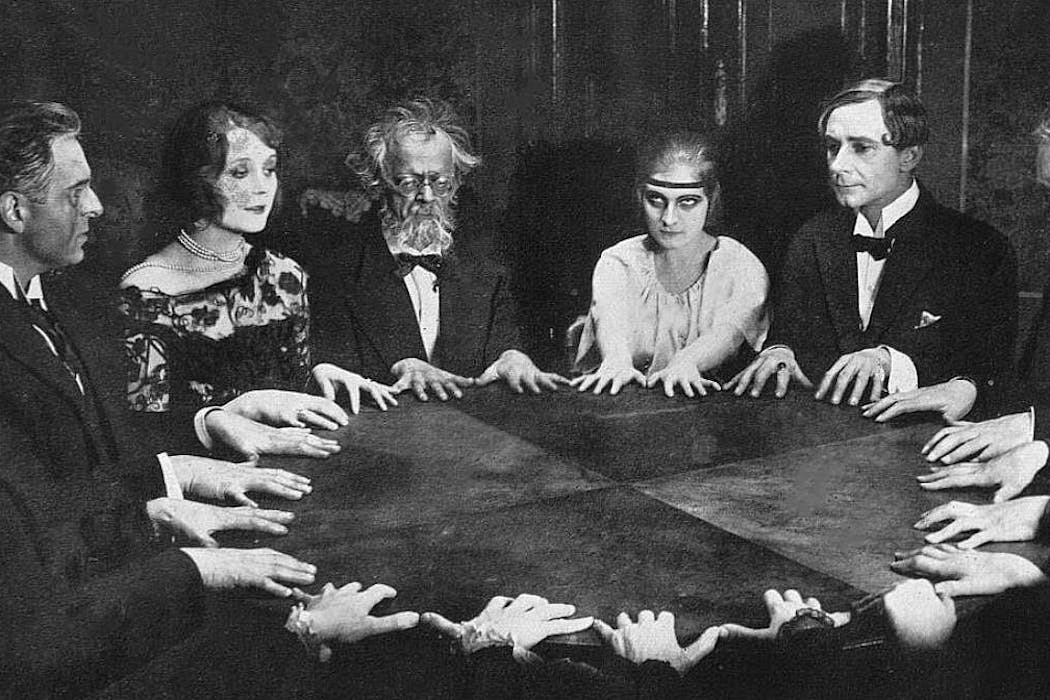
A typical séance in the 1920s. The Graphic, CC BY-SA

In March 1915, a young British man named Raymond Lodge was deployed to Ypres, France, to fight on the front lines of the first world war. By September, he was dead, aged just 26.

A few weeks later, however, Raymond got in touch with his family. “TELL FATHER I HAVE MET SOME FRIENDS OF HIS”, came the message hastily scrawled in all caps by the spiritualist medium Mrs Osborne Leonard.

Raymond’s father was Sir Oliver Lodge, a prominent physicist whose work helped to develop radio communications. Sir Oliver was also a member of the Society for Psychical Research, an organisation which, among other things, investigated ghosts. The “friends” Raymond had apparently met beyond the grave included F.W.H. Myers, a founding member of the society, who had died in 1901.

A black and white photo of a bearded man in a suit
Sir Oliver Lodge.
Lafayette Ltd., CC BY

Sir Oliver, previously fairly sceptical, was soon drawn into lengthy séances with Mrs Leonard, poring over messages allegedly from Raymond about death and the afterlife. He compiled them into a book entitled Raymond, or Life and Death, which was published in 1916. It proved so popular that it ran to many editions, with soldiers on the front being sent copies by their loved ones.

Spiritualism began in the late 1840s as a pseudo-Christian practice that believed communication with the dead was entirely possible. While it dwindled in popularity at the turn of the century, it was reinvigorated to new levels in the aftermath of the first world war. The popularity of Lodge’s book, moreover, led to dozens of copycat publications, where other soldiers “wrote” of their experiences of the utopian spiritualist afterlife to their families.

Claude’s Book (1919) is one such example, “transcribed” from séances with young Claude by his mother, L. Kelway-Bamber. Kelway-Bamber, having been so heartened by Sir Oliver’s sittings, had hired Mrs Leonard herself to get in touch with her son. Spiritualist mediums were in high demand once more.

Beyond the cynicism

It’s easy to dismiss these séances, even to scoff at them as nothing more than charlatans exploiting public grief, especially from the point of view of modern scepticism. When I was researching my new book, Ghosted: A History of Ghost Hunting and Why We Keep Looking, this was my initial reaction to reading about these bizarre encounters with the spirits of the dead.

But as a sociological phenomenon, borne of mass grief, I think it’s more complicated than that. We may laugh at fraudulent mediums quivering melodramatically as they channel the so-called spirits of the dead, but to discuss spiritualism’s cultural significance requires a more nuanced and sensitive approach.

By the end of the first world war, nearly 9 million soldiers had been killed. General mortality rates were already high prior to the war, and people were no strangers to sudden, unexpected bereavement. But never before had death affected so many people at once, and taken so many young men in the prime of their life.

If we look at spiritualism in the aftermath of the first world war, not to identify fraud and shun its believers as being gullible, we can build up an incredibly detailed picture of why so many clung to séance tables in the hope of contacting their loved ones again.

Everyone’s loss of their son, brother or husband was uniquely painful, and yet these deaths lost their significance when half the families on the street had also lost their young men. Yet, suddenly, everyone knew Raymond Lodge’s name. He stood out among the legions of dead Tommies, because of the séances Sir Oliver held with Mrs Leonard.

This, I think, is why so many grieving families took up spiritualism and wrote their own books – not to piggyback on Raymond’s popularity, but to make their sons, brothers and husbands seem special, too. Moreover, many didn’t know exactly what had happened to soldiers; being able to “speak” to them from beyond the grave made it seem like they were happy and at peace, enjoying themselves in the afterlife, and not in pieces in a muddy ditch thousands of miles from home.

Mary Lodge, Raymond’s mother, sums up the problem with a brief sentence her husband includes in the book: “We can face Christmas now.” We can accuse Mrs Leonard of exploiting grief, but we can’t deny that it eased the suffering of many, regardless of the ethical and moral dilemmas posed by spiritualism.

The history of ghost-hunting and séances is rife with fraud, and scepticism is often required to read around anecdotes to uncover what was really happening, but it’s also a vital resource to help us understand grief and fear of death at certain points in human history. By examining the motivation behind ghost-hunting from a more sympathetic perspective, we can learn a great deal about what it means to be alive.


Looking for something good? Cut through the noise with a carefully curated selection of the latest releases, live events and exhibitions, straight to your inbox every fortnight, on Fridays. Sign up here.


The Conversation

Alice Vernon does not work for, consult, own shares in or receive funding from any company or organisation that would benefit from this article, and has disclosed no relevant affiliations beyond their academic appointment.

ref. After the first world war, séances boomed – and dead soldiers ‘wrote’ home – https://theconversation.com/after-the-first-world-war-seances-boomed-and-dead-soldiers-wrote-home-266508

‘Hallucinated’ cases are affecting lawyers’ careers – they need to be trained to use AI

Source: The Conversation – UK – By Craig Smith, Lecturer in Law, University of Salford

Gorodenkoff/Shutterstock

Generative artificial intelligence, which produces original content by drawing on large existing datasets, has been hailed as a revolutionary tool for lawyers. From drafting contracts to summarising case law, generative AI tools such as ChatGPT and Lexis+ AI promise speed and efficiency.

But the English courts are now seeing a darker side of generative AI. This includes fabricated cases, invented quotations, and misleading citations entering court documents.

As someone who studies how technology and the law interact, I argue it is vital that lawyers are taught how, and how not, to use generative AI. Lawyers need to be able to avoid the risk of sanctions for breaking the rules, but also the development of a legal system that risks deciding questions of justice based on fabricated case law.

On 6 June 2025, the high court handed down a landmark judgment on two separate cases: Frederick Ayinde v The London Borough of Haringey and Hamad Al-Haroun v Qatar National Bank QPSC and QNB Capital LLC.

The court reprimanded a pupil barrister (a trainee) and a solicitor after their submissions contained fictitious and inaccurate case law. The judges were clear: “freely available generative artificial intelligence tools… are not capable of conducting reliable legal research”.

As such, the use of unverified AI output can no longer be excused as error or oversight. Lawyers, junior or senior, are fully responsible for what they put before the court.

Hallucinated case law

AI “hallucinations” – the confident generation of non-existent or misattributed information – are well documented. Legal cases are no exception. Research has recently found that hallucination rates range from 58% to 88% in response to specific legal queries, often on precisely the sorts of issues lawyers are asked to resolve.

These errors have now leapt off the screen and into real legal proceedings. In Ayinde, the trainee barrister cited a case that did not exist at all. The erroneous example had been misattributed to a genuine case number from a completely different matter.

In Al-Haroun, a solicitor listed 45 cases provided by his client. Of these, 18 were fictitious and many others irrelevant. The judicial assistant is quoted in the judgment as saying: “The vast majority of the authorities are made up or misunderstood”.

These incidents highlight a profession facing a perfect storm: overstretched practitioners, increasingly powerful but unreliable AI tools, and courts no longer willing to treat errors as mishaps. For the junior legal profession, the consequences are stark.

Many are experimenting with AI out of necessity or curiosity. Without the training to spot hallucinations, though, new lawyers risk reputational damage before their careers have fully begun.

The high court took a disciplinary approach, placing responsibility squarely on the individual and their supervisors. This raises a pressing question. Are junior lawyers being punished too harshly for what is, at least in part, a training and supervision gap?

Education as prevention

Law schools have long taught research methods, ethics, and citation practice. What is new is the need to frame those same skills around generative AI.

While many law schools and universities are either exploring AI within their modules or creating new modules that look at AI, there is a broader shift towards considering how AI is changing the legal sector as a whole.

Students must learn why AI produces hallucinations, how to design prompts responsibly, how to verify outputs against authoritative databases and when using such tools may be inappropriate.

The high court’s insistence on responsibility is justified. The integrity of justice depends on accurate citations and honest advocacy. But the solution cannot rest on sanction alone.

Hands holding pens over document
How to use AI – and how not to use it – should be part of legal training.
Lee Charlie/Shutterstock

If AI is part of legal practice, then AI training and literacy must be part of legal training. Regulators, professional bodies and universities share a collective duty to ensure that junior lawyers are not left to learn through error or in the most unforgiving of environments, the courtroom.

Similar issues have arisen from non-legal professionals. In a Manchester civil case, a litigant in person admitted relying on ChatGPT to generate legal authorities in support of their argument. The individual returned to court with four citations, one entirely fabricated and three with genuine case names but with fictitious quotations attributed to them.

While the submissions appeared legitimate, closer inspection by opposing counsel revealed the paragraphs did not exist. The judge accepted the litigant had been inadvertently misled by the AI tool and imposed no penalty. This shows both the risks of unverified AI-generated content entering proceedings and the challenges for unrepresented parties in navigating court processes.

The message from Ayinde and Al-Haroun is simple but profound: using GenAI does not reduce a lawyer’s professional duty, it heightens it. For junior lawyers, that duty will arrive on day one. The challenge for legal educators is to prepare students for this reality, embedding AI verification, transparency, and ethical reasoning into the curriculum.

The Conversation

Craig Smith does not work for, consult, own shares in or receive funding from any company or organisation that would benefit from this article, and has disclosed no relevant affiliations beyond their academic appointment.

ref. ‘Hallucinated’ cases are affecting lawyers’ careers – they need to be trained to use AI – https://theconversation.com/hallucinated-cases-are-affecting-lawyers-careers-they-need-to-be-trained-to-use-ai-265898

Were Neanderthals capable of making art?

Source: The Conversation – UK – By Paul Pettitt, Professor in the Department of Archaeology, Durham University

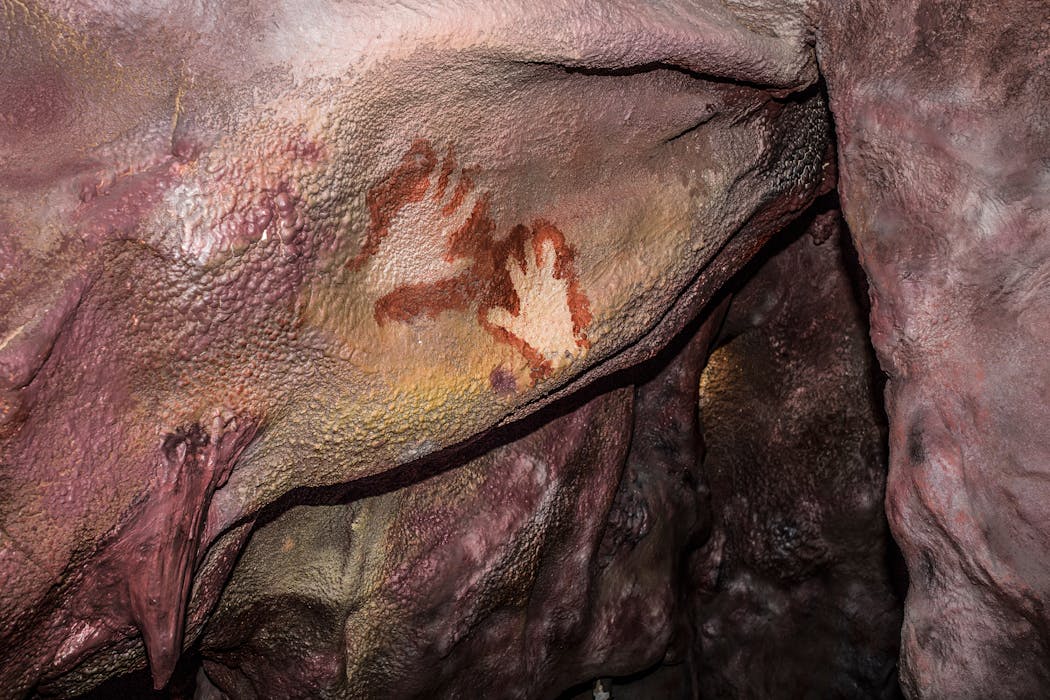
Neanderthal handprints in a replica of Maltravieso Cave, Spain. WH Pics / Shutterstock

The ability to make art has often been considered a hallmark of our species. Over a century ago, prehistorians even had trouble believing that modern humans from the Upper Palaeolithic (between 45,000 and 12,000 years ago) were capable of artistic flair.

Discoveries of uncontrovertibly old artworks from the caves and rockshelters of Europe soon dispelled their doubts. But what of the Neanderthals; an ancient, large-brained sister group to our own species? We now know that they were capable of making art too.

However, at present, all of the Neanderthal evidence is non-figurative – they have no depictions of animals, including humans. This latter form of art was perhaps exclusive to Homo sapiens. Instead, the Neanderthal examples consist of hand stencils, made by blowing pigment over the hand, finger flutings – where the fingers were pressed into a soft surface – and geometric markings.

Neanderthals inhabited western Eurasia from about 400,000 years ago until their extinction about 40,000 years ago and have often been caricatured as the archetypal “cavemen”.

Questions about their cognitive and behavioural sophistication have never quite gone away, and whether they produced art is at the forefront of this issue.

Despite the fact that we know that Neanderthals were capable of producing jewellery and using coloured pigments, there has been much objection to the notion that they explored deep caves and left art on the walls.

But recent work has confirmed beyond doubt that they did. In three Spanish caves – La Pasiega in Cantabria, Maltravieso in Extremadura and Ardales in Malaga, Neanderthals created linear signs, geometric shapes, hand stencils, and handprints using pigments. In La Roche Cotard, a cave in the Loire Valley, France, Neanderthals left a variety of lines and shapes in finger flutings (the lines that fingers leave on a soft surface).

And deep in the Bruniquel cave, southwest France, they broke off stalactites into sections of similar length and constructed a large oval wall of them, setting fires on top of it. This was not a shelter but something odder, and if it was constructed in a modern art gallery we’d no doubt assume it was installation art.

Now that we have well-established examples of Neanderthal art on cave walls in France and Spain, more discoveries are inevitable. However, the job is hard because of difficulties in establishing the age of Palaeolithic cave art. In fact, it is often the focus of intense debate among specialists.

Relative dating schemes based on the style and themes of cave art and comparisons of objects recovered from dated archaeological levels have proven useful, but they have their limits.

To produce real ages requires at least one of three conditions. The first is the presence of a charcoal pigment which can be dated using the radiocarbon method. This will establish exactly when the charcoal was created (when its wood died). However, black pigments are often from minerals (manganese) and therefore a large amount of black coloured cave art is simply not dateable.

A further problem is that the production of the charcoal may or may not be of the same age as the date that it was used as a pigment. I could pick up some 30,000-year-old charcoal from a cave floor and write “Paul was here” on a cave wall. The radiocarbon date wouldn’t reflect when my grafitto was actually made.

A second condition is the presence of calcite flowstones (stalactites and stalacmites) that have formed over the art. If they demonstrably grew on top of a piece of art, then they must be younger than it. A dating method based on the decay of uranium into an isotope – a particular form – of the element thorium can be used to establish exactly when flowstones formed, producing a minimum age for the art underneath.

I was part of a team who used this method to date flowstones overlying red pigment art in the three Spanish caves mentioned earlier, demonstrating that hand stencils, dots and colour washes must have been created over 64,000 years ago. This is a minimum age: the actual age of the images could be much older.

But even at its youngest range, the images predate the earliest arrival of modern humans (Homo sapiens) in Iberia by at least 22,000 years. As Middle Palaeolithic archaeology – the calling cards of the Neanderthals – is common in all three caves, the simplest interpretation that fits the dating is that the authors of the images were Neanderthals.

Objections to our results ignored supporting information we’d published. Did the dated samples really overlie the art? They did. Can we trust the technique? We have for half a century.

The third condition has just provided further evidence of Neanderthal artistic activity. Meandering lines left by tracing fingers along the soft muds of the walls of the Roche Cotard cave reveal another form of interacting with this mysterious subterranean realm. These markings include wavy, parallel and curved lines in organised arrangements that show they were made deliberately.

The dating of sediments which formed over its entrance show that it was completely sealed no later than 54,000 years ago – probably earlier. As with our Spanish examples, this was long before Homo sapiens arrived in the region and the cave contains only tools made by Neanderthals. It adds another art form to the Neanderthal repertoire.

Even ardent sceptics must agree that this data unambiguously reveal artistic activities in deep caves which can only have been made by Neanderthals.

The art could represent Neanderthal individuals becoming more aware of their own agency in the world. It might constitute the first evidence of engagement with an imaginary realm. The coming years will no doubt reveal even more subjects for debate.

The Conversation

Paul Pettitt does not work for, consult, own shares in or receive funding from any company or organisation that would benefit from this article, and has disclosed no relevant affiliations beyond their academic appointment.

ref. Were Neanderthals capable of making art? – https://theconversation.com/were-neanderthals-capable-of-making-art-268239

12 months out from the US midterms, both sides struggle to gain electoral advantage

Source: The Conversation – UK – By Richard Hargy, Visiting Research Fellow in International Studies, Queen’s University Belfast

Donald Trump is clearly concerned about the midterm elections that loom next November, which look to be a referendum on his administration. All seats in the House of Representatives will be up for grabs as will one-third of the Senate. Losing control of the House would severely crimp the US president’s ability to govern the way he has for the first nine months of his second term.

Trump has already voiced some unease about the election. In a recent interview with the One America News (OAN) network he stated: “The one thing that I worry about is that… I don’t have the numbers, but the person that wins the presidency always seems to lose the midterms”.

There’s a clue to the president’s apprehension about the numbers from the 2024 general election results. Despite winning the popular vote in 2024, the Republican vote in the House fell by 0.2 percentage points, as a result the GOP (the Republicans) lost two seats, leaving them with a majority of only five seats.

Trump knows from bitter experience what could happen if he loses control of the House. The Democrats made a net gain of 40 seats at the 2018 midterms after which the House impeached Trump twice.

So the president and his Maga coalition are well aware of how important it is to retain control of Congress.

The president is already taking steps that could tilt the midterms in his favour. Shortly after being sworn in as president in January 2025, he rescinded Joe Biden’s executive order that aimed to expand voting access and voter registration.

In April Trump ordered the Department of Justice to launch an investigation into the Democrats’ top fundraising platform ActBlue, after allegations it had allowed illegal campaign donations. The Democrats denounced the move as “Donald Trump’s latest front in his campaign to stamp out all political, electoral and ideological opposition”.

In August, Trump announced he wanted to ban mail-in-voting for the midterms. Three in every ten ballots cast in 2024 were mail-ins and are historically thought to favour the Democrats. But the US constitution mandates that the states control their elections. Congress has the power to pass legislation banning mail-ins for federal elections, but it is thought unlikely that such a measure would pass the Senate.

History has shown that the party occupying the White House usually performs poorly in the subsequent midterm elections. Three recent polls, Economist/YouGov, Morning Consult, and Emerson, show Democrats edging ahead in the generic congressional vote.

But precedent and political polling may count for little over the next year, as America’s democratic system is tested by extraordinary events and challenges.

Redistricting

There are already moves by mainly, though not exclusively, Republican controlled states to carve out additional congressional seats (referred to as redistricting) to bolster the party’s chances of retaining their majority in the House of Representatives. In three states – Texas, Missouri and North Carolina – Republican legislatures have redrawn constituency lines to the party’s electoral benefit, resulting in a notional seven new GOP-leaning congressional seats.

Americans in viting booths.
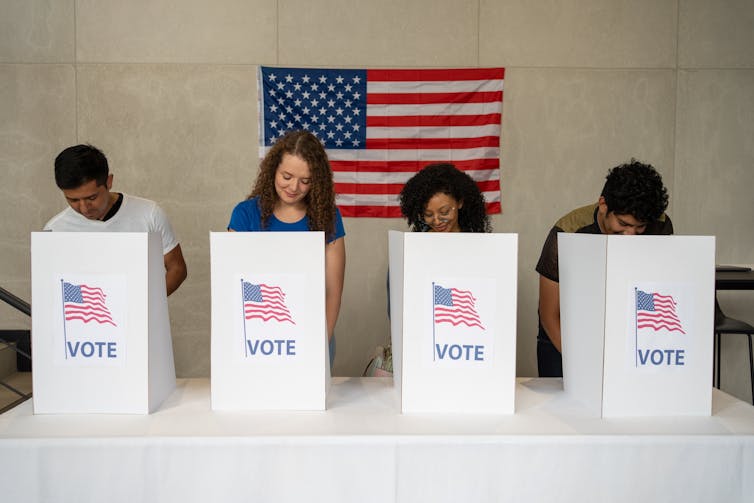
Changing electoral boundaries could affect the election result.
Alan Mazzocco/Shutterstock

After the Republican-controlled North Carolina legislature voted through a new congressional map that may provide the party an additional seat in next year’s midterms, Trump posted on Truth Social that this provided the potential for “A HUGE VICTORY for our America First Agenda.”

Democrats have responded to these events by launching their own redistricting plans, with Virginia becoming the latest blue state to announce proposals to redraw electoral boundaries that could give the party two or three additional seats.

It is, however, the largest state in the union – California – which serves as the base for Democrats counterbalancing moves. California Governor Gavin Newsom is asking his state’s voters to decide on proposition 50. If passed this would authorise state lawmakers to create new electoral wards that could favour Democrats. Academic analysis has estimated that the move could provide up to five additional Democratic seats in Congress.

This action has been endorsed by former US president Barack Obama, who stated the Democrats strategy in California gives the national party a “chance… to create a level playing field” in next year’s elections.

Partisan gerrymandering is nothing new in US politics. But what is new, according to Benjamin Schneer, a Harvard-based expert in political representation, is the scale on which this is being done. He believes:

Gerrymandering can be done more effectively now because we have fine-grained data on the population and on how people are likely to vote, and computing techniques to design maps in clever ways. Put all that together with intense polarization and that creates a perfect storm where gerrymandering can flourish.

Voting rights

The 2026 midterms would also be affected in a seismic way by an impending Supreme Court decision relating to a central pillar of the 1965 Voting Rights Act (VRA). Section 2 of the act “prohibits voting practices or procedures that discriminate on the basis of race, colour, or membership in one of the language minority groups”. The court is now weighing whether Section 2 is constitutional.

People vote in Louisiana
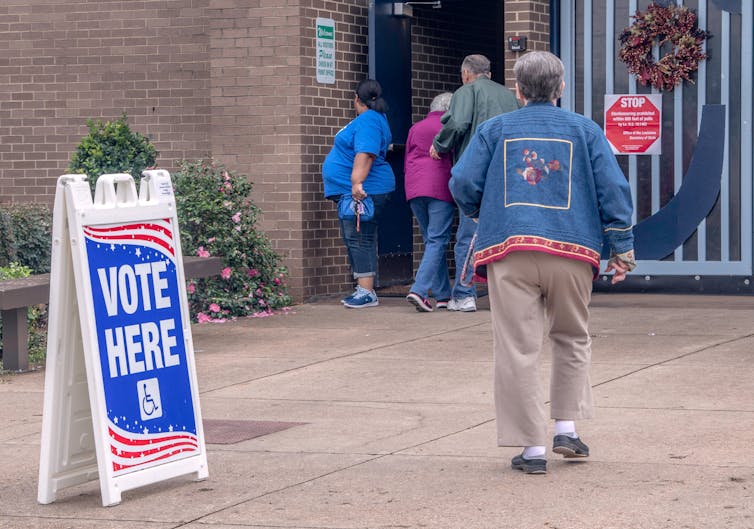
People vote in Louisiana: changes to voting rights laws could affect the outcome in 2026.
Allen J.M. Smith/Shutterstock

The case relates to a lawsuit in Louisiana where it was required under the VRA to redraw its congressional map to ensure two majority black districts. This is now being challenged in the Supreme Court. If successful it could weaken the voting power of minorities and result in congressional districts being redrawn throughout the American south.

This would be a major blow for the Democrats. Analysis by the BBC projects that this could “flip more than a dozen seats from Democratic to Republican”. Findings from the Economist go further, suggesting “Republicans could eliminate as many as 19 Democrat-held districts in the House of Representatives, or 9% of the party’s current caucus.”

The 2026 midterms will be hugely consequential. They will decide what party controls the US Congress for Trump’s last two years in office and therefore the extent of his power until January 2029. They will also serve as the unofficial start of the 2028 presidential campaign and determine whether it is the Republicans or Democrats with the political momentum heading into this historic election.

The Conversation

Richard Hargy does not work for, consult, own shares in or receive funding from any company or organisation that would benefit from this article, and has disclosed no relevant affiliations beyond their academic appointment.

ref. 12 months out from the US midterms, both sides struggle to gain electoral advantage – https://theconversation.com/12-months-out-from-the-us-midterms-both-sides-struggle-to-gain-electoral-advantage-268126

How climate change can make people more likely to get into violent conflict

Source: The Conversation – UK – By Edward White, PhD Candidate in Psychology, Kingston University

Scharfsinn / Shutterstock

Climate change is reshaping weather patterns around the world, with monsoons, droughts, hurricanes and heatwaves all occurring with greater frequency and intensity. Aside from disturbing ecosystems, these environmental shifts risk triggering psychological reactions in people that can escalate into violent conflict.

The cognitive mechanisms that are triggered in people as a result of the effects of climate change share fundamental similarities with aggression in other settings. Consider two parallel scenarios. In the first, one person accidentally bumps into another person in a crowded bar. The bumped individual, already stressed from work woes, assumes malicious intent and retaliates violently.

In the second scenario, farmers in a water-scarce region notice their neighbours’ water well running normally while their own well runs dry. The farmers conclude that deliberate water theft has occurred rather than blaming geological differences in their ability to access the aquifer.

Both of these situations demonstrate what is known in psychology as “hostile attribution bias”, the tendency to interpret ambiguous actions as having been done with harmful intent. Forensic psychological research has recognised this bias as a factor in offending behaviour.


Wars and climate change are inextricably linked. Climate change can increase the likelihood of violent conflict by intensifying resource scarcity and displacement, while conflict itself accelerates environmental damage. This article is part of a series, War on climate, which explores the relationship between climate issues and global conflicts.


Environmental factors can intensify this cognitive tendency. When entire communities endure prolonged heatwaves and water shortages, this heightened strain can fuel perceptions that the survival strategies of other groups are deliberate acts of aggression. This can escalate tensions and increase the risk of conflict.

In Ethiopia and Kenya, even a modest drop in rainfall has been linked to more violent conflict breaking out between communities. This pattern has been repeated across sub-Saharan Africa and parts of Asia. Consecutive droughts in 1965 and 1966, for example, contributed to the widespread rural discontent that fuelled the Maoist insurgency in northern India. The insurgency remains active today.

This is not just a modern problem. In the 4th century, when much of Britain was ruled by the Romans, a series of droughts caused famine. Roman Britain descended into anarchy and, before long, Pict, Scotti and Saxon tribes were storming Hadrian’s Wall. The last Romans left Britain around 40 years later.

Mental fatigue

The prefrontal cortex is the part of a brain that is crucial for executive functions like making decisions and controlling behaviour. But, like a muscle, it can become exhausted. Research shows a link between poor self-control and offending behaviour, with a mentally fatigued person more likely to engage in violence.

Climate stress creates chronic cognitive load, in which people are having to think about too many things at the same time. Farmers calculating whether their crops will survive another heatwave, coastal communities planning evacuations, or city dwellers navigating heat-induced intrastructure failures are all operating with depleted mental resources. When a person’s mental energy is depleted, the psychological brakes that normally prevent offences begin to fail.

It is, of course, difficult to establish direct causal relationships between environmental factors and violence. Various other factors such as intelligence, socioeconomic status and demographics can also contribute.

However, some studies provide valuable insights by indicating possible trends and patterns. One study from South Korea found a correlation between rising temperatures from 1991 to 2020 and deaths by assault. The risk of assault deaths increased by 1.4% for every 1°C increase in ambient temperature.

Similarly, research in Finland from 2017 found that ambient temperature played a factor in violent crime rates, with a 1.7% increase per 1°C temperature rise. These findings together suggest that heat may erode the cognitive resources people need to regulate aggressive impulses, making hostile responses more likely when the capacity for self-control is compromised.

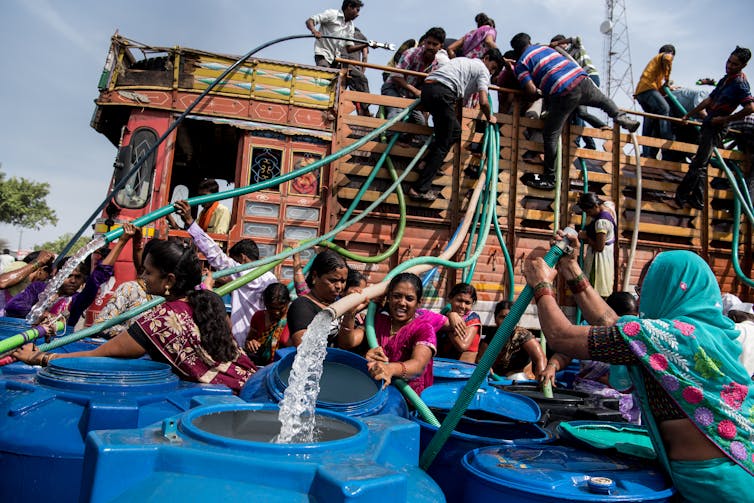
Indian people filling containers from a water tanker.
People in the Indian city of Beed filling containers from a municipal water tanker.
Manoej Paateel / Shutterstock

Recognising how the human mind works can guide people to make positive changes. Just like cognitive-behavioural therapy helps people spot and change harmful thinking patterns, we can collectively help communities become aware of the cognitive biases that may be worsened by climate change.

Taking measures that reduce the mental burden of climate stress can also help preserve the cognitive resources needed for peaceful resolution. This can be done through improved physical infrastructure, such as water storage and transfer facilities designed to distribute water to communities evenly.


Read more:
How water fuels conflict in Pakistan


It also includes implementing education programmes and financial mechanisms that can empower disadvantaged communities to negotiate resource access. In the Koshi River basin of eastern Nepal, for example, communities located downstream have funded activities that helped convince those upstream to share their water resources.

Recognising the role of upstream watershed areas in maintaining the quantity and quality of the water flow downstream, the municipal authority in the town of Dhankuta pays for the water services – treatment, storage and distribution – to the upstream watershed villages of Nibuwa and Tankhuwa. It has also pledged to invest in conserving the upstream ecosystem.

A key part of the intersection of climate change and conflict is how environmental stress systematically activates the psychological vulnerabilities that drive criminal behaviour. By understanding this connection, intervention can occur before rising temperatures trigger the cognitive cascade from stress to bias – and from there to violence.

The Conversation

Edward White does not work for, consult, own shares in or receive funding from any company or organisation that would benefit from this article, and has disclosed no relevant affiliations beyond their academic appointment.

ref. How climate change can make people more likely to get into violent conflict – https://theconversation.com/how-climate-change-can-make-people-more-likely-to-get-into-violent-conflict-263078

UK-linked children whose parents have been deprived of their citizenship are trapped in camps in Syria

Source: The Conversation – UK – By Madeline-Sophie Abbas, Senior Lecturer in Sociology, Lancaster University

Prazis Images/Shutterstock

Thousands of women and children with perceived links to Isis have been detained in camps by the Kurdish-controlled Autonomous Administration of North and East Syria since the demise of the militant organisation in 2019. These include women and children who have a connection to the UK.

Since 2019, the UK has brought three women and 18 children from north-east Syria to the UK. Most of the repatriated children had been orphaned or arrived at camps without caregivers and were under ten years old.

There are also children in the camps who have never lived in the UK, but have a parent who is either a British citizen or former British citizen who has been deprived of their British citizenship. In total, an estimated 60 “UK-linked children” remain in these camps.

These children may not be formally recognised as British citizens due to a lack of documentation, or because they were born after their parents were deprived of their British citizenship. This can mean that the children sometimes don’t have citizenship of any country.

Under Section 40 of the British Nationality Act 1981, the home secretary has the power to remove a person’s British citizenship if they consider it “conducive to the public good”. These decisions generally apply to cases involving national security or counter-terrorism.

The aim is to prevent people perceived to pose a security threat from returning to the UK. From 2010 to 2023, there were 222 citizenship deprivation orders, including 104 in 2017 alone.

The UK government’s use of citizenship deprivation has meant UK-linked children cannot be repatriated with their mothers. These children largely remain trapped in detention camps in Syria with limited possibility for a healthy future.

Children as victims or threats?

To get UK-linked children out of the camps, the UK government needs to act. Key non-governmental organisations (NGOs) working on statelessness, repatriation and children’s rights argue allowing them to come to the UK is the only solution for protecting these children from their precarious and dangerous existence.

But the UK government is often reluctant to do that. “Isis-associated” children are often viewed as security threats rather than victims of violent conflict.

Age and agency are used to judge threat levels. The longer children stay in camps, the greater the security threat to the UK they are considered to pose, and the less likely they are to be allowed to come to the UK.

In situations where the child’s mother has been deprived of their UK citizenship, the child risks being separated from them in the event that the child is brought to the UK. Reprieve,
a legal action NGO, reports that the Foreign, Commonwealth and Development Office told at least five British families in Syria that their children could only be brought to the UK if the mothers remain in Syria.

This meant being separated from their children (affecting 12 children between two and 12 years old). Their mothers, who despite being in the camps have often not been formally accused of terrorism offences, should be allowed to return with them.

Mothers’ citizenship should be reinstated to allow children the opportunity to make this possible and uphold the right to family life in accordance with UK law through Article 8 of the Human Rights Act 1998 and international rights enshrined in the Universal Declaration of Human Rights.

Counter-terrorism measures

A number of counter-terrorism measures are available if the government should choose to bring an Isis-linked child with their mother to the UK. For example, a temporary exclusion order (TEO) is a legal measure used by the UK government to disrupt terrorist risk by controlling the return of individuals associated with terrorism-related activities.

Using these orders would allow authorities to permit mothers to return to the UK with their children while assessing and mitigating possible security risks by imposing certain conditions. These might include deradicalisation programmes, police reporting requirements and monitoring.

However, TEOs are not available for people who have been deprived of their citizenship. This therefore obstructs one way in which a child could potentially come with their parent to the UK.

Questions also remain concerning whether adults who travelled to Isis-controlled territory when they were children should be treated in law as children. They may have been groomed or trafficked or regret their decision.

Recruitment and use of children in armed conflict violates international law. Children in these cases should be treated as victims deserving protection. Article 39 of the UN convention on the rights of the child (UNCRC) presses states to take measures to support the recovery and reintegration of child victims of conflict.

Not only that, the UK’s official independent reviewer of terrorism legislation, Jonathan Hall KC, argues citizenship deprivation potentially undermines UK national security. Former citizens are no longer monitored by the UK government. The previous government rejected Hall’s recommendation that TEOs be made available to those deprived of UK citizenship despite their lack of citizenship.

Citing the UK government’s returning families programme, Hall told me (in a research interview for as yet unpublished research) that repatriation for British families can be achieved through a combination of care and security measures.

Tavistock Returning Families Unit, funded by the Home Office, supports local authorities with British families and children returning from Syria. It coordinates the mental or emotional needs of the child and family following assessments. It offers an infrastructure for local authorities to help “Isis-associated” families to reintegrate into UK society.

Children might be separated from family members on their return to the UK if the child or caregiver is then prosecuted in the UK: residing in Isis-linked territory can now be considered a terrorist offence. Nonetheless, this provides a potential route for children to be integrated into UK society with their mothers that citizenship deprivation denies.

Without repatriation to the UK, mothers are at risk of indefinite detention within deadly camps and children risk becoming orphans.

The Conversation

Madeline-Sophie Abbas receives funding from UKRI – Policy Support grant

ref. UK-linked children whose parents have been deprived of their citizenship are trapped in camps in Syria – https://theconversation.com/uk-linked-children-whose-parents-have-been-deprived-of-their-citizenship-are-trapped-in-camps-in-syria-253771