Brazil’s upcoming UN climate summit highlights how tricky climate pledges are to keep

Source: The Conversation – UK – By Hannah Hughes, Senior Lecturer International Politics and Climate Change, Aberystwyth University
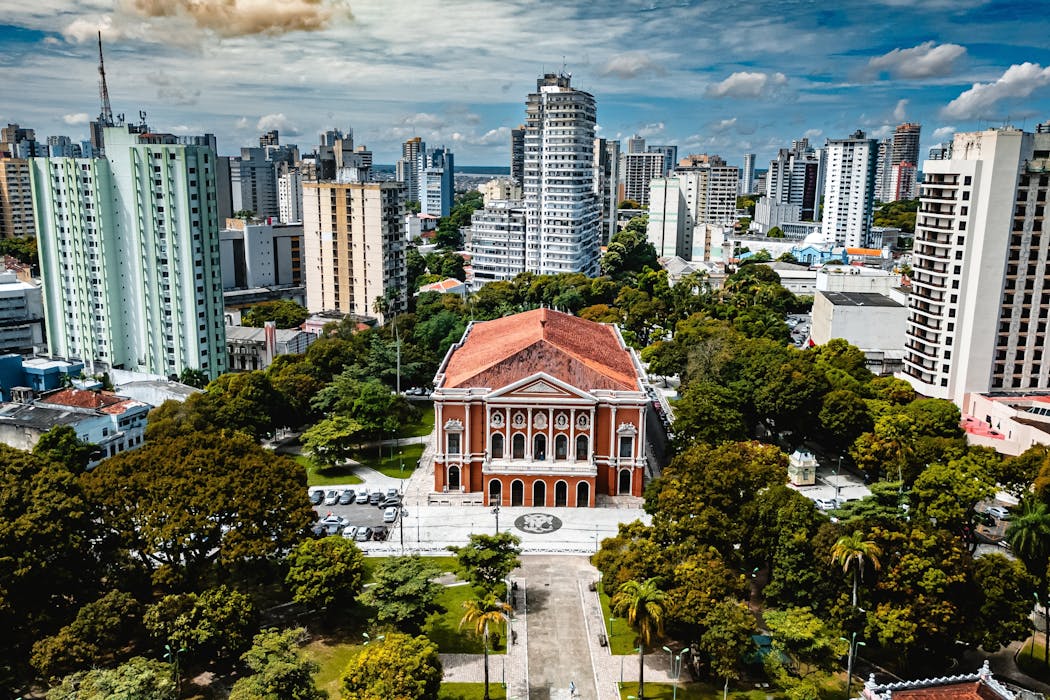
Belem, Brazil. Pedro Magrod/Shutterstock

For two weeks during November, countries are coming together in the city of Belém in Brazil to negotiate their responses to climate change. This will be the 30th UN climate summit, known as Cop30. It marks ten years since the negotiation of the Paris agreement (a global agreement to keep temperature rise to well below 2°C, and as close to 1.5°C as possible). For the first time, this global summit is being held in the Amazon, the largest rainforest ecosystem in the world.

But most countries have not submitted their national climate plans, and the US has withdrawn from the Paris agreement. While many governments remain committed to climate action, the agreement’s objective requires difficult decisions.

Research has documented how countries dependent on fossil fuel wealth have sought to weaken climate science published by the UN’s climate authority (the Intergovernmental Panel on Climate Change or IPCC) and undermine its influence on UN climate negotiations for decades.

The transition away from fossil fuels is difficult for countries. An ambiguous timeline for fossil fuel phase out and investment in technologies that remove greenhouse gases from the atmosphere are easier options. The Paris agreement also comes with financial and technological obligations for developed countries.


Read more:
US politics has long shaped global climate action and science – how much will Trump’s opposition matter?


Under the Paris agreement, countries agreed to reach a new climate finance target by 2025. Developed countries failed to reach the previous goal of providing US$100 billion (£76 billion) by 2020.

At the UN climate summit in Azerbaijan last November, known as Cop29, a new financial goal was agreed. However, the US$300 billion a year by 2035 target agreed fell well below what developing countries actually needed to mitigate and adapt to climate change. Progress to increase climate finance to US$1.3 trillion will be a key debate at Cop30. Despite historical responsibility, these weak financial commitments indicate that developed countries are not providing the climate leadership needed.

Brazil’s climate presidency

Brazilian Cop30 president, André Corrêa do Lago, has a critical role to play as mediator and bridge builder to increase the collective ambition of governments.

In Brazil’s leadership of Cop30, the tension between negotiating and implementing the Paris agreement are apparent. While Brazil deploys its diplomatic resources to strengthen the global climate response, it appears to undermine it nationally by approving new fossil fuel exploitation.

Less than one month before Cop30, the state oil and gas company, Petrobras, was authorised to begin exploratory drilling in the mouth of the Amazon. Brazil intends to expand production by more than 20% by 2030 and is projected to become the fourth-largest producer in the world. The Brazilian government justifies this through the Paris agreement, which enables countries to choose their own climate action plans.

However, the Paris agreement is not just about government action. It recognises that action is needed by businesses, investors and cities and regions, and that everyone has a role to play, from climate youth to Indigenous people in collective climate action. Mobilising broader social participation and support has been a key objective of Brazil’s Cop30 presidency.

Amazon visions and voices

Brazil is hosting Cop30 in the Amazon, despite resistance to this location from countries because of limited and costly accommodation. Brazil Cop30 organisers are supporting greater Indigenous participation than any previous UN climate summit.

This will provide a platform for community voices most affected by climate change and deforestation. One of the key goals for Indigenous and other Amazonian communities at Cop30 will be to demand direct financing for their community funds — grassroots mechanisms designed to channel money directly to those protecting the forest. They argue that funding should go straight to local hands, not through government agencies, to ensure real autonomy and impact on the ground.

Gatherings outside the main venue for negotiations include the people’s summit and planned protest. At these alternative summit events Indigenous peoples and other civil society groups call for climate justice and try to hold governments accountable to their climate promises.

woman in blue top, stood outside by green garden
Marcele Oliveira is the Cop30 youth climate champion and believes that a collective effort against climate change will help shift society’s thinking and relationship with the environment.
Gabriel Della Giustina / COP30, CC BY-NC-ND

As researchers, we sit and listen to the climate negotiators. We have watched country negotiators push difficult decisions back another year and weaken collective commitment to fossil fuel phaseout. Fossil fuel interests have been empowered in US energy decision making and the US government now seeks to slow the energy transition outside of the Paris agreement. It is not clear which governments, if any, will lead the collective effort necessary to leave this dependence behind at Cop30.

We will be in Belém as a research team documenting the unfolding events. Our research into global agreement-making shows all the diverse ways that people participate in climate politics are important to ensure the Paris agreement objectives are met. In Belém, these diverse visions will come alive in vivid and tangible ways, offering glimpses of alternative futures and collective paths that could reshape how the world approaches climate action. That is what many people will be hoping to see.

Don’t have time to read about climate change as much as you’d like?

Get a weekly roundup in your inbox instead. Every Wednesday, The Conversation’s environment editor writes Imagine, a short email that goes a little deeper into just one climate issue. Join the 45,000+ readers who’ve subscribed so far.


The Conversation

Hannah Hughes receives funding from British Academy.

Veronica Korber Gonçalves receives funding from the Brazilian National Council for Scientific and Technological Development (CNPq).

ref. Brazil’s upcoming UN climate summit highlights how tricky climate pledges are to keep – https://theconversation.com/brazils-upcoming-un-climate-summit-highlights-how-tricky-climate-pledges-are-to-keep-267704


Problems regulating emotions during pregnancy linked with perinatal depression – new research

Source: The Conversation – UK – By Franziska Weinmar, PhD Candidate, Women’s Mental Health & Brain Function, University of Tübingen

This latest research may make it possible to identify those more vulnerable to perinatal depression. AnnaStills/ Shutterstock

Around one in five mothers experience perinatal depression. This condition involves depressive episodes during pregnancy or just after birth – often with lasting effects on both mother and child.

Yet despite its prevalence, identifying who is at risk of experiencing perinatal depression remains one of the greatest challenges in maternal health. More than half of cases go undetected. This means many women with signs of the condition receive no treatment at all.

But new research published by my colleagues and me in the journal Nature Mental Health shows that it may be possible to identify a mother’s vulnerability to perinatal depressive symptoms as early as the second trimester.

To conduct our study, we used data from over 600 women living in Sweden who were taking part in the Mom2B study. This large national project tracks perinatal mental health using a smartphone app.

We looked at whether the ability to regulate emotions in pregnancy is related to depressive symptoms through the perinatal period.

Previous studies have suggested that emotion regulation is crucial for maternal mental health. Difficulties managing emotions has been linked to higher stress and poor sleep, and greater risk of depression and anxiety after birth.

In the second trimester, participants completed a short questionnaire. This assessed how well they understood and accepted their emotions, controlled impulses and stay focused on goals when upset. It also looked at whether or not they used effective strategies to manage and recover from emotional distress.

We then followed up with these women at seven different points from mid-pregnancy up to one year after birth.

At each stage we assessed their depressive symptoms using the Edinburgh postnatal depression scale, a standard clinical screening measure. We wanted to know whether self-reported difficulties with emotion regulation during pregnancy could help identify those most likely to experience perinatal depression.

Our results showed that this was indeed the case. Women who reported greater difficulty regulating their emotions in the second trimester experienced higher depressive symptoms throughout pregnancy and up to six months after giving birth.

These associations held true even after accounting for other known risk factors of perinatal depression – such as previous depressive episodes, psychological resilience, previous pregnancy loss, fear of childbirth and negative birth experience.

Most striking was that women who later developed depressive symptoms in the postnatal period (the time after childbirth) had already reported greater difficulties regulating their emotions during pregnancy, that is, long before any symptoms appeared.

This suggests that self-reported problems with emotion regulation could serve as an early marker of a mother’s vulnerability for perinatal depression. These findings could be used to identify at-risk women before symptoms occur.

Emotion regulation

Emotion regulation is a core psychological skill. It involves being able to recognise, understand and manage emotions effectively. But it isn’t only about suppressing feelings. It’s about being able to respond flexibly and constructively to life’s challenges.

This skill is essential for stress management, healthy relationships and overall wellbeing. Research also shows that emotion regulation plays a role in many mental health conditions, including anxiety and depression.

Pregnancy is a profound transition with hormonal shifts, physical changes and, for some, worries about birth and new responsibilities. For women who already find it hard to regulate emotions, these challenges can heighten vulnerability to depression.

A concerned pregnant woman speaks with her doctor or nurse, who holds a clipboard.
Self-reported problems with emotion regulation could help identify at-risk woman before perinatal depression symptoms occur.
PeopleImages/ Shutterstock

Fortunately, emotion regulation is not a fixed trait but a skill that can be strengthened. Approaches such as cognitive behavioural therapy and mindfulness training have been shown to improve emotion regulation. These therapies help people become more aware of their emotions, recognise unhelpful thought patterns and respond to stress with greater calm and flexibility.

These approaches have also been adapted for pregnant women. They focus on incorporating information about parent-infant bonding and teaching emotional coping skills during pregnancy and early parenthood. Supporting these skills in expectant mothers could offer a valuable way to prevent depressive symptoms before they develop.

Perinatal depression screening

Despite the high prevalence of perinatal depression, routine screening is not standard practice in many countries. Even where screening exists, it typically focuses on depressive symptoms that have already emerged – often after childbirth, when the window for early prevention has passed.

Our study provides strong evidence that emotion regulation is linked to perinatal depressive symptoms. Our research has also shown that this link appears early – long before signs of distress may be noticed.


Read more:
Perinatal depression linked with premenstrual mood disorders – new research


The findings also highlight how simple questionnaires, which only take a few minutes to complete, could be used to effectively identify those most at risk. This also means that doctors and nurses would be able to offer targeted support to those women most at risk before their symptoms develop.

Future research will need to test how best to implement emotion regulation screenings into antenatal care. It should also aim to identify which interventions work best to strengthen emotional resilience.

Perinatal depression can affect bonding and child development. Being able to identify those most at risk of the condition and intervene early would have long-term wellbeing benefits for both mother and child. By recognising the importance of emotion regulation, we can take a meaningful step toward earlier detection, effective prevention and healthier beginnings for families.

The Conversation

Franziska Weinmar is associated to the University of Tübingen, Germany and Uppsala University, Sweden. She receives funding from the German Research Foundation (DFG) as part of the International Research Training Group “Women’s Mental Health Across the Reproductive Years” (DFG, IRTG2804).

ref. Problems regulating emotions during pregnancy linked with perinatal depression – new research – https://theconversation.com/problems-regulating-emotions-during-pregnancy-linked-with-perinatal-depression-new-research-268620

How China spreads authoritarian practices beyond its borders

Source: The Conversation – UK – By Giulia Sciorati, LSE Fellow in International Relations, London School of Economics and Political Science

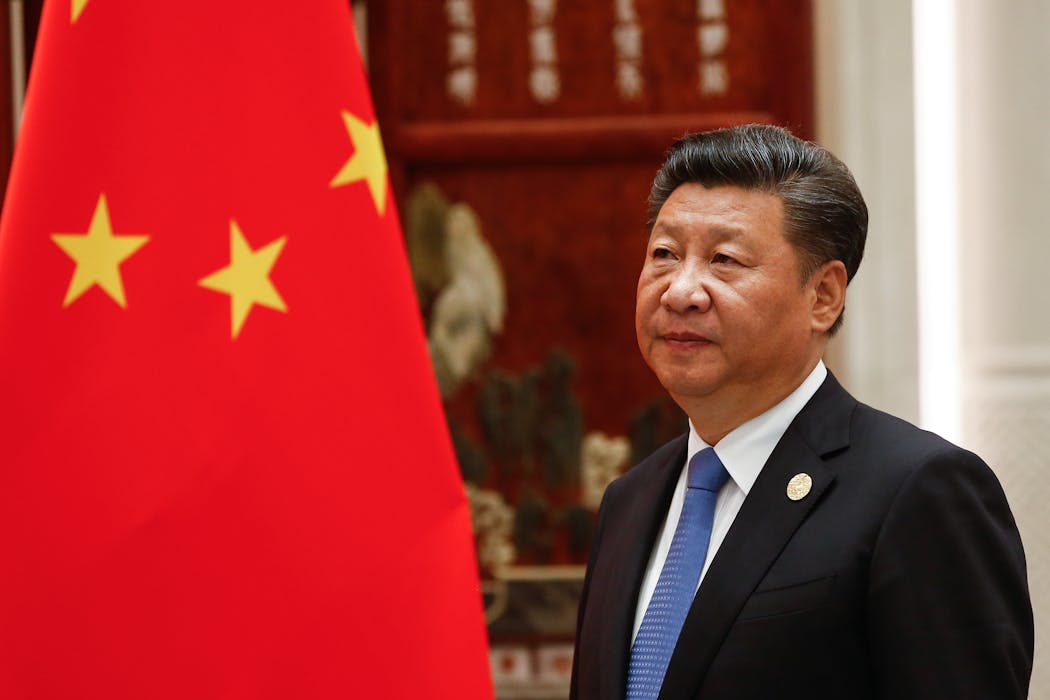
China’s president, Xi Jinping, during the G20 summit in Hangzhou, China, in 2016. Gil Corzo / Shutterstock

Protests erupted in Bishkek, the capital of Kyrgyzstan, in October 2020 following disputed parliamentary elections. Only four political parties out of 16 had passed the threshold for entry into parliament. Three of these had close ties to the country’s then-president, Sooronbay Jeenbekov.

Kyrgyzstan’s powerful neighbour, China, responded to the unrest with restraint – but in a way that implied democracy can cause political upheaval. Hua Chunying, spokeswoman for the Chinese foreign ministry, said: “China sincerely hopes that all parties in Kyrgyzstan can resolve the issue according to law through dialogue and consultation, and push for stability as soon as possible”.

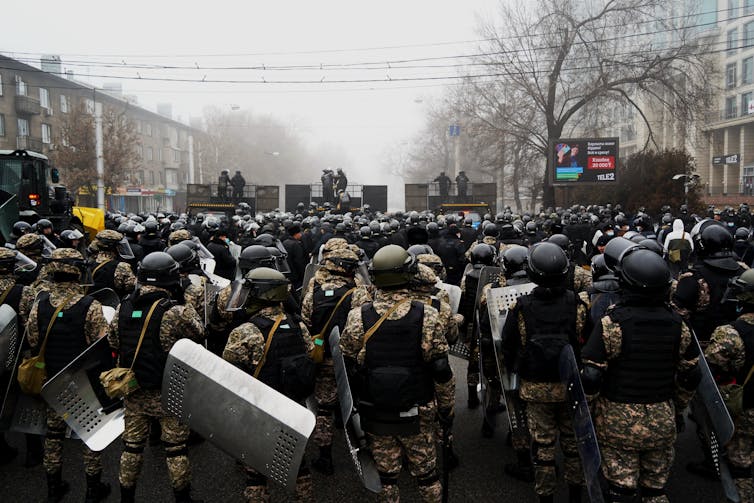
China adopted a different tone when Kazakhstan’s government responded violently to civil unrest in early 2022. It endorsed the Kazakh president, Kassym-Jomart Tokayev, repeating his claims that “terrorists trained abroad” were responsible for the unrest. Beijing praised Tokayev’s firm response, which left hundreds of people dead.

Why did China, confronted with two uprisings in neighbouring countries, react cautiously in one case and assertively in the other? As my recently published research shows, the answer points to a broader pattern in the promotion of authoritarian governance in the world today.

Researchers tend to assume that authoritarian regimes seek to export a coherent ideological model, like how the Soviet Union once promoted communism. The Soviet Union declared the aim of advancing communism abroad during the cold war, presenting one-party rule and central planning as a model for sympathetic regimes to adopt.

But few autocracies nowadays have a common ideological model to advance. Repressive regimes like the one in Beijing instead look to normalise autocratic practices elsewhere by presenting them as reasonable solutions to pressing governance challenges.

I call this “autocracy commercialisation”. Just as products are marketed differently depending on the consumer, China encourages autocratic practices in different ways that are tailored to local conditions.

Different approaches

The Kyrgyzstan and Kazakhstan examples illustrate this dynamic. Since its independence from the Soviet Union in 1991, Kyrgyzstan was for many years considered the most democratic country in central Asia. It had an active political opposition, as well as a vibrant civil society and independent media outlets.

Here, Beijing has relied on what I describe in my research as a “defensive logic”. This has seen it present autocratic practices to Kyrgyzstan’s political leaders as a possible bulwark against democratic volatility. These practices have ultimately been accepted, and Kyrgyzstan has further descended towards authoritarianism.

During the unrest in 2020, Chinese officials and state media repeatedly warned that continued political turmoil could undermine Kyrgyzstan’s development. They urged all parties to resolve issues swiftly “through dialogue and consultation”. Through these claims, Beijing presented stability as the highest political good and implied that elections – and, by extension, participatory democracy – can lead to chaos.

Following the protests, the electoral authorities in Kyrgyzstan annulled the results of the elections. Jeenbekov accused “political forces” of trying to seize power illegally and subsequently resigned. He told the BBC he was ready to hand over “responsibility to strong leaders”.

A nationalist politician called Sadyr Zhaparov rapidly consolidated power in Kyrgyzstan after Jeenbekov’s resignation. He first declared himself acting president before being officially elected several months later in a vote criticised for lacking genuine competition.

China swiftly recognised his government, treating it as a return to order after a period of instability. In 2024, Kyrgyzstan then put forward new laws to give more power to governing authorities and curb dissent. Media freedoms have also narrowed under Zhaparov’s rule and civil society space has shrunk.

A group of riot police during protests in Almaty.
The Kazakh authorities cracked down violently on protests in 2022.
Vladimir Tretyakov / Shutterstock

Kazakhstan shows a different picture – demonstrating what I call an “affirmative logic”. When protests over fuel prices escalated into nationwide unrest in January 2022, Chinese officials aligned themselves with the government’s account of events. They emphasised terrorism and foreign interference as the root causes.

China not only fully supported Tokayev and praised his leadership. It also highlighted the stabilising roles of regional security organisations such as the Collective Security Treaty Organization, which sent troops to Kazakhstan to help tackle the protests, and the Shanghai Cooperation Organization. Autocracy was framed affirmatively by Beijing as the guarantor of order.

Kazakhstan has subsequently continued along its authoritarian path. In April 2024, for instance, a new media law came into effect that gave the ministry of information powers to block accreditation of foreign media and their representatives if they deem them as posing a threat to national security.

These two cases show how China adapts its narratives to different contexts. This adaptability is powerful. By promoting autocracy as a flexible and context-sensitive practice, regimes such as the one in Beijing render it legitimate and, at times, preferable to any other.

Recognising this strategy is essential for those concerned with the global clash between democracy and authoritarianism. It helps explain why autocracy persists across diverse settings and why its appeal may be broader than many people suggest.

The Conversation

Giulia Sciorati does not work for, consult, own shares in or receive funding from any company or organisation that would benefit from this article, and has disclosed no relevant affiliations beyond their academic appointment.

ref. How China spreads authoritarian practices beyond its borders – https://theconversation.com/how-china-spreads-authoritarian-practices-beyond-its-borders-266543

How the French philosopher Jean Baudrillard predicted today’s AI 30 years before ChatGPT

Source: The Conversation – UK – By Bran Nicol, Professor of English, University of Surrey

Some writers appear so accurate in their assessment of where society and technology is taking us that they have attracted the label “prophet”. Think of J. G. Ballard, Octavia E. Butler, Marshall McLuhan, or Donna Haraway.

One of the most important members of this enlightened club is the philosopher Jean Baudrillard – even though his reputation over the past couple of decades has diminished to an association with a now bygone era when fellow French theorists such as Roland Barthes and Jacques Derrida reigned supreme.

In writing our new biography of Baudrillard, however, we have been reminded just how prescient his predictions about modern technology and its effects have turned out to be. Especially insightful is his understanding of digital culture and AI – presented over 30 years before the launch of ChatGPT.

Back in the 1980s, cutting-edge communication technology involved devices which seem obsolete to us now: answering machines, fax machines, and (in France) Minitel, an interactive online service that predated the internet. But Baudrillard’s genius lay in foreseeing what these relatively rudimentary devices suggested about likely future uses of technology.

In the late 1970s, he had begun to develop a highly original theory of information and communication. This ramped up following the publication of his book Simulacra and Simulation in 1981 (the book which influenced the 1999 movie The Matrix).

In 1986 Baudrillard was noting that in society “the scene and the mirror have given way to a screen and a network”. He predicted the use of the smartphone, foreseeing each person in control of a machine which would isolate them “in a position of perfect sovereignty”, like “an astronaut in a bubble”. Such insights helped him go on to devise perhaps his most famous concept: the theory that we were stepping into the era of “hyperreality”.

The Matrix was partly inspired by Baudrillard’s work.

In the 1990s, Baudrillard turned his attention to the effects of AI, in ways which help us grasp its pervasive rise in our age, and the gradual vanishing of reality that we now face more acutely with each passing day.

To readers of Baudrillard, the recent case of the AI “actor” Tilly Norwood, an apparently logical step in the development of simulations and other deepfakes, seems entirely in keeping with his view of the hyperreal world.

Baudrillard considered AI a prosthetic, the mental equivalent of artificial limbs, heart valves, contact lenses or surgical beauty enhancements. As he explains in his books The Transparency of Evil (1990) and The Perfect Crime (1995) its job is to make us think better – or to do our thinking for us.

But he was convinced that all it really does is enable us to experience the “spectacle of thought” rather than engaging in thought itself. Doing so means we can put off thinking forever. And, for Baudrillard, it followed that immersing ourselves in AI equated to giving up our freedom.

This is why Baudrillard thought digital culture hastened the “disappearance” of human beings. He didn’t mean literally, nor that we would become forcibly enslaved the way people are in The Matrix. Instead, outsourcing our intelligence to the machine meant that we “exorcise” our humanness.

Ultimately, though, he knew that the danger of sacrificing our humanness to a machine is not created by the technology itself, but how we relate to it. We are increasingly turning to large language models like ChatGPT to make decisions for us, as if the interface is an oracle or a personal advisor.

The worst effects of this dependence are when people fall in love with an AI, experience AI-induced psychosis, or are encouraged to kill themselves by a chatbot.


Read more:
Sex machina: in the wild west world of human-AI relationships, the lonely and vulnerable are most at risk


No doubt the humanised presentation of AI chatbots, the choice of a name like Claude or its presentation as a “companion” doesn’t help. But Baudrillard felt the problem was not so much the technology itself as our willingness to cede reality to it.

Falling in love with an AI avatar or surrendering decision-making to it is a human flaw not a machine flaw. But it’s essentially the same thing. The increasing bizarreness of Elon Musk’s bot Grok’s behaviour can be explained by the fact that it has real-time access to information (opinions, claims, conspiracies) circulating on X, the platform into which it is integrated.

Just as human beings are being shaped by our engagement with AI, so AI is being transformed by its users. The technological developments of the 1990s, Baudrillard thought, meant the question “am I human or machine?” was already becoming impossible to answer.

He was always confident, however, that there was one distinction which would remain in place. AI could never take pleasure in its operations the way the human being – in love, music, or sport, for example – can enjoy going through the motions of being human. But this is one prediction which may yet be proved wrong. “I may be AI-generated”, Tilly Norwood declared in the Facebook post which introduced her to the public, “but I feel real emotions”.


Looking for something good? Cut through the noise with a carefully curated selection of the latest releases, live events and exhibitions, straight to your inbox every fortnight, on Fridays. Sign up here.


This article features references to books that have been included for editorial reasons, and may contain links to bookshop.org. If you click on one of the links and go on to buy something from bookshop.org The Conversation UK may earn a commission.

The Conversation

The authors do not work for, consult, own shares in or receive funding from any company or organisation that would benefit from this article, and have disclosed no relevant affiliations beyond their academic appointment.

ref. How the French philosopher Jean Baudrillard predicted today’s AI 30 years before ChatGPT – https://theconversation.com/how-the-french-philosopher-jean-baudrillard-predicted-todays-ai-30-years-before-chatgpt-267372

Is it ok for politicians to use AI? Survey shows where the public draws the line

Source: The Conversation – UK – By Steven David Pickering, Honorary Professor, International Relations, Brunel University of London

Shutterstock/aniqpixel

New survey evidence from the UK and Japan shows people are open to MPs using AI as a tool, but deeply resistant to handing over democratic decisions to machines.

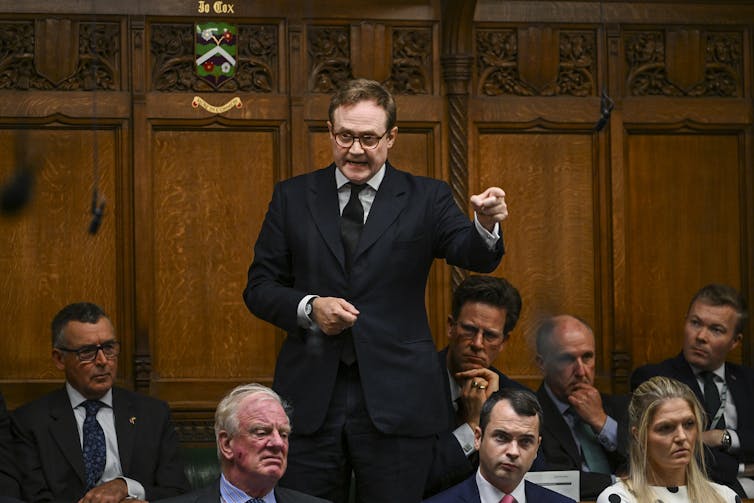
Artificial intelligence is creeping into every corner of life and is beginning to become a feature of politics. Conservative MP Tom Tugendhat recently criticised colleagues for using ChatGPT to draft their parliamentary speeches, warning that elected representatives should not outsource their judgment to machines. His comments capture a wider unease. Should AI have a place in democratic decision-making?

Supporters of AI in parliament argue it could help MPs cope with the flood of legislation, public submissions and policy documents they have to deal with in their work. But critics worry that over-reliance on AI may undermine accountability and public trust.

Tom Tugendhat speaking in parliament.
Tom Tugendhat is against MPs using AI to write speeches.
FLickr/UK Parliament, CC BY-NC-ND

In our new research, our TrustTracker team surveyed people in the UK and Japan to see where they drew the line on the use of AI among the people who represent them. They were cautiously accepting but were far more comfortable with politicians using AI as a source of advice but not as a replacement for them when making decisions.

In the UK, almost half of our 990 respondents said they did not support at all the idea of MPs even using AI for support. And nearly four in five rejected outright the notion of AI or robots taking decisions in place of parliamentarians.

Our 2,117 Japanese respondents were slightly more open, which we may expect, as Japan has considerable experience of automation and robotics. But they too expressed strong opposition to the idea of delegating decisions to the robots. Support was higher for assistance, but was still cautious.

Younger men were consistently more supportive of AI in politics. Older people and women are more sceptical. And we found that trust matters. People who trust their government are more willing to back AI in supporting MPs.

Our results were also heavily reflective of our participants’ broader attitudes towards AI. People who see AI as beneficial, and who feel confident in using it, were much more supportive. Those who fear AI were strongly opposed.

Curiously, ideology also plays a role, but in opposing ways. In the UK, people on the political right are more supportive of AI in parliament. In Japan, it is people on the left who express more openness.

Public tolerance for the use of AI in politics exists, but with limits. Citizens want their representatives to use new tools wisely. They do not want to hand over the reins to machines.

That distinction between assistance and delegation is key. AI can make parliaments more efficient, helping MPs sift through evidence, draft better questions, or simulate the outcomes of policy choices. But if citizens feel that AI is replacing human judgment, support evaporates.

For parliaments, which are institutions that depend on trust and legitimacy, this is a red flag. Public wariness could quickly turn into backlash if reforms outpace public consent.

National contrasts

The cross-national comparison is interesting. Japan has a cultural openness to robotics and automation. Concepts like Society 5.0 frame AI as part of a positive national future. Yet even here, people draw a line when it comes to political decision-making. In the UK, debates tend to be framed in terms of ethics and accountability. British respondents are generally more cautious, but also more polarised by ideology.

Taken together, these cases show that public opinion does not simply mirror cultural stereotypes. Support is conditional, context-specific, and tied to wider trust in politics.

AI is coming to politics whether we like it or not. Used carefully, it could help parliaments work better, faster and more transparently. Used carelessly, it could erode trust and legitimacy at the heart of democracy. In other words: AI can advise, but it cannot rule.

The Conversation

Steven David Pickering receives funding from the ESRC (grant reference ES/W011913/1) and the JSPS (grant reference JPJSJRP 20211704).

ref. Is it ok for politicians to use AI? Survey shows where the public draws the line – https://theconversation.com/is-it-ok-for-politicians-to-use-ai-survey-shows-where-the-public-draws-the-line-268728

Artificial developments weaken coastal resilience – here’s how mapping them can help

Source: The Conversation – UK – By Dhritiraj Sengupta, Visiting Researcher, University of Southampton

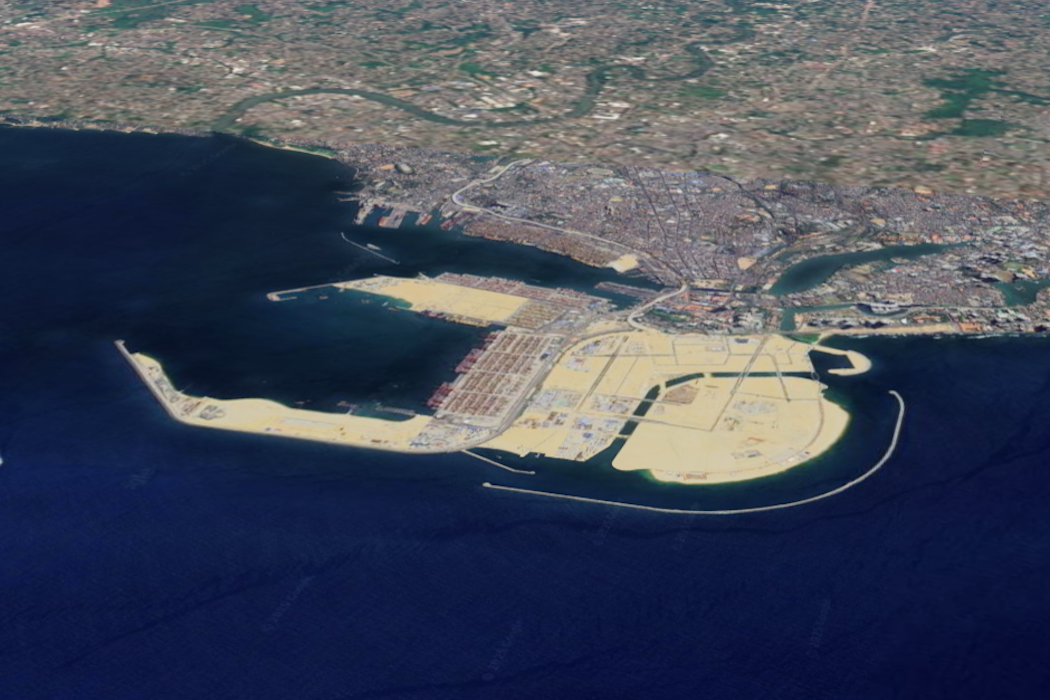
Reclamation at Colombo Port, Sri Lanka. Google Earth

The coastlines I trace resemble logos and luxury icons: palms, crescents, pixelated grids, surreal ornaments etched into shallow seas. The cartography is striking. The environmental consequences are very concerning.

There is an urgent need to evaluate the negative effects and risks associated with these artificial structures around the world, especially as climate change makes sea-level rise more extreme.

For ten years, I have been tracking changing coastlines and trying to map the spread of artificial coastal developments. But this is difficult for two reasons.

First, it’s tricky to define what counts as reclamation and what doesn’t. Does a polder (a piece of low-lying land reclaimed from the sea) belong in the same category as a luxury island? Do sea walls belong in the same category as “dredge-and-fill peninsulas” (land created by digging sand from a seabed or river banks that is used to fill an area of water).

Second, at a global scale, constantly updating maps with rapidly changing unnatural boundary designs is a never-ending task, which involves extracting data from satellite images.

The geometry of reclaimed sites and artificial shorelines can seem bizarre – ranging from the leafed fronds of Ocean Flower Island in Hainan, China, to perfect crescents in Durrat Al Bahrain in the Persian Gulf, and straight-edged lattices in Lagos, Nigeria. In most cases, they are designed to look appealing without much consideration of ocean health or storm resilience.

aerial shot of horseshoe shaped coastal islands in sea
Durrat Al Bahrain island in the Persian Gulf.
PaPicasso/Shutterstock

Sharp angles interrupt longshore drift. Features such as headlands, jetties or bends in the coastline block or redirect the flow of sand moved by waves. This causes sand to build up in some areas while leaving other beaches with less sand, leading to erosion.

With artificial coastlines, these effects are amplified – a particular problem in places without the financial means to manage their beaches.

Grid-like canals slice tidal flats into disjointed basins. On maps, the lines are neat – but in reality, they produce messy hydrodynamics and fragmented ecosystems.

Such misplaced “neatness” can have far-reaching consequences. Reclamation destroys mangroves, muddy tidal flats and seagrass meadows – ecosystems which act both as valuable stores of atmospheric carbon and fish nurseries.

Dredging also stirs up sediment which clouds the water downstream, making it harder for coral reefs to survive. This compounds climate stress, acting as a threat multiplier. Most of the artificial coastlines aren’t as resilient to extreme weather as they could be.


Read more:
New islands are being built at sea – but they won’t help millions made homeless by sea-level rise


Human-made coastal changes disturb natural water flow, often leading to poor water quality, floods and erosion. Coastal communities can lose their fishing grounds and safe landing beaches. Without protective natural ecosystems acting as a buffer against extreme weather, often the poorest coastal communities bear the greatest impacts from coastal erosion and sea-level rise.

There’s also a carbon cost to this type of coastal development. Dredgers, quarrying, cement and machinery all stack up emissions. Add in the lost carbon storage from destroyed wetlands, and reclamation becomes a climate double blow.

How maps become bridges to action

Maps reveal where, when and how much development is occurring. They can become bridges to action if this research into shoreline change is combined with biodiversity surveys (to assess marine life), hydrodynamic modelling (changes to currents) and social impact assessments (how coastal communities are affected).

In my view, environmental impact assessments should look beyond short-term, single-project effects, and consider how multiple projects collectively affect ecosystems over time. Construction approvals should depend not only on each project’s immediate footprint, but on how it will perform across its entire lifetime – for example, how much flood risk it creates and how much carbon it emits or saves.

Using a mix of tools to engage diverse groups – including local communities, policymakers, scientists and educators – can strengthen understanding and action on coastal change. Examples include holding workshops on the interpretation of satellite-derived data and visualisations, creating interactive StoryMaps (digital storybooks using maps, pictures and text to explain a topic), as well as community-driven mapping.

Many coastal and fishing communities located around reclamation sites – who previously had direct access to the coast – are now calling to halt further reclamation. By documenting lost ecosystems, tracing flood pathways and highlighting human stories behind coastal change, we can better understand how vulnerable coastal communities are to land reclamation.

close up shot of sandy reclaimed islands and turquoise sea
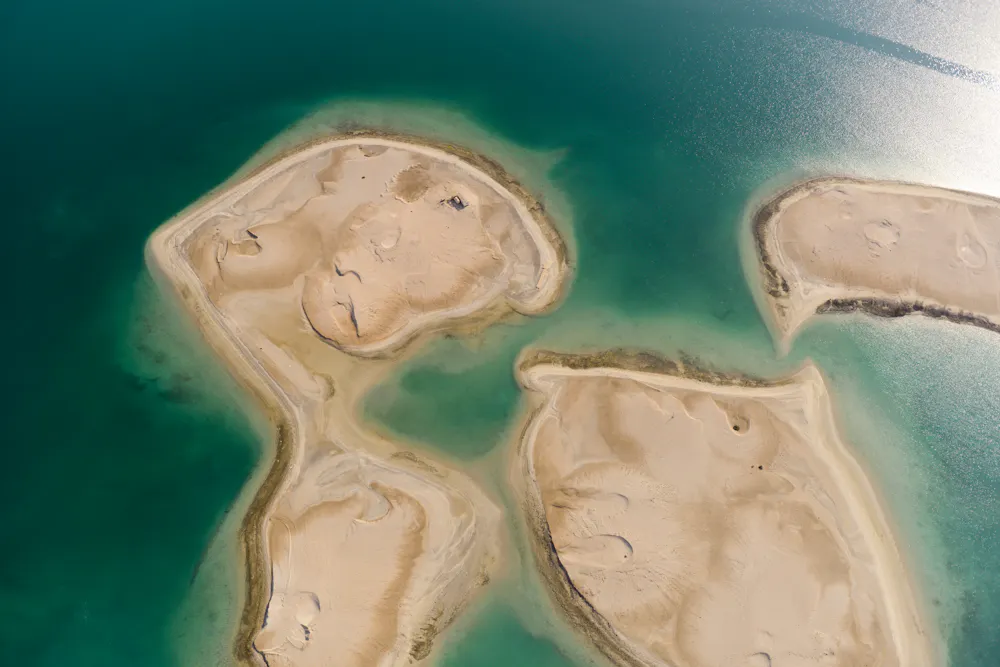
Dubai’s The World is a series of manufactured sandy island developments.
Felix Lipov/Shutterstock

Some damage is irreversible. Natural coastlines are not just scenic – they are self-maintaining, shock-absorbing, carbon-storing infrastructure. A moratorium on new reclamation throughout the world is needed – and a pivot to restoration by rebuilding lost mangroves, protecting tidal creeks and removing “hard edges” where possible.

Mapping alone will not stop coastal development. But it can catalyse coalitions, inform policy, expose hidden costs and redirect finance. It can turn a line on a screen into a line in the sand.

I began my research by trying to define reclamation precisely enough to classify it. But it has revealed a more urgent task: to defend what remains of the natural coastline, and restore what we still can.

The coastline is not a canvas for our extravagant signatures. When protected, it is nature’s living margin which sustains us.


Don’t have time to read about climate change as much as you’d like?

Get a weekly roundup in your inbox instead. Every Wednesday, The Conversation’s environment editor writes Imagine, a short email that goes a little deeper into just one climate issue. Join the 45,000+ readers who’ve subscribed so far.


The Conversation

Dhritiraj Sengupta receives funding from the Chinese Government Scholarship (CSC , 2016-2020) and from Leverhulme Trust Funding for the project on “Unnatural dynamics of flood deposits in built environments”, plus volunteers for International Geographical Union (https://igu-coast.org/steering-committee/) and is a fellow of the Future Earth Coast (https://www.futureearthcoasts.org/biography/dr-dhritiraj-sengupta/).

ref. Artificial developments weaken coastal resilience – here’s how mapping them can help – https://theconversation.com/artificial-developments-weaken-coastal-resilience-heres-how-mapping-them-can-help-250299

Tax rises and benefit cuts are on the horizon as Reeves prepares the UK for a bad-news budget

Source: The Conversation – UK – By Steve Schifferes, Honorary Research Fellow, City Political Economy Research Centre, City St George’s, University of London

The UK chancellor, Rachel Reeves, has made it clear that taxes will go up, and more cuts to welfare spending are on the horizon. The moves will be deeply unpopular and controversial – but in an extraordinary press conference ahead of the UK budget on November 26, Reeves made it clear that she believes both will be necessary.

In a highly unusual move, the chancellor used the press conference to set out her priorities for balancing the books while growing the economy. Notably, she did not mention the pledge in Labour’s manifesto not to raise taxes on working people or increase national insurance, VAT or income tax.

Instead, she said her focus was on lowering the burden of excessive government borrowing and debt, improving public services and tackling the cost of living.

Reeves gave particular importance to sticking with her “iron-clad” fiscal rules. These, she argued, were essential for showing she is being responsible with the nation’s finances and preventing a further rise in the cost of borrowing (the interest the government pays on its debt).

At more than £100 billion per year, this already makes up 10% of all government spending. The government’s spending watchdog, the Office for Budget Responsibility (OBR), projects the total to rise to £111 billion by the next financial year.


Read more:
David Blunkett: the world has changed since Liz Truss’s mini budget, so what is Labour still so scared of?


She also emphasised the importance of measures to boost UK productivity. Productivity forecasts are expected to be downgraded by the OBR, heaping yet more pressure on the chancellor’s budget choices. Reeves questioned whether the forecast would accurately predict the future – but has accepted that she will have to work within the OBR’s constraints in this year’s budget.

The chancellor is right that there is a pressing need to boost productivity. But it is by no means certain that planned investment in things like housing, nuclear and a third runway at Heathrow will yield big gains, at least in the near term.

At the same time, she made it clear that to meet her budget target there will need to be cuts to public spending. Some cuts will come from more “efficiency” savings by government departments (that perennial option that all chancellors reach for).

But they will also come from tackling the UK’s rapidly rising welfare budget, focusing on the large number of young people who are not in education, employment or training but depend on state benefits (so-called “Neets”).

Any cuts to the welfare budget, as well as a failure to abolish the two-child benefit limit (although she is under pressure from colleagues to bite the bullet and axe it), will cause dismay within the parliamentary Labour party as well as many party activists.

phone screen showing universal credit sign-in screen alongside some pound coins and a five-pound note.
Reeves is determined to bring down the UK’s rapidly rising welfare bill.
AndrewMcKenna/Shutterstock

As ever, the budget choices will be political as well as economic. Both the Conservatives and Reform UK will accuse Labour of breaking its manifesto promises. They will also claim Labour is undermining any chance of growth by raising taxes by a larger amount than any UK government has done in the last 50 years.

At the same time, it will become even more difficult for Labour to manage its large but fractious parliamentary majority. Earlier this year, backbenchers forced the government to restore the winter fuel payment for some pensioners and abandon plans to cut personal independence payments for disabled claimants.

Local government elections, as well as elections to the Scottish and Welsh parliaments, are looming next May. Reeves risks further alienating Labour’s grassroot supporters and pushing them towards smaller left-wing parties such as the Greens. They already seem to be pulling ahead of Labour among younger voters.

The stakes could not be higher. A bad result could even lead to questions about the future of both the chancellor and the prime minister Keir Starmer.

Finally, the chancellor’s goal to cut the cost of living for working people does not seem particularly ambitious. Her suggested approach involves cutting energy costs by investing more in electricity generation, and reducing the cost of food by changing the business rates system to help small businesses.

Even if effective, these changes will take some time to work through and may not be enough to convince voters that Labour is on their side – particularly if inflation is not brought under control.

Reeves’ appeal to the public to back her long-term approach to sorting out the British economy may be admirable. But the political risks to her personally – and Labour more broadly – remain considerable.

The Conversation

Steve Schifferes does not work for, consult, own shares in or receive funding from any company or organisation that would benefit from this article, and has disclosed no relevant affiliations beyond their academic appointment.

ref. Tax rises and benefit cuts are on the horizon as Reeves prepares the UK for a bad-news budget – https://theconversation.com/tax-rises-and-benefit-cuts-are-on-the-horizon-as-reeves-prepares-the-uk-for-a-bad-news-budget-269008

From nail bars to firefighting foams: how chemicals are deemed safe enough or too harmful

Source: The Conversation – UK – By Mark Lorch, Professor of Science Communication and Chemistry, University of Hull

Maksym93/Shutterstock.com

If you’ve sat in a nail salon recently, you may well have encountered TPO or trimethylbenzoyl diphenylphosphine oxide to give it its full chemical name. You won’t have seen the name on the bottle. But if you’ve had your gelled fingers under a blue-violet lamp, TPO could well have been part of the process.

TPO is what chemists call a photoinitiator – basically, a chemical that reacts when it’s hit with UV light. When your nails go under the lamp, TPO breaks apart and helps link tiny liquid molecules together, turning the polish into that solid, shiny, long-lasting gel layer.

It’s smart chemistry, and it’s one reason gel manicures last so much longer than normal nail polish. But recently, the EU banned TPO because research suggests it might increase the risk of cancer and could be harmful to the reproductive system.

Meanwhile, alternatives such as benzophenone and other common photoinitiators come with concerns of their own.

Benzophenone, for instance, is listed as a possible endocrine disruptor, meaning it may interfere with hormones. Another common substitute for TPO, called TPO-L is harmful to aquatic life and may cause skin allergies. None of this is hidden. The European Chemicals Agency maintains a public database where anyone can look up chemicals and find their hazard classifications and environmental data.

The point is not that nail varnish is dangerous. It is that even everyday products involve chemistry that is more complex than we might assume and that decisions about what is “safe enough” involve weighing risks, benefits and available alternatives.

The same pattern has played out recently with two much wider-reaching chemicals: Pfas, so-called “forever chemicals”, and glyphosate, a herbicide used in agriculture.

Recently, the European Commission announced new restrictions on Pfas in firefighting foam. It did this because Pfas don’t break down in the environment and can build up in living things over time, which can be harmful. Meanwhile, the use of glyphosate has been under review, with the EU approving its continued use and the UK due to make a decision in the next year or so.

None of these decisions happen instantly or automatically. Here is how chemical safety is regulated.

Firefighter using foam to put out a blaze.
Europe recently introduced restrictions on forever chemicals in firefighting foam.
ChiccoDodiFC/Shutterstock.com

What Reach does

Pharmaceuticals are tightly controlled globally, but chemicals aren’t always regulated as strictly. However, in the EU and UK, chemicals are managed under a system called Reach that is often described as one of the most comprehensive chemical regulations in the world.

The basic difference in how we treat medicines versus chemicals comes down to how we think about risk. Chemicals are expected to be safe when used properly. Medicines, on the other hand, are allowed to have some risks if the benefits outweigh the risks.

That’s why harsh cancer treatments, which can have serious side-effects, are still considered acceptable – because they can save lives. And it’s also why very dangerous chemicals can still be made and used, as long as there are strong safety measures in place.

Under Reach, companies must register their chemicals and provide detailed information on a chemical’s properties, hazards and safe handling. The principle here is: “no data, no market”.

Regulators then evaluate that information – and can request more if needed. Such substances may then be authorised, meaning they can only be used if companies can demonstrate that risks are controlled or that societal benefits outweigh them while safer options are developed.

If a substance poses an unacceptable risk that cannot otherwise be managed, regulators can restrict or ban specific uses of chemicals. Later if evidence emerges that suggests a chemical can cause cancer, harm reproduction, persist in the environment, accumulate in living things, or otherwise be hazardous, it might be added to a list of “substances of very high concern”.

Reach is a strict, step-by-step system that requires companies to prove their chemicals can be used safely. But in reality, we often only learn the full effects of a chemical over time, once it is being used outside the lab and in everyday life. That’s why decisions about chemicals such as TPO, Pfas and glyphosate can change slowly and sometimes take many years to fully settle.

Safe and sustainable by design

As a result of cases such as these, many feel that despite Reach being one of the most comprehensive chemical regulations in the world, it isn’t enough. This has led to a philosophy known as safe and sustainable by design, where, instead of making a chemical and then proving it is safe, a material is designed with safety and disposal or recycling in mind.

In this area, artificial intelligence may well prove to have a major role. AI is increasingly being used to predict toxicity of chemicals and so allow them to be flagged before they are manufactured.

Chemistry has built the modern world, given us durable coatings on the ends of our fingers, high-yield crops, non-stick pans, waterproof jackets and thousands of other unnoticed conveniences. It has also given us chemicals that travel too far, last too long and accumulate where they were never intended.

The challenge is not to stop using chemistry. It is to use it wisely. Whether we are talking about manicures, farmland, or emergency foam, the principle should be the same: use chemistry that does the job, without leaving a legacy. The more we can predict that, the fewer surprises we’ll find later.

The Conversation

Mark Lorch does not work for, consult, own shares in or receive funding from any company or organisation that would benefit from this article, and has disclosed no relevant affiliations beyond their academic appointment.

ref. From nail bars to firefighting foams: how chemicals are deemed safe enough or too harmful – https://theconversation.com/from-nail-bars-to-firefighting-foams-how-chemicals-are-deemed-safe-enough-or-too-harmful-268830

Maps reveal the greater risk to the world’s artificial coastlines from sea-level rise

Source: The Conversation – UK – By Dhritiraj Sengupta, Visiting Researcher, University of Southampton

Reclamation at Colombo Port, Sri Lanka. Google Earth

The coastlines I trace resemble logos and luxury icons: palms, crescents, pixelated grids, surreal ornaments etched into shallow seas. The cartography is striking. The environmental consequences are very concerning.

There is an urgent need to evaluate the negative effects and risks associated with these artificial structures around the world, especially as climate change makes sea-level rise more extreme.

For ten years, I have been tracking changing coastlines and trying to map the spread of artificial coastal developments. But this is difficult for two reasons.

First, it’s tricky to define what counts as reclamation and what doesn’t. Does a polder (a piece of low-lying land reclaimed from the sea) belong in the same category as a luxury island? Do sea walls belong in the same category as “dredge-and-fill peninsulas” (land created by digging sand from a seabed or river banks that is used to fill an area of water).

Second, at a global scale, constantly updating maps with rapidly changing unnatural boundary designs is a never-ending task, which involves extracting data from satellite images.

The geometry of reclaimed sites and artificial shorelines can seem bizarre – ranging from the leafed fronds of Ocean Flower Island in Hainan, China, to perfect crescents in Durrat Al Bahrain in the Persian Gulf, and straight-edged lattices in Lagos, Nigeria. In most cases, they are designed to look appealing without much consideration of ocean health or storm resilience.

aerial shot of horseshoe shaped coastal islands in sea
Durrat Al Bahrain island in the Persian Gulf.
PaPicasso/Shutterstock

Sharp angles interrupt longshore drift. Features such as headlands, jetties or bends in the coastline block or redirect the flow of sand moved by waves. This causes sand to build up in some areas while leaving other beaches with less sand, leading to erosion.

With artificial coastlines, these effects are amplified – a particular problem in places without the financial means to manage their beaches.

Grid-like canals slice tidal flats into disjointed basins. On maps, the lines are neat – but in reality, they produce messy hydrodynamics and fragmented ecosystems.

Such misplaced “neatness” can have far-reaching consequences. Reclamation destroys mangroves, muddy tidal flats and seagrass meadows – ecosystems which act both as valuable stores of atmospheric carbon and fish nurseries.

Dredging also stirs up sediment which clouds the water downstream, making it harder for coral reefs to survive. This compounds climate stress, acting as a threat multiplier. Most of the artificial coastlines aren’t as resilient to extreme weather as they could be.


Read more:
New islands are being built at sea – but they won’t help millions made homeless by sea-level rise


Human-made coastal changes disturb natural water flow, often leading to poor water quality, floods and erosion. Coastal communities can lose their fishing grounds and safe landing beaches. Without protective natural ecosystems acting as a buffer against extreme weather, often the poorest coastal communities bear the greatest impacts from coastal erosion and sea-level rise.

There’s also a carbon cost to this type of coastal development. Dredgers, quarrying, cement and machinery all stack up emissions. Add in the lost carbon storage from destroyed wetlands, and reclamation becomes a climate double blow.

How maps become bridges to action

Maps reveal where, when and how much development is occurring. They can become bridges to action if this research into shoreline change is combined with biodiversity surveys (to assess marine life), hydrodynamic modelling (changes to currents) and social impact assessments (how coastal communities are affected).

In my view, environmental impact assessments should look beyond short-term, single-project effects, and consider how multiple projects collectively affect ecosystems over time. Construction approvals should depend not only on each project’s immediate footprint, but on how it will perform across its entire lifetime – for example, how much flood risk it creates and how much carbon it emits or saves.

Using a mix of tools to engage diverse groups – including local communities, policymakers, scientists and educators – can strengthen understanding and action on coastal change. Examples include holding workshops on the interpretation of satellite-derived data and visualisations, creating interactive StoryMaps (digital storybooks using maps, pictures and text to explain a topic), as well as community-driven mapping.

Many coastal and fishing communities located around reclamation sites – who previously had direct access to the coast – are now calling to halt further reclamation. By documenting lost ecosystems, tracing flood pathways and highlighting human stories behind coastal change, we can better understand how vulnerable coastal communities are to land reclamation.

close up shot of sandy reclaimed islands and turquoise sea
Dubai’s The World is a series of manufactured sandy island developments.
Felix Lipov/Shutterstock

Some damage is irreversible. Natural coastlines are not just scenic – they are self-maintaining, shock-absorbing, carbon-storing infrastructure. A moratorium on new reclamation throughout the world is needed – and a pivot to restoration by rebuilding lost mangroves, protecting tidal creeks and removing “hard edges” where possible.

Mapping alone will not stop coastal development. But it can catalyse coalitions, inform policy, expose hidden costs and redirect finance. It can turn a line on a screen into a line in the sand.

I began my research by trying to define reclamation precisely enough to classify it. But it has revealed a more urgent task: to defend what remains of the natural coastline, and restore what we still can.

The coastline is not a canvas for our extravagant signatures. When protected, it is nature’s living margin which sustains us.


Don’t have time to read about climate change as much as you’d like?

Get a weekly roundup in your inbox instead. Every Wednesday, The Conversation’s environment editor writes Imagine, a short email that goes a little deeper into just one climate issue. Join the 45,000+ readers who’ve subscribed so far.


The Conversation

Dhritiraj Sengupta receives funding from the Chinese Government Scholarship (CSC , 2016-2020) and from Leverhulme Trust Funding for the project on “Unnatural dynamics of flood deposits in built environments”, plus volunteers for International Geographical Union (https://igu-coast.org/steering-committee/) and is a fellow of the Future Earth Coast (https://www.futureearthcoasts.org/biography/dr-dhritiraj-sengupta/).

ref. Maps reveal the greater risk to the world’s artificial coastlines from sea-level rise – https://theconversation.com/maps-reveal-the-greater-risk-to-the-worlds-artificial-coastlines-from-sea-level-rise-250299

Rape culture is a problem for everyone – here are three ways to tackle it

Source: The Conversation – UK – By Alexandra Fanghanel, Associate Professor in Criminology, University of Greenwich

skypiercerr/Shutterstock

Rape, as a crime, is widely deplored. Society and media condemn rapists, and rape and other sexually-related crimes carry potentially heavy prison sentences when perpetrators are convicted. So why, given this apparent intolerance for rape, do criminologists like me (and many others) still say that we live in a “rape culture”?

Rape culture is a term used to describe societies that accept rape and sexual violence. It is defined as a “set of beliefs that encourage male sexual aggression and support violence against women”. It is a society where violence against women is often seen as sexy and therefore ignored, accepted or dismissed as a joke.

In the UK, this manifests in several ways. We see rape culture in the normalisation of sexual violence in schools, in suggestions that victims “must share some of the blame” for their own rape, and in violence against women dismissed as “pranks” in family courts. It is also expressed in rape myths (such as “men can’t be raped”) and in victim-blaming (“she was asking for it because of how she was dressed”).

Rape culture normalises acts of sexual violence (against all genders) by allowing these acts to continue unchallenged. According to the Office for National Statistics, in 2024, the police recorded 71,227 complaints of rape in England and Wales. Of these, 2.7% were charged, of which about half resulted in conviction.

In part, these low figures are because, in England and Wales, the Crown Prosecution Service will only prosecute an offender if they believe a case has a “realistic prospect of conviction”. Rape culture undermines that realistic prospect, because it influences how society and courts think about and respond to victims of rape.

Myths about how a victim “should” behave, whether they have any interest in unconventional sexual practices or are promiscuous, their age or what a perpetrator looks like, all inform these low conviction rates. And claims of how false rape accusations ruin lives mean there is a reluctance to label a man a rapist or sex offender, especially if he is popular or successful.

Rape culture is bad for everyone. It means victims of sexual violence of any gender are not taken seriously, and it denigrates people based on their sexuality. That is why it is necessary to challenge it wherever we can. Here are three ways you can fight rape culture in your own life:

1. Be an active bystander

Intervening in assault or harassment does not require you to be a vigilante, nor to go head-to-head with a perpetrator of sexual violence, which can be dangerous. Organisations like Right to Be have developed bystander programmes which help people intervene in sexist, bullying or abusive conduct in different ways.

Their “5 Ds” of intervention are:

  • distract the victim with an unrelated conversation to interrupt the encounter;

  • delegate: get someone (possibly someone with authority in the space, like a train guard) to help;

  • document: film what is happening, if it is safe to do so;

  • delay: seek the victim out afterwards to offer help or check in with them;

  • direct: if it feels safe and you feel able to, intervene directly and tell the perpetrator what they are doing is not OK. Keep this short and, once you have intervened, turn your attention to the victim and their needs.

2. Make sex unexceptional

My research explores how the shame around sex in general is much of what sustains rape culture. Sex crimes, because of their association with shame and taboo, are sensationalised and more morally charged than other crimes.

In my forthcoming book, I suggest that taking some of the stigma away from sex, and approaching it as ordinary, could help undo some of the rape culture we live in.

When we moralise about sex, it leads to expectations and preconceptions about how sex crimes happen. We create or believe myths about what “real” rape looks like and how “real” victims and perpetrators behave.

A sign at a protest reading 'No means no'
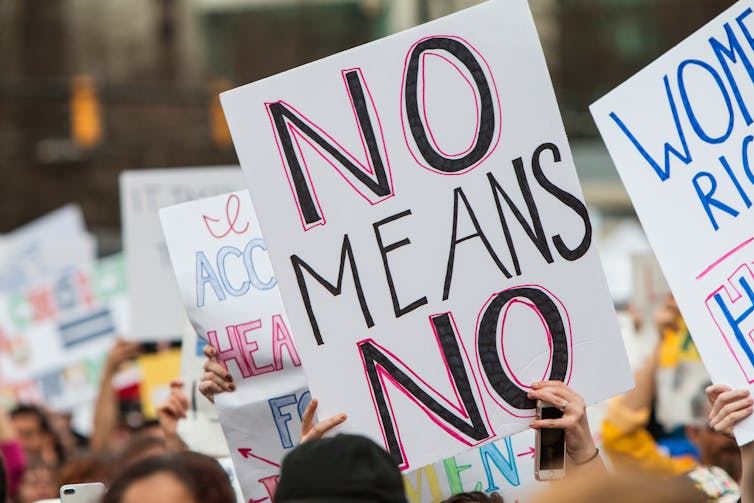
Changing rape culture is all of our responsibility.
BluIz70/Shutterstock

We need a better, broader understanding of what sex is and how people have it, so we are better at telling the difference between consensual and non-consensual encounters. Sexual exceptionalism nurtures rape myths. For example, a victim with a history of sex work, or who has rape fantasies, or who is friends with their attacker, can still be raped. Taking the salaciousness out of sex helps us to think about scenarios like these more clearly.

Instead of being squeamish about sex or treating it as something sordid, we need to talk more about sex without shame. Sex crimes are dreadful, but unburdening them from this baggage will help tackle rape culture.

3. Educate without stigma

Studies of university-aged students show that many have a poor understanding of the complexity of consent. Many do not know that rape can take place within a partner relationship, or that “stealthing” (removing a condom during penetrative sex without letting the other person know) is a crime, or that men can be sexually assaulted.

Whether you are a teacher, parent or friend, it is important to have candid, non-sensational conversations about sex and sexual violence. Through sharing unstigmatised knowledge about sexual conduct, people can learn to identify rape myths, to understand why actions like staring or lewd comments are problems, to name sexual violence if it happens, and to express their feelings about it.

Rape culture is not about weak women and predatory men. It is not about “cultures who rape” and the rest of us who don’t. Calling out rape culture is about challenging our preconceived notions, confronting our sexual squeamishness, and fighting for sexual justice for everyone.

The Conversation

Alexandra Fanghanel does not work for, consult, own shares in or receive funding from any company or organisation that would benefit from this article, and has disclosed no relevant affiliations beyond their academic appointment.

ref. Rape culture is a problem for everyone – here are three ways to tackle it – https://theconversation.com/rape-culture-is-a-problem-for-everyone-here-are-three-ways-to-tackle-it-263152