Five ways professional athletes are redefining the limits of age in sport

Source: The Conversation – UK – By Paul Hough, Lecturer Sport & Exercise Physiology , University of Westminster

Maciej Rogowski Photo/Shutterstock

In elite sport, the phrase “past your prime” is rapidly being redefined.

At 38, Jess Fishlock just became the oldest goalscorer in UEFA Women’s Euro history. At Euro 2024, Portuguese defender Pepe made headlines not for a red card or faking injury — but for simply stepping onto the pitch at age 41, becoming the oldest player to feature in a European Championship. Fellow veterans Cristiano Ronaldo (39), Luka Modrić (38), and Keylor Navas (38) also made appearances.

And it’s not just football. Serena Williams won the Australian Open at 35 (while pregnant). Roger Federer won a Grand Slam at 36. Rafael Nadal became the oldest French Open champion at 36. Novak Djokovic, now 38, won Olympic gold in 2024 and reached the semi-finals of all three Grand Slams this 2025.

In American sports, Tom Brady retired at 45 after 23 physically punishing NFL seasons. LeBron James, at 39, is still dominating in the NBA, having won the inaugural NBA Cup with the LA Lakers in 2023.

These aren’t just feel-good stories; they reflect a growing trend. Athletes are staying competitive for longer and pushing the boundaries of peak performance. But how?

Research backs the shift. A study on Olympic athletes found that between 1992 and 2021, the average age of male Olympians rose from 25 to 27, and female athletes from 24 to 26. In football, a study of UEFA Champions League players found the average player age rose by nearly two years between 1992 and 2018.

So how are older athletes continuing to thrive in elite sport? Here are some of the key factors.

1. Smarter training

Modern athletes benefit from personalised training programmes informed by cutting-edge sports science. Tools like GPS tracking, heart rate variability (HRV), and biomarker analysis help coaches monitor performance, recovery and injury risk.

Metrics such as HRV, for example, can indicate when an athlete might need more rest, which is crucial for older athletes who take longer to recover after intense competition.

Athletes are no longer reliant on a single coach. Today, they work with integrated teams – sports scientists, strength and conditioning coaches, and performance analysts – all dedicated to improving their fitness and performance.

2. Better injury prevention and medical support

Athletes now undergo regular fitness testing and musculoskeletal screening to identify potential weaknesses before they lead to injury. And when injuries do occur, recovery methods have vastly improved.

Anterior cruciate ligament (ACL) injuries were once considered career-ending for older athletes. But thanks to advanced surgical techniques and biological therapies, recovery is now faster, and athletes return to play much sooner.

Zlatan Ibrahimović, at age 35, returned to top-level football just seven months after an ACL tear – a feat nearly unthinkable a decade earlier.

3. Optimised recovery and nutrition

Ageing athletes have different recovery needs — and sports science has stepped up. Cryotherapy, compression therapy, and advanced sleep protocols all help reduce muscle soreness and accelerate repair.

Nutrition plays a key role too. Ageing bodies experience more inflammation and slower repair, so diets rich in polyphenols (found in berries, leafy greens, and dark chocolate) are used to support vascular health and recovery. Athletes may also take approved supplements such as glucosamine and chondroitin to support joint health and slow degeneration.

The result? Older athletes can train more consistently and recover faster between games.

4. Experience and tactical intelligence

Speed and strength decline with age, but tactical intelligence often improves. Older athletes can compensate for age-related declines in physical capacity with their advanced game-reading skills and spatial awareness. For instance, footballers like Paul Scholes and Andrés Iniesta adapted their playing styles with age, relying more on positioning and passing intelligence than physical capacity.

5. Financial and legacy incentives

Today’s stars aren’t just competing for medals – they’re building brands. With massive financial rewards on offer, there’s a clear incentive to prolong careers.

Cristiano Ronaldo, for example, recently signed a two-year contract extension with Al-Nassr that will see him play until age 42 — reportedly earning an estimated £492 million. For many athletes, the chance to leave a lasting legacy and secure generational wealth keeps them in the game.

While we can’t stop the biological effects of ageing, today’s athletes are proving we can delay their impact – and even thrive later in life.

With smarter training, better recovery strategies and cutting-edge medicine, the upper age limit for peak performance continues to stretch. These advances may allow more veteran athletes to defy expectations and continue competing at the highest level.


Get your news from actual experts, straight to your inbox. Sign up to our daily newsletter to receive all The Conversation UK’s latest coverage of news and research, from politics and business to the arts and sciences.

The Conversation

Paul Hough does not work for, consult, own shares in or receive funding from any company or organisation that would benefit from this article, and has disclosed no relevant affiliations beyond their academic appointment.

ref. Five ways professional athletes are redefining the limits of age in sport – https://theconversation.com/five-ways-professional-athletes-are-redefining-the-limits-of-age-in-sport-261028


Subsidising e-bikes instead of cars could really kick the electric vehicle transition into high gear

Source: The Conversation – UK – By Noel Flay Cass, Research Fellow in Energy Demand Behaviour, University of Leeds

If you’re thinking of buying a new electric car worth up to £37,000, the UK government has offered to knock up to £3,750 off the price. The measure adds up to £650 million in grants for people to buy EVs (electric vehicles), but as a researcher who studies transport policy and climate change, I think this money would be better spent subsidising e-bikes.

Numerous questions surround the new government policy. Might people who can afford a new car buy one anyway, without the 10% discount? Might car dealers simply reduce the discounts they offer by a similar amount? Given the 20% VAT on an EV, doesn’t a sale actually result in a 200% immediate return for the government? And isn’t this mainly a bung to car manufacturers and company fleets?

The grants come on top of financial assistance for replacing cars, vans, taxis and motorbikes with electric options, announced in February – £120 million in total, including £500 grants for e-motorbikes. But almost no subsidies are available for two-wheeled, pedal-assisted EVs: e-bikes and e-cargo bikes.

The main financial help for buying e-bikes is the cycle to work salary-sacrifice scheme. The employer buys the bike and then instalments are deducted from a participant’s pay before tax, but the scheme’s eligibility is limited to employees on standard payroll tax (PAYE workers) whose sacrifices don’t drop their pay below minimum wage.

This also excludes those who are out of work, the low-paid, the self-employed and retired, arguably people who might benefit most from an e-bike.

Benefits beyond carbon savings

We know that e-bike owners replace lots of trips and miles driven by cars. We also know the upfront cost of around £2,000-£3,000 is a barrier to more people owning one, despite e-bikes being much cheaper than cars.

Estimates of annual carbon savings from e-bikers avoiding car trips vary, from as little as 87kg CO₂ in a 2016 study to 394kg in research published the following year. Estimates published in 2020 and 2023 put the annual climate dividend at 225kg and 168kg of CO₂ respectively – roughly in line with emissions for one person making a return short-haul flight.

A senior woman on an e-bike surrounded in a park.
E-bikes provide extra propulsion to make long or arduous journeys easier for more riders.
Umomos/Shutterstock

These might seem small savings compared to the tonnes of CO₂ that an EV can save. However, e-bike incentives would have two big advantages.

First, policies that encourage active travel, including cycling, have been assessed by the government multiple times to determine the payoff from investment. It turns out that they have huge benefit to cost ratios – 9:1 on average (internationally it’s 6:1).

Conservatively, policies to encourage cycling pay back £5.50 in social benefits for every £1 invested. These benefits are largely savings for the healthcare system. In a project I worked on, in which we lent e-cargo bikes for free to 49 households in Leeds, Brighton and Oxford for several months, e-cargo bike users cycled up to three times more than non-users in our surveys.

E-cargo bike borrowers also reported mental-health benefits on top of satisfaction at being able to combine fitness with functional everyday trips, which were longer than they would attempt on a conventional bike. The cargo bikes especially helped with combining trips – commutes with shopping and school runs, for instance – meaning that more than 50% of trips and miles replaced car usage.

A woman riding a bike with a large cargo hold on the front which a child is sitting in.
Precious cargo.
R.Classen/Shutterstock

Second, e-bike incentives can be designed to appeal especially to the lower-paid, who have been found to use their e-bikes more than wealthier buyers, which would also replace more car trips. The highest of a sliding scale of means-tested incentives in a Canadian study attracted poorer first-time e-bike buyers with existing high car-use.

This reaped average annual carbon savings of 1,456kg for those in receipt of the maximum CAN$1,600 (£868). As the authors suggest, these incentives may have helped low-income households realise their preferences for less dependence on cars.

E-bike grants could get more people out of cars

But how many drivers want to drive less? According to research that groups people into camps based on travel preferences, up to 50% of travellers in the UK are “malcontented motorists” and “active aspirers” (to travel differently).

A man in a suit and helmet attending his e-bike.
Research has shown great potential for wider e-bike ridership.
Halfpoint/Shutterstock

Our research also found that guilt, or trying to minimise car use, was a major motivator for nearly all of our participants. While the government has funded free e-(cargo) bike trials like ours, the main cycling organisations we talked to pointed out that use would “fall off a cliff” when the trial ends because of the cost barrier. Those who would struggle to buy one were back in the same position as before.

A government evaluation of free e-bike loans concluded they were poor value for money, but it tracked purchases made soon after with a tiny response rate. Our project followed up after a year and found 20% of our borrowers had bought an e-cargo bike. Trial loans and grants together might achieve even more.

The new EV grant money could provide nearly 750,000 e-bike or e-cargo bike purchase-incentives the size of the Canadian ones, which could lead to annual carbon savings of 1.125 million tonnes of CO₂, according to the weekly average savings they found in that group.

Given the conservative benefit to cost ratio of 5.5:1 from such a UK scheme, this investment could also reap more than £3.6 billion in social benefits – especially from a fitter car-dependent population. There would potentially be a massive boost to the struggling UK e-bike and e-cargo bike market as well.


Don’t have time to read about climate change as much as you’d like?

Get a weekly roundup in your inbox instead. Every Wednesday, The Conversation’s environment editor writes Imagine, a short email that goes a little deeper into just one climate issue. Join the 45,000+ readers who’ve subscribed so far.


The Conversation

Noel Flay Cass receives funding from UK Research & Innovation grant EP/S030700/1 through the Elevate project: (Innovative Light ELEctric Vehicles for Active and Digital TravEl).

ref. Subsidising e-bikes instead of cars could really kick the electric vehicle transition into high gear – https://theconversation.com/subsidising-e-bikes-instead-of-cars-could-really-kick-the-electric-vehicle-transition-into-high-gear-261429

How the UK’s immigration system splits families apart – by design

Source: The Conversation – UK – By Nando Sigona, Professor of International Migration and Forced Displacement and Director of the Institute for Research into International Migration and Superdiversity, University of Birmingham

arda savasciogullari/Shutterstock

The letter that arrived for eleven-year-old Guilherme in June 2025 was addressed personally to him. The UK Home Office was informing him that he and his eight-year-old brother Luca must return to Brazil. Their parents, an academic and a senior NHS nurse, both long-term UK residents with valid visas were not included in the order.

“Whilst this may involve a degree of disruption in family life,” the letter stated, “this is considered to be proportionate to the legitimate aim of maintaining effective immigration control.”

The family’s difficulties with the Home Office began after the parents divorced a few years after arriving in the UK. Mother and children arrived in the UK as dependants on the father’s visa. After the divorce, the mother secured her own skilled worker visa, while the father was granted indefinite leave to remain in 2024.

Under current rules, skilled workers must wait five years before applying for settlement. For the children to qualify for settlement, both parents must be settled or one must have sole responsibility – neither condition applies here. Only after media attention did the Home Office reconsider the decision.

This case is just the latest example of how barriers to migrants’ family life are embedded in the UK’s immigration system – something I have been studying for years. The Labour government’s recently announced immigration plans extend and bolster these barriers.

Current rules require migrants to earn at least £29,000 to sponsor a spouse or child – a figure set to rise to £38,700 in early 2026 after changes introduced by the last government. The newest immigration plans propose doubling the path to settlement from five to ten years. And they restrict the rights to family reunion to only “nuclear” families: divorced parents, adult children and extended kin are left out.

These changes are aimed at reducing migration and restoring “public trust”. But in practice, they make family unity a luxury — harder to achieve for low-paid migrant workers and even for working-class British citizens with foreign partners.


Read more:
‘Just the rich can do it’: our research shows how immigration income requirements devastate families


The price of family life

Recent research my colleagues and I conducted — based on over 50 interviews with migrant domestic and food delivery workers and other experts — shows how the immigration system fractures families and puts children at risk.

Faith, a Zimbabwean domestic worker, explained how she was unable to bring her eldest daughter to the UK due to age restrictions on dependant visas. Her daughter was later trafficked into the UK and, though she eventually rejoined her mother, hasn’t recovered from the trauma of separation: “She’s struggling to sleep, can’t eat … always emotional, saying she feels dizzy, scared to be around people.”

Faith had been trapped in an abusive relationship for a long time because her visa was tied to her partner. When she eventually left her partner, her visa was withdrawn – leaving her in breach of immigration rules. Her younger child was placed in care while Faith was detained for breaching the terms of her visa.

Jamal, a food delivery rider from Eritrea, had a similar experience of legal dependency. He came to the UK on a dependant visa linked to his British wife. After their relationship deteriorated, his ability to remain in the country was threatened: “If we have problems, she can cancel my visa. This was her weapon.”

Susan, a Zimbabwean woman working in the care and cleaning sector, moved to the UK to look after her adult daughter who had cancer. When her six month visitor visa expired, she applied for asylum, but her application was refused and eventually she was detained for almost a month.

She faced deportation but was released after a legal aid lawyer helped her submit strong evidence of her daughter’s condition. Reflecting on her experience, she explained: “When it benefits them, they say I’ve had no contact [with my family in the UK]. When they want to deport me, they say I have family to return to [in Zimbabwe].”

Immigration status doesn’t just define one’s own legal position, it can determine who gets the right to have a family in the UK and who does not. While some of our interviewees secured status through a partner’s EU citizenship and reunited with family members already in the UK, others who rely on temporary visas are excluded.

Changes to the immigration in recent years have placed a higher value on how migrants can contribute or provide “value” – seeing them as workers (or students) first, not members of families. Many are allowed in the UK for a limited time and without the right to bring with them even the closest family members. The effect is particularly harsh on women in domestic work, whose visas are short-term and not renewable.

Many interviewees reported that immigration barriers delayed or obstructed their children’s education or healthcare. Samantha’s daughter waited over two months for a school placement because their legal status was still pending. Adriana was charged £8,000 for NHS maternity services because of her undocumented status, which restricts access to free healthcare to GP and emergency care.

Even in less extreme cases, legal insecurity takes a toll. Children grow up hearing their parents talk about “papers”, “Home Office letters” or the risk of being “sent back”.

That the Home Office sent a removal letter to an eleven-year-old is not a clerical error. It is the system working as designed. And even when public outrage forces a reversal — as in Guilherme’s case — the wider machinery of enforcement continues.


Get your news from actual experts, straight to your inbox. Sign up to our daily newsletter to receive all The Conversation UK’s latest coverage of news and research, from politics and business to the arts and sciences.

The Conversation

Nando Sigona is Scientific Coordinator of “Improving the Living and Working Conditions of Irregularised Migrant Households in Europe” (www.i-claim.eu), a three-year six-country research project, funded by the European Commission’s Horizon Europe and UKRI.

ref. How the UK’s immigration system splits families apart – by design – https://theconversation.com/how-the-uks-immigration-system-splits-families-apart-by-design-261134

Counting the climate costs of abandoned shopping trolleys

Source: The Conversation – UK – By Neill Raath, Assistant Professor of Sustainable Materials and Manufacturing, University of Warwick

Richard Johnson/Shutterstock

Despite the steady growth of online shopping, a majority of the UK public still prefers to buy groceries at the supermarket.

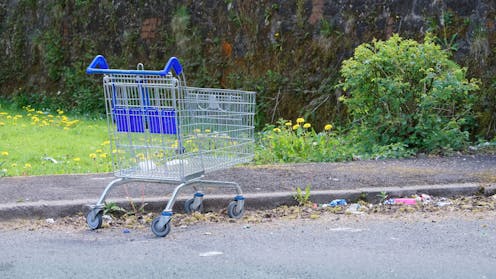
Shopping trolleys can help us lug our purchases back to the car, but some shoppers are evidently taking them further afield. In 2017, 520,000 trolleys were reported as abandoned in the UK. Sunderland in north-east England alone reported 30,000 abandoned trolleys between 2020 and 2022. Likewise, 550 trolleys were collected in a single day in western Sydney, Australia.

Supermarkets employ a range of methods to stop trolleys leaving their premises, including coin slots, vertical bars (to stop trolleys leaving the shop floor), wheel-locking mechanisms and car park wardens. Despite these efforts, abandoned trolleys still blight the landscape and need to be collected.

Many supermarkets use commercial collection services, such as Wanzl TrolleyWise or TMS Collex. These companies typically use diesel vans to survey suburban areas, collect trolleys and return them to supermarkets. They also offer to refurbish weathered or damaged trolleys, sometimes by applying a zinc-based coating to protect against corrosion – a process known as regalvanisation.

We are researchers at the University of Warwick who wanted to understand the environmental impact of trolley abandonment. So, we set out to investigate it.

Collecting versus manufacturing

How does the environmental impact of using vans to rescue abandoned trolleys compare with losing these trolleys to excessive damage or corrosion and having to make new ones?

Our study used a standardised methodology known as life-cycle assessment to analyse the potential environmental impact of collecting and handling abandoned shopping trolleys within an area of Coventry, a city in the English West Midlands, which includes our university campus.

We spoke to trolley suppliers, who told us trolleys used at the supermarket in Coventry were most likely made in Spain. This was incorporated into our model.

A shopping trolley wedged in a hedge.
A trolley discovered by the author, abandoned in a bush near a car park.
Neill Raath

Through conversations with our university’s estates department and commercial collection services, we established that approximately 30 trolleys were collected a week on average in the area surrounding the Tesco supermarket in the Cannon Park shopping centre.

Our model assumed that a bulk transport of 50 trolleys is sent twice each year to be refurbished, in a round trip of 220km between Coventry and a refurbishment facility based in the UK that was noted on stickers placed on refurbished trolleys.

Vans collecting 520,000 abandoned trolleys in a year could emit the equivalent of 343 tonnes of CO₂ (the annual equivalent of driving 80 petrol cars). If we imagine that 10% of these 520,000 trolleys have been left outside too long and need to be regalvanised then the total global warming impact increases by 90% to the equivalent of 652 tonnes CO₂ (roughly the same as 152 petrol cars being driven for one year).

This is quite a surprising increase for such a small number of trolleys. It suggests that the real problem lies with the environmental impact of manufacturing.

Most of the emissions can be avoided

We found that one trolley would have to be collected 93 times by a diesel van to have the same environmental impact as manufacturing a new one.

Our results showed that the emissions incurred during the diesel van collection phase were only 1% of the manufacturing impact, and the regalvanisation stage was only 8%. We might wonder whether switching to electrically powered collection vans might help. While the emissions would be reduced, the impact of using diesel vans is still minuscule compared to that of making new trolleys.

We found that the highest environmental impact stemmed from manufacturing, which was mainly attributed to making and replacing the steel frame of the trolley.

These results reinforce the benefits of following the circular-economy principle of keeping trolleys in use for as long as possible, and avoiding manufacturing to replace abandoned ones.

Would anything change if we switched to plastic trolleys? Other researchers have investigated the effect of changing trolley materials and have found that trolleys made of polymers have many benefits compared with steel: they use less material, are less dense (a benefit for collection vans that emit less by driving around lighter products) and do not require protective coatings, which themselves have an environmental impact.

A steelworks.
Blast furnaces at conventional steelworks are very carbon-intensive.
Pedal to the Stock/Shutterstock

However, if these polymer trolleys were to be sent to landfill (or left to deteriorate in the environment), they could release carcinogenic chemicals, as well as microplastics, as they break down. This leads us back to the importance of keeping products in use.

Abandoning trolleys is bad for the environment, with a potential global warming impact equivalent to 0.69 kg CO₂ for collecting one trolley and returning it to a supermarket. If we multiply this by the potential 520,000 abandoned trolleys a year, this figure becomes quite big.

Preventing trolley abandonment should be a priority not just for supermarkets, but for the general public as well. However, once a trolley is abandoned, it is far better to collect and refurbish it than to let it fall out of use and manufacture a new one, as 92–99% of the environmental impact can be avoided.

While it is unlikely that we can ever stop trolleys being abandoned, we hope that next time people see a trolley in an alley or park bush, the potential environmental impact of losing this trolley to service would be apparent.


Don’t have time to read about climate change as much as you’d like?

Get a weekly roundup in your inbox instead. Every Wednesday, The Conversation’s environment editor writes Imagine, a short email that goes a little deeper into just one climate issue. Join the 45,000+ readers who’ve subscribed so far.


The Conversation

The authors do not work for, consult, own shares in or receive funding from any company or organisation that would benefit from this article, and have disclosed no relevant affiliations beyond their academic appointment.

ref. Counting the climate costs of abandoned shopping trolleys – https://theconversation.com/counting-the-climate-costs-of-abandoned-shopping-trolleys-258500

4.48 Psychosis revival: the play’s window into a mind on the edge is as brutal as ever

Source: The Conversation – UK – By Leah Sidi, Associate Professor of Health Humanities, UCL

Under bright lights, the audience looks at a bare stage on two planes. Below, a small stage is white and empty, occupied only by a table and two chairs. Above, a huge, slanted mirror reflects a bird’s-eye view of the stage to the audience. Three middle-aged figures enter the stage without looking at each other. One lies down, staring into the mirror. One stands and one sits. For the next 70 minutes, they will never hold one another’s gaze.

This is the revival of Sarah Kane’s play 4.48 Psychosis. The production takes place 25 years after the original work, bringing the original cast and creative team back to the Royal Court where the play was first staged – now transferred to The Other Place, a small theatre run by the Royal Shakespeare Company.

It replicates the staging of the original with precision. The same faces are on the same set, making the same gestures. Even the projections of the street outside show cars from the 1990s. And yet, because this is theatre, there are inevitable differences.


Looking for something good? Cut through the noise with a carefully curated selection of the latest releases, live events and exhibitions, straight to your inbox every fortnight, on Fridays. Sign up here.


The play is a revival and a commemoration. Kane wrote 4.48 Psychosis in the year leading up to her death by suicide in 1999 and completed it during her final stay in a psychiatric hospital. It stages the experience of a suicidal and psychotic mind breaking down.

About a week after sending the play to her agent, Kane ended her own life. A year later, the original production was staged at the Royal Court, directed by her long-term collaborator James Macdonald and starring three young actors: Daniel Evans, Madeleine Potter and Jo McInnes. All three have returned for this revival.

4.48 Psychosis is a highly experimental play. It contains dialogue between doctor and patient, poetry, seemingly psychotic speech, lists and quotations from literature and medical documents. In her aims for the play, Kane was both very open and very specific. She described the play in an interview at Royal Holloway University as an attempt to stage the experience of a mind breaking down:

I’m writing a play called 4:48 Psychosis … It’s about a psychotic breakdown and what happens in a person’s mind when the barriers which distinguish between reality and different forms of imagination completely disappear … you no longer know where you stop and the world starts.

What’s more, through an experimental style, Kane hoped to make her audience experience some of the distress experienced by the mental collapse being staged. She described this as “making form and content one”.

How this strange work was to be staged was to be left up to future creatives. She didn’t specify how many actors should perform the work, or provide references to their age or gender. Kane believed that as a playwright, her job was to write the work, and then let directors figure it out.

The result was that the first performance split the experience of breakdown across three actors. At times, they take on more specific roles such as a patient, a doctor, and a lover or bystander. At others, they all seem to occupy a shared mental reverie.

Since the original production, 4.48 Psychosis has been staged in multiple ways around the world. French actor Isabelle Huppert performed the first French production largely as a monologue in 2005, with occasional lines delivered by Gérard Watkins as a psychiatrist. Recently in the UK it has been transformed into a successful opera in which a six-person ensemble and full orchestra performed the play’s “hive mind”, and has been performed in a plastic box in British Sign Language.

When it was first performed in 2000, a year after Kane’s death, the play left a profound impression on its audiences. It was arguably one of the most brutal, head-on representations of mental illness that had ever been seen in British theatre. Reviews from that first production discuss anxieties about whether the play should be viewed as a “suicide note” – a disturbingly “real” reference to Kane’s death.

Today, such anxieties may seem less relevant. After all, over two decades have passed since Kane’s death, and we are in a very different world when it comes to how we view disclosure of personal struggle. In a culture of mental health awareness campaigns and social media oversharing, the closeness of Kane’s suffering to her work seems less scandalous, and perhaps less unsettling.

At times, this revival feels a bit more like a repetition, or archival reconstruction than a fresh performance. There are moments that feel dated – for example, the use of pixelated projections.

The most compelling moments were where something original was introduced due to the more advanced ages of the actors. In my experience, the play is typically performed by a younger cast, as a rageful, energetic cry of despair. It hits differently with a cast in their fifties.

Madeleine Potter’s resigned, ironic complaints about being mistreated by “Dr This and Dr That” gave the impression of a woman with a lifetime’s experience of inadequate mental health services. And Jo McInnes’s desperate monologue about lost love could be referencing an estranged or dead child, as much as a lover.

These moments inserted something new into Kane’s iconic last work and underlined that mental suffering is far from being the privilege of the young. More of a slow burn than an explosive cry of anger, this return to 4.48 Psychosis explores mental torment that can persist over a lifetime, revealing it to be as relevant as ever.

4.48 Psychosis is at The Other Place until July 27.

The Conversation

Leah Sidi does not work for, consult, own shares in or receive funding from any company or organisation that would benefit from this article, and has disclosed no relevant affiliations beyond their academic appointment.

ref. 4.48 Psychosis revival: the play’s window into a mind on the edge is as brutal as ever – https://theconversation.com/4-48-psychosis-revival-the-plays-window-into-a-mind-on-the-edge-is-as-brutal-as-ever-261430

Five reasons why driverless cars probably won’t take over your street any time soon

Source: The Conversation – UK – By Seyed Toliyat, Lecturer in Business Analytics and Technology, University of Stirling

Karolis Kavolelis/Shutterstock

The UK government has launched a consultation on driverless cars, ahead of on-the-road trials of the vehicles next year. It has now been more than a decade since the prospect of driverless cars on public roads emerged, and prototypes and robotaxi fleets such as Waymo and Cruise replaced human drivers with artificial intelligence (AI).

But ten years on, and with self-driving cars increasingly common in the US and China, significant obstacles still stand in their way in the UK.

Despite rapid advances in the tech, other aspects of the driverless journey are still to catch up. Here are five key reasons why autonomous cars are unlikely to take over your local roads any time soon.

1. Uncertainties around safety

One of the main benefits of rolling out driverless cars is to increase traffic safety by eliminating driver errors. In the US, the National Highway Traffic Safety Administration reported in 2018 that more than 90% of serious crashes were due to human error. But there is not yet converging evidence to support the idea that AI taking over from human drivers can make roads safer.

On the other hand, there is evidence that adverse weather conditions, road design, traffic control systems and mixed traffic (that is, human-driven and driverless cars) can degrade the performance of those vehicles. Anomalies in driving patterns and frequent rear-end crashes involving self-driving technologies could indicate the AI algorithms are still far from perfect.

2. Regulations and legislation falling behind

Substantial investment in research and development of self-driving technologies has led to a fast-growing and innovative industry. On the other hand, legislation and regulation processes often tend to be slower. These involve multiple stages including drafting, consultation, debate, committee reviews, voting and sometimes judicial review.

The UK’s Automated Vehicles Act provides a framework for the deployment of driverless vehicles. But the legal codes and mechanisms are still evolving. This is also true of data privacy and cybersecurity.

For now, there is insufficient legislation governing who can own telematics and vehicle data or how they can be used. Such a widening lag has implications for the mass rollout of driverless cars, and has a direct impact on insuring them.

3. The insurance industry isn’t ready

Scarce data, combined with ambiguities in legislation and regulations, means insurance companies face a new set of challenges. These include making sense of where liability lies, developing new insurance models and adapting their premiums as the types of claim evolve.

In some countries, including the UK, the liability for levels four and five of autonomous driving (very highly automated and fully automated) is shifting from human drivers in conventional vehicles to the manufacturer. Although the insurer pays first, they can recover costs from the tech provider later.

New risk factors such as cybersecurity further complicate the insurance landscape. Driverless cars are designed to communicate with infrastructure and even other vehicles to decide their routes and avoid collisions. This can open the door to unlawful modifications, hacking or privacy breaches.

4. Ethical dilemmas

Heavy traffic and the presence of other road users could lead to scenarios where a crash is inevitable. This would require programmers to design crash severity algorithms that include moral decision-making into autonomous systems. In simple terms, programmers are effectively being asked to write codes that assign value to human lives – an ethical minefield that has yet to be resolved in either academia or industry.

This echoes the “trolley problem” (a thought experiment about killing one person to save others) but with real-world legal and moral significance. It poses further legal and regulatory questions that could further slow the progress of legislation. Complicating things further is the opaque, black-box nature of AI algorithms.

5. Changing business models

Technology developers such as Waymo and Zoox offer only driverless rides and don’t sell vehicles. The recent move by Tesla to launch a robotaxi service in Austin, Texas, also indicates a shift from selling cars to “mobility as a service”, even by car manufacturers.

In some societies like the US, there is resistance among consumers to relinquishing car ownership due to higher car dependency. This mismatch between the business models of the makers of driverless cars and consumer preferences presents another significant barrier to widespread adoption.

Even if the technical obstacles are removed, these deeply held sentiments about the nature of mobility may prevent consumers abandoning private vehicles.

Until the technical, legal, ethical and commercial challenges are addressed, the widespread rollout of driverless vehicles will remain more of a long-term vision than an immediate reality.


Get your news from actual experts, straight to your inbox. Sign up to our daily newsletter to receive all The Conversation UK’s latest coverage of news and research, from politics and business to the arts and sciences.

The Conversation

Seyed Toliyat does not work for, consult, own shares in or receive funding from any company or organisation that would benefit from this article, and has disclosed no relevant affiliations beyond their academic appointment.

ref. Five reasons why driverless cars probably won’t take over your street any time soon – https://theconversation.com/five-reasons-why-driverless-cars-probably-wont-take-over-your-street-any-time-soon-261040

Congress has a chequered history of overseeing US intelligence and national security

Source: The Conversation – UK – By Luca Trenta, Associate Professor in International Relations, Swansea University

Tonya Ugoretz, a top FBI intelligence analyst, was placed on administrative leave in June. The FBI has not said why. But the decision came around the time she refused to endorse what was reportedly a thinly sourced report accusing China of interfering in the 2020 US presidential election in favour of Joe Biden.

At the Bureau, loyalty tests and polygraph checks have also allegedly become routine as part of a crackdown on news leaks. When approached by the New York Times about the matter, the FBI declined to comment and cited “personnel matters and internal deliberations”.

The situation does not seem to be much different at the CIA. In May, agency director John Ratcliffe ordered a review of the intelligence community’s earlier conclusion that Russia had interfered in the 2016 presidential campaign on behalf of Donald Trump. The conclusion, Ratcliffe contends, was unwarranted and imposed by political pressure – a claim that has been rejected by one of the report’s leading authors.

The intelligence community has reportedly also been under pressure to substantiate Trump’s claims that the recent military strikes on Iran had obliterated its nuclear sites. This is despite mixed evidence regarding the extent of their success. These examples suggest a growing politicisation of intelligence and national security in the US.

Researchers and observers have highlighted the detrimental effect of this process. When intelligence is conducted by ideologues that are screened for loyalty, it often becomes more about pleasing the leader than collecting accurate information and preventing failure.

Less attention has been paid to the permissive attitude of Congress. Many Republicans in Congress have taken an unquestioning attitude toward the claims made by the president and other officials, allowing intelligence agencies to pursue Trump’s agenda unimpeded.

While Trump and Patel’s focus on personal loyalty when it comes to intelligence is new, partisan influence in congressional oversight is not. In fact, Congress has a long history of supporting the intelligence priorities of the governing administration.

For much of the cold war, Congress was not involved – and did not want to be involved – in matters of intelligence. This view was expressed by former CIA legal counsel, Walter Pforzheimer, during an interview in 1988. Reflecting on the early days of oversight, he stated: “It wasn’t that we were attempting to hide anything. Our main problem was we couldn’t get them [Congress] to sit still and listen.”

This quote isn’t entirely true. In research from 2023, I showed that Congress was more involved than was generally believed. The US-backed 1954 coup in Guatemala, which deposed the democratically elected president, Jacobo Árbenz, is a case in point. Leading members of Congress were “in the know” and others pushed Dwight Eisenhower’s administration to be even more aggressive.

But Congress took on a more active role in intelligence matters in the 1970s. Following a series of public revelations about the CIA’s behaviour, a select committee was established in 1975 and exposed abuses by intelligence agencies including the surveillance of US citizens, experiments with drugs and involvement in assassinations.

In the wake of this, Congress established intelligence committees with oversight duties. The idea was that the CIA would present a document signed by the president to notify congressional committees of its intentions.

However, the system ran into trouble in the 1980s, and partisanship and politicisation were part of the story. The Ronald Reagan administration’s support for the “contra” rebels in Nicaragua made intelligence a matter of severe partisan conflict.

Removing Nicaragua’s government

When Reagan took office in 1981, one of the primary foreign policy priorities for his administration was removing the Sandinista National Liberation Front from power in Nicaragua. The administration saw the Sandinistas as a threat to the region and – in Reagan’s black-and-white thinking – as puppets of Communist Moscow and Havana.

The administration sought to convince Congress that its aims were limited. The aim, or so CIA director William Casey told the intelligence committees, was to obstruct the transfer of weapons from Nicaragua to neighbouring El Salvador. Another left-wing guerrilla movement, the Farabundo Martí National Liberation Front, was threatening the US-supported government there.

Initially, the policy received bipartisan support in Congress. The linchpin of this policy was the creation of an insurgent group in Nicaragua called the contras (contrarevolucionarios). It was made up of members of the previous regime’s brutal national guard, as well as other groups that had become disgruntled with the Sandinistas.

A group of Nicaraguan contras
Nicaraguan contras, who fought against the Sandinista government in Nicaragua during the 1980s.
Tiomono / Wikimedia Commons, CC BY-NC-SA

News stories soon made clear that the size of the contra army had radically expanded, from the 500 members discussed by Casey in his initial briefing to thousands. The contras’ stated goal of overthrowing the Sandinistas, which they ultimately failed to do, also contradicted the earlier Reagan administration’s statements to Congress.

Democrats in Congress pushed the leadership of intelligence committees to curtail the administration’s activities. Edward Boland, chairman of the House Intelligence Committee, penned and helped to pass two amendments. The first prohibited any US government support for the purpose of overthrowing the Nicaraguan government.

When the administration found loopholes to circumvent this, Boland’s second amendment prohibited any US funds from being spent in support of the contras. This amendment is generally understood as a first step towards the so-called Iran-Contra scandal.

The Reagan administration illegally funded the contras behind Congress’s back by using the proceeds from secret arms sales to Iran – a state the US had been at loggerheads with since the 1979 Islamic revolution.

The Boland amendments also helped make an intelligence and covert operations issue a matter of public debate and – more importantly – congressional votes. Republicans in Congress abandoned their oversight duties and followed the administration’s guidelines.

Votes on contra aid became an opportunity for partisan controversy, vitriolic attacks, accusations of betrayal and large-scale influence campaigns. Instead of oversight, a deep partisan divide materialised.

Counting on Congress? Think again

The role of Congress is to conduct oversight. It is the role of the governing administration to keep Congress informed of intelligence matters, particularly covert operations. History shows this has often been hard to achieve.

Congress has been complacent, complicit and often too willing to follow the government’s lead. In some cases, Congress has acted but primarily in the aftermath of major scandals or media revelations. This is called “firefighting” behaviour.

But “firefighters” seem to now be in short supply. As much as domestic constraints on Trump’s power are decreasing, the same is happening in the context of intelligence and foreign policy.


Get your news from actual experts, straight to your inbox. Sign up to our daily newsletter to receive all The Conversation UK’s latest coverage of news and research, from politics and business to the arts and sciences.

The Conversation

Luca Trenta received funding from British Academy Grant SRG21211237.

ref. Congress has a chequered history of overseeing US intelligence and national security – https://theconversation.com/congress-has-a-chequered-history-of-overseeing-us-intelligence-and-national-security-261120

Grandparent care: women from poorer backgrounds help out most with childcare

Source: The Conversation – UK – By Giorgio Di Gessa, Lecturer in Data Science, UCL

szefei/Shutterstock

Grandparents play a pivotal role in family life. They are often a vital part of the childcare puzzle, stepping in to look after their grandchildren while parents are at work or busy. And there’s a lot of grandparent care taking place.

In England, around half of all grandparents provide care for their grandchildren when the parents are not around. And the percentage of grandparents providing care is even higher when they have grandchildren aged 16 and under, who are more likely to require supervision, care, and support from an adult when the parents are busy at work or unavailable. In this case, 66% of grandparents help out.

I used data from the English Longitudinal Study of Ageing, to analyse the caring roles of over 5,000 grandparents. I used data collected in 2016-17 to assess how often grandparents looked after their grandchildren, the activities they did with them, and why they helped out. I also discovered that there are clear gender and socioeconomic patterns. Further analysis of data from 2018-19 showed that providing care as a grandparent can affect wellbeing.

I found that in England, among grandparents who looked after grandchildren, 45% of grandparents spent at least one day a week looking after their young grandchildren. They did so consistently throughout the year, with 8% doing so almost daily. Approximately one in three grandparents provided care to their grandchildren during school holidays.

Around 25% of grandparents who looked after their grandchildren were still working. Most grandparents reported having overall good physical health.

And most grandparents who cared for their grandchildren also lived relatively close to them – less than half an hour away from their closest grandchild – and had at least one grandchild aged under six years old.

Most of the grandparents in the study who cared for grandchildren – 80% – mentioned that they played or took part in leisure activities with their grandchildren. Around half said that they frequently cooked for them and helped with picking them up and dropping them off from schools and nurseries. And although it was less common, grandparents also helped with homework and taking care of their grandchildren when they were not feeling well.

About three grandparents in four (76%) said that their motivation for helping out was to give their grandchildren’s parents some time out from childcare responsibilities. A similar percentage – 70% – said they wanted to provide some economic support, either by offering financial assistance or by allowing parents to go to work.

Just over half of grandparents (52%) said that being able to provide emotional support was what drove their motivation to provide grandchild care: they wanted to feel engaged with young people and help their grandchildren develop. But 17% say that they felt obliged to help out, and found it difficult to refuse.

The grandmother’s role

But while we tend to talk about “grandparents” as a group, grandmothers and grandfathers often experience and approach caregiving in distinctly different ways.

In particular, when examining the specific activities undertaken with their grandchildren, there are clear gender distinctions. I found that grandmothers were more likely than grandfathers to engage in hands-on tasks: preparing meals, helping with homework, caring for grandchildren when they are sick, and doing school pick-ups.

Grandfather reading book with child
Grandfathers were less likely to do hands-on caring activities, such as school pickups.
Rawpixel.com/Shutterstock

Grandfathers, while also involved, tended to participate less in these activities. This is the case even among grandparent couples who lived together and jointly cared for their grandchildren.

The role of wealth

The extent and nature of grandparental care is also closely linked to grandparents’ socioeconomic status. For example, grandparents with fewer financial resources tended to offer childcare more regularly than their wealthier counterparts.

Socioeconomic disparities also shape the nature of caregiving tasks. Less affluent grandparents were more likely to engage in hands-on activities, such as cooking meals and taking their grandchildren to and from school. In contrast, grandparents with more education were more likely than those with less education to help with homework frequently.

The reasons for providing care also varied according to grandparents’ socioeconomic status. Grandparents with greater financial resources and higher levels of education were more likely to report providing childcare to help parents manage work and other responsibilities, as well as to offer emotional support to their grandchildren. Conversely, those with fewer financial resources were more likely to feel obliged to help or to struggle to refuse caregiving duties.

Grandparent wellbeing

What grandparents do with their grandchildren and why they have an active role in caring for them can also affect their wellbeing in complex ways. Grandparents who often took part in fun or enriching activities with their grandchildren, such as leisure activities or helping with homework, tended to report higher wellbeing compared to their peers who did not look after grandchildren.

However, grandparents who cared for their grandchildren when they were sick or who had them stay overnight without parents tended to report, over time, lower wellbeing.

Motivations also matter for grandparents’ wellbeing. Grandparents had a higher quality of life if they cared for their grandchildren because they wanted to help them develop as people, or to feel engaged with young people. However, grandparents who felt obliged to help, perhaps due to family pressure or lack of alternatives, experienced lower wellbeing.

In short, these findings remind us that behind the broad label of “grandparenting” lies a diverse world of individuals whose involvement in caring for grandchildren – how often they care, what they do, and why – is closely linked to and varies with gender norms and socioeconomic status.

Also, the meaning behind grandparenting and the type of interactions shared with grandchildren seems to matter for grandparents’ wellbeing. Overall, these insights suggest that these caring responsibilities may contribute to the reinforcement or even deepening of existing gender, socioeconomic and health inequalities among older adults.


Get your news from actual experts, straight to your inbox. Sign up to our daily newsletter to receive all The Conversation UK’s latest coverage of news and research, from politics and business to the arts and sciences.

The Conversation

Giorgio Di Gessa does not work for, consult, own shares in or receive funding from any company or organisation that would benefit from this article, and has disclosed no relevant affiliations beyond their academic appointment.

ref. Grandparent care: women from poorer backgrounds help out most with childcare – https://theconversation.com/grandparent-care-women-from-poorer-backgrounds-help-out-most-with-childcare-253168

Physically restricting mental health patients can often harm them – my new study suggests compassion could change that

Source: The Conversation – UK – By Daniel Lawrence, Senior Lecturer in Forensic Psychology, Cardiff Metropolitan University

Restrictive practices in mental health settings – such as physical restraint and seclusion – are meant to be a last resort, used only when patients pose a risk to themselves or others.

In 2021 and 2022 alone, NHS England reported that 6,600 mental health patients were subjected to physical restraint, and 4,500 to seclusion. Figures such as these have led numerous experts and policymakers to conclude that restrictive practices are overused in mental health inpatient settings.

The consequences can be devastating. Restrictive practices are associated with trauma, worsening mental health, and even death. For decades, clinicians, researchers and policymakers have called for their reduction. Progress, however, remains painfully slow.

For the past five years, I have been researching the use of restrictive practices in mental health services and exploring how to reduce them. My new research demonstrates the importance of using compassion to support staff to promote the dignity and wellbeing of patients as a priority.

Restrictive practices have a long history that predates the development of asylums and psychiatry as a medical discipline. The use of legislation to detain people on the basis of their mental health in England, for example, dates back to at least the 14th century. Early examples of restrictive practices included patients being bound and beaten with rods in order to “restore sanity”.

During the first three decades of the 19th century, mechanical restraints such as straitjackets, chains and restraint chairs and confining patients in locked rooms were widely accepted methods of controlling violent people in British asylums. But in the 1830s, some clinicians recognised the moral and ethical problems with using such practices, and a campaign began to abolish them.

The UN has long recognised restrictive practices in mental healthcare as a human rights issue. In 2008, the UN’s special rapporteur on torture stated that methods such as solitary confinement violate articles 14 and 15 of the Convention on the Rights of Persons with Disabilities, which protect against arbitrary detention and cruel, inhuman or degrading treatment.

This stance was reaffirmed in 2021 when the UN declared that restrictive practices breach the fundamental rights of patients. This underscores the urgent need for reform in mental healthcare systems worldwide.

Harmful effect

Research shows that restrictive practices may not only harm patients but contradict the goals of mental healthcare. Many mental health problems stem from traumatic experiences that leave people feeling powerless, unsafe and distressed. Using methods that reinforce these feelings can worsen the very issues services aim to address.

In extreme incidents, people have died as a result of restrictive practices use.

In my research, I have developed a theoretical model identifying core factors that perpetuate the use of restrictive practices in mental health services. These include the emotional challenges faced by staff working in high-stress environments, and how these challenges influence their decision-making.

Mental health wards can be highly stressful environments, with frequent incidents of aggression. In such settings, staff can often feel anxious and hyper-vigilant, which can make it harder for them to respond to patients with compassion.

Research shows that threat-based emotions like fear and anger are linked to a greater likelihood of using restrictive measures. So, this cycle perpetuates the use of these harmful practices.

Compassion may hold the key

Using restrictive practices to control or remove people who are perceived as a threat can provide staff with a sense of immediate safety, which may inadvertently reinforce their use. To address this, I wanted to explore whether supporting staff to manage their emotions more effectively could reduce their reliance on restrictive practices, and foster a more compassionate approach to care.

As part of my research, I introduced compassion-focused support groups for staff in several forensic mental health wards, advocating for a more empathetic and patient-centred approach. These groups tried to equip participants with skills to better manage challenging emotional experiences while fostering greater compassion for both themselves and the people in their care.

The aim was to help staff cultivate an inner sense of safety, reducing their reliance on restrictive practices as a means of managing their own feelings of threat. This intervention was encouraging, leading to reductions in the use of restrictive practices in some conditions – demonstrating the potential of using compassionate care for these purposes.

My study was the first of its kind – bur these initial results highlight the need for further research into how the emotional management of staff influences care decisions. The journey toward change is slow, but it is possible. Compassion may hold the key to addressing a deeply entrenched issue that has shaped the treatment of mental health patients for centuries.


Get your news from actual experts, straight to your inbox. Sign up to our daily newsletter to receive all The Conversation UK’s latest coverage of news and research, from politics and business to the arts and sciences.

The Conversation

Daniel Lawrence is affiliated with the Labour Party.

ref. Physically restricting mental health patients can often harm them – my new study suggests compassion could change that – https://theconversation.com/physically-restricting-mental-health-patients-can-often-harm-them-my-new-study-suggests-compassion-could-change-that-244782

Gene editing technology could be used to save species on the brink of extinction

Source: The Conversation – UK – By Cock Van Oosterhout, Professor of Evolutionary Genetics, University of East Anglia

Earth’s biodiversity is in crisis. An imminent “sixth mass extinction” threatens beloved and important wildlife. It also threatens to reduce the amount of genetic diversity – or variation – within species.

This variation in genes within a species is crucial for their ability to adapt to changes in the environment or resist diseases. Genetic variation is therefore crucial for species’ long term survival.

Traditional conservation efforts – such as protected areas, measures to prevent poaching, and captive breeding – remain essential to prevent extinction. But even when these measures succeed in boosting population numbers, they cannot recover genetic diversity that has already been lost. The loss of a unique gene variant can take thousands of years of evolution before it is recovered by a lucky mutation.

In a new paper in Nature Reviews Biodiversity, an international team of geneticists and wildlife biologists argues that the survival of some species will depend on gene editing, along with more traditional conservation actions. Using these advanced genetic tools, like those already revolutionising agriculture and medicine, can give endangered species a boost by adding genetic diversity that isn’t there.

Genetic engineering is not new. Plant breeders have used it for decades to develop crops with traits to boost disease resistance and drought tolerance. Around 13.5% of the world’s arable land grows genetically modified crops. Gene-editing tools such as Crispr are also being used in “de-extinction” projects that aim to recreate extinct animals.

The Dallas-based company Colossal Laboratory & Biosciences has attracted headlines for its efforts to bring back the woolly mammoth, dodo and dire wolf. In de-extinction, the DNA of a living relative species is edited (changed) to approximate the extinct species’ most charismatic traits.

For example, to “resurrect” a woolly mammoth, Colossal’s researchers plan to splice mammoth genes (recovered from ancient remains) into the genome of the Asian elephant to produce a cold-hardy, hairy elephant-mammoth hybrid. Colossal recently engineered grey wolf pups with 20 gene edits from the extinct dire wolf’s DNA.

Dire wolf pup
Colossal edited grey wolves to have traits from extinct dire wolves.
Colossal

The “Jurassic Park”-style revival of long-gone creatures has attracted considerable attention and funding, which has accelerated the development of genome engineering techniques. These same genome editing tools can be used for conservation of existing and endangered species. If we can edit a mouse to have mammoth hair, or edit a wolf to resemble a dire wolf, why not edit an endangered bird’s genome to make it more resilient to disease and climate change?

Museum specimens

Using DNA from historical specimens, scientists can identify important genetic variants that a species has lost. Many museums hold century-old skins, bones, or seeds – a genomic time capsule of past diversity. With genome editing, it is possible to reintroduce these lost variants into the wild gene pool.

By restoring genetic variation, species can be fortified against emerging diseases and environmental change. A sharp decline in population numbers is called a “bottleneck”. During a bottleneck, inbreeding and genetic drift lead to the random loss of genetic diversity. Harmful mutations can also increase in frequency. Such “genomic erosion” compromises the health of individuals and can make populations more prone to extinction.

If we can pinpoint a particularly damaging mutation that has become widespread in the population or a variant that has been lost, we could replace it in a few individuals using gene editing. Aided by natural selection, the healthy variant would gradually spread in the population.

If a threatened species lacks genes that it desperately needs to survive new conditions, why not borrow them from a close relative that already has those traits? Known as facilitated adaptation, this could help wildlife cope with threats such as climate change.

In agriculture, such cross-species gene transfers are routine. Tomatoes have been engineered with a mustard plant gene to tolerate cold, and chestnut trees got a wheat gene for disease resistance. There is no reason why such techniques cannot be expanded to animals.

These genetic interventions can complement, but never replace traditional conservation measures. Habitat protection, control of invasive predators, captive breeding programmes, and other on-the-ground action remain absolutely necessary. Importantly, gene editing only makes sense if the target population has recovered in numbers enough (often through conservation), to allow natural selection to do its job.

Measuring the risk of extinction

Gene-edited animals or plants wouldn’t have a chance if released into a barren habitat or a poaching hotspot. Genomic tools can give an extra edge to species that are already being saved from immediate threats, equipping them for adaptive evolution in the future.

Climate zones are shifting, new diseases are spreading, and once-isolated populations are cut off in small fragments of habitat. Without intervention, even intensive habitat management might not prevent a wave of extinctions.

However, a strategy of gene editing also comes with significant risks and unknowns. One technical concern is off-target effects – Crispr and other gene-editing techniques might make unintended DNA changes in addition to the intended edit. In other words, you attempt to insert a disease-resistance gene, but accidentally disrupt another gene in the process. Similarly, a gene may have more than one function, which is known as pleiotropy.

Especially in less-well studied species, we may not be aware of all those functions or pleiotropic effects. Regulatory inertia and public scepticism may also present big obstacles – these issues have historically limited the rollout of genetically modified (GM) organisms, particularly in agriculture.

There are also evolutionary and ecological uncertainties. A deliberate gene edit might have knock-on effects on how the species evolves over time. For instance, if one individual is given a highly beneficial gene that spreads rapidly, it could replace all the other gene variants at that location in the genome (the full complement of DNA in the organism’s cell). This is known as a “selective sweep”, and it inadvertently reduces the genetic diversity in that region of the genome.

Some critics argue that the narrative of a genetic quick fix could distract from the root causes of biodiversity loss. If people believe we can simply “edit” a species to save it, will that undermine the urgency to protect habitats or cut carbon emissions? Portraying extinction as reversible might seed false hope and reduce the motivation for tough environmental action.

Conservation efforts, strong environmental policies and legal protections remain indispensable. So do habitat restoration, climate action and reducing the impact made on the environment by humans.

Nevertheless, genome engineering is a new tool in the conservation toolbox. It’s one that –given the right assistance and environmental encouragement – can help save species from extinction.


Get your news from actual experts, straight to your inbox. Sign up to our daily newsletter to receive all The Conversation UK’s latest coverage of news and research, from politics and business to the arts and sciences.

The Conversation

Cock Van Oosterhout receives funding from the Royal Society for conservation genomics work on threatened bird species in Mauritius, and a donation by the Colossal Foundation for conservation genomic research on the pink pigeon. He is member of the Conservation Genetics Specialist Group of the IUCN (International Union for Conservation of Nature).

ref. Gene editing technology could be used to save species on the brink of extinction – https://theconversation.com/gene-editing-technology-could-be-used-to-save-species-on-the-brink-of-extinction-261419