Plastic waste is a toxic legacy – and an important archaeological record

Source: The Conversation – UK – By John Schofield, Director of Studies, Cultural Heritage Management, University of York; Flinders University

Spice Footage / shutterstock

Imagine a remote Galapagos beach, where iguanas stomp around between fishing nets, flip flops, baseball caps and plastic bottles. Stuck in the sand is the empty packet for food sold only in Ecuador, the nearest mainland hundreds of miles away. To most people, these things are rubbish. But to archaeologists, they’re also artefacts – traces of how people live in what some call the plastic age.

Using an archaeological lens allows us to question what we think we know about the contemporary world, and to see plastic as not just pollution but as evidence of the impact people are having on the planet.

Archaeology is the study of people and how they behaved, which is represented by what they leave behind. Stone tools and pottery fragments, for example, reveal how people lived and worked in the past.

But the past is always accumulating. People continue to leave traces, just as they have done for millennia: objects are dumped, lost and discarded. The archaeological record never stops forming.

Since single-use plastics became more common in the early 1950s, plastics have been an increasingly significant part of the archaeological record. That is why the period from then until now is referred to by archaeologists as the plastic age, in much the same way as the bronze and iron ages are defined by their distinctive metals.

But unlike bronze or iron, these materials are leaving behind a toxic legacy. Micro- and nanoplastics are found in human organs and blood, and are everywhere in the environment: even in in places like Antarctica or on remote mountaintops to which they have been carried by air. Microplastics also exist in deeply buried archaeological deposits. Plastic bags are found in the depths of the ocean. And because plastics can also alter carbon cycles in the ocean, they’re even speeding up climate change.

An archaeological record

In our recent study – in collaboration with Flinders University in Australia – we used archaeological theory to investigate how the plastic age is leaving its record behind, and how best to understand it. We looked at the many different places where that record is accumulating, from city landfills to farms or remote coastlines, from human bodies to space. And we examined how people’s everyday actions – using, losing, discarding things – shape how the present day appears to archaeologists.

Person stood on grass surrounded by littered bottles and cans
Lots of data for future archaeologists.
PeopleImages / shutterstock

Our main argument is simple: to tackle plastic pollution we have to understand how and why it is being created. And archaeology can help us do that.

We built on the work of anthropologists like Michael Schiffer in the 1970s, who used archaeology to examine human behaviour and the archaeological signatures that it creates. We use this influential work to describe how objects move from a “systemic” context – where they’re part of daily life – into the “archaeological” context, once they’re lost or thrown away (at which point these items become “artefacts” to archaeologists).

An archaeological record is therefore forming in real time. Perhaps the packaging on your last meal will be part of it. The device you’re reading this on certainly will.

But the relationship between artefacts and human behaviour isn’t as straightforward as it sounds. Artefacts do not necessarily remain where they fall, but can be shifted by nature or by people. Ocean currents, for instance, carry plastic waste around the globe to places like the Great Pacific garbage patch, while human actions such as waste collection deliberately moves plastics from one place to another. Understanding these processes is crucial for interpreting archaeological traces.

Working with other scientists through the Galapagos Conservation Trust, we used this archaeological approach to investigate plastic waste in the World Heritage listed Galapagos. We wanted to better understand where the waste was coming from and how to reduce its impact. By treating plastics as artefacts and tracing the processes that they had been subjected to, it was possible to untangle the many forces that contributed to the growing sense of contamination in such a fragile and important landscape.

Wicked futures

Our research also raises questions about the future. Archaeologists are already studying plastics, but how will they be viewed by archaeologists hundreds or thousands of years from now? Looking back from the deep future, will those fragments of plastic document a technological advance or a situation spiralling out of control?

Plastic pollution is what researchers call a wicked problem: complex, interconnected and hard to fix. Helping to resolve such problems requires creative and interdisciplinary approaches. Taking an archaeological lens to plastics provides just that – a new way to understand how our everyday actions are producing this toxic legacy, while at the same time providing evidence of our time on Earth.

The Conversation

Fay Couceiro receives funding from Research Councils, Industry and philanthropic organisations for work relating to microplastics and their removal from the environment.

John Schofield does not work for, consult, own shares in or receive funding from any company or organisation that would benefit from this article, and has disclosed no relevant affiliations beyond their academic appointment.

ref. Plastic waste is a toxic legacy – and an important archaeological record – https://theconversation.com/plastic-waste-is-a-toxic-legacy-and-an-important-archaeological-record-268517

How coaching could help solve the UK’s teacher crisis

Source: The Conversation – UK – By Laura Nicole Rees-Davies, Senior Lecturer, Cardiff Metropolitan University

Coaching can offer a chance for teachers to pause, think and reconnect with why they came into the profession in the first place. BearFotos/Shutterstock

The UK’s schools are facing a worsening teacher shortage, with heavy workloads and burnout pushing staff out of the profession.

Coaching has been introduced as a possible solution. In simple terms, coaching is a structured conversation that helps teachers reflect on their practice and find their own solutions. Rather than being told what to do, teachers work with a trained coach who uses careful questioning and feedback to build confidence, self-awareness and professional growth. For example, a coach may help a teacher explore why classroom management feels difficult, set realistic goals and then reflect on what works best.

It’s a way to help teachers and, ultimately, improve outcomes for pupils. But can it really make a difference? Or will it go the way of so many other short-lived education initiatives?

A recent review by my colleagues and I of 22 UK studies suggests that, when done well, coaching can boost teacher confidence, resilience and job satisfaction. And it can even improve pupil engagement and learning. But it also warns that poor implementation and lack of funding could undermine its potential.

Across the nations of the UK, schools are struggling to recruit and retain teachers, especially in secondary subjects, rural areas and early career posts. High workloads, low salaries, limited progression opportunities and years of underfunding have driven many to leave the profession. Meanwhile, fewer graduates are choosing to become teachers.

In England, the government has prioritised secondary teacher recruitment as one of its central aims. In Scotland, the National Association of Schoolmasters Union of Women Teachers claims that due to persistent underfunding of education, there are now serious challenges in teacher recruitment and retention.

Similarly, the Irish National Teachers’ Organisation claims that the island of Ireland has falling teacher numbers due to excessive workloads and understaffing of schools and this is supported by recent evidence.

In Wales, Estyn, the education and training inspectorate, reports that there has been a significant shortfall in recruitment to PGCE secondary initial teacher education programmes in recent years. Recent Welsh figures, for instance, show that 62% of secondary teacher training courses were under-recruited.

The consequences extend beyond the classroom. When teachers feel supported and engaged, students benefit from better learning and wellbeing outcomes. Coaching offers a way to support teachers without the pressure of judgment or targets.

Unlike traditional performance management or mentoring, it provides a reflective space for teachers to reconnect with their professional purpose. For policymakers, this could improve both teacher job satisfaction and student outcomes, ultimately making teaching a more attractive career choice for the future.

Imagine of two pairs of hands of people in a meeting.
Coaching can help teachers gain motivation and develop their practice.
fizkes/Shutterstock

What we found

Our rapid review offers a clear picture of how coaching works in schools.

Most often, it’s used as part of professional development programmes or teacher training. Teachers who took part described coaching as empowering, restorative and transformational. Reported benefits included greater confidence, professional growth, improved classroom practice and stronger collaboration among staff.

But the evidence shows that coaching only works when it is implemented properly. In some cases, coaching has been confused with mentoring, a more directive, advice-giving approach. Or it has been used as a tool for performance management. In others, it’s been delivered by staff with little or no training. These practices can undermine trust, limit the effectiveness, or even make things worse for already overworked teachers.

Time, funding and support are also major barriers. Without proper backing from senior leaders, coaching risks becoming an add-on rather than an embedded part of school culture.


Read more:
How voice training can help teachers improve wellbeing in the classroom


So, what makes coaching effective? The evidence points to a few important ingredients.

Coaching should be kept separate from performance appraisal, to encourage open reflection. Coaches need proper training, accreditation and supervision. It’s a professional skill that goes beyond teaching experience, requiring active listening, skilled questioning and goal setting.

Successful coaching programmes also give teachers protected time to participate, and they work best when linked to whole-school wellbeing and professional development strategies. Policymakers can play a important role by funding accredited training, ensuring quality standards, and also building long-term evaluation frameworks.

Coaching isn’t a cure-all for the challenges facing schools. But at a time when pressure on teachers has never been higher, it offers something rare – a chance to pause, think and reconnect with why they came into the profession in the first place.

With the right investment and commitment, coaching could become more than another educational buzzword. It could help teachers stay in the classroom. And it could help pupils, schools and communities to thrive.

The Conversation

Laura Nicole Rees-Davies does not work for, consult, own shares in or receive funding from any company or organisation that would benefit from this article, and has disclosed no relevant affiliations beyond their academic appointment.

ref. How coaching could help solve the UK’s teacher crisis – https://theconversation.com/how-coaching-could-help-solve-the-uks-teacher-crisis-266112

If the AI bubble does burst, taxpayers could end up with the bill

Source: The Conversation – UK – By Akhil Bhardwaj, Associate Professor (Strategy and Organisation), School of Management, University of Bath

Xandpic/Shutterstock

You might not care very much about the prospect of the AI bubble bursting. Surely it’s just something for the tech bros of Silicon Valley to worry about – or the wealthy investors who have spent billions of dollars funding development.

But as a sector, AI may have become too big to fail. And just as they did after the financial crisis of 2008, taxpayers could be picking up the tab if it collapses.

The financial crisis proved to be very expensive. In the UK, the public cost of bailing out the banks was officially put at £23 billion – roughly equivalent to £700 per taxpayer. In the US, taxpayers stumped up an estimated US$498 billion (£362 billion).

Today, the big AI firms are worth way more than banks, with a combined value exceeding £2 trillion. Many of these companies are interconnected (or entangled) with each other through a complex web of deals and investments worth hundreds of billions of dollars.

And despite a recent study which reports that 95% of generative AI pilots at companies are failing, the public sector is not shy about getting involved. The UK government for example, has said it is going “all in” on AI.

It sees potential benefits in incorporating AI into education, defence and health. It wants to bring AI efficiency to court rooms and passport applications.

So AI is being widely adopted in public services, with a level of integration which make it a critical feature of people’s day to day lives.

And this is where it gets risky.

Because the reason for bailing out the banks was that the entire financial system would collapse otherwise. And whether or not you agree with the bailout policy, it is hard to argue that banking is not a crucial part of modern society.

Similarly, the more AI is integrated and entangled into every aspect of our lives, the more essential it becomes to everyone, like a banking system. And the companies which provide the AI capabilities become organisations that our lives depend upon.

Imagine, for example, that your healthcare, your child’s education and your personal finances all rely on a fictional AI company called “Eh-Aye”. That firm cannot be allowed to collapse, because too much depends on it – and taxpayers would probably find themselves being on the hook if it got into financial difficulties.

Bubble trouble

For the time being though, the money flowing in to AI shows little sign of slowing. Supporters insist that despite the failures, investment is critical. They argue that artificial general intelligence (AGI), the point at which AI acquires human-like cognitive capabilities, will vastly improve our lives.

Others are less optimistic. Commentators including computer scientists Gary Marcus and Richard Sutton have cast doubts on the power of AI to become truly intelligent.

In my own research, I highlight the limitations of large language models (LLMs) when it comes to reasoning. Similar conclusions have been drawn at other universities and even at tech company Apple.

Close up of a roulette wheel.
Betting everything on AGI.
Leszek Glasner/Shutterstock

So perhaps the endless expansion of the AI bubble comes down to how strongly the AI pioneers believe in its future. They’ve gone pretty far with it, so maybe it makes sense for them to go all in, with a pragmatic kind of faith that keeps the bubble growing.

The trouble is that one tech billionaire’s act of faith could also be described as a gamble. And it’s a gamble they want everyone to join, with taxpayers’ money on the table.

So if the gamble fails and the bubble bursts, who would bear the costs? Would the UK government cut funding from the NHS or siphon money from a cash strapped education sector? Would it bail out pension funds that had over-invested in AI?

One thing is certain. The future being offered by AI firms is not guaranteed. Yet governments and businesses are worried they will miss out if they don’t get on board – and there are no safeguards in place to protect taxpayers from the fallout if things go wrong.

The Conversation

Akhil Bhardwaj does not work for, consult, own shares in or receive funding from any company or organisation that would benefit from this article, and has disclosed no relevant affiliations beyond their academic appointment.

ref. If the AI bubble does burst, taxpayers could end up with the bill – https://theconversation.com/if-the-ai-bubble-does-burst-taxpayers-could-end-up-with-the-bill-269115

Art deco at 100: why the sleek design aesthetic of the ‘machine age’ endures

Source: The Conversation – UK – By Lynn Hilditch, Lecturer in Fine Art and Design Praxis, Liverpool Hope University

In Paris in 1925, the French government initiated its ambitious International Exhibition of Modern Decorative and Industrial Arts with one specific goal – to showcase and celebrate the excellence of French modern design. This display of innovative ideas contributed to the rise of a ubiquitous design style that became known as art deco.

Originally conceived in western Europe in the 1910s, art deco became dominant in the 1920s and flourished between the first and second world wars. In the US it was known as art moderne (or streamline moderne), a symbol of American interwar prosperity, optimism and luxury – the epitome of the “roaring twenties”.

Although known by various names, the term art deco (short for the French arts décoratifs) has been attributed to the Swiss-French architectural designer Le Corbusier. He harshly criticised the new style in his journal L’Esprit Nouveau,pithily claiming that “modern decoration has no decoration”. Likewise, historian Nikolaus Pevsner considered its “jazzy modernism” a perversion of true modernism.

The term was only confirmed in 1968 with the publication of Bevis Hillier’s book Art Deco of the 20s and 30s, which fortified the style’s name. Hillier described art deco as “the last of the total styles” affecting “everything, from skyscrapers and luxury liners to powder compacts, thermos flasks, lampposts and letterboxes”.

In America, art deco spanned the boom of 1920s and the bust of the Depression-ridden 1930s. F. Scott Fitzgerald’s novels The Beautiful and the Damned (1922) and The Great Gatsby (1925) reflected the style of the period: flappers and “sheiks” embracing the spirit of frivolity, liberation and hopefulness.

The “machine age” was in full swing, and technology was rapidly improving quality of life. The period saw the introduction of the industrialised printing press, radio, the first skyscrapers and modern transportation. There was a sense of excitement and expectancy in the air, a time of anticipating a future filled with promise and possibility.

A sense of style

Stylistically, art deco’s distinct machine aesthetic replaced the flowing, floral motifs of the earlier arts and crafts and art nouveau styles. This movement incorporated streamlined, geometric designs that expressed the speed, power and scale of modern technology.

Design influences came from the early 20th century art movements of cubism, futurism and constructivism as well as from the ancient exotic cultures of Egypt, Assyria and Persia.

Zig-zags, sunbursts and stylistic flowers became synonymous with the style, along with the use of bright colours (influenced by fauvism), strong rectilinear shapes and new materials such as aluminium, stainless steel, chrome and plastic. According to art deco expert Alastair Duncan: “for the first time, the straight line became a source of beauty.”

Art deco often conjures up images of delicate Lalique glassware or the vibrant abstract designs of British ceramicist Clarice Cliff. But despite its European origin, art deco is perhaps best defined by American architecture.

The Chrysler Building, the Empire State Building and the Radio City Music Hall are among the most impressive examples with their sleek, linear appearance with stylised, often geometric ornamentation that transformed New York City into a futuristic modern metropolis. It is perhaps inevitable that art deco would influence film-making (Fritz Lang’s Metropolis, from 1927, for example) and later 20th-century design styles, like retrofuturism.

While painting is not closely associated with art deco, Tamara de Lempicka’s highly stylised portraits of aristocrats and socialites echoed the 1920s glamour and sophistication. Her work defined the role of “the new woman”, a term originally coined in the late-19th century, but also referring to a generation of free-spirited women with liberal interpretations of gender in the early 20th century.

Many of Lempicka’s paintings were of nudes with several set against a background of New York skyscrapers. The cubist influence in her work is also evident through her use of bold lines and geometric, angular shapes.
Lempicka’s work increased in popularity during the late-1980s when a string of celebrities, including Jack Nicholson and Barbra Streisand, expressed their admiration for her work.

Madonna, an avid collector of the artist who has admitted to owning enough Lempicka paintings to open a museum, referenced Lempicka’s unique aesthetic in her music videos for Open Your Heart (1987), Express Yourself (1989), Vogue (1990) and included projections of Lempicka’s paintings in her 2023-24 Celebration Tour.

Today, the art deco style remains relevant and desirable. In January 2025, Country and Town House magazine announced “art deco is back for 2025” in interior design.

Mercedes-Benz recently showcased its new Vision Iconic show car – its dramatic radiator grille designed to harken back to the “golden era of automotive design in the 1930s”. Jaguar also created a pink show car earlier this year, the advert for which referenced the art deco architecture of Miami Beach.

A century after its Parisian debut, the art deco movement continues to inspire with its modernity, elegance and freedom of form, creating a sense of nostalgia through juxtaposing perspectives from the past and present.


Looking for something good? Cut through the noise with a carefully curated selection of the latest releases, live events and exhibitions, straight to your inbox every fortnight, on Fridays. Sign up here.


This article features references to books that have been included for editorial reasons, and may contain links to bookshop.org. If you click on one of the links and go on to buy something, The Conversation UK may earn a commission.

The Conversation

Lynn Hilditch does not work for, consult, own shares in or receive funding from any company or organisation that would benefit from this article, and has disclosed no relevant affiliations beyond their academic appointment.

ref. Art deco at 100: why the sleek design aesthetic of the ‘machine age’ endures – https://theconversation.com/art-deco-at-100-why-the-sleek-design-aesthetic-of-the-machine-age-endures-268979

Trump v the BBC: a legal expert explains how the case could play out

Source: The Conversation – UK – By Rebecca Moosavian, Associate Professor in Law, University of Leeds

The BBC is the latest media organisation to be targeted by Donald Trump’s highly litigious machine. The fallout over a Panorama episode that included a misleadingly edited clip of the US president’s January 6 2021 speech led to the resignation of two BBC executives, and Trump’s threat to sue the BBC for $1 billion if they do not retract the episode.

How likely is he to succeed if he goes through with such a lawsuit? To answer this, we must look at two distinct issues. First, how defamation laws on the books apply to this situation. And second, how things might actually play out in practice.

Defamation laws enable individuals to obtain remedies (such as compensation) when another party makes false allegations that damage their reputation. The BBC has admitted that the Panorama footage was misleading in that it clipped together two parts of Trump’s speech that were actually 50 minutes apart.

However, this by no means ensures that a defamation claim by Trump would succeed. Trump must meet set requirements to prove that the footage was actually defamatory. He would face significant difficulties doing so in both England and the US.

First, Trump’s existing reputation is hardly unblemished, and includes court findings of fraudulent conduct, sexual assault (subject to ongoing litigation in the US), and impeachment for inciting an insurrection against a democratically-elected government (he was later acquitted).

Furthermore, he won the 2024 US election within a fortnight of the episode’s broadcast. It would therefore be difficult for his lawyers to prove that he suffered reputational harm from this Panorama episode.

Truth defences are also available in both jurisdictions. These protect a defendant whose allegations contain minor inaccuracies, as long as the “sting” of the libel – in this case, that Trump’s speech contributed to the storming of the Capitol – is true.

English defamation law is noted for being claimant-friendly (particularly compared to the US), so suing in this jurisdiction would arguably have been preferable for Trump. But in the UK, a defamation claim must be brought promptly within one year of publication.

This deadline has passed as the Panorama episode was broadcast in October 2024. So Trump’s defamation claim is time-barred in the UK. He has previously (but unsuccessfully) tried to use data protection law to protect his reputation in the UK due to its longer, six-year limitation period.

Because the Panorama documentary is also available in the US, Trump has instead threatened to bring a claim in the US state of Florida. US law is noted for providing strong free speech protections, particularly for media organisations sued by public figures. In defamation law, media free speech has been safeguarded by the landmark 1964 Supreme Court case New York Times v Sullivan.

L.B. Sullivan was a police commissioner in Montgomery, Alabama, who sued the Times for publishing an advert that criticised the police (but which contained some minor inaccuracies). The Supreme Court unanimously held that if a public official brings a defamation action, they must meet a higher benchmark than a civilian to succeed.

They must prove that the defendant made the statement with “actual malice” – that they knew the statement was false, or they made it in reckless disregard of whether it was true. This principle was extended to other “public figures” in later cases. Because actual malice is very hard to establish, it makes defamation actions incredibly difficult to win for politicians.

Defamation threats in practice

So the BBC might appear relatively safe if we focus solely on the legal texts. But in practice, there can be large gaps between what legal rules say and how defamation disputes operate in reality. Making legal threats – even those that are spurious or doomed to fail – can still be beneficial to claimants like Trump.

As leading US academic RonNell Andersen Jones has explained, these legal threats serve as PR for politicians, and undermine public faith in the journalists seeking to hold them to account.

These threats are a form of so-called “Slapp” suit – strategic lawsuits against public participation. Slapps are legal threats made to silence or intimidate critics or those who speak out about matters of public interest.

These cases are effective because they leverage the extremely high legal costs of litigation and exploit inequalities in power or resources between parties. Weaker parties are pressured into backing down, even if they have a good prospect of successfully defending themselves against the claim.

Many Slapps never even reach the courts because their targets choose to settle the case rather than risk the expense and stress of litigating. This playbook has served Trump well.

He has a sustained track record of seeking preposterous sums from media organisations on the basis of arguably flimsy claims, including the New York Times, the Wall Street Journal, CBS and ABC (both of which paid Trump millions to settle the cases). He is no doubt calculating that the BBC will also cave in and settle early.

Trump’s defamation threat against the BBC places the latter in a precarious position. Though the BBC has a strong legal case on the face of it, it faces the financial constraints of its diminishing publicly-funded budgets, and sustained attack from political and commercial adversaries. It will now have to make a big decision on how to respond and whether to settle, like CBS and ABC before it.

The Conversation

Rebecca Moosavian is co-deputy director of The SLAPPs Reseach Group, an international academic network researching SLAPPs and related laws <https://www.theslappsresearchgroup.org/>

ref. Trump v the BBC: a legal expert explains how the case could play out – https://theconversation.com/trump-v-the-bbc-a-legal-expert-explains-how-the-case-could-play-out-269551

Trespasses: little has changed for couples dating across the religious and political divide in Northern Ireland

Source: The Conversation – UK – By Laura Smith, PhD Researcher and Graduate Teaching Fellow, University of Liverpool

In her 2022 novel Trespasses, Louise Kennedy captures the emotional turmoil of an intimate relationship between Cushla, a young Catholic woman, and Michael, an older married Protestant man during the Troubles in Northern Ireland. Their love is difficult, not just because Michael is married but also because it is seen as a “mixed relationship” within Northern Irish society.

The Troubles was a period of violence stemming from a political divide over British rule, which lasted for about 30 years from the late 1960s to 1998. The fighting was between the Unionist/Loyalists who wanted Northern Ireland to remain part of the United Kingdom and the Nationalist/Republicans who sought a united Ireland. These groups were also split on religious lines with Unionist/Loyalists being mostly Protestant and Nationalist/Republicans mostly Catholic.

Channel 4’s new adaptation of Trespasses, starring Lola Petticrew, Tom Cullen and Gillian Anderson, is set in 1975, in the height of the Troubles. With the signing of the Good Friday Agreement in 1998, which brought an era of “peace” to Northern Ireland, you might assume the experiences of Cushla and Michael would no longer be common. However, my research shows that the story’s themes of forbidden love remain for women in “mixed” relationships today.

In Northern Ireland, many people still identify as either being Catholic, Nationalist and Republican or Protestant, Unionist and Loyalist, although there is an increase in people now choosing to identify as “neither”. However, key indicators of the degree of segregation in society still remain high.

The availability of integrated schools or provision of mixed-denomination social housing remains low, which means the opportunities to mix across these communities can be limited. There is also the continued presence of “peace walls”, physical barriers made of materials such as concrete, barbed wire or corrugated metal at interfaces between residential areas, which serve as a visual reminder of the violent conflict.

Endogamy, where couples marry someone from their own community, is still the single most powerful factor that bolsters the divisions between groups. Estimates suggest that approximately 20% of all relationships in Northern Ireland are mixed. Charities such as the Northern Ireland Mixed Marriage Association (NIMMA), which was founded in 1974, continues to support couples living with these undercurrents of institutionalised segregation. And for many couples, just like Cushla and Michael, crossing the religious and political divide still carries some emotional weight.

Everyday challenges

For Cushla, worrying about being seen in public with Michael is a recurring theme throughout their love story. Her inner monologue documents decisions she makes to counteract this fear of political violence, including avoiding driving through loyalist roads that border Michael’s area.

In my own research with women currently in mixed-denominational relationships in Northern Ireland, I found that echoes of Cushla’s fears persist. While none of my participants spoke about fear of physical violence, many spoke about ways they have learned to cope with subtle disapproval from neighbours and colleagues. Telling friends and family about their relationship also proved difficult for some women.

One participant spoke about how fear infiltrated into her parents’ concerns:

I knew my parents were uncomfortable with me going to a super Protestant area they’d heard bad things about. And then, I know that they were uncomfortable at the idea of me even being in a house with like a British soldier, they didn’t like that idea at all.

There was also a common thread of how women have to negotiate different expectations from families. This often emerged while organising weddings or raising children, and was a source of emotional discomfort.

While couples may feel invincible – just like Cushla and Michael did in their dangerous and passionate relationship, leading them to get complacent with their precautions – love isn’t always enough.

Everyday peace

As my ongoing research has shown, there can be a particular emotional burden that falls on these couples as they try to maintain harmony between two different identities. This burden often falls on the woman in the relationship, and is connected to other aspects of emotional and reproductive work that women may feel pressured by society to undertake.

My work focuses on how couples manage these relationships through practising what peace and conflict researchers call “everyday peace”. It refers to the ways in which ordinary people try to make their way with as much as ease as possible through in a deeply divided society. For people in mixed relationships, this can lead them to choose to stay silent, avoid contentious issues, or become ambiguous about their identity.

Ambiguity was most strongly demonstrated with reference to names. As Cushla refers to herself, Irish names become significant identifiers of being Catholic. We watch as she is tempted to give a fake name when she is stopped at a checkpoint by a Protestant soldier.

Some of my participants similarly ask their partners to refer to them by a different name while they’re at a pub in a new area. Another example given was using a nickname when getting parcels delivered to their house. These strategies emerge out of a genuine fear, or a self-acknowledged paranoia of what might happen if the wrong person finds out they are in a mixed relationship.

My research shows that being in a mixed relationship within a society trying to heal is still complicated. While it is certainly possible to have a successful mixed relationship in Northern Ireland today, some of the contentious aspects of Cushla and Michael’s relationship do still prevail.


This article features references to books that have been included for editorial reasons, and may contain links to bookshop.org. If you click on one of the links and go on to buy something from bookshop.org The Conversation UK may earn a commission.


Looking for something good? Cut through the noise with a carefully curated selection of the latest releases, live events and exhibitions, straight to your inbox every fortnight, on Fridays. Sign up here.


The Conversation

Laura Smith does not work for, consult, own shares in or receive funding from any company or organisation that would benefit from this article, and has disclosed no relevant affiliations beyond their academic appointment.

ref. Trespasses: little has changed for couples dating across the religious and political divide in Northern Ireland – https://theconversation.com/trespasses-little-has-changed-for-couples-dating-across-the-religious-and-political-divide-in-northern-ireland-269550

Tabletop particle accelerator could transform medicine and materials science

Source: The Conversation – UK – By Carsten P Welsch, Professor of Physics, University of Liverpool

Carsten Welsch

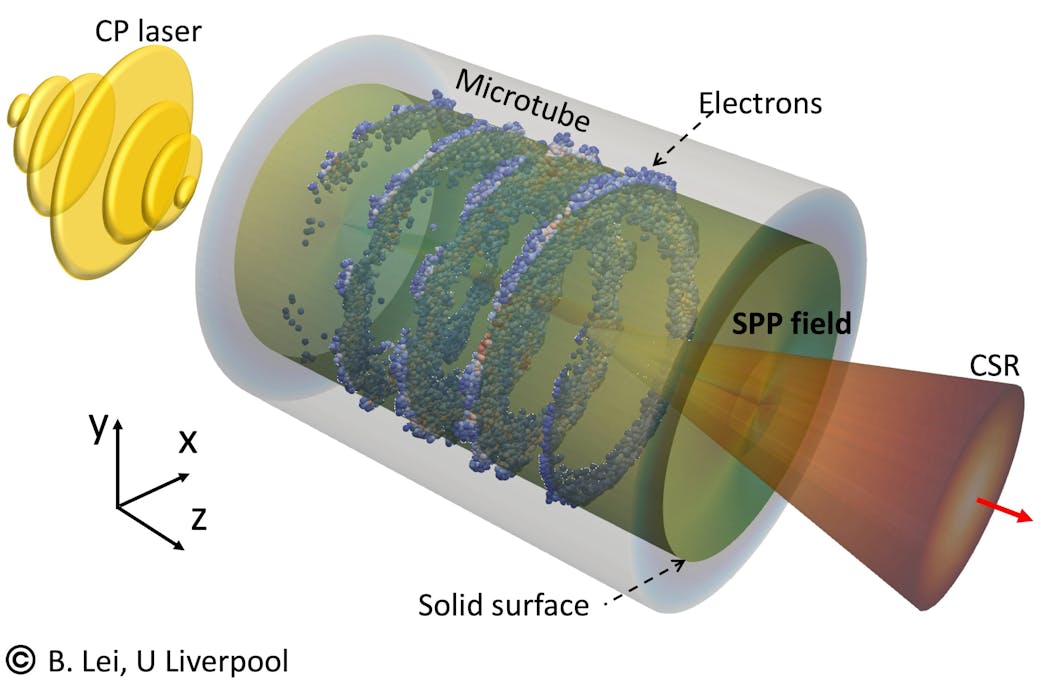
A particle accelerator that produces intense X-rays could be squeezed into a device that fits on a table, my colleagues and I have found in a new research project.

The way that intense X-rays are currently produced is through a facility called a synchrotron light source. These are used to study materials, drug molecules and biological tissues. Even the smallest existing synchrotrons, however, are about the size of a football stadium.

Our research, which has been accepted for publication in the journal Physical Review Letters, shows how tiny structures called carbon nanotubes and laser light could generate brilliant X-rays on a microchip. Although the device is still at the concept stage, the development has the potential to transform medicine, materials science and other disciplines.

Most people imagine particle accelerators as enormous machines, very large rings of metal and magnets stretching for kilometre beneath the ground. The Large Hadron Collider at Cern (the European Organization for Nuclear Research) in Geneva, for example, is 17 miles (27km) long.

The new research shows that it may soon be possible to build ultra-compact accelerators only a few micrometre wide – smaller than the width of a human hair. These could generate coherent, high-energy X-rays similar to those produced by billion-pound synchrotron facilities, but using devices that fit on a microchip.

Twisted light

The principle relies on a particular property of light known as surface plasmon polaritons. These are waves that form when laser light clings to the surface of a material. In the simulations, a circularly polarised laser pulse was sent through a tiny hollow tube. This polarised laser pulse is light that twists as it moves, very much like a corkscrew.

The swirling field traps and accelerates electron particles inside the tube, forcing them into a spiral motion. As they move in sync, the electrons emit radiation coherently, amplifying the light’s intensity by up to two orders of magnitude.

My team and I have created a microscopic synchrotron, where the same physical principles that drive mile-scale facilities play out – but on a nanoscopic stage.

To make this concept work, carbon nanotubes were used. These are cylindrical structures made of carbon atoms arranged in hexagonal patterns. These nanotubes can withstand very high electric fields, hundreds of times stronger than those in conventional accelerators. They can also be “grown” vertically into what we call a “forest” of closely aligned hollow tubes.

This unique architecture provides an ideal environment for the corkscrewing laser light to couple with the electrons. The circularly polarised laser fits the nanotube’s internal structure – much like a key in a lock which is why we refer to a quantum lock-and-key mechanism.

The research team that I’m a part of was led by Bifeng Lei, research associate in the school of physical sciences. 3D simulations showed that this interaction can produce electric fields of several teravolts (one trillion volts) per metre. This is far beyond what current accelerator technologies can achieve.

That kind of performance could change who gets access to cutting-edge X-ray sources. At present, scientists must apply for limited time slots at large, national synchrotron facilities, or free-electron lasers, often waiting months for a few hours of beam time.

Opening up access

The tabletop accelerator approach could make this capability available in hospitals, universities and industrial labs. In fact, wherever it is needed.

In medicine, this could mean clearer mammograms and new imaging techniques that reveal soft tissues in unprecedented detail, without contrast agents. In drug development, researchers could analyse protein structures in-house, dramatically speeding up the design of new therapies. And in materials, science and semiconductor engineering, it could enable non destructive, high speed testing of delicate components.

The study was presented at the 2025 NanoAc workshop on the topic of nanotechnology in accelerator physics, which was held in Liverpool earlier this month. The research currently remains at the simulation stage. But the necessary components already exist: powerful circularly polarised lasers and precisely fabricated nanotube structures are standard tools in advanced research labs.

The next step is experimental verification. If successful, this would mark the beginning of a new generation of ultra compact radiation sources. What excites me most about this technology is not just the physics, but what it represents.

Large-scale accelerators have driven enormous scientific progress, but they remain out of reach for most institutions. A miniaturised accelerator that delivers comparable performance could democratise access to world-class research tools, bringing frontier science into the hands of many more researchers.

The future of particle acceleration might include very large machines to further push the energy, intensity and discovery boundaries, as well as smaller, smarter and more accessible accelerators.

The Conversation

Carsten P Welsch does not work for, consult, own shares in or receive funding from any company or organisation that would benefit from this article, and has disclosed no relevant affiliations beyond their academic appointment.

ref. Tabletop particle accelerator could transform medicine and materials science – https://theconversation.com/tabletop-particle-accelerator-could-transform-medicine-and-materials-science-269537

Five lifestyle changes that might help you live longer and slow down ageing

Source: The Conversation – UK – By Henry Chung, Lecturer, School of Sport, Rehabilitation and Exercise Sciences, University of Essex

Exercise is just one of the ways you can lower your biological age. TheVisualsYouNeed/ Shutterstock

Society is fascinated with health, fitness and longevity. This obsession has spawned a multi-million pound industry centred around pushing the latest cutting-edge science, lifestyle modifications and products that claim to prevent ageing and live as long as possible.

But the secret to a long life doesn’t have to be so complicated. There are many simple things everyone can do to slow down time and feel younger.

When we talk about age, we aren’t always talking about how many candles are on your birthday cake. We actually have two different ages.

The first is of course chronological age. This is the number of years you’ve been alive.

But we also have a “biological age.” This is sometimes referred to as “true age” or “internal body age.” This refers to how well all of the body’s internal systems are functioning by looking for signs of ageing in the cells, blood and DNA.

Research indicates that a person’s biological age, rather than their chronological age, is related to how long they live. Let’s say you looked at two 60-year-old people. The person whose biological age is younger would be more likely to outlive the person who had a higher biological age.

There are now many ways to measure your biological age with epigenetic testing, which only requires a little bit of spit and can be done at home. The saliva sample is then processed in a lab where the DNA is extracted to get information about what’s happening in the body.

The everyday lifestyle choices we make affects our biological age. While some of the decisions we make can increase it (such as drinking, smoking or being inactive), other factors can actually turn back the clock. Thus, how long we live may truly be in our hands.

Here are five evidence-backed ways of reducing your biological age:

1. Run away from ageing – literally

Being more physically active and regularly exercising throughout life reduces risk of death from all causes – directly increasing longevity.

It’s also never too late to get started. One study found that sedentary people who adopted an eight-week exercise programme (60 minute workouts done three times a week) reversed their biological age by around two years.

A mixture of strength and endurance exercises done three to four times a week (with sessions as short as 23 minutes) is also shown to significantly reduce ageing.

Exercise influences something called DNA methylation, a process which controls whether certain genes are “on” or “off.” As we age it’s natural that our genes start switching off – this is why we get winkles and grey hair.

But exercise helps to slow these processes down, meaning the genes that help do important functions in the body continue doing their job for longer.

2. You are what you eat

Making healthier food choices directly reduces biological age. This effect is even greater in those with chronic disease and obesity.

One study, which looked at nearly 2,700 women, found that adopting healthier eating patterns for 6-12 months was a key factor in staying younger for longer. This diet was also shown to slow ageing by an average of 2.4 years.

A salad in a white bowl, served with salmon, red onions, kale, pomegranate seeds and walnuts.
Healthier foods choices may lower your biological age by years.
Sea Wave/ Shutterstock

Healthier food choices included eating more fruits, vegetables, whole grains, nuts, legumes, fish, lean proteins and healthy fats (such as oil) and reducing intake of red meat, saturated fat, added sugars and sodium.

A well-balanced diet provides antioxidants, vitamins and anti-inflammatory compounds that help cells repair damage and reduce stress on our DNA. These nutrients also influence DNA methylation.

3. Improve sleep habits

Sleep is one of the strongest predictors of healthy ageing because it affects nearly every bodily system. Good quality sleep allows the body to repair DNA, restore hormonal balance, reduce inflammation and clear cellular waste – helping the immune, metabolic and nervous systems stay youthful and resilient.

One review showed that sleep quality is directly associated with how fast we age. People who sleep less than five hours per night have a significantly increased risk of age-related diseases such as diabetes, heart disease, cancer and dementia.

Additionally, a large UK study of nearly 200,000 participants found that those on shift work – and particularly night shifts – had a biological age around one year higher than their counterparts who worked at normal hours.

4. Avoid unhealthy vices

Habits such as vaping, smoking and drinking alcohol are the strongest and most consistent accelerators of ageing.

Smoking, for instance, is shown to rapidly age the lungs by up to 4.3 years and the airway cells by nearly five years.

Similarly, a study looking at 8,046 adults aged 30–79 years old found that consuming any amount of alcohol was associated with accelerated biological ageing. The more alcohol consumed the more age is accelerated.

These habits speed up biological ageing because they directly damage DNA, increase inflammation and overload cells with stress. This causes the body and organs to work harder – ageing them quicker.

5. Master your mind

Stress management is key. Research shows that being able to regulate emotions and manage stress levels predicts age acceleration. Another study found that working more than 40 hours a week on average increased biological age by two years, probably due to the stress.

Stress can directly accelerate biological age due to the way it affects hormonal response, damages DNA and reduces immunity. Stress can also indirectly affect other factors that may accelerate age, such as diet, sleep and whether we drink or smoke. This is why having a set of positive coping mechanisms to manage stress is so important.


Read more:
Your body can be younger than you are – here’s how to understand (and improve) your ‘biological age’


A growing body of research is also showing that factors such as loneliness, exposure to extreme heat and cold, air pollution and our environment (such as living in deprived areas) can all also affect how we age.

It’s important to note that the affect of these factors on age may vary depending on the person, their genetics, how long they’ve stuck with these lifestyle habits and other factors at play.

Nevertheless, this gives insight into how changing even small habits can positively improve health and well-being and, in some cases, turn back the clock.

The Conversation

Dr Henry Chung receives funding from Innovate UK, the Biotechnology and Biological Sciences Research Council (BBSRC), and UK Research and Innovation (UKRI). No funding from this organisations was received for the work described in this article.

Charlotte Gowers does not work for, consult, own shares in or receive funding from any company or organisation that would benefit from this article, and has disclosed no relevant affiliations beyond their academic appointment.

ref. Five lifestyle changes that might help you live longer and slow down ageing – https://theconversation.com/five-lifestyle-changes-that-might-help-you-live-longer-and-slow-down-ageing-268326

Could exercising while losing weight preserve your muscles and help keep them ‘young’?

Source: The Conversation – UK – By Jose L Areta, Associate Professor in Exercise Metabolism and Nutrition, Liverpool John Moores University

Muscle plays many important roles in our health – so preserving it while losing weight is key. PeopleImages/ Shutterstock

When we lose weight, we don’t just lose body fat – we lose muscle, too.

This can be a problem for many reasons, because skeletal muscle is far more than the tissue that helps us move. It plays a crucial role in metabolic health, regulating blood sugar and healthy ageing. Losing muscle mass is linked to a reduced mobility, increased injury risk and is thought to potentially impair long-term weight loss.

With millions of people now using weight loss drugs such as Wegovy and Ozempic, understanding what impact this muscle loss might have on their health is important.

Loss of muscle mass is also a significant challenge for athletes too, as many sports encourage them to keep body weight low while still maintaining demanding training loads and keeping their power-output high. So an energy deficit can put significant stress on an athlete’s body – but to what extent it affects their normal function, is unclear.

Yet despite these widespread implications, we still know surprisingly little about how human muscle responds at the molecular level to the combination of calorie restriction and exercise. Understanding what happens to muscle when exercising in a calorie deficit is extremely important.

Newly published research from myself and my colleagues casts light on this exact topic. We showed that weight loss accompanied by aerobic exercise might not be that bad for the muscles after all – and indeed it may have positive effects.

We recruited ten healthy, fit young men who completed two tightly controlled five-day experimental trials in our laboratory. During their first trial period, they consumed enough calories to maintain their body weight. But during the second, we reduced their daily calorie intake by 78% – a severe energy deficit.

During both trials, participants completed a tightly-controlled, 90-minute low- to moderate-intensity cycling exercise three times during each five-day period.

Throughout the trials, we measured blood markers such as glucose, ketones, fatty acids and key hormones linked to energy preservation. We did this to determine if – and to what extent – the energy deficit was affecting them.

We also collected muscle biopsies before and after each testing period. Using an advanced method called dynamic proteomic profiling, we analysed the production and abundance of hundreds of muscle proteins. This allowed us to build a detailed picture of how muscle adapts to sudden, substantial calorie restriction – even when exercise demands are maintained.

During the five days in an energy deficit, participants lost about 3kg. Hormones such as leptin, T3 and IGF-1 also dropped sharply – clear signs the body was getting into an energy preservation mode.

But inside the muscle itself, something more unexpected was happening.

Muscle tissue changes

The muscle tissue mounted a strong and surprisingly positive response to the combination of exercise and calorie restriction.

First, we saw an increase in the amount of mitochondrial proteins within the muscle – and these proteins were also being created more quickly.

Mitochondria are the power generators inside cells. They convert fat and carbohydrates into usable energy. Higher amounts of mitochondrial proteins, and faster production of them, are hallmarks of a healthier and more efficient muscle.

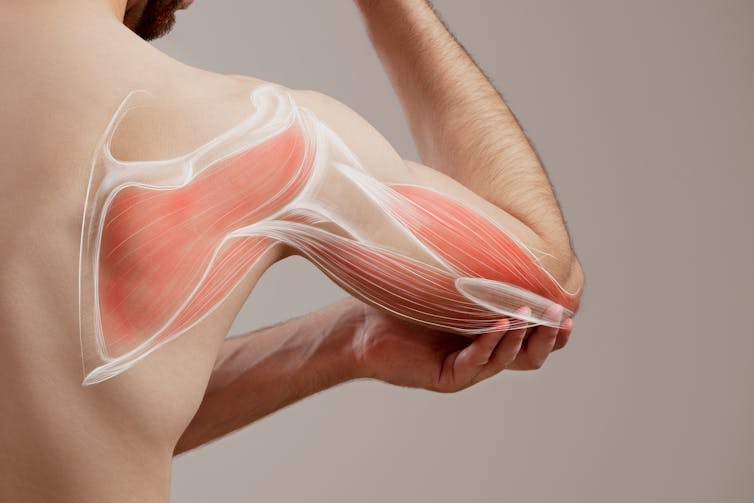
A man holds up his flexed arm. There is a drawing of muscle tissue superimposed on top of his skin.
The positive changes we saw within the muscle tissue correlated with a more youthful muscle profile.
BigBlueStudio/ Shutterstock

We also saw a clear decrease in the amount and production of collagen and collagen-related proteins.

Collagen is an abundant protein that plays a role in providing structure and strength to the muscle. However, collagen tends to accumulate in excess as we age – contributing to stiffness and impaired function.

Taken together, these changes resemble a shift toward a more metabolically youthful muscle profile.

This kind of response has also been seen in long-term calorie-restriction studies in monkeys. But this is the first time it has been demonstrated in humans.

Healthier ageing

At first glance, it seems paradoxical that the body would invest energy in maintaining or improving muscle during a time of scarcity.

Muscle tissue is demanding and costly to maintain – and movement is energetically expensive, too. Shouldn’t the body simply reduce muscle activity to save energy?

The answer to this question may lie in our evolutionary past. Humans evolved as hunter-gatherers, who often faced periods of low food availability. During those times, the ability to move efficiently – to walk and run long distances, forage or hunt – was essential for survival. A body that shut down muscle function during hunger would have been less likely to survive and reproduce.

So the protective response we observed may reflect deep evolutionary adaptations: muscles stay ready to move even when fuel is running low.

Our study involved a small number of young men who were deliberately following an extreme energy deficit for a short period of time. As such, we cannot assume identical responses in women, older adults or people who are obese or have chronic health conditions.

Future studies will need to compare weight loss with and without exercise, examine less extreme calorie deficits, include women and older adults, and measure how these molecular changes translate into actual physical performance.

Nevertheless, our findings support the idea that exercise during weight loss may protect muscle quality – and may even enhance characteristics linked to healthier ageing.

These findings also have key implications for many people. People who are taking weight loss drugs or trying to lose weight may benefit from structured exercise to help them preserve muscle quality. Older adults, who are more vulnerable to muscle loss, may especially benefit from exercising while losing weight. Athletes may approach any energy deficit with care, but know that muscle keeps adapting to exercise stimulus.

Our study shows that human muscle is remarkably resilient. Even under severe stress, when much of the body is trying to conserve energy, muscle tissue seems to respond robustly – boosting its energy-producing machinery and limiting age-related degradation.

In other words, losing weight and exercising doesn’t just help preserve muscle – it may help keep it younger.

The Conversation

Jose Areta received research funding from the Alliance for Potato Research and Education.

ref. Could exercising while losing weight preserve your muscles and help keep them ‘young’? – https://theconversation.com/could-exercising-while-losing-weight-preserve-your-muscles-and-help-keep-them-young-268812

From heart health to drug interactions: garlic’s effect on the body

Source: The Conversation – UK – By Dipa Kamdar, Senior Lecturer in Pharmacy Practice, Kingston University

Regreto/Shutterstock

Whether it is sizzling in olive oil or crushed into a curry, garlic has long been a hero in the kitchen. But beyond its strong flavour, garlic has earned a reputation as a natural remedy with a surprising range of potential health benefits. From heart health to immune support, science increasingly supports what tradition has claimed for centuries: garlic is good for you.

The secret lies in its chemistry. Garlic (allium sativum) contains sulphur compounds, including diallyl disulfide and S-allyl cysteine, that are responsible for both its distinctive smell and its medicinal effects.

The most studied of these is allicin, which forms when garlic is chopped, crushed or chewed. Allicin is unstable and quickly breaks down into other sulphur-containing compounds that are linked to several health effects. Here are some of the best supported benefits.

1. Heart health

Garlic is widely studied for its potential to support the heart and blood vessels. Garlic supplements can help reduce high blood pressure, with some studies finding effects similar to certain prescribed medications. A 2019 analysis found that garlic supplements significantly lowered blood pressure in people with hypertension. This reduction was linked to a 16%-40% lower risk of cardiovascular events, such as heart attacks and strokes.


Read more:
Stroke can happen to anyone – an expert explains how to spot the signs and act fast


Research suggests this may be because garlic extract improves arterial elasticity so that arteries become more flexible, helping them expand and contract more easily as blood flows through. Stiff arteries make the heart work harder and are a risk factor for heart disease.

Garlic compounds also appear to help relax blood vessels by increasing levels of hydrogen sulphide and nitric oxide. These are gases naturally produced in the body that help blood vessels widen so blood can flow more easily. Allicin may also help reduce blood pressure by blocking angiotensin II, a hormone that causes blood vessels to tighten.

Research suggests garlic may also lower total cholesterol – the overall amount of cholesterol in the blood – and LDL cholesterol, often called bad cholesterol because high levels can clog arteries. Some studies show that taking garlic for longer than two months can reduce LDL cholesterol by up to 10% in people with mildly raised levels.

Lab studies show that garlic compounds can block liver enzymes that produce fats and cholesterol. They may also prevent plaque building up in the arteries by reducing LDL and making it more resistant to oxidation, a process that contributes to heart disease.

2. Immune support

The antibacterial effects of allicin are well recognised. Garlic extract has also been shown to have antimicrobial activity against bacteria, viruses and fungi.

One study found that people who took aged garlic extract had milder cold and flu symptoms, recovered more quickly and missed fewer days of work or school.

More recent research suggests garlic may support the immune system by activating certain types of white blood cells. These include macrophages, which are immune cells that engulf and destroy bacteria and viruses; lymphocytes, which include T cells and B cells that recognise infections and produce antibodies; and natural killer cells, which target and destroy infected or abnormal cells such as virus infected or cancerous cells.

Garlic may also help regulate inflammation, which is a key part of the immune response.

3. Cancer prevention

Early research suggests garlic may help reduce the risk of certain cancers, particularly those affecting the digestive system, colon, lungs and urinary tract.

A study found that garlic can affect key processes involved in cancer development. It may stop cancer cells from dividing, prevent the formation of new blood vessels that feed tumours and encourage cancer cells to die naturally. These effects appear to be linked to garlic’s influence on cell signalling pathways which control how cells grow and behave. Garlic’s antioxidant and anti-inflammatory properties may also contribute.

However, most of this evidence comes from laboratory and animal studies which do not always apply to humans. More robust clinical studies on people are needed.

Garlic has also been linked to other possible health benefits although research is still ongoing. Its antioxidant effects may help lower the risk of Alzheimer’s disease, and its anti-inflammatory properties may be useful in conditions such as osteoarthritis.

How much garlic is enough

There is no official recommended daily amount for garlic. Many studies use the equivalent of one to two cloves per day. Supplements are also widely available. Eating garlic as part of food provides fibre, vitamins and other plant compounds that supplements do not contain so food sources may offer extra benefits beyond supplements alone.

Garlic is generally safe but it can cause bloating, gas and heartburn especially when eaten raw or in large amounts. People with irritable bowel syndrome, acid reflux or those who are pregnant may be more sensitive.

Garlic is also known for causing bad breath and body odour. As allicin breaks down, it releases sulphur containing gases. Most are processed by the body but one called allyl methyl sulphide remains unmetabolised and leaves the body through breath and sweat.

Garlic can interact with certain medications if taken in large amounts. It may increase the effects of aspirin or blood-thinning medicines such as warfarin which can increase the risk of bleeding. Garlic may also lower blood pressure which could be a problem for people already taking medication for high or low blood pressure. Those who are pregnant or breastfeeding should be cautious because high-dose garlic supplements have not been well studied, so the effects on the developing baby or infant are not fully known.

Garlic is more than a flavour booster. It is a functional food with a growing body of scientific evidence behind it. While it is not a replacement for medical treatment, including garlic in your diet may offer real benefits for your heart and immune system.

Whether you roast it, crush it or take it as a supplement, garlic deserves a place in your health routine. If you take medication or have existing health conditions speak to a doctor or pharmacist before using garlic in large amounts. As with any natural remedy, moderation is important.

The Conversation

Dipa Kamdar does not work for, consult, own shares in or receive funding from any company or organisation that would benefit from this article, and has disclosed no relevant affiliations beyond their academic appointment.

ref. From heart health to drug interactions: garlic’s effect on the body – https://theconversation.com/from-heart-health-to-drug-interactions-garlics-effect-on-the-body-266646