Could blowing a conch shell help treat sleep apnoea? As a doctor working in sleep medicine, this unexpected news story certainly grabbed my attention. My first reaction was scepticism – sleep specialists don’t typically prescribe natural objects found on beaches as medical therapy. But perhaps I was too hasty to dismiss the idea.
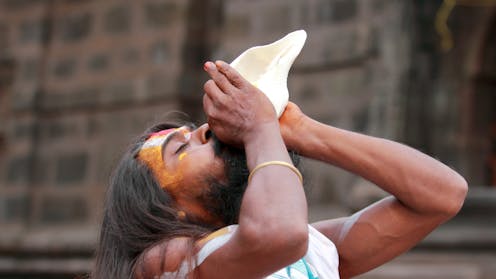
For those unfamiliar with them, a conch shell is the spiral home of a large sea snail that, when hollowed out, can be blown like a trumpet. This practice isn’t new – cultures worldwide have used conch shells for thousands of years in rituals, ceremonies and communication. What’s novel is the suggestion that it might help with a serious medical condition affecting millions.
We all know someone who snores, but not all snoring is harmless. If your partner notices you sometimes stop breathing during the night, that’s cause for concern. You may have obstructive sleep apnoea, a condition where throat muscles relax excessively during sleep, causing the airway to narrow or close completely. These breathing interruptions – called apnoeas – can happen dozens or even hundreds of times per night.
The consequences extend far beyond disturbing your partner’s sleep. Each pause in breathing jolts your brain out of deeper sleep stages, leaving you exhausted the next day. This isn’t merely inconvenient – drowsy drivers cause thousands of accidents annually. The repeated drops in oxygen also strain your heart, increasing risks of high blood pressure and heart disease if left untreated.
Standard treatments focus on keeping airways open during sleep. The gold standard is Cpap (continuous positive airway pressure), where a mask delivers steady airflow that acts like an internal splint. We also use oral devices that gently shift the jaw forward, surgical removal of enlarged tonsils or adenoids, and even newer techniques involving tiny electrical impulses to stimulate airway muscles.
Lifestyle changes matter, too. Weight loss reduces fatty tissue around the neck that can compress airways, while cutting alcohol and stopping smoking helps maintain firmer airway muscles – both substances make throat tissues floppier and worsen symptoms.
Muscles matter for sleep
So where does the conch shell fit? When you blow through any narrow opening, you’re essentially training your upper airway muscles to stay open and firm. This concept, called airway muscle training, has legitimate scientific backing. Studies show that exercises targeting the tongue, soft palate and facial muscles can improve mild to moderate sleep apnoea symptoms.
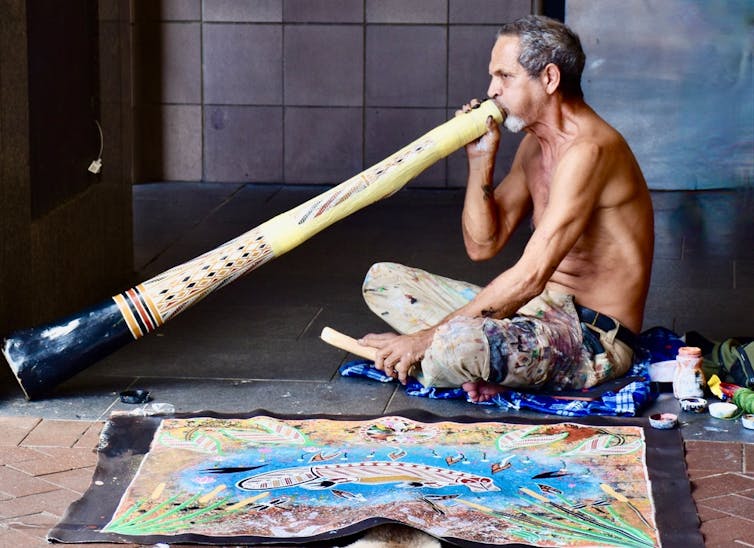
Research has even examined whether playing the didgeridoo – another wind instrument requiring sustained airway control – might benefit sleep apnoea patients. The results were promising, though limited by patient compliance. The challenge with any exercise-based treatment is maintaining daily practice long-term.
This is where the conch shell idea becomes more intriguing. For carefully selected patients with milder symptoms, it could offer an engaging, culturally rich alternative to conventional airway exercises. It’s certainly more accessible than learning the didgeridoo – and probably easier to explain to concerned neighbours.
However, let’s be clear: conch shell therapy won’t revolutionise sleep apnoea treatment. Anyone with suspected sleep apnoea needs proper medical evaluation and evidence-based treatment. Cpap therapy remains the most effective option for moderate to severe cases. But as part of a comprehensive approach – alongside weight management, lifestyle changes and conventional treatments – prescribed conch shell exercises might one day earn a place in our therapeutic toolkit.
So sleep medicine, typically obsessed with high-tech solutions, might benefit from embracing something as ancient and simple as blowing into a seashell. Of course, being sleep specialists, we’d inevitably need to give it a suitably technical name – “conchological respiratory muscle rehabilitation” has a nice ring to it, don’t you think?
Jo-Anne Johnson does not work for, consult, own shares in or receive funding from any company or organisation that would benefit from this article, and has disclosed no relevant affiliations beyond their academic appointment.
Many students rejoice when they find out their GCSE results. In 2025, 21.9% of grades awarded are at grade seven (previously A) or above. But others will be holding a piece of paper – or looking at a screen – that tells them they have failed to reach expected standards. This year, 32.6% of awarded grades were below the pass grade of four.
It is important to consider the potential impact of this failure, and examine whether these exams are effectively serving young people.
GCSEs were originally conceived as a criterion-referenced assessment. This means that that students’ performance would be measured against a fixed set of criteria, with the intention of being accessible and fair for all candidates. There would be no limit on, for instance, how many students could get a top grade.
This means that grade boundaries are adjusted so that overall results generally align with the proportion of grades awarded at each level for a predetermined standard. This is applied to ensure consistency across years: to eliminate issues if exams are judged to be particularly “easy” or “difficult” in a given year. However, this process means that there will always be a percentage of students who fail because their performance is not judged to hit the grade four threshold for a pass mark.
Outside of the years when marking and results were affected by the COVID-19 pandemic, on average, fewer than 70% of students reached the level required for a grade four pass mark, meaning that at least 30% of students always fail.
The expectation of failure can have negative consequences for students. In response to consistent failure, students can become helpless, seeing themselves as having less control over their future outcomes and attributing their failure to a lack of ability. Students who feel helpless are less likely to persist when they fail. Even in the face of success, helpless students are more likely to view this as a one off.
What’s more, a series of education reforms over the past four decades has turned GCSE education into an extremely competitive system.
Focus on academics
GCSEs were initially introduced in 1988 under the Education Reform Act. This was followed by the introduction of performance league tables in 1992, requiring schools to publish the number of students achieving five or more passes at GCSE. These reforms intended to transform schools into a competitive marketplace, with the aim of improving schools and student outcomes.
This change was followed by further reforms in 2015, which saw coursework and modular exams replaced with exams at the end of two years of study.
In a bid to focus schools on providing an academic curriculum, schools now also have to publish the number of students taking up the English baccalaureate: a set of subjects taken at GCSE which must include English language and literature, maths, the sciences, geography or history and a language. They must also publish their students’ average performance across these five subjects.
This means that students may be encouraged to study and take exams in subjects that don’t suit them and that they don’t enjoy.
The pressure on schools to perform well in these league tables can lead to them engaging in practices often referred to as “gaming the system”. These range from the more obvious (such as spending increased time on core subjects and exam preparation) to the downright dubious, such as lower test scorers being removed from taking exams in order to inflate average test scores.
Exams and wellbeing
There are also growing concerns around the impact of exams on students’ wellbeing. A recent survey by charity Young Minds found that 63% of 15 to 18-year-olds said they struggled to cope in the lead up to and during GCSE and A-level exams. The survey found that 74% of 15 to 18-year-olds think exams should be reformed to improve mental health. Childline, the counselling service for young people, have also raised concerns regarding the increase in calls relating to exams and revision stress.
This high-pressure environment can also have a suffocating effect on curiosity in learning. In one memorable lesson during my research observing teachers and pupils in the GCSE classroom, I observed a student asking the teacher the first name of a historical figure he was discussing. “You won’t get any more marks for knowing their first name,” the teacher responded.
This example highlights the focus in classrooms on knowledge acquisition for the purpose of passing exams. This approach leaves little time for in-depth understandingor the development of higher-order cognitive skills, such as problem solving and critical thinking. Both employers and universities note that current exam system does not prepare young people for life beyond school. They have called for more focus on other skills such as independent and creative thinking and greater ability to collaborate.
What do students want?
In a research study with GCSE students, the teenagers in the study felt that a return to previous assessment methods would be beneficial: such as a number of smaller modular-based exams over the course of study, or a combination of coursework and exams, to spread the risk if something doesn’t go to plan.
The students also noted that the current system places heavy emphasis on remembering quotes, equations and formulae. A move towards open-book exams would mean moving away from rote learning and allowing a greater focus upon skills such as understanding and application, which are more relevant and useful for life beyond the classroom.
The potential negative influence of current exam processes on the mental health of young people and the lack of real-world skills this approach promotes calls into question the need for a further reform to GCSEs – as well as the need for greater consideration of young people’s voices in assessment policy.
If you are upset, disappointed, or worried about your future, you can talk with a Childline counsellor.
Hannah Wilkinson does not work for, consult, own shares in or receive funding from any company or organisation that would benefit from this article, and has disclosed no relevant affiliations beyond their academic appointment.
Source: The Conversation – UK – By Leonie Fleischmann, Senior Lecturer in International Politics, City St George’s, University of London
The Israeli government has approved a plan for construction of a massive new settlement bloc in the controversial E1 area in the occupied West Bank.
In reviving a project first proposed in 1994, which will comprise about 3,500 new dwellings in a line across the West Bank, finance minister Bezalel Smotrich laid bare the intentions of his government. He declared that “approval of construction plans in E1 buries the idea of a Palestinian state, and continues the many steps we are taking on the ground as part of the de facto sovereignty plan”.
E1 (“East 1”) refers to 12 square kilometres of unsettled land east of Jerusalem. It sits inside the boundaries of the third most populous Israeli settlement in the West Bank, Ma’ale Adumim.
In 1975, Israel expropriated 30 sq km of land on which seven Palestinian villages had once stood. Here they built Ma’ale Adumim, one of three Israeli settlement blocs that form an “outer ring” around the Israeli-defined municipal boundaries of Jerusalem.
Israeli authorities refer to these blocs as “facts on the ground”. They were initiated in the West Bank by the Israeli government after the 1967 War to ensure that Israeli population centres were protected from potential attacks.
Today, almost 40,000 Israelis live in Ma’ale Adumim – largely secular Israelis and diaspora Jews who have moved to Israel. Far from the makeshift Israeli outposts that are scattered across the rural West Bank, Ma’ale Adumim was designated a city by Israel in 2015. It is considered by the majority of Israeli Jews to be a permanently protected settlement bloc, which will be retained through land swaps in any final agreement with Palestinians.
The E1 development plan would involve a significant expansion of the existing settlement. All settlement building in East Jerusalem and the West Bank is deemed illegal under international law, but the E1 plans are particularly controversial.
At the heart of the controversy is the viability of a Palestinian state. Israeli construction in E1 would cut the West Bank into two separate parts, rendering it impossible to establish a contiguous Palestinian state with East Jerusalem as its capital.
In addition, according to an objection lodged by the Israeli pressure group Peace Now, Israeli construction in E1 would negatively affect the economic development of a future Palestinian state.
Its objection argues the E1 area is essential for expansion of an urban metropolis necessary for economic growth, and is the only land in East Jerusalem suitable for further development in the Palestinian part of the city. It states that E1 should therefore be left for Palestinian rather than Israeli development.
Political threat
The plan to develop E1 was first proposed in 1994 by Israel’s then-prime minister, Yitzhak Rabin, to make sure Ma’ale Adumim was part of a “united Jerusalem”. This was subsequently reaffirmed by Shimon Peres during his prime ministership in 1996, as part of proposed territorial swaps in the framework of a permanent peace agreement.
In 2005, those plans were frozen after the US administration under George W. Bush told Israel that settlement in E1 would “contravene American policy”.
The proposed E1 development, linking up with the settlement of Ma’ale Adumim, would make a Palestinian state based on contiguous land in the West Bank impossible. Honest Reporting, CC BY-SA
The plan was reignited by Israel’s current prime minister, Benjamin Netanyahu, in 2012, in retaliation for the United Nations’ extension of non-member status to Palestine. But it was then put on hold for eight years due to international pressure.
In 2020, a week ahead of the third national elections held in Israel in a single year, Netanyahu pledged to revive the E1 project, with the hope of securing votes and to court the ultra-nationalist parties into a potential coalition. In 2022, Netanyahu renewed the E1 construction plans, weeks before then-US president Joe Biden was due to visit Israel.
Opposition and support
Each time the plans have been proposed, the decision to advance construction has been met with both internal and international condemnation. On June 9 2023, the planning hearing was “indefinitely” postponed following a call between Netanyahu and Biden’s secretary of state, Antony Blinken.
In response to the most recent announcement to reinstate the plans, the European Union put out a statement expressing concern. It urged Israel “to desist from taking this decision forward, noting its far-reaching implications and the need to consider action to protect the viability of the two-state solution”.
However, Donald Trump now appears to be breaking with the position of previous US administrations. It was recently reported in the Jerusalem Post that the Trump administration supports the reactivation of the development plans. A spokesperson for the US State Department said “a stable West Bank keeps Israel secure and is in line with this administration’s goal to achieve peace in the region”.
Israel’s latest attempt to initiate construction in E1 shows that, while the plans have consistently been delayed, they have never been abandoned. The question is why did Smotrich, with the apparent approval of Netanyahu, make this announcement now?
The answer is most likely that, with the international focus firmly on the continued assault on Gaza, the Israeli government believes it has the breathing space to press ahead with its commitment to building settlements across the West Bank.
Alongside the proposed Israeli takeover of Gaza City, the promise by Smotrich that 2025 would be Israel’s “Year of Sovereignty” – and with it the end of a future Palestinian state – appears to be coming ever closer.
Leonie Fleischmann does not work for, consult, own shares in or receive funding from any company or organisation that would benefit from this article, and has disclosed no relevant affiliations beyond their academic appointment.
Plastic is one of the most remarkable materials ever created. It’s cheap, lightweight and endlessly versatile. It can be shaped into anything from shopping bags to lifesaving tools in hospitals, and it’s clean, safe and can be sterilised. Depending on its purpose, it can be used just once – for example, in medical settings where hygiene is critical – or kept in service for years.
Perhaps surprisingly, plastic can even have environmental benefits thanks to its light weight, which reduces fuel use in transport. But we have become so dependent on plastic that global production reached around 414 million tonnes in 2023 – a figure that continues to rise every year.
Plastic is part of countless everyday objects. Take a toothbrush: the bristles are usually nylon, while the handle is often made from lightweight polyethylene or polypropylene. A manual toothbrush might have a volume of 8.5-19 cm³. Now imagine that over time, it breaks down into microplastics – fragments smaller than five millimetres – or even nanoplastics, which are a thousand times smaller.
If microplastics can be as small as 1 micrometre (about the size of a bacterium) – or even 0.1 micrometres (roughly the size of the SARS-CoV-2 virus) – a single toothbrush could theoretically break into 8.5-19 trillion microplastics. And these particles are small enough to be inhaled or ingested.
Plastics don’t simply “vanish” in the environment: they fragment. Sunlight, especially ultraviolet-B (UV-B) radiation, makes plastic brittle; physical stress – waves, wind, abrasion – breaks it into ever-smaller pieces. Even the state of the stratospheric ozone layer, which controls how much UV-B reaches Earth, can influence how quickly plastics degrade. Some bacteria and fungi can also contribute to breaking down certain plastics, but this is slow and often incomplete.
The result? Most plastic waste ends up as a soup of micro- and nanoplastics drifting through our environment.
While larger plastic debris can cause obvious harm, such as entangling wildlife or being swallowed by seabirds, microplastics are a quieter but potentially more insidious problem.
Plastic everywhere
Microplastics have now been found inside 1,300 species of invertebrates and are present at every level of the food chain. These particles are oil-like (hydrophobic), which helps them cross biological membranes and enter the cells of living organisms – unlike water-loving (hydrophilic) particles such as grains of sand, which follow a different biological path.
Their size matters, too. Smaller particles can travel more easily within the body, reaching organs far from where they first entered. Exposure can occur through swimming in polluted water or via food and drink – either because the food itself contains plastic particles (such as seafood from contaminated waters) or because it’s been contaminated during packaging or industrial processing.
Micro- and nanoplastics can also be inhaled in airborne dust, particularly in certain workplaces, such as textile manufacturing or sandblasting with plastic-based materials. In everyday life, we can breathe in synthetic fibres shed from our clothes or tiny particles released from tyre wear.
Once inside, microplastics have been found to move – a process called translocation – within animals, a phenomenon that has not been found in humans yet.
Evidence now shows that micro- and nanoplastics are present in human liver, kidney, lung, spleen, blood, heart and brain. In one study, nanoplastic shards of polyethylene were detected in human brains, at higher concentrations than in the liver and kidney. They have been found in the fat plaque in arteria which is related to cardiovascular problems. They have also been found in the placenta and breast milk, suggesting that these particles can be transferred across generations.
Given how common plastics are in food and drink, their presence in the human body isn’t surprising – but detecting them is technically challenging. Samples are often collected in hospital environments where plastics are everywhere, creating a high risk of contamination.
But the science is still young. Large-scale epidemiological studies, which could take years to complete, will be needed to determine whether plastics directly cause these illnesses.
The emerging picture is not reassuring. While scientists are still uncovering the full scope of risks, the precautionary principle suggests we should act now to reduce exposure. That means continuing to track how plastics break down, how they enter our bodies and what they might be doing once inside.
Microplastics are no longer “just” an environmental issue: they’re a public health concern. And because plastic production is still rising, the scale of the problem is likely to grow before it shrinks.
Rosa Busquets receives funding from UKRI/Horizons (CleanWater project 101131182) and DASA (UK). She is honorary academic at UCL and Al-Farabi Kazakh National University.
Marcel Jansen receives funding from EPA (Ireland) and DAFM (Ireland)
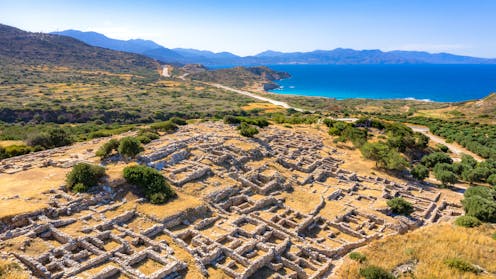
The Minoan culture was the first highly complex society on modern European soil, with palaces, writing, stunning art – and even flushing toilets. The Minoans lived in the bronze age (circa 3000-1200BC) on the Mediterranean island of Crete, which served as a stepping stone between Europe, Africa and Asia.
My new book, The Minoans, presents key features of their archaeology, including architecture, art, religion, writing, bureaucracy and the economy. It explores how this pioneering European civilisation has influenced western culture – and how Minoan culture has been reconstructed, re-imagined and represented in museum displays.
Traditionally, the ancient Greeks have been viewed as the fountainhead of European civilisation, but Minoan culture was flourishing many hundreds of years earlier. Despite this expanse of time, there was a loose dialogue between them: the Minoans influenced the Mycenaeans, who themselves were early Greeks, and the later classical Greeks indicate some “memory” of the Minoans, as filtered down through their myths.
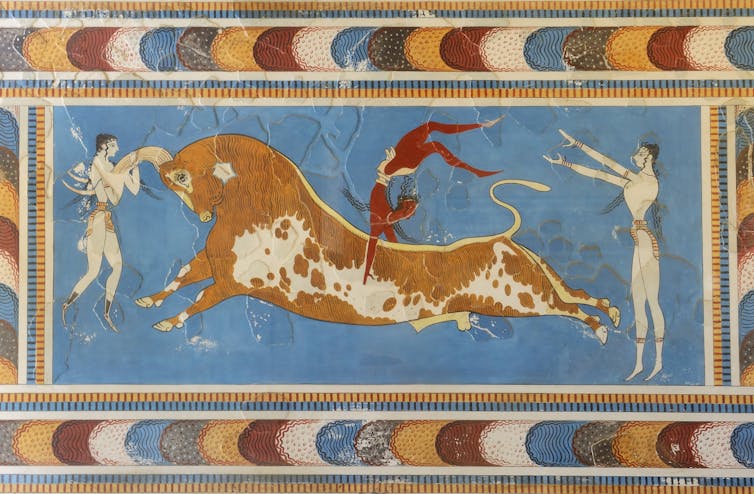
For example, in the later Greek stories (from the first millennium BC), Crete is closely associated with bulls. Zeus took the form of a bull when he seized the Phoenician princess Europa and forced her to the island to initiate the Minoan bloodline. She bore Minos whose wife, Pasiphae, submitted to her passion for Poseidon’s bull, producing the minotaur.
In Minoan art, bulls are everywhere. Archaeologists have found bronze age ritual libation vessels – used for pouring liquid sacrifices to the gods – crafted into the shape of a bull’s head, and large gold rings depicting people leaping over bulls. The echoes of history, myth and ritual seem to have rippled through the generations, to later be reproduced and re-imagined by the ancient Greeks.
It is therefore essential for people who want to understand the history of Europe to study the influence the Minoans have had on the ancient Greeks and modern Europeans – in particular, the evidence coming from the great digs conducted on the island in the early 20th century. These include the excavations by the British archaeologist Arthur Evans at Knossos, Crete, a vast site with complexity that may lend itself to the Greek labyrinth myth.
While the image of the bull is particularly widespread here, there is little association between this creature and women, as later appears in the myths. Women are linked with other animals, though, such as serpents, as shown by the snake goddess figurines that Evans found in the Palace of Knossos in 1903.
Snakes in Minoan art
These snake goddesses were found hidden in large stone-lined pits, in a very fragmentary state. Numerous riches were in this deposit: hundreds of shells, clay and stone vessels, clay seal impressions (used for documentation), Linear A inscriptions (a writing script) and animal bones.
The remains of five or six female figurines were found, but only two have been reconstructed. They have become icons of Minoan culture and poster girls for Crete, standing out due to their eye-catching costumes. These are tight, corseted jackets that leave the breasts bare, with floor-length full skirts – their heaviness serving to emphasise the exposed breasts even more.
The remains of the figurines found in the Palace of Knossos in 1903. Wiki Commons
The slightly larger one is a matronly figure with a tall, conical hat. Her snake-entwined arms are held at around 45 degrees, palms up and set approximately in line with her navel. Snakes drape over her as she stares straight ahead.
The second figure raises her bright white arms, bent at the elbow, up and out to her sides, flexed slightly forward. She clutches snakes, and a feline creature balances on her hat.
These figurines offer food for thought about the reconstruction processes that archaeologists undertake. First, Evans gave the title “goddess” to the larger figurine, and “votary” (meaning a worshipper who has taken vows) to the smaller one. This is arbitrary: we cannot know who these figurines represented, whether they were human, as a dignitary or priestess, or divine – we just sense they were VIPs.
Furthermore, when viewing these extraordinary objects in the Heraklion Museum in Crete today, the visitor may be unaware of the extent to which they have been reconstructed, and how much is an early 20th-century creation.
For example, the votary’s head, with its distinctive, wide-eyed stare, is entirely modern, as is her left arm, added soon after she was excavated. The object held in her right hand was broken off – only a very small piece of the original remained in her clenched fist. The reconstruction of snakes as the objects she holds is not so absurd – her sister has them running all over her as a comparison – but recent research has cast some doubt on what she originally held.
In addition to reconstructing the originals, people have also re-imagined these striking figurines in numerous ways – in replicas as souvenirs, as Barbie dolls, in graffiti (particularly in Heraklion) and in advertisements. They have appeared as book covers and inspired modern literature as well as visual and performative art.
Adaptations of them have come to life in poetry, opera, dance and music. A performer led the historical procession as the snake goddess in the opening ceremony for the 2004 Olympic Games in Athens. My project, the Many Lives of a Snake Goddess, seeks to understand the cultural biographies of these objects. It shows their legacy has been great partly because we have recreated them in such varied ways.
Minoan Crete is important not only because of any claims made for its place as the fountainhead of European civilisation, but also because its art and archaeology have done so much to shape modern culture.
Looking for something good? Cut through the noise with a carefully curated selection of the latest releases, live events and exhibitions, straight to your inbox every fortnight, on Fridays. Sign up here.
Ellen Adams does not work for, consult, own shares in or receive funding from any company or organisation that would benefit from this article, and has disclosed no relevant affiliations beyond their academic appointment.
Infrastructure planning needs more democracy, not less.
The UK has wasted billions of pounds of public and private money through failed infrastructure projects recently. Our research suggests there is a better way.
The planning and infrastructure bill now in parliament is an example of how the government’s approach fails. The bill has been criticised for pitting the environment against economic growth. Less well reported is that it removes a cornerstone of our democracy; the opportunity for citizens to participate in decision-making about the infrastructure that affects them. The bill removes the duty for the developers of big infrastructure projects to consult with local communities and local authorities before the formal planning process.
There has been a democratic deficit in infrastructure planning since the 2008 Planning Act established a separate planning process for infrastructure projects deemed nationally significant. These are larger with the need for them established in national policy statements produced by the relevant government department. For example, the Department for Transport produces policy statements that establish the need for new road and rail projects, as does the Department for Energy Security and Net Zero for wind or nuclear projects.
This process was meant to be both faster and fairer but the emphasis was always on speed. Despite the belief among policymakers that planning slows down the delivery of infrastructure the evidence suggests that factors outside of planning are the biggest source of delay.
The problems of delays and rising costs that beset projects like the nuclear power station Hinkley Point C, London’s super sewer the Thames tideway tunnel and the high-speed rail line HS2 have little to do with planning. These simply exemplify the problem of so-called “megaprojects” that take longer, cost more and deliver less than is promised.
The planning and infrastructure bill will not make the process fairer. Communities and groups affected will only get to make their case in writing and in public hearings where time to speak is limited, often to 15 minutes. The process makes it harder for communities to have their voices heard. It may not even be faster as speed in the planning stages comes at the expense of passing on problems to the more costly construction phase.
Deliberation means better decisions
Yet, when citizens are involved in public deliberative forums with experts and planners, they can make well-reasoned, long-term decisions. When communities and experts work together infrastructure can be co-designed. This is why we were part of a group of planning academics that recently called for amendments to the Bill to establish an expert body to support innovative democratic participation in infrastructure planning.
There are precedents. Canada’s 1977 Berger inquiry into proposals to construct a gas pipeline on land along the Mackenzie Valley subject to claims by Aboriginal organisations. The inquiry became a benchmark for the use of public deliberation in the environmental and social assessment of complex infrastructure. Justice Thomas Berger’s approach saw experts and citizens testify on equal terms. The inquiry went to the communities that were affected. It travelled over 17,000 miles across Canada’s northwest hearing testimony from Aboriginal and non-Aboriginal Canadians in eight different languages.
The use of public deliberation to inform decision-making has increased considerably since then. In 2020, a report from the Organisation for Economic Co-operation and Development, an international policy advice forum, showed that infrastructure, urban and strategic planning are consistently the top policy areas where deliberative forums are used.
Following conflicts over high-speed rail lines in the 1990s, France pioneered deliberative discussion for all large infrastructure projects. These are subjected to early, non-binding scrutiny, conducted by an independent agency with years of experience in organising democratic discussion. They found it was more efficient and quicker to bring people into discussions early on.
France also organised national debates on climate change. This public deliberation on energy or transport policy builds political consensus for years so policy does not change with each change of government. In the UK, this could provide a basis for the new generation of National Policy Statements on infrastructure.
The previous UK government’s own Innovation in Democracy programme – an initiative that tests the use of deliberative assemblies in local government – showed how they can be designed to fit the geographies of infrastructure. This is important because the consequences often go beyond local authority boundaries through which representative democracy is organised.
Despite huge challenges like the transition to renewable energy or mitigating climate change that new infrastructure has to deal with, trust in planning is often low, mirroring a general decline in faith in politics. Deliberative democracy can restore trust between citizens and politicians and address the problems of climate change.
Infrastructure decisions are technically complex. New, large-scale infrastructure is disruptive, expensive and rarely aligns with electoral time frames. Yet the costs and consequences of poor decisions are with us for a long time. Rather than a delay, planning in this way is time well spent.
Don’t have time to read about climate change as much as you’d like?
I have received funding from the German Government’s Humboldt Foundation and the UK’s Engineering and Physical Sciences Research Council to study the controversies surrounding big infrastructure projects.
Tim Marshall received funding from ESRC, a Research Fellowship 2010-2102.
Ukraine’s president, Volodymyr Zelensky, had good cause to be optimistic following his recent White House meetings with Donald Trump and the leaders of the European “coalition of the willing”. While a concrete peace plan has yet to emerge, Trump appears to have come around to the European position that security guarantees will be vital if any peace deal is to stick.
This is real progress. But what shape would security guarantees take in the case of Ukraine, and will they be enough to deter the Russian president, Vladimir Putin, from breaking the peace at some future date?
Talk of security guarantees is nothing new. Zelensky and his European allies have been stressing their importance for much of the conflict. But what does appear significant is the way in which the latest proposals have been framed.
It has been suggested that Ukraine should be offered security guarantees that resemble what Italy’s prime minister, Giorgia Meloni, called an “article 5 model”. This is a reference to the defence provision of Nato’s founding treaty, which specifies that an attack on one member is an attack on them all and requires a collective response.
Nato’s Article 5 is the gold standard of security guarantees. The wording is open to interpretation, but no one doubts that the principle of collective defence it embodies is the core purpose of the 32 nations which make up the alliance. Article 5 is backed by credible force that outclasses Russian military might.
Certainly, questions hang over article 5’s reliability. The provision has only ever been activated once – following the 9/11 attacks on the United States in 2001. But the unusual circumstances of that single invocation do not render the provision any less valuable.
The fact that European allies came to America’s assistance (rather than the US coming to the aid of Europe) means article 5 is a symbolic resource in transatlantic relations, which Nato’s European members can wield to remind the US president of his country’s commitment.
This is important. Trump has periodically suggested the US would not be prepared to defend perceived alliance “free-riders”. But the agreement at Nato’s Hague summit in June to raise defence spending among the allies went a long way to head off a transatlantic rupture by allaying Trump’s fears on that score.
Worries that the American military presence in Europe would be summarily withdrawn have so far proved unfounded. The US president now praises Nato as being engaged with America in what the White House has called a “new era of shared responsibility”.
Levels of commitment
The true effect of article 5 lies in the wars that have not occurred rather than those which have. Under Putin, Russia has attacked both Georgia and Ukraine. It has not invaded a Nato ally. This is why Ukraine has always been so keen to become a member of Nato, something that has been accepted in principle by most members of the alliance for some years.
But since the invasion of Ukraine, that route to an article 5 security guarantee has been expressly ruled out by the Trump administration, as well as by Nato itself. Instead, the alliance’s secretary general, Mark Rutte, has referred to “article 5-type of security guarantees for Ukraine”. What has still to be publicly discussed is precisely what this might entail.
Some of the parameters are, however, becoming clear. Trump suggested that he wants Europeans to be “the first line of defence”, with the US providing intelligence, weapons (paid for by Europe) and air support of some kind. He was quite clear there would be no US “boots on the ground”.
Ukraine’s European allies are now mulling over what their role as guarantors of security for a peace deal might look like. It has been reported the head of the UK’s armed forces, Tony Radakin, will tell a meeting of military commanders at the Pentagon that the UK is prepared to send troops to Ukraine – not as a frontline fighting force, but to provide security at ports and air bases. How many members of the coalition of the willing are prepared to do the same remains uncertain.
Patchwork of agreements
What went unmentioned at the White House meeting was the significant set of security and defence commitments Ukraine already enjoys with the Nato allies. Since the G7 Joint Declaration of Support for Ukraine of July 2023, Ukraine has signed bilateral security and defence agreements with 27 of Nato’s 32 members.
Typically, these provide for consultation within 24 hours if Ukraine is attacked, in order (as Ukraine’s agreements with the UK and France both put it) “to determine measures needed to counter or deter the aggression”.
There are also common provisions for military capacity building, recognition of Ukraine’s territorial integrity, and post-war reconstruction. Taken in the round, these agreements thus already provide the political basis for a comprehensive and effective set of security guarantees.
Two more things are needed. First, the bilateral US-Ukraine security agreement of June 2024, signed under the previous US president, Joe Biden, needs to be reaffirmed by the Trump administration. Second, the Europeans need to convert their latticework of agreements with Ukraine into an effective security and defence mechanism.
This can be done as the French president, Emmanuel Macron, has suggested, by continuing to arm the Ukrainian military. But if the article 5 parallel means anything, it will require – as Rose Gottemoeller, a former Nato deputy director general, pointed out on the BBC – an effective deterrent effect. And that means US participation.
With minimal involvement by the US, the question is whether the Franco-British-led “coalition of the willing” is up to the task – and whether there is the collective political will to organise and deploy a deterrent force in the face of Russian objections.
These are the debates playing out in Europe and across the Atlantic – and which become daily more urgent, as Russia’s advance in eastern Ukraine continues to gather momentum.
Mark Webber is Senior Non-resident fellow at the NATO Defence College in Rome and a trustee of NATO Watch. He has previously received funding from the Economic and Social Research Council (ESRC) and the British Academy to carry out research on NATO.
Source: The Conversation – UK – By Jane Kershaw, Gad Rausing Associate Professor of Viking Age Archaeology, University of Oxford
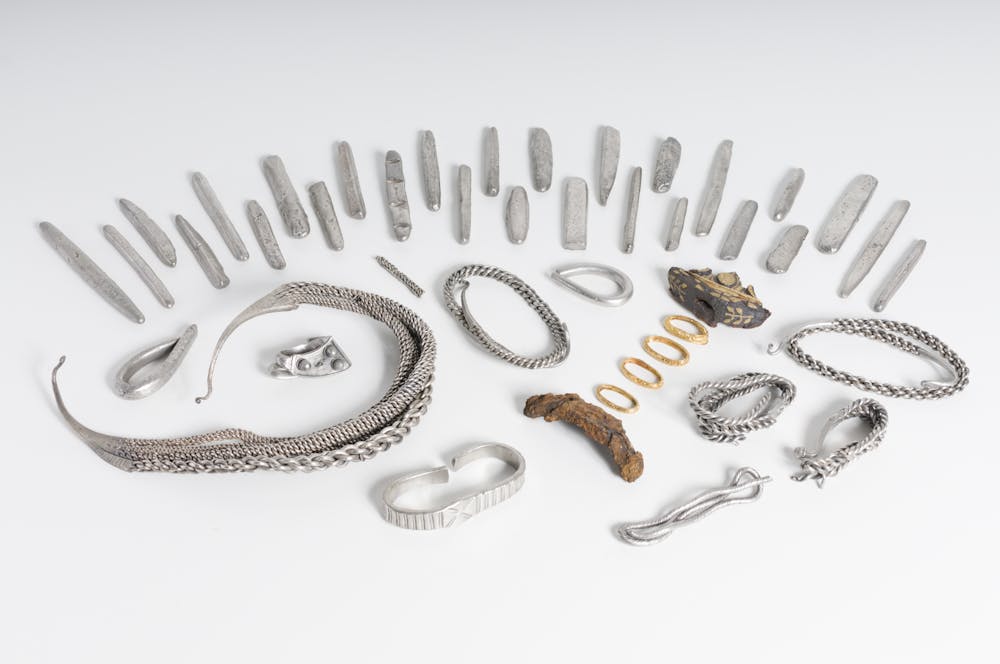
In the archaeology galleries of the Yorkshire Museum, an incredible Viking silver neck-ring takes centre stage. The ring is made of four ropes of twisted rods hammer-welded together at each end, its terminals tapering into scrolled S-shaped hooks for fastening behind the neck. Weighing over half a kilo, it makes a less-than-subtle statement about the wealth and status of its Viking owner some 1,100 years ago.
The neck-ring was part of a large silver and gold hoard found in 2012 by metal detectorists Stuart Campbell and Steve Caswell near Bedale in North Yorkshire. As the first precious object out of the ground, it was initially mistaken by Campbell for a discarded power cable.
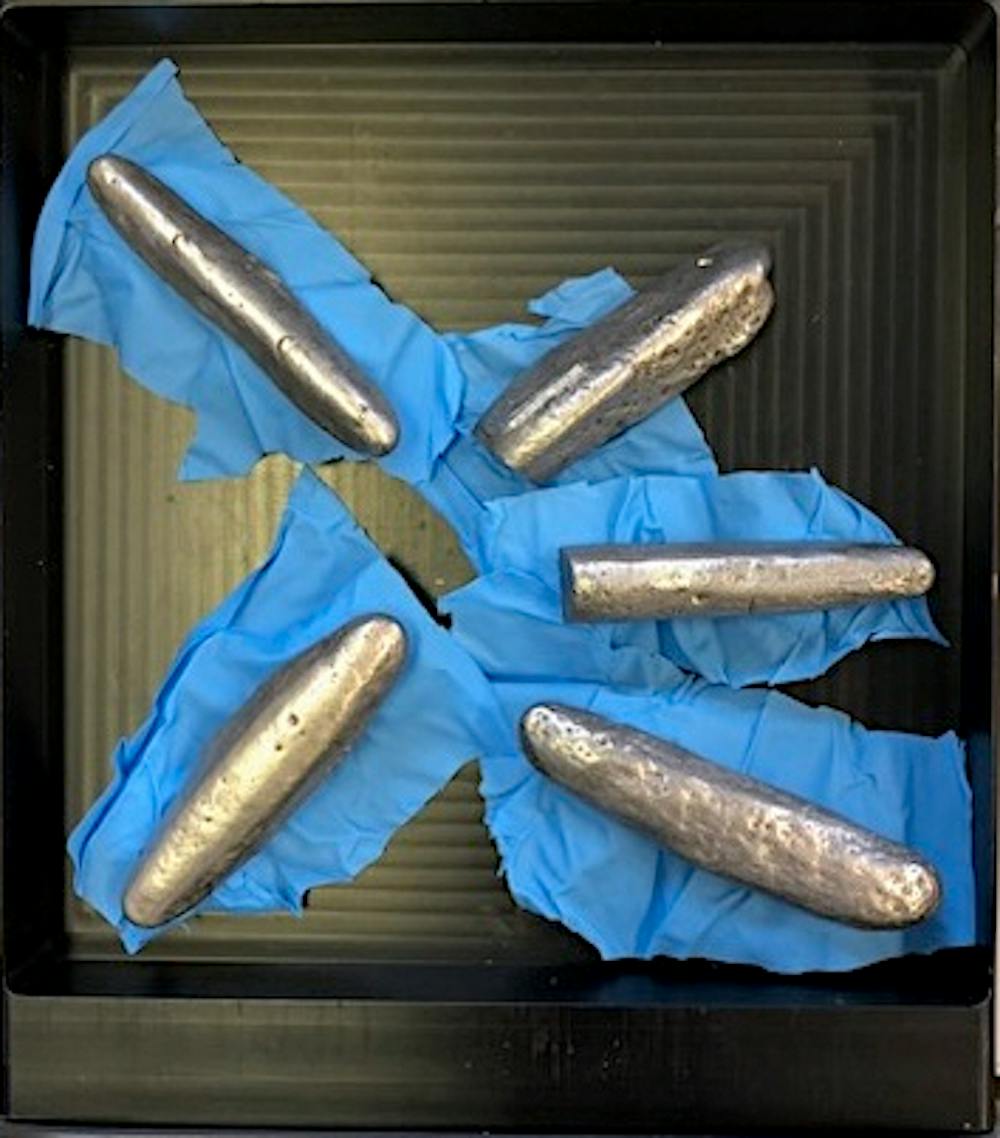
Six years later, I got the chance to analyse the Bedale hoard, as it is now known, for its isotopes and trace elements. Alongside the neck-ring and a gold Anglo-Saxon sword pommel (probably acquired in England by these Viking raiders), the hoard contained a spectrum of cast-silver artefacts spanning the Viking age: Irish-Scandinavian artefacts from Dublin, rings from southern Scandinavia, and many cigar-shaped bars or ingots that could have been cast anywhere.
As an archaeologist investigating the historical secrets held by jewellery such as this, picking up these heavy objects and turning them over in my hands was a visceral experience. I felt connected with the desires, ambition and sheer force of these invaders from the north who had wreaked havoc on communities in northern England around AD900.
Indeed, the entire Viking age (circa 750-1050) is often described as an “age of silver”. This form of wealth was so desired that its acquisition was a primary driver of the expansion out of Scandinavia that the Vikings are most famed for. To acquire it, they were prepared to risk their own lives – and take those of many others.
The story of the Bedale hoard’s discovery. Video by the Yorkshire Museum.
Tens of thousands of silver objects and coins are known from hoards and settlements across the Scandinavian homelands of Norway, Denmark and Sweden, as well as far overseas – from England to Russia and beyond. The study of this silver’s origins opens a window on the vast web of connections these warrior-traders established – a study invigorated in recent years by scientific techniques drawn from geochemistry.
Now, our analysis of the Bedale hoard and other Viking valuables promises to change the story of when their fellow-Scandinavians began travelling thousands of miles to the east to secure the silver that so captivated them.
The origins of these ‘violent chancers’
The word “Viking” comes from the Old Norse víkingr, meaning someone who participated in a sea raid or military expedition. The seeds of the outburst of piracy and overseas expansion that characterised the Viking age were sown in the 5th and 6th centuries, following the demise of the Roman empire.
While Scandinavia was never actually part of the Roman empire, its fall severed important trade links and led to factional fighting. In addition, volcanic eruptions in the mid-6th century induced prolonged climatic cooling, leading to crop failure and famine. Together, these events fractured Scandinavian society: archaeologists can point to abandoned settlements and cultivation fields as evidence for community displacement and decline.
The Insights section is committed to high-quality longform journalism. Our editors work with academics from many different backgrounds who are tackling a wide range of societal and scientific challenges.
There was also a striking absence of silver in the region at this time, despite Scandinavia possessing native silver ores. While Roman silver plate and coin had previously reached Scandinavia and been melted down to make huge, stunning “relief” brooches worn by women, this flow of silver had declined sharply by the 6th century. In the following century, most jewellery was made of copper alloy – silver wasn’t being mined, and in this overwhelmingly agrarian society, precious metal was an unnecessary luxury.
In Scandinavia, where farming was challenging due to short summers and long harsh winters, wealth and power lay in good farming land and cattle – with payments typically made in butter, cloth, horses, sheep, hides and iron. As archaeologist Dagfinn Skre explains:
In an economy in which the supply of necessities was threatened, a man who had his moveable wealth in cows … would survive, but one who had it invested in metal would die. His metal would be close to worthless – for who would exchange their cows, butter or grain for metal in times of famine?
Yet out of this period of domestic struggle, a new and ambitious elite emerged in Scandinavia, particularly around the fjords of Norway and in the central Mälaren valley in Sweden – fertile regions which afforded access to both inland resources and coastal waterways.
Dubbed “violent chancers” by historian Guy Halsall, they seized abandoned land and valuable resources such as tar, furs and iron for weapons. They developed multiple, competing chiefdoms which they defended through a martial culture propped up by lavish consumption, trade and violence.
Archaeologists can point to tangible survivals of this culture: luxury imports such as glass claw beakers, elaborately furnished burials under huge mounds, monumental halls and full-on military kits. These warriors had shields decorated with bird-of-prey figures, crested helmets covered with silver foils, and swords with pommels covered in gold and garnets. They were not to be messed with.
Their success, coupled with these coastal people’s refined tradition of boat-building, enabled them to build and kit out fleets of ships. Surviving examples indicate these were long and narrow, with hulls made of overlapping (clinker) planking and shallow keels suitable for use in creeks, estuaries and beach landings. At first propelled by oar, the later adoption of sails enabled these ships to undertake long sea crossings.
In the late-8th century, Scandinavians began launching violent seaborne attacks on centres of wealth in neighbouring countries – first the coastal towns, monasteries and churches of modern-day Britain, Ireland and France, then later expanding their raids into Germany and Spain, and as far south as the north coast of Morocco. These centres of population provided human capital for the Viking slave trade, while enriching the invaders with portable wealth in the form of liturgical plates and reliquaries (from monasteries), silver coin and other high-status artefacts.
A raid on the north-east England island monastery of Lindisfarne in 793 – the first documented attack in the west – was probably launched from Norway. Its precise targeting suggests the raiders were well-informed about their destination, and no doubt attracted by stories of the riches held there. Writing afterwards, York cleric Alcuin described how the church had been “spattered with the blood of the priests of God, stripped of all its furnishing, exposed to the plundering of pagans”.
Alcuin blamed the attacks on his community’s “fornications, adulteries and incest” which have “poured over the land … even against the handmaids dedicated to God” – that is, nuns. The Vikings had made off not just with church treasure, but had also led away youths “into captivity”.
The capture of slaves was a common tactic. Some, like the boys from Lindisfarne, might have ended their days in Scandinavia or have been sold on at slave markets. But often, they were ransomed back to their communities for cash. After Vikings captured the abbot of St Denis in 858, for example, church treasuries “were drained dry” in order to meet their ransom demands of nearly 700lb of gold and 3,250lb of silver. “But even all this was far from being enough,” lamented the period’s chronicler Prudentius, bishop of Troyes.
The Viking pattern of raiding, looting and slaving is a dominant theme of 9th-century annals from Ireland, England and the Carolingian continent (spanning much of modern-day western Europe). In 842, Vikings made a surprise early-morning attack on the trading port of Quentovic in modern-day France. “They plundered it and laid waste,” recorded Prudentius, leaving “nothing in it except those buildings which they had been paid to spare”.
Accounts such as these record massive sums of silver extracted by the Vikings or offered as protection money. The extent of Viking accumulation of silver is staggering: the annals suggest that over the 9th century, the total loot in Viking hands amounted to 30,000lb of silver – or 7 million Carolingian pennies.
This stock is likely to have provided a stimulus to the economic development of nascent towns such as York and Lincoln in Scandinavian-settled areas of England, which are thought to have been more economically buoyant than their counterparts in “English” England.
Why did the Vikings come to value silver so highly? While the ownership of land and livestock was determined by strict laws of inheritance, silver could be obtained independently and with little resource investment, bypassing these normal routes of advancement. In this sense, silver embodied a new kind of dynamism coinciding with a different mode of behaviour.
These “nouveau rich” Vikings could not necessarily buy land with silver, but it gave them status – enabling people without inherited assets to acquire, and pass on, wealth. While the division of farmland and cattle upon marriage or death could be tricky, silver was ideally suited to such payments.
To these new generations of Scandinavians, silver became a standard of value that could guarantee investments, settle disputes and underwrite inheritance claims. It could be used to cement relationships – acting, as archaeologist Soren Sindbaek puts it, as a “virtual social glue”.
Silver analysis leads to a staggering result
But as well as value, silver stores information in its chemical composition that can reveal where it came from – something I have investigated as head of a research team over the last five years. We have analysed hundreds of silver Viking-age objects including from the Bedale hoard, with its rich mixture of rings and ingots cast by Scandinavians.
To make the hoard’s massive twisted silver neck-ring, for example, Viking metalcasters would have melted down numerous silver coins or small pieces of deliberately cut “hacksilver”. Once melted, the silver was cast into ingots, then gently hammered into long rods which were heated and twisted together to form the neck-ring.
However, this process masked the original sources of that silver. The only way to tell where it came from would require techniques from geochemistry – so I took the objects to the British Geological Survey’s laboratory in the suburbs of Nottingham, where isotope scientist Jane Evans drilled tiny samples from each silver object to measure them for lead isotopes.
Just like the isotopes (of oxygen, strontium and sulphur) that are laid down in bone and teeth – from which we can trace people’s childhood origins – isotopes of lead can be used to trace silver back to its source. Most silver ores contain trace amounts of lead, the four stable isotopes of which vary according to the ore’s geological age and composition. These lead isotopes give each ore a “fingerprint”, which carries over into silver coins and other artefacts made from it.
Given the location of the Bedale hoard in North Yorkshire, I was confident that much of the silver would have come from local Anglo-Saxon and also Carolingian sources in mainland western Europe. In England, the Vikings started to settle from around 865. How they did so – whether by seizing land, purchasing it, or settling previously uninhabited areas – isn’t entirely clear, but the loot seized during their raids must have helped the process.
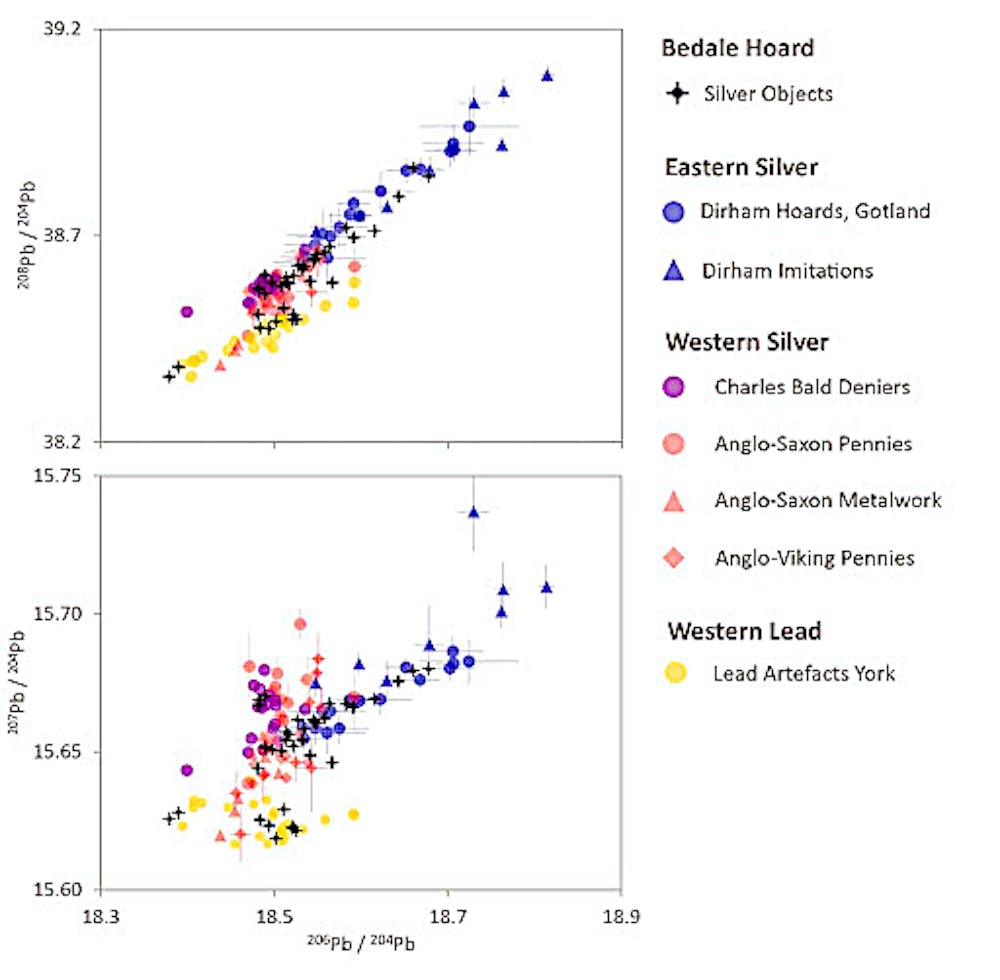
Plotting the ratios of the lead isotopes in the Bedale hoard for the first time, many of the results were as expected: several silver objects matched the ratios of Anglo-Saxon and Carolingian coinage, and other objects had been refined to raise their silver content prior to casting, using local lead in the process of cupellation.
Geochemical analysis of Bedale hoard items
Charts comparing lead isotope ratios of items in the Bedale hoard ((black crosses)) with possible sources of these silver elements. The nine ingots plot closely with Islamic sources of silver (in blue). Jane Kershaw, CC BY-NC-SA
But while many of the artefacts in the Bedale hoard yielded predictable results, a group of nine ingots stood out. Rather than matching western silver sources or local lead, they had the same isotope ratios as the Islamic currency of dirhams.
Dirhams minted between AD750 and 900 by the Umayyads and Abbasids, in what is today Iran and Iraq, were a particularly close match. Two of these ingots were marked with a cross, although whether this carried Christian meaning or was simply a way of marking out ownership is unclear. Either way, these massive ingots must have been cast in Scandinavia from Islamic silver dirhams and brought over to England in Viking hands, before being buried in North Yorkshire.
This result is staggering. The names of villages around Bedale like Snape and Newton-le-Willows sound very far from Mesopotamia – yet the Bedale hoard contained a substantial component of silver minted in Baghdad, Tehran and Isfahan.
These results have made us question the timing of the Viking age’s eastern expansion. While Islamic dirhams are plentiful in Scandinavia, they predominantly date to the 10th century. However, our analysis suggests that dirhams were already arriving in Scandinavia in the 9th century in much larger quantities than previously thought – with many being melted down as a raw material for casting.
To understand how this happened, we need to meet the Scandinavians who looked east rather than west in search of silver and other riches.
Who were the Scandinavians who went east?
While the Viking raids on western Europe are best-known thanks to the many surviving written accounts, some of their fellow-Scandinavians – largely drawn from modern-day Sweden – headed east, establishing riverine, trade-based settlements in what is now Russia and Ukraine.
The route led across the Baltic Sea and Gulf of Finland into northern Russia, transporting furs and slaves from northern Europe to the markets of the Islamic Caliphate. Finds of dirhams in Scandinavia represent the profit from this trade and show that it, too, had silver at its heart.
Over time, these Scandinavians adapted to life on the eastern waterways, adopting some cultural practices from local people such as the nomadic Khazars. The 10th-century diplomat, Ahmad ibn Fadlan, gave a frank description of this new community of traders – known as Rus rather than Vikings – who he met on the River Volga in northern Russia:
They are the filthiest of God’s creatures. They do not clean themselves after urinating or defecating, nor do they wash themselves after having sex …They are like wandering asses.
In 921, Ibn Fadlan had been sent by the Abbasid caliph, al-Muqtadir, as part of an embassy to the king of the Volga Bulgars, located near the modern town of Kazan in Tartastan, Russia. His travelogue-style account, or risāla, of that journey has become famous for the many eyewitness accounts of people he met along the way – including the Rus from northern Europe, whom he met as they traded with merchants from the Islamic empire at the market of Bulgar on the River Volga, roughly midway between Scandinavia and Baghdad.
The Rus people’s long and difficult journey from Scandinavia would have taken several months, involving multiple rivers and portages – when their boats had to be dragged across land. They traversed boreal forest and the Eurasia steppe, which was populated by various nomadic tribes. In this landscape, the only option was to travel by river – or, in winter, to use the river as an ice highway, substituting boats for sledges. But for the Rus, travelling this perilous eastern route, the Austrvegr, was worth the risk.
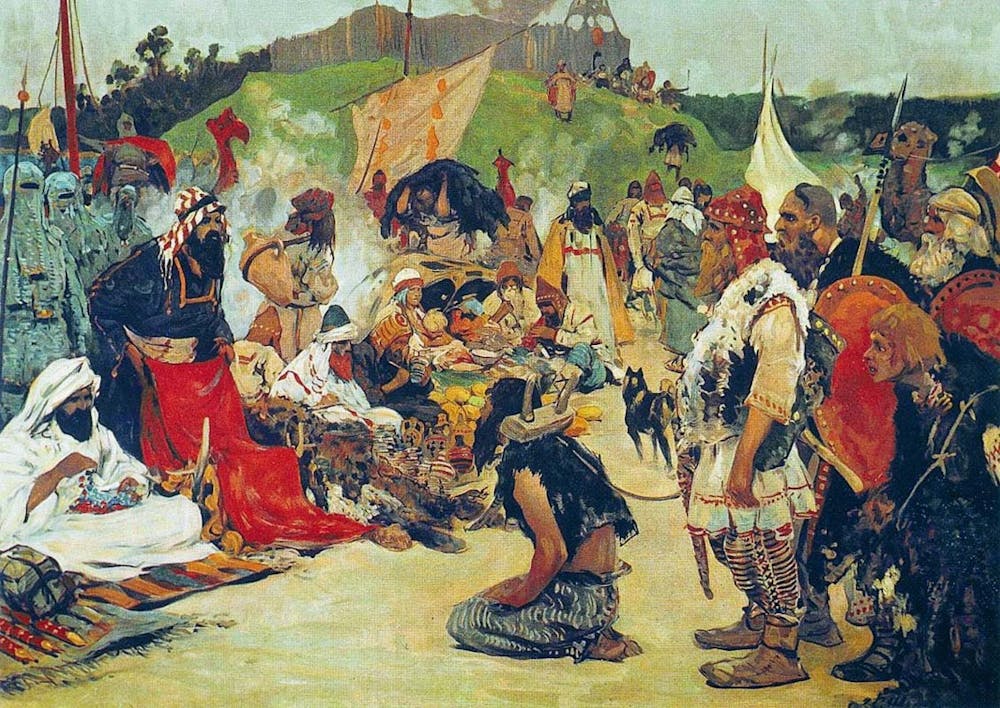
Painting of trade negotiations between Rus traders and Eastern Slav locals in the 10th century, by Russian artist Sergey Ivanov (1909). Wikimedia Commons
According to Ibn Fadlan, the Rus acted as middlemen, acquiring furs and slaves from hunter societies in forested areas and organising their shipment down river via trading posts that later developed into permanent settlements. The goods were sent to major markets such as Itil (on the Caspian Sea) and Bulgar, where they would be purchased by merchants from the caliphate.
What the Rus wanted in return for slaves and furs was dirhams: the fine silver coins, weighing roughly 3g each, which made up the currency of the Islamic Caliphate. The early 10th-century writer, Ahmad ibn Rustah, explained how the Rus “earn their living by trading in sable, grey squirrel and other furs. They sell them for silver coins which they set in belts and wear around their waist.”
Ibn Fadlan’s highly detailed travelogue explains that once a trader amassed 10,000 dirhams, he melted them down to create a neck-ring for his wife. After 20,000 dirhams, he made two. This was no doubt an exaggeration – such a neck-ring would weigh 65lb of silver – but the notion that a smallish group of traders acquired tens of thousands of silver dirhams is supported by archaeology.
For these Rus “traders”, just as important as the fur trade was the trade in enslaved people, who seem mainly to have been captured from the Slavic lands and what is now northern Russia, rather than western Europe. Scholars sometimes describe the Austrvegr as a trading route, but human trafficking can hardly be described as “trade” in the mercantile way that we understand it today. It was based on coercion and violence – the terrorising nature of Viking activity in the west was replicated in the east.
The Rus “treat their slaves well and dress them suitably”, Ibn Rusta wrote, “because for them they are an article of trade”. Yet it’s also clear that female slaves were exploited for sex. These reports underscore the grim reality of the Rus “trade” – that their insatiable quest for silver entailed human suffering.
Astonishingly, some 400,000 dirhams survive in Scandinavia and the Baltic, making the dirham the most common archaeological find type for the Viking age. However, most of these coins date to the first half of the 10th century.
Yet according to our analysis of the Bedale hoard, rather than the Viking age “starting” in the west, the eastern and western expansions may have happened in parallel from the end of the 8th century – with the wealth of the east a prime motivator of the Viking movement out of Scandinavia.
Today, in some of the place-names near Bedale in North Yorkshire, we see evidence of Scandinavian settlement: Aiskew is Old Norse for “Oak Wood”, and Firby means “Frith’s village”. But now we also have evidence of a connection between the Bedale hoard and Rus traders bringing silver back to Scandinavia from their exploits in the east – up to a century earlier than had been thought.
Laser analysis brings new discoveries
In our analysis of the Bedale hoard, lead isotopes alone weren’t enough to draw definitive conclusions. We needed additional data to confirm the Islamic origin of the nine ingots.
Not only do lead isotopes differ between source ores – so do trace elements. Gold and bismuth levels are especially helpful in evaluating the origin of silver, because, unlike other elements, they do not change when silver is melted down.
After digesting the results of the lead isotopes, I returned to the suburbs of Nottingham. With Simon Chenery, we put the Bedale hoard objects under an excimer laser (a type of ultraviolet laser), ablating tiny amounts of silver in order to record the levels of trace elements. This time, thrillingly, the results came through in real time.
They showed, for the Islamic-looking ingots, the telltale pattern of low gold that is characteristic of Abbasid silver. Abbasid dirhams of this date typically have gold levels below 0.4%, reflecting the low-gold character of nearby silver mines in the Taurus mountains, whereas gold levels in coins from western Europe are higher – around 1% in the late 9th century.
We discovered, too, that other artefacts were probably made from a mix of both western and eastern silver sources. This was true of the massive silver neck-ring as well as a smaller neck-ring from the hoard. Indeed, these two items appear to have been made from the same silver stock, suggesting that they travelled from their source to Bedale together.
While both could have been made in Scandinavia, the contribution of western silver raises the possibility that they were produced locally in Yorkshire, by metal casters with access to both distant, Islamic dirhams and local, Anglo-Saxon silver.
Our analysis shows the Islamic contribution to the Bedale hoard is more significant than we would have expected for a Viking hoard from England. In all, the nine ingots weigh 715g, equivalent to around 240 dirhams. And taking into account the Islamic contribution to the “mixed” silver artefacts, Islamic silver comprises around a third of the total weight of silver from the hoard (weighing around 3,700g).
Clearly, the Vikings were not only extracting silver from areas they raided and conquered, they were also bringing it in via their long-distance trade networks in the east. This result reveals the unexpected connectedness of the Vikings’ eastern and western expansions. Far from being separate phenomena, the profits of one directly fed into the activities of the other. Gains made from the Austrvegr may have enabled a group of Scandinavians to launch raids to the west and acquire further wealth and land.
In the west, these raids lasted for around 70 years from the late 8th century, spanning two or three generations. But eventually, the Vikings decided to settle. In northern England, where Bedale is located, they proceeded “to plough and to support themselves”, according to the Anglo-Saxon Chronicle entry for 876 AD. Finds of female Scandinavian dress items from England suggest that whole families, not just retired warriors, settled there.
Many questions remain about the nature of this settlement – including whether the raiders-turned-settlers lived separately from or with the native Anglo-Saxon population, and how the settlement process was brokered. But the former Vikings and their families appear to have integrated relatively quickly, adopting Christian forms of burial, developing craft industries in towns, and embracing coinage as a means of exchange. Among the settled Scandinavian population, the violence ceased.
Silver remained an important medium for displaying values and even identities. From around 900, new Anglo-Scandinavian rulers minted their own coinage – sometimes preserving traditional features familiar to Anglo-Saxons, but also adding new aspects that proclaimed a Scandinavian background. Coins minted by the new rulers of York, a focus of Scandinavian settlement in northern England, could have a Christian cross on one side and a Thor’s hammer – an overt pagan symbol – on the other.
These Anglo-Scandinavian coins were in use across Scandinavian-settled regions of England and are testimony to the continued importance of silver to the Viking economy – now channelled into a form that was more regulated and acceptable to the local Anglo-Saxon community. Geochemical analysis of the silver in these coins also reveals glimpses of this process of assimilation. Our investigation of a handful of examples, using the same techniques of lead isotope and trace element analysis, suggests they were made mainly with Anglo-Saxon silver – but again with a modest contribution from Islamic dirhams.
The end of the eastern adventure
The geochemical analysis of silver helps reveal the reasons for the extraordinary expansion of the Vikings and their fellow Scandinavians – including pointing to the wealth gained in eastern markets as a major (and hitherto neglected) “pull” factor. To a greater degree than has traditionally been acknowledged, eastern silver travelled across the Scandinavian world of the Viking age.
The huge number of Samanid dirhams found in Scandinavia point to the 930s-940s as the most fruitful decades for the Scandinavian travellers’ trade with the east. The Rus’s slave and fur trade continued until around 950 – and silver analysis again helps to explain why it came to a fairly sudden end. Analysis of the silver content of dirhams shows their fineness declined sharply from the 940s and 950s – a reflection, no doubt, of the drying up of silver mines in Central Asia.
It did not take long for Vikings to seek out silver sources closer to home. They turned to coins from the area of modern-day Germany, struck with silver from the newly-exploited Harz mountains, which they obtained mainly through trade. The decline in the silver content of dirhams thus led to a major reconfiguration of Scandinavian trade routes.
From this point on, long-distance trade with the east declined significantly. The Vikings instead turned again to the west, establishing trade links with England and Germany. In the late 10th century, increasingly powerful Scandinavian kings also launched new seaborne raids, exploiting the weakness of English kings such as Æthelred II “the Unready” (978–1016) and initiating what has become known as the “second Viking age” in England.
These raids, launched from around 980, were bigger, more centrally organised, and successful. The Vikings obtained significant quantities of “Danegeld”: protection payments made in coin. Ultimately, in 1016, the Danish king Cnut established himself on the English throne. The nature of the relationship between England and Scandinavia during this period is also being explored through silver, in a project on coinage from the recently-discovered Lenborough hoard.
If the pattern identified for the Bedale hoard plays out across other Viking hoards, it will prompt a major re-evaluation of the movements of the earliest Scandinavian warrior-traders. As part of the same project, we have been analysing Viking silver hoards of a similar 9th-century date from Sweden and Denmark, the Carolingian continent, southern Scotland and the west coast of England. Preliminary results suggest a regional pattern, but with Islamic silver appearing to be dominant in many cases.
What’s clear is that in the 9th century, the Vikings were already awash in Islamic silver. Meanwhile, more undiscovered treasures like that found in Bedale lie quietly underground, waiting to reveal their secrets.
To hear about new Insights articles, join the hundreds of thousands of people who value The Conversation’s evidence-based news. Subscribe to our newsletter.
Jane Kershaw receives funding from the European Research Council.
Numerous images exploring the blurry, textured thickness of light feature prominently in Making Waves; Breaking Ground, a group exhibition at the Bowhouse in St Monans, Fife. It is an apt theme for this coastal corner of Scotland, where, at this time of year, shadows are soft and the days frequently take on a dense, milky quality.
The exhibition is the initiative of curators Sophie Camu and Alexander Lindsay, who have collaborated with the Purdy Hicks Gallery in London to bring together the works of 11 contemporary Scottish and international artists. Spanning painting, photography and film, these often ethereal works explore the “natural environments of our modern world”.
Susan Derges’ image Full Moon Spawn from 2007 becomes increasingly absorbing the more attention you devote to it. On the surface, it is a depiction of the full moon. But, contrary to expectations, it is not surrounded by scudding clouds. Instead, it is framed by strange, jellied clumps and waterborne detritus.
This is an image, we gradually come to realise, that suggests a viewpoint from somewhere below the surface of the water, as though this were a trout’s-eye view of the night sky, and as if our atmosphere were not air, but a body of fresh water, teaming with frog spawn.
Derges came to prominence in the 1990s for her photograms of the River Taw close to her Devon home, which she created without the use of a camera. At night, she would submerge photographic paper within the flowing water, and would use the rippled, reflected light of the moon to leave its imprint on the immersed sheet.
To create Full Moon Spawn, Derges contrived a more elaborate setup in her studio. But it is nonetheless a continuation of a theme she has pursued ever since, which we might call her aqueous perspective: her fascination with the shape-shifting look of things through a liquid medium. For her, photography is a watery business.
Haar – the name used up and down Scotland and England’s east coast for the clammy sea fog that billows noiselessly inland from the sea – is the title of one of Samantha Clark’s large acrylic paintings. Painted in 2024 in Orkney, where she now lives, it depicts a thick, vaporous field, the image built up from a complex overlapping mesh of laboriously drawn lines.
Other works bear names such as This Salted Light, Submerge, or Salt Fog Light. The omnipresence of water is her guiding theme. For Clark, it is the interconnecting life-giving tissue that flows through both us and the land.
Among the other artists included are three Finnish photographers: Santeri Tuori, Jorma Puranen and Sandra Kantanen. In separate ways, both Kantanen and Tuori revisit the painterly theme that so preoccupied Claude Monet in his later years: the unsteadiness of light on foliage floating on the still surface of a pond.
Puranen is equally captivated by scattered, refracted light. In his images, and especially in his series, Icy Prospects, he maintains a fruitful ambiguity about the substantiality of the things he depicts. A frozen surface, for instance, thick with bubbles, mirrors a winter’s sky in a way that makes it appear wet and watery.
Camu and Lindsay present the works in this exhibition as upending the traditional concepts of landscape art. It is a bold claim, especially given that many of the artists are demonstrably familiar with this tradition (Samantha Clark, for instance, has written in detail of her interest in the watercolours of William Turner in her poignant memoir The Clearing).
But it also seems right to infer that few of the artists in this exhibition would identify with the values that the landscape genre has all too often embraced. So often the western landscape tradition has served as the preferred visual form for expressing possession of the land of others.
The artists in Making Waves; Breaking Ground share a commitment to pursuing a more compassionate way of looking and being in a place. They practise modes of attentiveness that do not reduce their surroundings to an easy-to-access spectacle, but acknowledge a physical interconnectedness with the world around them.
What links the works in this exhibition is a noticeable absence of horizon lines. Instead, the artists immerse themselves in an atmosphere, or enter a world filled with things which seem to loom up unpredictably. This approach reflects a refusal to prioritise between the infinitesimally small and cosmic immensity.
Most importantly, they don’t see themselves as separate from the worlds they depict. Our seeing eyes, they suggest, are made of the same physical substances as the things they see.
Making Waves Breaking Ground runs until August 31, at the Bowhouse, St Monans, Fife, free
Looking for something good? Cut through the noise with a carefully curated selection of the latest releases, live events and exhibitions, straight to your inbox every fortnight, on Fridays. Sign up here.
Alistair Rider does not work for, consult, own shares in or receive funding from any company or organisation that would benefit from this article, and has disclosed no relevant affiliations beyond their academic appointment.
Source: The Conversation – UK – By Dan Baumgardt, Senior Lecturer, School of Psychology and Neuroscience, University of Bristol
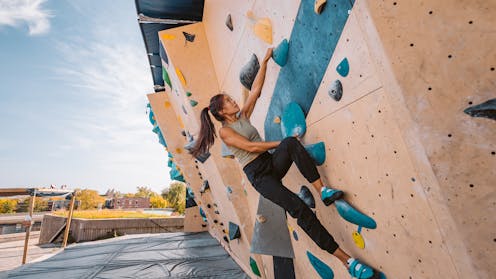
Fingers, toes and everything in between may be at risk of injury.Maridav/ Shutterstock
Climbing and bouldering have become increasingly popular pastimes. In 2021, competitive climbing even become one of the official games at the Tokyo Olympics.
But while climbing is a great way to test the body to its extremes, it’s not risk free. It puts all sorts of stresses and strains on many parts of the body, which can lead a whole host of injuries if you’re not careful.
1. Rotator cuff tears
The main upper body muscles that are used when climbing are those which allow for pull ups and maintaining stability. Lots of these are found in the shoulders and on the back of the body.
Take latissimus dorsi, for instance. This broad sheet of muscle attaches the back to the arms, which enables us to perform a pullup when hanging from a handhold. These muscles (the “lats” as they’re often called) are particularly prized for their ability to give a broad strong back. It’s uncommon (but possible) to injure your lats since they’re large and powerful.
More vulnerable upper body muscles include the rotator cuff group and deltoids (or delts). These muscles can give you strong, defined shoulders (which some have nicknamed “boulder shoulders”) when trained.
Strength in the shoulder muscles is integral for climbing as it not only helps with reaching, but it importantly stabilises the arms – holding them in their sockets and preventing them from dislocating. When hanging from a rock face, shoulder strength is essential.
In climbing, slipping or catching a bad hold can strain these muscle groups, causing rotator cuff tears. This occurs when the tendon partially or fully tears away from where they attach at the shoulder. Rotator cuff tears will result in pain, weakness and limited movement.
This injury is becoming progressively more common in climbers. While in some cases rest can be enough to allow the tear to repair itself, in more severe cases surgery will be required to repair the tear. This can take months – and sometimes even a full year – to recover.
2. Finger pulley strain
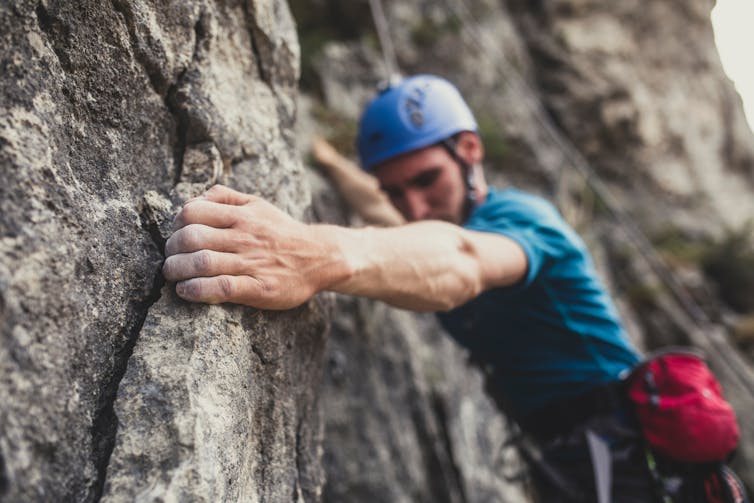
The hand is a masterpiece of mechanical engineering which enables climbers to establish purchase on the smallest of handholds and prevents slipping. This is why having a strong grip is important for any climber. But the stress from gripping handholds can injure the muscles in the forearm, wrists and fingers.
Imagine going to grip the wall, only for your hand to slip. You’ll need to suddenly rush and grab another hold in order to avoid falling. In doing so, extreme stress is placed on the fingers and their tendons and ligaments.
This can sometimes lead to a finger pulley injury, where the bands of tissue holding the tendons in place either get strained or rupture – sometimes with a pop.
Overuse of a certain muscle group can cause the tendons to become inflamed – leading to pain and problems in movement.
Take trigger finger, a climbing injury which usually develops over time as a result of prolonged stress. This results in inflammation and thickening of the muscle tendon, which then causes the finger to stick in a curled position – as if it were poised around the trigger of a gun.
In order to get it back to a straightened position, the patient may need to take hold and pull it straight. Because the problem will usually recur many times, it may require splinting, an anti-inflammatory steroid injection or surgery to treat.
4. Claw toes
While we might think the upper body does most of the work while climbing, the lower body’s muscles still play a really important role – helping us push ourselves upwards. Strong quads and glutes are particularly important in climbing.
Falls, slips and sudden twists can cause all sorts of lower body injuries while climbing, including meniscal tears of the knees and sprained ankles.
Foot injuries can also occur – such as claw (or hammer) toes. This is where the toes take on a claw-shaped deformity, usually due to a muscular imbalance in the foot. In climbers, this may result from wearing tight-fitting climbing shoes, forcing the toes into cramped positions – or from overworking the foot muscles with prolonged gripping on to footholds.
5. Frostbite and Flappers
Skin and soft tissue injuries are very common in climbers – everything from cuts, abrasions and blisters. Some may even experience frostbite if they ever decide to climb outdoors at altitude.
In fact, blisters with hanging skin are commonly referred to as “flappers” within the climbing circle. Anyone who’s had a blister can understand how painful and irritating they are. Good grip technique and hand care are instrumental for preventing and treating them. Keeping wounds clean and moisturising the skin are good ideas. Also, to avoid infection, make sure you don’t pick at or pop any blisters, and ensure they can heal properly.
Climbing and bouldering are great whole body workouts, but in this lies a problem – the risk of overtraining syndrome, a condition which can result in widespread aches and pains, along with mental health issues such as depression. One study found that the majority of climbing injuries were associated with overuse, rather than traumatic causes – and the majority of these were in novices.
To avoid any sort of injury the next time you go climbing, treat your session like a gym workout. Do a proper warm up before starting and cool down after finishing, with some light cardio, stretches or lunges.
Proper kit, including climbing shoes and chalk for the hands also help with your grip. But fundamentally, instruction on technique and a responsible teacher or partner to keep you safe are worth their weight in gold.
Dan Baumgardt does not work for, consult, own shares in or receive funding from any company or organisation that would benefit from this article, and has disclosed no relevant affiliations beyond their academic appointment.















.jpg)