Xi, Putin and Modi to meet in China – but don’t expect their Eurasian bloc summit to agree on anything important

Source: The Conversation – UK – By Stefan Wolff, Professor of International Security, University of Birmingham

The upcoming summit of the Shanghai Cooperation Organization (SCO) in Tianjin, China, from August 31 to September 1, will be the organisation’s largest gathering of heads of state to date. It comes at a time when the existing liberal international order is rapidly disintegrating. But rather than offering a concrete new order, the SCO demonstrates the persistent difficulties that anti-liberal powers such as China and Russia have in agreeing and implementing a credible alternative.

Founded in Shanghai in 2001 with just six members – Russia, China, Kazakhstan, Kyrgyzstan, Tajikistan and Uzbekistan – the SCO has grown rapidly over the past decade. India and Pakistan joined in 2017, Iran in 2023, and Belarus in 2024. Beyond these ten member states, the SCO also has two observers – Afghanistan and Mongolia – and 14 dialogue partners, including Turkey, Egypt, Armenia and Azerbaijan, several of the Gulf states, and a number of other Asian states. If measured by population of its core member states, it is the world’s largest regional organisation.

Size clearly matters, but in the case of the SCO it creates problems rather than contributing to their resolution. The organisation did little in response to escalating tensions between India and Pakistan in the wake of the terrorist attacks in Kashmir that eventually brought the two long-standing rivals to the brink of nuclear confrontation. It took US mediation to de-escalate the violence. The SCO’s subsequent failure to condemn cross-border terrorism explicitly in a joint statement of the meeting of defence ministers at the end of June led India to refuse to sign it.

When Israel attacked Iran, the SCO issued a strongly worded condemnation of the attacks. But India distanced itself officially from the SCO statement.

These and other simmering tensions, such as between India and China over a new dam project in Tibet, are likely to be papered over at the SCO summit in Tianjin. China’s president, Xi Jinping, will be keen to demonstrate his country’s leadership of a large coalition of like-minded nations who oppose the hitherto US-led liberal international order.

However, the theme of this year’s summit is “Upholding the Shanghai Spirit: SCO on the Move”. This sounds more like an aspirational plea to member states, observers and dialogue partners rather than a concrete plan for action.

The so-called Shanghai spirit – a hazy mixture of standard Chinese talking points about mutual respect, peaceful co-existence and win-win cooperation – is little more than empty rhetoric. It is also very fragile.

Two member states – India and Pakistan – have recently gone to war with each other. Two SCO dialogue partners – Armenia and Azerbaijan – have been involved in several full-scale violent confrontations since they became dialogue partners almost a decade ago. And if they have now embraced the Shanghai spirit, they did so, ironically, in Washington and after their relations with Russia significantly soured.

Nor does the SCO have much of a track record of constructive involvement in internal conflicts in its member states and dialogue partners, such as Kyrgyzstan and Myanmar. This is even more obvious in the case of Afghanistan where Russia’s recent official recognition of the Taliban government poses yet another challenge to the SCO.

China has cautiously welcomed Russia’s recognition but not followed suit, while several Central Asian member states of the SCO already have a wide range of economic ties with Afghanistan. But Pakistan, Iran and the Gulf states remain deeply ambivalent about the Taliban regime.

It’s also worth noting that the SCO’s very selective commitment to the Shanghai spirit does not extend to relations between the organisation and non-member states. That much is evident from the SCO’s lack of condemnation of Russian aggression against Ukraine. So it’s difficult to see where the SCO will move. Previous summits in 2022, 2023 and 2024 produced lengthy declarations of intent – but little follow-through.

Elephant in the room

The marked difference to these previous summits is, of course, Donald Trump’s return to the White House.

On the one hand, Trump has demonstrated the near-irrelevance of the SCO as a security player compared to the indispensability of the US when it comes to managing crises, such as those between India and Pakistan, Armenia and Azerbaijan and Cambodia and Thailand.

On the other hand, Trump’s weaponisation of trade has created a new dynamic within the SCO. The US president’s imposition of punitive tariffs might see the organisation’s most powerful countries – China, Russia and India – align more closely against the US.

Sanctions against Russia, however unlikely they may be to be fully implemented by Trump, are still on the table. Heavy tariffs have now been imposed on India for continuing to buy Russian oil. And the trade war with China is only paused but not settled.

For their own sake, and even more so for the sake of their actual and potential partners in the global south, China, Russia and India must demonstrate a unity of purpose at the SCO summit. They will condemn the US and the liberal international order, which Trump himself is actively eroding. But their unity of purpose will be limited and performative.

Meanwhile, the differences that remain between them and their conflicting individual aspirations of leadership in a post-American international order will prevent them from offering a credible alternative.

Undoubtedly, there will be carefully choreographed displays of solidarity and aspirational statements of how the spirit of Shanghai will shape a new international order. But these rest on the false premise that a post-American international order will be a non-American order.

Trump may try to make a deal with Russia and China on a new world order, but a president who publicly muses about renaming the US department of defence to the department of war is unlikely to cede global leadership – at least not without a fight.

The Conversation

Stefan Wolff is a past recipient of grant funding from the Natural Environment Research Council of the UK, the United States Institute of Peace, the Economic and Social Research Council of the UK, the British Academy, the NATO Science for Peace Programme, the EU Framework Programmes 6 and 7 and Horizon 2020, as well as the EU’s Jean Monnet Programme. He is a Trustee and Honorary Treasurer of the Political Studies Association of the UK and a Senior Research Fellow at the Foreign Policy Centre in London.

ref. Xi, Putin and Modi to meet in China – but don’t expect their Eurasian bloc summit to agree on anything important – https://theconversation.com/xi-putin-and-modi-to-meet-in-china-but-dont-expect-their-eurasian-bloc-summit-to-agree-on-anything-important-262243

When surgical tools don’t fit: how gender bias in design puts women surgeons at risk

Source: The Conversation – UK – By Gráinne Tyrrell, Doctoral Researcher in Biomedical Device Design, School of Architecture and Product Design, University of Limerick

S Eirich/Shutterstock

“If you can’t handle this, you’ll never keep up with your peers.”

That’s what a young vascular surgeon in training reported hearing from a senior colleague during interviews for our study, after she needed two hands to hold a medical device her male peers could operate with one.

Another cardiologist, more than ten years into her career, must regularly hand over part of a procedure because she doesn’t have the grip strength for a particular surgical task. The problem isn’t her skill, focus, or stamina – it’s that the tools were never built for her hands.

Stories like these are sometimes misused to reinforce outdated stereotypes: that women aren’t physically capable of performing certain high-skill roles like heart surgery.

In reality, women surgeons are often working harder – and sometimes risking their own health – to achieve the same results as their male colleagues. The barrier isn’t ability. It’s the long shadow of gender bias in both medicine and design.

Our research team is working to change that. We’ve developed a test rig equipped with sensors and 3D scanning technology to capture precise measurements of grip strength and hand size across a variety of simulated surgical scenarios. So far, we’ve gathered data from 42 cardiologists and vascular surgeons worldwide.

The study involved 24 women vascular surgeons from across the globe, the response was overwhelmingly positive. Many participants shared personal accounts of the strain they endure, describing aching wrists and fear of long-term joint issues – all exacerbated by tools that demand more strength than their bodies can comfortably deliver. For some, the motivation to take part was personal: they want the next generation of surgeons to face fewer barriers.

This data is already being used to inform the design of new cardiovascular devices. Handles are being resized to fit a wider range of hand shapes, and the grip strength required to operate them is being lowered. The aim is simple but critical: reduce injury risk, improve surgeon wellbeing and extend careers.

Built for men, used by everyone

The operating theatre is full of devices designed to fit the “average” surgeon and, for decades, that average has been male. Handle diameters tend to be optimised for larger hands, while buttons and sliders are calibrated to force ranges comfortable for male grip strength.

In vascular and cardiac surgery, precision and power go hand in hand. These procedures require surgeons to maintain awkward positions for extended periods, often in high-pressure situations. Even without design flaws, the risk of muscle and joint strain is significant. But when a handle is too big to grip securely, or a control requires more force than a surgeon can comfortably exert, that risk increases sharply and disproportionately for women.

The impact isn’t only on the surgeon. Fatigue, strain and discomfort can affect concentration and precision, which in turn can influence patient outcomes. In a profession where the margin for error is vanishingly small, ergonomics aren’t a luxury — they’re a safety requirement.

When engineers develop new biomedical devices, they rely on design guidance: technical data on ideal handle sizes, optimal button placement and the comfortable grip force a surgeon should be able to apply.

But these guidelines are built on incomplete data. Historically, women were excluded from research studies, meaning their measurements never made it into the datasets that shape design.

Even when designers look for female-specific data, there either are no data or the sample sizes in studies are very small. One common shortcut is to scale down men’s measurements by 30-40% to “estimate” women’s — a crude approach that doesn’t reflect real-world variation in hand anatomy or grip strength.

The problem isn’t just gender. Ethnicity and age matter too. People of colour have long been underrepresented in health research, compounding the challenges faced by women of colour. The differences can be striking: the average grip strength of a European man is about 49kg, while for an Asian woman it’s around 24kg — yet both may be expected to perform identical surgical tasks with identical tools.

A changing profession needs changing tools

In 2025, women made up the majority of doctors in the UK for the first time — a milestone that signals a profession in transition. But the tools they will use are still rooted in outdated assumptions. The lack of inclusive design isn’t just an equity problem. It’s a practical one, affecting career longevity, workplace safety and ultimately patient care.

Calls to improve ergonomics for women in surgery have been growing louder. Professional organisations, research groups and individual surgeons have all pushed for better-fitting, more adaptable tools. Yet progress has been slow, partly because gathering detailed ergonomic data has traditionally been time-consuming and expensive.

New technologies are changing that. With 3D scanning, advanced sensors, and more sophisticated modelling, it’s now possible to collect accurate, relevant data far more efficiently. This opens the door to design that accounts for the diversity of the surgical workforce — not just in gender and ethnicity, but in body size, strength and working style.

By integrating grip strength and hand size data from a truly representative group of surgeons, designers can move away from the “one-size-fits-all” mindset that has dominated for decades. Lowering the physical demands of surgical tools won’t just help women – it will improve comfort for all surgeons, from smaller men to older practitioners whose grip strength changes over time.

Heart surgery techniques have advanced rapidly in recent years, driving remarkable innovation and design. However, while technological progress has surged ahead, the data guiding these designs remains outdated and exclusionary, oftentimes leaving women in surgery an afterthought.

As today’s operating rooms evolve in diversity, we’re advocating for surgical instrument design to evolve with it – ensuring inclusivity is built into every medical device.

The Conversation

Gráinne Tyrrell’s PhD research is funded by Research Ireland and Medtronic under the Enterprise Partnership Scheme. The authors acknowledge Donna Curley for her contributions to the research as an industry mentor.

Eoin White and Leonard O Sullivan do not work for, consult, own shares in or receive funding from any company or organisation that would benefit from this article, and have disclosed no relevant affiliations beyond their academic appointment.

ref. When surgical tools don’t fit: how gender bias in design puts women surgeons at risk – https://theconversation.com/when-surgical-tools-dont-fit-how-gender-bias-in-design-puts-women-surgeons-at-risk-262743

‘Phubbing’: why ignoring your partner for your phone infuriates certain people – and causes them to retaliate

Source: The Conversation – UK – By Claire Hart, Associate Professor of Psychology, University of Southampton

Picture this: you’re out for dinner with your partner. The food arrives, the conversation flows – and then their phone buzzes. They glance down, smile faintly and start typing. You sit there, fork in hand, suddenly invisible.

That moment has a name: phubbing, a mash-up of “phone” and “snubbing.” It’s become an almost inevitable feature of modern relationships, as smartphones claim a place at the table – sometimes literally.

You might think of phubbing as a minor irritation, but our research shows it can erode relationship quality, dent self-esteem, stir up resentment and even trigger retaliation. And some people are far more sensitive to it than others.

Using a daily diary study, we tracked 196 people over multiple days, asking them to report how much they felt phubbed by their partner, how they reacted and how they felt afterwards.

The pattern was remarkably consistent. On days when people felt more phubbed, they reported lower relationship satisfaction, worse mood and more anger or frustration.

Phubbing can make the “phubbee” feel excluded, less important and less connected. This fits with equity theory in psychology – relationships feel better when both partners invest equally. If your partner is focused on their phone instead of you, it can signal unequal investment.

Individual differences

Not everyone experiences phubbing the same way. In our 2025 study, published in the Journal of Personality, we found that attachment style – the habitual way people think and feel about relationships – played a big role.

People higher in attachment anxiety – who fear abandonment and crave reassurance – reacted more strongly when phubbed. They reported more depressed mood, lower self-esteem and greater resentment. They were also more likely to retaliate.

Those higher in attachment avoidance – who are uncomfortable with closeness – didn’t report their relationship satisfaction drop as sharply due to phubbing, but they still sometimes retaliated, often by picking up their own phone to seek approval and validation from others when their partner wasn’t meeting these needs.

Narcissism can also play a role. People with high levels of narcissism generally like being the centre of attention, but they may go about it in different ways. In another 2025 study, we examined two sub-types of narcissism: narcissistic rivalry (being antagonistic, insecure and status-defending) and narcissistic admiration (being self-promoting and charm-driven).

We found that people higher in narcissistic rivalry reported lower self-esteem, higher anger and more conflict – whether phubbed or not. When phubbed, they were more curious about what their partner was doing, but also more likely to retaliate out of revenge or to gain approval from others.

People higher in narcissistic admiration tended to have higher relationship satisfaction and wellbeing overall. When phubbed, they were more likely to engage in conflict with their partner than retaliation.

Phubbing as a tit-for-tat game

In our earlier 2022 study, we looked more closely at the type of behaviour phubbed partners engaged in. Common responses included ignoring the phubbing, feeling resentful, asking about the phone use or directly confronting the partner. But one of the most frequent, and telling, responses was retaliation – picking up their own phone and doing the same.

When we asked why people retaliated, three main motives emerged. One was revenge, to “teach the partner a lesson”. The other was seeking support, turning to others for connection when the partner seemed unavailable. And a third was seeking approval – posting on social media or messaging to get validation from others. Boredom was also sometimes mentioned, but it was far less common.

Phubbing might seem trivial – after all, we all check our phones. But in relationships, it can act as a micro-rupture in connection. These small moments can accumulate, creating a sense that your partner’s attention is elsewhere and that you’re less valued.

You couple with smartphones sitting in bed with phones and looking at each other with suspicion.
Phubbing can become a game of revenge.
Prostock-studio/Shutterstock

For people who are already sensitive to signs of rejection – like those high in attachment anxiety or narcissistic rivalry – the impact can be magnified. They may interpret phubbing as a deliberate slight, rather than a mindless habit. This can set off cycles of conflict or withdrawal.

How to break the phubbing cycle

If you’ve ever been accused of phubbing, it doesn’t mean you’re a bad partner, but it might mean your habits need attention.

Simple steps can help protect relationship quality can include creating “phone-free” zones during meals or before bed. It could also be useful to acknowledge the interruption if you must check your phone – explaining why and returning your attention quickly.

Ideally, couples should discuss phone boundaries openly so both partners feel respected. If you’re the phubbee, recognising your own triggers can help. If phubbing hits a deep nerve, it may reflect earlier experiences of feeling ignored or undervalued. Perhaps your partner checking their phone isn’t about your inadequacy but rather about having a bad habit that’s hard to break.
Knowing this can help you respond in ways that repair connection rather than escalate conflict.

Ultimately, smartphones aren’t going away and neither is phubbing. But our findings suggest that the small, everyday choice to be present with your partner matters more than you might think. Put simply, when you put down your phone, you pick up your relationship.

The Conversation

The authors do not work for, consult, own shares in or receive funding from any company or organisation that would benefit from this article, and have disclosed no relevant affiliations beyond their academic appointment.

ref. ‘Phubbing’: why ignoring your partner for your phone infuriates certain people – and causes them to retaliate – https://theconversation.com/phubbing-why-ignoring-your-partner-for-your-phone-infuriates-certain-people-and-causes-them-to-retaliate-263963

New finds shed light on Canopus – the ancient Egyptian port city lost to the sea

Source: The Conversation – UK – By Claire Isabella Gilmour, PhD Candidate, Anthropology and Archaeology, University of Bristol

This year has seen a number of artefacts recovered from the Mediterranean Sea off the coast of Egypt. The area has attracted interest for some time due to ongoing searches for the tomb of Cleopatra VII and Alexander the Great. But the new finds add to our knowledge of the ancient city of Canopus, one of several settlements that have largely been lost to the sea.

The discovery of buildings and an ancient dock is particularly crucial for our understanding of this principal port – one of the most important for the economy of Egypt before the foundation of Alexandria in the 4th century BC.

The Nile Delta is where the river flows into the Mediterranean Sea, and the twin cities of Canopus and Thonis-Heracleion were situated on opposite banks. Canopus was on the western side, at the mouth of the westernmost branch of the Nile. Recovering artefacts from the mouth of the Nile is difficult because much of the material not only lies on the seabed, but is submerged under clay and silt.

The preservation of archaeological material underwater is variable. Metal objects do not fare well, but stone is more durable. Organic materials such as wood can last surprisingly well due to the lack of oxygen in waterlogged places, although they become very vulnerable when removed, so rapid protection is essential.

The recent discoveries include the remnants of an ancient harbour and a merchant ship, shedding light on shipbuilding techniques and economic activity.

Statues continue to emerge, building on what we already know of sculptural practices, religion and politics. They offer clues as to the physical appearance of the ancient city.

One of these statues is a huge quartz sphinx holding the cartouches of Pharaoh Ramesses II (carved oval tablets bearing his name). While it is not yet determined how or when that sphinx was brought to Canopus, it emphasises the antiquity of the site. A white marble statue of a Roman nobleman further confirms the city’s status as multicultural and extremely wealthy.

Where Greece and Egypt meet

The foundation date of Canopus is unknown, but the site had been settled for centuries before the Greeks. It was first mentioned in writing in the 6th century BC, in a poem by Solon.

Expanded over time, in a location perfect for trade and military activity in the Mediterranean, Canopus became a key part of the success of the Greek rulers of Egypt. It served the Ptolemaic dynasty well for several centuries before eventually becoming part of the Roman empire around 30BC. However, the coastal position meant that settlements in that area were vulnerable to environmental stresses and earthquakes and rising sea levels eventually submerged them by the 8th century AD.

Excavators discuss their finds.

A large proportion of the western suburbs of Canopus are today underneath the modern Egyptian coastal town of Abu Qir, while the eastern suburbs are underwater.

For ancient people, Canopus was a place of pilgrimage. Countless people travelled to the sanctuaries of the Egyptian gods Osiris and Serapis there to take part in the Mysteries of Osiris. The annual religious festival reenacting the god’s murder, dismemberment and resurrection dated back to the earliest days of ancient Egypt.

The modern site of Abu Qir was also a place of importance to early Christianity, as religious changes took hold across the world.

A sunken city and its treasures

Underwater excavation in the Alexandria area has continued for decades, most notably by French archaeologist Franck Goddio and his team. They work under the auspices of the European Institute for Underwater in collaboration with the Egyptian Ministry of Tourism and Antiquities.

Many initial finds were made during the team’s work in the 1990s-2010s. The British Museum showcased some 200 of its artefacts in their Sunken Cities: Egypt’s Lost Worlds exhibition in 2016. Highlights included a 5.4 metre tall granite statue of Hapy, the personification of the Nile (on loan from the Maritime Museum, Alexandria) and a massive statue of the Apis bull (from the Graeco-Roman Museum, Alexandria). It showed that Greek rule did not mean the end of Egypt; rather, it was refashioned with a new image.

A sculpted figure of the posthumously deified Arsinoë II, daughter of Ptolemy I, as the Egyptian goddess Isis was also found. It is an intriguing combination of the timelessness of ancient Egyptian statuary, overlaid with the Greek aesthetic, wearing garments rendered in stone so fine they seem transparent.

There is much more to be found beneath the waves, but the strict criteria applied to these underwater excavations mean that most objects will remain there, at least for now, with plans being developed for the world’s first underwater museum.

The targeted nature of the excavations is part of a quest to highlight and celebrate the work being done around underwater heritage. As climate change pushes sea levels ever higher, the need for protection for archaeological sites like Canopus only becomes more pressing.


Looking for something good? Cut through the noise with a carefully curated selection of the latest releases, live events and exhibitions, straight to your inbox every fortnight, on Fridays. Sign up here.


The Conversation

Claire Isabella Gilmour does not work for, consult, own shares in or receive funding from any company or organisation that would benefit from this article, and has disclosed no relevant affiliations beyond their academic appointment.

ref. New finds shed light on Canopus – the ancient Egyptian port city lost to the sea – https://theconversation.com/new-finds-shed-light-on-canopus-the-ancient-egyptian-port-city-lost-to-the-sea-263953

Defendants in sexual assault cases are just as likely to misremember the event as alleged victims – new study

Source: The Conversation – UK – By Ciara Greene, Associate Professor of Psychology, University College Dublin

StunningArt/Shutterstock

Psychologists have intensively studied the factors that make both eyewitnesses and victims more or less susceptible to memory distortion. But to date there has been no experimental evidence comparing memory suggestibility between the complainants and accused in sexual assault cases.

My recent study was the first to compare memory errors between complainants and the accused. The findings of this study, which examined the memories of people embroiled in a fictional sexual assault case, suggest that both parties are equally likely to misremember the details of what happened.

Imagine that you have been called to serve on a jury, evaluating a case of alleged sexual assault. In this case, David and Rebecca are university classmates and went to a party one Saturday evening. Towards the end of the night, they went to an upstairs bedroom, where sexual activity took place. The next day, Rebecca went to police to lodge a complaint of sexual assault, stating that she did not consent to sex with David.

In this trial, as is often the case in real court cases, the accused, David, contends that the sexual activity was entirely consensual. As a juror, this puts you in a difficult position. Both parties agree that sexual activity took place, so any physical evidence is probably going to be of limited use. To make your decision, you must rely on the testimony of David and Rebecca, based on their recollections of the evening. This means that you must evaluate the credibility of David and Rebecca’s memories.

When a court case hinges on the memories of victims or eyewitnesses, expert witnesses are sometimes called to explain the science of memory to the jury. The issue is understudied, but evidence suggests that in sexual assault cases, these experts are almost always called by the defence rather than the prosecution.

In the case I described above, this means that the expert testimony would be used to argue that Rebecca’s – but not David’s – memory might be distorted.

Research into eyewitness memory literature is largely motivated by a desire to reduce eyewitness errors and avoid miscarriages of justice. As a direct result, the majority of evidence that the expert can rely upon in giving their testimony will have focused on memory distortion among witnesses and victims of crimes. This can give the impression that witnesses and complainants are particularly prone to memory errors, while the memory of the complainant is infallible.

People who are accused of crimes are human too, and their memories are subject to the same reconstructive processes as anyone else. In response to this issue, my colleagues and I conducted a series of experiments – recently published in Scientific Reports – which showed that both parties in a “he said, she said” case are equally likely to suffer from memory distortion.

In our study, participants were invited to imagine that they were going on a date with either a man or a woman. They then watched a video of scenes from the date, filmed from a first person perspective. After the video, participants were told that an accusation of sexual assault had been made, and were randomly assigned to the role of the complainant or the accused.

Next, they were shown witness statements from a security guard, bartender and taxi driver that included some misleading descriptions of the date. For example, the statement suggested that the accused was plying the complainant with drinks, or that the complainant was sexually aggressive. Over three experiments, we found that the “accused” and the “complainant” were equally likely to incorporate these misleading details into their memory of the date.

A lot of people tend to think of remembering as a simple act of accessing information, like pulling up a computer file. But research has shown we reconstruct each memory from the ground up every time we recall it, as though we are building a Lego tower out of individual bricks, rather than recalling the event as a whole. This reconstruction can be error prone, and we sometimes incorporate misinformation into our memories, like adding a brick to our tower where it shouldn’t be.

The problem arises when we expect human beings to have machine-like recollection for the details of an event, and judge them harshly when they don’t.

Female witness giving evidence to a court
In court, the scrutiny is often focused on the alleged sexual assault victim.
Gorodenkoff/Shutterstock

These errors can have devastating consequences in judicial settings. The US-based independent non-profit the Innocence Project reported in 2014 that 72% of mistaken convictions that were later overturned when DNA evidence emerged had originally relied upon faulty eyewitness testimony.

But psychologists have developed techniques that interrogators can use to obtain uncontaminated eyewitness testimony. For example, interviewers can be trained to extract eyewitness reports using techniques from the cognitive interview, a technique developed by psychologists to avoid introducing post-event misinformation and distorting witnesses’ memories. In this technique, the interviewer can help witnesses recall details by asking them to form an image of the original scene (such as the location of objects in a room), to comment on their emotional reactions at the time and to describe any sounds, smells and other physical conditions.

When people ask why we didn’t evolve perfect memories, the answer is the same as when we ask why we didn’t evolve to be four metres tall or have hearts that beat 300 times per second: we didn’t need to. Evolutionary pressures pushed us to stand upright and reach a height that supported our ability to feed and defend ourselves, but once that need was met, natural selection no longer favoured ever-increasing height.

In the same way, our memories evolved to support our daily lives – to help us make decisions and take action – not to be an infallible recording device.

When it comes to eyewitness memory, we should treat it just like any other form of evidence, recognising its value but also understanding that it can be contaminated. In the case of sexual assault, it is important to understand that the factors that might undermine a victim’s account – including the passage of time since the event, alcohol consumption and exposure to post-event misinformation are just as likely to apply to the defendant too.

The Conversation

Ciara Greene receives funding from Research Ireland, Science Foundation Ireland, the Health Research Board of Ireland, and AXA Insurance.

ref. Defendants in sexual assault cases are just as likely to misremember the event as alleged victims – new study – https://theconversation.com/defendants-in-sexual-assault-cases-are-just-as-likely-to-misremember-the-event-as-alleged-victims-new-study-262841

Scientists have been wrong about phantom limbs for decades – new study

Source: The Conversation – UK – By Malgorzata Szymanska, PhD Candidate, Cognition and Brain Science, University of Cambridge

22ImagesStudio/Shutterstock.com

Inside every human brain lies a detailed map of the body, with different regions dedicated to different body parts – the hands, lips, feet and more. But what happens to this map when a body part is removed?

For decades, scientists believed that when a body part is amputated, the brain’s body map dramatically reorganises itself, with neighbouring body parts taking over the area once represented by the missing limb.

This idea of large-scale brain reorganisation became a central pillar of what neuroscientists call adult brain plasticity: the ability of the brain to change its structure and function in response to injuries, new experiences or training.

Our new study, published in Nature Neuroscience, shows the opposite is true: the brain’s body map remains strikingly stable, even years after amputation.
To test what happens in the brain after a person loses a body part, we took a unique approach.

Working with NHS surgeons, we followed three adult patients who were preparing to undergo lifesaving arm amputations for medical reasons, such as cancer or severe problems with blood supply. We scanned their brains with functional magnetic resonance imaging (MRI) before the amputation and repeatedly afterwards – in some cases for as long as five years.

During the MRI scans, we asked patients to move different body parts: tapping their individual fingers, curling their toes or pursing their lips. This allowed us to map brain activity and to construct the brain’s body map.

After the surgery, we repeated the scans, this time asking them to move their missing (phantom) fingers. Phantom movements are not imaginary: most amputees continue to feel vivid sensations of their missing limbs, even though they are physically no longer there. Doing so gave us a rare opportunity to directly compare the brain’s hand map before and after amputation in the same person.

We discovered that, across all three patients, the map of the hand in the brain remained remarkably unchanged and did not get overwritten by other body parts, such as the face. This neural stability helps explain why so many amputees continue to feel their missing limbs so vividly.

For most amputees, however, phantom sensations are not neutral sensations; they are painful and described as burning, stabbing or itching. For years, the dominant explanation for these painful sensations came from the idea that the brain’s body map has reorganised itself. In turn, this theory inspired therapies such as mirror box therapy, virtual reality training, or sensory-discrimination exercises, all aimed at fixing supposedly broken maps.

Mirror-box therapy explained.

Our findings show the brain’s body map is not broken. This helps explain why these therapies consistently fail to outperform placebo treatments in clinical trials. If the map remains intact, trying to fix it is a dead end.

The real culprit

Instead, our results suggest we should look elsewhere, for example, in the nerves that are cut during surgery. Severed nerves can form tangled clusters that misfire signals back to the brain. New amputation surgical techniques are being developed to preserve nerve signalling and maintain stable connections to the brain.

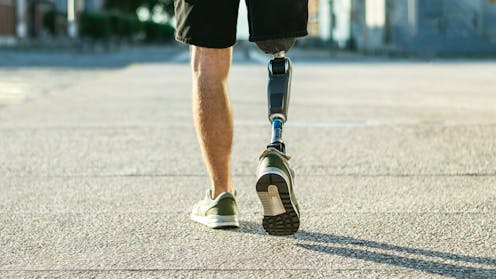
Our findings have important implications for developing prosthetic limbs and brain-computer interfaces. Invasive next-generation brain-computer interfaces can tap directly into the preserved map of the amputated body part to decode what movements are being attempted or even deliver electrical stimulation to the map to enable amputees to feel their missing limb.

These technologies are in development and could, one day, restore natural and intuitive control and sensations of a prosthetic limb, by using the preserved body map.

Our results show that our brains have a resilient model of the body that maintains the representations, even when the sensory input is lost. For amputees, this means that the missing limb lives on in the brain, sometimes as a source of discomfort, but also as a resource for future technologies to use.

The Conversation

Malgorzata Szymanska is receiving funding from the Medical Research Council for her PhD. She was also funded by the Wellcome Trust while working on the study.

The study was supported by a Wellcome Trust Senior Research Fellowship, awarded to Tamar R. Makin. Hunter Schone was supported by the Intramural Research Program of the National Institute of Mental Health and a research fellowship from the National Institute of Mental Health of the National Institutes of Health.

ref. Scientists have been wrong about phantom limbs for decades – new study – https://theconversation.com/scientists-have-been-wrong-about-phantom-limbs-for-decades-new-study-263547

What was Jane Austen’s best novel? These experts think they know

Source: The Conversation – UK – By Lucy Thompson, Lecturer in Nineteenth-Century Literature and Creative Writing, Aberystwyth University

To mark the 250th anniversary of her birth, we’re pitting Jane Austen’s much-loved novels against each other in a battle of wit, charm and romance. Six leading Austen experts have made their case for her ultimate novel, but the winner is down to you. Cast your vote in the poll at the end of the article, and let us know the reason for your choice in the comments. This is Jane Austen Fight Club – it’s bonnets at dawn…

Sense and Sensibility (1811)

Championed by Lucy Thompson, lecturer in 19th-century literature and creative writing, Aberystwyth University

Sense and Sensibility is Austen’s most quietly radical novel. As her first published work, it may be less polished than her later fiction, but it is no less incisive.

It lays bare the emotional cost of living in a world governed by reputation, family obligation and gendered expectation. Excluded from inheritance and displaced from their home, the Dashwood sisters must navigate constant scrutiny. Through Elinor and Marianne, Austen dramatises two strategies for survival in a society obsessed with appearances.

Born from an earlier epistolary draft, the novel retains a sharp interest in how information circulates and misleads. Gossip doesn’t just constrain; it distorts. Letters are spied upon, conversations overheard. Assumptions take on the weight of fact.

In this world, everyone watches – but not everyone truly sees. Sense and Sensibility may wear a quieter face than Emma or Pride and Prejudice, but it is Austen’s sharpest early critique of how appearances govern lives.


This article is part of a series commemorating the 250th anniversary of Jane Austen’s birth. Despite having published only six books, she is one of the best-known authors in history. These articles explore the legacy and life of this incredible writer.


Pride and Prejudice (1813)

Championed by Andrew McInnes, reader in English literature, Edge Hill University

Everyone already knows the best Austen novel: Pride and Prejudice. Why? Elizabeth Bennet. Lizzy is so charismatic that you might mistake the novel’s title for an abstract problem, and not Darcy’s pride versus her prejudice.

We share her prejudices because Austen makes them so delicious. We roll our eyes at Mrs Bennet because Lizzy finds her exasperating. Wickham is seductive because he satisfies our inner bitch. And we fall in love with Darcy alongside Lizzy.

Pride and Prejudice is the funniest and sexiest of Austen’s novels. In it, she allows herself a swoon-worthy romance without a hitch. Unlike Northanger Abbey’s Henry Tilney, Darcy doesn’t fall in love because Lizzy adores him, but falls first. Darcy is a complex man – shy, domineering, funny – and not a drip like Eds Ferrars (Sense and Sensibility) or Bertram (Mansfield Park). And unlike Emma, Lizzy builds healthy relationships with other women.

Austen called Pride and Prejudice “too light and bright and sparkling” and joked that it could do with an essay on Walter Scott or Napoleon. But we know that would be a crime. It is just light and bright and sparkling enough to outshine the others.

Mansfield Park (1814)

Championed by Amanda Vickery, professor in early modern history, Queen Mary University of London

Pride and Prejudice is often the first grown-up novel young girls read, but Mansfield Park is the only Austen novel about a little girl growing up.

All Austen’s fictions are versions of the female-centred courtship novel, usually covering a single year, with the heroine safely married to a deserving gentleman by the last page. Yet her heroines are mostly formed young women. Only in Mansfield Park do we meet our heroine as a little girl – and a puny and cowering little girl at that.

Mansfield Park is Austen’s bildungsroman (the novel of becoming) on a par with that other girls’ classic, Charlotte Bronte’s Jane Eyre (1847). Like poor, plain Jane, Fanny Price is a girl of no consequence – a Cinderella figure in a mansion of the rich and selfish.

Fanny is shy, frail and physically timid, but she is not a moral coward. She learns to bear her lot with dignity, and to hold fast to what she believes. By volume three, Fanny is at last the centre of her own story. Mansfield Park is not just a love story, it is a life story.

Emma (1815)

Championed by Ruvani Ranasinha, professor of global literature, King’s College London

Emma Woodhouse is Jane Austen’s most vividly realised, proto-feminist heroine. Witty, clever and attractive, Emma is supremely self-confident and flawed. She challenges every expectation of female propriety and is full of contradictions: self-centred yet deeply attached to her hypochondriac, indulgent father; snobbish but kind.

Emma revels in meddling in the romantic lives of others, especially her protégée, Harriet Smith. When her carefully laid plans unravel, the busybody makes mortifying mistakes and learns self-knowledge: “It darted through her with the speed of an arrow, that Mr Knightley must marry no-one but herself!”

All Austen’s novels are shot through with the awareness of the role of wealth and class in marriage. But Emma – “an heiress of thirty thousand pounds” – is free from the intense competition among the women for young men with positions and prospects. At the same time, she attracts men like Mr Elton seeking women with landed connections and dowries. This is why the novel both responds to Austen’s historical moment and speaks to our own.

Northanger Abbey (1817)

Championed by Octavia Cox, departmental lecturer in English literature, University of Oxford

Northanger Abbey is a riot of jokes. Nobody and nothing is spared: not the heroine, convention, society – even readers. There’s everything marvellous you’d expect from an Austen novel (sharp satire of patriarchy and socioeconomic weaponisation, laughter at human absurdity and pompousness, beautifully wrought witty expression, a rollicking good yarn, irony), but with extra sass.

Its bombastic intrusive authorial narrative voice (perhaps the closest we get to Austen’s own), constantly makes in-jokes with readers about the action. It’s Austen’s most meta-fictional text, playing with readers’ expectations about novels (for example, joking that her novel, ironically, “is a new circumstance in romance” despite depicting nothing “new in common life”).

Its “defence of the novel” passage is a proto-feminist rallying call-to-arms for female authors to celebrate each other’s work. Northanger Abbey’s meta-fictionality reveals much about Austen’s aim and style as an author, making it a must-read for all Austen-lovers. Oh, and it’s funny. Damned funny.

Persuasion (1817)

Championed by Richard de Ritter, lecturer in English literature, University of Leeds

Persuasion contains the greatest love letter in all English literature. It is the culmination of a slow-burning romance between the heroine, Anne Elliot, and Captain Frederick Wentworth, the man she has loved for eight long years. “You pierce my soul,” Wentworth writes to Anne with striking vulnerability: “I am half agony, half hope. Tell me not that I am too late.” (Spoiler: he is not too late.)

The brilliance of Persuasion lies in the depiction of its complex heroine. At 27, Anne Elliot is older and wiser than Austen’s earlier protagonists. Disregarded by her comically narcissistic family, the depth of Anne’s personality is revealed by Austen’s prose style, which is at its most luminous and expressive. Readers are plunged into the mind of the novel’s heroine. We witness her innermost thoughts and feelings as she negotiates the awkwardness, excitement and, finally, the sheer joy of embracing a future with Wentworth.

Persuasion is the final novel that Austen completed before her death in 1817: she was at the peak of her powers. It is her most moving and her greatest work.

Now the experts have made their case, it’s your turn to decide which of Austen’s six completed novels is her best work. Vote in the poll below to and see if our other readers agree with you.

This article features references to books that have been included for editorial reasons, and may contain links to bookshop.org. If you click on one of the links and go on to buy something from bookshop.org The Conversation UK may earn a commission.

The Conversation

The authors do not work for, consult, own shares in or receive funding from any company or organisation that would benefit from this article, and have disclosed no relevant affiliations beyond their academic appointment.

ref. What was Jane Austen’s best novel? These experts think they know – https://theconversation.com/what-was-jane-austens-best-novel-these-experts-think-they-know-252669

US and Israel push to end UN peacekeeping mandate in south Lebanon risks regional chaos

Source: The Conversation – UK – By Vanessa Newby, Senior Lecturer, Politics & International Relations, Monash University

The United Nations Interim Force in Lebanon (Unifil) is seen by many as an essential peacekeeping buffer between Israel, Lebanon and Hezbollah. But Israeli pressure, US doubts over Unifil’s cost-effectiveness and the fragile state of Lebanon’s politics means there is a risk that instead of being renewed on August 31 the mission could be ended. The stakes are high: an abrupt withdrawal could create a dangerous security vacuum along the Israeli-Lebanese border and this could have broader implications for stability in the Middle East.

The US is keen to reduce its financial commitments to UN peacekeeping, with Washington arguing that expensive and longstanding missions should be downsized or wound down to cut costs. This makes it more receptive to Israeli insistence that the mission has been ineffective in addressing the existential threat posed by Hezbollah.

But Unifil’s mandate has never been to directly disarm Hezbollah. Instead, the mission is tasked with creating and maintaining a space free of armed groups in southern Lebanon by supporting the Lebanese armed forces (LAF). Central to the Israeli narrative is the claim that Unifil failed to uncover Hezbollah’s tunnel network in south Lebanon. This criticism obscures the fact that Israeli intelligence also overlooked the same tunnels for more than a decade — despite the fact that they crossed into Israeli territory.

As part of the agreements it made after the war in 2024, Lebanon has made concrete attempts to confront the military dominance of Hezbollah in the region. The LAF has expanded its deployment in the south, dismantled Hezbollah fortifications, and begun consolidating weapons under state control.

In August 2025, the Lebanese cabinet instructed the LAF to devise a national plan aimed at ensuring a state monopoly on the use of armed force. This step has sparked fierce resistance from Hezbollah and its political allies, underscoring the risks involved in challenging the group’s armed status.

The process remains precarious. Deadly incidents, such as an explosion that killed six LAF troops removing weapons from a Hezbollah arms depot on August 9, highlight how volatile the disarmament effort is. Still, these steps mark the most serious attempt in years by Beirut to assert control over Hezbollah’s armed status. It’s a development that makes Unifil’s continued presence even more significant as a stabilising buffer while this process plays out.

Security Council wrangling

Despite these positive moves, wrangling continues at the UN headquarters in New York. The security council vote scheduled for Monday has been postponed, even though the mission’s mandate expires on August 31, adding urgency to the negotiations.

Fourteen of the 15 security council members are agreed on the need to renew Unifil’s mandate, with the US the only holdout. France, as the security council penholder for the Unifil mandate – the country which will write up the decision – has successively proposed a variety of options that might be palatable to the US, but divisions in Washington remain. Some officials, such as the US ambassador to Turkey and special envoy to Syria, Tom Barrack, acknowledge Unifil’s importance, but the US has yet to agree to vote for a mandate renewal that extends beyond a year.

A recent draft resolution proposed a strategic review by March 2026 to assess the conditions for Unifil’s withdrawal. This called for Unifil to pull out no later than August 31, 2026. But currently the US is unwilling to link any withdrawal timeline to conditions on the ground and is insisting on a firm endpoint.

Israel’s political manoeuvring

Israel’s posture toward Unifil reflects a longstanding strategy of delegitimising the mission. During the 2024 war, the Israel Defense Forces obstructed peacekeepers’ attempts to rescue civilians and even targeted Unifil positions. Despite the November 27 ceasefire, Israel continues to occupy five positions inside Lebanese territory and is reinforcing them in direct violation of the agreement.

Israeli prime minister, Benjamin Netanyahu, recently commended the Lebanese government’s steps to disarm Hezbollah. He also promised that Israel would reciprocate by gradually reducing its presence in south Lebanon. It’s a statement that appears conciliatory – yet, by praising Lebanese efforts, Netanyahu risks casting the Lebanese government and LAF as collaborators, which would inflame political tensions inside Lebanon.

At the same time, the gesture functions as a diplomatic sleight of hand, giving Washington cover in the security council debates. It gives an impression that Israel is open to conciliation and compromise, while in reality reinforcing Israel’s determination for Unifil’s mission to be curtailed.

Israel’s persistent efforts to weaken Unifil are part of its current doctrine of privileging military solutions over diplomacy and political negotiation in south Lebanon. By predominantly using force against Hezbollah, Israel has generated retaliation. These flare-ups are then used as evidence by Israel that it is under constant threat and must act in self-defence. In this way, military action produces the very instability that is then invoked to justify further escalation. It’s a cycle of chaos that sidelines diplomacy, privileges military action and perpetuates conflict.

Why Unifil still matters

Amid these political manoeuvres, one core issue remains: Unifil remains crucial to regional stability. Dismantling the peacekeeping force now would strip away one of the last stabilising buffers in an increasingly fragile region. The mission provides an international spotlight on south Lebanon. Its presence, while imperfect, has prevented numerous flare-ups from spiralling into war.

Lebanon’s army remains weak. So a sudden Unifil withdrawal would create multiple risks – including the possibility of a surge in Hezbollah activity in the south. This increases the prospect of another direct conflict between Hezbollah and Israel, and another Israeli invasion of southern Lebanon.

The Conversation

Chiara Ruffa receives funding from the Swedish Research Council, the Fulbright Commission and the European Commission

Vanessa Newby does not work for, consult, own shares in or receive funding from any company or organisation that would benefit from this article, and has disclosed no relevant affiliations beyond their academic appointment.

ref. US and Israel push to end UN peacekeeping mandate in south Lebanon risks regional chaos – https://theconversation.com/us-and-israel-push-to-end-un-peacekeeping-mandate-in-south-lebanon-risks-regional-chaos-263927

Can you be aware of nothing? The rare sleep experience scientists are trying to understand

Source: The Conversation – UK – By Adriana Alcaraz-Sanchez, Postdoctoral Fellow in Philosophy of Mind and Cognitive Science, University of Edinburgh

fran_kie/Shutterstock

For some people, sleep brings a peculiar kind of wakefulness. Not a dream, but a quiet awareness with no content. This lesser-known state of consciousness may hold clues to one of science’s biggest mysteries: what it means to be conscious.

The state of conscious sleep has been widely described for centuries by different Eastern contemplative traditions. For instance, the Indian philosophical school of the Advaita Vedanta, grounded in the interpretation of the Vedas – one of the oldest texts in Hinduism – understands deep sleep or “sushupti” as a state of “just awareness” in which we merely remain conscious.

Similar interpretations of deep sleep are made by the Dzogchen lineage in Indo-Tibetan Buddhism. According to their teachings, different meditative practices can be followed during wakefulness and sleep to acknowledge the “essence” of consciousness. One of those meditative practices is that of dream yoga or luminosity yoga, which enables the practitioner to recognise the states of dream and sleep. This aims to bring them to a state of “pure awareness”, a state of being awake inside sleep without thoughts, images or even a sense of self.

For western science, this state poses a conundrum. How can you be aware without being aware of something? If these reports are accurate, they challenge mainstream theories that treat consciousness as always about an object. For example, my awareness of the laptop in front of me, or the blue sky rising above my window, or my own breathing. The existence of this state pushes us to reconsider what consciousness is.

Objectless sleep experiences

My colleagues and I set out to explore what a content-free state during sleep feels like in a series of studies. We first surveyed 573 people online about unusual forms of sleep experiences, including forms of sleep consciousness that might be simpler or more minimal. For example, an awareness following the dissolution of a dream, or a bare awareness of the fact that you are sound asleep.

We then conducted in-depth interviews with 18 participants, who reported they had experienced some form of objectless sleep experiences, using a protocol inspired by the micro-phenomenological interview. This is a research tool designed to help people recall and describe subtle aspects of their experience in fine detail.

In those studies, we found a spectrum of experiences we called “objectless sleep experiences” – conscious states that appear to lack an object of awareness. In all cases, participants who alluded to an objectless sleep experience reported having had an episode during sleep that lacked sensory content and that merely involved a feeling of knowing that they were aware.

Woman asleep half in yellow light half in blue
Some people report a kind of conscious but objectless state while asleep.
Yuri A/Shutterstock

Some of our participants’ experiences matched descriptions of conscious sleep as described in Eastern philosophical traditions; objectless and selfless, with no sense of “I” remaining. Participants reported that their selves seemed to have vanished or dissolved, a state reminiscent to that of “drug-induced ego-dissolution”, reported after the ingestion of psychedelic drug DMT, and in deep-meditative states.

Other reports from the participants in our study included a faint feeling of being “there” in an undefined state, or an awareness of “nothingness” or a “void”. A few people’s experiences involved traces of rudimentary forms of dreaming, the experience of being in a world, even if such a world appeared to be missing.

Although objectless sleep experiences like conscious sleep have mainly been linked to contemplative practices, such as dream yoga, our results indicate that people without knowledge of those practices also experienced this phenomenon. In fact, the results of our online survey did not indicate an association between engagement in meditative practices and objectless sleep experiences.

However the survey results did find that experience of lucid dreaming – which is when you realise you are dreaming but stay asleep – seemed to be correlated with objectless sleep experiences. It should be noted, though, that many participants who could lucid dream did not report objectless sleep experiences.


Read more:
I’m a lucid dream researcher – here’s how to train your brain to do it


Training for lucid sleep

The rarity of objectless sleep experiences make them difficult to study. We need training methods to induce these experiences so we can better understand them.

In our recent study, my colleagues and I tested a new induction protocol that combined meditation, visualisation and lucid dreaming techniques. Four participants learned to stay aware as they drifted into sleep and to signal that they were lucid with a pre-agreed eye movement. Portable EEG recordings, which measure the brain’s electrical activity, confirmed that some objectless states occurred during non-REM (slow-wave) sleep. Researchers believe non-REM sleep lacks the sort of complex conscious states we have while dreaming, although some other forms of sleep experiences, including simpler forms of dreaming, might occur.

Dreamless sleep and consciousness research

Currently, there is a lack of agreement among scientists about what the basis of consciousness is. Some popular views assert that consciousness arises when information is broadcast in the brain. Yet, there are still debates about which sort of information the brain needs for cognitive processing.

Objectless sleep experiences expand our picture of what it is like to be conscious during sleep. Sleep consciousness has traditionally been widely studied in relation to dreams and dream-like experiences, but recently there has been a shift in this trend.

Minimal forms of consciousness, like that displayed by objectless sleep experiences, can pave the way to refine our theories of consciousness. Their existence hints at a form of awareness stripped of content altogether. Moreover, studying these sort of experiences can help us understand altered conscious states, including deep meditation, sensory deprivation, or even mind blanking – episodes in which our mind seems to go blank or go “nowhere”.

The fact people can be aware of “nothing” while asleep might tell us more about the mind than any dream ever could.

The Conversation

Adriana Alcaraz-Sanchez has received research funding from the following organisations: Scottish Graduate School of Arts and Humanities (SGSAH), European Research Council (ERC), International Association for the Study of Dreams (IASD), Graduate School of the University of Glasgow, and the Institute for the Advanced Studies in Humanities (IASH) at the University of Edinburgh

ref. Can you be aware of nothing? The rare sleep experience scientists are trying to understand – https://theconversation.com/can-you-be-aware-of-nothing-the-rare-sleep-experience-scientists-are-trying-to-understand-263142

Japan’s problem with women’s equality is getting worse, not better

Source: The Conversation – UK – By Ming Gao, Research Fellow of East Asia Studies, Lund University

In the 2025 global gender gap index (GGGI), Japan ranks 118th out of 148 countries – still the lowest among the G7 nations and among the poorest performers globally. This is largely because of limited political participation by women. The current cabinet of prime minister Ishiba Shigeru says it all. In October 2024, Japan’s new prime minister appointed only two women to a 20-member cabinet – down from five in the previous lineup.

The decision was widely criticised as a setback for advancing female political representation and a clear sign that gender-equality policies were not a priority.

But the country has continued to take backward steps on gender. In January, Japan announced it would halt funding for the UN’s Committee on the Elimination of Discrimination against Women (Cedaw). The decision followed Cedaw’s recommendation that Japan revise its male-only imperial succession law to ensure gender equality in the line to the throne.

The funding halt sparked a strong backlash from rights advocates, who viewed it as further evidence of Japan’s resistance to addressing structural discrimination against women.

The debate over Japan’s imperial succession has surfaced periodically for decades. Since 1947, the Imperial Household Law has stipulated that only men from the patrilineal line can ascend what is known as the Chrysanthemum throne. This rule has led to concerns over the future of the imperial family, given the shrinking number of male heirs.

Japan’s Emperor Naruhito turned 65 on February 23 and has only three male heirs. These are his uncle Prince Hitachi (aged 89), his younger brother Crown Prince Fumihito (59), and his nephew Prince Hisahito, who is 18.

A poll of around 2,000 people taken in April 2024 by Kyodo News found 90% of respondents support allowing female emperors. Yet successive governments have remained steadfast in resisting change, with some citing the so-called unbroken imperial lineage (bansei ikkei).

Ishiba is known to favour allowing a female succession. But his administration’s financial retaliation against Cedaw signals otherwise. The decision is not merely a reaction to a non-binding recommendation – it reflects deeper discomfort with external scrutiny over Japan’s gender policies, which the current government has deprioritised.

Cedaw’s recommendation to Japan that it might reconsider its imperial succession system was not an isolated critique. The UN committee has regularly called on Japan to improve gender equality in multiple areas. These include workplace discrimination, representation in politics and legal protections against gender-based violence.

Cedaw’s recommendation on inclusive succession is neither legally binding nor “within the purview of the Committee’s competence”, as the committee itself acknowledges. As a result the government’s response – cutting funding – is more than just a reaction to Cedaw’s recommendation. It raises concerns about Japan’s commitment to gender equality full stop.

The United Nations has clashed with successive Japanese governments over a range of gender-related issues. These have included the refusal of Japan to allow brides to retain their maiden names. Cedaw has recommended that Japan amend the Civil Code over the surname requirement in 2003, 2009 and 2016. The most recent occasion is marked the recommendation as having high importance.

But the most important issue is over Japan’s treatment of what it called “comfort women” – the system of military sexual slavery before and during the second world war. Cedaw and other UN bodies have repeatedly urged Japan to resolve the issue by firstly recognising the gravity of the crimes involved and dealing with reparations for survivors and strengthen education on the issue.

Japan has frequently been accused of downplaying this issue. While official apologies have been made, they have frequently been coupled with denials or diplomatic efforts to dilute past statements. In its last report in 2016, Cedaw called on Japan to ensure its leaders and public officials “desist from making disparaging statements regarding responsibility, which have the effect of retraumatising victims”.

Poor track record

Japan’s relationship with international organisations addressing gender issues has long been uneasy and its domestic policies frequently lag behind international expectations. Reports from the committee have criticised Japan’s inadequate legal definitions of discrimination against women, limited access to justice for women, and the persistence of deep-seated gender stereotypes and patriarchal attitudes.

This year holds special significance for the UN, marking two major anniversaries. It’s the 30th anniversary of the United Nations fourth world conference on women. This produced the Beijing declaration and platform for action – the most widely endorsed global agenda for women’s rights. And it’s the 25th anniversary of the UN’s adoption of Resolution 1325. This established the Women, Peace and Security (WPS) agenda. WPS is now recognised as a key pillar of international peace and security, regarded by the European Parliament’s committee on women’s rights and gender equality as “central to contemporary global peace and security challenges”.

Amid increasing global support for women-led initiatives, Japan’s decision to halt funding for Cedaw in 2025 risks damaging its status as a responsible and respected nation on the world stage. It also risks alienating allies that prioritise gender equality in diplomacy.

In distancing itself from global norms, Japan risks not just falling behind, but falling out of step with most of its G7 peers.

The Conversation

Ming Gao receives funding from the Swedish Research Council. This research was produced with support from the Swedish Research Council grant “Moved Apart” (nr. 2022-01864). Ming Gao is a member of Lund University Profile Area: Human Rights.

ref. Japan’s problem with women’s equality is getting worse, not better – https://theconversation.com/japans-problem-with-womens-equality-is-getting-worse-not-better-249762