Three reasons why China wants global green leadership after Cop30 – and two reasons it doesn’t

Source: The Conversation – UK – By Alex Lo, Professor, Environmental Social Scientist, York St John University

Ahead of the UN’s Cop30 summit, China appeared keen to take on the mantle of new global leader on climate change, stepping into the gap left by the US’s withdrawal from the top spot under Donald Trump.

In trying to understand what China wants from this role, it’s worth examining three areas motivating Beijing to take over leadership, and two others which it is trying to avoid.

First, China is attempting to reshape climate change talks along “tech and trade” lines. At Cop30, it presented itself as a “clean-tech” superpower and as ambitious, technologically capable and cooperative.

Certainly, the country’s capacity for renewable energy generation has more than tripled in ten years, reaching 1,876,646mw in 2024. Solar energy has shown astonishing growth – 20 times higher than in 2015. In 2024, China, the world’s largest greenhouse gas emitter, invested US$290 billion (£219 billion) in renewable energy, that’s US$80 billion more than the combined total of the EU, UK and the US.

China needs to address its domestic energy planning for the world to achieve significant reductions in global emissions. Renewable energy is critical, particularly as the rapid scaling of AI and data centres drives a surge in electricity consumption. China is shaping the global agenda in favour of low-carbon technologies and their global expansion.

Growing green exports

A second priority for China in taking on global green leadership is using it to grow its export economy. China gains a trade advantage by making clean energy cheaper. Lower costs allow these clean technologies to access international markets easily. Since 2018, China has shipped out close to US$1 trillion worth of batteries, solar components, electric vehicles (EVs) and wind-power systems globally. But some of these industries are facing overcapacity, and so China must find new markets for its products.


Read more:
Chinese controls on rare earths could create challenges for the west’s plans for green tech


China’s traditional markets, Europe and the US have recently added trade barriers, including tariffs on Chinese EVs and solar panels. At Cop30, China used global climate negotiations to set out its opposition to these barriers, positioning free trade in clean technologies as essential for reaching global climate goals. But they are also ideal for Chinese economic growth.

Shipping to other emerging markets is an alternative to these more established markets. China’s EVs exports to south-east Asia saw an explosive growth in 2025. Its new customers are large, energy-intensive economies, such as Indonesia and India. China wants to keep them and everybody else committed to net-zero emissions in order to maximise its clean-tech trade benefits.

What’s good for China?

China also wants to strengthen cooperation across developing countries. Shared trade interests are only one driver of climate action alignment between competing economies, such as between China and India at the recent summit. Regional security is another.


Read more:
How China cleaned up its air pollution – and what that meant for the climate


China hopes to increase its political power in countries and regions of strategic interest, such as via its economic and trade partnership, the belt and road initiative, and also in the Pacific.

It has already increased its investments in new security allies, such the Solomon Islands and Cook Islands, competing in the region with the US, Australia and New Zealand. To repackage this strategy under the name of climate change, China launched the China-Pacific Island Countries Climate Change Cooperation Center in 2022. Addressing global climate change enables China to legitimise its involvement in these countries and regions.

China is being seen as stepping up to a leadership position on climate change.

What China doesn’t want

But assuming full leadership and historical responsibilities for climate change are beyond China’s comfort zone. China’s delegates entered Cop30 meeting rooms being praised for new leadership.

But Beijing is struggling to meet its current pledges. Latest analysis suggests that its carbon emissions are falling slowly. The country’s emission reduction pledges, announced ahead of Cop30, are regarded as insufficient. The biggest threat is its own economy: weak factory output, low consumer spending, high youth unemployment and lower state taxation to encourage growth.

Local governments in China have difficulties in financing the low-carbon economy. Local government debts are accumulating. It’s not clear whether China can fulfil its pledges by cutting emissions sharply, continue to subsidise its green energy industries, and make significant economic investments in regional cooperation, all under its current weak economy.

So China does not want to lead as an advocate of deep emission cuts. Nor does it want to take on the mantle with other industrialised economies of accepting the historical responsibility for global climate change. Analysis has shown that, despite being far behind the US, China’s historical emissions since 1850 have overtaken those from the 27 EU member states. The closer China comes to the US’s traditional role, the more it will be expected to take historical responsibility for climate change. China is not ready for that. It cannot reduce emissions significantly in a short timeframe under a weak economy.

China sees itself as a developing country. At Cop30, one of the contentious issues was getting US$1.3 trillion per year in climate finance from public and private sources in the EU and other OECD economies.

China did not formally commit to supporting the US$1.3 trillion goal, disappointing the rest of the developing world. The lack of commitment was not just a matter of money, but the idea that China should be held responsible in the same terms as developed countries. China has provided a substantial amount of climate and clean energy finance to other developing countries, but this is primarily driven by its strategic and geopolitical considerations.

China also opposed the fossil fuel roadmap aimed at phasing out fossil fuels and declined to contribute to Brazil’s Tropical Forest Forever Facility, a mechanism for compensating countries for preserving tropical forests.

Clearly, China is leading the world in low-carbon technologies. It also believes that climate cooperation with developing nations will deliver trade and security benefits. China will continue to shape climate change talks along these lines.

The next few years are too early for China to want to play as big a role as the US and EU did for the Kyoto protocol and Paris agreement. It will hold on to its red lines and only sign up to plans that meet its own economic and political ends.


Don’t have time to read about climate change as much as you’d like?

Get a weekly roundup in your inbox instead. Every Wednesday, The Conversation’s environment editor writes Imagine, a short email that goes a little deeper into just one climate issue. Join the 47,000+ readers who’ve subscribed so far.


The Conversation

Alex Lo does not work for, consult, own shares in or receive funding from any company or organisation that would benefit from this article, and has disclosed no relevant affiliations beyond their academic appointment.

ref. Three reasons why China wants global green leadership after Cop30 – and two reasons it doesn’t – https://theconversation.com/three-reasons-why-china-wants-global-green-leadership-after-cop30-and-two-reasons-it-doesnt-270329


To truly tackle child poverty, the UK needs to look again at migration policy

Source: The Conversation – UK – By Lucy Leon, Researcher – Centre on Migration, Policy & Society, University of Oxford

wavebreakmedia/Shutterstock

The UK government is expected to soon publish its ten-year child poverty strategy, designed to tackle the root causes of poverty for children.

Poverty is an issue for families from all backgrounds. But it is often particularly acute for the children of people born outside the UK. These families may not be permitted to access benefits because of their immigration status.

Instead, they may receive help from local authorities who, research my colleagues and I conducted shows, are operating a parallel welfare system – one that’s patchy and poorly resourced.

Or these families may get no help at all. They may avoid asking for support, fearful that contacting governmental services will jeopardise their families or their ability to stay in the UK.

Current Home Office proposals to extend the time migrants must spend in the UK before becoming eligible for settled status, and to introduce further welfare restrictions, may deepen poverty. This would not only prolong the time children and families have no access to public funds but also increase the number of children and families affected.

The government’s child poverty strategy must address the effect of immigration policy if it is to improve the lives of all children.

No recourse to public funds

The UK’s current “no recourse to public funds” immigration policy was formalised through the Immigration and Asylum Act 1999. It restricts access to most income-based welfare benefits for large numbers of people residing in the UK. It applies to most people holding temporary or time-limited visas to enter or remain in the UK.

These could be people on a time-limited work visa, health and care workers and students. It can include people who have come to the UK because they are married to or the family of a British person, and people building lives in the UK who have leave to remain on routes to settlement.

It is also applied by default to people with an irregular immigration status. This covers European nationals without EU settled status, families who have overstayed their visas and those awaiting an immigration decision.

The no recourse to public funds policy is aimed at “temporary migrants”. But many children in households subject to the policy are British-born or have spent most of their childhood in the UK. The policy is one of the biggest contributors to poverty, destitution, and social exclusion among children in resident migrant families.

In 2024, over half a million children – 578,954 – under the age of 18 were recorded as having a visa or leave to remain in the UK, which generally comes with a no recourse to public funds condition.

Sad girl hugging teddy
It’s likely that hundreds of thousands of children live in families with no recourse to public funds.
MAYA LAB/Shutterstock

While not all of them will experience poverty, children in migrant families living in the UK are at a disproportionately high risk of poverty and destitution. No recourse to public funds restrictions mean that families cannot access any benefits regardless of need. These include child benefit, universal credit, housing and disability-related benefits.

The Home Office maintains that there are existing safeguards, comprising of local authority social care teams with a statutory duty to provide a basic safety net to families facing destitution. While these safeguards can offer a lifeline to some, the system was designed for families at risk of destitution, the most severe hardship. It wasn’t intended to alleviate poverty or to be a substitute for the social security system.

The parallel safety net

Local authorities are, essentially, forced to provide a parallel welfare system, at a significant and unfunded cost. Our findings indicate that local authorities spent an estimated £65 million supporting families with no recourse to public funds in 2021-22.

However, at best, local authorities provide below-poverty-level weekly subsistence payments and substandard temporary accommodation for families with no recourse to public funds. However, there is a significant discrepancy in the level of support provided. With no clear statutory minimum rates, vulnerable families face a postcode lottery.

In some areas, a lack of financial policy means families receive only vouchers and foodbank referrals, while others rely on already-stretched social workers to define acceptable amounts. Many families end up turning to charities and food banks for emergency support.

There is no official data on the number of families with no recourse to public funds receiving local authority support across the UK. Through conducting our own survey, the local authorities that did respond reported supporting 3,108 of these destitute families, including 5,831 children between 2021-22.

However, many authorities do not record this data and were therefore unable to provide figures. Our research estimates the true number across all UK local authorities to be closer to 5,400 families, including around 10,500 children.

Even this estimate is unlikely to truly represent the wider need. Many parents do not ask for help. They are afraid that seeking help from statutory services will jeopardise their visa or future applications to remain in the UK. “I didn’t face them as I heard horrible, horrible stories,” one parent told us.

“I was told that if I didn’t have a safe and good home for my kids, they would take my kids,” another said. “People feel scared, so they won’t ask for help.”

The lack of support from the central government goes beyond just the finances. While there are some pockets of good practice within some local authorities, without statutory guidance for social care teams in England, many councils fail to provide the information, accommodation and support that families with children facing destitution are legally entitled to. We spoke to families who described the process of accessing support as humiliating, distressing and intrusive.

To tackle child poverty over the next decade, addressing both the impact of these welfare restrictions and the severe limitations of the parallel safety net system is vital. In the meantime, if local authorities are expected to provide a safety net, they need – at a minimum – dedicated central government funding and clear statutory guidance to fulfil their duties effectively.

Without this support, growing pressure on an inadequate system will continue to mount. The true cost will extend far beyond the overstretched budgets of social care teams.

The Conversation

As part of her research on migrant destitution, Lucy Leon has previously received research funding from the Aberdeen Group Charitable Trust (formerly known as abrdn financial fairness trust) and is currently receiving research funding from Trust for London.

ref. To truly tackle child poverty, the UK needs to look again at migration policy – https://theconversation.com/to-truly-tackle-child-poverty-the-uk-needs-to-look-again-at-migration-policy-270335

Ukraine: deal or no deal?

Source: The Conversation – UK – By Jonathan Este, Senior International Affairs Editor, Associate Editor, The Conversation

This newsletter was first published in The Conversation UK’s World Affairs Briefing email. Sign up to receive weekly analysis of the latest developments in international relations, direct to your inbox.


At times this year, it has been difficult to pin down where the Trump administration stands on the war in Ukraine. Under Joe Biden, America’s position was clear: the Russian invasion was illegal and the US and its allies would do everything in their power – short of actually taking up arms – to bring the conflict to an end and secure a just and lasting peace for Ukraine.

This involved hundreds of billions of dollars in military and other aid and unrelenting diplomatic pressure. This was clearly not enough, and with Russia regularly issuing bloodcurdling nuclear threats, Biden and his advisers baulked at supplying Kyiv with the weapons that might have helped swing the conflict in Ukraine’s favour.

Since Donald Trump was sworn in for a second term, however, his administration’s mercurial approach to diplomacy has kept everyone guessing. The president’s position has oscillated between contempt for the Ukrainian president, Volodymyr Zelensky, and warmth towards the Russian president, Vladimir Putin, to anger at Putin and affection towards Zelensky.

It would be wrong to say that the US president hasn’t poured energy into securing some kind of deal with Russia. An article in the New York Times this week counted eight phone calls with Putin, five meetings between his envoy Steve Witkoff and the Russian leader and an in-person summit in Alaska.

But when news of a new peace plan emerged last week, it appeared as if the US had become, for all intents and purposes, the Kremlin’s interlocutor. Developed in Miami by Witkoff and Russian businessman Kirill Dmitriev, head of Russia’s sovereign wealth fund, the plan called for international recognition of Crimea and all land occupied by the Russians – by force – since 2014 as being henceforth sovereign Russian territory. Ukraine would also have to cede the remainder of the Donetsk and Luhansk oblasts, where fighting continues. Kyiv would have to accept restrictions on the size of its army and the door to Nato membership would be closed.

It reads like Putin’s original wishlist and is neither just nor fair, writes Selbi Durdiyeva, an expert in transitional justice at Nottingham Trent University. Nor does the deal pass muster legally. Durdiyeva walks us through the main objections. She also points out that research has shown that peace agreements imposed over the top of one party’s objections and interests and with no mechanism for accountability, more often than not fail to last.


Read more:
Any peace deal in Ukraine must be just and fair – the plan proposed by the US and Russia was neither


Once details of the deal were revealed, European leaders scurried to come up with a response. A revised and slimmed down plan was developed, which deferred some of the key points – including decisions on territory or Ukraine’s Nato membership – to a later date to be discussed between Zelensky and Trump. It also beefed up the language around security guarantees. This is the mechanism by which a peace deal would ensure that Russia cannot simply regroup and attack Ukraine again.

ISW map showing the state of the conflict in Ukraine, November 26 2025.
The state of the conflict in Ukraine, November 26 2025.
Institute for the Study of War

But while security guarantees are vital, Zelensky and his aides will be only too well aware of how flimsy they can be without real teeth. Ukrainians remember the Budapest Memorandum signed by Russia, the US and the UK in 1994, when Ukraine agreed to give up its nuclear arsenal – the third largest on the planet – in return for an agreement by all parties to henceforth respect Ukrainian sovereignty and the country’s internationally recognised borders.

At the risk of stating the obvious, that didn’t work out well for Ukraine. But as Jennifer Mathers points out, the agreement struck in Budapest was hardly robust when it came to guaranteeing Ukrainian security. It pledged, if Ukraine were to be attacked or threatened “with a nuclear weapon”, that the signatories would refer the situation to the UN security council.

Mathers, whose research in international relations at the University of Aberystwyth has a strong focus on modern Russian history, reports that the then president of Ukraine, Leonid Kuchma, remarked after the deal was done (prophetically as it turns out): “If tomorrow Russia goes into Crimea, no one will raise an eyebrow.”


Read more:
Ukraine peace deal will hinge on security guarantees – but Kyiv has been there before


Meanwhile, the killing continues. The Washington-based military thinktank, the Institute for the Study of War, says that while the progress on the battlefield remains extremely slow (it estimates that at the current rate, Russia could take until August 2027 to occupy the whole of the contested Donetsk region), the long-range strikes campaign against Ukraine’s cities is taking an increasingly heavy civilian toll.

Much of the killing, on both battlefield and in Ukraine’s cities, is being done by drones, which are estimated to be responsible for 60 to 70% of military deaths and thousands of civilians, in contravention of international law, according to the UN.

But, as Matthew Powell notes, just as drones have transformed the way this conflict has been waged, so technology is already being developed, which, it is hoped, will counter the devastating effect of unmanned aerial vehicles. This is a story as old as warfare itself. As soon as a new class of weapon has proved successful in battle, scientists and engineers find a way to thwart it.

Powell describes two weapons being developed by the British army and navy, which could be deployed relatively soon and which, it is hoped, will go a long way towards countering the threat posed by drones. Both are what’s known as “direct- energy weapons”. One, DragonFire, fires a laser capable of finding and shooting down targets from a distance of one metre. It can lock in on an object as small as a one-pound coin.

The other uses a pulse of directed radio waves to disable a drone’s internal electronics. It has the advantage of not having to lock on to one target (handy when there is cloud cover or fog) and can potentially be used to knock out several targets at once (handy when facing a swarm of drones).


Read more:
Drones have changed warfare. Two new weapons might be about alter its course again


Cry the beloved country

For two years, Sudan has been riven by a horrific civil war. Sudan’s army and the powerful paramilitary group, the Rapid Support Forces (RSF), have struggled for control of the central African country. Reports of massacres have become distressingly common, including of thousands killed when El Fasher, the capital of the western Darfur region, was captured after a lengthy siege.

An international group of researchers travelled to Sudan’s southern border, where they interviewed nearly 700 people who were trying to cross into South Sudan. Many of them had already crossed the same border, fleeing the civil war in South Sudan – now they were trying to get to a precarious safety there.

Many of the most harrowing stories were of the sexual violence experienced by women. And the horrifying finding by the research team was that it was adolescent girls who were most at risk. The Conversation’s Insights team worked with the researchers to compile this report, which will shock and upset in equal measure.


Read more:
‘I have to talk about it so that the world can know what happened to women and girls in Sudan’ – rape and terror sparks mass migration


Sign up to receive our weekly World Affairs Briefing newsletter from The Conversation UK. Every Thursday we’ll bring you expert analysis of the big stories in international relations.


The Conversation

ref. Ukraine: deal or no deal? – https://theconversation.com/ukraine-deal-or-no-deal-270850

A stranger’s face? The unresolved questions of face transplantation 20 years on

Source: The Conversation – UK – By Fay Bound-Alberti, Professor in Modern History and UKRI Future Leaders Fellow, King’s College London

When he saw the newspaper headlines in 2002, James Partridge was furious. Severely burned in a fire at 18, he spent his life advocating for people with “visible difference” through charities like Changing Faces and Face Equality International. Yet he found himself used as tabloid fodder in discussions about face transplants: how much better might James look with one?

The question emerged during a wave of publicity surrounding the UK’s bid to undertake the world’s first face transplant. Plastic surgeon Peter Butler and his team at the Royal Free Hospital in north London argued they were ready, claiming that nothing could match a face transplant for restoring appearance and function after severe injury.

The debate had been building for decades. The first successful kidney transplant in 1954 showed that replacing organs was possible. Since then, surgeons have transplanted hearts, lungs and most recently, hands. Some surgeons saw a natural progression: “a face is just like a hand”, they argued. But not everyone agreed.

James Partridge, for one, described the idea of face transplantation as ethically fraught and potentially harmful. As he argued in his commentary on the UK proposals, the procedure risked sending a message that disfigurement must be “fixed” at any cost.

The risks were already clear. Early reviews noted the potential for graft rejection, life-threatening infections, cancers and other complications linked to lifelong immunosuppressants. Yet the UK media were enthralled, especially after reports suggested the Royal Free team had identified a 14-year-old burns survivor as a potential first patient.

Partridge stepped in. He persuaded Sir Peter Morris, then President of the Royal College of Surgeons (RCS), to convene an expert working party. The resulting RCS report advised against proceeding at that stage. The psychological implications of giving someone a new face were unknown, making fully informed consent impossible. And what would it mean for others living with facial differences, if the surgical message implied their faces were not good enough?

Then everything changed. On November 27 2005, a French team led by Bernard Devauchelle and Jean-Michel Dubernard carried out the world’s first partial face transplant. The recipient was Isabelle Dinoire, a 38-year-old woman mauled by her pet Labrador after taking an overdose. When she woke on her sofa and tried to smoke, she couldn’t. In the bathroom mirror, she discovered the dog had chewed off part of her face.

At a press conference a few months later, Dinoire drank from a cup with new lips, spoke quietly, and expressed gratitude to surgeons and the donor.

Dinoire’s story became a global media spectacle.

In 2006, the RCS shifted position. Recognising that face transplants were now a surgical reality, it suggested they could proceed – but only with extreme caution. By that time, however, the UK programme had lost momentum, while centres in China, the US and elsewhere moved ahead.

Two decades on, only around 50 face transplants have been performed worldwide. Some patients have required re-transplantation after graft failure, but long-term survival data remains limited.

A face, it turns out, is not like a hand. Failed hand grafts can be removed; a rejected face leaves few good options. And immunosuppressants still carry significant risks.

Dinoire’s experience also underscores the psychological toll. She struggled with depression and intense media scrutiny, describing herself in one interview as feeling like a “circus animal”.

These are not the kinds of issues kidney or liver recipients usually face. A face is visible, social and symbolic. We meet the world with it; we recognise ourselves in it. Questions of identity, belonging and self-recognition sit at the centre of face transplantation.

James Partridge understood this. In his 2015 reflection on Dinoire’s operation, he praised her for taking what he called “a leap into the dark”. But he also warned that innovation must not outrun psychological support or a deeper understanding of what faces mean to people who live with visible difference.

At the same time, wider cultural pressures have only intensified. Social media has been linked with rising appearance anxiety among young people. Cosmetic surgery rates have climbed in recent years, and research also shows high rates of suicide and thoughts of suicide among people with body dysmorphic disorder, when perceived flaws in appearance become overwhelming. For this reason, surgeons often describe face transplants as “life-enhancing” rather than “life-saving”.

Understanding how and why faces matter – how they ground identity, relationships and social life – is far more complex than any single operation can capture. In my forthcoming book, I explore how faces act as a foundational marker of identity.

Twenty years after Isabelle Dinoire’s transplant, the world is still learning what it means to give someone a stranger’s face. The surgery itself is possible. The long-term consequences – medical, psychological and cultural – remain deeply uncertain.

The Conversation

Fay Bound-Alberti receives funding from a UKRI Future Leaders Fellowship

ref. A stranger’s face? The unresolved questions of face transplantation 20 years on – https://theconversation.com/a-strangers-face-the-unresolved-questions-of-face-transplantation-20-years-on-270698

Venezuela’s Cartel de los Soles: what are the implications of its US ‘terrorist’ designation?

Source: The Conversation – UK – By Brian J. Phillips, Reader (Associate Professor) in International Relations, University of Essex

The US escalated its dispute with Venezuela on November 24 when the state department added the Cartel de los Soles to its list of foreign terrorist organisations. It claims the network is a drug trafficking organisation led by the Venezuelan president, Nicolás Maduro. The reality is more complicated, but either way, the designation has serious implications.

The Cartel de los Soles is an interesting choice for the foreign terrorist organisation list. While it is indeed foreign to the US, it is probably not a terrorist organisation as most people understand them. Whether it is even an organisation in a formal sense is also up for debate.

The term “terrorist organisation” has traditionally been used for groups with political motivations. This includes groups that want to impose their religion on a country, or groups that are fighting for the political rights of an ethnic minority. Criminal groups like drug trafficking organisations, on the other hand, are mostly devoted to making money illicitly.

This distinction is important because some research, including my own, shows that counterterrorism tactics can lead to adverse consequences when used against criminal groups. The targeting of cartel leadership in Mexico, for example, has often led to more bloodshed as newly fragmented groups fight viciously for control of drug markets.

Experts also do not consider the Cartel de los Soles a formal organisation, but rather an informal network of individuals involved in the drug trade. There does not seem to be one single leader or other indicators of an organisation such as a clearly defined membership or meetings. No “member” of the group seems to use the term Cartel de los Soles.

Journalists in Venezuela started using the term Cartel de los Soles in the 1990s as a figure of speech for corrupt military officials apparently involved in the drug trade. Soles means suns in Spanish, and high-level military officers in Venezuela wear sun-shaped badges on their uniforms.

Venezuela located on a world map.
Venezuela’s geography helps it play a key role in the global drug trade.
BOLDG / Shutterstock

Venezuela’s geography helps it play a key role in the cocaine trade. While some cocaine is produced in Venezuela, even more passes through the country from neighbouring Colombia towards Europe and the US.

This creates an opportunity for corrupt officials – of which there are many in Venezuela – to profit substantially. Many sources say high-level Venezuelan generals are involved in the drug trade, but it is difficult to know exactly how widespread the problem is.

Implications of designation

A foreign terrorist organisation designation has several legal ramifications. First, “material support” for the group becomes a crime, so a person can be prosecuted for donating to or doing business with a designated organisation. Second, people deemed to be associates of the group could possibly be barred from entering the US. And third, US financial institutions with any funds connected to the group will need to report these to the US government.

It is unclear if the designation will actually affect the cartel’s supposed leaders given they have long been subject to US economic sanctions anyway. Venezuelan interior minister Diosdado Cabello, who is alleged to be a leader in the network, has been subject to sanctions since 2018. The US government already sanctions suspected drug traffickers through laws such as the Kingpin Act.

Venezuela’s government has denied the existence of the Cartel de los Soles, describing the new terrorist label as a “vile lie to justify an illegitimate and illegal intervention against Venezuela”. But it’s worth emphasising that a terrorist designation does not necessarily justify or authorise war, which Venezuelan officials seem to fear. The legislation behind terrorist listing does not mention military actions.

A terrorist designation is also meant to communicate US government priorities. It creates focal points for US agencies, while also signalling to other countries the threats they should join the fight against and the groups they should not support.

A US terrorist designation can be powerful. Other countries, especially US allies like the UK and Australia, have followed American terrorist designation patterns for decades. In 2008, the US designated the Somalia-based Islamist militant group al-Shabaab as a foreign terrorist organisation. Australia followed suit the following year, with Canada and the UK doing so soon after.

However, the pattern has not held so far in 2025 as the Trump administration has started to add criminal groups to its list of foreign terrorist organisations for the first time. This began in February, when the US government listed eight criminal groups, mostly Mexican drug cartels.

Few countries have joined the US in declaring these groups as terrorist organisations. European countries, for example, generally do not seem to see these groups as threats worthy of their terrorist lists.

As for the Cartel de los Soles, several countries have made pronouncements similar to the US terrorist designation. However, these are all Latin American countries like Argentina and Ecuador that currently have Trump-allied conservative governments. There has not been a wider international response, even from traditional US partners like Canada.

This is not ideal for the US government, as international cooperation is highly important for confronting transnational challenges like drug trafficking. The Trump administration’s approach of labelling criminal groups as terrorists does not look set to be adopted by most of its longtime allies.

The Conversation

Brian J. Phillips does not work for, consult, own shares in or receive funding from any company or organisation that would benefit from this article, and has disclosed no relevant affiliations beyond their academic appointment.

ref. Venezuela’s Cartel de los Soles: what are the implications of its US ‘terrorist’ designation? – https://theconversation.com/venezuelas-cartel-de-los-soles-what-are-the-implications-of-its-us-terrorist-designation-270627

To truly tackle child poverty, the UK needs to look again at migration

Source: The Conversation – UK – By Lucy Leon, Researcher – Centre on Migration, Policy & Society, University of Oxford

wavebreakmedia/Shutterstock

The UK government is expected to soon publish its ten-year child poverty strategy, designed to tackle the root causes of poverty for children.

Poverty is an issue for families from all backgrounds. But it is often particularly acute for the children of people born outside the UK. These families may not be permitted to access benefits because of their immigration status.

Instead, they may receive help from local authorities who, research my colleagues and I conducted shows, are operating a parallel welfare system – one that’s patchy and poorly resourced.

Or these families may get no help at all. They may avoid asking for support, fearful that contacting governmental services will jeopardise their families or their ability to stay in the UK.

Current Home Office proposals to extend the time migrants must spend in the UK before becoming eligible for settled status, and to introduce further welfare restrictions, may deepen poverty. This would not only prolong the time children and families have no access to public funds but also increase the number of children and families affected.

The government’s child poverty strategy must address the effect of immigration policy if it is to improve the lives of all children.

No recourse to public funds

The UK’s current “no recourse to public funds” immigration policy was formalised through the Immigration and Asylum Act 1999. It restricts access to most income-based welfare benefits for large numbers of people residing in the UK. It applies to most people holding temporary or time-limited visas to enter or remain in the UK.

These could be people on a time-limited work visa, health and care workers and students. It can include people who have come to the UK because they are married to or the family of a British person, and people building lives in the UK who have leave to remain on routes to settlement.

It is also applied by default to people with an irregular immigration status. This covers European nationals without EU settled status, families who have overstayed their visas and those awaiting an immigration decision.

The no recourse to public funds policy is aimed at “temporary migrants”. But many children in households subject to the policy are British-born or have spent most of their childhood in the UK. The policy is one of the biggest contributors to poverty, destitution, and social exclusion among children in resident migrant families.

In 2024, over half a million children – 578,954 – under the age of 18 were recorded as having a visa or leave to remain in the UK, which generally comes with a no recourse to public funds condition.

Sad girl hugging teddy
It’s likely that hundreds of thousands of children live in families with no recourse to public funds.
MAYA LAB/Shutterstock

While not all of them will experience poverty, children in migrant families living in the UK are at a disproportionately high risk of poverty and destitution. No recourse to public funds restrictions mean that families cannot access any benefits regardless of need. These include child benefit, universal credit, housing and disability-related benefits.

The Home Office maintains that there are existing safeguards, comprising of local authority social care teams with a statutory duty to provide a basic safety net to families facing destitution. While these safeguards can offer a lifeline to some, the system was designed for families at risk of destitution, the most severe hardship. It wasn’t intended to alleviate poverty or to be a substitute for the social security system.

The parallel safety net

Local authorities are, essentially, forced to provide a parallel welfare system, at a significant and unfunded cost. Our findings indicate that local authorities spent an estimated £65 million supporting families with no recourse to public funds in 2021-22.

However, at best, local authorities provide below-poverty-level weekly subsistence payments and substandard temporary accommodation for families with no recourse to public funds. However, there is a significant discrepancy in the level of support provided. With no clear statutory minimum rates, vulnerable families face a postcode lottery.

In some areas, a lack of financial policy means families receive only vouchers and foodbank referrals, while others rely on already-stretched social workers to define acceptable amounts. Many families end up turning to charities and food banks for emergency support.

There is no official data on the number of families with no recourse to public funds receiving local authority support across the UK. Through conducting our own survey, the local authorities that did respond reported supporting 3,108 of these destitute families, including 5,831 children between 2021-22.

However, many authorities do not record this data and were therefore unable to provide figures. Our research estimates the true number across all UK local authorities to be closer to 5,400 families, including around 10,500 children.

Even this estimate is unlikely to truly represent the wider need. Many parents do not ask for help. They are afraid that seeking help from statutory services will jeopardise their visa or future applications to remain in the UK. “I didn’t face them as I heard horrible, horrible stories,” one parent told us.

“I was told that if I didn’t have a safe and good home for my kids, they would take my kids,” another said. “People feel scared, so they won’t ask for help.”

The lack of support from the central government goes beyond just the finances. While there are some pockets of good practice within some local authorities, without statutory guidance for social care teams in England, many councils fail to provide the information, accommodation and support that families with children facing destitution are legally entitled to. We spoke to families who described the process of accessing support as humiliating, distressing and intrusive.

To tackle child poverty over the next decade, addressing both the impact of these welfare restrictions and the severe limitations of the parallel safety net system is vital. In the meantime, if local authorities are expected to provide a safety net, they need – at a minimum – dedicated central government funding and clear statutory guidance to fulfil their duties effectively.

Without this support, growing pressure on an inadequate system will continue to mount. The true cost will extend far beyond the overstretched budgets of social care teams.

The Conversation

As part of her research on migrant destitution, Lucy Leon has previously received research funding from the Aberdeen Group Charitable Trust (formerly known as abrdn financial fairness trust) and is currently receiving research funding from Trust for London.

ref. To truly tackle child poverty, the UK needs to look again at migration – https://theconversation.com/to-truly-tackle-child-poverty-the-uk-needs-to-look-again-at-migration-270335

The-two child limit failed – all it did was increase poverty

Source: The Conversation – UK – By Ruth Patrick, Professor in Social Policy, University of Glasgow

UK chancellor Rachel Reeves has taken decisive action in getting rid of the two-child limit – a policy that has held a totemic place in the UK for more than a decade. Since 2017, this policy has limited the means-tested support that families can receive from the state to the first two children in a household, with some specific exceptions.

But now, the two-child limit is to be scrapped from April 2026. My own research has shown how the limit often leaves families struggling to meet essential costs, and forced to forgo everyday activities. This could even be things like reading children a bedtime story as parents instead hunt round supermarkets for discounted food.

Both the two-child limit and the benefit cap (a ceiling on the support that a household where no one works 16 hours a week can receive, and which remains in place) were launched at the height of the UK’s austerity years.

At the time, the public were being served sensationalised portrayals of people receiving social security support. Politicians were happy to denigrate social security recipients too.

Amid claims of seeking to create more fairness in the tax and social security systems, politicians returned to binary divisions between “strivers” and “shirkers”. These representations bore little relationship to reality but they appeared to be electorally popular. And they provided the rationale to take a wrecking ball to what remained of the social security “safety net”.

Announcing the two-child limit in an emergency budget in 2015, the then chancellor, George Osborne, spoke of the need to support families while being fair to “working” people. This ignored the reality that millions of families require social security to top up the incomes they receive from paid employment.

The narrative does not align with the realities of in-work social security recipients – 2.7 million UK workers receive universal credit, a third of total recipients. And 59% of those affected by the two-child limit live in working households.

Neither is it possible to divide the UK into those who do and do not pay taxes. Everyone pays them, both through income taxation and taxes on goods and services. Some taxes, such as VAT, even leave those with the least handing over a much greater share of their income every time they pay for an item.

Hard realities

In introducing both the benefit cap and then the two-child limit, the Conservatives were seeking to change the behaviour of the people affected by these policies. In the case of the two-child limit, there was the suggestion that claimants would think differently about how many children they could afford to have, or change their employment patterns.

And in the case of the benefit cap, they hoped people would move into work. Or, where high rents were the issue, that people would move into cheaper properties.

But all of this was a mirage, and research I have undertaken with colleagues has shown how both of these policies fail. This failure is complete even in the terms set out by those who introduced them.

That is, with the two-child limit, there has been almost no noticeable impact on fertility, nor have there been changes to employment.

three children holding hands and playing in a forest
Families with more children are often vulnerable to economic shocks.
maxim ibragimov/Shutterstock

None of this is surprising because no one knows what their future holds. As Reeves argued in the budget, people lose their jobs, get sick or die prematurely. That’s why the social security system should be there to support people, providing help when times are hard.

The same applies with the benefit cap. The cheaper homes that the Conservatives hoped families would move into simply do not exist in many parts of the UK. Families living under the cap often face real and serious barriers to employment such as a lack of good childcare and poor transport links. These are not addressed by simply limiting financial support.

Instead, these policies create and deepen poverty and hardship. Both have directly resulted in rapid rises in poverty risks, especially for vulnerable groups like larger families, single parents and people with disabilities.


Read more:
In the struggle to get Britain working, the long shadow of austerity could be part of the problem


Given all of this evidence, it is surprising that the two-child limit was not scrapped earlier. Perhaps it has endured in part because of the pervasiveness of anti-welfare rhetoric – the prevalence of the language of “scroungers” and “skivers” that sociologists describe as constituting an “anti-welfare commonsense”.

While Reeves’ decision to axe the two-child limit prompted some predictably negative headlines, the vast majority of the UK public (83% according to recent polling) actually wants to see action on child poverty.

When kids can have the very best childhood possible it is good for all of us. Children free of poverty now will become adults who are more able to flourish and make a real and lasting contribution as workers, parents or carers in future.

Reeves set this out in her budget speech, and it would be great to hear more of these arguments from her and others in Labour in the weeks and months ahead. Perhaps this could even begin a reset of the UK’s relationship with social security after those long years of austerity.

The Conversation

Ruth Patrick leads research projects that are funded by various charitable foundations, including Nuffield Foundation, Trust for London and The Robertson Trust. She is a member of the Labour Party.

ref. The-two child limit failed – all it did was increase poverty – https://theconversation.com/the-two-child-limit-failed-all-it-did-was-increase-poverty-270841

The biggest climate stories often aren’t labelled ‘climate’ – so newsrooms miss them

Source: The Conversation – UK – By Doug Specht, Reader in Cultural Geography and Communication, University of Westminster

Rachel Reeves did not deliver a climate focused budget on November 26 2025. The Chancellor’s statement was framed around growth, productivity and the cost of living. Climate change and net zero were not primary headings. The word “climate” barely featured in her speech.

Yet dig into the budget document and climate was everywhere. The government announced the end of the energy company obligation (ECO), a long-standing scheme funding energy efficiency and low-carbon home upgrades.

The budget also introduced a new per-mile levy on electric vehicles from 2028. It extended the 5p fuel duty cut, kept the windfall tax on North Sea oil and gas at 78% until 2030, created new permissions for drilling near existing oil fields, committed billions to nuclear power, extended the UK emissions trading scheme to maritime routes, and introduced a carbon border adjustment mechanism from 2027.

These are not minor technical adjustments. They are decisions that will shape Britain’s emissions trajectory, energy infrastructure and climate resilience for decades. Some push in a low-carbon direction; others cut against or complicate decarbonisation. The tensions and trade-offs embedded in this budget deserve public scrutiny.

But you would struggle to learn much of this from the media coverage.

Searching across major UK news outlets on budget day revealed a striking pattern. Some outlets made climate connections: the BBC covered the oil industry windfall tax, the new electric vehicle levy and grid charge changes. The Independent and Daily Mirror reported on energy bills and green levies. The Telegraph and Reuters touched on energy elements in their roundups.

But other major outlets published multiple budget articles with little to no dedicated climate coverage at all. The Sun, Sky News and ITV News between them produced numerous pieces on the budget’s tax implications, benefit changes and political fallout, and the unprecedented leak of the Office for Budget Responsibility’s (OBR) forecasts – yet barely mentioned the climate implications of the policies announced.

The substantive analysis of what the budget means for Britain’s climate trajectory appeared almost entirely in specialist publications. Carbon Brief produced a comprehensive breakdown. Climate think tank E3G warned that ending the Energy Company Obligation scheme risks 10,000 jobs and will prevent a million families from insulating their homes. The LSE’s Grantham Institute, BusinessGreen, Offshore Energies UK and others provided detailed coverage of implications for the energy transition.

This work is valuable. But specialist outlets reach specialist audiences. The gap between expert analysis and public information is vast. Most people who read about the budget on November 26 encountered stories about tax raids, benefit caps and political drama, not stories about home insulation, fuel duty’s climate impact, or the contradictions between new North Sea drilling and net zero.

Why climate remains a side story

The pattern reflects structural problems in how British media covers climate. Several factors were at play on budget day.

First, dominant frames crowded out climate. The budget was presented by government as being about growth and cost of living. The leak before the Chancellor’s speech dominated the news cycle, with procedural scandal trumping policy substance. Tax changes and benefit reforms fit familiar political narratives that journalists and audiences recognise.

Second, climate connections require explanation. Linking the end of the ECO scheme to insulation jobs and fuel poverty requires context. Connecting the emissions trading scheme extension to maritime emissions needs specialist knowledge. On budget day, with tight deadlines and competing stories, reporters default to familiar frames.

Third, climate remains a “beat” rather than a “lens” in most newsrooms. Environment reporters cover climate; political reporters cover budgets. The integration has not happened. Climate implications of fiscal policy fall between desks.

The result is that detailed climate analysis exists, but in a specialist niche that mass audiences do not access. The public receives fragmented, decontextualised information about policies that will affect their lives for decades.

A different approach is possible

Other media systems demonstrate that climate connections can be mainstreamed. In France, broadcasters and newspapers have transformed their coverage of extreme weather events, explicitly drawing connections between heatwaves, wildfires and flooding and the documented effects of global warming. Headline language has shifted from “exceptional heatwave” to “symptom of climate change”. Climate is now treated as context, not occasional specialist story.

When climate policy is made through non-climate budgets, as it was on November 26, audiences need journalists who can surface those connections. This requires climate literacy across newsrooms, not confined to environment desks. It requires editorial decisions to treat climate as relevant to fiscal, economic and political coverage.

What gets lost

When climate connections go unreported, democratic accountability suffers. The public did not easily learn from mainstream coverage that ending the ECO scheme trades lower bills now for reduced home insulation in future. They did not learn that fuel duty cuts work against emissions reduction. They did not learn that this budget embeds climate choices in infrastructure spending for decades.

Policy contradictions go unscrutinised. Trade-offs are not debated. Climate measures, both positive and negative, happen without public understanding.

November 26, 2025 was not a climate budget. But it was a budget with significant climate consequences. The gap between those two facts, and the media’s failure to bridge it, matters for how Britain navigates the transition ahead.

If climate policy is everywhere, climate journalism needs to be too.

The Conversation

Doug Specht does not work for, consult, own shares in or receive funding from any company or organisation that would benefit from this article, and has disclosed no relevant affiliations beyond their academic appointment.

ref. The biggest climate stories often aren’t labelled ‘climate’ – so newsrooms miss them – https://theconversation.com/the-biggest-climate-stories-often-arent-labelled-climate-so-newsrooms-miss-them-270833

Drones have changed warfare. Two new weapons might be about alter its course again

Source: The Conversation – UK – By Matthew Powell, Teaching Fellow in Strategic and Air Power Studies, University of Portsmouth

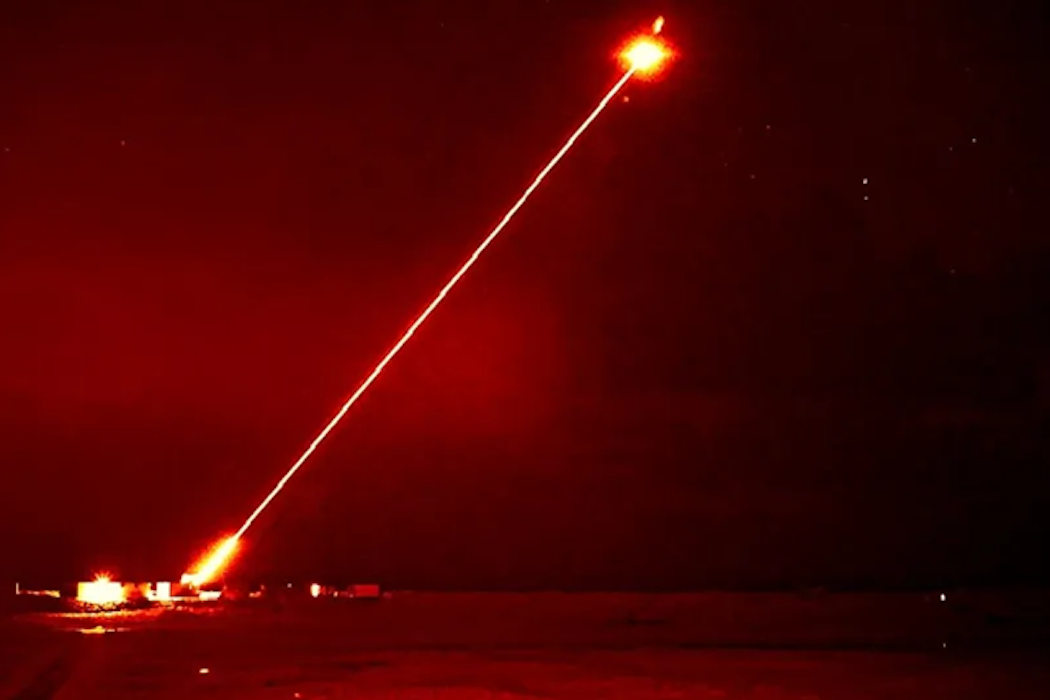
DragonFire is being developed by the Royal Navy and is expected to be deployed as early as 2027. Ministry of Defence

Like so many conflicts before it, the Russo-Ukraine war has forced both sides to innovate. Since they have been able to gain control of opposition air space, neither side has made wide use of traditional air assets such as fast fighter jets. which take much time and money to manufacture and so can’t be risked in active operations.

Instead, drones are now dominating the war. According to figures emerging from Ukraine, drones are causing an overwhelming percentage of all the casualties the country is suffering, amounting to between 60% to 70%.

However, history shows that this kind of technological advance in warfare is often followed by the development of counter measures. And we’re now seeing the emergence of anti-drone weapons that could reduce the importance of unmanned aerial vehicles in the Ukraine conflict and beyond.

The use of drones has changed the character of warfare with the zone in which ground forces are vulnerable to lethal attack extending to between six and nine miles behind the front lines. This has made trenches, fortified positions and armoured vehicles much more vulnerable than they would have been previously.

It is not just in the attack role that drones have proved their value, although their use in the intelligence, surveillance and reconnaissance role is remarkably similar to that performed by aircraft and balloons in the first world war. Drones have been used to provide real-time intelligence and situational awareness of the battlefield to aid planning and mid-level command, control and communication on the battlefield.

The ability for drones to loiter for prolonged periods of time, combined with the difficulty in successfully targeting these assets, has also seen their use in artillery spotting.

Drones are being used on the battlefield, but also against civilian populations in Ukraine and Russia.

It has been argued that drones – and uncrewed aerial vehicles more generally – represent a radical change in the way moderns wars are fought and that these assets will shape the future of aerial warfare for a significant period. But what this argument fails to take into account is that when new technologies are deployed in warfare, counter measures and innovations can often quickly emerge that reduce their effectiveness.

The first use of tanks on the western front was during the five-month Battle of the Somme in 1916. Despite the radical boost the first tanks gave the allied forces, the Germans had soon negated this effect through the use of anti-tank guns by early 1917.

Countering drones

Similar developments are being seen in Ukraine where simple countermeasures such as netting are being used to reduce drones effectiveness. While this is providing a limited degree of protection, more technologically sophisticated countermeasures are being developed elsewhere.

The UK’s navy has recently announced it will deploy a direct-energy weapon that has been named DragonFire. DragonFire is a laser-based defensive capability that has the capability to target and destroy small offensive weapons such as drones.

While there are limitations to Dragonfire, such as the requirement to be able to see the target in order to engage it, it demonstrates the continual tit-for-tat developments that widely encompass warfare.

The cost per shot of Dragonfire is as low as £10 and it can engage a target the size of a one-pound coin from a distance of one kilometre. This will mean that assets such as drones more vulnerable to defensive capabilities and calls into question the claim that drones are the future of aerial warfare. The Royal Navy plans to begin deploying DragonFire from 2027.

The UK is also experimenting with another form of direct-energy weapon that relies on radio-frequency systems. This new defensive weapon, which is currently undergoing trials, would use a pulse of directed radio waves in order to disable the internal electronics of assets such as drones.

The UK is trialling a radio frequency directed energy weapon which would take out enemy drones with a radio wave.

This system has advantages over Dragonfire. The first is that it is not a line-of-sight weapon, so it can be deployed in bad weather and in low cloud cover. DragonFire has to be able to see its target in order to be able to engage it effectively.

The second is that a radio pulse weapon can engage several targets in a specified area, whereas Dragonfire is only able to engage one target at a time.

But the major disadvantage to a radio pulse weapon is that it cannot discriminate between the targets which it engages. This means that friendly aircraft cannot fly when this target is being utilised.

The traditional tempo of technological developments and countermeasures that is a major character in warfare shows no sign of abating in 21st-century conflicts. So while drones are likely to remain important weapons, the idea that they will revolutionise warfare and make crewed warplanes obsolete is still to be seen.

The Conversation

Matthew Powell does not work for, consult, own shares in or receive funding from any company or organisation that would benefit from this article, and has disclosed no relevant affiliations beyond their academic appointment.

ref. Drones have changed warfare. Two new weapons might be about alter its course again – https://theconversation.com/drones-have-changed-warfare-two-new-weapons-might-be-about-alter-its-course-again-267895

How the financial markets reacted to the UK budget (and why they matter)

Source: The Conversation – UK – By Alex Dryden, PhD Candidate in Economics, SOAS, University of London

Who is Danny/Shutterstock

Rachel Reeves’s second budget landed in an unusual fashion. Before she delivered it, most of the key details had already been revealed accidentally by the Office for Budget Responsibility.

This meant many observers – including the financial markets – had an unprecedented preview of the chancellor’s announcement. But what are these markets that governments are so mindful of when they come up with economic policy, and why does it matter what they think or do?

Generally, “the markets” refers to a broad set of investors who buy, sell and set the price of financial assets such as shares, bonds and currencies.

Key among them are the buyers of UK government bonds (commonly known as “gilts”), which is a form of government debt. Investors effectively lend money to the government, which pays it back with interest.

Buyers of gilts include pension funds, insurance companies, asset managers, banks and overseas investors. Their willingness to hold UK debt determines how much it costs the government to borrow (the more willing the investors, the cheaper it is for the government).

Alongside them are currency traders, who buy and sell the pound based on how they view the UK’s economic outlook. Their decisions feed directly into the value of sterling. A third group are equity investors, who assess how tax and spending changes will influence the profitability of companies listed on the stock market.

These different groups don’t coordinate with one another, but together they form the landscape described as “the markets”.

Rachel Reeves will have been relieved that the fairly muted reaction from all of the markets, despite the unprecedented preview, was striking mainly for its lack of drama. Traders still watched the chancellor’s speech line by line, but because so much of the package had been briefed in advance, there was very little for investors to reassess.

The £26 billion increase in taxes helped calm the markets’ fears of reckless fiscal giveaways. As a result, the bond markets barely moved.

Currency traders responded in much the same way. Growth estimates have been downgraded but with no unexpected measures, the pound held steady against other major currencies. This signalled that investors saw nothing in the announcement to shift the UK’s inflation outlook or expectations over interest rates.

Equity markets too were largely unchanged, as the measures affecting specific sectors were already anticipated and mostly priced in. Overall, investors appeared to take the view that the budget simply confirmed what they already knew.

Mute market

Even a muted reaction carries meaning for the wider economy. Small declines in gilt yields (the interest paid to investors) still help lower government borrowing costs, easing the pressure on the public finances at the margin. And because gilt yields serve as a benchmark for mortgages and business loans, even modest downward movements can help gently soften borrowing conditions across the economy.

A stable pound also matters. When exchange rates remain steady, the cost of imports becomes more predictable, which supports efforts to control inflation. It also reinforces the sense that markets see no new risks on the horizon, which is a form of reassurance in itself.

Rachel Reeves with her red briefcase.
Target market.
Fred Duval/Shutterstock

Behind these movements lies a broader judgement about credibility. Markets constantly assess whether the government’s plans are coherent, deliverable and consistent with long-term economic goals.

They do not demand austerity, but they do look for fiscal plans that add up and do not introduce unnecessary risk. The absence of significant volatility after Reeves’ announcement suggests that investors concluded the budget was neither a breakthrough nor a cause for concern. It simply met expectations.

In financial markets, credibility sits at the centre of every reaction. The muted response implies that investors were broadly satisfied that the government’s plans were realistic and contained no unwelcome surprises.

But credibility is not something won permanently. It can take years to build in the eyes of bond markets, yet it can evaporate in a single misstep. The UK still has a long road back to genuine fiscal sustainability – but for now at least, the financial markets seem content with what they heard.

The Conversation

Alex Dryden does not work for, consult, own shares in or receive funding from any company or organisation that would benefit from this article, and has disclosed no relevant affiliations beyond their academic appointment.

ref. How the financial markets reacted to the UK budget (and why they matter) – https://theconversation.com/how-the-financial-markets-reacted-to-the-uk-budget-and-why-they-matter-270820