HPV: what you need to know about the common virus linked to cancer

Source: The Conversation – UK – By Dan Baumgardt, Senior Lecturer, School of Psychology and Neuroscience, University of Bristol

Few viruses are as widespread – and sometimes misunderstood – as the human papillomavirus, or HPV. It’s so common that most of us – up to 80% – will encounter it at some point in our lives, often without even realising it. Understanding HPV matters, given that it is linked to several types of cancer.

Scientists have identified more than 200 types of HPV, making it one of the most diverse viral families known – and a complex one at that. Many strains are low risk, causing either no symptoms or benign warts. HPV types 1, 2 and 4, for instance, are responsible for the common skin wart. Many will have experienced these, including the familiar verruca (plantar wart) picked up at swimming pools.

Some strains, such as HPV 6 and 11, cause genital wartssmall growths that appear on the genitals or around the anus. Treatments such as creams, surgical removal or freezing can get rid of the visible warts, but they don’t remove the virus itself. This means the virus can still be passed to sexual partners until the body’s immune system clears it.

Most seriously, certain types of HPV – particularly 16 and 18 – have known links to cancer. They belong to a group of about 14 high-risk strains that can enter human cells and damage their DNA. This damage interferes with the cells’ normal controls on growth and division, which can lead to the development of cancer.

Repeated or persistent infection with these strains increases the risk of developing cancer. So, too, does smoking, which reduces the ability of the immune system to clear the virus.

Because HPV comes in so many forms – from harmless skin warts to strains linked with cancer – it’s easy to see how myths and confusion can take hold. To separate fact from fiction, here are five key points that everyone should know about the virus.

1. HPV is not just associated with cervical cancer

While cervical cancer remains the most recognised HPV-related malignancy, the virus is also linked to cancers of the vulva, vagina, anus, penis, mouth and throat. Emerging evidence suggests some types may also contribute to developing skin cancer.

This broad cancer risk explains why the widely available HPV vaccine is recommended for both sexes. The vaccine’s ability to prevent HPV infection makes population-wide immunisation beneficial, as transmission may occur between heterosexual and homosexual partners alike.

2. You don’t need to have symptoms or genital warts to pass the virus on

HPV can remain on the skin for months before the immune system clears it, allowing transmission through contact even before genital warts appear and after they’ve been treated. This is why condoms should be used for at least three months after visible warts have resolved.

A condom in gold packaging.
A condom should still be used three months after genital warts have resolved.
AtlasStudio/Shutterstock.com

3. HPV transmission can occur from more than just vaginal or anal sex

Oral and throat cancers can develop following HPV infection acquired through oral sex. The incidence of mouth and throat cancer is increasing worldwide, with oral sex now the most significant behavioural risk factor. Using condoms during oral sex can help reduce this risk.

HPV can also spread through the use of sex toys. One study highlighted the ability of transmissible HPV to remain on sex toys and the need to develop proper hygiene practices for cleaning, and avoiding shared use.

4. Condoms are not 100% effective at preventing spread

Condoms can lower the risk of HPV transmission, but they can’t offer full protection, as uncovered skin can still carry the virus.

This is why many sexually active people will come into contact with a strain of the virus at some point in their lives, even when practising safe sex.

5. Even vaccinated women need to have smear tests

Current HPV vaccines target the main high-risk virus types but cannot cover all cancer-causing strains, or treat existing infections. In rarer cases, cervical cancer can also arise without HPV infection. This is why women aged 25 to 64 are still invited for cervical screening every five years, even after vaccination.

Women should also seek urgent medical review for other indicators of cervical cancer. These include pain or bleeding after sex, bleeding between periods or after menopause, and changes in vaginal discharge.

Even though the HPV vaccine is widely available, uptake has dropped in some areas. The COVID pandemic disrupted routine vaccination programmes, while misinformation about the vaccine’s safety and effectiveness has shaken trust. In some places, low awareness of HPV’s link to different cancers – and of the need to vaccinate boys as well as girls – has also made public understanding more difficult.

The World Health Organization has set a target of fully vaccinating 90% of girls by age 15 by 2030. At present, only about 48% of girls worldwide are fully vaccinated, so there is more work to be done.

Although HPV is often harmless, the potential consequences of some strains are too significant to ignore. But no one should be fearful of an active sex life. For those eligible for the HPV vaccine, protection is not just for the individual, but also for future sexual partners who could otherwise be exposed. By staying informed and taking preventative measures, we can reduce the effect of this common virus and keep ourselves and others safer.

The Conversation

Dan Baumgardt does not work for, consult, own shares in or receive funding from any company or organisation that would benefit from this article, and has disclosed no relevant affiliations beyond their academic appointment.

ref. HPV: what you need to know about the common virus linked to cancer – https://theconversation.com/hpv-what-you-need-to-know-about-the-common-virus-linked-to-cancer-263678

Blair’s ID cards failed in the 2000s – could Starmer’s version fare better?

Source: The Conversation – UK – By Tim Holmes, Senior Lecturer in Criminology and Policing, Bangor University

The UK government is once again looking at the possibility of introducing identity cards, with the prime minister Keir Starmer announcing plans for a new scheme for all UK citizens.

The argument is familiar. With tougher ID systems, illegal immigration would be harder and the UK less appealing. But it also raises a familiar set of questions. How would such a scheme work? And what lessons are there to be learned from the last time the UK had ID cards?

Identity cards were compulsory during the second world war, but the system was scrapped in 1952 after growing unease about police powers and civil liberties.

Fifty years later, Tony Blair’s Labour government proposed new biometric ID cards backed by a national database. Ministers claimed they would help tackle terrorism, illegal immigration and identity theft while giving people secure access to public services.

At the time, terrorism, illegal immigration and identity theft were major concerns. The 9/11 bombers had avoided detection in the US, 23 illegal immigrants had died while cockle picking in Morecambe Bay in 2004 and people were increasingly falling victim to online fraud and identity theft.

In 2006 the Identity Cards Act was introduced. The scheme would introduce cards for citizens with new biometric security features and data stored on a national database. Eventually, whether you wanted a card or not, you could not function in UK society without one.

Some argued it would lead the UK to becoming a surveillance society. Protest groups warned of the risks, while Liberal Democrat MP Simon Hughes vowed to go to prison rather than accept the card and the power it gave the state.

In the end, the cards were never tested. The scheme collapsed in 2010, undone not by principle but by cost and a change of government.

2025 proposals

Rising public concern over illegal immigration has once again led to calls for solutions.

The UK government’s latest proposals follow a home affairs committee inquiry into digital IDs and electronic visas in June. It examined whether migrants should be required to use them to prove their status when applying for jobs. The argument being that with a tougher ID system, illegal immigrants would be deterred from attempting to enter the country.

The UK is already far more digitally monitored than it was 20 years ago. Biometric passports, digital driving licences and online identity checks are used as a matter of course.

In 2010, when the last ID card scheme was scrapped, public attitudes towards surveillance were generally favourable when used in public spaces. But monitoring in private spaces was not.

In 2025, attitudes towards surveillance vary depending on the type. There is now more concern around the mass surveillance of people’s online activities, for example.

Identity schemes are used in 142 countries around the world, 70 with electronic ID. Biometric technology has improved considerably over the past 20 years. More than 120 countries now use facial recognition in passport systems, while UK police forces have integrated the technology into their work.

The question is not whether cards can verify identity – they can. It’s whether they reduce crime or illegal immigration. That depends on how essential they become to everyday life. If an ID check is required for employment, housing and access to services, people without documents may be pushed into the margins, rather than required to leave the country.

In 2005, writer Arun Kundnani argued that ID cards risked becoming “exclusion cards”, creating a new underclass of people unable to access services legally but still present in the shadow economy. That would give organised crime networks even greater power over undocumented migrants, offering illegal routes into housing and work.

Another unresolved question is cost. The last scheme collapsed under the financial weight of setting up the infrastructure and issuing cards nationwide. With public finances tight, the government could find itself facing the same problem again.

Surveillance

There are also broader questions about trust. Academic Clive Norris, who has studied mass surveillance, has warned that constant monitoring encourages the view that ordinary citizens cannot be trusted: “If we are gathering data on people all the time on the basis that they may do something wrong, this is promoting a view that as citizens we cannot be trusted.”

Digital identity cards could bring benefits. For those entitled to live and work in the UK, they might make access to services simpler and faster. But the debate is about more than efficiency. It goes to the heart of how much oversight the state should have over everyday life, and whether a costly system would achieve its stated aims.

The last attempt at ID cards was sunk before it could be tested. Two decades on, the UK is more accustomed to digital surveillance and more anxious about immigration. The question is whether that makes this the right time for a second attempt – or whether the country risks repeating old mistakes.

The Conversation

Tim Holmes does not work for, consult, own shares in or receive funding from any company or organisation that would benefit from this article, and has disclosed no relevant affiliations beyond their academic appointment.

ref. Blair’s ID cards failed in the 2000s – could Starmer’s version fare better? – https://theconversation.com/blairs-id-cards-failed-in-the-2000s-could-starmers-version-fare-better-264517

Jamaican prime minister returns to power amid reduction in violent crime

Source: The Conversation – UK – By Amalendu Misra, Professor of International Politics, Lancaster University

Jamaicans voted Andrew Holness, the leader of the centre-right Jamaica Labour party (JLP), into power for a third consecutive term on September 3. Holness beat Mark Golding of the People’s National party (PNP) in a tight election, with the JLP winning 34 seats and the PNP 29.

A head of state winning a third straight term is a rare feat in a participatory democracy. There are several factors that have contributed to Holness’s enduring appeal before the voters.

Jamaica’s economy has improved since Holness first took office in 2016. Public debt fell from more than 140% of GDP in 2013 to 73.4% by 2024, while the World Bank expects the economy to grow by 1.7% in 2025.

At the same time, Holness has sought to upgrade and improve public access to beaches across Jamaica. Most of the country’s beaches are gated and held in the hands of hoteliers, expats and private companies.

The Holness government introduced an initiative in 2024 to create new “beach parks” for ordinary Jamaicans. It also strenghtened regulations to prevent private developments from blocking public access to beaches.

But what is likely to have contributed most to Holness’s victory are his crime-busting policies. Jamaica has been reeling under gang violence for the past 25 years. As recently as 2023, Jamaica had the second-highest rate of homicide in the Caribbean region – behind only Haiti.

Holness has overseen a steady decline in the country’s murder rate since then. There was an 18.7% decline in homicides in Jamaica from 2023 to 2024, while the island registered an even greater drop of 43% between 2024 and 2025.

Like in nearby gang-infested Haiti, criminality and violence has long thrived in Jamaica owing to political patronage. Most homicides there are carried out by gangs known as “posses”. These groups have in the past been linked to major Jamaican political parties.

The JLP and PNP both fostered the development of posses in inner-cities and deprived areas by providing them with weapons and a free hand to run protection rackets in exchange for political support. Jamaican politicians have on occasion also allegedly paid gangsters to carry out crimes for political gain.

In the 2010s, an article in the Irish Independent accused Bruce Golding, the then-Jamaican JLP prime minister, of openly using the powerful “Shower Posse” gang to intimidate opposition voters in elections three years earlier. Shower Posse was led by Christopher “Dudus” Coke, a convicted drug kingpin who is now jailed in the US.

Golding “categorically denied” the claims at the time, and called them part of a conspiracy to undermine his government. However, regardless of the accuracy of these specific allegations, collusion between criminals and political elites turned Jamaica into a hotbed of criminality and spiralling violence.

Responsive governance

Holness’s success in fighting crime rests on three pillars: fighting urban poverty, clamping down on the drugs trade and putting tight restrictions on the importation of firearms.

One of his main focuses has been enhancing social programmes to reduce the allure of gang membership. His government has put in place a social pension, while also raising the minimum wage. These policies contributed to the national poverty rate falling to 8.2% in 2023 – its lowest level since measurements began in 1989.

Holness also amended Jamaica’s 2014 Gang Suppression Act in 2021, a year into his second term. This gave the police and military more power to combat criminality and was followed by the launch of an anti-gang task force in 2022. The task force oversaw direct combat with national and transnational gangs operating within Jamaica.

That same year, Holness launched his “Get Every Illegal Gun” campaign. This initiative was accompanied by severe penalties for those found in possession of illegal weapons. The countrywide illegal firearms crackdown is widely attributed as having brought down rates of violence across Jamaica.

However, while Holness’s zero tolerance stance towards criminality has successfully tackled crime rates, there are some concerns about his approach. His critics often cite human rights violations associated with the introduction of a state of emergency in parts of the capital Kingston and 14 other parishes in 2022. The measure enabled the authorities to arrest people and search buildings without a warrant.

Holness justified the move by saying gang violence had forced Jamaicans “to hide under their beds, hide their daughters, can’t go to church, and they see their sons and their boyfriends and husbands killed. That’s the reality”.

The election of Holness for a third time is by no means a guarantee that Jamaica will complete its transition from rampant violence to peace. His populist economic promises, such as lowering income tax rate from 25% to 15% earned him much-needed votes. But it is unlikely that such promises can be sustained in the long run.

Jamaican society has also not been completely freed from the ravages of its violent past. Parts of the country, such as Tivoli Gardens, Grants Pen and Trench Town in Kingston, Rose Heights, Flankers and Norwood in the city of Montego Bay, and the most of Spanish Town (colloquially known as the valley of death), still reel from vendetta violence.

It is these lingering fears that may have motivated a voter turnout of just 39.5% in the recent election – a turnout far lower than when Jamaicans last went to the polls in 2020. Holness’s vision of “a stronger, safer, more prosperous Jamaica” is still a long way from the finishing line.

The Conversation

Amalendu Misra is a past recipient of British Academy and Nuffield Foundation Fellowships.

ref. Jamaican prime minister returns to power amid reduction in violent crime – https://theconversation.com/jamaican-prime-minister-returns-to-power-amid-reduction-in-violent-crime-264644

We risk a deluge of AI-written ‘science’ pushing corporate interests – here’s what to do about it

Source: The Conversation – UK – By David Comerford, Professor of Economics and Behavioural Science, University of Stirling

Back in the 2000s, the American pharmaceutical firm Wyeth was sued by thousands of women who had developed breast cancer after taking its hormone replacement drugs. Court filings revealed the role of “dozens of ghostwritten reviews and commentaries published in medical journals and supplements being used to promote unproven benefits and downplay harms” related to the drugs.

Wyeth, which was taken over by Pfizer in 2009, had paid a medical communications firm to produce these articles, which were published under the bylines of leading doctors in the field (with their consent). Any medical professionals reading these articles and relying on them for prescription advice would have had no idea that Wyeth was behind them.

The pharmaceutical company insisted that everything written was scientifically accurate and – shockingly – that paying ghostwriters for such services was common in the industry. Pfizer ended up paying out more than US$1 billion (£744 million) in damages over the harms from the drugs.

The articles in question are an excellent example of “resmearch” – bullshit science in the service of corporate interests. While the overwhelming majority of researchers are motivated to uncover the truth and check their findings robustly, resmearch is unconcerned with truth – it seeks only to persuade.

We’ve seen numerous other examples in recent years, such as soft drinks companies and meat producers funding studies that are less likely than independent research to show links between their products and health risks.

A major current worry is that AI tools reduce the costs of producing such evidence to virtually zero. Just a few years ago it took months to produce a single paper. Now a single individual using AI can produce multiple papers that appear valid in a matter of hours.

Already the public health literature is observing a slew of papers that draw on data optimised for use with an AI to report single-factor results. Single-factor results link a single factor to some health outcome, such as finding a link between eating eggs and developing dementia.

These studies lend themselves to specious results. When datasets span thousands of people and hundreds of pieces of information about them, researchers will inevitably find misleading correlations that occur by chance.

A search of leading academic databases Scopus and Pubmed showed that an average of four single-factor studies were published per year between 2014 and 2021. In the first ten months of 2024 alone, a whopping 190 were published.

These weren’t necessarily motivated by corporate interests – some could, for example, be the result of academics looking to publish more material to boost their career prospects. The point is more that with AI facilitating these kinds of studies, they become an added temptation for businesses looking to promote products.

Incidentally, the UK has just given some businesses an additional motivation for producing this material. New government guidance asks baby-food producers to make marketing claims that suggest health benefits only if supported by scientific evidence.

While well-intentioned, it will incentivise firms to find results that their products are healthy. This could increase their demand for the sort of AI-assisted “scientific evidence” that is ever more available.

Fixing the problem

One issue is that research does not always go through peer review prior to informing policy. In 2021, for example, US Supreme Court justice Samuel Alito, in an opinion on the right to carry a gun, cited a briefing paper by a Georgetown academic that presented survey data on gun use.

The academic and gun survey were funded by the Constitutional Defence Fund, which the New York Times describes as a “pro-gun nonprofit”.

Since the survey data are not publicly available and the academic has refused to answer questions about this, it is impossible to know whether his results are resmearch. Still, lawyers have referenced his paper in cases across the US to defend gun interests.

One obvious lesson is that anyone relying on research should be wary of any that has not passed peer review. A less obvious lesson is that we will need to reform peer review as well. There has been much discussion in recent years about the explosion in published research and the extent to which reviewers do their jobs properly.

Over the past decade or so, several groups of researchers have made meaningful progress in identifying procedures that reduce the risk of specious findings in published papers. Advances include getting authors to publish a research plan before doing any work (known as preregistration), then transparently reporting all the research steps taken in a study, and making sure reviewers check this is in order.

Also, for single-factor papers, there’s a recent method called a specification curve analysis that comprehensively tests the robustness of the claimed relationship against alternative ways of slicing the data.

Young man looking at a screen
Peer review is under threat from AI publshing.
Gorodenkoff

Journal editors in many fields have adopted these proposals, and updated their rules in other ways too. They often now require authors to publish their data, their code and the survey or materials used in experiments (such as questionnaires, stimuli and so on). Authors also have to disclose conflicts of interest and funding sources.

Some journals have gone further, such as requiring, in response to the finding about the use of AI-optimised datasets, authors to cite all other secondary analyses similar to theirs that have been published and to disclose how AI was used in their work.

Some fields have definitely been more reformist than others. Psychology journals have, in my experience, gone further to adopt these processes than have economics journals.

For instance, a recent study applied additional robustness checks to analyses published in the top-tier American Economic Review. This suggested that studies published in the journal systematically overstated the strength of evidence contained within the data.

In general, the current system seems ill-equipped to cope with the deluge of papers that AI will precipitate. Reviewers need to invest time, effort and scrupulous attention checking preregistrations, specification curve analyses, data, code and so on.

This requires a peer-review mechanism that rewards reviewers for the quality of their reviews.

Public trust in science remains high worldwide. That is good for society because the scientific method is an impartial judge that promotes what is true and meaningful over what is popular or profitable.

Yet AI threatens to take us further from that ideal than ever. If science is to maintain its credibility, we urgently need to incentivise meaningful peer review.

The Conversation

David Comerford currently receives funding from Open Philanthropy for a project to design a system that incentivizes meaningful and timely peer review. He has previously received funding from UKRI, IDRC and the Chief Scientist’s Office of the Scottish Government.

ref. We risk a deluge of AI-written ‘science’ pushing corporate interests – here’s what to do about it – https://theconversation.com/we-risk-a-deluge-of-ai-written-science-pushing-corporate-interests-heres-what-to-do-about-it-264606

History is full of failed attempts to establish new currencies. So what makes crypto different?

Source: The Conversation – UK – By Hiroki Shin, Associate Professor of History, University of Birmingham

Bukhta Yurii/Shutterstock

The confusion and commotion over cryptocurrency often reminds me of the 19th-century German drama Faust. In Goethe’s masterpiece, the devil Mephistopheles offers an emperor the tantalising vision of limitless wealth through the printing of paper money.

The emperor grasps the idea (unheard of at the time the play is set), and the magical wealth which paper creates brings brief prosperity to his troubled dominion.

But what appeared to be an inexhaustible source of value soon proves illusory. A combination of misunderstanding and hype leads to economic and moral corruption, and the empire descends into chaos.

It is a tale which could well have parallels for digital currencies now. People use them despite not fully understanding how they work, sometimes to their financial loss.

And history shows us that we should be wary of the idea that currency systems always change for the better, following some sort of natural evolutionary path. In fact, new currency systems don’t always succeed, and even when they do, monetary regime change can be a long and arduous process.

Coins and tokens were used more than 2,000 years ago, and continued through to the 19th century before paper finally dominated. Rather than a clean, irreversible shift from coins to notes, nations often alternated between the two systems.

There were failed experiments with paper money in 14th-century China, 17th-century Sweden and 18th-century France, to mention just a few.

Research on these problematic attempts suggests that social division also makes new currency shifts especially vulnerable.

During the American war of independence for example, a currency (the “continental dollar”) was briefly introduced in 1775. It was later abandoned due to mismanagement and misunderstanding, but had also served to sharpen political tensions between the patriots who supported it, and the loyalists to Britain, who detested it.

Similarly, in the 1750s and 1760s, the Swedish government issued non-redeemable paper money to pay its war debts. The consequent extreme inflation coincided with intense social division and led to a period of political chaos.

In 1789, at the start of the French Revolution, a paper form of government bond was issued, which rapidly lost its value. Seven years later, the “assignat” had become virtually worthless.

Britain fared slightly better, as I explore in my book The Age of Paper. Its departure from the metal standard in 1797, amid the financial pressures of the Anglo–French war, did not produce a collapse of the nation’s paper currency.

But the paper-based regime came to a halt in 1819, a year of bitter class conflicts, which culminated in the Peterloo massacre, where at least 18 people were killed and hundreds wounded by the cavalry at a peaceful rally for democratic reform. The public had come to detest Bank of England notes, which became a symbol of economic depression and political oppression.

Britain then followed the pattern of other nations, reverting to a traditional monetary system that rested on the solid value of precious metals.

These cases of failed paper currencies – and there are many more – show that the general acceptance of currency ultimately requires shared values and social solidarity. Paper currency works when people trust it, knowing that it has been valued and accepted by others in the past, and will be valued and accepted in the future.

It would otherwise be unlikely for a piece of paper to become a reliable means of payment and value. Once such shared values are lost, there is usually a downward cycle of currency depreciation.

Cryptic currency

In the 21st-century, cryptocurrencies challenge the conventional idea of money as something of value – or at least linked to something of value, like gold. And as something that is issued and managed by a trusted central authority.

For cryptocurrencies exist only in the realm of blockchain technology. Their value is created and maintained not by central banks, but by complex computer algorithms.

To many, all of these abstract computational processes make cryptocurrencies as mysterious as Mephistopheles’ dark magic in Faust.

Even so, with Donald Trump’s strong support, cryptocurrencies are enjoying a surge in popularity. This trend will undoubtedly be reinforced by further deregulation which means requirements for transparency will be relaxed, and safeguards for consumer protection weakened.

The rise in popularity has coincided with the US government’s apparent preference for weakening the dollar in the international currency markets as a way of boosting US exports by pushing down the prices of US goods abroad.

These events may lead to a profound transformation in the monetary system on a global scale. As the US dollar loses value and crypto regulations are relaxed, countries and investors around the world may be enticed to diversify their assets and increase their holdings of cryptocurrency.

But the combination of social division and rapid expansion may not be a positive sign for the future of cryptocurrency. Far from establishing it as a dominant medium of exchange in a new decentralised regime, history suggests that its rapid growth in a fractured society might instead accelerate its self-destruction.

The Conversation

Hiroki Shin does not work for, consult, own shares in or receive funding from any company or organisation that would benefit from this article, and has disclosed no relevant affiliations beyond their academic appointment.

ref. History is full of failed attempts to establish new currencies. So what makes crypto different? – https://theconversation.com/history-is-full-of-failed-attempts-to-establish-new-currencies-so-what-makes-crypto-different-258867

Stories of people at war – what to watch, read and see this week

Source: The Conversation – UK – By Naomi Joseph, Arts + Culture Editor, The Conversation

Gritty social realism is never an easy watch. It depicts characters, often working class, struggling to find their bearings in a society that is hostile to their very existence. They tend to expose hard truths about the world we live in and often how we are complicit in upholding harsh systems that continuously fail people.

In Britain, this genre is championed by the likes of Ken Loach and Mike Leigh. In the Francophone world, it is dominated by Luc and Jean-Pierre Dardenne and now Jasmin Gordon.

The Courageous is Gordon’s debut film as a director. It follows the complicated and messy character of Jule, a single mother of three who has made many mistakes (one of which has left her with a jaunty ankle bracelet) and just can’t make things work.

As our reviewer Alison Smith, an expert in European cinema, writes: “Jule is fundamentally at odds with the ordered society of rural Switzerland, and in consequence her life is a constant struggle.” But, she doesn’t want anyone, especially her kids, to know how bad things are.

This is a morally murky film, Jule’s attempts to keep up appearances drives her to behave in ways which further marginalises her. However, it is clear that the system, and those who exist comfortably within it, don’t want to help in any way pushing her to more desperate acts and into deeper isolation. As Smith found, it is a incredibly powerful film but, like many other social realist works, there are few uplifting moments.

The Courageous is in select cinemas now

Warring couples and kings

If you are looking for something a bit more silly and lighthearted, then we recommend you go and see The Roses instead. A remake of the 1989 film The War of The Roses, this reboot stars the endlessly charming Olivia Coleman and Benedict Cumberbatch as the Roses who turn from lovers to fighters when one’s career takes off as the other’s tanks.

We sent Veronica Lamarche, an expert in relationships and psychology, to see the movie and she was struck by how people were affected by the dynamic between the couple. One woman, she notes, left the screening in tears having seen a reflection of her relationship in the film.

In her piece, she highlights how the film was a good reflection of how couples need to learn how to talk to each other and maybe even argue. In it, she outlines the psychology and offers advice on how to handle bumps before things get so bad you’re throwing knives at each other.

The Roses is in cinemas now

Someone who was good at winning battles and also negotiating was King Æthelstan whose skills in these fields led to the unification of several regions, which would become the kingdom England. The First King of England: Æthelstan and the Birth of a Kingdom by David Woodman addresses both themes of English unification and viking politics.

There is family drama, legal intrigue and exploration of how historical narratives are formed in this book. Clare Downham, an expert in the period, found it a welcome addition to the history on England’s first king, which shies away from simplistic views of this complicated and, at times, unlikable monarch.

Battling Normans and playwrights

It is often incorrectly asserted that the formation of England purely came as a result of the battle of Brunanburh (937). However, much paperwork and negotiation was also involved. A much more important battle to the history of England was the battle of Hastings in 1066.

A new BBC drama King and Conqueror depicts the events leading up to the battle and the Norman conquest. It stars James Norton as the Anglo-Saxon king, Harold II and Nikolaj Coster-Waldau as the Norman duke, William II (who would go on to be known as William the Conqueror).

We know what happened at that battle thanks two main sources: the Bayeux Tapestry and the chronicler William of Poitiers. We asked art historian and expert in the tapestry Millie Horton-Insch what she thought of the series and she said that she was pleased to see “the narrative devices that are most effective in this new drama are those also included in tapestry”.

King and Conqueror is on BBC iPlayer now

A new play at London’s Wyndham’s theatre, Born With Teeth, imagines the process of Shakespeare (Edward Bluemel) and his contemporary Christopher “Kit” Marlowe (Ncuti Gatwa) writing Henry VI Parts 1, 2 and 3 together. These plays have historically been attributed to the bard alone – but some have argued since at least the 18th century that Marlowe contributed to these works. Recent linguistic analysis of the plays does seem to back up this hypothesis.

The play presents three imagined secret meetings in the back room of a pub where the pair butt heads as they are forced to write together. Will Shüler, an expert in theatre, found it be a funny and imaginative play about theatre itself and the creative process, particularly under the religious constraints of the Elizabethan age.

Born with Teeth is on at Wyndham’s Theatre until November 1 2025

The Conversation

ref. Stories of people at war – what to watch, read and see this week – https://theconversation.com/stories-of-people-at-war-what-to-watch-read-and-see-this-week-264636

Why the US new military operation against Latin American drug cartels stokes regional tensions

Source: The Conversation – UK – By Adriana Marin, Lecturer in International Relations, Coventry University

The US president, Donald Trump, has signalled a new approach to tackling the “narco-terrorists” in Latin America, and particularly Venezuela, making it clear he is willing to use military force against them. A report in the New York Times that Trump had issued a “secret directive” to the Pentagon to employ force against certain drug cartels appeared to be borne out by a US strike, on September 2, on a Venezuelan speed boat in the southern Caribbean that killed 11 people.

The president said the strike was against members of Tren de Aragua (TdA), a Venezuelan gang he has branded “narco-terrorists”.

The situation escalated when two Venezuelan fighter jets flew over US Navy ships in the Caribbean Sea two days later in a move that the Pentagon condemned as “highly provocative”.

The US secretary of state, Marco Rubio, has warned that operations against drug cartels “will happen again”. He added that previous US drug policies had not worked and “what will stop them is when you blow them up”.

Trump released a grainy video on social media of a speeding boat after the September 2 incident. US officials said the boat was carrying drugs, but attempts at verification were inconclusive. A Venezuelan government official had questioned whether the video depicted what Washington claimed.

The operation raises legal questions over proportionality and use of force. If this was an intentional strike against a non-state armed group, it signals a significant shift in US policy. The deployment of counterterrorism methods – once directed at al-Qaida or the Islamic State – against a Latin American criminal cartel represents a dramatic escalation with serious implications.

This also fits within a wider Trump initiative to take on drugs cartels including issuing a US$50 million (£37 million) reward for information leading to the arrest of Venezuela’s president, Nicolás Maduro, who the Trump administration links with drug smuggling. In early 2025, the US designated the TdA as a foreign terrorist organisation (FTO), along with several other Latin American cartels.

PBS reports on the attack showing the video of a speeding boat.

The decision was unusual. FTO status has historically been applied to ideologically driven groups, not profit-orientated criminal organisations. Yet the designation unlocked the ability of the US to use counterterrorism measures and a political commentary that frames gangs as wartime adversaries rather than criminals.

The US has not ratified the United Nations Convention on the Law of the Sea , which governs maritime enforcement, but it generally treats many of its provisions as international law. Domestically, only Congress can declare war under the constitution, while the president acts as commander-in-chief. Previous administrations have relied on the 2001 Authorization for Use of Military Force as the legal basis for counterterrorism operations abroad, but this has never been applied to drug cartels. This creates a grey zone: Washington claims authority to act, but both the international and domestic legal foundations remain contested.


Read more:
Guyana’s president wins another term in election watched keenly by Venezuela and US


Expanding the fight

FTO designation expands what can be done under domestic law. However, it does not create a right to kill
suspects in international waters. Such a shift is important, as it changes what would usually fall within the remit of policing, reframing it as armed conflict. This militarisation introduces the apparatus of warfare: missiles, warships, and rules of engagement that lower thresholds for the use of lethal force.

By conflating organised crime with terrorism, responses risk becoming militarised in ways that lack accountability. A warning from the US defense secretary, Pete Hegseth that “it won’t stop with just this strike” is another suggestion that this is a campaign rather than a one-off action. Militarised counter-narcotics operations are not new, but framing them through the lens of counter-terrorism is, and suggests a wider use of military force.

Proponents of a hardline approach contend that cartels such as TdA resemble insurgent organisations. Working across borders, they adapt quickly and use violence, they diversify into trafficking, extortion and protection rackets, while exploiting migration flows and infiltrating law enforcement.

Marco Rubio, the US secretary of state, confirms reports that the Trump administration is going to use ‘full powers’ to take on drug cartels.

From this perspective, conventional criminal justice tools are ineffective. Extraditions are often delayed and prosecutions unreliable because cartels frequently operate across borders, benefit from corrupt protection networks and are difficult to apprehend.

Yet conflating organised crime with terrorism carries serious risks. Unlike al-Qaida or the Islamic State, TdA seeks profit and control, not radical political change. Labelling it a terrorist organisation risks blurring legal boundaries. The designation of an act as terrorism often shift rules of engagement from due process to battlefield logic, lowering the threshold for lethal force.

The legal basis is also tenuous. FTO status broadens domestic authorities but does not itself provide a licence to use force under international law. Any claim of self-defence would require also imminent danger, this has not been shown.

Risks in the region

This strike delivers Maduro a propaganda gift. For years, Venezuela has portrayed US pressure as imperial aggression designed to undermine its sovereignty. The destruction of a Venezuelan vessel by a US missile, even in international waters, appears to validate that claim. It is likely to give Maduro an opportunity to rally domestic supporters, consolidate control over security institutions and court sympathetic foreign allies who share his anti-US position.

Neighbouring governments face a dilemma. Many are weary of cartel violence, human trafficking, and the effects of criminal infiltration. Some may even welcome Washington’s tougher approach. Yet few leaders wish to legitimise unilateral US military action. Even if there is some support for tougher action against cartels, regional political leaders are likely to divide over whether the potential benefits outweigh the risks of being drawn into conflicts they did not sanction.

Finally, there is a deterrence paradox. High-profile strikes may remove leaders, but they rarely dismantle networks. Instead, groups splinter, adapt and sometimes embed further into civilian life. The “balloon effect” – squeezing crime in one place only to displace it elsewhere – remains a constant. In short, military action does not usually eliminate criminal economies, it often changes or moves them. Militarisation risks fuelling escalation.

The US strike against the TdA blurs the line between law enforcement and war. It sets a precedent where states can justify cross-border assassinations under the guise of “counter-terrorism” against criminal suspects. The question is not whether TdA is violent – it is. The real issue is whether labelling it as “terrorism” legitimises a military approach that could be counterproductive, unlawful and dangerous. Washington’s new “narco-terrorism” doctrine risks fuelling the very instability it claims to fight.

The Conversation

Adriana Marin does not work for, consult, own shares in or receive funding from any company or organisation that would benefit from this article, and has disclosed no relevant affiliations beyond their academic appointment.

ref. Why the US new military operation against Latin American drug cartels stokes regional tensions – https://theconversation.com/why-the-us-new-military-operation-against-latin-american-drug-cartels-stokes-regional-tensions-264645

An animal sedative keeps turning up in opioid deaths – what you need to know about medetomidine

Source: The Conversation – UK – By Heba Ghazal, Senior Lecturer, Pharmacy, Kingston University

Only NewPhoto/Shutterstock.com

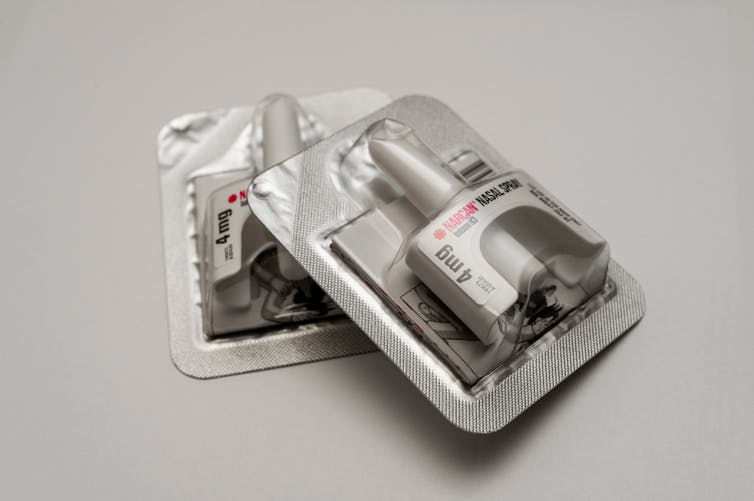
A dangerous new drug adulterant is spreading through America’s illicit opioid supply, and it’s making overdoses significantly harder to reverse. Medetomidine, a veterinary sedative normally used to sedate pets, is increasingly being mixed with heroin and fentanyl, creating a cocktail that experts warn could be far deadlier than previous street drug combinations.

Known as “flysky” on the streets, this animal tranquilliser has already been linked to at least two overdose deaths in Pennsylvania and represents a troubling evolution in the continuing opioid crisis. Unlike traditional opioid overdoses, those involving medetomidine can’t be effectively treated with naloxone, the medication paramedics use to reverse overdoses.

The emergence of medetomidine mirrors the earlier spread of xylazine, another veterinary sedative that earned the nickname “zombie drug” for its ability to cause severe, treatment-resistant skin wounds. The earliest confirmed detection of medetomidine as a street drug adulterant occurred in Maryland, where it was found in a synthetic opioid mixture probably containing fentanyl.

From there, the drug spread rapidly. Traces appeared across multiple US states and into Canada, and by early 2024, medetomidine was linked to overdose clusters in Philadelphia and other locations, following the same geographical pattern that xylazine had taken years earlier.

Overdose-reversal drug.
Unfortunately, opioid-overdose reversal drugs don’t work against veterinary tranquillisers.
rblfmr/Shutterstock.com

What makes medetomidine particularly concerning is its extraordinary potency. Medetomidine is an alpha-2 adrenergic receptor agonist – a type of drug that affects the nervous system. While approved only for veterinary use in the UK to sedate animals and provide pain relief for pets, experts estimate it may be 200 to 300 times more potent than xylazine when used as a drug adulterant.

This extreme potency means that even tiny amounts can have devastating effects. Users experiencing medetomidine-laced drug overdoses typically display extreme drowsiness, muscle twitching, dangerously low heart rate and blood pressure, and laboured breathing.

Chicago cases from 2024 revealed additional concerning symptoms: extremely high blood pressure, severe confusion and critically low blood oxygen levels – often dropping below 90%, a threshold that can cause organ damage.

Perhaps most alarming is medetomidine’s resistance to naloxone, the opioid overdose-reversal drug that has saved countless lives. While naloxone can counteract heroin and fentanyl by blocking opioid receptors in the brain, medetomidine affects the body through entirely different pathways. This means there is no approved antidote for medetomidine poisoning, leaving healthcare professionals with limited options when treating overdoses involving this adulterant.

The withdrawal process is equally tricky. Philadelphia health officials report that people withdrawing from medetomidine-laced drugs experience dangerous spikes in blood pressure and heart rate – symptoms severe enough to trigger a heart attack in some cases. Users also endure uncontrollable nausea and vomiting, intense anxiety, restlessness and violent shaking.

Understanding why dealers add these veterinary drugs to street opioids requires examining the economics of the illicit drug trade. According to a 2022 DEA report, a kilogram of xylazine powder can be bought from Chinese suppliers for as little as U$6.00 (£4.44). This rock-bottom pricing allows drug traffickers to increase their profit margins significantly while making weak or diluted opioid batches feel more potent to users.

These sedatives also serve as effective cutting agents (substances used to add bulk and weight to drugs without requiring expensive active ingredients). For dealers, it’s a win-win. They can stretch their supply while creating a product that feels stronger and lasts longer than pure opioids alone.

Managing new drug adulterants like medetomidine presents unique difficulties for both medical professionals and law enforcement. The drugs make intoxication and withdrawal symptoms more severe and complicated, while also making it harder to identify which specific substance is causing particular symptoms in a patient.

Medetomidine compounds these problems because it’s rapidly metabolised by the body, making it difficult to track the timing and duration of its effects. Additionally, these veterinary sedatives are not included in routine drug screenings or toxicology tests, meaning their presence often goes undetected by medical professionals and law enforcement, despite their potentially lethal effects.

UK response

While no cases of acute medetomidine toxicity have been published in the UK, the country has already experienced problems with xylazine, a similar veterinary sedative.

British health authorities have detected xylazine in 35 cases through toxicology tests and drug seizures. Of 16 people found to have xylazine in their systems, 11 cases proved fatal – deaths that occurred primarily during May 2022 and August 2023.

In response to the growing threat, the government has taken decisive action. Over 20 dangerous substances have been banned as part of efforts to combat synthetic drugs and improve public safety.

Xylazine is now controlled as a class C substance, carrying penalties of up to two years in prison for possession and up to 14 years for production and supply.

The government is also working to better equip police, healthcare workers and Border Force agents to tackle this evolving threat through improved training and detection capabilities.

The case of medetomidine highlights a disturbing reality about modern drug policy: the illicit drug supply continues to change in unpredictable and dangerous ways. Neither medetomidine nor xylazine was developed for human consumption, and there are no human studies examining their drug interactions, lethal doses or safe reversal protocols.

As these veterinary sedatives become more common in street drugs, the challenge for healthcare professionals continues to grow. Traditional overdose response protocols, built around reversing opioid effects with naloxone, become inadequate when faced with multi-drug combinations that affect the body through completely different mechanisms.


Read more:
‘There has never been a more dangerous time to take drugs’: the rising global threat of nitazenes and synthetic opioids


For users, families and communities already devastated by the opioid crisis, the emergence of medetomidine represents yet another layer of risk in an already dangerous landscape.

As the drug supply becomes increasingly unpredictable, the need for comprehensive approaches to drug policy – encompassing everything from harm reduction to treatment access to law enforcement – becomes ever more urgent.

The Conversation

Heba Ghazal does not work for, consult, own shares in or receive funding from any company or organisation that would benefit from this article, and has disclosed no relevant affiliations beyond their academic appointment.

ref. An animal sedative keeps turning up in opioid deaths – what you need to know about medetomidine – https://theconversation.com/an-animal-sedative-keeps-turning-up-in-opioid-deaths-what-you-need-to-know-about-medetomidine-264080

One queen ant, two species: the discovery that reshapes what ‘family’ means in nature

Source: The Conversation – UK – By Audrey O’Grady, Associate Professor in Biology, University of Limerick

The Iberian harvester ant is able to give birth to ants from two different species. Wikimedia, CC BY-SA

Imagine a mum who can have children from two different species. Family gatherings would be interesting, to say the least. In the insect world, this is no joke. A new study published in Nature shows that queens of the Iberian harvester ant (Messor ibericus) routinely lay eggs of not just to their own kind, but also of males of another species, Messor structor.

The researchers even coined a word for it, xenoparity, meaning “foreign birth”. It pushes the boundaries of what we mean by “species”. And this is the first known case in the animal kingdom of this happening as part of an animal’s life cycle.

The most typical reproduction strategy in the natural world involves a mother and father of the same species who breed and produce sons and daughters, also of the same species.

However, there are exceptions to the rule. Social insects, ants in particular, are known to violate it. A 1999 study found that 17 out of 164 central Europe ant species are known to create hybrid offspring.

Typically, in ant colonies, fertilised eggs develop into workers and queens and unfertilised eggs develop into males. All the ants that we usually see foraging are females who cannot reproduce (workers), but do all the other work. Ants that breed, female queens and males, normally have wings and can be seen during mating flights. Afterwards, males often die while the females found new colonies.

However, in some ant species, unfertilised eggs develop into female clones of the mother. This process is called parthenogenesis.

Generally, ant colonies which include different ant species may contain either one or several queens that can mate with either single or multiple males. Some ant species produce only wingless males that mate inside the nest and never participate in nuptial flights.

In 2002 an even more interesting reproduction strategy was found in two seed harvester ant species, common in southwestern US, whose queens lost their ability to produce female workers of their own kind. They need to mate with a male from a different species to lay eggs that develop into hybrid species female workers. This cross-species mating is essential for the survival of both species.

The new discovery

The article provides startling insights into ant reproduction. Workers (females) in these colonies are hybrids. Like the seed harvester ants, the Iberian harvester queens can’t make workers on their own. They need sperm from M. structor, and the daughters are half M. ibericus, half M. structor. This is similar to social hybridogenesis documented in other harvester ants, where only cross-species daughters become workers.

But the fascinating part is that Iberian harvester queens produce ordinary M. ibericus sons as well as M. structor sons. These males aren’t hybrids. They’re clones, carrying only their father’s DNA. Iberian harvester queens act almost like a rental womb. This resembles male-only cloning known from some clams and a stick insects.

Harvester ants on the move
Iberian harvester ants involve a rare example of male cloning.
Nick Greaves

The researchers sequenced the DNA of hundreds of Iberian harvester ants and repeatedly found this same pattern.

M. ibericus and M. structor split from a common ancestor millions of years ago. They look and behave differently in the wild, with M.ibericus having smaller queens. Yet one is now literally producing the other. Multiple colonies of M.ibericus live together in habitats ranging from pastures to suburban areas. But M.structor ants are a mountain species and their colonies live separately. The two ant species can live close together in overlapping habitats in lanes and fields near mountains.

The cloned M. structor sons raised inside M. ibericus colonies don’t just differ genetically, they even look odd. Compared with their wild cousins, they appear almost hairless.

The most probable explanation of how this reproduction strategy evolved is a phenomenon called sperm parasitism. This is when females of one species use sperm of the males of another species to stimulate asexual reproduction or even partially incorporate the male’s genome into their offspring.

Over time, they cut out the middleman (adult M.structor males) and started making their own supply of cloned M. structor males. Instead, they mate with these clones that hatch in the colony nest.

It shows that evolution can re-engineer reproduction in radical ways. People sometimes like to think nature follows straight paths. Parents make their own species. Colonies stick to one lineage.

But evolution doesn’t care about our rules. So the next time you see ants marching across a path, remember, somewhere in southern Europe, there’s a queen casually running a two-species household. And you thought your family tree was complicated.

The Conversation

The authors do not work for, consult, own shares in or receive funding from any company or organisation that would benefit from this article, and have disclosed no relevant affiliations beyond their academic appointment.

ref. One queen ant, two species: the discovery that reshapes what ‘family’ means in nature – https://theconversation.com/one-queen-ant-two-species-the-discovery-that-reshapes-what-family-means-in-nature-264384

Heart attack patients: do you still need beta blockers? A cardiologist explains

Source: The Conversation – UK – By Tomas Jernberg, Professor, Clinical Sciences, Karolinska Institutet

Lee Charlie/Shutterstock.com

As a cardiologist, I frequently meet patients who have stopped taking medicines that could keep them alive. Often it’s because they’ve seen a dramatic headline or a worrying TV report about a drug they rely on. But sometimes, patients are right to pay attention: new studies really can overturn decades of medical practice.

Few drugs illustrate this tension better than beta blockers. Long prescribed after heart attacks, these medicines can be life-saving for some people, helpful for others and useless – or even harmful – for the rest.

Beta blockers have been used for more than 40 years in almost all patients with heart attacks. But this practice was based on studies done before modern treatments were available, and before we could detect very small heart attacks that do not affect the overall function of the heart.

Recently, two studies on beta blockers in patients with heart attacks were reported in the news. The Spanish-Italian study received the most attention. Media reports suggested that most heart attack patients did not benefit from beta blockers, and that in women the drug might even increase the risk of hospitalisation and death.

Reports like this can make people stop taking their medication.

At the same symposium in Madrid, the second study – which got less attention – showed almost the opposite. Patients with heart attacks did benefit from beta blockers. And if there were differences between the sexes, women might actually have had more benefit than men.

The heart of the matter: ejection fraction

A key to understanding the different results is something called the left ventricular ejection fraction. This is the percentage of blood in the left chamber of the heart – its main pumping chamber – that is pushed out into the body with each heartbeat. Normally, ejection fraction should be at least 50%.

If we look at all the studies together, including one I led and presented last year, the picture becomes clearer. Patients with an ejection fraction of 50% or higher after a heart attack do not benefit from beta blockers. But patients with an ejection fraction below 50% do benefit. And this is true for both men and women.

The European guidelines from 2023, as well as the recently published American guidelines, still recommend beta blockers after most heart attacks. Many doctors are therefore reluctant to change a therapy tradition that has been in place for 40 years.

Ejection fraction explained.

My colleagues and I are now planning to pool data from the recent large studies on patients with heart attacks and an ejection fraction of 50% or more. The results, expected later this year, will probably give definite answers about beta blockers in this population and change future guidelines.

But many patients clearly benefit from beta blockers, including those with heart failure and reduced ejection fraction (with or without a prior heart attack), angina pectoris (chest pain caused by reduced blood flow to the heart), or various heart rhythm disturbances.

Beta blockers can also be prescribed for other reasons, such as high blood pressure, migraine prevention, tremors, as well as off-label use for stress and anxiety. For patients, it’s not easy to know all the reasons why beta blockers are prescribed, and in some cases, they may not be suitable at all. So I’ll end with a good, if not very novel, piece of advice: always consult your doctor before making any changes to your medication.

The Conversation

Tomas Jernberg’s employer (Karolinska Institutet) has received a grant from MSD for a research project performed by Dr. Jernberg but not related to this article.

ref. Heart attack patients: do you still need beta blockers? A cardiologist explains – https://theconversation.com/heart-attack-patients-do-you-still-need-beta-blockers-a-cardiologist-explains-264409