Google is relying on its own chips for its AI system Gemini. Here’s why that’s a seismic change for the industry

Source: The Conversation – UK – By Alaa Mohasseb, Senior Lecturer in Artificial Intelligence and Machine Learning, University of Portsmouth

For many years, the US company Nvidia shaped the foundations of modern artificial intelligence. Its graphics processing units (GPUs) are a specialised type of computer chip originally designed to handle the processing demands of graphics and animation. But they’re also great for the repetitive calculations required by AI systems.

Thus, these chips have powered the rapid rise of large language models – the technology behind AI chatbots – and they have became the familiar engine behind almost every major AI breakthrough.

This hardware sat quietly in the background while most of the attention was focused on algorithms and data. Google’s decision to train Gemini on its own chips, called tensor processing units (TPUs) changes that picture. It invites the industry to look directly at the machines behind the models and to reconsider assumptions that long seemed fixed.

This moment matters because the scale of AI models has begun to expose the limits
of general purpose chips. As models grow, the demands placed on processing systems
increases to levels that make hidden inefficiencies impossible to ignore.

Google’s reliance on TPUs reveals an industry that is starting to understand that hardware choices are not simply technical preferences but strategic commitments that determine who can lead the next wave of AI development.

Google’s Gemini relies on cloud systems that simplify the challenging task of coordinating devices during large-scale training (improvement) of AI models.

The design of these different chips reflects a fundamental difference in intention. Nvidia’s GPUs are general purpose and flexible enough to run a wide range of tasks. TPUs were created for the narrow mathematical operations at the heart of AI models.

Independent comparisons highlight that TPU v5p pods can outperform high-end Nvidia systems on workloads tuned for Google’s software ecosystem. When the chip architecture, model structure and software stack align so closely, improvements in speed and efficiency become natural rather than forced.

These performance characteristics also reshape how quickly teams can experiment. When hardware works in concert with the models it is designed to train, iteration becomes faster and more scalable. This matters because the ability to test ideas quickly often determines which organisations innovate first.

These technical gains are only one part of the story. Training cutting-edge AI systems is expensive and requires enormous computing resources. Organisations that rely only on GPUs face high costs and increasing competition for supply. By developing and depending on its own hardware, Google gains more control over pricing, availability and long-term strategy.

Analysts have noted that this internal approach positions Google with lower operational costs while reducing dependence on external suppliers for chips. A particularly notable development came from Meta as it explored a multi-billion dollar agreement to use TPU capacity.

When one of the largest consumers of GPUs evaluates a shift toward custom accelerators, it signals more than curiosity. It suggests growing recognition that relying on a single supplier may no longer be the safest or most efficient strategy in an industry where hardware availability shapes competitiveness.

These moves also raise questions about how cloud providers will position themselves. If TPUs become more widely available through Google’s cloud services, the rest of the market may gain access to hardware that was once considered proprietary. The ripple effects could reshape the economics of AI training far beyond Google’s internal research.

What This Means for Nvidia

Financial markets reacted quickly to the news. Nvidia’s stock fell as investors weighed the potential for cloud providers to split their hardware needs across more than one supplier. Even if TPUs do not replace GPUs entirely, their presence introduces competition that may influence pricing and development timelines.

The existence of credible alternatives pressures Nvidia to move faster, refine its offerings and appeal to customers who now see more than one viable path forward.
Even so, Nvidia retains a strong position. Many organisations depend heavily on CUDA (a computing platform and programming model developed by NVidia) and the large ecosystem of tools and workflows built around it.

Moving away from that environment requires significant engineering effort and may not be feasible for many teams. GPUs continue to offer unmatched flexibility for diverse workloads and will remain essential in many contexts.

However, the conversation around hardware has begun to shift. Companies building
cutting-edge AI models are increasingly interested in specialised chips tuned to their exact needs. As models grow larger and more complex, organisations want greater control over the systems that support them. The idea that one chip family can meet every requirement is becoming harder to justify.

Google’s commitment to TPUs for Gemini illustrates this shift clearly. It shows that custom chips can train world-class AI models and that hardware purpose-built for AI is becoming central to future progress.

It also makes visible the growing diversification of AI infrastructure. Nvidia remains dominant, but it now shares the field with alternatives that are increasingly capable of shaping the direction of AI development.

The foundations of AI are becoming more varied and more competitive. Performance
gains will come not only from new model architectures but from the hardware designed to support them.

Google’s TPU strategy marks the beginning of a new phase in which the path forward will be defined by a wider range of chips and by the organisations willing to rethink the assumptions that once held the industry together.

The Conversation

Alaa Mohasseb does not work for, consult, own shares in or receive funding from any company or organisation that would benefit from this article, and has disclosed no relevant affiliations beyond their academic appointment.

ref. Google is relying on its own chips for its AI system Gemini. Here’s why that’s a seismic change for the industry – https://theconversation.com/google-is-relying-on-its-own-chips-for-its-ai-system-gemini-heres-why-thats-a-seismic-change-for-the-industry-270818

Before trips to Mars, we need better protection from cosmic rays

Source: The Conversation – UK – By Zahida Sultanova, Post Doctoral Research Fellow, School of Biological Sciences, University of East Anglia

Frame Stock Footage/Shutterstock.com

The first step on the Moon was one of humanity’s most exciting accomplishments. Now scientists are planning return trips – and dreaming of Mars beyond.

Next year, Nasa’s Artemis II mission will send four astronauts to fly around the Moon to test the spacecraft before future landings. The following year, two astronauts are expected to explore the surface of the Moon for a week as part of Nasa’s Artemis III mission.

And finally, the trip to Mars is planned for the 2030s. But there’s an invisible threat standing in the way: cosmic rays.

When we look at the night sky, we see stars and nearby planets. If we’re lucky enough to live somewhere without light pollution, we might catch meteors sliding across the sky. But cosmic rays – consisting of protons, helium nuclei, heavy ions and electrons – remain hidden. They stream in from exploding stars (galactic cosmic rays) and our very own sun (solar particle events).

They don’t discriminate. These particles carry so much energy and move so fast that they can knock electrons off atoms and disrupt molecular structures of any material. That way, they can damage everything in their path, machines and humans alike.

The Earth’s magnetic field and atmosphere shield us from most of this danger. But outside Earth’s protection, space travellers will be routinely exposed. In deep space, cosmic rays can break DNA strands, disrupt proteins and damage other cellular components, increasing the risk of serious diseases such as cancer.

The research challenge is straightforward: measure how cosmic rays affect living organisms, then design strategies to reduce their damage.

Ideally, scientists would study these effects by sending tissues, organoids (artificially made organ-like structures) or lab animals (such as mice) directly into space. That does happen, but it’s expensive and difficult. A more practical approach is to simulate cosmic radiation on Earth using particle accelerators.

Cosmic ray simulators in the US and Germany expose tissues, plants and animals to different components of cosmic rays in sequence. A new international accelerator facility being built in Germany will reach even higher energies, matching levels found in space that have never been tested on living organisms.

But these simulations aren’t fully realistic. Many experiments deliver the entire mission dose in a single treatment. This is like using a tsunami to study the effects of rain.

In real space, cosmic rays arrive as a mixture of high-energy particles hitting simultaneously, not one type at a time. My colleagues and I have suggested building a multi-branch accelerator that could fire several tuneable particle beams at once, recreating the mixed radiation of deep space under controlled laboratory conditions. For now, though, this kind of facility exists only as a proposal.

Beyond better testing, we need better protection. Physical shields seem like the obvious first defence. Hydrogen-rich materials such as polyethylene and water-absorbing hydrogels can slow charged particles. Although they are used, or planned to be used, as spacecraft materials, their benefits are limited.

Particularly galactic cosmic rays, the ones that arrive from far exploding stars, are so energetic that they can penetrate through physical shielding. They can even generate secondary radiation that increases exposure. So, effective protection by using solely physical shields remains a major challenge.

Nature’s armour

That’s why scientists are exploring biological strategies. One approach is to use antioxidants. These molecules can protect DNA from harmful chemicals that are produced when cosmic rays hit living cells.

Supplementing with CDDO-EA, a synthetic antioxidant, reduces cognitive damage caused by simulated cosmic radiation in female mice. In the study, mice exposed to simulated cosmic radiation learned a simple task more slowly compared to unexposed mice. However, mice that received the synthetic antioxidant performed normally despite being exposed to simulated cosmic radiation.

Another approach involves learning from organisms with extraordinary abilities. Hibernating organisms become more resistant to radiation during hibernation. The mechanisms on how hibernation protects from radiation are not fully understood yet. Still, inducing hibernation-like conditions in non-hibernating animals is possible and can make them more radioresistant.

Tardigrades – microscopic creatures also known as water bears – are also extremely radioresistant, especially when dehydrated. Although we can’t hibernate or dehydrate astronauts, the strategies these organisms use to protect cellular components might help us preserve other organisms during long space journeys.

Microbes, seeds, simple food sources and even animals that could later become our companions might be kept in a protected state for a while. Under calmer conditions, they could then be brought back to full activity. Therefore, understanding and harnessing these protective mechanisms could prove crucial for future space journeys.

A third strategy focuses on supporting organisms’ own stress responses. Stressors on Earth, such as starvation or heat, have driven organisms to evolve cellular defences that protect DNA and other cellular components. In a recent preprint (a paper that is yet to be peer reviewed), my colleague and I suggest that activating these mechanisms through specific diets or drugs may offer additional protection in space.

Physical shields alone won’t be enough. But with biological strategies, more experiments in space and on Earth, and the construction of new dedicated accelerator complexes, humanity is getting closer to making routine space travel a reality. With current speed, we are probably decades away from fully solving cosmic-ray protection. Greater investment in space radiation research could shorten that timeline.

The ultimate goal is to journey beyond Earth’s protective bubble without the constant threat of invisible, high-energy particles damaging our bodies and our spacecraft.

The Conversation

Dr. Zahida Sultanova works for the University of East Anglia and is funded by the Leverhulme Trust. She is a member of European Society of Evolutionary Biology (ESEB) and Ecology and Evolutionary Biology Society of Turkey (EkoEvo).

ref. Before trips to Mars, we need better protection from cosmic rays – https://theconversation.com/before-trips-to-mars-we-need-better-protection-from-cosmic-rays-268934

The Beatles’ movie Help! featured crude racial stereotypes – but it shouldn’t be hidden away

Source: The Conversation – UK – By Philip Murphy, Director of History & Policy at the Institute of Historical Research and Professor of British and Commonwealth History, School of Advanced Study, University of London

I sometimes think that my teenage fascination with the Beatles is what drew me to becoming a professional historian. Piecing together what I could find out about them in the years before the internet was a sort of gateway to the history of Britain and the world in the decade in which I was born – Carnaby Street, the Vietnam War, Richard Nixon and counter-cultural figures like Timothy Leary.

The original Beatles Anthology released in 1995 in the form of three albums and a documentary series was undoubtedly a treat for Beatles fans. Recently an updated version of the Anthology arrived in the shops. The new release includes a fourth CD of unreleased tracks.

It is always thrilling to hear iconic tracks at an earlier stage of their gestation. And this is essentially what the recently released additional material offers. However, the true obsessives among us have heard much of the Anthology material from bootleg collections. What does remain as hard to come by as ever are some of the films.

At a time when a fan had to be grateful for what they were given, I can still remember the excitement of learning that the BBC was planning to show all the band’s films over the Christmas of 1979. If we are, indeed, in the “barrel-scraping” phase, as one critic dubbed the new Anthology, of Beatles commemoration, it is surprising how difficult it now is to access some of those films.

In the last ten years some work has done to make some of the films more accessible. The band’s first movie, A Hard Day’s Night (1964), directed by Richard Lester, was re-released in cinemas in 2014 to mark its 50th anniversary. It is currently available on the BFI’s streaming service.

Their swan-song film, Let it Be (1970) was remastered for Disney+ in 2024 by Peter Jackson. Jackson had previously spliced together hours of unused footage from director Michael Lindsay-Hogg’s original recording sessions to create the 2021 documentary Get Back.

Although some are yet to be remastered. The band’s 1968 well-regarded animated movie Yellow Submarine, is still awaiting an authorised re-release, although no doubt this will come. Their dismal 1967 BBC Christmas special Magical Mystery Tour was notoriously dead-on-arrival and if there are commercial reasons for resuscitating it, there certainly aren’t any artistic ones.

But what about Help! (1965), the band’s second outing with Richard Lester? The film’s madcap plot involves the group being chased around the globe by the comically inept members of a religious cult keen to recover a sacred ring from the finger of the band’s drummer, Ringo Starr.

It is a far more accomplished piece of filmmaking than Magical Mystery Tour. Indeed, it was in many ways ground-breaking for pioneering the music video format and rock musicals. But the last DVD release of the movie was a 2007 two-disc set.


Read more:
Anthology 4 shows there’s still more to discover about the Beatles


The reason why the film has missed out on more recent celebratory repackaging isn’t difficult to surmise: it features three familiar European character actors – Leo McKern, Eleanor Bron and John Bluthal – adopting “brown-face” to portray Indian cult members. And their quest for the ring is in order to enable them to carry out a human sacrifice. No mention is made of any of this in the documentary series that accompanied the Anthology recordings, and which has also been re-released.

As the 1960s progressed, these sorts of crude orientalist stereotypes faced parody and criticism. But apologists for the movie would struggle to demonstrate that Help! is doing anything other than reinforcing those attitudes. Some contemporary critics have simply labelled it as racist.

I wonder if an attempt could be made to salvage Help! by re-releasing it with its own documentary package exploring the historical context of the film. If the choice is probably between either contextualisation or simply allowing the movie to languish in the far-corners of eBay to avoid offending global consumers, then I think we should go for the former.

While it would be difficult to make Help! genuinely palatable to contemporary viewers, it could be used as the starting point for a fascinating exploration of the ways in which Britain in the Swinging Sixties viewed its colonial past.

Some of the era’s more radical writers and filmmakers like Edward Bond and Tony Richardson were keen to question the values of their parents’ generation. But as Help! demonstrates, imperial assumptions of white racial superiority continued to permeate popular culture, not least in the area of comedy.

If the Beatles of 1965 had passively accepted the plot of Help!, the Beatles of the late 60s would almost certainly have baulked at it. George Harrison famously embraced Indian music, culture and religion. John Lennon would subsequently feature in another Richard Lester film, How I Won the War (1967), which mocked British jingoism and its rigid class system.

A year later, Lennon had to face racist abuse from the British press and fans when he left his wife for the Japanese artist, Yoko Ono. Also, the track Commonwealth, which surfaced in the 2021 documentary Get Back, is an improvisation satirising Enoch Powell’s Rivers of Blood speech, which was held responsible for inspiring a spate of racist attacks.

The Beatles were on a journey, and Help! deserves to be seen and discussed as part of that journey, rather than being hidden away.


Looking for something good? Cut through the noise with a carefully curated selection of the latest releases, live events and exhibitions, straight to your inbox every fortnight, on Fridays. Sign up here.


The Conversation

Philip Murphy has received funding from the AHRC and is a member of the European Movement UK.

ref. The Beatles’ movie Help! featured crude racial stereotypes – but it shouldn’t be hidden away – https://theconversation.com/the-beatles-movie-help-featured-crude-racial-stereotypes-but-it-shouldnt-be-hidden-away-270526

Jane Austen shunned literary fame – but transformed the novel from the shadows

Source: The Conversation – UK – By Anna Walker, Senior Arts + Culture Editor, The Conversation

Portrait of a Young Lady by Adele Romany (early 19th century). Bonhams

Jane Austen’s Paper Trail is a podcast from The Conversation celebrating 250 years since the author’s birth. In each episode, we’ll be investigating a different aspect of Austen’s personality by interrogating one of her novels with leading researchers. Along the way, we’ll visit locations important to Austen to uncover a particular aspect of her life and the times she lived in. In episode 5, we look what kind of author Austen was, and what we can learn about her view of her profession through the pages of Northanger Abbey.

From a young age Jane Austen harboured lofty writerly ambitions. Her early works, known as juvenilia, are diverse in subject matter, reflecting her wide reading taste. As well as stories that parody some of her favourite novels, such as The History of Sir Charles Grandison by Samuel Richardson (1753), there are also witty takes on the essays of British politician Joseph Addison and writer Samuel Johnson, the author of the first English dictionary.

She even tried writing her own history of England. In this short text, 15-year-old Austen proudly declares herself a “partial, prejudiced and ignorant Historian”, eschewing dates and presenting information from historical fiction, such as Shakespeare’s plays, as fact.

Illustration of a Regency woman reading in a chair looking frightened
In Northanger Abbey, Catherine Morland loves gothic fiction.
Bentley Edition of Jane Austen’s Novels (1833)

Though she was always a writer, she wasn’t a published one until Sense and Sensibility appeared in 1811. By her death in 1817, Austen had published four of her six novels and earned nearly £700 – a modest fortune, but enough to grant a measure of independence to an unmarried woman otherwise reliant on her brothers.

Yet Austen’s grave in Winchester Cathedral, makes no mention that she was a writer. Publishing anonymously and disliking literary celebrity, she remained largely unknown as a writer in her lifetime despite occasional, reluctant contact with London’s literary circles.

Her fifth novel, Northanger Abbey – written in 1799 but published posthumously – clearly reveals her views on writing and reading books. It follows Catherine Morland, whose love of gothic fiction warps her sense of reality. It brims with Austen’s defence of the novel, dismissed at the time as frivolous women’s entertainment. It also reflects her juvenilia in its parody of gothic fiction – a genre Austen loved deeply, which is reflected in the bookshelves at her home in Chawton.

Louise Curran standing in front of a red brick house
Louise Curran at Jane Austen’s House, Hampshire.
Naomi Joseph, CC BY-SA

In the fifth episode of Jane Austen’s Paper Trail, Naomi Joseph visits Jane Austen’s House in Hampshire with Louise Curran, lecturer in 18th-century and Romantic literature. Curran is an expert in letter writing, the development of the novel and literary celebrity.

In the lovely red brick cottage where Austen wrote and revised all six of her novels, Curran explains why Austen shied away from the limelight: “You can sort of see it in the kind of writer she is, I guess. I think there is that tension for her really writing the kinds of novels that she wanted to write, that took, as she famously put it, those three and four families in a country village, and are involved with those sort of little matters.”

Later on, Anna Walker sits down with two more Austen experts – Kathryn Sutherland, emeritus professor of English at the University of Oxford, and Anthony Mandal, a lecturer in English literature at Cardiff University – to discover what Northanger Abbey reveals of Austen’s professional life.

As Mandal explains: “The decade [Austen] was publishing in was a heyday for women’s fiction. It was a period when women outnumbered men as novelists … but the reputation of the novel was really low. It was seen as this kind of distracting form of writing, and particularly of reading. It was a waste of time. It stopped you from being a dutiful daughter or wife or mother.”

Austen wasn’t convinced. Sutherland explains that the writer was “hugely ambitious for her own talent and she saw the novel as a moral force as well as a form of entertainment. And that’s essentially what Northanger Abbey is about … the power of the novel both to lead you into misinterpretation, but ultimately, if you become a good reader, to lead you into a wise judgement of the world around you.”

Listen to episode five of Jane Austen’s Paper Trail wherever you get your podcasts. And if you’re craving more Austen, check out our Jane Austen 250 page for more expert articles celebrating the anniversary.


Disclosure statement
Kathryn Sutherland, Louise Curran and Anthony Mandal do not work for, consult, own shares in or receive funding from any company or organisation that would benefit from this article, and has disclosed no relevant affiliations beyond their academic appointment.


Jane Austen’s Paper Trail is hosted by Anna Walker with reporting from Jane Wright and Naomi Joseph. Senior producer and sound designer is Eloise Stevens and the executive producer is Gemma Ware. Artwork by Alice Mason and Naomi Joseph.

Listen to The Conversation Weekly via any of the apps listed above, download it directly via our RSS feed or find out how else to listen here.

The Conversation

ref. Jane Austen shunned literary fame – but transformed the novel from the shadows – https://theconversation.com/jane-austen-shunned-literary-fame-but-transformed-the-novel-from-the-shadows-270590

How unsustainable global supply chains exacerbate food insecurity

Source: The Conversation – UK – By Benjamin Selwyn, Professor of International Relations and International Development, Department of International Relations, University of Sussex

Fruit market in Belo Horizonte, Brazil. Antonio Salaverry/Shutterstock

While there is more than enough food produced to feed the world’s population, hunger and food insecurity persist.

In 2024, around 8% of people faced hunger, while about 28% were food insecure (without consistent access to safe and nutritious food).Global supply chains are important for feeding and nourishing people around the world.

In this vein, the World Bank funds projects that facilitate trade in food and trade of agricultural inputs such as agro-chemicals, both within and between countries and regions.

But my research shows how wealth and poverty are two sides of the same coin. Wealth and poverty can both result from the growth of convoluted and globalised food supply chains. While such supply chains can reward large-scale exporters of relatively high value products, they can undermine local food systems.

As export volumes increase, the expansion of food sectors into global supply chains actually reduces food security in significant ways. Conversely, establishing the right to food domestically represents a viable way to combat food insecurity.


Read more:
How to reduce the hidden environmental costs of supply chains


Brazil highlights how both issues play out. Despite being a major world food producer, food insecurity, and often hunger, in Brazil have been long-standing problems.

Following the election of the Workers’ Party in 2002, a decade of pro-poor policy – including the flagship fome zero (no hunger initiative), bolsa família (the family allowance grant) and rising minimum wages – reduced hunger and food insecurity. The country was removed from the Food and Agriculture Organization’s world hunger map in 2014.

However, Brazil was returned to the map in 2022 following COVID pandemic price spikes and the Bolsonaro government’s abandonment of much of the previous pro-poor policy agenda. Then, following the victory of the Workers’ Party in 2022, the reinstatement of pro-poor policies and consequent falls in levels of hunger, it was taken off the map again in 2025.

soybean crop growing in field
Brazil accounts for more than half of the world’s soybean trade​.
Alf Ribeiro/Shutterstock

This recent removal is good news, but food insecurity still stalks the country where 28 million Brazilians – predominantly women and children – still face food insecurity.

While social policy influences rates of food insecurity, so too do agricultural systems. This is where the differences between integration into high value global supply chains and attempts to formulate alternative food networks becomes apparent.

Brazil used to have a relatively diversified national economy. Since the 1990s, under governments of different political stripes, its integration into global supply chains has occurred through exporting a few primary products.

Brazil accounts for more than half of the world’s soybean trade. About 70% of that goes to China for use as animal feed. It is also the world’s second largest corn exporter, mostly for animal feed and biofuels.

Such exports have enriched Brazilian agribusiness, but they have undermined domestic food production. This is negatively affecting the food security of poorer communities. Between 2010 and 2022, soybean production increased by over 100% while rice production fell by 30%. The production of other basic food crops also fell.

Domestic food prices increased faster than general inflation, and low-income families have experienced food insecurity and have cut their food consumption.

The struggle for an alternative

But there are alternatives to this model. In 1993, the newly elected Workers’ Party mayoralty of Belo Horizonte declared the right to food for its 2.5 million population, and the city government’s duty to guarantee it. Its success influenced the formation of the national fome zero programme in the early 2000s.

Since then, with some variations depending on the party in power, the city mayoralty has dedicated 1-2% of its annual budget – less than US$10 million (£7.7 million) per year – to the scheme.

Long-term effects include a 25% reduction of people living in poverty, a marked increase in consumption of fruit and vegetables among the poor, and 75% fewer children under five being hospitalised for malnutrition than prior to the scheme.

The system encompasses production, distribution, and consumption. The local government’s Secretariat of Food Policy overseas and is responsible for implementing the right to food across the city. It facilitates local participation by small farmers and businesses, workers and consumers.

Objectives included using the city government’s purchasing power to stimulate local, agroecological food production, linked to consumers in ways that reduce prices while maintaining small farmer’s incomes.

Public restaurants, open to all, provide 20,000 healthy meals a day – organised by local chefs and nutritionists – for less than US$1 dollar per meal. Lunch (Brazilian’s main meal of the day) typically consists of rice, beans, meat, salads, fruit and juice.

Under the scheme meals from public restaurants are sold at cost price – the cost of food production, distribution and maintaining restaurants. Registered homeless people eat for free, and beneficiaries of the bolsa familia scheme get a 50% discount. Another 40 million meals are served to over 150,000 students a year under the scheme’s school meals programme. The city government partners with selected groceries to sell a range of products, often sourced locally, at 25% below market prices.

Under the scheme’s “straight from the field” programme, the city purchases food directly from producers for its public restaurants. The city provides inputs to low-income farmers and empowers them with secure land tenure. Local and regional family farms are encouraged to produce basic and other food crops for sale in the city through farmers and traditional markets.


Read more:
The right to food: activism and litigation are shifting the dial in South Africa


Global supply chains are designed and operate as systems of production and trade that reward profitable exports, rather than combatting food insecurity. They often direct resources away from where they are needed to where they are profitable.

When right-to-food systems are established to tackle food insecurity, as in Belo Horizonte, they must cater to their local context. Policies such as subsidised food consumption and production, plus coordinated distribution are all ingredients required for tackling food insecurity.


Don’t have time to read about climate change as much as you’d like?

Get a weekly roundup in your inbox instead. Every Wednesday, The Conversation’s environment editor writes Imagine, a short email that goes a little deeper into just one climate issue. Join the 47,000+ readers who’ve subscribed so far.


The Conversation

Benjamin Selwyn does not work for, consult, own shares in or receive funding from any company or organisation that would benefit from this article, and has disclosed no relevant affiliations beyond their academic appointment.

ref. How unsustainable global supply chains exacerbate food insecurity – https://theconversation.com/how-unsustainable-global-supply-chains-exacerbate-food-insecurity-269141

Why economic insecurity – not immigration – should be Labour’s top electoral priority

Source: The Conversation – UK – By Justin Robinson, Postdoctoral Research Fellow, Nuffield Politics Research Centre, University of Oxford

The autumn 2025 budget came at a crucial time for the Labour government. With their popularity at record lows, how Labour continues to manage the economy is key for its prospects at the next election.

The chancellor, Rachel Reeves, framed the budget around cutting the cost of living – with good reason. New research from my colleagues and I at the University of Oxford’s Nuffield Politics Research Centre (in collaboration with the Joseph Rowntree Foundation) reveals the prevalence of cost of living concerns among British voters.

Using a nationally representative survey of British adults in April 2025, our analysis shows that just over one-third of the population feel worried about their personal or household finances. This is an experience we call economic insecurity.

Economic insecurity refers to a person’s anxiety about the ability to cope with the financial pressures faced by them and their household. It reflects the balance of a person’s income and savings against the various demands on their finances, including housing costs, childcare costs and debts.

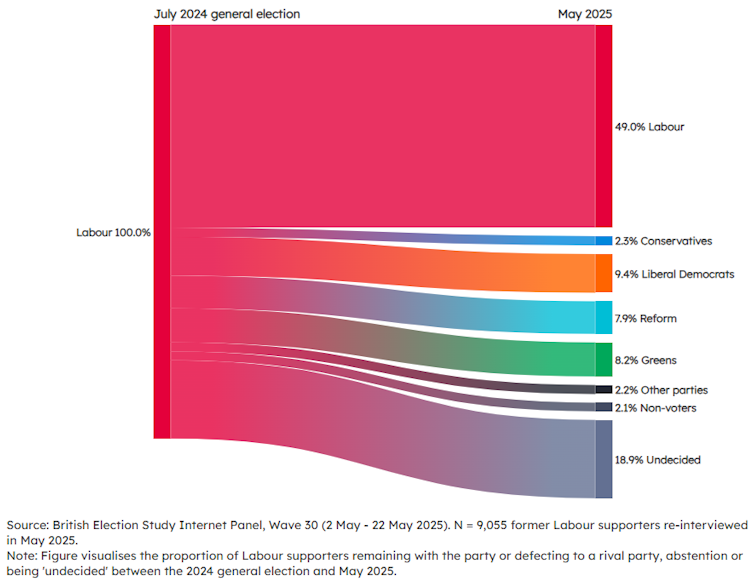
Our research argues that feelings of economic security are a key driver of Labour’s unprecedented decline in support since the last general election. Data from May 2025 reveals that only 49% of those voters who supported Labour in 2024 continued to support them. The largest proportions switched to “undecided”, the Liberal Democrats, the Greens and Reform UK.

a chart showing which other parties Labour's votes have gone to

Nuffield Politics Research Centre/Joseph Rowntree Foundation

Economic insecurity is key to explaining these losses. Our analysis tracks individuals over time, allowing us to understand whether they change their voting preferences if and when they become economically insecure.

We found that among 2024 Labour voters, moving from a state of economic security to insecurity increases the probability of switching to Reform (by 5.45 percentage points), to the Lib Dems (by 3.42 percentage points) and to “undecided” (by 4.15 percentage points). Such changes in economic insecurity – which occur among around 12.5% of Labour voters in our data – have damaging consequences for Labour.

Feelings of economic insecurity, we argue, serve as a signal of poor government performance. They are an indicator that the government has not delivered on its duties, which leads voters to abandon the party.

Furthermore, economic insecurity also makes people rate Labour’s handling of the economy more negatively. In other words, people translate their experiences of economic insecurity into wider judgements about Labour’s overall economic performance.

Our analysis of data from April 2025 shows that among the economically insecure, 44.2% evaluated Labour’s performance on the economy as “very bad”. Among the economically secure, it was only 26.5%. This matters because ratings of Labour’s economic management also influence how people vote. Improving economic security would help Labour’s reputation for managing the economy and boost its electoral prospects.

Does the budget help?

With that in mind, how far does the new budget go to address these concerns for voters?

The lifting of the two-child benefit cap will help ease economic pressure due to rising childcare costs, as well as lift an estimated 450,000 children out of poverty. Reducing the cost of energy bills will provide a boost to families, particularly those on low incomes. Increasing the minimum wage should have similar positive consequences.


Read more:
What the budget could mean for you – experts react to the chancellor’s announcement


However, feelings of insecurity are not limited to low-income households. Our previous research reveals that around one in four middle-income earners feel economically insecure.

Aspects of the budget do little to help this group. The freeze on tax thresholds will bring around 1 million more people into the higher tax rate. The freeze on student loan repayment thresholds will add to the economic difficulties faced by graduates.

Underlining these issues, the OBR estimates that real household disposable income will grow by only 0.25% per year from 2026 to 2030 – much lower than its average growth in the 2010s. With this slowdown, the economic insecurity felt by many voters may persist until the next election.

Economy v immigration

Once budget headlines have faded, Labour will once again face questions over whether it should prioritise the economy or immigration – the two key issues for the British electorate. Our research provides a possible answer.

We find that economic insecurity is a broader explanation for Labour’s vote losses than concerns about immigration. Becoming economically insecure leads voters to abandon Labour for Reform and the Lib Dems, as well as pushing voters to “undecided”. In contrast, becoming more opposed to immigration only leads Labour voters to Reform.

Addressing the issue of economic insecurity could stem the tide of Labour defections across the political spectrum. A hardline approach to immigration is likely to only appease the smaller group who are going to Reform (around 10% of 2024 Labour voters). It could also alienate former Labour voters who oppose this approach, potentially worsening Labour’s popularity overall.

Prioritising economic insecurity appears the most sensible political strategy for Labour, potentially leading to vote gains across the political spectrum. It would, of course, also arguably bring benefits to the population at large. The budget has taken steps to meet this goal, but may not go far enough to restore the economic positivity that Labour needs.

The Conversation

Justin Robinson does not work for, consult, own shares in or receive funding from any company or organisation that would benefit from this article, and has disclosed no relevant affiliations beyond their academic appointment.

ref. Why economic insecurity – not immigration – should be Labour’s top electoral priority – https://theconversation.com/why-economic-insecurity-not-immigration-should-be-labours-top-electoral-priority-270726

US accused of killing Venezuelan drug boat survivors – Trump’s military agenda is based on impunity

Source: The Conversation – UK – By Andrew Bell, Senior Research Scholar at the Center for International Security and Conflict, Stanford University

A bombshell revelation on November 28 that the US secretary of defense, Pete Hegseth, ordered a second strike to kill the survivors of a Venezuelan drug boat targeted by US forces has shocked Congress and American citizens alike.

The US president, Donald Trump, citing Hegseth’s affirmations, has disputed these reports. Trump said Hegseth told him “he did not” give a spoken order to kill all crew members aboard the boat. “I believe him, 100%,” Trump added.

But US lawmakers have pledged to investigate the strike. Mark Kelly, a Democrat senator who recently urged military members to refuse unlawful orders, declared: “We’re going to have a public hearing. We’re going to put these folks under oath. And we’re going to find out what happened.”

Whatever the true nature of this incident, one fact is inescapable: there is no credible basis by which Trump’s military campaign against Latin American drug vessels is lawful under either US or international law.

For the past two months, the Trump administration has been flexing US muscle through a campaign of deadly strikes on alleged drug-carrying vessels in the Caribbean and eastern Pacific. At least 20 strikes have so far killed upwards of 80 people since early September.

With the recent addition of a US aircraft carrier to the substantial military assets deployed to the region, the campaign appears to only be getting more deadly. Yet, despite his insistence that Venezuelan criminal networks commit crimes “with impunity”, it is Trump who is acting with disregard for the law.

The US military reportedly carried out a follow-up strike on a suspected drug vessel in the Caribbean.

Undermining legal principles

Trump’s first term foreshadowed his transgressive behaviour regarding legal constraints on the military, a subject we have examined in depth elsewhere. Among other actions, he granted clemency to multiple US service members accused or convicted of war crimes and spoke enviously of enemies who “chop off heads” while US forces are bound by rules of engagement.

This trend has accelerated in Trump’s second term with efforts that are culminating in a broad-scale attack on international and domestic law in the unfolding armed campaign in the Caribbean and eastern Pacific. These unilateral strikes on drug vessels go further than any US president in recent history in undermining fundamental legal principles, breaching long-established rules and norms in three key ways.

First, the Trump administration’s strikes against drug vessels appear to flout the international legal prohibitions against extrajudicial killings. The International Covenant on Civil and Political Rights, a foundational treaty of international human rights law and one to which the US is a party, prohibits governments from arbitrarily depriving individuals of life.

Customary human rights law, which binds US government actions and is considered part of US law, also prohibits the killing of individuals without legitimate judicial processes. Customary law develops over time through a general acceptance of certain behavioural norms by states and is distinct from written treaty law.

Summary executions that happen outside the confines of domestic and international law can be considered as murder. It appears the Trump administration is ordering US service members to commit such offences as part of its Latin America campaign.

Second, the Trump administration is executing these strikes outside the legal exceptions that permit military force under the laws of war. Under these laws, soldiers receive a special exception during armed conflict to kill without facing judicial consequences.

Known as the “combatant’s privilege”, it is what keeps soldiers from going to jail for killing when a war ends. Vitally, however, this privilege extends only to combatants who kill other combatants during wartime.

The White House has provided no evidence that these alleged drug smugglers on the high seas are “combatants” instead of mere criminals. And despite the clear criminality of Latin American drug cartels, the administration has also provided no evidence that they are “organised armed groups” or have conducted protracted or intense violence against the US.

These are the conditions that mark a state of “armed conflict”, which triggers the laws of war and permits lawful military force against terrorists, insurgents or other armed groups.

Not only do these attacks transgress bedrock legal rules, they may expose US service members to criminal prosecution in the years ahead. Indeed, concern for the legality of the strikes reportedly led Admiral Alvin Holsey, commander of the military command responsible for Latin America, to announce in October that he would be giving up his position a year early.

Giving up such a high-ranking command is extremely unusual in US military practice, signalling the extraordinary and troubling nature of these strikes.

Third, much as the administration has disregarded international law, it is probably breaching domestic law as well. The strikes on drug smugglers appear to violate both US federal and military legal codes outlawing murder, including murder on the high seas.

Under the War Powers Resolution, any military action during hostilities must also be reported to Congress. The president then has a 60-day window after which US military force needs to be authorised by Congress or halted. The Trump administration has essentially rejected the constraints of the War Powers Resolution altogether.

In an October letter to Congress, Trump argued that because airstrikes on alleged drug runners are not “hostilities”, War Powers Resolution restrictions do not apply. With the acceptance of the quiescent Republican-led Congress, this has stripped the War Powers Resolution of much of its ability to constrain executive force.

Trump’s strikes in Venezuela represent another example of his rejection of any constraint on his powers as commander-in-chief. He has previously praised the virtues of torture and has declared the Geneva Conventions, which set rules for how people are to be treated during times of war, to be a “problem”. Trump is now putting his disregard for law into action.

It remains to be seen where such disregard will take the US military. However, one thing remains certain: in ordering this campaign of armed attacks, the Trump administration is rejecting the rule of law outright. Trump’s leadership in this campaign is, simply put, a military agenda defined by impunity.

The Conversation

The authors do not work for, consult, own shares in or receive funding from any company or organisation that would benefit from this article, and have disclosed no relevant affiliations beyond their academic appointment.

ref. US accused of killing Venezuelan drug boat survivors – Trump’s military agenda is based on impunity – https://theconversation.com/us-accused-of-killing-venezuelan-drug-boat-survivors-trumps-military-agenda-is-based-on-impunity-270891

We built a database of 290,000 English medieval soldiers – here’s what it reveals

Source: The Conversation – UK – By Adrian R Bell, Chair in the History of Finance and Associate Pro-Vice-Chancellor Research, Prosperity and Resilience, Henley Business School, University of Reading

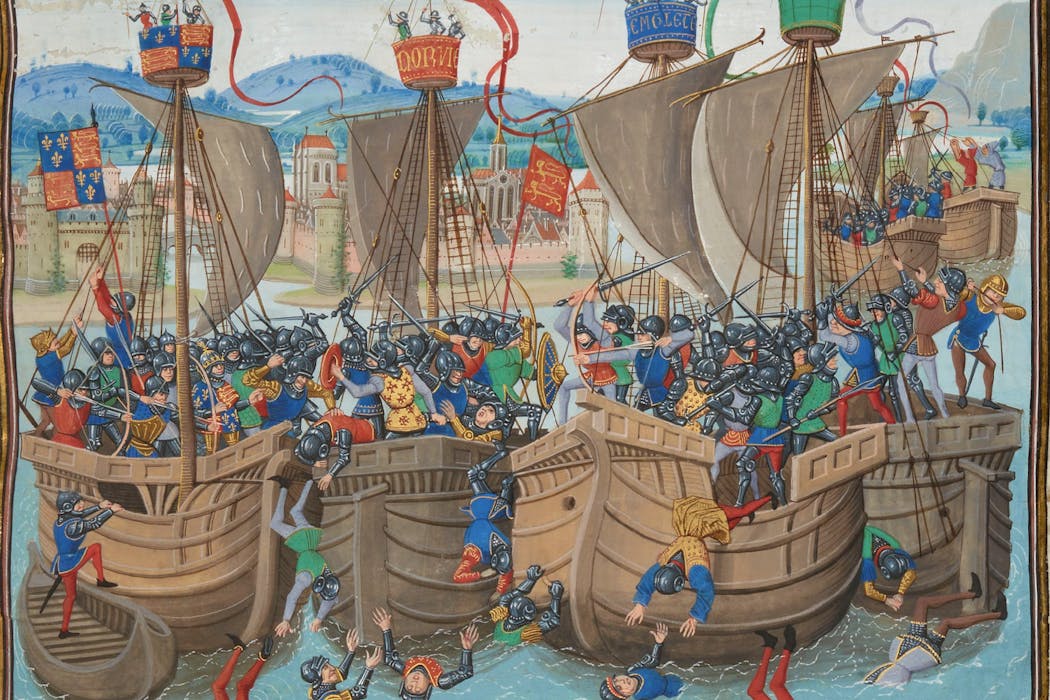
The Battle of Sluys during the 100 year war, as depicted by Jean Froissart in the 15th century. National Library of France

When you picture medieval warfare, you might think of epic battles and famous monarchs. But what about the everyday soldiers who actually filled the ranks? Until recently, their stories were scattered across handwritten manuscripts in Latin or French and difficult to decipher. Now, our online database makes it possible for anyone to discover who they were and how they lived, fought and travelled.

To shed light on the foundations of our armed services – one of England’s oldest professions – we launched the Medieval Soldier Database in 2009. Today, it’s the largest searchable online database of medieval nominal data in the world. It contains military service records giving names of soldiers paid by the English Crown. It covers the period from 1369 to 1453 and many different war zones.

We created the database to challenge assumptions about the lack of professionalism of soldiers during the hundred years war and to show what their careers were really like.

In response to the high interest from historians and the public (the database has 75,000 visitors per month), the resource has recently been updated. It is now sustainably hosted by GeoData, a University of Southampton research institute. We have recently added new records, taking the dataset back to the late 1350s, meaning it now contains almost 290,000 entries.

This data is mainly drawn from muster rolls (lists of names of soldiers comprising the military force) of men-at-arms (soldiers with full armour and a range of weapons) and archers. We can even see the little dots used by officials taking the muster to confirm the soldiers had turned up and had the right equipment. All these soldiers were paid and the Exchequer wanted to be assured it was receiving value for money.

We have also included protections and appointments of attorneys and legal mechanisms to protect local interests while serving overseas. Together, these records provide rich accounts of military activities, allowing for significant conclusions to be drawn. Careers of 20 years and more are revealed. We also see men moving upwards socially because of their good service. For many soldiers, especially archers, this information may be the only record we have of their existence.

The expanded data enables us to explore the garrison of Calais from 1357 to 1459. We can see the high manpower commitment needed to maintain this key English base in northern France. Calais was the gateway through which many great expeditions passed, including that of 1359 when Edward III set out to besiege Reims to be crowned King of France.

The database also allows comparisons with other emerging projects. For instance, we can establish the military experience of rebels in the peasants’ revolt of 1381, a widespread English uprising driven by economic hardship, high taxes and social tensions, ultimately suppressed violently by King Richard II and his government. The data allows many deep dives into the past. It allows historians to demonstrate that, unlike today where the armed forces specialise, the medieval soldier would have served repeatedly across different theatres of war.

We can see expeditionary armies sent to invade France as well as naval campaigns in the English Channel. We also find soldiers in garrisons in Scotland, Ireland and France. Our data has allowed family historians to push their genealogies back further than has been previously possible.

Standout stories

The resource is home to many insightful records of key events and figures. One well known person is Geoffrey Chaucer, author of The Canterbury Tales, which were written between 1387 and 1400. The database holds a number of service records for him. He was a man-at-arms in the garrison of Calais in 1387.

Portrait of Chaucer in a black cassock
The writer Geoffrey Chaucer is included in the database.
Wiki Commons

This was probably Chaucer’s last foray into military service, but he had considerable experience as a soldier and as a diplomat. He had been in France in 1372, 1377 and 1378. He testified to the Court of Chivalry – a court which settled disputes over coats of arms – in 1386. He told the court that he was then aged “40 and upwards” and “had been armed 27 years”. He gave more details about his service on the Reims campaign of 1359 where he was captured by the French and ransomed.

Records for a man named Thomas Crowe of Snodland in Kent shed some light on his rebellious past. During the peasants’ revolt of 1381, he was accused of “taking up position and throwing great stones” to demolish someone’s house. The database suggests he may have served in France in 1369. He was certainly in the garrison of Calais in 1385 and on a naval campaign in 1387. His military knowledge about trebuchets – a powerful type of counterbalanced medieval siege engine – or giant catapults may explain how he was able to wreak so much destruction in the revolt.

The muster roll for the garrison of Calais in 1357 shows not only the names of men-at-arms and archers but also the support roles needed: mason, locksmith, fletcher (a maker of arrows), bowyer (a maker of bows), plumber, blacksmith, wheelwright, cooper (maker of barrels), ditch digger, boatman, carter and carter’s boy. One record belongs to a tiler – Walter Tyler. Was this the future rebel leader of 1381, Wat Tyler?

We hope the database will continue to grow and go on providing answers to questions about our shared military heritage. We are sure that it will unlock many previously untold stories of soldier ancestors.


Looking for something good? Cut through the noise with a carefully curated selection of the latest releases, live events and exhibitions, straight to your inbox every fortnight, on Fridays. Sign up here.


The Conversation

Adrian R Bell receives funding from UKRI via AHRC.

Anne Curry receives funding from the Leverhulme Trust, and in the past received funding from UKRI via the AHRC .

Jason Sadler receives funding from UKRI via AHRC.

ref. We built a database of 290,000 English medieval soldiers – here’s what it reveals – https://theconversation.com/we-built-a-database-of-290-000-english-medieval-soldiers-heres-what-it-reveals-270750

Activism doesn’t always empower students: in Hong Kong, it has silenced them too

Source: The Conversation – UK – By William Yat Wai Lo, Associate Professor in Intercultural and International Education, Durham University

From climate marches to Gaza encampments, students across the globe are demanding political change. Their activism is often praised as a sign of youth empowerment and civic engagement.

But there is another side to this story. Activism can also exclude, silence, and polarise. It can amplify the voices of some, while pushing others to the margins.

My recently published study with colleague Euan Auld explored these dynamics in the context of Hong Kong’s 2019 student protests. This was a mass movement initially sparked by opposition to a proposed extradition bill, which quickly expanded into broader calls for democracy.

We interviewed 26 student leaders from 11 universities, capturing a complex picture of student politics under pressure. What we found challenges simple narratives of activism as purely empowering. Student-led organisations became not just platforms for mobilisation, but also sites of internal tension and exclusion.

This paradox – the power to empower, and the power to disempower – is a contradiction at the heart of student politics. And while Hong Kong may be a unique setting, the lessons carry broader relevance as campus protests rise around the world.

In the lead-up to and during Hong Kong’s 2019 protests, student organisations played a prominent role in the broader movement for political change. Student organisations helped shape protest strategies, coordinated campus actions, and became powerful symbols of resistance.

Our interviewees described feeling seen, heard, and united for a cause larger than themselves, with their student union involvement providing visibility. “No one would respond to my email if I was an ordinary student,” one student explained. “Being a student union executive gives me a position to make change.”

But that visibility came at a cost. As the political climate intensified, political alignment with localist viewpoints – often associated with a strong Hong Kong identity and, in some cases, pro-independence stances – became a prerequisite for leadership. In our interviews, student leaders explained that although student unions were expected to represent a wide range of student interests, from campus welfare to academic policy, their increasing focus on political advocacy meant that only candidates with strong ideological positions could credibly run for office.

“A political stance is essential to running an election for a cabinet of the student union,” said one student.

Some also described feeling significant pressure to conform to dominant narratives, often tied to a rising sense of local identity or support for more radical actions. One student reflected that “when the society stresses ‘Yung Mo’ [a confrontational stance] or the society no longer stays at this kind of ‘Wo Lei Fei’ viewpoint [a peaceful, non-violent approach], the students’ mentality changes too and they want to escalate their actions.”

This creates a difficult environment for those who don’t fully agree. Moderate voices, or students unsure of how far they wanted to go, were sometimes silenced or sidelined. “We would avoid showing our political stance publicly,” a student said, pointing to the discomfort students felt in expressing dissenting views.

Some interviewees said they chose to withdraw from student organisations altogether, fearing peer pressure, disciplinary consequences from universities, or even legal risks. The paradox is clear: the very organisations that enabled student voice also narrowed whose voices were heard.

Universities today

Hong Kong may have been a specific and high-stakes political setting, but the underlying tensions it revealed are not unique. As student protests resurface globally, university campuses have once again become contested spaces. Demands for institutional action collide with calls for neutrality and restraint.

In such polarised environments, activism can sometimes become a gatekeeping force. The louder it gets, the harder it may be for students to disagree. When political alignment becomes the price of participation, student activism risks losing what makes it meaningful: its openness to diverse perspectives.

This presents a real challenge for universities. How can they encourage political engagement without being seen to endorse one stance over another? How can they protect space for students to express themselves without letting any group dominate the conversation?

Hong Kong’s experience is a cautionary tale of how student politics can turn inward, excluding the very voices it aims to empower. But it’s also a moment to reflect. Universities have an opportunity – and a responsibility – to help keep student engagement open, inclusive, and pluralistic.

Student activism plays a vital role in challenging injustice and pushing for social change. At its best, it fosters leadership, political awareness, and a sense of collective purpose. “The campus is the epitome of society,” one student said. “If [civic engagement and study] are cut apart, then going to university becomes completely meaningless… Participating in civil society during one’s studies is very important.”

But if it only empowers those who speak the loudest or hold the most popular views, then something important is lost. The lesson from Hong Kong is not to silence activism, but to ensure that it doesn’t silence others.

The Conversation

William Yat Wai Lo receives funding from Policy Innovation and Co-ordination Office of the Hong Kong Special Administrative Region, China

ref. Activism doesn’t always empower students: in Hong Kong, it has silenced them too – https://theconversation.com/activism-doesnt-always-empower-students-in-hong-kong-it-has-silenced-them-too-263682

After the licence fee? Three alternatives to the BBC’s current model

Source: The Conversation – UK – By Deborah Wilson David, Head of Journalism & Media, Nottingham Trent University

Recent weeks have shown – more starkly than many would wish – just how exposed the BBC has now become. The furore over revelations about Panorama’s clumsy edit of Donald Trump’s January 6 speech, and the astonishingly high-level resignations that followed, have put the UK’s public broadcaster under an intense and highly politicised spotlight.

Trump’s threat to sue the BBC has added further heat, handing fresh ammunition to those already opposed to the licence fee. It is hard to escape the sense that this could prove to be a decisive moment in the wider battle over the corporation’s future, just as the government prepares the ground for the public consultation phase of its review of BBC funding.

But moments like these are a reminder why the debate about BBC funding matters. For most of my working life, I have defended the licence fee. When I joined the corporation in 1980, I saw what shared public funding could build: a national institution paid for by all and available to all. I still believe in that ideal – even as the pressures on it intensify, and as we face the hard question of what comes next.

The BBC’s funding model, in its current form, seems unlikely to survive much longer. So viable alternatives must be considered that safeguard public service media. And many argue that the question now is not only how to fund the BBC – but also what kind of BBC we want to fund.

Former BBC director-general Tony Hall puts it neatly in the foreword to his 2025 study, The BBC: After the Licence Fee? . He argues that the debate is the wrong way round. Rather than how to pay for the BBC, we should ask what kind of BBC people want – and be honest about the trade-offs. The public needs more than headlines about BBC salaries or scandals – they need to understand what the BBC does, and what is at stake if it changes or shrinks.

A model under pressure

The licence fee was designed in a world of broadcast schedules, not personalised streaming. In 2024, 300,000 households did not renew their licence fee. Younger audiences increasingly watch TikTok, YouTube and Netflix rather than BBC channels, and many will never develop the attachment their parents and grandparents had.

Yet the BBC still plays roles that commercial services do not – and systems like this do not rebuild themselves if they collapse. You only realise their value when they are gone.

So what should replace the licence fee – and how do we protect what’s essential? In September the government published a research briefing on the future of the BBC licence fee. Here are three further potential models.

1. The hybrid subscription

This is a popular suggestion: “BBC-plus”, with core services such as news, children’s content, emergency information and so on, staying free to access by being publicly funded. Big dramas, live sport and premium content could then go behind a subscription paywall.

In theory that feels pragmatic. In practice, it risks a two-tier BBC with public service basics for all and premium content for those who can pay. And it chips away at universality – the principle that everyone, wherever they live or whatever they earn, can share the same programmes and conversations.

The BBC has always been strongest when it brings the country together. Splitting the audience into subscribers and non-subscribers weakens this shared civic space. And if the BBC becomes “just another app”, it will struggle to justify public support at all.

Whether it could compete with the big-budget dramas and films of the major streaming platforms is hard to predict. The BBC has a strong record of producing award-winning drama, and many of those global streamers now face challenges of their own. But the BBC often produces its best work when the competition is toughest.

2. The citizenship dividend

A more radical option takes inspiration from the concept of a universal basic income: each adult receiving publicly funded media credits to spend with any approved provider – from the BBC to local newsrooms, children’s media charities, Gaelic-language services and so on.

Instead of one broadcaster receiving almost all public money, the audience would decide where it goes. In theory, this could open space for regional voices, local journalists and independent creators. It would force the BBC – and others – to earn trust and to maintain what trust they’ve earned.

It also raises hard questions. Who counts as a public-service provider? Who accredits them? How do we stop political interference? But if these hurdles can be addressed, the model encourages pluralism and accountability. It matches the digital era’s instinct: people choose; institutions respond.

3. The BBC as digital public utility

This proposal moves away from treating the BBC as a content factory and revisioning it more as a form of civic infrastructure, like a public transport system or the NHS. As civic life migrates online, social cohesion may depend less on shared programming and more on shared infrastructure.

Instead of competing only on content the BBC could, for example, host civic debate spaces insulated from abuse and misinformation, invest in digital literacy and fact-checking and help rebuild local media ecosystems where “news deserts” now spread.

In this future, the BBC does not try to do everything itself. Rather, it enables others more – strengthening the democratic information system rather than dominating it.

What must not be lost

A bold BBC does not mean an uncritical one. It must be more transparent. It has to rebuild trust among audiences who feel ignored or misrepresented. It must become more open, more local, more global – and less comfortable.

But one thing must endure: the principle that trusted information and cultural life are public goods. Once lost to market logic, they do not return.

Defending the BBC as it is will not save it. Abandoning public funding will not save our public sphere. The task is more challenging than either of those arguments allow.

We must decide what kind of media future we want, and then build the system that protects it. If we get this right, the BBC can remain a shared national resource: independent, trusted and universal. If we get it wrong, it will shrink into a subscription niche – and we will all be poorer for it.


This article is part of our State of the Arts series. These articles tackle the challenges of the arts and heritage industry – and celebrate the wins, too.


The Conversation

Deborah Wilson David previously worked for the BBC.

ref. After the licence fee? Three alternatives to the BBC’s current model – https://theconversation.com/after-the-licence-fee-three-alternatives-to-the-bbcs-current-model-269526