A few days after Donald Trump boycotted a G20 summit in Johannesburg, he announced South Africa would not be invited to the next G20 meeting, taking place at his resort in Miami in March 2026.
Trump said it was a “total disgrace” that South Africa hosted the November event, citing allegations of a “white genocide” against Afrikaner farmers. This is vigorously denied by the South African government which says such claims are “widely discredited and unsupported by reliable evidence”.
Trump’s fixation on South Africa’s white Afrikaner minority has become a central plank of US refugee policy, with their applications now given priority under a new refugee system.
This preoccupation by some Americans with white Afrikaners has a long history dating back to the publication of a large sociological study focusing on poor white Afrikaners in the 1930s.
In this episode of The Conversation Weekly podcast, we speak to Carolyn Holmes, an assistant professor of political science at the University of Tennessee, Knoxville, to trace the history of the links between white nationalists in the US and South Africa. She says:
South Africa has always been a shadow case for the US. It has been for a century … It’s a way of talking about US politics without ever saying civil rights, without ever saying United States.
This episode of The Conversation Weekly was written and produced by Mend Mariwany, Gemma Ware and Katie Flood. Mixing by Michelle Macklem and theme music by Neeta Sarl.
Listen to The Conversation Weekly via any of the apps listed above, download it directly via our RSS feedor find out how else to listen here. A transcript of this episode is available via the Apple Podcasts or Spotify apps.
Carolyn Holmes has received funding in the past from the Institute for International Education. The Conversation Africa receives funding from the Carnegie Corporation of New York.
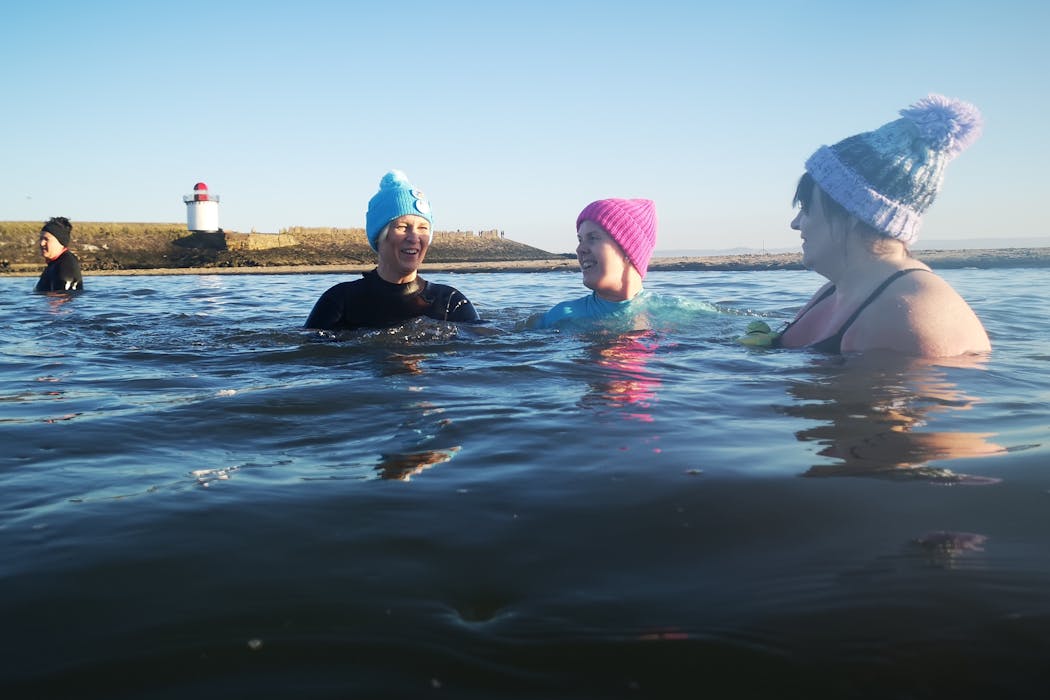
Centuries after the upper class flocked to the coast for therapeutic sea bathing, outdoor swimming is having a renaissance. Swimmers enter cold water for the many physical and mental health benefits it offers.
Despite the dangers – hypothermia, cardiac-related death and drowning – for many women, outdoor swimming feels like a safe space. My PhD research, which explored outdoor swimming in north-west England, found that some women experience their swimming as a form of liberation, from what they see as a male-centric culture, the male gaze and social convention.
In this environment, stripping off at the water’s edge can feel like stripping back notions of how female swimmers feel they “ought to” look or behave.
This is particularly relevant in a context where more than half of women feel that the UK has become more dangerous in the past five years, and reports of violence against women are increasing.
While men are loved and valued members, founders of and advocates for outdoor swimming communities across the UK, female swimmers comment on enjoying a female-majority atmosphere. Compared to perceived male-dominated environments such as the city, where women may feel that they need to take precautions to ensure their safety, or change how and where they exercise during darker winter months, one woman described outdoor swimming as, “a sense of freedom that I don’t think I would necessarily have elsewhere”.
Outdoor spaces are widely perceived to be a male domain. The outdoors is where tropes of masculinity, including stoicism and the conquering of nature, are performed.
Through the practice of outdoor swimming, female swimmers are rewriting outdated ideas of how women might be, do and what they look like in the outdoors.
As late as the Victorian era, many outdoor sports were imagined to threaten a woman’s femininity and fertility. Recent research has shown that mainstream media often portrays women as passive or requiring male assistance during outdoor activities.
Outdoor swimming is a sport in which female physiology provides a significant edge, and women can feel athletic and empowered, no matter their body type.
Many of the swimmers in my research are between their 30s and 60s, and several are experiencing the menopause or ageing bodies. In each other’s company and in the water, patriarchal and capitalist ideals of a “good body” (slim, able-bodied and cisgender), are felt to wash away.
Female swimmers laugh heartily about their “bioprene”, a beloved euphemism for the body fat that allows them to outlast their husbands in cold water. As one swimmer in my study said:
When you’re swimming outdoors, there’s no glamour … it’s a levelling thing and I think in a world where we’re just bombarded with what we should be doing and what we should look like, it’s the way that people can just be themselves.
The outdoor swimming movement is known for its self-proclaimed non-conformist and subversive roots. For some female swimmers, their personal practice is a way to be unconventional. One swimmer commented:
I’ve got this concern about convention and what I ought to be doing, what people expect me to do, but I’ve got more concerned with what I need to do to find pleasure and peace.
For this swimmer, letting go of social norms is a way to find peace within herself.
Finding community
A sense of peace also comes in the form of the friendships that are forged in the water. Previous research has indicated that the social and communal elements of outdoor swimming are an important factor in the sense of wellbeing associated with the practice.
My research indicates that the femininity of some swimming circles can be a harbour for emotional intimacy.
One swimmer described how she and her fellow swimmers have had beautiful exchanges while immersed in the waves, including singing together:
That lovely little moment, which, had it been a male-dominated environment, we perhaps wouldn’t have felt comfortable to be like that. Lots of women around you, you just feel freer… it was spontaneous, it was beautiful.“
The rivers, lakes and seas of the UK offer energising and emboldening spaces where many women feel safe to be fully and unapologetically themselves. As outdoor swimming grows in popularity, and grassroots organisations such as Mental Health Swims have closed due to a lack of funding, nurturing female communities in the outdoors is increasingly important, such that more women may find safety, joy and more of themselves in the outdoors.
Abi Lafbery received funding from the Economic and Social Research Council, North West Social Science Doctoral Training Partnership, ES/P000665/1.
Most of us go through the day without thinking much about our bodies – until something goes wrong. Yet beneath that apparent simplicity lies a remarkable achievement: the brain must constantly knit together sights, touches and signals from muscles and joints into a coherent sense of “this body is mine”.
Psychologists and neuroscientists call this body ownership. It is a key part of self-consciousness: the feeling of being a self located in a particular body, separate from the world around you. It’s partly what makes us different to AI.
For decades, theories have proposed that a lot of this bodily processing happens outside awareness. It’s a kind of unconscious process that quietly guides our movements while consciousness focuses on other things. Now our new study challenges this idea – giving interesting insights into theories of consciousness.
Most experiments on consciousness have used flashes of light or sounds, asking when and how these external stimuli reach awareness. Surprisingly, very little work has directly tested how conscious awareness relates to the bodily self.
Rubber hand experiments
To investigate this, we used a modern version of the famous rubber hand illusion. In this illusion, a participant’s real hand is hidden from view while a lifelike rubber hand is placed in front of them. If both hands are stroked in synchrony, most people begin to feel that the rubber hand is, strangely, part of their own body.
We built a robotic set-up that allowed us to control this illusion with millisecond precision. In our main experiment, 32 participants saw two rubber hands side by side, while a robot tapped their real, hidden hand.
On every trial, one rubber hand was tapped in perfect synchrony with the real hand and the other was tapped with a slight delay – from 18 to 150 milliseconds. After a short sequence of taps, people had to choose which rubber hand felt more like their own. Then they rated how clear that feeling was.
This gave us two things to compare. One was objective performance – how accurately people’s feeling of hand ownership could tell which hand matched their real hand’s timing. The second was subjective awareness – how clearly they reported feeling that sense of ownership.
If a lot of body ownership processing happens unconsciously, we might expect people to be more likely to pick the correct rubber hand, even when they report only a vague or unclear feeling of ownership.
The rubber hand illusion with two rubber hands presented simultaneously. Illustration by Mattias Karlén, CC BY
That is not what we found. As we increased the lack of synchrony between the real and fake hands, people became better at picking the “correct” hand. Crucially, their awareness ratings improved in lockstep.
Both objective performance and reported clarity started to rise at around 30 milliseconds of mismatch. Below that, people were essentially guessing; above that, they both chose more accurately and reported clearer feelings of ownership.
In other words, as soon as the brain started to reliably tell the difference between “my hand” and “not my hand”, people’s conscious experience reflected that difference. We did not see the common pattern reported in visual studies, where unconscious processing can occur before stimuli reach awareness.
Body ownership vs timing
To test whether this was really about body ownership – rather than simply noticing timing – we ran two control experiments. When we rotated the rubber hands into an anatomically impossible position, the illusion disappeared and people mostly reported no clear feeling of ownership, regardless of timing.
And when we replaced the hands with wooden blocks and asked people to judge simultaneity instead of ownership, their awareness no longer tracked their performance as tightly. This suggests that strong conscious access is specific to body ownership, not just to any kind of multisensory integration.
In further experiments, we asked whether the same close relationship holds when body ownership builds up gradually. In one study, we varied how many taps people received before making their choice. More taps meant more sensory evidence. As expected, their ability to discriminate ownership improved with more touches. But again, their awareness ratings improved proportionally.
Taken together, our findings point to a simple but powerful conclusion: for body ownership, consciousness seems to have continuous, privileged access to the relevant information.
This contrasts with many studies of vision and hearing, where stimuli can be processed and influence behaviour without ever entering awareness. It suggests that the bodily self may occupy a special place in our conscious lives.
One reason may be that body ownership is intrinsically self-related: it anchors a first-person perspective in space and underpins almost everything else we experience. Another is that it depends on complex integration across many senses, which may require the kind of widespread brain activation associated with conscious experience.
Implications for mental health
Understanding how body ownership and awareness are linked is not just a philosophical exercise. Distortions of bodily self-perception are common in conditions such as schizophrenia, eating disorders, borderline personality disorder and autism spectrum disorders, where people may feel alienated from their bodies or misperceive their size, shape or boundaries. Our work offers new tools to study how finely tuned the system is.
The findings also resonate with rapidly developing technologies in virtual reality and prosthetics. Many applications aim to “embody” a user in a digital or artificial body. Knowing that body ownership is tightly tied to awareness suggests that successful embodiment will depend on keeping multisensory signals aligned in a way that sustains a clear, conscious sense of “this is me”.
Finally, our results speak to big-picture theories of consciousness. If information about our own body is almost always admitted into awareness, this supports the idea that maintaining a stable, embodied self may be one of the core functions of conscious experience. This perspective ultimately highlights a key gap between humans and current artificial systems, challenging the idea that AI – at least in its current forms – could resemble human consciousness.
Renzo Lanfranco receives funding from the Swedish Research Council (Vetenskapsrådet) and the Strategic Research Area Neuroscience (StratNeuro).
The UK government makes a lot of money from cars. It taxes car ownership, it taxes the fuel, and it is about to charge drivers of electric vehicles by the distance they travel.
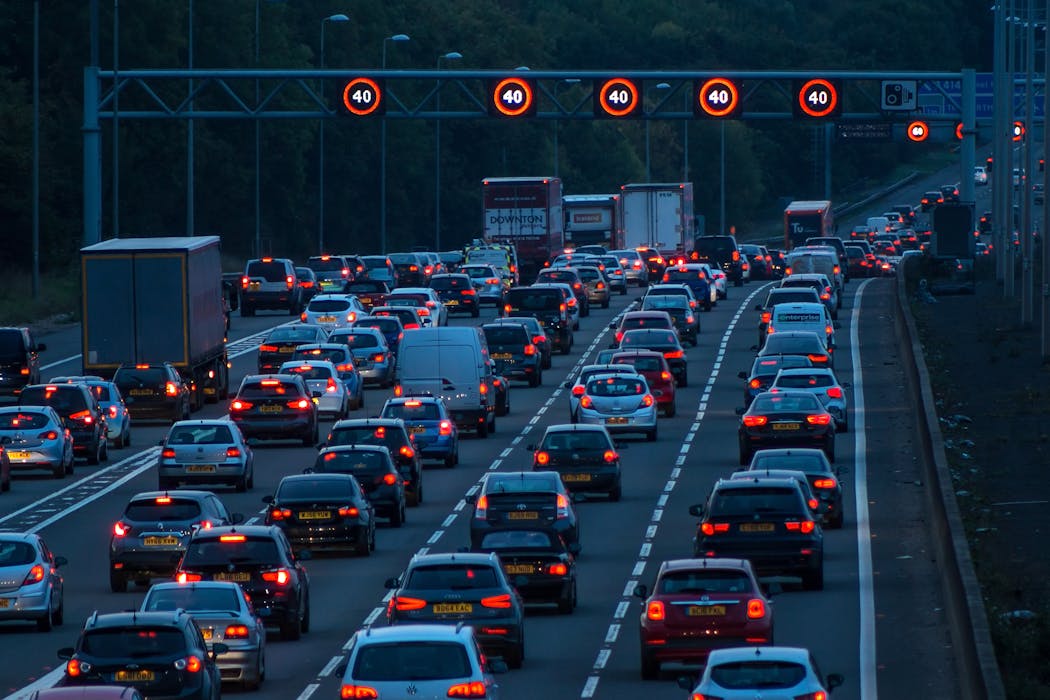
But Britons’ reliance on their 34 million cars also comes at great expense to the economy. Heavy traffic and congestion costs £7.5 billion a year in wasted time. An estimated £17 billion is needed to fix the worn out road network.
Fitting all of these vehicles into a fairly small country means that driving has clear priority over other forms of transport. In Germany, 90% of people living in large cities have access to a tramway or underground train system. In France, it’s 80%.
In the UK, the figure is less than 20%, a similar level to the US.
But the US has vast amounts of space, where brand new roads are regularly built to ease congestion. And so the UK has to deal with a population density comparable to the Netherlands (at least for England) and the urban transport choices of Texas.
This lack of decent public transport is expensive to sustain for all sorts of reasons – like the councils forking out £2.3 billion a year transporting 470,000 children to school, mostly in taxis. Or the cost of subsidising 800,000 motability vehicles, which accounted for one in every five new cars sold in 2024.
While the government should absolutely support the travel needs of people with disabilities and help children get to school, in a strange case of state-provided individualism, the UK has become a country where only cars can deliver these vital public services.
Designated drivers
Yet urban design is ultimately a choice. While the UK has a system which allows for 560 cars per 1,000 people, other places have taken a different route.
In Singapore, there are 146 cars per 1,000 people. This came about after the government implemented a quota system to release a limited number of (expensive) car-ownership licenses to limit congestion and finance public transport.
People without cars are fine, because the number of overall cars is so small that buses and taxis don’t get stuck in traffic. People with cars subsidise the buses and trains, while enjoying smooth traffic.
The Netherlands used a different strategy. In the 1970s, Dutch streets were dominated by cars and had become dangerous for pedestrians and cyclists. Protests led to a reorganisation of cities to become far less car friendly.
My research with a fellow economist demonstrated that if you decrease the space given to cars, they go slower, public transit goes faster, and walking and cycling become safer.
Then, as more people turn to public transport, the higher uptake makes it a faster and more reliable form of transit. It gets to a point where people who would never have taken public transport end up using it and getting to their destination much more quickly than when the car was dominant.
So for the UK to be more like Singapore, the government needs to make motorists pay much more for their car use. To be more like the Netherlands, it must take away their space.
The UK, and especially England, which invented the railway and used to be full of electric tramways, has the population density to make a dramatic switch away from cars actually work. In fact, it’s hard to think of a country better suited to public transport, or where it is more needed. It just hasn’t been built.
So London is rich, well connected and people don’t need cars. Elsewhere, people park on pavements in derelict high streets and drive to supermarkets and places of work.
With stretched public finances, doing nothing about this state of affairs is a risky option. The UK has been described by the Local Government Association as a “country in a jam”, where productivity is held back by car traffic, with no hope for improvement. Lost time on roads is set to increase by 27% in the coming decades.
Moving to a situation where cars are not considered the fastest and most convenient mode of transportation will take ambition and imagination. But the alternative is a very expensive dependency, which clogs up the UK economy.
Renaud Foucart does not work for, consult, own shares in or receive funding from any company or organisation that would benefit from this article, and has disclosed no relevant affiliations beyond their academic appointment.
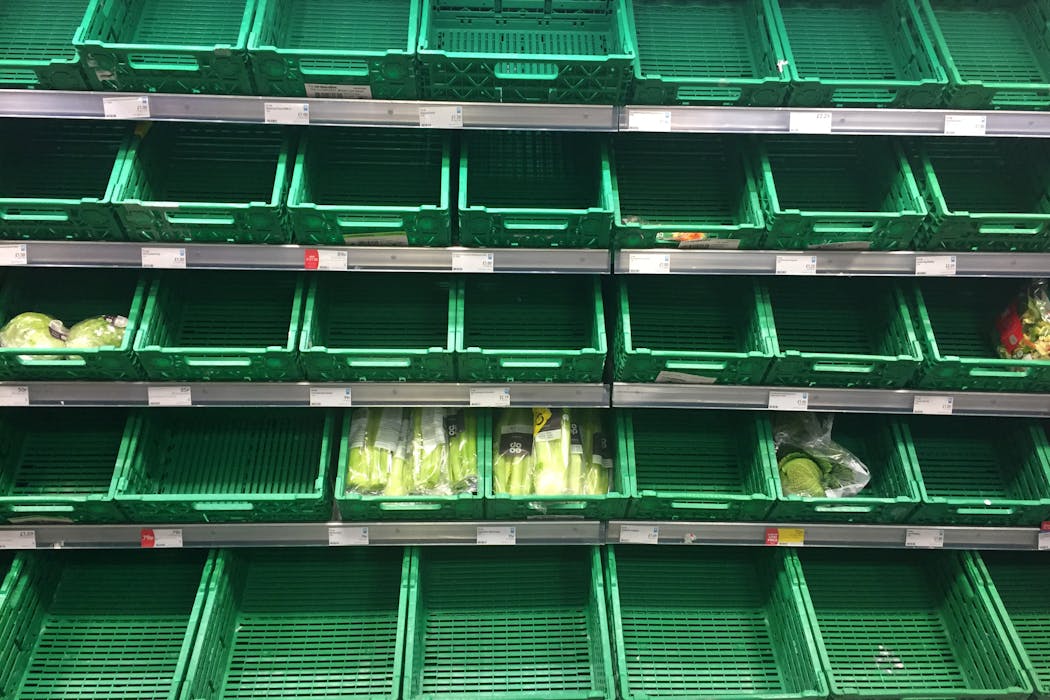
If you walked into a supermarket during a supply hiccup, storm, fuel protest, or even the early days of the COVID pandemic, you will remember the sight of empty shelves. For most people in the UK, these moments are surprising, even unsettling, precisely because they are rare. We are a generation largely spared the rationing, shortages and hunger our grandparents and great-grandparents once endured.
But that rarity is exactly why we must not become complacent. Food security (the reliable availability, access and affordability of food) should be recognised as a major national concern. That means placing it firmly on the UK’s national risk register.
The national risk register is the UK government’s openly available list of the most serious risks that could affect the country in the short to medium term. These risks range from flooding and heatwaves to threats such as cyberattacks and energy shortages.
Being listed on the register does not mean the event is likely to happen tomorrow (but it could). It means the government has assessed it as significant enough, based on impact and probability, to require planning and mitigation measures.
Think of the national risk register as the country’s official “what could really go wrong?” list. If a threat is on the register, policymakers, emergency planners and critical industries take it seriously and plan accordingly. If it is not, the risk can drift into the background (even when it should not).
For all its importance, food security occupies a limited and somewhat indirect presence in the risk register. It only appears within broader categories such as supply-chain disruption, fuel shortages and animal disease. It’s not mentioned as a clearly defined risk in its own right.
Placing food security on the national risk register as its own defined category would send a clear signal that safeguarding stable, affordable food is a national priority – on par with energy, health and security. My team’s recent white paper for the government highlights this urgency.
Some categories, such as fruit and vegetables, depend on imports for as much as 80–95% of supply. We rely on long, intricate supply chains involving overseas farming conditions, global shipping routes, international labour markets and constantly changing energy prices. When any of these are disrupted, our food system feels the shock.
An uncomfortable truth lies behind each of these disruptions: we are more dependent on global systems than the public think. Those systems are under pressure from climate change, geopolitical instability and resource competition.
Food systems also operate with tight margins. Fresh produce is harvested, shipped and sold quickly. Livestock feed supply needs to be constant. Fertiliser production depends heavily on natural gas for providing both the hydrogen feedstock and the energy required to make ammonia, the key ingredient in most nitrogen fertilisers. All of these dependencies create points of vulnerability. When several of those break at once, shortages can cascade.
For many households, even small disturbances lead to real consequences: higher prices, reduced choice and increased stress about meeting weekly food bills. Families on tight budgets feel these effects most sharply.
While we are nowhere near the wartime rationing experienced by earlier generations, food banks across the UK are already serving record numbers, and food-price inflation has recently reached levels not seen in decades. Food insecurity is not a hypothetical risk for millions, it is a reality.
An expert explains the meaning of climate resilience.
Lessons from the past
Historically, Britain has faced food insecurity before. During the second world war, German U-boats targeted supply ships, leading to rationing that lasted until 1954. Earlier still, crop failures and poor harvests in the 19th century caused widespread hardship. Today we benefit from refrigeration, global trade, advanced agriculture and data-driven logistics, but those advantages can create an illusion of invulnerability that our supply chains are robust.
Food security, even in the UK, is more fragile than it might seem. Our shelves look full until suddenly they do not. A combination of climate-driven harvest failures, rising energy prices and trade disruptions could create national shortages or unaffordable prices much more quickly than many people may expect.
Including food security on the national risk register would prompt government departments to plan coordinated responses. It would drive investment in resilient agriculture, storage and domestic production while encouraging diversification of food imports to avoid overreliance on just a few regions.
Better risk planning would also support households through better safety nets and targeted interventions such as emergency rations and direct support to vulnerable households. Raising public awareness that food security is a shared national responsibility does not suggest panic – it means preparation.
Don’t have time to read about climate change as much as you’d like?
You might think good sleep happens in your brain, but restorative sleep actually begins much lower in the body: in the gut.
The community of trillions of microbes living in your digestive tract, known as the gut microbiome, plays a powerful role in regulating sleep quality, mood and overall wellbeing. When the gut microbiome is balanced and healthy, sleep tends to follow. When it is disrupted, insomnia, restless nights and poor sleep cycles often appear.
The best known part of this system is the vagus nerve, which acts like a two-way communication line carrying information between gut and brain. Researchers are still studying how important the vagus nerve is for sleep, but evidence suggests that stronger vagal activity supports calmer nervous system states, steadier heart rhythms and smoother transitions into rest.
Because of this intimate connection, changes in the gut influence how the brain regulates stress, mood and sleep.
So, how does the gut actually communicate these signals to the brain?
Gut microbes do more than digest food. They produce neurotransmitters and metabolites that influence sleep-related hormones. Metabolites are small chemical by-products created when microbes break down food or interact with each other. Many of these compounds can influence inflammation, hormone production and the body’s internal clock. When the gut is in balance, these substances send steady, calming signals that support regular sleep. When the microbiome becomes imbalanced, a condition known as dysbiosis, this messaging system becomes unreliable.
The gut also produces several key sleep-related chemicals. Serotonin, for example, regulates mood and helps set the sleep-wake cycle. Most of the body’s serotonin is produced in the gut, and healthy bacteria help keep its production stable. Melatonin, which makes you feel sleepy at night, is made not only in the pineal gland but also throughout the digestive tract. The gut helps convert serotonin into melatonin, so its condition directly shapes how efficiently this happens.
The gut also supports the production of Gaba (gamma-aminobutyric acid), a calming neurotransmitter made by certain beneficial microbes. Gaba quiets the nervous system and signals that the body is safe enough to relax. Together, these chemicals form part of the body’s circadian rhythm, the internal 24-hour cycle that regulates sleep, appetite, hormones and temperature. When harmful bacteria dominate, that rhythm becomes less stable, which can contribute to insomnia, anxiety at bedtime and fragmented sleep.
Another major route linking gut and sleep is inflammation. A healthy gut maintains a balanced immune response. It does this by protecting the gut lining, hosting microbes that regulate immune activity and producing compounds that calm inflammatory reactions. If dysbiosis develops or a poor diet irritates the gut lining, gaps can form between the cells of the intestinal wall. This allows inflammatory molecules to escape into the bloodstream, creating chronic, low-grade inflammation.
Inflammation is known to interfere with sleep regulation. It disrupts the brain’s ability to coordinate smooth transitions between the stages of sleep because inflammatory chemicals influence the same brain regions that control alertness and rest. People with inflammatory gut conditions often experience this in very practical ways.
Irritable bowel syndrome, food sensitivities or increased intestinal permeability, often called leaky gut, all involve irritation or loosening of the gut lining. This allows immune-triggering substances to enter the bloodstream more easily, which increases inflammation and interferes with sleep. Inflammation also raises levels of the stress hormone cortisol, which makes the body feel primed for action rather than rest.
Strengthening the gut can make sleep noticeably better, and the changes do not need to be complicated. Eating prebiotic and probiotic foods, particularly fermented foods, supports beneficial microbes because fermentation creates live cultures that help repopulate the gut. Reducing sugar and ultra-processed foods lowers inflammation and prevents dysbiosis because these foods tend to feed bacteria that promote irritation or produce inflammatory by-products.
Keeping consistent meal times helps the gut maintain a steady daily rhythm because the digestive system has its own internal clock. Managing stress makes a difference. Staying well hydrated helps the gut microbiome because fluid supports digestion, nutrient transport and the mucus layer that protects the gut lining. Together, these changes create a more stable gut environment that supports deeper and more restorative sleep.
Good sleep does not begin the moment you climb into bed. It begins long before that, shaped by the health of the gut and the messages it sends to the brain throughout the day. When the gut is supported and balanced, the body is better able to settle, recover and shift into the rhythms that allow sleep to improve naturally.
Manal Mohammed does not work for, consult, own shares in or receive funding from any company or organisation that would benefit from this article, and has disclosed no relevant affiliations beyond their academic appointment.
Source: The Conversation – UK – By Emma Humphries, Research Fellow, School of Arts, English and Languages, Queen’s University Belfast
“Pink goes good with green.” This is a lesson we learned from Glinda (Ariana Grande) in Wicked part one. But do you remember the line that comes after that?
“Goes well with green.”
A small, easily missed comment from the green-skinned outsider Elphaba (Cynthia Erivo), but one that reveals something important about language and common usage. Hierarchies of “correct” and “incorrect” language are not just found in grammar books and classrooms, but in popular culture too.
From “holding space” to “sex cardigans”, Wicked continues to dominate popular culture, but one thing that has been overlooked is Elphaba’s insistence on correct language.
In the first film, we see Elphaba ostracised and eventually positioned as public enemy number one by the Oz propaganda machine. From the film’s very opening, a flashforward to citizens celebrating Elphaba’s death, her unpopularity is made clear in the song No One Mourns The Wicked.
One way in which the filmmakers signal Elphaba’s unlikeability is through her often awkward, borderline rude social encounters, including when she first meets her frenemy, Glinda. It’s safe to say that the two characters don’t hit it off and Elphaba’s correction seems to upset Glinda.
Glinda: I could care less what others think.
Elphaba: Couldn’t.
Glinda: What?
Elphaba: You couldn’t care less what other people think. Though, I … I doubt that.
In the land of Oz, where people “pronuncify” and “rejocify”, are “disgusticified” and “moodified”, Elphaba’s comments demonstrate the idea that there is only one correct way to use language and that incorrect language should be corrected.
From stage to cinema
Elphaba’s corrections are not in the original stage musical. They were added to the film. The adaptation of a stage show for film offers an opportunity to modernise and change parts of the story that have been controversial or become outdated.
One excellent example of this in Wicked is its improvement of the stage show’s depiction of disability. The addition of language policing, however, is more disappointing. Because when we correct someone’s language, it’s about much more than the words themselves.
Correcting language is not neutral. When we place value on using language correctly, those who fall short often find themselves judged and discriminated against.
The policing of correct language can be seen as a gatekeeping tool, deciding who belongs and who is excluded. This has inevitable consequences for diversity. The way we speak, write and sign can reflect many aspects of our identities: where and how we grew up, our gender, age and race.
Rules and rebellion
With the run time of the films almost doubling that of the stage show, there is much more time devoted to character development in the films. Elphaba’s language pedantry has been added to demonstrate how she can rub people up the wrong way. However, it also suggests an adherence to authority and to socially constructed rules that stands in contrast to her character more broadly.
Elphaba is an outsider who starts the film wanting to be “degreenified”, but by the end of Wicked part one and as a main storyline in Wicked: For Good, she is willing to sacrifice her safety and reputation to do what is morally right, rather than what is socially acceptable.
Adherence to the strict rules of correct language suggests the opposite: a tendency to want to be accepted and to uphold the societal status quo. Elphaba resists social norms in every other respect, yet the film makes her a standard grammar enforcer.
Given that this trait is absent from part two, rather than undermining her personality as a resister, perhaps this further signals Elphaba’s journey from wishing to fit in to fully embracing her outsider status. Indeed, Elphaba’s insistence on correctness speaks to a broader challenge facing anyone positioned as an outsider: having to work that much harder to be accepted.
Glinda’s (famous) need to be popular and her interests in social climbing align with traits of a language enforcer, yet her behaviour tells a different story. She corrects language only once and it concerns her original name, Galinda. When Dr Dillamond, a professor at Shiz University – who also happens to be a goat – struggles to pronounce the “gah” in Galinda, Glinda corrects his pronunciation and berates him.
This moment, present in both the stage musical and the film, does not reflect a desire to uphold the prescriptive rules of the language, but rather a personal motivation. Glinda’s name is central to her self-image and public persona, and protecting that matters to her.
Beyond Oz
In an era when equality, diversity and inclusion initiatives are being rolled back, and languages other than English face renewed marginalisation, Wicked offers a case study in how linguistic hierarchies operate under the radar of popular culture. But there are plenty other examples. Think about Ross in Friends, Ted in How I Met Your Mother and Sheldon in The Big Bang Theory – all notorious language correctors.
Elphaba’s corrections are more than just a shorthand to signal an abrasive character. They reflect the linguistic hierarchies and gatekeeping that exist beyond Oz. Using language “correctly” is a marker of belonging and shows adherence to societal norms.
Across the two films, Elphaba moves from wanting to conform and erase a stigmatised part of her identity, her skin colour, towards rebellion against convention. It’s clear she questions blind adherence to political power, but perhaps this extends further to questioning the rules we construct around language.
Looking for something good? Cut through the noise with a carefully curated selection of the latest releases, live events and exhibitions, straight to your inbox every fortnight, on Fridays. Sign up here.
Emma Humphries receives funding from The Leverhulme Trust and is currently employed by Queen’s University Belfast.
The interesting thing about Benjamin Netanyahu’s call on Israel’s president, Isaac Herzog, to pardon him for charges of bribery, fraud and breach of trust, is that he has not been found guilty on any of them.
The trial is made up of three separate but related cases and began in May 2020. They’ve been paused regularly, especially since the country began its military campaign in Gaza, and are thought likely to continue for years.
Netanyahu’s 111-page pardon application does not admit guilt. Instead it’s a sustained attack on Israel’s legal system. In particular it alleges that the cases against him have involved illegal interrogations and unlawful manipulation in the collection of evidence. He argues that the charges against him undermine national unity and impair his ability to do his job as the country’s leader.
In short this is not Netanyahu asking for a pardon so much as an attempt by the prime minister to portray himself as a great man wronged by the elite.
Significantly it comes just a few months before the next election will have be called in Israel. As Herzog has said the application will could “unsettle” the Israeli public.
The latest developments in the long-running saga of the Israeli prime minister’s trial began in October. The US president, Donald Trump, in his speech to the Knesset to celebrate the apparent success of his peace plan for Gaza, called for the pardon.
Having recently humiliated Netanyahu at a meeting in the White House by making him apologise to Qatar for his airstrike on Hamas officials in Doha, Trump – ever the deal maker – thought he could sweeten things for his staunch ally by making such a public appeal. The US president has since followed this up with a formal letter to the Israeli president.
Donald Trump calls for Netanyahu to be pardoned.
Trump seems to be under the impression that Israel’s president has the same widely discretionary powers that he exercises. He has just pardoned the former president of Honduras, Juan Orlando Hernandez, who had been sentenced to 45 years during the Biden years for drug trafficking and has a well established track record of pardoning his allies.
But Israel has a complex system that may take weeks to work through. First the pardon must be submitted to the Ministry of Justice to consider before it goes to the president. The president then has to ask his own legal advisor for her view.
The reaction to Netanyahu’s pardon application has predictably divided Israelis along political lines.
Opposition party leaders are overwhelmingly opposed to the grant of a pardon, especially as Netanyahu has not accepted guilt. Opposition leader Yair Lapid has said that no pardon can be given unless Netanyahu admits guilt. Yair Golan, the leader of the Democrats, also says that only the guilty can apply for pardon.
Former prime minister, Naftali Bennett – a frontrunner to succeed Netanyahu should the opposition coalition win the election – has a more nuanced view. He argues that a pardon should be given but on condition that Netanyahu retires from office.
Netanyahu’s government colleagues have of course welcomed the application and agree with Netanyahu’s criticisms of Israel’s justice system. Environment minister, Idit Silman – a fellow member of Likud, Netanyahu’s party – has gone so far as to suggest that any refusal to grant the pardon will result in the justice officials involved being sanctioned by the Trump administration.
Undermining due process
All of this places Herzog in a delicate position. The judicial reforms which the current government initiated when it took office in December 2022, which have drawn the anger of many in Israel who perceive them as an attempt to emasculate what was once a robust legal system, have continued during the war in Gaza.
The government and its supporters already treat Israel’s Supreme Court with contempt. This was amply demonstrated on December 1 when a hearing on the government’s attempt to sack the attorney general was cancelled after the government boycotted the hearing.
It is also a moot point whether the president is legally able to pardon anyone who has not been convicted of a crime or at least been admitted guilt. There have been two cases where pardons were granted without convictions.
These related to a 1984 trial in which two operatives working for Israeli intelligence agency Shin Bet were charged with the summary execution of two Palestinians who were hijacking a bus. It was considered that a full trial could compromise security – so on the basis of the admission of guilt a pardon was given.
It has been suggested that Herzog could offer a conditional pardon dependent on Netanyahu not returning to office after the next election, whatever the result. But the Israeli prime minister seems in no mood to admit to any wrongdoing on his part – let alone retreat from political life. Instead, his application for a pardon is a demand that the Israel public rally round him and a statement that disunity has been caused by the trial not by his actions.
This has echoes of the way in which Trump dealt with the litigation against him after his first term. He used it as proof of the bias and indeed the corruption of the legal system at the service of the elite.
In this period of populist politics this stance evidently did him no harm as he was reelected. Netanyahu must be hoping the same politics work for him. But unlike Trump, it was under his watch the most catastrophic intelligence and military failures took place on October 7 2023.
The Israeli electorate may well not accept his excuses for that traumatic day. They may instead see his pardon application as another self-serving act of a politician who is putting himself first.
John Strawson does not work for, consult, own shares in or receive funding from any company or organisation that would benefit from this article, and has disclosed no relevant affiliations beyond their academic appointment.
Humans have moved plants and animals well beyond their native ranges, across barriers that normally prevent dispersal. As a result, people have increased the rates of hybridisation between populations that were once isolated for thousands, or even millions, of years.
Animal hybrids are a controversial issue among scientists, as they often suffer from health issues.
But our new study of Australian dingoes, published in the journal PNAS, found that hybridisation with introduced European dogs might have had evolutionary benefits.
New species can evolve when a subset of the population becomes separated, often by physical barriers like mountains or oceans. Over time, these isolated populations accumulate unique genetic mutations, some of which become fixed. If these populations spend long enough apart, they become so different they can no longer interbreed.
Although they were once domestic, dingoes became isolated from other dogs around 3,500 years ago and evolved into free-living apex predators. Some scientists argue that the dingoes’ distinct appearance and behaviour warrant their recognition as a new species. Others claim that hybridisation with domestic dogs, which were brought to the continent by Europeans from the late-18th century onwards, has blurred this boundary.
Dingoes were translocated to K’gari (Fraser Island) by the Butchulla people before the arrival of Europeans. CC BY
Humans have been moving animals around for millennia. When farmers spread from the Near East into Europe around 8,500 years ago, for example, the domestic pigs that accompanied them came into contact and mated with European wild boar. In some cases where there were no closely related native populations, however, such as the import of exotic animals during the Roman period, escapees formed feral populations. Dingoes fit into this second category.
Species translocations and hybridisation accelerated during the colonial period, which reshaped local ecosystems. Hybrid offspring can lose the unique traits that allowed their parent populations to thrive in their specific habitats. Other effects are invisible, and can only be teased out of genetic studies.
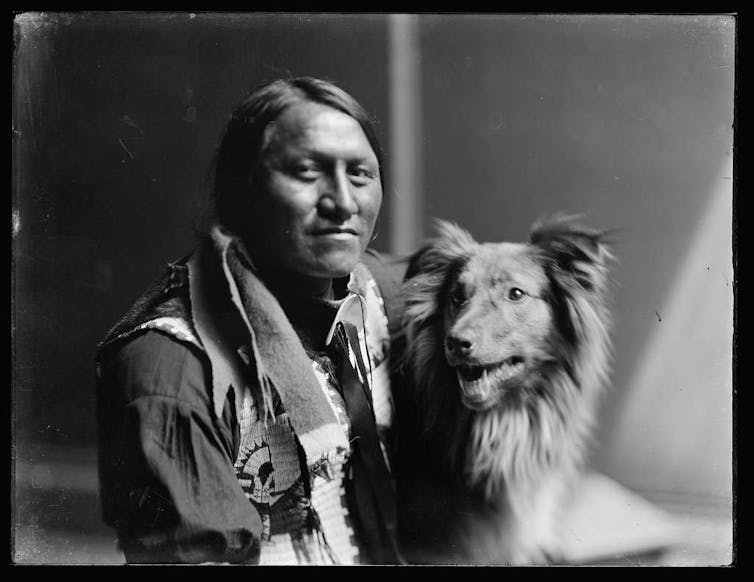
Charging Thunder (George Edward Williams), who was born into the Oglala Lakota tribe of the Sioux Nation, with a shepherd-type dog brought to the Americas by Europeans. Cultural practices involving Indigenous dogs were actively persecuted. CC BY
Hybridisation can also be beneficial. The acquisition of alleles (a different version of a gene) from another population may improve an animal’s survival in new environments, or make them resistant to new diseases.
The ancestors of modern human populations on the Tibetan Plateau, for example, inherited an allele of the EPAS1 gene from Denisovans (a closely related human species) that improved their ability to live at high altitudes.
Since dingoes were only isolated from other dog populations for a few thousand years, it is not a surprise that they can readily interbreed. The “purity” of dingoes is therefore a great source of conflict between conservationists, farmers and policy makers, and is used by both sides to justify policies to either protect or persecute dingoes.
An unusually coloured dingo spotted in Kosciuszko national park, New South Wales. Michelle J Photography, Cooma NSW Australia, CC BY-NC-ND
Some genetic studies have suggested that dingo-dog hybridisation has not taken place, while others indicate most dingo populations have some level of European dog ancestry. A fundamental issue with these studies is that they require comparison against a “pure” reference population. Given centuries of overlap between dingoes and dogs, it is almost impossible to be sure that modern populations do not have mixed ancestry.
To circumvent this issue, our study sequenced genomes from ancient dingo bones recovered from caves on the Nullarbor Plain in southern Australia. Crucially, this included dingoes that lived and died prior to the arrival of the First Fleet in 1788. Establishing a precolonial baseline of ancestry for dingoes allowed us to to pinpoint the degree of European dog ancestry in dingo populations across Australia today.
Our genetic analysis showed that most dingoes living in the northwest of Australia did not have any detectable European dog ancestry. The opposite was true in the southeast, where almost a quarter of the genome of some dingoes came from European dogs.
Further investigation found that the European ancestry was in fact broken up into small chunks throughout the genome of dingoes, indicating that interbreeding took place at least ten generations (or 30 years) ago.
Aerial baiting with 1080 poison is used to kill introduced mammalian species across Australia and New Zealand. CC BY-SA
In fact, most of the hybrid mating coincided with the outset of aerial baiting programs in the mid-20th century, when poisoned meat was dropped from helicopters to kill dingoes en masse. This reinforces similar findings in Scottish wildcats, which shows local populations were resistant to interbreeding with invasive (domestic cat) populations until their own numbers declined to the point where finding a suitable mate (another wildcat) became too difficult.
Diversity is the key to success
Superficially, gene flow between dingoes and European dogs sounds like a negative outcome. Our research, however, suggests that dingoes have actually benefited. Hybridisation has led to an increase in genetic diversity in dingoes across southeast Australia, potentially offsetting the negative effects of inbreeding.
We also found evidence that a few alleles, which were transmitted from dogs to dingoes via interbreeding, may provide better protection against infectious diseases brought to the continent by European dogs.
Despite being an introduced species, dingoes are now adapted to Australia’s varied ecosystems. Based on our results, we suggest that instead of prioritising “purity”, future conservation efforts should focus on maintaining large enough populations for natural selection to operate effectively, so that dingoes can maintain their position as Australia’s apex predator.
Hybrids are becoming increasingly common as humans and their domesticates continue to encroach into wild habitats, from Scottish salmon to Andean alpacas. In order to understand the impacts, both positive and negative, of this hybridisation, our results suggest we must first look to the past.
Laurent Frantz receives funding from the European Research Council, and the Deutsche Forschungsgemeinschaft
Greger Larson and Lachie Scarsbrook do not work for, consult, own shares in or receive funding from any company or organisation that would benefit from this article, and have disclosed no relevant affiliations beyond their academic appointment.
Source: The Conversation – UK – By Emma Humphries, Research Fellow, School of Arts, English and Languages, Queen’s University Belfast
“Pink goes good with green.” This is a lesson we learned from Glinda (Ariana Grande) in Wicked part one. But do you remember the line that comes after that?
“Goes well with green.”
A small, easily missed comment from the green-skinned outsider Elphaba (Cynthia Erivo), but one that reveals something important about language and common usage. Hierarchies of “correct” and “incorrect” language are not just found in grammar books and classrooms, but in popular culture too.
From “holding space” to “sex cardigans”, Wicked continues to dominate popular culture, but one thing that has been overlooked is Elphaba’s insistence on correct language.
In the first film, we see Elphaba ostracised and eventually positioned as public enemy number one by the Oz propaganda machine. From the film’s very opening, a flashforward to citizens celebrating Elphaba’s death, her unpopularity is made clear in the song No One Mourns The Wicked.
One way in which the filmmakers signal Elphaba’s unlikeability is through her often awkward, borderline rude social encounters, including when she first meets her frenemy, Glinda. It’s safe to say that the two characters don’t hit it off and Elphaba’s correction seems to upset Glinda.
Glinda: I could care less what others think.
Elphaba: Couldn’t.
Glinda: What?
Elphaba: You couldn’t care less what other people think. Though, I … I doubt that.
In the land of Oz, where people “pronuncify” and “rejocify”, are “disgusticified” and “moodified”, Elphaba’s comments demonstrate the idea that there is only one correct way to use language and that incorrect language should be corrected.
From stage to cinema
Elphaba’s corrections are not in the original stage musical. They were added to the film. The adaptation of a stage show for film offers an opportunity to modernise and change parts of the story that have been controversial or become outdated.
One excellent example of this in Wicked is its improvement of the stage show’s depiction of disability. The addition of language policing, however, is more disappointing. Because when we correct someone’s language, it’s about much more than the words themselves.
Correcting language is not neutral. When we place value on using language correctly, those who fall short often find themselves judged and discriminated against.
The policing of correct language can be seen as a gatekeeping tool, deciding who belongs and who is excluded. This has inevitable consequences for diversity. The way we speak, write and sign can reflect many aspects of our identities: where and how we grew up, our gender, age and race.
Rules and rebellion
With the run time of the films almost doubling that of the stage show, there is much more time devoted to character development in the films. Elphaba’s language pedantry has been added to demonstrate how she can rub people up the wrong way. However, it also suggests an adherence to authority and to socially constructed rules that stands in contrast to her character more broadly.
Elphaba is an outsider who starts the film wanting to be “degreenified”, but by the end of Wicked part one and as a main storyline in Wicked: For Good, she is willing to sacrifice her safety and reputation to do what is morally right, rather than what is socially acceptable.
Adherence to the strict rules of correct language suggests the opposite: a tendency to want to be accepted and to uphold the societal status quo. Elphaba resists social norms in every other respect, yet the film makes her a standard grammar enforcer.
Given that this trait is absent from part two, rather than undermining her personality as a resister, perhaps this further signals Elphaba’s journey from wishing to fit in to fully embracing her outsider status. Indeed, Elphaba’s insistence on correctness speaks to a broader challenge facing anyone positioned as an outsider: having to work that much harder to be accepted.
Glinda’s (famous) need to be popular and her interests in social climbing align with traits of a language enforcer, yet her behaviour tells a different story. She corrects language only once and it concerns her original name, Galinda. When Dr Dillamond, a professor at Shiz University – who also happens to be a goat – struggles to pronounce the “gah” in Galinda, Glinda corrects his pronunciation and berates him.
This moment, present in both the stage musical and the film, does not reflect a desire to uphold the prescriptive rules of the language, but rather a personal motivation. Glinda’s name is central to her self-image and public persona, and protecting that matters to her.
Beyond Oz
In an era when equality, diversity and inclusion initiatives are being rolled back, and languages other than English face renewed marginalisation, Wicked offers a case study in how linguistic hierarchies operate under the radar of popular culture. But there are plenty other examples. Think about Ross in Friends, Ted in How I Met Your Mother and Sheldon in The Big Bang Theory – all notorious language correctors.
Elphaba’s corrections are more than just a shorthand to signal an abrasive character. They reflect the linguistic hierarchies and gatekeeping that exist beyond Oz. Using language “correctly” is a marker of belonging and shows adherence to societal norms.
Across the two films, Elphaba moves from wanting to conform and erase a stigmatised part of her identity, her skin colour, towards rebellion against convention. It’s clear she questions blind adherence to political power, but perhaps this extends further to questioning the rules we construct around language.
Looking for something good? Cut through the noise with a carefully curated selection of the latest releases, live events and exhibitions, straight to your inbox every fortnight, on Fridays. Sign up here.
Emma Humphries receives funding from The Leverhulme Trust and is currently employed by Queen’s University Belfast.