Warm oceans seem to be turning even ‘weak’ cyclones into deadly rainmakers

Source: The Conversation – UK – By Ligin Joseph, PhD Candidate, Oceanography, University of Southampton

The final week of November was devastating for several South Asian countries. Communities in Sri Lanka, Indonesia and Thailand were inundated as Cyclones Ditwah and Senyar unleashed days of relentless rain. Millions were affected, more than 1,500 people lost their lives, hundreds are still missing, and damages ran into multiple millions of US dollars. Sri Lanka’s president even described it as the most challenging natural disaster the island has ever seen.

When disasters like this happen, the blame often falls on a failure in early warnings or poor preparedness. This was the case with major floods in Kerala, south India, in 2018, which devastated my hometown.

But this time, the forecasts were largely accurate; the authorities knew the storms were coming, yet the devastation was still immense.

So, if the forecasts were good enough, why were the impacts still so severe?

Weak winds, extreme rain

One emerging explanation is that these storms were not dangerous because of their winds, but because they produced unusually intense rainfall.
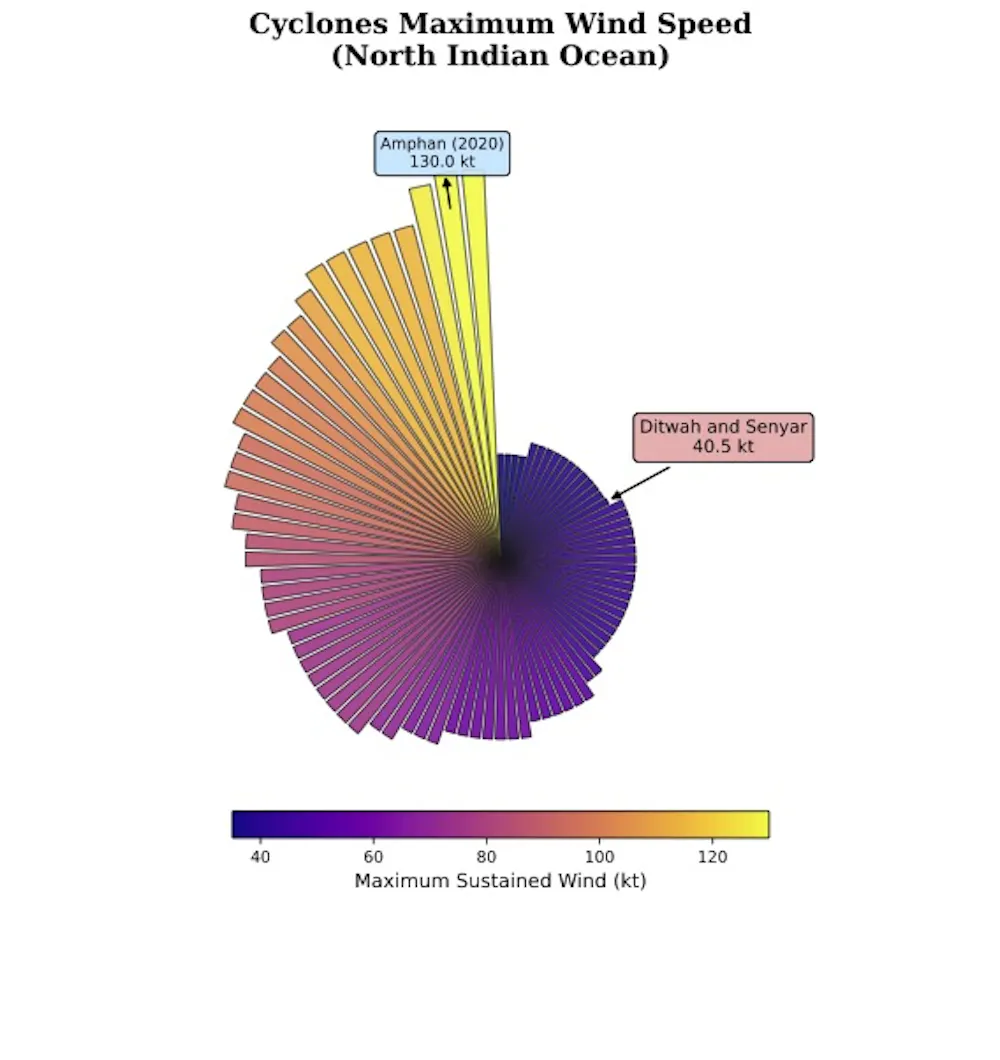
Graph of wind speeds
This graph of all cyclonic storms over the north Indian Ocean since 2001 shows Ditwah and Senyar weren’t particularly windy. (Wind speed measured in knots. 1 knot is about 1.15 mph or 1.85 kph)
Ligin Joseph (data: IBTrACS), CC BY-SA

Consider Cyclone Ditwah. Its peak winds were around 75 km/h (47 mph). That’s windy, but nothing special. In the UK, it would be classified merely as a “gale” rather than a “storm”. It was far weaker than the 220 km/h winds of the powerful 1978 cyclone that also struck Sri Lanka. Yet Ditwah still caused massive devastation.

What explains this apparent contradiction? It’s too early to say definitively, but climate change is likely a part of the story. Even when storms are not especially strong in wind terms, the amount of rain they carry is increasing.

A warmer atmosphere holds more water

A well established meteorological rule helps explain why. For every degree of global warming, the atmosphere can hold about 7% more moisture.

As the planet warms, the air above us becomes a larger reservoir, waiting to dump more water on us. When storms form, they can tap into this expanded supply, often in extremely short bursts. Even if wind speeds are modest, the rainfall alone can be catastrophic.

The oceans matter even more

Warming oceans play an even more powerful role, as cyclones draw their energy from warm ocean waters. Satellite data from late November shows just how warm the eastern Indian Ocean was, with large areas more than 1°C above normal during Ditwah and Senyar.

Coloured map of Indian Ocean and SE Asian seas
In the days before the cyclones formed (20–24 November), the oceans were even warmer than usual, creating conditions that could have fuelled and intensified the rainfall.
Ligin Joseph (Data: OISST; track positions are approximate), CC BY-SA

Such warm anomalies are no longer unusual. The oceans have absorbed more than 90% of the excess heat trapped by greenhouse gases, and long-term observations show a clear upward trend in ocean temperatures.

That doesn’t necessarily mean cyclones are becoming more frequent – their formation still depends on other ingredients, such as low wind shear (small differences in wind speed and direction with height) and the right atmospheric structure.

What warmer oceans do change, however, is the amount of energy available to any storm that does manage to form. When the ocean is warmer, cyclones have more fuel and evaporation increases, loading the atmosphere with moisture that can fall as intense rain once a storm develops. Even weak cyclones can therefore hold exceptional amounts of rain.

Coloured map of Indian Ocean and SE Asian seas
Evaporation averaged for 26–27 November. Ditwah especially travelled over warm waters supplying large amounts of moisture to the atmosphere.
Ligin Joseph (Data: ERA5), CC BY-SA

The winds near the surface help this process along. As they move across the ocean, they sweep away the moisture-filled air just above the water and replace it with drier air, allowing evaporation to continue. Put together, warmer oceans, higher evaporation, and an atmosphere that can store more moisture, these factors can significantly intensify the rainfall associated with cyclones.

Coastline hugging makes flooding worse

Local geography amplified these effects. Both Ditwah and Senyar formed unusually close to land and travelled along the coastline for an extended period. This meant they stayed over warm waters long enough to continuously draw moisture, but remained close enough to land to dump that moisture as intense rainfall almost immediately.

Cyclone Ditwah, in particular, moved slowly as it approached Sri Lanka. Slow-moving storms can be especially dangerous as they repeatedly dump rain over the same area. Even if winds are weak, this combination of warm seas, coastal proximity and slow forward speed can be devastating.

A new threat

These storms suggest that climate change – especially ocean warming – is reshaping the risks posed by cyclones. The most dangerous storms may no longer simply be the ones with the strongest winds, but also the ones with the most moisture.

Forecasting systems, including new AI-powered weather models, are getting better at predicting cyclone tracks and wind speeds. Yet rainfall-driven flooding remains far harder to forecast. As oceans continue to warm, governments and disaster agencies will need to prepare for storms that may be weak in wind but extreme in rain.

These insights are based on preliminary analysis and emerging scientific understanding. More detailed peer-reviewed studies will be needed to pinpoint exactly why Ditwah and Senyar produced such extreme rainfall. But the pattern that is emerging – weak cyclones delivering outsized floods in a warming world – must not be ignored.

The Conversation

Ligin Joseph receives funding from the UK’s Natural Environment Research Council (NERC).

ref. Warm oceans seem to be turning even ‘weak’ cyclones into deadly rainmakers – https://theconversation.com/warm-oceans-seem-to-be-turning-even-weak-cyclones-into-deadly-rainmakers-271550
Nigel Farage accused of breaking election spending laws – the situation explained

Source: The Conversation – UK – By Sam Power, Lecturer in Politics, University of Bristol

Nigel Farage has found himself in hot water over accusations that he failed to report that his 2024 election campaign in Clacton went over the spending limit of £20,660.72. Richard Everett, a former Reform councillor (who has since left the party – or been expelled, depending what you read), has submitted documents to the police.

Election spending in the UK is beyond complex. It is so hard to understand that it has been compared to a “Jane Austen-style intricate dance … all sorts of daring and dicey moves are permissible, provided you know precisely where to step and when, and how not to upset the crowds”.

Nowhere is this truer than when it comes to spending limits. There are, in fact, two spending limits for general elections (well, there’s actually more than two but let’s not go there). Each party has a certain amount to spend at the national level and each candidate has a spending limit for their constituency campaign. Candidate spending is money spent to promote their individual candidacy (or criticise a local opponent), party spending is more general material that promotes a party.

This is largely thanks to a historical quirk. Candidate spending has been limited since the Corrupt and Illegal Practices (Prevention) Act of 1883. And because national campaigning didn’t really exist back then, that was largely that. Things changed in 2000 when – alongside other reforms – limits were placed on national-level party spending, which by then was, by then, very much a thing.

Both spending limits vary, but the 20k limit for Clacton is a reasonable rule of thumb to extrapolate across other constituencies. Party spending limits, again as a rule of thumb, are £34.1 million (if a party stands across England, Scotland and Wales). So, quite a difference.

As you’d imagine, parties make all kinds of daring moves to get what looks an awful lot like candidate spending into their much larger national budgets. You might, for example, target national messages (so party spending) at target constituencies – and, as long as you don’t mention the candidate, that’s party spend.

You can still end up in hot water, though. Just ask the 30 or so Conservative MPs (and their staff) who were embroiled in an election expenses episode following the 2015 general election. In this instance the Tories drove a battle bus packed with activists drove around 33 target constituencies and reported most of their spending as party, rather than constituency, spending.

How bad is this for Farage?

With the police looking into the claim, there’s only so much one can say, but there are several reasons to think the Clacton spend is not going to be too much of a problem for team Farage. Firstly, there’s a very basic matter of the statute of limitations on cases of this kind. You only have a year to report suspected offences and we’re already more than a year out from the election.

While prosecutors can have that limit waived in certain circumstances, a further complication of electoral law is that candidate offences (for now) are managed by the police and party offences by the Electoral Commission. The police are very reluctant to get involved in party politics so it would be surprising if they actively pursued the case against Farage.

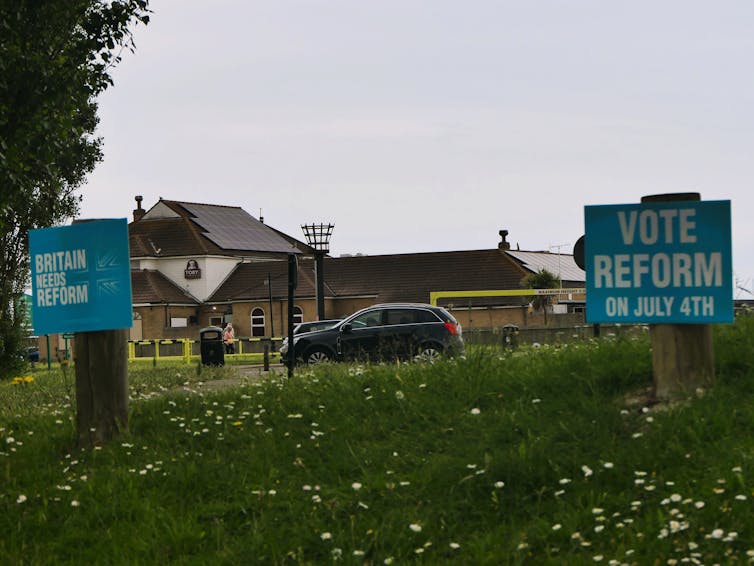
Signs reading 'vote Reform' planted on a roadside bank.
Reform campaign signs in Clacton in 2024.
Shutterstock/GregSawyer

We also don’t know how much more than his £20k limit Farage is accused of spending. If it’s a small amount, the Crown Prosecution Service (CPS) may not feel it in the public interest to pursue a case.

The burden of proof is also incredibly high. I suspect that the offence the CPS will be investigating is the same as the Tory battle bus affair, so 82(6) of the Representation of the People Act 1983. This states that “if a candidate or election agent knowingly makes the declaration required by this section falsely, he shall be guilty of a corrupt practice”. So, the CPS does not just have to show the overspend, it has to show that the candidate knew they were overspending.

There’s also the complicating factor that this is Farage’s constituency, and he effectively is the Reform party. Given that he is the face of all Reform campaigning, we have to wonder, truly, in this instance where candidate spending begins and party spending ends. Or, put differently, considering how easy it would be in theory to disguise candidate spending at party spending in these particular (and peculiar) circumstances you’d. Election law is a complicated dance after all, but this is little more than a two-step.

These headlines come at a tricky moment for Farage as he has faced over a week of allegations that he made racist comments during his school days. That said, I doubt there’ll be any great panic in Reform HQ. For one, even Everett has suggested that Farage was “blissfully unaware” of the omissions. If charges are brought, it will likely not be against him and therefore easily blamed on his local agent or other administrators.

Also, as I suggested way back in 2016, accounting just isn’t very sexy. Again, the battle bus saga is instructive here as it was genuinely big news at the time. Some even thought it had the potential to become the new expenses scandal. But it didn’t. One person was convicted, while everyone else was acquitted and moved on.

Attacking electoral law is also fertile ground for Farage. He has already turned a defence over racism allegations into an attack on his opponents, there’s very little to suggest he won’t do the same here. He and his supporters generally relish the prospect of a skirmish with the establishment.

This would be, put lightly, a shame. Election law is hard to understand and mistakes happen, but that doesn’t mean those enforcing it are pen pushers looking for wrongdoing to punish. We may well live in the age of the politics of grievance and hot air, but just this once it would be nice to let the process play out.

The Conversation

Sam Power has received funding from the Engineering and Physical Sciences Research Council and the Economic and Social Research Council.

ref. Nigel Farage accused of breaking election spending laws – the situation explained – https://theconversation.com/nigel-farage-accused-of-breaking-election-spending-laws-the-situation-explained-271546

From concrete walls to living edges, here’s how riverside habitats are being restored along the Thames

Source: The Conversation – UK – By Wanda Bodnar, PhD Candidate, Marine and Estuarine Science, UCL

The Thames estuary in southeast England — the tidal stretch of the river — once supported extensive saltmarshes, seagrass meadows and oyster beds. These shallow areas, which flood and drain with the tides, provided vital feeding and nursery grounds for fish. But centuries of urban development have replaced them with concrete walls, docks and flood defences.

Much of this change happened in the Victorian era. The Thames embankment straightened and hardened the river’s edge, severing the natural connection between land and water. Today, barely 1% of those original intertidal habitats — the shallow zones between the low and high tide mark — remain. But while the physical landscape has continued to shrink, the condition of the water has taken a very different path.

Since the 1960s, water quality has improved dramatically, and more than 125 fish species have been recorded in the Thames river system. Some even spawn in the Thames. With stable oxygen levels and declining pollution, the river has made an impressive biological recovery — but not a physical one. Fish have returned, but the habitats they depend on have not. With so few natural areas left today, young fish have far fewer places to feed and grow than they once did.

Restoring life at the edge

To counter this loss, new aquatic habitats have been created across London over the past 25 years. The Estuary Edges project — led by the Thames Estuary Partnership with the Environment Agency and the Port of London Authority — shows how to soften hard riverbanks and make space for wildlife.

These created or “engineered” habitats come in many shapes and forms. Some are “setbacks”, where parts of the river wall are opened or moved back to allow tides to flood naturally. Others are gently sloping vegetated terraces. These are sections of hard wall or steep bank that have been reshaped and planted with aquatic and saltmarsh plants to recreate a more natural edge.

Even vertical walls can be improved by adding ledges and textured surfaces. These features give aquatic wildlife places to cling, feed and shelter.

Between 2017 and 2023, nine “estuary edges” sites were surveyed, from Barking Creek to Wandsworth in London. Using specialised nets, more than 1,000 fish were recorded — including gobies, seabass and the critically endangered European eel. Almost all were juveniles, showing that even small, vegetated areas can shelter young fish in the heart of London. The surveys also showed that design and time matter. Habitats with gentle slopes, channels and good water flow supported more fish. Sites with barriers or poor drainage often trapped water — and fish — on the falling tide.

At Greenwich Millennium Terraces, an area of the peninsula that was redeveloped in 1997, a natural drainage channel formed over the years. By 2023, the site supported mullet, flounder and many eels. At Barking Creek, a tidal channel that reformed after reed overgrowth restored fish access and increased diversity. The neighbouring setback site, built in 2011, kept water flowing throughout the tide and consistently supported gobies, seabass, flounder and eels.

These examples show that habitat creation works — but they also highlight significant knowledge gaps. Compared with decades of research on water quality, studies on habitat function remain limited, especially across different habitat types and levels of human impact.

Further downstream, the Transforming the Thames project is now scaling up restoration. Led by the Zoological Society of London, it focuses on the outer estuary, where there is more space to restore and reconnect habitats.

Together, Estuary Edges and Transforming the Thames offer complementary approaches to habitat recovery: creating new habitats along the urban river edge while restoring those lost across the broader estuary.

This connection underpins my PhD research. I study how fish use natural, degraded, created and restored habitats across the Thames. By combining environmental DNA with net surveys, diet analysis, and stable isotope techniques, I explore how fish feed, move and interact with different habitat types. This helps reveal how these habitats support fish — and how fish respond as restoration progresses.

Creating and restoring habitats is not only about helping fish and other wildlife. Shallow, plant-rich edges stabilise sediments, absorb waves, improve water quality and strengthen climate resilience. They also create peaceful “blue havens”: places where people can reconnect with the river.

Once declared “biologically dead”, the Thames has made a remarkable comeback. Its revival story, however, is still being written.


Don’t have time to read about climate change as much as you’d like?

Get a weekly roundup in your inbox instead. Every Wednesday, The Conversation’s environment editor writes Imagine, a short email that goes a little deeper into just one climate issue. Join the 47,000+ readers who’ve subscribed so far.


The Conversation

This article draws on decades of research and collaboration across the Thames Estuary, made possible by the work of many individuals and organisations. I am especially grateful to Steve Colclough, whose long-standing work continue to influence restoration efforts across the region. I worked full-time at the Thames Estuary Partnership between 2018 and 2024, and I am now undertaking a NERC-funded PhD jointly hosted by Queen Mary University of London, the Institute of Zoology and University College London.

ref. From concrete walls to living edges, here’s how riverside habitats are being restored along the Thames – https://theconversation.com/from-concrete-walls-to-living-edges-heres-how-riverside-habitats-are-being-restored-along-the-thames-269420

What the US national security strategy tells us about how Trump views the world

Source: The Conversation – UK – By Andrew Gawthorpe, Lecturer in History and International Studies, Leiden University

Russia has called US president Donald Trump’s new national security strategy ‘largely consistent’ with Moscow’s vision. Photo Agency / Shutterstock

The White House has released its national security strategy, a document put out by every US presidential administration in order to spell out its foreign policy priorities. These documents are legally required to be released by Congress and are typically written by a committee. Still, they bear the president’s signature and usually serve as a distillation of how the current commander in chief views the world.

This latest document is no exception. But perhaps even more so than any previous national security strategy, it reflects a focus on the views and activities of the current president. It touts supposed achievements of the Trump administration in a way that would be more appropriate in a campaign speech. And at numerous points, it lavishes praise on Donald Trump for upending conventional wisdom and setting US foreign policy on a new course.

So what can we learn from this document about how Trump views the world? Three themes stand out. The first is that, contrary to some claims, Trump is not an isolationist. He doesn’t want to pull the US back from foreign entanglements completely. If he did, it would hardly make sense to boast of having brokered eight peace deals or of having damaged Iran’s nuclear programme.

Like more traditional national security strategy documents, the latest one still portrays the US as having a responsibility for global peace and prosperity. But within that broad remit, it has a new set of priorities.

The most striking is the focus on the western hemisphere. Whereas recent administrations have identified the containment of China as their key priority, Trump vows he will “restore American preeminence in the western hemisphere”. Yet the only concrete “threats” the document identifies as originating in the region are drug cartels and flows of irregular migrants.

Viewed from the standpoint of previous administrations, this makes little sense. US foreign policy has usually been concerned mainly with grave security threats, particularly from Russia and China. Drugs and migrants were less important than nuclear weapons and aircraft carriers.

Trump views things differently. From his perspective, dangerous narcotics and migrants who he has previously said are “poisoning the blood” of the US are much more direct threats to the American people. Putting “America First”, to use Trump’s favourite phrase for describing his own foreign policy, means focusing on them.

But this does not mean Trump is isolationist. Protecting the American people, even in the way Trump understands it, means having an active foreign policy.

The second key theme of the document is its attitude towards “civilisation”. In it, Trump has returned to a central aspect of his political rhetoric – that “western civilisation” is under attack from a combination of hostile migrants, spineless liberals and cultural degeneracy. Just as Trump appears to see himself as leading the fightback against these forces in the US, he wants others to do the same.

In passages that have sent shockwaves through Europe’s political establishment, the national security strategy lambasts European governments for allegedly welcoming too many migrants, persecuting far-right political parties and betraying the west’s civilisational heritage.

Again, these are not the words of an isolationist. They are the words of someone who, as I have concluded in my own research, views themselves as the protector of a racially and culturally defined civilisation that covers both the US and Europe.

The particularism here is striking. Whereas past US national security strategies spelled out a desire for Washington to spread liberal democracy throughout the world, Trump’s document says this is an unachievable goal. Instead, he seems to be interested primarily in the destiny of white Europeans – and in shaping their democracy and values to conform with his own.

The national security strategy warned that several countries risk becoming “non-European” due to migration, adding that if “present trends continue, the continent will be unrecognisable in 20 years or less”. This is a stance that some observers say echoes the racist “great replacement theory”, a comparison the White House has branded as “total nonsense”.

The third and final theme that stands out from the document is its intensely economic focus. The most detailed parts of the document relate to economic statecraft – how to reshore industries to the US, reshape the global trading system and enlist US allies in the mission of containing the economic rise of China.

Regional security matters, by contrast, receive much less attention. Russia’s ambitions in Europe are barely mentioned as a problem for the US, and Taiwan merits only a paragraph. Indeed, the Kremlin has said the new strategy is “largely consistent” with its vision.

Rarely has a US national security strategy been so transactional. In its discussion of why the US will support Taiwan, the document only invokes the island’s semiconductor industry and strategic position as reasons. Not a word is said about the intrinsic worth of Taiwanese democracy or the principle of non-aggression in international law.

The impression this leaves is that, in foreign policy, Trump prioritises economics over values. He views leaders such as China’s Xi Jinping and Russia’s Vladimir Putin not as implacable dictators hell-bent on regional domination, but as possible business partners. He seems to believe the focus of foreign policy ought to be to maximise profits.

For US allies in Europe and Asia, this raises an uncomfortable question: what if the profitable thing to do turns out to be to abandon them and strike a grand bargain with Russia or China? Based on this document, they have little reason to think Trump will do anything else.

The Conversation

Andrew Gawthorpe is affiliated with the Foreign Policy Centre in London.

ref. What the US national security strategy tells us about how Trump views the world – https://theconversation.com/what-the-us-national-security-strategy-tells-us-about-how-trump-views-the-world-271438

Ovid’s Metamorphoses is all about mothers

Source: The Conversation – UK – By Frances Myatt, College Teaching Associate (Peterhouse), University of Cambridge

Cornelia, Mother of the Gracchi, Pointing to Her Children as Her Treasures by Angelica Kauffman (1785). Virginia Museum of Fine Arts, Richmond

Even if you haven’t heard of Ovid, you almost certainly know some of his stories. His most famous work, the Metamorphoses, is a Latin epic poem composed of hundreds of tales of mythical transformations, many of which are still being told and retold today.

Take Ovid’s story of the sculptor Pygmalion, who crafted an impossibly beautiful woman from ivory. After falling in love with his own creation, he prayed to the goddess Venus and she brought the statue to life. You can trace the echoes of this story through the centuries – from George Bernard Shaw’s play Pygmalion (1913), which recast the sculptor as a speech therapist and became the musical My Fair Lady (1956), to Spike Jonze’s film Her (2013), which reimagines the tale for the AI generation.

The Pygmalion story was also recently retold from the statue’s perspective by Madeline Miller in her novella Galatea (2013), the name given to Pygmalion’s statue by later writers. With its unflinching descriptions of sexual abuse, Miller’s novella brings the darker aspects of Ovid’s tale into sharp focus.

Indeed, the Metamorphoses as a whole has had its own #MeToo moment in recent years. In 2015, Columbia undergraduates even argued that the book should have trigger warnings due to its many brutal rape scenes. However, while authors, journalists and academics are now all reckoning with Ovid’s disturbing fondness for scenes of rape, there is another, striking aspect of the Metamorphoses that we’re still overlooking – Ovid’s fascination with motherhood.


This article is part of Rethinking the Classics. The stories in this series offer insightful new ways to think about and interpret classic books and artworks. This is the canon – with a twist.


Mothers don’t normally belong in Latin epics, which were meant to be devoted to warriors and warfare. When mothers do pop up in epic poems, they’re immediately pushed away.

In Virgil’s Aeneid, for instance, Aeneas escapes from the ruins of Troy with his father and son – but tells his wife to follow behind, where she is lost and killed. Later, a grieving mother is hidden away in her tent, in case her tears dishearten the soldiers. But in the Metamorphoses, mothers are everywhere, even in the most epic of myths.

The 12 labours of Hercules is one of the most famous legends of the classical world – but Ovid spends far longer recounting the labours of Hercules’ mother, Alcmene. What is more, Alcmene narrates her labours herself, to her daughter-in-law Iole.

Latin literature expert Mairéad McAuley argues that this unusual first-person account of pregnancy and birth reimagines the epic tradition as an intimate exchange of knowledge between women, and it plays with both the idea of epic heroism and the question of what kinds of stories properly belong in the epic canon.

On an even more fundamental level, the world of the Metamorphoses is rooted in motherhood. After a great flood, the human race is renewed from “the bones of our great mother” – the stones of our mother earth. She then “gave birth” to all other animals, which grew in warm, wet mud “as though in the womb of a mother”.

Later, Mother Earth herself appears as a character in the poem, when the world is burning and she begs the king of the gods to save the earth from the devouring flames. It’s a passage that perhaps has even more resonance for us now than in Ovid’s time.

The transformation of motherhood

Motherhood is also present in the Metamorphoses in more subtle ways. =Alison Sharrock, a professor of Latin, has pointed out that Ovid uses the vocabulary of fertility and childbirth to describe Pygmalion crafting his statue. The story then ends with the newly alive statue giving birth to a daughter, Paphos, who gave her name to the Greek island.

Painting of a woman rising from the sea, with cherubs shooting arrows at her from above and a battle being fought around her.
The Triumph of Galatea by Raphael (c. 1512).
Villa Farnesina museum, Rome

Miller picks up on this in her novella, where Pygmalion creepily insists that he is Galatea’s “mother”, as well as “husband, and father”. However, Pygmalion can neither understand nor control Galatea’s true maternal love for her daughter. It is this love that drives her to escape, so that her daughter might be free from Pygmalion’s abusive power.

While Ovid gives a surprising amount of space to mothers, that doesn’t mean he was some sort of proto-feminist. His mothers are certainly powerful, complex characters – but they are also often figures of violence and destruction.

Medea, infamous killer of her own children, was one of Ovid’s favourite characters, and the star of the only play he ever wrote. While this play has unfortunately been lost over the millennia, he devotes half a book of the Metamorphoses to her – and Medea is far from the only murderous mother of the poem.

After Procne’s husband rapes her sister and tears out her tongue, she kills their son and serves the meat to her husband at the dinner table – a gruesome plot that inspired Shakespeare’s Titus Andronicus (1588).

In the final book of the poem, Ovid equates birth and metamorphosis, when the Greek philosopher Pythagoras preaches a doctrine of reincarnation, claiming that “what is called being born, is just beginning to be something else”.

This speech of Pythagoras looks back to the very beginning of the poem, when Ovid says that he will tell of “bodies changed into new forms”. And what change is more dramatic than pregnancy and childbirth, when the mother’s body metamorphoses, and one body becomes two?

Beyond the canon

As part of the Rethinking the Classics series, we’re asking our experts to recommend a book or artwork that tackles similar themes to the canonical work in question, but isn’t (yet) considered a classic itself. Here is Frances Myatt’s suggestion:

The stand-out modern poet of motherhood and metamorphosis is unquestionably Fiona Benson. Her collection Vertigo & Ghost was awarded both the Forward Prize and the Roehampton Prize in 2019.

The first half of the collection explicitly reworks tales from Ovid’s Metamorphoses. Here, motherhood offers moments of loving care and affection amid the sickening brutality of Ovid’s repeated rapes, reimagined in modern settings.

Fiona Benson reads Transformation, from Vertigo & Ghost.

While the second half of the collection doesn’t overtly rewrite Ovidian myths, it is nonetheless equally Ovidian in character. Benson glides seamlessly between the human and animal worlds, with childbirth acting as a key thread that links the poems together.

In Wildebeest, particularly, motherhood is unambiguously portrayed as a form of metamorphosis. Benson describes how “I became beest” while giving birth, slipping between human, animal, water, metal and star, in a glorious profusion of transformation, as dramatic and poetic as any Ovidian metamorphosis.


Looking for something good? Cut through the noise with a carefully curated selection of the latest releases, live events and exhibitions, straight to your inbox every fortnight, on Fridays. Sign up here.


The Conversation

Frances Myatt has received research funding from the University of Cambridge and the Caroline Fitzmaurice Trust.

ref. Ovid’s Metamorphoses is all about mothers – https://theconversation.com/ovids-metamorphoses-is-all-about-mothers-266383

Struggling to find a job? Three reasons why the UK labour market is stuck right now

Source: The Conversation – UK – By Paul Allan, Associate Head of Academic Operations and Quality, Sheffield Hallam University

Irene Miller/Shutterstok

Britain’s jobs market appears to have entered a “low-hire, low-fire” freeze, creating stagnation that could affect everyone from school-leavers to professionals. But unlike recessions characterised by mass layoffs, this scenario represents a market in which workers cling to their jobs while newcomers find the door shut.

The number of job vacancies paints a stark picture. For 39 quarters in a row, they have fallen, with just 717,000 open roles by mid-2025. This is well below pre-pandemic levels. According to one survey, only 11% of British businesses plan to hire staff – compared to 28% last year.

Chancellor Rachel Reeves’ budget in November attempted to address the UK’s fiscal challenges. But it risks deepening the weakness in vacancies through measures that increase the tax burden on both workers and businesses.

Three factors help to explain why the UK jobs market is gridlocked, and how recent policy changes have left employers with tough choices.

1. Growing employment costs

There has been a fundamental shift in the economics of hiring. April’s national insurance increase for employers added £25 billion a year in costs. This changes the cost-benefit calculation that businesses must make when considering new recruits. Combined with higher minimum wages and other rising expenses, businesses have suddenly felt pressure to limit hiring.

The 2025 budget compounded this by putting extra pressure on wage negotiations. Freezing income tax thresholds until 2031 – extending what is known as fiscal drag – means many workers face declining real take-home pay even as it appears their wages are rising. With 780,000 extra people at the basic rate of income tax, 920,000 at the higher rate and 4,000 at the additional rate by 2029-30, employees will demand larger gross salary increases to maintain living standards.

At the same time, the £2,000 cap on salary-sacrifice pension schemes from 2029, raising £4.7 billion per year for the government, removes another avenue for workers to reduce their tax bills. Businesses now face a dilemma – absorb higher wage demands and erode margins, or resist pay claims and lose talent.

Even before the budget, the proportion of private sector businesses planning to hire had fallen from 65% in 2024 to just 57% by mid-2025. As the cost of making a recruiting mistake rises, businesses become more risk-averse.

2. The rise of the ‘job hugger’

There has been a shift in how organisations view their workforce. After the “great resignation” of the pandemic years, more workers are now “job hugging”.

With tighter household budgets as fiscal drag erodes purchasing power, workers have less financial cushion. This makes changing jobs riskier, as probation periods, loss of flexible arrangements or pension resets could leave them worse off.

This reflects more than fear, however. It also demonstrates the value that employers place on the knowledge and experience that builds up in an organisation. Businesses are reluctant to lose workers with valuable tacit knowledge – the unwritten expertise about how things actually get done. This knowledge cannot be simply replaced by employing someone with comparable skills.

So businesses are taking longer to make hiring decisions and offering smaller salary increases, while candidates fret about job security and losing flexibility. This creates “a matching problem” – workers and jobs that might be better suited to each other cannot connect because neither party wants to move first.

3. Tech is reshaping entry-level hiring

Automation and AI are transforming business operations, particularly in relation to entry-level jobs. Businesses are rapidly replacing routine tasks once performed by junior staff, changing the traditional path to professional employment.

Entry-level vacancies have dropped dramatically in 2025. Even the IT sector saw a significant drop in the number of job adverts.

The government’s response, £820 million over three years for a “youth guarantee” programme, provides young people with guaranteed placements in college, apprenticeships or personalised job support. Yet at roughly £273 million per year, this cannot counteract the powerful economic incentives for automation.

Business hiring had already been declining over recent years, with recent drops spurred by higher labour costs and economic uncertainty. Meanwhile, rising unemployment is creating a buyer’s market where employers can be selective. Rather than investing in training and development internally, businesses increasingly seek fully formed talent from competitors. Yet when everyone pursues this strategy simultaneously, the pipeline of talent development breaks down.

A vicious cycle

These factors interact – as employment costs rise, businesses become more cautious about hiring. Workers are less likely to leave when there are fewer vacancies, and reduced staff turnover implies fewer entry-level positions, which gives businesses an additional reason to automate instead of recruiting.

laptop on a desk with a chatbot conversation showing on the screen.
AI can be a cheaper alternative to entry-level human labour.
Chay_Tee/Shutterstock

The budget’s approach reveals a fundamental tension. By increasing taxes by £26 billion by 2029-30, Reeves created a tax-heavy consolidation that reinforces each element of the gridlock. Squeezed household incomes lower workers’ desire to change jobs, while businesses with tight margins become even more cautious about hiring.

This situation represents a stable state that no one chose but from which nobody can escape. Each business making rational decisions in its own interest contributes to an outcome that leaves everyone worse off. This prevents movement to a better equilibrium.

Breaking this gridlock requires an understanding that job markets are more than just transactions and price signals. Addressing employment costs alone will not suffice if workers’ fears remain and entry-level positions stay blocked. Costs need to be recalibrated in a way that encourages hiring without sacrificing workers’ protections. Entry pathways must be preserved even as automation advances – and this requires interventions on a far larger scale than is planned.

Without this coordination, there is a risk that these temporary shocks create permanent scarring. Workers locked out now may never catch up and skills that deteriorate during prolonged unemployment may never recover.

In essence, the UK’s job market freeze is a coordination failure where rational individual choices add up to a collective problem. Breaking free demands active intervention – before temporary paralysis becomes permanent damage.

The Conversation

The authors do not work for, consult, own shares in or receive funding from any company or organisation that would benefit from this article, and have disclosed no relevant affiliations beyond their academic appointment.

ref. Struggling to find a job? Three reasons why the UK labour market is stuck right now – https://theconversation.com/struggling-to-find-a-job-three-reasons-why-the-uk-labour-market-is-stuck-right-now-269152

From stress to stroke: what can cause ‘holes’ and low-activity regions in the brain

Source: The Conversation – UK – By Adam Taylor, Professor of Anatomy, Lancaster University

create jobs 51/Shutterstock

If you watched Kim Kardashian’s latest health update and felt a jolt at the phrase “holes on the brain”, you were not alone. It is a term that sounds catastrophic. Yet on the type of scan she had, a hole does not mean missing tissue. It signals a region working at a lower level because it is receiving less blood and oxygen, often due to age, stress or other long-term influences. That distinction matters. True holes look very different and usually arise from severe disease.

In footage from her reality show The Kardashians, her doctor points out “holes” on a brain scan, describing them as areas of “low activity”. These were found on a single-photon emission tomography, or Spect, scan, which uses a small dose of radioactive tracer and a specialised camera to show how well different parts of the brain are functioning. Around the same time she was also diagnosed with a brain aneurysm, discovered during an MRI scan. The aneurysm is a structural weakness in a blood vessel and is unrelated to the low-activity patches seen on Spect.

These “holes” or “dents” are actually a normal part of brain ageing and can appear in people in their early forties. They do not appear in everyone, but they are a common feature of midlife scans and reflect reduced blood flow in small, localised areas. In typical ageing the brain loses about five percent of its volume each decade, even without any disease.

Lower activity on Spect can arise for many reasons. Chronic stress, for example, has been shown to cause macroscopic changes in the brain, including changes in the connections between neurons. Although there is no evidence or suggestion that drug use plays any role in Kardashian’s results, recreational drugs can also affect brain function. Cocaine dependency has been shown to accelerate tissue loss at almost twice the rate of normal ageing, and opioids, marijuana, methamphetamine, heroin and ketamine have each been linked to measurable structural changes.

True brain holes

True holes involve actual tissue loss, and the causes are far more serious. Fortunately, many are extremely rare. Some infections destroy local brain tissue, including Creutzfeldt-Jakob disease, where a misfolded protein triggers widespread cell death, creating a sponge-like appearance. Bacterial infections such as staphylococcus and streptococcus can form abscesses that leave visible cavities. These infections usually spread from the ears, teeth or sinuses and are medical emergencies.

Another rare cause is taenia solium, a pork tapeworm whose larvae can lodge in the brain and deprive tissue of nutrients. The parasite drew attention after Robert F. Kennedy Jr, now the US health secretary, revealed that he had experienced brain fog and memory problems due to an infection.


Read more:
Did a worm really eat part of Robert F. Kennedy Jr.’s brain?


More common causes include stroke, which affects 12 million people globally each year. In both ischaemic and haemorrhagic stroke, blood supply is disrupted and tissue can die, leaving holes or areas of atrophy on scans. Atrophy means tissue has shrunk because cells have died or stopped functioning.

Conditions that disrupt fluid balance can also damage tissue. In hydrocephalus, cerebrospinal fluid builds up inside the brain’s cavities, compressing and sometimes killing surrounding tissue if untreated. The fluid normally carries nutrients and removes waste, so blocked flow can be devastating.

Aggressive brain tumours such as glioblastoma can produce cavities by crowding out healthy tissue and diverting nearby blood supply towards tumour cells. Treatments such as radiation therapy can also damage healthy neurons because radiation is toxic to brain cells.


Read more:
Glioblastoma: why immunotherapy may offer hope for brain cancer patients


These conditions often produce swelling called oedema, including vasogenic oedema, where leaking fluid increases pressure on surrounding tissue. Traumatic brain injury is another cause of progressive tissue loss. Repeated head impacts can lead to chronic traumatic encephalopathy, seen in some athletes involved in American football, rugby and boxing as well as mixed martial arts. Recent research shows one in three American football players believe they have symptoms linked to CTE.


Read more:
I’ve seen the brain damage contact sports can cause – we all need to take concussion and CTE more seriously


These conditions differ sharply from the findings on Kardashian’s Spect scan. True holes reflect actual tissue loss and usually come with clear neurological symptoms. Treatment cannot always reverse the damage, but early medical assessment can manage symptoms and slow further decline. Anyone experiencing memory loss, difficulty concentrating or problems with movement should seek medical advice.

The low-activity patches seen on Kardashian’s scan fall into a different category. They do not reflect missing tissue and are not expected to cause symptoms. Instead, they are typically associated with ageing, stress or long-term lifestyle factors rather than disease.

The Conversation

Adam Taylor does not work for, consult, own shares in or receive funding from any company or organisation that would benefit from this article, and has disclosed no relevant affiliations beyond their academic appointment.

ref. From stress to stroke: what can cause ‘holes’ and low-activity regions in the brain – https://theconversation.com/from-stress-to-stroke-what-can-cause-holes-and-low-activity-regions-in-the-brain-271283

Can you wear the same pair of socks more than once?

Source: The Conversation – UK – By Primrose Freestone, Senior Lecturer in Clinical Microbiology, University of Leicester

The microbes that make socks smelly can survive on unwashed fabric for months. SZ Photos/ Shutterstock

It’s pretty normal to wear the same pair of jeans, a jumper or even a t-shirt more than once. But what about your socks?

If you knew what really lived in your socks after even one day of wearing, you might just think twice about doing it.

Our feet are home to a microscopic rainforest of bacteria and fungi – typically containing up to 1,000 different bacterial and fungal species. The foot also has a more diverse range of fungi living on it than any other region of the human body.

The foot skin also contains one of the highest amount of sweat glands in the human body.

Most foot bacteria and fungi prefer to live in the warm, moist areas between your toes where they dine on the nutrients within your sweat and dead skin cells. The waste products produced by these microbes are the reason why feet, socks and shoes can become smelly.

For instance, the bacteria Staphylococcal hominis produces an alcohol from the sweat it consumes that makes a rotten onion smell. Staphylococcus epidermis, on the other hand, produces a compound that has a cheese smell. Corynebacterium, another member of the foot microbiome, creates an acid which is described as having a goat-like smell.

The more our feet sweat, the more nutrients available for the foot’s bacteria to eat and the stronger the odour will be. As socks can trap sweat in, this creates an even more optimal environment for odour-producing bacteria. And, these bacteria can survive on fabric for months. For instance, bacteria can survive on cotton for up to 90 days. So if you re-wear unwashed socks, you’re only allowing more bacteria to grow and thrive.

The types of microbes resident in your socks don’t just include those that normally call the foot microbiome home. They also include microbes that come from the surrounding environment – such as your floors at home or in the gym or even the ground outside.

In a study which looked at the microbial content of clothing which had only been worn once, socks had the highest microbial count compared to other types of clothing. Socks had between 8-9 million bacteria per sample, while t-shirts only had around 83,000 bacteria per sample.

Species profiling of socks shows they harbour both harmless skin bacteria, as well as potential pathogens such as Aspergillus, Candida and Cryptococcus which can cause respiratory and gut infections.

The microbes living in your socks can also transfer to any surface they come in contact with – including your shoes, bed, couch or floor. This means dirty socks could spread the fungus which causes Athlete’s foot, a contagious infection that affects the skin on and around the toes.

This is why it’s especially key that those with Athlete’s foot don’t share socks or shoes with other people, and avoid walking in just their socks or barefoot in gym locker rooms or bathrooms.

A person with Athlete's foot holds their foot in their hands.
Dirty socks could harbour the fungus which causes Athlete’s foot.
Kulkova Daria/ Shutterstock

What’s living in your socks also colonises your shoes. This is why you might not want to wear the same pair of shoes for too many days in a row, so any sweat has time to fully dry between wears and to prevent further bacterial growth and odours.

Foot hygiene

To cut down on smelly feet and reduce the number of bacteria growing on your feet and in your socks, it’s a good idea to avoid wearing socks or shoes that make the feet sweat.

Washing your feet twice daily may help reduce foot odour by inhibiting bacterial growth. Foot antiperspirants can also help, as these stop the sweat – thereby inhibiting bacterial growth.

It’s also possible to buy socks which are directly antimicrobial to the foot bacteria. Antimicrobial socks, which contain heavy metals such as silver or zinc, can kill the bacteria which cause foot odour. Bamboo socks allow more air flow, which means sweat more readily evaporates – making the environment less hospitable for odour-producing bacteria.

Antimicrobial socks might therefore be exempt from the single-use rule depending on their capacity to kill bacteria and fungi and prevent sweat accumulation.

But for those who wear socks that are made out of cotton, wool or synthetic fibres, it’s best to only wear them once to prevent smelly feet and avoid foot infections.

It’s also important to make sure you’re washing your socks properly between uses. If your feet aren’t unusually smelly, it’s fine to wash them in warm water that’s between 30-40°C with a mild detergent.

However, not all bacteria and fungi will be killed using this method. So to thoroughly sanitise socks, use an enzyme-containing detergent and wash at a temperature of 60°C. The enzymes help to detach microbes from the socks while the high temperature kills them.

If a low temperature wash is unavoidable then ironing the socks with a hot steam iron (which can reach temperatures of up to 180–220°C) is more than enough kill any residual bacteria and inactivate the spores of any fungi – including the one that causes Athlete’s foot.

Drying the socks outdoors is also a good idea as the UV radiation in sunlight is antimicrobial to most sock bacteria and fungi.

While socks might be a commonly re-worn clothing item, as a microbiologist I’d say it’s best you change your socks daily to keep feet fresh and clean.

The Conversation

Primrose Freestone does not work for, consult, own shares in or receive funding from any company or organisation that would benefit from this article, and has disclosed no relevant affiliations beyond their academic appointment.

ref. Can you wear the same pair of socks more than once? – https://theconversation.com/can-you-wear-the-same-pair-of-socks-more-than-once-270615

In Kyiv, I saw how art can help hold a city together in the shadow of war

Source: The Conversation – UK – By Kathrin Maurer, Professor, Department of Cultural and Linguistic Studies, University of Southern Denmark

It’s 2:44 am. An air siren cuts through the clear night sky over Kyiv and into my sleep. Heart pounding, I rise out of bed in my seventh-floor room of the Hotel Rus. Feeling like I’m on autopilot, I walk down the stairs to the bomb shelter. Chairs are lined up in orderly rows in this basement that was once a gym. But only one elderly man in jogging pants with a travel cushion around his neck sits here.

I quietly take a seat next to him and try to figure out the threat level on my newly installed Kyiv Air Alert App. The air threat persists, but tonight people seem to have decided that sleep is more important. I, too, resolve to return to my room. I have to be awake for my lecture tomorrow at the Pinchuk Art Centre, a well-known international museum for contemporary art in Kyiv.

The lecture is the reason I am in Kyiv. As a professor of culture and technology at the University of Southern Denmark, I was invited to speak about my research on drone art.

Drone art is about using artistic practices to explore, question and reflect on military drones. Being asked to give a talk about this in Ukraine felt like a rare and important opportunity – and I didn’t hesitate to say yes.

The next day, I have some time before my talk. I take a stroll along the boulevards and the grand neoclassical buildings in the centre of Kyiv. People are out in cafes, bars and restaurants. The bustling shops are crowded with customers.

Where is the war on this blue-sky day in Kyiv, one might wonder.

But the war is here, constantly.

I spot groups of soldiers in camouflage standing on the street. A man on crutches, who carefully crosses a road junction. Statues encased in sandbags and boarded up – sheltered from air raids.

Kyiv’s central square, Maidan Square, is awash with flags and portraits commemorating fallen soldiers. The air is filled with the constant roar of generators that provide electricity during ongoing power outages.

In the evening, I finally stand in the lecture hall of the Pinchuk Art Centre to give my presentation. Young people, art students, curators, artists and older generations sit in the audience.

What can I tell them about drones – those for whom remote warfare has become a daily reality?

I talk about art, about military drones, about technology, about loss. I focus on the Ukrainian artist Lesia Khomenko, whose large format oil and acrylic works are on show in the museum.

Her painting “I’m a Bullet” (2024) is striking, as it shows the perspective of a kamikaze drone before it hits its target.

The painting is abstract, and its white, expressive brush strokes give you an impression of an explosion. Khomenko’s art does not represent iconic images of war; her work engages with questions of how remote sensing technology dehumanises the subject and raises ethical questions about how we, as an audience, “watch” war.

The search for a non-iconic visual language of war is also shared by the Ukrainian filmmakers Yarema Malashchuk and Roman Khimei.

Their recent work “Four Seasons” (2025) is a four-channel film that shows a small drone hitting a window in a living room and making a buzzing noise. Its manoeuvres echo Ukrainian youths practising drone piloting at home to prepare for possible conscription.

Yarema Malashchuk and Roman Khimei, Four Seasons (2025). With permission of the artists.

After my lecture, a woman who sat in the front row and eagerly took notes approached me: “My son was killed by a Russian drone strike”. We look at each other in silence. I try to find words. She gives me a slight smile and says: “Thank you for coming to Kyiv. Engaging with art can be a lifeline”. And then she hastily leaves the room.

Staying connected to life

During my time in Kyiv, in my conversations with the artists, curators and people I meet, I’m told time and again how creating or engaging with art builds resilience – how art helps people get through crisis and how art helps communities stay connected to life.

The sold-out opera houses, concert halls and theatres are proof of that. And although museums have had to protect part of their collections in shelters, they are open, and people flock to the exhibits.

On my departure day, I sit on the early morning train to Warsaw – 16 hours ahead, no flights in or out of Kyiv these days. Through the train window, birch trees pass in a blur, as we traverse snow-covered fields and quiet villages.

During the past few days, the war came closer to me than ever. It is as though I can feel it in my body, although I have only been in Kyiv for 72 hours.

I have the privilege of returning to a place of peace. Others do not.

The war does not stop at the border – it touches all of us in ways seen and unseen. In the spaces of art and culture, we can pause, reflect, and hold in our minds the lives and stories that demand to be remembered.


This article was commissioned as part of a partnership between Videnskab.dk and The Conversation.

The Conversation

This article was commissioned as part of a partnership between Videnskab.dk and The Conversation.

ref. In Kyiv, I saw how art can help hold a city together in the shadow of war – https://theconversation.com/in-kyiv-i-saw-how-art-can-help-hold-a-city-together-in-the-shadow-of-war-269129

Why OpenAI is a prime example of the ethical limits of capitalism

Source: The Conversation – UK – By Nikhil Venkatesh, Leverhulme Early Career Fellow, University of Sheffield

izzuanroslan/Shutterstock

As OpenAI marks its tenth birthday in December 2025, it can celebrate becoming one of the world’s leading companies, worth perhaps as much as US$1 trillion (£750 billion). But it started as a non-profit with a serious moral mission – and its story demonstrates the difficulty of combining morality with capitalism.

The firm recently became a “public benefit corporation”, meaning that – in addition to performing some sort of pubic good – it now has a duty to make money for its shareholders, such as Microsoft.

That’s quite a change from the original set up.

Influenced by a movement known as “effective altruism”, a project which tries to find the most effective ways of helping others, OpenAI’s initial mission was to “ensure that artificial general intelligence […] benefits all of humanity” – including preventing rogue AI systems from enslaving or extinguishing the human race.

Being a non-profit was central to that mission. If pushing AI in dangerous directions was the best way to make money, a profit-seeking company would do it, but a non-profit wouldn’t. As CEO Sam Altman said in 2017: “We don’t ever want to be making decisions to benefit shareholders. The only people we want to be accountable to is humanity as a whole.”

So what changed?

Some argue that the company simply sold out – that Altman and his colleagues faced a choice between making a fortune or sticking to their principles, and took the money. (Many of OpenAI’s founders and early employees chose to leave the company instead.)

But there is another explanation. Perhaps OpenAI realised that to fulfil its moral mission, it needed to make money. After all, AI is a very expensive business, and OpenAI’s rivals – the likes of Google, Amazon and Meta – are vast corporations with deep pockets.

To have a chance of influencing AI development in a positive direction, OpenAI had to compete with them. To compete, it needed investment. And it’s hard to attract investment with no prospect of profit.

As Altman said of a previous adjustment towards profit-making: “We had tried and failed enough to raise the money as a non-profit. We didn’t see a path forward there. So we needed some of the benefits of capitalism.”

Capitalist competition

But along with the benefits of capitalism come constraints. What Karl Marx called the “coercive laws of competition” mean that in a competitive market, businesses have little choice but to put profit first, whatever their moral principles.

Indeed, if they choose not to do something profitable out of moral concerns, they know they’ll be replaced by a less scrupulous firm which will. This means not only that they fail as a business, but that they fail in their moral mission too.

The philosopher Iris Marion Young, illustrated this paradox with the example of a sweatshop owner who claims that they would love to treat their workers better. But the cost of improved pay and conditions would make them less competitive, meaning they lose out to rivals who treat their workers even worse. So being kinder to their workers would not do any good.

Similarly, had OpenAI held back from releasing ChatGPT due to worries about energy usage or self-harm or misinformation, it would probably have lost market share to another company. This in turn would have made it harder to raise the investment it needed to fulfil their mission of shaping AI development for good.

So in effect, even when its moral mission was supposedly paramount (before it became a public benefit corporation), OpenAI was already acting like a for-profit firm. It needed to, to stay competitive.

The recent legal transition just makes this official. The fact that a nonprofit board dedicated to the moral mission retains some control over the company in principle is unlikely to stop the drive to profit in practice. Marx’s coercive laws of competition squeeze morality out of business.

Marx and Milton

If Marx is capitalism’s most famous critic, perhaps its most famous cheerleader was the economist Milton Friedman.

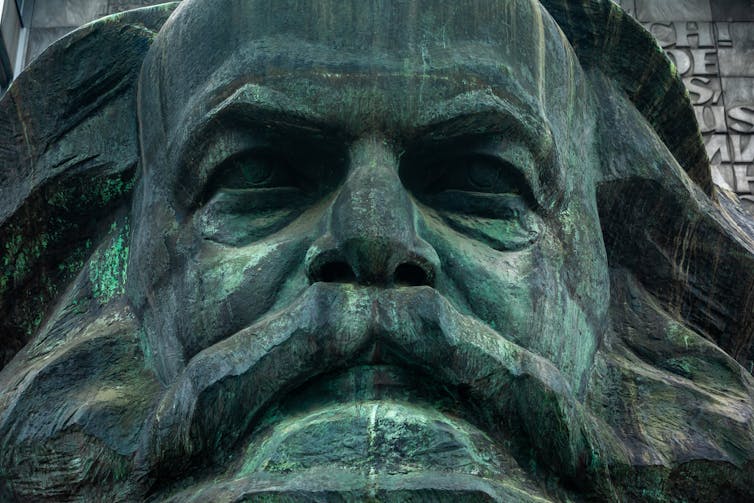
Partial view of Karl Mark bronze statue.
Karl and coercion.
christianthiel.net/Shutterstock

But Friedman actually agreed with Marx that business and morals are difficult to mix. In 1971, he wrote that business executives have only one social responsibility: to make profit for shareholders.

Pursuing any other goal would be spending other people’s money on their own private principles. And in a competitive market, Friedman argued, businesspeople will find that customers and investors can quickly switch to other companies “less scrupulous in exercising their social responsibilities”.

All of this suggests that we cannot expect businesses to do as OpenAI originally promised, and put humanity before shareholder value. Even if it tries, the coercive laws of competition will force it to seek profit.

Friedman and Marx would have further agreed that we need other types of institutions to look after humanity. Though Friedman was mostly sceptical about the state, the AI arms race is precisely the kind of case that even he recognised required government regulation.

For Marx, the solution is more radical: replacing the coercive laws of competition with a more co-operative economic system. And my own research suggests that safeguarding the future of humanity may indeed require some restraining of capitalism , to allow tech workers time to develop safe and ethical technologies together, free from the pressures of the market.

The Conversation

Nikhil Venkatesh does not work for, consult, own shares in or receive funding from any company or organisation that would benefit from this article, and has disclosed no relevant affiliations beyond their academic appointment.

ref. Why OpenAI is a prime example of the ethical limits of capitalism – https://theconversation.com/why-openai-is-a-prime-example-of-the-ethical-limits-of-capitalism-270407