What looks like ‘overdiagnosis’ is really a system struggling to provide continuous care

Source: The Conversation – UK – By Oladayo Bifarin, Senior Lecturer School of Nursing and Advanced Practice, Liverpool John Moores University

UK health secretary Wes Streeting is launching an independent review into rising demand for mental health, ADHD and autism services in England. Fred Duval/Shutterstock

After waiting more than a year to see an NHS specialist, Sam’s assessment for ADHD took less than two hours. It happened over video, involved a short checklist and brief history, and ended with a swift decision.

Within weeks, Sam had a diagnosis, a prescription and a discharge letter back to the GP. But when symptoms worsened and medication side-effects appeared a few months later, no one seemed sure who was responsible for follow-up. As we know from our clinical and research work, stories like this are increasingly common in UK mental health and neurodevelopmental services.

Against this backdrop, the UK health secretary, Wes Streeting, has ordered an expert review of ADHD, autism and mental health diagnoses. Much of the public conversation focuses on overdiagnosis to suggest that normal distress is too quickly labelled as medical illness. Media coverage has linked these concerns to rising benefit claims related to depression, anxiety, autism and ADHD.

The debate is not only about clinical accuracy. It is also about who is considered too sick to work and what that means for the state. Some commentators suggest that people pursue diagnoses for advantages such as disability benefits or workplace adjustments. Critics argue that this framing implies people are gaming the system, rather than asking why so many are struggling in the first place.

While the public debate often focuses on individual motives, health services point to structural strain. NHS data shows record demand and severe pressure on mental health teams. Patients and families report long waits, repeated assessments and referrals that are rejected or misdirected, leaving some people lost in the system altogether.

Streeting’s recent opinion piece in the Guardian captured this tension. He acknowledged that his earlier remarks on overdiagnosis were divisive, and accepted that many people cannot access support when they need it. At the same time, he pointed to a steep rise in referrals for mental health and neurodevelopmental conditions, and argued that the review must uncover what is driving this.

The Centre for Mental Health, an independent UK charity that researches mental health policy and practice, welcomes the review but stresses that evidence already points to a genuine rise in distress linked to poverty, insecure housing, austerity and the pandemic. In a recent statement, its chief executive, Andy Bell, said there had been a clearly rising trend in mental health needs and that he had seen no evidence that mental health problems were being overdiagnosed.

Others argue the debate is misplaced. Miranda Wolpert, director of mental health at Wellcome, argues that the real challenge is not deciding who counts as mentally ill, but how to match different forms of distress to appropriate support. That support might be clinical therapy or medication, but it might also involve housing help, debt advice or peer support.

Professionals have been warning about system design for years. British psychiatry specialists have raised concerns about an overreliance on generic models and a drift away from specialist expertise. Mental health nurses have voiced similar concerns, warning that increasingly broad nurse training risks diluting skills and weakening continuity of care.

Seen in this context, what is often described as overdiagnosis looks more like the predictable outcome of the system itself. NHS care is structured around a sequence of triage, referral, assessment, diagnosis and treatment. People move through brief assessments and short packages of care before being discharged.

This model rewards speed and immediate certainty. It favours quick assessments, clear diagnostic labels and protocol-driven treatments – for example, offering cognitive behavioural therapy or SSRI medication, a common type of antidepressant, when someone scores above a threshold on a questionnaire. This makes planning and auditing easier, but encourages services to treat each case as a short episode that ends abruptly, rather than an evolving set of needs that may require ongoing support.

Diagnosis becomes the main tool for unlocking help. When this is the only mechanism that gives access to medication, therapy or educational support, diagnosis rates rise not because people are exaggerating distress, but because the system leaves them no other route to assistance.

And once an episode of care ends, responsibility is often unclear. Patients are discharged with short letters and must start again if their needs change. Referrals may be rejected because teams are overwhelmed and must focus on people at immediate risk.

Clinicians in primary care face similar pressures. Distress linked to financial strain, workplace problems or bereavement may be recorded as depression or anxiety, because diagnosis allows GPs to prescribe or refer.

Fragmentation across services deepens the problem. Patients are divided between multiple teams, with each handling only part of their needs. Checklists designed for screening rather than diagnosis can become shortcuts. Guidelines on depression, for example, specifically warn against relying on symptom counts alone.

Workforce strain further undermines continuity. In our experience, nurses, psychologists, occupational therapists and social workers often deliver complex care without consistent supervision. Burnout and vacancies weaken the system’s ability to offer stable, ongoing support.

The planned review arrives at a critical moment because its conclusions will shape who receives help and how services are redesigned. Counting diagnoses will not address the underlying issues. Rising rates reflect system pressures more than patient behaviour.

There is a clearer route forward. Research shows that when services are built around separate diagnosis-specific pathways, people can face delays and fragmented care because they are moved between teams that only deal with one part of their needs. Studies instead recommend approaches that focus on a person’s distress and support needs, rather than forcing them into rigid diagnostic categories.

Better coordination across different professions would also help teams spot overlapping issues, such as speech and language difficulties in autism or how ADHD medication might interact with antidepressants.

Shifting the focus away from strict criteria for emergency help would make it easier for people to receive support earlier and avoid preventable crises. A review that looks closely at how referrals work, how digital tools are used, how the workforce is trained and supported, and how continuity of care is maintained would give a more accurate picture of the system’s weaknesses and what needs to change.

The system is not failing because too many people seek help. It is failing because brief, discrete episodes of care cannot manage long-term, complex needs. Until that changes, debates about overdiagnosis will keep obscuring the real issue: building a mental health system that stays with people, instead of processing them and moving on.

The Conversation

Oladayo Bifarin receives funding from National Institute for Health and Care Research. The views expressed in this article are those of the author(s) and not necessarily those of NIHR or the Department of Health and Social Care.

Dan W Joyce receives funding from the National Institute of Health and Social Care Research (NIHR) and the Wellcome Trust.

ref. What looks like ‘overdiagnosis’ is really a system struggling to provide continuous care – https://theconversation.com/what-looks-like-overdiagnosis-is-really-a-system-struggling-to-provide-continuous-care-271667

Why domestic politics keeps complicating the conflict between Thailand and Cambodia

Source: The Conversation – UK – By Petra Alderman, Manager of the Saw Swee Hock Southeast Asia Centre, London School of Economics and Political Science

The border conflict between Thailand and Cambodia, which had previously flared up in July, resumed on December 7. More than 20 people, including four Thai and 11 Cambodian civilians, have reportedly been killed in the resumed hostilities since then. Half a million more people have been evacuated from border areas across both countries.

This comes less than two months after the Thai prime minister, Anutin Charnvirakul, and his Cambodian counterpart, Hun Manet, signed a peace deal on the sidelines of a meeting for the Association of Southeast Asian Nations in Malaysia. The US president, Donald Trump, who helped broker the end of the conflict, called the deal “historic”. So, why are the two countries fighting again?

For Anutin, the peace deal presented a clear domestic challenge as the border conflict had led to an outpouring of ultra-nationalist sentiment. He had recently replaced Paetongtarn Shinawatra as prime minister, after Shinawatra was removed from the premiership for being too conciliatory towards Cambodia.

Anutin rose to power in early September with the support of the progressive People’s party. He agreed to lead a minority government and call a snap election within four months of taking office. Since then, he has worked to maximise his party’s electoral fortunes by courting the powerful military and the more conservative segments of the Thai electorate.

A regional map of Thailand.
Fighting has spread along the border to six provinces in north-eastern Thailand and five provinces in Cambodia’s north and north-west.
PorcupenWorks / Shutterstock

As both of these groups have been buoyed by the conflict, Anutin could not afford to show weakness. He learned that in November when he had to apologise for publicly admitting that Thailand, like Cambodia, had encroached on its neighbour’s territory.

Within weeks of taking power, Anutin upped the nationalist ante by announcing he would put two bilateral memoranda of understanding on the border conflict from the early 2000s to a popular vote. The memoranda commit both countries to working together on demarcating their disputed land and maritime borders. Polling showed that many Thais would back a referendum to suspend them.

Then, on November 10, Anutin fuelled the nationalist fire further by suspending the implementation of the peace deal. He accused Cambodia of laying new land mines in the disputed border area after several Thai soldiers were injured during a routine patrol.

The human tragedy and some compelling evidence aside, this was an opportune moment for Anutin to bolster his nationalist credentials and curry favour with the military. He visited the injured soldiers, wept at their hospital beds, and authorised the military to use their full force to protect Thailand’s sovereignty.

Thailand’s military has never been under full civilian control. However, Anutin’s willingness to let the armed forces deal with the border conflict without exploring further diplomatic options played to a longstanding Thai narrative that depicts the military as the selfless guarantor of the nation. This allowed Anutin to tap into their soaring domestic popularity.

Anutin’s recent mishandling of floods in the southern province of Hat Yai, along with a fresh controversy linking him and other senior government figures to alleged transnational scam criminal Benjamin Mauerberger, added to these domestic calculations.

Anutin’s popularity dropped significantly in the wake of the floods, while his alleged links to Mauerbeger attracted much criticism and undermined his anti-corruption narrative. The escalating border tensions have provided a temporary domestic distraction. But on December 11, just five days into the renewed fighting, Anutin dissolved parliament.

The dissolution was not expected until the end of January, but Anutin faced a possible no-confidence vote over disagreements with the People’s party as to how Thailand’s 2017 military-drafted constitution should be amended. Leading a minority government, Anutin was unlikely to survive the no-confidence vote, so he pulled the plug preemptively.

Cambodia’s distraction tactics

As for Cambodia, Hun Manet is also not immune to domestic pressures. He is dealing with slowing economic growth that is at odds with his developmentalist agenda.

The border conflict has contributed to this but so have US tariffs and decreased investments from China, Cambodia’s largest trading partner and foreign investor. For now, Hun Manet can leverage the rally-around-the-flag effect of the border conflict to distract people from these issues.

Cambodia’s global reputation has also suffered due to its ever-expanding network of scam centres. Recent US and UK sanctions against Chen Zhi, a leading scam industry figure with close links to senior figures within the ruling Cambodian People’s party, have shone more negative light on the regime and have added to the country’s economic woes.

They have also threatened Hun Manet’s domestic anti-corruption narrative. Against this backdrop, Hun Manet may seek to leverage the renewed conflict to repair some of this damage. Cambodia has benefited from internationalising the conflict before.

As a smaller and militarily weaker country, Cambodia has always favoured international mediation of its border disputes with Thailand. This tactic has often paid off. Various rulings by the International Court of Justice have affirmed Cambodia’s ownership of the ancient Preah Vihear temple and its surrounding areas, a site of frequent border clashes with Thailand.

Anutin’s house dissolution complicates the escalating border conflict. As Anutin assumes limited caretaker duties, Thailand prepares for a possibly chaotic snap election within two months. This not only creates a temporary power vacuum that does not bode well for peace, but also provides further incentives for Anutin and conservative-leaning parties to use the conflict as an election mobilisation strategy.

Meanwhile, the Thai military has freedom to deal with the conflict as they see fit. As the humanitarian, economic and reputational costs mount, both countries and their people will lose out from the escalating conflict.

The Conversation

Petra Alderman does not work for, consult, own shares in or receive funding from any company or organisation that would benefit from this article, and has disclosed no relevant affiliations beyond their academic appointment.

ref. Why domestic politics keeps complicating the conflict between Thailand and Cambodia – https://theconversation.com/why-domestic-politics-keeps-complicating-the-conflict-between-thailand-and-cambodia-271660

Why Jane Austen readers still leave letters at her graveside

Source: The Conversation – UK – By Naomi Walker, Associate Lecturer in English Literature, The Open University

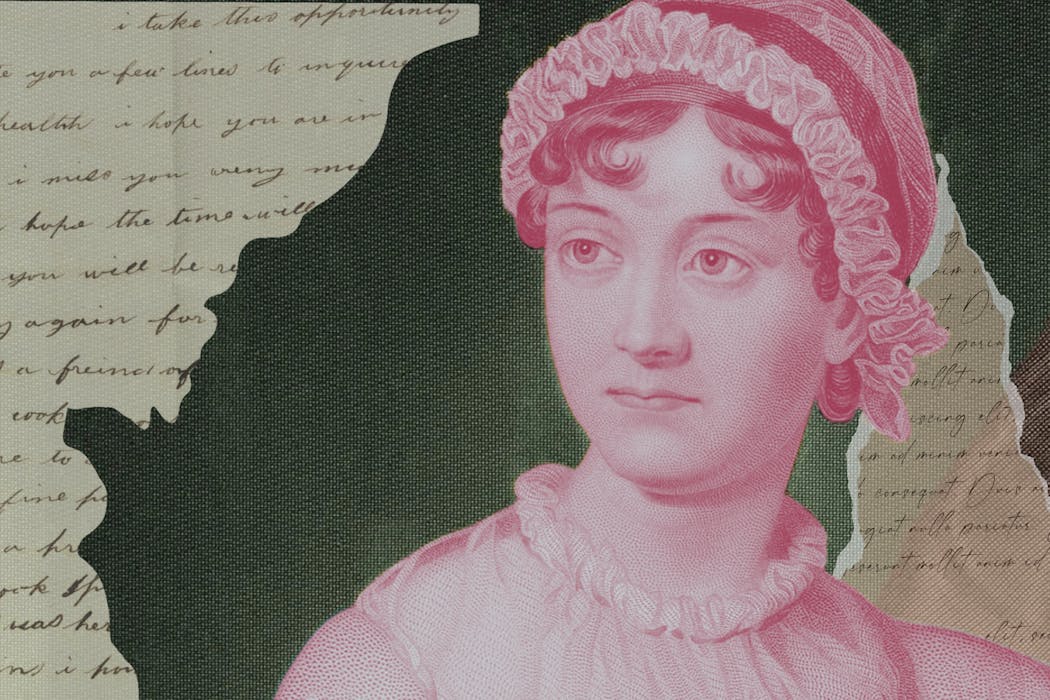
Canva, CC BY

When Jane Austen died in July 1817, aged just 41, she was buried in Winchester Cathedral. I moved to the city in 2025. As a lecturer in English literature, I have long researched and taught Austen’s novels, so I was keen to visit her final resting place.

Austen’s grave bears the words: “The benevolence of her heart, the sweetness of her temper, and the extraordinary endowments of her mind obtained the regard of all who knew her and the warmest love of her intimate connections.”

I was surprised that the epitaph makes no mention of her writing. I was also amazed to discover a basket by her graveside which was overflowing with handwritten letters addressed to Austen.

A quick glance through this correspondence showed me that the penfriends both appreciated her work and sought her advice on their love life. I found it fascinating that people would seek relationship guidance from a woman who not only had died over 200 years ago, but had herself never been married.

While her novels themselves stress the importance of marriage for a young lady at that time, Austen was only engaged to be married for one night, as she retracted her acceptance within 24 hours.

Reading the letters that had been left by Austen’s grave almost felt like an intrusion. Many were very personal and addressed her as a long-lost friend. Some of the letters were poetical and attempted to write in Austen’s own style.


This article is part of a series commemorating the 250th anniversary of Jane Austen’s birth. Despite having published only six books, she is one of the best-known authors in history. These articles explore the legacy and life of this incredible writer.


One letter stated:

I can’t believe I’m right here, in front of you. In this moment I’m thinking about the 10-year-old me, when I discovered books were my passion. You were one of the first authors I started reading and you made me fall in love with books, especially Pride and Prejudice. The wish I want to express now is to become like the girls you described. Each of them gave a contribution to creating my current personality. I just wanted you to know that you have been my comfort place when life was bad to me.

Another poignant letter reflected that: “Long is the reading. Long is the journey in this life.”

Perhaps the very attributes that were emphasised on Austen’s gravestone inspired her readers to seek this “intimate connection” with her, by writing letters which appealed to the “extraordinary endowments of her mind”. The fact that Austen apparently had a “sweetness of temper” and the “warmest love” may have suggested to her fans that she would be a suitable shoulder to cry on – someone who could offer solace and guidance when times were hard.

The letters at Austen's graveside.
The letters at Austen’s graveside.
Naomi Walker, CC BY-SA

Looking through the letters in the cathedral reminded me of reading the surviving correspondence between Austen and her friends and family. She often gave relationship advice in her letters to her nieces, so perhaps it was not so surprising after all that readers would seek similar guidance from her about their own lives.

Austen advised her niece, Fanny Knight, in a letter dated November 30 1814, regarding a marriage proposal that: “I dare not say, ‘determine to accept him.’ The risk is too great for you, unless your own Sentiments prompt it.”

She also pointed out that “I am at present more impressed with the possible Evil that may arise to You from engaging yourself to him – in word or mind – than with anything else.”

Austen proves herself to be a worthy aunt with this straight-talking and forthright relationship advice. With some modernising of the langauge, she could even be mistaken for a present-day agony aunt – her words of wisdom are just as pertinent today as they were then.

The fact that letters are placed by Austen’s resting place in Winchester Cathedral not only establishes a connection between the author and the place where she briefly lived but also shows a continued link between Austen and her readers. In an increasingly technological world, I find this very reassuring as it emphasises the continued power and impact of literature in our lives.


Looking for something good? Cut through the noise with a carefully curated selection of the latest releases, live events and exhibitions, straight to your inbox every fortnight, on Fridays. Sign up here.


The Conversation

Naomi Walker does not work for, consult, own shares in or receive funding from any company or organisation that would benefit from this article, and has disclosed no relevant affiliations beyond their academic appointment.

ref. Why Jane Austen readers still leave letters at her graveside – https://theconversation.com/why-jane-austen-readers-still-leave-letters-at-her-graveside-269752

How traditional Himalayan burning could help prevent mega wildfires

Source: The Conversation – UK – By Kapil Yadav, Postdoctoral Research Associate, Royal Holloway, University of London

Every year during December and January, in the Indian Himalayan state of Uttarakhand, rural communities carry out traditional burning on steep hill slopes to regenerate grass. These carefully timed burns, which take place when fuel stocks are low, are needed to support livestock and, indirectly, agriculture in the region.

Similar practices are observed among Indigenous and traditional groups in other regions, highlighting the importance of controlled burning in supporting livelihoods, maintaining biodiversity, and reducing wildfire risk.

Unfortunately, in Uttarakhand, these winter burning practices for regenerating grass remain misunderstood. They are often wrongly believed to happen in summer and blamed for wildfires, which means their important role in rural life remains overlooked.

Across the world, with wildfires becoming more frequent and intense worldwide, the limitations of a “zero-fire” government policy – which focuses on putting out all fires – are becoming ever more evident. However, recent interdisciplinary research highlights that adapting to climate change (and more wild fires) requires learning to live with fire, rather than attempting to extinguish it in every instance.

So there is renewed attention on Indigenous and traditional burning practices and how they can complement prescribed burning practices implemented by the state agencies. Controlled use of fire, which was once discouraged, is now cautiously reconsidered as a necessary tool for reducing the risk of mega wildfires.

My research examines these approaches to living with fire in the Uttarkashi district of the Uttarakhand Himalayas, where both officials and communities conduct controlled burning. It highlights that these different approaches differ in their social and environmental objectives, and community-led burning practices offer lessons for others.

At first glance, the fires lit by state agencies and those set by rural communities may appear similar in their timing and intensity: both are low-intensity burns conducted during winter months and remain confined to small areas. However, they differ in purpose and what they achieve.

For state agencies, prescribed burning is primarily a fire-prevention measure. The goal is to reduce inflammable material on the ground that could fuel wildfires in the summer. In this approach, the forest is valued primarily for its trees and carbon sequestration (the capturing, removal and permanent storage of CO₂ from the earth’s atmosphere), while the needs of local communities are given less importance. Moreover, these prescribed burning practices remain poorly implemented.

On the other hand, communities value forests more broadly and see forests as a site for both grass and trees. They emphasise that winter burns are crucial to sustaining grass. Without them, trees and unwanted shrubs spread, leaving less grass available for fodder.

When to set fires

Beena, a community member, explained to me why summer is not the right time for traditional burning: “Fires set during summer can damage the grass roots with their high intensity. This is not what we want. Also, there is a higher risk of fire spreading out of control.”

This careful use of fire by communities ensures the care of grass, which in turn sustains livestock. Manju Devi, another community member, explained the need for fire in traditional livelihoods: “If there is no fire, there is no grass. If there is no grass, what will our animals eat?” Livestock across Uttarakhand remains central, meeting domestic nutrition needs, supporting agriculture and generating income from the sale of milk and butter.

The use of fire also becomes part of supporting a wider web of relationships with the surrounding landscape. Mansukh, another community member, said that winter burning also supports nesting grounds for pheasant species, and as refuges and grazing grounds for young deer fawns. These traditional burns improve forage quality for deer and maintain the open grassy slope habitats of ground-nesting birds by limiting shrub and tree growth.

These findings suggest that while both community-led burning and state-led burning reduce wildfire risk, the former also sustains livelihoods, biodiversity, and a broader, more caring relationship with the forest.

Lessons from rural communities

It’s important to view the Himalayas as a living landscape, shaped by communities over centuries, rather than as pristine wilderness. Currently, only state agencies are legally permitted to conduct burns in Uttarakhand, a legacy of colonial-period forest legislation.

It is essential to value Indigenous and traditional fire knowledge, both in Uttarakhand and beyond. Often, communities are unfairly blamed for wildfires, and their knowledge is overlooked. When burning is done in secret due to stigma, the risk of accidental fires increases. The Indigenous and rural communities possess valuable solutions for managing wildfire risk. What is needed now is greater recognition of their experience and expertise.

The Conversation

Kapil Yadav receives funding from the National Geographic Society.

ref. How traditional Himalayan burning could help prevent mega wildfires – https://theconversation.com/how-traditional-himalayan-burning-could-help-prevent-mega-wildfires-268807

Rumours about replacing Keir Starmer overlook several important polling details

Source: The Conversation – UK – By Hannah Bunting, Senior Lecturer in Quantitative British Politics and Co-director of The Elections Centre, University of Exeter

Flickr/Number 10, CC BY-NC-ND

A prime minister who led a party to win 412 seats in an election held only 18 months ago might be expected to have the full support of his party and the public throughout the entire term of government. Yet rumours continue to swirl about Keir Starmer’s position.

The next general election isn’t scheduled until 2029, so why is there already so much speculation about Starmer potentially being replaced?

It’s well known in Westminster that there’s an optimum majority size – big enough to pass legislation easily, but not so big that you can’t keep everyone in the party moderately happy. Having 404 MPs (as it currently stands) means it is difficult to run a tight ship. Labour is also a broad church, so different factions will try to capitalise when policy decisions don’t go their way.

A prime example are the 49 Labour MPs who rebelled to vote against the government’s welfare bill in July and were suspended from the party as a result. This type of whip-defying rebellion is often seen with large majorities, partly because it’s not as costly for an MP’s party when they abstain or vote with their constituency – the vote will likely go through anyway.

But this kind of action by a vocal minority can exaggerate a feeling of disquiet. And during Starmer’s government, we’ve already seen an entire new political party established by one of the MPs he suspended.

Adding another layer are those who have leadership ambitions, such as health secretary Wes Streeting. Members of the parliamentary Labour party will speak to each other and these potential candidates about their aspirations. It only takes a few names and a handful of rebellions to rustle up rumours that someone else could do the top job better.

Lots of seats, not much public support

Labour won what has been called a “loveless landslide” in 2024 on just 34.6% of the vote in Great Britain. The low turnout meant that 40% of people didn’t vote, and nearly two-thirds of those who did opted for a party other than Labour. Though the electoral system delivered a large majority, it was always more precarious than the seat total made it look.

Some evidence suggests public support may have weakened further. The proportion of people who say the PM is doing badly has increased 33 percentage points since August 2024. The proportion of those saying he’s doing well has more than halved, from 36% to 15%. And people are becoming more certain about this opinion – in the early days after the election, a fifth of people said “don’t know” in this polling, whereas now that’s just 9%.

This comes against a backdrop of polling that reflects both fragmentation and uncertainty. The latest YouGov poll, commissioned by The Times and Sky News, shows Reform in the lead but still on just 26% – a very low figure for a party on top.

Labour is trailing at 19% and equal to the Conservatives. The Green party, newly led by Zack Polanski, is on 16% and the Liberal Democrats are on 14%. Among five parties, there’s only 12 points between the one polling highest and the one polling lowest.

The public is not congregating around one or even two parties. And importantly, the proportion of people who say they don’t know who they’ll vote for is high, at 14%.

The rate of uncertainty is highest for those who voted Labour in 2024 (19%) and lowest for those who voted for the Greens or Reform (6% and 7% respectively). This tells us that many people could still opt for Labour in a general election, but the traditionally smaller parties have more stable support. And also that the undecided 14% could change everything if a general election really were held tomorrow.

Despite all this, the conversation around voter uncertainty is rarely mentioned in headlines and rumours, so it looks like Starmer’s Labour government is doing very badly, and that Reform is a key challenger. This too can artificially inflate the sense that something needs to change.

Elections ahead

Away from speculative polling, there have been real votes cast since Labour came to office – in the 2025 local elections and in council byelections. Both Labour and the Conservatives dropped councillors in these contests, while Reform has been the main beneficiary along with the Liberal Democrats and Greens. This follows a trend from the previous few years – smaller parties and independents have been steadily gaining, while Labour and the Conservatives have been declining.


Read more:
UK local elections delivered record-breaking fragmentation of the vote


The councils up for election in 2025 were largely in Conservative-heavy areas. Those coming up next May are geographically challenging for Labour. There are at least 72 councils, including all 32 London boroughs, up for reelection and around two-thirds are being defended by Labour. If Reform continues its recent byelection successes and eats into Labour territory, it will give more credence to its challenger status.

That elections are also taking place in Scotland and Wales for devolved parliaments means Labour is facing a nationwide test. Poll ratings suggest the party will perform badly in both countries.

A big set of losses will be interpreted as a sign Starmer’s government is failing, even though the elections are likely to be low-turnout contests that actually represent the public’s continued diversity of opinions.

It’s expected that the Greens will also do fairly well, meaning Labour could be fending off opposition from both ends of the ideological spectrum. We may then see some Labour MPs calling for a leftward shift, and others for a move to the right. Those calling to stay the course will be the quietest.

There’s no denying Labour’s time in office has been difficult. But there have been successes too – notably, delivering on workers’ rights, housing and NHS appointment numbers. But a diverse and uncertain electorate, plus a large majority of MPs to satisfy, makes Labour’s job very difficult.

If the local elections go as expected, somebody could make a leadership challenge. But at the moment, it may be better the devil they know than face greater uncertainty under a new leader.

The Conversation

Hannah Bunting receives funding from the Economic and Social Research Council (ESRC).

ref. Rumours about replacing Keir Starmer overlook several important polling details – https://theconversation.com/rumours-about-replacing-keir-starmer-overlook-several-important-polling-details-271825

The UAE is leaving Saudi Arabia squeezed in Yemen

Source: The Conversation – UK – By Andreas Krieg, Associate Professor, Defence Studies Department, King’s College London

Fighters aligned with the Southern Transitional Council (STC), a separatist group in southern Yemen, raised their flags in the provinces of Hadramout and Marah in early December. The seizures mean the STC now controls all eight of the provinces that make up the south of the country.

The new status quo looks like a fait accompli for the creation of a separate southern state. It has left Yemen’s internationally recognised government, the Presidential Leadership Council (PLC), squeezed between a pole in the south and a state run by the Iran-backed Houthi militia in the north.

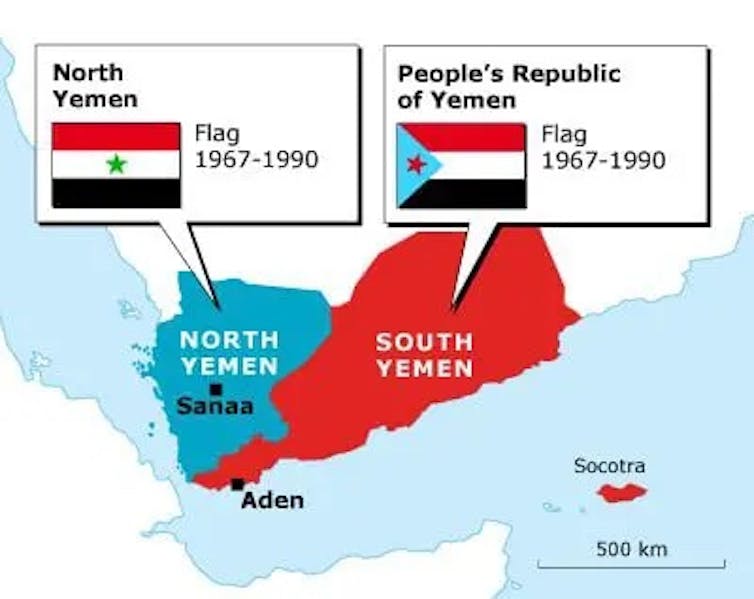
The STC taps into memories of the People’s Democratic Republic of Yemen which, until 1990, gave southerners their own state. Yemen’s 1990 unification produced one flag, but many people in the south never felt they joined a shared political project.

These grievances led to a brief civil war in 1994. This war ended with northern victory, purges of southern officers and civil servants, and what many in the south still describe as an occupation rather than integration.

A map showing North Yemen and South Yemen before unification.
Yemen unified in 1990, with Sana’a as its capital.
FANACK, CC BY-NC-ND

By the mid-2000s, retired officers and dismissed civil servants in the south were marching for pensions and basic rights. Those protests turned into al-Hirak al-Janoubi, a loose southern movement running from reformists to hardline secessionists.

And when the 2015 Saudi-led intervention began against the Houthis, which had seized the Yemeni capital of Sana’a the previous year, southern fighters were folded into a campaign to restore a “national” government that had never addressed their grievances.

The STC was formed in 2017 to try and give this crowded field in the south a recognisable leadership. It has a formal president, Aidarus al-Zubaidi, and councils. But in practice it sits at the centre of a web of armed units, tribal groups and businessmen.

Through sustained financial and material backing for the southern armed groups, the United Arab Emirates (UAE) emerged as the midwife of the organisation’s creation. Against the backdrop of widespread failed governance in Yemen, the STC project seems to deliver relatively well on security and public services.

In April 2022, several years after the STC’s formation, the PLC was created to unite the forces fighting the Houthis. Yemen’s Saudi Arabia-based president, Abd-Rabbu Mansour Hadi, resigned and handed his powers over to an eight-member body backed by Riyadh.

The PLC was designed to bridge the various tribal, ideological and political divides in the country. It also aimed to create a platform to coordinate governance and statecraft with a view to engaging the Houthis through diplomacy.

But as it mixes northern and southern leaders, including those from the STC, the PLC has never emerged as a viable hub to merge competing agendas. The inability of the PLC to deliver on its promise to consolidate governance across Yemen has incrementally eaten away at its legitimacy.

A Gulf proxy war

Yemen has turned into a quiet scorecard for two Gulf projects. Saudi Arabia intervened to defeat the Houthis, rescue a unified Yemeni state and secure its own borders. The UAE went in to secure reliable partners, access to ports and sea lanes and control of resources as part of its regional policy.

A glimpse at a map of Yemen today shows it is the UAE whose vision seems to have been realised. Through the STC and a web of allied units, the UAE has helped stitch together a power base that runs across nearly all of former South Yemen. STC-aligned forces hold the city of Aden, sit on much of Yemen’s limited oil production and control long stretches of the Arabian and Red Sea coasts.

Control of terrain in Yemen

A map showing control of terrain in Yemen.
Pink or blue shaded areas depict territory controlled by the PLC or allied forces, yellow or orange depict territory controlled by the STC or allied forces, green depicts areas controlled by the Houthis.
NordNordWest / Wikimedia Commons, CC BY-NC-SA

Key national infrastructure in southern Yemen is now guarded by men whose salaries, media platforms and external ties flow through Abu Dhabi. In return, the UAE enjoys a loyal surrogate on the Gulf of Aden and the approaches to the Bab al-Mandab strait. Saudi Arabia, by contrast, has been left propping up a fragile PLC.

The Houthis remain the nominal enemy for everyone. But, in reality, UAE-aligned units have poured more bandwidth into sidelining Saudi-backed rivals in southern Yemen than engaging the insurgent-turned-state in the north. The UAE now holds leverage over Yemen’s crown jewels in the south, while Saudi Arabia shoulders the burden of the narrative of a “united Yemen” with few dependable allies inside the country.

Two-and-a-half Yemens

For decades, neighbours Saudi Arabia and Oman as well as most foreign capitals have sworn by a single Yemeni state. The UAE-backed STC project cuts directly across that line, with an entrenched southern order making a formal split far more likely.

If Yemen is carved in two, the Houthi structure in the north does not evaporate; it gains borders, time and eventually a stronger claim to recognition. That would cement a heavily armed ideological authority at the mouth of the Red Sea, tied to Tehran and Hezbollah and ruling over a population drained by war and economic collapse.

Yet, confronted with the multilayered network created by Iran and the UAE in Yemen, Saudi Arabia has few cards to play. It may eventually be forced to concede to a UAE-backed government-in-waiting in the south while the north settles into Houthi rule and territory held by the PLC gets increasingly squeezed.

Oman keeps arguing for a shared table that brings all parties – including the Houthis – into one system. But every new southern flag raised undercuts that goal. For outside powers, a southern client that keeps ports open and hunts Islamist militants is tempting.

The price is to freeze northern Yemen as a grey zone: heavily armed, ideologically rigid and wired into regional confrontation. That outcome cuts against the very unity project Saudi Arabia and Oman have endorsed for years. What is left today are two-and-a-half Yemens – with the half, territory administered by the PLC, looking the least sustainable moving forward.

The Conversation

Andreas Krieg does not work for, consult, own shares in or receive funding from any company or organisation that would benefit from this article, and has disclosed no relevant affiliations beyond their academic appointment.

ref. The UAE is leaving Saudi Arabia squeezed in Yemen – https://theconversation.com/the-uae-is-leaving-saudi-arabia-squeezed-in-yemen-271777

Cities aren’t built for older people – our study shows many can’t walk fast enough to beat a pedestrian crossing

Source: The Conversation – UK – By Max Western, Associate Professor of Behavioural Science, Co-Director, Centre for Motivation and Behaviour Change, University of Bath

Multishooter/Shutterstock

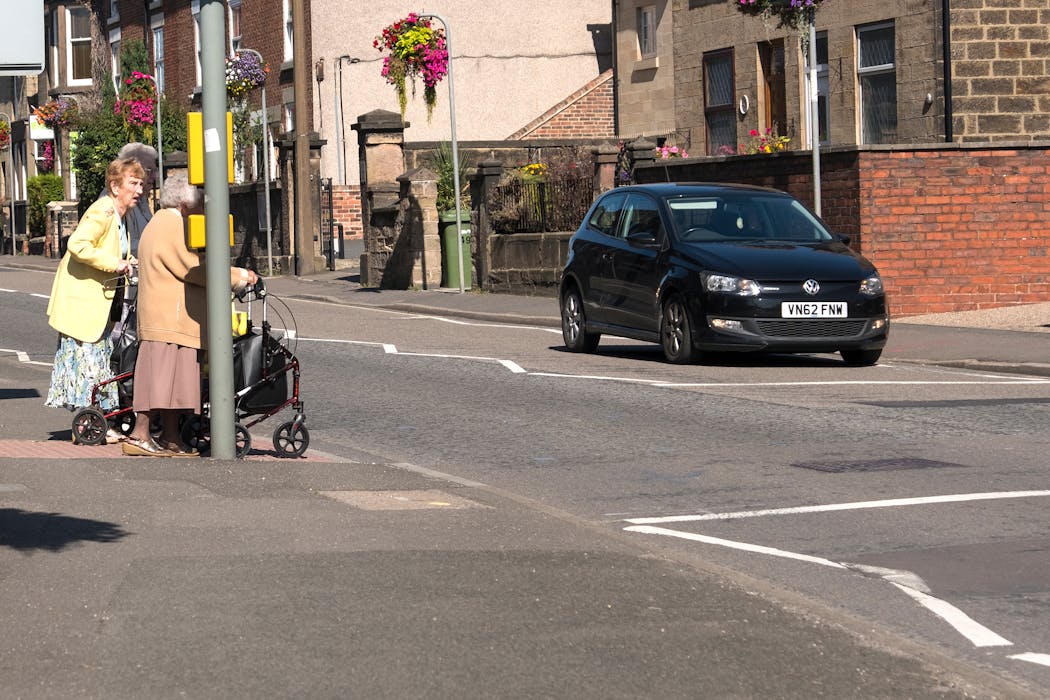
To many people, crossing a road at a traffic light is a mundane task requiring little thought or effort. But for the growing population of senior citizens with limitations to their mobility, strength or balance, crossing the road can be a stressful and sometimes life-threatening experience.

The reason? Cities simply aren’t designed for older people and others with restricted mobility – as our latest research demonstrates. We found that only 1.5% of the older people with reduced mobility in our study – just 17 out of 1,110 participants who had an average age of 77 – could cross the road faster than the 1.2 metres per second walking speed that is programmed into many UK pedestrian crossings.

They told us how “hurried”, “rushed” and “unsafe” they felt being out and about in a city. All lived independently across seven English cities: Bristol, Bath, Birmingham, Cardiff, Exeter, Manchester and Stoke.

Our latest study is part of our community-led active ageing programmes, designed to help adults over 65 with reduced mobility to improve their physical function. From the outset, we were struck by just how slowly many of the people we met walked. The task of trying to time them move four metres from a standing start with a stopwatch could be rather uncomfortable, such was the struggle of walking for some.

To test what this meant when they were faced with crossing the road at a pedestrian crossing, we made a simple comparison between the speed (1.2m/s) programmed into “standard” UK pedestrian crossings and the participants’ normal walking speed. While their average speed was significantly slower at 0.77m/s, many of our participants with reduced mobility were much slower than that – meaning they had no chance of crossing the road safely within the time allowed.

In fact, the majority would have needed to walk nearly twice as fast as their comfortable walking speed to cross a road without significant risk.

Distribution of walking speeds of older adults with limited mobility:

Chart showing walking speeds in metres per second for a total of 1,110 participants.
Walking speeds in metres per second for a total of 1,110 participants. Only 17 could walk faster than the standard UK pedestrian crossing setting.
Max Western/Centre for Motivation and Behaviour Change, CC BY-NC-SA

As many of our participants told us, this mismatch between urban design and the capabilities of the growing ageing population can have catastrophic consequences.

First, there is a risk that a failure to take account of inadequate mobility in street features such as pedestrian crossings lowers confidence in older people for staying active and walking outdoors. This often leads to further reductions in physical function and greater social isolation.

Second, those who do keep walking around their local town or city can feel rushed. This places them at risk of a fall when they cross roads quicker than feels comfortable – made worse by wet or windy conditions.

A fall in older adults increases the likelihood of disability and the need for hospital care. It can have a significant impact on life expectancy.

How to make cities truly age-friendly

Pedestrian crossings are one of many features of towns and cities that can affect the physical activity of a mobility-limited older population. In reviewing determinants of physical activity in older adults, we found that the aesthetic quality of the environment, a reduction in noise and air pollution, and the availability of places to rest were all aspects that can lead to greater walkability.

The Centre for Urban Wellbeing has partnered with older adults and local communities and companies to explore how Birmingham, the UK’s second-largest city, can better support its ageing population and move closer to becoming truly age-friendly.

Graphic of an urban pedestrian crossing.
Graphic from Active Travel England’s report: Critical safety issues for walking, wheeling and cycling (November 2025).
Active Travel England

Our research has highlighted the critical role of accessible infrastructure – well-maintained pavements, ramps, benches and public toilets make a big difference. Just as important are safe, welcoming spaces such as parks, gardens, and community hubs that encourage social connection and active living.

Much of our effort to improve quality of life in later years has centred on improving, or at least slowing the decline in, physical function and mobility. The benefits go beyond personal wellbeing: they translate into significant savings for the NHS and social care, largely through reduced hospital admissions.

But for these gains to last, older people need more than exercise programmes. They need safe, inviting communities that motivate them to get out and about. Walking to local destinations is one of the simplest ways to boost daily activity – yet it depends on environments that feel secure and accessible.

To be fair, there is some variability in the way pedestrian crossings work. Some wealthier districts have crossings with sensors that will hold traffic before a road is cleared of walkers.

Other use countdown timers to give some indication of how long a pedestrian has to cross, aiding a judgement on when to start their crossing of a road. But one thing that seems to be consistent is that green signals are programmed based on an assumed walking speed of 1.2 metres per second, which is clearly inappropriate for many people.

The onus should not rest on individuals with reduced mobility to keep pace in a fast-moving world. Rather, we urge cities to prioritise urban design that puts pedestrians first – creating environments that enable physical activity, especially among vulnerable groups.

When it comes to road crossings, simple measures such as extending green signal times at locations frequently used by older adults could make a big difference.

The Conversation

The authors do not work for, consult, own shares in or receive funding from any company or organisation that would benefit from this article, and have disclosed no relevant affiliations beyond their academic appointment.

ref. Cities aren’t built for older people – our study shows many can’t walk fast enough to beat a pedestrian crossing – https://theconversation.com/cities-arent-built-for-older-people-our-study-shows-many-cant-walk-fast-enough-to-beat-a-pedestrian-crossing-271874

Stakeknife: should the British government reveal the real name of its top IRA informer?

Source: The Conversation – UK – By Samantha Newbery, Reader in International Security, University of Salford

Of the countless people who provided intelligence to help the British state fight terrorism during the Troubles in Northern Ireland (1968-98), Agent Stakeknife was the best known. He had a reputation for having been involved in the most violent offences as a member of the IRA while simultaneously providing the British Army with intelligence.

While the identities of many of the informers who provided intelligence of this kind remain unknown, agent Stakeknife’s alleged identity as a man called Freddie Scappaticci was first made public in 2003.

The final report of a lengthy independent investigation into this case is now calling for the UK government to confirm Stakeknife’s identity. Operation Kenova, set up by the Police Service of Northern Ireland, found that Stakeknife was named as a suspect in dozens of crimes, including murders.

Although he denied it up until his death in 2023, Scappaticci is widely believed to have provided intelligence to the British Army from the late 1970s into the 1990s. Throughout this time he was also an active member of the IRA, something his handlers in the British Army – the people he reported to – were well aware of.

Agent Stakeknife was able to provide intelligence on the IRA’s members and activities across Northern Ireland. He was privy to a huge amount of sensitive information because he was part of – and may even have led – the IRA’s “nutting squad”. This unit’s aim was to find suspected informers within the IRA and punish or even kill them. Yet he himself was an informer.

The nutting squad has been described as being “like an electrical junction box through which every wire must flow”. It gave Stakeknife access to people and information across the IRA, making him particularly useful to the British Army.

But in this role, he was suspected of being involved in multiple counts of conspiracy to murder, conspiracy to unlawfully imprison and other potential charges in connection with the abduction, interrogation, torture and murder of people suspected, wrongly or rightly, of being informants.

Arguments for and against naming informers

Without the final piece of information on Stakeknife’s identity, the families of those who died feel they are not getting the whole truth.

Since Scappaticci’s death, there has been no attempt to refute claims he was Agent Stakeknife. While alive, a peer named him in the House of Lords as Stakeknife – a claim that was quickly retracted.

Scappaticci was never charged or convicted with any Troubles-related offences and now never will. Civil action is likely to continue, however. The High Court’s highly unusual ruling that Scappaticci’s will should be sealed rather than made public is likely to be challenged.

The Kenova investigators argued strongly that agent Stakeknife’s identity should be revealed. While they don’t confirm their belief that Stakeknife is Scappaticci, they do list the extensive list of reasons that have left many others thinking he was. Naming Stakeknife, they argue, is essential for victims and families, public discussion and debate, media freedom, open justice and public confidence in state authorities and the criminal justice system.

The British government has long maintained a policy regarding informers known as “neither confirm nor deny”. This protects informers’ lives as well as ensuring the government can continue to access intelligence that could save other lives.

Confirming that a particular individual is, or has been, an informer puts that person at risk of being killed by their associates to deter potential future informers and as a punishment. While Scappaticci is dead, others are still alive.

Naming informers also demonstrates to anyone considering becoming an informer that they may not be protected by whichever state organisation they come to work for, whether that be the police, the army or intelligence agencies such as MI5. This therefore reduces their chances of coming forward to provide intelligence.

On the other hand, to deny that Scappaticci or anyone else was an informer would create a situation where if someone else was later alleged to be an informer, if the government did not issue a denial for them, they would be assumed to be an informer. So while there is no harm to Scappaticci in either scenario, others could be put at risk.

Although this nine-year investigation has delivered some new nuggets of information about Agent Stakeknife, it is no surprise that there is disappointment from some quarters that the government still refuses to name Agent Stakeknife. This situation demonstrates the sometimes competing needs of truth, justice, accountability and intelligence work.

The Conversation

Samantha Newbery does not work for, consult, own shares in or receive funding from any company or organisation that would benefit from this article, and has disclosed no relevant affiliations beyond their academic appointment.

ref. Stakeknife: should the British government reveal the real name of its top IRA informer? – https://theconversation.com/stakeknife-should-the-british-government-reveal-the-real-name-of-its-top-ira-informer-271699

One sperm donor fathered 200 children and passed on a deadly mutation – and it could easily happen again

Source: The Conversation – UK – By Nicky Hudson, Professor of Medical Sociology, De Montfort University

Billion Photos/Shutterstock

Around 200 children in several countries were conceived with sperm from a single donor who unknowingly carried a rare genetic mutation linked to early onset cancers, it has been revealed. The consequences have been devastating. Several children have already died and many families across Europe are now facing a risk they never expected.

The case has prompted urgent questions. How was one donor used so widely? Why did standard safeguards fail to identify a mutation that can have such severe consequences? And how did a system created to create families allow a tragedy of this scale?

When someone donates sperm or eggs they are screened for a set of common inherited conditions before being accepted by a clinic. The exact process varies by country and it has limitations. Screening depends heavily on accurate family history, yet many people have incomplete information about their relatives.

Some conditions emerge later in adulthood, which means a young donor may appear healthy. Clinics also focus primarily on established, higher frequency conditions rather than the vast number of rare variants that exist.

Ordinarily, donors complete a detailed questionnaire covering their medical background and their family’s health history. If the information suggests a possible inherited risk, the donor may be offered further testing or, more commonly, they may be declined.

More recently, clinics have begun to use expanded genetic screening. These tests can examine hundreds of genes linked to childhood or early adulthood conditions.

However, the technology is still developing and cannot detect every possible disease-causing variant. Many rare mutations are not part of routine panels, either because they have only recently been identified or because the evidence base is still small.

That context matters in this case. The donor had no family history of the condition and showed no symptoms. A person can carry a harmful mutation without being affected themselves, so nothing in his medical history raised concerns. The newer, broader screening was not used, but even if it had been, the variant is so rare that it may not have been included or detectable.

The donor provided sperm to the European Sperm Bank in Denmark for around 17 years. His donations were used to create roughly 200 children across multiple European countries, although experts say the true number could be higher.

This scale was possible because there is no international law limiting how widely donor sperm can be distributed. Many countries have rules on how many families can be created from a single donor.

The United Kingdom, for instance, permits no more than ten families. These limits, however, apply only within national borders. A donor can be used in several countries without any system to flag that the overall number has far exceeded what any one country would allow.

A recent unrelated case showed how extreme this can become. A different donor was found to have fathered around 1,000 children in several countries. There were no known health issues in that situation, but it revealed how donor use can expand rapidly without oversight.

The challenges in the current case are profound. Families are dealing with grief and uncertainty. Some have lost children. Others face a very high likelihood that their child will develop cancer before the age of 60, often in infancy or childhood.

There has been little public discussion about the sperm donor himself, although the emotional impact of learning these outcomes is likely to be significant.

Because the mutation was so rare, additional routine testing would probably not have prevented what happened. In truth, every person carries some genetic variants that remain undetected and harmless in everyday life.

There have been earlier examples of donors unknowingly passing on inherited conditions, such as cystic fibrosis or fragile X syndrome, but those cases typically involved far fewer families. What makes this case stand out is the sheer number of children affected.

For this reason, simply calling for more screening is unlikely to be the full answer. The more pressing issue is the lack of limits and monitoring on how many families can be created from one donor across borders.

In this case, families were created in several countries and in some places even the national limits were breached. Belgium, for example, permits only six families per donor, yet reports indicate that about 38 families were created.

What is needed is a robust system for tracking and tracing donor use both within and between countries. Without coordinated oversight, national limits are easily bypassed. Establishing international upper limits will be difficult and politically complex, but the conversation has to begin if further tragedies are to be prevented.

As more people use commercial DNA testing to find donor relatives, large networks of siblings connected across countries are becoming increasingly visible. The implications for those families are significant. A coordinated global approach is overdue and would help prevent another case like this one, where families are left facing consequences they could never have foreseen.

The Conversation

Nicky Hudson receives funding from the Economic and Social Research Council on expanded carrier screening and gamete donation (reference: ES/W012456/1, ES/N010604/1, ES/V002430/1. She is a member of the NICE Guideline Committee on Fertility and a member of the British Fertility Society’s Law Policy and Ethics Special Interest Group.

ref. One sperm donor fathered 200 children and passed on a deadly mutation – and it could easily happen again – https://theconversation.com/one-sperm-donor-fathered-200-children-and-passed-on-a-deadly-mutation-and-it-could-easily-happen-again-271856

Eleanor the Great: a tonally uncertain Holocaust drama with a wonderful central performance

Source: The Conversation – UK – By Matt Jacobsen, Senior Lecturer in Film History in the School of Society and Environment, Queen Mary University of London

Despite a wonderful central performance from June Squibb, Scarlett Johansson’s directorial debut is a sentimental, tonally uncertain drama about grief and holocaust survival

Eleanor Morgenstein, a 94-year-old Midwesterner living in Florida, moves to New York after the death of her close friend and roommate Bessie, a Holocaust survivor. She joins a Jewish seniors group and accidentally finds herself part of a meeting of Holocaust survivors.

Eleanor, at first buoyed by the prospect of new friends, fabricates past experiences based on the Bessie’s stories, claiming harrowing recollections as her own.

Nina (Erin Kellyman), a journalism student writing a piece on Holocaust survivors, attends the meetings and is moved by Eleanor’s stories. Having recently lost her mother she connects with Eleanor through shared grief.

Eleanor starts out with ambiguously good intentions of preserving the memory of a dear friend. However, she is soon out of her depth when Nina’s article is taken up by Nina’s news anchor father (Chiwetel Ejiofor) as a human interest story for his show.

Early in the film, a comic exchange in a supermarket aisle telegraphs the film’s central theme. An acquaintance in his 90s tells Eleanor crossly: “You were born in New York. You can’t feel bad about the Holocaust. You weren’t there.”

The film wants to probe the ways in which grief is processed individually and collectively, asking us to consider what drives Eleanor to appropriate her friend’s traumatic life history.

At the centre of the film is the wonderful performance by Squibb, then 94 but now 96, who had a sturdy but unspectacular stage and screen career for more than 60 years before her breakthrough performance in Alexander Payne’s superb Nebraska in 2013.

Eleanor the Great is not a film specifically concerned with ageing and we are not so conscious of the vivacious Squibb’s age until a care home subplot is shoehorned in.

Scarlett Johansson was motivated to direct this film after her own investigations into her family’s history of Holocaust survival. She may have the highest grossing body of work in Hollywood for action films like The Avengers series, but she has a considerable track record of excellent low key independent films – from her breakthrough in Ghost World to Noam Baumbach’s powerful Marriage Story. Eleanor the Great most clearly takes its inspiration from that kind of American character drama.

There is little technical flair or stylistic character to distinguish Johansson as a director in this first feature. The gently sentimental scenes of New York City, its diners, crosswalks and ranks of yellow taxis are clearly inspired by the work of Baumbach as well as Woody Allen, Johansson’s director in two films (Vicky Cristina Barcelona, Match Point).

The film is at its strongest in the Allen-esque day-to-day moments in the city that let Squibb embody her character with gentle acidity and likeable crankiness. Johansson, like many actors-turned-directors, has a strength when it comes to allowing performers space to breathe and inhabit their characters. Scenes unfold quietly and unhurriedly.

The script, by Tory Kamen, could be wittier, sharper and more engaging, as there is a promise in character interactions that never quite take flight. When the film reaches what should be its narrative peak with the unravelling of Eleanor’s fabrications it is neither emotional nor funny.

Instead the climax’s tone is uncertain, sentimental and lands flat. What follows is a series of fraught conversations where the actors gamely try to mine emotional heft from a dreary screenplay.

The cultural memory of the Holocaust and the enormity of its legacy on Jewish descendants has been probed with considerably more success elsewhere. Jesse Eisenberg’s impressive, Bafta-winning and Oscar-nominated A Real Pain featured a pair of cousins on a tour of Jewish Poland, confronting its young characters with the memory of the Holocaust.

That film takes a well-executed midway tonal turn from broad character comedy to unexpected powerful poignancy. This happens in a scene where the usually motor-mouthed, bickering men are silenced in the face of a visit to the Majdanek concentration camp. Eleanor the Great doesn’t possess a moment like this that would drive its well-intentioned message home.

The film attempts to sidestep the callousness of Eleanor’s appropriation of Bessie’s stories by switching to flashbacks. In these memories we see Eleanor hear these stories for the first time in the middle of a sleepless night. These scenes, where the words come directly from Bessie, are well acted and moving, especially in a longer, emotional monologue towards the film’s climax.

When the film’s attention turns in the final third to the issue of whether Eleanor should be placed in a retirement home, the tone similarly skirts between humour and pathos – neither of which connect.

The film has admirable intentions but its script and plotting are not worthy of the excellent performance at the film’s heart. It also can’t quite bear the seriousness or the potential power of its central themes, leading to a disappointingly hollow experience.


Looking for something good? Cut through the noise with a carefully curated selection of the latest releases, live events and exhibitions, straight to your inbox every fortnight, on Fridays. Sign up here.


The Conversation

Matt Jacobsen does not work for, consult, own shares in or receive funding from any company or organisation that would benefit from this article, and has disclosed no relevant affiliations beyond their academic appointment.

ref. Eleanor the Great: a tonally uncertain Holocaust drama with a wonderful central performance – https://theconversation.com/eleanor-the-great-a-tonally-uncertain-holocaust-drama-with-a-wonderful-central-performance-271895