The near-extinction of rhinos is at risk of being normalised

Source: The Conversation – UK – By Jason Gilchrist, Lecturer in the School of Applied Sciences, Edinburgh Napier University

Even the most stable rhino populations are isolated and at risk from inbreeding. Vaclav Sebek / shutterstock

A century ago, half a million rhinos roamed Africa and Asia. Today, just 27,000 remain.

The latest annual State Of The Rhino report, released this week by the International Rhino Foundation, shows no dramatic declines in population numbers in the past year. On the surface, this might seem like good news: after decades of poaching, habitat loss and trafficking, rhino numbers are holding steady.

But that stability masks something darker. We may be falling victim to what conservation scientists call “shifting baseline syndrome”, where our expectations deteriorate over time as conditions get worse. Accepting 27,000 as a new normal – something to be celebrated, even – could spell disaster for the long-term future of the rhino.

The report tracks population estimates, threats and conservation progress for all five rhino species:

In Africa, black rhinos numbers have risen slightly to 6,788 (from 6,195), a welcome recovery from the 1990s when they plummeted to just 2,300. But as recently as 1960 there were more than 100,000. White rhinos, the most numerous species, fell to 15,752 (from 17,464). This continues a long-term decline, despite continued efforts to reduce poaching.

In Asia, greater one-horned rhino edged up to 4,075 (from 4,014), but the number of Sumataran rhinos remains perilously low at between 34 and 47, while Javan rhinos have crashed to 50 down from 76 due to illegal hunting.

The report also highlights concerns that rhinos in South Africa – home to most of the world’s rhinos – face long-term genetic risks from inbreeding and will struggle to adapt to change. South Africa’s rhino now survive only in fenced reserves, unable to roam naturally, and therefore live mostly in isolated small populations.

Radioactive rhino horn

The lack of encouraging increases in rhino populations is concerning, as governments and conservationists have made serious efforts to tackle poaching. In South Africa in particular, rhino have been translocated (sometimes by helicopter) to somewhere safer, they’ve had their horns removed, or laced with poison, and/or microchipped, or fitted with GPS trackers. Some are even under guard from dedicated military-grade anti-poaching teams.

A saw being used on a sedated rhino
Removing a rhino’s horn makes it a less valuable target for poachers.
Jason Gilchrist

Arguably, these actions have had some effect in stemming the loss of African rhino to poachers. But rhino horn is worth so much on the illegal market (between about US$11,000 and US$22,000, or £8,000 to £16,000, per kilogram) that the illegal killing continues.

So, what next? The latest application of tech is injecting harmless radioactive isotopes into rhino horn to help customs officials detect trafficked horns at borders. This won’t stop poachers killing rhino. But it should make life more difficult for illegal trafficking syndicates.

The case of John Hume

The report is published amid a fresh scandal in South Africa, the epicentre of both rhino conservation and rhino crime.

John Hume, a South African businessman, was the world’s largest private rhino owner with 2,000 animals. He was controversial, as he publicly advocated for an end to the national and international bans on the sale of rhino horn.

Helicopter, rhino, people
A rhino awaits its ride to its new home.
Jason Gilchrist

Financial difficulties led to Hume selling his herd to NGO African Parks in 2023. Now, he and other alleged syndicate members face charges of fraud and theft over the illegal trafficking of nearly 1,000 rhino horns. Cases like this highlight the scale of the alleged organised crime networks driving the trade – and why it is so hard to police across borders.

What next for rhino?

To save the rhino, we’ll need to disrupt all parts of the illegal rhino horn chain, prevent and catch poachers and traffickers, and put the kingpins behind transnational syndicates out of commission. However, the most impactful long-term action remains comparatively under-resourced: reducing demand.

Large-scale, long-term, well-backed “demand reduction” campaigns to deter ownership and use of rhino horn are needed, especially in Asia where demand is highest. It may take years to shift attitudes. But demand reduction is much safer. Rangers, anti-poaching team members and poachers themselves have all been killed in the protection and pursuit of rhino in the African savanna.

Most importantly, we must not give up. Recovery is possible. For instance, white rhinos bounced back from under 200 animals to over 20,000 before a poaching resurgence this century. With enough resources and effort, rhinos could thrive again.

For the sake of the rhino, their ecosystems and us, we need to reverse habitat loss, bring rhino together into larger healthier populations, and undermine poaching and trafficking of rhino horn. Ultimately, the goal is to bring rhino back from the brink of extinction and toward historical baseline population sizes.

If we accept today’s numbers as “normal”, we risk condemning rhinos to at best permanent near-extinction, with populations only ever a bad government or anarchic war, or a poaching spike or natural disaster, away from being wiped out. And if we can’t save such a huge, charismatic and ecologically important animal, what hope for other species?

The Conversation

Jason Gilchrist does not work for, consult, own shares in or receive funding from any company or organisation that would benefit from this article, and has disclosed no relevant affiliations beyond their academic appointment.

ref. The near-extinction of rhinos is at risk of being normalised – https://theconversation.com/the-near-extinction-of-rhinos-is-at-risk-of-being-normalised-265792

Going after ‘antifa’: Donald Trump’s plans to crush his political foes

Source: The Conversation – UK – By Dafydd Townley, Teaching Fellow in US politics and international security, University of Portsmouth

Following the shooting of his political ally, the far-right activist and commentator Charlie Kirk, on September 10, Donald Trump has signalled his intention to pursue his political enemies – what he refers to as the “radical left”. In the days following Kirk’s assassination, the US president took to social media to announce he was planning on designating the antifa movement a terrorist organisation.

Trump TruthSocial post condemining antifa.
Trump announces his plan to designate ‘antifa’ as a terrorist organisation.
TruthSocial

Calling antifa a “SICK, DANGEROUS, RADICAL LEFT DISASTER”, Trump also threatened to investigate any organisations funding antifa. And when Kirk’s widow, Erika, said she forgave the person who has been arrested for the murder, Trump said he did not. “I hate my opponent,” he told people at a memorial event for Kirk at the weekend.

But Trump’s decision to target his ideological opponents faces significant legal and constitutional issues.

It’s not the first time that Trump has threatened such action. In 2020, he threatened the same thing on social media in response to the widespread protests following the death of George Floyd. But just as is the case in the present day, there was no legal process to designate any domestic group as a terrorist organisation.

Trump also appears to have misunderstood what antifa is. He represents it as a defined organisation, when it is more like a broad ideology. Mark Bray, a historian at Rutgers University, New Jersey, described the movement as similar to feminism. “There are feminist groups, but feminism itself is not a group. There are antifa groups, but antifa itself is not a group,” he said.

Antifa is shorthand for “anti-fascist”. It has no centralised leadership or defined structure. Despite being able to mobilise to oppose far-right groups with protests and counter-demonstrations, the movement’s dispersed character hampers efforts to classify it as an organisation of any formal kind.

Plans to use Rico laws

One of the laws Trump has suggested that US attorney-general Pam Bondi could use against antifa is the Racketeer Influenced and Corrupt Organizations (Rico) Act of 1970. This was passed by Richard Nixon to tackle organised crime, but its application has since been extended to investigate various other organisations and individuals. This has included Donald Trump himself, over alleged irregularities in Georgia during the 2020 presidential election.

Although it would be challenging, the Trump administration might try to use Rico laws to break up antifa’s network if the movement is classified as a terrorist organisation. Authorities could argue that specific individuals are engaged in a series of racketeering activities, including any acts of violence or other criminal behaviour linked to the movement. But this method would undoubtedly face considerable legal challenges.

If the US government finds a way to define antifa as a group and identify people as members – it’s not clear at the moment whether this might be possible – it would then be possible to seek out and attempt to prosecute anyone who facilitates their activities or gives them funds. But as David Schanzer, director of the Triangle Center on Terrorism and Homeland Security at Duke University, North Carolina, told the BBC this week: “Under the First Amendment, no one can be punished for joining a group or giving money to a group.”

Nevertheless, antifa activists may be subject to increased surveillance if the movement is proscribed. Such actions would mirror the FBI’s extra-legal counterintelligence programme (Cointelpro) that targeted the new left in America during the 1960s. Civil rights groups and Democrats would inevitably raise serious questions concerning executive overreach and possible violations of civil liberties.

Power grab

Labelling antifa as a terrorist group would allow the federal government to circumvent state-controlled law enforcement. It may seek to do so especially in Democrat states and cities where authorities might be hesitant to act against liberal or left-wing demonstrators. Federal agencies such as the FBI and Department of Homeland Security might be drafted in to lead investigations and prosecutions, superseding state authorities.

This consolidation of power would create further legal and political difficulties. While the Posse Comitatus Act is supposed to bar the use of federal military personnel for domestic law enforcement, there are exceptions. If the president invokes the Insurrection Act of 1807 it would give him the power to deploy troops to restore order.

Antifa’s classification as a terrorist organisation could have profound effects on the first amendment rights of large numbers of law-abiding US citizens. It would be a serious danger to American democracy if US citizens were unable to voice their protest and exercise their right to free speech because of this classification.

A decision to vilify anti-establishment rhetoric would set a dangerous precedent for silencing dissent and infringing fundamental constitutional rights in the US during the 21st century.

The administration’s position on domestic extremism has changed significantly with Trump’s plan to label antifa as a terrorist organisation. The political consequences are far-reaching, potentially setting important precedents for the balance between civil liberties and US national security. This could shift the focus more toward security and potentially harm individual freedoms.

But it’s unlikely that the Trump administration will be deterred by any constitutional considerations. This is an executive branch that has acted first and sought justification through the courts. There will be a lengthy legal process if Trump follows through on this. But by the time courts make their final decision, the damage will already have been done to the US political system.

The Conversation

Dafydd Townley does not work for, consult, own shares in or receive funding from any company or organisation that would benefit from this article, and has disclosed no relevant affiliations beyond their academic appointment.

ref. Going after ‘antifa’: Donald Trump’s plans to crush his political foes – https://theconversation.com/going-after-antifa-donald-trumps-plans-to-crush-his-political-foes-265686

New York Times v Sullivan: the 60-year old Supreme Court judgment that press freedom depends on in Trump era

Source: The Conversation – UK – By Emma Long, Associate Professor of American History and Politics, University of East Anglia

Donald Trump is attempting to sue the New York Times. In a lawsuit filed on September 15 the US president charged that the paper, two Times journalists and also the publisher Penguin Random House committed libel and defamation against him in series of articles and a book discussing his business experience and time on The Apprentice TV show.

Trump claims the publications were designed to damage his business reputation, sabotage his candidacy in the 2024 election, and interfere with the election. According to the lawsuit, they were published in “bad faith, out of hatred and ill-will directed towards President Trump without any regard for the truth”.

A federal judge threw out the lawsuit on September 19, but did so on a legal technicality without addressing the content of the allegations. Trump’s lawyers have said they will refile so the issues involved remain active.

Trump’s lawsuit is governed by a 1964 Supreme Court ruling, New York Times v. Sullivan. One of the most celebrated of cases handed down by the court during the era known as the rights revolution, the ruling has provided the press in the US with one of the most protected spaces in the world in which to operate.


Read more:
The case that saved the press – and why Trump wants it gone


The Sullivan case

On March 29 1960, the New York Times published an advertisement funded by northern supporters of Martin Luther King. Headlined Heed Their Rising Voices, it described a number of actions the city government of Montgomery, Alabama had taken to thwart the civil rights movement’s anti-segregation protests and to punish those involved. The city’s police commissioner, L.B. Sullivan, sued the paper for defaming him, even though he was not mentioned by name.

His case rested on the fact there were a small number of factual inaccuracies in the advertisement and that it undermined his professional reputation. A southern jury, upholding Sullivan’s claim, awarded him damages of US$500,000 (£371,000) – roughly equivalent to US$5 million today.

Screenshot of New York Times article.
The 1960 New York Times article which prompted the court case.
New York Times

Dismissing Sullivan’s claim, a unanimous Supreme Court established the key test that has governed US press freedom regarding public officials ever since. The “actual malice” test requires evidence that information was published “with knowledge that it was false or with reckless disregard of whether it was false or not”.

This means that by themselves, factual inaccuracies are not sufficient to make a case. And since most journalists and commentators seek to be diligent about the material they publish, the ruling has historically created an extremely high bar for litigants. This has granted the media in the US freedoms that extend well beyond those in many other nations.

In legal terms, then, Trump’s case is highly likely to fail.

Wider context

Sullivan also has important things to say in a country currently embroiled in debates about the scope of free political speech and press commentary.

Under pressure from Trump, broadcaster CBS cancelled The Late Show in July, hosted by frequent Trump critic Stephen Colbert, while ABC has now suspended Jimmy Kimmel’s late night show. The latter move followed a furore over comments the host made about Trump’s reaction to the death of far right conservative activist Charlie Kirk.

The debates have also been driven by Trump’s history of lawsuits against those who disagree with him – including, most recently, the Wall Street Journal, and also against ABC and CBS over issues separate to the rows over their talkshow hosts. He has also launched an investigation into former special prosecutor Jack Smith and taken action to put pressure on law firms representing Trump critics as well as against Harvard University, among others.

In 1964, the Supreme Court understood the importance of the context in which the case had been brought, namely the civil rights movement. In the 1960s, libel suits were used by southern states to attempt to control news coverage of civil rights demonstrations. Officials knew that white southern juries would not find in favour of northern newspapers sympathetic to desegregation.

When the Supreme Court considered its judgment in Sullivan, the New York Times was facing 11 other libel suits in Alabama alone with a total of more than US$5 million at stake. CBS was defending five libel suits in southern states with a total cost of almost $2 million.

Fearful of unfavourable verdicts and monetary damages that risked bankruptcy, some media outlets limited or stopped outright coverage of civil rights protests, just as southern segregationists wanted. This was what the court called a “chilling effect … on First Amendment freedoms”. Fear of consequences can limit people’s willingness to speak out, and self-censorship takes the place of official regulation.

In such a context of intimidation, warned the court, “the pall of fear and timidity imposed upon those who would give voice to public criticism is an atmosphere in which the first amendment freedoms cannot survive”. Americans today of all political persuasions would be wise to pay attention. Good, effective political debate can only happen when participants do not fear or risk retaliation for critical commentary.

Politics was also no place for the thin-skinned, warned the justices in 1964. The commitment to first amendment freedoms meant debate “should be uninhibited, robust, and wide-open, and […] it may well include vehement, caustic, and sometimes unpleasantly sharp attacks on government and public officials”. A public official, wrote Justice Arthur Goldberg in concurrence, “must expect that his official acts will be commented upon and criticised”.

While unlikely that they anticipated the type of vitriol increasingly familiar to us in the age of social media, the principle nevertheless remains: criticism of job performance is inherent in public roles. If you don’t like it, don’t get involved, and certainly don’t use the law of libel and defamation to seek redress for hurt feelings.

In its Sullivan judgment, the Supreme Court understood the dangers to free speech in a time of polarised debate. Its ruling contains important warnings for Americans that extend well beyond the latest Trump lawsuit.

The Conversation

Emma Long does not work for, consult, own shares in or receive funding from any company or organisation that would benefit from this article, and has disclosed no relevant affiliations beyond their academic appointment.

ref. New York Times v Sullivan: the 60-year old Supreme Court judgment that press freedom depends on in Trump era – https://theconversation.com/new-york-times-v-sullivan-the-60-year-old-supreme-court-judgment-that-press-freedom-depends-on-in-trump-era-265598

Major theories of consciousness may have been focusing on the wrong part of the brain

Source: The Conversation – UK – By Peter Coppola, Visiting Researcher, University of Cambridge

Where does consciousness come from? sun ok/Shutterstock

What gives rise to human consciousness? Are some parts of the brain more important than others? Scientists began tackling these questions in more depth about 35 years ago. Researchers have made progress, but the mystery of consciousness remains very much alive.

In a recently published article, I reviewed over 100 years of neuroscience research to see if some brain regions are more important than others for consciousness. What I found suggests scientists who study consciousness may have been undervaluing the most ancient regions of human brains.

Consciousness is usually defined by neuroscientists as the ability to have subjective experience, such as the experience of tasting an apple or of seeing the redness of its skin.

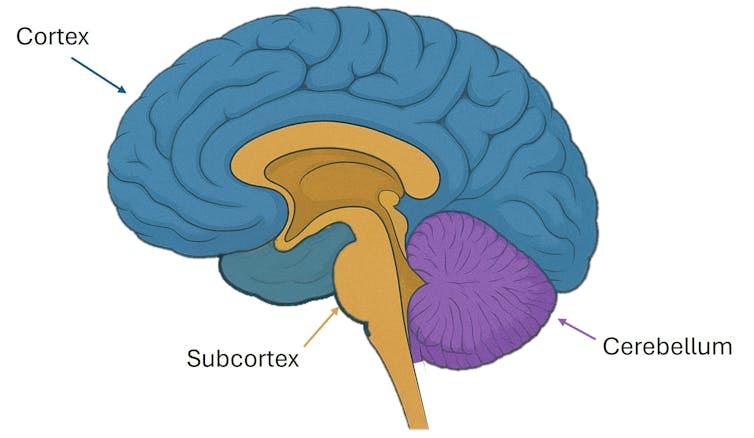
The leading theories of consciousness suggest that the outer layer of the human brain, called the cortex (in blue in figure 1), is fundamental to consciousness. This is mostly composed of the neocortex, which is newer in our evolutionary history.

Coloured diagram of the human brain.
Figure 1, the human brain (made with the assistance of AI).
Peter Coppola, CC BY-SA

The human subcortex (figure 1, brown/beige), underneath the neocortex, has not changed much in the last 500 million years. It is thought to be like electricity for a TV, necessary for consciousness, but not enough on its own.

There is another part of the brain that some neuroscientific theories of consciousness state is irrelevant for consciousness. This is the cerebellum, which is also older than the neocortex and looks like a little brain tucked in the back of the skull (figure 1, purple). Brain activity and brain networks are disrupted in unconsciousness (like in a coma). These changes can be seen in the cortex, subcortex and cerebellum.

What brain stimulation reveals

As part of my analysis I looked at studies showing what happens to consciousness when brain activity is changed, for example, by applying electrical currents or magnetic pulses to brain regions.

These experiments in humans and animals showed that altering activity in any of these three parts of the brain can alter consciousness. Changing the activity of the neocortex can change your sense of self, make you hallucinate, or affect your judgment.

Changing the subcortex may have extreme effects. We can induce depression, wake a monkey from anaesthesia or knock a mouse unconscious. Even stimulating the cerebellum, long considered irrelevant, can change your conscious sensory perception.

However, this research does not allow us to reach strong conclusions about where consciousness comes from, as stimulating one brain region may affect another region. Like unplugging the TV from the socket, we might be changing the conditions that support consciousness, but not the mechanisms of consciousness itself.

So I looked at some evidence from patients to see if it would help resolve this dilemma.

Damage from physical trauma or lack of oxygen to the brain can disrupt your experience. Injury to the neocortex may make you think your hand is not yours, fail to notice things on one side of your visual field, or become more impulsive.

People born without the cerebellum, or the front of their cortex, can still appear conscious and live quite normal lives. However, damaging the cerebellum later in life can trigger hallucinations or change your emotions completely.

Harm to the most ancient parts of our brain can directly cause unconsciousness (although some people recover) or death. However, like electricity for a TV, the subcortex may be just keeping the newer cortex “online”, which may be giving rise to consciousness. So I wanted to know whether, alternatively, there is evidence that the most ancient regions are sufficient for consciousness.

There are rare cases of children being born without most or all of their neocortex. According to medical textbooks, these people should be in a permanent vegetative state. However, there are reports that these people can feel upset, play, recognise people or show enjoyment of music. This suggests that they are having some sort of conscious experience.

These reports are striking evidence that suggests maybe the oldest parts of the brain are enough for basic consciousness. Or maybe, when you are born without a cortex, the older parts of the brain adapt to take on some of the roles of the newer parts of the brain.

There are some extreme experiments on animals that can help us reach a conclusion. Across mammals – from rats to cats to monkeys – surgically removing the neocortex leaves them still capable of an astonishing number of things. They can play, show emotions, groom themselves, parent their young and even learn. Surprisingly, even adult animals that underwent this surgery showed similar behaviour.

Altogether, the evidence challenges the view that the cortex is necessary for consciousness, as most major theories of consciousness suggest. It seems that the oldest parts of the brain are enough for some basic forms of consciousness.

The newer parts of the brain – as well as the cerebellum – seem to expand and refine your consciousness. This means we may have to review our theories of consciousness. In turn, this may influence patient care as well as how we think about animal rights. In fact, consciousness might be more common than we realised.

The Conversation

Peter Coppola does not work for, consult, own shares in or receive funding from any company or organisation that would benefit from this article, and has disclosed no relevant affiliations beyond their academic appointment.

ref. Major theories of consciousness may have been focusing on the wrong part of the brain – https://theconversation.com/major-theories-of-consciousness-may-have-been-focusing-on-the-wrong-part-of-the-brain-264609

How US-UK tech deal could yield significant benefits for the British public – expert Q&A

Source: The Conversation – UK – By Dan Nicolau, Reader, Faculty of Life Sciences and Medicine, King’s College London

A £150 billion technology prosperity deal between the US and the UK was announced during President Donald Trump’s recent state visit to the UK.

But what kinds of technologies could it advance and how will these benefit the British public?

The Conversation asked Dr Dan Nicolau, who researches the interface of biology and computing, medical science and artificial intelligence (AI), at King’s College London for his thoughts.

AI has been the focus of this deal, but what other technologies could it benefit?

It’s a large amount of money, even for a wealthy medium-sized country like the UK. The big unknown is whether the various technical challenges associated with these technologies are overcome. It’s a big bet. It’s important if you want to see big economic benefits over the next ten years, say.

Those challenges include hallucinations by AI, where they invent information. The other thing relates to whether we have enough electricity. The government could build nuclear power plants. But that’s a big commitment over many years.

It’s also not totally clear that some of these tech advances directly translate to economic growth. There’s a quantum computing component to this deal and it’s directed towards developing lots of new medicinal drugs.

It’s not completely clear that if you had 100 new drugs for cancer that you would have the capacity to do the clinical trials to see that they worked. Maybe AI can accelerate the clinical trials but all of this is a big question mark. It’s a big bet that we can solve these problems in three to four years so we can get some economic growth over the next ten years.

Occasionally, there is some big breakthrough with quantum computing. Last year, Google announced that it had built a processor that drastically reduces the errors that quantum computers are prone to. But it’s not clear that running quantum computers at very cold temperatures or scaling or reducing the error rates translate into concrete breakthroughs. It might do, but it’s a little bit of a gamble. We don’t necessarily know if we’ll have answers in the next five years, but I think we’ll know a lot more in the next two.

Of the potential technologies, such as self-driving cars, drones and advanced chips, which could yield real benefits to people?

The question is about timescale. If I knew that I had a drug that could cure breast cancer or lung cancer, say. Even if I could prove that scientifically, it would be ten years before anyone could receive that drug. That’s because I’d have to publish the paper, it would have to be tested in mice, then clinical trials in humans.

In other areas, like for example, accounting, planning, contracts in law – all of that stuff, things can be done now. Some things can be done so much faster, it’s hard to imagine there wouldn’t be major economic impact in two years. Because AI tools are able to accelerate writing computer code, I think that’s an area where we’d see half of code, maybe, being automated in the next two years. Whether that’s good for people in coding jobs, let’s see.

With drones, there are a couple of challenges – they can’t operate alone so they need constant human supervision. We’re working on a project where we’re trying to upload a fly brain into a drone. The fly already knows how to fly so if you put its brain into a drone, the drone will be able to fly on its own. AI tools can really help with that and making cheap, genuinely autonomous drones and other things like mini submarines for example.

Also, drones can only operate for short periods of time. So if AI tools were able to help them recharge on their own or share tasks, they could go from something that’s used by hobbyists and the military to self-driving cars, drug delivery to people at home, all of that stuff becomes much much easier. It opens up infrastructure development for drones, like highways in the sky specifically for drones. The potential economic openings are huge, but each of them has a question mark over them.

How likely is it that some of these problems can be overcome, do you think?

The billion pound question. With the hallucination problem with AI, there is no viable solution on the horizon. There are lots of patches and some of them are quite clever.

We don’t understand the reason hallucinations are happening because it’s a science problem and there are hardly any scientists working on it. OpenAI has 100 scientists in that team and 1,000 engineers. Google is the same. The engineers can’t fix it because it’s not an engineering problem.

But it’s wider than that. LLMs will provide answers based on the data that they’ve been fed, but they’re missing common sense. Until these problems are solved they’re not going to be able to operate without loads of human oversight.

The Conversation

Dan Nicolau does not work for, consult, own shares in or receive funding from any company or organisation that would benefit from this article, and has disclosed no relevant affiliations beyond their academic appointment.

ref. How US-UK tech deal could yield significant benefits for the British public – expert Q&A – https://theconversation.com/how-us-uk-tech-deal-could-yield-significant-benefits-for-the-british-public-expert-qanda-265707

Cyber-attackers slammed the brakes on Jaguar Land Rover’s manufacturing – here’s why the UK government should step in

Source: The Conversation – UK – By David Bailey, Professor of Business Economics, University of Birmingham

P.Cartwright/Shutterstock

Car manufacturing at Jaguar Land Rover recently ground to a halt after a “catastrophic” cyber-attack.

Forced to shut down plants in the UK, Slovakia, Brazil, India and China, the disruption comes at a challenging time for the company. It had already postponed the launch of new models after the uptake of electric vehicles stalled. And Donald Trump’s tariffs have been a major cause of concern for the British car industry as a whole.

Profits at Jaguar Land Rover (JLR) will undoubtedly take a hit, as they did at M&S and Co-op when they were the victims of cyber-attacks earlier this year.

Normally, JLR makes around 1,000 cars a day, with the average price of a new vehicle around £72,000. That means JLR is missing out on daily sales of some £72 million, and profits of £5 million a day.

The firm has now extended the shutdown to September 24 2025, by which time the loss of revenues will be around £1.7 billion and the hit to profits some £120 million. There are even fears that this could go on until November, and restarting production will be a complex business given the “build to order” nature of premium cars (when vehicles are only manufactured after a customer purchase is confirmed).

But the longer the shutdown goes on, the more likely it is that those customers will simply decide to go elsewhere. For the time being, spare parts can’t be ordered, cars can’t be serviced, and new car sales will stall, in what is usually a particularly busy month.

The firm’s brand image will take a battering too, to add to recent social media derision which has included an attack from Donald Trump and a much maligned brand relaunch last year which centred on the controversial design of its “Type OO” concept car.

There are also livelihoods at stake. The company’s supply chain, centred in the west Midlands region of the UK, supports as many as 200,000 jobs.

The longer the shutdown goes on the bigger the impact on the supply chain. Firms have already sent staff home, while others are running out of money. According to the Unite union, some supply chain workers have been told to apply for state benefits.

Road ahead

For its part, JLR has said that it can survive the shutdown but that its supply chain will need help – a call echoed by the union and some members of parliament.

And the UK government really needs to start thinking about a financial lifeline to keep the supply chain going. That could be in the form of a furlough scheme to keep workers in place or some sort of loan scheme for supply chain firms.

Both were used during COVID and thought to have safeguarded some 4 million jobs.

A glowing digital lock surrounded by streams of binary code.
Cyber-attacks have also hit M&S and Co-op in 2025.
AIBooth

Emergency support in response to shocks is common in other countries like Germany, and has been used in the UK car manufacturing supply chain before, after the MG Rover closure in 2005, and also after the 2011 Japanese earthquake and tsunami which saw the interrupted flow of key components from Japan shut down production at Honda.

That support came via the regional development agency Advantage West Midlands (in the case of MG Rover) and later the Manufacturing Advisory Service (after the Japanese earthquake).

Both agencies have since been scrapped, underscoring the lack of any “place-based” or region-specific industrial policy capacity in England. That really needs to change.

The Department for Business and Trade and its new secretary of state Peter Kyle need to be doing more than just monitoring the situation. It needs to start thinking about how emergency support could be provided to the supply chain. A huge number of jobs depend on JLR getting up and running again – and quickly.

The Conversation

David Bailey receives funding from the Economic and Social Research Council through the UK in a Changing Europe Programme.

ref. Cyber-attackers slammed the brakes on Jaguar Land Rover’s manufacturing – here’s why the UK government should step in – https://theconversation.com/cyber-attackers-slammed-the-brakes-on-jaguar-land-rovers-manufacturing-heres-why-the-uk-government-should-step-in-265126

Spouses are more likely to be diagnosed with the same mental health conditions – here’s why

Source: The Conversation – UK – By Mariel Marcano-Olivier, Lecturer in Social Psychology, Birmingham City University

There are many reasons why partners may share a psychiatric diagnosis. La Famiglia/ Shutterstock

“Birds of a feather flock together” is a cliche for a reason when it comes to romantic relationships. Shared religious beliefs, values, political affiliation and even music taste all influence attraction and satisfaction in a relationship. But a recent study has now identified another unexpected factor that may bring couples closer together: sharing a similar mental health diagnosis.

The concept of romantic partners sharing a psychiatric diagnosis is not new. Indeed, between 1964 and 1985 several studies that explored the reasons why people choose their romantic partners included psychiatric diagnosis as a variable. However, no large-scale, cross-cultural investigation had been conducted until recently.

Using national health insurance data from more than six million couples in total, a team of researchers recently analysed the degree to which psychiatric disorders were shared between couples. They examined data from five million couples in Taiwan, 571,534 couples in Denmark and 707,263 couples in Sweden.

They looked at nine psychiatric disorders in their analysis, including depression, anxiety, substance-use disorder, bipolar disorder, anorexia nervosa, ADHD, autism, obsessive-compulsive disorder and schizophrenia. They found that people with a diagnosed psychiatric disorder had a higher likelihood of marrying someone with the same or a similar psychiatric disorder than they did of marrying someone who isn’t diagnosed with one.

While the finding is robust, the authors do acknowledge there are some limitations when interpreting the results.

The first is that the timing of relationships and diagnoses were not recorded. This means that diagnosis could have occurred after the beginning of the relationship – and thus may not be the result of active choice.

Furthermore, a care provider’s own biases may influence how likely they are to diagnose a person with a specific mental health condition. Since many couples share the same family doctor, this could influence their likelihood of being diagnosed with a psychiatric condition — and could have biased the results seen in the study.

Finally, the authors stress their results are purely observational. This means they don’t explicitly consider the contributing factors as to why people with psychiatric diagnoses might be more likely to choose romantic relationships with each other.

However, there are several psychological theories that may help to explain this phenomenon.

Understanding this phenomenon

1. Assortative mating:

This theory assumes that we choose partners who are similar to us. Normally this is applied to personality and social factors (such as shared religious or socioeconomic background). But this recent study suggests that this choice may extend beyond these factors and into how we think.

A married couple hold each other's hand.
We’re tend to gravitate to those we have something in common with.
Anatoliy Cherkas/ Shutterstock

So a person with a specific psychiatric disorder – such as anxiety or autism – may be drawn to someone with a similar psychiatric disorder because they share similar traits, values or approaches to daily life (such as prioritising structure and routine).

2. Proximity:

According to the mere exposure effect, we often choose relationships with people that we live or work in close proximity to – or otherwise spend time around.

People who share psychiatric diagnoses may be drawn to similar social situations. For example, people with substance use disorder may visit bars or other social settings where taking substances is more commonplace – and thus may be more likely to meet potential mates who are struggling with a similar disorder.

3. Attachment theory:

Attachment theory assumes that as infants, we develop a specific emotional bond to our primary caregivers. This early bond then shapes our subsequent emotional and psychological patterns of behaviour as we get older – and also influences what we’re looking for in a relationship.

So someone with an anxious attachment style (which can manifest as fear of abandonment, desire for closeness or need for reassurance) might feel drawn to a partner who has a similar attachment style or exhibits the kind of behaviour they desire – such as a partner who texts them all night when they’re apart. Even if this is not a healthy dynamic, the validation gained from a high-intensity relationship would likely make it hard to resist.

Research shows certain attachment styles are more common in people with specific psychiatric conditions. For example, anxious attachment style is more common in people who have anxiety, depression and bipolar disorder. This might help explain why the study found people with certain psychiatric conditions were more likely to be married to each other.

4. Social identity theory:

Social identity theory assumes that our self-esteem is gained through a sense of belonging within our social groups. So when you begin a relationship with somebody from within your social group, it boosts self-esteem as it brings a greater sense of belonging and feeling understood.

This might explain why people with the same psychiatric diagnosis (a social group) would be drawn to each other. Finding someone who understands and experiences the same struggles you do could help you bond and make you feel understood and validated.

What does this mean for us? Well, the results reported by this recent study can only tell us whether couples share psychiatric diagnoses. They don’t tell us the quality and duration of the relationship, nor do they account for individual differences which may also affect the relationship.

Ultimately, shared experiences promote closeness and empathetic communication for couples – and it stands to reason that this would extend to psychiatric diagnosis. Having a partner who understands and can relate to your mental illness can provide social support and validation that’s not available from someone who has never struggled with their mental health.

The Conversation

Mariel Marcano-Olivier does not work for, consult, own shares in or receive funding from any company or organisation that would benefit from this article, and has disclosed no relevant affiliations beyond their academic appointment.

ref. Spouses are more likely to be diagnosed with the same mental health conditions – here’s why – https://theconversation.com/spouses-are-more-likely-to-be-diagnosed-with-the-same-mental-health-conditions-heres-why-264837

Shakespeare for children: an expert’s top ten books to spark their imagination

Source: The Conversation – UK – By Sarah Olive, Senior Lecturer in Literature, Aston University

Nicoleta Ionescu/Shutterstock

As pupils head back to school, they may well encounter Shakespeare’s plays and poems – perhaps for the first time.

I have written about books on Shakespeare’s life or plays for children and young adults for the last three years: fiction and fact, picturebooks and graphic novels, early readers to full-blown novels. Here are my top ten texts that take Shakespeare, run with him, and sweep up readers as they go.

Authors writing about Shakespeare for young people are surprisingly consistent in sticking to widely accepted scholarship. Authors’ notes often acknowledge the academic research that inspired them.

Readers are likely to come away from these books with greater understanding of Shakespeare, some pressing questions about him, and – above all – the experience of reading for pleasure. They are listed roughly in order of reading age.

1. The Boy, the Bear, the Baron, the Bard by Gregory Rogers, 2004

The young protagonist of this wordless picture book boots a football through time and onto Shakespeare’s stage, sparking an irate bard’s pursuit of him through a gorgeously-drawn Elizabethan London.

The boy quickly finds allies in his flight – rescuing a caged bear and an imprisoned noble. He even lands on the royal barge, in time for a dance with Queen Elizabeth I and courtiers. All’s well that ends well, but re-reading will enable you to spot quirky details in the drawings and put words in the characters’ mouths.

2. Bold and Brave Women from Shakespeare by Anjna Chouhan and the Shakespeare Birthplace Trust (authors), Becca Stadtlander (illustrator), 2024

The organisation that looks after Shakespeare’s houses in Stratford-upon-Avon has created this picture book anthology, with short sections on separate figures.

While its title has echoes of Mary Cowden Clarke’s 1850 book, The Girlhood of Shakespeare’s Heroines, its content departs from her Victorian moralising. The depiction of characters, from Cleopatra to Lady Macbeth, offers feminist overtones and a range of skin tones.

3. Rock Bottom by Ross Montgomery (author) and Mark Beech (illustrator), 2020

One instalment in a series of four “Shakespeare Shake-ups”, this book for primary schoolers retells the story of A Midsummer Night’s Dream using the familiar devices of children staging a school production and plans to impress a crush crashing.

I have laughed out loud reading these books. They tell relatable stories about friendship, awkwardness and teacher-pupil tensions. You might forget the plots are from the plays, they’re so deftly retold, but Shakespeare buffs will enjoy spotting allusions.

4. Much Ado About Nothing by Steve Barlow and Steve Skidmore (adapters), Wendy Tan Shiau Wei (illustrator), 2022

My favourite in a series of six editions of Shakespeare’s plays in graphic novel form. Each has a pithy, modernised text and resources at either end of the book to support readers’ understanding of both the play and the period.

Much Ado also exemplifies the series’ commitment to diversity. Importantly, this gels with the diverse casts students are likely to see in contemporary films and performances of Shakespeare, and reflects the ethnic diversity of school (and national) populations.

5. King of Shadows by Susan Cooper, 1999

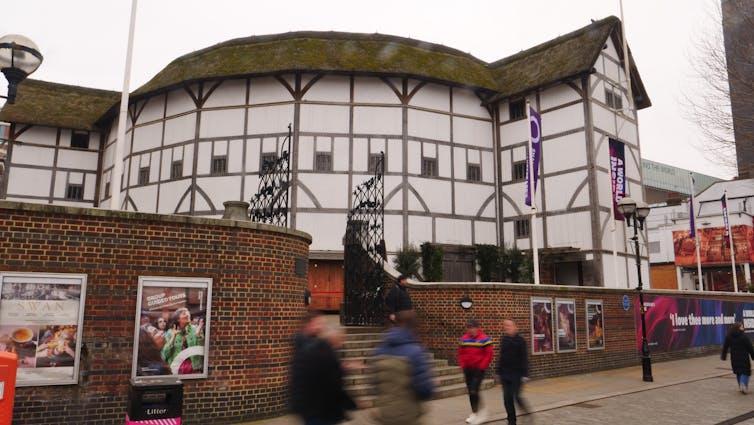
From a popular British fantasy writer for children, this novel was significantly inspired by the reconstruction of Shakespeare’s Globe theatre in London. It’s the most compelling of a slew of Globe-focused theatre adventures published at the turn of the millennium.

A stage-mad American boy, grieving his parents, time-travels to early modern England and is mentored in acting – and surviving loss – by Shakespeare, who mourns his dead son, Hamnet. Plague contagion allows for some top-notch body swapping.

Photo of exterior of Shakespeare's Globe.
Shakespeare’s Globe in London is a reconstruction of the Elizabethan Globe Theatre.
David G40/Shutterstock

6. Cue for Treason by Geoffrey Trease, 1940

The original “children-in-disguise go on Shakespeare’s stage” novel – at least for me. It was a class text at the end of primary school. It differs from King of Shadows in opening with travelling players touring the Lake District, although it takes in London’s early modern glitterati later. Real historical figures abound and are delightfully shady, as in biographical Shakespeare fiction generally.

7. The Dark Lady by Akala, 2021

This take on destitute children in Elizabethan London running into a kindly, father-figure Shakespeare has various unique qualities. One is balancing the main plot about Henry, a pickpocket who has the supernatural ability to read any language, with cryptic fragments from “the Dark Lady” of Shakespeare’s sonnets, for whom the book is named. Here, she is imagined as the descendent of an African ruling elite.

Akala is a Black British rapper and writer, whose work prominently features Shakespeare – though there are lashings of Charles Dickens’ Oliver here too.

8. Love Disguised by Lisa Klein, 2013

Adolescent Shakespeare opens this novel narrating his Stratford childhood, his father’s business woes, and plans to rescue his family’s fortunes while working in the theatre. In addition to having Shakespeare as the protagonist, this book offers an unusual explanation for his wife Anne Hathaway’s pregnancy before marriage. This is territory well-trodden by scholars, but Klein inventively borrows plotlines from Shakespeare’s Measure for Measure and All’s Well that Ends Well in her interpretation.

9. Saving Hamlet by Molly Booth, 2016

In the vein of Hollywood Shakespeare movies, the narrator’s high school is staging Hamlet and it’s going disastrously. The novel mashes up this genre with time-travelling theatre adventure, so that assistant-director Emma moves back and forth at will between two theatre worlds. The ideas she gleans from each benefit the other, so two high-stakes productions of Shakespeare’s famous tragedy are saved.

Theatre-kids will enjoy a writer who really knows her stuff: oft-overlooked tech crews are well-served by details of lighting and sound production. Saving Hamlet features several modern-day lesbian and gay main characters, with contrasting experiences of coming out.

10. Juliet Immortal by Stacey Jay, 2011

I came to this book because of the Twilight saga, and so may young readers with a taste for paranormal romance. It is set among teens staging Romeo and Juliet at their California high school. Narration is split between a modern-day girl, Ariel, and the undead Juliet.

The story deals superbly with consent, relationship violence and toxic masculinity – all elements of the play that literary critics have acknowledged – and also models positive alternatives. For those whose vampiric appetites aren’t sated, there’s an equally-gripping sequel: Romeo Redeemed.


This article features references to books that have been included for editorial reasons, and may contain links to bookshop.org. If you click on one of the links and go on to buy something from bookshop.org The Conversation UK may earn a commission.

The Conversation

Sarah Olive is a member of the British Shakespeare Association’s Education Committee (a registered charity) and founding editor of the free, online magazine Teaching Shakespeare.

ref. Shakespeare for children: an expert’s top ten books to spark their imagination – https://theconversation.com/shakespeare-for-children-an-experts-top-ten-books-to-spark-their-imagination-263490

Lasting relief from depression after magic-mushroom treatment – new study

Source: The Conversation – UK – By Petri Kajonius, Associate Professor, Personality Psychology, Lund University

Fotema/Shutterstock.com

Two-thirds of people who underwent psilocybin-assisted therapy remained free from depression five years later, according to recent research that offers the first long-term glimpse into the lasting power of psychedelic treatment.

The findings, published by researchers at Ohio State University and Johns Hopkins University, followed up participants from a study published in 2021 to track whether the dramatic improvements in depression symptoms would endure. The results suggest they do – and, remarkably, without serious side-effects.

The original study involved 24 people aged 21 to 75 who were randomly assigned to receive psilocybin treatment in 2019 and 2020 either immediately or after an eight-week delay. Each participant received two doses of the psychoactive compound found in magic mushrooms, spaced two weeks apart, alongside 13 hours of psychotherapy support.

When researchers checked in five years later, the improvements in depression seen after one year were still holding strong, suggesting psilocybin therapy may last longer than traditional treatments, such as antidepressants or psychotherapy.

But the researchers are cautious about overselling their findings. The follow-up study lacked a comparison group, making it impossible to know whether people who recovered from depression through other means might experience similar long-term success. Eleven of the 18 participants who remained in the trial also reported using antidepressants during the study period, muddying the waters about what exactly drove their continued recovery.

The study design presents other puzzles as well. Was it the psilocybin itself that proved beneficial, or the extensive psychotherapy, or some combination of both? The original research didn’t include a placebo group – everyone knew they were taking psilocybin – raising questions about whether expectations alone might have influenced the outcomes.

Despite these limitations, other studies are painting a similar picture of psilocybin’s enduring effects on depression. While psychedelic research is still in its infancy and grapples with design challenges, the results consistently show significant reductions in depression symptoms following psychedelic-assisted therapy.

What makes these findings particularly intriguing is the suggestion that just one or two treatment sessions might deliver lasting benefits. This is in stark contrast to traditional antidepressants, which typically require daily use and often come with a catalogue of side-effects.

The researchers propose that psilocybin therapy may trigger “positive behavioural feedback loops”, helping people gain fresh perspectives and emotional insights that continue benefiting their lives long after the treatment ends. This could enable the development of healthier habits and relationships that serve as natural buffers against depression’s return.

One participant captured this transformation vividly: “I’m doing more of activities that I enjoy. My life these days is a lot more social with family. Helping out my family. Helping out friends. Connecting with old friends.”

Friends sitting on some steps outdoors, having a laugh.
People’s lives continued to improve after treatment.
DavideAngelini/Shutterstock.com

Psychology matters

At Lund University in Sweden, my colleagues and I are exploring similar territory, including an upcoming study on psilocybin and anorexia. And our early results, published in Scientific Reports, suggest that individual psychology plays a crucial role in both how people experience psychedelic sessions and the benefits they derive from them.

The picture becomes even more complex when considering that many people report personality changes after psychedelic experiences, particularly becoming more open to new experiences. This psychological shift adds another layer to understanding how and why psychedelics might produce lasting change.

Psychedelic research still faces significant hurdles, from creating convincing placebo groups to accounting for the self-selecting nature of many participants. These methodological challenges make it difficult to draw sweeping conclusions about psychedelics’ therapeutic potential.

Yet perhaps the most compelling evidence lies not in clinical scores but in participants’ own words about their transformed lives. As one person put it: “I think I’m more open to gratitude and more open to delight.” Such testimonies remind researchers why they’re exploring what some describe as potentially “one of the most meaningful experiences in life” – and why this emerging field of medicine deserves serious scientific attention.

The Conversation

Petri Kajonius does not work for, consult, own shares in or receive funding from any company or organisation that would benefit from this article, and has disclosed no relevant affiliations beyond their academic appointment.

ref. Lasting relief from depression after magic-mushroom treatment – new study – https://theconversation.com/lasting-relief-from-depression-after-magic-mushroom-treatment-new-study-265219

Poor sleep may nudge the brain toward dementia, researchers find

Source: The Conversation – UK – By Timothy Hearn, Senior Lecturer in Bioinformatics, Anglia Ruskin University

fizkes/Shutterstock.com

Staring at the ceiling while the clock blinks 3am doesn’t only sap energy for the next day. A large, long-running US study of older adults has now linked chronic insomnia to changes inside the brain that set the stage for dementia.

The researchers, from the Mayo Clinic in the US, followed 2,750 people aged 50 and over for an average of five and a half years. Every year the volunteers completed detailed memory tests and many also had brain scans that measured two telltale markers of future cognitive trouble: the buildup of amyloid plaques, and tiny spots of damage in the brain’s white matter – known as white-matter hyperintensities.

Participants were classed as having chronic insomnia if their medical records contained at least two insomnia diagnoses a month apart – a definition that captured 16% of the sample.

Compared with people who slept soundly, those with chronic insomnia experienced a faster slide in memory and thinking and were 40% more likely to develop mild cognitive impairment or dementia over the study period.

When the team looked more closely, they saw that insomnia paired with shorter-than-usual sleep was especially harmful. These poor sleepers already performed as if they were four years older at the first assessment and showed higher levels of both amyloid plaques and white-matter damage.

By contrast, insomniacs who said they were sleeping more than usual, perhaps because their sleep problems had eased, had less white-matter damage than average.

Why do both amyloid plaques and blood-vessel damage matter? Alzheimer’s disease isn’t driven by amyloid alone. Studies increasingly show that clogged or leaky small blood vessels also speed cognitive decline, and the two disease states can magnify each other.

Amyloid plaques explained.

White-matter hyperintensities disrupt the wiring that carries messages between brain regions, while amyloid gums up the neurons themselves. Finding higher levels of both in people with chronic insomnia strengthens the idea that poor sleep may push the brain towards a double hit.

The study’s models confirmed the well-known effect of carrying the ApoE4 variant; the strongest common genetic risk factor for late-onset Alzheimer’s. Carriers declined more quickly than non-carriers, and the insomnia effect was large enough to be comparable to the effect of having the gene.

Scientists suspect ApoE4 amplifies the damage of sleepless nights by slowing the overnight clearance of amyloid and making blood vessels more vulnerable to inflammation.

Taken together, these findings add to a growing body of research, from middle-aged civil servants in the UK, to community studies in China and the US, showing that how well we sleep in midlife and beyond tracks closely with how well we think later on.

Chronic insomnia appears to accelerate the trajectory towards dementia, not through one pathway but several: by boosting amyloid, eroding white matter and probably raising blood pressure and blood-sugar levels too.

That sounds like an obvious next step, but the evidence is mixed. The Mayo Clinic researchers found no clear benefit, or harm, from the sleeping pills its participants were taking. Trials of newer drugs such as orexin blockers have hinted at reductions in Alzheimer-related proteins in spinal fluid, but these studies are tiny and short term.

Cognitive behavioural therapy for insomnia, delivered in person or digitally, remains the gold-standard treatment and improves sleep in around 70% of patients. Whether it also protects the brain is still unproven, although one small trial in people with mild cognitive impairment showed sharper executive function after this type of talk therapy.

So the relationship is unlikely to be as simple as “treat insomnia, avoid dementia”. Poor sleep often co-exists with depression, anxiety, chronic pain and sleep apnoea – all of which themselves hurt the brain. Unravelling which piece of the puzzle to target, and when, will take rigorously designed long-term studies.

Prevention starts early

The participants in Mayo Clinic study were, on average, 70 years old at the start of the study, but other research has shown that routinely sleeping less than six hours a night in your 50s is already linked to higher dementia risk two decades later.

That suggests prevention efforts shouldn’t wait until retirement. Keeping an eye on sleep from midlife, alongside blood pressure, cholesterol and exercise, is a sensible brain-health strategy.

Sleepless nights are more than a nuisance. Chronic insomnia appears to accelerate both amyloid buildup and silent blood-vessel damage, nudging the brain toward cognitive decline – especially in people who already carry the high-risk ApoE4 gene.

Good quality sleep is emerging as one of the modifiable pillars of brain health, but scientists are still working out whether fixing insomnia can truly head off dementia, and at what stage of life interventions will have the greatest payoff.

The Conversation

Timothy Hearn does not work for, consult, own shares in or receive funding from any company or organisation that would benefit from this article, and has disclosed no relevant affiliations beyond their academic appointment.

ref. Poor sleep may nudge the brain toward dementia, researchers find – https://theconversation.com/poor-sleep-may-nudge-the-brain-toward-dementia-researchers-find-265216