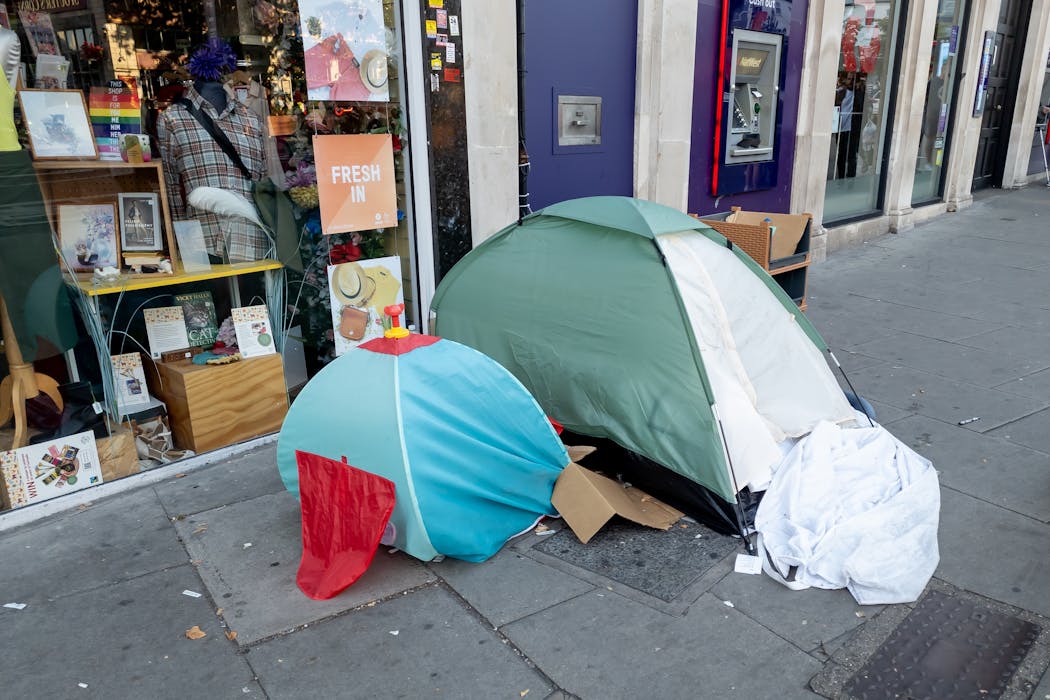
England now has a plan to end homelessness – here’s how to test whether it will work

Source: The Conversation – UK – By Michael Sanders, Professor of Public Policy, King’s College London
Yau Ming Low/Shutterstock

The UK has proved before that it can end homelessness. The Everyone In scheme during COVID lockdowns accommodated tens of thousands of people in emergency and supported housing, who would otherwise have continued sleeping rough.

But this was only temporary. Nearly six years later, the scale of the challenge is immense. In June 2025, 132,410 households were living in temporary accommodation, almost two-thirds of which were families with children.

The UK government has published a new homelessness strategy for England. The strategy speaks to different forms of homelessness, from rough sleeping to more hidden forms of homelessness, like sofa surfing.

This is a wide-ranging plan, bringing in approaches from different government departments. The £3.5 billion strategy aims to “address the root causes” of homelessness, firstly through a number of universal approaches.

Some of these have already been announced. The plan emphasises the government’s plan to build 1.5 million new homes during this parliament, reforms to renters’ rights, ending the two-child benefit cap and the youth guarantee to get more young people into work or education. It introduces a new commitment to update social housing allocation guidelines, and a legal “duty to collaborate” for public services to address homelessness.

Several more targeted measures look at specific at-risk populations. This includes care leavers, of whom a worrying proportion still go on to experience homelessness. It also includes people leaving institutions including healthcare settings and prisons. These targeted approaches are essential to move from a crisis-based approach to managing homelessness towards a more proactive approach to preventing it.

How do we know what works?

Our research focuses on methods such as randomised trials to evaluate policies across a range of topics, including homelessness. This is why we were pleased to see an emphasis on the government’s “test and learn” approach to technology and AI being applied to the homelessness strategy:

We want to adopt a test and learn approach to evidence, where local areas trial innovative practice, roll this out where it is effective, and subsequently share learning with others.

Given the UK government’s precarious financial situation, it’s important that policies work for the people who need them, without wasting money on untested approaches.

Randomised controlled trials, most common in medicine, are the gold standard method to show simply what the effect of an intervention or policy is. They work by assigning who gets an intervention (such as a vaccine or targeted homelessness support) at random, and comparing those that do to a control group.

A randomised trial in Canada has shown that modest, unconditional cash transfers for people experiencing homelessness can significantly reduce the number of days the average participant spent homeless in a year.

New studies are evaluating whether this approach can have the same kinds of effects in the UK. We are leading the evaluation of one project – administered by the charity Greater Change – which will test how giving people a personalised budget of around £4,000 can help them change their trajectory in life. We are looking forward to having results next summer.

Another trial already underway in the UK involves local councils working with data science company Xantura to give early warnings of households at risk of homelessness. In this trial, households identified by algorithm as being high-risk are randomly assigned either to receive proactive support, or not to. The outcomes of both groups are followed up later.

The evidence for this kind of approach is mixed. There is a burden of proof that companies selling these tools, and governments purchasing them, bear before making their use widespread. Randomised trials, while not perfect, are arguably the most rigorous and efficient way to test them.

Close up hand holding a stack of 20 pound notes
Randomised trials can test the effects of approaches like giving people grants or housing.
Alexey Fedorenko/Shutterstock

Sometimes, randomisation is not possible. But we can still use experimental approaches or evaluations to test the effects of policies.

In recent projects, we’ve seen that two approaches have statistically meaningful effects on reducing homelessness for these young people. These are Staying Put, a policy that allows young people to remain with their foster carers after they turn 18, and Lifelong Links, an approach that supports young people in care to build and maintain relationships with people from their birth families. The government has continued to fund the expansion of these programmes, which the evidence suggests will have substantial effects on reducing homelessness for care leavers.

Of course, research evaluations can and do find when interventions are not successful – or are even actively harmful. For example, we found that a model of “extended families” for young people in foster care actually increased the rate at which they go on to experience homelessness.

It’s a positive sign that the government is embracing testing and learning. But this should mean making use of rigorous methods like randomised trials. Shying away from them risks imperilling the UK’s ability to actually end homelessness.

The Conversation

Michael Sanders receives funding from the Centre for Homelessness Impact.

Julia Ellingwood receives funding from the Centre for Homelessness Impact.

ref. England now has a plan to end homelessness – here’s how to test whether it will work – https://theconversation.com/england-now-has-a-plan-to-end-homelessness-heres-how-to-test-whether-it-will-work-272377


Martin Parr: an astute and uniquely British photographer

Source: The Conversation – UK – By Mark Durden, Emeritus Professor, University of South Wales

The kitsch, the gaudy, the banal, the common, the superficial, the cheap: Martin Parr – who has died at the age of 73 – embraced and celebrated them all in his extraordinary pictures.

Born in Epsom in 1952 to solidly middle-class Methodist parents, Parr’s suburban childhood was dominated by his parents’ church going and passionate interest in ornithology. He was a keen trainspotter. His interest in photography was kindled by his grandfather George Parr, an amateur photographer, with whom Parr spent his childhood holidays in Yorkshire.

“I make serious photographs disguised as entertainment,” he once said, but the very nature of his photography saw some in his profession deny him the respect and acknowledgement he deserved.

His work chimed with elements of pop art and its obsession with consumerism, but in the photography world – certainly within the UK – there still seemed to be a certain cultural snobbery and unease about consciously engaging with this subject matter.

Part of that unease is to do with how the kitsch and the common are, certainly in Britain, bound up in questions of taste and class. Parr’s exhibition and book The Last Resort (1983-1986) brought him important recognition, including a show at London’s Serpentine Gallery, but also much criticism for its harsh portrayal of working-class people holidaymaking in New Brighton, Merseyside.

A life in pictures

Inspired by what was then the new American colour photography and the work of photographers such as Stephen Shore and William Eggleston, as well the British colour photographer John Hinde, Parr’s pictures broke with the more sober and gloomy black and white British documentary photography tradition.

Exploring the life and work of Martin Parr.

Deploying similar colour saturation to the summer holiday postcard, Parr countered its idealism by focusing on scenes of slovenliness, notably through pictures showing the consumption of food – chips, hot dogs, ice creams – with all the ensuing spillage.

Both the beach and lido were crowded and littered, and people seemed oblivious to the mess around them. As a result, some saw such pictures as presenting a degraded vision of the working-class people of this popular northern seaside resort. But despite its critics, Last Resort has remained in print since it was published and is his bestselling book.

The Cost of Living (1986-1989) offered a counterpoint to The Last Resort, concentrating on a more appearance-driven and aspirational culture: the uptight realm of the comfortable middle classes, exemplified through vivid, cutting and critical portraits of people at social gatherings, shopping or keeping fit.

For Small World (1987-1994), his photography took on the bigger subject of worldwide travel. His critical and comical response to tourism often rested upon a witty interplay between the people and the attractions they had come to consume, many of them shown carrying cameras or videos or taking photographs.

Here the comedy is bathetic, as we sense the shortfall between the sublime nature of what the masses have come to see and the plethora of tourist tat that filters that encounter.

The tourists’ clothing also became a recurring focus and point of irony – such as the back of a yellow t-shirt with the single word “Bali”, worn by a tourist as they contemplate Gaudí’s Sagrada Familia in Barcelona, or a man in a loud summer shirt bearing an image of a tropical sunset in the Piazza della Signoria, Florence.

Parr’s remarkable and most significant book, Common Sense (1999) conveyed an apocalyptic vision of humanity’s over-consumption, a global binge presented through a glut of images, all in close up. It is a crazed delirious montage, as if replaying fragments drawn from all his past work, but with the colour saturation racked up.

Common Sense also marked a shift in the form of the photo book in its use of full-bleed images (where the images extend to the edges of the page) throughout, from front cover to back, and the only text, the title, author and publisher imprint. Parr had been a passionate collector of photo books since the beginning of his career and saw the photo book as the ideal way of both presenting and disseminating photographs.

Publishing multi-volumes on the photo book with various authors, his work in this field is an important part of his legacy. His collection of over 12,000 photo books was part gifted to and purchased by the Tate galleries in 2017.

In 2014, he established the Martin Parr Foundation which opened as a dedicated photography space in 2017 in Bristol. As well as providing an archive of his photography, the foundation shows and collects the work of photographers who make work focused on Britain and Ireland. It also seeks to support and promote younger, emerging photographers.

When travelling the world, Parr started having his picture taken by local street and studio photographers, as well as in photo booths. The resulting portraits constitute his most comic book, Autoportrait, (2000; expanded and revised in 2016) with Parr deadpanning amid a carnival of possible and other selves created for him.

Rooted in the passion and joy of the tradition of photographic portraiture, Autoportrait is also an important document of less-feted photographic practices, such as the humble photo booth, as well as a testimony to the creativity and imaginings of others.

It also bears comparison with the collaborative photobook Julie Bullard (2025) for which Parr “documented” scenarios reflecting the creative imaginings of another, this time the artist and filmmaker, Nadia Lee Cohen.

Cohen hired Parr to take pictures of tableaux she created, as she and family members played out a fictional version of the life and death of the glamorous babysitter she idolised as a child in in the 1990s.

Cohen’s stylised and over the top fantasy about a working-class life, was already imbued with Parr’s now distinctive aesthetic. To be asked to photograph her project meant he was in effect also photographing himself. As one of his last significant projects, it seems a beautifully absurd and comic ending to an extraordinary and exceptional artistic life and career.

This article features references to books that have been included for editorial reasons, and may contain links to bookshop.org; if you click on one of the links and go on to buy something, The Conversation UK may earn a commission.


Looking for something good? Cut through the noise with a carefully curated selection of the latest releases, live events and exhibitions, straight to your inbox every fortnight, on Fridays. Sign up here.


The Conversation

Mark Durden does not work for, consult, own shares in or receive funding from any company or organisation that would benefit from this article, and has disclosed no relevant affiliations beyond their academic appointment.

ref. Martin Parr: an astute and uniquely British photographer – https://theconversation.com/martin-parr-an-astute-and-uniquely-british-photographer-272316

Worried about statins? Here’s what the evidence shows

Source: The Conversation – UK – By Dipa Kamdar, Senior Lecturer in Pharmacy Practice, Kingston University

pimpampix/Shutterstock

Few medicines have sparked as much debate as statins. Cardiologists often describe them as life-saving, while some patients remain wary of side effects or uneasy about taking a daily pill.

Statins sit at the intersection of medical treatment and everyday lifestyle because high cholesterol is strongly influenced by factors such as diet, physical activity, weight and smoking. Although statins are prescribed based on clinical evidence, their use often prompts questions about whether cardiovascular risk should be reduced primarily through medication, lifestyle change, or a combination of both.

Statins are a group of drugs that block an enzyme called HMG-CoA reductase. This enzyme plays a central role in the liver’s production of cholesterol. Cholesterol is a fatty substance the body needs to build cell membranes, produce hormones, make vitamin D and generate bile, which helps digest fats.

Cholesterol travels through the bloodstream attached to proteins, forming particles known as lipoproteins. The most familiar are low density lipoprotein (LDL) and high density lipoprotein (HDL).

LDL is often labelled “bad cholesterol” because high levels can lead to fatty build-ups inside arteries, while HDL helps transport excess cholesterol back to the liver. Another important blood fat is triglycerides, which, when elevated, also increase cardiovascular risk.

Cholesterol itself is not harmful. Problems arise when LDL and triglyceride levels remain too high for too long. This can lead to atherosclerosis, a condition in which fatty deposits narrow and stiffen arteries, increasing the risk of heart attacks and strokes. By lowering LDL cholesterol and triglycerides, statins reduce the likelihood of these deposits forming.

Large clinical trials have consistently shown statins to be effective. A major review found that statins significantly reduce the risk of heart attacks and stroke.

The size of the benefit depends on a person’s underlying cardiovascular risk and how much their LDL cholesterol is lowered. Reflecting this evidence, national guidelines recommend statins for primary prevention in people at higher risk who have not yet had cardiovascular disease, and secondary prevention for those with established disease.

Given this strong evidence, why do statins still generate so much hesitation?

Like all medicines, statins have side effects. Common ones include headache, digestive upset and dizziness. More serious but uncommon or rare effects include liver inflammation and muscle problems.

One such condition is myopathy, meaning muscle pain or weakness with raised levels of creatine kinase, an enzyme released when muscle tissue is damaged. In very rare cases, severe muscle breakdown known as rhabdomyolysis can occur.

Large datasets show that most people tolerate statins well. When patients report muscle symptoms while taking statins, there is less than a 10% chance that the statin is actually the cause. Rhabdomyolysis is extremely rare, affecting only a few people per million users. The risk increases at very high doses or when statins are taken alongside medicines that interfere with how they are broken down.

Statins can also cause a small rise in blood glucose, mainly affecting people with prediabetes or diabetes. However, because statins substantially reduce heart attack risk in these groups, the overall benefit outweighs this modest increase. Most side effects are reversible once treatment is stopped, whereas damage from heart attacks or strokes can be permanent.

Drug interactions are another concern. Statins such as simvastatin and atorvastatin are broken down in the liver by enzymes known as CYP enzymes, particularly CYP3A4. When other medicines block these enzymes, statin levels in the blood can rise, increasing the risk of muscle-related side effects.

Important interactions include antifungal medications such as ketoconazole, certain antibiotics like erythromycin, immunosuppressants such as ciclosporin, and some heart drugs including amiodarone and diltiazem.

Even grapefruit can interfere with statin metabolism. It contains chemicals called furanocoumarins, which block CYP3A4 enzymes in the gut, allowing more statin to enter the bloodstream. Not all statins are affected to the same extent, so switching to a different statin could reduce this risk.

While statins are effective, they are not the only tool for managing cholesterol. Lifestyle measures play a central role and are recommended alongside medication. Obesity is a major cardiovascular risk factor.

A review found that combining diet and exercise reduced body weight, improved cholesterol levels and lowered cardiometabolic risk: it reduces factors linked to heart disease and type 2 diabetes.

Dietary changes are particularly important. National guidelines recommend reducing saturated fat intake to help lower LDL cholesterol. Saturated fats are commonly found in butter, fatty meats and processed foods.

Replacing them with unsaturated fats, such as those found in olive oil, nuts and seeds, can improve cholesterol levels. Shifting towards plant-based proteins like beans, lentils and soy may also reduce reliance on red and processed meats.

Fibre intake matters too. Research shows that higher fibre consumption is associated with better cholesterol levels and lower heart disease risk.

A large 2019 review found that people with high fibre intake had a 15 to 30% lower risk of dying from heart disease or developing coronary heart disease. Whole grains, fruits and vegetables provide fibre alongside vitamins and antioxidants that support heart health.

Regular physical activity raises HDL cholesterol and lowers triglycerides. Current guidelines recommend 150 minutes of moderate-intensity exercise per week, but even smaller amounts offer meaningful benefits.

The choice between statins and lifestyle change is not an either-or decision. For people at high risk, including those with previous heart attacks, inherited cholesterol disorders or multiple risk factors, statins are often essential.

For others with mildly raised cholesterol, lifestyle changes may delay or prevent the need for medication. Healthy total cholesterol levels are usually below 5 mmol/L, but targets vary depending on individual risk.

Ultimately, treatment decisions should be personalised, balancing cardiovascular risk, the proven benefits of statins, potential side effects and what lifestyle change is realistically achievable.

Statins have transformed cardiovascular care and saved millions of lives. Yet they remain controversial. Addressing poor diet, physical inactivity and obesity remains central to reducing the burden of heart disease in the long term.

The Conversation

Dipa Kamdar does not work for, consult, own shares in or receive funding from any company or organisation that would benefit from this article, and has disclosed no relevant affiliations beyond their academic appointment.

ref. Worried about statins? Here’s what the evidence shows – https://theconversation.com/worried-about-statins-heres-what-the-evidence-shows-269524

The politics of the hyper-polluting private transport used by the world’s super-rich is hotting up

Source: The Conversation – UK – By Rowland Atkinson, Professor and Research Chair in Inclusive Societies, University of Sheffield

Roman Abramovich’s super-yacht Eclipse. Bulent Demir/Shutterstock

While millions of people make the effort to sort their recycling, buy fewer clothes and generally make greener choices, the world’s wealthiest can emit the same amount of carbon as the average person does in a year by going on holiday just once.

Among the many things worrying the climate-conscious is the question of the carbon-intensive movements of the super-rich – classed as those with more than US$30 million (£23 million) in disposable assets. This phenomenon, characterised by the use of private jets, fossil-fuelled yachts, heavy cars and space rockets, represents an enormous, and unnecessary, environmental impact.

It is estimated that the 125 wealthiest billionaires alone emit three million tonnes of carbon annually. This is close to the carbon footprint of Madagascar, a country of 30 million people.

Recent attention on the super-emitters has focused on jets, but private super-yachts are also major contributors. Despite their names, these vessels lack sails and require gigalitres of fuel to transport only a small number of crew and passengers.

Large yachts can consume hundreds of litres of fuel per hour, while super-yachts may use thousands of litres per hour even when just cruising. Yacht engines must “idle” at anchor to maintain heating and energy systems, consuming thousands of litres per week.

The yacht owned by former Chelsea FC owner Roman Abramovich, Eclipse, reportedly has a 1,000,000-litre fuel tank, while Google’s Sergey Brin’s super-yacht uses enough power to supply 580 homes, even when it is simply moored in port.

The emerging trend of private rockets also involves burning vast quantities of fuel – with no current limits on use. Former Amazon CEO Jeff Bezos’ first trip to the edge of the atmosphere reportedly produced around 93 metric tons of CO².

It has been calculated that there are 41.3 million high net worth individuals in the world, and, within this group, 510,000 ultra-high net worth individuals. Together, they are thought to possess liquid wealth of nearly US$60 trillion.

More money, more travel

This growth in private wealth has directly translated into an increase in jets and yachts and their use over time. For example, the global private super-yacht fleet has grown by 50% in about ten years and continues to see strong demand. The number of private jets has also increased substantially, leading to greater use and expansion of ground facilities at numerous airports.

The data shows the massive carbon footprints associated with the most luxurious (and unnecessary) forms of mobility utilised by the world’s wealthiest people. While many may scoff at the prospect of a human exit to Mars, this does not prevent a ramping-up of exploratory and carbon-intensive trial flights in pursuit of this mission.

Compared to the essential carbon emitted by everyday citizens going about their work and lives, the contrast is stark. It highlights how luxury and entitlement combine to create a new class of hyper-mobile carbon-emitting groups.

private jets lined up on the apron at an airport at night time.
The proliferation of private jets is creating a new class of hypermobility.
Thierry Weber/Shutterstock

The expansion of the super-rich and their carbon footprint poses significant challenges to curbing emissions and fostering social unity. Inequality threatens social cohesion and has undermined the effectiveness of the political sphere, both of which are crucial for climate action.

The primary “winners” in the global political economy have been positioned as legitimate users of private jets by the aero industry on the basis that they save time that is critical to business activity. But it seems that something else is blocking action, given how publicly unpopular the use of private jets by the rich has become.

In 2024 Oxfam reported that 80% of the public support higher passenger duties on private jets and yachts. Another survey the same year showed that more than 40% of people in six European nations (UK, Germany, France, Spain, the Netherlands and Belgium) supported an outright ban on the use of private jets.

It is increasingly clear that the global climate emergency outweighs the need for “Instagram sunsets” of private super-yacht and jet users in public opinion. For brave leaders, there could be real political capital to be gained from reducing this mobility as feelings run high over waste, pollution and emissions.

Social cohesion and collective action are necessary to reduce emissions. But efforts to discourage unnecessary mobility will be challenged by powerful voices celebrating choice, individual freedoms to move and consume, and life experiences that entail massive carbon costs. The planet cannot support this outdated growth and status-conscious economic model – it must be challenged for all our sakes.

The Conversation

Rowland Atkinson does not work for, consult, own shares in or receive funding from any company or organisation that would benefit from this article, and has disclosed no relevant affiliations beyond their academic appointment.

ref. The politics of the hyper-polluting private transport used by the world’s super-rich is hotting up – https://theconversation.com/the-politics-of-the-hyper-polluting-private-transport-used-by-the-worlds-super-rich-is-hotting-up-270343

Seven of the best novels of 2025 – chosen by our literary experts

Source: The Conversation – UK – By Tessa Whitehouse, Reader in 18th-century Literature and Director of Queen Mary Centre for Religion and Literature, Queen Mary University of London

Reading is very subjective, but one thing most book lovers can agree on is that 2025 was a notable year for fresh, inventive, affecting storytelling. Books translated from their original language are proving increasingly popular as readers seek out global perspectives beyond their own, as evidenced in this year’s International Booker win, Heart Lamp by Banu Mushtaq, which is included here.

We also bring you five other novels our academic experts have chosen as their favourites this year. From a Mrs Dalloway for the service economy, to a dreamlike encounter between people across time, place and mortality, do our academic picks chime with yours?

Pick A Colour by Souvankham Thammavongsa

This slender little novel is both a reverie and a dash of icy water to the face that will make you think twice about tuning out from your surroundings next time you get a mani-pedi. We follow the owner of a low-price nail bar through a workday from turning on the fluorescent lights to pulling down the metal shutter.

In this Mrs Dalloway for the service economy, the painful intersections of the personal and the political are inescapable for the “Susans” (the name each employee must adopt), but as invisible as the workers themselves to many of their customers.

Slight in length, light in touch, full of humour, and closely observed, Pick A Colour can be read in a single, intense afternoon. But the troubling thoughts it raises through its memorable characters linger long after your Christmas nail polish has all chipped away.

Tessa Whitehouse is reader in English and director of Queen Mary Centre for Religion and Literature

Perfection by Vincenzo Latronico

Perfection is a curious sort of novel. There is no dialogue and almost no conflict between the two central characters, Anna and Tom, digital nomads who spend their days in Berlin designing websites and always appear together, almost like a single entity.

In a sequence of beautifully written, perfectly observed chapters, Latronico itemises and describes their apartment, their social media habits, their limited perspective on Berlin, their sex life, their futile attempts at meaningful political activism, their growing disillusionment and desire for relocation – the repetitive consumption and socially structured habits of a globalised lifestyle built around image and taste.

The result is a remarkably astute and compelling novel – social realism at its sharpest – as Latronico nails the manners of the millennial generation and that brief period of optimism, from 2006 to 2016, when we felt digital media might make a positive difference and lifestyle choices seemed imbued with an optimistic ethical resonance – soon shown to be hollow.

James Miller is a senior lecturer in creative writing and English literature

Old Soul by Susan Barker

At first, Barker’s novel seems a gorgeously written adaptation of one of my favourite gothic tropes: the vampire. The story opens with two strangers, Jake and Mariko, who meet at Osaka airport. They have both lost loved ones in strange and brutal circumstances but in common, each of the deceased encountered a mysterious, dark-haired woman just before their deaths. A woman who came looking for Mariko, and then disappeared.

As the plot advances, Barker takes familiar tropes and themes in unexpected directions, turning this novel into an unforgettable tale of cosmic horror. There is the terrifying lore of “the Tyrant”, different timelines and settings from Wales to New Mexico, not to mention a cast of unreliable narrators who become more vibrant, twisted and compelling as the novel advances. Ultimately, this is a story about our societal obsession with becoming famous and being seen – Barker’s novel goes a step further and asks: who gets to witness? Who gets to record? And for what purpose?

Inés Gregori Labarta is a lecturer in creative writing

Big Kiss, Bye-Bye by Claire-Louise Bennett

There is no shortage of contemporary novels with first-person narrators who are women, often writers, struggling to keep themselves together in the face of late capitalism, the internet and the patriarchy. Claire-Louise Bennett’s Big Kiss, Bye-Bye is narrated by a woman, a writer, but beyond that, all similarities to other works in this category disappear.

The narrator’s interior world is made up of thoughts about and responses to others – her friend and ex-lover Xavier, her old schoolteacher with whom she had a relationship as a teenager, and another old schoolteacher who has recently emailed her.

It is a novel of extraordinary noticing, but it is a noticing that has such rhythm and intensity that it enters your very bones as you read. It is as unrepeatable as a dream, and like a dream stays with you way beyond the ability of words to account for it.

Leigh Wilson is a professor of English literature

We Do Not Part by Han Kang

The English translation of We Do Not Part followed Han Kang’s 2024 Nobel Prize in Literature. Her earlier Greek Lessons (2011, translated into English 2023) considered loss of sight and speech through the arresting metaphor of burial in snow.

We Do Not Part reconsiders this metaphor, employing the destructive and creative force of a snowstorm to convey the danger of lost histories. Kyungha reluctantly agrees to house sit and look after the much-loved pet bird of her sick friend, Inseon, and travels in snow and darkness to reach her rural cabin.

The novel is at once a dreamlike encounter between people across time, place, and mortality; a recollection of the women’s friendship and childhoods; a personal history of the impact of the 1948-49 Jeju massacre (an intense period of anti-communist violence and suppression that resulted in thousands of deaths); and a portrait of the rural South Korean landscape in bleak winter. The prose is crisp and poetic, the dialogue sparse, and the protagonist introspective and self-questioning. An intelligent, graceful, bruising novel and an encounter with the rural and the local.

Jenni Ramone is an associate professor of postcolonial and global literatures

Dream Count by Chimamanda Ngozi Adichie

At a time when many literary novels are becoming shorter and increasingly opaque, the luminous Dream Count – Adichie’s first novel in a decade – bucks the trend. Expansive and richly detailed, it follows the lives of four African women, moving fluidly between the US and Nigeria.

Set at the onset of the Covid pandemic, the pause in ordinary life creates space for the women to reflect and dream, deepening the novel’s engagement with memory and personal history alongside its comparative exploration of women’s experiences in different parts of the world.

Like many recent novels, films, and television series (Conversations with Friends; Girl, Woman, Other; Derry Girls), the women here both contrast and complement one another, offering nuanced insight into what it means to be Black and female and with varying degrees of privilege.

The novel skilfully intertwines universal aspects of the female experience, such as cultural pressure to marry and produce children, with a post-#MeToo focus on sexual violence rooted in stark racial and gendered power inequalities.

Roberta Garrett is a Senior Lecturer in Literature and Cultural Studies

Heart Lamp by Banu Mushtaq

Delicately woven over a period of 33 years, this collection of 12 short stories comes from the heart of the Muslim community in southern India. Rendered nearly invisible in the nation’s literary imagination despite its substantial presence, Heart Lamp offers a necessary intervention into the silences of Indian Muslim women’s interior lives.

It maps the emotional landscapes and the intricate layers of marginalisation through caste, class and gender expectations embracing the politics of location. Mushtaq, an activist, inevitably represents Karnataka’s “Bandaya Sahitya” (Rebel Literature) movement, rooted in anti-caste, feminist and secular traditions.

The stories juxtapose modern India’s patriarchal structures with the obscured lives of women through literal and metaphorical veils where pain, suffering, injustice are critiqued through razor sharp realism mingled with sentimentality and humour. Deepa Bhasthi’s translation performs its own quiet rebellion, refusing to italicise Kannada words or append footnotes.

Prathiksha Betala is a PhD researcher in contemporary feminist dystopian fiction

This article features references to books that have been included for editorial reasons, and may contain links to bookshop.org; if you click on one of the links and go on to buy something, The Conversation UK may earn a commission.


Looking for something good? Cut through the noise with a carefully curated selection of the latest releases, live events and exhibitions, straight to your inbox every fortnight, on Fridays. Sign up here.


The Conversation

The authors do not work for, consult, own shares in or receive funding from any company or organisation that would benefit from this article, and have disclosed no relevant affiliations beyond their academic appointment.

ref. Seven of the best novels of 2025 – chosen by our literary experts – https://theconversation.com/seven-of-the-best-novels-of-2025-chosen-by-our-literary-experts-271885

China’s durian craze has turned this tropical fruit into a tool of diplomacy

Source: The Conversation – UK – By Ming Gao, Research Fellow of East Asia Studies, Lund University

Durian is a tropical fruit from south-east Asia that is known for its intensely strong and pungent odour. passkphoto / Shutterstock

Distinctive in taste and famously divisive, durian is not everyone’s choice of fruit. This was certainly the case for some Chinese explorers when they first encountered it during the Ming Dynasty’s early maritime voyages.

One record dates back to 1413, when a translator called Ma Huan travelled to what is now Malaysia on a trip with diplomat and admiral Zheng He. In his travelogue, Ma described durian as a “stinky fruit” that smelled like “rotten beef”.

But fast forward six centuries and this tropical fruit has settled into Chinese daily life. China is now the world’s top importer of durian, accounting for around 95% of global demand. Its imports surged to a record high of nearly US$7 billion (£5.2 billion) in 2024.

Such is the popularity of durian in China that governments across south-east Asia, where most of the world’s durian is produced, are using its export as a tool of political and economic influence.

For years, gifting top-quality durians to Chinese officials has been one way south-east Asian governments have sought to cultivate goodwill. On a visit to Beijing in 1975, for example, former Thai prime minister Kukrit Pramoj gifted 200 durians to Chinese leaders.

More recently, in 2024, Malaysia’s King Ibrahim offered Chinese president Xi Jinping two boxes of premium durians during a state visit. This included the prized Musang King, a variety that is often referred to in China as the “Hermès of durians” – a nod to the exclusive Hermès fashion brand, which is known in China for extreme prestige.

The Chinese premier, Li Qiang, and Malaysia’s prime minister, Anwar Ibrahim, had also been filmed earlier that year sat together tackling a durian with a knife and spoon. The traditional way to eat a durian is to open the fruit and consume the flesh by hand.

However, durian is more than just a symbol of friendship between south-east Asian states and Beijing. China’s massive demand for durians has boosted domestic economic growth across the region, turning some previously poor agricultural areas into sites of prosperity.

According to Eric Chan, a Malaysian durian farmer who was interviewed by the New York Times in 2024, revenue from durian sales to China has transformed his town. Chan said durian farmers there have been able to rebuild their houses from “wood to brick” and can now “afford to send their children overseas for university”.

South-east Asian countries have also used China’s appetite for durian to strengthen their economic relationships with Beijing. Vietnamese durian exports, for instance, have been credited with opening access to the Chinese market for other domestically produced agricultural goods.

And Malaysia’s deputy prime minister, Ahmad Zahid Hamidi, has openly announced that he sees durian exports as a way to secure follow-up Chinese investments. “Durian diplomacy is not just diplomacy – it is durian business,” said Hamidi in November. “We need to work with Chinese businessmen to further develop Musang King plantations in Malaysia, and we should also strengthen downstream industries together.”

Food silk road

For China, the durian trade is part of a broader strategy. Since taking power in 2013, Xi has repeatedly stressed that his country must safeguard its food security. Researchers describe the resulting approach as a “food silk road”, an emerging network of investments and trade agreements designed to diversify China’s food imports across many regions of the world.

Durian from south-east Asian countries is thus one part of a much wider flow. New Zealand exports most of its premium gold kiwifruit to China, with the Chinese market an equally important destination for Chilean cherries. Reports suggest that shipments of Kenyan avocados to China are also increasing.

Donald Trump’s return to the White House in January, and the subsequent global chaos that was unleashed by his sweeping tariff campaign, has enabled China to consolidate these relationships. In the first quarter of 2025, for example, Chinese imports of agricultural products from members of the Association of Southeast Asian Nations reached nearly US$7.5 billion – a 14% increase from the same period in 2024.

According to Chatham House, a UK-based international affairs thinktank, Trump’s erratic policies have led to declining perceptions of the US among south-east Asian officials. This may see countries in the region, including traditional US allies such as the Philippines and Thailand, shift further towards Beijing’s sphere of influence in the near future.

A Musang King plantation taking over rubber and oil palm farms.
A Musang King plantation in Pahang, central Malaysia, taking over rubber and oil palm farms.
Irene.C / Shutterstock

China’s durian boom has delivered rapid growth in south-east Asia, but it has also produced several unintended consequences. The establishment of new durian plantations, for example, has led to deforestation in Indonesia, Laos and Malaysia. This has disrupted local habitats and ecosystems, posing a risk to endangered animal species such as the Malayan tiger.

As the Chinese market continues to grow, south-east Asian countries will also need to prepare for rising foreign control over supply chains and regulatory uncertainty in an unstable global economy. The challenge for these states moving forward will be to capture the benefits of Chinese durian demand while managing the expansion of the industry.

The Conversation

Ming Gao receives funding from the Swedish Research Council. This research was produced with support from the Swedish Research Council grant “Moved Apart” (nr. 2022-01864). Ming Gao is a member of Lund University Profile Area: Human Rights.

Tabita Rosendal does not work for, consult, own shares in or receive funding from any company or organisation that would benefit from this article, and has disclosed no relevant affiliations beyond their academic appointment.

ref. China’s durian craze has turned this tropical fruit into a tool of diplomacy – https://theconversation.com/chinas-durian-craze-has-turned-this-tropical-fruit-into-a-tool-of-diplomacy-271675

The Battleship Potemkin at 100: why Sergei Eisenstein’s powerful silent film remains unforgettable

Source: The Conversation – UK – By Dušan Radunović, Associate Professor/Director of Studies (Russian), Durham University

A landmark film in Russian cinema, Sergei Eisenstein’s The Battleship Potemkin may have first been shown in Moscow on December 24 1925, but its enduring appeal and relevance are evident in the many homages paid by film-makers in the century that followed. So what made this film, known for its cavalier treatment of historical events, one of the most influential historical films ever made?

The story of the making of the film provides some answers. Following the success of his 1924 debut Strike, Eisenstein was commissioned in March 1925 to make a film that would mark the 20th anniversary of Russia’s revolution in 1905. This widespread popular uprising was triggered by poor working conditions and social discontent swept through the Russian Empire, posing a challenge to imperial autocracy. The attempt failed but the memory lived on.

Originally titled The Year 1905, Eisenstein’s film was envisaged as part of a nationwide cycle of commemorative public events across the Soviet Union. The aim was to integrate the progressive parts of Russian history before the 1917 Revolution – in which the general strike of 1905 assumed central place – into the fabric of the new Soviet life afterwards.

The original screenplay envisioned the film as the dramatisation of ten notable, but unrelated, historical episodes from 1905: the Bloody Sunday massacre, the antisemitic pogroms and the mutiny on the imperial battleship Prince Potemkin, among others.

The famous Odessa steps scene from The Battleship Potemkin.

Filming the mutiny, recreating the history

The principal photography started in summer 1925, but yielded little success, after which the increasingly frustrated Eisenstein moved the crew to the southern port of Odessa. He decided to drop the loose episodic structure of the script and refocus the film on just one episode.

The new screenplay was solely based on the events of June 1905, when the sailors on the battleship Prince Potemkin, at the time docked near Odessa, rebelled against their officers after they were ordered to eat rotten meat infested with maggots.

The mutiny and the follow-up events in Odessa were now to be dramatised in five acts. The opening two acts and the closing fifth corresponded to the historical events: the sailors’ rebellion and their successful escape through the squadron of loyalist ships, respectively.

The two central parts of the film, which describe the solidarity of the people of Odessa with the mutineers, were written anew and were only loosely based on historical events. Curiously, over the century of the film’s reception, its reputation as a quintessential historical narrative rests mainly on these two acts. What accounts for that paradox?

The answer may lie in the central two episodes, particularly the fourth, with its poignant depiction of a massacre against unarmed civilians – including the famous scene of a baby in a runaway pram, bouncing down the steps – that imbue the film with powerful emotional resonance and grant it a sense of moral high ground.

Also, while almost entirely fictional, the famous Odessa Steps sequence integrates many of the historically grounded themes from the original screenplay, namely those of widespread antisemitism and oppression of the Tsarist authorities against its people.

These events are then emphatically visualised through Eisenstein’s idiosyncratic use of montage, in which reiterative patterns of the suffering of the innocent foreground the theme of the faceless brutality of the Tsarist oppressor. The film’s universal moral message is thus rendered in a form that is at once visceral and widely readable.

The Battleship Potemkin can be seen as an act of collective memory that sparks and manages an emotional reaction in the viewer, through which the past and the present are negotiated in a particular way. But, a century on, Eisenstein’s negotiation of the past, so insistent on establishing an emotional rapport with the viewer and recreating history, is inseparable from our own acts of remembrance and history-making.

From the vantage point of 2025, Eisenstein’s Potemkin, with its revolutionary idealism and the promise of a better society, has lost much of its appeal in the wake of the betrayal of the same ideals, from the Stalinist purges of the 1930s to the ongoing devastation of Ukraine. What contemporary viewers need is the revitalisation of the film’s original message in new, ever-changing contexts, urging resistance to power and oppression, and expressing solidarity with the marginalised and oppressed.

Echoes in modern film

It is fitting that this year saw the BFI (the British Film Institute) release a restored version of Battleship Potemkin, for the film has had such a profound and pervasive impact on western visual culture that many viewers may not realise how deeply its language is rooted in mainstream cinema.

How the famous Odessa steps scene has been imitated by Hollywood.

Alfred Hitchcock famously adopted Eisenstein’s rapid, chaotic editing techniques in the shower scene in Psycho (1960), where the horror emerges less from what is shown than from what is suggested through montage. He also makes an explicit nod to Eisenstein in the film’s second major killing, in which the murder takes place on the staircase of the Bates house.

This was a scenario later echoed in many films, including Tim Burton’s Batman (1989) by Jack Nicholson’s Joker. Nicholson himself had earlier enacted a violent confrontation on a staircase in Stanley Kubrick’s The Shining (1980), while Todd Phillips’s Joker (2019) would become emblematic for a controversial dance sequence on a flight of public steps.

William Friedkin’s The Exorcist (1973), likewise, appears to owe a stylistic debt to Eisenstein, with two pivotal deaths occurring at the base of a now-iconic Georgetown stairway. Terry Gilliam’s Brazil (1985) gestures toward Eisenstein in parody, but it is Brian De Palma’s The Untouchables (1987) that remains the most explicit homage to the Odessa step sequence, with its baby in a runaway pram scene, which places Eisenstein’s influence centrally at the heart of modern Hollywood cinema.


Looking for something good? Cut through the noise with a carefully curated selection of the latest releases, live events and exhibitions, straight to your inbox every fortnight, on Fridays. Sign up here.


The Conversation

The authors do not work for, consult, own shares in or receive funding from any company or organisation that would benefit from this article, and have disclosed no relevant affiliations beyond their academic appointment.

ref. The Battleship Potemkin at 100: why Sergei Eisenstein’s powerful silent film remains unforgettable – https://theconversation.com/the-battleship-potemkin-at-100-why-sergei-eisensteins-powerful-silent-film-remains-unforgettable-270133

Freedom for Christmas: the extraordinary journey of an enslaved woman to Britain

Source: The Conversation – UK – By Genevieve Johnson, Associate Lecturer in history, Newcastle University

A newly unveiled statue in North Shields is casting fresh light on the extraordinary life of Mary Ann Macham – a woman whose courage carried her from the brutality of slavery in the US state of Virginia to freedom on the banks of the River Tyne on Christmas Day, 1831.

With the help of a friend in Virginia who was enslaved to the harbour master, Macham (who was enslaved on a plantation) hid beneath a tree and in the forest for six weeks while men on horses and bloodhounds searched for her. She was then smuggled to the harbour, where the second mate of a ship stowed her away with the cargo.

After many weeks at sea, including a stop in the Netherlands, Macham reached Grimsby. There she was taken by road to North Shields and welcomed by two “Miss Spences” on Christmas Day.

The Spence family were Quakers and committed abolitionists who offered her refuge and support. Macham’s story, dictated to members of the Spence family, was later published in the Christmas 1950 issue of Tynemouth Parish. Her powerful account survives today, with the original text available through the African Lives in Northern England website.

A photo of a black woman in Victorian clothing
The only known photograph of Mary Ann Macham.
I Love North Shields

Macham lived in freedom in North Shields for the next 62 years. She worked in the Spence household and married a local man, James Blyth. Though her story is little known nationally, exhibitions about her have been held at the Old Low Light Museum in North Shields and the Discovery Museum in Newcastle. Local newspapers have told her story with pride and affection.

Macham’s story is an early example of a pattern which continued for most of the century, of Black American fugitives from slavery or anti-slavery activists coming to Britain and Ireland to work, lecture, publish and live.

Other figures such as Frederick Douglass, whose legal freedom was paid for by Quakers in Newcastle, and Moses Roper, who lectured far and wide, eventually settling for a time in Wales, are fairly well known. There are several possible explanations for why Macham’s story hasn’t had the same recognition.

First, there is still a distinct lack of attention paid to Black British history in general, particularly anything before Windrush, the ship that brought the first large group of Caribbean migrants to the UK in 1948. Second, Macham was not, as far as the records show, an abolitionist or anti-slavery activist in the traditional way of public lecturing, as Douglass was. She told her story knowing it would be shared, but otherwise it seems she used her freedom in Britain as simply that – freedom.

Where she lived is another possible explanation for the relative ignorance of her story. Less attention is paid to diverse histories in north-east England compared with, for example, London.

Why people came to Britain

Several factors made Britain attractive as a place of freedom. There was no legal chattel slavery in Britain and Ireland (though much continued in the British colonies), and the landmark Somerset v Stewart case of 1772 ruled that an enslaved person must be held to be free by virtue of their presence on British soil.

Fugitive and formerly enslaved people came consistently to Britain and Ireland throughout the 19th century. Arguably, nowhere were they more warmly received and, to an extent, understood than in the most industrialised, and therefore often most deprived, areas of the country, where workers made up a large portion of the population.

In the 19th century, the north-east was a thriving hub of anti-slavery activity, playing host to many Black abolitionists and playing an active part in publishing Black literature and facilitating freedom. Examples of this include the local Quaker sisters-in-law Anna and Ellen Richardson, who raised funds for the freedom of Frederick Douglass, and the Spence family, who welcomed Macham in North Shields and helped her start her new life.

Work on Black histories in the north-east include research by the local African Lives in Northern England Project and by Northumbria University’s Brian Ward, who published a book about Martin Luther King’s visit to Newcastle in 1967 and the wider historical context.

Many workers in industrialised places in Britain in the Victorian era – such as Manchester, the coal fields of Wales and the north-east of England – also claimed to feel “enslaved”. They saw parallels between their condition and that of the American slave, an idea perpetuated in contemporary literature such as Uncle Tom’s Cabin (1852).

Of course, the experience of a white, free workforce cannot realistically be compared with the life of those in chattel slavery. However, the feeling of oppression, capitalist exploitation, poverty and mutual support among struggling people meant that regions like the north-east were ideally placed to welcome those fleeing persecution and seeking refuge.

The sentiment that fostered a welcoming atmosphere in North Shields for Macham persists to this day. Following the exhibition about her at the Old Low Light Museum in 2019, £800 was raised through fundraising to lay a stone at her grave, which previously only held the name of her husband.

The stone was laid in 2020 by students from John Spence Community High School – named after the family who helped Macham. This and the statue stand as a lasting tribute to her courage, and the hearts of the community that welcomed her on Christmas Day in 1831 and continues to honour her.


Looking for something good? Cut through the noise with a carefully curated selection of the latest releases, live events and exhibitions, straight to your inbox every fortnight, on Fridays. Sign up here.


The Conversation

Genevieve Johnson does not work for, consult, own shares in or receive funding from any company or organisation that would benefit from this article, and has disclosed no relevant affiliations beyond their academic appointment.

ref. Freedom for Christmas: the extraordinary journey of an enslaved woman to Britain – https://theconversation.com/freedom-for-christmas-the-extraordinary-journey-of-an-enslaved-woman-to-britain-272099

Can eating high fat cheese and cream reduce dementia risk, as a new study suggests?

Source: The Conversation – UK – By Eef Hogervorst, Professor of Biological Psychology, Loughborough University

photolin/Shutterstock

A large Swedish study reported a lower risk of dementia among middle-aged and older adults who consumed higher amounts of full-fat cheese and cream. The findings may sound like welcome news but they need careful interpretation.

The study followed 27,670 participants for 25 years, during which 3,208 developed dementia. Among people without a known genetic risk for Alzheimer’s disease, eating more than 50 grams of full-fat cheese per day was associated with a 13%–17% lower risk of Alzheimer’s. No such reduction was seen among people who carried genetic risk factors for the disease.

Consuming more than 20 grams of full-fat cream per day was linked to a 16%–24% lower risk of dementia overall. No associations were found for low-fat or high-fat milk, fermented or non-fermented milk, or low-fat cream.

These findings are notable given longstanding public health advice to choose low-fat dairy to reduce cardiovascular risk. This matters because heart disease and dementia share many risk factors, including high blood pressure, diabetes and obesity.

When evidence from previous studies is combined, analyses suggest that cheese consumption may also be linked to a lower risk of heart disease, and that full-fat dairy does not necessarily increase cardiovascular risk. Several other studies have explored whether similar patterns apply to brain health, but the results are mixed.

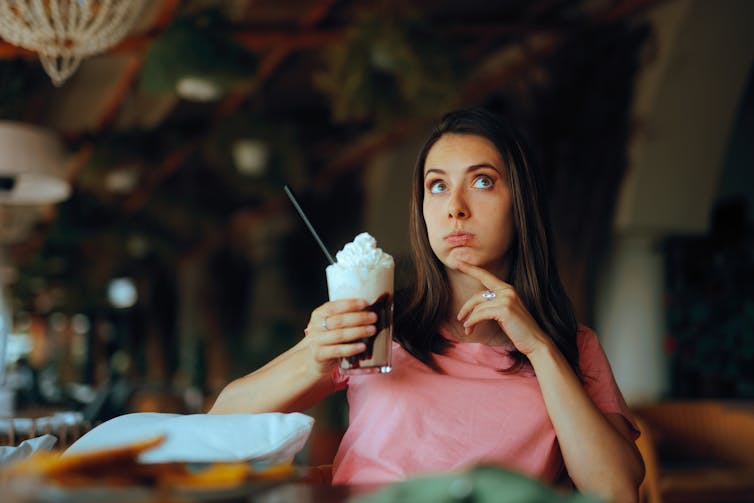
Woman sits in cafe holding a drink with a lot of whipped cream
No need to add extra cream…
Nicoleta Ionescu/Shutterstock

Evidence overall suggests that studies conducted in Asian populations are more likely to report benefits of dairy consumption for cognitive health, while many European studies do not. One possible explanation is that average dairy intake tends to be much lower in Asian countries, meaning modest consumption may have different effects than higher intakes.

For example, one Japanese study reported a reduced dementia risk among people who ate cheese, but overall consumption levels were very low and the research was sponsored by a cheese producer. In contrast, another Japanese study funded by government grants found no protective effect of cheese.

Some long-term European studies have also reported benefits. In a Finnish study of 2,497 middle-aged men followed for 22 years, cheese was the only food associated with a lower dementia risk, reduced by 28%.

Consumption of milk and processed red meat was linked to poorer performance on cognitive tests, while fish consumption was associated with better outcomes. A large UK study following nearly 250,000 people found that eating fish two to four times a week, fruit daily and cheese once a week was associated with lower dementia risk.

However, these studies have important limitations. What people eat is usually self-reported, and changes in memory can affect both eating habits and how accurately people remember what they have eaten. To deal with this, the Swedish researchers took two extra steps.

First, they excluded anyone who already had dementia when the study began. Then they repeated the same calculations after removing people who went on to develop dementia within the first ten years of the study. This did not mean starting the study again or recruiting new participants. It simply meant re-checking the results using a smaller group of people who remained dementia-free for longer.

The reason for doing this is that the early stages of dementia can subtly change behaviour long before diagnosis. People may eat differently, lose appetite or struggle to recall their usual diet. By focusing on participants who stayed cognitively healthy for many years, the researchers reduced the chance that these early changes were influencing the results.

Another important question is whether substitution played a role. Some of the apparent benefits may reflect replacing red or processed meat with cheese or cream, rather than an effect of dairy itself. Supporting this idea, the Swedish study found no association between full-fat dairy and dementia risk among participants whose diets remained stable over five years.

Most importantly, foods should not be considered in isolation. Dietary patterns matter more than individual ingredients. Diets such as the Mediterranean diet, which is consistently associated with lower risks of both dementia and heart disease, include cheese alongside vegetables, fish, whole grains and fruit.

In the Swedish study, people who consumed more full-fat cheese and cream were also more educated, less likely to be overweight and had lower rates of conditions linked to dementia, including heart disease, stroke, high blood pressure and diabetes. All of these factors independently reduce dementia risk.

Spread of foods included in the Mediterranean diet
Eating a healthy, varied diet can help protect brain health.
monticello/Shutterstock

This suggests that higher cheese intake tended to occur within healthier overall lifestyles, rather than alongside excess calorie consumption or poor metabolic health.

Overall, the evidence does not support the idea that full-fat dairy causes dementia, nor that fermented milk products reliably protect against it. Full-fat cheese contains several nutrients relevant to brain health, including fat-soluble vitamins A, D and K2, as well as vitamin B12, folate, iodine, zinc and selenium. These nutrients play roles in neurological function and may help support cognitive health.

That said, the data do not justify eating large amounts of cheese or cream as protective foods against dementia or heart disease. The most consistent message remains that balanced diets, moderation and overall lifestyle matter far more than any single item on the cheese board.

The Conversation

Eef Hogervorst has receives funding from grants investigating food and dementia such as Alzheimer’s Research UK, The Newton Trust/British Council and from Merck to investigate the role of omega 3 and folate to prevent dementia. She also acted as advisor on dementia, lifestyle and hormones for UK (NICE) and European (ESHRE) boards and is frequently invited to give public and scientific lectures on these topics

ref. Can eating high fat cheese and cream reduce dementia risk, as a new study suggests? – https://theconversation.com/can-eating-high-fat-cheese-and-cream-reduce-dementia-risk-as-a-new-study-suggests-272138

The Room in the Tower: the ‘real’ hautings that inspired this year’s BBC Ghost Story for Christmas adaptation

Source: The Conversation – UK – By Alice Vernon, Lecturer in Creative Writing and 19th-Century Literature, Aberystwyth University

This year’s BBC Ghost Story for Christmas is an adaptation of E. F. Benson’s 1912 tale of vampiric horror and haunted sleep, The Room in the Tower.

The unnamed narrator begins the story by relating a recurring nightmare he has suffered for 15 years. In the dream, he has been invited to the mansion of the Stone family. The dream begins pleasantly, with card games, cigarettes and light conversation. But it always takes a turn when the family’s fearsome matriarch, Mrs Stone, tells the narrator that he’ll now be shown to his room for the night – the titular room in the tower. Upon entering the room, he is overwhelmed with abject horror, and wakes up before he sees the object of his fear.

While visiting a friend one stormy summer’s day, the narrator finds himself at the very home he saw at least once a month in his dreams. Sure enough, he’s led to the room in the tower, where he finds a hideous portrait of the demonic Mrs Stone. The portrait is removed from the room at his request, but leaves curious bloodstains on the narrator and his friend’s hands. During the night, however, the narrator’s sleep is once again disturbed by the nightmare made manifest.

E. F. Benson in a suit, with a moustache
E. F. Benson ‘grew up with ghosts’.
The New York Public Library

Many ghost stories take place in bedrooms. One of the BBC’s first ghost stories adapted for television was M. R. James’ Oh Whistle, and I’ll Come to You, My Lad, which features a bumbling academic terrorised in his hotel room by a ghost quite literally wearing a bed sheet. Horror comes from a twisted reversal of what we expect to see and experience, and since the bed should be the place of utmost safety, it is ripe to be distorted into a place of existential dread.

Sleep, too, is a state of pure vulnerability. Those few breathless seconds after waking from a nightmare remind us just how defenceless we are. No tale of the supernatural from the early 20th century examines the way our troubled sleep can haunt us quite like The Room in the Tower.

Benson grew up with ghosts. His father, Edward Benson, was the archbishop of Canterbury. He was good friends with novelist Henry James, and allegedly told his son a spooky story he’d heard that James later turned into The Turn of the Screw (1898).

Benson’s mother was Mary Sidgwick, whose brother Henry was a founding member and first president of the Society for Psychical Research (SPR). The SPR’s aim was to investigate strange and paranormal phenomena, with particular interests in thought transference (or telepathy), visions and hallucinations, and ghosts and hauntings.

Begun in 1882, the SPR almost immediately set about collecting a massive amount of data under their Census of Hallucinations. They sent out a questionnaire to the public, and received thousands of responses over several years, some with fascinating anecdotes about being terrorised by ghosts and monsters in the middle of the night. The SPR compiled these in an issue of their periodical in 1894.

A man with a long white beard in a black and white photo
Henry Sidgwick, first president of the SPR in 1894.
WikiCommons

To read them in light of The Room of the Tower, it seems that Benson, too, knew what it feels like to be haunted by hallucinatory sleep disorders. Indeed, perhaps he even took direct influence from some of the anecdotes. The narrator in The Room in the Tower, being visited by a vampiric monster at the end of the story, describes himself as being “paralysed” – a typical sensation of sleep paralysis, which is often accompanied by a terrifying hallucination.

In Benson’s story, the narrator sees a “figure that leaned over the end of my bed”. In the SPR’s Census, a respondent referred to as Miss H. T. describes a horrifying visitation similar to the experience of Benson’s narrator. She wrote that she had seen the same figure three times, just as the narrator has the same nightmare over and over again. It would happen the same way every time; she would believe herself to be awake, and she would see a shimmer in the air that gradually solidified. Paralysed, she couldn’t move or scream to defend herself as the shape “took the form of mist and then developed into a dark veiled figure, which came nearer to me” and bent over the bed. Finally, the paralysis would lift, and the figure disappeared just as Miss H. T. threw her hands out towards it.

What both the Census and The Room in the Tower show is that ghosts don’t need to come from graveyards, gothic houses, or local legends. Often the most terrifying encounters, the experiences that prove most fruitful for ghost stories, are those our sleeping minds conjure up on the ethereal boundary between dreaming and waking.

The Room in the Tower will air on BBC One on Christmas Eve at 10pm, and will star Joanna Lumley as the terrifying Mrs Stone. For those of us prone to experience troubled sleep, it may well summon a nightmare of our own.


Looking for something good? Cut through the noise with a carefully curated selection of the latest releases, live events and exhibitions, straight to your inbox every fortnight, on Fridays. Sign up here.


This article features references to books that have been included for editorial reasons, and may contain links to bookshop.org. If you click on one of the links and go on to buy something from bookshop.org The Conversation UK may earn a commission.

The Conversation

Alice Vernon does not work for, consult, own shares in or receive funding from any company or organisation that would benefit from this article, and has disclosed no relevant affiliations beyond their academic appointment.

ref. The Room in the Tower: the ‘real’ hautings that inspired this year’s BBC Ghost Story for Christmas adaptation – https://theconversation.com/the-room-in-the-tower-the-real-hautings-that-inspired-this-years-bbc-ghost-story-for-christmas-adaptation-272309