Heritage railway volunteers show how deep friendships can be formed without discussing emotions

Source: The Conversation – UK – By Tom Yarrow, Professor of Anthropology, Durham University

“Let’s face it, we’re just not that into emotions,” Brian tells me with a smile talking with other volunteers at a heritage steam railway in northern England. They are discussing a popular TV restoration show. Allan grimaces, parodying the presenter: “He’s always jumping around, shoving the microphone in their faces, like, ‘How do you feel?’ ‘Does this make you sad?’ You can almost see his glee when people actually cry!”

This parody of emotional disclosure captures something important about the values of a group of men I’ve spent years working alongside.

In public discourse and mental health campaigns, emotional expression is often viewed as essential to mental health. This weighs particularly heavily on discussions of older men. Research routinely links male emotional “repression” to “traditional” and even “toxic” forms of masculinity, connecting an inability to talk about feelings to social isolation and self-alienation.

My research suggests that this narrative misses something crucial about how connection actually works. To research this subject, I spent over four years working closely with volunteers at a heritage railway, observing their everyday interactions, and talking to them about their friendships.

The volunteers – mostly retired men from former industrial towns in north-east England – explicitly reject the modern emphasis on emotional disclosure. Through the work of restoring railways, they are preserving a form of friendship which is elsewhere increasingly rare – one characterised by the more “old-fashioned” value of taciturnity, where the discussion of emotions is not expected or required.

Rather than dismiss their approach as “repression”, I argue in a forthcoming paper that we need to appreciate how people can develop intimate and caring relationships, without naming emotions.

Feeling without emotion

Among the men I came to know, I was initially struck by the lack of talk about their personal lives. Even when facing difficult circumstances including health problems and bereavement, they rarely spoke about their feelings. Instead, they talked about shared interests in railways, and the work that they engaged in. It took me a long time to realise that this did not reflect a lack of care.

Working together on restoration projects creates what they call “camaraderie”, a form of friendship that is grounded in doing things together, rather than in the reflection on interior feelings that has become an increasing expectation of modern intimacy.

Restoring and repairing railway infrastructure involves physically demanding manual labour. They work alongside one another in close proximity for long periods of time.

As we struggled with a particularly stubborn toilet seat installation in a cramped coach cubicle, one volunteer wryly observed in a bantering tone that is common: “There’s more than one way of killing a pig and stuffing its arse with butter!” He later explained: “If the job’s too hard, there’s a simpler way of doing it.” Friendships are forged through the process of facing and overcoming these practical problems. Shared tasks create a sense of shared purpose.

Over the decades, this creates a distinctive form of intimacy. Closeness is brought about through shared activities and interests, not personal revelation.

Paradoxically, the more intimate these relationships are, the harsher the “banter” can be. And the closer their friendships, the more they feel comfortable in sharing silence. It may seem that this is uncaring, but in fact the reverse is true.

Connecting through silence

Ron was a taciturn former merchant navy worker in his 70s. As a regular volunteer for over a decade, concern quickly grew among the group when he stopped appearing. When he finally returned several weeks later, he was visibly breathless and struggled to walk. Nobody asked directly what was wrong. Instead, they offered tea and made jokes.

After he left, discussion made it clear that this was deliberate. His friends had observed him carefully and were worried. Their silence was a thoughtful response to his own: a way of giving him the “normality” that he seemed to want.

I observed these patterns of interaction in many other situations. What might look like emotional inarticulacy is actually a deliberate ethic of care. These men aren’t unable to discuss feelings. But often they choose not to, viewing these silences as a way to respect the autonomy and privacy of others. In this respect, my research builds on ethnographic accounts, for example of firefighters and male hospital porters that draw attention to forms of intimacy and connection that do not depend on the discussion of personal feelings and emotions.

Though men at the railway rarely discuss feelings, these are understood by other means. The way someone looks, or the manner in which they work can be telling. In response, they show care through deeds: checking in via phone calls, offering practical help, creating space for silent companionship without pressure to explain or disclose – “just being there”, as they sometimes say.

Mental health services and support initiatives increasingly target men with messages about “opening up”. Indeed, my research doesn’t suggest emotional expression is wrong or unhelpful. However, either/or framings, which view connection in opposition to repression miss important aspects of the many ways people sustain intimacy and support.

My work with railway enthusiasts shows how it is possible to create meaningful support networks that offer genuine intimacy and connection, without explicit discussion of emotions. Connection and care take multiple forms. For some, silence shared between friends isn’t an absence of feeling, just a different way of sharing it.

The Conversation

Tom Yarrow does not work for, consult, own shares in or receive funding from any company or organisation that would benefit from this article, and has disclosed no relevant affiliations beyond their academic appointment.

ref. Heritage railway volunteers show how deep friendships can be formed without discussing emotions – https://theconversation.com/heritage-railway-volunteers-show-how-deep-friendships-can-be-formed-without-discussing-emotions-266435


What to do if you fail at your new year resolution

Source: The Conversation – UK – By Janina Steinmetz, Professor in Marketing, Bayes Business School, City St George’s, University of London

Krakenimages.com/Shutterstock

Every year, many of us bravely announce our resolutions for the new year. A glass of champagne on New Year’s Eve might add to our confidence in our ability to do better in the coming year and save more, spend less, eat better, work out more, or binge-watch less.

But most of our resolutions fail. Even within the first weeks after New Year’s Eve, the majority of people have given up on them. Yet, not all tales of failure are the same, because the way you talk about the failure matters for your own motivation and other people’s confidence in your ability to try again.

So what can we do after we’ve given up on our resolution? We’ve announced our
good intentions to friends and family and now must admit failure. Research has shown the way you word your failed resolution can affect how people view it. And understanding the reasons most resolutions don’t work out can help us see it through in the future. Indeed, you can talk about your resolutions in a way that will make your failure more understandable and will sustain your motivation to keep going.

A constructive way to discuss your failed resolution is to focus on the controllability of the failure. Research shows that most resolutions will require some investment of time and of money. For example, getting in shape takes time for exercise and also normally requires money for a gym membership or for workout equipment. Because both of these resources are essential for pursuing our goals, many failed resolutions are due to the lack of either time or money, or both.

When talking about a failed resolution in the past, I’ve showed in my own research
that we should focus on how lack of money contributed to this failure, rather than
lack of time. In my 2024 study, people read about fictional as well as real panel participants who failed either due to lack of money or lack of time. Most participants felt the person whose failure was caused by lack of money would have more self-control going forward and was going to be more reliable at pursuing their goals.

This effect occurred because lack of money is seen as something that cannot be controlled very easily, so if this caused the failure, there wasn’t very much the person who failed could have done about it.

In this research, most of the failed resolutions were related to weight loss, better eating, or working out in the gym. Participants felt the same whether the person who failed was a man or a woman, presumably because it’s plausible that everyone needs some time and some money to pursue various goals regardless of gender or the specific resolution.

The role of controllability takes a different form when it comes to thinking about how we can do better next time.

The role of time

Research also shows the way we view time matters when it comes to failure. For the past, it’s better to think about things outside of our control that can help to take the negativity out of failure and bolster the belief that we can do better. This can mean, for example, to consider how our failure was due to lack of money or other resources outside of our control.

For the future, however, take an active perspective on time. Look at your schedule and make active decisions how to allocate time to your goal pursuit, by scheduling gym sessions or blocking time to prepare healthy meals. This can help to give us the motivation to try again because we’re not victims of our busy schedules.

Woman flopped over an exercise ball in living room.
Definitely not the only one.
Lopolo/Shutterstock

A study published in October 2025 that focused on how a lack of time contributed to failures showed that people can get back a sense of control by talking about “making time”, instead of “having time”. People who discussed their failures as an issue of not having made the time felt like they could do things differently in the future, and were more motivated to do so.

This is because “making time” suggests active control over one’s time and schedule, instead of “having time” that leaves us passive. For example, if you say you didn’t make the time to work out, that means you can make the time in the future if you choose to do so. In contrast, if you say you didn’t have time to work out, it feels like this lack of time is outside of your control and could happen again, preventing you from pursuing your exercise goals.

Find the joy

Another reason so many people struggle to keep to their new year resolution may be because they were too ambitious, or they neglected that joy and pleasure keep us going.

We need not only to have a goal in mind. Finding joy in the journey and belief in the ability to change is also important. For example, someone might want to get in better shape and work out more, but when they actually try to go to the gym, they lack the confidence to sign up for a class. Without some fun, it’s hard to follow through on a resolution even if we really want to pursue the goal. So, try to think of ways you can make the goal more enjoyable to work on and remind yourself you are capable.

The trend for new year resolutions isn’t a bad thing in itself. Although it might seem a bit paradoxical to start virtuous habits right after a big night with alcohol and overeating, research shows that we can indeed benefit from the “fresh-start” effect in which a new beginning in the calendar can provide a clean slate to start better habits.

But we don’t have to wait for the calendar to give us a fresh start. We can choose to make our own resolution (maybe a Valentine’s or Easter resolution?) to boost the motivation to pursue our goals.

The Conversation

Janina Steinmetz does not work for, consult, own shares in or receive funding from any company or organisation that would benefit from this article, and has disclosed no relevant affiliations beyond their academic appointment.

ref. What to do if you fail at your new year resolution – https://theconversation.com/what-to-do-if-you-fail-at-your-new-year-resolution-271050

I grew up in the world’s coldest city without central heating. Here’s what the world can learn from us

Source: The Conversation – UK – By Yangang Xing, Associate Professor, School of Architecture Design and the Built Environment, Nottingham Trent University

On winter mornings in Harbin, where the air outside could freeze your eyelashes, I would wake up on a bed of warm earth.

Harbin, where I grew up, is in northeast China. Winter temperatures regularly dip to -30°C and in January even the warmest days rarely go above -10°C. With about 6 million residents today, Harbin is easily the largest city in the world to experience such consistent cold.

Keeping warm in such temperatures is something I’ve thought about all my life. Long before electric air conditioning and district heating, people in the region survived harsh winters using methods entirely different from the radiators and gas boilers that dominate European homes today.

Now, as a researcher in architecture and construction at a British university, I’m struck by how much we can learn from those traditional systems in the UK. Energy bills are still too high, and millions are struggling to heat their homes, while climate change is expected to make winters more volatile. We need efficient, low-energy ways to stay warm that don’t rely on heating an entire home with fossil fuels.

Some of the answers may lie in the methods I grew up with.

A warm bed made of earth

My earliest memories of winter involve waking up on a “kang” – a heated platform-bed made of earth bricks that has been used in northern China for at least 2,000 years. The kang is less a piece of furniture and more a part of the building itself: a thick, raised slab connected to the family stove in the kitchen. When the stove is lit for cooking, hot air travels through passages running beneath the kang, warming its entire mass.

A traditional Chinese kang bed-stove.
Google Gemini, CC BY-SA

To a child, the kang felt magical: a warm, radiant surface that stayed hot all night long. But as an adult – and now an academic expert – I can appreciate what a remarkably efficient piece of engineering it is.

Unlike central heating, which works by warming the air in every room, only the kang (that is, the bed surface) is heated. The room itself may be cold, but people warm themselves by laying or sitting on the platform with thick blankets. Once warmed, its hundreds of kilograms of compacted earth slowly release heat over many hours. There are no radiators, no need for any pumps, and no unnecessary heating of empty rooms. And since much of the initial heat was generated by fires we’d need for cooking anyway, we saved on fuel.

Maintaining the kang was a family undertaking. My father – a secondary school Chinese literature teacher, not an engineer – became an expert at constructing the kang. Carefully building layers of coal around the fire to keep it alive over the night would be my mum’s job. Looking back, I realise how much skill and labour was involved, and how much trust families placed in a system that required good ventilation to avoid carbon monoxide risks.

But for all its drawbacks, the kang delivered something modern heating systems still struggle to deliver: long-lasting warmth with very little fuel.

Similar approaches across East Asia

Across East Asia, approaches to keeping warm in cold weather evolved around similar principles: keep heat close to the body, and heat only the spaces that matter.

In Korea, the ancient ondol system also channels warm air beneath thick floors, turning the entire floor into a heated surface. Japan developed the kotatsu, a low table covered by a heavy blanket with a small heater underneath to keep your legs warm. They can be a bit costly, but they’re one of the most popular items in Japanese homes.

Clothing was also very important. Each winter my mum would make me a brand new thick padded coat, stuffing it with newly fluffed cotton. It’s one of my loveliest memories.

Europe had similar ideas – then forgot them

Europe once had similar approaches to heating. Ancient Romans heated buildings using hypocausts, for instance, which circulated hot air under floors. Medieval households hung heavy tapestries on walls to reduce drafts, and many cultures used soft cushions, heated rugs or enclosed sleeping areas to conserve warmth.

The spread of modern central heating in the 20th century replaced these approaches with a more energy-intensive pattern: heating entire buildings to a uniform temperature, even when only one person is home. When energy was cheap, this model worked, even despite most European homes (especially those in the UK) being poorly insulated by global standards.

But now that energy is expensive again, tens of millions of Europeans are unable to keep their homes adequately warm. New technologies like heat pumps and renewable energy will help – but they work best when the buildings they heat are already efficient, allowing for lower set point for heating, and higher set points for cooling.

This highlights why traditional approaches to warming homes still have something to teach us. The kang and similar systems show that comfort doesn’t always come from consuming more energy – but from designing warmth more intelligently.

The Conversation

Yangang Xing does not work for, consult, own shares in or receive funding from any company or organisation that would benefit from this article, and has disclosed no relevant affiliations beyond their academic appointment.

ref. I grew up in the world’s coldest city without central heating. Here’s what the world can learn from us – https://theconversation.com/i-grew-up-in-the-worlds-coldest-city-without-central-heating-heres-what-the-world-can-learn-from-us-271657

Inside Uganda’s video halls, ‘video jokers’ transform Hollywood blockbusters into local entertainment

Source: The Conversation – UK – By Damien Pollard, Assistant Professor in Film, Northumbria University, Northumbria University, Newcastle

If you walk into a video hall in Uganda your attention will probably go straight to a person sitting at the front of the audience. Speaking rapidly into a microphone, they comment loudly and continuously, often drowning out the sound of the film itself. You may well ask who this person is, and why they keep interfering with the film that people have come to watch.

I’ve been conducting research into Uganda’s film landscape for the last couple of years and I’ve been privileged to visit several different venues where movies are screened. Uganda has few cinemas – there are only three in the capital city, Kampala, with a total of ten screens. Instead, the country has an extensive network of video halls, known locally as bibandas.

Video halls are found throughout the country, particularly in outlying urban areas and entrance is relatively cheap; typically around 1,000 Ugandan shillings, or 21 British pence (a cinema ticket, meanwhile, usually costs around 20,000 shillings or a little over £4). Inside a video hall, benches or seats are laid out in front of televisions and films are screened throughout the day. These are often pirated works from the US, India, Nigeria, Korea, China and elsewhere. Some of the film industry players that I have met during my research estimate that there could be as many as 3,000 video halls in Uganda.

Video hall owners have always had a problem, though. Despite Uganda’s history as a British colony, English is not spoken fluently by everyone. Neither are Hindi, Mandarin, Cantonese or Korean. In the 1980s, the “video joker” (VJ) emerged as a solution and soon became a key feature of the video hall.

The VJ sits at the front of the audience with a microphone and a sound mixer. Talking over the film, they explain its plot and paraphrase the dialogue in the Ugandan language appropriate to the location in which they are working (in Kampala this would generally be Luganda).

Importantly, the VJ’s version of what characters are saying and what is happening in the film may diverge significantly from the original version. They are known to give characters and locations Ugandan names, for example, and most interject hyperbole, jokes and social or moral commentary into their performances.

One of my interviewees told me of a VJ he had seen performing over Christopher Nolan’s 2023 film Oppenheimer, who frequently claimed: “This bomb is big enough to destroy the whole of Africa!” He was amping up the jeopardy (unnecessarily, perhaps) and bringing the film home by using a local frame of reference. The VJ, in other words, can only very loosely be considered a translator. Many of my interviewees likened them more to an MC or a sports commentator – someone who “spices” up a film by adding their own performance to it and keeping the audience “hyped”.

Many VJs are celebrities in Uganda and possess loyal fans who regularly turn out to watch them perform. In fact, the VJ is often more of a draw for audiences than the film they are voicing over. Celebrity VJs have sought to capitalise on their success by selling pirated films on DVD or via streaming platforms with their voice-over tracks baked in, so that their fans can enjoy their work at home.

Even Ugandan televisions stations have experimented with broadcasting foreign content overlaid with VJ tracks. Furthermore, the Kampala-based micro-studio known as Wakaliwood (after Wakaliga, the village where it is based) has raised the profile of the video joker outside of east Africa. It has released two films — Who Killed Captain Alex and Bad Black — on YouTube with an absurdly comic, English-language voice over performed by one of my interviewees, VJ Emmie. Wakaliwood have garnered a global cult following and their work has been screened at festivals and midnight-movie events around the world (sometimes with Emmie performing live).

VJ controversies

Back in Uganda, VJs remain very popular but they’re not without controversy. Their work raises significant issues around intellectual property protection since it relies on the pirating of films. The fact that VJs’ and video halls’ contravention of IP law often goes unpunished in Uganda has been a major stumbling block on the country’s path toward developing a sustainable domestic film production industry.

It’s hard for Ugandan producers to compete with VJs who get their films for free and face few overheads when selling their DVDs to the public. Many Ugandan filmmakers also take issue with the tradition of video joking on aesthetic grounds, arguing that it ruins the integrity of a film and trivialises the audience experience.

Trailer for Once Upon a Time in Uganda! da Wakaliwood Documentary.

The debates around video joking in Uganda won’t be settled soon but the tradition helps us to appreciate two important facts about the exhibition of films. First, what is considered a “normal” way to watch a film varies enormously around the world and is connected to a location’s specific social, cultural and economic context. The way of watching films which is most common in mainstream cinemas in Europe or North America for example, where viewers sit silently in the dark, is only one way of “doing cinema”.

Second, when it comes to our experience of a film, the film itself is only the starting point. Anyone who has ever dressed up and attended a screening of The Rocky Horror Picture Show or The Room will know this too. What those films mean to us has as much to do with the interpersonal experience of watching them as the movie itself. This is perhaps even true when we hold film nights at home, joking with friends as we watch.

So although the VJ is a Ugandan tradition, it has things to tells the rest of the world about the universal experience of watching films.


Looking for something good? Cut through the noise with a carefully curated selection of the latest releases, live events and exhibitions, straight to your inbox every fortnight, on Fridays. Sign up here.


The Conversation

The research presented in this article was supported by a British Academy/Leverhulme Trust Small Research Grant, awarded to Damien Pollard. Award number: SRG24241338.

ref. Inside Uganda’s video halls, ‘video jokers’ transform Hollywood blockbusters into local entertainment – https://theconversation.com/inside-ugandas-video-halls-video-jokers-transform-hollywood-blockbusters-into-local-entertainment-270126

Biophobia: why some people hate nature – and what you can do about it

Source: The Conversation – UK – By Johan Kjellberg Jensen, Visiting research fellow in Environmental Sciences, Lund University

We’re constantly told that spending time in nature is good for the body and the mind alike. A large body of research shows multiple health benefits from contact with nature, ranging from stress reduction to an improved immune system and even improved academic achievement in children.

But not everyone is getting these benefits. Some people have feelings of fear, dislike or disgust towards animals and nature. The phenomenon, biophobia, has been somewhat overlooked in studies of human-nature relationships. This means the concept is poorly understood; it is unclear exactly what causes it and how it can best be treated. What’s more, there are signs it is on the rise.

In my new study with colleagues, we aimed to shed light on biophobia by outlining a conceptual framework of negative relationships with nature that can be applied across scientific disciplines – and systematically reviewing all studies that have been done on the topic.

The flipside of biophobia is called biophilia, an innate affinity for nature. Both of these terms stem from evolutionary psychology, which originally framed positive and negative response to nature as adaptive mechanisms to resources and threats.

Today, biophobia more broadly refers to the aversion towards nature, leading to negative relationships with the natural world. These negative relationships can take many forms, but crucially reduce exposure to the health benefits which are associated with nature, as well as undermining nature conservation efforts. As such, understanding the full range of human-nature relationships – from affinity to aversion – is important.

In total, we found 196 studies on biophobia. These were spread across the world, with some bias toward western countries. Although much fewer than the studies on positive human-nature relationships, we saw a rapid growth in the research subject. These studies were also scattered across a wide variety of research fields, including conservation, social sciences and psychology. One of our key findings was that there are strong silos between fields, with clear biases in terms of what part of nature is studied.

Multiple causes

We found biophobia to be caused by multiple factors. Generally, these can be divided into external and internal ones. External factors include our physical environment, such as our exposure to different species. Social attitudes are another external factor, and can include media narratives around nature – think of how the movie Jaws, for example, created a widespread fear of sharks.

Internal factors, on the other hand, covers personal traits. These include knowledge and age, both of which can mediate our feelings toward nature. For example, having good species knowledge and understanding of how nature works lowers the risk for negative relationships with nature. By contrast, feeling weak or in poor health correlates to a higher fear of large carnivores.

Scary face and eye in a tree trunk.
There are ways to reduce a fear of nature.
Brenda Rice/Shutterstock

However, it is important to note that these drivers can interact and be intertwined in complex ways. Attitudes, interactions and behaviour towards nature are also affected by the biophobia itself. For example, biophobic individuals may avoid areas where they believe there are species of animals they fear. And this may lead to greater support for culling animals such as wolves, bears and sharks.

Animals typically viewed as threats – snakes, spiders and carnivores – are well studied. But biophobia can also be directed at harmless or even species beneficial to have in our proximity, for example native species of frogs.

Treatments

Given the benefits of spending time in nature, is there any way to treat biophobia? We defined general categories of biophobia treatments, although there’s not a single treatment that will work for everyone.

One line of treatment is exposure. This could range from simply getting used to spending time in nature to actual clinical treatments. For example, people who are scared of spiders can overcome their fears with professional help, starting with looking at picture of spiders and reframing their thinking about them.

Another type of “treament” is education. This could range from formal studies of the natural world to putting up information signs in nature reserves, helping people better understand what’s surrounding them, what species are around, and how these species behave.

Finally, there’s conflict mitigation. This is a technique to reduce negative experiences or compensate for past bad experiences Indeed, it is important to note that nature can be dangerous and, depending on context, negative sentiments can be fully rational. For example, farmers may be negative about wild animals destroying crops. Conflict mitigation will propose ways to reduce such destruction.

The research we examined that came from the fields of psychology and social studies focused on effects on humans, but often defined nature in either very broad strokes or in very narrow terms. Environmental science, on the other hand, had a focus on the impacts on nature conservation, but often oversimplified social contexts and psychological drivers. It is clear to us that researchers must combine these two complementary views on biophobia to better understand and ultimately mitigate it.

If you feel joy and relaxation in the outdoors, you are in the majority. But studies suggest that rates of biophobia are increasing. As we remove ourselves farther from nature, living urban lives where wild animals and plants are becoming a distant echo, it is all the more important to try and preserve a love for nature – especially if we want to retain the health benefits and maintain stable ecosystems.

Opening our eyes to our hate for nature is ultimately crucial in reversing a trend of negative relationships with nature.

The Conversation

Johan Kjellberg Jensen received funding from the strategic research area Biodiversity and Ecosystem Services in a Changing Climate (BECC), funded by the Government of Sweden, and funding from The Royal Physiographic Society in Lund, Sweden, to support this research. He is currently affiliated with White arkitekter, an architectural firm that had no involvement in this article, the original research paper, and has no vested interests in its results.

ref. Biophobia: why some people hate nature – and what you can do about it – https://theconversation.com/biophobia-why-some-people-hate-nature-and-what-you-can-do-about-it-271421

How to combat the post-Christmas slump

Source: The Conversation – UK – By Jolanta Burke, Associate Professor, Centre for Positive Health Sciences, RCSI University of Medicine and Health Sciences

F01 PHOTO/Shutterstock

For many people, the run-up to Christmas is filled with excitement and anticipation. For others, it can quietly tip into something more difficult. A drop in mood is particularly common after Christmas, especially in the final week of the year and the first days of the new one. Understanding why this happens can help make that emotional dip easier to manage.

The post-Christmas blues are closely linked to the brain’s reward system. Neurotransmitters are chemical messengers that allow brain cells to communicate with each other and play a key role in how we feel, think and behave. One of the most important of these is dopamine, which helps regulate motivation, pleasure and reward, and is often targeted by antidepressants.

During the festive period, dopamine levels tend to rise. Anticipation of celebration, time spent with others, indulgent food and festive rituals all stimulate this feel-good system. Compared with everyday life, the brain experiences a powerful boost. Even thinking about Christmas before it arrives can activate these pathways, creating a surge of sensory excitement.


Read more:
It’s so hard to resist overspending at Christmas – here’s how to reinforce your willpower


Once Christmas is over, dopamine levels naturally fall back to their usual baseline. This sharp contrast between heightened stimulation and everyday routine can leave people feeling flat, unmotivated or low. This is the familiar post-Christmas slump.

Another hormone involved is oxytocin, often referred to as the “love hormone”. Oxytocin supports social bonding and emotional connection. It rises when we experience closeness, such as when a parent hugs their child, helping to strengthen feelings of trust and attachment. Christmas often involves more time with family and loved ones, which can increase oxytocin release.

After the holidays, however, that intensity of connection often drops away. When shared meals, visits and quality time suddenly decrease, oxytocin levels may fall too. This shift can contribute to feelings of loneliness, emotional emptiness, or low mood.

Who we spend time with over Christmas also matters. Not everyone at the table evokes comfort or closeness. Research suggests that time spent with in-laws, for example, may be more stressful than time spent with one’s own family. In these studies, changes in gut microbiota suggested higher stress responses when people spent time with in-laws over the holidays. This highlights that not all social interactions have the same emotional or physiological effects.

Middle-aged couple stand in front of Christmas tree wearing Santa hats and looking unimpressed
Not all festive social gatherings are good for your wellbeing.
alexkich/Shutterstock

From a psychological perspective, positive experiences during the festive season are often linked to greater social connection, bursts of positive emotion and higher life satisfaction. Gift-giving can also create a surge of positive emotions and even improve cognitive functioning, but only when it goes well.

Choosing gifts for people we care about often comes with high expectations. When a gift is poorly received or feels disappointing, neuroscientific evidence shows that givers may experience emotional pain similar to social rejection. This is why expressions of gratitude matter. Even when a gift misses the mark, appreciation helps protect the emotional wellbeing of the giver.

Christmas also disrupts everyday routines. Later nights, overeating and increased alcohol consumption are common. All of these affect sleep quality, which is closely linked to mood and emotional regulation. When sleep is disturbed, people are more vulnerable to low mood, making the post-Christmas period feel even harder.


Read more:
Overeating at Christmas can cause weight gain – but that doesn’t necessarily mean it’s permanent


So how can you protect your wellbeing?

Start by noticing how your environment affects you. Recent research suggests that protecting mental health begins with recognising situations and interactions that drain or distress you. If this happens during family gatherings, it can help to step away, disengage from tense conversations, or take short breaks to reduce emotional strain.

If you are spending Christmas alone and festive surroundings intensify feelings of sadness, it is reasonable to limit your exposure. Choose activities and places that genuinely comfort you, and reduce unnecessary reminders that worsen your mood. Setting boundaries, taking time out and disengaging from emotionally draining interactions are valid forms of self-care.

Man sits alone on sofa at Christmas
Christmas can be a difficult time for some people, which makes protecting your wellbeing especially important.
Ground Picture/Shutterstock

Re-establishing your usual routine as soon as possible can also help. Returning to regular bedtimes and wake times supports your circadian rhythm and helps your body regain a sense of normality. Exposure to daylight soon after waking is especially useful, as natural light signals to the brain that the day has begun. A short walk around midday, when light levels peak, can further support energy and mood.

Finally, create an “after Christmas” plan. Scheduling small activities, social connections, or goals gives you something to look forward to and softens the emotional contrast between the festive season and everyday life. Practising presence and finding small moments of enjoyment each day can also help restore balance.

If you feel low after Christmas, it is not a personal failing. It is your brain and body responding to the emotional, social and sensory intensity of the season. By understanding what is happening, you can soften the post-Christmas crash and support your wellbeing. Christmas ends, but its emotional echoes do not have to overwhelm the weeks that follow.

The Conversation

Jolanta Burke does not work for, consult, own shares in or receive funding from any company or organisation that would benefit from this article, and has disclosed no relevant affiliations beyond their academic appointment.

ref. How to combat the post-Christmas slump – https://theconversation.com/how-to-combat-the-post-christmas-slump-272039

The health benefits of swearing

Source: The Conversation – UK – By Michelle Spear, Professor of Anatomy, University of Bristol

Marat Jolon/Shutterstock.com

You stub your toe on the bedpost. Before your brain even registers the pain, a word explodes from your mouth – sharp, loud and oddly satisfying.

Far from being a simple slip in manners, swearing is a reflex rooted deep in the structure of the human body, drawing on networks in the brain and autonomic nervous system that evolved to help us survive pain and shock.

Research shows that a well-placed expletive can dull pain, regulate the heart and help the body recover from stress. The occasional outburst, it seems, isn’t a moral failure – it’s a protective reflex wired into us.

The impulse to swear begins far below the level of conscious speech. Most everyday language originates in the cerebral cortex, where ideas are shaped into words. Swearing, however, lights up a much older network – the limbic system, which governs emotion, memory and survival responses.

Important parts of the limbic system include the amygdala, which acts like an emotional alarm system, and the basal ganglia, a group of connected structures that help control movement and automatic behaviour, including instinctive vocalisation.

These areas send quick signals down the brainstem before the thinking part of the brain can respond. This is why the words come out so fast – it’s part of an ancient reflex that prepares the body to react to sudden shock or pain.

The outburst activates the autonomic nervous system, which temporarily raises heart rate, blood pressure and alertness. Muscles tighten as the motor cortex and spinal pathways prime the limbs for action – a reflexive brace that prepares the body to defend or withdraw.

Then the voice joins in, powered by a sharp contraction of the diaphragm and intercostal muscles that forces air through the larynx in a single, explosive exhalation. Even the skin responds: sweat glands activate and tiny electrical changes occur, with small beads of moisture marking the body’s emotional signature.

Deep inside the brain, the pituitary gland and the periaqueductal grey – a column of grey matter in the midbrain – release beta-endorphins and enkephalins, the body’s natural painkillers. These chemicals dull pain and create a faint sense of relief, turning language into a physical act – mobilising breath, muscles and blood before returning the body to calm.

This integrated response – from brain to muscle to skin – explains why a sharp expletive can feel simultaneously instinctive and satisfying.

How swearing dulls pain

Recent research shows that swearing can actually change how much pain people can handle. A 2024 review looked at studies on swearing’s pain-reducing effects and found consistent evidence that people who repeated taboo words could keep their hands in icy water significantly longer than those who repeated neutral words.

Another 2024 report found that swearing can also increase physical strength during certain tasks, further supporting the idea that the body’s response is real rather than merely psychological.

Man struggling to lift dumbbells.
Try swearing.
PeopleImages/Shutterstock.com

This suggests that the body’s reflexive vocalisation – the curse word – triggers more than just emotional release. One possible explanation is that a burst of automatic bodily arousal activates natural pain-control systems, releasing endorphins and enkephalins and helping people tolerate discomfort better.

What is less clear is the exact pathway – whether the effect is purely physiological or partly psychological, involving reduced self-consciousness, increased confidence, or distraction from pain. Importantly, the effect seems strongest among people who do not habitually swear, suggesting that novelty or emotional charge plays a key role.

Swearing also helps the body recover from sudden stress. When shocked or hurt, the hypothalamus and pituitary release adrenaline and cortisol into the bloodstream, preparing the body to react. If this energy surge isn’t released, the nervous system can remain in a heightened state, linked to anxiety, sleep difficulties, weakened immunity and extra strain on the heart.

Studies of heart-rate variability – small changes between heartbeats controlled by the vagus nerve – show that swearing may cause a quick rise in stress, then a faster return to calm. This bounce-back, driven by the vagus nerve’s effect on the heart, helps the body settle down more quickly than if you held the words in.

Viewed anatomically, swearing is one of several reflexive vocal acts – alongside gasping, laughing, and shouting – shaped by ancient neural circuits. Other primates produce sharp calls under pain or threat, activating the same midbrain regions that fire when humans swear.

That emotional charge is what gives profanity its potency. The taboo word bridges mind and body, giving shape and sound to visceral experience. When released at the right moment, it is the nervous system expressing itself, a primal and protective reflex that has endured through evolution.

The Conversation

Michelle Spear does not work for, consult, own shares in or receive funding from any company or organisation that would benefit from this article, and has disclosed no relevant affiliations beyond their academic appointment.

ref. The health benefits of swearing – https://theconversation.com/the-health-benefits-of-swearing-269154

Are we the Martians? The intriguing idea that life on Earth began on the red planet

Source: The Conversation – UK – By Seán Jordan, Associate Professor in Chemistry, Dublin City University

How did life begin on Earth? While scientists have theories, they don’t yet fully understand the precise chemical steps that led to biology, or when the first primitive life forms appeared.

But what if Earth’s life did not originate here, instead arriving on meteorites from Mars? It’s not the most favoured theory for life’s origins, but it remains an intriguing hypothesis. Here, we’ll examine the evidence for and against.

Timing is a key factor. Mars formed around 4.6 billion years ago, while Earth is slightly younger at 4.54 billion years old. The surfaces of both planets were initially molten, before gradually cooling and hardening.

Life could, in theory, have arisen independently on both Earth and Mars shortly after formation. While the surface of Mars today is probably uninhabitable for life as we know it, early Mars probably had similar conditions to the early Earth.

Early Mars seems to have had a protective atmosphere and liquid water in the form of oceans, rivers, and lakes. It may also have been geothermally active, with plenty of hydrothermal vents and hot springs to provide the necessary conditions for the emergence of life.

However, about 4.51 billion years ago, a Mars-sized, rocky planet called Theia crashed into the proto-Earth. This impact caused both bodies to melt together and then separate into our Earth and its moon. If life had begun before this event, it certainly would not have survived it.

Mars, on the other hand, probably didn’t experience a global remelting event. The red planet had its fair share of impacts in the violent early solar system, but evidence suggests that none of these would have been large enough to completely destroy the planet – and some areas could have remained relatively stable.

So if life arose on Mars shortly after formation of the planet 4.6 billion years ago, it could have continued evolving without major interruptions for at least half a billion years. After this time, Mars’ magnetic field collapsed, marking the beginning of the end for Martian habitability. The protective atmosphere disappeared, leaving the planet’s surface exposed to freezing temperatures and ionising radiation from space.

Supercomputer simulation showing the collision between the Earth and a Mars-sized body that formed the Moon.

A question of timing

But what of Earth: how soon did life appear after the impact that formed the Moon? Tracing the tree of life back to its root leads to a microorganism called Luca – the last universal common ancestor. This is the microbial species from which all life today is descended. A recent study reconstructed Luca’s characteristics using genetics and the fossil record of early life on Earth. It inferred that Luca lived 4.2 billion years ago – earlier than some previous estimates.

Luca was not the earliest organism on Earth, but one of multiple species of microbe existing in tandem on our planet at this time. They were competing, cooperating, and surviving the elements, as well as fending off attacks from viruses.

If small but fairly complex ecosystems were present on Earth around 4.2 billion years ago, life must have originated earlier. But how much earlier? The new estimate for the age of Luca is 360 million years after the formation of the Earth and 290 million years after the Moon-forming impact. All we know is that in these 290 million years, chemistry somehow became biology. Was this enough time for life to originate on Earth and then diversify into the ecosystems present when Luca was alive?

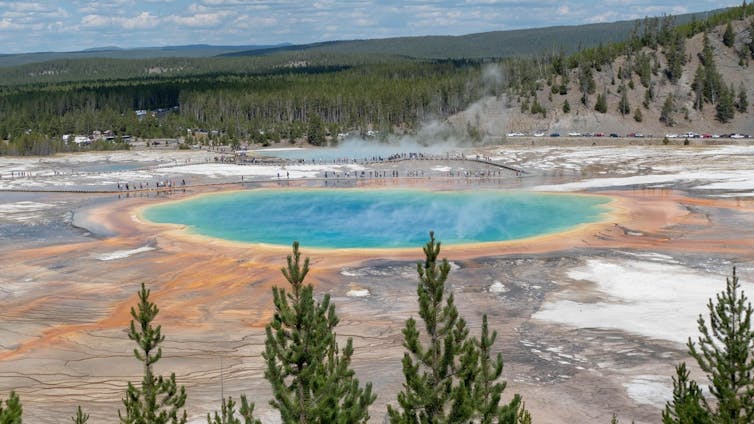
Grand Prismatic Spring, Yellowstone National Park
Luca’s habitat was either a shallow marine hydrothermal vent system or a geothermal hot spring, like this spectacular example in Yellowstone, US.
NPS/Diane Renkin

A Martian origin for terrestrial life circumvents this question. According to the hypothesis, species of Martian microorganism could have travelled to Earth on meteorites just in time to take advantage of the clement conditions following the Moon’s formation.

The timing may be convenient for this idea. However, as someone who works in the field, my hunch would be that 290 million years is plenty of time for chemical reactions to produce the first living organisms on Earth, and for biology to subsequently diversify and become more complex.

Surviving the journey

Luca’s reconstructed genome suggests that it could live off molecular hydrogen or simple organic molecules as food sources. Along with other evidence, this suggests that Luca’s habitat was either a shallow marine hydrothermal vent system or a geothermal hot spring. Current thought in the origin of life field is that these kinds of environments on the early Earth had the necessary conditions for life to emerge from non-living chemistry.

Luca also contained biochemical machinery that could protect it from high temperatures and UV radiation – real dangers in these early Earth environments.

However, it’s far from certain that early life forms could have survived the journey from Mars to Earth. And there’s nothing in Luca’s genome to suggest that it was particularly well adapted to space flight.

In order to have made it to Earth, microorganisms would need to have survived the initial impact on Mars’ surface, a high speed ejection from the Martian atmosphere and travel through the vacuum of space while being bombarded by cosmic rays for at least the best part of a year.

They would then have needed to survive the high-temperature entry through Earth’s atmosphere and another impact onto the surface. This last event may or may not have deposited it in an environment to which it was even remotely adapted.

The chances of all of this seem pretty slim to me. However difficult the transition from chemistry to biology may appear, it seems far easier to me than the idea that this transition would occur on Mars, with life forms surviving the journey to Earth, and then adapting to a completely new planet. However, I could be wrong.

It’s useful to look at studies of whether microorganisms could survive the journey between planets. So far, it looks like only the hardiest microorganisms could survive the journey between Mars and Earth. These are species adapted to preventing damage from radiation and capable of surviving desiccation through the formation of spores.

But maybe, just maybe, if a population of microorganisms were trapped in the interior of a sufficiently large meteorite, they could be protected from most of the harsh conditions of space. Some computer simulations even support this idea. Further simulations and laboratory experiments to test this are ongoing.

This raises another question – if life made it from Mars to Earth within the first 500 million years of our Solar System’s existence, why hasn’t it spread from Earth to the rest of the Solar System in the following four billion years? Maybe we’re not the Martians after all.

The Conversation

Seán Jordan does not work for, consult, own shares in or receive funding from any company or organisation that would benefit from this article, and has disclosed no relevant affiliations beyond their academic appointment.

ref. Are we the Martians? The intriguing idea that life on Earth began on the red planet – https://theconversation.com/are-we-the-martians-the-intriguing-idea-that-life-on-earth-began-on-the-red-planet-265493

Five myths about learning a new language – busted

Source: The Conversation – UK – By Abigail Parrish, Lecturer in Languages Education, University of Sheffield

Alfonso Soler/Shutterstock

Language learning is often a daunting prospect. Many of us wish we had learned a language to a higher level at school. But even though adults of all ages can do well in acquiring a new language, fear – or the memory of struggling to memorise grammar at school – can hold us back.

We both work in languages education and recognise the real benefits that learning another language can bring. As well as myriad cognitive benefits, it brings with it cultural insights and empathetic awareness.

With that in mind, we’re here to dispel five myths about language learning that might be putting you off.

Myth one: it’s all about grammar and vocabulary

In fact, learning about people, history and culture is arguably the best part of learning a language. While grammar and vocabulary are undeniably important aspects of language learning, they don’t exist in isolation from how people communicate in everyday life.

Language learning can help us to have “intercultural agility”: the ability to engage empathically with people who have very different experiences from our own. To be able to do this means learning about people, history and culture.

Immersing yourself in a particular country or location, for example through studying or working, is a fantastic way to do this. But when this isn’t feasible, there are so many other options available. We can learn so much through music, books, films, musical theatre and gaming.

Woman watching TV with subtitles on
Film and TV can be a great way to immerse in a different language and culture.
Ellyy/Shutterstock

Myth two: we should focus on avoiding mistakes – they’re embarrassing

One problem with formal language learning is that it encourages us to focus on accuracy at all costs. To pass exams, you need to get things “right”. And many of us feel nervous about getting things wrong.

But in real-life communication, even in our expert languages, we often make mistakes and get away with it. Think of the number of times you have misspelled something, or said the wrong word, and still been understood.

Less formal language learning can encourage us to think more about communication than accuracy.

One advocate of this approach is author Benny Lewis, who popularised a communicative learning approach he calls “language hacking” which focuses on the language skills needed for conversation. Language apps also encourage this, as does real-life travel and communication.

Myth three: it’s too much effort to start over with a new language

You can use languages in lots of ways, and the language you learn at school doesn’t have to be the only one you learn.

In England, most people learn one or more of French, Spanish or German at school. These languages can often serve as great apprenticeship languages, teaching us how to learn a language and about grammatical structures.

But they are not always the languages that we are most likely to use as adults, when family and work could take us anywhere. Our cultural interests might also lead us to want to know more about a new language.

Learning a language that you have a personal interest in can be very motivating and help you to keep going when things get a bit rocky.

Myth four: learning a language is an individual endeavour

You don’t have to learn alone. Learning with others, or having the support of others, can help motivate us to learn.

This might be through a multilingual marriage, joining a conversation group or chatting in a language learning forum online. Don’t feel that you have to have reached a certain proficiency before you start reaching out to others.

Women sat on floor looking at notebooks together
You don’t have to learn a language alone.
Vera Prokhorova/Shutterstock

Language apps can also make language learning a collective endeavour. You can learn along with friends and family, and congratulate them on their language learning streaks.

This is something both of us do with multiple generations of our families, helping us engage with language learning in a lighthearted way.

Myth five: it’s a lot of hard graft

Learning a language in a systematic way can be challenging, whether in a classroom or from a self-study course. But some things make this easier. We have found that people are more motivated to engage when they have a personal reason to learn. This could be, for example, wanting to communicate with family or to travel to a particular country or region.

The growth in popularity and accessibility of language learning apps has made language learning possible from any location and at any time, often for free.

You can easily catch up on your Chinese from the comfort of your own armchair, at whatever time is most convenient for you. Apps can be fun and playful, and can help us maintain motivation, develop vocabulary and embed grammatical structures.

There are lots of reasons for learning a language, and lots of benefits. We encourage everyone to focus on these benefits, and give it a go.

The Conversation

Jessica Mary Bradley currently receives funding from the British Academy / Leverhulme Trust in collaboration with Wellcome.

Abigail Parrish does not work for, consult, own shares in or receive funding from any company or organisation that would benefit from this article, and has disclosed no relevant affiliations beyond their academic appointment.

ref. Five myths about learning a new language – busted – https://theconversation.com/five-myths-about-learning-a-new-language-busted-266946

Festive maths puzzles – answers and explanations

Source: The Conversation – UK – By Neil Saunders, Senior Lecturer in Mathematics, Department of Mathematical Sciences, City St George’s, University of London

Here are the answers to the festive maths quiz I set on December 23. I hope you enjoyed it.


Read more:
The magic of maths: festive puzzles to give your brain and imagination a workout


Illustration of balance scales with gold coins in each basket.

nestdesigns/Shutterstock

Puzzle 1: You are given nine gold coins that look identical. You are told that one of them is fake, and that this coin weighs less than the real ones. Using a set of old-fashioned balance scales, what is the smallest number of weighings you need to determine which is the fake coin?

Solution: You can do this in just two weighings:

(1) Divide the nine coins into three sets of three, and choose two of these sets to weigh against one another. If one set is lighter than the other, then the fake is one of these three coins. If the two sets weigh the same, then the fake is in the three unweighed coins.

(2) Now take the set with the fake coin, and weigh two of its coins against each other. If one is lighter, that is the fake. If they weigh the same, then the fake is the third coin.


Puzzle 2: You’ve been transported back in time to help cook Christmas dinner. Your job is to bake the Christmas pie, but all you’ve got is two egg-timers: one that times exactly four minutes, and one that times exactly seven minutes. How can you time ten minutes exactly?

Solution: There are multiple answers to this puzzle, but supposing the chef wants you cook this pie as quickly as possible, here’s how to do it:

– Start both timers at the same time.

– Once the four-minute timer has finished, the seven-minute timer will have three minutes to go. At this point, put the pie in the oven.

– Once the remaining three minutes on the seven-minute timer has finished, turn the seven-minute timer over.

– Let the seven-minute timer run its full course, then take the pie out immediately. The pie will have been in the oven for ten minutes exactly.


Illustration of two barrels of win with a bottle and glass standing on one.

Dasha Efremova/Shutterstock

Puzzle 3: You are now entrusted with allocating the mulled wine, which is currently in two full ten-litre barrels. The chef hands you one five-litre bottle and one four-litre bottle, both empty. He orders you to fill the bottles with exactly three litres of wine each, without wasting a drop. How can you do this?

Solution: Here is a solution in 11 steps (see table below), recording the quantities of mulled wine in each barrel and bottle. B1 and B2 are the two ten-litre barrels; b5 and b4 are the five-litre and four-litre bottles respectively.

Note: You might have found a quicker solution than mine, but this is what I could come up with!

Puzzle graphic


Puzzle 4: Suppose there are 100 days of Christmas. On the n-th day, you receive £n as a gift, ranging from £1 on the first day to £100 on the final day. Can you calculate the total amount of money you are given, without laboriously adding all 100 numbers together?

Solution: When Carl Friedrich Gauss was posed this question by his maths teacher, the budding mathematician is said to have performed the following calculation:

Let s be the sum of the first 100 digits. Then we can write: s = 1 + 2 + 3 + 4 + … + 99 + 100

But we can also write this backwards: s = 100 + 99 + 98 + … + 4 + 3 + 2 + 1

If we now add these two equations vertically term by term, we see that the left hand side is s + s = 2s.

On the right-hand side, adding vertically again, the sum of every two terms is always the same, namely 101 (1 + 100, 2 + 99 and so on). And there are 100 terms in all – so the easy calculation for the total on the right-hand side is 100 * 101 = 10,100.

Therefore: 2s = 10,100, and s = 5,050. The total amount of money you are given is £5,050.


Puzzle 5: Here’s a Christmassy sequence of numbers. The first six in the sequence are: 9, 11, 10, 12, 9, 5 … (Note: the fifth number is 11 in some versions of this puzzle.) What is the next number in this sequence?

Solution: This sequence is the number of letters in each consecutive present given over the 12 days of Christmas. So the answer is 5, for swans. Here’s the full list:

Partridge (9), turtle doves (11), French hens (10), calling birds (12), gold rings (9, or 11 for those who sing “golden”), geese (5), swans (5), maids (5), ladies (6), lords (5), pipers (6), drummers (8).

Note: this might seem like a non-mathematical puzzle, but maths – and more broadly, critical and creative thinking – in part relies on spotting patterns that might look a little tenuous at first. Recruitment to the Allies’ code-breaking headquarters Bletchley Park during the second world war was partly based on the ability to solve a cryptic crossword.

Twelve Days of Christmas illustration

Garashchuk/Shutterstock

Puzzle 6: Which of the following 100 statements is the only true one?

  • Exactly one statement in this list is false.

  • Exactly two statements in this list are false.

    … and so on until:

  • Exactly 99 statements in this list are false.

  • Exactly 100 statements in this list are false.

Solution: Only the 99th statement in this list is true. Since there are 100 statements, and the n-th statement asserts that exactly n statements in the list are false, this can only be true when n = 99.


Puzzle 7: You and your friends Arthur and Bob are wearing Christmas hats that are either red or green. Nobody can see their own hat but you can all see the other two. Arthur’s and Bob’s hats are both red.

You are all told that at least one of the hats is red. Arthur says: “I do not know what colour my hat is.” Then Bob says: “I do not know what colour my hat is.” Assuming your friends have impeccable logic, can you deduce what colour your Christmas hat is?

Solution: Your hat must be red. If your hat were green, then both Arthur and Bob would see one green and one red hat. So when Arthur says that he doesn’t know the colour of his hat, Bob could immediately deduce that his hat was red. But since Bob doesn’t know the colour of his hat, Bob must be seeing two red hats, and so you can deduce that your hat is red.


Puzzle 8: There are three boxes under your Christmas tree. One contains two small presents, one contains two pieces of coal, and one contains a small present and a piece of coal. Each box has a label on it that shows what’s inside – but the labels have got mixed up, so every box currently has the wrong label on it.

You are told that you can reach in and take out one object from just one box. Which box should you choose in order to then be able to switch the labels so that every label correctly corresponds to the contents of its box?

Solution: Since all the boxes have the wrong labels, you know that if you open the box currently labelled as containing one small present and one piece of coal, you will either see two small presents or two pieces of coal.

Suppose you open it and see two small presents. Then the label of two small presents must be fixed to this box. And since you also know that every box originally had the wrong label, the label of one small present and one piece of coal should go on the box currently labelled two pieces of coal. Finally, the two pieces of coal label belongs to the box originally labelled two small presents.


Puzzle 9: There is a one-litre bottle of orange juice and a one-litre bottle of apple juice in the kitchen. Jack puts a tablespoon of orange juice into the bottle of apple juice, then stirs it around so it’s evenly mixed. Now Jill takes a tablespoon of liquid from that apple juice bottle puts it back in the bottle of orange juice. Is there now more orange juice in the bottle of apple juice, or more apple juice in the bottle of orange juice?

Solution: They are the same. This is a nice example of “invariance” – a term that comes up a lot in mathematics.

After all the adding of tablespoons of juice and all the mixing, the amount of orange juice in the apple juice bottle must have replaced the same amount of apple juice that was originally in the apple juice bottle, because the amount of liquid in each bottle is still one litre (they have remained invariant).

This explanation can feel unsatisfactory when you first read it. But exploiting the power of invariance allows you to deduce that the amounts must be the same, without any calculation.


Puzzle 10: In Santa’s home town, all banknotes carry pictures of either Santa or Mrs Claus on one side, and pictures of either a present or reindeer on the other. A young elf places four notes on a table showing the following pictures in this order:

    Santa   |   Mrs Claus   |   Present | Reindeer

Now an older, wiser elf tells him: “If Santa is on one side of the note, a present must be on the other.” Which notes must the young elf turn over to confirm what the older elf says is true?

Solution: First, the young elf should turn over the banknote with Santa on it. If there isn’t a present on the other side, then the older elf is lying. Next, the young elf should turn over the reindeer banknote to confirm that Santa is not on the other side. Again, if Santa were on the other side, the older elf would be lying.

It might be tempting to turn over the present banknote. But the older elf only says “if Santa, then present”, which doesn’t imply “if present, then Santa”. So it doesn’t matter whether Santa or Mrs Claus is on the other side of the present banknote – and it also doesn’t matter what is on the other side of the Mrs Claus banknote, because the older elf doesn’t say anything about those notes.


Bonus puzzle solution

Santa travels on his sleigh from Greenland to the North Pole at a speed of 30 miles per hour, then immediately returns from the North Pole to Greenland at a speed of 40 miles per hour. What is the average speed of Santa’s entire journey?_

Solution: This puzzle is perhaps an example of what psychologist Daniel Kahneman called Thinking Fast and Slow. Our fast-thinking system might say “just take the average”, and so we would guess 35 miles per hour. A reasonable answer, but wrong.

Our slower-thinking system – which is effortful to use, requiring tools like algebra and critical thinking – is needed here. First, let’s set up some variables:

– let d be the distance from Greenland to the North Pole.

– let t₁ be the time taken on the out-journey.

– let t₂ be the time taken on the return journey.

Using the standard equation “speed = distance divided by time”, we can say:

30 = d/t₁ and 40 = d/t₂

Rearranging these equations, we also know that t₁ = d/30 and t₂ = d/40

Since Santa travels the same distance there and back, his total distance travelled is 2d. And the average speed for the total journey is this total distance divided by the total time taken: 2d/(t₁ + t₂)

Using all of the above, we can say the average speed of Santa’s journey is 2d/(d/30 + d/40)

Now, (d/30 + d/40) = (4d/120 + 3d/120) = 7d/120

So Santa’s average speed = 2d / (7d/120) = 240/7 = 34.3

In this equation, the ‘d’s cancel out. This means we can work out the average speed of the journey without knowing either the distance or the time it took Santa to make his journey. This is the power of algebra: it allows you to use and manipulate quantities, using them as place holders even when you don’t know what the quantities are.

The answer is that Santa travelled at an average speed of 34.3 miles per hour.

The Conversation

Neil Saunders does not work for, consult, own shares in or receive funding from any company or organisation that would benefit from this article, and has disclosed no relevant affiliations beyond their academic appointment.

ref. Festive maths puzzles – answers and explanations – https://theconversation.com/festive-maths-puzzles-answers-and-explanations-272567