Academic freedom is often described as a cornerstone of democratic society. Politicians regularly claim to defend it, universities invoke it in mission statements and most members of the public say they support it in principle.
So why does it provoke such intense disagreement once it becomes concrete? At first glance, these disputes look like arguments about universities. But our research suggests something else is going on. Public disagreements over academic freedom are not simply about campus policy. They reflect deeper divides over political ideology and trust in expertise.
In a new study, we surveyed over 3,300 people in the UK and Japan to examine how citizens understand academic freedom when it is presented in concrete terms rather than abstract slogans.
Instead of asking whether people support “academic freedom” in general, we asked how much they agreed or disagreed with specific scenarios. These included whether universities should protect research that causes offence, and whether academics should be free to publish controversial findings. We also asked whether universities should collaborate with multinational corporations or political regimes accused of human rights abuses.
This approach matters. In surveys, people often express strong support for free inquiry in the abstract. But once academic freedom is tied to real-world trade-offs, such as offence, harm, reputation or political controversy, agreement tends to fracture.
Across both countries, political ideology emerged as one of the strongest predictors of attitudes toward academic freedom.
Right-leaning respondents were consistently more supportive of academic freedom. They were more likely to oppose restrictions on offensive research and more likely to agree that academics should be protected even when their work provokes controversy. This pattern appeared not only in the UK, where universities are deeply entangled in culture-war debates, but also in Japan, where such disputes are less visible in public life.
Left-leaning respondents, by contrast, were more likely to emphasise accountability. They tended to support limits on research perceived as offensive or harmful, reflecting greater concern for social sensitivity and the potential impact of academic work on marginalised groups.
These differences suggest that academic freedom is not a single, universally understood value. Instead, people interpret it through broader political worldviews. For some, it primarily means freedom from interference. For others, it is inseparable from social responsibility.
Trust in scientists matters
Trust also plays a crucial role. In both countries, people who trusted scientists more strongly were more likely to support academic freedom, particularly when asked whether researchers should be protected regardless of whether their findings cause offence.
Trust appears to act as a kind of permission structure. When people believe scientists are acting in good faith, they are more willing to tolerate controversial outcomes.
This effect was especially pronounced in Japan. There, trust in scientists was one of the strongest predictors of support for academic freedom across multiple scenarios. This likely reflects Japan’s institutional culture. Deference to expertise remains relatively high and political conflict over universities is more muted than in the UK.
In Britain, by contrast, trust in scientists mattered most when academic freedom was framed as protection for individual researchers, but less so when questions involved partnerships with controversial regimes. In those cases, trust was more conditional. This suggests that even trusted experts are expected to exercise judgement about ethical boundaries.
Taken together, these findings point to a deeper pattern. Public attitudes toward academic freedom are structured by two competing logics.
One emphasises autonomy. This is the idea that scholars must be insulated from political and social pressure in order to pursue knowledge freely. The other emphasises accountability: the belief that universities, as publicly funded institutions, should be responsive to social norms and moral concerns.
Most people do not fully embrace one logic or the other. Instead, they shift between them depending on the issue at hand. Many support free research in principle but draw lines when offence, ethics or international politics enter the picture.
This helps explain why debates over academic freedom so often feel polarised and unresolved. They are not simply disputes about policy details. They are disagreements about which values should take priority when liberal principles collide.
These findings have important implications.
First, they suggest that appeals to “academic freedom” alone are unlikely to persuade sceptics. Because people understand the concept differently, arguments that assume a shared meaning often talk past their audience.
Second, they highlight the importance of trust. Where confidence in scientists and universities is high, support for academic autonomy is more resilient. Where trust erodes, demands for oversight and restriction grow stronger.
Finally, disputes over academic freedom reflect broader tensions within democratic societies between liberty and accountability. These tensions are not new, but they are becoming more visible as universities sit at the centre of political and cultural change.
Rather than asking whether academic freedom is under threat, a better question may be this: how can institutions sustain public trust while defending the autonomy that makes academic inquiry possible in the first place?
Steven David Pickering received funding from the Japan Society for the Promotion of Science (JSPS, grant reference JPJSJRP 20211704) and the UK Research and Innovation’s Economic and Social Research Council (UKRI-ESRC, grant reference ES/W011913/1).
Yosuke Sunahara receives funding from Japan Society for the Promotion of Science (grant reference JPJSJRP 20211704.
Martin Ejnar Hansen does not work for, consult, own shares in or receive funding from any company or organisation that would benefit from this article, and has disclosed no relevant affiliations beyond their academic appointment.
Source: The Conversation – UK – By Andrew Gawthorpe, Lecturer in History and International Studies, Leiden University
Another US citizen has allegedly been killed by immigration agents in Minnesota, raising tensions between state and federal governments. The actions of the federal agencies involved has drawn fierce criticism not only from former Democratic presidents Barack Obama and Bill Clinton, but also America’s powerful pro-gun lobby, the National Rifle Association (NRA).
If you were to think it unusual that the people named in the previous sentence appear to be on the same side over this issue, you’d be right. But these aren’t usual times in America.
Video footage taken at the scene reportedly shows agents of the US Customs and Border Protection (CBP) – working with the Immigration and Customs Enforcement Agency (ICE) in Minnesota to detain people they suspect of being illegal migrants – tackling 37-year-old nurse, Alex Pretti.
The footage reportedly shows they wrestled him to the ground, beat him and apparently removed a handgun from a holster he was wearing, before firing ten shots at him.
Since his killing a lot of attention has focused on his gun. Carrying a handgun, whether openly or holstered, is legal in Minnesota, and Pretti had a license for his gun. So he was perfectly within his rights to be carrying it. And there is nothing to suggest from the footage that he attempted to draw it or use it while being tackled by the ICE agents.
Of course, in the United States, the right to keep and bear arms – the second amendment – is a pretty big deal to a lot of people, especially conservatives. So when various figures in the Trump regime suggested that CBP agents had been justified in shooting Pretti because he was carrying a holstered weapon, they provoked outrage from gun rights activists. And, significantly, many of these people are usually on the same page as the White House about pretty much anything.
First there was FBI director Kash Patel, who told Fox News: “You cannot bring a firearm loaded with multiple magazines to any sort of protest that you want.” Dead wrong, replied the Minnesota Gun Owners Caucus and the group Gun Owners of America – you’re legally entitled to bring a gun to a protest.
Then a Trump-appointed district attorney waded in, arguing: “If you approach law enforcement with a gun, there is a high likelihood they will be legally justified in shooting you.”
This drew a rebuke from the NRA, one of the most prolific and important right-wing groups in America and a big donor to Trump’s campaigns, which replied that: “This sentiment … is dangerous and wrong. Responsible public voices should be awaiting a full investigation, not making generalizations and demonizing law-abiding citizens.”
The problem that the Trump regime has is that it appears from abundant video evidence that Pretti was not handling his gun irresponsibly. He wasn’t waving it around, he wasn’t threatening anyone, in fact he wasn’t even touching it. He didn’t approach the federal agents – they appeared to pile on him. And he was disarmed of his holstered weapon by one of them before he was killed.
Second amendment vs tyrannical government
The reason that this touches such a raw nerve, even with many people who usually support Trump’s agenda, is that this cuts to the core of what the second amendment is about. In the eyes of the right, the amendment’s whole legitimacy rests on the idea that it allows the populace to arm in order to protect itself against a tyrannical government.
This means that Pretti was doing exactly what second amendment advocates say they need guns for. And while some gun rights advocates may have been willing to keep quiet while federal agents were trampling on the rights of migrants and brown-skinned citizens, the murder of Pretti is a bridge too far.
That’s not to say that the gun lobby is turning on the Trump administration – at least, not yet. But it is notable that ICE’s outrages (and those of the related Customs and Border Protection Agency) are becoming so hard to ignore that they’re increasingly drawing opposition not just from the left but also from traditionally right-wing groups.
The NRA is not about to flip and start fundraising for the next Democratic party presidential candidate. But its willingness to call out the regime is unusual to say the least. And it increases pressure on Trump to change course and damages the credibility of key people in the regime among conservatives.
The whole sequence of events also reveals something more concerning – the fact that more and more people in America on both left and right are carrying weapons. The idea of arming for self-defense has been quietly gaining ground in left-wing circles for around a decade.
Gun clubs have sprung up to serve LGBTQ+ people, black people, white liberals – anyone who fears they might one day be a target of violence from the Trump-ified federal authorities or right-wing militia. Nearly one-third of self-identified liberals now live in a gun-owning household.
And while it’s hard to find fault with their fears, this is another reason why America’s knife-edge politics is so terrifying. What happens when things fall apart in a country in which hatred and fear have driven so many people to arm themselves?
Let’s hope that Alex Pretti’s death serves as a reminder of the importance of stepping back from the brink rather than pushing the country closer to it.
Iran’s current wave of protests is often interpreted as having been sparked by inflation, currency collapse, corruption and repression. These explanations are not wrong, but they are incomplete.
Beneath the country’s political and economic crisis lies a more destabilising force that is still largely missing from international analysis: environmental breakdown.
So when citizens protest today, they are not only resisting authoritarian governance. They are responding to a state that can no longer reliably provide the most basic forms of security: water to drink, air to breathe, land to stand on, and electricity to carry on their daily lives.
From 2003-2019, Iran lost an estimated 211 cubic kilometres of groundwater, or twice its annual water consumption, leaving the country facing water bankruptcy. Excessive pumping – driven by agricultural expansion, energy subsidies and weak regulation – has caused land subsidence rates of up to 30cm per year, affecting areas where around 14 million people, more than one-fifth of the population, live.
Provinces such as Kerman, Alborz, Khorasan Razavi, Isfahan and the capital Tehran now have more than a quarter of their population living with the risk of subsidence. In all, large sections of the country – particularly around the capital Tehran, the agricultural centre Rafsanjan, and the city of Mashhad – are subsiding at alarming rates of close to 10cm per year.
Iran’s lack of water has become politically explosive. When reservoirs fall to extremely low levels, when taps run dry at night in major cities, or when farmers watch rivers and lakes disappear, grievances turn into protest.
As wetlands, lakes and riverbeds dry up, their exposed surfaces generate dust and salt storms that can blanket cities hundreds of kilometres away.
The aftermath of recent protests in Tehran.
At the same time, chronic electricity shortages – caused by underinvestment, inefficiency and poor infrastructure – have forced power plants and industries to burn heavy fuels. The result is extreme concentrations of sulfur dioxide, nitrogen oxides and fine particulate matter.
Ignoring environmental problems
The World Health Organization notes that Iran is facing severe problems in terms of its air quality. Around 11% of deaths and 52% of the burden of diseases across the country are attributable to environmental risk factors.
In recent months, major cities have repeatedly closed schools and offices due to hazardous air quality, while hospitals report surges in respiratory and cardiovascular emergencies.
These environmental failures do not exist in isolation. They are the predictable outcome of decades of distorted national priorities.
Since the 1980s, Iran has channelled vast financial, institutional and political resources into ideological expansion and regional disputes — supporting groups in Lebanon, Syria, Iraq, and Yemen – while systematically underinvesting in domestic environmental governance, infrastructure renewal and job creation.
Meanwhile, Iran’s political economy has been structured around energy subsidies and megaprojects that reward short-term extraction over long-term sustainability. Cheap fuel has encouraged water-intensive agriculture and inefficient industry.
Environmental agencies have remained fragmented and politically weak, unable to restrain more powerful ministries or governmentally linked economic actors. International isolation has compounded these failures.
Sanctions deepened the environmental crisis by restricting access to modern monitoring technologies, clean-energy systems, efficient irrigation and external finance.
While much of the world invested in technology and regulation to curb pollution and stabilise water systems, Iran doubled down on emergency fixes that deepened ecological damage rather than containing it. Sanctions and climate stress amplified the problems, but the root cause lay in state priorities that have consistently ignored environmental security.
The political consequences are now unmistakable. Environmental stress reshapes not only why people protest, but where and how. Maps of unrest in 92 Iranian cities reveal a clear pattern. Protests increasingly erupt in areas where there is groundwater collapse, land subsidence and water rationing.
Water shortages and protest
In provinces such as Tehran, Khuzestan in the south-west and Isfahan in central Iran – all areas with high levels of protest – there are acute water shortages, subsidence causing damage to roads and pipelines, and disputes over access to water.
In other cities such as Kermanshah and Ilam, intensifying unrest reflects the interaction of major environmental problems of drought, rainfall decline and groundwater depletion with severe economic problems and poverty.
But Iran is not unique in this regard. Similar conflicts over water and economic issues have played a destabilising role in neighbouring Syria. Prolonged drought, conflicts over water and access to it, and limited rainfall have affected crop yields and animals there. Hundreds of thousands of people living in agricultural communities have been driven to cities and camps nearby in a desperate attempt to survive.
Iran is not facing a cyclical protest problem that can be stabilised through repression, subsidies or tactical concessions. It is confronting a structural collapse of the systems that make governance possible, and are at the heart of human survival.
When there’s no water and the air becomes unbreathable, the social contract fractures. Citizens no longer debate ideology or reform timelines, they question the state’s right to rule at all.
What Iran sees today is not simply environmental stress but irreversible simultaneous failures across water, land, air and energy. These are not shocks that fade with rainfall or budget injections. They permanently shrink the state’s capacity to deliver security and economic opportunity.
Coercion can disperse crowds but it cannot reverse subsidence, restore collapsed aquifers or neutralise airborne toxins. A state cannot govern indefinitely where the ecological foundations of life, agriculture and public health are failing all at once.
Nima Shokri is affiliated with Hamburg University of Technology.
Source: The Conversation – UK – By Seamus Higgins, Associate Professor Food Process Engineering, Chemical & Environmental Engineering, University of Nottingham
A few thousand years ago, sugar was unknown in the western world. Sugarcane, a tall grass first domesticated in New Guinea around 6000BC, was initially chewed for its sweet juice rather than crystallised. By around 500BC, methods to boil sugarcane juice into crystals was first developed in India.
One of the earliest references to sugar we have dates to 510BC, when Emperor Darius I of what was then Persia invaded India. There he found “the reed which gives honey without bees”.
Knowledge of sugar-making spread west to Persia, then across the Islamic world after the 7th century AD. Sugar reached medieval Europe only via trade routes. It was extremely expensive and used more like a spice. Indeed, in the 11th century Crusaders returning home talked of how pleasant this “new spice” was.
It was the supply potential of this “new spice” in the early 16th century that encouraged Portuguese entrepreneurs to export enslaved people to newly discovered Brazil. There, they rapidly started growing highly profitable sugar cane crops. By the 1680s, the Dutch, English and French all had their own sugar plantations with enslaved colonies in the Caribbean.
In the 18th century, the increasing popularity of tea and coffee led to the widespread adoption of sugar as a sweetener. In 1874, prime-minister William Gladstone abolished a 34% tax on sugar to ease the costs of basic food for workers. Cheap jam (one-third fruit pulp to two-thirds sugar) began to appear on the table of every working-class household. The growing demand for sugar in Britain and Europe encouraged further growth and profit, earning the name “white gold”.
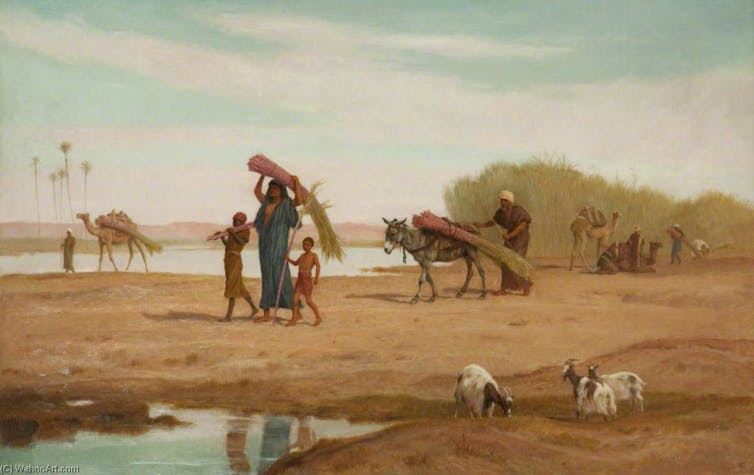
Getting in the Sugar Cane, River Nile by Frederick Trevelyan Goodall (1875). Grundy Art Gallery, CC BY
Britain’s per capita sugar consumption skyrocketed from four pounds in 1704 to 90 pounds by 1901. While slavery was eventually abolished, the supply of cheap labour was sustained by new flows of indentured workers from India, Africa and China.
Britain’s naval blockade of Napoleonic France at the start of the 19th century prodded the French to seek an alternative to Caribbean sugar supplies. It gave birth to the European sugar beet industry.
Sugar beet is a biennial root crop grown for its high sucrose content, which is extracted to produce table sugar. The 20th century has seen this traditionally heavily subsidised and tariff-protected industry grow to produce approximately 50% of Europe’s sugar. This includes the UK’s consumption, which is now around 2 million tons of beet (60%) and cane sugar (40%) annually.
Delights and dangers
In 1886, Atlanta’s prohibition laws forced the businessman and chemist John Pemberton to reformulate his popular drink, Pemberton’s Tonic French Wine Coca. He replaced the alcohol with a 15% sugar syrup and added citric acid. His bookkeeper, Frank Robinson, chose a new name for the drink after its main ingredients – cocaine leaves and kola nuts – and created the Coca-Cola trademark in the flowing script we know today.
In 1879, Swiss chocolatier Daniel Peter invented the world’s first commercial milk chocolate using sweetened condensed milk developed by his neighbour, Henri Nestlé. Milk chocolate, which contains about 50-52 grams of sugar per 100 grams, has now become a global favourite for its sweet taste and creamy texture.
Chocolate and cola have since solidified their status as global staples in the realm of fizzy drinks and sweet treats and have become essential indulgences for people worldwide.
In 1961, an American epidemiologist Ancel Keys appeared on the cover of Time magazine for his “diet-heart hypothesis”. Through his “seven countries” study, he found an association between saturated fat intake, blood cholesterol and heart disease. Keys remarked: “People should know the facts. Then, if they want to eat themselves to death, let them.”
An advert for Cocoa-Cola from 1961.
With competing scientific advice John Yudkin, founder of the nutrition department at Queen’s College, published an article in the Lancet. He argued that international comparisons do not support the claim that total or animal fat is the main cause of coronary thrombosis, highlighting that sugar intake has a stronger correlation with heart disease.
He published his book, Pure, White and Deadly, in 1972. It highlighted the evidence linking sugar consumption to increased coronary thrombosis and its involvement in dental caries, obesity, diabetes and liver disease. He ominously noted: “If only a small fraction of what is already known about the effects of sugar were to be revealed about any other material used as a food additive, that material would promptly be banned.”
The British Sugar Bureau dismissed Yudkin’s claims about sugar as “emotional assertions”, and the World Sugar Research Organisation called his book “science fiction”. In the 1960s and 1970s, the sugar industry promoted sugar as an appetite suppressant and funded research that downplayed the risks of sucrose, while emphasising dietary fat as the primary driver of coronary heart disease.
Scientific debate over the relative health effects of sugar and fat continued for decades. In the meantime, governments began publishing dietary guidelines advising people to eat less saturated fats and high-cholesterol foods. An unavoidable consequence of this was that people began eating more carbohydrates and sugar instead.
Official dietary guidelines did not begin to clearly acknowledge the health risks of excessive sugar consumption until much later, as evidence accumulated toward the end of the 20th century.
In my new book, Food and Us: the Incredible Story of How Food Shapes Humanity I explore the fact that sugar is a relatively new addition to our diet. In just a short period of 300 years, or 0.0001% of our food evolution, sugar has become ubiquitous in our food supply. It has even evolved its own terms of endearment and affection for people, such as sugar, honey and sweetheart.
However, the global addiction to sugar poses significant and interconnected challenges for public health, the economy, society and the environment. The pervasive nature of sugar in processed foods, combined with its effects on the brain’s reward system, creates a cycle of dependency that is driving a worldwide crisis of diet-related diseases and straining health systems.
Looking for something good? Cut through the noise with a carefully curated selection of the latest releases, live events and exhibitions, straight to your inbox every fortnight, on Fridays. Sign up here.
This article features references to books that have been included for editorial reasons, and may contain links to bookshop.org. If you click on one of the links and go on to buy something from bookshop.org The Conversation UK may earn a commission.
Seamus Higgins does not work for, consult, own shares in or receive funding from any company or organisation that would benefit from this article, and has disclosed no relevant affiliations beyond their academic appointment.
Source: The Conversation – UK – By Domenico Vicinanza, Associate Professor of Intelligent Systems and Data Science, Anglia Ruskin University
For half a century, computing advanced in a reassuring, predictable way. Transistors – devices used to switch electrical signals on a computer chip – became smaller. Consequently, computer chips became faster, and society quietly assimilated the gains almost without noticing.
These faster chips enable greater computing power by allowing devices to perform tasks more efficiently. As a result, we saw scientific simulations improving, weather forecasts becoming more accurate, graphics more realistic, and later, machine learning systems being developed and flourishing. It looked as if computing power itself obeyed a natural law.
This phenomenon became known as Moore’s Law, after the businessman and scientist Gordon Moore. Moore’s Law summarised the empirical observation that the number of transistors on a chip approximately doubled every couple of years. This also allows the size of devices to shrink, so it drives miniaturisation.
That sense of certainty and predictability has now gone, and not because innovation has stopped, but because the physical assumptions that once underpinned it no longer hold.
So what replaces the old model of automatic speed increases? The answer is not a single breakthrough, but several overlapping strategies.
One involves new materials and transistor designs. Engineers are refining how transistors are built to reduce wasted energy and unwanted electrical leakage. These changes deliver smaller, more incremental improvements than in the past, but they help keep power use under control.
Another approach is changing how chips are physically organised. Rather than placing all components on a single flat surface, modern chips increasingly stack parts on top of each other or arrange them more closely. This reduces the distance that data has to travel, saving both time and energy.
Perhaps the most important shift is specialisation. Instead of one general-purpose processor trying to do everything, modern systems combine different kinds of processors. Traditional processing units or CPUs handle control and decision-making. Graphics processors, are powerful processing units that were originally designed to handle the demands of graphics for computer games and other tasks. AI accelerators (specialised hardware that speeds up AI tasks) focus on large numbers of simple calculations carried out in parallel. Performance now depends on how well these components work together, rather than on how fast any one of them is.
Alongside these developments, researchers are exploring more experimental technologies, including quantum processors (which harness the power of quantum science) and photonic processors, which use light instead of electricity.
These are not general-purpose computers, and they are unlikely to replace conventional machines. Their potential lies in very specific areas, such as certain optimisation or simulation problems where classical computers can struggle to explore large numbers of possible solutions efficiently. In practice, these technologies are best understood as specialised co-processors, used selectively and in combination with traditional systems.
For most everyday computing tasks, improvements in conventional processors, memory systems and software design will continue to matter far more than these experimental approaches.
For users, life after Moore’s Law does not mean that computers stop improving. It means that improvements arrive in more uneven and task-specific ways. Some applications, such as AI-powered tools, diagnostics, navigation, complex modelling, may see noticeable gains, while general-purpose performance increases more slowly.
New technologies
At the Supercomputing SC25 conference in St Louis, hybrid systems that mix CPUs (processors) and GPUs (graphics processing units) with emerging technologies such as quantum or photonic processors were increasingly presented and discussed as practical extensions of classical computing. For most everyday tasks, improvements in classical processors, memories and software will continue to deliver the biggest gains.
But there is growing interest in using quantum and photonic devices as co-
processors, not replacements. Their appeal lies in tackling specific classes of
problems, such as complex optimisation or routing tasks, where finding low-energy
or near-optimal solutions can be exponentially expensive for classical machines
alone.
In this supporting role, they offer a credible way to combine the reliability of
classical computing with new computational techniques that expand what these
systems can do.
Life after Moore’s Law is not a story of decline, but one that requires constant
transformation and evolution. Computing progress now depends on architectural
specialisation, careful energy management, and software that is deeply aware of
hardware constraints. The danger lies in confusing complexity with inevitability, or marketing narratives with solved problems.
The post-Moore era forces a more honest relationship with computation where performance is not anymore something we inherit automatically from smaller transistors, but it is something we must design, justify, and pay for, in energy, in complexity, and in trade-offs.
Domenico Vicinanza does not work for, consult, own shares in or receive funding from any company or organisation that would benefit from this article, and has disclosed no relevant affiliations beyond their academic appointment.
Research also suggests this superstar nutrient may have other health benefits, including for brain function, memory, bone health and even mood.
While creatine has been a mainstay supplement for gym enthusiasts, most of the research on this supplement’s benefits has been conducted on men. With recent increased advertising specifically promoting creatine for women, there is growing interest in whether this nutrient can also be equally beneficial for them.
It’s already clear from the research that creatine could benefit women by reducing fatigue during exercise. It may also be particularly beneficial for maintaining muscle as women get older.
Creatine is a natural compound produced in the body from several amino acids (the building blocks from protein). We can also get it from protein-rich foods, such as meat and seafood.
Creatine plays a role in short-term energy, particularly during intense exercise, helping us to recover quicker between exercises. This makes it possible to do more work each time we train, leading to around 20% greater performance gains when regularly taking the supplement.
We naturally use around 2g-4g of creatine per day. But as our bodies don’t store much creatine, this is why we need to consume it in our diet or get it from supplements. Think of it like a short-term energy store that needs topping up.
Around 1kg of raw beef or seafood would supply around 3g-5g of creatine. However, cooking can reduce creatine content. This makes it challenging to consistently get enough from the diet alone, which is where supplements can be useful.
Research also shows that vegans, vegetarians and women tend to have diets lower in creatine – meaning lower overall body stores. However, women do appear to store a bit more creatine in their muscles than men, suggesting they may respond to it slower or differently than men.
The most studied form of creatine is creatine monohydrate. This can be taken as a powder, capsule or gummy. If women consume around 3g-5g of creatine a day as a supplement, it will help gradually increase muscle creatine stores over a period of two to four weeks.
But if you’re looking to boost muscle stores faster, research shows taking around 20g of creatine a day for seven days (before dropping down to 3g-5g daily) can safely boost stores.
Women who take creatine consistently are shown to have improved muscle function, which ultimately can impact quality of life. There’s also some evidence that taking it alongside resistance training may support bone health in postmenopausal women – although not all studies agree on this.
It’s worth noting as well that creatine does not appear to lead to weight gain or cause a bulky, muscular appearance, which are often concerns for women thinking about taking the supplement.
There’s emerging evidence as well that taking 5g of creatine daily can help younger women sleep longer (particularly on days they’ve done a workout). The same dose may also improve sleep quality in perimenopausal women – possibly by supporting the energy required by the brain.
Another study also reported greater reductions in depressive symptoms in women taking 5g of creatine daily alongside antidepressants, compared to those just taking antidepressants.
Given many women report experiencing symptoms such as “brain fog”, poor concentration, stress, low energy and poor sleep during their menstrual cycle and throughout the menopause, this could make creatine a low-cost solution for many of these symptoms. However, a higher dose of creatine may be needed daily (around 5g-10g) to increase the brain’s creatine stores.
Creatine is by no means a cure-all supplement, and clearly more research on women is needed. But the research so far shows that even just a small amount of creatine daily – when paired with a healthy lifestyle and resistance training – holds promise in supporting many aspects of women’s health.
Professor Justin Roberts is employed by Anglia Ruskin University and Danone Research & Innovation, and has previously received external research funding unrelated to this article.
Andy Burnham, the mayor of Greater Manchester, has been blocked from standing for parliament – a step that would have been essential to mount a leadership challenge against Keir Starmer.
Andrew Gwynne, who has been suspended for some time, has stepped down as MP for Gorton and Denton, citing ill health. A byelection will now be held in the seat, which is in the greater Manchester area – Burnham’s home turf. But the party’s National Executive Committee has voted eight to one to prevent Burnham from standing in the byelection, citing the expense of running a mayoral election to replace him as the main reason.
However, their ruling has been taken as a signal that Starmer is too worried about the threat Burnham would pose from the backbenches to allow him to return to Westminster.
Starmer is right to be worried. Burnham has been following a long history by hovering around in the background as a party leader struggles.
Margaret Thatcher spent the second half of her premiership heading off the threat from Michael Heseltine. He didn’t replace her but she was toppled and John Major assumed power as a consequence of those tussles.
Tony Blair and Gordon Brown’s rivalry was infamous and at times all-consuming. Both David Cameron and Theresa May had to deal with Boris Johnson’s ambition to occupy their job. And we know how that ended.
In some ways, Burnham is trudging a similar path to Johnson: a former MP who left parliament to take up office as the mayor of a large city, and who enjoys a national profile that perhaps exceeds that of his office. However, the similarities end there.
Burnham served in Blair’s government, before holding multiple roles within Brown’s cabinet, including as health secretary. Burnham also tested his leadership credentials on the Labour membership on two occasions – losing to Ed Miliband in 2010 and Jeremy Corbyn in 2015.
Burnham has often spoken of his disdain for the Westminster model and has done very well for himself out of being a mayor rather than an MP. It’s true that he was taking what many saw as a convenient off ramp out of Jeremy Corbyn’s shadow cabinet when he initially ran for the position, but he won the 2017 election with 63% of the vote. He increased his majority upon re-election in 2021 and has become the figurehead of the English mayors.
His most impressive credentials lie in his approach to transport. He has taken the lead on bringing buses back into public ownership – a move that has been popular among people frustrated by spiralling fare prices. His was the first city outside London to appoint a walking and cycling commissioner – something that was then copied by every other mayor. He has ultimately formulated what has become known as “the Bee network” – a fully integrated system of tram and bus lines and cycle routes.
Of course, not all of Burnham’s actions have seen successes. For example, the ten-year plan for Greater Manchester, which is overseen by his office, has become increasingly fractured as local authorities break away from it – particularly over concerns that its housing targets aren’t achievable.
However, it was during the COVID-19 pandemic that he really burnished his credentials as the so-called “King in the North” – a title that has endured in popularity longer than the TV show from which it was derived. Amid confusing advice over lockdowns and inconsistent support from national government, Burnham took to giving live press conferences on the steps of Manchester town hall railing against Westminster.
He eventually won some concessions from the Johnson government over lockdown restrictions in his region. This, perhaps for the first time, really showcased the value of a talismanic mayor who could argue for their city, and certainly reaffirmed Burnham’s position as a national player.
A king on the march?
Given his two previous tilts at the role, Burnham’s leadership ambitions have rarely been in doubt. Indeed they have always bubbled beneath the surface. Although he has little choice but to lick his wounds for now, Burnham’s status as a potential replacement for Starmer remains undiminished.
There will also, undoubtedly, be others in the Labour party who have their own leadership ambitions, and who will have mixed emotions that the main stalking horse liable to topple Starmer and instigate a leadership race has been stabled.
Perhaps in a case of life imitating art, we should remember that in Game of Thrones the King in the North is fatally undone by poor tactical decisions. The most successful example of returning to parliament and obtaining power remains Johnson.
Even so, this took nearly four years and a party that largely wanted him back. With his path to Westminster currently blocked, that timeline might leave Burnham questioning his long-term strategy.
Alex Nurse does not work for, consult, own shares in or receive funding from any company or organisation that would benefit from this article, and has disclosed no relevant affiliations beyond their academic appointment.
The first year of Donald Trump’s second term has been marked by increasing authoritarianism at the heart of the US federal government. He has openly defied court orders, worked beyond the established remit of executive power and is making no secret of his strongman ambitions. History tells us that such an authoritarian presence is not new and offers a blueprint for how it might be overcome.
From the 1930s to the 1970s, a congressional committee called the House Un-American Activities Committee (Huac) operated with near impunity. Granted extraordinary powers to investigate subversion and subversive propaganda, Huac sidelined political opponents, ruined careers and crushed organisations.
In popular memory, Huac remains inexorably tied to the “red scare” politics of the 1950s when cold war tensions led to intense anti-communist paranoia in the US. But in reality, it operated across five decades and its demise only came with the careful plotting of a concerted and organised campaign.
Huac derived much of its power from the vagueness of its mandate, with no objective definition of un-Americanism ever being universally agreed. Earl Warren, the chief justice of the US supreme court at the time, even openly questioned in 1957 whether un-Americanism could be defined and, thus, whether it ought to be investigated.
But the committee was not cowed by that lack of definition. For decades, Huac sought to be seen as the sole arbiter of the meaning of un-Americanism. That way, the committee could target its own enemies at will under the guise of investigating un-Americanism for the public good.
Curbing Huac’s authoritarianism was a delicate business. It had extraordinary powers, ill-defined parameters and vituperative members. The committee had also been a fixture of American life for so long that its existence seemed inevitable. The answer to overcoming its authoritarianism came in two separate stages.
Fighting against authoritarianism
First was the building of a broad coalition. Huac had many opponents both in politics and culture, the issue was uniting them behind a single cause.
Individuals, groups and protest movements that had been operating separately had to be encouraged to put their specific concerns aside and coalesce instead around an overall concern for democratic values. It was here that civil liberties protesters first forged an alliance with their civil rights counterparts at the turn of the 1960s.
Civil liberties organisations were primarily concerned with the free speech provision of the US constitution’s first amendment. Civil rights groups, on the other hand, were most concerned with the 14th and 15th amendments’ equal rights provisions. Huac’s assault on American principles was a reminder that these were amendments to the same document and it was the constitution as a whole that needed protection.
Momentum was key. A Huac memo from around that time recorded American civil rights leader John Lewis stating that “civil rights and liberties are the same”. Lewis worked across generational and geographical divides to unite sit-in students at segregated public spaces in the southern states with students who stormed Huac hearings in the west.
However, this activism alone was insufficient. The second stage in bringing Huac’s authoritarianism to heel saw the carefully planned intervention of national mainstream politicians. Here, Congressman Jimmy Roosevelt provided bold but also tactically astute leadership. He delivered a speech from the floor of the US Capitol in 1960 that changed the movement from one designed to protest Huac’s authoritarianism to one demanding the committee’s outright abolition.
Roosevelt used the committee’s own actions against it. As he recognised, Huac’s meticulous record keeping also detailed its own failings. It spent public money on propaganda and its members, including staff director Richard Arens, were found to have been in the pay of scientific racists even as they investigated the civil rights movement. They also used designated wartime powers in peacetime.
Roosevelt stepped back, though, and concentrated on questions of principle at the heart of American democracy and the nation’s founding ideals. In his speech, Roosevelt told the House that Huac was “at war with our profoundest principles”. The un-American committee had used its powers in un-American ways.
By appealing to matters of principle, Roosevelt was also able to appeal to principled members of the new congressional intake following elections that year which saw Democrat John F. Kennedy enter the White House.
Liberal House members had long given Huac a wide berth on account of its reputation. But riding a wave of liberalism, and encouraged by Roosevelt’s political leadership, some of that new intake now actively sought appointment to Huac so they could oppose its authoritarianism head on.
For the first time, the committee shifted from trying to frame civil rights activists as un-American to investigating the un-Americanism of the Ku Klux Klan. Its reformed membership also began opposing the scale of the congressional appropriations that had underwritten its investigations.
Its remaining conservative members were drawn into making increasingly desperate claims to maintain their national profile, but succeeded only in drawing the committee towards ridicule and irrelevance. Huac limped towards the end of the decade and was finally dissolved in 1975.
History tells those in Washington today that democratic pressures can be brought to bear on an authoritarian presence, however entrenched it may appear. Building a broad coalition is vital, as is labelling authoritarian behaviour appropriately. Denying any one individual ownership of what constitutes un-Americanism is equally important.
The record also shows that disparate groups can apply pressure most effectively when they are bound to a single issue. Here, as in the campaign against Huac, that issue is the principle of American democracy.
Roosevelt left three lessons for US citizens. First, that the momentum generated by a growing popular coalition can be harnessed in national politics. Second, that bold and principled leadership brings reward. And third, that elections can be the harbinger of significant and substantive change.
George Lewis has received funding from the British Academy for his research into un-Americanism.
A new trade agreement between India and the UK is due to come into force this year.
The deal is expected to completely remove tariffs from nearly 99% of Indian goods, including clothing and footwear, that are headed for the UK.
In both countries, this has been widely celebrated as a win for economic growth and competitiveness. And for Indian garment workers in particular, the trade agreement carries real promise.
This is because in recent years, clothing exports from India have declined sharply as well-known fashion brands moved production to places like Morocco and Turkey, which were cheaper.
India’s internal migrant workers (those who move from one region of the country to another looking for work) have been hit hardest, often waiting outside factories for days for the chance of a single shift of insecure work.
Against this backdrop, more opportunities for steadier employment and a more competitive sector under the new trade agreement looks like a positive outcome. But free trade agreements are not merely economic instruments – they shape labour markets and working conditions along global supply chains.
So, the critical question about this trade deal is not whether it will generate employment in India – it almost certainly will – but what kind of employment it will create.
Few sectors illustrate this tension more clearly than the manufacture of clothing. As one of India’s biggest exports, its garments sector is expected to be one of the primary beneficiaries of the trade deal.
But it is also among the country’s most labour-intensive and exploitative industries. From denim mills in Karnataka to knitwear and spinning hubs in Tamil Nadu, millions of Indian workers receive low wages and limited job security.
Research also shows that gender and caste-based exploitation is widespread.
So, if the trade deal goes ahead without addressing these issues, it risks perpetuating a familiar cycle where we see more orders and more jobs, but the same patterns of unfair wages, insecurity and – in some cases – forced labour.
Marginalised
For women workers, who form the backbone of garment production in India, these vulnerabilities are even sharper.
Gender-based violence, harassment and unsafe working conditions have been documented repeatedly across India’s export-oriented factories. Regimes which bound young women to factories under the promise of future benefits that often never materialised show how caste- and gender-based discrimination have long been embedded within the sector.
Even in factories that formally comply with labour laws, wages that meet basic living costs remain rare. Many workers earn wages which are not enough to pay for housing, food, healthcare and education, pushing families into debt as suppliers absorb price pressures imposed by global brands.
On the plus side, the India-UK agreement does not entirely sidestep these issues. There is a chapter which outlines commitments to the elimination of forced labour and discrimination.
But these provisions are mostly framed as guidance rather than enforceable obligation. They rely on cooperation and voluntary commitments, instead of binding standards.
While this approach is common in trade agreements, it limits this deal’s capacity to drive meaningful change. But perhaps even more striking is what has been left out.
Despite the role India’s social stratification system, known as caste, plays in shaping labour markets in India, it is entirely absent from the text of the agreement.
Yet caste determines who enters garment work and who performs the most hazardous and lowest-paid tasks. A significant proportion of India’s garment workforce comes from marginalised caste communities with limited bargaining power and few alternatives.
By addressing labour standards without acknowledging caste, the free trade agreement falls short. It could have required the monitoring of issues concerning caste and gender, and demanded grievance mechanisms and transparency measures that account for social hierarchies.
Instead, a familiar gap remains between commitments to “decent work” on paper and the reality which exists on factory floors.
Missed opportunity
If the India-UK deal is to be more than a tariff-cutting exercise, protections around caste and gender must be central to its implementation.
The deal is rightly being celebrated in both countries as an economic milestone. For the UK, it promises more resilient supply chains and cheaper imports. For India, it offers renewed export growth and the prospect of some more stable employment.
But the agreement’s long-term legitimacy will rest on whether it also delivers social justice.
India can use the deal to strengthen labour protections and ensure growth does not come at the cost of dignity and safety. The UK, as a major consumer market, can use its leverage to insist on enforceable standards for fair wages and decent work.
For trade deals do not simply move goods across borders – they shape the conditions under which those goods are produced.
Pankhuri Agarwal receives funding from the Leverhulme Trust as an Early Career Research Fellow.
Source: The Conversation – UK – By Aleksandra Ancite-Jepifánova, Research Affiliate, CEU Democracy Institute, Central European University
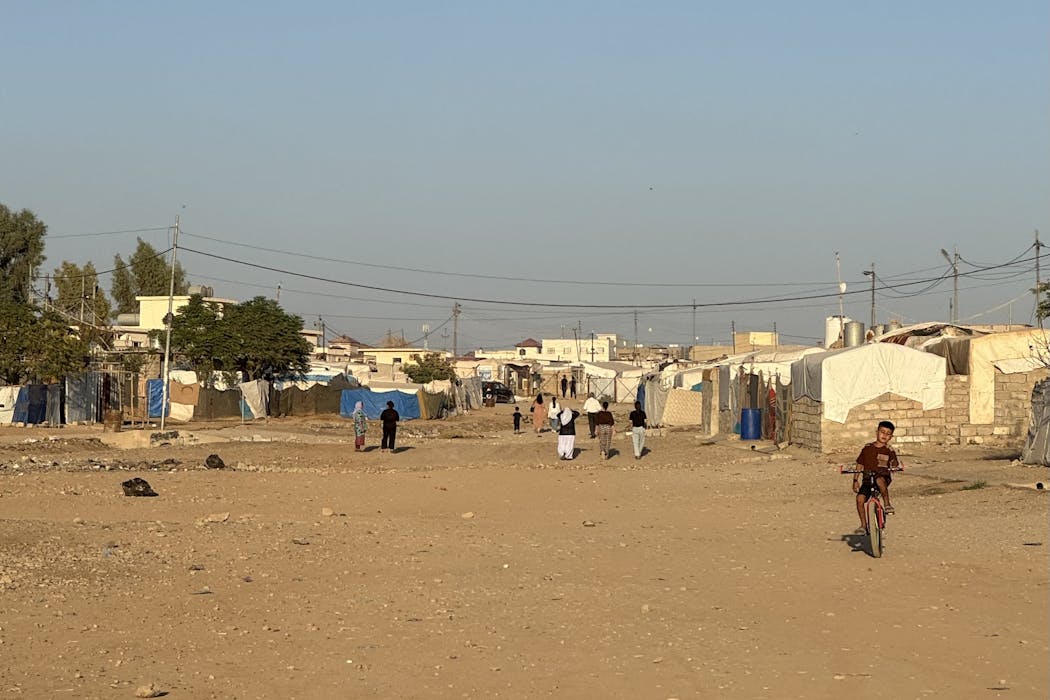
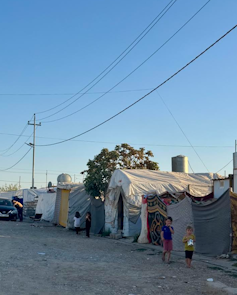
Khanke IDP (Internally Displaced Person) camp in the Kurdistan Region of Iraq in August 2025.Aleksandra Ancite-Jepifanova
The sun burns down on a small village less than 20 miles north-east of Mosul, Iraq. Milisia, 14, and her sister Madlin, 13, greet me at the gate in flawless, almost accent-free German. They lead me into the yard of a grey, rectangular, one-story building where their family rents a single room.
We sit in the heat, joined by their mother and two younger brothers, aged nine and ten. Their eyes hold a mixture of hope and despair – as if I am both a bridge to the world they lost and a reminder of it. The girls hand me a carefully preserved plastic folder: their end-of-year school assessments from Germany.
I flip through the papers, and a teacher’s note catches my eye: “Despite not having German as her mother tongue, Madlin was always able to express herself clearly. She participated eagerly in lessons, was open and receptive to new content, and always strived for her own creative ideas. In written work, she was focused and willing to make an effort.” (translation from German.)
This folder is one of the few tangible remnants of a life that was abruptly torn apart a year ago. Until October 2024, the family lived in Adlkofen, a small municipality in Bavaria, southern Germany. But when I met them, in late August 2025, they were over 2,000 miles away in Babirah (Kurdish: Babîrê), a village in Iraqi Kurdistan, a semi-autonomous region of Iraq.
Madlin and Milisia’s family are not ordinary returnees. They are Yazidis (also spelled Yezidis or Ezidis), a non-Muslim religious minority native to northern Iraq. In 2014, Islamic State (IS) unleashed a campaign of mass killings, abductions, enslavement, sexual violence, and forced indoctrination against Yazidis – a horror that made international headlines and forced thousands to flee.
Multiple international bodies and western states, including Germany and the UK, have officially recognised IS atrocities against the Yazidis as genocide.
The Insights section is committed to high-quality longform journalism. Our editors work with academics from many different backgrounds who are tackling a wide range of societal and scientific challenges.
Germany, home to the largest Yazidi diaspora outside Iraq, initially granted protection to those fleeing IS. But in recent years, asylum approval rates have plummeted. Following an informal readmission agreement with Iraq in 2023, Germany began deporting Yazidis back to the country they had fled.
This situation has drawn my attention as a refugee and human rights scholar, leading me to explore how genocide, displacement, and European refugee law intersect. In Iraqi Kurdistan, I met Yazidis deported from Germany to document their experiences and witness the human consequences of Germany’s approach as part of my ongoing research.
Milisia’s family is among the people recently deported. They had lived in Germany for nearly six years. The children went to school, learned the language, and for Milisia, life meant responsibilities far beyond her age – translating, interpreting, and advocating for her family. Now, she feels a deep sense of betrayal by the country she once called home, whose language she speaks and whose values she embraced.
Milisia remembers the deportation date; it is etched in her memory: October 5, 2024. Her voice trembles with anger as she recounts, in German, what happened:
It was 5 am. We were sleeping when men in police uniforms surrounded the house. The social worker opened the door – she had a key. We will never forget it, we were so scared … It was really terrible … We have rights too.
The police separated them. The mother and the girls in one car, the father with the boys in another, and drove straight to the airport. Milisia described the helplessness and disbelief: “We couldn’t even pack our things. If they had sent us a letter beforehand, we could have gotten a lawyer, we could have asked our teachers at school. But they didn’t even send us a letter.”
The assault in August 2014 forced over 350,000 Yazidis to flee their homes in Sinjar (Kurdish: Shingal), a mountainous district in north-western Iraq near the Syrian border and the historic centre of the community.
Tens of thousands have made their way to Europe and other western countries, often through dangerous routes in the absence of legal alternatives.
A broken promise
The Yazidi case has become a clear illustration of the limits of European refugee protection frameworks when applied to a community targeted for genocide. Asylum law is geared toward proving individual persecution, not addressing the collective and structural harms that follow mass atrocities.
This gap is particularly visible in Germany, home to the world’s largest Yazidi diaspora – over 230,000 people, including earlier migrant generations. About 100,000 Iraqi Yazidis have sought asylum in Germany since 2014.
In the immediate aftermath of the IS attacks, Germany responded generously: between 2014 and 2017, more than 90% of Iraqi Yazidi asylum claims were approved. In addition, a number of federal states introduced targeted reception programmes to support Yazidi women and children who were especially at risk. Among these efforts, the Baden-Württemberg special contingent stood out, providing a pathway for roughly 1,100 survivors of IS captivity to relocate to Germany.
But after IS lost territorial control in 2017, the German approach shifted. Authorities concluded that group-specific persecution had ended, in practice setting a legal cut-off for the genocide.
Approval rates declined sharply. In 2023, fewer than 40% of the roughly 3,400 applications from Iraqi Yazidis were accepted, while about 40% were outright rejected. Another 7.5% resulted in temporary suspensions of deportation, offering no long-term security. The remaining cases were dismissed as inadmissible under the Dublin Regulation, which assigns responsibility for an asylum claim to another EU member state.
This shift has created a hierarchy of protection within the same minority: those who arrived before 2018 typically retain refugee status, while later arrivals – often from the same camps and with identical experiences of displacement – are rejected.
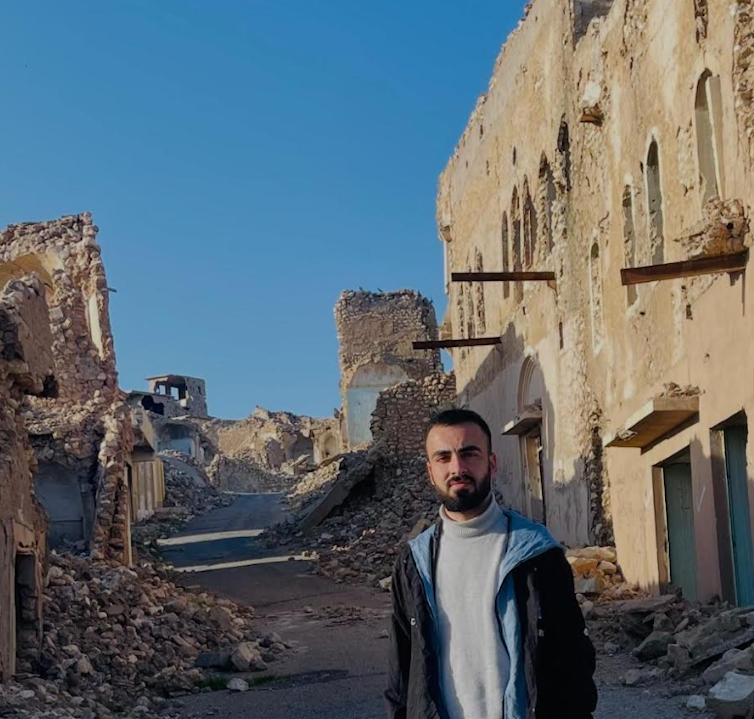
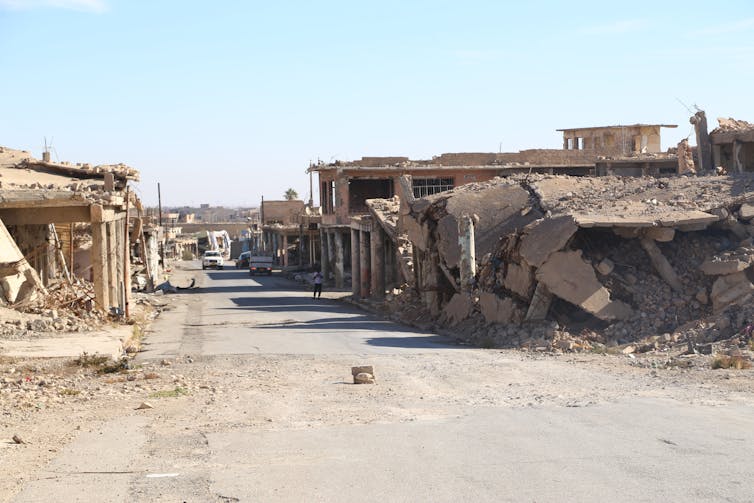
At the same time, conditions in Iraq remain shaped by the consequences of genocide. Sinjar is still devastated and reconstruction is slow. Infrastructure is largely destroyed, armed groups continue to operate, the security situation remains volatile. The district’s status is disputed and large areas are contaminated with landmines. Whole neighbourhoods lie abandoned and basic services are minimal. Mass graves continue to mark the terrain.
In the Kurdistan Region, displaced Yazidis face discrimination in accessing employment and social marginalisation. Tens of thousands have lived in IDP camps for more than a decade, with no viable path to return or integration – conditions that, for many, are an ongoing legacy of genocidal violence.
In January 2023, the German parliament formally recognised Yazidi genocide. Lawmakers acknowledged that its effects remained “omnipresent,” that tens of thousands of Yazidis still lived in camps, and that return to Sinjar was “hardly possible”.
Yet, the recognition remains largely symbolic. It has no influence on asylum decisions, a disconnect that is seen by members of the Yazidi community as a “broken promise”. Between January 2024 and June 2025, more than 1,000 Iraqis were deported. Although the government does not publish disaggregated data, Yazidis are frequently reported to be among them.
Those deported include families with school-age children whose lives were abruptly interrupted. Milisia’s family is not an isolated case. In summer 2025, German media reported on the Qasim family of six, who were returned to Sinjar on the very day their legal appeal succeeded – though the decision arrived only after their plane had taken off.
‘We cannot even go to school in Iraq. Everything is gone.’
Most Yazidis in Iraq come from Sinjar, but others – like Milisia’s family – have lived in villages in the Nineveh Plains closer to Duhok, the third largest city in the Kurdistan Region. Babirah, where they now live, sits amid a patchwork of communities and is surrounded by Arab-majority villages. To reach it, I drove past settlements marked by Arabic signs and men in traditional dishdashas.
Babirah lies about 80 miles north-east of Sinjar. In August 2014, as IS pushed into Sinjar and advanced toward their villages, Milisia’s family fled. Their own village was not occupied, but IS destroyed Yazidi temples as it moved through the area. The family escaped to a site near Erbil, the capital of the Kurdistan Region, and spent four months in an IDP camp. When they eventually returned, their home had been looted.
A Yazidi village in the Kurdistan Region of Iraq, August 2025. Aleksandra Ancite-Jepifánova
The sense of insecurity never fully lifted. “We were always scared … always thinking we would be forced to leave again. That feeling never went away,” Najwa, 35, the children’s mother, recalls. By then, several of her siblings already lived in Germany, and her parents had been sponsored there in 2016. Two years later, she and her husband decided to join them. “We sold our car, household belongings, and some sheep, and spent our savings to pay smugglers and take our children somewhere safe.”
In late 2018, they began the journey to Germany via Turkey. Their youngest child was two. They crossed waterways in plastic boats and continued on foot. “The smugglers put us in a black car,” Najwa says, “and hid us the whole way until we reached Germany.”
After arriving, they applied for asylum. They first stayed in a reception centre near Nuremberg, then in shared housing, before moving into a small two-room apartment covered by state assistance. The father worked part-time in a restaurant; Najwa cared for the children and took them to school. The children integrated quickly – speaking German, making friends, and settling into school and kindergarten.
But because they arrived in Germany in 2018, their asylum claim was rejected. Authorities argued there was no longer group-based persecution of Yazidis in Iraq. Their appeal was dismissed in May 2022, and in October 2023 their request to suspend deportation was denied. While officials noted that the children were enrolled in school, the decision made no reference to their formative years in Germany, their fluency in German, or educational prospects in Iraq.
“When we came to Germany, I was seven and my sister was six,” Milisia says. “My brothers were very small. Now we’re 14 and 13.”
The deportation uprooted them entirely. Since October 2024, the children have not attended school, as schools in the area require prior instruction in the local curriculum – a system they have never been part of. They cannot read or write Kurdish or Arabic. “We only speak German with each other,” Milisia explains. “In Germany I was in seventh grade. Only two more years and I could start vocational training. But they sent us back. Now everything is gone.” Her sister adds quietly, “Sometimes children in the village make fun of us because we don’t go to school.”
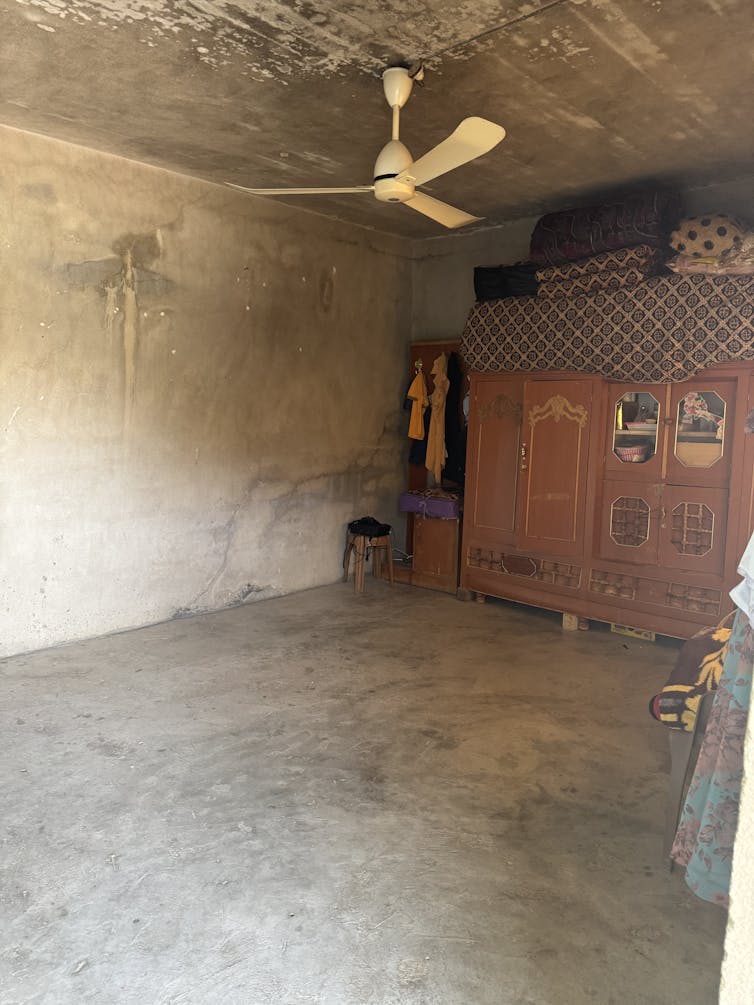
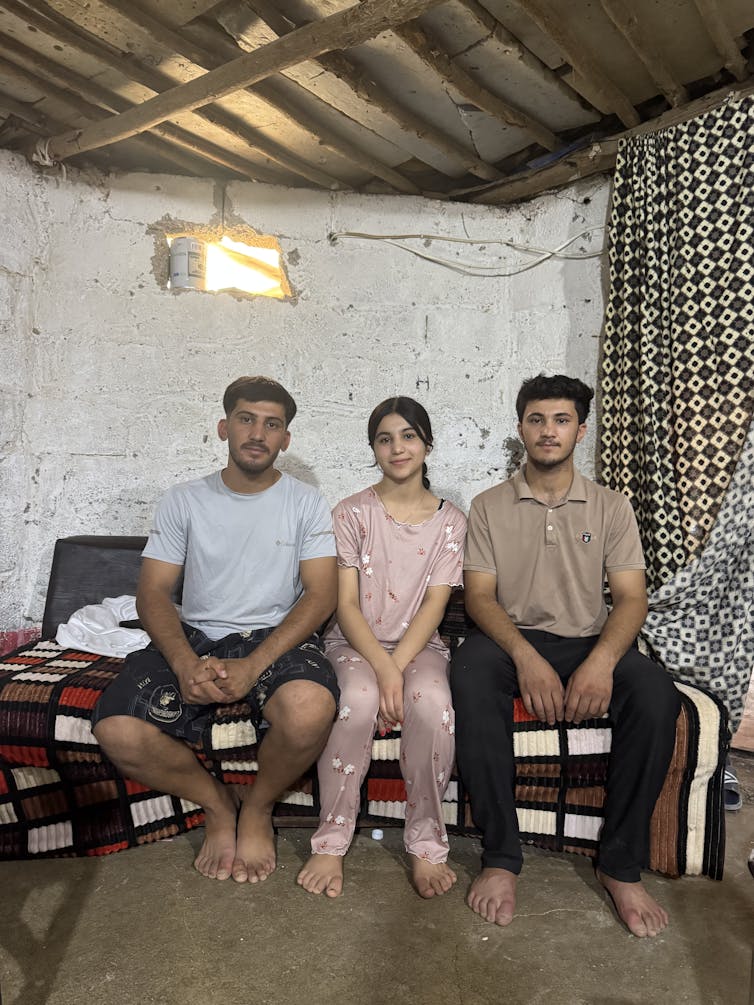
The family now rents a single room with grey, faded walls, furnished only with a cupboard and an old ceiling fan. The father does casual day labour, earning roughly 10,000 Iraqi dinars (around £6) per day. He suffers ongoing health problems following surgery in Germany and was in hospital during the interview.
A single room in which Milisia’s family lives after their deportation from Germany, August 2025. Aleksandra Ancite-Jepifánova
“I don’t know how we are going to build a life here,” Najwa said. “The money my husband earns is barely enough to survive. We don’t feel we belong in Iraq. We have nothing here … I just want a decent life for my children. I don’t want to live in Iraq.”
She adds that living in a village surrounded by Arab communities with a complex history of conflict only heightens the family’s sense of vulnerability.
Trapped in limbo, the family still holds on to the hope of returning to Germany, even if it means taking irregular and dangerous routes. “Even if we don’t find any legal way to go back, we will try other ways,” Najwa said. “But we don’t have money anymore to pay smugglers, and there are no options left now.”
A permanent state of limbo
Other Yazidis living in the Kurdistan Region are displaced from Sinjar. Saad, 24, recently deported from Germany, embodies the limbo many face – unable to return to their original homeland, yet unable to rebuild a stable life in Kurdistan.
I met Saad and his mother in Shekhka, another Yazidi village. We sat on floor cushions in the house they rent – the fifth since they fled Sinjar 11 years ago. Saad’s father was killed in 2007, when his mother was 25 and Saad was five. In August 2014, when IS advanced on Sinjar, Saad – then 12 – escaped with his mother and two younger brothers. They spent several days stranded on Mount Sinjar before reaching Syria and eventually the Kurdistan Region. His grandparents, unable to walk, were captured along with a young female relative. The family never learned what happened to them.
In the Kurdistan Region, they initially took shelter in a school building. Later, relatives of Saad’s mother who lived in the Shekhka village invited them to stay. Over the years, they moved between five different houses as owners reclaimed the properties. “We had nothing permanent,” Saad’s mother says. The family survived on menial labour—harvesting vegetables, cleaning gardens.
Saad never received proper schooling. He attended school for only half a year after displacement. “After what we saw – running from IS, hearing gunshots, people crying – the children couldn’t focus,” his mother said. “They were too traumatised.”
In 2021, Saad heard about the Belarus–Poland route to Europe. The family sold land belonging to his grandfather in Sinjar to pay a smuggler. In October that year, he flew from Baghdad to Damascus and then to Minsk, before moving through forests to the Polish border.
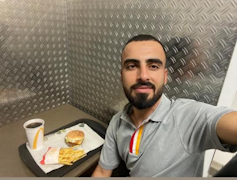
Saad during his time working at McDonalds in Germany. Saad Nawaf Abdo
He endured cold, rain and repeated pushbacks. “One time Polish guards threw away our belongings, even our passports, and humiliated us,” Saad recalls. Eventually, he made his way to Germany, driven from Poland by a Ukrainian smuggler.
In Germany, he applied for asylum, but his claim and appeals were rejected. He completed an integration course, worked at McDonald’s, lived in a shared apartment and sent money home for his mother’s surgery and basic needs.
“At least I could provide for myself and help my family,” he says. Then, one night, police came to his door.
They were banging so hard I thought it would break. They gave me 40 minutes to pack and took me straight to the airport.
Saad said he received no prior notice of the deportation. Today, he and his family rent a house owned by a Yazidi woman who lives in Australia. “Once she told us to leave because she was coming for two months,” his mother recalls. “We begged her – we had nowhere else to go. She finally let us stay.”
Returning to Sinjar is not an option. Their home in their native village is destroyed, there is no reliable electricity or water, and Saad’s mother suffers from chronic health problems requiring regular treatment. Above all, the trauma of 2014 remains close. “When we go to Sinjar, we remember everything – how IS attacked us, burned our houses,” she says. They visit only occasionally to see relatives or Saad’s father’s grave.
Saad during a visit to Sinjar in October 2025 after his deportation from Germany. Saad Nawaf Abdo
German authorities often argue that Yazidis can find work in the Kurdistan Region. Saad, who speaks the Kurmanji dialect of Kurdish like most Yazidis, shakes his head. “They don’t understand. I didn’t finish school. I don’t speak Arabic or Sorani (the main dialect in Iraqi Kurdistan). How can I work?”
He and his mother are also affected by instances of misrepresentation and online hate speech from segments of the local Muslim Kurdish population. “People post insults about Yazidis. No one stops them. We are treated as the lowest,” Saad’s mother says.
Since his return, Saad and his brothers, now 19 and 20, work seasonal agricultural jobs – harvesting vegetables from 3am until late morning for about 14,000 Iraqi dinars each (around £8) a day. This work is available only for several months each year, leaving the family’s total income around or below the poverty line in the Kurdistan Region. “When Saad went to Germany, we hoped he could take us there legally,” his mother says. “But nothing happened.”
Saad’s passport now carries a deportation stamp, barring legal re-entry. “I want to go to Germany again, but I cannot legally enter,” he says. He remembers Germany with longing: “There, I could work. I didn’t have to wake up before dawn to dig potatoes under the sun…Now even that work here has stopped – the season is over.”
His mother added, quietly: “When Saad came back, he was in a very bad state. I had to be both mother and father. I tried to calm him – otherwise he might have taken his own life.”
‘I’ve always lived in the camp’
While Milisia’s and Saad’s families live in Yazidi villages, over 100,000 Yazidis remain displaced in IDP camps near Duhok. Eleven years after IS’s initial attack, these camps – originally intended as temporary shelters – have become a lasting part of Kurdistan’s landscape, permanent settlements of waiting and uncertainty. For many, moving abroad is the only thing that offers hope.
Even being returned to an IDP camp does not protect Yazidis from deportation from Germany. Authorities and courts have adopted a narrow interpretation, arguing that basic needs will be met in the camp. This approach has led to cases where people are sent back to the very camps they once fled, undoing years of integration in Germany and reinforcing the cycle of displacement and despair.
Khanke IDP camp in the Kurdistan Region of Iraq in August 2025. Aleksandra Ancite-Jepifánova
Saber, 27, is one such example. German media reported on his case after he was deported to Sharya IDP camp in the Kurdistan Region, where he now lives in a tent after four years in Germany. He had worked full time, spoke fluent German and had been well integrated into daily life.
Others with precarious residence status in Germany face similar risks, often separated from family members who remain in the camps. German restrictions on family reunification have kept many families apart for years: wives run households alone, children grow up without fathers, and men in Germany wait in legal limbo, while families survive in tents. For these families, Germany represents the only hope for a durable solution.
Layla, 40, and her children have lived in Khanke IDP camp since fleeing Sinjar in 2014. As I walked through the camp, tents stretched in neat rows, children played on dusty paths – a generation that has never seen life outside the camp. After repeated fires in standard tents, residents were permitted to rebuild their shelters using concrete blocks, while the roofs remain temporary. Layla’s family now occupies a single small room, furnished with a few plastic chairs, a sofa, a TV and a refrigerator.
Layla’s children at Khanke IDP camp, where they have lived for most of their lives, August 2025. Aleksandra Ancite-Jepifánova
Layla’s husband left for Germany in 2017, travelling irregularly. His asylum application was initially rejected, but he later received a Duldung – a temporary suspension of deportation. This status did not allow family reunification, leaving the family stranded in the camp. He now works at McDonald’s in Hanover and has obtained a residence permit, which would allow family reunification – but too late for Layla’s two sons, who also live in the camp and are now young adults. Only Layla and her daughter remain eligible, provided the father earns a sufficient income. Their eldest son, in his early twenties, who migrated irregularly in 2021, now faces deportation back to the same camp. Layla’s daughter, 13, explained:
I don’t remember my father. I only speak with him on the phone.
Layla added: “It’s very difficult to live without a husband. The children should have their father. I handle everything alone – the hospital, shopping. All the burden is on me.”
Returning to Sinjar is not an option. Their home is destroyed, the area abandoned. “No one from our village lives there anymore,” Layla said. For her daughter, the camp has become permanent: “I don’t remember Sinjar. I’ve always lived in this camp.” Her mother echoes this: “Even when people ask where we are from, we say, ‘We are from the camps.’”
Germany represents hope. “In Germany, there is safety, human rights and work,” Layla said. “I left school young. If I were in Germany, I would go back and finish. Women can work and have a life. Here, there is nothing.” Both mother and daughter are learning German. The daughter studies online and can now introduce herself in German: “If I go to Germany, I want to study. I want to become a doctor and help sick people.”
Layla expressed frustration at Germany’s shift in policy. “We were hoping Germany would continue helping us. At first, we felt supported, that people were standing behind us, but then they stopped. We have survived so many genocides. Every time it happens, we survive, and then it happens again.” Her message to Germany is simple:
We don’t want much. Just stop deporting Yazidis. Give them permanent residence and reunite the families.
‘We ran from monsters’
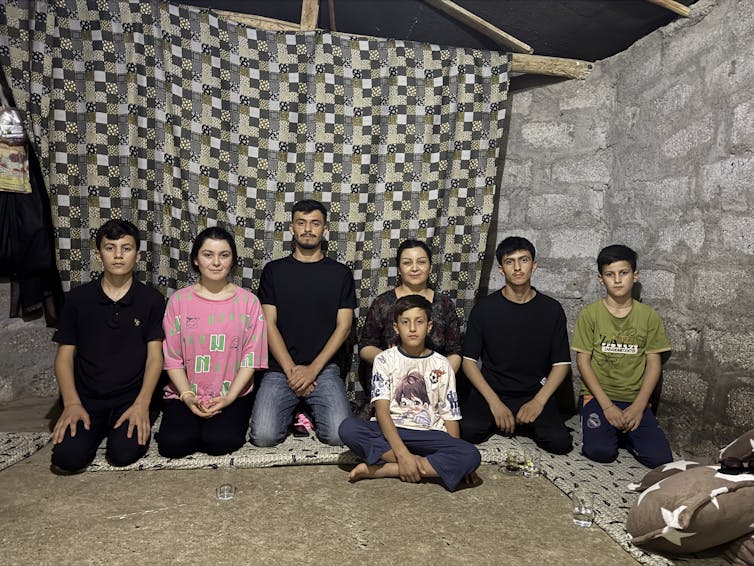
Nearby in the same camp, Majida, 38, lives with her six children in a small room; the camp has been their home since 2014. Her husband, Kamal, left for Germany in 2017, hoping to secure protection and eventually reunite the family, following the path of a friend who had managed to do so.
Majida and her six children, aged between 11 and 18, in Khanke camp, in August 2025. Aleksandra Ancite-Jepifánova
Instead, his asylum claims were repeatedly rejected, leaving him in a precarious legal status and unable to bring them. “We haven’t seen him for eight years,” Majida says.
Before 2014, Kamal had worked for years to build their house in their Sinjar village. “It was our dream,” Majida recalls. “We moved in and lived there only one year before IS came. Then we fled, and the house was destroyed.”
When they first arrived at the camp, they believed it would be temporary. “At first, we thought this would last only a few days. But year after year, we realised no one is going to do anything for us.”
“We don’t see any future here – not in the camp, not in Sinjar,” she said. The family recently returned to Sinjar to process ID cards, their first visit since fleeing over a decade ago. “I didn’t want to go,” Majida says.
When I went there, I remembered everything – my childhood, our neighbours, those who were killed, how we escaped. I cried. But I was grateful I could save my children. We ran from monsters.
The Iraqi government offers four million Iraqi dinars (around £2,300) to each displaced Yazidi household willing to return and rebuild. Yazidis and rights groups say the amount is far too small. Majida’s family spent around 30 million dinars (around £17,000) to build their house.
Majida said she does not feel accepted in the Kurdistan Region either. Life in the camp is largely isolated, and the family has little interaction with Muslim Kurds, the dominant group in the area, which contributes to feelings of insecurity. Majida believes Yazidis are not seen as part of the wider community.
Fear and mistrust run deep. Even if new houses were built in the Kurdistan Region, Majida said she would still prefer the camp among other Yazidis over a two-storey home in a Muslim-majority area.
I don’t trust the government. I’m afraid everything that happened to me will happen to my children too. Even when I take them to the playground in the neighbouring town, I don’t feel safe.
Discrimination in employment adds to these sentiments. Yazidis are often excluded from jobs in the food industry because their non-Muslim faith is seen as incompatible with handling “halal” food.
Majida’s six children are now aged between 11 and 18. Raising them alone has been exhausting. Majida cries as she recalls the early years without her husband.
We have been through so many difficulties. At the beginning, the children were selling beans on the street. My husband was hiding in Germany, unable to work, unable to send money. NGOs later trained me in sewing, so I opened a small tailoring business. But the money is never enough. I spent so much on hospitals and doctors, and to send the children to school. It was still not enough.
In desperation, and tired of waiting for a legal path to family reunification, Majida and her children attempted to reach Europe irregularly through Turkey in 2023. They were caught and returned to Iraq.
One of her sons, now 18, added: “In Germany, you can build your future – go to school, work. Here, we don’t know what will happen.” Another son said: “Once we finish school, we’ll try to find a way to go to Germany. That’s our only hope.”
Majida’s husband, Kamal, 45, lives in the German city of Braunschweig, near Hanover. I interviewed him separately via video call. Kamal lives in refugee accommodation, sharing a small room with another man, and works shifts at warehouses.
After eight years marked by asylum rejections, periods of irregular status and hundreds of euros spent on legal fees, Kamal has recently been granted a temporary two-year residence permit. While the permit may lead to permanent residency, it allows family reunification only in exceptional humanitarian cases – a threshold so high that reunification with his family remains out of reach.
During the interview, Kamal broke down in tears. “We don’t have a future in Iraq. Yazidis have always been targeted, and I believe it will happen again,” he says.
I came to Germany hoping they would protect my family. Everyone talked about human rights here. But my life is on hold. Every night I cry because I miss my children. I haven’t seen them in years, and they no longer know me.
He added: “There is no humanity left for me, and I have lost hope in Germany. I don’t know what to do. Will I stay alone like this for the rest of my life? Sometimes I even think about ending my life. It’s too much.”
Sinjar will never be the same again
Instead of family reunification in Germany, many Yazidi men now face the risk of being deported back to the camps. This is what happened to Ali, 42. In autumn 2023, he joined protests in Berlin against the deportation of Yazidis, speaking to German media outside the parliament. Only weeks later, in December 2023, Ali himself was deported, after five years in Germany. He initially returned to the IDP camp in the Kurdistan Region where his wife and seven children had lived since 2014, after fleeing Sinjar.
Ali had arrived in Germany in late 2018, hoping eventually to bring his family. He paid around US $10,000 to smugglers – money borrowed from relatives and taken from his savings. His asylum claim and subsequent appeals were rejected. During his years in Germany, he worked in construction. In autumn 2023, he received a deportation notice.
We spoke on the phone while I was in Duhok and he was in Sinjar, where he moved a few months ago after leaving the camp. His children, now aged between five and 18, barely knew him. “When I came back to the camp, they asked, ‘Who is this man?’” he says. “I tried to give them something; they wouldn’t take it because they didn’t know me. It took them about a year to get a little bit used to me. Even now, they don’t act normally around me. None of them sleep next to me – they always sleep with their mum. I always feel like a stranger to them. Even when I try to be close, to kiss them, they don’t return it. It’s a strange feeling.”
Ali and his family spent 11 months in the camp after his deportation. He struggled with his mental health and eventually decided to return to Sinjar.
Their house had been completely destroyed. Ali applied for the government compensation of four million Iraqi dinars, but the family has not yet received it. “We are living in someone else’s house,” he explains. “When the owners return, they’ll ask us to leave.” Much of their street remains destroyed or abandoned.
To survive, the family works in orchards planting vegetables, but the income is unstable and seasonal. As Ali puts it, “Here and the camp – both places are bad.”
What needs to change
Although the Islamic State was militarily defeated, the harm inflicted on the Yazidis did not end in 2017. For a small, historically persecuted minority rooted in a single region, prolonged displacement in undignified conditions perpetuates the long-term consequences of genocide. With no viable local solutions, relocation abroad has become the only realistic way for many Yazidis to rebuild their lives.
Crucially, the numbers involved are low. After a peak of around 37,000 applications in 2016, annual asylum claims by Iraqi Yazidis in Germany have recently fallen to around or below 4,000. Germany’s largest refugee support NGO, Pro Asyl, estimates that up to 10,000 Yazidis currently face the risk of deportation back to Iraq.
At a minimum, Germany should grant secure temporary residence to Yazidis who arrived after 2017, with the right to work and family reunification, alongside a clear path to permanent status. Children’s rights must be prioritised to prevent the loss of education and belonging seen in cases like Milisia’s.
A draft law proposed by the German Green Party would offer a three-year residence permit to Yazidis from Iraq who arrived by July 2025, recognising both ongoing instability in Iraq and Germany’s special responsibility after acknowledging the genocide. Whether it will pass remains uncertain.
Ultimately, addressing the Yazidi case requires a tailored approach that recognises genocide survivors as a distinct vulnerable group and provides durable solutions that prevent the continuation of displacement and harm.
Ali still believes the only viable long-term solution for Yazidis is to move abroad. He sees Germany as offering safety, freedom of religion and future opportunities.
There, nobody asks about our religion, nobody cares about that, and we would have a future. Here [Sinjar], it will never be like before 2014. We always have fear inside.
To hear about new Insights articles, join the hundreds of thousands of people who value The Conversation’s evidence-based news. Subscribe to our newsletter.
Aleksandra Ancite-Jepifánova does not work for, consult, own shares in or receive funding from any company or organisation that would benefit from this article, and has disclosed no relevant affiliations beyond their academic appointment.
The author would like to thank Ghazi Murad Ismael for assistance with fieldwork in Iraq.