Deaths of 31 people in UK’s worst small boat disaster caused by government’s ‘systemic failure’ – the Cranston inquiry conclusions explained

Source: The Conversation – UK – By Travis Van Isacker, Senior Research Associate, School of Sociology, Politics and International Studies, University of Bristol

The deaths of at least 31 people in the Channel on November 24 2021 were “avoidable”, an independent inquiry has found. The final report of the Cranston inquiry highlights known problems at HM Coastguard that were not resolved, calling them a “significant, systemic failure on the part of government”, which led to this crossing becoming Britain’s deadliest small boat disaster.

The report points blame at the people smugglers who “provided an unsuitable craft and inadequate safety equipment” for the crossing, as well as the French navy for failing to respond to a mayday alert.

Most of its criticisms, however, were reserved for HM Coastguard’s flawed search and rescue operation and other systemic problems, despite failings attributable to individual officers.

These findings vindicate the accounts of the two survivors, rescued from the sea more than 12 hours after calling for help. It also vindicates family members of the deceased who first raised the coastguard’s failings immediately after the disaster. The bereaved families and survivors have held all along that the tragedy was “preventable”.

The incident

The night of November 23 to 24, a dinghy with at least 33 people on board began taking on water in the middle of the Channel. Some travellers tried to bail the freezing water out and keep the rubber tubes inflated. Others made desperate calls for help.

Neither French nor British coastguards took enough responsibility for coordinating an effective rescue. Transcripts revealed that travellers were at one point told by British call-handlers they must be in French waters and should call the French coastguard instead, after the time when formal responsibility for search and rescue had passed to the British coastguard. Teenager Mubin Rizghar Hussein, who was aboard the boat, was told that a rescue ship was on its way but that he needed to “be patient” and stop calling.

By the time the Border Force ship arrived to the sinking dinghy’s last known location, it had drifted away. Other small boats in the area were rescued instead and the distress calls stopped once the dinghy capsized.


Read more:
‘We were treated like animals’: the full story of Britain’s deadliest small boat disaster


Public inquiries are usually convened quickly after such disastrous incidents. But the fact that the British government initially refused to accept that the sinking occurred in UK waters delayed an accountability process.

Survivors and bereaved families fought hard for accountability, and the Cranston inquiry was ultimately commissioned in January 2024 by the Department for Transport.

Over four weeks of public hearings in March 2025, officers involved in the UK’s search and rescue response gave oral evidence. One survivor, Issa Mohamed Omar, and members of the grieving families also gave evidence. After three years, they were given the chance for their voices to be heard.

Systemic failures

The Maritime and Coastguard Agency asserted in its closing statement that “the real causes” of the shipwreck were factors outside HM Coastguard’s control. The inquiry rejected this, finding that a number of problems at the agency contributed to the deaths.

These included chronic staffing issues at Dover’s Maritime Rescue Coordination Centre, inadequate supervision and insufficient remote assistance for coastguard officers. The inquiry also pointed to the lack of training for call-handlers, who widely believed that travellers on small boats “exaggerated their level of distress”.

“Flawed decisions” by several coastguard staff involved in the search and rescue operations were also criticised in the report. In particular, this included not treating the information received from those onboard the sinking dinghy “at face value”. The inquiry found that short staffing at the Dover centre led to there being only one fully qualified staff member on duty the night of the incident, who was unable to take a break during the shift, and left “feeling overwhelmed and fatigued.”

Decisions made in that context ultimately led to the search being called off prematurely, meaning no one in the UK was searching for the people who were perishing in the cold waters of the Channel throughout the morning.

The inquiry finally highlighted the failure of the French response. When the coastguard at Dover broadcast a mayday relay for the sinking dinghy which mandated all ships to respond, the French warship Flamant — approximately 15 minutes away — ignored the request. Had the Flamant responded, “many more and possibly all lives would have been saved”, the report said.

There is an ongoing criminal investigation into the French warship and coastguard officers.

Deadlier crossings since

The inquiry’s investigation focused on offering “truth” for the families regarding what happened to their loved ones. Its recommendations therefore focused on improving search and rescue operations to prevent the likelihood of a similar incident occurring again, not to consider small boat crossings more generally.

The inquiry noted that “much has improved since November 2021”, but still people continue to die in the Channel. Despite increased surveillance, improved communications technology and more rescue ships, an unprecedented 82 people were reported to have died in 2024. At least 24 deaths were reported last year.

Monitoring organisations have pointed out that, beyond the inherent danger of small boat journeys, “stop the boats” policies have led to more overcrowding and chaotic launches of dinghies – with more deaths as a result. Specifically they highlight the £500 million agreement with France, introduced by the former Conservative government, which has paid for 500 more French police to patrol the coast. The assumption that preventing boats from leaving French shores will “save lives” is, however, a mistaken one.

Many of the deadly incidents since 2021 have occurred on the beaches and in the shallow waters just off the French coast as police try and stop dinghies from launching. What the then Labour home secretary, Yvette Cooper described in 2024 as heroic efforts to prevent crossings were recognised by France’s interior minister as also leading to an increase in deaths.

As constructive as the inquiry’s report is for improving search and rescue for small boats in the Channel, it has not grappled with this changed context. So long as the UK’s border controls in Europe exist, Channel deaths will continue, even if government agencies implement all the inquiry’s recommendations.

The Conversation

Travis Van Isacker receives funding from the Economic and Social Research Council (UK) (Grant Ref: ES/W002639/1).

ref. Deaths of 31 people in UK’s worst small boat disaster caused by government’s ‘systemic failure’ – the Cranston inquiry conclusions explained – https://theconversation.com/deaths-of-31-people-in-uks-worst-small-boat-disaster-caused-by-governments-systemic-failure-the-cranston-inquiry-conclusions-explained-274920

Why are safety concerns being raised inside Porton Down, Britain’s nerve centre of chemical and biological research?

Source: The Conversation – UK – By Thomas Keegan, Senior Lecturer in Epidemiology, Lancaster University

When the UK’s offensive chemical and biological weapons programmes were terminated in the 1950s, work at the high-security military research centre in Porton Down, Wiltshire switched to defensive strategies. These included developing chemicals for use in riot control and countermeasures to the evolving threat of chemical and biological weapons.

Before being tested on military personnel, potential riot control compounds had to go through an informal preliminary screening. According to a 2006 history of Porton Down published by the Ministry of Defence (MoD), this would sometimes involve laboratory staff “cautiously sniffing” new compounds in order to “eliminate the less promising ones”.

Today’s scientists working inside the Defence Science and Technology Laboratory (DSTL), which is headquartered at Porton Down, won’t be doing any sniff tests. But according to an anonymous whistleblower, Porton’s CEO, Paul Hollinshead, has warned that the laboratory needs to improve its health and safety record, or risk losing its operating licence.

The Guardian reported that an internal survey had raised widespread concerns about staff lacking the “resources to work safely”. The facility is now undergoing a major reorganisation, but a Porton spokesperson stressed to me that “any changes will protect and enhance its critical functions” – including working with government departments beyond the MoD.

Inside Porton Down. Video: ITV News.

A history of staff self-testing

My research with colleagues inside Porton Down found that between 1941 and 1989, staff took part in more than 1,300 tests of 78 different chemical and biological substances.

These included highly toxic nerve agents such as Tabun, and vomiting agents such as diphenylchlorarsine and sulphur mustard. In the later decades, staff self-testing focused on pre-emptive therapies for nerve agent attacks, using drugs such as Pralidoxime.

Other historical accounts suggest Porton scientists were given great latitude to develop experiments – and join in with them too. One long-term staff member, Mark Ainsworth, described testing a new piece of equipment in the wound ballistics laboratory. Working in it was “heroic”, he wrote in 1976, as the machine would “charge itself up to 300,000 volts, then discharge itself randomly, turning [the testers] into nervous wrecks”.

In an echo of the recent whistleblower complaints, Ainsworth also revealed that he “swore at the management for not being more generous with staff deployment”.


Read more:
Inside Porton Down: what I learned during three years at the UK’s most secretive chemical weapons laboratory


During the cold war era, Porton scientists developed troop protection including nuclear, biological and chemical (NBC) suits, respirators, and the triple-therapy “combo pen” for treating exposure to potentially deadly nerve agents.

These scientists would have been shocked to find products stemming from their research being used decades later, in March 2018, on civilian shoppers just a few miles down the road. Porton Down was a key part of the emergency response to a chemical weapons attack on UK soil when Novichok was used to try to kill former Russian intelligence officer Sergei Skripal and his daughter at their home in Salisbury.

Despite the aggressive toxicity of this nerve agent, neither died – partly thanks to Porton Down expertise that was shared with the emergency and health services involved in their care.

Three months later, however, another Salisbury resident, Dawn Sturgess, died after spraying herself with Novichok hidden in a discarded perfume bottle. Her partner Charlie Rowley was also exposed to the nerve agent, but survived.

Biosecurity risks

Insights into the secretive work carried out at Porton Down also come when its scientists’ work is published in academic literature. DSTL senior fellow Tim Atkins, for example, is among researchers leading the global response to Q fever and melioidosis – two potentially deadly bacterial diseases.

Porton also conducts research into the continuing response to COVID and other highly infectious pathogens such as Yersinia pestis (the bacterium that causes plague) and Ebola virus. The highest levels of biosecurity are therefore required to prevent outbreaks of disease against which the public would not be protected.

Porton Down research into Yersinia pestis, the bacterium which caused the great plague of 1665. Video: Channel 5/DTSL.

My experience of working inside Porton’s secure area between 2002 and 2008 was that entry to, and passage around, the site was strictly controlled. Machine gun-armed MoD police were stationed at the facility’s outer entry points and also guarded the secure inner area.

We were investigating risk of cancer and mortality in the approximately 20,000 service personnel who took part in tests at Porton Down between 1945 and 1989. While we found a small increased risk of mortality, it could not be attributed directly to Porton attendance. The last documented case of staff self-testing, in June 29 1984, involved 7-methoxy cycloheptatriene, a non-corrosive “irritant compound”.

One former senior staff member I spoke to recalled working at Porton as “stimulating” and “fun”, partly because of the freedom scientists were afforded to innovate. Such freedom may be a thing of the past – but the work inside this top-secret British laboratory remains as important to national security as ever.

According to the Porton Down spokesperson: “Our people remain the bedrock of DSTL, and their dedication has ensured that our performance this year is better than last … Through the largest reforms to defence in more than 50 years, we are strengthening our ability to anticipate and respond to evolving threats, including increasing our safety standard.”

The Conversation

Thomas Keegan has in the past worked on research into Porton Down with funding from the UK Medical Research Council..

ref. Why are safety concerns being raised inside Porton Down, Britain’s nerve centre of chemical and biological research? – https://theconversation.com/why-are-safety-concerns-being-raised-inside-porton-down-britains-nerve-centre-of-chemical-and-biological-research-274908

Why has the 20mph limit become such a political issue in the Welsh election?

Source: The Conversation – UK – By Michael Woods, Professor of Human Geography, Aberystwyth University

Nigel Farage has announced Reform UK’s first policy pledge of the Welsh election campaign in May: to scrap the default urban speed limit of 20mph introduced by the Labour Welsh government in 2023.

Like the Welsh Conservatives, who are also committed to reversing the legislation, Reform UK have identified frustration with the 20mph limit in Wales as a widespread and emotive issue that it hopes will help to propel the party to seat gains in the election. It is currently second in the polls, behind the centre-left Welsh nationalist party Plaid Cymru.

Reform said it will scrap the “blanket approach” to the speed limit, but would still have it around schools and hospitals. Welsh Labour have also said that some roads will return to 30mph under its plans.

Meanwhile, the Wales Green party leader Anthony Slaughter suggested that the party could push for extensions to 20mph coverage in local government, speaking to the BBC Radio 4 Today programme in January.

Polling by More in Common shows that the 20mph limit is the best known of the current Welsh government’s policies, with 90% of respondents confirming awareness, but also the second most unpopular. Some 55% of people polled considered that the change reflected negatively on Welsh Labour, compared with 21% who viewed it positively.

Yet, for others the 20mph limit is a flagship achievement. Lee Walters, the former transport minister who introduced the legislation, has admitted mistakes in the way it was introduced, but told BBC Wales: “The data and evidence shows that it will save lives, and in time it will settle down.”

The history of 20mph limits

The legislation reduced the default speed limit on so-called “restricted roads” in Wales (essentially roads in built-up areas) from 30mph to 20mph.

Part of the aim was to reduce the number of collisions and injuries from road collisions (as well as the cost to the National Health Service of treating these casualties), encouraging walking and cycling, and improving health and wellbeing.

As elsewhere in Britain, 20mph zones already existed in high-risk sites such as outside schools. Exceptions also applied to the 20mph default, with local authorities identifying roads where a 30mph limit would remain.

There’s a division of opinion over 20mph speed limits in Wales.

Overall, the 20mph limit currently applies to 37% of the road network in Wales. The policy featured in both the Labour and Plaid Cymru manifestos for the 2021 Senedd (Welsh parliament) election. It was also supported by the sole Liberal Democrat Senedd member, when introduced.

Conservative Senedd members voted against the legislation. The measure was controversial, with noisy opposition from sections of the public.

A petition to repeal the law attracted 469,571 signatures and new 20mph road signs were defaced in many parts of Wales.

There was widespread media coverage describing confusion over the speed limit and claiming negative effects on bus timetables, tourism and businesses.

A lack of consistent polling makes it difficult to track public opinion on the issue. Polls in October 2023 and July 2024 recorded 54% and 72% of Welsh voters opposed to the 20mph limit respectively, but no more recent poll has directly asked about the policy.

However, a softening of attitudes over time was identified by an analysis of posts on the social media platform X at implementation in September 2023 and six months later. Not only did comments become less negative towards the change, but the content also evolved. Right after implementation, tweets focused on politics, especially criticisms of Welsh government.

Six months later, discussion shifted toward everyday impact: improved safety around schools and residential streets, benefits for pedestrians and cyclists and urban mobility such as buses and traffic flow. Although political criticism remained, misinformation decreased and conversation became more grounded in lived experience, with safety, especially for children and communities, more prominent.

Psychologists refer to this movement as the Goodwin Curve: when behaviour people are anxious about doesn’t materialise, their attitudes soften and they become more accepting of policy change.

Early reports on the impact of the 20mph speed limit were anecdotal. More than two years after implementation, however, there is a growing body of objective evidence on its effects, especially around speed and collision data. The most recent figures show that average speeds for road traffic in Wales have fallen by 3.3 mph.

Relatedly, there has been a marked reduction in both collisions and casualties on roads where the speed limit changed from 30mph to 20mph. In 2024, the first full year after the change, collisions on 20mph and 30mph roads combined were down 23.5% compared with 2022, and casualties were down by 25.8%.

Evidence of environmental and social impacts is less conclusive. Early monitoring shows no material change in air quality (NO₂, PM₁₀ or PM₂.₅) in pilot areas up to April 2024, and analysis of CO₂ emissions is still ongoing. Impacts on walking and cycling also remain unclear, as post-implementation active travel data has not yet been reported.

Speed and the Senedd

So, why are speed limits back on the election agenda? Reform and the Conservatives both cite the cost of the policy, estimated at £32 million. Yet, as journalist Will Hayward points out, this spend has already happened and returning to 30mph would also be expensive.

The significance of 20mph to Reform and the Conservatives is about setting the tone of the election. It is an issue that speaks to the continuing scepticism of some of the Welsh electorate towards devolution.

What’s more, the issue encapsulates different visions for Welsh society. For the rightwing parties, opposition to the 20mph limit reflects a championing of individualism and “common sense” against the perceived intrusive paternalism of the left. As Farage told journalists in Newport: “It’s an example of government saying we know what is best for you, and you must comply with us.”

Reform UK has targeted car drivers as a potential voting base before. Reform-led councils in England have vowed to dismantle low-traffic neighbourhoods, for instance, even in areas that didn’t actually have them.

For some leftwing politicians, on the other hand, the 20mph speed limit is emblematic of a devolved Welsh government taking bold, pioneering action for health and environmental wellbeing. Reductions both in collisions and in motor insurance premiums could be presented as evidence of delivering benefits to Welsh people.

Labour and Plaid Cymru are unlikely to want the 20mph speed limit to be a major topic in the election, and would prefer to focus on issues around jobs, education, health care and public transport. Whether they can achieve a swing to those issues as the primary topic of discussion will be down to the public’s interest, and possibly media coverage.

The Conversation

Michael Woods receives funding from UKRI. He is a member of the Liberal Democrats.

Charles Musselwhite received funding from Health & Care Research Wales. Charles Musselwhite is currently Chair of the Transport Studies Research Group and a Vice Chair of the Transport and Health Science Group.

ref. Why has the 20mph limit become such a political issue in the Welsh election? – https://theconversation.com/why-has-the-20mph-limit-become-such-a-political-issue-in-the-welsh-election-275360

Valentine’s Day won’t fix your relationship – but attachment theory might explain it

Source: The Conversation – UK – By Martin Graff, Senior Lecturer in Psychology of Relationships, University of South Wales

As Valentine’s Day approaches, restaurant bookings fill up and couples exchange cards, flowers and carefully chosen gifts. For some, it’s a day of closeness and connection. For others, it can bring anxiety, disappointment or emotional distance.

These different reactions may feel deeply personal. But in terms of psychology, they may reflect something much deeper – how we learned to attach to other people in childhood.

Attachment theory offers a powerful way of understanding why romantic relationships unfold the way they do, and why partners can sometimes feel emotionally mismatched. Developed over decades of research, it suggests that our earliest experiences of care shape how safe, connected or vulnerable we feel in adult love.

Attachment theory was first proposed by the British psychiatrist John Bowlby, who argued that people are biologically wired to form close emotional bonds with their caregivers. These early attachments help infants feel protected and teach them what to expect from relationships.

Later, Canadian developmental psychologist Mary Ainsworth expanded this work through studies observing how infants responded to separation and reunion. She found that children develop different attachment patterns depending on how consistently their caregivers meet their emotional needs.

In simple terms, attachment theory suggests that early relationships create internal “templates” for connection. These influence whether we see others as trustworthy, how we cope with emotional stress and how comfortable we feel with closeness. These are patterns that often persist into adulthood.

Types of attachment

There are four attachment styles, which exist on a spectrum rather than as fixed categories.

People with a secure attachment style tend to feel comfortable with intimacy and independence. They usually trust their partners, communicate openly and can rely on others without fear of losing themselves.

Those with anxious attachment often crave closeness but worry about abandonment. They may seek reassurance, overthink interactions, or become preoccupied with their partner’s availability.

People with avoidant attachment place a high value on self-reliance and may feel uncomfortable with emotional dependence. They can struggle with intimacy and may withdraw when relationships become intense.

A smaller group show disorganised attachment. This is marked by conflicting desires for closeness and distance, often linked to early experiences of instability.

Most people don’t fit neatly into a single category.

How attachment shows up in adult relationships

Research suggests these attachment styles continue to shape how we relate to romantic partners. Securely attached people are more likely to describe their relationships as trusting, supportive and emotionally satisfying.

By contrast, anxious attachment is associated with fears of rejection and heightened emotional sensitivity, while avoidant attachment is linked to discomfort with closeness and difficulty relying on others. Some people oscillate between these responses, experiencing relationships as both comforting and painful.

These patterns help explain familiar dynamics, such as why one partner wants to resolve conflict immediately while the other needs space, and why some people fall in love quickly while others struggle to commit. Much of this happens unconsciously, driven by expectations formed long before adulthood.

Man and woman sitting on chair with hearts squiggles above heads
Attachment theory was first proposed by the British psychiatrist John Bowlby.
Master1305/Shutterstock

The question of whether or not attachment styles can change over time is a tricky one. They may not be fixed for life. But they may also be determined more by the social trends of the day, rather than genuine changes in attachment.

However, a 2019 study attempted to investigate whether attachment style changes across the lifespan. It found that while attachment style is generally constant, it may also be affected by our relationships and the challenges we face at different stages of our lives.

So, both anxious and avoidant attachment tend to be higher in adolescence and young adulthood, decreasing into middle and old age, at a time when we are more confident perhaps that relationships will sustain. The researchers also found that across the lifespan, being in a close relationship tended to correspond with low scores on avoidant and anxious attachment.


Read more:
Limerence: why some people experience intense infatuation that feels like love, and how it affects them


Valentine’s Day is designed to amplify romance. But how much of this is determined by attachment style? One study has shown that those who are less avoidant tend to report higher relationship satisfaction on Valentine’s Day, while feelings of closeness and dependence can strengthen relationships during moments like these.

For people with anxious or avoidant tendencies, however, the day can highlight emotional mismatches. For example, one partner seeks reassurance, while the other feels overwhelmed by expectations.

While attachment anxiety and avoidance are linked to lower relationship satisfaction, they are not life sentences. Attachment styles are learned, which means they can also be reshaped. Understanding attachment helps frame these moments not as personal failings, but as reflections of deeper emotional patterns shaped by upbringing and experience.

This Valentine’s Day, alongside cards and chocolates, there is another gift worth considering – curiosity about how you learned to love. Recognising your own attachment patterns, and those of your partner, can offer compassion, clarity and a pathway towards more secure relationships.

The Conversation

Martin Graff does not work for, consult, own shares in or receive funding from any company or organisation that would benefit from this article, and has disclosed no relevant affiliations beyond their academic appointment.

ref. Valentine’s Day won’t fix your relationship – but attachment theory might explain it – https://theconversation.com/valentines-day-wont-fix-your-relationship-but-attachment-theory-might-explain-it-275115

An existentialist philosopher on why we should not let fear dictate love

Source: The Conversation – UK – By Henry Somers-Hall, Professor of Philosophy, Royal Holloway, University of London

Let’s begin with a story from the beginnings of western philosophy that doesn’t sit well with existentialist thought.

In Plato’s Symposium, a character called Aristophanes gives an account of love. He tells us that human beings originally had doubled bodies, with two heads, four arms and four legs. As a punishment for threatening the gods, however, Zeus cut each of them in half.

Now, these half humans, with just one head and one pair of arms and legs, find themselves adrift in the world, searching for the other half of themselves that would make them whole.

This, for Aristophanes, is the origin of love – the desire to return to a lost unity and to become whole. Why this story appeals to us is that it captures our intuition that love is destiny, and that there is someone out there who will take away our feeling of incompleteness.

For the existentialist, however, this feeling of incompleteness points to a fundamental truth about being human. For them, we are this tension. We are thrown into the world we haven’t chosen, but we are still responsible for the sense we make of our lives. This is what the existentialists mean by the slogan: existence precedes essence – there’s no script of our lives.

We become who we are through what we do, in a world defined by contingency and transience. Aristophanes here gives us the comforting illusion that there is some essence or meaning to our lives given before we exist – that there is someone out there who will resolve the tensions of being human by making us whole, if only we can find them.

For the existentialist, stories like Aristophanes’ cover over irresolvable tensions with being human rather than solving them. Think about the idea of finding “the one”. For the existentialist, behind this project is really one of putting the script back into our lives. Love proves that our lives have meaning.

If the aim of love, then, is to resolve our own feelings of anxiety at being cast adrift in a world, then we’re unlikely to really connect with another person. Rather, what will be important about them will be the role they play in our life.

Think about our desire to be the centre of someone else’s world. For existentialist philosopher Jean-Paul Sartre, this is less about them than it is about the place they give us in their lives: their love for us becomes a proof that our own life has meaning. From here, we ask for what our lover cannot in good faith give us – the certainty that we will occupy that place: “you’ll always love me, won’t you?”

It sounds as if love is not so much a relationship, but a project we use to insulate ourselves from our own fears. It lets us believe the meaning of our lives comes from the outside while ensuring that we stay safely on the inside.

Stepping back from love itself, we can see another tension, however.

A more positive possibility for love

When we think of Sartre and Simone de Beauvoir, whose lifelong partnership combined romantic and intellectual commitment with a deep insistence on personal freedom, it’s difficult not to see a model of romantic love.

At the beginning of the second world war, Sartre wrote to de Beauvoir: “Never have I felt so forcefully that our lives have no meaning outside of our love, and that nothing changes that, neither separation, nor passions, nor the war. You said it was a victory for our morality, but it is just as much a victory for our love.”

There is here, then, a more positive possible account of love.

For Sartre, this possible positive love is not an attempt to resolve the tensions in what it is to be human. Rather, to love authentically is to love in full understanding of the tensions of time and freedom.

Love’s aim, on this account, is not to escape time, but to embrace it together. This means loving, in the moment, absolutely, while recognising that just as we can always disavow our past, this moment, in the future, will itself become another past that we may disavow.

Loving is, then, not using the ideal of love as a project to step out of time, to hide. Instead, it involves the recognition that being with another within time entails living with fragility and transience, and that what makes this love human is the possibility of change.

Rejecting love as an ideal, and the lover as a role to be played, allows us to see our lovers not simply as a foil for our own projects, but as another person, with all the complexity and singularity a human being contains. In this, we find ourselves outside of ourselves, exposed in a world where failure is always possible.

But with such exposure there is also the possibility of a genuine connection with another human being. As Søren Kierkegaard, the first existentialist, puts it, in love, we do not love the “other I”, but the “you”. Love, then, becomes the rejection of destiny for authenticity.


Looking for something good? Cut through the noise with a carefully curated selection of the latest releases, live events and exhibitions, straight to your inbox every fortnight, on Fridays. Sign up here.


The Conversation

Henry Somers-Hall does not work for, consult, own shares in or receive funding from any company or organisation that would benefit from this article, and has disclosed no relevant affiliations beyond their academic appointment.

ref. An existentialist philosopher on why we should not let fear dictate love – https://theconversation.com/an-existentialist-philosopher-on-why-we-should-not-let-fear-dictate-love-275455

Ten classic films that used rain to transform a scene

Source: The Conversation – UK – By Jane Steventon, Course Leader, BA (Hons) Screenwriting; Deputy Course Leader & Senior Lecturer, BA (Hons) Film Production, University of Portsmouth

Water covers over 70% of our planet, so it’s no wonder that it flows through our storytelling. Biblical rain offered divine judgement either in the form of a blessing and rewards, or retribution and vengeance. In Shakespeare’s Twelfth Night, Feste the fool issued the melancholic refrain: “For the rain it raineth every day.” It reminded the audience of the persistence of suffering in life.

Filmmakers worldwide have revered the visual beauty and the metaphorical value of rain on screen, letting it augment many a classic scene, sequence or speech. Technically, rain intensifies mise-en-scène (the overall visual presentation on screen, combining set design, lighting, props and more): it catches backlight and renders air itself visible, creating depth and shimmer.

And as our global weather patterns undergo changes, media researchers have suggested that engagement with cinematic weather conditions like rain can allow for an “ecological meta-narrative” that connects humans (both on and offscreen) with their environment.

Whether depicting solitude, decay, adversity or romantic destined love, rain in movies emotes as much as a character would. Here are ten key moments where rain took a starring role in film – just perfect for watching on a wet day.

1. Singin’ in the Rain (1952)

The famous scene from Singin’ in the Rain.

Few scenes invert bad weather more joyfully than Gene Kelly’s iconic number. After a night of salvaging their disastrous film project, The Duelling Cavalier, actor Don Lockwood (Gene Kelly) realises that he has fallen for the bubbly singer Kathy Selden (Debbie Reynolds). On his ebullient walk home, a legendary song and dance number turns the perceived bad weather on its head with the cheerful refrain: “Come on with the rain, I’ve a smile on my face.”

Kelly reportedly performed the sequence while running a fever, and the scene’s exuberance reframes rain not as obstacle but as liberation. The uplifting choreography sees Kelly splashing through puddles that reflect streetlights, making the urban space of the set design feel elastic and alive.

2. Seven Samurai (1954)

Rain heightens the brutal physical clashes in filmmaker Akira Kurasawa’s Seven Samurai. As the Samurai face their final battle, the rain (which has been used throughout to add mood and tone) is as cruel and violent as any of the antagonists, amplifying the pressure with its muddy, disorientating and visceral presence in the conflict.

Kurosawa was meticulous about weather effects, using wind, dust and rain to choreograph movement within the frame. The downpour turns the battlefield into sludge, erasing clear footing and underscoring the film’s meditation on chaos, class struggle and the cost of collective defence.

3. Breakfast at Tiffany’s (1961)

The downpour in Breakfast at Tiffany’s.

The final reunion scene of Breakfast at Tiffany’s raises the emotional stakes with its unrelenting rain. In a taxi to the airport, Holly Golightly, played by Audrey Hepburn, tries to run away and abandon her emotional commitments to struggling writer Paul Varjak (George Peppard) and the stray cat she’s adopted.

After an incensed Paul watches her throw the cat out into the rain, he exits, determined to rescue the soggy feline. As she tearfully joins him, her character arc is complete. The storm forces Holly quite literally to stop running, confronting the emotional commitments she has tried to evade.

4. Network (1976)

In Network, a New York rainstorm provides the ultimate backdrop for anchorman Howard Beal’s (Peter Finch) unhinged and rain-drenched live rant. The drumming of rain against studio windows suggests a world outside the sealed, commodified space of television as, in a renowned monologue, he berates the news channel’s manipulation and society’s disintegration with the famous line: “I’m as mad as hell, and I’m not going to take this any more.”

5. Point Break (1991)

Point Break’s final rain scene.

In Point Blank, rookie FBI agent Johnny Utah (Keanu Reeves) confronts Bodhi, a bank-robbing surfer played by Patrick Swayze, in the rain. The weather ultimately enables him to evade capture by allowing him to ride one last big wave; something both know he will never survive.

Here, rain acts as a redemptive force. Bodhi seeks exoneration through the only thing he respects – nature.

6. The Shawshank Redemption (1994)

In prison drama The Shawshank Redemption, Andy’s (Tim Robbins) Raquel-Welch cell poster hides a hidden escape shaft, years in the making while he endured time for a crime he didn’t commit.

Wading through a sewer tunnel he finally emerges to a torrential downpour, holding out his arms and facing the heavens in a symbolic act of cleansing, salvation and freedom. Rain here washes away not guilt, but injustice.

7. Four Weddings and a Funeral (1994)

The rain Carrie ‘doesn’t notice’ in Four Weddings.

Rain doesn’t always have to represent high drama. In the Richard Curtis-penned film Four Weddings and a Funeral, American Carrie’s (Andie MacDowall) famously cheesy line, “Is it still raining, I hadn’t noticed?” puts the seal on her romance with bumbling but charming British Charles (Hugh Grant) and secures the star-crossed lovers a future.

The actors were reportedly freezing during the rain rigged shoot. Rigs often rely on using cold water and multiple takes.

8. Magnolia (2000)

Magnolia’s frenzied collective experience of a thunderstorm of frogs will forever capture the imagination of the more surreally minded. In this scene, rain symbolises the universal chaos of life and binds disparate characters into a shared reckoning.

9. The Notebook (2004)

The rainy reunion of The Notebook.

The physical brutality of heavy rain underscores heartbreak, loss and forgiveness in decades-spanning The Notebook as Ryan Gosling and Rachel McAdams’ separated lovers Noah and Allie reunite after family has dictated their separation.

A sweepingly romantic scene in a sleeper hit turned cult favourite, the downpour legitimises emotional excess – tears indistinguishable from rain.

10. Blade Runner (1982)

The demand of three of the most challenging filming elements – smoke, night shoots and rain – had the crew of Ridley Scott’s futuristic dystopian Blade Runner christen the film “Blood Runner” as 50 nights of filming in constant artificial rain took a physical, mental and logistical toll.

Whether depicting disorder or harmony, life-enhancing joy or unprecedented destruction, rain remains a valuable visual medium and narrative tool for filmmakers.

What’s your favourite rain scene in cinematic history? Let us know in the comments below.


Looking for something good? Cut through the noise with a carefully curated selection of the latest releases, live events and exhibitions, straight to your inbox every fortnight, on Fridays. Sign up here.


The Conversation

Jane Steventon does not work for, consult, own shares in or receive funding from any company or organisation that would benefit from this article, and has disclosed no relevant affiliations beyond their academic appointment.

ref. Ten classic films that used rain to transform a scene – https://theconversation.com/ten-classic-films-that-used-rain-to-transform-a-scene-275705

Teens see social media, more than school, as the place to learn about race and faith

Source: The Conversation – UK – By Karl Kitching, Professor of Public Education, University of Birmingham

SeventyFour/Shutterstock

For most young people, learning about social and political issues doesn’t start with a textbook. It starts with a phone.

While debates intensify about whether to impose a social media ban on under-16s in the UK, it’s important to consider how social media can be a route for learning as well as potential harm.

Young people aged 14-15 are at a crucial stage in terms of their developing awareness of and engagement with political issues. Our research with more than 3,000 young people in year ten (ages 14 and 15) in schools across England found that 75% said they learned most about social and political issues online, including on social media.

This is far more than the 47% who (also) said they learned most about this at school. At the same time, though, only 21% said they were comfortable sharing their views on such issues online: 60% don’t share their views online.

Learning about race and faith equality doesn’t just mean learning about anti-racist movements like Black Lives Matter, for example. It also refers to the ways that young people, including those from diasporic and global majority backgrounds, develop their identities and values as citizens of the UK and the world.

Young people in our study described various ways they used online spaces to engage around race and faith issues. These included looking things up on established news sources like the BBC, and using news alerts on their phone. Apps like Instagram and TikTok were useful to some for updates from their extended family abroad, or to get direct information. This could include information from Gaza, for instance, where outside journalists have not been allowed in.

Some were wary of getting information from apps such as TikTok and YouTube, because they were regarded as potentially spreading false information and stereotypes about particular migrant communities, or presenting extremes. This wariness led them to crosscheck what they had seen on social media with news journalism that verifies its sources.

Further analysis of the survey – to be published in our forthcoming book – showed that most were cautious about sharing their views on social issues online. Statistically speaking, girls were also less comfortable than boys, and young people with Black, African and Caribbean backgrounds were less comfortable than their white peers sharing their views online.

But social media could also act as a sounding board for critically reflecting on, and emotionally processing events. For instance, a south-Asian Muslim girl felt that hearing other people’s opinions on an experience of discrimination can allow one to have multiple perspectives on what happened.

Learning from social media

Arguably, the fact that young people are often sceptical about what they see online is a positive outcome of their secondary online and media literacy education. But our research suggests that young people go online because they can’t get the information they need at school. Young people in rural areas, as well as those with Black, African and Caribbean backgrounds, raised particular concerns about school as a place to discuss race and faith issues. Those in lower-income areas also showed lower expectations that such issues would be discussed at school.

Government policy has for many years made it hard for schools to teach about race and faith equality in particular. One reason for this is that exam pressure in years ten and eleven (aged 14-16) leads schools to consign direct teaching about equality issues to years seven to nine.

But more fundamentally, the content of the curriculum, including history, is heavily geared towards a white British and European worldview. Citizenship education has been neglected in favour of traditional academic subjects, and so equality issues are addressed in occasional Personal, Social and Health Education (PSHE) lessons.

Teenagers in discussion group
Teens are wary of sharing their views on race and faith both online and at school.
Rido/Shutterstock

More problematically, schools have had to walk a delicate line when it comes to talking about political issues. In recent years, schools have been warned that teaching white privilege as a fact in schools is unlawful, and that they must ensure they teach topics relating to Israel and Palestine neutrally.

We found education stakeholders including local authority advisers, teacher unions and community organisations are concerned about the lack of support for teachers to engage these and other issues accurately. This concern is something current policymaking, including the curriculum and assessment review, has not meaningfully addressed.

It’s not surprising, then, that only 38% of young people felt comfortable sharing their views at school. While this is a higher proportion than shared their views online, we would expect a much higher result from school if obstacles to sharing views there were removed. Such obstacles include concern about peer judgement, being disciplined, or because they felt they had to sideline their feelings, have a “thick skin” and focus on their studies to – paradoxically – get ready for “the real world”.

We need to carefully consider and balance young people’s rights both to protection and to information in school and online. Our recommendations call for much greater support for schools to negotiate race and faith issues, as taking away under-16s’ access to social media without greater school-based support could be more counterproductive than protective.

The Conversation

Karl Kitching works at University of Birmingham and has received funding from the Leverhulme Trust RPG-2022-063 for this research.

Aslı Kandemir works at the University of Birmingham. She receives funding from Birmingham City Council.

Shajedur Rahman works for the University of Birmingham and Milton Keynes College.

ref. Teens see social media, more than school, as the place to learn about race and faith – https://theconversation.com/teens-see-social-media-more-than-school-as-the-place-to-learn-about-race-and-faith-274143

AI could mark the end of young people learning on the job – with terrible results

Source: The Conversation – UK – By Vivek Soundararajan, Professor of Work and Equality, University of Bath

VesnaArt/Shutterstock

For a long time, the deal for a wide range of careers has been simple enough. Entry-level workers carried out routine tasks in return for mentorship, skill development and a clear path towards expertise.

The arrangement meant that employers had affordable labour, while employees received training and a clear career path. Both sides benefited.

But now that bargain is breaking down. AI is automating the grunt work – the repetitive, boring but essential tasks that juniors used to do and learn from.

And the consequences are hitting both ends of the workforce. Young workers cannot get a foothold. Older workers are watching the talent pipeline run dry.

For example, one study suggests that between late 2022 and July 2025, entry-level employment in the US in AI-exposed fields like software development and customer service declined by roughly 20%. Employment for older workers in the same sectors grew.

And that pattern makes sense. AI currently excels at administrative tasks – things like data entry or filing. But it struggles with nuance, judgment and plenty of other skills which are hard to codify.

So experience and the accumulation of those skills become a buffer against AI displacement. Yet if entry-level workers never get the chance to build that experience, the buffer never forms.

This matters for organisations too. Researchers using a huge amount of data about work in the US described the way that professional skills develop over time, by likening career paths to the structure of a tree.

General skills (communication, critical thinking, problem solving) form the trunk, and then specialised skills branch out from there.

Their key finding was that wage premiums for specialised skills depend almost entirely on having those strong general foundational skills underneath. Communication and critical thinking capabilities are not optional extras – they are what make advanced skills valuable.

The researchers also found that workers who lack access to foundational skills can become trapped in career paths with limited upward mobility: what they call “skill entrapment”. This structure has become more pronounced over the past two decades, creating what the researchers described as “barriers to upward job mobility”.

But if AI is eliminating the entry-level positions where those foundations were built, who develops the next generation of experts? If AI can do the junior work better than the actual juniors, senior workers may stop delegating altogether.

Researchers call this a “training deficit”. The junior never learns, and the pipeline breaks down.

Uneven disruption

But the disruption will not hit everyone equally. It has been claimed, for example, that women face nearly three times the risk of their jobs being replaced with AI compared to men.

This is because women are generally more likely to be in clerical and administrative roles, which are among the most exposed to AI-driven transformation. And if AI closes off traditional routes into skilled work, the effects are unlikely to be evenly distributed.

So what can be done? Well, just because the old pathway deal between junior and senior human workers is broken, does not mean that a new one cannot be built.

Young workers now need to learn what AI cannot replace in terms of knowledge, judgment and relationships. They need to seek (and be provided with) roles which involve human interaction, rather than just screen-based tasks. And if traditional entry-level jobs are disappearing, they need to look for structured programmes that still offer genuine skill development.

Woman across desk from two people holding a paper document.
‘And I would like to work with some humans if possible.’
Jelena Zelen/Shutterstock

Older workers meanwhile, can learn a lot from younger workers about AI and technology. The idea of mentorship can be flipped, with juniors teaching about new tools, while seniors provide guidance and teaching on nuance and judgment.

And employers need to resist the urge to cut out junior staff. They should keep delegating to those staff – even when AI can do the job more quickly. Entry level roles can be redesigned rather than eliminated. For ultimately, if juniors are not getting trained, there will be no one to hand over to.

Protecting the pipeline of skilled and valuable employees is in everyone’s interest. Yes, some forms of expertise will matter less in the age of AI, which is disorienting for people who may have invested years in developing them.

But expertise is not necessarily about storing information. It is also about refined judgment being applied to complex situations. And that remains valuable.

The Conversation

Vivek Soundararajan does not work for, consult, own shares in or receive funding from any company or organisation that would benefit from this article, and has disclosed no relevant affiliations beyond their academic appointment.

ref. AI could mark the end of young people learning on the job – with terrible results – https://theconversation.com/ai-could-mark-the-end-of-young-people-learning-on-the-job-with-terrible-results-275352

‘It ain’t no unicorn’: meet the researchers who’ve interviewed 130 Bigfoot hunters

Source: The Conversation – UK – By Jamie Lewis, Lecturer in sociology, Cardiff University

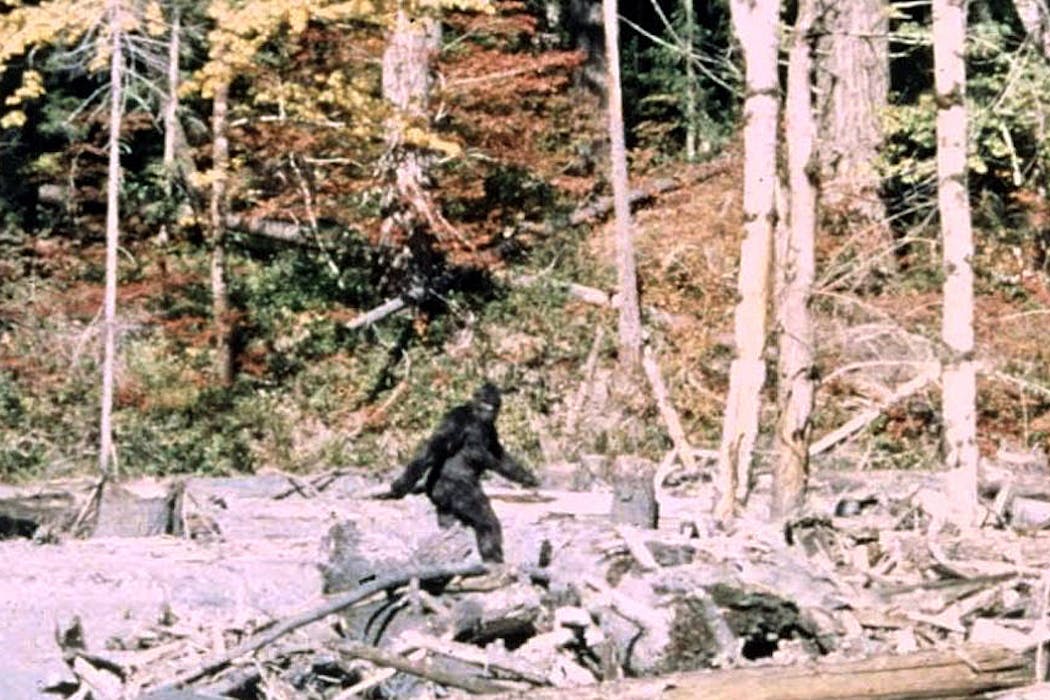
Frame 352 from the Patterson-Gimlin Bigfoot film in 1962. wikipedia

It was the image that launched a cultural icon. In 1967, in the northern Californian woods, a seven foot tall, ape-like creature covered in black fur and walking upright was captured on camera, at one point turning around to look straight down the lens. The image is endlessly copied in popular culture – it’s even become an emoji. But what was it? A hoax? A bear? Or a real-life example of a mysterious species called the Bigfoot?

The film has been analysed and re-ananlysed countless times. Although most people believe it was some sort of hoax, there are some who argue that it’s never been definitively debunked. One group of people, dubbed Bigfooters, are so intrigued that they have taken to the forests of Washington, California, Oregon, Ohio, Florida and beyond to look for evidence of the mythical creature.

But why? That’s what sociologists Jamie Lewis and Andrew Bartlett wanted to uncover. They were itching to understand what prompts this community to spend valuable time and resources looking for a beast that is highly unlikely to even exist. During lockdown, Lewis started interviewing more than 130 Bigfooters (and a few academics) about their views, experiences and practices, culminating in the duo’s recent book Bigfooters and Scientific Inquiry: on the borderlands of legitimate science.

Here, we talk to them about their academic investigation.

What was it about the Bigfoot community that you found so intriguing?

Lewis: It started when I was watching either the Discovery Channel or Animal Planet and a show called Finding Bigfoot was advertised. I was really keen to know why this programme was being scheduled on what certainly at the time was a nominally serious and sober natural history channel. The initial plan was to do an analysis of these television programmes, but we felt that wasn’t enough. It was lockdown and my wife was pregnant and in bed a lot with sickness, so I needed to fill my time.

Bartlett: One of the things that I worked on when Jamie and I shared an office in Cardiff was a sociological study of fringe physicists. These are people mostly outside of academic institutions trying to do science. I was interviewing these people, going to their conferences. And that led relatively smoothly into Bigfoot, but it was Jamie’s interest in Bigfoot that brought me to this field.


The Insights section is committed to high-quality longform journalism. Our editors work with academics from many different backgrounds who are tackling a wide range of societal and scientific challenges.


How big is this community?

Lewis: It’s very hard to put a number on it. There is certainly a divide between what are known as “apers”, who believe that Bigfoot is just a primate unknown to science, and those that are perhaps more derogatorily called “woo-woos”, who believe that Bigfoot is some sort of interdimensional traveller, an alien of sort. We’re talking in the thousands of people. But there are a couple of hundred really serious people of which I probably interviewed at least half.

Many people back them. A YouGov survey conducted as recently as November 2025, suggested that as many as one quarter of Americans believe that Bigfoot either definitely or probably exists.

Were the interviewees suspicious of your intentions?

Lewis: I think there was definitely a worry that they would be caricatured. And I was often asked, “Do I believe in Bigfoot?” I had a standard answer that Andy and I agreed on, which was that mainstream, institutional science says there is absolutely no compelling evidence that Bigfoot exists. We have no reason to dissent with that consensus. But as sociologists what does exist is a community (or communities) of Bigfooting, and that’s what interests us.

Bartlett: One of the things that at least a couple of people reacted to once the book was published was the way we phrased that. On the blurb on the back of the book we say something along the lines of “Bigfoot exists if not as a physical biological creature then certainly as an object around which hundreds of people organise their lives”. A couple of people took that to be some kind of slight against them. It wasn’t.

Do these people have any sort of shared personality traits or other things that connected them?

Lewis: The community is very white, male, rural and blue collar – often ex-military. I think Bigfooting is growing among the female population, but there’s a sense of the kind of ‘masculine hunter in the dark’ persona.

Bartlett: In America, you find a lot more veterans in the general population. But I think there’s also the issue of how they like to present themselves, because when you’re dealing with witness testimony, you’ve got to present yourself as credible. If you can say something like, “I was in the service” or “I was in the armed forces”, then at least you’re not likely to be spooked by a moose.

A bigfoot sign at the Natural Bridge Of Arkansas park.
Logan Bush/Shutterstock

What surprised you the most about them, did they challenge any stereotypes?

Lewis: Some were very articulate, which did surprise me a little. I guess that’s my own prejudice. I was also very surprised about how open people were; I expected them to not tell me about their encounters. But a fair few of them did. Many of them wanted to be named in the book. I was also surprised about how much empirical data they collect and how much they attempt to try and analyse and make sense of it. And how they were willing to admit that a certain idea was bunk or a hoax. I expected them to be defending bad evidence.

Bartlett: There are extracts of this in our book, people saying “I was fooled by these tracks for ages. I thought they were real and then I found this and that and the other out about it and I revised my opinion.” So that did surprise me too.

If they collect empirical evidence, does that make what they do science?

Bartlett: When you’re working in institutional science you’re working to get grants, you’re working to get good quality publications. You might want your name associated with particular ideas, but you do that through peer-reviewed papers and by working with PhD students who go off to other labs. In Bigfooting, you’ve got self-published books, you’ve got Bigfoot conferences, you’ve got YouTube channels, you’ve got podcasts and things like this, and they’re not necessarily a good way of making and testing knowledge claims. This is an aspect where Bigfooting is quite different to mainstream science.

It was interesting to study the fringe physicists and seeing where the common deviation from science was. And that’s a focus on individualism; the idea that an individual alone can collect and assess evidence in some kind of asocial fashion. The physicists I studied were quite clear that ideas like consensus in science were dangerous, when in reality consensus, continuity and community are the basis of most of science.

What is the most common form of evidence in this community?

Lewis: Witness testimonies. Without those reported testimonies, Bigfooting would not exist. A large part of the work of a Bigfooter is to collect and make sense of these testimonies. They get upset when these testimonies don’t have much weight within institutional science. They’ll make the comparison to court and how testimonies alone can put someone on death row. So they don’t understand why testimonies don’t have much weight in science. Beyond the testimony, footprint evidence is probably the most famous and also the most pervasive sort of trace evidence.

Photograph of an alleged Bigfoot footprint taken in Hoopa, California in September 1962 and featured in a Humboldt Times newspaper article.
wikipedia

Bartlett: One of the reasons footprints are so important is that there’s the legacy of the Yeti and footprint evidence which proved to be relatively persuasive, convincing some institutional scientists that there was something in the Himalayas. And then there was the fact that the sort of two major academic champions of Bigfoot were persuaded by the footprint evidence: the late Grover Krantz (around 1970) and Jeffrey Meldrum (in the 1990s).

Lewis: These days you also see camera traps, audio recorders even DNA testing of hairs and those sorts of things. They’re capturing anomalous sounds and often blurry images. Some believe that a Bigfoot communicates through infrasound, although that is certainly disputed within the community. So what you’re getting now is more and more different types of evidence.

How can you know whether an image or a sound really points to Bigfoot?

Bartlett: What they do is go out into the forest and record a sound, for example, and compare it to databases of birds and other animals. And they may find there is nothing that matches it. Is it something that doesn’t sound like a car or a person or a bear or a moose? In which case, there’s the space for Bigfoot. And it’s the same with images to some degree.

Would you say that this interpretation is the biggest weakness or contradiction in their evidence?

Lewis: It allows them to create space for Bigfoot. Because if you can’t match it to something else, what could it be? You have this absence and then from that absence you create a presence. They believe it’s a scientific argument. In fact, it’s kind of interesting how Bigfooters will always enrol other kinds of magical beasts to strengthen the case for Bigfoot. So, one sentence I hear quite a lot is “it ain’t no unicorn”.

Jeffrey Meldrum.
Jeffrey Meldrum.
wikipedia

What’s the hierarchy in this community? Who’s at the top?

Lewis: A-listers tend to be anyone associated with academia. So Andy’s already mentioned Jeff Meldrum, unfortunately he passed away very recently, but he was their route to contemporary academia. So in any conference, if Jeff Meldrum was speaking, he’d be last. Anyone who’s on TV, such as the Finding Bigfoot and the Expedition Bigfoot presenters would also be in the A-list category. And then you’ve got various different groups just below. For example, the Bigfoot Field Researchers Organization, which is probably the most well known group.

What could Bigfooters learn from scientists and vice versa?

Lewis: From reading books and from discussing it with people, there was a sense that Bigfooters are anti-science. We did not find that. What we argue in the book is that they’re not anti-science. In fact, I would say a lot of them are pro-science, but they’re counter establishment. I think academia should be thinking about these people as citizen scientists and what they’re doing as a kind of gateway into understanding your local area.

For example, they found an animal, I think it was a pine marten, on a camera trap that was not supposed to be in the area. So they are collecting lots of data. They are not irrational. It’s different from, for example, ghost hunting, because you don’t have to imagine there’s something entirely new in the world. It’s just an animal that exists out there that hasn’t been found. Implausible, yes. But not impossible. What they do lack, however, is academic discipline; anyone can be a Bigfooter.

Was there a specific encounter you heard about that was particularly compelling?**

Lewis: Did I get caught up in the moment? Sometimes, of course, you do, just as you do in a film. If you’re in the pitch dark night and you’re watching a horror film, you take it away with you for a while until you settle back down. I often went to bed buzzing, thinking I don’t know what I just heard; they were great stories at the end of the day. But I learned to separate the interview from my thoughts on the interview.

If you encountered Bigfoot in the woods, how would you go about convincing others?**

Lewis: A lot of Bigfooters would begin with qualifiers like, “My dad doesn’t believe in Bigfoot,” or “I have questioned myself for years thinking about this incident and what it was.” So, they would set themselves up as a rational, logical individual. That then created a connection between me and them. And of course, I’d probably be doing the same.

Bartlett: If I were to encounter Bigfoot, I would probably draw on all the techniques of proving that I’m a credible, hard-headed, rational person that we see in those witness encounters. I would expect to be disbelieved. And so therefore I would stress I was putting my credibility as an academic on the line here. So I’d deploy all those kinds of rhetorical techniques that are used by Bigfooters, aside from just the description of the encounter.


For you: more from our Insights series:

To hear about new Insights articles, join the hundreds of thousands of people who value The Conversation’s evidence-based news. Subscribe to our newsletter.

The Conversation

The authors do not work for, consult, own shares in or receive funding from any company or organisation that would benefit from this article, and have disclosed no relevant affiliations beyond their academic appointment.

ref. ‘It ain’t no unicorn’: meet the researchers who’ve interviewed 130 Bigfoot hunters – https://theconversation.com/it-aint-no-unicorn-meet-the-researchers-whove-interviewed-130-bigfoot-hunters-274574

Democracy dies in broad daylight: the Trump administration’s frontal assault on the free press

Source: The Conversation – UK – By Kristin Skare Orgeret, Professor of Journalism and Media Studies, Oslo Metropolitan University

When the billionaire owner of Amazon, Jeff Bezos, bought the Washington Post from the Graham family in 2013, he promised a “golden era to come”. In February 2017, one month into Donald Trump’s first term as US president, the paper adopted the motto: “Democracy Dies in Darkness”, reflecting the perceived threat posed by Trump’s authoritarian leanings and the suggestion that Moscow had interfered in the 2016 election.

That motto was turned against Bezos last week when it was announced that the Post was laying off one-third of its editorial staff, including its sports section and several of its foreign bureaus. The news was greeted with dismay in America’s journalistic circles. Marty Baron, a celebrated former executive editor of the Post, called the layoffs “among the darkest days in the history of one of the world’s greatest news organisations”.

But in the years since Bezos acquired the Post it has become a symbol of a global wave of democratic backsliding in the US which accelerated as the prospect of a second Trump presidency grew through 2024. After an initial period of investing in the Post and hiring more reporters, he has now overseen a long period of decline.

Political concerns began seriously to mount in 2024 when, in the run up to that year’s presidential election, the newspaper broke a 36-year precedent by refusing to endorse a candidate (which most readers, given the paper’s traditionally liberal leanings, had assumed would be Democrat Kamala Harris).

Since Trump has returned to the White House further evidence of this backsliding at the Post includes suppression of a cartoon critical of Trump’s relationship with US tech oligarchs by the Pulitzer Prize winning artist Ann Telnaes and a refocusing of the opinion pages to centre them on “personal liberties and free markets”. The changes have reportedly cost the Post many thousands of subscribers.

A cartoon showing American tech billionaires bowing before a statue of Donald Trump and offering bags of money.
The cartoon that led to Ann Telnaes quitting the Washington Post.
Facebook

But the malaise in US journalism is a much broader story than just the travails of the Washington Post. There’s a sustained campaign of cultural and structural violence against a profession that is under economic and political strain, yet essential to democracy.

Trump’s hostility toward certain sections of the press is not new. During his first term he used non-journalistic platforms to brand mainstream media outlets “the enemy of the people”. His hostility was directed at both institutional and personal level, launching attacks against individual journalists and their employers (the “failing New York Times”, his clash with CNN’s Jim Acosta, etc).

In his second term this hostility has intensified, its impact often obscured by the rapid pace of news emanating from the White House. We’re seeing press freedom in the US under attack on three distinct fronts: restricted access to information, threats to the safety of journalists and use of legal pressure to discourage dissenting voices.

Controlling the message

Restrictions began as soon as Trump was inaugurated for his second term in January 2025. Within a month, the Associated Press lost access to the Oval Office and Air Force One (in other words, to direct contact with the president) after refusing to adopt an executive order renaming the Gulf of Mexico the “Gulf of America”.

Accreditation rules soon tightened. In October, the newly minted secretary of war Pete Hegseth announced that henceforth journalists reporting from inside the Pentagon would be allowed to only report official government pronouncements. Many mainstream reporters handed back their Pentagon accreditation in protest. In response, Hegseth announced what he called the “next generation of the Pentagon press corps”, mainly comprising journalist from far-right outlets.

Meanwhile the president’s verbal attacks on journalists have escalated, particularly targeting women and especially women of colour. Incidents such as the “quiet Piggy” remark (directed at Bloomberg journalist Catherine Lucey) exemplify a broader pattern of public humiliation of female journalists. Research suggests that such conduct contributes to the normalisation of hostility toward female journalists, who were already disproportionately quitting journalism.

‘Quiet piggy’: Donald Trump targets a female reporter on Air Force One.

Journalists covering protests also face heightened risks. During the “no kings” demonstrations in October 2025, multiple incidents were reported in which police used force against accredited reporters. In November 2025 the White House escalated the pressure, launching a “Hall of Shame” site naming journalists and outlets it said had misrepresented the administration.

‘Lawfare’

The Trump administration has also brought considerable legal pressure to bear on the news media over the first year of its second term. The US president has filed multiple lawsuits alleging bias on the part of one or another media organisation that had attracted his disfavour.

In July, Paramount reached a US$16 million (£11.69 million) settlement over a 60 Minutes interview with Kamala Harris in 2024 that the president accused of bias. At stake was a US$8.4 billion merger that required approval from the Federal Communications Commission, a public body headed by Trump loyalist Brendan Carr.

The president also has active suits against the Wall Street Journal and the BBC (an episode which led to the resignation of director general, Tim Davie, and its head of news, Deborah Turness). By the middle of 2025, Axios reported that Trump-related media and defamation suits had already matched the annual historical record.


Read more:
Why has the BBC’s director general resigned and what could happen next?


Democratic backsliding

Taken together, these developments reflect a broader pattern of institutional stress affecting US democratic structures. The pressure on these established media organisations has created a situation in which they manage to survive with their independence eroded.

Comparative research consistently demonstrates that journalists are among the first actors targeted in such processes because of their frontline work. Control over information remains central to the success of an authoritarian government.

What, then, should journalists and media organisations do? Standing together matters. We saw that in 2018, when about 350 American newspapers jointly defended press independence against Trump’s “fake news” attacks. This prompted the US Senate to adopt a resolution supporting a free press and declaring that “the press is not the enemy of the people”.

But the danger is that this structural violence against the news media and its attempt to hold power to account becomes normalised. If the Trump administration’s contempt for the fourth estate continues to percolate through to the public at large, a population already struggling to tell truth from lies will be further blindfolded and darkness will fall over American democracy.

The Conversation

The authors do not work for, consult, own shares in or receive funding from any company or organisation that would benefit from this article, and have disclosed no relevant affiliations beyond their academic appointment.

ref. Democracy dies in broad daylight: the Trump administration’s frontal assault on the free press – https://theconversation.com/democracy-dies-in-broad-daylight-the-trump-administrations-frontal-assault-on-the-free-press-275629