Moon sighting is a key part of Muslim life – how the lunar cycle determines the start of Ramadan and Eid

Source: The Conversation – UK – By Imad Ahmed, PhD Candidate, Faculty of Divinity, University of Cambridge

Each year as Ramadan approaches, more than 2 billion Muslims around the world prepare for a month of fasting, prayer and communality. But Ramadan does not begin on the same day everywhere in the world.

This year, some countries will commence the month of fasting on Thursday, February 19, whereas other countries may begin it a day earlier. Similarly, at the end of Ramadan, different communities will celebrate Eid on different dates.

The reason for this lies in the nature of the lunar visibility calendar – the new crescent Moon is not always visible everywhere on the same date. The prophet Muhammad is reported to have said: “Observe fast on sighting it [the crescent] and break fast on sighting it [the next crescent] – but if the sky is cloudy for you, then complete the number [30 days].”

In modern times, some countries such as Turkey have implemented calendar reforms, removing the act of monthly visual sightings of the crescent. They rely instead on pre-determined calculations.

Nevertheless, the visual sighting of the Moon to determine the start of the month remains the majority practice of Muslims across the world. Most believe this has to be done with the naked eye.

Cloud cover can therefore affect when the month begins in different locations, making it an unpredictable calendar. This imbues Moon sighting occasions with a sense of communal wonder – but it can also make the issue surprisingly contentious.

A very British problem

When Muslim migrants arriving in the UK in the middle of the 20th century tried to sight the new crescent Moon, they would often struggle – in part due to a very British problem: the cloudy weather.

As a result, various mosques and communities would outsource their Moon sightings to different countries. Some followed Morocco, others Turkey or Saudi Arabia. As each country might confirm a first sighting on different days, it meant UK mosques could end up with divided dates for Ramadan and Eid.

This has been a source of pain for some people in the British Muslim community. For me (Imad) growing up in London, it meant my school friends might start celebrating Eid on a different date to me and my family. This felt pretty sad – but I just assumed it had to be like this.

That changed when I witnessed the communal practice of Moon sighting during a family holiday to Cape Town in South Africa. When I saw thousands of Muslims gathering on the beach to celebrate seeing the new crescent Moon, I asked myself: “Why can’t we do this in the UK?”

When I returned from Cape Town, I founded a Muslim calendar lunar observation astronomy club called the New Crescent Society. Our aim is to find a way of celebrating Moon sighting communally throughout the UK – and to develop a viable lunar Islamic calendar here, like they have in other parts of the world.

Sometimes you can see the Moon in Cardiff but not in Cambridge. Sometimes the sky is clear in London but cloudy in Manchester. Our UK-wide astronomy education programme, Moonsighters Academy, now supports Muslims to lead their own lunar observation groups in their communities.

Composite image of the first nine days of the lunar cycle.
The first nine days of the lunar cycle.
Emma Alexander, CC BY-SA

The astronomy of lunar visibility

Every month, the Moon goes from a thin crescent, waxing each night to become gibbous (more than half full) and then full, before waning back down to a crescent and disappearing again. This cycle occurs due to the Moon’s orbit around the Earth, and takes 29 and a half days.

The Moon does not create its own light. What we see is reflected sunlight – and the same side of the Moon is always facing towards us. It rotates on its axis at the same rate it orbits the Earth, a phenomenon called tidal locking.

The precise moment at which some amount of lunar illumination is first visible from Earth each month depends on geometrical physics. At this point, the crescent is so thin that even cameras struggle to determine it.

But as the Moon moves further away from the Sun in the sky, the crescent slowly becomes thicker as the angle of separation increases. There is now a longer “lag” between sunset and moonset, which also makes the new crescent more visible. The best time to view a young crescent is approximately halfway between sunset and moonset, balancing sky brightness with lunar altitude.

Astronomers relish the challenge of spotting a very thin crescent Moon when it is less than 24 hours old. But just how young a Moon can people see with the naked eye? One established landmark of 15 hours 32 minutes was set by the astronomer Stephen James O’Meara, who is also known for first spotting Halley’s comet on its return in 1985.

When you introduce optical aids like binoculars, even younger and thinner crescents can be seen. With the right conditions and technology, you can even image the Moon at the moment of conjunction, with an age of exactly zero hours. This was first achieved by astrophotographer Thierry Legault in July 2013, using an infrared filter on a telescope that had been “baffled” to block out the precariously nearby Sun.

When will Ramadan and Eid start?

This depends on where you are in the world. On February 17, the Moon will only be around three hours old at the time of sunset in Saudi Arabia, and moonset is only a few minutes after sunset at this point in the lunar cycle. So the Moon will be too close to the Sun in the sky for it to be astronomically visible.

Nonetheless, if the Saudi Supreme Court receives a report that someone has seen the Moon, it is likely to accept this, leading to a first day of fasting in Saudi Arabia (and all mosques around the world that follow its calendar) on Wednesday, February 18.

In the UK, Europe and North Africa, we are likely to have positive sightings the day after and commence fasting on Thursday, February 19. Countries further east, such as Australia, will probably see the Moon a day later still, and thus have their first fast on Friday, 20 February.

In March, on Thursday, 19, the Moon will be between 17 and 18 hours old at sunset, so difficult – but not impossible – to see in the UK, Europe and North Africa. So we expect communities following these sightings to start celebrating Eid on Saturday, March 21. Mosques following Saudi Arabia are likely to celebrate Eid a day earlier.

However, this is not just a story about calendars. When people gather to search the horizon for the new crescent Moon, they are participating in a practice that links them to the most ancient of human practices: observing and connecting with the natural world around them. In Britain, we hope our work can help make this an even more unified celebration.

The Conversation

The Moonsighters Academy was funded by a Science and Technology Facilities Council Spark award.

Emma L Alexander receives funding from the Science and Technology Facilities Counci for her research at the University of Leeds.

ref. Moon sighting is a key part of Muslim life – how the lunar cycle determines the start of Ramadan and Eid – https://theconversation.com/moon-sighting-is-a-key-part-of-muslim-life-how-the-lunar-cycle-determines-the-start-of-ramadan-and-eid-276195

Species on east-west coasts have greater extinction risk than those on north-south shores – here’s why

Source: The Conversation – UK – By Cooper Malanoski, Postdoctoral research associate, University of Oxford

MarcelClemens / shutterstock

As the Atlantic warms, many fish along the east coast of North America have moved northwards to keep within their preferred temperature range. Black sea bass, for instance, have shifted hundreds of miles up the coast.

In the Mediterranean, the picture is very different. Without an easy escape route towards the poles, many species are effectively trapped in a sea that is warming rapidly. Some native fish are even being replaced by more heat-tolerant species that have slipped in through the Suez Canal.

It’s a process affecting coastal species around the world: without a continuous pathway to cooler waters, many are in trouble. Escape becomes difficult where coastlines run east–west or are broken into enclosed basins and islands. In these settings, species have to move huge distances just to gain a few degrees of latitude – the so-called “latitudinal trap”.

It’s also a process that has repeated throughout history. When we analysed 540 million years of fossil data for a recent study published in the journal Science, we found that species along east-west coastlines were more likely to go extinct than those with easier movement north-south.

Diagram of coastlines showing why north-south coasts have less extinction risk

Malanoski et al (2026) / Science

We hypothesised that the shape and orientation of coastlines could help species escape – or trap them. If coastlines provide direct, continuous pathways to move north or south, species should be able to better track shifting climates. But, where species have to travel a long way for minimal latitude gain, their extinction risk is raised during episodes of environmental change.

Coastlines themselves are not fixed. Over millions of years, plate tectonics rearrange continents, sometimes producing long north-south coasts, like those of the Americas today, and at other times sprawling east-west seaways such as during the Ordovician a bit over 400 million years ago.

This means climate shocks can produce very different extinction outcomes depending on the layout of continents at the time.

To test this hypothesis, we analysed fossil data for about 13,000 groups of related shallow-marine invertebrate species, such as clams, snails, sponges and starfish, spanning the last 540 million years. We then paired these records with reconstructions of ancient geography.

For each fossil, we estimated how difficult it would have been for that species to shift its latitude along shallow coastlines. We measured this as the shortest number of steps to travel 5°, 10°, or 15° latitude north or south. (For context, Great Britain covers about 9° from top to bottom). Short distances imply a relatively direct escape; long distances imply a long or maybe impossible escape route.

Annotated maps of various coastline shapes
A 5° shift in latitude can be reached quickly along a simple north–south coastline (A), but requires much longer routes—or cannot be reached at all—along convoluted east–west margins (B), interior seaways (C), and islands (D).
Malanoski et al (2026) / Science

We found that, over the last 540 million years, extinction risk was consistently higher for marine animals with long escape routes.

Geography amplifies catastrophe

This pattern intensified during Earth’s five mass extinction events. In our models, species with longer distances showed increases in extinction risk of up to 400% during mass extinctions, compared with about 60% during other intervals, highlighting that geography becomes far more consequential when climate change intensifies.

Although our analyses focused on geologic timescales, our results help us understand how shallow marine species may respond to climate change today. Species living in the Mediterranean or the Gulf of Mexico or other regions with semi-enclosed geography, or around the margins of islands, may have more difficulty as the ocean warms.

Coastline geometry may matter less for species that are good at dispersing themselves, however, especially those that have a long planktonic larvae phase where they drift around the ocean before becoming fixed in place. The survival of those species depends more on factors like ocean currents than coastline orientation.

Estimating whether a species is at risk of extinction is typically done with reference to attributes such as body size or geographic range size. But our work shows that extinction risk also depends on geography. Survival during climate upheaval depends not only on a species’ biology – but on whether the map itself offers an escape.

The Conversation

Erin Saupe receives funding from the UK Natural Environment Research Council (NERC) and the Leverhulme Trust.

Cooper Malanoski does not work for, consult, own shares in or receive funding from any company or organisation that would benefit from this article, and has disclosed no relevant affiliations beyond their academic appointment.

ref. Species on east-west coasts have greater extinction risk than those on north-south shores – here’s why – https://theconversation.com/species-on-east-west-coasts-have-greater-extinction-risk-than-those-on-north-south-shores-heres-why-275280

How shaming unethical brands makes companies improve their behaviour

Source: The Conversation – UK – By Janet Godsell, Dean and Professor of Operations and Supply Chain Strategy, Loughborough Business School, Loughborough University

Alive Color Stock/Shutterstock

Recent investigations have uncovered forced labour in agricultural supply chains, illegal fishing feeding supermarket freezers, deforestation embedded in everyday food products, and unsafe conditions in factories producing “sustainable” fashion. These harms were not visible on labels. They surfaced only when journalists, whistleblowers or activists exposed them.

And when they did, something predictable happened. Consumers felt uneasy. Brands issued statements. Promises were made. The point is that the force that set change in motion was not regulation. It was consumers.

Discovering that an ordinary purchase may be tied to exploitation or environmental damage creates a jolt of personal responsibility. In our research,
we found that when environmental consequences are clearly linked to people’s own buying choices, many are willing to switch products — especially when credible alternatives exist.

But guilt is private. It nudges personal behaviour. It does not automatically reshape systems. The shift happens when private discomfort becomes public voice.

Consumers are often also the first to make hidden environmental harms visible. They post evidence on social media. They question corporate claims. They compare sustainability promises with independent reporting. They organise petitions, boycotts and review campaigns. By shining a spotlight on the truth, the scrutiny shifts from shoppers to brands.

That shift matters because modern brands depend on trust. Reputation is an asset. When sustainability claims are publicly challenged, credibility is at risk. Research in organisational behaviour
shows that firms respond quickly to threats to legitimacy. Reputational damage affects customer loyalty, investor confidence and regulatory attention.

In many high-profile cases, supply chain reforms have followed intense public scrutiny rather than quiet compliance checks. Leaders may not act out of moral awakening — but they do act when inaction becomes costly to their reputation.

Consumers can trigger the emotional chain reaction. They feel guilt. They seek information. They speak collectively. That collective voice generates corporate shame.

woman shopper with trolley checking two bottles
Consumers have the power to demand more transparency from brands.
Stokkete/Shutterstock

Sustainability professor Mike Berners-Lee argues in his book A Climate of Truth that demanding honesty is one of the most powerful climate actions available to citizens. Raising standards of truthfulness in business and media changes incentives. When the gap between what companies say and what they do becomes visible, maintaining that gap becomes harder.

Our research explores how that visibility can be strengthened. The findings were clear. When environmental and social consequences are personalised and traceable, sustainability feels less distant. People see both their own role and the role of particular firms. That dual awareness encourages two responses: behavioural change driven by guilt and corporate accountability driven by shame.

Shame works because it is social. Brands care about how they are seen. When the negative environmental and social effects of supply chains can be publicly connected to named products, corporate narratives become contestable in real time.

Making supply chains socially visible

The technology to improve transparency already exists. Companies track goods through logistics systems, supplier databases and digital product-tagging that collect detailed information about sourcing and production. The barrier is not data collection. It is disclosure.

Environmental indicators — carbon emissions, water use, land conversion risk, labour standards compliance — can be linked to products through QR codes or retail apps. Comparable reporting standards would ensure consistency. Simple digital interfaces would make information accessible. Social sharing tools would allow consumers to compare and discuss findings publicly.

Social media is crucial. It already enables workers, communities and campaigners to challenge corporate messaging. Integrating verified supply chain data into these spaces would shift transparency from crisis response to everyday expectation.

This strategy, with its behaviour change directive, could work more effectively than rules or green marketing campaigns alone.

Regulation is essential but often slow and uneven across borders. Marketing campaigns can highlight selective improvements while leaving deeper practices untouched. Transparency activated by collective consumer voice operates differently. It aligns emotional motivation with reputational consequence.

Consumers are not passive recipients of information. They are catalysts. By feeling the first twinge of guilt, asking harder questions and speaking together, they create the conditions under which companies experience shame. When shame threatens trust and market position, change becomes rational and inevitable.

Shame is uncomfortable. But when directed at opaque systems rather than consumers, it can be powerful. By demanding truth and making supply chains socially visible, consumers can push businesses towards greater transparency — and, ultimately, towards more sustainable practice.


Don’t have time to read about climate change as much as you’d like?

Get a weekly roundup in your inbox instead. Every Wednesday, The Conversation’s environment editor writes Imagine, a short email that goes a little deeper into just one climate issue. Join the 47,000+ readers who’ve subscribed so far.


The Conversation

Janet Godsell receives funding for the Interact Network+ from the Innovate UK Made Smarter Innovation Programme via the ESRC. She is affiliated with the World Economic Forum (WEF) Advanced Future Council for Advanced Manufacturing and Global Value Chains.

Nikolai Kazantsev receives funding from UKRI funded project “Resilience in Agrifood Systems Supply Chain Configuration Analytics Lab (Project ID: R1650GFS). He is a fellow of Clare Hall College, Cambridge.

ref. How shaming unethical brands makes companies improve their behaviour – https://theconversation.com/how-shaming-unethical-brands-makes-companies-improve-their-behaviour-273062

Extra/Ordinary Women exhibition explores the women in Charles Dickens’s life and writing

Source: The Conversation – UK – By Oliver Bray, Dean of Leeds School of Arts, Leeds Beckett University

Walking through the doors of London’s Charles Dickens Museum is always a special moment. This handsome, tall London townhouse – middle class by Victorian standards but practically palatial to visitors today – was the crucible in which a young, ascending Charles Dickens wrote himself into international superstardom.

It is here that The Pickwick Papers, Oliver Twist and Nicholas Nickleby spilled from his pen. And it is here, as the new exhibition Extra/Ordinary Women compellingly demonstrates, that Dickens lived in constant proximity to the intelligent and talented women who shaped his imagination, his domestic life and his enduring theatricality.

The Extra/Ordinary Women exhibition offers insights to many of these women. His wife, Catherine Dickens, who also wrote within these walls. His sister, Mary Hogarth, whose sudden death here devastated him. His sister-in-law, housekeeper and adviser Georgina Hogarth, who remained his rock for the rest of his life.

Victorian culture, which was suspicious of women who moved in theatrical, artistic or public spheres, left deep traces on Dickens’s portrayals of women. In his writing, Dickens either sanitised his female characters, like the “saintly” Little Nell in The Old Curiosity Shop (1841) or the “innocent” Rose Maylie in Oliver Twist (1838); or he reformed them, like the “fallen” women, Martha Endell and Little Em’ly in David Copperfield (1850). He gave these characters emotional clarity and symbolic weight that belies the more complex real-world inspirations.

The exhibition shows that Mary Hogarth, for instance, is scattered through Dickens’s fiction in the form of saintly young women whose deaths confer moral meaning. Dickens’s close friend Angela Burdett‑Coutts – a philanthropist and powerful progressive – was softened into Agnes Wickfield, a gentle moral influence in David Copperfield.

Dickens the performer

Looking around the exhibition, I found myself thinking about performance. Not just the performances of the women around him, but Dickens’s own lifelong, desperate theatricality.

It has always seemed obvious to me, as a performer of Dickens’s work, that he wrote with an actor’s mind. My own performed reading of A Christmas Carol taught me that his prose demands embodiment: the regretful cadences of Scrooge’s former fiancée Belle, the anguish of Bob Cratchit, the vocal changes that illustrate the transformative journey of Scrooge himself. These characters were not merely written to be read, they were written to be heard.

The deputy director of the museum, Emma Harper, informed me that while writing, Dickens would break from his desk to perform the characters he was developing in the mirror. He also performed domestic dramas for his children, founded amateur dramatic troupes and he threw himself into public readings so intensely that doctors monitored his pulse before and after each performance. He made himself physically ill with the sheer force of his acting. This is not a writer who happened also to perform. This is a performer who happened also to write.

And the women around him were, in many ways, part of that theatrical and artistic world. His daughters are good examples. Mamie Dickens loved performing, and Katey Perugini, an artist of real talent, appears in the exhibition through in a newly displayed painting that mimics her own painting style. The exhibition also reminds us that Ellen Ternan – Dickens’s longtime mistress – came from a theatrical family.

All of this becomes shockingly vivid with the exhibition’s centrepiece: the newly revealed, previously unpublished letter to the French opera singer Pauline Viardot. It is, in many ways, a perfect artefact, because it shows Dickens in full, contradictory colour.

Pauline Viardot in a black and white photo
Pauline Viardot in 1860.
Musée Carnavalet

Here is the great novelist, in Paris for his triumphant theatrical readings, writing with unabashed admiration to a woman whose artistry moved him to tears. But here is also Dickens the flirt – offering her an invitation to dine and promising tickets to his next reading.

Dickens wrote the letter while en route to see his mistress, Ternan, in Geneva. “I am going to Geneva tomorrow night, but will be back in seven days,” he says breezily, attempting to schedule dinner with Viardot for the following week.

The exhibition also includes a letter from Viardot to Dickens’s biographer, where she recalls Dickens “raining tears” during her performance of Orphée. And it reveals something about Dickens that the exhibition continually circles back to: he existed in a self-made world of performance, admiration, emotional excess and artistic intoxication. He was drawn to women who were brilliant, expressive and creative, because they belonged to that same world of heightened feeling and dramatic possibility.

This is what makes Extra/Ordinary Women so compelling: it reframes Dickens not only through the women he knew, but through the theatrical culture they collectively inhabited. Stepping outside, I felt his familiar voice linger, now joined by the sense that the women behind the scenes were finally stepping into the light – something the dramatist in Dickens might have appreciated.

Extra/Ordinary Women is at the Charles Dickens Museum in London until September 6


Looking for something good? Cut through the noise with a carefully curated selection of the latest releases, live events and exhibitions, straight to your inbox every fortnight, on Fridays. Sign up here.


This article features references to books that have been included for editorial reasons, and may contain links to bookshop.org. If you click on one of the links and go on to buy something from bookshop.org The Conversation UK may earn a commission.

The Conversation

Oliver Bray does not work for, consult, own shares in or receive funding from any company or organisation that would benefit from this article, and has disclosed no relevant affiliations beyond their academic appointment.

ref. Extra/Ordinary Women exhibition explores the women in Charles Dickens’s life and writing – https://theconversation.com/extra-ordinary-women-exhibition-explores-the-women-in-charles-dickenss-life-and-writing-275861

Why coping with heavy rain in Scotland’s whisky country shows how to save water for the summer

Source: The Conversation – UK – By Josie Geris, Reader in Hydrology, University of Aberdeen

After weeks of relentless rain and flooding, and even more forecast, 2025’s droughts and hosepipe bans feel like ancient history. But they shouldn’t.

The UK is increasingly caught between these wetter winters and warmer, drier summers. What if this year’s summer brings water shortages again? The seemingly endless rainfall causing flooding across the UK right now could help solve future summer drought problems – if we capture it right.

The stakes are high in Speyside, home to around half of Scotland’s malt whisky distilleries. They had to cope with 2025 being the UK’s warmest and sunniest on record, where prolonged dry conditions led to widespread restrictions on water abstraction. Multiple distilleries were forced into temporary closures, costing the industry millions of pounds and highlighting just how vulnerable even Scotland’s famously wet regions are to water scarcity.

Whisky production represents one of the UK’s biggest industrial water users. Large quantities of water are required for the distilling process and the product itself, so understanding water conservation is both extremely important for the industry, and can also help others recognise the benefits.

If it was possible to retain this winter’s rainfall and release it gradually when it was needed, the nation could become more resilient to both floods and droughts without building expensive new reservoirs.

Managing droughts with floods

Across Speyside, they’re testing ways to slow, store and steadily release water by working with the landscape rather than against it. Distillers have invested in leaky dams (small barriers built across temporary upland streams) to slow the flow of water during heavy rain and allow the rainwater to soak into soil and recharge groundwater.

Leaky dams hold the water at surface level as well helping it store underground. Water in the soil and deeper groundwater move through the subsurface much more slowly than over land – taking weeks or months rather than hours or days – which is why rivers still flow even after long dry spells.

An overhead view of the Tromie river.
Tromie river in Speyside.
Ondrej Zeleznik/Shutterstock

There are other examples of useful interventions. Peatland restoration, wetland creation and tree planting all work by increasing temporary storage in the landscape and slowing the movement of water into rivers.


Read more:
Environment issues have never been so fiercely debated in a Welsh election campaign as they will be in 2026


Research across upland catchment areas in Cumbria and West Yorkshire shows how the principles being tested in Speyside could translate to elsewhere. A large academic review of natural flood management evidence concluded that measures increasing water storage, slowing the flow of water over the land or enhancing soil structure can consistently reduce the peak level of a flood.

This growing body of evidence supports a simple but powerful idea: the UK and other countries could be more resilient to droughts and floods by redesigning landscapes to keep water around for longer.

Three lessons for the rest of the UK

1. Design and location matter

Local factors and hydrology (the study of the movement and management of water) can determine what works best where. For example, planting trees “somewhere” delivers far less benefit than planting them in the right places, especially near rivers, near the source of the river, or where soil can absorb water.

2. Benefits must stack up or they won’t be adopted

Leaky dams and other projects, such as tree planting, are relatively inexpensive, compared with traditionally engineered flood defences or having to deal with flood and drought consequences. They can deliver benefits at a fraction of the cost, while potentially also increasing biodiversity, soil health, carbon capture and improving water quality.

But there are trade-offs, which need to be assessed early. For example, in some cases, large-scale tree planting can also reduce summer water availability in already stressed catchment areas. Tree canopies can temporarily store water on the leaves, but if this water evaporates it doesn’t return to the soil. Tree roots improve the soil so it absorbs and stores more water, but trees can also use more water. The net effects depend on factors such as climate, soil type and tree species.

3. Good governance will unlock funding

When water security has clear economic benefits, businesses are willing to engage. However, investment is not always private, and a recent review showed public funding is often fragmented, with inconsistent planning rules. Strengthening overall governance of these kind of schemes is essential, because farmers, businesses and landowners are far more likely to participate if they benefit.

Managing our landscapes appropriately won’t stop all floods or prevent every drought, but it can make both less severe, while restoring habitats, supporting farming, and protecting industries that rely on dependable water supplies.

Every river carrying floodwater to the sea represents water that could be stored for drier months. Thinking ahead for what happens during heavy rains can be part of forward planning for more extreme weather in years to come.

The Conversation

Josie Geris receives funding from the Natural Environment Research Council, Royal Society, the Scottish Government via CREW (Scotland’s Centre of Expertise for Waters), and Chivas Brothers.

Megan Klaar receives funding from the Natural Environment Research Council, The Leverhulme Trust and National Trust.

ref. Why coping with heavy rain in Scotland’s whisky country shows how to save water for the summer – https://theconversation.com/why-coping-with-heavy-rain-in-scotlands-whisky-country-shows-how-to-save-water-for-the-summer-275762

Self-driving cars are poorly prepared for high-risk road situations – here’s how AI can improve them

Source: The Conversation – UK – By Mingming Liu, Assistant Professor, School of Electronic Engineering, Dublin City University

Andrey_Popov / Shutterstock

Self-driving cars have made impressive progress. They can follow lanes, keep their distance, and navigate familiar routes with ease. However, despite years of development, they still struggle with one critical problem: the rare and dangerous situations that cause the most serious accidents.

These “edge cases” include sharp bends on wet roads, sudden changes in slope, or situations where a vehicle approaches its physical limits of grip and stability. In real-world deployments, which often involve some level of shared control between driver and automation, such moments can arise from human misjudgment or from automated systems failing to anticipate rapidly changing conditions.

They happen infrequently, but when they occur, the consequences can be severe. A car might handle a thousand gentle curves perfectly, but fail on the one sharp bend taken a little too fast.

Current autonomous systems are not trained well enough to handle these moments reliably. From a data perspective, these events form what scientists call a “long tail”: they are statistically rare, but disproportionately important.

Collecting more real world data does not fully solve the problem, because deliberately seeking out dangerous conditions is costly, slow, and risky. Many of these scenarios are simply too dangerous to practise in real life. We cannot deliberately put vehicles into near-crashes on public roads just to see whether the software can cope. If an AI system rarely sees extreme situations during training, it has little chance to respond well when they occur in real life.

In the current fleet of self-driving cars, a human in a control centre is often at hand to intervene if something goes wrong. But to achieve fully driverless cars, researchers need to find ways of effectively training AI systems to handle high-risk situations.

Our research team at Dublin City University, working with colleagues at the University of Birmingham, has been tackling this gap.

We have developed a virtual “proving ground” that uses generative AI to safely create rare, high-risk driving scenarios, allowing vehicles to learn from them without putting anyone in danger. Instead of waiting for rare events to happen naturally, we can teach an AI model to create realistic but challenging driving scenarios on demand, including ones that push vehicles close to their physical limits.

Practising safely

The generative AI that is used in our system is designed to learn from real driving data and then produces new, realistic scenarios. Crucially, it does not just reproduce typical roads and speeds.

It focuses deliberately on the most demanding situations including sharp curves, steep slopes and high speeds, combined in ways that challenge both human drivers and automated systems. This allows us to expand the range of situations a vehicle can experience during training, without ever leaving the simulator.

In effect, the car can “practise” dangerous situations safely, repeatedly and systematically. However, the goal of our work is not to replace the human driver entirely. Instead, we focus on human–machine shared driving: a partnership in which the car and the driver support each other.

Humans are very good at intuition, anticipation and adapting to unfamiliar situations. Machines excel at fast reactions and precise control. Shared driving aims to combine these strengths. In our system, control is continuously adjusted depending on risk.

When the road is straight and safe, the driver remains firmly in charge, but when the system detects a high-risk situation, such as a sharp bend that the driver may be approaching too quickly, it smoothly increases the level of automated assistance to help stabilise the vehicle. Importantly, this is not a sudden takeover. The transition is gradual and adaptive, designed to feel natural rather than intrusive.

To evaluate the system, we went beyond pure simulation. We used a driver-in-the-loop platform, where real people sit in a high-fidelity driving simulator and interact with the AI in real time. The results were encouraging. Less experienced drivers benefited most: when they struggled on complex or winding roads, the system provided timely support, reducing the risk of losing control.

At the same time, the system avoided unnecessary intervention during safe driving, helping drivers feel more engaged rather than overridden. Overall, this adaptive approach led to safer, smoother driving compared with fixed or overly conservative control strategies. It also allows both the human driver and the AI to improve at their handling of extreme road situations.

Autonomous vehicles are often judged by how well they handle routine driving, but public trust will ultimately depend on how they behave when things go wrong. By using generative AI to train vehicles on rare but critical scenarios, we can expose weaknesses early, improve decision making, and build systems that are better prepared for the real world.

Just as importantly, by keeping humans in the loop, we can design automation that supports drivers rather than replacing them outright. Fully driverless cars may still be some way off, but smarter training systems like this can help bridge the gap by making both human-driven and automated vehicles safer on today’s roads.

The Conversation

Mingming Liu does not work for, consult, own shares in or receive funding from any company or organisation that would benefit from this article, and has disclosed no relevant affiliations beyond their academic appointment.

ref. Self-driving cars are poorly prepared for high-risk road situations – here’s how AI can improve them – https://theconversation.com/self-driving-cars-are-poorly-prepared-for-high-risk-road-situations-heres-how-ai-can-improve-them-275841

How sailing voyages can inspire the next generation of ocean scientists and advocates

Source: The Conversation – UK – By Pamela Buchan, Research Fellow, Geography, University of Exeter

Setting sail from the busy port of Plymouth in Devon, the tall ship Pelican of London takes young people to sea, often for the first time.

During each nine-day voyage, the UK-based sailing trainees, who often come from socio-economically challenging backgrounds, become crew members. They not only learn the ropes (literally) but also engage in ocean science and stewardship activities.

As marine and outdoor education researchers, we wanted to find out whether mixing sail training and Steams (science, technology, engineering, art, mathematics and sustainability) activities can inspire young people to pursue a more ocean-focused career, and a long-term commitment to ocean care.

Research shows that a strong connection with the ocean can drive people to be active marine citizens. This means they take responsibility for ocean health not only in their own lives but as advocates for more sustainable interactions with the ocean.

Over the past year, we have worked with Charly Braungardt, head scientist with the charity Pelican of London, to create a new theory of how sail training with Steams activities can change the paths that trainees pursue.

Based on scientific evidence, our theory of change models how Steams activities can cause positive changes in personal development and knowledge and understanding of the ocean (known as ocean literacy). It shows how the voyages can develop trainees’ strong connections with the ocean and encourage them to act responsibly towards it.

Tracking change

Surveys with the participants before and after the voyage, and six months later, measure any changes that occur – and how these persist. Through our evaluation, we’re exploring how combining voyages with Steams activities can go beyond personal development to produce deep, long-lasting effects.

Our pilot study has already shown how the sail training and Steams combination helps to develop confidence, ocean literacy and ocean connections.

For example, the boost to self-esteem and feelings of capability that occur on board help young people develop their marine identity – the ocean becomes an important part of a person’s sense of who they are. As one trainee put it: “I think the ocean is me and the ocean will and forever be part of me.”


Swimming, sailing, even just building a sandcastle – the ocean benefits our physical and mental wellbeing. Curious about how a strong coastal connection helps drive marine conservation, scientists are diving in to investigate the power of blue health.

This article is part of a series, Vitamin Sea, exploring how the ocean can be enhanced by our interaction with it.


As crew members, trainees access a world and traditional culture largely unknown to them before the voyage. They learn to live with others in a confined space, working together in small teams to keep watch on 24-hour rotas.

Trainees are encouraged to step out of their comfort zone through activities such as climbing the rigging and swimming off the vessel. Our pilot evaluation found the voyages built the trainees’ confidence and social skills, boosting self-esteem and feelings of capability.

One trainee said: “I’ve felt pretty disappointed in myself not committing to my education or only doing something with minimal effort. But after this voyage, I want to give it my all.”


Read more:
Five ways to inspire ocean connection: reflections from my 40-year marine ecology career


The Steams voyages encourage the development of scientific skills and ocean literacy through the lens of creative tasks at sea. These activities are led by a scientist-in-residence who provides mentoring and introduces research techniques.

The voyage gives trainees the opportunity to use scientific equipment, ranging from plankton nets and microscopes to cutting-edge technology such as remotely operated vehicles. The Steams activities introduce marine research as a potential career to these young people. One said they wanted to train as a marine engineer at nautical college following the voyage.

Ocean experiences provide a foundation for ocean connection. Trainees experience the ocean in sunshine and in gales, day and night, rolling with the waves and observing marine life in its natural environment.

Citizen science projects such as wildlife surveys and recorded beach cleans also develop their ocean stewardship knowledge and skills. One trainee explained how they have “become more interested [in] our marine life and creative ways to help protect it”.

Over the next 12 months, the information we collect from the voyages will help us to better understand the benefits and contribute to an important marine social science data gap in young people. It is important to understand how to develop young people’s relationships with the ocean, and the knowledge and skills that will empower the next generation of marine citizens.

As one trainee put it: “Being out on the Pelican showed me how vast and powerful the sea is – and how important it is to respect and care for it.”


Don’t have time to read about climate change as much as you’d like?

Get a weekly roundup in your inbox instead. Every Wednesday, The Conversation’s environment editor writes Imagine, a short email that goes a little deeper into just one climate issue. Join the 47,000+ readers who’ve subscribed so far.


The Conversation

Pamela Buchan received funding from Economic and Social Research Council for the research cited in this article. The sail training evaluation project received funding from Sail Training International. We would like to thank Charlotte Braungardt for her contribution to this project.

Alun Morgan is affiliated with the Pelican of London as an Ambassador for the organisation

ref. How sailing voyages can inspire the next generation of ocean scientists and advocates – https://theconversation.com/how-sailing-voyages-can-inspire-the-next-generation-of-ocean-scientists-and-advocates-273715

What Kate Nash’s grassroots music protest reveals about touring and streaming

Source: The Conversation – UK – By Paul G. Oliver, Lecturer in Digital Innovation and Entrepreneurship, Edinburgh Napier University

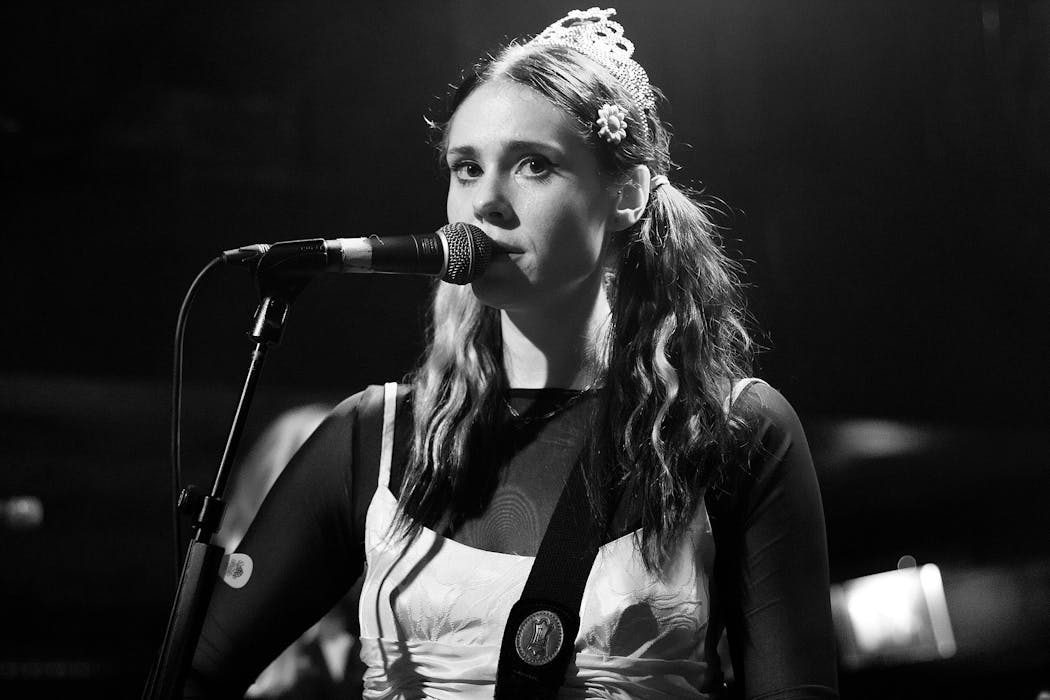
Kate Nash performing in Amsterdam in 2012. Wiki Commons, CC BY-SA

In November 2025, singer Kate Nash stood outside the London offices of Spotify and Live Nation with placards, arguing that the music economy no longer works for many working musicians.

The protest drew attention to the financial strain of touring at scale. In February 2026, she elaborated on these concerns in testimony before a UK parliamentary select committee, stating that she lost £26,000 on the European leg of her tour and covered those losses only by selling content on OnlyFans.

In her testimony, Nash criticised major industry players for what she called a “destructive influence” on artists’ finances. She warned that rising costs, including the complexities of post-Brexit touring, could limit both cultural reach and economic viability for UK performers.
Nash has been a well-known figure in British music for years, but her public frustration highlights a disconnect between visibility and a sense of security that many mid-career artists understand.

Streaming sits at the centre of this tension, as digital platforms pool subscription revenue and redistribute it based on a share of total listening. Critics argue that this structure concentrates income on global hits while leaving most artists with fractions of a penny per play. Artists increasingly describe having to juggle budgets that resemble household accounts, such as vans against fuel, hotels against sofa-surfing and merchandise against storage fees. One cancelled show can tip a tour from workable to loss-making.


Read more:
Why musicians are leaving Spotify – and what it means for the music you love


At the same time, data shows that grassroots music venues in the UK are struggling. Music Venue Trust’s 2025 report found that over the preceding year, more than half of these venues made no profit and dozens closed.

These small venues, often holding just a few hundred people, help sustain touring circuits and renew local music scenes. When they close, much of the cultural support for new talent disappears.

Who pays for live music?

Supporters of the live sector have proposed measures such as ticket levies on large shows to support smaller venues and planning protections for long-running clubs facing redevelopment. These ideas have been debated in Parliament and city-level cultural forums, including a UK government call for a voluntary arena and stadium ticket levy to protect grassroots venues.

Platforms and promoters resist the bleakest readings. Streaming services emphasise the sums they distribute and the global audiences they reach, while large promoters point to rising touring costs and the risks of softer ticket sales. At the same time, analyses of how streaming revenues are shared suggest that most artists receive only small fractions of subscription income. This is not a simple story of villains and victims, yet the distribution of rewards continues to trouble many performers.

Politicians have taken notice, reopening questions about streaming payments and transparency and examining how live music might be supported more broadly. A fan-led review of the live sector launched by MPs has invited evidence from artists, promoters and audiences about the pressures facing touring and small venues.

Similar debates are playing out at city level. The London Assembly has already backed a voluntary ticket levy on arena and stadium shows to help grassroots spaces. Campaign groups and commentators have also pushed for clearer contracts, including initiatives such as the Musicians’ Union’s “Fix Streaming” campaign, which calls on Parliament to support fairer streaming royalty distribution for all creators.

Some critics go further, arguing that the streaming model continues to channel a disproportionate share of revenue to the biggest acts and pressing for reforms to support a broader tier of working musicians, drawing on evidence from the UK Parliament’s inquiry into the economics of music streaming.

These problems have effects beyond money. As touring becomes more difficult and there are fewer venues, fewer acts are willing to take risks with new audiences. Local music scenes are shrinking, and young performers lack opportunities to try out new material, make mistakes, and improve. Audiences feel this too, when there are fewer shows, less variety and favourite bands stop touring.

Nash doesn’t claim to speak for everyone, and one protest can’t represent the whole industry. However, her choice to share frustrations usually kept private says something about today’s situation. Popular music has always mixed glamour with uncertain pay and long hours, but what’s new is how openly artists are now asking if the current system can support lasting careers.

If this middle ground continues to shrink, listeners might notice the change not in statistics but in daily life: fewer tours, closed local venues and bands quietly deciding that touring is no longer worth it.


Looking for something good? Cut through the noise with a carefully curated selection of the latest releases, live events and exhibitions, straight to your inbox every fortnight, on Fridays. Sign up here.


The Conversation

Paul G. Oliver does not work for, consult, own shares in or receive funding from any company or organisation that would benefit from this article, and has disclosed no relevant affiliations beyond their academic appointment.

ref. What Kate Nash’s grassroots music protest reveals about touring and streaming – https://theconversation.com/what-kate-nashs-grassroots-music-protest-reveals-about-touring-and-streaming-275717

How can Europe meet the challenge posed by the retreat of the US?

Source: The Conversation – UK – By Niall Oddy, Staff Tutor in History, The Open University

At the Munich security conference, US secretary of state Marco Rubio spoke more warmly about the transatlantic relationship than US vice-president J.D. Vance at the same venue last year. However, faced with the presidency of the erratic Donald Trump, the need for Europe to do more to protect its security remains urgent.

In a later speech in Munich Kaja Kallas, vice-president of the European Commission and the EU’s high representative for foreign affairs and security policy, spoke of the “need to reclaim European agency”.

Meanwhile, UK prime minister Keir Starmer announced he wants closer relations with Europe, a decade after Brexit, stating: “there is no British security without Europe, and no European security without Britain. That is the lesson of history, and is today’s reality as well.”

People often use the word “Europe” when they are referring to the European Union. Doing so overlooks non-EU countries, like the UK, that are also part of Europe and share an equal stake in the continent’s security.

Whereas the EU is a political body, Europe is an idea. It might be the name of a continent, but the word Europe rarely refers only to geography. When Giorgia Meloni, the Italian prime minister, stated that Europe has “lost itself”, and when Ursula von der Leyen, the president of the European Commission, spoke of the “European way of life”, they were referring to the people of Europe and the sense that they have customs and values in common that distinguish them from the rest of the world. French president Emmanuel Macron was doing the same when he used the phrase “European civilisation”.

What are these values that supposedly unite Europeans? In some quarters, the emphasis is on secularism. The 2007 Lisbon Treaty declared that the EU “is founded on the values of respect for human dignity, freedom, democracy, equality, the rule of law and respect for human rights”. However, the lack of mention of the continent’s Christian heritage was contested. Viktor Orbán, the prime minister of Hungary, is one of the most vocal advocates of the idea that European culture is Christian.

These different ideas about what Europe is and what constitutes European culture have long histories. When the Reformation of the 16th century divided Catholics and Protestants, shared hostility towards the Muslim Ottoman Empire, which controlled much of the Balkans and was continuing to expand, provided a sense of overarching unity.

The more secular understanding of Europe developed in the 17th and 18th centuries. The thirty years’ war (1618-48) ended with peace negotiations that did not involve the Pope, as had previously been the norm. Increasingly, Europe’s political culture, not just its religion, was regarded as its most distinctive feature. In the words of French philosopher Voltaire, Europe was “a kind of great republic” sharing “the same principle of public law and politics, unknown in other parts of the world”.

Even today’s tensions between national identities and Europeanism are nothing new. The 19th century was a period of national awakening, with the formation of a unified Italian state in 1861 and the unification of the state of Germany in 1871. At the same time, philosopher Friedrich Nietzsche argued that “Europeans are becoming more similar to each other” and French author Victor Hugo predicted a “united states of Europe”.

With the swift Nazi advances in western and eastern Europe in the early years of the second world war, the German press claimed in November 1941 that “the United States of Europe has at last become a reality”. After Nazi Germany’s defeat in 1945, this notion of the continent united under the domination of one nation was superseded by a commitment to cooperation. This led in 1951 to the formation of the European Coal and Steel Community and in 1957 to the European Economic Community, which eventually morphed into the European Union with its motto of “united in diversity”.

National interests and international alliances

Today it is people from non-EU countries who are often the most vigorous defenders of so-called “European values”. Since October 2024 Georgians have been protesting the authoritarianism of their government, carrying the EU flag alongside the national one and placards that read “we are Europe”. And while European leaders discuss how to respond to the threat posed by the Russian Federation, Ukrainians are fighting for their lives and strengthening European security by doing so.

Russia’s first attack on Ukraine – in Crimea in 2014 – came in the aftermath of former president Viktor Yanukovych’s downfall following protests triggered by his rejection of closer ties with the EU.

Through their actions, Ukrainians and Georgians emphasise national autonomy as part of a wider values-oriented European identity, rather than pitting nationhood against Europeanism.

If Europe is to face up to challenges and defend itself without the guarantee of US support, EU and non-EU countries must find ways to work together. For this we need a shared vision about what unites disparate nationalities and underpins European cooperation. Historically, ideas about what Europe is and what Europe stands for have been shaped in western and central Europe. It is time to look to lessons from the eastern borderlands where, as the examples of Ukrainian and Georgian resistance show, values of freedom and democracy are being lived in practice.

The Conversation

Niall Oddy does not work for, consult, own shares in or receive funding from any company or organisation that would benefit from this article, and has disclosed no relevant affiliations beyond their academic appointment.

ref. How can Europe meet the challenge posed by the retreat of the US? – https://theconversation.com/how-can-europe-meet-the-challenge-posed-by-the-retreat-of-the-us-274687

Are you a Dink, Alice or Henry? How social mobility is different for today’s young people

Source: The Conversation – UK – By Renaud Foucart, Senior Lecturer in Economics, Lancaster University Management School, Lancaster University

The carefree lifestyle of two Dinks. Opolja/Shutterstock

When your parents were in their 20s and 30s, they probably had a job, a house and financial security. A generation later, you get a variety of food they could not have imagined, low-cost air travel and a smartphone more powerful than the fastest supercomputers of the 1990s.

This new reality is leading to the resurgence of a different kind of class identification for young people. Middle class doesn’t look like it used to. Instead, you may consider yourself a “Dink” or a “Henry”.

Standing for “dual income and no kids”, Dink was coined in the 1980s to reflect the lifestyle of couples who chose the joys of technology, travel and restaurants over raising a family. As fertility rates fall worldwide, the term is making a comeback, with TikTok users showing off a life of boutique workouts, fancy brunches and wanderlust.

A woman born in England or Wales in 2007 is projected to have her first child at age 35 and to have an average of 1.52 children, compared with 2.04 for her mother’s generation.

The Dink lifestyle is attractive to some: more money and time for yourselves. But on the salary of an average UK household, you still won’t be able to buy an average house.

Why does it seem so much harder now? It’s not that this generation is poorer: on average, full-time employees between 18 and 21 years old make £499 a week. It rises fast: for those aged 22-29 the figure is £648, and £805 for 30-39.

For all age groups, salaries have barely increased since 2008, once you control for the fact that prices have risen by a lot. Still, compared with someone who entered the workforce 25 years ago, you will earn, on average, about 15% more even when adjusting for prices.

The key is that, while you earn more than your parents and grandparents, what’s cheap and what’s expensive has completely flipped.


No one’s 20s and 30s look the same. You might be saving for a mortgage or just struggling to pay rent. You could be swiping dating apps, or trying to understand childcare. No matter your current challenges, our Quarter Life series has articles to share in the group chat, or just to remind you that you’re not alone.

Read more from Quarter Life:


There are two kinds of things money can buy. There are things available only in fixed quantities – housing in a desirable location, a person’s time or social status. Then, there are things that technology can now produce in near-infinite quantities – a huge TV set, high-speed internet on a phone, or fresh fruits and vegetables from the other side of the world.

Compared with previous generations, you’re only richer in the latter. Since 2000, UK house prices have increased twice as fast as everything else. The share of young Brits who own their homes is 25% lower than in 1990. This might partly explain Dink logic – if you don’t have hope of affording a home, why not spend more on your lifestyle?

The tax brackets that define you

In this world where buying a house without family help has become the new luxury, the British tax system provides a handy guide of where you belong. Here’s how the figures break down.

You might not be a Dink, but an “Alice” – “asset-limited, income-constrained, employed” – part of the working poor who can’t even dream of saving for a deposit. Nearly 3 million people in the UK are working and receiving Universal Credit.

But once you start earning more than £684 a month, you hit the first trap of the tax system. For every additional £1 you earn from working, you lose 55p from the benefits you receive – so in effect, you only keep 45p up to the point where the amount of benefit you receive is zero.

If you escape this first trap and earn more, you may be able to afford a small house, or one in a cheaper region. Just not the same kind of place someone doing your job could buy 30 years ago.

If you climb up the income ladder, you’ll likely hit the second trap and become a Henry – “high earner, not rich yet”.

The moment you become part of the roughly 2 million taxpayers who earn £100,000 a year, your marginal tax rate becomes 60% – which means for each additional £1 you get, you only keep 40p. If you are young and went to university, you also pay an extra 9% on student loan repayment, meaning you only keep 31p for each additional £1.

And that’s only if you stay a Dink (or the single-equivalent Sink). If you have kids, you may actually lose money when you earn more, because you will lose the right to free childcare (you lost your child benefits back at £60,000). You may prefer to be a Dinkwad – a “Dink with a dog”.

Focus on a small dog, held by a young gay couple
The Dinkwad life.
Andrii Nekrasov/Shutterstock

The traditional middle class was defined by homeownership and financial security, both things you could achieve through professional work. What unites today’s Henrys, Alices and Dinks is they can enjoy consumption levels their parents in the same social class would never have imagined, but can’t buy the same house as them.

The solution to this is simple economics, but complex politics: if you want cheaper houses, you must build more of them. That means building in less desirable locations, turning individual houses into flats, or overcoming opposition from older homeowners who often resist new housing developments in their neighbourhoods.

So, when your judgmental uncle remarks that “if you ate fewer avocados and lattes, you’d be able to buy a house just like I did”, you may want to explain how the relative prices of an avocado and a house have changed over time. If you’re not saving for a deposit, buying avocados may simply be the most rational thing to do.

The Conversation

Renaud Foucart does not work for, consult, own shares in or receive funding from any company or organisation that would benefit from this article, and has disclosed no relevant affiliations beyond their academic appointment.

ref. Are you a Dink, Alice or Henry? How social mobility is different for today’s young people – https://theconversation.com/are-you-a-dink-alice-or-henry-how-social-mobility-is-different-for-todays-young-people-275129