Nancy Guthrie kidnapping: can Bitcoin ransom demand be used to track down the criminals?

Source: The Conversation – UK – By Abdul Jabbar, Dean of Internationalisation, Associate Professor Data Strategy and Analytics, University of Leicester

Joseph Christanto / Shutterstock

The kidnapping of Nancy Guthrie – the mother of US news anchor Savannah Guthrie – is the latest in a string of crimes where ransoms have been demanded in Bitcoin.

The 84-year-old was kidnapped from her home in Tucson, Arizona, in the middle of the night. A ransom of US$6 million (£4.4 million) has been demanded by the kidnappers.

The scale of the ransom demand, combined with the use of cryptocurrency as the payment mechanism, raises a critical question: although Bitcoin is not inherently untraceable, can the perpetrators ultimately profit without being identified?

Bitcoin is a decentralised digital currency, commonly referred to as a cryptocurrency, and is often believed to be anonymous, private and untraceable.

This perception has made Bitcoin attractive to some criminals, who view it as a convenient mechanism for receiving, transferring and storing payments.

As a result, Bitcoin has become increasingly associated with criminal activity, including extortion, kidnapping, fraud, ransomware and even murder.

The Guthrie case has once again drawn attention to the darker associations surrounding Bitcoin and reinforced public anxiety about cryptocurrency and its use for nefarious purposes.

At the same time, a number of high profile kidnappings around the world in 2025, involving people known to hold cryptocurrency, has intensified these concerns.

A common perception is that, because Bitcoin is digital, tracking transactions is difficult. Bitcoin does not exist in a physical form; it is represented as entries on the Bitcoin blockchain – a decentralised ledger used to record transactions across a network of computers. So Bitcoin is not inherently untraceable; its blockchain is transparent and permanently recorded.

Transactions do not explicitly list names, but each transaction is publicly visible and traceable between wallet addresses. Ownership is controlled through private keys and managed via a “digital wallet”, which functions conceptually like a traditional wallet in that it stores and enables the transfer of value. Thus, Bitcoin is more accurately, pseudonymous, not anonymous.

Currency conversion

In the Guthrie case, the immediate practical challenge for the kidnappers would be converting US$6 million into Bitcoin and transferring the cryptocurrency to a digital wallet. From there, the funds would need to be sent to a wallet address specified by the perpetrators – assuming the kidnappers provide such an address.

Transactions conducted through regulated cryptocurrency exchanges that impose know-your-customer checks may expose participants. These checks are mandatory processes to confirm user identities with official IDs, proof of address, and facial recognition.

Even before the funds reach the kidnappers, the transaction through a cryptocurrency exchange may itself create identifiable records. However, there is no guarantee of this, as there are many unregulated exchanges that operate in jurisdictions with lenient legislation.

While Bitcoin transactions are traceable between wallet addresses, the kidnappers in this case may attempt to enhance anonymity through layered technical measures. These may include generating a new wallet address for each transaction, operating multiple wallets, and repeatedly transferring funds from a primary wallet through successive intermediary wallets to obscure transaction links.

Maintaining anonymity also requires avoiding any association between wallet addresses and personal information, refraining from interacting with other identifiable people, and using privacy-enhancing tools such as Tor/VPNs – software that masks a user’s location – and coin-mixing services, which enhance privacy by scrambling cryptocurrency funds with others to obscure links between senders and receivers.

Achieving this level of operational security demands significant technical knowledge and strict discipline from the kidnappers. Any human error, whether through identity exposure, exchange interaction, IP logging, or conversion into hard cash may compromise anonymity.

Ultimately, the critical issue is not merely tracing funds but determining how recipients convert or use the Bitcoin without triggering identification through regulatory checkpoints, forensic analysis, or operational mistakes.

Even if the US$6 million could be traced between wallet addresses, anonymity hinges on whether those addresses can be linked to real-world identities. Where wallet holders remain unidentified and operate outside regulated exchanges, investigative challenges increase.

Additional complications arise if the perpetrators operate outside the US. Cross-border enforcement faces limitations including variation in crypto-related legislation and regulation, uneven training in tracing and confiscation, and limited international coordination.

Whether perpetrators can ultimately be reached by law enforcement depends significantly on their jurisdiction and the degree of international cooperation.

The Conversation

The authors do not work for, consult, own shares in or receive funding from any company or organisation that would benefit from this article, and have disclosed no relevant affiliations beyond their academic appointment.

ref. Nancy Guthrie kidnapping: can Bitcoin ransom demand be used to track down the criminals? – https://theconversation.com/nancy-guthrie-kidnapping-can-bitcoin-ransom-demand-be-used-to-track-down-the-criminals-276213

Can a rhythm be owned? What a reggaeton lawsuit reveals about how copyright misunderstands music

Source: The Conversation – UK – By Anna Monnereau, PhD Candidate in Music Copyright, Bangor University

A little-known American lawsuit could end up reshaping popular music. A US federal court is preparing to rule on a landmark copyright dispute. At its centre is an interesting question: can a short rhythmic pattern – one that appears in thousands of reggaeton tracks – be owned?

The case, known as the Fish Market dispute, asks whether a looping beat widely associated with reggaeton can be protected by copyright. More than 150 artists and producers have been named as defendants, and around 3,600 songs are implicated.

But the consequences stretch far beyond potential damages. If the claim succeeds, a rhythm that underpins an entire genre could become private property. The lawsuit exposes a long-standing weakness in copyright law, which is its inability to clearly define what makes a piece of music “original”.

Copyright is meant to be straightforward. Original musical works receive legal protection but copies do not. In practice though, music rarely fits this neat, binary logic.

Songs are built from shared elements like rhythms, chord progressions and harmonic patterns. Musicians can reuse, adapt and transform them. These building blocks are how music communicates. But copyright law offers little guidance on which musical elements can be protected, and which belong to everyone.

Unlike literature or visual art, music lacks clear legal definitions for its basic components. There is no settled guidance on whether courts should compare melody, rhythm, harmony, tempo, timbre or pitch, or indeed how much similarity is too much. As a result, judges and juries are left to decide these questions case by case, often without musical expertise.

That uncertainty has made music copyright litigation expensive and unpredictable. Jury trials are particularly risky, and damages can be eye-watering. Two recent American cases show just how inconsistent the system has become.

When courts can’t agree what counts as copying

In 2018, a US jury found that musicians Robin Thicke and Pharrell Williams had infringed Marvin Gaye’s work with their song Blurred Lines, not because of a shared melody or lyrics, but because of a similar “feel” or “vibe”. The decision marked a dramatic expansion of copyright protection, suggesting that a musical mood could be owned. Critics warned this risked allowing artists to monopolise styles rather than specific creative expressions.

By contrast, a 2024 US court ruling in a case involving singer-songwriter Ed Sheeran took the opposite view. The court held that copyright does not protect the basic building blocks of music. Shared rhythms, chord sequences or stylistic elements, it ruled, are part of musical language itself. Protection applies only to concrete expressions such as specific melodies or lyrics.

The Fish Market case magnifies this contradiction and raises the stakes considerably.

The plaintiffs – Steely & Clevie Productions, which represent the musical catalogue of the influential Jamaican dancehall duo Wycliffe “Steely” Johnson and Cleveland Browne – claim that their 1989 instrumental track, Fish Market, introduced the so-called “dem bow” rhythm. This is a distinctive beat, they argue, which forms the backbone of reggaeton. They are seeking copyright protection for that rhythmic pattern.

Steely & Clevie – Fish Market.

If successful, the ruling would grant two rightsholders control over a core musical feature used across a global genre. Unsurprisingly, many musicians and scholars see this as an attempt to claim ownership of reggaeton itself.

They argue that the rhythm predates Fish Market, drawing on long-established Afro-Caribbean and Afro-Cuban traditions such as the habanera beat. Reggaeton, they say, emerged through cultural exchange: from Jamaican dancehall, through Puerto Rico and out into the world. According to this perspective, the plaintiffs are not protecting originality but attempting to privatise a shared cultural inheritance.

Why rhythm is so hard to copyright

Rhythm sits at the heart of the legal problem. It is abstract yet fundamental, short in duration but repeated across a song and deeply tied to cultural identity. Copyright law, designed to compare fixed and discrete works, struggles to evaluate such elements. When courts attempt to isolate rhythm from its musical and cultural context, they risk mistaking convention for originality.

Copyright once played a limited role in musical life. Over time, as recorded music became a major commercial industry, songs increasingly came to be treated as economic assets. Ownership and control moved to the foreground, often at the expense of recognising music as an intellectual and cultural practice rooted in borrowing, influence and exchange.

The dispute around the “dem bow” rhythm lays bare the clash between subjective creativity, economic regulation and the law’s demand for objective rules. That clash is becoming harder to ignore as AI-generated music floods the market, trained on existing works and capable of producing endless stylistic variations. If copyright cannot clearly define originality now, its limits will soon be tested even further.

The reggaeton rhythm on trial is not just a fight over a beat. It reveals a fundamental mismatch between copyright law’s rigid standards and the reality of how music is made.

The Fish Market case offers judges an opportunity to clarify where protection should end, and to recognise the dangers of stretching originality so far that creativity itself becomes collateral damage.

The Conversation

Anna Monnereau does not work for, consult, own shares in or receive funding from any company or organisation that would benefit from this article, and has disclosed no relevant affiliations beyond their academic appointment.

ref. Can a rhythm be owned? What a reggaeton lawsuit reveals about how copyright misunderstands music – https://theconversation.com/can-a-rhythm-be-owned-what-a-reggaeton-lawsuit-reveals-about-how-copyright-misunderstands-music-273624

How Putin turned Russia’s post-Soviet ‘national humiliation’ into military aggression in Ukraine

Source: The Conversation – UK – By Gemma Ware, Host, The Conversation Weekly Podcast, The Conversation

As the 21st century dawned, a newly elected Vladmir Putin was making friends on the world stage. He smiled for photo ops at G8 meetings, and was the first foreign leader to call George W. Bush after the attacks of 9/11, offering his support against terrorism.

So what changed? To understand Russia’s view of the world now – and its continued aggression towards Ukraine – it helps to know more about the psyche of the country and its leader.

In today’s episode of The Conversation Weekly podcast, we talk to James Rodgers, a reader in international journalism at City St George’s, University of London, about how a festering sense of national humiliation after the collapse of the Soviet Union hardened Putin’s tough man regime and led Russia to turn its back on the west.

In 1991, when the Soviet Union collapsed, many in the west believed liberal democracy and free markets had won in Russia. The cold war was over and Russia would join the community of democratic nations. But that’s not what happened.  Instead, Russians experienced economic freefall, large-scale poverty and a sense of national humiliation.

“People felt this great loss of status,” says Rodgers, who has just written a new book called The Return of Russia about why it came into confrontation with the west.

“With the coming of new western ideas of the free market, a lot of people lost their jobs and the status that went with them,” says Rodgers. “Russia also lost the standing on the world stage that the Soviet Union had enjoyed.”

Putin became president on the eve of the new millennium. Rodgers says, Putin had not forgotten the economic pain and humiliation of the 1990s, and understood its importance to his constituency in Russia. “He understood the political potential of that humiliation in a way that I think some western policymakers did not understand the possible political consequences of it.”

Soon after, the 9/11 attacks in 2001 pushed the US to war in the Middle East. Whatever support Putin had pledged western governments began to crumble, particularly over the invasion of Iraq. Through interviews with former top western officials, Rodgers pinpoints that Russian foreign intelligence knew Iraq’s leader Saddam Hussein did not have weapons of mass destruction, and they were certain that the CIA and other western intelligence agencies knew that.

“Russia determined that the west was acting in bad faith about the reason that they’d given for going to war in Iraq, and this was actually about regime change and not at all about weapons of mass destruction,” says Rodgers. He says the invasion made Putin deeply suspicious of western motives in foreign relations, who began to think: “If they can do this to Saddam Hussein, then maybe one day the west will try to decide to do it for me.”

Listen to the interview with James Rodgers on The Conversation Weekly podcast. This episode was written and produced by Mend Mariwany and Gemma Ware with editing help from Ashlynne McGhee. Mixing by Eleanor Brezzi and theme music by Neeta Sarl. Gemma Ware is the executive producer.

Newsclips in this episode from BBC News, AP Archive, ABC News, C-Span, CNN, The Phoenix ReNasCor, DW News and
Voice of America.

Listen to The Conversation Weekly via any of the apps listed above, download it directly via our RSS feed or find out how else to listen here. A transcript of this episode is available via the Apple Podcasts or Spotify apps.

The Conversation

James Rodgers does not work for, consult, own shares in or receive funding from any company or organisation that would benefit from this article, and has disclosed no relevant affiliations beyond their academic appointment.

ref. How Putin turned Russia’s post-Soviet ‘national humiliation’ into military aggression in Ukraine – https://theconversation.com/how-putin-turned-russias-post-soviet-national-humiliation-into-military-aggression-in-ukraine-276292

Fish use more energy to stay still than previously thought

Source: The Conversation – UK – By Otar Akanyeti, Senior Lecturer in Artificial Intelligence and Robotics, Aberystwyth University

Wonderful Nature/Shutterstock

Many fish appear to hang effortlessly in the water while they wait for prey, defend a nest or pause between bursts of activity. But our research shows that this quiet stillness is anything but effortless. Hovering, the behaviour that allows a fish to remain suspended in one place, is far more energetically demanding than scientists once believed.

In a comparative study of 13 near neutrally buoyant species, we found that metabolic rates during hovering were almost twice as high as during rest (when the fish supports its weight with the bottom of the tank). In some cases, they were even greater. These findings challenge the long standing assumption that fish can remain motionless in the water column at little physiological cost.

Most bony fishes possess a swim bladder, which allows them to regulate buoyancy and avoid sinking or floating. This ability has encouraged the idea that once a fish reaches neutral buoyancy it can stay at its chosen depth with minimal effort. Our results show that the story is more complex. A fish that hovers must do more than balance weight and buoyant force; it must also control its posture.

In many species, the centre of mass and the centre of buoyancy do not align perfectly. The slight offset between them creates a continual torque that would cause the fish to roll or pitch if no corrective action were taken. Even in still water, a hovering fish must repeatedly counter these small rotational forces. What looks like serene suspension is in fact the product of continuous and precise adjustment.

To understand the true energetic cost of these corrections, we combined metabolic measurements with detailed observations of movement. Each fish was placed in a respirometer chamber so we could measure oxygen consumption during hovering. We recorded its movements using synchronised high speed cameras. We also quantified important aspects of body form, including the positions of the centres of mass and buoyancy, using anatomical measurements and micro CT scans.

Although the fish were incredibly good at maintaining postural equilibrium, the recordings revealed an uninterrupted sequence of minor fin movements. Pectoral, pelvic, anal and tail fins all contributed to the task of maintaining position. The fin trajectories varied across species and often traced intricate three dimensional paths.

The energetic consequences of this activity were striking. Across the thirteen species, hovering metabolic rates ranged from about 158 to 351 milligrams of oxygen per kilogram per hour, always above resting levels. Most species nearly doubled their metabolic expenditure during hovering.

A few fish, such as gouramis, managed to hover with only a small rise in metabolism. Others, including giant danios, cichlids and glass catfish, expended far more energy. In these species, the tail played a particularly active role. Their tail fins moved through larger distances than those of the low cost species. This indicated that tail driven corrections, rather than pectoral fin use alone, were central to the task of staying still.

Several glass catfish in an aquarium.
The glass catfish.
Arunee Rodloy/Shutterstock

Body shape had a clear influence on energetic demand. Deep-bodied fish, with their larger surface area, generate more resistance as water moves around them, making them naturally better at resisting unwanted rotations. These species relied less on fin movements and maintained position at comparatively low energetic cost.

Elongated or narrow-bodied fish were less inherently stable and needed more frequent corrections. Fin position mattered too. Species with pectoral fins set farther back on the body hovered more efficiently, because even small movements produced effective stabilising forces.

A hidden cost of everyday behaviour

So, hovering is far from a trivial activity. Many fish do it routinely throughout the day, whether guarding eggs, feeding on particles in the water, avoiding obstacles or keeping their place within a school. Understanding how much energy these routine actions require helps biologists build more accurate pictures of the daily lives of fishes and the ecological pressures they face.

The findings also shed light on the evolution of fish form and movement. Many teleost fish (bony fish, such as cod, salmon and goldfish) are inherently unstable. It’s a quality that allows them to manoeuvre rapidly when they need to turn sharply or evade predators.

But this same instability means they must make constant corrections whenever they stop moving. The balance between instability, control and energy use has shaped the extraordinary diversity of body shapes and fin arrangements found in modern fish.


Read more:
What’s the carbon footprint of owning pet fish? An expert explains


Our study has practical relevance beyond biology. Engineers designing underwater robots face many of the same challenges that fish have solved. A robot that needs to hold its position in moving water can waste significant power stabilising itself. By studying how fish coordinate multiple fins to correct minute disturbances, designers may be able to create more efficient vehicles capable of hovering for long periods while using far less energy.

The next time you see a fish suspended apparently without effort in an aquarium, it’s worth remembering what lies beneath that calm surface. Hovering may look simple, but it is a remarkably demanding feat of balance and control.

Our study shows that fish invest far more energy than expected simply to stay in place – a hidden cost in the daily lives of animals that spend much of their time looking as though they are doing nothing at all.

The Conversation

The authors do not work for, consult, own shares in or receive funding from any company or organisation that would benefit from this article, and have disclosed no relevant affiliations beyond their academic appointment.

ref. Fish use more energy to stay still than previously thought – https://theconversation.com/fish-use-more-energy-to-stay-still-than-previously-thought-266626

Five ways that AI could be reshaping your relationship with money

Source: The Conversation – UK – By Osama Mansour, Associate Professor in Information Systems, Lund University

Andrey_Popov/Shutterstock

The financial industry is entering a new era, with AI and new regulations on accessing data transforming how finance works. These changes are giving people more options to manage their money in new ways – taking us closer to totally cashless transactions.

Over the last century, banks implemented new technologies like ATMs, internet banking and smartphone apps to fundamentally change our relationship with money. Now, new regulations and initiatives around the world are forcing banks to allow fintech firms (companies that use technology to provide financial services) to access customers’ banking data.

This includes regulations like the EU’s revised payment services directive (PSD2), which aims to encourage innovation in financial products while protecting consumers’ data. In the UK, the CMA9 order serves a similar purpose. These regulatory changes are a game changer in the world of finance.

Accessing customer data allows for greater openness in the financial industry. It enables a shift from a closed banking model, where banks kept a tight hold of their customers’ data, to an open banking ecosystem where people are free to share their financial data with third-party apps or websites.

For the first time, this shift is enabling customers themselves to benefit from the sharing of banking data as fintechs use it to enhance their experiences and offer them a wider range of services.

My research shows that the traditional role of banks is changing in profound ways. Banks are increasingly operating behind the scenes as infrastructure providers, facilitating secure data exchange with fintechs. These fintechs are more agile and tech-savvy than banks, focusing on specialised customer solutions and often offering superior customer experiences.

A 2025 report found that open banking is becoming central to the global financial system. Fintechs, including digital-only banks, payment services like Stripe and Trustly, buy-now-pay-later providers and crypto platforms, are emerging as major providers of alternative financial services.

With data central to innovation, AI is reshaping how we interact with money. As an example, the same report indicates that 80% of fintechs are implementing AI. Customers are beginning to experience these advances thanks to data-driven agents like chatbots and robo advisors. This technology can analyse customer behaviour to offer personalised services in ways that were previously not possible.

Here are five ways that AI could be reshaping your relationship with money.

1. Intelligent credit-scoring

AI-driven credit scoring uses open banking data instead of a customer’s traditional bank credit history. It considers customers’ context and behaviour – things like mobile phone and rent payments – to make fairer assessments. This can encourage responsible access to credit for people on low incomes, and promote financial inclusion.

2. Debt rehabilitation services

These services can be used to manage financial behaviour. People who are struggling financially can use these debt services to track their spending patterns in real time. Trusted individuals, maybe a friend or relative, can be alerted when their spending is irregular.

3. Automated savings trackers

Saving trackers use AI to advise customers on when and how much to save. They can also transfer funds into savings accounts automatically. This can help people to manage money shocks and build financial resilience.

man looking despairing beside his car with its bonnet up.
You might find you’re glad that you listened to your AI savings tracker.
Ushuaia studio/Shutterstock

4. Account aggregation services

Customers can connect accounts from different banks to get an aggregate view of their financial health. This can help them to make better decisions around their money, enhancing their sense of being in control and making them more resilient against financial shocks.

5. Predictive finance

Personalised services can assess financial behaviour by learning customers’ habits and anticipating their future needs. Predictive finance can translate these assessments into practical, money-saving recommendations. People can use AI agents to plan and time a family trip. The AI agent can then autonomously make a booking that best fits and alert the customer.

Financial technology firms (fintechs) are using customer data to develop services like these that make accessing and managing money simpler – potentially making it easier for everyone to participate in the financial system. Taken together, these innovations show the promise of AI for making finance more inclusive.

But risks are inevitable. In this new landscape, the traditional trust between bank and customer might be challenged, as the open nature of transactions can increase security risks. Automated profiling, data vulnerabilities and fraud can also erode trust, invade customers’ privacy and violate their dignity. That’s why transparent regulations are needed to protect customers and preserve their digital rights.

When traditional banks and fintechs work together, they must keep the customer’s best interests in focus. After all, there is no doubt that the double-edged consequences of AI and data will continue to shape the evolving financial landscape.

The Conversation

Osama Mansour received funding from Stiftelsen Riksbankens Jubileumsfond (RJ).

ref. Five ways that AI could be reshaping your relationship with money – https://theconversation.com/five-ways-that-ai-could-be-reshaping-your-relationship-with-money-275508

How the UK is keeping flood insurance affordable – until 2039

Source: The Conversation – UK – By Meilan Yan, Senior Lecturer in Financial Economics, Loughborough University

Chris Homer/Shutterstock

While floods are becoming more frequent in recent years, you should still be able to buy reasonably priced home insurance. That reassurance exists largely because of Flood Re. Launched in 2016, Flood Re is a national public–private reinsurance scheme that prevents many properties from being priced out of cover.

But the Flood Re scheme is a temporary fix that’s due to end in 2039, on the assumption that flood risk will fall and the market can move back towards more risk-reflective pricing. As financial experts, we’re worried that the UK may not be able to adapt its infrastructure and systems to climate change fast enough.

The success of the Flood Re scheme hinges on a shared contract between government, homeowners and insurers. Government has to cut risk through investment and delivery. Homeowners reduce damage by building back better and avoiding preventable exposure. And insurers must increase prices of premiums to better represent the climate risk but not so fast that cover becomes unaffordable.

If premiums rise too quickly, fewer households will stay insured and the ability to socialise risks across a large pool will not be possible.

The scale of the challenge is already clear. Flood Re was designed when a global temperature rise of 1.5°C still felt achievable and a 2°C increase should be a hard limit.

Climate change has accelerated since then. By around 2050, around 8 million properties in England, roughly one in four, could be at flood risk.

The House of Commons public accounts committee warns that deterioration in existing defences has left around 203,000 properties without reliable protection, while the government aims to protect 200,000 more by 2027. Labour’s target to deliver 1.5 million new homes in England by 2029 risks adding pressure by pushing development onto cheaper land that’s at greater risk of flooding.


Read more:
What to do when your home is at risk of falling into the sea – the hard choices facing Britain’s storm-battered coasts


Many countries intervene to support insurance for disasters such as floods and storms, but few put a firm end date on that support. For example, The US National Flood Insurance Program (NFIP) was created to provide affordable flood insurance and to reduce future damage by discouraging development in high-risk floodplains.

In practice, repeated extreme weather has left the NFIP in debt and subsidised premiums have weakened incentives to avoid building in flood-prone areas. Although the NFIP is regularly renewed by the US Congress, its long-term sustainability remains uncertain.

France’s catastrophes naturelles scheme (CAT-NAT) covers natural disaster losses that private insurers struggle to price, funded by a national surcharge. Rising losses from more frequent and severe disasters are straining the model, so the surcharge increased from 12% to 20% in January 2025. That raises a hard question: how can the system stay fair as the cost of disasters keeps climbing?

Preparing for post-2039

Our ongoing research suggests flood-related volatility can amplify financial stress and uncertainty. The choice is not simply between keeping Flood Re forever or ending the scheme. The real question is whether the UK can use the time Flood Re is buying to reduce risk fast enough to make a fair transition possible by 2039.

That is why progress needs to be visible and measurable in five areas.

First, as demonstrated by recent updates in England and Wales, flood maps and modelling must reflect current conditions and future climate risk, with updates that keep pace with changes to the drivers of flood risk whether that be from heavy rainfall or rivers and the sea.

sand bags in doorway of home
The Flood Re scheme is a temporary fix, not a long-term strategy.
Martin Charles Hatch/Shutterstock

Second, governance must be joined up, with clear responsibilities and minimum coordination standards across agencies for rivers, surface water, drainage and sewers. Better collaboration would help to resolve misalignments in major capital programmes across risk management authorities.

Third, drainage and surface water management must be strengthened, with clear rules and long-term maintenance so new development does not add to flood and sewer risk.

Also, every tool in the box should be used to increase investment in flood risk reduction and to enhance maintenance. The benefits of flood protection should be made transparent to insurers and fed into catastrophe models.

Finally, a clear Flood Re future must be shaped together by planners, insurers and flood authorities. This will help set a shared standard for flood risk management.


Don’t have time to read about climate change as much as you’d like?

Get a weekly roundup in your inbox instead. Every Wednesday, The Conversation’s environment editor writes Imagine, a short email that goes a little deeper into just one climate issue. Join the 47,000+ readers who’ve subscribed so far.


The Conversation

Neil Gunn works and consults for Willis Towers Watson and also owns some shares in that company
While the Willis research network supports scientific research through for example direct grants and in kind support, it benefits from schemes like CDTs which are supported by government funding

Dalu Zhang and Meilan Yan do not work for, consult, own shares in or receive funding from any company or organisation that would benefit from this article, and have disclosed no relevant affiliations beyond their academic appointment.

ref. How the UK is keeping flood insurance affordable – until 2039 – https://theconversation.com/how-the-uk-is-keeping-flood-insurance-affordable-until-2039-275463

How Wuthering Heights was shaped by Emily Brontë’s gothic poetry

Source: The Conversation – UK – By Claire O’Callaghan, Senior Lecturer in English, Loughborough University

Wuthering Heights initially baffled readers who dismissed it as “a strange book”.

Earlier readers found it was “wild” and “confused”, portraying a “semi-savage love”. Yet, in 1850, the poet and critic Sydney Dobell recognised its originality and power, praising the novel’s distinctly poetic quality. To Dobell, “the thinking out” of many of the passages was “the masterpiece of a poet, rather than the hybrid creation of a novelist”.

Fittingly, before Heathcliff and Cathy haunted the moors, Emily Brontë was crafting her magic in verse preoccupied with death, steeped in grief and brimming with elemental passion and the spectral. Such motifs form the beating heart and singular atmosphere of Wuthering Heights, but without her gothic poetry, her beloved novel may not have existed. And, while this novel defines her reputation today, in her lifetime she was first and foremost a poet.

Among all her poems, Remembrance (1845) stands out as a direct ancestor of Wuthering Heights. The speaker mourns a lover lost for “15 wild Decembers”. It is full of imagery of frozen graves and icy bodies “cold in the earth” foreshadowing Cathy’s burial. The snow also anticipates the wintry desolation that frames Wuthering Heights.

In Written in Aspin Castle (1842-43), Lord Alfred’s spectral roaming in his family home (Aspin Castle) is not unlike the return of ghostly little Cathy to her childhood home in Wuthering Heights. In fact, Aspin’s “spectral windows” anticipate the window on which Mr Lockwood’s sleep is disturbed by what he assumes is a branch knocking on it.

“I must stop it, nevertheless!” I muttered, knocking my knuckles through the glass, and stretching an arm out to seize the importunate branch: instead of which, my fingers closed on the fingers of a little, ice-cold hand!

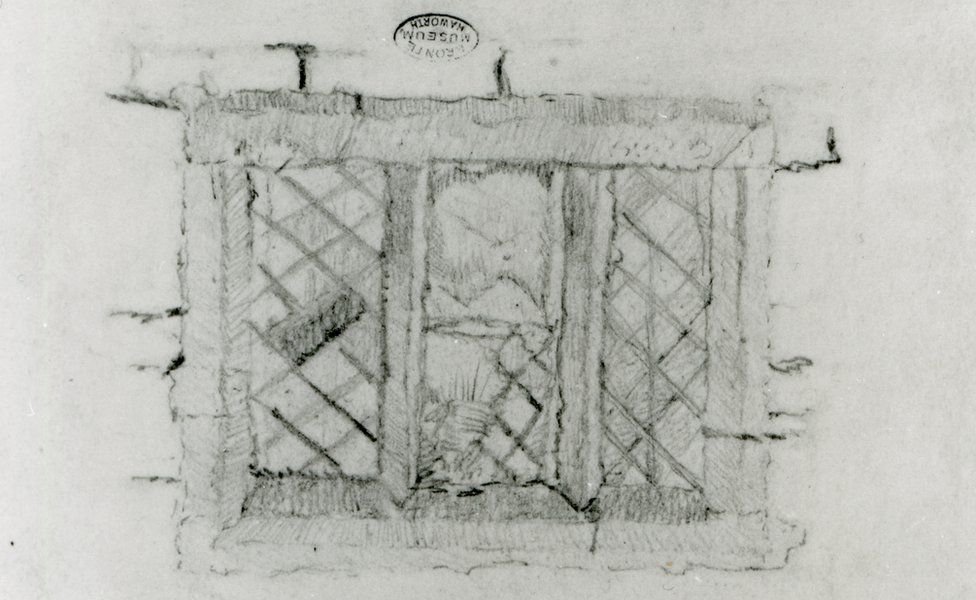
Windows as gothic portals clearly fascinated Emily, a fascination vividly captured in a drawing she produced in 1828 at just ten years old.

And in The Prisoner (A Fragment) (1845-46), the captive heroine – also like Mr Lockwood in Wuthering Heights – is tormented by nightly visitations in her “dungeon crypt” where a spiritual messenger figured as the wind summons “visions” that “kill me with desire”, which is much like Heathcliff’s anguish.

Cold in the earth

It is, however, Remembrance’s central question if “time’s all-severing wave” has broken their bond that directly foreshadows Cathy’s haunting challenge to Heathcliff: “Will you forget me – will you be happy when I am in the earth?” Cathy torments Heathcliff at length on this point, asking if “20 years hence” he will say, “that’s the grave of Catherine Earnshaw. I loved her long ago, and was wretched to lose her; but it is past.”

Yet, while the poem’s speaker finds a way to live alongside the painful memory of love lost, Heathcliff cannot adapt. Death for him is a psychological catastrophe, and he remains trapped in grief, unable to exist “without [his] life” – Cathy.

Remembrance was born in the imaginative world of Gondal, a poetic fantasy realm that Emily created with her sister Anne in childhood and continued to write about through adulthood. Set on an island in the North Pacific, Gondal was a landscape of political intrigue and destructive passions ruled by formidable women, such as the enigmatic A.G.A. – a figure deeply bound to the forces of nature, much like Heathcliff.

Gondal’s terrain gave Emily the freedom to explore the themes that later erupt in Wuthering Heights. And long before being revised for publication as Remembrance in 1846, the first iteration can be seen in a poem set in Gondal written in 1845. The speaker in this earlier work is the female character R. Alcona who is addressing her dead lover, Julius Brenzaida. Only fragments of Emily’s Gondal saga survive, but R. Alcona is thought to be Rosina of Alcona, a powerful figure, and Julius the Prince (later emperor) of Gondal.

Emily's Gondal poems.
Emily’s Gondal poems.
Wikimedia

In another poem addressing Rosina as his “despot queen”, Julius casts Rosina as the tyrant of his soul. Blaming her for his spiritual imprisonment, he laments being ensnared by her “haughty beauty”, finding her eyes “shine/But not with such fond fire as mine”. The anguish and accusation he directs at Rosina echo the tortured reproach of Heathcliff to Cathy in Wuthering Heights, especially when he tells Cathy that she has shattered her own heart “and in breaking it, you have broken mine”.

Secret notebooks

Emily’s poetic journey began in secret. Her sister, Charlotte Brontë wrote in the Biography of Ellis and Acton Bell of how in 1845, she “accidentally alighted” on a private notebook of verse in her sister’s hand. What she discovered astonished her: these were “not common effusions”, she reflected, but poems that possessed “a peculiar music” – “wild, melancholy, and elevating”.

Though Emily was furious at the intrusion on her privacy, Charlotte insisted the poems deserved a readership. From that fraught moment came a plan for joint publication, and in 1846, Emily published 21 poems in a joint collection with her sisters. Writing under the nom de plume “Ellis Bell”, the volume Poems by Currer, Ellis and Acton Bell sold only two copies, according to Charlotte, on its first printing.

A few perceptive critics, however, singled out the “spirit” of Emily’s verse, sensing an extraordinary poetic “power” that might one day “reach heights not here attempted”. While Poems brought neither riches nor security, it achieved something else: it paved the way for the sisters to produce and publish their now canonical novels a year later – Wuthering Heights and Jane Eyre.

Wuthering Heights stands apart from other Victorian novels precisely because it was crafted by a poet who never ceased thinking in verse. Its windswept moors, restless spirits, and love that defies death were first imagined in poetry, where snow falls endlessly over the “cold earth” and love endures beyond the grave. This poetic apprenticeship laid the foundation for Emily Brontë’s timeless gothic novel that continues to captivate hearts and minds worldwide.


Looking for something good? Cut through the noise with a carefully curated selection of the latest releases, live events and exhibitions, straight to your inbox every fortnight, on Fridays. Sign up here.


The Conversation

Claire O’Callaghan does not work for, consult, own shares in or receive funding from any company or organisation that would benefit from this article, and has disclosed no relevant affiliations beyond their academic appointment.

ref. How Wuthering Heights was shaped by Emily Brontë’s gothic poetry – https://theconversation.com/how-wuthering-heights-was-shaped-by-emily-brontes-gothic-poetry-275948

Matt Goodwin is wrong about whiteness and Englishness – but here’s why he has struck a chord with some voters

Source: The Conversation – UK – By John Denham, Professorial Research Fellow in the Department of Politics and International Relations and Director of the Centre for English Identity and Politics, University of Southampton

Matt Goodwin, the Reform UK candidate for the Gorton and Denton byelection, is just one of the rightwing politicians to recently question the “Englishness” of people who aren’t white and born in England. The claim is clearly out of step with reality. Exclusivist views are certainly out there, but in the minds of an increasingly small minority. There is no popular upsurge in narrow ethno-nationalism.

On the other hand, the sudden prominence of such views marks more than the willingness of populist political forces to mobilise polarising ideas about national identities that were once beyond the pale. Claims of a racialised Englishness act as a marker for other exclusive ideas of nationhood. The role these contested issues of nationhood and identity play in our politics therefore needs to be unpicked.

Polls vary but most paint a clear picture. Only around one in ten white residents of England believe you must be white to be English. And support for that exclusive view appears to have fallen dramatically in the recent past. One set of polls showed it halving between 2012 and 2019. Though lagging some way behind, Englishness appears to be following Britishness towards greater inclusivity.

But the formation of any real national identity is a complex process that can involve heritage, birthplace, culture, language, values, institutions and ideas of sovereignty and democracy. European-wide polling suggests that belief in a “civic identity” – citizens bound together solely by adherence to fundamental principles of law and support for democracy – is restricted to small numbers of highly educated liberals.

Most conceptions of nationhood carry some sense of who the people are, how they came to be here and what they hold in common. In most nations the ability to speak the national language and willingness to observe local customs and traditions are more important than place of birth in determining whether someone can share the national identity.

Contrary to what some might expect, the UK is not an outlier. It tends to be less demanding or exclusive on these criteria than most other European nations. But recent polls show that both Englishness and Britishness (albeit to a lesser extent) carry some further qualifications of heritage and birth for many voters.

In one recent poll, around a third of residents thought heritage of more than a generation was needed to be English (though it need not be white). About 40% said you must be born in England to be English.

Other polls give a less restrictive view, but typically four out of five invest Englishness with a connection to place of birth that is more than an aspiration to be English. On the positive side, this tends to make birth, rather than ethnicity, a source of entitlement to be English. It is therefore something that can be gained by every generation.

A birth certificate.
four out of five invest Englishness with a connection to place of birth.
Shutterstock/mundissima

Ethnic minorities tend to have both a more restricted understanding of Englishness – they are more likely to think English is a white and heritage identity – than do the white majority. At the same time they have a more open conception of the availability of Britishness to those not born here. Nonetheless, the trends are clearly towards a more inclusive Englishness – over two-thirds of ethnic minorities say that Englishness is open to those of all races and backgrounds, even if only a third personally identify strongly as English.

Pride and patriotism

Citizens vary in whether they carry national identity with pride and patriotism. Those who are patriotically English are usually British patriots too, while those who are “British not English” are much less patriotically British. Those who emphasise their English identity give a higher priority to national sovereignty and restricting immigration: the two issues that let English identifiers determine Brexit.

Advocates of civic nationalism as an identity often stress the importance of national institutions and shared values, but we rarely stop to ask whether this reality reflects voters’ expectations. Support for the civic principles of democracy and the rule of law are high, but beneath the surface, trust in politics and political institutions is much lower. Some feel the law is not even-handed. By abandoning solidaristic values of universalism and procedural fairness, social security no longer unites the nation.

The advocacy of ethnic Englishness may appear eccentric, but it nonetheless speaks to a wider sense of nation: socially conservative and protective of national democracy and sovereignty, demanding a more responsive political and legal system, and a welfare state that serves the people.

The problem is that advocates of civic nationalism have no alternative, progressive and inclusive story of the nation.

The Conversation

John Denham has previously received funding from the British Academy and the Sir Halley Stewart Trust. He is affiliated with the Labour Party

ref. Matt Goodwin is wrong about whiteness and Englishness – but here’s why he has struck a chord with some voters – https://theconversation.com/matt-goodwin-is-wrong-about-whiteness-and-englishness-but-heres-why-he-has-struck-a-chord-with-some-voters-275193

The virus nearly everyone has and its possible role in MS

Source: The Conversation – UK – By Eanna Fennell, Postdoctoral Researcher, Health Research Institute, University of Limerick

3D illustration of Epstein-Barr virus (EBV). Kateryna Kon/Shutterstock

Over 95% of the world’s adult population is infected with Epstein–Barr virus (EBV), but most people never realise it. The infection often causes few symptoms and then stays in the body for life.

But for a small minority, EBV is linked to serious disease. For more than 50 years, EBV has been recognised as the first virus shown to contribute to certain cancers, and is therefore classified as a group one carcinogen.

More recently, strong evidence suggests it plays a key role in the development of multiple sclerosis (MS), a disease in which the immune system attacks the brain and spinal cord. MS affects millions of people worldwide and is often diagnosed in early adulthood, with symptoms that can vary unpredictably over time.

I was part of a research team who explored how EBV infection may help initiate MS. Our findings suggest the disease could potentially be targeted by blocking the brain inflammation associated with EBV infection.

Using lab mice with a human-like immune system, we found that after infection, B cells (immune cells that produce antibodies and help coordinate immune responses) became unusually active and travelled into the brain. Here, they released signals that attracted T cells, which recognise and destroy infected or abnormal cells.

Together, these immune cells caused inflammation and early brain damage similar to what is believed to happen in the early stages of MS. When we used a commonly prescribed drug to remove the B cells, there were far fewer T cells in the brain and much less immune activation.


Read more:
Epstein-Barr virus: how does a common infection trick the immune system into attacking the brain in people with MS?


This suggests EBV may help set MS in motion by altering how B cells behave. These changed cells can enter the brain and drive inflammation, drawing in T cells that intensify the immune response. Targeting these B cells early could help prevent or slow the development of MS.

However, exactly how EBV contributes to MS is still being investigated.

MS affects the central nervous system, the brain and spinal cord. In people with MS, the immune system damages myelin, the protective coating around nerve fibres that helps electrical signals travel quickly. When it is stripped away, messages between the brain and body slow down or fail.

Over time, repeated damage can also affect the nerves themselves, leading to symptoms such as problems with movement, vision, balance and fatigue.

MS is an autoimmune disease. This means the immune system mistakenly attacks the body’s own tissues. One leading explanation for how EBV fits into this process is a form of mistaken identity, where immune responses first directed at the virus begin to resemble those aimed at myelin by people who have MS.

Why doesn’t everyone develop MS?

If EBV infection is so common, why doesn’t everyone develop MS? Other factors shape risk, including genetics, sex, smoking, obesity and low vitamin D levels. EBV appears to be an important part of the puzzle, but it is unlikely to act alone.

EBV infects B cells, the immune cells that produce antibodies, and can remain dormant inside them for life. But in some situations, the virus can reactivate. EBV-infected cells have been linked to certain cancers when immune control fails.

New research is beginning to reveal what this looks like inside the nervous system. A recent study found unusually high numbers of EBV-targeting immune cells in the cerebrospinal fluid, which surrounds the brain and spinal cord, of people with MS. Many were T cells primed to recognise the virus, suggesting the immune system may be responding to EBV activity within the central nervous system.

When immune cells gather there, they can spark inflammation. This allows more immune cells to enter the brain and spinal cord and cause local damage, forming patches known as lesions that underpin many symptoms of MS.

Treatments and the role of B cells

Current treatments mostly work by calming the immune system rather than targeting a single cause. Many of these medicines are immunosuppressants, which can increase infection risk but also reduce relapses and slow disease progression.

One of the most effective MS treatments targets B cells using monoclonal antibody drugs, laboratory-made proteins designed to recognise specific immune cells. Examples include ocrelizumab, rituximab and ofatumumab. These therapies reduce B cell numbers and may also lower the pool of EBV-infected cells.

These treatments have improved outcomes for many patients. But by dampening part of the immune system, they can also increase infection risk and reduce vaccine responses.

This raises an obvious question: could preventing EBV infection stop MS developing in the first place? And if so, why not prevent EBV infection with a vaccine?

Developing EBV vaccines has proved difficult, partly because the virus hides inside cells and establishes lifelong infection. Researchers are exploring this area, and none are currently approved. It remains unclear whether preventing EBV infection would reduce MS risk.

The link between EBV and MS is now one of the most active areas in MS research, and is reshaping how prevention and treatment are being explored.

Rather than viewing MS solely as an immune system disorder, researchers are increasingly investigating whether stopping EBV infection, or targeting cells that harbour the virus, could reduce a person’s risk of developing the disease or slow its progression.

This shift is driving new strategies, including therapies aimed at EBV-infected B cells, and efforts to design vaccines or immune-based treatments that interrupt the biological processes connecting the virus to MS. If successful, these approaches could move MS care beyond symptom control, towards prevention or earlier disease-modifying interventions.

The Conversation

Eanna Fennell receives funding from the Irish Research Council and Horizon Europe.

ref. The virus nearly everyone has and its possible role in MS – https://theconversation.com/the-virus-nearly-everyone-has-and-its-possible-role-in-ms-268851

Can psychopaths change?

Source: The Conversation – UK – By Steven Gillespie, Senior Lecturer in Clinical Psychology, University of Liverpool

Ormalternative/Shutterstock

Psychopaths might account for only about 1% of the general population, but
they account for a disproportionate share of violent crime.

Distinct from other conditions like sociopathy and antisocial personality disorder, psychopaths tend to show traits such as an absence of remorse or guilt, a lack of empathy and a charming and manipulative interpersonal style.

You may find it hard to imagine how someone without much empathy can change. And early psychological treatments were not successful. But advances in research are showing that a deeper understanding of psychopathy may help to create more effective interventions.

People with psychopathy typically show problems in responding to other people’s suffering, including difficulty recognising facial expressions of fear and sadness. If you have ever seen someone badly hurt themselves, then you probably had an averse response.

Your brain will have reacted to their pain and your body will probably have shown signs of physiological arousal. Your heart rate might have gone up, or you might have sweated.

These are common signs of physiological arousal in response to someone else’s suffering. But they are often lacking in psychopaths.

When my colleagues and I asked people in prison with a history of violence to view pictures of others’ emotional facial expressions, those who reported more of the characteristic features of psychopathy also showed blunted physiological arousal. Our 2019 study found that the pupil (the small black hole in the centre of the eye that lets in light but also increases in size during physiological arousal) did not change much in size among people higher in psychopathic traits when they looked at pictures of people who were afraid.

These differences mean that some people with these traits might struggle to learn about how their actions cause other people to feel distressed or afraid.

Prisons and secure forensic hospitals are where people with psychopathic traits are often entered into treatment programmes designed to reduce their risk of reoffending. Modest reductions in general reoffending have been reported following cognitive behavioural programmes that are offered to people in prison with or without psychopathy or another personality disorder.

But not all criminal behaviour programs have been marked by success. For
example, in the UK in 2017 the failure of the Core Sexual Offender Treatment Programme designed by His Majesty’s Prison and Probation Service (HMPPS) and approved for use in 1992, to lower reoffending was highly publicised.

HMPPS has since introduced a new programme, Building Choices. It adopts a strengths-based, skill focused approach to improve emotion management, healthy relationships and sense of purpose. Unlike the previous course, the programme is not designed to address particular offence types, and it has shown some signs of promise.

Historically, researchers have considered such programmes less effective at reducing reoffending when offered to people with psychopathy. Indeed, some studies even suggest that people with psychopathy worsened following treatment.

black and white blurred abstract portrait of a girl
To help psychopaths change, we first need to understand them.
alexkoral/Shutterstock

One of these programmes, offered from around 1965 to 1978 at the maximum-security Oak Ridge Division of the Mental Health Centre in Penetanguishene, Ontario, Canada, made use of a so called “total encounter capsule.”

These results made for a high degree of pessimism among scientists and practitioners alike. But that pessimism might be misplaced.

It is perhaps unsurprising that the “total encounter capsule” did not prove effective. The capsule was “a tiny self-contained chamber where sustenance was supplied through tubes in the walls and from which no group members would leave during sessions that lasted up to two weeks”.

Participants were reported to be nude and did not participate voluntarily. There were few professional therapists, and the use of force and humiliation was permitted.

Historically, there has been a lot of pessimism around treatment for other personality disorders, too.

This is in part a reflection of stigma attached to these disorders. But it is also because personality difficulties can make it harder for people to build relationships, including with the people responsible for their treatment.

Yet a form of therapy known as dialectical behaviour therapy has shown success in reducing self-harm in people with borderline personality disorder. This type of therapy is designed to help people cope with intense emotions and to learn interpersonal skills.

In another recent study, mentalisation-based treatment, which targets the person’s ability to understand and regulate the negative effects of thoughts and feelings, led to reductions in aggressive behaviour in people with antisocial personality disorder. Findings like these suggest tailored interventions are more effective when it comes to personality disorders.

Capable of empathy?

One important consideration when treating psychopaths is that they are often assumed to be incapable of empathy. But this assumption has been challenged by some intriguing studies, which suggests that they might instead lack the motivation for empathy.

In a 2013 brain scanning study, a group of scientists at the university of Groningen, the Netherlands, showed that although criminal psychopaths did not automatically feel empathy for other people’s pain depicted in videos, their brains did generate an empathic response similar to that of non-psychopaths when instructed to feel what the people in the videos were feeling.

It could be an important step toward helping people with psychopathy if they could better understand how their actions can hurt other people.

Perhaps the most promising work that suggests people with psychopathy can
change has been conducted with young people. Although children and young people under the age of 18 cannot be diagnosed as psychopathic, features of psychopathy referred to as callous unemotional traits can be reliably assessed in children as young as two years of age.

A 2018 study adapted parenting interventions to be more effective for this high-risk group of children, aged three to six years old. Afterwards, the children showed significant reductions in behavioural problems, callous unemotional traits and aggression. The researchers coached parents to show more warmth, sensitivity and responsiveness. Parents were also asked to focus on reward-based rather than punishment-based strategies to encourage the child participants to be more responsive to distress in others.

A 2022 study also reported positive outcomes, showing improvements in behaviour and personal relationships in adolescents after an intervention with a focus on strength-based (helping children understand what they’re good at) rather than punishment-based parenting strategies.

So recent work is offering a glimpse of a more optimistic future for reducing aggressive and antisocial behaviour associated with psychopathy. Perhaps the question is not can psychopaths change now, but can we get better at helping them to change.

The Conversation

Steven Gillespie has consulted for Ministry of Justice. He receives funding from Economic and Social Research Council.

ref. Can psychopaths change? – https://theconversation.com/can-psychopaths-change-270344