Rare wooden tools from Stone Age China reveal plant-based lifestyle of ancient lakeside humans

Source: The Conversation – Global Perspectives – By Bo Li, Professor, Environmental Futures Research Centre, School of Science, University of Wollongong
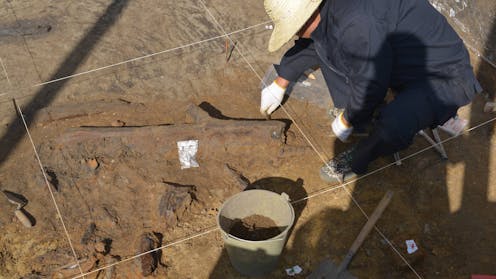
Excavation at the Gantangqing site. Liu et al.

Ancient wooden tools found at a site in Gantangqing in southwestern China are approximately 300,000 years old, new dating has shown. Discovered during excavations carried out in 2014–15 and 2018–19, the tools have now been dated by a team of archaeologists, geologists, chronologists (including me) and paleontologists.

The rare wooden tools were found alongside an assortment of animal and plant fossils and stone artifacts.

Taken together, the finds suggest the early humans at Gantangqing were surprisingly sophisticated woodworkers who lived in a rich tropical or subtropical environment where they subsisted by harvesting plants from a nearby lake.

Maps showing the location of Gantangqing in China and the excavated locations in Gantangqing.
The location of the Gantangqing site and excavation trenches.
Liu et al. / Science

Why ancient wooden tools are so rare

Wood usually decomposes relatively rapidly due to microbial activity, oxidation, and weathering. Unlike stone or bone, it rarely survives more than a few centuries.

Wood can only survive for thousands of years or longer if it ends up buried in unusual conditions. Wood can last a long time in oxygen-free environments or extremely dry areas. Charred or fire-hardened wood is also more durable.

At Gantangqing, the wooden objects were excavated from low-oxygen clay-heavy layers of sediment formed on the ancient shoreline of Fuxian Lake.

Wooden implements are extremely rare from the Early Palaeolithic period (the first part of the “stone age” from around 3.3 million years ago until 300,000 years ago or so, in which our hominin ancestors first began to use tools). Indeed, wooden tools more than even 50,000 years old are virtually absent outside Africa and western Eurasia.

As a result, we may have a skewed understanding of Palaeolithic cultures. We may overemphasise the role of stone tools, for example, because they are what has survived.

What wooden tools were found at Gantangqing?

The new excavations at Gantangqing found 35 wooden specimens identified as artificially modified tools. These tools were primarily manufactured from pine wood, with a minority crafted from hardwoods.

Some of the tools had rounded ends, while others had chisel-like thin blades or ridged blades. Of the 35 tools, 32 show marks of intentional modification at their tips, working edges, or bases.

Two large digging implements were identified as heavy-duty digging sticks designed for two-handed use. These are unique forms of digging implements not documented elsewhere, suggesting localised functional adaptations. There were also four distinct hook-shaped tools — likely used for cutting roots — and a series of smaller tools for one-handed use.

Nineteen of the tools showed microscopic traces of scraping from shaping or use, while 17 exhibit deliberately polished surfaces. We also identified further evidence of intensive use, including soil residues stuck to tool tips, parallel grooves or streaks along working edges, and characteristic fracture wear patterns.

The tools from Gantangqing are more complete and show a wider range of functions than those found at contemporary sites such as Clacton in the UK and Florisbad in South Africa.

Photo of several different crude wooden tools.
The wooden tools from Gantangqing took a variety of forms.
Liu et al. / Science

How old are the Gantangqing wooden tools?

The team used several techniques to figure out the age of the wooden tools. There is no way to determine their age directly, but we can date the sediment in which they were found.

Using a technique called infrared stimulated luminescence, we analysed more than 10,000 individual grains of minerals from different layers. This showed the sediment was deposited roughly between 350,000 and 200,000 years ago.

Chart showing different layers of sediment and their ages.
Dating the different layers of sediment excavated at the site produced a detailed timeline.
Liu et al. / Science

We also used different techniques to date a mammal tooth found in one of the layers to roughly 288,000 years old. This was consistent with the mineral results.

Next we used mathematical modelling to bring all the dating results together. Our model indicated that the layers containing stone tools and wooden implements date from 360–300,000 years ago to 290–250,000 years ago.

What was the environment like?

Our research indicates the ancient humans at Gantangqing inhabited a warm, humid, tropical or subtropical environment. Pollen extracted from the sediments reveals 40 plant families that confirm this climate.

Plant fossils further verify the presence of subtropical-to-tropical flora dominated by trees, lianas, shrubs and herbs. Wet-environment plants show the local surroundings were a lakeside or wetlands.

Animal fossils also fit this picture, including rhinoceros and other mammals, turtles and various birds. The ecosystem was likely a mosaic of grassland, thickets and forests. Evidence of diving ducks confirms the lake must have been at least 2–3 metres deep during human occupation.

Photo of an assortment of stone and bone tools
Examples of stone and bone tools found at Gantangqing.
Liu et al. / Science

What were the Gantangqing wooden tools used for?

The site contained evidence of plants such as storable pine nuts and hazelnuts, fruit trees such as kiwi, raspberry-like berries, grapes, edible herbs and fern fronds.

There were also aquatic plants that would have provided edible leaves, seeds, tubers and rhizomes. These were likely dug up from shallow mud near the shore, using wooden tools.

These findings suggest the Gantangqing hominins may have made expeditions to the lake shore, carrying purpose-made wooden digging sticks to harvest underground food sources. To do this, they would have had to anticipate seasonal plant distributions, know exactly what parts of different plants were edible, and produce specialised tools for different tasks.

Why the Gantangqing site is important

The wooden implements from Gantangqing represent the earliest known evidence for the use of digging sticks and for the exploitation of underground plant storage organs such as tubers within the Oriental biogeographic realm. Our discovery shows the use of sophisticated wood technology in a very different environmental context from what has been seen at sites of similar age in Europe and Africa.

The find significantly expands our understanding of early hominin woodworking capabilities.

The hominins who lived at Gantangqing appear to have lived a heavily plant-based subsistence lifestyle. This is in contrast to colder, more northern settings where tools of similar age have been found (such as Schöningen in Germany), where hunting large mammals was the key to survival.

The site also shows how important wood – and perhaps other organic materials – were to “stone age” hominins. These wooden artifacts show far more sophisticated manufacturing skill than the relative rudimentary stone tools found at sites of similar age across East and Southeast Asia.

The Conversation

The excavation, curation, and research of the Gantangqing site were supported by
National Cultural Heritage Administration (China), Yunnan Provincial Institute of
Cultural Relics and Archaeology, Yuxi Municipal Bureau of Culture and Tourism,
Chengjiang Municipal Bureau of Culture and Tourism, Australian Research Council
(ARC) Discovery Projects, Strategic Priority Research Program of the Chinese
Academy of Sciences, Hong Kong Research Grants Council (RGC), National Natural
Science Foundation of China (NSFC).

ref. Rare wooden tools from Stone Age China reveal plant-based lifestyle of ancient lakeside humans – https://theconversation.com/rare-wooden-tools-from-stone-age-china-reveal-plant-based-lifestyle-of-ancient-lakeside-humans-260204
Fewer people doesn’t always mean better outcomes for nature – just look at Japan

Source: The Conversation – Global Perspectives – By Peter Matanle, Senior Lecturer in Japanese Studies, University of Sheffield

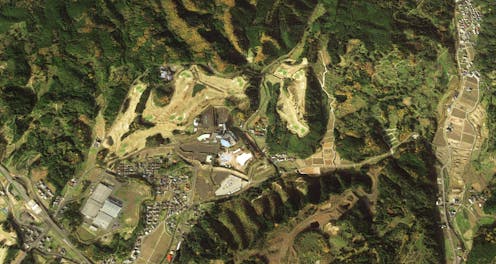
Satellite photo of rural Saga prefecture, Japan, showing farmland disuse, consolidation and intensification and urban development. Google Earth Pro, CC BY-NC-ND

Since 1970, 73% of global wildlife has been lost, while the world’s population has doubled to 8 billion. Research shows this isn’t a coincidence but that population growth is causing a catastrophic decline in biodiversity.

Yet a turning point in human history is underway. According to UN projections, the number of people in 85 countries will be shrinking by 2050, mostly in Europe and Asia. By 2100, the human population is on course for global decline. Some say this will be good for the environment.

In 2010, Japan became the first Asian country to begin depopulating. South Korea, China and Taiwan are following close behind. In 2014, Italy was the first in southern Europe, followed by Spain, Portugal and others. We call Japan and Italy “depopulation vanguard countries” on account of their role as forerunners for understanding possible consequences in their regions.

Given assumptions that depopulation could help deliver environmental restoration, we have been working with colleagues Yang Li and Taku Fujita to investigate whether Japan is experiencing what we have termed a biodiversity “depopulation dividend” or something else.


Get your news from actual experts, straight to your inbox. Sign up to our daily newsletter to receive all The Conversation UK’s latest coverage of news and research, from politics and business to the arts and sciences.


Since 2003, hundreds of citizen scientists have been collecting biodiversity data for the Japanese government’s Monitoring Sites 1,000 project. We used 1.5 million recorded species observations from 158 sites.

These were in wooded, agricultural and peri-urban (transitional spaces on outskirts of cities) areas. We compared these observations against changes in local population, land use and surface temperature for periods of five to 20 years.

Our study, published in the journal Nature Sustainability, includes birds, butterflies, fireflies, frogs and 2,922 native and non-native plants. These landscapes have experienced the greatest depopulation since the 1990s.

Due to the size of our database, choice of sites and the positioning of Japan as a depopulation vanguard for north-east Asia, this is one of the largest studies of its kind.

Japan is not Chernobyl

Biodiversity continued to decrease in most of the areas we studied, irrespective of population increase or decrease. Only where the population remains steady is biodiversity more stable. However, the population of these areas is ageing and will decline soon, bringing them in line with the areas already seeing biodiversity loss.

Unlike in Chernobyl, where a sudden crisis caused an almost total evacuation which stimulated startling accounts of wildlife revival, Japan’s population loss has developed gradually. Here, a mosaic pattern of changing land use emerges amid still-functioning communities.

While most farmland remains under cultivation, some falls into disuse or abandonment, some is sold for urban development or transformed into intensively farmed landscapes. This prevents widespread natural succession of plant growth or afforestation (planting of new trees) that would enrich biodiversity.

In these areas, humans are agents of ecosystem sustainability. Traditional farming and seasonal livelihood practices, such as flooding, planting and harvesting of rice fields, orchard and coppice management, and property upkeep, are important for maintaining biodiversity. So depopulation can be destructive to nature. Some species thrive, but these are often non-native ones that present other challenges, such as the drying and choking of formerly wet rice paddy fields by invasive grasses.

Vacant and derelict buildings, underused infrastructure and socio-legal issues (such as complicated inheritance laws and land taxes, lack of local authority administrative capacity, and high demolition and disposal costs) all compound the problem.

abandoned home in Japan
An abandoned house, or akiya, in Niigata prefecture, Japan.
Peter Matanle, CC BY-NC-ND

Even as the number of akiya (empty, disused or abandoned houses) increases to nearly 15% of the nation’s housing stock, the construction of new dwellings continues remorselessly. In 2024, more than 790,000 were built, due partly to Japan’s changing population distribution and household composition. Alongside these come roads, shopping malls, sports facilities, car parks and Japan’s ubiquitous convenience stores. All in all, wildlife has less space and fewer niches to inhabit, despite there being fewer people.

What can be done?

Data shows deepening depopulation in Japan and north-east Asia. Fertility rates remain low in most developed countries. Immigration provides only a short-term softer landing, as countries currently supplying migrants, such as Vietnam, are also on course for depopulation.

Our research demonstrates that biodiversity recovery needs to be actively managed, especially in depopulating areas. Despite this there are only a few rewilding projects in Japan. To help these develop, local authorities could be given powers to convert disused land into locally managed community conservancies.

Nature depletion is a systemic risk to global economic stability. Ecological risks, such as fish stock declines or deforestation, need better accountability from governments and corporations. Rather than spend on more infrastructure for an ever-dwindling population, for example, Japanese companies could invest in growing local natural forests for carbon credits.

Depopulation is emerging as a 21st-century global megatrend. Handled well, depopulation could help reduce the world’s most pressing environmental problems, including resource and energy use, emissions and waste, and nature conservation. But it needs to be actively managed for those opportunities to be realised.


Don’t have time to read about climate change as much as you’d like?

Get a weekly roundup in your inbox instead. Every Wednesday, The Conversation’s environment editor writes Imagine, a short email that goes a little deeper into just one climate issue. Join the 45,000+ readers who’ve subscribed so far.


The Conversation

Nothing to disclose

Kei Uchida received funding from JSPS Kakenhi 20K20002.

Masayoshi K. Hiraiwa does not work for, consult, own shares in or receive funding from any company or organisation that would benefit from this article, and has disclosed no relevant affiliations beyond their academic appointment.

ref. Fewer people doesn’t always mean better outcomes for nature – just look at Japan – https://theconversation.com/fewer-people-doesnt-always-mean-better-outcomes-for-nature-just-look-at-japan-259414

Queen Hatshepsut’s statues were destroyed in ancient Egypt – new study challenges the revenge theory

Source: The Conversation – Global Perspectives – By Jun Yi Wong, PhD Candidate in Egyptology, University of Toronto

After the Egyptian pharaoh Hatshepsut died around 1458 BCE, many statues of her were destroyed. Archaeologists believed that they were targeted in an act of revenge by Thutmose III, her successor. Yet the condition of the statues recovered in the vicinity of her mortuary temple varies and many survive with their faces virtually intact.

Now a new study by archaeologist Jun Yi Wong re-examines the original excavations and offers an alternative explanation. Much of the damage may in fact be from the “ritual deactivation” of the statues and their reuse as raw material. We asked him to explain.


Who was Queen Hatshepsut and why was she important?

Hatshepsut ruled as the pharaoh of Egypt around 3,500 years ago. Her reign was an exceptionally successful one – she was a prolific builder of monuments, and her reign saw great innovations in art and architecture. As a result, some regard her as one of the greatest rulers – male or female – in ancient Egypt. She has also been described as the “first great woman in history”.

Hatshepsut was the wife and half sister of pharaoh Thutmose II. Following the premature death of her husband, she acted as regent for her stepson, the young Thutmose III. However, about seven years later, Hatshepsut ascended the throne and declared herself ruler of Egypt.

Why was it believed her statues were destroyed in revenge?

After her death, Hatshepsut’s names and representations such as statues were systematically erased from her monuments. This event, often called the “proscription” of Hatshepsut, is currently part of my wider research.

There’s little doubt that this destruction began during the time of Thutmose III, since some of Hatshepsut’s erased representations were found concealed by his new constructions.

The statues that formed the subject of my recently published study were discovered in the 1920s. By this time, Thutmose III’s proscription of Hatshepsut was already well known, so it was immediately (and rightly) assumed it was caused during his reign. Some of the broken statues were even found underneath a causeway built by Thutmose III, so there is little doubt that their destruction took place during his reign.

Because the statues were found in fragments, early archaeologists assumed that they must have been broken up violently, perhaps due to Thutmose III’s animosity towards Hatshepsut. For instance, Herbert Winlock, the archaeologist who led the excavations of 1922 to 1928, remarked that Thutmose III must have “decreed the destruction of every portrait of (Hatshepsut) in existence” and that

Every conceivable indignity had been heaped on the likeness of the fallen Queen.

The problem with such an interpretation is that some of Hatshepsut’s statues have survived in relatively good condition, with their faces virtually intact. Why was there such a great variation in the treatment of the statues? That was essentially the main question of my research.

How did you go about finding the answer?

It was clear that the damage to Hatshepsut’s statues was not caused solely by Thutmose III. Many of them were left exposed and not buried, and many were reused as building material. Indeed, not far from where the statues were discovered, the archaeologists found a stone house that was partially built using fragments of her statues.

Of course, the question is to what extent these reuse activities added to the damage of the statues. Fortunately, the archaeologists who excavated the statues left behind field notes that are quite detailed.

Based on this archival material, it is possible to reconstruct the locations in which many of these statues were found.

The results were quite intriguing: statues that are scattered over large areas, or have significant missing parts, tend to have sustained significant damage to their faces. In contrast, statues found in a relatively complete condition typically have their faces fully intact.

In other words, statues that were subjected to heavy reuse activities are far more likely to have sustained facial damage.

Therefore, it is likely that Thutmose III was not responsible for the facial damage sustained by the statues. Instead, the destruction that he was responsible for was far more specific, namely the breaking of these statues across their neck, waist and knees.

This form of treatment is not unique to Hatshepsut’s statues.

Fascinating. So what does this mean?

The practice of breaking royal statues across their neck, waist and knees is common in ancient Egypt. It’s often referred to as the “deactivation” of statues.

For the ancient Egyptians, statues were more than just images. For example, newly made statues underwent a rite known as the opening of the mouth, where they were ritually brought to life. Since statues were regarded as living and powerful objects, their inherent power had to be neutralised before they could be discarded.


Read more:
Cleopatra’s skin colour didn’t matter in ancient Egypt – her strategic role in world history did


Indeed, one of the most extraordinary discoveries in Egyptian archaeology is the Karnak Cachette, where hundreds of royal statues were found buried in a single deposit. The vast majority of the statues have been “deactivated”, even though most of them depict pharaohs who were never subjected to any hostilities after their death.

This suggests that the destruction of Hatshepsut’s statues was motivated mainly by ritualistic and pragmatic reasons, rather than revenge or animosity. This, of course, changes the way that her relationship with Thutmose III is understood.

The Conversation

Jun Yi Wong receives funding from the Andrew W. Mellon Foundation.

ref. Queen Hatshepsut’s statues were destroyed in ancient Egypt – new study challenges the revenge theory – https://theconversation.com/queen-hatshepsuts-statues-were-destroyed-in-ancient-egypt-new-study-challenges-the-revenge-theory-260326

A new Gaza ceasefire deal is on the table – will this time be different?

Source: The Conversation – Global Perspectives – By Julie M. Norman, Senior Associate Fellow on the Middle East at RUSI; Associate Professor in Politics & International Relations, UCL

The US president, Donald Trump, says that Israel has agreed to terms for a 60-day ceasefire in Gaza. If that sounds familiar, it is.

The idea of a two-month truce has been discussed since the collapse of the last shortlived ceasefire in March. A similar proposal was floated in May, but Hamas viewed it as an enabling mechanism for Israel to continue the war after a brief pause, rather than reaching a permanent peace deal.

As the devastation in Gaza worsens by the day, will this time be any different?

The proposal, put forward by Qatari mediators, reportedly involves Hamas releasing ten living hostages and the bodies of 18 deceased hostages over the 60-day period, in exchange for the release of a number of Palestinian prisoners.


Get your news from actual experts, straight to your inbox. Sign up to our daily newsletter to receive all The Conversation UK’s latest coverage of news and research, from politics and business to the arts and sciences.


The remaining 22 hostages would be released if a long-term deal is reached. The 60-day ceasefire period would also involve negotiations for a permanent end to hostilities and a roadmap for post-war governance in Gaza.

But the plan is similar to the eight-week, three-phase ceasefire from January to March of this year, which collapsed after the first phase of hostage exchanges. Since then peace talks have hit a recurrent impasse.

For Hamas, a long-term ceasefire means the permanent end to the war and the withdrawal of Israeli forces from Gaza. Israel, meanwhile, wants to see the complete removal of Hamas from power, the dismantling and disarming of its military wing and the exile of remaining senior Hamas leaders.

But despite the persistent challenges, there are several reasons that this attempt for a ceasefire might be different. First and foremost is the recent so-called “12-day war” between Israel and Iran, which Israel has trumpeted as a major success for degrading Iran’s nuclear capabilities (although the reality is more nuanced).

The perceived win gives Israel’s prime minister, Benjamin Netanyahu, political maneuverability to pursue a ceasefire over the objections of far-right hardliners in his coalition who have threatened to bring down the government in previous rounds.

The Iran-Israel war, in which the US controversially carried out strikes on Iran’s nuclear sites, also revived Trump’s interest in the Middle East. Trump entered office just as the phased Gaza ceasefire deal was being agreed. But Trump put little diplomatic pressure on Israel to engage in serious talks to get from the first phase of the agreement to phase two, allowing the war to resume in March.

Now however, after assisting Israel militarily in Iran, Trump has significant leverage he can use with Netanyahu. He will have the chance to use it (if he chooses) when Netanyahu visits Washington next week.

Both men also view Iran’s weakened position as an opportunity for expanding the Abraham accords. This was the set of agreements normalising relations between Israel and several Arab states, including the United Arab Emirates, Bahrain, Sudan and Morocco, which Trump brokered at the end of his first term.

Netanyahu has long eyed a US-backed deal with Saudi Arabia, and a smaller-scale declaration with Syria is reportedly now under discussion as well. But those deals can’t move forward while the war in Gaza is going.

Additional obstacles

However, the recurrent obstacles to a deal remain – and it’s unclear if the proposed terms will include guarantees to prevent Israel resuming the war after the 60-day period.

New issues have also arisen since the last round of talks that could create further challenges. Hamas is demanding a return to traditional humanitarian aid distribution in Gaza – or at least the replacement of the controversial US and Israeli-backed Gaza Humanitarian Foundation (GHF).

The GHF’s four distribution sites, located in militarised zones, replaced over 400 previously operating aid points, and more than 400 people have been killed while seeking aid near the sites, since May 26. More than 170 international non-governmental organisations and charities have called for the GHF to be shut down.

Israel’s military control over Gaza has also become further entrenched since the last ceasefire. More than 80% is thought to be covered by evacuation orders – and new orders for north Gaza and Gaza City were issued on June 29 and July 2 respectively.

Israeli officials have described the renewed operations as military pressure on Hamas to accept a ceasefire. But Netanyahu has also spoken openly about long-term military occupation of Gaza.

He recently stated that Israel would remain in “full security control of Gaza” even after the war. Even if a temporary ceasefire is agreed, the road ahead is strewn with difficulties in moving towards a long-lasting ceasefire or reaching an acceptable “day-after” agreement.

Still, the current moment offers an opportunity for a breakthrough. Trump has a renewed interest in getting to a ceasefire and Netanyahu has a rare political window to enter an agreement and get hostages home. Hamas, meanwhile, has been weakened, not only by Israel’s relentless military pounding, but by increasing disillusionment from the people of Gaza, who are desperate for an end to the war.

There is no shortage of reasons to end the war in Gaza. The only question is if Israel and Hamas have the will to do so.

The Conversation

Julie M. Norman does not work for, consult, own shares in or receive funding from any company or organisation that would benefit from this article, and has disclosed no relevant affiliations beyond their academic appointment.

ref. A new Gaza ceasefire deal is on the table – will this time be different? – https://theconversation.com/a-new-gaza-ceasefire-deal-is-on-the-table-will-this-time-be-different-260219

Military force may have delayed Iran’s nuclear ambitions – but history shows that diplomacy is the more effective nonproliferation strategy

Source: The Conversation – Global Perspectives – By Stephen Collins, Professor of Government and International Affairs, Kennesaw State University

View of the United Nations logo at a 2022 conference of the Parties to the Treaty on the Non-Proliferation of Nuclear Weapons. Angela Weiss/AFP via Getty Images)

While the U.S. military’s strikes on Iran on June 21, 2025, are believed to have damaged the country’s critical nuclear infrastructure, no evidence has yet emerged showing the program to have been completely destroyed. In fact, an early U.S. Defense Intelligence Agency assessment surmised that the attack merely delayed Iran’s possible path to a nuclear weapon by less than six months. Further, Rafael Mariano Grossi, director of the United Nations’ International Atomic Energy Agency, stated that Iran may have moved its supply of enriched uranium ahead of the strikes, and assessed that Tehran could resume uranium enrichment “in a matter of months.”

Others have warned that the strikes may intensify the Islamic Republic’s nuclear drive, convincing the government of the need to acquire a bomb in order to safeguard its survival.

As a scholar of nuclear nonproliferation, my research indicates that military strikes, such as the U.S. one against Iran, tend not to work. Diplomacy — involving broad and resolute international efforts — offers a more strategically effective way to preempt a country from obtaining a nuclear arsenal.

The diplomatic alternative to nonproliferation

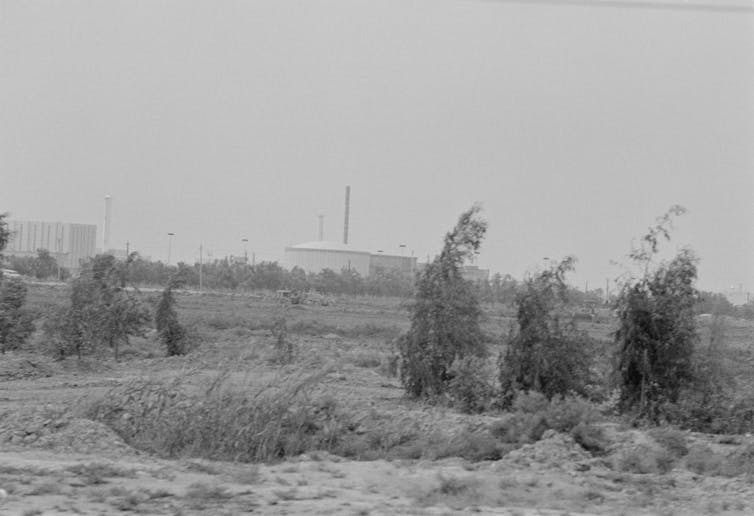
The strategy of a country using airstrikes to attempt to eliminate a rival nation’s nuclear program has precedent, including Israel’s 1981 airstrike on Iraq’s Osirak nuclear reactor and its 2007 air assault on Syria’s Kibar nuclear complex.

Yet neither military operation reliably or completely terminated the targeted program. Many experts of nuclear strategy believe that while the Israeli strike destroyed the Osirak complex, it likely accelerated Iraq’s fledgling nuclear program, increasing Saddam Hussein’s commitment to pursue a nuclear weapon.

A black and white image shows a structure in the background and some trees in the foreground.
The Osirak nuclear power research station in 1981.
Jacques Pavlovsky/Sygma via Getty Images

In a similar vein, while Israeli airstrikes destroyed Syria’s nascent nuclear facility, evidence soon emerged that the country, under its former leader, Bashar Assad, may have continued its nuclear activities elsewhere.

Based on my appraisal of similar cases, the record shows that diplomacy has been a more consistently reliable strategy than military force for getting a targeted country to denuclearize.

The tactics involved in nuclear diplomacy include bilateral and multilateral engagement efforts and economic tools ranging from comprehensive sanctions to transformative aid and trade incentives. Travel and cultural sanctions – including bans on participating in international sporting and other events – can also contribute to the effectiveness of denuclearization diplomacy.

The high point of denuclearization diplomacy came in 1970, when the majority of the world signed the Treaty on the Non-Proliferation of Nuclear Weapons. The treaty obliged nonnuclear weapons states to refrain from pursuing them, and existing nuclear powers to share civilian nuclear power technology and work toward eventual nuclear weapons disarmament.

I’ve found that in a majority of cases since then – notably in Argentina, Brazil, Libya, South Africa, South Korea and Taiwan – diplomacy played a pivotal role in convincing nuclear-seeking nations to entirely and permanently relinquish their pursuit of nuclear weapons.

Case studies of nuclear diplomacy

In the cases of U.S. allies Argentina, Brazil, South Korea and Taiwan, the military option was off the table for Washington, which instead successfully used diplomatic pressure to compel these countries to discontinue their nuclear programs. This involved the imposition of significant economic and technological sanctions on Argentina and Brazil in the late-1970s, which substantially contributed to the denuclearization of South America. In the South Korea and Taiwan cases, the threat of economic sanctions was effectively coupled with the risk of losing U.S. military aid and security guarantees.

South Africa represents one of the most compelling cases in support of diplomatic measures to reverse a country’s nuclear path. In the latter years of the Cold War, the country had advanced beyond threshold nuclear potential to assemble a sizable arsenal of nuclear weapons. But in 1991, the country decided to relinquish that arsenal, due in large part to the high economic, technological and cultural costs of sanctions and the belief that its nuclear program would prevent its reintegration into the international community following years of apartheid.

Completing the denuclearization of Africa, diplomatic pressure applied by the U.S. was the primary factor in Libya’s decision to shutter its nuclear program in 2003, as ending U.S. sanctions and normalizing relations with Washington became a high priority for the government of Moammar Gadhafi.

In the case of Iraq, the Hussein regime eventually did denuclearize in the 1990s, but not through a deal negotiated directly with the U.S. or the international community. Rather, Hussein’s decision was motivated by the damaging economic and technological costs of the U.N. sanctions and his desire to see them lifted after the first Gulf War.

In the 11 countries in which diplomacy was used to reverse nuclear proliferation, only in the cases of India and Pakistan did it fail to induce any nuclear reversal.

In the case of North Korea, while Pyongyang did for a time join the Treaty on the Non-Proliferation of Nuclear Weapons, it later left the accord and subsequently built an arsenal now estimated at several dozen nuclear weapons. The decades-long efforts at diplomacy with the country cannot, therefore, be coded a success. Still, these efforts did result in notable moves in 1994 and 2007 by North Korea to curtail its nuclear facilities.

Meanwhile, analysts debate whether diplomacy would have been more successful at containing North Korea’s nuclear program if the George W. Bush administration had not shifted toward a more confrontational policy, including naming North Korea as a member of the “axis of evil” and delaying aid promised in the 1994 U.S.-North Korean Agreed Framework.

The Iran deal and beyond

Consistent with the historical track record for diplomacy concerning other nuclear powers, Iran offers compelling evidence of what diplomacy can achieve in lieu of military force.

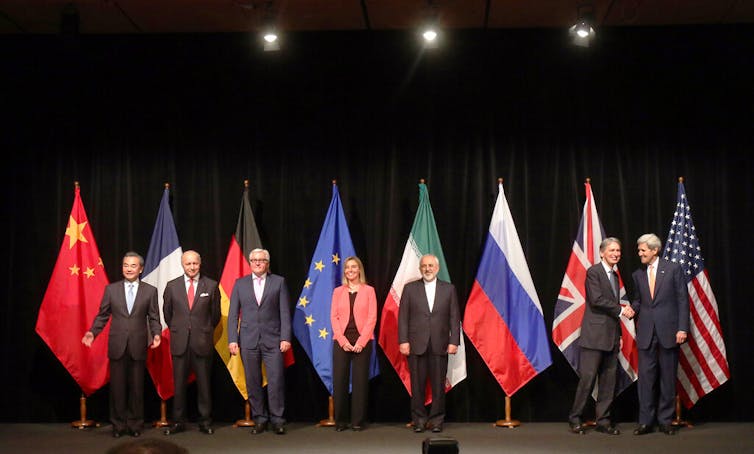
Diplomatic negotiations between the U.S, Iran and five leading powers yielded the landmark Joint Comprehensive Plan of Action in 2015. The so-called Iran deal involved multilateral diplomacy and a set of economic sanctions and incentives, and persuaded Iran to place stringent limits on its nuclear program for at least 10 years and ship tons of enriched uranium out of the country. A report from the International Atomic Energy Agency in 2016 confirmed that Iran had abided by the terms of the agreement. Consequently, the U.S., European Union and U.N. responded by lifting sanctions.

People post on stage next to flags.
Representatives of the nations involved in signing the 2015 Iran nuclear deal pose for a group photo following talks in July 2015.
AP Photo/Ronald Zak

It was only after President Donald Trump ordered the U.S. withdrawal from the agreement in 2018, and reimposed sanctions on Iran, that Tehran resumed its alarming enrichment activities.

Trump signaled quickly after the recent attack on Iran a willingness to engage in direct talks with Tehran. However, Iran may rebuff any agreement that effectively contains its nuclear program, opting instead for the intensified underground approach Iraq took after the 1981 Osirak attack.

Indeed, my research shows that combining military threats with diplomacy reduces the prospects of successfully reaching a disarmament agreement. Nations will be more reluctant to disarm when their negotiating counterpart adopts a threatening and combative posture, as it heightens their fear that disarmament will make it more vulnerable to future aggression from the opposing country.

A return to an Iran nuclear deal?

Successful denuclearization diplomacy with Iran will not be a panacea for Middle East stability; the U.S. will continue to harbor concerns about Iran’s military-related actions and relationships in the region.

It is, after all, unlikely that any U.S. administration could strike a deal with Tehran on nuclear policy that would simultaneously settle all outstanding issues and resolve decades of mutual acrimony.

But by signing and abiding to the terms of the JCPOA, Iran has demonstrated a willingness to cooperate on the nuclear issue in the past. Under the agreement, Iran accepted a highly limited and low-proliferation-risk nuclear program subject to intrusive inspections by the international community.

That arrangement was beneficial for regional stability and for buttressing the global norm against nuclear proliferation. A return to a JCPOA-type agreement would reinforce a diplomatic approach to relations with Iran and create an opening for progress with the country on other areas of concern.

The Conversation

Stephen Collins does not work for, consult, own shares in or receive funding from any company or organization that would benefit from this article, and has disclosed no relevant affiliations beyond their academic appointment.

ref. Military force may have delayed Iran’s nuclear ambitions – but history shows that diplomacy is the more effective nonproliferation strategy – https://theconversation.com/military-force-may-have-delayed-irans-nuclear-ambitions-but-history-shows-that-diplomacy-is-the-more-effective-nonproliferation-strategy-259769

Does eating cheese before bed really give you nightmares? Here’s what the science says

Source: The Conversation – Global Perspectives – By Charlotte Gupta, Senior Postdoctoral Research Fellow, Appleton Institute, HealthWise Research Group, CQUniversity Australia

Phoenixns/Shutterstock, The Conversation, CC BY

Have you heard people say eating cheese before bed will cause you to have vivid dreams or nightmares?

It’s a relatively common idea. And this week, a new study has landed this suggestion back in the spotlight.

But is it true? Let’s unpack the evidence.

A gouda night’s sleep?

Canadian researchers recently investigated this idea in a sample of 1,082 undergraduate psychology students. The students completed a survey, which included questions about how they perceived their diet influenced their sleep and dreams.

Some 40% of participants reported certain foods impacted their sleep, with 25% of the whole sample claiming certain foods worsened their sleep, and 20% reporting certain foods improved their sleep.

Only 5.5% of respondents believed what they ate affected the nature of their dreams. But many of these people thought sweets or dairy products (such as cheese) made their dreams more strange or disturbing and worsened their sleep.

In contrast, participants reported fruits, vegetables and herbal teas led to better sleep.

This study used self-reporting, meaning the results rely on the participants recalling and reporting information about their sleep and dreams accurately. This could have affected the results.

It’s also possible participants were already familiar with the notion that cheese causes nightmares, especially given they were psychology students, many of whom may have studied sleep and dreaming.

This awareness could have made them more likely to notice or perceive their sleep was disrupted after eating dairy. In other words, the idea cheese leads to nightmares may have acted like a self-fulfilling prophecy and results may overestimate the actual likelihood of strange dreams.

Nonetheless, these findings show some people perceive a connection between what they eat and how they dream.

While there’s no evidence to prove cheese causes nightmares, there is evidence that does explain a link.

The science behind cheese and nightmares

Humans are diurnal creatures, meaning our body is primed to be asleep at night and awake during the day. Eating cheese before bed means we’re challenging the body with food at a time when it really doesn’t want to be eating.

At night, our physiological systems are not primed to digest food. For example, it takes longer for food to move through our digestive tract at night compared with during the day.

If we eat close to going to sleep, our body has to process and digest the food while we’re sleeping. This is a bit like running through mud – we can do it, but it’s slow and inefficient.

Cheese can be particularly challenging to digest at night because of high concentrations of fat and protein, which slows down our digestion.

If your body is processing and digesting food instead of focusing all its resources on sleep, this can affect your shut-eye. Research has shown eating close to bedtime reduces our sleep quality, particularly our time spent in rapid eye movement (REM) sleep, which is the stage of sleep associated with vivid dreams.

People will have an even harder time digesting cheese at night if they’re lactose intolerant, which might mean they experience even greater impacts on their sleep. This follows what the Canadian researchers found in their study, with lactose intolerant participants reporting poorer sleep quality and more nightmares.

It’s important to note we might actually have vivid dreams or nightmares every night – what could change is whether we’re aware of the dreams and can remember them when we wake up.

Poor sleep quality often means we wake up more during the night. If we wake up during REM sleep, research shows we’re more likely to report vivid dreams or nightmares that we mightn’t even remember if we hadn’t woken up during them.

This is very relevant for the cheese and nightmares question. Put simply, eating before bed impacts our sleep quality, so we’re more likely to wake up during our nightmares and remember them.

A woman sleeping.
What we eat, particularly just before bed, can affect our sleep.
Ivan Oboleninov/Pexels

Can I still have brie before bedtime?

Don’t panic – I’m not here to tell you to give up your cheesy evenings. But what we eat before bed can make a real difference to how well we sleep, so timing matters.

General sleep hygiene guidelines suggest avoiding meals at least two hours before bed. So even if you’re eating a very cheese-heavy meal, you have a window of time before bed to digest the meal and drift off to a nice peaceful sleep.

How about other dairy products?

Cheese isn’t the only dairy product which may influence our sleep. Most of us have heard about the benefits of having a warm glass of milk before bed.

Milk can be easier to digest than cheese. In fact, milk is a good choice in the evening, as it contains tryptophan, an amino acid that helps promote sleep.

Nonetheless, we still don’t want to be challenging our body with too much dairy before bed. Participants in the Canadian study did report nightmares after dairy, and milk close to bed might have contributed to this.

While it’s wise to steer clear of food (especially cheese) in the two hours before lights out, there’s no need to avoid cheese altogether. Enjoy that cheesy pasta or cheese board, just give your body time to digest before heading off to sleep. If you’re having a late night cheese craving, opt for something small. Your sleep (and your dreams) will thank you.

The Conversation

Charlotte Gupta does not work for, consult, own shares in or receive funding from any company or organisation that would benefit from this article, and has disclosed no relevant affiliations beyond their academic appointment.

ref. Does eating cheese before bed really give you nightmares? Here’s what the science says – https://theconversation.com/does-eating-cheese-before-bed-really-give-you-nightmares-heres-what-the-science-says-260205

Experiencing extreme weather and disasters is not enough to change views on climate action, study shows

Source: The Conversation – Global Perspectives – By Omid Ghasemi, Research Associate in Behavioural Science at the Institute for Climate Risk & Response, UNSW Sydney

STR / AFP via Getty Images

Climate change has made extreme weather events such as bushfires and floods more frequent and more likely in recent years, and the trend is expected to continue. These events have led to human and animal deaths, harmed physical and mental health, and damaged properties and infrastructure.

Will firsthand experience of these events change how people think and act about climate change, making it seem immediate and local rather than a distant or future problem?

Research so far has offered a mixed picture. Some studies suggest going through extreme weather can make people more likely to believe in climate change, worry about it, support climate policies, and vote for Green parties. But other studies have found no such effects on people’s beliefs, concern, or behaviour.

New research led by Viktoria Cologna at ETH Zurich in Switzerland may help to explain what’s going on. Using data from around the world, the study suggests simple exposure to extreme weather events does not affect people’s view of climate action – but linking those events to climate change can make a big difference.

Global opinion, global weather

The new study, published in Nature Climate Change, looked at the question of extreme weather and climate opinion using two global datasets.

The first is the Trust in Science and Science-related Populism (TISP) survey, which includes responses from more than 70,000 people in 68 countries. It measures public support for climate policies and the extent that people think climate change is behind increases in extreme weather.

The second dataset estimates how much of each country’s population has been affected each year by events such as droughts, floods, heatwaves and storms. These estimates are based on detailed models and historical climate records.

Public support for climate policies

The survey measured public support for climate policy by asking people how much they supported five specific actions to cut carbon emissions. These included raising carbon taxes, improving public transport, using more renewable energy, protecting forests and land, and taxing carbon-heavy foods.

Responses ranged from 1 (not at all) to 3 (very much). On average, support was fairly strong, with an average rating of 2.37 across the five policies. Support was especially high in parts of South Asia, Africa, the Americas and Oceania, but lower in countries such as Russia, Czechia and Ethiopia.

Exposure to extreme weather events

The study found most people around the world have experienced heatwaves and heavy rainfall in recent decades. Wildfires affected fewer people in many European and North American countries, but were more common in parts of Asia, Africa and Latin America.

Cyclones mostly impacted North America and Asia, while droughts affected large populations in Asia, Latin America and Africa. River flooding was widespread across most regions, except Oceania.

Do people in countries with higher exposure to extreme weather events show greater support for climate policies? This study found they don’t.

In most cases, living in a country where more people are exposed to disasters was not reflected in stronger support for climate action.

Wildfires were the only exception. Countries with more wildfire exposure showed slightly higher support, but this link disappeared once factors such as land size and overall climate belief were considered.

In short, just experiencing more disasters does not seem to translate into increased support for mitigation efforts.

Seeing the link between weather and climate change

In the global survey, people were asked how much they think climate change has increased the impact of extreme weather over recent decades. On average, responses were moderately high (3.8 out of 5) suggesting that many people do link recent weather events to climate change.

Such an attribution was especially strong in Latin America, but lower in parts of Africa (such as Congo and Ethiopia) and Northern Europe (such as Finland and Norway).

Crucially, people who more strongly believed climate change had worsened these events were also more likely to support climate policies. In fact, this belief mattered more for policy support than whether they had actually experienced the events firsthand.

What does this study tell us?

While public support for climate policies is relatively high around the world, even more support is needed to introduce stronger, more ambitious measures. It might seem reasonable to expect that feeling the effects of climate change would push people to act, but this study suggests that doesn’t always happen.

Prior research shows less dramatic and chronic events like rainfall or temperature anomalies have less influence on public views than more acute hazards like floods or bushfires. Even then, the influence on beliefs and behaviour tends to be slow and limited.

This study shows climate impacts alone may not change minds. However, it also highlights what may affect public thinking: helping people recognise the link between climate change and extreme weather events.

In countries such as Australia, climate change makes up only about 1% of media coverage. What’s more, most of the coverage focuses on social or political aspects rather than scientific, ecological, or economic impacts.

Many stories about disasters linked to climate change also fail to mention the link, or indeed mention climate change at all. Making these connections clearer may encourage stronger public support for climate action.

The Conversation

Omid Ghasemi receives funding from the Australian Academy of Science. He was a member of the TISP consortium and a co-author of the dataset used in this study.

ref. Experiencing extreme weather and disasters is not enough to change views on climate action, study shows – https://theconversation.com/experiencing-extreme-weather-and-disasters-is-not-enough-to-change-views-on-climate-action-study-shows-260308

Antarctic research is in decline, and the timing couldn’t be worse

Source: The Conversation – Global Perspectives – By Elizabeth Leane, Professor of Antarctic Studies, School of Humanities, University of Tasmania

Oleksandr Matsibura/Shutterstock

Ice loss in Antarctica and its impact on the planet – sea level rise, changes to ocean currents and disturbance of wildlife and food webs – has been in the news a lot lately. All of these threats were likely on the minds of the delegates to the annual Antarctic Treaty Consultative Meeting, which finishes up today in Milan, Italy.

This meeting is where decisions are made about the continent’s future. These decisions rely on evidence from scientific research. Moreover, only countries that produce significant Antarctic research – as well as being parties to the treaty – get to have a final say in these decisions.

Our new report – published as a preprint through the University of the Arctic – shows the rate of research on the Antarctic and Southern Ocean is falling at exactly the time when it should be increasing. Moreover, research leadership is changing, with China taking the lead for the first time.

This points to a dangerous disinvestment in Antarctic research just when it is needed, alongside a changing of the guard in national influence. Antarctica and the research done there are key to everyone’s future, so it’s vital to understand what this change might lead to.

Why is Antarctic research so important?

With the Antarctic region rapidly warming, its ice shelves destabilising and sea ice shrinking, understanding the South Polar environment is more crucial than ever.

Ice loss in Antarctica not only contributes to sea level rise, but impacts wildlife habitats and local food chains. It also changes the dynamics of ocean currents, which could interfere with global food webs, including international fisheries that supply a growing amount of food.

Research to understand these impacts is vital. First, knowing the impact of our actions – particularly carbon emissions – gives us an increased drive to make changes and lobby governments to do so.

Second, even when changes are already locked in, to prepare ourselves we need to know what these changes will look like.

And third, we need to understand the threats to the Antarctic and Southern Ocean environment to govern it properly. This is where the treaty comes in.

What is the Antarctic Treaty?

The region below 60 degrees south is governed by the 1959 Antarctic Treaty, along with subsequent agreements. Together they are known as the Antarctic Treaty System.

Fifty-eight countries are parties to the treaty, but only 29 of them – called consultative parties – can make binding decisions about the region. They comprise the 12 original signatories from 1959, along with 17 more recent signatory nations that produce substantial scientific research relating to Antarctica.

This makes research a key part of a nation’s influence over what happens in Antarctica.

For most of its history, the Antarctic Treaty System has functioned remarkably well. It maintained peace in the region during the Cold War, facilitated scientific cooperation, and put arguments about territorial claims on indefinite hold. It indefinitely forbade mining, and managed fisheries.

Lately, however, there has been growing dysfunction in the treaty system.

Environmental protections that might seem obvious – such as marine protected areas and special protections for threatened emperor penguins – have stalled.

Because decisions are made by consensus, any country can effectively block progress. Russia and China – both long-term actors in the system – have been at the centre of the impasse.


Read more:
Antarctic summer sea ice is at record lows. Here’s how it will harm the planet – and us


What did our report find?

Tracking the amount of Antarctic research being done tells us whether nations as a whole are investing enough in understanding the region and its global impact.

It also tells us which nations are investing the most and are therefore likely to have substantial influence.

Our new report examined the number of papers published on Antarctic and Southern Ocean topics from 2016 to 2024, using the Scopus database. We also looked at other factors, such as the countries affiliated with each paper.

The results show five significant changes are happening in the world of Antarctic research.

  • The number of Antarctic and Southern Ocean publications peaked in 2021 and then fell slightly yearly through to 2024.
  • While the United States has for decades been the leader in Antarctic research, China overtook them in 2022.
  • If we look only at the high-quality publications (those published in the best 25% of journals) China still took over the US, in 2024.
  • Of the top six countries in overall publications (China, the US, the United Kingdom, Australia, Germany and Russia) all except China have declined in publication numbers since 2016.
  • Although collaboration in publications is higher for Antarctic research than in non-Antarctic fields, Russia, India and China have anomalously low rates of co-authorship compared with many other signatory countries.

Why is this research decline a problem?

A recent parliamentary inquiry in Australia emphasised the need for funding certainty. In the UK, a House of Commons committee report considered it “imperative for the UK to significantly expand its research efforts in Antarctica”, in particular in relation to sea level rise.

US commentators have pointed to the inadequacy of the country’s icebreaker infrastructure. The Trump administration’s recent cuts to Antarctic funding are only likely to exacerbate the situation. Meanwhile China has built a fifth station in Antarctica and announced plans for a sixth.

Given the nation’s population and global influence, China’s leadership in Antarctic research is not surprising. If China were to take a lead in Antarctic environmental protection that matched its scientific heft, its move to lead position in the research ranks could be positive. Stronger multi-country collaboration in research could also strengthen overall cooperation.

But the overall drop in global Antarctic research investment is a problem however you look at it. We ignore it at our peril.

The Conversation

Elizabeth Leane receives funding from the Australian Research Council, the Dutch Research Council, the Council on Australian and Latin American Relations DFAT and HX (Hurtigruten Expeditions). She has received in-kind support from Hurtigruten Expeditions in the recent past. The University of Tasmania is a member of the UArctic, which has provided support for this project.

Keith Larson is affiliated with the UArctic and European Polar Board. The UArctic paid for the development and publication of this report. The UArctic Thematic Network on Research Analytics and Bibliometrics conducted the analysis and developed the report. The Arctic Centre at Umeå University provided in-kind support for staff time on the report.

ref. Antarctic research is in decline, and the timing couldn’t be worse – https://theconversation.com/antarctic-research-is-in-decline-and-the-timing-couldnt-be-worse-260197

Our memories are unreliable, limited and suggestible – and it’s a good thing too

Source: The Conversation – Global Perspectives – By Nick Haslam, Professor of Psychology, The University of Melbourne

Shutterstock

Milan Kundera opens his novel The Book of Laughter and Forgetting with a scene from the winter of 1948. Klement Gottwald, leader of the Communist Party of Czechoslovakia, is giving a speech to the masses from a palace balcony, surrounded by fellow party members. Comrade Vladimir Clementis thoughtfully places his fur hat on Gottwald’s bare head; the hat then features in an iconic photograph.

Four years later, Clementis is found guilty of being a bourgeois nationalist and hanged. His ashes are strewn on a Prague street. The propaganda section of the party removes him from written history and erases him from the photograph.

“Nothing remains of Clementis,” writes Kundera, “but the fur hat on Gottwald’s head.”


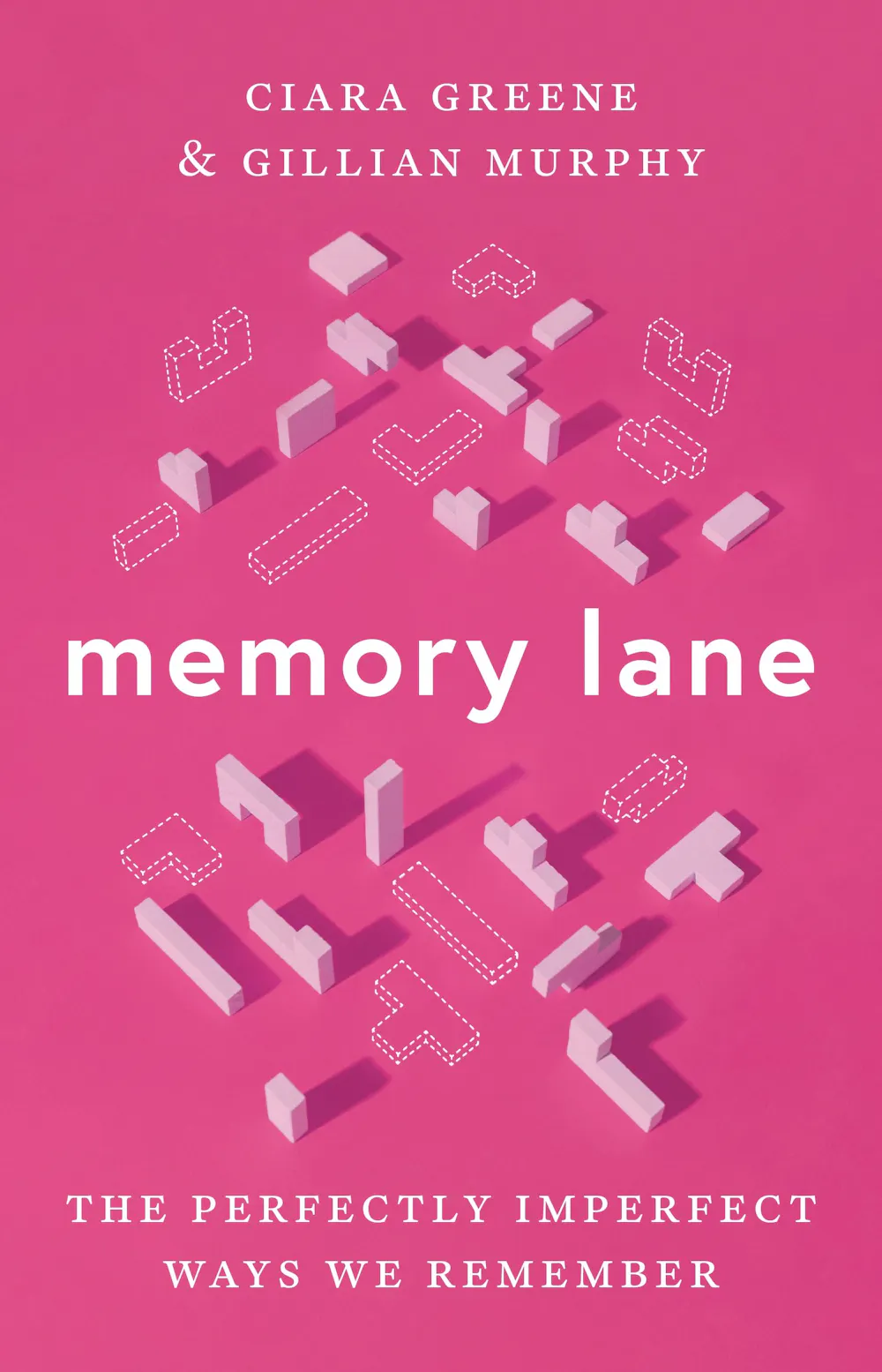
Review: Memory Lane: The Perfectly Imperfect Ways We Remember – Ciara Greene & Gillian Murphy (Princeton University Press)


Efforts to enforce political forgetting are often associated with totalitarian regimes. The state endeavours to control not only its citizens, but also the past. To create a narrative that glorifies the present and idealises the future, history must be rewritten or even completely obliterated.

In a famous article on “the totalitarian ego”, the social psychologist Anthony Greenwald argued that individual selves operate in the same way. We deploy an array of cognitive biases to maintain a sense of control, and to shape and reshape our personal history. We distort the present and fabricate the past to ensure we remain the heroes of our life narratives.

Likening the individual to a destructive political system might sound extreme, but it has an element of truth. Memory Lane, a new book by Irish psychology researchers Ciara Greene and Gillian Murphy, shows how autobiographical memory has a capacity to rewrite history that is almost Stalinesque.

There is no shortage of books on memory, from self-help guides for the anxiously ageing to scholarly works of history. Memory Lane is distinctive for taking the standpoint of applied cognitive psychology. Emphasising how memory functions in everyday life, Greene and Murphy explore the processes of memory and the influences that shape them.

What memory is not

The key message of the book is that the memory system is not a recording device. We may be tempted to see memory as a vault where past experience is faithfully preserved, but in fact it is fundamentally reconstructive.

Memories are constantly revised in acts of recollection. They change in predictable ways over time, moulded by new information, our prior beliefs and current emotions, other people’s versions of events, or an interviewer’s leading questions.

According to Greene and Murphy’s preferred analogy, memory is like a Lego tower. A memory is initially constructed from a set of elements, but over time some will be lost as the structure simplifies to preserve the gist of the event. Elements may also be added as new information is incorporated and the memory is refashioned to align with the person’s beliefs and expectations.

The malleability of memory might look like a weakness, especially by comparison to digital records. Memory Lane presents it as a strength. Humans did not evolve to log objective truths for posterity, but to operate flexibly in a complex and changing world.

From an adaptive standpoint, the past only matters insofar as it helps us function in the present. Our knowledge should be updated by new information. We should assimilate experiences to already learned patterns. And we should be tuned to our social environment, rather than insulated from it.

“If all our memories existed in some kind of mental quarantine, separate from the rest of our knowledge and experiences,” the authors write, “it would be like using a slow, inefficient computer program that could only show you one file at a time, never drawing connections or updating incorrect impressions.”

Simplifying and discarding memories is also beneficial because our cognitive capacity is limited. It is better to filter out what matters from the deluge of past experiences than to be overwhelmed with irrelevancies. Greene and Murphy present the case of a woman with exceptional autobiographical memory, who is plagued by the triggering of obsolete memories.

Forgetting doesn’t merely de-clutter memory; it also serves emotional ends. Selectively deleting unpleasant memories increases happiness. Sanding off out-of-character experiences fosters a clear and stable sense of self.

“Hindsight bias” boosts this feeling of personal continuity by bringing our recollections into line with our current beliefs. Revisionist history it may be, but it is carried out in the service of personal identity.

‘Forgetting doesn’t merely de-clutter memory; it also serves emotional ends.’
Shutterstock

Eyewitness memories and misinformation

Memory Lane pays special attention to situations in which memory errors have serious consequences, such as eyewitness testimony. Innocent people can be convicted on the basis of inaccurate eyewitness identifications. An array of biases make these more likely and they are especially common in interracial contexts.

Recollections can also be influenced by the testimony of other witnesses, and even by the language used during questioning. In a classic study, participants who viewed videos of car accidents estimated the car’s speed as substantially faster when the cars were described as having “smashed” rather than “contacted”. These distortions are not temporary: new information overwrites and overrides the original memory.

Misinformation works in a similar way and with equally dire consequences, such as vaccination avoidance. False information not only modifies existing memories but can even produce false memories, especially when it aligns with our preexisting beliefs and ideologies.

Greene and Murphy present intriguing experimental evidence that false memories are prevalent and easy to implant. Children and older adults seem especially susceptible to misinformation, but no one is immune, regardless of education or intelligence.

Reassuringly, perhaps, digital image manipulation and deepfake videos are no more likely to induce false memories than good old-fashioned verbiage. A doctored picture may not be worth a thousand words when it comes to warping memory.

Memory Lane devotes some time to the “memory wars” of the 1980s and 1990s, when debate raged over the existence of repressed memories. Greene and Murphy argue the now mainstream view that many traumatic memories supposedly recovered in therapy were false memories induced by therapists. Memories for traumatic events are not repressed, they argue, and traumatic memories are neither qualitatively different from other memories, nor stored separately from them.

Here the science of memory runs contrary to the wildly popular claims of writers such as psychiatrist Bessel van der Kolk, author of the bestseller The Body Keeps the Score.


Read more:
The Body Keeps the Score: how a bestselling book helps us understand trauma – but inflates the definition of it


Psychology researchers Ciara Greene (left) and Gillian Murphy (right) want us to be humbler about our fallible memories.
Princeton University Press

Misunderstanding memory

The authors of Memory Lane contend that we hold memory to unrealistic standards of accuracy, completeness and stability. When people misremember the past or change their recollections, we query their honesty or mental health. When our own memories are hazy, we worry about cognitive decline.

Greene and Murphy argue that it is in the very nature of memory to be fallible, malleable and limited. This message is heartening, but it does not clarify why we would expect memory to be more capacious, coherent and durable in the first place. Nor does it explain why we persist with this wrongheaded expectation, despite so much evidence to the contrary.

The authors hint that our mistake might have its roots in dominant metaphors of memory. If we now understand the mind as computer-like, we will see memories as digital traces that sit, silent and unchanging, in a vast storage system.

“Many of the catastrophic consequences of memory distortion arise not because our individual memories are terrible,” they argue, “but because we have unrealistic expectations about how memory works, treating it as a video camera rather than a reconstruction.”

In earlier times, when memory was likened to a telephone switchboard or to books or, for the ancient Greeks, to wax tablets, memory errors and erasures may have seemed less surprising and more tolerable.

These shifting technological analogies, explored historically in Douwe Draaisma’s Metaphors of Memory, may partly account for our extravagant expectations for memory. Expecting silicon chip performance from carbon-based organisms, who evolved to care more about adaptation than truth, would be foolish.

But there is surely more to this than metaphor. All aspects of our lives are increasingly recorded and datafied, a process that demands objectivity, accuracy and consistency. The recorded facts of the matter determine who should be rewarded, punished and regulated. The bounded and mutable nature of human memory presents a challenge to this digital regime.

Human memory is also increasingly taxed by the overwhelming and accelerating volume of information that assails us. Our frustration with its limitations reflects the desperate mismatch we feel between human nature and the impersonal systems of data in which we live.

Greene and Murphy urge us to relax. We should be humbler about our memory, and more realistic and forgiving about the memories of others. We should not be judgemental about the errors and inconsistencies of friends, or overconfident about our own recollections. And we should remember that, although memory is fallible, it is fallible in beneficial ways.

A person whose memory system always kept an accurate record of our lives would be profoundly impaired, Greene and Murphy argue. Such a person “would struggle to plan for the future, learn from the past, or respond flexibly to unexpected events”. Brimming with insights such as these, Memory Lane offers an informative and readable account of how the apparent weaknesses of human memory may be strengths in disguise.

The Conversation

Nick Haslam receives funding from the Australian Research Council.

ref. Our memories are unreliable, limited and suggestible – and it’s a good thing too – https://theconversation.com/our-memories-are-unreliable-limited-and-suggestible-and-its-a-good-thing-too-258682

What did ancient Rome smell like? Honestly, often pretty rank

Source: The Conversation – Global Perspectives – By Thomas J. Derrick, Gale Research Fellow in Ancient Glass and Material Culture, Macquarie University

minoandriani/Getty Images

The roar of the arena crowd, the bustle of the Roman forum, the grand temples, the Roman army in red with glistening shields and armour – when people imagine ancient Rome, they often think of its sights and sounds. We know less, however, about the scents of ancient Rome.

We cannot, of course, go back and sniff to find out. But the literary texts, physical remains of structures, objects, and environmental evidence (such as plants and animals) can offer clues.

So what might ancient Rome have smelled like?

Honestly, often pretty rank

In describing the smells of plants, author and naturalist Pliny the Elder uses words such as iucundus (agreeable), acutus (pungent), vis (strong), or dilutus (weak).

None of that language is particularly evocative in its power to transport us back in time, unfortunately.

But we can probably safely assume that, in many areas, Rome was likely pretty dirty and rank-smelling. Property owners did not commonly connect their toilets to the sewers in large Roman towns and cities – perhaps fearing rodent incursions or odours.

Roman sewers were more like storm drains, and served to take standing water away from public areas.

Professionals collected faeces for fertiliser and urine for cloth processing from domestic and public latrines and cesspits. Chamber pots were also used, which could later be dumped in cesspits.

This waste disposal process was just for those who could afford to live in houses; many lived in small, non-domestic spaces, barely furnished apartments, or on the streets.

A common whiff in the Roman city would have come from the animals and the waste they created. Roman bakeries frequently used large lava stone mills (or “querns”) turned by mules or donkeys. Then there was the smell of pack animals and livestock being brought into town for slaughter or sale.

Animals were part of life in the Roman empire.
Marco_Piunti/Getty Images

The large “stepping-stones” still seen in the streets of Pompeii were likely so people could cross streets and avoid the assorted feculence that covered the paving stones.

Disposal of corpses (animals and human) was not formulaic. Depending on the class of the person who had died, people might well have been left out in the open without cremation or burial.

Bodies, potentially decaying, were a more common sight in ancient Rome than now.

Suetonius, writing in the first century CE, famously wrote of a dog carrying a severed human hand to the dining table of the Emperor Vespasian.

Deodorants and toothpastes

In a world devoid of today’s modern scented products – and daily bathing by most of the population – ancient Roman settlements would have smelt of body odour.

Classical literature has some recipes for toothpaste and even deodorants.

However, many of the deodorants were to be used orally (chewed or swallowed) to stop one’s armpits smelling.

One was made by boiling golden thistle root in fine wine to induce urination (which was thought to flush out odour).

The Roman baths would likely not have been as hygienic as they may appear to tourists visiting today. A small tub in a public bath could hold between eight and 12 bathers.

The Romans had soap, but it wasn’t commonly used for personal hygiene. Olive oil (including scented oil) was preferred. It was scraped off the skin with a strigil (a bronze curved tool).

This oil and skin combination was then discarded (maybe even slung at a wall). Baths had drains – but as oil and water don’t mix, it was likely pretty grimy.

Scented perfumes

The Romans did have perfumes and incense.

The invention of glassblowing in the late first century BCE (likely in Roman-controlled Jerusalem) made glass readily available, and glass perfume bottles are a common archaeological find.

Animal and plant fats were infused with scents – such as rose, cinnamon, iris, frankincense and saffron – and were mixed with medicinal ingredients and pigments.

The roses of Paestum in Campania (southern Italy) were particularly prized, and a perfume shop has even been excavated in the city’s Roman forum.

The trading power of the vast Roman empire meant spices could be sourced from India and the surrounding regions.

There were warehouses for storing spices such as pepper, cinnamon and myrrh in the centre of Rome.

In a recent Oxford Journal of Archaeology article, researcher Cecilie Brøns writes that even ancient statues could be perfumed with scented oils.

Sources frequently do not describe the smell of perfumes used to anoint the statues, but a predominantly rose-based perfume is specifically mentioned for this purpose in inscriptions from the Greek city of Delos (at which archaeologists have also identified perfume workshops). Beeswax was likely added to perfumes as a stabiliser.

Enhancing the scent of statues (particularly those of gods and goddesses) with perfumes and garlands was important in their veneration and worship.

An olfactory onslaught

The ancient city would have smelt like human waste, wood smoke, rotting and decay, cremating flesh, cooking food, perfumes and incense, and many other things.

It sounds awful to a modern person, but it seems the Romans did not complain about the smell of the ancient city that much.

Perhaps, as historian Neville Morley has suggested, to them these were the smells of home or even of the height of civilisation.

The Conversation

Thomas J. Derrick does not work for, consult, own shares in or receive funding from any company or organisation that would benefit from this article, and has disclosed no relevant affiliations beyond their academic appointment.

ref. What did ancient Rome smell like? Honestly, often pretty rank – https://theconversation.com/what-did-ancient-rome-smell-like-honestly-often-pretty-rank-257111