Does eating cheese before bed really give you nightmares? Here’s what the science says

Source: The Conversation – Global Perspectives – By Charlotte Gupta, Senior Postdoctoral Research Fellow, Appleton Institute, HealthWise Research Group, CQUniversity Australia
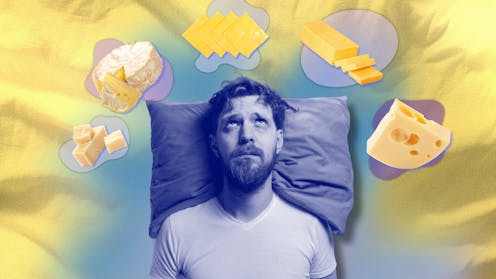
Phoenixns/Shutterstock, The Conversation, CC BY

Have you heard people say eating cheese before bed will cause you to have vivid dreams or nightmares?

It’s a relatively common idea. And this week, a new study has landed this suggestion back in the spotlight.

But is it true? Let’s unpack the evidence.

A gouda night’s sleep?

Canadian researchers recently investigated this idea in a sample of 1,082 undergraduate psychology students. The students completed a survey, which included questions about how they perceived their diet influenced their sleep and dreams.

Some 40% of participants reported certain foods impacted their sleep, with 25% of the whole sample claiming certain foods worsened their sleep, and 20% reporting certain foods improved their sleep.

Only 5.5% of respondents believed what they ate affected the nature of their dreams. But many of these people thought sweets or dairy products (such as cheese) made their dreams more strange or disturbing and worsened their sleep.

In contrast, participants reported fruits, vegetables and herbal teas led to better sleep.

This study used self-reporting, meaning the results rely on the participants recalling and reporting information about their sleep and dreams accurately. This could have affected the results.

It’s also possible participants were already familiar with the notion that cheese causes nightmares, especially given they were psychology students, many of whom may have studied sleep and dreaming.

This awareness could have made them more likely to notice or perceive their sleep was disrupted after eating dairy. In other words, the idea cheese leads to nightmares may have acted like a self-fulfilling prophecy and results may overestimate the actual likelihood of strange dreams.

Nonetheless, these findings show some people perceive a connection between what they eat and how they dream.

While there’s no evidence to prove cheese causes nightmares, there is evidence that does explain a link.

The science behind cheese and nightmares

Humans are diurnal creatures, meaning our body is primed to be asleep at night and awake during the day. Eating cheese before bed means we’re challenging the body with food at a time when it really doesn’t want to be eating.

At night, our physiological systems are not primed to digest food. For example, it takes longer for food to move through our digestive tract at night compared with during the day.

If we eat close to going to sleep, our body has to process and digest the food while we’re sleeping. This is a bit like running through mud – we can do it, but it’s slow and inefficient.

Cheese can be particularly challenging to digest at night because of high concentrations of fat and protein, which slows down our digestion.

If your body is processing and digesting food instead of focusing all its resources on sleep, this can affect your shut-eye. Research has shown eating close to bedtime reduces our sleep quality, particularly our time spent in rapid eye movement (REM) sleep, which is the stage of sleep associated with vivid dreams.

People will have an even harder time digesting cheese at night if they’re lactose intolerant, which might mean they experience even greater impacts on their sleep. This follows what the Canadian researchers found in their study, with lactose intolerant participants reporting poorer sleep quality and more nightmares.

It’s important to note we might actually have vivid dreams or nightmares every night – what could change is whether we’re aware of the dreams and can remember them when we wake up.

Poor sleep quality often means we wake up more during the night. If we wake up during REM sleep, research shows we’re more likely to report vivid dreams or nightmares that we mightn’t even remember if we hadn’t woken up during them.

This is very relevant for the cheese and nightmares question. Put simply, eating before bed impacts our sleep quality, so we’re more likely to wake up during our nightmares and remember them.

A woman sleeping.
What we eat, particularly just before bed, can affect our sleep.
Ivan Oboleninov/Pexels

Can I still have brie before bedtime?

Don’t panic – I’m not here to tell you to give up your cheesy evenings. But what we eat before bed can make a real difference to how well we sleep, so timing matters.

General sleep hygiene guidelines suggest avoiding meals at least two hours before bed. So even if you’re eating a very cheese-heavy meal, you have a window of time before bed to digest the meal and drift off to a nice peaceful sleep.

How about other dairy products?

Cheese isn’t the only dairy product which may influence our sleep. Most of us have heard about the benefits of having a warm glass of milk before bed.

Milk can be easier to digest than cheese. In fact, milk is a good choice in the evening, as it contains tryptophan, an amino acid that helps promote sleep.

Nonetheless, we still don’t want to be challenging our body with too much dairy before bed. Participants in the Canadian study did report nightmares after dairy, and milk close to bed might have contributed to this.

While it’s wise to steer clear of food (especially cheese) in the two hours before lights out, there’s no need to avoid cheese altogether. Enjoy that cheesy pasta or cheese board, just give your body time to digest before heading off to sleep. If you’re having a late night cheese craving, opt for something small. Your sleep (and your dreams) will thank you.

The Conversation

Charlotte Gupta does not work for, consult, own shares in or receive funding from any company or organisation that would benefit from this article, and has disclosed no relevant affiliations beyond their academic appointment.

ref. Does eating cheese before bed really give you nightmares? Here’s what the science says – https://theconversation.com/does-eating-cheese-before-bed-really-give-you-nightmares-heres-what-the-science-says-260205
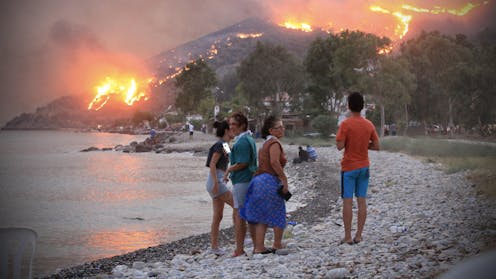
Experiencing extreme weather and disasters is not enough to change views on climate action, study shows

Source: The Conversation – Global Perspectives – By Omid Ghasemi, Research Associate in Behavioural Science at the Institute for Climate Risk & Response, UNSW Sydney

STR / AFP via Getty Images

Climate change has made extreme weather events such as bushfires and floods more frequent and more likely in recent years, and the trend is expected to continue. These events have led to human and animal deaths, harmed physical and mental health, and damaged properties and infrastructure.

Will firsthand experience of these events change how people think and act about climate change, making it seem immediate and local rather than a distant or future problem?

Research so far has offered a mixed picture. Some studies suggest going through extreme weather can make people more likely to believe in climate change, worry about it, support climate policies, and vote for Green parties. But other studies have found no such effects on people’s beliefs, concern, or behaviour.

New research led by Viktoria Cologna at ETH Zurich in Switzerland may help to explain what’s going on. Using data from around the world, the study suggests simple exposure to extreme weather events does not affect people’s view of climate action – but linking those events to climate change can make a big difference.

Global opinion, global weather

The new study, published in Nature Climate Change, looked at the question of extreme weather and climate opinion using two global datasets.

The first is the Trust in Science and Science-related Populism (TISP) survey, which includes responses from more than 70,000 people in 68 countries. It measures public support for climate policies and the extent that people think climate change is behind increases in extreme weather.

The second dataset estimates how much of each country’s population has been affected each year by events such as droughts, floods, heatwaves and storms. These estimates are based on detailed models and historical climate records.

Public support for climate policies

The survey measured public support for climate policy by asking people how much they supported five specific actions to cut carbon emissions. These included raising carbon taxes, improving public transport, using more renewable energy, protecting forests and land, and taxing carbon-heavy foods.

Responses ranged from 1 (not at all) to 3 (very much). On average, support was fairly strong, with an average rating of 2.37 across the five policies. Support was especially high in parts of South Asia, Africa, the Americas and Oceania, but lower in countries such as Russia, Czechia and Ethiopia.

Exposure to extreme weather events

The study found most people around the world have experienced heatwaves and heavy rainfall in recent decades. Wildfires affected fewer people in many European and North American countries, but were more common in parts of Asia, Africa and Latin America.

Cyclones mostly impacted North America and Asia, while droughts affected large populations in Asia, Latin America and Africa. River flooding was widespread across most regions, except Oceania.

Do people in countries with higher exposure to extreme weather events show greater support for climate policies? This study found they don’t.

In most cases, living in a country where more people are exposed to disasters was not reflected in stronger support for climate action.

Wildfires were the only exception. Countries with more wildfire exposure showed slightly higher support, but this link disappeared once factors such as land size and overall climate belief were considered.

In short, just experiencing more disasters does not seem to translate into increased support for mitigation efforts.

Seeing the link between weather and climate change

In the global survey, people were asked how much they think climate change has increased the impact of extreme weather over recent decades. On average, responses were moderately high (3.8 out of 5) suggesting that many people do link recent weather events to climate change.

Such an attribution was especially strong in Latin America, but lower in parts of Africa (such as Congo and Ethiopia) and Northern Europe (such as Finland and Norway).

Crucially, people who more strongly believed climate change had worsened these events were also more likely to support climate policies. In fact, this belief mattered more for policy support than whether they had actually experienced the events firsthand.

What does this study tell us?

While public support for climate policies is relatively high around the world, even more support is needed to introduce stronger, more ambitious measures. It might seem reasonable to expect that feeling the effects of climate change would push people to act, but this study suggests that doesn’t always happen.

Prior research shows less dramatic and chronic events like rainfall or temperature anomalies have less influence on public views than more acute hazards like floods or bushfires. Even then, the influence on beliefs and behaviour tends to be slow and limited.

This study shows climate impacts alone may not change minds. However, it also highlights what may affect public thinking: helping people recognise the link between climate change and extreme weather events.

In countries such as Australia, climate change makes up only about 1% of media coverage. What’s more, most of the coverage focuses on social or political aspects rather than scientific, ecological, or economic impacts.

Many stories about disasters linked to climate change also fail to mention the link, or indeed mention climate change at all. Making these connections clearer may encourage stronger public support for climate action.

The Conversation

Omid Ghasemi receives funding from the Australian Academy of Science. He was a member of the TISP consortium and a co-author of the dataset used in this study.

ref. Experiencing extreme weather and disasters is not enough to change views on climate action, study shows – https://theconversation.com/experiencing-extreme-weather-and-disasters-is-not-enough-to-change-views-on-climate-action-study-shows-260308

Antarctic research is in decline, and the timing couldn’t be worse

Source: The Conversation – Global Perspectives – By Elizabeth Leane, Professor of Antarctic Studies, School of Humanities, University of Tasmania

Oleksandr Matsibura/Shutterstock

Ice loss in Antarctica and its impact on the planet – sea level rise, changes to ocean currents and disturbance of wildlife and food webs – has been in the news a lot lately. All of these threats were likely on the minds of the delegates to the annual Antarctic Treaty Consultative Meeting, which finishes up today in Milan, Italy.

This meeting is where decisions are made about the continent’s future. These decisions rely on evidence from scientific research. Moreover, only countries that produce significant Antarctic research – as well as being parties to the treaty – get to have a final say in these decisions.

Our new report – published as a preprint through the University of the Arctic – shows the rate of research on the Antarctic and Southern Ocean is falling at exactly the time when it should be increasing. Moreover, research leadership is changing, with China taking the lead for the first time.

This points to a dangerous disinvestment in Antarctic research just when it is needed, alongside a changing of the guard in national influence. Antarctica and the research done there are key to everyone’s future, so it’s vital to understand what this change might lead to.

Why is Antarctic research so important?

With the Antarctic region rapidly warming, its ice shelves destabilising and sea ice shrinking, understanding the South Polar environment is more crucial than ever.

Ice loss in Antarctica not only contributes to sea level rise, but impacts wildlife habitats and local food chains. It also changes the dynamics of ocean currents, which could interfere with global food webs, including international fisheries that supply a growing amount of food.

Research to understand these impacts is vital. First, knowing the impact of our actions – particularly carbon emissions – gives us an increased drive to make changes and lobby governments to do so.

Second, even when changes are already locked in, to prepare ourselves we need to know what these changes will look like.

And third, we need to understand the threats to the Antarctic and Southern Ocean environment to govern it properly. This is where the treaty comes in.

What is the Antarctic Treaty?

The region below 60 degrees south is governed by the 1959 Antarctic Treaty, along with subsequent agreements. Together they are known as the Antarctic Treaty System.

Fifty-eight countries are parties to the treaty, but only 29 of them – called consultative parties – can make binding decisions about the region. They comprise the 12 original signatories from 1959, along with 17 more recent signatory nations that produce substantial scientific research relating to Antarctica.

This makes research a key part of a nation’s influence over what happens in Antarctica.

For most of its history, the Antarctic Treaty System has functioned remarkably well. It maintained peace in the region during the Cold War, facilitated scientific cooperation, and put arguments about territorial claims on indefinite hold. It indefinitely forbade mining, and managed fisheries.

Lately, however, there has been growing dysfunction in the treaty system.

Environmental protections that might seem obvious – such as marine protected areas and special protections for threatened emperor penguins – have stalled.

Because decisions are made by consensus, any country can effectively block progress. Russia and China – both long-term actors in the system – have been at the centre of the impasse.


Read more:
Antarctic summer sea ice is at record lows. Here’s how it will harm the planet – and us


What did our report find?

Tracking the amount of Antarctic research being done tells us whether nations as a whole are investing enough in understanding the region and its global impact.

It also tells us which nations are investing the most and are therefore likely to have substantial influence.

Our new report examined the number of papers published on Antarctic and Southern Ocean topics from 2016 to 2024, using the Scopus database. We also looked at other factors, such as the countries affiliated with each paper.

The results show five significant changes are happening in the world of Antarctic research.

  • The number of Antarctic and Southern Ocean publications peaked in 2021 and then fell slightly yearly through to 2024.
  • While the United States has for decades been the leader in Antarctic research, China overtook them in 2022.
  • If we look only at the high-quality publications (those published in the best 25% of journals) China still took over the US, in 2024.
  • Of the top six countries in overall publications (China, the US, the United Kingdom, Australia, Germany and Russia) all except China have declined in publication numbers since 2016.
  • Although collaboration in publications is higher for Antarctic research than in non-Antarctic fields, Russia, India and China have anomalously low rates of co-authorship compared with many other signatory countries.

Why is this research decline a problem?

A recent parliamentary inquiry in Australia emphasised the need for funding certainty. In the UK, a House of Commons committee report considered it “imperative for the UK to significantly expand its research efforts in Antarctica”, in particular in relation to sea level rise.

US commentators have pointed to the inadequacy of the country’s icebreaker infrastructure. The Trump administration’s recent cuts to Antarctic funding are only likely to exacerbate the situation. Meanwhile China has built a fifth station in Antarctica and announced plans for a sixth.

Given the nation’s population and global influence, China’s leadership in Antarctic research is not surprising. If China were to take a lead in Antarctic environmental protection that matched its scientific heft, its move to lead position in the research ranks could be positive. Stronger multi-country collaboration in research could also strengthen overall cooperation.

But the overall drop in global Antarctic research investment is a problem however you look at it. We ignore it at our peril.

The Conversation

Elizabeth Leane receives funding from the Australian Research Council, the Dutch Research Council, the Council on Australian and Latin American Relations DFAT and HX (Hurtigruten Expeditions). She has received in-kind support from Hurtigruten Expeditions in the recent past. The University of Tasmania is a member of the UArctic, which has provided support for this project.

Keith Larson is affiliated with the UArctic and European Polar Board. The UArctic paid for the development and publication of this report. The UArctic Thematic Network on Research Analytics and Bibliometrics conducted the analysis and developed the report. The Arctic Centre at Umeå University provided in-kind support for staff time on the report.

ref. Antarctic research is in decline, and the timing couldn’t be worse – https://theconversation.com/antarctic-research-is-in-decline-and-the-timing-couldnt-be-worse-260197

Our memories are unreliable, limited and suggestible – and it’s a good thing too

Source: The Conversation – Global Perspectives – By Nick Haslam, Professor of Psychology, The University of Melbourne

Shutterstock

Milan Kundera opens his novel The Book of Laughter and Forgetting with a scene from the winter of 1948. Klement Gottwald, leader of the Communist Party of Czechoslovakia, is giving a speech to the masses from a palace balcony, surrounded by fellow party members. Comrade Vladimir Clementis thoughtfully places his fur hat on Gottwald’s bare head; the hat then features in an iconic photograph.

Four years later, Clementis is found guilty of being a bourgeois nationalist and hanged. His ashes are strewn on a Prague street. The propaganda section of the party removes him from written history and erases him from the photograph.

“Nothing remains of Clementis,” writes Kundera, “but the fur hat on Gottwald’s head.”


Review: Memory Lane: The Perfectly Imperfect Ways We Remember – Ciara Greene & Gillian Murphy (Princeton University Press)


Efforts to enforce political forgetting are often associated with totalitarian regimes. The state endeavours to control not only its citizens, but also the past. To create a narrative that glorifies the present and idealises the future, history must be rewritten or even completely obliterated.

In a famous article on “the totalitarian ego”, the social psychologist Anthony Greenwald argued that individual selves operate in the same way. We deploy an array of cognitive biases to maintain a sense of control, and to shape and reshape our personal history. We distort the present and fabricate the past to ensure we remain the heroes of our life narratives.

Likening the individual to a destructive political system might sound extreme, but it has an element of truth. Memory Lane, a new book by Irish psychology researchers Ciara Greene and Gillian Murphy, shows how autobiographical memory has a capacity to rewrite history that is almost Stalinesque.

There is no shortage of books on memory, from self-help guides for the anxiously ageing to scholarly works of history. Memory Lane is distinctive for taking the standpoint of applied cognitive psychology. Emphasising how memory functions in everyday life, Greene and Murphy explore the processes of memory and the influences that shape them.

What memory is not

The key message of the book is that the memory system is not a recording device. We may be tempted to see memory as a vault where past experience is faithfully preserved, but in fact it is fundamentally reconstructive.

Memories are constantly revised in acts of recollection. They change in predictable ways over time, moulded by new information, our prior beliefs and current emotions, other people’s versions of events, or an interviewer’s leading questions.

According to Greene and Murphy’s preferred analogy, memory is like a Lego tower. A memory is initially constructed from a set of elements, but over time some will be lost as the structure simplifies to preserve the gist of the event. Elements may also be added as new information is incorporated and the memory is refashioned to align with the person’s beliefs and expectations.

The malleability of memory might look like a weakness, especially by comparison to digital records. Memory Lane presents it as a strength. Humans did not evolve to log objective truths for posterity, but to operate flexibly in a complex and changing world.

From an adaptive standpoint, the past only matters insofar as it helps us function in the present. Our knowledge should be updated by new information. We should assimilate experiences to already learned patterns. And we should be tuned to our social environment, rather than insulated from it.

“If all our memories existed in some kind of mental quarantine, separate from the rest of our knowledge and experiences,” the authors write, “it would be like using a slow, inefficient computer program that could only show you one file at a time, never drawing connections or updating incorrect impressions.”

Simplifying and discarding memories is also beneficial because our cognitive capacity is limited. It is better to filter out what matters from the deluge of past experiences than to be overwhelmed with irrelevancies. Greene and Murphy present the case of a woman with exceptional autobiographical memory, who is plagued by the triggering of obsolete memories.

Forgetting doesn’t merely de-clutter memory; it also serves emotional ends. Selectively deleting unpleasant memories increases happiness. Sanding off out-of-character experiences fosters a clear and stable sense of self.

“Hindsight bias” boosts this feeling of personal continuity by bringing our recollections into line with our current beliefs. Revisionist history it may be, but it is carried out in the service of personal identity.

‘Forgetting doesn’t merely de-clutter memory; it also serves emotional ends.’
Shutterstock

Eyewitness memories and misinformation

Memory Lane pays special attention to situations in which memory errors have serious consequences, such as eyewitness testimony. Innocent people can be convicted on the basis of inaccurate eyewitness identifications. An array of biases make these more likely and they are especially common in interracial contexts.

Recollections can also be influenced by the testimony of other witnesses, and even by the language used during questioning. In a classic study, participants who viewed videos of car accidents estimated the car’s speed as substantially faster when the cars were described as having “smashed” rather than “contacted”. These distortions are not temporary: new information overwrites and overrides the original memory.

Misinformation works in a similar way and with equally dire consequences, such as vaccination avoidance. False information not only modifies existing memories but can even produce false memories, especially when it aligns with our preexisting beliefs and ideologies.

Greene and Murphy present intriguing experimental evidence that false memories are prevalent and easy to implant. Children and older adults seem especially susceptible to misinformation, but no one is immune, regardless of education or intelligence.

Reassuringly, perhaps, digital image manipulation and deepfake videos are no more likely to induce false memories than good old-fashioned verbiage. A doctored picture may not be worth a thousand words when it comes to warping memory.

Memory Lane devotes some time to the “memory wars” of the 1980s and 1990s, when debate raged over the existence of repressed memories. Greene and Murphy argue the now mainstream view that many traumatic memories supposedly recovered in therapy were false memories induced by therapists. Memories for traumatic events are not repressed, they argue, and traumatic memories are neither qualitatively different from other memories, nor stored separately from them.

Here the science of memory runs contrary to the wildly popular claims of writers such as psychiatrist Bessel van der Kolk, author of the bestseller The Body Keeps the Score.


Read more:
The Body Keeps the Score: how a bestselling book helps us understand trauma – but inflates the definition of it


Psychology researchers Ciara Greene (left) and Gillian Murphy (right) want us to be humbler about our fallible memories.
Princeton University Press

Misunderstanding memory

The authors of Memory Lane contend that we hold memory to unrealistic standards of accuracy, completeness and stability. When people misremember the past or change their recollections, we query their honesty or mental health. When our own memories are hazy, we worry about cognitive decline.

Greene and Murphy argue that it is in the very nature of memory to be fallible, malleable and limited. This message is heartening, but it does not clarify why we would expect memory to be more capacious, coherent and durable in the first place. Nor does it explain why we persist with this wrongheaded expectation, despite so much evidence to the contrary.

The authors hint that our mistake might have its roots in dominant metaphors of memory. If we now understand the mind as computer-like, we will see memories as digital traces that sit, silent and unchanging, in a vast storage system.

“Many of the catastrophic consequences of memory distortion arise not because our individual memories are terrible,” they argue, “but because we have unrealistic expectations about how memory works, treating it as a video camera rather than a reconstruction.”

In earlier times, when memory was likened to a telephone switchboard or to books or, for the ancient Greeks, to wax tablets, memory errors and erasures may have seemed less surprising and more tolerable.

These shifting technological analogies, explored historically in Douwe Draaisma’s Metaphors of Memory, may partly account for our extravagant expectations for memory. Expecting silicon chip performance from carbon-based organisms, who evolved to care more about adaptation than truth, would be foolish.

But there is surely more to this than metaphor. All aspects of our lives are increasingly recorded and datafied, a process that demands objectivity, accuracy and consistency. The recorded facts of the matter determine who should be rewarded, punished and regulated. The bounded and mutable nature of human memory presents a challenge to this digital regime.

Human memory is also increasingly taxed by the overwhelming and accelerating volume of information that assails us. Our frustration with its limitations reflects the desperate mismatch we feel between human nature and the impersonal systems of data in which we live.

Greene and Murphy urge us to relax. We should be humbler about our memory, and more realistic and forgiving about the memories of others. We should not be judgemental about the errors and inconsistencies of friends, or overconfident about our own recollections. And we should remember that, although memory is fallible, it is fallible in beneficial ways.

A person whose memory system always kept an accurate record of our lives would be profoundly impaired, Greene and Murphy argue. Such a person “would struggle to plan for the future, learn from the past, or respond flexibly to unexpected events”. Brimming with insights such as these, Memory Lane offers an informative and readable account of how the apparent weaknesses of human memory may be strengths in disguise.

The Conversation

Nick Haslam receives funding from the Australian Research Council.

ref. Our memories are unreliable, limited and suggestible – and it’s a good thing too – https://theconversation.com/our-memories-are-unreliable-limited-and-suggestible-and-its-a-good-thing-too-258682

What did ancient Rome smell like? Honestly, often pretty rank

Source: The Conversation – Global Perspectives – By Thomas J. Derrick, Gale Research Fellow in Ancient Glass and Material Culture, Macquarie University

minoandriani/Getty Images

The roar of the arena crowd, the bustle of the Roman forum, the grand temples, the Roman army in red with glistening shields and armour – when people imagine ancient Rome, they often think of its sights and sounds. We know less, however, about the scents of ancient Rome.

We cannot, of course, go back and sniff to find out. But the literary texts, physical remains of structures, objects, and environmental evidence (such as plants and animals) can offer clues.

So what might ancient Rome have smelled like?

Honestly, often pretty rank

In describing the smells of plants, author and naturalist Pliny the Elder uses words such as iucundus (agreeable), acutus (pungent), vis (strong), or dilutus (weak).

None of that language is particularly evocative in its power to transport us back in time, unfortunately.

But we can probably safely assume that, in many areas, Rome was likely pretty dirty and rank-smelling. Property owners did not commonly connect their toilets to the sewers in large Roman towns and cities – perhaps fearing rodent incursions or odours.

Roman sewers were more like storm drains, and served to take standing water away from public areas.

Professionals collected faeces for fertiliser and urine for cloth processing from domestic and public latrines and cesspits. Chamber pots were also used, which could later be dumped in cesspits.

This waste disposal process was just for those who could afford to live in houses; many lived in small, non-domestic spaces, barely furnished apartments, or on the streets.

A common whiff in the Roman city would have come from the animals and the waste they created. Roman bakeries frequently used large lava stone mills (or “querns”) turned by mules or donkeys. Then there was the smell of pack animals and livestock being brought into town for slaughter or sale.

Animals were part of life in the Roman empire.
Marco_Piunti/Getty Images

The large “stepping-stones” still seen in the streets of Pompeii were likely so people could cross streets and avoid the assorted feculence that covered the paving stones.

Disposal of corpses (animals and human) was not formulaic. Depending on the class of the person who had died, people might well have been left out in the open without cremation or burial.

Bodies, potentially decaying, were a more common sight in ancient Rome than now.

Suetonius, writing in the first century CE, famously wrote of a dog carrying a severed human hand to the dining table of the Emperor Vespasian.

Deodorants and toothpastes

In a world devoid of today’s modern scented products – and daily bathing by most of the population – ancient Roman settlements would have smelt of body odour.

Classical literature has some recipes for toothpaste and even deodorants.

However, many of the deodorants were to be used orally (chewed or swallowed) to stop one’s armpits smelling.

One was made by boiling golden thistle root in fine wine to induce urination (which was thought to flush out odour).

The Roman baths would likely not have been as hygienic as they may appear to tourists visiting today. A small tub in a public bath could hold between eight and 12 bathers.

The Romans had soap, but it wasn’t commonly used for personal hygiene. Olive oil (including scented oil) was preferred. It was scraped off the skin with a strigil (a bronze curved tool).

This oil and skin combination was then discarded (maybe even slung at a wall). Baths had drains – but as oil and water don’t mix, it was likely pretty grimy.

Scented perfumes

The Romans did have perfumes and incense.

The invention of glassblowing in the late first century BCE (likely in Roman-controlled Jerusalem) made glass readily available, and glass perfume bottles are a common archaeological find.

Animal and plant fats were infused with scents – such as rose, cinnamon, iris, frankincense and saffron – and were mixed with medicinal ingredients and pigments.

The roses of Paestum in Campania (southern Italy) were particularly prized, and a perfume shop has even been excavated in the city’s Roman forum.

The trading power of the vast Roman empire meant spices could be sourced from India and the surrounding regions.

There were warehouses for storing spices such as pepper, cinnamon and myrrh in the centre of Rome.

In a recent Oxford Journal of Archaeology article, researcher Cecilie Brøns writes that even ancient statues could be perfumed with scented oils.

Sources frequently do not describe the smell of perfumes used to anoint the statues, but a predominantly rose-based perfume is specifically mentioned for this purpose in inscriptions from the Greek city of Delos (at which archaeologists have also identified perfume workshops). Beeswax was likely added to perfumes as a stabiliser.

Enhancing the scent of statues (particularly those of gods and goddesses) with perfumes and garlands was important in their veneration and worship.

An olfactory onslaught

The ancient city would have smelt like human waste, wood smoke, rotting and decay, cremating flesh, cooking food, perfumes and incense, and many other things.

It sounds awful to a modern person, but it seems the Romans did not complain about the smell of the ancient city that much.

Perhaps, as historian Neville Morley has suggested, to them these were the smells of home or even of the height of civilisation.

The Conversation

Thomas J. Derrick does not work for, consult, own shares in or receive funding from any company or organisation that would benefit from this article, and has disclosed no relevant affiliations beyond their academic appointment.

ref. What did ancient Rome smell like? Honestly, often pretty rank – https://theconversation.com/what-did-ancient-rome-smell-like-honestly-often-pretty-rank-257111

Gum disease, decay, missing teeth: why people with mental illness have poorer oral health

Source: The Conversation – Global Perspectives – By Bonnie Clough, Senior Lecturer, School of Applied Psychology, Griffith University

mihailomilovanovic/Getty Images

People with poor mental health face many challenges. One that’s perhaps lesser known is that they’re more likely than the overall population to have poor oral health.

Research has shown people with serious mental illness are four times more likely than the general population to have gum disease. They’re nearly three times more likely to have lost all their teeth due to problems such as gum disease and tooth decay.

Serious mental illnesses include major depressive disorder, bipolar disorder and psychotic disorders such as schizophrenia. These conditions affect about 800,000 Australians.

People living with schizophrenia have, on average, eight more teeth that are decayed, missing or filled than the general population.

So why does this link exist? And what can we do to address the problem?

Why is this a problem?

Oral health problems are expensive to fix and can make it hard for people to eat, socialise, work or even just smile.

What’s more, dental issues can land people in hospital. Our research shows dental conditions are the third most common reason for preventable hospital admissions among people with serious mental illness.

Meanwhile, poor oral health is linked with long-term health conditions such as diabetes, heart disease, some cancers, and even cognitive problems. This is because the bacteria associated with gum diseases can cause inflammation throughout the body, which affects other systems in the body.

Why are mental health and oral health linked?

Poor mental and oral health share common risk factors. Social factors such as isolation, unemployment and housing insecurity can worsen both oral and mental health.

For example, unemployment increases the risk of oral disease. This can be due to financial difficulties, reduced access to oral health care, or potential changes to diet and hygiene practices.

At the same time, oral disease can increase barriers to finding employment, due to stigma, discrimination, dental pain and associated long-term health conditions.

It’s clear the relationship between oral health and mental health goes both ways. Dental disease can reduce self-esteem and increase psychological distress. Meanwhile, symptoms of mental health conditions, such as low motivation, can make engaging in good oral health practices, including brushing, flossing, and visiting the dentist, more difficult.

And like many people, those with serious mental illness can experience significant anxiety about going to the dentist. They may also have experienced trauma in the past, which can make visiting a dental clinic a frightening experience.

Separately, poor oral health can be made worse by some medications for mental health conditions. Certain medications can interfere with saliva production, reducing the protective barrier that covers the teeth. Some may also increase sugar cravings, which heightens the risk of tooth decay.

A woman sits on the edge of a bed with her head in her hand.
Some medications people take for mental health conditions can affect oral health.
Gladskikh Tatiana/Shutterstock

Our research

In a recent study, we interviewed young people with mental illness. Our findings show the significant personal costs of dental disease among people with mental illness, and highlight the relationship between oral and mental health.

Smiling is one of our best ways to communicate, but we found people with serious mental illness were sometimes embarrassed and ashamed to smile due to poor oral health.

One participant told us:

[poor oral health is] not only [about] the physical aspects of restricting how you eat, but it’s also about your mental health in terms of your self-esteem, your self-confidence, and basic wellbeing, which sort of drives me to become more isolated.

Another said:

for me, it was that serious fear of – God my teeth are looking really crap, and in the past they’ve [dental practitioners] asked, “Hey, you’ve missed this spot; what’s happening?”. How do I explain to them, hey, I’ve had some really shitty stuff happening and I have a very serious episode of depression?

What can we do?

Another of our recent studies focused on improving oral health awareness and behaviours among young adults experiencing mental health difficulties. We found a brief online oral health education program improved participants’ oral health knowledge and attitudes.

Improving oral health can result in improved mental wellbeing, self-esteem and quality of life. But achieving this isn’t always easy.

Limited Medicare coverage for dental care means oral diseases are frequently treated late, particularly among people with mental illness. By this time, more invasive treatments, such as removal of teeth, are often required.

It’s crucial the health system takes a holistic approach to caring for people experiencing serious mental illness. That means we have mental health staff who ask questions about oral health, and dental practitioners who are trained to manage the unique oral health needs of people with serious mental illness.

It also means increasing government funding for oral health services – promotion, prevention and improved interdisciplinary care. This includes better collaboration between oral health, mental health, and peer and informal support sectors.

The Conversation

Amanda Wheeler is an investigator on a MetroSouth Health 2025 grant exploring use of Queensland Emergency Departments for people with mental ill-health seeking acute care for oral health problems.

Steve Kisely has received a grant on oral health from Metro South Research Foundation and one from the Medical Research Future Fund.

Bonnie Clough, Caroline Victoria Robertson, and Santosh Tadakamadla do not work for, consult, own shares in or receive funding from any company or organisation that would benefit from this article, and have disclosed no relevant affiliations beyond their academic appointment.

ref. Gum disease, decay, missing teeth: why people with mental illness have poorer oral health – https://theconversation.com/gum-disease-decay-missing-teeth-why-people-with-mental-illness-have-poorer-oral-health-258403

‘Shit in, shit out’: AI is coming for agriculture, but farmers aren’t convinced

Source: The Conversation – Global Perspectives – By Tom Lee, Senior Lecturer, School of Design, University of Technology Sydney

David Gray / AFP / Getty Images

Australian farms are at the forefront of a wave of technological change coming to agriculture. Over the past decade, more than US$200 billion (A$305 billion) has been invested globally into the likes of pollination robots, smart soil sensors and artificial intelligence (AI) systems to help make decisions.

What do the people working the land make of it all? We interviewed dozens of Australian farmers about AI and digital technology, and found they had a sophisticated understanding of their own needs and how technology might help – as well as a wariness of tech companies’ utopian promises.

The future of farming

The supposed revolution coming to agriculture goes by several names: “precision agriculture”, “smart farming”, and “agriculture 4.0” are some of the more common ones.

These names all gesture towards a future in which the relationships between humans, computing and nature have been significantly reconfigured. Perhaps remote sensing technology will monitor ever more of a farm system, autonomous vehicles will patrol it, and AI will predict crop growth or cattle weight gain.

But there’s another story to tell about the way technological change happens. It involves people and communities creating their own future, their own sense of important change from the past.

AI, country style

Our research team conducted more than 35 interviews with farmers, specifically livestock producers, from across Australia.

The dominant themes of their responses were captured in two pithy quotes: “shit in, shit out” and “more automation, less features”.

“Shit in, shit out” is an earthier version of the “garbage in, garbage out” adage in computer science. If the data going into a model is unreliable or overly abstract, then the outputs will be shaped by those errors.

This captured a real concern for many farmers. They didn’t feel they could trust new technologies if they didn’t understand what knowledge and information they had been built with.

A different kind of automation

On the other hand, “more automation, less features” is what farmers want: technologies that may not have a lot of bells and whistles, but can reliably take a task off their hands.

Australian farmers have a ready appetite for labour-saving technologies. When human bodies are scarce, as they often are in rural Australia, machines are created to fill the void.

Windmills, wire fences, and even the iconic Australian sheepdog have been a crucial part of the technological narrative of settler colonial farming. These things are not “autonomous” in the same way as computer-powered vehicles and drones, but they offer similar advantages to farmers.

What these classic farm technologies have in common is a simplicity that derives from a clarity of purpose. They are the opposite of the “everything apps” that fuel the dreams of many Silicon Valley entrepreneurs.

“More automation, less features” is in this sense a farmer envisaging a digital product that fits with their image of a useful technology: transparent in its operations, and a reliable replacement for or an addition to human labour.

The lesson of the Suzuki Sierra Stockman

When speaking with one farmer about favoured technologies of her lifetime, she mentioned the Suzuki Sierra Stockman. These small, no-frills, four-wheel-drive vehicles became something of an icon on Australian sheep and cattle farms through the 1970s, ‘80s and ’90s.

A 1993 ad for a Suzuki Sierra Stockman ute.
By the 1990s, the Suzuki Sierra Stockman had an iconic status among Australian farmers.
Turbo_J / Flickr

Reflecting on her memories of first using the vehicle, the farmer said:

Once I learnt that I could actually draft cattle out with the Suzuki, that changed everything. You could do exactly what you did on a horse with a vehicle.

It seems unlikely that Suzuki’s engineers in Japan envisaged their little jeep chasing cattle in the paddocks of Central West of NSW. The Suzuki was in a sense remade by farmers who found innovative uses for it.

Future technology must be simple, adaptable and reliable

The combustion engine was a key technological change on farms in the 20th century. Computers may play a similar role in the 21st.

We are perhaps yet to see a digital product as iconic as wire fences, windmills, sheepdogs and the Suzuki Stockman. Computers are still largely technologies of the office, not the paddock.

However, this is changing as computers get smaller and are wired into water tanks, soil monitors and in-paddock scales. More data input from these sensors means AI systems have more scope to help farmers make decisions.

AI may well become a much-loved tool for farmers. But that journey to iconic status will depend as much on how farmers adapt the technology as on how the developers build it. And we can guess at what it will look like: simple, adaptable and reliable.

The Conversation

This article is based on research conducted by the Foragecaster project, led by AgriWebb and supported by funding from Food Agility CRC Ltd, funded under the Commonwealth Government CRC Program. The CRC Program supports industry-led collaborations between industry, researchers and the community. This project was also supported by funding from Meat and Livestock Australia (MLA).

ref. ‘Shit in, shit out’: AI is coming for agriculture, but farmers aren’t convinced – https://theconversation.com/shit-in-shit-out-ai-is-coming-for-agriculture-but-farmers-arent-convinced-259997

Antarctic summer sea ice is at record lows. Here’s how it will harm the planet – and us

Source: The Conversation – Global Perspectives – By Edward Doddridge, Senior Research Associate in Physical Oceanography, University of Tasmania

An icebreaker approaches Denman Glacier in March, when there was 70% less Antarctic sea ice than usual. Pete Harmsen AAD

On her first dedicated scientific voyage to Antarctica in March, the Australian icebreaker RSV Nuyina found the area sea-ice free. Scientists were able to reach places never sampled before.

Over the past four summers, Antarctic sea ice extent has hit new lows.

I’m part of a large group of scientists who set out to explore the consequences of summer sea ice loss after the record lows of 2022 and 2023. Together we rounded up the latest publications, then gathered new evidence using satellites, computer modelling, and robotic ocean sampling devices. Today we can finally reveal what we found.

It’s bad news on many levels, because Antarctic sea ice is vital for the world’s climate and ecosystems. But we need to get a grip on what’s happening – and use this concerning data to prompt faster action on climate change.

Sea ice around Antarctica waxes and wanes with the seasons, growing in the cold months and melting in warm ones. But this rhythmic cycle is changing.

What we did and what we found

Our team used a huge range of approaches to study the consequences of sea ice loss.

We used satellites to understand sea ice loss over summer, measuring everything from ice thickness and extent to the length of time each year when sea ice is absent.

Satellite data was also used to calculate how much of the Antarctic coast was exposed to open ocean waves. We were then able to quantify the relationship between sea ice loss and iceberg calving.

Data from free-drifting ocean robots was used to understand how sea ice loss affects the tiny plants that support the marine food web.

Every other kind of available data was then harnessed to explore the full impact of sea ice changes on ecosystems.

Voyage reports from international colleagues came in handy when studying how sea ice loss affected Antarctic resupply missions.

We also used computer models to simulate the impact of dramatic summer sea ice loss on the ocean.

In summary, our extensive research reveals four key consequences of summer sea ice loss in Antarctica.

1. Ocean warming is compounding

Bright white sea ice reflects about 90% of the incoming energy from sunlight, while the darker ocean absorbs about 90%. So if there’s less summer sea ice, the ocean absorbs much more heat.

This means the ocean surface warms more in an extreme low sea ice year, such as 2016 – when everything changed.

Until recently, the Southern Ocean would reset over winter. If there was a summer with low sea ice cover, the ocean would warm a bit. But over winter, the extra heat would shift into the atmosphere.

That’s not working anymore. We know this from measuring sea surface temperatures, but we have also confirmed this relationship using computer models.

What’s happening instead is when summer sea ice is very low, as in 2016, it triggers ocean warming that persists. It takes about three years for the system to fully recover. But recovery is becoming less and less likely, given warming is building from year to year.

Artwork illustrating the consequences of sea ice loss around Antarctica, showing more warming, and less area available to wildlife
Comparing an average sea ice summer (a) to an extreme low sea ice summer (b) in which there is less sea ice for wildlife and more sunlight is absorbed by the ocean. The ice shelf is more exposed to ocean waves, calving more icebergs. The ocean is also less productive and tourist vessels can make a closer approach.
Doddridge, E., W., et al. (2025) PNAS Nexus., CC BY-NC-ND

2. More icebergs are forming

Sea ice protects Antarctica’s coast from ocean waves.

On average, about a third of the continent’s coastline is exposed over summer. But this is changing. In 2022 and 2023, more than half of the Antarctic coast was exposed.

Our research shows more icebergs break away from Antarctic ice sheets in years with less sea ice. During an average summer, about 100 icebergs break away. Summers with low sea ice produce about twice as many icebergs.

A wave hits the Antarctic ice sheet, causing ice to break off into the ocean
Antarctic ice sheets without sea ice are more exposed to waves.
Pete Harmsen AAD

3. Wildlife squeezed off the ice

Many species of seals and penguins rely on sea ice, especially for breeding and moulting.

Entire colonies of emperor penguins experienced “catastrophic breeding failure” in 2022, when sea ice melted before chicks were ready to go to sea.

After giving birth, crabeater seals need large, stable sea ice platforms for 2–3 weeks until their pups are weaned. The ice provides shelter and protection from predators. Less summer sea-ice cover makes large platforms harder to find.

Many seal and penguin species also take refuge on the sea ice when moulting. These species must avoid the icy water while their new feathers or fur grows, or risk dying of hypothermia.

4. Logistical challenges at the end of the world

Low summer sea ice makes it harder for people working in Antarctica. Shrinking summer sea ice will narrow the time window during which Antarctic bases can be resupplied over the ice. These bases may soon need to be resupplied from different locations, or using more difficult methods such as small boats.

An icebreaker delivers supplies to the Antarctic base
Supply ships typically unload their cargo directly onto the sea ice, but that may have to change.
Jared McGhie, Australian Antarctic Division

No longer safe

Anarctic sea ice began to change rapidly in 2015 and 2016. Since then it has remained well below the long-term average.

The dataset we use relies on measurements from US Department of Defense satellites. Late last month, the department announced it would no longer provide this data to the scientific community. While this has since been delayed to July 31, significant uncertainty remains.

One of the biggest challenges in climate science is gathering and maintaining consistent long-term datasets. Without these, we don’t accurately know how much our climate is changing. Observing the entire Earth is hard enough when we all work together. It’s going to be almost impossible if we don’t share our data.

A chart showing the variation in Antarctic sea ice extent compared to the long-term average, trending towards less sea ice since 2016.
Antarctic sea ice extent anomalies (the difference between the long-term average and the measurement) for the entire satellite record since the late 1970s.
Edward Doddridge, using data from the US NSIDC Sea Ice Index, version 3., CC BY

Recent low sea ice summers present a scientific challenge. The system is currently changing faster than our scientific community can study it.

But vanishing sea ice also presents a challenge to society. The only way to prevent even more drastic changes in the future is to rapidly transition away from fossil fuels and reach net zero emissions.

The Conversation

Edward Doddridge receives funding from the Australian Research Council.

ref. Antarctic summer sea ice is at record lows. Here’s how it will harm the planet – and us – https://theconversation.com/antarctic-summer-sea-ice-is-at-record-lows-heres-how-it-will-harm-the-planet-and-us-256104

Distressed by all the bad news? Here’s how to stay informed but still look after yourself

Source: The Conversation – Global Perspectives – By Reza Shabahang, Research Fellow in Human Cybersecurity, Monash University and Academic Researcher in Media Psychology, Flinders University

KieferPix/Shutterstock

If you’re feeling like the news is particularly bad at the moment, you’re not alone.

But many of us can’t look away – and don’t want to. Engaging with news can help us make sense of what’s going on and, for many of us, is an ethical stance.

So, how can you also take care of your mental health? Here’s how to balance staying informed with the impact negative news can have on our wellbeing.

Why am I feeling so affected by the news?

Our brains are wired to prioritise safety and survival, and respond rapidly to danger. Repeatedly activating such processes by consuming distressing news content – often called doomscrolling – can be mentally draining.

Unfiltered or uncensored images can have an especially powerful psychological impact. Graphic footage of tragedies circulating on social media may have a stronger effect than traditional media (such as television and newspapers) which are more regulated.

Research shows consuming negative news is linked to lower wellbeing and psychological difficulties, such as anxiety and feelings of uncertainty and insecurity. It can make us feel more pessimistic towards ourselves, other people, humanity and life in general.

In some cases, consuming a lot of distressing news can even cause vicarious trauma. This means you may experience post-traumatic stress symptoms such as flashbacks and trouble sleeping despite not being directly involved in the traumatic events.

But this doesn’t stop us seeking it out. In fact, we are more likely to read, engage with, and share stories that are negative.

Is there a better way to consume news?

Switching off may not be an option for everyone.

For example, if you have friends or family in areas affected by conflict, you may be especially concerned and following closely to see how they’re affected.

Even without personal ties to the conflict, many people want to stay informed and understand what is unfolding. For some, this is a moral decision which they feel may lead to action and positive change.

This is why, in research I co-authored, we suggest simply restricting your exposure to negative news is not always possible or practical.

Instead, we recommend engaging more mindfully with news. This means paying attention to shifts in your emotions, noticing how the news makes you feel, and slowing down when needed.

How to consume news more mindfully

When you plan to engage with news, there are some steps you can take.

1. Pause and take a few deep breaths. Take a moment to observe how your body is feeling and what your mind is doing.

2. Check in. Are you feeling tense? What else do you have going on today? Maybe you’re already feeling worried or emotionally stretched. Think about whether you’re feeling equipped to process negative news right now.

3. Reflect. What is motivating you to engage right now? What are you trying to find out?

4. Stay critical. As you read an article or watch a video, pay attention to how credible the source is, the level of detail provided and where the information comes from.

5. Tune into how it’s making you feel. Do you notice any physical signs of stress, such as tension, sweating or restlessness?

6. Take time. Before quickly moving on to another piece of news, allow yourself to process the information you’ve received as well as your response. Has it changed your emotions, thoughts or attitudes? Did it fulfil your intention? Do you still have energy to engage with more news?

It may not always be possible to take all these steps. But engaging more mindfully before, during and after you’re exposed to negative news can help you make more informed decisions about how and when to consume it – and when to take a break.

Signs the news is affecting your mental health

If you’re feeling emotionally overwhelmed, you’re more likely to have an automatic and emotion-driven response to what you’re reading or watching.

Signs your negative news consumption may be affecting your mental health include:

  • compulsive engagement, feeling like you can’t stop checking or following negative news

  • experiencing feelings of despair, hopelessness, or lack of motivation

  • feeling irritable

  • difficulty concentrating

  • fatigue

  • strong physical symptoms (such as an upset stomach)

  • trouble sleeping

  • an increase in rash or risky behaviours, or behaviours you don’t usually display when you’re calm, such as panic shopping and hoarding following news about bad events.

What should I do when I’m feeling upset?

First, take a break. This could be a few minutes or a few days – as long as it takes you to feel emotionally steady and ready to re-engage with negative news.

You might find it useful to reflect by writing down observations about how news is making you feel, and keeping track of intense fluctuations in emotions.

It can also be helpful to connect with supportive people around you and do activities you enjoy. Spending time outdoors and doing hands-on tasks, such as gardening, painting or sewing, can be particularly helpful when you’re feeling anxious or emotional.

But if you’re feeling overwhelmed and it’s affecting your work, life or relationships, it’s a good idea to seek professional help.

In Australia, the government provides free mental health support at walk-in Medicare Mental Health Centres, Kids Hubs or via phone.

Other free resources – including a symptom checker and links to online chat support – are available at Health Direct.


If this article has raised issues for you, or if you’re concerned about someone you know, call Lifeline on 13 11 14.

The Conversation

Reza Shabahang does not work for, consult, own shares in or receive funding from any company or organisation that would benefit from this article, and has disclosed no relevant affiliations beyond their academic appointment.

ref. Distressed by all the bad news? Here’s how to stay informed but still look after yourself – https://theconversation.com/distressed-by-all-the-bad-news-heres-how-to-stay-informed-but-still-look-after-yourself-259913

Trump demands an end to the war in Gaza – could a ceasefire be close?

Source: The Conversation – Global Perspectives – By Marika Sosnowski, Postdoctoral research fellow, The University of Melbourne

Anas-Mohammed/Shutterstock

Hopes are rising that Israel and Hamas could be inching closer to a ceasefire in the 20-month war in Gaza.

US President Donald Trump is urging progress, taking to social media to demand:

MAKE THE DEAL IN GAZA. GET THE HOSTAGES BACK!!!

Trump further raised expectations, saying there could be an agreement between Israel and Hamas “within the next week”.

But what are the prospects for a genuine, lasting ceasefire in Gaza?

Ceasefires are generally complicated to negotiate because they need to take into account competing demands and pressures. They usually (but not always) require both sides to compromise.

Gaza is no exception. In a conflict that has been going on for more than 70 years, compromise and concession have become a game of cat and mouse.

Israel is the cat that holds the military strength and the majority of the political power. Hamas is the mouse that can dart and delay, but in the end has little choice but to accept the terms of a ceasefire if it wants to halt the violence currently being inflicted on Palestinians.

Trump the peacemaker?

Trump appears buoyed by what he perceives as the recent success of his efforts to broker a truce in the Israel–Iran war. He may think he can use similar tactics to pressure Israeli Prime Minister Benjamin Netanyahu into making a ceasefire deal for Gaza.

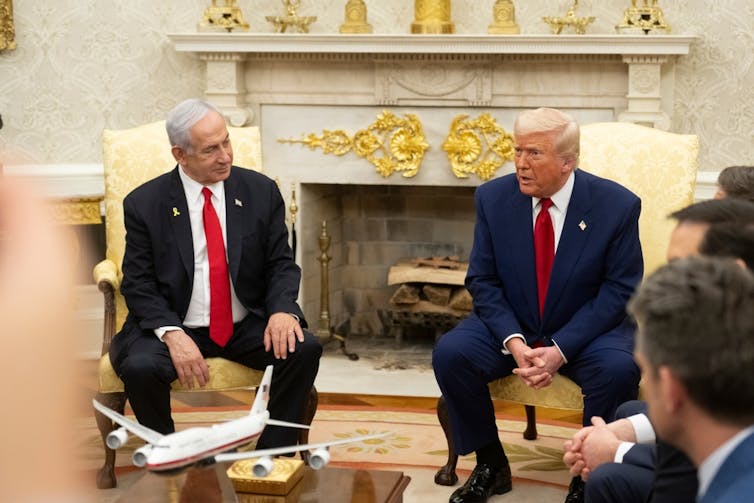
Donald Trump and Benjamin Netanyahu seated  in the Oval Office.
US President Donald Trump has posted on social media that Israeli Prime Minister Benjamin Netanyahu is negotiating a deal with Hamas ‘right now’.
noamgalai/Shutterstock

Netanyahu will return to Washington next week for talks at the White House. This is a good sign some US pressure is being brought to bear.

Trump’s current push for a Gaza ceasefire may also signal he is keen for a return to the normalisation of economic ties previously delivered by the Abraham Accords between Israel and various Arab states. A ceasefire could unlock frozen regional relationships, potentially boosting the US economy (and Trump’s own personal wealth).

Israeli opportunities

Another positive sign a ceasefire may be on the cards is Netanyahu’s recent comments that the war with Iran had created opportunities for Israel in Gaza.

During its 12-day war with Iran, Israel assassinated 30 Iranian security chiefs and 11 nuclear scientists. Iran’s weakened security apparatus might disrupt its support for Hamas and help advance Israeli objectives.

Similar to what happened in Iran, this might enable Netanyahu to publicly declare Israeli victory in Gaza and agree to a ceasefire without losing face or political backing from his government’s right wing.

Domestic Israeli politics have also played a role in the Gaza ceasefire negotiations. As part of the current round, Trump reportedly demanded the cancellation of Netanyahu’s ongoing trial on corruption charges. The idea is to enable Netanyahu to reach a ceasefire without the threat of criminal conviction, and potentially prison, awaiting him afterwards.

Given there are no political or legal prescriptions or rules around what terms need to be included in a ceasefire, it is possible for such a demand to be made, although it is unclear how it would be accommodated by Israeli law.

Difficult terms

The current ceasefire deal, as proposed by Qatar and Egypt, seems to pick up where the deal negotiated in January fell apart – with a 60-day ceasefire.

Reports suggest it requires Hamas’ leadership to go into exile and that four Arab states, including the United Arab Emirates and Egypt, would be tasked with jointly governing Gaza.

Hamas has said for many months that it is open to a
more permanent ceasefire deal that Israel has so far refused. However, the proposed terms appear too far-reaching to make it likely Hamas would accept them in their current form.

The uptick in Israel’s military bombardment, as well as recent evacuation orders for parts of northern Gaza, suggest that even if there is a deal it may well mean Israel retains permanent territorial control of the northern Gaza Strip.

As part of any ceasefire, it also seems likely Israel would retain control over all Gaza crossings.

This, and the ongoing highly problematic promotion by Israel and the United States of the Gaza Humanitarian Foundation as the only organisation authorised to deliver and administer aid in Gaza, will be difficult for Hamas, and Palestinians, to accept.

Dozens of displaced Palestinian men carrying bags of flour on their shoulders.
Displaced Palestinians carrying bags of flour distributed by the controversial Gaza Humanitarian Foundation.
Haitham Imad/Shutterstock

There have also been reports a deal would enable Gazans wishing to emigrate to be absorbed by several as-yet-unnamed countries. Such a term would continue the Trump administration’s earlier calls for the forced displacement of Palestinians from Gaza, as well as Israel’s insistence such displacement would be a humanitarian initiative rather than a war crime.

It would also not be the first time the terms of a ceasefire were used to forcibly displace civilian populations.

Hope for the future?

Many dynamics are wrapped up in getting to a ceasefire in Gaza.

They include US allyship and pressure, domestic Israeli politics, and the recent war between Israel and Iran. There is also the international opprobrium of Israel’s actions in Gaza which, for public (if not legal) purposes, amount to a genocide.

Ideally, any negotiated ceasefire would have detailed terms to ensure the parties know what they should do and when. Detailed terms would also enable international actors and other third parties to denounce any violations of the deal.

However, a ceasefire would only ever be a short-term win. In the best case, it would enable a reduction in violence and an increase of aid into Gaza, and the release of Israeli hostages and Palestinian prisoners.

However, amid the deep-seated sense of injustice and anxiety in the region, any ceasefire that does not address historic oppression and is forced on the parties would inevitably have deleterious consequences in the months and years to come.

The Conversation

Marika Sosnowski does not work for, consult, own shares in or receive funding from any company or organisation that would benefit from this article, and has disclosed no relevant affiliations beyond their academic appointment.

ref. Trump demands an end to the war in Gaza – could a ceasefire be close? – https://theconversation.com/trump-demands-an-end-to-the-war-in-gaza-could-a-ceasefire-be-close-260185