Hundreds of years ago, it was common for married couples among the European upper classes to have separate bedrooms. Sleeping separately was a symbol of luxury and status historically reserved for royalty and the very wealthy.
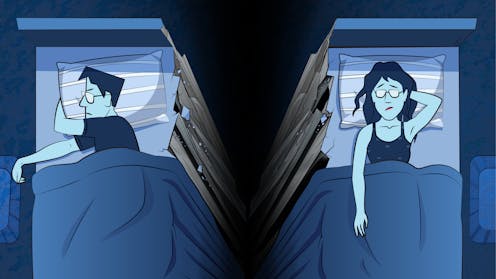
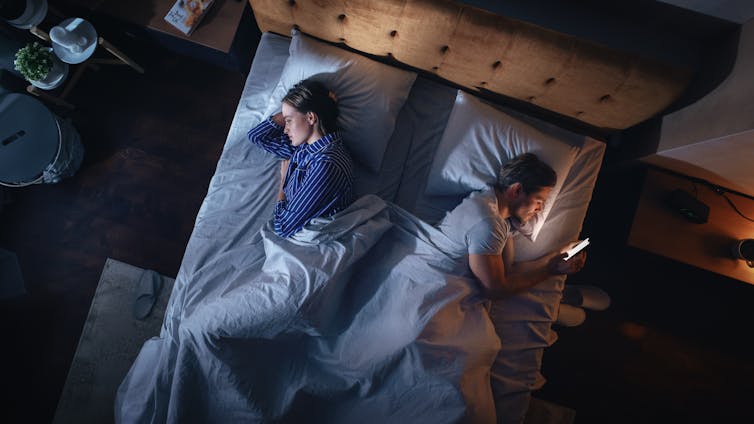
Nowadays, it’s common for married couples and other couples in relationships to sleep in the same bed. But sometimes – for reasons from conflicting schedules to snoring to sleep talking – couples might choose to sleep separately in pursuit of a better night’s sleep.
This is known as “sleep divorce”. Though I prefer the term “sleep separation”, as this doesn’t have to be a permanent arrangement – but more on that later.
So why might couples choose to sleep separately? And what does the evidence say about the effects on sleep quality if you sleep alone versus with a partner?
Why do couples opt for a sleep separation?
Couples may choose to sleep apart if one partner’s sleep is disturbing the other’s, or both are disrupting one another. This can happen for a variety of reasons.
These include waking up frequently in the night, mismatched body clocks (for example, one person coming to bed later than the other), conflicting schedules (for example, shift workers), snoring, twitching legs or sleep talking.
Parents with babies and young children may choose to sleep separately to avoid both partners’ sleep being disturbed.
Those with conflicting preferences for sleeping environments, such as one partner liking a cool room with a fan and the other preferring warmth, may also decide to sleep apart.
What are the benefits of sleeping alone?
Many couples say they prefer to sleep – and sleep better – next to their partner.
But when scientists measure sleep objectively, such as via an electroencephalogram (EEG) to assess brain waves, the data actually shows poorer sleep quality when co-sleeping. So sleeping alone may, in fact, mean better quality and longer sleep.
Research also shows when one member of the couple has a sleep disorder, such as insomnia or sleep apnoea (where breathing is frequently interrupted during sleep), these people often inadvertently wake up their partnerwhen they wake in the night. So sleeping alone could be a good idea if your bed partner has a sleep disorder.
Finally, anyone who has struggled with their sleep will know anxiety around sleep is common. Many clients I have seen who experience insomnia report sleeping alone can alleviate some of their anxiety because at least they know they won’t disturb, or be disturbed by, their partner.
Are there any downsides to separate sleeping arrangements?
Some people dislike sleeping alone, reporting comfort, and feelings of safety and protection when sleeping alongside their partner – and loneliness when they don’t.
Sleeping separately also requires two rooms, or at least two beds. Many couples may not have these options available to them in their home.
Sleeping separately is often stigmatised, with some people seeing it as the death of a couple’s sex life. But while sleeping in separate beds may provide fewer opportunities for sex, this doesn’t necessarily mean the end of intimacy.
Sleeping apart could mean some couples actually have more sex. We know better sleep is linked to more positive feelings about relationships, so it’s possible the desire to be intimate could increase after a good night’s sleep in separate beds. Sleeping apart may even mean some couples have more energy to be intimate.
Nonetheless, if you choose to sleep separately from your partner, it’s important to have an open discussion and prioritise opportunities for connection and intimacy. One client I worked with referred to “visiting rights” where her partner came into her bed for a short period before sleep or in the morning.
Who should potentially consider a sleep separation?
You may wish to think about a “sleep separation” if you are disturbing each other’s sleep, have young children, or have different preferences in terms of temperature, light and noise, which are causing issues.
Ultimately, if sleeping in the same bed is leading to poor sleep then sleeping apart, if it’s possible, could help.
If you can’t sleep separately there may be other ways to reduce disturbance from a partner such as using an eye mask, white noise or earplugs.
If you decide to try a sleep separation, remember this can be a flexible arrangement or “re-set” and doesn’t have to be permanent, or every night. Some couples find sleeping separately during the working week but sharing a bed on the weekend works well for them.
Lastly, it’s important to talk to your GP about any persistent sleep problems, such as snoring, insomnia, or unusual behaviour during sleep (for example, shouting or walking around), as there may be an underlying sleep disorder which needs treating.
Alix Mellor works for the Monash University Healthy Sleep Clinic at the Turner Clinics as a provisional psychologist.
Source: The Conversation – Global Perspectives – By Samantha Chan, Immunology and Allergy Lead, Snow Centre for Immune Health, WEHI (Walter and Eliza Hall Institute of Medical Research)
As the number of people with allergies grows worldwide, scientists are trying to work out precisely how and why these conditions – such as asthma and eczema – develop.
One long-standing idea is the “hygiene hypothesis”. This suggests our modern indoor lifestyles are to blame, as they limit our early exposure to germs and allergens which help train the immune system.
But growing evidence suggests having a pet may counter this effect. As any pet owner knows, our furry friends bring a lot of mess, germs and fur into our homes – along with the cuddles.
So, does spending time with animals lower children’s risk of allergies? Here’s what we know.
How allergies develop
During early childhood, our immune systems learn what to attack and what to ignore to stop us getting sick.
Evidence suggests early exposure – to family members, food, germs, dust, dirt, pollen and pet dander (skin flakes) – shapes this immune response.
Allergic conditions develop when the immune system overreacts to harmless substances, such as dust, pollen or certain foods. These reactions can affect the skin, airways and gut.
Dogs bring both love and mess – which might be just what a developing immune system needs. Samantha Chan/Author provided, CC BY-NC-ND
However, we still don’t fully understand why some people develop allergies while others don’t.
Scientists have identified genes linked to allergic conditions. But most have subtle effects on the immune system and act as “risk factors” – they increase the chance of disease but don’t cause it outright.
Recent research suggests exposure to bacteria in our environment could be another major factor.
From birth, our bodies are colonised by bacteria, especially in the gut. This community of microorganisms is known as the microbiome.
Ongoing “crosstalk” between the microbiome and immune system is crucial for healthy immune function. When this balance is disturbed, it can contribute to inflammation and disease.
The effect of our early environment
In the last few decades, studies of children raised on farms gave us some of the first clues that early environments can affect allergy risk.
Compared to children raised in cities, children on farms are less likely to have allergic conditions such as eczema and asthma. This is especially true of those in close contact with animals.
Notably, farm-raised children tend to develop a more diverse microbiome than children raised in urban environments. This may help make their immune system more tolerant to foreign substances (such as bacteria and dirt) and less likely to develop allergies.
However, across the world children are increasingly living in urban areas.
This means a pet may be the closest contact they have with animals. So, does this still lower their risk of developing allergies?
Some studies indicate children with pets may be less likely to have allergies.
However this evidence hasn’t always been easy to interpret.
It can be difficult to tell whether lower allergy rates are due to the pets themselves or other factors, such as location, lifestyle or a family history of allergies.
A review of results from 23 studies found children exposed to dogs early in life were significantly less likely to develop eczema.
Another 2025 study analysed genetic data from more than 270,000 people. It found a gene linked to eczema only increased risk of eczema in children who hadn’t been exposed to dogs.
This suggests early dog exposure may help protect children who are genetically more likely to develop eczema.
What about asthma?
When it comes to asthma, the story gets trickier.
One 2001 study followed more than 1,000 children in the United States from birth to age 13. It found those living with dogs indoors were less likely to develop frequent wheezing – a common asthma symptom – but only if they didn’t have a family history of asthma.
A Korean study from 2021 found those who had dogs during childhood were less likely to develop allergies. But they had a slightly higher risk of non-allergic wheeze — a type of breathing difficulty usually caused by airway irritation or infections (not allergens).
This suggests while growing up with a dog may protect against allergic conditions, such as asthma, it may increase the chance of certain non-allergic respiratory symptoms.
What about cats?
It’s challenging to tease apart the specific effects of cats versus dogs, since many early studies grouped all furry pets together.
But in studies that have looked at them separately, living with cats didn’t seem to reduce allergy risk.
One potential reason is cats and dogs carry very different microbes, which may influence how they shape the household environment.
If you’re already thinking about getting a dog, there’s decent evidence early exposure could reduce your child’s risk of eczema, and possibly other allergic conditions too.
It’s not a guarantee, but a potential bonus – alongside companionship, joy and never having to worry about what to do with leftovers.
And if a dog’s not on the cards, don’t worry. Spending time outdoors, encouraging messy play, and avoiding overuse of disinfectants can all help build a more resilient immune response.
Samantha Chan has served on advisory boards for CSL Behring. She is in receipt of funding from the Allergy and Immunology Foundation Australia and Walter & Eliza Hall Institute. She is affiliated with the Australasian Society of Clinical Immunology and Allergy, American Academy of Allergy, Asthma, and Immunology and European Academy of Allergy and Clinical Immunology. She is a physician for the Snow Centre for Immune Health, funded by the Snow Medical Research Foundation.
In the past five years, Jo Douglass has served on advisory boards, provided advice or undertaken presentations on behalf of Astra-Zeneca P/L, GSK, CSL, Stallergenes, Immunosis P/L , Novartis and Sanofi. She is in receipt of funding from the Medical Research Future Fund for studies in allergic asthma. She is a clinical co-director of the Snow Centre for Immune Health, funded by the Snow Medical Research Foundation.
The “mushroom murder trial”, as it has popularly become known, has gripped Australia over the past 11 weeks. More than that, it’s prompted worldwide headlines, multiple daily podcasts, and even YouTube videos of self-proclaimed “body language experts” assessing defendant Erin Patterson’s every move.
There’s an ABC drama series in the works. Acclaimed Australian author Helen Garner has been in the courtroom.
But why did this tragedy, in which three people died and a fourth was lucky to survive, grip the public consciousness in way no other contemporary Australian case has?
On July 29 2023, in a sleepy town called Leongatha in the foothills of the Strzelecki Ranges in Victoria, a very normal woman called Erin Patterson made an ostensibly very normal lunch of beef Wellington.
She was cooking for her in-laws, Gail and Don Patterson, Gail’s sister Heather Wilkinson, and Heather’s husband Ian. Erin’s estranged husband, Simon Patterson, was also invited, but chose not to attend.
Simon and Erin had two children, a boy and a girl, who did not attend the lunch either.
Shortly after the lunch, all four guests were admitted to hospital with suspected gastroenteritis. Erin Patterson also presented to hospital, but refused to be admitted.
Within a few days, Gail, Don, and Heather all died as a result of what was later confirmed as poisoning with Amanita phalloides, better known as death cap mushrooms.
Ian survived, but he was lucky. He spent seven weeks in hospital and needed a liver transplant.
The questions became, how did the mushrooms get into the beef Wellington? Was this an awful accident or something more sinister?
Public obsession
These questions became the focus of very significant public and media attention.
Erin Patterson spoke to the media in the days after the incident. She presented as your typical, average woman of 50.
That is, in my opinion, where the obsession with this case began.
This case had the feel of a Shakespearean drama: multiple deaths within one family, death by poison, and a female protagonist.
The juxtaposition between the normality of a family lunch (and the sheer vanilla-ness of the accused) and the seriousness of the situation sent the media into overdrive.
Then there were the lies. Patterson lied about foraging for mushrooms, and about having cancer to encourage the guests to attend.
The location also played a huge part. Leongatha is known for its staggering natural beauty and thriving food and wine scene. It’s hardly a place where the world expected a mass murderer to live.
However, the perception that rural areas are utopias of safety and social cohesion, and cities are dark and dangerous places, is a myth.
One study by the Australian Institute of Health and Welfare paints a different picture.
For serious assault cases that resulted in hospitalisation, for major cities the rates were 65 per 100,000 people. In rural areas, this rose to 1,244 people per 100,000. And for murder, in very remote areas the rate was five per 100,000 population, but fewer than one per 100,000 in urban areas.
Then there was Erin Patterson’s unusual behaviour. She disposed of the desiccator in which the mushrooms she had foraged were dehydrated. She used multiple phones, one of which underwent multiple factory resets on in the days following the lunch. One of these resets was done remotely after police seized her phone.
There are also the much-discussed plates. The court heard she prepared her meal on a different-coloured plate to those of her other guests so they were easily identifiable.
The public latched onto these details, each providing a new talking point around water coolers or spurring new Reddit threads dedicated to unpacking their significance.
The courtroom as a stage
Ultimately, after three months, Erin Patterson was charged with three counts of murder and one count of attempted murder. She pleaded not guilty.
The trial lasted 40 days. The prosecution alleged Patterson intentionally poisoned her guests, whereas the defence suggested it was all an awful, tragic accident.
The jury took six and a half days to deliberate. During that time, various media outlets did everything they could to keep the story on the front page.
Bizarre pieces began appearing online from credible sources such as the ABC, profiling people who had attended court. They included stories of people turning down work to attend the court daily, cases of friendships blossoming during the trial between regular attendees, and the outfit choices of locals turning up every day to watch the drama unfold.
There were also articles profiling local cafe owners and how they felt about being at the centre of the legal theatrics. The daily podcasts continued even when news from the courtroom didn’t.
The vibe felt more appropriate for a royal visit than a triple murder trial.
It seemed everyone in Australia was gripped by one event, united in a way few other things could manage. We all waited with bated breath to see what the 12 men and women of the jury would decide.
The end to this strange and unique criminal case came on Monday July 7.
The result? Guilty on all four counts. Erin Patterson is formally a mass murderer, though many in the court of public opinion had reached the same conviction months earlier.
Leongatha will always be known for being the setting of (arguably) the most infamous multiple murder case in Australian history. It will join Snowtown in South Australia (home of the “bodies in the barrell” murder case), Kendall in New South Wales (where William Tyrrell disappeared), and Claremont in Western Australia (the murder or disappearance of three women) as places forever linked to tragic crimes.
While the trial is over, there’s much more content still to come, the public’s appetite yet to be satiated.
But the final word should be saved for the Patterson and Wilkinson families. This is an awful tragedy, and there are no winners. Ian and Simon have lost loved ones. The Patterson children have lost grandparents and now have to come to terms with the fact their mother caused those deaths intentionally.
Amid the spectacle, it’s easy to lose sight of the humanity at the centre. As the media spotlight dims, may the families get the privacy and respect they deserve.
Xanthe Mallett does not work for, consult, own shares in or receive funding from any company or organisation that would benefit from this article, and has disclosed no relevant affiliations beyond their academic appointment.
For a long time, universities worked off a simple idea: knowledge was scarce. You paid for tuition, showed up to lectures, completed assignments and eventually earned a credential.
That process did two things: it gave you access to knowledge that was hard to find elsewhere, and it signalled to employers you had invested time and effort to master that knowledge.
The model worked because the supply curve for high-quality information sat far to the left, meaning knowledge was scarce and the price – tuition and wage premiums – stayed high.
Now the curve has shifted right, as the graph below illustrates. When supply moves right – that is, something becomes more accessible – the new intersection with demand sits lower on the price axis. This is why tuition premiums and graduate wage advantages are now under pressure.
According to global consultancy McKinsey, generative AI could add between US$2.6 trillion and $4.4 trillion in annual global productivity. Why? Because AI drives the marginal cost of producing and organising information toward zero.
Large language models no longer just retrieve facts; they explain, translate, summarise and draft almost instantly. When supply explodes like that, basic economics says price falls. The “knowledge premium” universities have long sold is deflating as a result.
Employers have already made their move
Markets react faster than curriculums. Since ChatGPT launched, entry-level job listings in the United Kingdom have fallen by about a third. In the United States, several states are removing degree requirements from public-sector roles.
In Maryland, for instance, the share of state-government job ads requiring a degree slid from roughly 68% to 53% between 2022 and 2024.
In economic terms, employers are repricing labour because AI is now a substitute for many routine, codifiable tasks that graduates once performed. If a chatbot can complete the work at near-zero marginal cost, the wage premium paid to a junior analyst shrinks.
But the value of knowledge is not falling at the same speed everywhere. Economists such as David Autor and Daron Acemoglu point out that technology substitutes for some tasks while complementing others:
codifiable knowledge – structured, rule-based material such as tax codes or contract templates – faces rapid substitution by AI
tacit knowledge – contextual skills such as leading a team through conflict – acts as a complement, so its value can even rise.
Data backs this up. Labour market analytics company Lightcast notes that one-third of the skills employers want have changed between 2021 and 2024. The American Enterprise Institute warns that mid-level knowledge workers, whose jobs depend on repeatable expertise, are most at risk of wage pressure.
So yes, baseline knowledge still matters. You need it to prompt AI, judge its output and make good decisions. But the equilibrium wage premium – meaning the extra pay employers offer once supply and demand for that knowledge settle – is sliding down the demand curve fast.
What’s scarce now?
Herbert Simon, the Nobel Prize–winning economist and cognitive scientist, put it neatly decades ago: “A wealth of information creates a poverty of attention.” When facts become cheap and plentiful, our limited capacity to filter, judge and apply them turns into the real bottleneck.
That is why scarce resources shift from information itself to what machines still struggle to copy: focused attention, sound judgement, strong ethics, creativity and collaboration.
I group these human complements under what I call the C.R.E.A.T.E.R. framework:
critical thinking – asking smart questions and spotting weak arguments
resilience and adaptability – staying steady when everything changes
emotional intelligence – understanding people and leading with empathy
accountability and ethics – taking responsibility for difficult calls
teamwork and collaboration – working well with people who think differently
entrepreneurial creativity – seeing gaps and building new solutions
reflection and lifelong learning – staying curious and ready to grow.
These capabilities are the genuine scarcity in today’s market. They are complements to AI, not substitutes, which is why their wage returns hold or climb.
What universities can do right now
1. Audit courses: if ChatGPT can already score highly on an exam, the marginal value of teaching that content is near zero. Pivot the assessment toward judgement and synthesis.
2. Reinvest in the learning experience: push resources into coached projects, messy real-world simulations, and ethical decision labs where AI is a tool, not the performer.
3. Credential what matters: create micro-credentials for skills such as collaboration, initiative and ethical reasoning. These signal AI complements, not substitutes, and employers notice.
4. Work with industry but keep it collaborative: invite employers to co-design assessments, not dictate them. A good partnership works like a design studio rather than a boardroom order sheet. Academics bring teaching expertise and rigour, employers supply real-world use cases, and students help test and refine the ideas.
Universities can no longer rely on scarcity setting the price for the curated and credentialed form of information that used to be hard to obtain.
The comparative advantage now lies in cultivating human skills that act as complements to AI. If universities do not adapt, the market – students and employers alike – will move on without them.
The opportunity is clear. Shift the product from content delivery to judgement formation. Teach students how to think with, not against, intelligent machines. Because the old model, the one that priced knowledge as a scarce good, is already slipping below its economic break-even point.
Patrick Dodd does not work for, consult, own shares in or receive funding from any company or organisation that would benefit from this article, and has disclosed no relevant affiliations beyond their academic appointment.
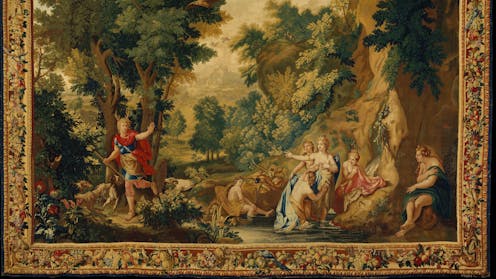
Could you ever be truly alone in the woods of ancient Greece or Rome? According to myth, the ancient world was filled with wild animals, terrifying monsters, and mischievous deities. Among them were nymphs: semi-divine female figures that personified elements of the natural world.
But nymphs offer us more than just stories of sexy nature spirits.
They can reveal how ancient people thought about their world and connected with their landscape through mythology.
Personifying elements of nature
Nymph was a broad category in myth. It encompassed almost every semi-divine woman and girl in myth, including a number of goddesses. The sea goddess Thetis and the underworld river Styx were both sea nymphs as well as goddesses.
Nymphs were typically portrayed as young, exceptionally beautiful women in art and literature. The word “nymph” in ancient Greek could even be used to mean “young girl” or “unmarried woman” when applied to mortal women.
Despite this etymological connection, many nymphs were married or mothers or gods. Amphitrite was the wife of Poseidon, and her sister Metis, the personification of wisdom, was Zeus’ first wife, according to Hesiod’s Theogony. Maia was the mother of Hermes, the messenger god.
What links all nymphs was their connection with the natural world. Nymphs typically personified elements of nature, like bodies of water, mountains, forests, the weather, or specific plants.
One of the most quintessential nymphs was Daphne (or Laurel, in Latin). According to the Roman poet Ovid in his poem the Metamorphoses, Daphne was a stunningly beautiful nymph who lived in the forest.
Daphne had chosen to follow in the footsteps of Artemis (Diana), the goddess of the hunt, by being a huntress and abstaining from sex and marriage. But her beauty would be her downfall.
One day the god Apollo saw Daphne and immediately tried to pursue her. Daphne did not feel similarly and fled through the forest. Apollo chased and nearly caught her.
But Daphne’s father Peneus, a river god, saved his daughter by transforming her into the laurel tree.
Like many nymphs, Daphne’s myth was an origin story for her namesake tree and its significance to the god Apollo.
But her story also followed one of the most common tropes in nymph myths – the trope a nymph transformed into her namesake after running away from a male deity.
Different nymphs for trees, water, mountains, stars
There were even special names for different types of nymph.
Daphne was a dryad, or tree nymph. Oreads (mountain nymphs) are referenced in Homer’s Iliad. There were three different types of water nymph: the saltwater oceanids and nereids, and the freshwater naiads.
Nymphs lived in the wilderness. These untamed places could be dangerous but they also held precious natural resources that nymphs personified, such as special trees and springs.
Spring nymphs personified one of the most precious resources of all: freshwater.
It was hard to find freshwater in the ancient world, especially in places without human infrastructure. Cities were often built around springs.
The nymph Arethusa was the personification of the spring Arethusa in Sicily. Today, you can visit the Fountain of Arethusa in modern day Syracuse.
No matter where you looked in the ancient landscape, there were nymphs – even in the sky.
The Pleiades and Hyades were two sets of daughters of the god Atlas who eventually were transformed into stars.
Their myths gave an origin for two sets of constellations that were used for navigation and divination.
The Pleiades and Hyades constellations were visible to the naked eye, and can still be seen today.
Although myths may feel like a fictional story told to kids, nymph myths show that ancient myth is inseparable from the ancient landscape and ancient people.
The natural world was imbued with a divine presence from the gods who physically made it – Gaia (Earth) was literally the soil underfoot. Nymphs were a part of this divine presence.
This divine presence brought with it a very special boon: the gift of inspiration.
Some writers (such as Plato) referred to this sort of natural inspiration as being “seized by the nymphs” (νυμφόληπτος or nympholeptus).
Being present in nature and present in places with nymphs could bring about divine inspiration for philosophers, poets and artists alike.
So, if you ever do find yourself alone in a Grecian wood, you may find yourself inspired and in good company – as long as you remain respectful.
Kitty Smith is a member of the Australian Society for Classical Studies and of Australasian Women in Ancient World Studies.
Given the number of times this has happened already, it should come as little surprise that we’re now faced with yet another new subvariant of SARS-CoV-2, the virus responsible for COVID.
This new subvariant is known as XFG (nicknamed “Stratus”) and the World Health Organization (WHO) designated it a “variant under monitoring” in late June. XFG is a subvariant of Omicron, of which there are now more than 1,000.
A “variant under monitoring” signifies a variant or subvariant which needs prioritised attention and monitoring due to characteristics that may pose an additional threat compared to other circulating variants.
While recombination and other spontaneous changes happen often with SARS-CoV-2, it becomes a problem when it creates a subvariant that is changed in such a way that its properties cause more problems for us.
Most commonly this means the virus looks different enough that protection from past infection (and vaccination) doesn’t work so well, called immune evasion. This basically means the population becomes more susceptible and can lead to an increase in cases, and even a whole new wave of COVID infections across the world.
XFG has four key mutations in the spike protein, a protein on the surface of SARS-CoV-2 which allows it to attach to our cells. Some are believed to enhance evasion by certain antibodies.
The earliest XFG sample was collected on January 27.
As of June 22, there were 1,648 XFG sequences submitted to GISAID from 38 countries (GISAID is the global database used to track the prevalence of different variants around the world). This represents 22.7% of the globally available sequences at the time.
This was a significant rise from 7.4% four weeks prior and only just below the proportion of NB.1.8.1 at 24.9%. Given the now declining proportion of viral sequences of NB.1.8.1 overall, and the rapid rise of XFG, it would seem reasonable to expect XFG to become dominant very soon.
According to Australian data expert Mike Honey, the countries showing the highest rates of detection of XFG as of mid-June include India at more than 50%, followed by Spain at 42%, and the United Kingdom and United States, where the subvariant makes up more than 30% of cases.
In Australia as of June 29, NB.1.8.1 was the dominant subvariant, accounting for 48.6% of sequences. In the most recent report from Australia’s national genomic surveillance platform, there were 24 XFG sequences with 12 collected in the last 28 days meaning it currently comprises approximately 5% of sequences.
The big questions
When we talk about a new subvariant, people often ask questions including if it’s more severe or causes new or different symptoms compared to previous variants. But we’re still learning about XFG and we can’t answer these questions with certainty yet.
Some sources have reported XFG may be more likely to course “hoarseness” or a scratchy or raspy voice. But we need more information to know if this association is truly significant.
Notably, there’s no evidence to suggest XFG causes more severe illness compared to other variants in circulation or that it is necessarily any more transmissible.
Will vaccines still work against XFG?
Relatively frequent changes to the virus means we have continued to update the COVID vaccines. The most recent update, which targets the JN.1 subvariant, became available in Australia from late 2024. XFG is a descendant of the JN.1 subvariant.
Fortunately, based on the evidence available so far, currently approved COVID vaccines are expected to remain effective against XFG, particularly against symptomatic and severe disease.
Because of SARS-CoV-2’s continued evolution, the effect of this on our immune response, as well as the fact protection from COVID vaccines declines over time, COVID vaccines are offered regularly, and recommended for those at the highest risk.
One of the major challenges we face at present in Australia is low COVID vaccine uptake. While rates have increased somewhat recently, they remain relatively low, with only 32.3% of people aged 75 years and over having received a vaccine in the past six months. Vaccination rates in younger age groups are significantly lower.
Although the situation with XFG must continue to be monitored, at present the WHO has assessed the global risk posed by this subvariant as low. The advice for combating COVID remains unchanged, including vaccination as recommended and the early administration of antivirals for those who are eligible.
Measures to reduce the risk of transmission, particularly wearing masks in crowded indoor settings and focusing on air quality and ventilation, are worth remembering to protect against COVID and other viral infections.
Paul Griffin has been the principal investigator for clinical trials of 8 COVID-19 vaccines. He has previously participated in medical advisory boards for COVID-19 vaccines. Paul Griffin is a director and medical advisory board member of the immunisation coalition.
In the new Netflix documentary Shark Whisperer, the great white shark gets an image makeover – from Jaws villain to misunderstood friend and admirer.
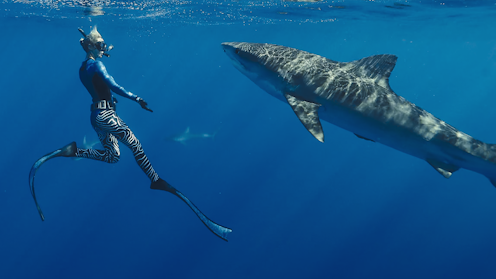
But the star of the documentary is not so much the shark, but the model and marine conservationist Ocean Ramsey (yes, that’s her real name).
The film centres on Ramsey’s self-growth journey, with the shark co-starring as a quasi-spiritual medium for finding meaning and purpose (not to mention celebrity status).
The film, and some in it, are happy to attribute Ramsey’s success as a shark conservation activist to how driven and photogenic she is. Ramsey says “People look first and listen second. I’ll use my appearance, I’ll put myself out there for a cause.”
Her husband, the photographer Juan Oliphant, enthuses she is good for sharks partly because she is so beautiful and uses all the attention she attracts in the selfless service of sharks.
The image of the long-haired, long-limbed young woman in a bikini swimming above an outsized great white shark is not a new one.
Primal fears and fantasies
Since Jaws (1975), generations have been fascinated and titillated by filmic images and promotional materials of bikini-clad young women juxtaposed with dangerous sharks.
The heroine of Deep Blue Sea (1999) is a neuroscientist – however the film and its promotional materials still require her to appear in a wet t-shirt and underwear while pursued by a massive shark monster.
The Shallows (2016) presents countless images of its bikini-clad heroine, with partially exposed bottom and long legs marked by bite marks as a kind of meat to be consumed – not least by the voyeuristic lens of the camera.
The poster for 47 Meters Down: Uncaged (2019) features a bikini-clad young woman with legs dangling precariously in front of the gaping jaws of an unnaturally large great white.
I have previously explored the psychosexual symbolism of these films and images. These films were never really about actual sharks. They are about very human fears and fantasies about being exposed and vulnerable.
Whisperer and the Ocean Ramsey website tap into the collective fascination with dangerous sharks fuelled by popular culture. Many online images show Ramsey in a bikini or touching sharks – she’s small, and vulnerable in the face of great whites. As with forms of celebrity humanitarianism, what I have dubbed “sexy conservationism” leaves itself open to criticism about its methods – even if its intentions are good.
The paradox of Shark Whisperer – and indeed the whole Ocean Ramsey empire – is it both resists and relies on Jaws mythology and iconography to surf the image economy of new media.
Saving, not stalking
Ramsey and Oliphant are on a mission not just to save individual sharks, but to change the public perception of great whites to a more positive one.
This mission is reiterated in Shark Whisperer and in the Saving Jaws documentary linked to the website, which also promotes a book, accessories and shark-diving tours.
Shark Whisperer both resists and relies on the mythical status of the shark brought to us by Jaws. Netflix
It is reassuring to know proceeds from the bikini you buy from the official website are donated to shark conservation. But the (often sexualised) media attention which fuels the whole enterprise still depends on tapping into the legacy of popular culture representations of great whites as fearsome monsters.
In footage, Ramsey seems to spend most of her time with smaller tiger sharks, yet her website and the Shark Whisperer film foreground her rare close encounters with an “enormous” or “massive” great white as the climax and cover shot.
Shark Whisperer also includes the kind of “money shots” we have come to expect: images of a large great white tearing at flesh (here, a whale carcass) with blood in the water. Images like these arouse our collective cultural memory of the filmic great white as the ultimate bestial predator.
In its climactic scene, Whisperer strategically deploys eerie music to build the suspense and foretell the appearance of the enormous great white which rises from the depths. Again echoes of Jaws are used to stimulate viewing pleasures and sell the mixed messages of sexy shark conservation.
A story of (personal) growth
The self-growth narrative which underpins Whisperer will feel familiar to shark film fans. Jaws was always about overcoming fears and past traumas, as in the scene where Quint and Brody compare their real and metaphorical scars.
The poster for the 2022 film Shark Bait. IMDB
Over the past decade, a new generation of post-feminist shark films have used sharks as metaphorical stalkers to tell stories about women overcoming past trauma, grief, “inner darkness” or depression.
In The Reef: Stalked (2022) the heroine must overcome the murder of her sister. In Shark Bait (2022) the heroine must rise above a cheating partner. In The Shallows, the heroine is processing grief.
Whisperer also leans into the idea of Ramsey fighting inner demons on a journey to self-actualisation.
And while Ramsey has undoubtedly raised the profile of shark conservation, as a model-designer-conservationist-entrepreneur she has also disseminated another more dubious message: that the way to enact influence and activism is through instagrammable images of beautiful models in high risk situations.
Happy endings
The end credits of Whisperer are a montage of happy endings: Ramsey frolics with sharks and shows off her diamond ring. There is even an ocean-themed wedding scene.
Yet beneath all the glossy surface lies a sombre reality: globally at least 80 million sharks are killed every year.
The Ramsey website and the film rightly remind us of this. They also remind us that, thanks in part to the hashtag activism of Ocean Ramsey and her millions of fans and followers, Hawaii was the first state in the United States to outlaw shark fishing.
So, Ramsey may be right to argue her ends justify the means.
Susan Hopkins does not work for, consult, own shares in or receive funding from any company or organisation that would benefit from this article, and has disclosed no relevant affiliations beyond their academic appointment.
US President Donald Trump has hosted Israeli Prime Minister Benjamin Netanyahu for dinner at the White House, where he has declared talks to end the war in Gaza are “going along very well”.
In turn, Netanyahu revealed he has nominated Trump for the Nobel Peace Prize, saying:
he is forging peace as we speak, in one country, in one region, after the other.
Despite all the talk of peace, negotiations in Qatar between Israeli and Palestinian delegations have broken up without a breakthrough. The talks are expected to resume later this week.
If an agreement is reached, it will likely be hailed as a crucial opportunity to end nearly two years of humanitarian crisis in Gaza, following the October 7 attacks in which 1,200 Israelis were killed by Hamas-led militants.
However, there is growing scepticism about the durability of any truce. A previous ceasefire agreement reached in January led to the release of dozens of Israeli hostages and hundreds of Palestinian prisoners.
This breakdown in trust on both sides, combined with ongoing Israeli military operations and political instability, suggests the new deal may prove to be another temporary pause rather than a lasting resolution.
Details of the deal
The proposed agreement outlines a 60-day ceasefire aimed at de-escalating hostilities in Gaza and creating space for negotiations toward a more lasting resolution.
Hamas would release ten surviving Israeli hostages and return the remains of 18 others. In exchange, Israel is expected to withdraw its military forces to a designated buffer zone along Gaza’s borders with both Israel and Egypt.
The agreement being thrashed out in Doha includes the release of Israeli hostages, held in Gaza for the past 22 months. Anas-Mohammed/Shutterstock
While the specific terms of a prisoner exchange remain under negotiation, the release of Palestinian detainees held in Israeli prisons is a central component of the proposal.
Humanitarian aid is also a key focus of the agreement. Relief would be delivered through international organisations, primarily UN agencies and the Palestinian Red Crescent.
However, the agreement does not specify the future role of the US-backed Gaza Humanitarian Fund, which has been distributing food aid since May.
The urgency of humanitarian access is underscored by the scale of destruction in Gaza. According to Gaza’s Health Ministry, Israel’s military campaign has killed more than 57,000 Palestinians. The offensive has triggered a hunger crisis, displaced much of the population internally, and left vast areas of the territory in ruins.
Crucially, the agreement does not represent an end to the war, one of Hamas’s core demands. Instead, it commits both sides to continue negotiations throughout the 60-day period, with the hope of reaching a more durable and comprehensive ceasefire.
Obstacles to a lasting peace
Despite the apparent opportunity to reach a final ceasefire, especially after Israel has inflicted severe damage on Hamas, Netanyahu’s government appears reluctant to fully end the military campaign.
A central reason is political: Netanyahu’s ruling coalition heavily relies on far-right parties that insist on continuing the war. Any serious attempt at a ceasefire could lead to the collapse of his government.
Militarily, Israel has achieved several of its tactical objectives.
It has significantly weakened Hamas and other Palestinian factions and caused widespread devastation across Gaza. This is alongside the mass arrests, home demolitions, and killing of hundreds of Palestinians in the West Bank.
And it has forced Hezbollah in Lebanon to scale back its operations after sustaining major losses.
Perhaps most notably, Israel struck deep into Iran’s military infrastructure, killing dozens of high-ranking commanders and damaging its missile and nuclear capabilities.
Reshaping the map
Yet Netanyahu’s ambitions may go beyond tactical victories. There are signs he is aiming for two broader strategic outcomes.
First, by making Gaza increasingly uninhabitable, his government could push Palestinians to flee. This would effectively pave the way for Israel to annex the territory in the long term – a scenario advocated by many of his far-right allies.
Speaking at the White House, Netanyahu says he is working with the US on finding countries that will take Palestinians from Gaza:
if people want to stay, they can stay, but if they want to leave, they should be able to leave.
Second, prolonging the war allows Netanyahu to delay his ongoing corruption trial and extend his political survival.
True intentions
At the heart of the impasse is the far-right’s vision for total Palestinian defeat, with no concession and no recognition of a future Palestinian state. This ideology has consistently blocked peace efforts for three decades.
Israeli leaders have repeatedly described any potential Palestinian entity as “less than a state” or a “state-minus”, a formulation that falls short of Palestinian aspirations and international legal standards.
Today, even that limited vision appears to be off the table, as Israeli policy moves towards complete rejection of Palestinian statehood.
With Palestinian resistance movements significantly weakened and no immediate threat facing Israel, this moment presents a crucial test of Israel’s intentions.
Is Israel genuinely pursuing peace, or seeking to cement its dominance in the region while permanently denying Palestinians their right to statehood?
Following its military successes and the normalisation of relations with several Arab states under the Abraham Accords, Israeli political discourse has grown increasingly bold.
Some voices in the Israeli establishment are openly advocating for the permanent displacement of Palestinians to neighbouring Arab countries such as Jordan, Egypt and Saudi Arabia. This would effectively erase the prospect of a future Palestinian state.
This suggests that for certain factions within Israel, the end goal is not a negotiated settlement, but a one-sided resolution that reshapes the map and the people of the region on Israel’s terms.
The coming weeks will reveal whether Israel chooses the path of compromise and coexistence, or continues down a road that forecloses the possibility of lasting peace.
Ali Mamouri does not work for, consult, own shares in or receive funding from any company or organisation that would benefit from this article, and has disclosed no relevant affiliations beyond their academic appointment.
Thai Prime Minister Paetongtarn Shinawatra is swarmed by members of the media after a cabinet meeting at Government House on July 1, 2025.Anusak Laowilas/NurPhoto via Getty Images
Thai Prime Minister Paetongtarn Shinawatra is currently feeling the sharp end of the country’s powerful judiciary.
On July 2, 2025, Thailand’s Constitutional Court suspended Paetongtarn from office as a result of a leaked phone conversation in which she was heard disparaging Thailand’s military and showing deference to former the prime minister of Cambodia, Hun Sen, despite an ongoing border dispute between the two countries. Initially set for 14 days, many onlookers believe the court’s suspension is likely to become permanent.
Meanwhile, far from the prime minister’s office is Arnon Nampa, another Thai national whose future is at the mercy of the Thai judiciary – in this case, the Criminal Court.
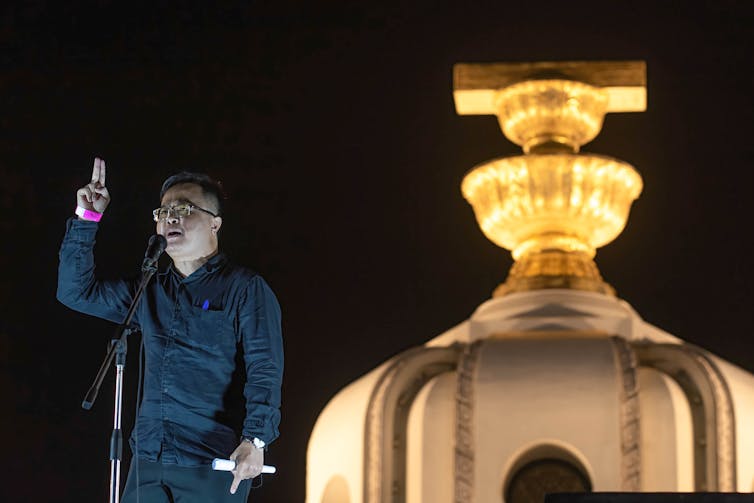
Arnon, a lawyer and internationally recognized human rights defender, is one of 32 political prisoners imprisoned over “lèse majesté,” or insulting the Thai monarchy. He is currently serving a sentence of nearly 30 years for a speech questioning the monarchy during pro-democracy protests in 2020. Unless he is both acquitted in his remaining cases and his current convictions are overturned on appeal, Arnon will likely spend the rest of his life in prison.
The plights of Paetongtarn and Arnon may seem distant. But as a historian of Thai politics, I see the cases as connected by a judiciary using the law and its power to diminish the prospects for democracy in Thailand and constrain the ability of its citizens to participate freely in society.
Familiar troubles
The Shinawatra family is no stranger to the reach of both the Thai military and the country’s courts.
Paetongtarn is the third of her family to be prime minister – and could become the third to be ousted. Her father, Thaksin Shinawatra, was removed in a 2006 military coup. Her aunt, Yingluck Shinawatra, was ousted prior to the May 22, 2014, coup. In common with past coups, the juntas who fomented them were shielded from the law, with none facing prosecution.
For now, it is unclear whether Paetongtarn’s suspension is the precursor to another coup, the dissolution of parliament and new elections, or a reshuffle of the cabinet. But what is clear is that the Constitutional Court’s intervention is one of several in which the nine appointed judges are playing a critical role in the future of Thai democracy.
Protecting the monarchy
The root of the judiciary’s power can be found in the way the modern Thai nation was set up nearly 100 years ago.
But throughout, the monarchy has remained a constant presence – protected by Article 112 of the Criminal Code, which defines the crime and penalty of lese majesté: “Whoever defames, insults, or threatens the king, queen, heir-apparent or regent shall be subject to three-to-fifteen years imprisonment.”
The law is widely feared among dissidents in Thailand both because it is interpreted broadly to include any speech or action that is not laudatory and innocent verdicts are rare.
Although Article 112 has been law since 1957, it was rarely used until after the 2006 coup.
Since then, cases have risen steadily and reached record levels following a youth-led movement for democracy in 2020. At least 281 people have been, or are currently being, prosecuted for alleged violation of Article 112, according to Thai Lawyers for Human Rights.
In protests in Bangkok and in provinces across the country, they called for a new election, a new constitution and an end to state repression of dissent.
On Aug. 3, 2020, Nampa added another demand: The monarchy must be openly discussed and questioned.
Without addressing such a key, unquestionable institution in the nation, Arnon argued, the struggle for democracy would inevitably fail.
This message resonated with many Thai citizens, and despite the fearsome Article 112, protests grew throughout the last months of 2020.
Students at Thammasat University, the center of student protest since the 1950s, expanded Arnon’s call into a 10-point set of demands for reform of the monarchy.
Making it clear that they did not aim to abolish the monarchy, the students’ proposal aimed to clarify the monarchy’s economic, political and military role and make it truly constitutional.
As the protests began to seem unstoppable, with tens of thousands joining, the police began cracking down on demonstrations. Many were arrested for violating anti-COVID-19 measures and other minor laws. By late November 2020, however, Article 112 charges began to be brought against Arnon and other protest leaders for their peaceful speech.
In September 2023, Arnon was convicted in his first case, and he has been behind bars since. He is joined by other political prisoners, whose numbers grow weekly as their cases move through the judicial process.
Capricious courts
Unlike Arnon, Paetongtarn Shinawatra is not facing prison.
But the Constitutional Court’s decision to suspend her from her position as prime minister because of a leaked recording of an indiscreet telephone conversation is, to many legal minds, a capricious response that has the effect of short-circuiting the democratic process.
So too, I believe, does bringing the weight of the law against Arnon and other political prisoners in Thailand who remain behind bars as the current political turmoil plays out.
Tyrell Haberkorn does not work for, consult, own shares in or receive funding from any company or organization that would benefit from this article, and has disclosed no relevant affiliations beyond their academic appointment.
Source: The Conversation – Global Perspectives – By Jorge Heine, Outgoing Interim Director of the Frederick S. Pardee Center for the Study of the Longer-Range Future, Boston University
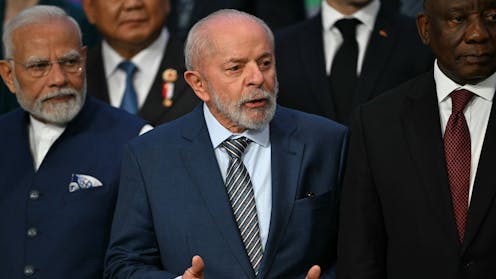
Brazil President Luiz Inacio Lula da Silva, center, flanked by India Prime Minister Narendra Modi, left, and South Africa President Cyril Ramaphosa, speaks at the summit of Group of 20 leading economies in Rio de Janeiro on Nov. 19, 2024.Mauro Pimentel/AFP via Getty Images
In 2020, as Latin American countries were contending with the triple challenges of the COVID-19 pandemic, a global economic shock and U.S. policy under the first Trump administration, Jorge Heine, research professor at Boston University and a former Chilean ambassador, in association with two colleagues, Carlos Fortin and Carlos Ominami, put forward the notion of “active nonalignment.”
Five years on, the foreign policy approach is more relevant than ever, with trends including the rise of the Global South and the fragmentation of the global order, encouraging countries around the world to reassess their relationships with both the United States and China.
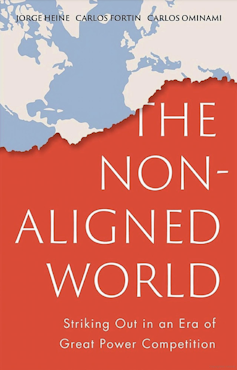
It led Heine, along with Fortin and Ominami, to follow up on their original arguments in a new book, “The Non-Aligned World,” published in June 2025.
The Conversation spoke with Heine on what is behind the push toward active nonalignment, and where it may lead.
For those not familiar, what is active nonalignment?
Active nonalignment is a foreign policy approach in which countries put their own interests front and center and refuse to take sides in the great power rivalry between the U.S. and China.
It takes its cue from the Non-Aligned Movement of the 1950s and 1960s but updates it to the realities of the 21st century. Today’s rising Global South is very different from the “Third World” that made up the Non-Aligned Movement. Countries like India, Turkey, Brazil and Indonesia have greater economic heft and wherewithal. They thus have more options than in the past.
They can pick and choose policies in accordance with what is in their national interests. And because there is competition between Washington and Beijing to win over such countries’ hearts and minds, those looking to promote a nonaligned agenda have greater leverage.
Traditional international relations literature suggests that in relations between nations, you can either “balance,” meaning take a strong position against another power, or “bandwagon” – that is, go along with the wishes of that power. The notion was that weaker states couldn’t balance against the Great Powers because they don’t have the military power to do so, so they had to bandwagon.
What we are saying is that there is an intermediate approach: hedging. Countries can hedge their bets or equivocate by playing one power off the other. So, on some issues you side with the U.S., and others you side with China.
Thus, the grand strategy of active nonalignment is “playing the field,” or in other words, searching for opportunities among what is available in the international environment. This means being constantly on the lookout for potential advantages and available resources – in short, being active, rather than passive or reactive.
So active nonalignment is not so much a movement as it is a doctrine.
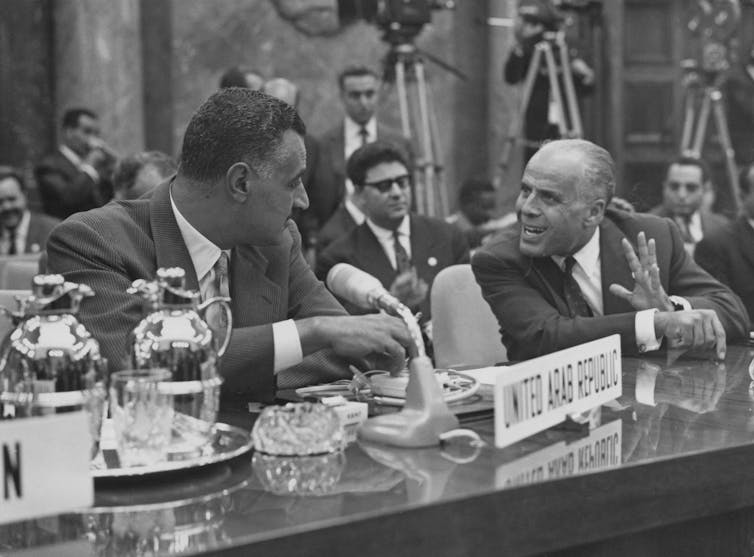
Tunisian President Habib Bourguiba, right, and Egyptian President Gamal Abdel Nasser attend the first Conference of Non-Aligned Countries in Belgrade, Yugoslavia, in September 1961. Keystone/Hulton Archive/Getty Images
It’s been five years since you first came up with the idea of active nonalignment. Why did you think it was time to revisit it now?
The notion of active nonalignment came up during the first Trump administration and in the context of a Latin America hit by the triple-whammy of U.S. pressure, a pandemic and the ensuing recession – which in Latin America translated into the biggest economic downturn in 120 years, a 6.6% drop of regional gross domestic product in 2020.
ANA was intended as a guide for Latin American countries to navigate those difficult moments, and it led us to the publication of a symposium volume with contributions by six former Latin American foreign ministers in November 2021, in which we elaborated on the concept.
Three months later, with the Russian invasion of Ukraine and the reaction to it by many countries in Asia and Africa, nonalignment was back with a vengeance.
Countries like India, Pakistan, South Africa and Indonesia, among others, took positions that were at odds with the West on Ukraine. Many of them, though not all, condemned Russian aggression but also wanted no part in the West’s sanctions on Moscow. These sanctions were seen as unwarranted and as an expression of Western double standards – no sanctions were applied on the U.S. for invading Iraq, of course.
And then there were the Hamas attacks on Israel on Oct. 7, 2023, and the resulting war in the Gaza Strip. Countries across the Global South strongly condemned the Hamas attacks, but the West’s response to the subsequent deaths of tens of thousands of Palestinians brought home the notion of double standards when it came to international human rights.
Why weren’t Palestinians deserving of the same compassion as Ukrainians? For many in the Global South, that question hit very hard – the idea that “human rights are limited to Europeans and people who looked like them did not go down well.”
A third development is the expansion of the BRICS bloc of economies from its original five members – Brazil, Russia, India, China and South Africa – to 10 members. Although China and Russia are not members of the Global South, those other founding members are, and the BRICS group has promoted key issues on the Global South’s agenda. The addition of countries such as Egypt and Ethiopia has meant that BRICS has increasingly taken on the guise of the Global South forum. Brazil President Luiz Inácio Lula da Silva, a leading proponent of BRICS, is keen on advancing this Global South agenda.
All three of these developments have made active nonalignment more relevant than ever before.
How are China and the US responding to active nonalignment – or are they?
I’ll give you two examples: Angola and Argentina.
In Angola, the African country that has received most Chinese cooperation to the tune of US$45 billion, you now have the U.S. financing what is known as the Lobito Corridor – a railway line that stretches from the eastern border of the Democratic Republic of the Congo to Angola’s Atlantic coast.
Ten years ago, the notion that the U.S. would be financing railway projects in southern Africa would have been considered unfathomable. Yet it has happened. Why? Because China has built significant railway lines in countries such as Kenya and Ethiopia, and the U.S. realized that it was being left behind.
For the longest time, the U.S. would condemn such Chinese-financed infrastructure projects via the “Belt and Road Initiative” as nothing but “debt-trap diplomacy” designed to saddle developing nations with “white elephants” nobody needed. But a couple of years ago, that tune changed: The U.S. and Europe realized that there is a big infrastructure deficit in Asia, Africa and Latin America that China was stepping in to reduce – and the West was nowhere to be seen in this critical area.
In short, the West changed it approach – and countries like Angola are now able to play the U.S. off against China for its own national interests.
Why? Because Argentina has a very significant foreign debt, and Milei knew that a continued anti-China stance would mean a credit line from Beijing would likely not be renewed. The Argentinian president was under pressure from the International Monetary Fund and Washington to let the credit line with China lapse, but Milei refused to do so and managed to hold his own, playing both sides against the middle.
Milei is a populist conservative; Brazil’s Lula a leftist. So is active nonalignment immune to ideological differences?
Absolutely. When people ask me what the difference is between traditional nonalignment and active nonalignment, one of the most obvious things is that the latter is nonideological – it can be used by people of the right, left and center. It is a guide to action, a compass to navigate the waters of a highly troubled world, and can be used by governments of very different ideological hues.
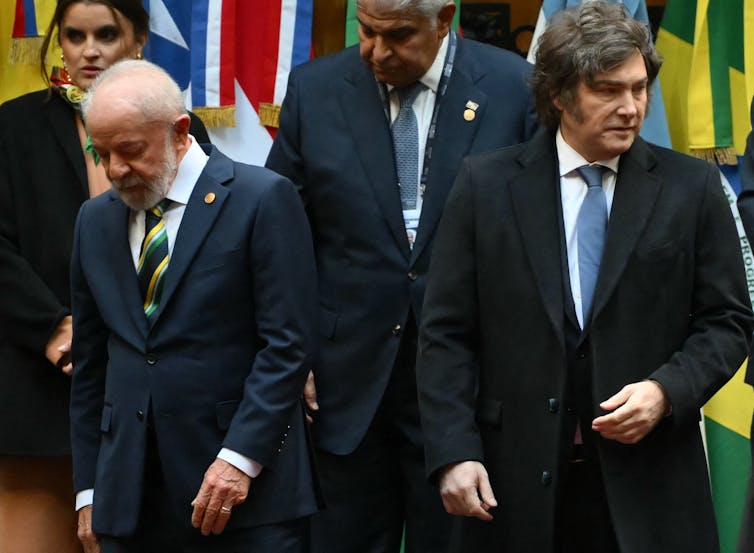
Brazil President Luiz Inacio Lula da Silva and Argentina President Javier Milei at the 66th Summit of leaders of the Mercosur trading bloc in Buenos Aires on July 3, 2025. Luis Robayo/AFP via Getty Images
The book talks a lot about the fragmentation of the rules-based order. Where do you see this heading?
There is little doubt that the liberal international order that framed world politics from 1945 to 2016 has come to an end. Some of its bedrock principles, like multilateralism, free trade and respect for international law and existing international treaties, have been severely undermined.
We are now in a transitional stage. The notion of the West as a geopolitical entity, as we knew it, has ceased to exist. We now have the extraordinary situation where illiberal forces in Hungary, Germany and Poland, among other places, are being supported by those in power in both Washington and Moscow.
And this decline of the West has not come about because of any economic issue – the U.S. still represents around 25% of global GDP, much as it did in 1970 – but because of the breakdown of the trans-Atlantic alliance.
So we are moving toward a very different type of world order – and one in which the Global South has the opportunity to have much more of a role, especially if it deploys active nonalignment.
How have events since Trump’s inauguration played into your argument?
The pressures on countries across the Global South are very strong, and there is a temptation to give in to Trump and align with U.S. Yet, all indications are that simply giving in to Trump’s demands isn’t a recipe for success. Those countries that have gone down the route of giving in to Trump’s demands only see more demands after that. Countries need a different approach – and that can be found in active nonalignment.
Jorge Heine does not work for, consult, own shares in or receive funding from any company or organization that would benefit from this article, and has disclosed no relevant affiliations beyond their academic appointment.