Sexualité : les allergies au liquide séminal, un problème sous-estimé ?

Source: The Conversation – France in French (2) – By Michael Carroll, Reader / Associate Professor in Reproductive Science, Manchester Metropolitan University

La survenue de symptômes allergiques après les rapports sexuels non protégés par préservatif doit faire soupçonner une hypersensibilité au plasma séminal. Yuriy Maksymiv/Shutterstock

Démangeaisons, brûlures, œdème, voire difficultés respiratoires… chez certaines femmes, ces symptômes se manifestent quelques instants après les rapports sexuels. En cause, une allergie particulière, l’hypersensibilité au liquide séminal (HLS). Parfois confondue avec d’autres problématiques, cette réaction pourrait concerner un nombre de femmes plus important qu’on ne l’imaginait jusqu’ici.


L’hypersensibilité au liquide séminal (HLS) est un trouble rare, quoique probablement sous-diagnostiqué. Cette réaction n’est pas provoquée par les spermatozoïdes, mais par les protéines présentes dans le liquide séminal, le liquide qui transporte ces derniers. L’hypersensibilité au liquide séminal a été documentée pour la première fois en 1967, après l’hospitalisation d’une femme victime d’une « violente réaction allergique » survenue durant un rapport sexuel. Elle est aujourd’hui reconnue comme une hypersensibilité de type I, ce qui la place dans la même catégorie que le rhume des foins et les allergies aux cacahuètes ou aux poils de chat.

Les symptômes qui en résultent s’étendent sur un large spectre, qui va de manifestations bénignes à des troubles graves. Certaines femmes souffrent de réactions locales : brûlures, démangeaisons, rougeurs et œdème au niveau de la vulve ou du vagin. D’autres présentent des symptômes généralisés : urticaire, respiration sifflante, vertiges, nez qui coule, voire choc anaphylactique, une réaction immunitaire potentiellement mortelle.

Jusqu’en 1997, on estimait que l’HLS touchait moins de 100 femmes dans le monde. Mais une étude dirigée par l’allergologue Jonathan Bernstein a montré que, parmi les femmes rapportant des symptômes après avoir eu des rapports sexuels, près de 12 % présentaient un tableau compatible avec une HLS. J’ai moi-même mené une petite enquête en 2013 (résultats non publiés) et obtenu un taux similaire.

Mais le chiffre réel pourrait être encore plus élevé. En effet, de nombreux cas ne sont pas signalés, ou sont mal diagnostiqués, les symptômes étant attribués à tort à des infections sexuellement transmissibles, à des problèmes de mycose, voire à une « sensibilité générale ». Un indice révélateur permet cependant d’orienter le diagnostic : les symptômes disparaissent lorsqu’un préservatif est utilisé. En 2024, une revue de littérature a corroboré ces résultats, suggérant que l’HLS est à la fois plus fréquente et plus souvent méconnue qu’on ne le pensait.

Un allergène présent dans le liquide séminal

L’allergène principal semble être la kallicréine prostatique ou antigène spécifique de la prostate (PSA) : une protéine présente dans le liquide séminal. Celle-ci est systématiquement présente, quel que soit le partenaire. Autrement dit, une femme souffrant cette allergie présentera une réaction au sperme de n’importe quel homme, pas seulement à celui d’un compagnon spécifique.

Des preuves de l’existence d’une réactivité croisée ont également été mises en évidence. Ainsi, Can f 5, une protéine présente dans les squames des chiens, est structurellement similaire à l’antigène PSA humain. De ce fait, certaines femmes allergiques aux chiens peuvent également présenter une allergie au sperme. En 2007, des cliniciens ont également décrit le cas d’une jeune femme ayant développé une urticaire diffuse ainsi que des difficultés à respirer après avoir eu un rapport sexuel avec son compagnon. Celui-ci avait consommé peu de temps auparavant des noix du Brésil, souvent impliquées dans les réactions allergiques. Il semblerait que la réaction de la jeune femme ait été provoquée par la présence de protéines de noix dans le sperme de son partenaire.

Les hommes aussi peuvent être concernés

La première étape pour poser un diagnostic de HSP consiste à établir un historique sexuel et médical détaillé. Celui-ci est ensuite généralement suivi par la réalisation d’analyses sanguines destinées à détecter les anticorps IgE anti-PSA, ou de tests cutanés avec le liquide séminal du partenaire.

Lors de nos travaux de recherche, nous avons démontré que des tests effectués avec des spermatozoïdes lavés, donc dépourvus de liquide séminal, n’ont pas engendré de réaction chez des femmes présentant habituellement des symptômes allergiques. Ces résultats confirment que le déclencheur allergique n’est pas la cellule spermatozoïde elle-même, mais bien les protéines du liquide séminal.

Soulignons que les femmes ne sont pas les seules susceptibles de développer ce type d’allergie. Certains hommes peuvent aussi être allergiques à leur propre sperme. Cette pathologie, connue sous le nom de syndrome de la maladie post-orgasmique, provoque des symptômes pseudo-grippaux – fatigue, brouillard cérébral et courbatures – immédiatement après l’éjaculation. On suppose qu’il s’agit d’une réaction auto-immune ou allergique. Le diagnostic reste complexe à poser, cependant il arrive qu’un test cutané mettant en œuvre le sperme puisse se révéler positif.

Qu’en est-il de la fertilité ?

L’hypersensibilité au liquide séminal n’engendre pas directement l’infertilité, mais elle peut compliquer le projet de conception. En effet, éviter l’allergène – ce qui constitue la solution la plus efficace pour lutter contre la plupart des allergies – n’est pas envisageable pour un couple qui souhaite concevoir…

Parmi les traitements possibles figurent la prise d’antihistaminiques en prophylaxie (qui consiste à prendre des médicaments antiallergiques avant l’exposition supposée à l’allergène, afin de prévenir ou d’atténuer les réactions), les traitements anti-inflammatoires et la désensibilisation (par administration progressive de liquide séminal dilué). Dans les cas les plus sévères, les couples peuvent recourir à une fécondation in vitro effectuée avec des spermatozoïdes lavés, ce qui permet d’éviter le contact avec les allergènes à l’origine de la réaction.

Il est important de souligner que l’hypersensibilité au liquide séminal n’est pas une cause d’infertilité. De nombreuses femmes qui en sont atteintes ont pu avoir des enfants, certaines naturellement, d’autres en ayant recours à une assistance médicale.

Pourquoi cette allergie est-elle si peu connue ?

La méconnaissance de l’hypersensibilité au liquide séminal tient probablement au fait que les symptômes liés aux rapports sexuels sont souvent passés sous silence par les patientes. La gêne, la stigmatisation et le manque de sensibilisation des médecins à cette question font que bien des femmes souffrent en silence.

Dans l’étude de menée en 1997 par Bernstein et ses collaborateurs, près de la moitié des femmes présentant des symptômes après des rapports sexuels n’avaient jamais été testées pour une hypersensibilité au liquide séminal. Durant des années, elles se sont donc vues poser un diagnostic erroné, et prescrire un traitement inadapté.

En définitive, si vous ressentez systématiquement des démangeaisons, des douleurs ou une sensation de malaise après un rapport sexuel et que ces symptômes ne surviennent pas lors d’un rapport protégé par préservatif, il est possible que vous souffriez d’hypersensibilité au liquide séminal.

Il est temps de braquer les projecteurs sur cette affection trop méconnue, pour que cette question soit enfin abordée en consultation.

The Conversation

Michael Carroll ne travaille pas, ne conseille pas, ne possède pas de parts, ne reçoit pas de fonds d’une organisation qui pourrait tirer profit de cet article, et n’a déclaré aucune autre affiliation que son organisme de recherche.

ref. Sexualité : les allergies au liquide séminal, un problème sous-estimé ? – https://theconversation.com/sexualite-les-allergies-au-liquide-seminal-un-probleme-sous-estime-260123


En Espagne, une loi pour lutter contre le gaspillage alimentaire

Source: The Conversation – France in French (2) – By Clémence Lepla, Doctorante en droit privé, Université de Lille

14 % de la nourriture produite est jetée ou perdue avant même d’atteindre les rayons des magasins. 19% sera ensuite jetée par les magasins, les restaurants ou particuliers. Pour lutter contre ce fléau, l’Espagne vient d’adopter une loi avec des sanctions inédites. Mais cela sera-t-il suffisant pour endiguer le gaspillage alimentaire ?


L’Espagne vient d’adopter une nouvelle loi pour lutter contre les pertes et le gaspillage alimentaire. Publiée le 1er avril 2025, elle ambitionne de réduire les pertes et le gaspillage à toutes les étapes de la chaine alimentaire, de la récolte à la consommation, en promouvant un modèle plus durable. Si une loi en Catalogne existait déjà en la matière, le dispositif est désormais harmonisé.

Les objectifs fixés sont ambitieux. La loi vise à réduire de 50 % le gaspillage alimentaire par habitant et de 20 % les pertes alimentaires d’ici à 2030. Les pertes alimentaires désignent ici la nourriture qui est perdue ou jetée avant d’atteindre les magasins de détail, lors des étapes de récolte, de transformation des aliments ou encore du transport. Actuellement, 14 % de la nourriture produite dans le monde est perdue à ce stade. Le gaspillage alimentaire correspond lui à la nourriture disponible à la vente ou à la consommation qui est jetée par les supermarchés, les restaurants et les ménages. Il représente 19 % des denrées alimentaires produites dans le monde. Ces chiffres ont marqué un véritable tournant dans la prise de conscience mondiale de ce problème, incitant les gouvernements à adopter des politiques ambitieuses pour y remédier.

Inédite en Espagne, cette loi constitue une étape importante dans la lutte contre le gaspillage alimentaire. Elle s’inscrit dans les objectifs de développement durable de l’Union européenne qui visent, d’ici au 31 décembre 2030, une réduction de 10 % des pertes alimentaires (par rapport à la quantité générée en moyenne annuelle entre 2021 et 2023) ainsi que la réduction de 30 % du gaspillage alimentaire par habitant.

Le texte présente également des dispositions similaires à celles de la loi relative à la lutte contre le gaspillage alimentaire, dite Loi Garot, adoptée par la France en 2016. Bien que les dispositifs ne soient pas entièrement identiques, les deux textes poursuivent le même objectif : lutter contre les pertes et le gaspillage alimentaires.

L’ensemble des acteurs de la chaîne alimentaire impliqués

Pour atteindre cet objectif, la participation de tous les acteurs de la société est nécessaire. La loi espagnole s’applique ainsi à une large palette d’acteurs opérant sur le territoire. Elle s’adresse aux professionnels assurant la production, la transformation et la distribution de denrées alimentaires ; aux restaurants ; à l’hôtellerie ; aux consommateurs ; aux associations de distribution de dons alimentaires ainsi qu’à l’administration publique. Seules les micro-entreprises sont exclues du dispositif.

Contrairement à la loi française, la loi espagnole est également applicable pour les opérateurs du secteur primaire tels que les agriculteurs, éleveurs, pêcheurs et coopératives agricoles.


Du lundi au vendredi + le dimanche, recevez gratuitement les analyses et décryptages de nos experts pour un autre regard sur l’actualité. Abonnez-vous dès aujourd’hui !


Un ordre de priorité à respecter

Les opérateurs économiques de la chaîne alimentaire doivent respecter un ordre de priorité inspiré de la directive européenne sur les déchets. Ainsi, lorsqu’une denrée alimentaire ne parvient pas à être vendue, elle doit être donnée ou transformée (par exemple des fruits transformés en confiture). Si ces opérations ne sont pas réalisables, cette denrée pourra être utilisée pour nourrir les animaux. À défaut, elle sera transformée par l’industrie en sous-produit non alimentaire (biocarburant, bioplastiques…), recyclée ou transformée en compost.

La loi proscrit également toute action visant à rendre les denrées impropres à la consommation ou à la valorisation comme le fait de verser de la javel sur les invendus.

Le manquement au respect de cet ordre de priorité est répertorié comme étant une « infraction mineure » et est puni par un avertissement ou une amende pouvant aller jusqu’à 2 000 euros. Cette infraction peut être requalifiée en « infraction grave » si elle est commise à nouveau dans une période de deux ans à compter de la sanction par décision administrative de la première d’entre elles. Le cas échéant, elle est punie d’une amende allant de 2 001 à 60 000 euros.

La destruction ou altération intentionnelle de denrées alimentaires invendues encore propres à la consommation est quant à elle considérée comme étant une « infraction grave ». En cas de réitération de ce type d’infraction, celle-ci est susceptible d’être requalifiée en « infraction très grave ». Elle sera alors passible d’une amende comprise entre 60 001 et 500 000 euros. La loi laisse une certaine marge de manœuvre à l’échelle régionale aux 17 Communautés autonomes d’Espagne pour augmenter ces seuils et/ou inclure d’autres sanctions additionnelles ou accessoires dans leurs réglementations respectives ayant valeur de loi.

Les sanctions diffèrent des sanctions françaises lesquelles prévoient une amende pouvant aller jusqu’à 0,1 % du chiffre d’affaires hors taxe du dernier exercice clos réalisé par l’établissement coupable de destruction de ses invendus. Le montant est fixé en fonction de la gravité de l’infraction, notamment du nombre et du volume de produits concernés. Cette amende peut être assortie d’une peine complémentaire d’affichage ou de diffusion de la décision prononcée, dans les conditions prévues à l’article 131-35 du code pénal.

Des plans de prévention à réaliser

La loi espagnole impose également aux professionnels de mettre en place des plans de prévention. Il s’agit de documents opérationnels détaillant les mesures mises en place pour identifier, prévenir et réduire les pertes et le gaspillage alimentaires. Chaque acteur de la chaîne alimentaire (à l’exception donc des microentreprises, des petits établissements commerciaux d’une surface inférieure à 1300m2 et des petites exploitations agricoles) doit expliquer comment il appliquera cet ordre de priorité et rendre compte des actions de prévention telles que la vente de produits dits « moches » ou « inesthétiques » ou encore indiquer les éventuels accords ou arrangements qu’ils ont avec des associations pour donner leurs invendus. Ces plans de prévention permettent également de collecter des données sur les pertes et le gaspillage alimentaires qui seront essentielles dans le cadre du suivi et de la régulation de cette problématique à l’échelle nationale.

Ces informations collectées alimenteront le plan national de contrôle des pertes et du gaspillage alimentaires, un dispositif mis en place par l’Espagne pour superviser et contrôler les actions des professionnels. Ce plan national vise à garantir que les objectifs législatifs de réduction des pertes et du gaspillage alimentaires soient atteints et peut inclure des contrôles, des audits, ainsi que des mécanismes de suivi et de sanction en cas de non-respect.

Le ministère de l’agriculture, de la pêche et de l’alimentation doit établir annuellement un rapport contenant les résultats de la mise en œuvre du plan de lutte national afin de suivre l’évolution et des mesures mises en place. Les administrations publiques doivent quant à elle enquêter et recueillir des données permettant de connaître l’ampleur du phénomène de pertes et du gaspillage alimentaires (volumes, causes et responsabilités).

Le don encouragé

La loi vise également à promouvoir le don de nourriture, en garantissant la sécurité et la traçabilité des aliments. Bien qu’encouragé, notamment au travers d’une déduction fiscale, le don reste facultatif : les professionnels peuvent aussi écouler leurs invendus alimentaires encore consommables en baissant les prix par exemple ou en les transformant. En revanche, il est interdit d’insérer dans un contrat une clause qui empêcherait l’autre partie de les donner.

Le recours au don est également encadré par une convention de don précisant les modalités de collecte, de transport, de stockage ainsi que les obligations des parties.

L’association bénéficiaire a la possibilité de refuser le don, sous réserve de motiver son refus. Elle est également tenue de respecter plusieurs exigences telles que : fournir des informations sur les denrées alimentaires aux personnes qui reçoivent la nourriture ; assurer la traçabilité des produits donnés au moyen d’un système d’enregistrement des entrées et sorties de denrées alimentaires reçues et livrées ; maintenir de bonnes pratiques d’hygiène dans la conservation et la manipulation des aliments ou encore donner sans discrimination.

Informer les consommateurs

La loi a enfin pour objectif de sensibiliser et d’informer les consommateurs. Elle impose pour cela aux pouvoirs publics de promouvoir des campagnes d’information sur la réduction du gaspillage alimentaire. Cette problématique sera d’ailleurs intégrée dans les programmes éducatifs dès le plus jeune âge.

Le texte met également l’accent sur l’importance de différencier les types de dates figurant sur les produits alimentaires : les produits comportant une date limite de consommation (DLC) présentent un risque pour la santé s’ils sont consommés une fois la date expirée. À l’inverse, les produits ayant une date de durabilité minimale (DDM) peuvent être consommés après cette date. Leur qualité peut être altérée mais ils peuvent encore être consommés en toute sécurité plutôt que d’être jetés. Cette mesure est d’ores et déjà à l’œuvre en France où les produits alimentaires comportant une DDM peuvent être accompagnés d’une mention informant les consommateurs que le produit reste consommable après cette date.

À l’échelle des restaurants, les doggy bags sont également fortement encouragés. À l’instar de la France, l’Espagne impose désormais aux établissements de la restauration de fournir gratuitement des contenants réutilisables ou facilement recyclables afin de permettre aux clients d’emporter les restes de leur repas.

L’Espagne est le troisième pays de l’Union européenne, après la France et l’Italie, à adopter une loi spécifique contre le gaspillage alimentaire. Cette dynamique s’inscrit dans un contexte plus large de renforcement des politiques européennes en matière de durabilité alimentaire.

L’efficacité de la loi espagnole sur la prévention des pertes et du gaspillage alimentaire reposera sur sa mise en œuvre concrète et la rigueur du contrôle exercé. L’exemple de la loi française, adoptée il y a neuf ans, offre un cadre d’évaluation utile pour apprécier les leviers efficaces et les résultats mesurables d’une telle politique.

En effet, malgré l’ambition initiale, un rapport parlementaire publié trois ans après l’entrée en vigueur de la loi Garot a mis en évidence l’insuffisance de moyens pour réaliser des contrôles. La destruction des invendus, notamment par la pratique de la javellisation, fait l’objet de très peu de contrôles effectifs et est faiblement sanctionnée.

L’Espagne a quant à elle intégré dans cette loi un dispositif national de contrôle des pertes et du gaspillage alimentaires, articulé autour d’un mécanisme de suivi régulier assuré par le ministère de l’agriculture, de la pêche et de l’alimentation et des plans de prévention fournis par les opérateurs économiques.

Reste à déterminer si ces outils, pensés pour garantir une application rigoureuse et homogène du texte, seront suffisamment dotés pour produire des effets concrets. À terme, c’est bien sa capacité à induire des changements structurels dans les pratiques économiques et sociales qui permettra d’en juger la portée réelle.

The Conversation

Clémence Lepla a reçu des financements de la Région des Hauts-de-France et de l’Université de Lille.

ref. En Espagne, une loi pour lutter contre le gaspillage alimentaire – https://theconversation.com/en-espagne-une-loi-pour-lutter-contre-le-gaspillage-alimentaire-257361

« Maman, Papa, je m’ennuie ! » Comment aider votre enfant à gérer son ennui pendant les vacances

Source: The Conversation – France in French (2) – By Trevor Mazzucchelli, Associate Professor of Clinical Psychology, Curtin University

L’ennui peut être désagréable, mais il contribue au bon développement de l’enfant.
Shutterstock

Il est normal que les enfants s’ennuient. En fait, l’ennui peut même les aider à développer un certain nombre de compétences importantes.


À l’approche des vacances, les parents entendront sans doute leur enfant leur dire cette phrase classique : « Je m’ennuie… »

Nous nous ennuyons tous de temps en temps, et il n’y a rien de mal à cela. En fait, s’ennuyer est même utile, car cela nous aide à réfléchir et à modifier ce que nous faisons ou à prêter plus d’attention à notre environnement extérieur.

Cependant, de nombreux enfants doivent encore apprendre à gérer l’ennui. Si vous vous demandez comment réagir lorsque les enfants se plaignent de s’ennuyer (sans les laisser regarder davantage la télévision), voici quelques idées à tester.

Un enfant a l’air de s’ennuyer à son bureau
L’ennui est désagréable, mais il n’est pas mauvais pour la santé.
Shutterstock

L’ennui aide les enfants à apprendre

L’ennui est légèrement désagréable, mais il n’y a pas de mal à ce que les enfants s’ennuient. En fait, l’ennui permet aux enfants de développer un certain nombre de compétences importantes, notamment :

  • supporter des expériences désagréables,

  • gérer la frustration et réguler les émotions,

  • développer son imaginaire,

  • résoudre des problèmes, planifier et organiser,

  • acquérir de l’indépendance et de l’autonomie.

Ces compétences sont essentielles pour que les enfants développent un sentiment de contrôle sur leur propre bonheur et leur bien-être.


Du lundi au vendredi + le dimanche, recevez gratuitement les analyses et décryptages de nos experts pour un autre regard sur l’actualité. Abonnez-vous dès aujourd’hui !


Pourquoi les enfants se plaignent-ils de l’ennui

En général, la vie des enfants est structurée et organisée pour eux. Lorsqu’ils disposent de temps libre, les enfants peuvent éprouver des difficultés à penser à des choses à faire et à les organiser.

Si, dès qu’un enfant se plaint de s’ennuyer, un adulte vient le divertir, alors cet enfant n’aura peut-être pas la possibilité d’apprendre à s’occuper tout seul et à développer son esprit créatif.

Il arrive que les enfants rejettent toutes les idées qu’on leur propose. Ils savent peut-être d’expérience qu’au bout du compte, cela va conduire à une longue discussion ou à ce qu’on s’engage avec eux dans une activité. Dans les deux cas, l’enfant n’a pas à gérer son propre ennui.

L’astuce consiste donc à aider les enfants à avoir leurs propres idées (plutôt que de leur suggérer quoi faire).

Un enfant joue avec un coussin de canapé
Si les adultes divertissent constamment les enfants, ces derniers n’auront peut-être pas l’occasion d’apprendre à se divertir eux-mêmes.
Shutterstock

Comment les parents peuvent-ils aider les enfants à apprendre à gérer l’ennui ?

Les parents peuvent faire beaucoup pour se préparer à l’ennui et pour aider leur enfant à apprendre à gérer son propre ennui.

Voici quelques idées.

  • Discutez avec votre enfant de ce qu’il aime faire, de ses centres d’intérêt et de ses passions. Élaborez avec lui un menu d’activités auquel il pourra se référer lorsqu’il s’ennuie. Les enfants plus jeunes peuvent avoir envie d’illustrer leur menu avec des dessins.

  • Essayez de dresser une liste d’activités que votre enfant peut faire sans votre aide – un mélange de choses nouvelles et d’activités qu’il a déjà bien aimées par le passé. Incluez des activités plus rapides (comme le coloriage ou un pique-nique avec un ours en peluche), ainsi que des projets à plus long terme (comme un grand puzzle, la lecture d’un roman, l’acquisition de compétences sportives). Placez le menu à un endroit où votre enfant pourra s’y référer.

  • Assurez-vous que les jouets, outils ou autre matériel soient disponibles et accessibles pour que votre enfant puisse faire ce qui figure sur sa liste. Les jouets et les activités n’ont pas besoin d’être coûteux pour être amusants.

Une fille regarde un jeu de crayons de couleur
Équipez votre enfant des choses dont il a besoin pour faire ce qui figure sur son « menu d’activités ».
Shutterstock
  • Préparez votre enfant. Informez-le du programme de la journée et du temps qu’il est censé consacrer aux activités de son menu. Cela le rassurera sur le fait qu’il n’est pas livré à lui-même « pour toujours ». Une série d’images illustrant le programme de la journée peut être utile. Avant une période de temps libre, discutez de deux ou trois règles. Par exemple, « Joue tranquillement jusqu’à ce que papa et maman aient fini et si tu as besoin de nous parler, dis-le », ou bien « Excuse-moi et attends que nous soyons disponibles ».

  • Au début, vous pouvez offrir une récompense (comme une activité spéciale avec vous, son goûter préféré ou du temps d’écran) si votre enfant s’occupe correctement pendant un certain temps. Au fil du temps, éliminez progressivement les récompenses en augmentant le temps dont votre enfant a besoin pour trouver à s’occuper, puis ne les lui offrez que de temps en temps.

  • Si votre enfant vous dit qu’il s’ennuie, redirigez-le vers sa liste. Cette conversation doit être brève et précise.

  • Si nécessaire, aidez votre enfant à démarrer. Certains enfants peuvent avoir besoin d’aide pour démarrer une activité. Il peut être nécessaire de passer quelques minutes à les installer. Essayez de ne pas tout faire vous-même, mais posez plutôt des questions pour les aider à résoudre les problèmes. Vous pouvez demander : « Que vas-tu fabriquer ? De quoi auras-tu besoin pour cela ? Par où vas-tu commencer ? »

Un enfant ajoute un autocollant à un tableau de récompenses
Un tableau de récompenses vous aiderait-il ?
Shutterstock
  • Lorsque votre enfant se lance dans une activité appropriée, félicitez-le et accordez lui de l’attention. Vous pourriez dire : « Tu as trouvé quelque chose à faire tout seul. Je suis impressionné ! » Arrêtez de temps en temps ce que vous êtes en train de faire pour le féliciter de s’être occupé. Faites-le avant qu’il ne se désintéresse, mais, au fil du temps, essayez d’allonger progressivement le délai avant de faire un commentaire.

S’il est important que les enfants apprennent à gérer l’ennui, ils ont aussi besoin de se sentir valorisés et de savoir que leurs parents veulent passer du temps avec eux. Prenez du temps pour votre enfant et soyez disponible pour lui lorsque vous êtes ensemble.

The Conversation

Trevor Mazzucchelli est co-auteur de « Stepping Stones Triple P – Positive Parenting Program » et consultant auprès de Triple P International (Australie). Le Parenting and Family Support Centre (Australie) est en partie financé par les ouvrages publiés par le Triple P – Positive Parenting Program, développé et détenu par l’Université du Queensland (UQ). Les redevances sont également distribuées à la Faculté des sciences de la santé et du comportement de l’UQ (Université de Queensland) et aux auteurs des publicatiions de Triple P. Triple P International (TPI) Pty Ltd est une société privée autorisée par UniQuest Pty Ltd, au nom de l’UQ, à publier et à diffuser Triple P dans le monde entier. Il n’est ni actionnaire ni propriétaire de TPI, mais il a reçu et pourrait recevoir à l’avenir des redevances et/ou des honoraires de conseil de la part de TPI. TPI n’a pas participé à la rédaction de cet article.

ref. « Maman, Papa, je m’ennuie ! » Comment aider votre enfant à gérer son ennui pendant les vacances – https://theconversation.com/maman-papa-je-mennuie-comment-aider-votre-enfant-a-gerer-son-ennui-pendant-les-vacances-260142

Immigration : Pourquoi les gouvernements n’écoutent-ils pas les chercheurs ?

Source: The Conversation – France in French (2) – By Antoine Pécoud, Professeur de sociologie, Université Sorbonne Paris Nord

Les gouvernements choisissent des politiques jugées unanimement inefficaces par les chercheurs spécialistes des migrations. Comment comprendre cette absence d’écoute ? Comment y remédier ?


Les migrations sont omniprésentes, dans le débat politique comme dans les médias ou sur les réseaux sociaux. Les chercheurs, pourtant, sont relativement peu visibles.

Cette situation est a priori surprenante. Malgré des moyens importants, les États ne semblent pas parvenir à maîtriser les déplacements de populations et pourraient donc bénéficier d’un échange avec les spécialistes. Or, la recherche sur les migrations est dynamique, avec un nombre croissant de connaissances sur le sujet.

Mais en pratique, le dialogue entre chercheurs et politiques est peu développé. Une des conséquences de cette situation est que les gouvernements s’obstinent dans des politiques qui sont unanimement jugées inefficaces, et même contre-productives, par les spécialistes.

C’est notamment le cas des politiques qui visent à développer l’Afrique pour freiner l’immigration. L’Union européenne y consacre des dizaines de millions d’euros, notamment au travers du Fonds fiduciaire. Pourtant la recherche a de longue date établi que le développement ne limite pas mécaniquement l’émigration, au point que le premier peut même, dans certains cas, favoriser la seconde.

Il en va de même pour la réponse à la « crise » des migrants et des réfugiés en Méditerranée. Les décideurs – et une bonne partie de la société avec eux – sont persuadés que l’Europe fait face à une hausse sans précédent des arrivées de migrants en Europe. Or la recherche montre que la crise n’est pas seulement due à une augmentation des flux, mais aussi à une politique d’accueil inadaptée. En refusant de prendre en compte cette nuance, les politiques migratoires ne font que renforcer le contrôle – avec le risque d’aggraver encore la crise.

Approche idéologique des États

La difficulté majeure tient donc dans l’approche excessivement idéologique des États. Nombre de gouvernements sont élus sur un programme de lutte contre l’immigration et blâment les migrants, les réfugiés (et même leurs descendants) pour toutes sortes de problèmes, du chômage à l’insécurité en passant par la cohésion sociale. On conçoit donc qu’ils soient hostiles aux critiques, et même à tout raisonnement légèrement nuancé.

Cette approche clivante inspire l’ensemble des politiques publiques. En France, par exemple, pas moins de 28 lois sur l’immigration ont été adoptées depuis 1980. À ce rythme, chaque loi est adoptée avant que précédente n’ait été entièrement mise en œuvre – et encore moins évaluée. Là encore, on conçoit que les chercheurs ne soient pas les bienvenus dans une activité législative qui relève en grande partie de l’affichage et de la gesticulation.

Cela s’inscrit dans une défiance plus générale vis-à-vis des sciences sociales, qui ont toujours été accusées d’idéalisme, d’irénisme (attitude favorisant la compréhension plutôt que le conflit) – et aujourd’hui de « wokisme ». Rappelons qu’en 2015, un ancien premier ministre affirmait qu’en « expliquant » certaines réalités (comme la radicalisation), les sciences sociales contribuaient à les « excuser ».

Le paradoxe du financement public de la recherche

La réalité est un peu plus complexe, cependant. L’indifférence des pouvoirs publics à la recherche ne les empêche pas de la financer.

La Commission européenne a ainsi débloqué plus de 160 millions d’euros depuis 2014 pour les universités travaillant sur les migrations. En France, dans le cadre du programme France 2030, l’Agence nationale de la recherche (ANR) a financé à hauteur de près de 14 millions d’euros l’Institut Convergences Migrations (IC Migrations) depuis sa création en 2017.

Cela contribue au dynamisme de la recherche sur les migrations : plus de mille chercheurs vont ainsi se réunir à Aubervilliers, en région parisienne, en juillet 2025 pour la 22ᵉ conférence annuelle du réseau européen IMISCOE, organisée par l’IC Migrations.

Mais, bien que l’écrasante majorité de ces chercheurs soient critiques des politiques migratoires, celles-ci ne changent pas pour autant. Les premiers surpris sont les chercheurs eux-mêmes : en 2020, soixante d’entre eux ont écrit à la présidente de la Commission européenne Ursula von der Leyen pour exprimer leur frustration d’être financés par la Commission – mais jamais écoutés.

Dans une logique de « politiques fondées sur les faits », l’objectif affiché par les bailleurs de fonds est pourtant de mieux comprendre les migrations pour mieux les gouverner. Cette approche est louable et nécessaire, a fortiori dans une époque marquée par les fake news, par l’influence de médias ouvertement populistes et par des politiques « anti-science » dans l’Amérique trumpiste. Mais force est d’admettre que les obstacles sont nombreux.

Des chercheurs peu incités à dialoguer avec les politiques

Rappelons que, si les chercheurs sont en général ouverts au dialogue avec les décideurs ainsi qu’avec les médias et la société civile, il ne s’agit pas de leur cœur de métier.

Ils évoluent dans un milieu professionnel qui a son propre rythme, nécessairement plus lent que celui des médias ou des soubresauts politiques. Leurs carrières répondent à des logiques spécifiques, dans lesquelles les publications jouent un rôle prépondérant – ce qui conduit à une forte spécialisation et à l’usage de la lingua franca de la recherche qu’est l’anglais.

Ajoutons que beaucoup travaillent dans des conditions dégradées, marquées par un précariat croissant et le sous-financement chronique des universités. La grande majorité des chercheurs ne sont donc pas formés, pas incités (et encore moins payés) pour dialoguer avec les politiques.

Cela a conduit à l’émergence d’intermédiaires, comme les think tanks (à l’instar du Migration Policy Institute à Bruxelles) ou certains centres de recherche spécialisés (dont le « Co-Lab » à l’Institut européen, à Florence). De par leurs réseaux parmi les décideurs et leur capacité à leur parler, ces acteurs comblent un manque. Mais leur existence indique aussi à quel point le dialogue recherche-politique est un exercice à part entière, que seule une poignée de chercheurs maîtrise.

Une autre difficulté tient à l’hétérogénéité des positions des chercheurs. Des économistes aux anthropologues en passant par les juristes, tous sont critiques des politiques actuelles – mais pas pour les mêmes raisons. Certains leur reprochent de freiner la croissance en limitant l’immigration de travail, d’autres de violer les droits fondamentaux, etc.

Face à cette multiplicité de critiques, les États peuvent aisément ne « piocher » que les résultats qui les arrangent. Par exemple, quand les sciences sociales documentent la vulnérabilité des migrants et le rôle des passeurs dans l’immigration irrégulière, les États retiennent l’impératif de lutter contre ces réseaux – mais oublient que leur existence est en grande partie une réponse au contrôle des migrations qui, en empêchant les mobilités légales, incitent les migrants à se tourner vers les passeurs.

Des politiques migratoires « occidentalo-centrées »

Il existe enfin des obstacles plus fondamentaux, car la recherche renforce parfois les politiques qu’elle critique. Les politiques migratoires sont ainsi très « occidentalo-centrées ». L’Europe s’affole de l’arrivée de réfugiés sur son sol, en oubliant que la très grande majorité d’entre eux restent dans les pays du Sud. Or, c’est aussi dans les pays du Nord que la majorité du savoir est produit, avec le risque d’étudier davantage ce qui se passe en Europe qu’ailleurs.

Les appels à « décentrer » (voire à « décoloniser ») la recherche se multiplient, mais il reste difficile d’échapper à ce biais. À cet égard, les financements européens sont à double tranchant : s’ils permettent un essor de la recherche, ils sont aussi orientés vers les problématiques jugées importantes en Europe, tout en accentuant les inégalités de financement entre le nord et le sud de la Méditerranée.

Mais surtout, la notion même de « migration » n’est pas neutre : elle suppose un cadre étatique, au sein duquel les populations et les territoires sont séparés par des frontières, où citoyens et étrangers font l’objet d’un traitement bien différencié. Il est possible d’avancer que c’est justement cette organisation « westphalienne » du monde qui empêche de mieux gouverner les migrations, lesquelles témoignent des multiples interdépendances entre États.


Du lundi au vendredi + le dimanche, recevez gratuitement les analyses et décryptages de nos experts pour un autre regard sur l’actualité. Abonnez-vous dès aujourd’hui !


Le dilemme est donc assez clair. Les chercheurs sont des citoyens comme les autres et, à ce titre, ils ne sont donc pas extérieurs aux réalités sur lesquelles ils travaillent. Il est donc logique que la recherche se focalise sur les aspects les plus saillants des migrations contemporaines, et ce, d’autant plus que c’est justement vers ces réalités que les financements sont orientés. À bien des égards, pour produire un savoir pertinent et parler aux politiques, les chercheurs doivent « coller » à l’actualité.

Mais ce faisant, ils risquent de négliger des réalités moins visibles, et en conséquence de renforcer les biais qui affectent la perception sociale et politique des migrations. Il ne s’agit évidemment pas d’en appeler à une illusoire neutralité scientifique, mais de trouver un équilibre entre une logique de recherche autonome et la production d’un savoir utile à l’amélioration des politiques migratoires – à condition bien sûr que les États finissent un jour par les écouter.


Antoine Pécoud intervient sur ce sujet lors du colloque annuel de l’IMISCOE (International Migration Research Network), qui se tient sur le campus Condorcet à Aubervilliers (Seine-Saint-Denis), du 1er>/sup> au 4 juillet 2025.

The Conversation

Antoine Pécoud ne travaille pas, ne conseille pas, ne possède pas de parts, ne reçoit pas de fonds d’une organisation qui pourrait tirer profit de cet article, et n’a déclaré aucune autre affiliation que son organisme de recherche.

ref. Immigration : Pourquoi les gouvernements n’écoutent-ils pas les chercheurs ? – https://theconversation.com/immigration-pourquoi-les-gouvernements-necoutent-ils-pas-les-chercheurs-259933

Jews were barred from Spain’s New World colonies − but that didn’t stop Jewish and converso writers from describing the Americas

Source: – By Flora Cassen, Senior Faculty, Hartman Institute and Associate Professor of History and Jewish Studies, Washington University in St. Louis

An auto-da-fé − a public punishment for heretics − in San Bartolome Otzolotepec, in present-day Mexico. Museo Nacional de Arte via Wikimedia Commons

Every few years, a story about Columbus resurfaces: Was the Genoese navigator who claimed the Americas for Spain secretly Jewish, from a Spanish family fleeing the Inquisition?

This tale became widespread around the late 19th century, when large numbers of Jews came from Russia and Eastern Europe to the United States. For these immigrants, 1492 held double significance: the year of Jews’ expulsion from Spain, as well as Columbus’ voyage of discovery. At a time when many Americans viewed the explorer as a hero, the idea that he might have been one of their own offered Jewish immigrants a link to the beginnings of their new country and the American story of freedom from Old World tyranny.

The problem with the Columbus-was-a-Jew theory isn’t just that it’s based on flimsy evidence. It also distracts from the far more complex and true story of Spanish Jews in the Americas.

In the 15th century, the kingdom’s Jews faced a wrenching choice: convert to Christianity or leave the land their families had called home for generations. Portugal’s Jews faced similar persecution. Whether they sought a new place to settle or stayed and hoped to be accepted as members of Christian society, both groups were searching for belonging.

A display case shows an open book with Hebrew text, as well as leather religious objects and a velvet bag.
Jewish religious items at the Museo Metropolitano in Monterrey, Mexico.
Thelmadatter/Wikimedia Commons, CC BY-SA

We are scholars of Jewish history and have been working on the first English translations of two texts from the 16th century. “The Book of New India,” by Joseph Ha-Kohen, and the spiritual writings of Luis de Carvajal are two of the earliest Jewish texts about the Americas.

The story of the New World is not complete without the voices of Jewish communities that engaged with it from the very beginning.

Double consciousness

The first Jews in the Americas were, in fact, not Jews but “conversos,” meaning “converts,” and their descendants.

After a millennium of relatively peaceful and prosperous life on Iberian soil, the Jews of Spain were attacked by a wave of mob violence in the summer of 1391. Afterward, thousands of Jews were forcibly converted.

Two people stand in a tall hall with intricately carved windows and designs.
Synagogue of El Tránsito, a 14th-century Jewish congregation in Toledo, Spain.
Selbymay/Wikimedia Commons, CC BY-SA

While conversos were officially members of the Catholic Church, neighbors looked at them with suspicion. Some of these converts were “crypto-Jews,” who secretly held on to their ancestral faith. Spanish authorities formed the Inquisition to root out anyone the church considered heretics, especially people who had converted from Judaism and Islam.

In 1492, after conquering the last Muslim stronghold in Spain, monarchs Ferdinand and Isabella gave the remaining Spanish Jews the choice of conversion or exile. Eventually, people who converted from Islam would be expelled as well.

Among Jews who converted, some sought new lives within the rapidly expanding Spanish empire. As the historian Jonathan Israel wrote, Jews and conversos were both “agents and victims of empire.” Their familiarity with Iberian language and culture, combined with the dispersion of their community, positioned them to participate in the new global economy: trade in sugar, textiles, spices – and the trade in human lives, Atlantic slavery.

Yet conversos were also far more vulnerable than their compatriots: They could lose it all, even end up burned alive at the stake, because of their beliefs. This double consciousness – being part of the culture, yet apart from it – is what makes conversos vital to understanding the complexities of colonial Latin America.

By the 17th century, once the Dutch and the English conquered parts of the Americas, Jews would be able to live there. Often, these were families whose ancestors had been expelled from the Iberian peninsula. In the first Spanish and Portuguese colonies, however, Jews were not allowed to openly practice their faith.

Secret spirituality

One of these conversos was Luis de Carvajal. His uncle, the similarly named Luis de Carvajal y de la Cueva, was a merchant, slave trader and conquistador. As a reward for his exploits he was named governor of the New Kingdom of León, in the northeast of modern-day Mexico. In 1579 he brought over a large group of relatives to help him settle and administer the rugged territory, which was made up of swamps, deserts and silver mines.

A statue of a man looking deep in thought as he sits on a horse.
A statue in Monterrey, Mexico, of Luis Carvajal y de la Cueva.
Ricardo DelaG/Wikimedia Commons, CC BY-SA

The uncle was a devout Catholic who attempted to shed his converso past, integrating himself into the landed gentry of Spain’s New World empire. Luis the younger, however, his potential heir, was a passionate crypto-Jew who spent his free time composing prayers to the God of Israel and secretly following the commandments of the Torah.

When Luis and his family were arrested by the Inquisition in 1595, his book of spiritual writings was discovered and used as evidence of his secret Jewish life. Luis, his mother and sister were burned at the stake, but the small, leather-bound diary survived.

A black and white illustration of a woman about to be burned at the stake.
A 19th-century depiction of the execution of Luis de Carvajal the Younger’s sister.
‘El Libro Rojo, 1520-1867’ via Wikimedia Commons

Luis’ religious thought drew on a wide range of early modern Spanish culture. He used a Latin Bible and drew inspiration from the inwardly focused spirituality of Catholic thinkers such as Fray Luis de Granada, a Dominican theologian. He met with the hermit and mystic Gregorio López. He discovered passages from Maimonides and other rabbis quoted in the works of Catholic theologians whom he read at the famed monastery of Santiago de Tlatelolco, in Mexico City, where he worked as an assistant to the rector.

His spiritual writings are deeply American: The wide deserts and furious hurricanes of Mexico were the setting of his spiritual awakenings, and his encounters with the people and cultures of the emerging Atlantic world shaped his religious vision. This little book is a unique example of the brilliant, creative culture that developed in the crossing from Old World to New, born out of the exchange and conflict between diverse cultures, languages and faiths.

An open manuscript with large lettering in gold and black.
A glimpse of Luis de Carvajal’s spiritual writings, photographed in New York City.
Ronnie Perelis

More than translation

Spanish Jews who refused to convert in 1492, meanwhile, had been forced into exile and barred from the kingdom’s colonies.

The journey of Joseph Ha-Kohen’s family illustrates the hardships. After the expulsion, his parents moved to Avignon, the papal city in southern France, where Joseph was born in 1496. From there, they made their way to Genoa, the Italian merchant city, hoping to establish themselves. But it was not to be. The family was repeatedly expelled, permitted to return, and then expelled again.

Despite these upheavals, Ha-Kohen became a doctor and a merchant, a leader in the Jewish community – earning the respect of the Christian community, too. Toward the end of his life, he settled in a small mountain town beyond the city’s borders and turned to writing.

After a book on wars between Christianity and Islam, and another one on the history of the Jews, he began a new project. Ha-Kohen adapted “Historia General de las Indias,” an account of the Americas’ colonization by Spanish historian Francisco López de Gómara, reshaping the text for a Jewish audience.

A faded title page of a manuscript, with printed writing in Hebrew.
A 1733 edition of ‘Divrei Ha-Yamim,’ Ha-Kohen’s book about wars between Christian and Muslim cultures.
John Carter Brown Library via Wikimedia Commons

Ha-Kohen’s work was the first Hebrew-language book about the Americas. The text was hundreds of pages long – and he copied his entire manuscript nine times by hand. He had never seen the Americas, but his own life of repeated uprooting may have led him to wonder whether Jews would one day seek refuge there.

Ha-Kohen wanted his readers to have access to the text’s geographical, botanical and anthropological information, but not to Spain’s triumphalist narrative. So he created an adapted, hybrid translation. The differences between versions reveal the complexities of being a European Jew in the age of exploration.

Ha-Kohen omitted references to the Americas as Spanish territory and criticized the conquistadors for their brutality toward Indigenous peoples. At times, he compared Native Americans with the ancient Israelites of the Bible, feeling a kinship with them as fellow victims of oppression. Yet at other moments he expressed estrangement and even revulsion at Indigenous customs and described their religious practices as “darkness.”

Translating these men’s writing is not just a matter of bringing a text from one language into another. It is also a deep reflection on the complex position of Jews and conversos in those years. Their unique vantage point offers a window into the intertwined histories of Europe, the Americas and the in-betweenness that marked the Jewish experience in the early modern world.

The Conversation

The authors do not work for, consult, own shares in or receive funding from any company or organization that would benefit from this article, and have disclosed no relevant affiliations beyond their academic appointment.

ref. Jews were barred from Spain’s New World colonies − but that didn’t stop Jewish and converso writers from describing the Americas – https://theconversation.com/jews-were-barred-from-spains-new-world-colonies-but-that-didnt-stop-jewish-and-converso-writers-from-describing-the-americas-258278

Small towns are growing fast across Ghana – but environmental planning isn’t keeping up

Source: The Conversation – USA – By Seth Asare Okyere, Visiting lecturer, University of Pittsburg and Adjunct Associate Professor, Osaka University, University of Pittsburgh

Africa’s urban future will be shaped not only by large cities and capitals but also by its many small and medium-sized towns.

Large capital cities are no longer the hotspots of rapid urban growth. According to the United Nations Human Settlements Programme (UN Habitat), small and medium-sized towns are growing faster than large cities. These smaller towns often start as rural settlements.

Despite their rapid growth, many small towns lack infrastructure and planning capacity, leaving them vulnerable to environmental risks.

Ghana offers a telling example. While the spotlight is often on the rapid growth of the two major cities, Accra or Kumasi, dozens of smaller towns across the country are booming. At the same time, they are struggling with environmental problems such as decline in green spaces, flooding and pollution, usually associated with much larger cities.

Our research examined this issue, arguing that overlooking small towns has put them on an unsustainable path. In Ghana, small towns often “rest in the shadows” of bigger cities when it comes to resource distribution and development priorities. They receive less funding, fewer services, and scant regulatory oversight compared to major urban centres.

We conducted research in Somanya, Ghana. It lies in the eastern region, about 70km from Accra, the national capital. Our aim was to establish whether emerging sites of urbanisation like Somanya were developing in ways that made them sustainable, or replicating environmental problems seen in large cities.

To identify the drivers of environmental risks in the town, we used geographic information data and interviewed residents, institutional representatives and local assembly members.

We found that the urban growth of Somanya was linked with a decline in vegetation cover and loss of biodiversity. The main factors at play were: pollution from mining, political neglect, and lack of infrastructure facilities and services.

We concluded that current realities pointed towards unsustainable futures where environmental problems will become pronounced and the impacts on everyday life will be destructive. Based on our findings we recommend that Ghana’s national urban sustainable development policies and international development programmes must not fixate solely on big cities. Small towns require attention and investment commensurate with their growth.

Environmental risks in a rapidly growing small town

Somanya’s population grew from 88,000 people in 2010 to over 122,000 by 2021. The proportion of the municipality’s population living in urban areas jumped from 31% to 47% in that period.

Local leaders and officials we interviewed painted a worrying picture of a town rapidly growing without proactive environmental planning, grappling with multiple hazards at once.

Declining ecological resources: Rapid expansion has led to the loss of green spaces and forests around Somanya. Hillsides that used to be covered with vegetation have been cleared for large mango plantations or speculative estate development. This situation has made the area more prone to erosion and flash floods. One community elder observed:

The trees on the hills are almost all gone now. Without those natural buffers, flooding has become more frequent and severe, threatening homes built in low-lying areas.

Pollution and toxicity from industry: Somanya’s growth has attracted extractive industries, notably stone quarries and small-scale mining. These bring jobs, but also environmental hazards. Residents described clouds of dust hanging over communities near a quarry. There are also reports of chemical runoff polluting local streams and soil. Heavy dust and particulate pollution have become part of daily life, and people worry about the health effects. One resident said:

The dusty conditions are not only an infrastructure problem, but also an environmental risk for us, especially if you have underlying health conditions.

Strained and inadequate infrastructure: Basic environmental infrastructure in Somanya has not kept pace with its growth. The town’s drains and gutters are few and often clogged, so even moderate rainstorms result in street flooding. Proper sewage and waste treatment facilities are non-existent. Piles of uncollected refuse are commonly seen, sometimes burnt in the open, posing health risks. One community leader remarked that:

It is only when there’s a major flood or disaster outbreak that they pay us attention.

These infrastructure deficits mean that as the town grows, so do the environmental health risks – from water-borne diseases to flooding and pollution.

Governance lapses and political indifference: Underlying many of these problems is a sense of neglect and weak institutional capacity. Local authorities in Somanya operate with limited funding and fragmented responsibilities, and higher-level support from the central government is minimal. As an Assembly member put it:

We live in a constant state of perpetual waiting for the crumbs after big cities have taken their lion’s share of available funding. If you are not connected to the ruling party, it’s hard to get the support you need.

All these factors put small towns on a path to unsustainable futures.

Steering towards sustainable urban futures

Our research highlights the need to adopt a cross-sector, integrated approach to environmental planning at the local level. In practice, that means urban planners, environmental agencies, and community leaders all working together on development plans. For example, in Koa Hill settlement, Solomon Islands, a community-led development team with support from local groups and university experts led to the successful pilot of nature-inspired disaster risk reduction programmes.

Therefore, communities should be involved in co-designing solutions, from problem identification to experimenting strategies and evaluating outcomes. After all, residents know the local risks and resources best.

The Conversation

The authors do not work for, consult, own shares in or receive funding from any company or organisation that would benefit from this article, and have disclosed no relevant affiliations beyond their academic appointment.

ref. Small towns are growing fast across Ghana – but environmental planning isn’t keeping up – https://theconversation.com/small-towns-are-growing-fast-across-ghana-but-environmental-planning-isnt-keeping-up-257766

Urban food gardens produce more than vegetables, they create bonds for young Capetonians – study

Source: The Conversation – USA – By Tinashe P. Kanosvamhira, Post-doctoral researcher, African Centre for Cities, University of Cape Town

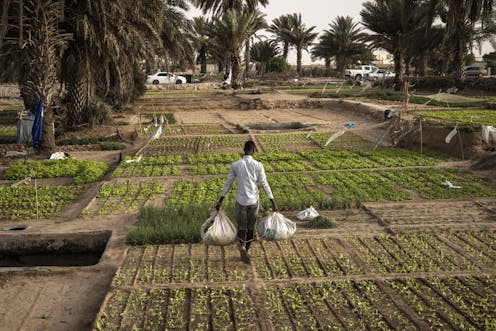
Urban farms like this one in Nouakchott, Mauritania, have many benefits. John Wessels/AFP via Getty Images)

Urban agriculture takes many forms, among them community, school or rooftop gardens, commercial urban farms, and hydroponic or aquaponic systems. These activities have been shown to promote sustainable cities in a number of ways. They enhance local food security and foster economic opportunities through small-scale farming initiatives. They also strengthen social cohesion by creating shared spaces for collaboration and learning.

However, evidence from some African countries (and other parts of the world) shows that very few young people are getting involved in agriculture, whether in urban, peri-urban or rural areas. Studies from Kenya, Tanzania, Ethiopia and Nigeria show that people aged between 15 and 34 have very little interest in agriculture, whether as an educational pathway or career. They perceive farming as physically demanding, low-paying and lacking in prestige. Systemic barriers like limited access to land, capital and skills also hold young people back.

South Africa has a higher rate of young people engaging in farming (24%) than elsewhere in sub-Saharan Africa. However, this number could be higher if young people better understood the benefits of a career in farming and if they had more support.

In a recent study I explored youth-driven urban agriculture in Khayelitsha, a large urban area outside Cape Town whose residents are mostly Black, low-income earners.

The young urban farmers I interviewed are using community gardens to grow more than vegetables. They’re also nurturing social connections, creating economic and business opportunities, and promoting environmental conservation. My findings highlight the transformative potential of youth-driven urban agriculture and how it can be a multifaceted response to urban challenges. It’s crucial that policy makers recognise the value of youth-led urban agriculture and support those doing the work.

The research

Khayelitsha is vibrant and bustling. But its approximately 400,000 residents have limited resources and often struggle to make a living.

I interviewed members of two youth-led gardens. One has just two members; the other has six. All my interviewees were aged between 22 and 27. The relatively low number of interviewees is typical of qualitative research, where the emphasis is placed on depth rather than breadth. This approach allows researchers to obtain detailed, context-rich data from a small, focused group of participants.

The first garden was founded in January 2020, just a few months before the pandemic struck. The founders wanted to tackle unemployment and food insecurity in their community. They hoped to create jobs for themselves and others, and to provide nutritional support, particularly for vulnerable groups like children with special needs.

The second garden was established in 2014 by three childhood friends. They were inspired by one founder’s grandmother, who loved gardening. They also wanted to promote organic farming, teach people healthy eating habits, and create a self-reliant community.

All of my interviewees were activists for food justice. This refers to efforts aimed at addressing systemic inequities in food production, distribution, and access, particularly for marginalised communities. It advocates for equitable access to nutritious, culturally appropriate food.

One of the gardens, for instance, operates about 30 beds. It cultivates a variety of produce: beetroot, carrots, spinach, pumpkins, potatoes, radishes, peas, lettuce and herbs. 30% of its produce is donated to local community centres each month (they were unable to say how many people benefited from this arrangement). The rest is sold to support the garden financially. Its paying clients include local restaurants and chefs, and members of the community. The garden also partners with schools, hospitals and other organisations to promote healthy eating and sustainable practices.

The second garden, which is on land belonging to a local early childhood development centre, also focuses on feeding the community, as well as engaging in food justice activism.

Skills, resilience and connections

The gardens also help members to develop skills. Members gain practical knowledge about sustainable agriculture, marketing and entrepreneurship, all while managing operations and planning for growth.


Read more:
Healthy food is hard to come by in Cape Town’s poorer areas: how community gardens can fix that


This hands-on experience instils a sense of responsibility and gives participants valuable skills they can apply in future careers or ventures. The founder of the first garden told me his skills empowered him to seek help from his own community rather than waiting for government intervention. He approached the management of an early childhood development centre in the community to request space on their land, and this was granted.

Social connections have been essential to the gardens’ success. Bonding capital (close ties within their networks) and bridging capital (connections beyond their immediate community) has allowed them to strengthen relationships between themselves and civil society organisations. They’ve also been able to mobilise resources, as in the case of the first garden accessing community land.

Additionally, the gardens foster community resilience. Members host workshops and events to educate residents about healthy eating, sustainable farming and environmental stewardship.

By donating produce to local early childhood centres, they provide direct benefits to those most in need. These efforts have transformed the gardens into safe spaces for the community.

Broader collaboration has also been key to the gardens’ success. For instance, the second garden has worked with global organisations and networks, like the Slow Food Youth Network, to share and gain knowledge about sustainable farming practices.

Room for growth

My findings highlight the need for targeted support for youth-driven urban agriculture initiatives. Policy and financial backing can enable these young gardeners to expand their efforts. This in turn will allow them to provide more food to their communities, create additional jobs, and empower more young people.

At a policy level, the government could prioritise land access for urban agriculture projects, especially in under-served communities. Cities can foster an environment for youth initiatives to thrive by allocating spaces within their planning for urban farming.


Read more:
Africa’s megacities threatened by heat, floods and disease – urgent action is needed to start greening and adapt to climate change


There’s also a need for educational programmes that emphasise the value of sustainable urban agriculture, and workshops and training on entrepreneurship and sustainable farming techniques. Community organising could further empower young farmers. Finally, continued collaboration with national and international food networks would help strengthen such initiatives.

The Conversation

Tinashe P. Kanosvamhira does not work for, consult, own shares in or receive funding from any company or organisation that would benefit from this article, and has disclosed no relevant affiliations beyond their academic appointment.

ref. Urban food gardens produce more than vegetables, they create bonds for young Capetonians – study – https://theconversation.com/urban-food-gardens-produce-more-than-vegetables-they-create-bonds-for-young-capetonians-study-243500

Southern Africa’s rangelands do many jobs, from feeding cattle to storing carbon: a review of 60 years of research

Source: The Conversation – USA – By Kevin Kirkman, Professor of Grassland Science, University of KwaZulu-Natal

South Africa’s rangelands have always had great value for the country. These areas offer more than just grazing for livestock. They provide services like purifying water, storing carbon and conserving biodiversity.

The grassland biome (28%), along with the savanna (32.5%) and the Nama-Karoo (19.5%), are collectively referred to as rangelands. They make up almost 80% of the land area of South Africa.

Their ecological services haven’t always been fully appreciated. Research into rangelands has evolved in response to environmental changes, human needs and scientific discoveries.

Commercial livestock production was the main concern when academics, researchers and practitioners met for the first congress of the Grassland Society of Southern Africa in 1966. Less than 15% of South Africa’s land surface area is arable. The only agricultural production possible on the balance of the land is livestock production from natural rangeland. Livestock production is thus a cornerstone of agriculture and food production in South Africa.

Six decades on, the Grassland Society has reflected – through a special issue of its journal, the African Journal of Range and Forage Science – on how it has tackled research challenges and adapted to shifting perceptions of rangelands.

Research has explored aspects of global change, bush encroachment and other changes in rangeland composition and function. Land transformation is another research area. Peri-urban sprawl, open-cast mining, timber plantations and other developments reduce and fragment rangeland. The result is increased pressure on the remaining, intact rangelands.

Widening scope

A review of research over the 60 years shows that early efforts focused mainly on forage production to support livestock industries. Research topics included rotational grazing and burning, as well as reinforcing rangelands by adding nutrients, forage grasses and legumes.

By the 1980s, it became clear that rangelands offered more than just grazing – they were vital ecosystems.

In the early 1990s, around the onset of democracy in South Africa, local researchers became part of global conversations around rangeland ecology. In doing so, they started to use the international terminology, instead of the old Dutch-derived word “veld”.

This shift was not just about geography, but about scope. Rangelands were increasingly seen as multifaceted ecosystems critical in the fight against climate change. Increasing temperatures, increasing atmospheric carbon dioxide levels and changing rainfall patterns pose a threat to all ecosystems. Understanding the response of rangelands is increasingly important in devising management strategies to adapt to these changes.

Scientists expanded their attention to preserving soil health, restoring degraded landscapes, and maintaining biodiversity. Issues like overgrazing, soil erosion and invasive species gained recognition in southern Africa. Degradation of rangelands in South Africa was first highlighted in the mid 1700s, and became a “mainstream” issue in the 1930s. Replacing a diverse group of wild animals with a single species of grazer, such as cattle, is the reason generally given for degradation. Fire has also been linked to it (often unfairly).

The Grassland Society responded by promoting ideas like adaptive grazing management (making decisions in response to conditions, rather than following a recipe approach). It also encouraged integrating indigenous knowledge with scientific research to create more sustainable and resilient land-use systems. This has helped shape land management practices across the region.

Many southern African rangelands face the challenge of balancing grazing with biodiversity conservation. Research on conservation agriculture and integrating livestock and wildlife systems is helping farmers and conservationists to find common ground. Wildlife, both in the conservation and the game production contexts, plays a critical role in South Africa’s economy. Tourism is one of the major contributors.

Land management is particularly important in the Mediterranean-climate regions of South Africa, where poor crop farming practices have damaged soil health. The research is guiding the development of more sustainable farming systems focused on soil regeneration and biodiversity.

A key indicator of ecosystem degradation is a decline in grassland forbs (herbaceous plants that are not grasses). They are highly sensitive to grazing pressure. So the role of wildflowers in ecosystem health and animal wellbeing has also become an important research area.

Climate change, fire suppression and overgrazing drive woody plant encroachment, where grasslands are turning into shrublands. This calls for integrated management approaches that consider fire, grazing and even controlled rewilding.

Fire is a natural element in many grassland ecosystems, and research has helped advance understanding of how it can be monitored and controlled to reduce risks while promoting healthy rangelands.

People and grasslands

Rangeland management has important social dimensions. Research is addressing issues such as land tenure, governance, community management systems on communal rangelands and indigenous knowledge in management decisions. These topics are essential for creating sustainable solutions that account for people’s livelihoods and needs.

In addition to these ecological, social and management advances, the Grassland Society of Southern Africa has worked to develop the next generation of rangeland scientists and practitioners. Through its congresses, workshops and journal publications, the society continues to foster dialogue across disciplines and communities. Its 60th congress will be held in July 2025.

The Conversation

Kevin Kirkman receives funding from the National Research Foundation.

Helga van der Merwe receives funding from the National Research Foundation.

Craig Morris does not work for, consult, own shares in or receive funding from any company or organisation that would benefit from this article, and has disclosed no relevant affiliations beyond their academic appointment.

ref. Southern Africa’s rangelands do many jobs, from feeding cattle to storing carbon: a review of 60 years of research – https://theconversation.com/southern-africas-rangelands-do-many-jobs-from-feeding-cattle-to-storing-carbon-a-review-of-60-years-of-research-254736

Do you live near a dam holding mine waste? 6 questions to ask

Source: The Conversation – USA – By Charles MacRobert, Associate Professor, Stellenbosch University

Mining is essential to modern lifestyles. Copper, iron and other mined products are vital to the products many people take for granted, like electronic devices. Being able to buy these goods quite easily may give a person a false sense of how difficult it is to extract the elements they’re made of.

Mining involves the removal of mineral-rich rock from the ground and processing it to extract the high-value minerals. Depending on the mineral, this quantity can be as low as a few grams in a tonne of rock.

For example, removing a tiny quantity of platinum from rock requires finely grinding the rock. The fine material that remains once the platinum is removed is known as tailings.

Every mining operation produces tailings. This can be coarse, like instant coffee granules, or fine, like cocoa powder. Tailings are typically mixed with water to form a liquid slurry that can be pumped and transported easily.

Slurry is kept in specially designed tailings dams. The designs are unique and depend on what is being mined and the local area.

Unfortunately, the history of mining is stained with examples of poorly managed dams that collapse, spilling the slurry, which is sometimes toxic. This can cause serious environmental, social and economic damage.

One such mine disaster happened in February 2025 in Zambia at the Sino-Metals Leach Zambia copper mine. Over 50 million litres of toxic waste flowed over the dam’s wall into the Mwambashi River. From there it flowed into one of the largest and longest Zambian rivers, the Kafue.

The pollution travelled further than 100km from the dam, contaminating the river, and killing fish and livestock on nearby farms. The Zambian government had to shut down municipal water to the city of Kitwe to protect residents from consuming the polluted water.

This should not have happened, because steps have been taken to ensure proactive management of dams. In 2020, the Global Industry Standard on Tailings Management introduced a new set of safety measures and standards.

Many mines are proactively embracing these standards. This enhances community trust in tailings dams. But other mines are not engaging with communities that might be affected by dams. Or communities may feel unsure what to ask the mines.

We are geotechnical engineers who have studied tailings dam collapses. Here, we outline six questions people living near mines should ask mine management to ensure they understand the key hazards and risks in their communities.

1. How far will the slurry flow?

Each tailings dam has a zone of influence. This is determined by analysing what would happen if the slurry breached the dam walls and started to flow out. It is an estimate of the area which would be swamped by tailings if the dam failed.

Generally, tailings disasters have caused significant damage up to a distance of 5km from the dam. If the tailings slurry gets into a river, it can flow hundreds of kilometres downstream.


Read more:
Burst mining dam in South Africa: what must be done to prevent another disaster


Zones of influence are often determined for extreme events, like once in a lifetime storms or large earthquakes. But zones of influence could also include places affected by dust or water pollution from the mine.

If you can see a tailings dam from where you live or work you should consider yourself within the zone of influence.

2. Who is responsible for the dam?

Clearly defined roles and responsibilities for day-to-day operation should be in place in every mine. There should be suitably qualified engineers appointed to carry out monitoring and maintenance of the dam. There need to be enough qualified people to cope with the size of the dam.

The management structure should set out how day-to-day issues related to the tailings dam are discussed between workers on the ground in mines and top management, and how solutions are found. Mines should also keep audit and inspection reports on their tailings dams, and records should be kept over the long term (because tailings dams are often operational for several decades).

3. What about the environment?

Mines should have plans to reduce the impact that tailings dams have on the environment. These would have been informed by public participation. The plans must state what monitoring is in place to measure the impacts of dust and water (groundwater and surface water).

The true extent of impacts only becomes apparent once the mine starts operating. So, the public should hold mines accountable for commitments made. Mines should satisfy communities that monitoring is continuing to identify and track the dam’s environmental impacts.

Closure plans should also be continuously communicated to mining-affected communities. This will assure the community that when the miners leave, they won’t be left with a dangerous dam near their homes, with no one to look after it.

4. Will the tailings dam be safe when it rains?

A common way that tailings dams fail is when water or slurry washes over the dam sidewalls. This washes away the support. It is known as overtopping, and can happen in storms or if too much tailing is pumped into the dam.

Overtopping is best managed by keeping the water a certain distance below the dam wall. Mine management must measure this regularly and control how much tailing they pump to the dam. Their task is to make sure that even in a severe storm the level will stay well below the top of the dam wall.

5. Has the dam always behaved as expected?

Small failure incidents such as sloughs, slides and bulges where dam walls move but no slurry is released can occur. Mines should investigate and report these, detailing likely causes and mitigation measures implemented.

Publicly available satellite imagery can easily show where mine tailings dams are becoming unstable. Mines should be transparent and provide explanations for these to avoid any speculation over whether the dam is stable or not.

6. What alterations have been made?

Sometimes dams must be changed to accommodate changes in mining or the extraction process. These changes could include how fast the dam is being built, moving the position of the dam wall, or placing material at the base of the wall to stabilise it.

The unexpected consequences of alterations to a tailings dam could be water seeping out and creating damp spots, leading to dam walls sagging or cracking. If left unchecked this can lead to structural failure.

When substantial changes are made to a dam’s design, mines need to demonstrate that sufficient consideration has gone into making these changes.

The Conversation

The authors do not work for, consult, own shares in or receive funding from any company or organisation that would benefit from this article, and have disclosed no relevant affiliations beyond their academic appointment.

ref. Do you live near a dam holding mine waste? 6 questions to ask – https://theconversation.com/do-you-live-near-a-dam-holding-mine-waste-6-questions-to-ask-256517

African women entrepreneurs are a smart bet for climate change investment: research shows why

Source: The Conversation – USA – By Kate Gannon, Assistant Professor, London School of Economics and Political Science

Women in Africa are often framed as especially vulnerable to climate change. Our earlier research suggested that women entrepreneurs often face a “triple differential vulnerability” to climate risk compared to men.

What we mean is that there are three possible reasons for their additional vulnerability. First, their livelihoods are often in climate sensitive sectors. Second, they face additional barriers to accessing resources for adaptation in the business environment – such as finance, new adaptation technologies and markets for climate smart goods and services. Last, they also hold primary responsibility for managing climate risk at the household level.

However, our new research also suggests a parallel, more overlooked reality. Women entrepreneurs may also be leading the way in action on climate resilience in Africa.

Through the Women Entrepreneurs in Climate Change Adaptation (WECCA) project we are researching this role of women as strategic actors in inclusive adaptation action.

Women’s entrepreneurship is key to development outcomes in Africa. This is because their businesses make wide ranging contributions to economic activity. They are active in critical agriculture and food processing value chains, which boosts export earnings. And through cooperatives, and savings groups, at the local level, women create access points to finance and markets for others in underserved regions. Studies also suggest women are more likely to use their profits to address the most critical household needs.

Small businesses form the backbone of most African economies. They generate most employment opportunities and provide essential goods and services.

Yet, these businesses are on the frontline of climate impacts. Floods, droughts, and concurrent disruption to power, water and transport networks threaten supply chains, disrupt markets, interrupt livelihood activities and damage business assets.

Businesses must adapt to survive. But how they adapt can make the difference between building long-term resilience and deepening vulnerability.

Results from our study of small businesses in climate vulnerable regions of Kenya and Senegal suggest that businesses with women leaders take a more sustainable approach to adaptation than those with only male leaders. This safeguards long-term business resilience. Our results also found adaptation assistance has a stronger impact on helping women-led small businesses adjust to climate change, compared to those led only by men.

These results suggest that supporting adaptation for women entrepreneurs isn’t just about fairness. It’s also a smart strategy for scaling up climate resilient economies. Building an inclusive business environment for adaptation may deliver bigger returns on investments for governments and donors.

Women entrepreneurs as strategic actors

Our study analysed survey data of small businesses in semi-arid regions of Senegal and Kenya. The aim was to consider how having female owners and managers shaped a business’s adaptation to extreme events.

Our dataset covered the Senegalese regions of Louga, Saint Louis and Kaolack. In Kenya, it covered the county of Laikipia. The regions experience extreme drought and flooding that is expected to increase in the coming decades. Entrepreneurship in these regions is particularly concentrated in agricultural sectors. These are highly exposed to the impacts of these extremes.

We investigated how a business having female leaders impacted the number of sustainable and unsustainable adaptation strategies that they adopted.

Following earlier literature, we classified adaptation strategies as:

  • “sustainable” when they maintain business operations at existing levels

  • “unsustainable” if they help businesses “cope” in the short term but result in a temporary (or sometimes permanent) reduction in business activity. This could reduce the resources that they have to cope with future climate impacts.

We found that businesses which include women within their management and ownership teams adopted fewer unsustainable adaptation measures than those led solely by men. Unsustainable adaptation actions are typically reactive coping strategies that can help businesses address immediate needs to minimise the negative impacts of climate shocks in the short term. These might include selling off business assets or cutting staff.

But these actions often come at a cost. They reduce business activity, undermine future growth, and may limit a business’s ability to recover from subsequent climate impacts.

In contrast, we found that businesses with female leaders were more likely to adopt sustainable adaptation measures that protected the long-term health of the business. These included:

  • diversifying income sources

  • switching to different crops

  • taking out loans or insurance.

Such strategies can help to reduce vulnerability to future climate shocks, and support income stability and recovery during periods of climate stress.

These findings are striking given the additional barriers that women face when trying to adapt.

It is well documented, for example, that women entrepreneurs in Africa face deeper constraints than men in accessing adaptation resources. This includes finance, training and technologies.

Similarly, gendered expectations around domestic responsibilities can limit women’s time and mobility, restricting their ability to attend training sessions or participate in external markets.

Social norms may also limit their decision-making power within households or businesses. This can make it harder to act independently on adaptation investments.

Given these constraints, the use of more sustainable adaptation strategies by women-led businesses deserves careful interpretation. Many of the sustainable measures we analysed – such as switching crops or diversifying income streams – can require less upfront capital than the unsustainable ones. Actions like selling assets or scaling back staff, meanwhile, are only possible if the business owns significant physical or financial resources to begin with.

The lower use of unsustainable strategies by women-led businesses may therefore reflect more limited coping capacity: they may simply have fewer assets to draw on when a shock hits.

Yet this makes the findings even more important. Sustainable strategies can still be highly effective. Our research suggests that women business leaders are often finding ways to adapt that are both practical and forward-looking, even when working with limited capital. In this sense, women entrepreneurs are not just more vulnerable – they are also strategic actors driving adaptation innovation, often with fewer resources.

What’s needed

These findings highlight not only the constraints women entrepreneurs continue to face, but also their untapped potential in adaptation.

What’s more, our study suggests that this potential can be especially powerful when the right support is in place. We found that when adaptation assistance (whether financial or technical) is made available, women-led businesses didn’t just catch up with their male-led counterparts. They often outperformed them.

This points to a highly strategic opportunity: that investing in adaptation for women entrepreneurs could deliver outsized benefits for climate resilience. For their businesses as well as the communities and economies they support.

This finding points to the need for governments to develop a business-enabling environment for adaptation that targets women entrepreneurs. This means designing policies, programmes, and support that address persistent gaps in access to tailored finance, technologies, and adaptation goods and services.

Better data is also needed. Our study used the best available data. But it was based on a relatively small sample from specific regions in Kenya and Senegal and should not be overgeneralised.

To test the strength of our findings, there is an urgent need for additional high-quality, gender-disaggregated datasets on business level adaptation behaviour.

The World Bank Enterprise Surveys could play a vital role, as one of the most extensive sources of data on small and medium-sized enterprises globally.

The Conversation

Kate Gannon receives funding from the UK Government’s Foreign, Commonwealth & Development Office (FCDO) and the International Development Research Centre (IDRC), Ottawa, Canada. She is also supported by funding from the Grantham Foundation for the Protection of the Environment. Kate Gannon is also an Associate of the Walker Institute at the University of Reading.

Shaikh Eskander received funding from IDRC.

ref. African women entrepreneurs are a smart bet for climate change investment: research shows why – https://theconversation.com/african-women-entrepreneurs-are-a-smart-bet-for-climate-change-investment-research-shows-why-252821