Nations are increasingly ‘playing the field’ when it comes to US and China – a new book explains explains why ‘active nonalignment’ is on the march

Source: The Conversation – Global Perspectives – By Jorge Heine, Outgoing Interim Director of the Frederick S. Pardee Center for the Study of the Longer-Range Future, Boston University
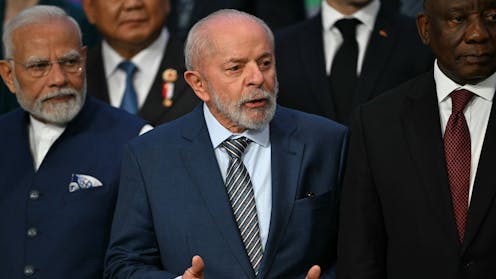
Brazil President Luiz Inacio Lula da Silva, center, flanked by India Prime Minister Narendra Modi, left, and South Africa President Cyril Ramaphosa, speaks at the summit of Group of 20 leading economies in Rio de Janeiro on Nov. 19, 2024. Mauro Pimentel/AFP via Getty Images

In 2020, as Latin American countries were contending with the triple challenges of the COVID-19 pandemic, a global economic shock and U.S. policy under the first Trump administration, Jorge Heine, research professor at Boston University and a former Chilean ambassador, in association with two colleagues, Carlos Fortin and Carlos Ominami, put forward the notion of “active nonalignment.”
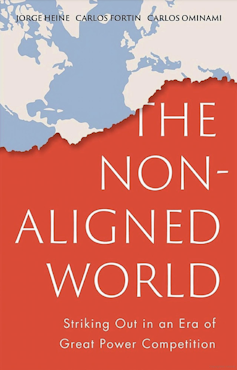
A book cover with the title 'The Non-Aligned World.'

Polity Books

Five years on, the foreign policy approach is more relevant than ever, with trends including the rise of the Global South and the fragmentation of the global order, encouraging countries around the world to reassess their relationships with both the United States and China.

It led Heine, along with Fortin and Ominami, to follow up on their original arguments in a new book, “The Non-Aligned World,” published in June 2025.

The Conversation spoke with Heine on what is behind the push toward active nonalignment, and where it may lead.

For those not familiar, what is active nonalignment?

Active nonalignment is a foreign policy approach in which countries put their own interests front and center and refuse to take sides in the great power rivalry between the U.S. and China.

It takes its cue from the Non-Aligned Movement of the 1950s and 1960s but updates it to the realities of the 21st century. Today’s rising Global South is very different from the “Third World” that made up the Non-Aligned Movement. Countries like India, Turkey, Brazil and Indonesia have greater economic heft and wherewithal. They thus have more options than in the past.

They can pick and choose policies in accordance with what is in their national interests. And because there is competition between Washington and Beijing to win over such countries’ hearts and minds, those looking to promote a nonaligned agenda have greater leverage.

Traditional international relations literature suggests that in relations between nations, you can either “balance,” meaning take a strong position against another power, or “bandwagon” – that is, go along with the wishes of that power. The notion was that weaker states couldn’t balance against the Great Powers because they don’t have the military power to do so, so they had to bandwagon.

What we are saying is that there is an intermediate approach: hedging. Countries can hedge their bets or equivocate by playing one power off the other. So, on some issues you side with the U.S., and others you side with China.

Thus, the grand strategy of active nonalignment is “playing the field,” or in other words, searching for opportunities among what is available in the international environment. This means being constantly on the lookout for potential advantages and available resources – in short, being active, rather than passive or reactive.

So active nonalignment is not so much a movement as it is a doctrine.

Two men in suits sit behind a desk chatting.
Tunisian President Habib Bourguiba, right, and Egyptian President Gamal Abdel Nasser attend the first Conference of Non-Aligned Countries in Belgrade, Yugoslavia, in September 1961.
Keystone/Hulton Archive/Getty Images

It’s been five years since you first came up with the idea of active nonalignment. Why did you think it was time to revisit it now?

The notion of active nonalignment came up during the first Trump administration and in the context of a Latin America hit by the triple-whammy of U.S. pressure, a pandemic and the ensuing recession – which in Latin America translated into the biggest economic downturn in 120 years, a 6.6% drop of regional gross domestic product in 2020.

ANA was intended as a guide for Latin American countries to navigate those difficult moments, and it led us to the publication of a symposium volume with contributions by six former Latin American foreign ministers in November 2021, in which we elaborated on the concept.

Three months later, with the Russian invasion of Ukraine and the reaction to it by many countries in Asia and Africa, nonalignment was back with a vengeance.

Countries like India, Pakistan, South Africa and Indonesia, among others, took positions that were at odds with the West on Ukraine. Many of them, though not all, condemned Russian aggression but also wanted no part in the West’s sanctions on Moscow. These sanctions were seen as unwarranted and as an expression of Western double standards – no sanctions were applied on the U.S. for invading Iraq, of course.

And then there were the Hamas attacks on Israel on Oct. 7, 2023, and the resulting war in the Gaza Strip. Countries across the Global South strongly condemned the Hamas attacks, but the West’s response to the subsequent deaths of tens of thousands of Palestinians brought home the notion of double standards when it came to international human rights.

Why weren’t Palestinians deserving of the same compassion as Ukrainians? For many in the Global South, that question hit very hard – the idea that “human rights are limited to Europeans and people who looked like them did not go down well.”

Thus, South Africa brought a case against Israel in the International Court of Justice alleging genocide, and Brazil spearheaded ceasefire efforts at the United Nations.

A third development is the expansion of the BRICS bloc of economies from its original five members – Brazil, Russia, India, China and South Africa – to 10 members. Although China and Russia are not members of the Global South, those other founding members are, and the BRICS group has promoted key issues on the Global South’s agenda. The addition of countries such as Egypt and Ethiopia has meant that BRICS has increasingly taken on the guise of the Global South forum. Brazil President Luiz Inácio Lula da Silva, a leading proponent of BRICS, is keen on advancing this Global South agenda.

All three of these developments have made active nonalignment more relevant than ever before.

How are China and the US responding to active nonalignment – or are they?

I’ll give you two examples: Angola and Argentina.

In Angola, the African country that has received most Chinese cooperation to the tune of US$45 billion, you now have the U.S. financing what is known as the Lobito Corridor – a railway line that stretches from the eastern border of the Democratic Republic of the Congo to Angola’s Atlantic coast.

Ten years ago, the notion that the U.S. would be financing railway projects in southern Africa would have been considered unfathomable. Yet it has happened. Why? Because China has built significant railway lines in countries such as Kenya and Ethiopia, and the U.S. realized that it was being left behind.

For the longest time, the U.S. would condemn such Chinese-financed infrastructure projects via the “Belt and Road Initiative” as nothing but “debt-trap diplomacy” designed to saddle developing nations with “white elephants” nobody needed. But a couple of years ago, that tune changed: The U.S. and Europe realized that there is a big infrastructure deficit in Asia, Africa and Latin America that China was stepping in to reduce – and the West was nowhere to be seen in this critical area.

In short, the West changed it approach – and countries like Angola are now able to play the U.S. off against China for its own national interests.

Then take Argentina. In 2023, Javier Milei was elected president on a strong anti-China platform. He said his government would have nothing to do with Beijing. But just two years later, Milei announced in an Economist interview that he is a great admirer of Beijing.

Why? Because Argentina has a very significant foreign debt, and Milei knew that a continued anti-China stance would mean a credit line from Beijing would likely not be renewed. The Argentinian president was under pressure from the International Monetary Fund and Washington to let the credit line with China lapse, but Milei refused to do so and managed to hold his own, playing both sides against the middle.

Milei is a populist conservative; Brazil’s Lula a leftist. So is active nonalignment immune to ideological differences?

Absolutely. When people ask me what the difference is between traditional nonalignment and active nonalignment, one of the most obvious things is that the latter is nonideological – it can be used by people of the right, left and center. It is a guide to action, a compass to navigate the waters of a highly troubled world, and can be used by governments of very different ideological hues.

Two men in suits turn away from each other.
Brazil President Luiz Inacio Lula da Silva and Argentina President Javier Milei at the 66th Summit of leaders of the Mercosur trading bloc in Buenos Aires on July 3, 2025.
Luis Robayo/AFP via Getty Images

The book talks a lot about the fragmentation of the rules-based order. Where do you see this heading?

There is little doubt that the liberal international order that framed world politics from 1945 to 2016 has come to an end. Some of its bedrock principles, like multilateralism, free trade and respect for international law and existing international treaties, have been severely undermined.

We are now in a transitional stage. The notion of the West as a geopolitical entity, as we knew it, has ceased to exist. We now have the extraordinary situation where illiberal forces in Hungary, Germany and Poland, among other places, are being supported by those in power in both Washington and Moscow.

And this decline of the West has not come about because of any economic issue – the U.S. still represents around 25% of global GDP, much as it did in 1970 – but because of the breakdown of the trans-Atlantic alliance.

So we are moving toward a very different type of world order – and one in which the Global South has the opportunity to have much more of a role, especially if it deploys active nonalignment.

How have events since Trump’s inauguration played into your argument?

The notion of active nonalignment was triggered by the first Trump administration’s pressure on Latin American countries. I would argue that the measures undertaken in Trump’s second administration – the tariffs imposed on 90 countries around the world; the U.S. leaving the Paris climate agreement, the World Health Organization and the U.N. Human Rights Council; and other “America First” policies – have only underscored the validity of active nonalignment as a foreign policy approach.

The pressures on countries across the Global South are very strong, and there is a temptation to give in to Trump and align with U.S. Yet, all indications are that simply giving in to Trump’s demands isn’t a recipe for success. Those countries that have gone down the route of giving in to Trump’s demands only see more demands after that. Countries need a different approach – and that can be found in active nonalignment.

The Conversation

Jorge Heine does not work for, consult, own shares in or receive funding from any company or organization that would benefit from this article, and has disclosed no relevant affiliations beyond their academic appointment.

ref. Nations are increasingly ‘playing the field’ when it comes to US and China – a new book explains explains why ‘active nonalignment’ is on the march – https://theconversation.com/nations-are-increasingly-playing-the-field-when-it-comes-to-us-and-china-a-new-book-explains-explains-why-active-nonalignment-is-on-the-march-260234


Thailand’s judiciary is flexing its muscles, but away from PM’s plight, dozens of activists are at the mercy of capricious courts

Source: The Conversation – Global Perspectives – By Tyrell Haberkorn, Professor of Southeast Asian Studies, University of Wisconsin-Madison

Thai Prime Minister Paetongtarn Shinawatra is swarmed by members of the media after a cabinet meeting at Government House on July 1, 2025. Anusak Laowilas/NurPhoto via Getty Images

Thai Prime Minister Paetongtarn Shinawatra is currently feeling the sharp end of the country’s powerful judiciary.

On July 2, 2025, Thailand’s Constitutional Court suspended Paetongtarn from office as a result of a leaked phone conversation in which she was heard disparaging Thailand’s military and showing deference to former the prime minister of Cambodia, Hun Sen, despite an ongoing border dispute between the two countries. Initially set for 14 days, many onlookers believe the court’s suspension is likely to become permanent.

Meanwhile, far from the prime minister’s office is Arnon Nampa, another Thai national whose future is at the mercy of the Thai judiciary – in this case, the Criminal Court.

Arnon, a lawyer and internationally recognized human rights defender, is one of 32 political prisoners imprisoned over “lèse majesté,” or insulting the Thai monarchy. He is currently serving a sentence of nearly 30 years for a speech questioning the monarchy during pro-democracy protests in 2020. Unless he is both acquitted in his remaining cases and his current convictions are overturned on appeal, Arnon will likely spend the rest of his life in prison.

The plights of Paetongtarn and Arnon may seem distant. But as a historian of Thai politics, I see the cases as connected by a judiciary using the law and its power to diminish the prospects for democracy in Thailand and constrain the ability of its citizens to participate freely in society.

Familiar troubles

The Shinawatra family is no stranger to the reach of both the Thai military and the country’s courts.

Paetongtarn is the third of her family to be prime minister – and could become the third to be ousted. Her father, Thaksin Shinawatra, was removed in a 2006 military coup. Her aunt, Yingluck Shinawatra, was ousted prior to the May 22, 2014, coup. In common with past coups, the juntas who fomented them were shielded from the law, with none facing prosecution.

For now, it is unclear whether Paetongtarn’s suspension is the precursor to another coup, the dissolution of parliament and new elections, or a reshuffle of the cabinet. But what is clear is that the Constitutional Court’s intervention is one of several in which the nine appointed judges are playing a critical role in the future of Thai democracy.

Protecting the monarchy

The root of the judiciary’s power can be found in the way the modern Thai nation was set up nearly 100 years ago.

On June 24, 1932, Thailand transitioned from an absolute monarchy to a constitutional monarchy. Since then, the country has experienced 13 coups, as the country has shifted from democracy to dictatorship and back again.

But throughout, the monarchy has remained a constant presence – protected by Article 112 of the Criminal Code, which defines the crime and penalty of lese majesté: “Whoever defames, insults, or threatens the king, queen, heir-apparent or regent shall be subject to three-to-fifteen years imprisonment.”

The law is widely feared among dissidents in Thailand both because it is interpreted broadly to include any speech or action that is not laudatory and innocent verdicts are rare.

Although Article 112 has been law since 1957, it was rarely used until after the 2006 coup.

Since then, cases have risen steadily and reached record levels following a youth-led movement for democracy in 2020. At least 281 people have been, or are currently being, prosecuted for alleged violation of Article 112, according to Thai Lawyers for Human Rights.

Challenging the status quo

The 2020 youth-led movement for democracy was sparked by the Constitutional Court’s dissolution of the progressive Future Forward Party at the beginning of that year, the disappearance of a Thai dissident in exile in Cambodia, and economic problems caused by the COVID-19 pandemic.

In protests in Bangkok and in provinces across the country, they called for a new election, a new constitution and an end to state repression of dissent.

A man next to illuminated building gestures to the crowd
Pro-democracy activist leader Arnon Nampa speaks to protesters.
Peerapon Boonyakiat/SOPA Images/LightRocket via Getty Images

On Aug. 3, 2020, Nampa added another demand: The monarchy must be openly discussed and questioned.

Without addressing such a key, unquestionable institution in the nation, Arnon argued, the struggle for democracy would inevitably fail.

This message resonated with many Thai citizens, and despite the fearsome Article 112, protests grew throughout the last months of 2020.

Students at Thammasat University, the center of student protest since the 1950s, expanded Arnon’s call into a 10-point set of demands for reform of the monarchy.

Making it clear that they did not aim to abolish the monarchy, the students’ proposal aimed to clarify the monarchy’s economic, political and military role and make it truly constitutional.

As the protests began to seem unstoppable, with tens of thousands joining, the police began cracking down on demonstrations. Many were arrested for violating anti-COVID-19 measures and other minor laws. By late November 2020, however, Article 112 charges began to be brought against Arnon and other protest leaders for their peaceful speech.

In September 2023, Arnon was convicted in his first case, and he has been behind bars since. He is joined by other political prisoners, whose numbers grow weekly as their cases move through the judicial process.

Capricious courts

Unlike Arnon, Paetongtarn Shinawatra is not facing prison.

But the Constitutional Court’s decision to suspend her from her position as prime minister because of a leaked recording of an indiscreet telephone conversation is, to many legal minds, a capricious response that has the effect of short-circuiting the democratic process.

So too, I believe, does bringing the weight of the law against Arnon and other political prisoners in Thailand who remain behind bars as the current political turmoil plays out.

The Conversation

Tyrell Haberkorn does not work for, consult, own shares in or receive funding from any company or organization that would benefit from this article, and has disclosed no relevant affiliations beyond their academic appointment.

ref. Thailand’s judiciary is flexing its muscles, but away from PM’s plight, dozens of activists are at the mercy of capricious courts – https://theconversation.com/thailands-judiciary-is-flexing-its-muscles-but-away-from-pms-plight-dozens-of-activists-are-at-the-mercy-of-capricious-courts-260408

Astronomers have spied an interstellar object zooming through the Solar System

Source: The Conversation – Global Perspectives – By Kirsten Banks, Lecturer, School of Science, Computing and Engineering Technologies, Swinburne University of Technology

K Ly / Deep Random Survey

This week, astronomers spotted the third known interstellar visitor to our Solar System.

First detected by the Asteroid Terrestrial-impact Last Alert System (ATLAS) on July 1, the cosmic interloper was given the temporary name A11pl3Z. Experts at NASA’s Center for Near Earth Object Studies and the International Astronomical Union (IAU) have confirmed the find, and the object now has an official designation: 3I/ATLAS.

A diagram of the Solar System out to Jupiter detailing the path of interstellar object 3I/ATLAS.
The orbital path of 3I/ATLAS through the Solar System.
NASA/JPL-Caltech, CC BY-NC

There are a few strong clues that suggest 3I/ATLAS came from outside the Solar System.

First, it’s moving really fast. Current observations show it speeding through space at around 245,000km per hour. That’s more than enough to escape the Sun’s gravity.

An object near Earth’s orbit would only need to be travelling at just over 150,000km/h to break free from the Solar System.

Second, 3I/ATLAS has a wildly eccentric orbit around the Sun. Eccentricity measures how “stretched” an orbit is: 0 eccentricity is a perfect circle, and anything up to 1 is an increasingly strung-out ellipse. Above 1 is an orbit that is not bound to the Sun.

3I/ATLAS has an estimated eccentricity of 6.3, by far the highest ever recorded for any object in the Solar System.

Has anything like this happened before?

An artist's impression of the first confirmed interstellar object, 1I/'Oumuamua.
An artist’s impression of the first confirmed interstellar object, 1I/‘Oumuamua.
ESO/M. Kornmesser, CC BY

The first interstellar object spotted in our Solar System was the cigar-shaped ‘Oumuamua, discovered in 2017 by the Pan-STARRS1 telescope in Hawaii. Scientists tracked it for 80 days before eventually confirming it came from interstellar space.

The interstellar comet 2I/Borisov, imaged by the Hubble Space Telescope.
NASA, ESA, and D. Jewitt (UCLA), CC BY-NC

The second interstellar visitor, comet 2I/Borisov, was discovered two years later by amateur astronomer Gennadiy Borisov. This time it only took astronomers a few weeks to confirm it came from outside the Solar System.

This time, the interstellar origin of 3I/ATLAS has been confirmed in a matter of days.

How did it get here?

We have only ever seen three interstellar visitors (including 3I/ATLAS), so it’s hard to know exactly how they made their way here.

However, recent research published in The Planetary Science Journal suggests these objects might be more common than we once thought. In particular, they may come from relatively nearby star systems such as Alpha Centauri (our nearest interstellar neighbour, a mere 4.4 light years away).

Two bright stars of the Alpha Centauri triple star system.
Alpha Centauri A and Alpha Centauri B, from the triple star system Alpha Centauri.
ESA/Hubble & NASA, CC BY

Alpha Centauri is slowly moving closer to us, with its closest approach expected in about 28,000 years. If it flings out material in the same way our Solar System does, scientists estimate around a million objects from Alpha Centauri larger than 100 metres in diameter could already be in the outer reaches of our Solar System. That number could increase tenfold as Alpha Centauri gets closer.

Most of this material would have been ejected at relatively low speeds, less than 2km/s, making it more likely to drift into our cosmic neighbourhood over time and not dramatically zoom in and out of the Solar System like 3I/ATLAS appears to be doing. While the chance of one of these objects coming close to the Sun is extremely small, the study suggests a few tiny meteors from Alpha Centauri, likely no bigger than grains of sand, may already hit Earth’s atmosphere every year.

Why is this interesting?

Discovering new interstellar visitors like 3I/ATLAS is thrilling, not just because they’re rare, but because each one offers a unique glimpse into the wider galaxy. Every confirmed interstellar object expands our catalogue and helps scientists better understand the nature of these visitors, how they travel through space, and where they might have come from.

A swarm of new asteroids discovered by the NSF–DOE Vera C. Rubin Observatory.

Thanks to powerful new observatories such as the NSF–DOE Vera C. Rubin Observatory, our ability to detect these elusive objects is rapidly improving. In fact, during its first 10 hours of test imaging, Rubin revealed 2,104 previously unknown asteroids.

This is an astonishing preview of what’s to come. With its wide field of view and constant sky coverage, Rubin is expected to revolutionise our search for interstellar objects, potentially turning rare discoveries into routine ones.

What now?

There’s still plenty left to uncover about 3I/ATLAS. Right now, it’s officially classified as a comet by the IAU Minor Planet Center.

But some scientists argue it might actually be an asteroid, roughly 20km across, based on the lack of typical comet-like features such as a glowing coma or a tail. More observations will be needed to confirm its nature.

Currently, 3I/ATLAS is inbound, just inside Jupiter’s orbit. It’s expected to reach its closest point to the Sun, slightly closer than the planet Mars, on October 29. After that, it will swing back out towards deep space, making its closest approach to Earth in December. (It will pose no threat to our planet.)

Whether it’s a comet or an asteroid, 3I/ATLAS is a messenger from another star system. For now, these sightings are rare – though as next-generation observatories such as Rubin swing into operation, we may discover interstellar companions all around.

The Conversation

Kirsten Banks does not work for, consult, own shares in or receive funding from any company or organisation that would benefit from this article, and has disclosed no relevant affiliations beyond their academic appointment.

ref. Astronomers have spied an interstellar object zooming through the Solar System – https://theconversation.com/astronomers-have-spied-an-interstellar-object-zooming-through-the-solar-system-260422

We don’t need deep-sea mining, or its environmental harms. Here’s why

Source: The Conversation – Global Perspectives – By Justin Alger, Associate Professor / Senior Lecturer in Global Environmental Politics, The University of Melbourne

Potato-sized polymetallic nodules from the deep sea could be mined for valuable metals and minerals. Carolyn Cole / Los Angeles Times via Getty Images

Deep-sea mining promises critical minerals for the energy transition without the problems of mining on land. It also promises to bring wealth to developing nations. But the evidence suggests these promises are false, and mining would harm the environment.

The practice involves scooping up rock-like nodules from vast areas of the sea floor. These potato-sized lumps contain metals and minerals such as zinc, manganese, molybdenum, nickel and rare earth elements.

Technology to mine the deep sea exists, but commercial mining of the deep sea is not happening anywhere in the world. That could soon change. Nations are meeting this month in Kingston, Jamaica, to agree to a mining code. Such a code would make way for mining to begin within the next few years.

On Thursday, Australia’s national science agency, CSIRO, released research into the environmental impacts of deep-sea mining. It aims to promote better environmental management of deep-sea mining, should it proceed.

We have previously challenged the rationale for deep-sea mining, drawing on our expertise in international politics and environmental management. We argue mining the deep sea is harmful and the economic benefits have been overstated. What’s more, the metals and minerals to be mined are not scarce.

The best course of action is a ban on international seabed mining, building on the coalition for a moratorium.

The Metals Company spent six months at sea collecting nodules in 2022, while studying the effects on ecosystems.

Managing and monitoring environmental harm

Recent advances in technology have made deep-sea mining more feasible. But removing the nodules – which also requires pumping water around – has been shown to damage the seabed and endanger marine life.

CSIRO has developed the first environmental management and monitoring frameworks to protect deep sea ecosystems from mining. It aims to provide “trusted, science-based tools to evaluate the environmental risks and viability of deep-sea mining”.

Scientists from Griffith University, Museums Victoria, the University of the Sunshine Coast, and Earth Sciences New Zealand were also involved in the work.

The Metals Company Australia, a local subsidiary of the Canadian deep-sea mining exploration company, commissioned the research. It involved analysing data from test mining the company carried out in the Pacific Ocean in 2022.

The company has led efforts to expedite deep-sea mining. This includes pushing for the mining code, and exploring commercial mining of the international seabed through approval from the US government.

In a media briefing this week, CSIRO Senior Principal Research Scientist Piers Dunstan said the mining activity substantially affected the sea floor. Some marine life, especially that attached to the nodules, had very little hope of recovery. He said if mining were to go ahead, monitoring would be crucial.

We are sceptical that ecological impacts can be managed even with this new framework. Little is known about life in these deep-water ecosystems. But research shows nodule mining would cause extensive habitat loss and damage.

Do we really need to open the ocean frontier to mining? We argue the answer is no, on three counts.

How does deep-sea mining work? (The Guardian)

1. Minerals are not scarce

The minerals required for the energy transition are abundant on land. Known global terrestrial reserves of cobalt, copper, manganese, molybdenum and nickel are enough to meet current production levels for decades – even with growing demand.

There is no compelling reason to extract deep-sea minerals, given the economics of both deep-sea and land-based mining. Deep-sea mining is speculative and inevitably too expensive given such remote, deep operations.

Claims about mineral scarcity are being used to justify attempting to legitimise a new extractive frontier in the deep sea. Opportunistic investors can make money through speculation and attracting government subsidies.

2. Mining at sea will not replace mining on land

Proponents claim deep-sea mining can replace some mining on land. Mining on land has led to social issues including infringing on indigenous and community rights. It also damages the environment.

But deep-sea mining will not necessarily displace, replace or change mining on land. Land-based mining contracts span decades and the companies involved will not abandon ongoing or planned projects. Their activities will continue, even if deep-sea mining begins.

Deep-sea mining also faces many of the same challenges as mining on land, while introducing new problems. The social problems that arise during transport, processing and distribution remain the same.

And sea-based industries are already rife with modern slavery and labour violations, partly because they are notoriously difficult to monitor.

Deep-sea mining does not solve social problems with land-based mining, and adds more challenges.

The sun sets on the mining vessel Hidden Gem in Rotterdam, South Holland, Netherlands, 2022.
Hidden Gem was the world’s first deep-sea mineral production vessel with seabed-to-surface nodule collection and transport systems.
Photo by Charles M. Vella/SOPA Images/LightRocket via Getty Images

3. Common heritage of humankind and the Global South

Under the United Nations Convention on the Law of the Sea, the international seabed is the common heritage of humankind. This means the proceeds of deep-sea mining should be distributed fairly among all countries.

Deep-sea mining commercial partnerships between developing countries in the Global South and firms from the North have yet to pay off for the former. There is little indication this pattern will change.

For example, when Canadian company Nautilus went bankrupt in 2019, it saddled Papua New Guinea with millions in debt from a failed domestic deep-sea mining venture.

The Metals Company has partnerships with Nauru and Tonga but the latest deal with the US creates uncertainty about whether their agreements will be honoured.

European investors took control of Blue Minerals Jamaica, originally a Jamaican-owned company, shortly after orchestrating its start up. Any profits would therefore go offshore.

A man holding a nodule from the deep sea stands on the dock with a ship labelled The Metals Company behind him.
Australian Gerard Barron is Chairman and CEO of The Metals Company, formerly DeepGreen.
Carolyn Cole / Los Angeles Times via Getty Images

A wise investment?

It is unclear whether deep-sea mining will ever be a good investment.

Multiple large corporate investors have pulled out of the industry, or gone bankrupt. And The Metals Company has received delisting notices from the Nasdaq stock exchange due to poor financial performance.

Given the threat of environmental harm, the evidence suggests deep-sea mining is not worth the risk.

The Conversation

Justin Alger receives funding from the Social Sciences and Humanities Research Council of Canada.

D.G. Webster receives funding from the National Science Foundation in the United States and various internal funding sources at Dartmouth University.

Jessica Green receives funding from the Social Sciences and Humanities Research Council of Canada.

Kate J Neville receives funding from the Social Sciences and Humanities Research Council of Canada.

Stacy D VanDeveer and Susan M Park do not work for, consult, own shares in or receive funding from any company or organisation that would benefit from this article, and have disclosed no relevant affiliations beyond their academic appointment.

ref. We don’t need deep-sea mining, or its environmental harms. Here’s why – https://theconversation.com/we-dont-need-deep-sea-mining-or-its-environmental-harms-heres-why-260401

Ageing bridges around the world are at risk of collapse. But there’s a simple way to safeguard them

Source: The Conversation – Global Perspectives – By Andy Nguyen, Senior Lecturer in Structural Engineering, University of Southern Queensland

The Story Bridge, with its sweeping steel trusses and art deco towers, is a striking sight above the Brisbane River in Queensland. In 2025, it was named the state’s best landmark. But more than an icon, it serves as one of the vital arteries of the state capital, carrying more than 100,000 vehicles daily.

But a recent report revealed serious structural issues in the 85-year-old bridge. These included the deterioration of concrete, corrosion and overloading on pedestrian footpaths.

The findings prompted an urgent closure of the footpath for safety reasons. They also highlighted the urgency of Brisbane City Council’s planned bridge restoration project.

But this example – and far more tragic ones from around the world in recent years – have also sparked a broader conversation about the safety of ageing bridges and other urban infrastructure. A simple, proactive step known as structural health monitoring can help.

A number of collapses

In January 2022, the Fern Hollow Bridge in Pittsburgh, Pennsylvania, in the United States collapsed and injured several people. This collapse was caused by extensive corrosion and the fracturing of a vital steel component. It stemmed from poor maintenance and failure to act on repeated inspection recommendations. These problems were compounded by inadequate inspections and oversight.

Three years earlier, Taiwan’s Nanfang’ao Bridge collapsed. Exposure to damp, salty sea air had severely weakened its suspension cables. Six people beneath the bridge died.

In August 2018, Italy’s Morandi Bridge fell, killing 43 people. The collapse was due to corrosion in pre-stressed concrete and steel tendons. These factors were worsened by inspection and maintenance challenges.

In August 2007, a bridge in the US city of Minneapolis collapsed, killing 13 people and injuring 145. This collapse was primarily due to previously unnoticed problems with the design of the bridge. But it also demonstrated how ageing infrastructure, coupled with increasing loads and ineffective routine visual inspections, can exacerbate inherent weaknesses.

A technology-driven solution

Structural health monitoring is a technology-driven approach to assessing the condition of infrastructure. It can provide near real-time information and enable timely decision-making. This is crucial when it comes to managing ageing structures.

The approach doesn’t rely solely on occasional periodic inspections. Instead it uses sensors, data loggers and analytics platforms to continuously monitor stress, vibration, displacement, temperature and corrosion on critical components.

This approach can significantly improve our understanding of bridge performance compared to traditional assessment models. In one case, it updated a bridge’s estimated fatigue life – the remaining life of the structure before fatigue-induced failure is predicted to occur– from just five years to more than 52 years. This ultimately avoided unnecessary and costly restoration.

Good structural health-monitoring systems can last several decades. They can be integrated with artificial intelligence techniques and bridge information modelling to develop digital twin-based monitoring platforms.

The cost of structural health monitoring systems varies by bridge size and the extent of monitoring required. Some simple systems can cost just a few thousand dollars, while more advanced ones can cost more than A$300,000.

These systems require ongoing operational support – typically 10% to 20% of the installation cost annually – for data management, system maintenance, and informed decision-making.

Additionally, while advanced systems can be costly, scalable structural health monitoring solutions allow authorities to start small and expand over time.

A model for proactive management

The design of structural health monitoring systems has been incorporated into new large-scale bridge designs, such as Sutong Bridge in China and Governor Mario M. Cuomo Bridge in the US.

But perhaps the most compelling example of these systems in action is the Jacques Cartier Bridge in Montreal, Canada.

Opened in 1930, it shares design similarities with Brisbane’s Story Bridge. And, like many ageing structures, it faces its own challenges.

A steel bridge seen at sunset.
Opened in 1930, the Jacques Cartier Bridge in Montreal, Canada, shares design similarities with Brisbane’s Story Bridge.
Pinkcandy/Shutterstock

However, authorities managing the Jacques Cartier Bridge have embraced a proactive approach through comprehensive structural health monitoring systems. The bridge has been outfitted with more than 300 sensors.

Acoustic emission monitoring enables early detection of micro-cracking activity, while long-term instrumentation tracks structural deformation and dynamic behaviour across key spans.

Satellite-based radar imagery adds a remote, non-intrusive layer of deformation monitoring, and advanced data analysis ensures that the vast amounts of sensor data are translated into timely, actionable insights.

Together, these technologies demonstrate how a well-integrated structural-health monitoring system can support proactive maintenance, extend the life of ageing infrastructure – and ultimately improve public safety.

A way forward for Brisbane – and beyond

The Story Bridge’s current challenges are serious, but they also present an opportunity.

By investing in the right structural health monitoring system, Brisbane can lead the way in modern infrastructure management – protecting lives, restoring public confidence, preserving heritage and setting a precedent for cities around the world.

As climate change, urban growth, and ageing assets put increasing pressure on our transport networks, smart monitoring is no longer a luxury – it’s a necessity.

The Conversation

Andy Nguyen receives funding from the Queensland government, through the Advance Queensland fellowship. He is on the executive committee of Australian Network of Structural Health Monitoring.

ref. Ageing bridges around the world are at risk of collapse. But there’s a simple way to safeguard them – https://theconversation.com/ageing-bridges-around-the-world-are-at-risk-of-collapse-but-theres-a-simple-way-to-safeguard-them-260005

Lake Victoria is turning green – the deadly bacteria behind it

Source: The Conversation – USA – By Lauren Hart, PhD candidate, Michigan Geomicrobiology Lab, University of Michigan

Lakes, natural and man-made, provide water, food and habitats for wildlife, as well as supporting local economies. Around the world, though, there’s a growing threat to lakes: toxic bacteria which turn the water green.

This is the same green as you see on stagnant ponds. It’s caused by tiny organisms called cyanobacteria and can be deadly.

Cyanobacteria thrive in warm, sunny lakes and ponds that contain excess nitrogen and phosphorus nutrients derived from fertiliser, manure and sewage. When conditions are right, cyanobacteria multiply rapidly and form smelly green scums on the water’s surface.

Known to science as cyanoHABs (cyanobacterial harmful algal blooms), the scums are harmful to livestock, wildlife, pets, people and aquatic organisms like fish. Toxins make untreated water unsafe to drink, swim in, or even touch. Sometimes they can become suspended in air and be inhaled. The cyanoHABs also harm ecosystems by depleting oxygen, killing off whatever lives in the water, and disrupting food webs and fisheries.

CyanoHABs are a global threat and receive considerable scientific attention in North America and Europe. Blooms are becoming more widespread worldwide because rising temperatures promote cyanobacterial growth and more intense rainfall delivers nutrients from the landscape. Only effective management of nutrients can reverse this trend.

The problem is understudied in Africa’s main lakes, including its largest – Lake Victoria. Past research on cyanoHABs has mostly used microscopy to study the kinds found there, but microscopy cannot differentiate between toxic and non-toxic cyanobacterial cells.

We are on a large project team of scientists who have been studying the socioeconomic and environmental effects of cyanoHABs in the Winam Gulf region of Lake Victoria in south-western Kenya.

Our latest study identified which cyanobacteria were the most abundant in the gulf and which ones were producing the main toxin of concern.

These findings can improve public safety:

  • local authorities can monitor for specific cyanobacteria and warn residents to stay away when blooms are present

  • cyanoHAB prevention practices (nutrient reduction, land-use practices) can target the cyanobacteria that cause the problem.

Greening of lakes

Lake Victoria now receives large influxes of nutrients because of growing lakeside populations and land-use changes. Nutrients from agriculture, industry and urbanisation fuel the growth of cyanoHABs.

CyanoHABs occur in many basins in Lake Victoria but are highly concentrated in Kenya’s shallow Winam/Nyanza Gulf. Changing nutrient and temperature conditions can also alter which types of cyanobacteria dominate the gulf and the types and levels of toxins in the water. Lakeside communities that rely on the gulf for drinking water and domestic tasks are at risk of exposure to cyanoHAB toxins.

Past research on cyanoHABs has mostly used the oldest of microbiological techniques — microscopy — to classify the types of cyanobacteria in the gulf. This cannot differentiate between toxic and non-toxic cyanobacterial cells.

Modern genome sequencing technologies can identify genes encoding the production of known and novel toxins and other molecules of interest, such as those with medicinal properties. Genomic data from African Great Lakes is scarce, so the chemical capabilities of bacteria in this region are largely unexplored. But this is beginning to change.

Our latest study adds to a growing number of recent studies our team has carried out in and around Lake Victoria. In this study, our research vessel stopped at over 31 sites to collect scientific samples and data. The samples were later analysed for DNA, the biological “instruction manual” inside every living thing. DNA tells an organism how to grow, function, reproduce, and – in the case of cyanobacteria – make deadly toxins. This analysis produced near-complete genome sequences – that is, the set of all genes in the DNA – for organisms at each sampling site.

Past reports identified Microcystis as the dominant cyanobacteria in the Winam Gulf. Our research, however, found Dolichospermum was the most abundant type in major cyanoHAB events there. This finding might be due to recent environmental changes in the region.

But we linked Microcystis to microcystin. This is a liver-damaging toxin that can kill livestock, wildlife and humans, especially those whose immune system isn’t working well. In Winam Gulf, it’s often more abundant than the health limits set by the WHO.

Our study also found that Microcystis occurs mainly in murkier river mouths where green scums are not visible, making scientific monitoring and public alerts even more important.

Local authorities can now monitor for these cyanobacteria and warn residents to stay away when blooms are present.

The findings also mean that authorities know which cyanobacteria to target in prevention efforts like reducing the amount of phosphorus and other nutrients entering the gulf.

Lastly, our genomic study uncovered over 300 uncharacterised genes that may produce novel cyanobacterial molecules. These molecules could have toxic or therapeutic effects, and provide an opportunity for future investigators to explore.

A model for what is to come

Rapid human population growth and settlement around lakes and their watersheds is leading to high levels nutrients in lakes around the world. This results in excessive growth of algae and aquatic plants. This danger is likely to increase with global warming because warm temperatures promote algal blooms.

Our data provides a foundation for remedying this in Lake Victoria – and possibly discovering beneficial properties in cyanoHABs.

The Conversation

Lauren Hart receives funding from National Institute of Health.

George S Bullerjahn receives funding from the National Science Foundation.

Gregory J. Dick receives funding from the National Science Foundation, the National Oceanic and Atmospheric Administration, the National Institutes for Health, and the US Geological Survey.

Kefa M. Otiso receives funding from the US National Science Foundation.

ref. Lake Victoria is turning green – the deadly bacteria behind it – https://theconversation.com/lake-victoria-is-turning-green-the-deadly-bacteria-behind-it-249298

Has finance for green industry had an impact in Africa? What’s happened in 41 countries over 20 years

Source: The Conversation – USA – By Nara Monkam, Associate Professor of Public Economics, Chair in Municipal Finance within the Department of Economics, and Head of the Public Policy Hub at the University of Pretoria, University of Pretoria

The African continent finds itself in a predicament. Advanced economies in the rest of the world developed through industrialisation: their economies transformed from mainly agricultural to industrial. This involved burning fossil fuels like coal, generating greenhouse gas emissions that caused global warming.

African economies have trailed behind industrially. They’re now industrialising at a time when the world is moving away from fossil fuels and towards solar power, wind energy and hydropower.

Africa has 60% of the world’s best solar resources but only 1% of the world’s installed solar power systems. Despite renewable energy capacity nearly doubling in the last decade, only 2% of global investments in renewable energy went to Africa.

Green industrialisation could be the answer: achieving long-term economic growth and industrial development that does not harm the environment. But in most African countries, renewable energy is more expensive than fossil fuels, which are readily available in many parts of the continent. Africa is also one of the world’s poorest regions and cannot easily afford green technologies.

So a key issue in economic development is how to stimulate green industrial productivity. Green finance (funding from banks and investors specifically for environmentally friendly projects) can fund green innovations. These include renewable energy technologies, energy-efficient building designs, or electric vehicles.


Read more:
Africa doesn’t have a choice between economic growth and protecting the environment: how they can go hand in hand


I am an economist who worked with a team of researchers to study the impact of green finance on industrialisation in Africa. We also wanted to find out if green innovation influenced the effect that green finance has on industrialisation. (This was measured in this study as the total industrial value added as a percentage of gross domestic product.)

For example, switching to renewable energy like solar power reduces greenhouse gas emissions, and helps mitigate climate change. But the high costs of renewable energy equipment could harm industrial growth.

The research analysed macroeconomic and energy, green finance and industrialisation statistics from 41 African countries between 2000 and 2020.

Our research found that green finance offers funding opportunities for clean and innovative technologies and creating new jobs in green sectors. However, the potential of green financing to drive industrialisation through green innovation (such as renewable energy projects) is not being realised.


Read more:
How green innovation could be the key to growth for the UK’s rural businesses


This is because renewable energy comes with high costs. There also are not enough skilled people available to run green projects. There’s a lack of proper roads, connectivity or transmission lines to connect renewable energy to the main grid. The basic conditions for industrial growth through renewable energy are not in place.

Governments in Africa should find ways to make green innovation work. This will mean that society can enjoy the benefit of new environmentally friendly projects.

How to make green innovation work

African governments should focus on increasing people’s access to renewable energy projects. For this to happen, they need to put more funding and effort into developing renewable energy infrastructure. Renewable energy technologies must be available and affordable.

Education and capacity building is needed, particularly in rural communities. For example, community-owned solar microgrid projects provide people with the skills needed to manage and look after renewable energy systems.

Governments will need to subsidise local manufacturing of renewable energy components. When these are produced locally, this can help harness the potential of green innovation for industrialisation and also create jobs.

Countries must co-operate regionally on green innovation. This means sharing best practices, pooling resources, and making coordinated efforts towards green industrialisation.

Our research found that it would be useful to set up regional centres of excellence for renewable energy research and development. Regional alliances are also needed, so that countries can work together to negotiate better terms for green finance. This could enhance Africa’s journey towards the kind of green industrialisation that is cost effective and sustainable over time.

What needs to happen next

These steps would boost the impact of green finance on industrialisation in Africa:

  • more climate finance, including finance from the private sector

  • environmental taxation – a policy tool to limit activities, goods or services that have negative environmental impacts

  • reform of multilateral development agencies to make it easier for African countries to access to climate funds

  • development bank funding tailored to the needs of African countries. Nations that invest in renewable energy manufacturing should get tax breaks and other incentives. Green bonds that only fund renewable energy projects should be issued to attract private investors

  • vocational training and higher education programmes that focus on training people in green technologies must get government funding.

Africa has a huge problem with trying to build some resilience to the effects of climate change, such as floods and drought. Economic development is also a challenge on the continent. Both could be addressed by green industrialisation. With the right investments in green finance, innovation and infrastructure, the continent can unlock sustainable growth, reduce poverty and help curb climate change.

The Conversation

Nara Monkam receives funding from the University of Pretoria.

ref. Has finance for green industry had an impact in Africa? What’s happened in 41 countries over 20 years – https://theconversation.com/has-finance-for-green-industry-had-an-impact-in-africa-whats-happened-in-41-countries-over-20-years-244567

Flooding incidents in Ghana’s capital are on the rise. Researchers chase the cause

Source: The Conversation – USA – By Stephen Appiah Takyi, Senior Lecturer, Department of Planning, Kwame Nkrumah University of Science and Technology (KNUST)

Urban flooding is a major problem in the global south. In west and central Africa, more than 4 million people were affected by flooding in 2024. In Ghana, cities suffer damage from flooding every year.

Ghana’s president, John Dramani Mahama, has established a task force to find ways of improving flood resilience in the country. This is partly driven by an increase in flooding incidents in cities such as Accra and Kumasi in the last decade.

We are urban planning and sustainability scholars. In a recent paper we analysed whether flooding in Accra, Ghana’s capital, was caused by climate change or poor land use planning.

We conclude from our analysis that flooding is caused by poor and uncoordinated land use planning rather than climate change. We recommend that the physical planning department and other regulatory agencies are equipped to ensure the effective enforcement the relevant land use regulations.

Mixed push factors

The Accra metropolitan area is one of the 29 administrative units of Ghana’s Greater Accra region. It is the most populous region in Ghana, with over five million residents, according to the 2021 Housing and Population Census.

We interviewed 100 households living in areas such as Kaneshie, Adabraka and Kwame Nkrumah Circle. These areas experience a high incidence of floods. Representatives of agencies such as the Physical Planning Department of the Accra Metropolitan Assembly, the National Disaster Management Organisation and the Environmental Protection Agency were interviewed too, about:

  • the nature and areas most prone to flooding in the study area

  • the frequency of flooding

  • land use planning and regulations and their influence on flooding.

About 40% of the people we interviewed attributed flooding to both weak enforcement of land use regulation and changes in rainfall patterns. Most of the households (52%) said floods in Accra were the result of weak enforcement of land use regulations, while 8% blamed changes in land use regulations.

We also analysed recorded data on flood incidence and rainfall. We found no correlation between increased rainfall and flooding. For example in 2017 there was a decrease in rainfall, but an increase in flooding.

This finding points to the fact that rainfall isn’t the only factor contributing to flooding in the city.

The agencies and city residents reported that between 2008 and 2018, they could see that more people were encroaching on the city’s wetlands by building homes and commercial infrastructure. This has changed the natural flow of water bodies. The Greater Accra Metropolitan and its environs has major wetlands such as Densu Delta, Sakumo Lagoon and Songor Lagoon.

Interview respondents noted that the siting of unauthorised buildings and the encroachment on buffer zones of water bodies in the city could have been averted. They blamed political interference in the enforcement of land use regulation. The government makes the situation worse in two ways, they said:

  • planning standards and regulations are neglected in the development process. The processes involved in acquiring development permits are cumbersome and expensive, so people go ahead and develop without permits.

  • regulatory institutions and authorities are ineffective. This is clear from the fact that planning happens chaotically. No attention is given to the ecological infrastructure that’s needed.

The way forward

We conclude that land use malpractices remain the dominant causes of flooding in Accra. They include:

  • poor disposal of solid waste, which eventually blocks drains and results in water overflow during heavy rains

  • building on wetlands as a result of non-compliance or non-enforcement of land use regulations.

There is an urgent need for Ghana’s cities to adopt best practices in waste management. These include recycling of plastic waste and composting for urban agriculture. An environmental excise tax was introduced in 2011 to fund plastic waste recycling and support waste management agencies.

The increasing encroachment on wetlands should be addressed through the strict enforcement of buffer regulations. Planning authorities and the judiciary can collaborate on this. The city must also encourage green infrastructure, like rain gardens, green roofs, permeable pavement, street trees and rain harvesting systems.
Research has shown these to be environmentally sustainable and cost-effective approaches to managing storm water.

Another suggested approach is the introduction of the polluter pays principle in city management. This is a system where city residents who are involved in the pollution of the environment are made to pay for the cost of mitigating the impact. Residents who dispose of waste indiscriminately and encroach on wetlands would be made to pay for the cost of the environmental degradation. Cities such as Barcelona and Helsinki have applied this principle in the management of their industrial discharge and contaminated waste.

Finally, there should be incentives for city residents to promote environmental sustainability. For example, a deposit refund system has been introduced in several states in the US and Australia. In this system, consumers are made to pay a deposit after purchasing items that can be recycled, such as plastic bottles, and the deposit is reimbursed to the consumer after the return of the empty bottles to a retail store.

The Conversation

The authors do not work for, consult, own shares in or receive funding from any company or organisation that would benefit from this article, and have disclosed no relevant affiliations beyond their academic appointment.

ref. Flooding incidents in Ghana’s capital are on the rise. Researchers chase the cause – https://theconversation.com/flooding-incidents-in-ghanas-capital-are-on-the-rise-researchers-chase-the-cause-254000

Sustainable economic growth in South Africa will come from renewables, not coal: what our model shows

Source: The Conversation – USA – By Andrew Phiri, Associate Professor of Economics, Nelson Mandela University

Coal fired power stations produce 85% of South Africa’s electricity, making the country the biggest producer of harmful greenhouse-gas emissions in Africa. To move away from coal and meet its commitment to reaching net zero emissions by 2050, South Africa needs to dramatically increase production of renewable energy. New research by economics associate professor Andrew Phiri looked at the relationship between renewable and non-renewable energy consumption and GDP growth in South Africa to find out which energy source is most compatible with economic development.

Non-renewables, renewables and economic growth: what’s there to know?

We set out to discover whether renewable energy in South Africa, such as wind or solar power, supports sustainable economic growth. We also wanted to find out if renewables can replace non-renewable energy as a source and enabler of economic growth.

Together with student Tsepiso Sesoai, I did research comparing the impact of renewable and non-renewable energy on economic growth in South Africa.

South Africa currently faces a dual challenge when it comes to energy. It is heavily dependent on non-renewable energy (coal), which also worsens global warming and speeds up climate change. But it desperately needs to grow the economy at a faster rate, given very high unemployment, poverty and inequality.

It’s therefore important to find out whether South Africa would be able to make a smooth transition from non-renewable energy to cleaner energy, and grow the economy at the same time.

Past studies have looked into the role of energy in South Africa’s economic growth, but their methods have provided only limited information about whether South Africa can make a smooth transition from dirty to clean energy.


Read more:
African economic expansion need not threaten global carbon targets: study points out the path to green growth


To get a deeper understanding, we conducted a modelling exercise. We used an analytical tool called “continuous complex wavelets” to see how renewable and non-renewable energy influences growth over time.

Our model shows that an increased supply and higher consumption of non-renewable energy causes long-term economic growth over 10-15 year cycles. Renewables, at best, have short-term growth effects over six months to one year.

After 2000, there was a very sharp increase of almost 25% in the use of renewable energy throughout the decade. According to our model, this sharp increase was enough to have an impact on economic growth over the short term but not over the long term.

This is because South African energy regulators have not adopted strong enough measures for renewable energy to enable long-term growth. They have not funded the mass rollout of renewable energy, or connected renewables to the national grid. We found that renewables can only sustain growth over six to 12 month cycles whereas policymakers work towards longer cycles such as the 2030 and 2050 sustainable development goals.

Economic growth and coal consumption: what did you find?

In 2003, the government started taking climate change seriously with the release of the White Paper on Renewable Energy. The government started intentionally trying to increase the use of renewable energy while decreasing the use of dirty energy, such as coal. Before this, South Africa’s economic growth was heavily driven by coal consumption.

Renewable energy saw its biggest surge after the 2010 launch of the Renewable Energy Independent Power Producer Procurement Programme. This opened competitive bidding for renewable energy providers to supply electricity to the grid.

The transition to renewable energy had begun. But coal-fired power, while declining, remained the main source of electricity.

In 2019 carbon taxes were formally introduced. This resulted in a further slowdown in consumption of non-renewable energy. The COVID-19 pandemic in 2020 and 2021 coincided with severe power cuts. These two events combined caused a general slowdown in non-renewable and renewable energy use, and in economic growth.

At this point, the drop in coal consumption was actively dragging down the economy. This in turn reduced society’s income, as measured by the gross national product. And because incomes were constrained, fewer private households purchased renewable energy systems. People didn’t spend on solar panels.

What do your findings mean?

Our research suggests that relying on non-renewable energy, like coal, won’t lead to long-term growth for South Africa. This is because non-renewables are not a reliable source of energy, as shown by loadshedding.

Our research further suggests that renewable energy policies, subsidies and programmes made some positive short-term impacts on economic growth, measured as gross domestic product.

Overall, our findings highlight that policymakers have treated renewables as a “nice-to-have” gesture for humanity, instead of a key driver of long-term economic growth.

This has led to weak policies, poor regulation, and under-investment in renewable energy. These have held the sector back from making a bigger contribution to economic growth.


Read more:
Africa doesn’t have a choice between economic growth and protecting the environment: how they can go hand in hand


For example, the government has not taken renewables seriously enough to include them in the power grid. This has largely limited the use of renewable energy to private homes and businesses. Coal-fired electricity from the country’s power utility, Eskom, is still cheaper for households than leaving the grid and purchasing their own renewable energy infrastructure (solar energy systems). The government has not funded the infrastructure needed to unlock South Africa’s vast renewable energy potential.

The planet is at a critical state with global warming. The government should urgently set up policies and actions to overcome the barriers to using renewable energy. Only then will renewable energy have a permanent, positive influence on economic growth.

South Africa has huge potential in renewables like solar, wind and biomass, thanks to its diverse geography. Yet, when people think about moving away from coal, they worry about job losses in the coal industry. But historically, energy transitions have never been instant. African countries that embraced the change early on reaped the benefits. They became more industrialised and prosperous.

The South African government must act now if it wants to use renewable energy to drive future economic growth and stay ahead in the global shift to clean energy. Climate change affects us deeply. But it also presents a chance for Africa to leap ahead technologically.

The Conversation

Andrew Phiri does not work for, consult, own shares in or receive funding from any company or organisation that would benefit from this article, and has disclosed no relevant affiliations beyond their academic appointment.

ref. Sustainable economic growth in South Africa will come from renewables, not coal: what our model shows – https://theconversation.com/sustainable-economic-growth-in-south-africa-will-come-from-renewables-not-coal-what-our-model-shows-239339

Psychology in democratic South Africa: new book explores a post-apartheid journey

Source: The Conversation – USA – By Liezille Jacobs, Associate Professor, Rhodes University

Dr Liezille Jacobs’ book explores the experiences of South Africa’s first generation of post-apartheid Black psychologists. Photo by Dirk Pieters/cover concept Antonio Erasmus, CC BY-NC-ND

When apartheid ended in 1994, South Africa underwent significant social and political transformation. A key aspect of this shift was the push for greater inclusion and representation of Black South Africans across all sectors – including psychology.

Dr Liezille Jacobs was part of a pioneering generation of Black psychologists who started their training in 1995. Now she has written a book, Rocklands: On becoming the first generation of Black psychologists in post-apartheid South Africa. In it she explores the barriers she and her colleagues faced and unpacks misconceptions around what psychology is and does. She also argues that critical (and African) psychology can both “address the legacies of apartheid and heal the relational traumas caused by systemic oppression”. The Conversation Africa asked her about the book and her work.

What is the book about?

I wrote Rocklands to address the widespread misconceptions that both first-year psychology students and the general public often hold about what it truly means to be a psychologist. It’s common for people to oversimplify the profession. They view it merely as talking to people or offering quick-fix solutions to problems. The reality is far more complex.

I wanted to challenge these superficial ideas and provide a more layered and accurate representation of the field. The process of becoming a psychologist is not just about acquiring theoretical knowledge. It’s also about developing emotional intelligence, critical thinking, and a strong ethical foundation. Psychologists must balance empathy with objectivity, personal insight with professional boundaries, all while navigating the vast complexities of human emotions, relationships, and societal influences.

The goal of the book is to make psychological knowledge and expertise more accessible to the public.

Rocklands is also an account of resilience and personal growth in the face of adversity. The first chapter reflects on my early experiences growing up in Rocklands, Mitchell’s Plain. Rocklands was established during apartheid as part of a government plan to segregate communities. Black South Africans were moved to areas like Mitchell’s Plain under the Group Areas Act. Over time, Rocklands grew into a working-class neighborhood, shaped by its apartheid-era history.

The ensuing chapters provide a detailed account of my unique and often difficult journey. I’ve traversed a path less travelled but it’s ultimately led to personal and professional fulfilment.

Why did you decide to study psychology?

I initially dreamed of becoming a journalist. However, my parents encouraged me to explore other career options. The results of a career assessment suggested I should consider social work, occupational therapy or psychology.

Psychology truly caught my attention. As someone with an introverted personality I was drawn to the idea of understanding human behaviour and thought processes on a deeper level. At the time, I envisioned myself working as a clinical psychologist, helping individuals one-on-one.

Everything shifted when I began my formal studies in 1995. I quickly realised that the field of psychology in South Africa – especially in the context of its history – had much more work to do. I saw the gaps in the system and became acutely aware of how psychology had, in many ways, been complicit in perpetuating social injustices. In 1995, as a first year psychology student, I was made aware of the field’s struggle with its apartheid legacy and psychology’s unfinished business.

Hendrik Verwoerd was the architect of the racist policies and segregation system that became known worldwide as “grand apartheid”. He was also a psychologist by training.

Psychology in South Africa has made efforts to adapt to a diverse society. But there are still challenges. These include a disconnect between academic training and professional practice, and the lingering effects of apartheid-era inequalities.


Read more:
Being black in the world: a tribute to pioneering South African psychologist Chabani Manganyi


South Africa desperately needed (and still does today) Critical Psychologists. Critical psychology challenges traditional psychological theories by examining the social, political, and historical contexts that shape psychological issues. It critiques mainstream psychology for overlooking power structures. And it aims to use psychology as a tool for social change and addressing inequalities.

Critical psychologists challenge the dominant narratives of the past, address the legacies of apartheid, and have access to the tools to heal the relational traumas caused by systemic oppression. I knew I wanted to contribute to the transformation of the profession – to make it more inclusive, socially responsible, and oriented towards healing the wounds left by historical injustices. This shift in perspective has shaped my entire career. It’s guided my studies, research and teaching practice.

Have South Africa’s universities changed how they teach psychology?

The academic transformation project continues and universities are striving to adapt to a more diverse student body. But the pace and extent of this change can vary between institutions.

There has been a growing recognition globally that psychology, as a discipline, needs to move beyond its traditional western-centric, individualistic frameworks. It must engage more deeply with local contexts and diverse ways of knowing and experiencing the world.

I was the head of the Psychology Department at Rhodes University in South Africa’s Eastern Cape province from 2022 to 2024. The department has incorporated indigenous knowledge systems such as African philosophical perspectives and non-western psychological practices into our teaching.

For example, community-based service-learning strategies are emphasised in the undergraduate courses I teach. Community-based service-learning combines community service with academic learning. This gives students the opportunity to engage in real-world problems and contribute to the community while applying psychological theories, concepts and methods. Students learn how to become engaged citizens.

We also use a variety of teaching materials – case studies, texts by African scholars, multimedia – that resonate with students’ lived experiences.


Read more:
Decolonising psychology creates possibilities for social change


In a society as culturally and racially diverse as South Africa it is crucial for people to see themselves reflected in the professionals they turn to for help. This can play a role in lowering barriers to mental health services.

South Africa has a legacy of collective struggle and community resilience. Psychology stands to gain from a greater understanding of collective identities, community dynamics and social justice. Psychologists from diverse backgrounds can offer more nuanced, holistic interventions that address systemic issues rather than focusing solely on individual pathology.

The Conversation

Liezille Jacobs receives funding from the Future Professors Programme for the Book publication.

ref. Psychology in democratic South Africa: new book explores a post-apartheid journey – https://theconversation.com/psychology-in-democratic-south-africa-new-book-explores-a-post-apartheid-journey-247699