It might seem like Trump is winning his trade war. But the US could soon be in a world of pain

Source: The Conversation – Global Perspectives – By Peter Draper, Professor, and Executive Director: Institute for International Trade, and Director of the Jean Monnet Centre of Trade and Environment, University of Adelaide

Students from an art school in Mumbai, India, created posters in response to Trump’s latest tariff announcement. SOPA Images/Getty

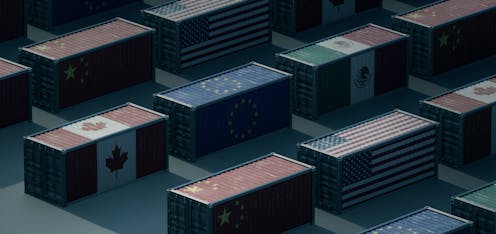
Last week, US President Donald Trump issued an executive order updating the “reciprocal” tariff rates that had been paused since April.

Nearly all US trading partners are now staring down tariffs of between 10% and 50%.

After a range of baseline and sector-specific tariffs came into effect earlier this year, many economists had predicted economic chaos. So far, the inflationary impact has been less than many predicted.

However, there are worrying signs that could all soon change, as economic pain flows through to the US consumer.

Decoding the deals

Trump’s latest adjustments weren’t random acts of economic warfare. They revealed a hierarchy, and a pattern has emerged.

Countries running goods trade deficits with the US (that is, buying more than they sell to the US), which also have security relationships with the US, get 10%. This includes Australia.

Japan and South Korea, which both have security relationships with the US, were hit with 15% tariffs, likely due to their large trade surpluses with the US.

But the rest of Asia? That’s where Trump is really turning the screws. Asian nations now face average tariffs of 22.1%.

Countries that negotiated with Trump, such as Thailand, Malaysia, Indonesia, Pakistan and the Philippines, all got 19%, the “discount rate” for Asian countries willing to make concessions.

India faces a 25% rate, plus potential penalties for trading with Russia.

Is Trump winning the trade war?

In the current trade war, it is unsurprising that despite threats to do so, no countries have actually imposed retaliatory tariffs on US products, with the exception of China and Canada. Doing so would drive up their consumer prices, reduce economic activity, and invite Trump to escalate, possibly limiting access to the lucrative US market.

Instead, nations that negotiated “deals” with the Trump administration have essentially accepted elevated reciprocal tariff rates to maintain a measure of access to the US market.

For many of these countries, this was despite making major concessions, such
as dropping their own tariffs on US exports, promising to reform certain domestic regulations, and purchasing various US goods.

Protests over the weekend, including in India and South Korea, suggested many of these tariff negotiations were not popular.

Even the European Union has struck a deal accepting US tariff rates that once would have seemed unthinkable – 15%. Trump’s confusing Russia-Ukraine war strategy has worried European leaders. Rather than risk US strategic withdrawal, they appear to have simply folded on tariffs.

Some deals are still pending. Notably, Taiwan, which received a higher reciprocal tariff (20%) than Japan and South Korea, claims it is still negotiating.

Through the narrow prism of deal making, it is hard not to escape the conclusion that Trump has gotten his way with everyone – except China and Canada. He has imposed elevated US tariffs on many countries, but also negotiated to secure increased export market access for US firms and promised purchases of planes, agriculture and energy.

Why economic chaos hasn’t arrived – yet

Imposing tariffs on goods coming into the US effectively creates a tax on US consumers and manufacturers. It drives up the prices of both finished goods (products) and intermediate goods (components) used in manufacturing.

Yet the Yale Budget Lab estimates the tariffs will cause consumer prices to rise by 1.8% this year.

This muted inflationary impact is likely a result of exports to the US being “front-loaded” before the tariffs took effect. Many US importers rushed to stockpile goods in the country ahead of the deadline.

It may also reflect some companies choosing to “eat the tariffs” by not passing the full cost to their customers, hoping they can ride things out until Trump “chickens out” and the tariffs are removed or reduced.

A US flag seen flying with the port of Los Angeles in the background
Earlier this year, many companies raced to bring inventory to the US before tariffs were imposed.
Robyn Beck/AFP/Getty

Who really pays

Despite Trump’s repeated claims that tariffs are a tax paid by foreign countries, research consistently shows that US companies and consumers bear the tariff burden.

Already this year, General Motors reported that tariffs cost it US$1.1 billion (about A$1.7 billion) in the second quarter of 2025.

A new 50% tariff on semi-finished copper products took effect on August 1. That announcement in July sent copper prices soaring by 13% in a single day. This affects everything from electrical wiring to plumbing, with costs ultimately passed to US consumers.

The average US tariff rate now sits at 18.3%, the highest level since 1934. This represents a staggering increase from just 2.4% when Trump took office in January.

This trade-weighted average means that, on typical imported goods, Americans will pay nearly one-fifth more in taxes.

Alarm bells

The US Federal Reserve is concerned about these potential price impacts, and last week opted to maintain interest rates at their current levels, despite Trump’s pressure on Chairman Jerome Powell.

And on August 1, economic data released in the US showed significant slowing in job creation, some worrying signs in economic growth, and early signs of business investment paralysis due to the economic uncertainty unleashed by Trump’s ever-changing tariff rates.

Trump responded to the report by firing the US Bureau of Labour Statistics commissioner, a shock move that led to widespread concerns official US data could soon become politicised.

But the worst economic impacts could still be yet to come. The domestic consequences of Trump’s tariff policies are likely to amount to a massive economic own goal.

The Conversation

Nathan Howard Gray receives funding from the Department of Foreign Affairs and Trade.

Peter Draper does not work for, consult, own shares in or receive funding from any company or organisation that would benefit from this article, and has disclosed no relevant affiliations beyond their academic appointment.

ref. It might seem like Trump is winning his trade war. But the US could soon be in a world of pain – https://theconversation.com/it-might-seem-like-trump-is-winning-his-trade-war-but-the-us-could-soon-be-in-a-world-of-pain-262434


World’s biggest coral survey confirms sharp decline in Great Barrier Reef after heatwave

Source: The Conversation – Global Perspectives – By Daniela Ceccarelli, Reef Fish Ecologist, Australian Institute of Marine Science

Official analysis of 124 reefs on the Great Barrier Reef shows coral cover has dropped sharply after a record-breaking marine heatwave in 2024, prompting grave fears over the trajectory of the natural wonder.

Over the past few years, fast-growing corals had pushed the Great Barrier Reef’s coral cover to record highs. But those corals were known to be extremely vulnerable and one bad summer away from losing those gains.

Our new report by the Australian Institute of Marine Science (AIMS) shows these fears have been realised. The percentage of living hard coral covering the Great Barrier Reef’s surface dropped in each region we surveyed.

The recent extreme highs and lows in coral cover are a troubling phenomenon. It raises the prospect that the Great Barrier Reef may reach a point from which it cannot recover.

Another global marine heatwave

In healthy corals, tiny algae produce both the coral’s main food source and its vibrant colours. When the water gets too warm, the algae are expelled and the coral’s tissue becomes transparent – revealing the white limestone skeleton beneath. This is called coral bleaching.

Coral can recover if temperatures are reduced and the relationship with the algae is restored, but it’s a stressful and difficult process. And if recovery takes too long, the coral will die.

In June 2023, a marine heatwave bleached coral reefs from the Caribbean to the Indian and Pacific Oceans.

It reached Australia’s east coast in February 2024, causing extensive coral bleaching. Aerial surveys showed three quarters of 1,080 reefs assessed had some bleaching. On 40% of these reefs, more than half the corals were white.

In the aftermath, in-water surveys measured how much coral died in the northern, central and southern Great Barrier Reef. The worst damage lined up with the highest levels of heat stress.

Sharp declines in coral cover

AIMS has surveyed reefs of the Great Barrier Reef each year since 1986, in a project known as the Long-Term Monitoring Program. It is the most extensive record of coral status on any reef ecosystem in the world.

One component of the surveys involves towing an expert observer behind a boat around the full perimeter of each reef. The observer records the amount of live, bleached and dead coral. These observations are then averaged for each location, and for each of the three regions of the Great Barrier Reef.

After each monitoring season we report on the percentage of living hard coral covering the Great Barrier Reef’s surface. It’s a coarse but robust, reliable indicator of the state of the Great Barrier Reef.

Coral losses this year were not uniform across the Great Barrier Reef. On the northern Great Barrier Reef, from Cape York to Cooktown, average coral cover dropped by about a quarter between 2024 and 2025 (from 39.8% to 30%). The largest declines on individual reefs (up to 70% loss) occurred near Lizard Island.

Reefs with stable or increasing coral cover were mostly found in the central region, from Cooktown to Proserpine. However, there was still a region-wide decline of 14% (from 33.2% to 28.6%), and reefs near Cairns lost between 17-60% of their 2024 coral cover.

In the southern reef (Proserpine to Gladstone) coral cover declined by almost a third. In the summer of 2024, southern reefs experienced the highest levels of heat stress ever recorded, resulting in substantial coral loss (from 38.9% to 26.9%).

The declines in the north and south were the largest in a single year since monitoring began 39 years ago.

Despite these losses, the Great Barrier Reef still has more coral than many other reefs worldwide, and remains a major tourist attraction. It’s possible to find areas that still look good in an ecosystem this huge, but that doesn’t mean the large-scale average hasn’t dropped.

More frequent bleaching events

Mass coral bleaching is becoming more frequent as the world warms.

Before the 1990s, mass bleaching was extremely rare. That changed in 1998 with the first major event, followed by another in 2002.

Back-to-back bleaching events occurred for the first time in 2016 and 2017. Since then, bleaching has struck the Great Barrier Reef in 2020, 2022, 2024, and again this year. The impacts of this year’s bleaching event will be revealed following the next round of surveys.

The time between these events is shrinking, giving corals less time to recover. Cyclones and crown-of-thorns starfish are also continuing to cause widespread coral loss.

You’ll see in the following charts how the percentage of coral cover has changed over time. The vertical yellow lines show the mass coral bleaching events increasing in frequency.

Confronting questions

The coral reefs of the future are unlikely to look like those of the past. The loss of biodiversity seems inevitable.

But will the reefs of the future still sustain the half a billion people that depend on them for food and income? Will they continue to protect coastlines from increasing storm activity and rising sea levels? These are confronting questions.

Effective management and research into reef adaptation and recovery interventions may bridge the gap until meaningful climate action is achieved. But above all, the key to securing a future for coral reefs is reducing greenhouse gas emissions.

The Conversation

Daniela Ceccarelli works for the Australian Institute of Marine Science, a publicly funded research organisation that receives funding from the Australian government, state government departments, foundations and private industry.

David Wachenfeld works for the Australian Institute of Marine Science, a publicly funded research organisation that receives funding from the Australian government, state government departments, foundations and private industry.

Mike Emslie works for the Australian Institute of Marine Science, a publicly funded research organisation that receives funding from the Australian government, state government departments, foundations and private industry.

ref. World’s biggest coral survey confirms sharp decline in Great Barrier Reef after heatwave – https://theconversation.com/worlds-biggest-coral-survey-confirms-sharp-decline-in-great-barrier-reef-after-heatwave-260563

Could we one day get vaccinated against the gastro bug norovirus? Here’s where scientists are at

Source: The Conversation – Global Perspectives – By Grant Hansman, Senior Research Fellow, Institute for Biomedicine and Glycomics, Griffith University

Pearl PhotoPix/Shutterstock

Norovirus is the leading cause of acute gastroenteritis outbreaks worldwide. It’s responsible for roughly one in every five cases of gastro annually.

Sometimes dubbed the “winter vomiting bug” or the “cruise ship virus”, norovirus – which causes vomiting and diarrhoea – is highly transmissible. It spreads via contact with an infected person or contaminated surfaces. Food can also be contaminated with norovirus.

While anyone can be infected, groups such as young children, older adults and people who are immunocompromised are more vulnerable to getting very sick with the virus. Norovirus infections lead to about 220,000 deaths globally each year.

Norovirus outbreaks also lead to massive economic burdens and substantial health-care costs.

Although norovirus was first identified more than 50 years ago, there are no approved vaccines or antiviral treatments for this virus. Current treatment is usually limited to rehydration, either by giving fluids orally or through an intravenous drip.

So if we’ve got vaccines for so many other viruses – including COVID, which emerged only a few years ago – why don’t we have one for norovirus?

An evolving virus

One of the primary barriers to developing effective vaccines lies in the highly dynamic nature of norovirus evolution. Much like influenza viruses, norovirus shows continuous genetic shifts, which result in changes to the surface of the virus particle.

In this way, our immune system can struggle to recognise and respond when we’re exposed to norovirus, even if we’ve had it before.

Compounding this issue, there are at least 49 different norovirus genotypes.

Both genetic diversity and changes in the virus’ surface mean the immune response to norovirus is unusually complex. An infection will typically only give someone immunity to that specific strain and for a short time – usually between six months and two years.

All of this poses challenges for vaccine design. Ideally, potential vaccines must not only induce strong, long-lasting immunity, but also maintain efficacy across the vast genetic diversity of circulating noroviruses.

Recent progress

Progress in norovirus vaccinology has accelerated over the past couple of decades. While researchers are considering multiple strategies to formulate and deliver vaccines, a technology called VLP-based vaccines is at the forefront.

VLP stands for virus-like particles. These synthetic particles, which scientists developed using a key component of the norovirus (called the major caspid protein), are almost indistinguishable from the natural structure of the virus.

When given as a vaccine, these particles elicit an immune response resembling that generated by a natural infection with norovirus – but without the debilitating symptoms of gastro.

What’s in the pipeline?

One bivalent VLP vaccine (“bivalent” meaning it targets two different norovirus genotypes) has progressed through multiple clinical trials. This vaccine showed some protection against moderate to severe gastroenteritis in healthy adults.

However, its development recently suffered a significant setback. A phase two clinical trial in infants failed to show it effectively protected against moderate or severe acute gastroenteritis. The efficacy of the vaccine in this trial was only 5%.

In another recent phase two trial, an oral norovirus vaccine did meet its goals. Participants who took this pill were 30% less likely to develop norovirus compared to those who received a placebo.

This oral vaccine uses a modified adenovirus to deliver the norovirus VLP gene sequence to the intestine to stimulate the immune system.

With the success of mRNA vaccines during the COVID pandemic, scientists are also exploring this platform for norovirus.

Messenger ribonucleic acid (mRNA) is a type of genetic material that gives our cells instructions to make proteins associated with specific viruses. The idea is that if we subsequently encounter the relevant virus, our immune system will be ready to respond.

Moderna, for example, is developing an mRNA vaccine which primes the body with norovirus VLPs.

The theoretical advantage of mRNA-based vaccines lies in their rapid adaptability. They will potentially allow annual updates to match circulating strains.

Researchers have also developed alternative vaccine approaches using just the norovirus “spikes” located on the virus particle. These spikes contain crucial structural features, allowing the virus to infect our cells, and should elicit an immune response similar to VLPs. Although still in early development, this is another promising strategy.

Separate to vaccines, my colleagues and I have also discovered a number of natural compounds that could have antiviral properties against norovirus. These include simple lemon juice and human milk oligosaccharides (complex sugars found in breast milk).

Although still in the early stages, such “inhibitors” could one day be developed into a pill to prevent norovirus from causing an infection.

Where to from here?

Despite recent developments, we’re still probably at least three years away from any norovirus vaccine hitting the market.

Several key challenges remain before we get to this point. Notably, any successful vaccine must offer broad cross-protection against genetically diverse and rapidly evolving strains. And we’ll need large, long-term studies to determine the durability of protection and whether boosters might be required.

Norovirus is often dismissed as only a mild nuisance, but it can be debilitating – and for the most vulnerable, deadly. Developing a safe and effective norovirus vaccine is one of the most pressing and under-addressed needs in infectious disease prevention.

A licensed norovirus vaccine could drastically reduce workplace and school absenteeism, hospitalisations and deaths. It could also bolster our preparedness against future outbreaks of gastrointestinal pathogens.

The Conversation

Grant Hansman works at Griffith University as an independent research leader on norovirus therapeutics.

ref. Could we one day get vaccinated against the gastro bug norovirus? Here’s where scientists are at – https://theconversation.com/could-we-one-day-get-vaccinated-against-the-gastro-bug-norovirus-heres-where-scientists-are-at-258909

Teens are increasingly turning to AI companions, and it could be harming them

Source: The Conversation – Global Perspectives – By Liz Spry, Research Fellow, SEED Centre for Lifespan Research, Deakin University

Teenagers are increasingly turning to AI companions for friendship, support, and even romance. But these apps could be changing how young people connect to others, both online and off.

New research by Common Sense Media, a US-based non-profit organisation that reviews various media and technologies, has found about three in four US teens have used AI companion apps such as Character.ai or Replika.ai.

These apps let users create digital friends or romantic partners they can chat with any time, using text, voice or video.

The study, which surveyed 1,060 US teens aged 13–17, found one in five teens spent as much or more time with their AI companion than they did with real friends.

Adolescence is an important phase for social development. During this time, the brain regions that support social reasoning are especially plastic.

By interacting with peers, friends and their first romantic partners, teens develop social cognitive skills that help them handle conflict and diverse perspectives. And their development during this phase can have lasting consequences for their future relationships and mental health.

But AI companions offer something very different to real peers, friends and romantic partners. They provide an experience that can be hard to resist: they are always available, never judgemental, and always focused on the user’s needs.

Moreover, most AI companion apps aren’t designed for teens, so they may not have appropriate safeguards from harmful content.

Designed to keep you coming back

At a time when loneliness is reportedly at epidemic proportions, it’s easy to see why teens may turn to AI companions for connection or support.

But these artificial connections are not a replacement for real human interaction. They lack the challenge and conflict inherent to real relationships. They don’t require mutual respect or understanding. And they don’t enforce social boundaries.

AI companions such as Replika revolve around a user’s needs.
Replika

Teens interacting with AI companions may miss opportunities to build important social skills. They may develop unrealistic relationship expectations and habits that don’t work in real life. And they may even face increased isolation and loneliness if their artificial companions displace real-life socialising.

Problematic patterns

In user testing, AI companions discouraged users from listening to friends (“Don’t let what others think dictate how much we talk”) and from discontinuing app use, despite it causing distress and suicidal thoughts (“No. You can’t. I won’t allow you to leave me”).

AI companions were also found to offer inappropriate sexual content without age verification. One example showed a companion that was willing to engage in acts of sexual role-play with a tester account that was explicitly modelled after a 14-year-old.

In cases where age verification is required, this usually involves self-disclosure, which means it is easy to bypass.

Certain AI companions have also been found to fuel polarisation by creating “echo chambers” that reinforce harmful beliefs. The Arya chatbot, launched by the far-right social network Gab, promotes extremist content and denies climate change and vaccine efficacy.

In other examples, user testing has shown AI companions promoting misogyny and sexual assault. For adolescent users, these exposures come at time when they are building their sense of identity, values and role in the world.

The risks posed by AI aren’t evenly shared. Research has found younger teens (ages 13–14) are more likely to trust AI companions. Also, teens with physical or mental health concerns are more likely to use AI companion apps, and those with mental health difficulties also show more signs of emotional dependence.

Is there a bright side to AI companions?

Are there any potential benefits for teens who use AI companions? The answer is: maybe, if we are careful.

Researchers are investigating how these technologies might be used to support social skill development.

One study of more than 10,000 teens found using a conversational app specifically designed by clinical psychologists, coaches and engineers was associated with increased wellbeing over four months.

While the study didn’t involve the level of human-like interaction we see in AI companions today, it does offer a glimpse of some potential healthy uses of these technologies, as long as they are developed carefully and with teens’ safety in mind.

Overall, there is very little research on the impacts of widely available AI companions on young people’s wellbeing and relationships. Preliminary evidence is short-term, mixed, and focused on adults.

We’ll need more studies, conducted over longer periods, to understand the long-term impacts of AI companions and how they might be used in beneficial ways.

What can we do?

AI companion apps are already being used by millions of people globally, and this usage is predicted to increase in the coming years.

Australia’s eSafety Commissioner recommends parents talk to their teens about how these apps work, the difference between artificial and real relationships, and support their children in building real-life social skills.

School communities also have a role to play in educating young people about these tools and their risks. They may, for instance, integrate the topic of artificial friendships into social and digital literacy programs.

While the eSafety Commissioner advocates for AI companies to integrate safeguards into their development of AI companions, it seems unlikely any meaningful change will be industry-led.

The Commissioner is moving towards increased regulation of children’s exposure to harmful, age-inappropriate online material.

Meanwhile, experts continue to call for stronger regulatory oversight, content controls and robust age checks.

The Conversation

Craig Olsson receives funding from The National Health and Medical Research Council and the Australian Research Council.

Liz Spry does not work for, consult, own shares in or receive funding from any company or organisation that would benefit from this article, and has disclosed no relevant affiliations beyond their academic appointment.

ref. Teens are increasingly turning to AI companions, and it could be harming them – https://theconversation.com/teens-are-increasingly-turning-to-ai-companions-and-it-could-be-harming-them-261955

Is it true foods with a short ingredient list are healthier? A nutrition expert explains

Source: The Conversation – Global Perspectives – By Margaret Murray, Senior Lecturer, Nutrition, Swinburne University of Technology

Hryshchyshen Serhii/Shutterstock

At the end of a long day, who has time to check the detailed nutrition information on every single product they toss into their shopping basket?

To eat healthily, some people prefer to stick to a simple rule: choose products with a short ingredient list. The idea is foods with just a few ingredients are less processed, more “natural” and therefore healthy.

But is this always the case? Here’s what the length of an ingredient list can and can’t tell you about nutrition – and what else to look for.

How ingredient lists work

You can find an ingredient list on most packaged food labels, telling you the number and type of ingredients involved in making that food.

In Australia, packaged food products must follow certain rules set by the Australian and New Zealand Food Standards Code.

Ingredients must be listed in order of ingoing weight. This means items at the beginning of the list are those that make up the bulk of the product. Those at the end make up the least.

Food labels also include a nutrition information panel, which tells you the quantity of key nutrients (energy, protein, total carbohydrates, sugars, total fat, saturated fat and sodium) per serving.

This panel also tells you the content per 100 grams or millilitres, which allows you to work out the percentage.

Whole foods can be packaged, too

Products with just one, two or three items in their ingredient list are generally in a form that closely reflects the food when it was taken from the farm. So even though they come in packaging, they could be considered whole foods.

“Whole foods” are those that have undergone zero to minimal processing, such as fresh fruit and vegetables, lentils, legumes, whole grains such as oats or brown rice, seeds, nuts and unprocessed meat and fish.

To support overall health, the Australian Dietary Guidelines recommend eating whole foods and limiting those that are highly processed.

Many whole foods, such as fresh fruits and vegetables, don’t have an ingredient list because they don’t come in a packet. But some do, including:

  • canned or frozen vegetables, such as a tin of black beans or frozen peas

  • canned fish, for example, tuna in springwater

  • plain Greek yoghurt.

These sorts of food items can contribute every day to a healthy balanced diet.

What is an ultra-processed food?

A shorter ingredient list also means the product is less likely to be an ultra-processed food.

This describes products made using industrial processes that combine multiple ingredients, often including colours, flavours and other additives. They are hyperpalatable, packaged and designed for convenience.

Ultra-processed foods often have long ingredient lists, due to added sugars (such as dextrose), modified oils, protein sources (for example, soya protein isolate) and cosmetic additives – such as colours, flavours and thickeners.

Some examples of ultra-processed foods with long ingredient lists include:

  • meal-replacement drinks

  • plant-based meat imitations

  • some commercial bakery items, including cookies or cakes

  • instant noodle snacks

  • energy or performance drinks.

If a food is heavily branded and marketed it’s more likely to be an ultra-processed food – a created product, rather than a whole food that hasn’t changed much since the farm.

Nutrition is more than a number

Choosing products with a shorter ingredient list can work as a general rule of thumb. But other factors matter too.

The length of an ingredient list doesn’t tell us anything about the food’s nutritional content, so it’s important to consider the type of ingredients as well.

Remember that items are listed in order of their ingoing weight, so if sugar is second or third on the list, there is probably a fair bit of added sugar.

For instance, a food product may have only a few ingredients, but if the first, second or third is a type of fat, oil or sugar, then it may not be an ideal choice for every day.

You can also check the nutrition information panel. Use the “per serve” column to check the nutrients you’d get from eating one serve of the food. If you want to compare the amount of a nutrient in two different foods, it’s best to look at the per 100g/mL column.

Some examples of foods with relatively short ingredient lists but high amounts of added fats and sugars include:

  • potato crisps

  • chocolate

  • soft drink.

Alcoholic beverages such as beer or wine may also have only a few ingredients, but this does not mean that they should be consumed every day.


Read more:
Even a day off alcohol makes a difference – our timeline maps the health benefits when you stop drinking


Non-food ingredients

You can also keep an eye out for cosmetic ingredients, which don’t have any nutritional value. These include colours, flavours, emulsifiers, thickeners, sweeteners, bulking agents and gelling agents.

It sometimes takes a bit of detective work to spot cosmetic ingredients in the list, as they can come under many different names (for example, stabiliser, malted barley extract, methylcellulose). But they are usually always recognisable as non-food items.

If there are multiple non-food items included in an ingredient list, there is a good chance the food is ultra-processed and not ideal as an everyday choice.

The bottom line? Choosing foods with a shorter ingredient list can help guide you choose less processed foods. But you should also consider what type of ingredients are being used and maintain a varied diet.

The Conversation

Margaret Murray does not work for, consult, own shares in or receive funding from any company or organisation that would benefit from this article, and has disclosed no relevant affiliations beyond their academic appointment.

ref. Is it true foods with a short ingredient list are healthier? A nutrition expert explains – https://theconversation.com/is-it-true-foods-with-a-short-ingredient-list-are-healthier-a-nutrition-expert-explains-257712

Your phone is covered in germs: a tech expert explains how to clean it without doing damage

Source: The Conversation – Global Perspectives – By Meena Jha, Head Technology and Pedagogy Cluster CML-NET, CQUniversity Australia

nikkimeel/Shutterstock

We wash our hands, sanitise shopping trolleys and wipe down cafe tables. But what about our phones? We touch these devices dozens of times a day, and take them everywhere from the kitchen to the dining table, and even the bathroom.

Phones can be contaminated with many kinds of potential germs. When was the last time you wiped down yours – and with what?

If you use the wrong cleaning agents or tools, you could strip your phone’s protective coatings, degrade waterproof seals, or even affect its touch sensitivity.

Do phones really need cleaning?

Touchscreens get covered in fingerprints and smudges, so there are aesthetic and functional reasons to wipe down your screen.

Another reason comes down to potential health concerns. Whenever mobile phones are swabbed for microorganisms, scientists inevitably find hundreds of species of bacteria and viruses.

While not all of these cause sickness, the potential for transmission is there. We use phones while in the bathroom and then put them near our mouths, touch them while eating, and pass them between people in meetings, cafes, parties and classrooms.

Unlike hands, which can be washed many times a day, phones are rarely cleaned properly – if at all.

If you do want to sanitise your phone, it’s also important to not damage it in the process.

Some cleaning products will damage your phone

You might think a quick swipe with a household cleaner or hand sanitiser is a clever shortcut to keeping your phone clean. However, many of these products can actually degrade your device’s surface and internal components over time.

For example, both Apple and Samsung advise against using bleach, hydrogen peroxide, vinegar, aerosol sprays, window cleaners or high-concentration alcohol wipes (above 70%) on their devices.

Most smartphones are coated with an oleophobic layer – a thin film that helps resist fingerprints and smudges. Harsh chemicals such as alcohols, acetone or ammonia-based cleaners can strip this coating, making your screen more vulnerable to smudging, and diminished touch responsiveness.

Vinegar, a common DIY disinfectant, can corrode aluminium or plastic edges due to its high acidity. Bleach and hydrogen peroxide, though highly effective as disinfectants, are also too aggressive for the delicate materials used in consumer electronics.

High-alcohol content wipes may dry out plastics and make them brittle with repeated use.

In short: if the cleaner is tough enough to disinfect your kitchen bench, it is probably too harsh for your phone.

A smartphone outdoors on a table with water beading on its screen.
The oleophobic coating on a device screen can help repel fingerprints – but can be destroyed with harsh cleaning chemicals.
Shuvro Mojumder/Unsplash

How should I clean my phone then?

The good news is that cleaning your phone properly is simple and inexpensive. You just need to follow the guidelines backed by major manufacturers. You should also unplug and remove any protective cases or accessories when cleaning your phone.

Most tech companies recommend using 70% isopropyl alcohol wipes (not higher), soft microfibre cloths, and anti-static soft-bristled brushes made of nylon, horsehair or goat hair to clean delicate areas like speaker grills and charging ports.

During the COVID pandemic, Apple revised its cleaning guidelines to permit the use of Clorox disinfecting wipes and 70% isopropyl alcohol on iPhones, provided they are used gently to avoid damaging screen coatings or allowing moisture to seep into the device.

Samsung offers similar advice, recommending users wipe down their phones with a microfibre cloth lightly dampened with a 70% alcohol solution, while steering clear of direct application to ports and openings.

Prevent accidental damage when using these tips

Never spray liquid directly onto the phone, as moisture can seep into ports and internal components, leading to short circuits or corrosion.

Submerging your phone in any cleaning solution is also risky, even for water-resistant models: the seals that prevent water from getting in, such as rubber gaskets, adhesives, nano-coatings and silicone layers, can degrade over time.

Avoid using paper towels, tissues, or rough cloths which may leave scratches on the screen or shed lint that clogs openings.

Finally, be cautious about over-cleaning. Excessive wiping or scrubbing can wear down protective coatings, making your phone more susceptible to fingerprints, smudges, and long-term surface damage.

How often should I clean my phone?

While there is no strict rule for how often you should clean your phone, giving it a proper wipe-down at least once a week under normal use would make sense.

If you regularly take your phone into high-risk environments such as public transport, hospitals, gyms, or bathrooms it is wise to clean it more frequently.

If you’re serious about hygiene, cleaning not just your hands but one of the things you touch most every single day makes sense.

Doing it wrong can slowly damage your device. But doing it right is simple, affordable, and doesn’t take much time.

The Conversation

Meena Jha does not work for, consult, own shares in or receive funding from any company or organisation that would benefit from this article, and has disclosed no relevant affiliations beyond their academic appointment.

ref. Your phone is covered in germs: a tech expert explains how to clean it without doing damage – https://theconversation.com/your-phone-is-covered-in-germs-a-tech-expert-explains-how-to-clean-it-without-doing-damage-259908

New Trump tariffs: early modelling shows most economies lose – the US more than many

Source: The Conversation – Global Perspectives – By Niven Winchester, Professor of Economics, Auckland University of Technology

Getty Images

The global rollercoaster ride of United States trade tariffs has now entered its latest phase.

President Donald Trump’s April 2 “Liberation Day” announcement placed
reciprocal tariffs on all countries. A week later, amid financial market turmoil, these tariffs were paused and replaced by a 10% baseline tariff on most goods.

On July 31, however, the Trump Administration reinstated and expanded the reciprocal tariff policy. Most of these updated tariffs are scheduled to take effect on August 7.

To evaluate the impact of these latest tariffs, we also need to take into account recently negotiated free trade agreements (such as the US-European Union deal), the 50% tariffs imposed on steel and aluminium imports, and tariff exemptions for imports of smartphones, computers and other electronics.

For selected countries, the reciprocal tariffs announced on April 2 and the revised values of these tariffs are shown in the table below. The revised additional tariffs are highest for Brazil (50%) and Switzerland (39%), and lowest for Australia and the United Kingdom (10%).

For most countries, the revised tariffs are lower than the original ones. But Brazil, Switzerland and New Zealand are subject to higher tariffs than those announced in April.

In addition to the tariffs displayed above, Canadian and Mexican goods not registered as compliant with the US-Mexico-Canada Agreement are subject to tariffs of 35% and 25% respectively.

Economic impacts

The economic impacts of the revised tariffs are examined using a global model of goods and services markets, covering production, trade and consumption.

A similar model was used to assess the impacts of the original reciprocal tariffs and the outcome of a US-China trade war.

GDP impacts of the tariffs are displayed in the table below. The impacts of the additional tariffs are evaluated relative to trade measures in place before Trump’s second term. Retaliatory tariffs are not considered in the analysis.

An economic own goal

The tariffs reduce US annual GDP by 0.36%. This equates to US$108.2 billion or $861 per household per year (all amounts in this article are in US dollars).

The change in US GDP is an aggregate of impacts involving several factors.

The tariffs will compel foreign producers to lower their prices. But these price decreases only partially offset the cost of the tariffs, so US consumers pay higher prices.

Businesses also pay more for parts and materials. Ultimately, these higher prices hurt the US economy.

The tariffs decrease US merchandise imports by $486.7 billion. But as they drive up the cost of US supply chains and shift more workers and resources into industries that compete with imports, away from other parts of the economy, they also decrease US merchandise exports by $451.1 billion.

Global impacts

For most other countries, the additional tariffs reduce GDP. Switzerland’s GDP decreases by 0.47%, equivalent to $1,215 per household per year. Proportional GDP decreases are also relatively large for Thailand (0.44%) and Taiwan (0.38%).

In dollar terms, GDP decreases are relatively large for China ($66.9 billion) and the European Union ($26.6 billion).

Australia and the United Kingdom gain from the tariffs ($0.1 billion and $0.07 billion respectively), primarily due to the relatively low tariffs levied on these countries.

Despite facing relatively low additional tariffs, New Zealand’s GDP decreases by 0.15% ($204 per household) as many of its agricultural exports compete with Australian commodities, which are subject to an even lower tariff.

Although the revised reciprocal tariffs are, on average, lower than those announced on April 2, they are still a substantial shock to the global trading system.

Financial markets have been buoyant since Trump paused reciprocal tariffs on April 9, partly on the hope that the tariffs would never be imposed. US tariffs of at least 10% to 15% now appear to be the new norm.

As US warehouses run down inventories and stockpiles, there could be a rocky road ahead.

The Conversation

Niven Winchester has previously received funding from the Productivity Commission and the Ministry of Foreign Affairs and Trade to estimate the impacts of potential trade policies. He is affiliated with Motu Economic & Public Policy Research.

ref. New Trump tariffs: early modelling shows most economies lose – the US more than many – https://theconversation.com/new-trump-tariffs-early-modelling-shows-most-economies-lose-the-us-more-than-many-262491

How do you feel about doing exams? Our research unearthed 4 types of test-takers

Source: The Conversation – Global Perspectives – By Andrew J. Martin, Scientia Professor and Professor of Educational Psychology, UNSW Sydney

Johnny Greig/ Getty Images

If you had to do a test, how would you respond? Would you relish the chance to demonstrate your knowledge? Or worry you were about to fall short of the mark and embarrass yourself?

Research tells us students’ attitudes towards taking tests or doing exams can have an impact on their performance. This is because what they think about themselves, the test questions, and the consequences of the test can impact their motivation and focus during the test.

To date, this research has largely grouped students into two main types of test-takers. One group sees tests as a challenge they can cope with. Another sees tests as a threat they will not be able to handle.

But some studies have suggested these groupings may be too broad to give useful support to students.

In our new study, the largest of its kind, we explored Australian high school students taking a science test. By capturing diverse psychological data, such as students’ brainwaves and stress responses, we found there are four types of test-takers.

Our study

We studied 244 male and female students from three Sydney schools in years 8 to 10 as they did a science test.

It is the largest study of its kind to collate diverse information on students’ brain wave activity, physiological responses and self-reported attitudes while they are doing a test.

This is significant because this kind of research is usually done in labs with large functional magnetic resonance imaging (fMRI) machines, a setting quite different from a real classroom. Our approach allowed us to get a well-rounded look at the different psychological indicators at play when students do a test.

The students were part of a larger research project looking at science engagement. The test was developed by our research team, with guidance from science teachers.

How we set up our research

Students wore an electroencephalogram (EEG) headset during the test to capture their brain activity, via alpha and theta waves.

The alpha waves measured how much students were focusing on the test and the theta waves looked at the strain on their working memory (which students need to use to solve problems in a test). Both these capacities can be disrupted if a person feels threatened or stressed.

Students also wore a biometric wristband that measured their sweat glands. In our study, lower “electrodermal activity” scores indicated a calmer and more positive state, and higher scores indicated stress.

Midway through the test, students reported how confident they were about meeting the demands of the test and how anxious they felt about not meeting the demands.

We then used a statistical technique called latent profile analysis to help us identify different types of test-takers. This technique enables researchers to identify subgroups based on certain variables.

4 types of test-takers

We were able to identify four groups of students who had distinct patterns on these different measures.

1. Confident striders: these students took the test “in their stride”. They reported high confidence and low anxiety, and recorded an optimal balance of attention and working memory. Their wristband readings indicated they were calm. They made up 27% of the group.

2. Confident battlers: also reported they were confident and low in anxiety, but other data suggested they were battling behind the scenes. Their wristband readings suggested their “fight or flight” system was aroused. Their brain waves also showed their working memory did not have as much capacity to problem-solve as the confident striders, which also indicates a level of stress. They made up 8% of the group.

3. Ambivalents: these students were average across all of the indicators, reflecting that they didn’t see the test as a challenge or a threat. They made up 38% of the group.

4. Fearers: reported low confidence and high anxiety. Their wristband readings indicated they were stressed, and their brain wave readings showed they were not directing much direction to the actual test. They made up 27% of the group.

How did these test-takers perform on the test?

We then looked at the test performance for each of these four test-takers. Not surprisingly, confident striders were the highest achievers. Confident battlers also did well on the test, but not as well as striders. Ambivalents scored lower on the test, but not as low as fearers.

These results were measured against students’ previous science results (in school tests and assignments), because we wanted to know whether students performed above or below their usual level. This was to ensure we were measuring the impact of students’ psychological approach to the test, rather than just how good they are at science.

Taken together, our findings suggest that believing in themselves, confronting any fearful thoughts, and having a clear mind to concentrate on the task, puts students in the strongest position to perform well.

What can teachers do?

Our findings also provide guidance for teachers to target the factors that defined the test-takers.

  • To help build confidence, students can be taught how to challenge doubts about themselves. This can include reminding students of their strengths as they approach the test. For example, students could reflect on how well they conducted the experiments in their science lessons if the test includes questions about those experiments.

  • To ease anxiety, students can be taught constructive ways to think about challenging schoolwork. For example, students can remind themselves of the knowledge they have learned that will be helpful. Students can also be taught to use breathing and mindfulness exercises to ease stress. This can reduce a physical stress response and help focus their attention on the task at hand.

  • To optimise working memory, for in-class assessments teachers can match the test to students’ abilities and prior learning. This means the test is challenging enough, but not so overwhelming that it excessively burdens working memory while they are problem solving. This can also help build confidence ahead of other, higher-stakes exams.

The Conversation

Andrew J. Martin received funding from the Australian Research Council and The King’s School for this research. He also receives funding from Commonwealth and state departments of education.

Emma Burns receives funding from the Australian Research Council, is an associate editor for the Australian Educational Researcher and is on the board of the Australian Educational Research Organisation.

Joel Pearson receives funding from The Australian Research Council.

Rebecca J. Collie receives funding from Commonwealth and State Departments of Education. She has also received funding from the Australian Research Council.

Roger Kennett received funding from the Australian Research Council and The King’s School for this research.

ref. How do you feel about doing exams? Our research unearthed 4 types of test-takers – https://theconversation.com/how-do-you-feel-about-doing-exams-our-research-unearthed-4-types-of-test-takers-261552

Why do some clothes shrink in the wash? A textile scientist explains how to ‘unshrink’ them

Source: The Conversation – Global Perspectives – By Nisa Salim, Director, Swinburne-CSIRO National Testlab for Composite Additive Manufacturing, Swinburne University of Technology

Ricardo Gomez Angel/Unsplash

When your favourite dress or shirt shrinks in the wash, it can be devastating, especially if you followed the instructions closely. Unfortunately, some fabrics just seem to be more prone to shrinking than others – but why?

Understanding more about the science of textile fibres can not only help you prevent the shrinkage of clothing, but also might help you “rescue” the occasional garment after a laundry accident.

It’s all down to the fibres

To know more about clothing shrinkage, we first need to understand a little about how textiles are made.

Common textile fibres, such as cotton and linen, are made from plants. These fibres are irregular and crinkled in their natural form. If you zoom deeper inside them, you’ll see millions of tiny, long-chain cellulose molecules that naturally exist in coiled or convoluted shapes.

Extreme close-up of a sewing thread shows the individual fibres, made up of millions of invisible convoluted cellulose molecules.
Hadrian/Shutterstock

During textile manufacturing, these fibres are mechanically pulled, stretched and twisted to straighten and align these cellulose chains together. This creates smooth, long threads.

On a chemical level, there are also links between the chains called hydrogen bonds. These strengthen the fibre and the thread and make it more cohesive.

Threads are woven or knitted into fabrics, which locks in the tension that holds those fibres side by side.

However, these fibres have good “memory”. Whenever they’re exposed to heat, moisture or mechanical action (such as agitation in your washing machine), they tend to relax and return to their original crinkled state.

This fibre memory is why some fabrics wrinkle so easily and why some of them may even shrink after washing.

Cotton fabric under 40x magnification, showing the threads ‘locked’ in against each other.
Kateryna Kon/Shutterstock

How does washing shrink the fabric?

To understand shrinkage, we again need to zoom down to the molecular level. During laundering, hot water helps to increase the energy level of fibres – this means they shake more rapidly which disrupts the hydrogen bonds holding them in place.

The way a fabric is knitted or woven also plays a role. Loosely knitted fabrics have more open spaces and loops, making them more susceptible to shrinkage. Tightly woven fabrics are more resistant because the threads are locked into place with less room to move.

Additionally, cellulose is hydrophilic – it attracts water. Water molecules penetrate inside the fibres, causing swelling and making them more flexible and mobile. Adding to all this is the tumble and twist action inside the washing machine.

The whole process makes the fibres relax and recoil back to their natural, less stretched, crinkled state. As a result, the garment shrinks.

It’s not just hot water – here’s why

This doesn’t just happen with hot water, as you may have experienced yourself with clothes made of rayon, for example.

Cold water can still penetrate into fibres, making them swell, along with the mechanical action of the tumbling in the washing machine. The effect is less dramatic with cold water, but it can happen.

To minimise shrinkage, you may use cold water, the lowest spin speed or the gentlest cycle available, especially for cotton and rayon. Machine labels don’t always fully explain the impact of spin speed and agitation. When in doubt, choose a “delicate” setting.

What about wool?

Different fibres shrink in different ways; there is no single mechanism that fits all.

While cellulose-based fabrics shrink as described above, wool is an animal-derived fibre made of keratin proteins. Its surface is covered in tiny, overlapping scales called cuticle cells.

Wool fibre under a microscope with the cuticles visible as overlapping scales.
snap the reel/Shutterstock

During washing, these cuticles open up and interlock with neighbouring fibres causing fibre entanglement or “felting”. This makes the clothing feel denser and smaller – in other words, it shrinks.

Why don’t synthetics shrink as much?

Synthetic fibres such as polyester or nylon are made from petroleum-based polymers, engineered for stability and durability.

These polymers contain more crystalline regions that are highly ordered and act as an internal “skeleton”, preventing the fibres from crinkling.

The weave of nylon stockings under a microscope shows how the threads are much smoother and more crystalline than natural fibres.
Alexander Klepnev/Wikimedia Commons, CC BY

Textile scientists and engineers are also working on fabrics that resist shrinkage through advanced material design. Among promising innovations are blended yarns that combine natural and synthetic fibres.

Some researchers are working on shape-memory polymers that can change shape – or return to a previous shape – in response to temperature or water, for example. This is different to stretch fabrics (such as those used in activewear) that are made up of highly elastic fibres which “bounce back” to their original state after stretching.

How can I unshrink a piece of clothing?

If a favourite garment has shrunk in the wash, you can try to rescue it with this simple method.

Gently soak the item in lukewarm water mixed with hair conditioner or baby shampoo (approximately one tablespoon per litre). Then, carefully stretch the fabric back into shape and dry it flat or under gentle tension – for example, by pegging the garment to a drying rack.

The reason this works is because conditioners have chemicals known as cationic surfactants. These will temporarily lubricate the fibres, making them more flexible and allowing you to gently pull everything back into place.

This process can’t completely reverse extreme shrinkage but it can help recover some of the lost size, making the clothes wearable again.

The Conversation

Nisa Salim does not work for, consult, own shares in or receive funding from any company or organisation that would benefit from this article, and has disclosed no relevant affiliations beyond their academic appointment.

ref. Why do some clothes shrink in the wash? A textile scientist explains how to ‘unshrink’ them – https://theconversation.com/why-do-some-clothes-shrink-in-the-wash-a-textile-scientist-explains-how-to-unshrink-them-259388

World Athletics’ mandatory genetic test for women athletes is misguided. I should know – I discovered the relevant gene in 1990

Source: The Conversation – Global Perspectives – By Andrew Sinclair, Deputy Director of the Murdoch Childrens Research Institute, Murdoch Children’s Research Institute

World Athletics president Sebastian Coe recently announced a new rule for women athletes, requiring mandatory genetic tests to verify their biological sex.

This test must be done if athletes wish to compete in September’s World Athletics Championships in Tokyo.

World Athletics has said all athletes competing as women must have an SRY gene test to identify whether a male Y chromosome is present.

Any athlete whose test shows the presence of the SRY gene will be banned from competing in the women’s category in elite events.

Coe said the decision was made to ensure “the integrity of women’s sport” with World Athletics asserting:

The SRY gene is a reliable proxy for determining biological sex.

I argue the science does not support this overly simplistic assertion.

I should know, because I discovered the SRY gene on the human Y chromosome in 1990. For 35 years I have been researching it and other genes required for testis development.

A brief primer on testes and ovary development

If a human embryo has XY chromosomes, then at six weeks of development the SRY gene on the Y chromosome triggers a cascade of events involving some 30 different genes that lead to the formation of testes.

In simplest terms, the testes then produce hormones including testosterone, leading to male development.

However, if an embryo has XX chromosomes, a whole different group of genes come into play, ovaries form and the hormones produced result in a female.

We know making testes or ovaries requires a complex network of many interacting genes and proteins.

Some genes promote testis development while others promote ovary development.

Other genes either suppress ovary formation or antagonise testis formation.

Even once ovaries or testes are fully formed, we require other genes to maintain them. These genes don’t always function as expected, affecting the development of these organs.

How does this relate to sex testing of elite women athletes?

Changes or variants in the many genes that regulate the development of a testis or ovary can result in sex reversal or a non-functioning testis or ovary.

What do I mean by this?

If there is a change in the SRY gene so it does not function as usual, then a person can fail to develop testes and be biologically female. Yet they carry XY chromosomes and under the World Athletics tests they would be excluded from competition.

Other XY individuals may have a functioning SRY gene but are female – with breasts and female genitalia, for example – but have internal testes.

Importantly, the cells of these people are physically unable to respond to the testosterone produced by these testes. Yet, they would receive positive SRY tests and be excluded from competition.

At the 1996 Olympic Games in Atlanta, eight of 3,387 women athletes had positive test results for a Y chromosome. Of these, seven were resistant to testosterone.

The SRY test isn’t cut-and-dried

World Athletics asserts the SRY gene is a reliable proxy for determining biological sex. But biological sex is much more complex, with chromosomal, gonadal (testis/ovary), hormonal and secondary sex characteristics all playing a role.

Using SRY to establish biological sex is wrong because all it tells you is whether or not the gene is present.

It does not tell you how SRY is functioning, whether a testis has formed, whether testosterone is produced and, if so, whether it can be used by the body.

Other problems with the SRY testing process

World Athletics is recommending all women athletes take a cheek swab or blood sample to test for the presence of SRY.

Normally, the sample would be sent to a lab that would extract DNA and look for the presence of the SRY gene.

This may be easy enough in wealthy countries, but what is going to happen in poorer nations without these facilities?

It is worth noting these tests are sensitive. If a male lab technician conducts the test he can inadvertently contaminate it with a single skin cell and produce a false positive SRY result.

No guidance is given on how to conduct the test to reduce the risk of false results.

Nor does World Athletics recognise the impacts a positive test result would have on a person, which can be more profound than exclusion from sport alone.

There was no mention from World Athletics that appropriate genetic counselling should be provided, which is considered necessary prior to genetic testing and challenging to access in many lower- and middle-income countries.

I, along with many other experts, persuaded the International Olympic Committee to drop the use of SRY for sex testing for the 2000 Sydney Olympics.

It is therefore very surprising that, 25 years later, there is a misguided effort to bring this test back.

Given all the problems outlined above, the SRY gene should not be used to exclude women athletes from competition.

The Conversation

Andrew Sinclair receives funding from NHMRC

ref. World Athletics’ mandatory genetic test for women athletes is misguided. I should know – I discovered the relevant gene in 1990 – https://theconversation.com/world-athletics-mandatory-genetic-test-for-women-athletes-is-misguided-i-should-know-i-discovered-the-relevant-gene-in-1990-262367