What ancient Athens teaches us about debate – and dissent – in the social media age

Source: The Conversation – Global Perspectives – By Sara Kells, Director of Program Management at IE Digital Learning and Adjunct Professor of Humanities, IE University

Monument to Socrates and Confucius in Athens, Greece. Collection Maykova/Shutterstock

In ancient Athens, the agora was a public forum where citizens could gather to deliberate, disagree and decide together. It was governed by deep-rooted social principles that ensured lively, inclusive, healthy debate.

Today, our public squares have moved online to the digital feeds and forums of social media. These spaces mostly lack communal rules and codes – instead, algorithms decide which voices rise above the clamour, and which are buried beneath it.

The optimistic idea of the internet being a radically democratic space feels like a distant memory. Our conversations are now shaped by opaque systems designed to maximise engagement, not understanding. Algorithmic popularity, not accuracy or fairness, determines reach.

This has created a paradox. We enjoy unprecedented freedom to speak, yet our speech is constrained by forces beyond our control. Loud voices dominate. Nuanced voices fade. Outrage travels faster than reflection. In this landscape, equal participation is all but unattainable, and honest speech can carry a very genuine risk.

Somewhere between the stone steps of Athens and the screens of today, we have lost something essential to our democratic life and dialogue: the balance between equality of voice and the courage to speak the truth, even when it is dangerous. Two ancient Athenian ideals of free speech, isegoria and parrhesia, can help us find it again.

Ancient ideas that still guide us

In Athens, isegoria referred to the right to speak, but it did not stop at mere entitlement or access. It signalled a shared responsibility, a commitment to fairness, and the idea that public life should not be governed by the powerful alone.

The term parrhesia can be defined as boldness or freedom in speaking. Again, there is nuance; parrhesia is not reckless candour, but ethical courage. It referred to the duty to speak truthfully, even when that truth provoked discomfort or danger.

These ideals were not abstract principles. They were civic practices, learned and reinforced through participation. Athenians understood that democratic speech was both a right and a responsibility, and that the quality of public life depended on the character of its citizens.

The digital sphere has changed the context but not the importance of these virtues. Access alone is insufficient. Without norms that support equality of voice and encourage truth-telling, free speech becomes vulnerable to distortion, intimidation and manipulation.

The emergence of AI-generated content intensifies these pressures. Citizens must now navigate not only human voices, but also machine-produced ones that blur the boundaries of credibility and intent.


Leer más:
The ancient Greeks invented democracy – and warned us how it could go horribly wrong


When being heard becomes a privilege

On contemporary platforms, visibility is distributed unequally and often unpredictably. Algorithms tend to amplify ideas that trigger strong emotions, regardless of their value. Communities that already face marginalisation can find themselves unheard, while those who thrive on provocation can dominate the conversation.

On the internet, isegoria is challenged in a new way. Few people are formally excluded from it, but many are structurally invisible. The right to speak remains, but the opportunity to be heard is uneven.

At the same time, parrhesia becomes more precarious. Speaking with honesty, especially about contested issues, may expose individuals to harassment, misrepresentation or reputational harm. The cost of courage has increased, while the incentives to remain silent, or to retreat into echo chambers, have grown.


Leer más:
Social media can cause stress in real life – our ‘digital thermometer’ helps track it


Building citizens, not audiences

The Athenians understood that democratic virtues do not emerge on their own. Isegoria and parrhesia were sustained through habits learned over time: listening as a civic duty, speaking as a shared responsibility, and recognising that public life depended on the character of its participants. In our era, the closest equivalent is civic education, the space where citizens practise the dispositions that democratic speech requires.

By making classrooms into small-scale agoras, students can learn to inhabit the ethical tension between equality of voice and integrity in speech. Activities that invite shared dialogue, equitable turn-taking and attention to quieter voices help them experience isegoria, not as an abstract right but as a lived practice of fairness.

In practice, this means holding discussions and debates where students have to verify information, articulate and justify arguments, revise their views publicly, or engage respectfully with opposing arguments. These skills all cultivate the intellectual courage associated with parrhesia.

Importantly, these experiences do not prescribe what students should believe. Instead, they rehearse the habits that make belief accountable to others: the discipline of listening, the willingness to offer reasons, and the readiness to refine a position in light of new understanding. Such practices restore a sense that democratic participation is not merely expressive, but relational and built through shared effort.

What civic education ultimately offers is practice. It creates miniature agoras where students rehearse the skills they need as citizens: speaking clearly, listening generously, questioning assumptions and engaging with those who think differently.

These habits counter the pressures of the digital world. They slow down conversation in spaces designed for speed. They introduce reflection into environments engineered for reaction. They remind us that democratic discourse is not a performance, but a shared responsibility.


Leer más:
‘Historical time’ helps students truly understand the complexity of the past – and how they fit into it


Returning to the spirit of the agora

The challenge of our era is not only technological but educational. No algorithm can teach responsibility, courage or fairness. These are qualities formed through experience, reflection and practice. Athenians understood this intuitively, because their democracy relied on ordinary citizens learning how to speak as equals and with integrity.

We face the same challenge today. If we want digital public squares that support democratic life, we must prepare citizens who know how to inhabit them wisely. Civic education is not optional enrichment – it is the training ground for the habits that sustain freedom.

The agora may have changed form, but its purpose endures. To speak and listen as equals, with honesty, courage and care, is still the heart of democracy. And this is something we can teach.


A weekly e-mail in English featuring expertise from scholars and researchers. It provides an introduction to the diversity of research coming out of the continent and considers some of the key issues facing European countries. Get the newsletter!


The Conversation

Sara Kells no recibe salario, ni ejerce labores de consultoría, ni posee acciones, ni recibe financiación de ninguna compañía u organización que pueda obtener beneficio de este artículo, y ha declarado carecer de vínculos relevantes más allá del cargo académico citado.

– ref. What ancient Athens teaches us about debate – and dissent – in the social media age – https://theconversation.com/what-ancient-athens-teaches-us-about-debate-and-dissent-in-the-social-media-age-270100

Like night and day: why Test cricket changes so much under lights

Source: The Conversation – Global Perspectives – By Vaughan Cruickshank, Senior Lecturer in Health and Physical Education, University of Tasmania

Cricket’s first Test match was played between Australia and England in 1877.

The next Ashes match, starting at the Gabba in Brisbane on Thursday, will be Test number 2,611.


Read more:
The ‘Bazball’ game style has revolutionised English cricket. Australia should be nervous


It will also be the 25th day-night Test.

Many people criticised the introduction of day-night Tests – including challenges posted by the pink ball (not red, as used in day clashes), visibility issues during twilight, and concerns that cricket is putting commercial interests ahead of the sport’s integrity.

But just how are day-night Tests different from traditional day matches?

History of day-night Tests

Australia and New Zealand played the first official day-night Test at the Adelaide Oval in 2015.

Day-night matches were introduced to increase the popularity of Test cricket and to play it at a time when it could attract larger crowds and a greater primetime audience on television.

From a commercial angle, the move has worked. Evening sessions draw larger crowds and television audiences.

Australia has embraced day-night Tests more than any other country, playing in 14 of the 24 completed day-night Tests. England is next with seven.

Australia has also hosted 13 of the day-night Tests, eight of them in Adelaide. India is next with three.

Cricket Australia and various state governments negotiate summer schedules and venues, with only Adelaide, Brisbane and Hobart hosting day-night Tests so far.

Australian dominance

The Australian team’s familiarity with day-night cricket may partly explain its outstanding record of 13 wins and one loss.

In contrast, England has only won two of its seven day-night Tests, losing all three against Australia.

Familiarity and more opportunities have contributed to Australian dominance of day-night Tests. The top four leading wicket-takers in day-night Tests are Australian.

Mitchell Starc leads (81 wickets in 14 Tests) while the best by an English player is the now-retired James Anderson with 24 wickets in seven Tests.

Australia also has the top five run scorers in day-night Tests.

Marnus Labuschagne (958 runs in nine Tests) is the current leader and has the chance to be the first player to score 1,000 runs in day-night encounters. Joe Root (501 runs in seven games) is the top Englishman at sixth on the list.

How things change under lights

Day-night games have several key differences to day Tests, such as the ball, the conditions and tactics used.

To make day-night Tests work, manufacturers had to develop a ball that’s visible under floodlights, yet durable enough for Test conditions.

Traditional red balls are too difficult to see at night, whereas white balls (used in shorter cricket formats) become dirty and discoloured too quickly.

After years of experimentation with orange and yellow versions, the pink ball emerged as the best compromise. It was trialled in domestic competitions and one-day internationals before being used in Tests.

Batting and bowling under lights is very different from daytime play because the pink ball behaves differently.

Its thicker coating keeps it shiny for longer, which gives fast bowlers more swing and seam movement.

This is most obvious when the ball is new and also during the twilight session, when dew can add extra moisture to the pitch.

Additionally, more grass is often left on the pitch to help reduce damage to the ball.

This all makes life more difficult for batters.

Spinners, though, often struggle because the ball’s harder coating and extra dew reduce grip and turn.

Players have also spoken about the difficulty of adjusting their eyes as daylight fades and floodlights take over. Fielders can also lose sight of the ball against the dusky sky.

In day Tests, the average runs per wicket increases slightly from session one to session three, with scoring rates also increasing slightly across the day. This pattern suggests batting becomes easier as the ball softens and the pitch flattens, while bowlers tire and conditions remain stable across daylight hours.

In contrast, session two is the easiest to bat in during day-night Tests. Batting is much harder in session one (when the ball is often new) and in session three under lights.

Pink ball scoring rates are similar to daytime matches but bowlers strike more often.

What about tactics?

Teams have learned to plan around the evening session (session three), when the fading light and cooling air can make batting harder.

Captains often time their declarations or new-ball spells to coincide with the twilight period and choose to bat first.

Fast bowlers in particular relish the chance to attack under lights and many batters say adapting footwork and timing against the moving pink ball is more difficult.

Comparing results

In short, day-night Tests are harder for batters. Fewer runs are scored, wickets fall more quickly, and games generally finish earlier.

When comparing all Tests from the past ten years, teams in day-night matches score about 150 fewer runs per game and bowlers need ten fewer balls to take each wicket.

Day-night Tests also tend to end with a result sooner, with matches on average being around 50 overs shorter. Notably, none of the 24 day-night Tests played so far has ended in a draw, compared with 14% of day Tests.

Thursday’s second Ashes Test at the Gabba will be the fourth day-night Test at the Queensland ground.

The Australians lost the previous day-night Gabba Test, to the West Indies last summer, which will give England some hope after their disastrous loss in the opening Ashes clash in Perth.

The Conversation

The authors do not work for, consult, own shares in or receive funding from any company or organisation that would benefit from this article, and have disclosed no relevant affiliations beyond their academic appointment.

– ref. Like night and day: why Test cricket changes so much under lights – https://theconversation.com/like-night-and-day-why-test-cricket-changes-so-much-under-lights-267320

Prada buys Versace in a €1.25 billion deal. Here’s what that means for fashion

Source: The Conversation – Global Perspectives – By Jye Marshall, Lecturer, Fashion Design, School of Design and Architecture, Swinburne University of Technology

Prada will become the new owners of the Versace brand, under a €1.25 billion (A$2.2 billion) deal.

Versace has recently struggled both financially and in keeping up with the larger luxury fashion houses. Before the sale, Versace was owned by Capri Holdings, which also holds brands including Michael Kors and Jimmy Choo.

In March, Donatella Versace stepped down as the brand’s creative director and was replaced by Dario Vitale, who previously worked for the Prada Group. This marked the first time in 47 years that Versace was not led by a family member.

The Prada Group has made a move to save the Italian brand from possibly being consolidated into the larger French groups Louis Vuitton Moët Hennessy (LVMH) and Kering, which own considerable luxury fashion brands.

Will the luxury fashion house rivals be able to survive each other’s style?

The ‘sexy’ Versace

The iconic and sexy Versace brand was founded by Gianni Versace in 1978 in Milan, when he launched his first women’s wear collection.

Originally studying architecture like many of the great 1950s Italian fashion designers, his flamboyant and erotic style was soon embraced by many celebrities, such as Princess Diana and Elton John.

The establishment of the luxury fashion house was a family affair. Gianni’s brother Santo ran the commercial side of the business, and his younger sister Donatella also became a designer and creative director with the brand.

After Gianni was tragically murdered outside his Miami beach mansion by Andrew Cunanan in 1997, his sister Donatella continued the Versace legacy.

Under her creative leadership, the fashion house saw extravagant runways and advertising campaigns. But, over time, the fashion house struggled to maintain scale like its competitors.

The ‘luxury’ Prada

Mario Prada founded Prada in 1913 as a luxury leather-goods business.

The business didn’t find its luxury fashion house status until Miuccia Prada took over the business from her grandfather in 1978. Miuccia came to the brand with no prior design experience and with a PhD in political science.

Her background as an outsider to the fashion industry has been seen as her ultimate strength, affording her the ability to take risks and challenge every style under the Prada brand.

Bruni in a short green dress, Prada kneeling before her.
Miuccia Prada adjusts clothes on Italian-French top model Carla Bruni in 1994.
Vittoriano Rastelli/Corbis via Getty Images

In 1978, Miuccia became the fashion designer for Prada and, in 1993, its sister brand Miu Miu. Both Prada and Miu Miu would come to be known for a clean and minimalist style of fashion, while also being shocking.

Miuccia invented the “ugly chic” style: taking unconventional items or materials that are considered ugly and adding high fashion value to them, such as the iconic Prada Vela bag made from nylon instead of leather. Introducing nylon fabric into luxury fashion was a shocking move in 1984.

Miuccia Prada has dressed many celebrities, including Miu Miu “it girl” Sabrina Carpenter and Nicole Kidman, who loves a Prada dress.

The Prada Group is now a public traded company valued at approximately US$15.27 billion (A$23.2 billion), with majority ownership in the hands of Miuccia and her husband Patrizio Bertelli.

The ultimate rivalry

As family-owned Italian fashion houses with markedly different styles, Prada and Versace have often been called “rivals” by Vogue journalists and business analysts. Prada is minimalist; Versace is loud and flashy. Prada is a northern Italian brand; Versace is a southern Italian brand.

While there may be a localised rivalry, the true competition is between the Italian and French luxury fashion houses.

Until the mid 20th century, Paris held a monopoly over women’s fashion. Italian fashion houses gradually grew after the second world war as the French struggled with material shortages. But the French brands continued to dominate the fashion hierarchy with the release of Dior’s “new look”.

The rise of Italian fashion provided a philosophical rivalry with French fashion houses, who focused on couture compared to Italy’s more ready-to-wear domestic luxury goods.

Prada owning Versace ends an era of rivalry between two of the most influential Italian fashion houses. But it does provide a united front of Italian fashion.

What of the future?

Prada has been known for its investment in other luxury fashion houses. It previously bought a stake in Fendi for US$245 million in 1999 before selling in 2001 for US$265 million, and bought a 9.5% stake in Gucci in 1998 before selling in 1999.

The Versace deal is just another complex acquisition within the fashion landscape.

In today’s competitive market, luxury fashion brands such as Prada are increasingly focusing on “selling to the 1%”, targeting ultra-wealthy customers. This stands in contrast to Versace’s historical focus on serving the middle market with more “accessible luxury” pricing.

The brand’s identities will remain separate, but Prada is likely to capitalise on the strengths of each brand, with Prada’s excellent craftsmanship and local manufacturing being utilised for the Versace brand. The Prada Group will have considerable work to do to relaunch the Versace brand and remain globally competitive, including deciding which market they wish to appeal to.

So, will Versace lose its sexiness? Will Prada mess with its ultra cool “ugly minimalist” style? It is unlikely fashion followers will see much change in either brand. But it remains to be seen if they can survive in partnership in the tough global fashion market.

The Conversation

Jye Marshall does not work for, consult, own shares in or receive funding from any company or organisation that would benefit from this article, and has disclosed no relevant affiliations beyond their academic appointment.

– ref. Prada buys Versace in a €1.25 billion deal. Here’s what that means for fashion – https://theconversation.com/prada-buys-versace-in-a-1-25-billion-deal-heres-what-that-means-for-fashion-271185

News influencers are reshaping the media – insights from Kenya, Nigeria and South Africa

Source: The Conversation – Global Perspectives – By Amy Ross Arguedas, Postdoctoral Researcher Fellow, Reuters Institute for the Study of Journalism, University of Oxford, University of Oxford

News creators and influencers have become increasingly important sources of news as more people turn to social media and video networks like Facebook and YouTube to inform themselves. By news creators, we mean individuals who create and distribute content mainly through social and video networks and have some impact on public debates around news and current affairs.

While traditional news outlets and journalists still tend to dominate attention for news on legacy platforms like Facebook, data from our Digital News Report 2025 show that news organisations face growing competition from creators on other platforms, especially on newer video-heavy networks.

In South Africa, for example, Facebook, YouTube and X users still pay more attention to traditional news media and journalists than news creators and influencers. But traditional media are now overshadowed by creators and personalities on Instagram (59%) and TikTok (52%).


This shift has not gone unnoticed. In some parts of the world, politicians are routinely adding news creators to their media strategies. Major news brands like CNN and the Washington Post have launched creator collectives or networks. These generate content for young people that’s personality-driven and platform-native (consumed within social media platforms rather than on news websites).

But what kinds of news creators are audiences paying attention to? And how does their role vary across countries?

We tackle these questions in our study published with colleagues at the University of Oxford’s Reuters Institute for the Study of Journalism. We map out news creators and influencers across 24 countries, including three African markets: Kenya, Nigeria and South Africa.

The analysis allowed us to develop an emerging categorisation of news creators, where we describe what they are offering audiences and how this impacts news organisations. It also enabled us to identify countries where influencers are having the biggest (and smallest) impact as well as some of the most important individuals.

Types of news creators

We approached the issue from the perspective of audiences, using data from two online surveys fielded in 2024 and 2025. We analysed responses to open questions where we asked people to name news brands and individuals they paid attention to on social media.

We then compiled lists of the 15 most mentioned individuals in each country and categorised creators based on their approach to news.


We found that the most mentioned news creators centre on commentary, many pushing partisan messages that are often more opinionated than commentary on traditional media, much of it from the political right.

Another subset focus on news and investigation. Creators and citizen journalists sometimes pioneer open-source approaches and address matters of public interest neglected by mainstream media.

Another group of social savvy creators focus on explaining the news. They often reach young audiences that traditional media struggle to engage.

Lastly, specialists, many of whom left traditional media, tend to go in-depth on specific niche topics through their YouTube channels, podcasts or Substacks.

We also identified four categories of news-adjacent creators with content focused on comedy, infotainment, gaming or music, and lifestyle, often with even bigger audiences, who can have a significant impact on public debates. In practice, these categories are blurry. Many individual creators combine different approaches or change over time.

Three key findings

1. Creators are making a bigger impact in some countries than others. Audiences are paying more attention to news creators in African countries, as well as many Asian and Latin American markets and the US. This is partly due to higher use of social media overall but is also shaped by factors that include cultural differences, market size, and the strength or weakness of traditional media. In contrast, creators are playing a smaller role in many North European countries and Japan.


2. Prominent news creators tend to be men. This gender imbalance is clear when analysing the most mentioned individuals across the 24 markets, where 85% are men. This is true in the African countries as well: 12/15 of the most mentioned individuals in Kenya, 13/15 in Nigeria and 14/15 in South Africa are men. The difference is especially pronounced in category of political commentary.

3. YouTube is the most important platform for creators. However, there are some country differences. Facebook is still an important news platform in Kenya and Asia. X is particularly important in South Africa, Nigeria, the US and Japan, and is still the main platform for following politicians. Instagram is widely used for political content in places like Brazil and is often the network of choice for lifestyle and infotainment content.


Take-aways from African markets

Keep in mind that since we rely on an online survey, our South Africa, Kenya and Nigeria data are representative of younger English speakers and not the national population. (Read full country profiles here.)

Kenya: Kenya has a lively creator scene, but when it comes to news, anchors from TV stations (like Larry Madowo from CNN and Lulu Hassan from Citizen TV) top Kenya’s most mentioned list.

Several independent creators such as former Tuko News host Lynn Ngugi, Oga Obinna, and The News Guy are also reaching audiences with personal stories, candid interviews, and breaking news. Entertainment and celebrity news is a key characteristic of the Kenyan market, where Edgar Obare is notorious for spilling celebrity tea, alongside the Nairobi Gossip Club on Instagram.


Read more:
What a decade of research reveals about why people don’t trust media in the digital age


Nigeria: In Nigeria, activists, well-known TV/radio hosts, and entertainment influencers or accounts are prominent. While broadcasters remain key sources of information, in some cases influencers and citizen journalists are now breaking stories ahead of mainstream media.

By far the most mentioned individual in Nigeria, VeryDarkMan is an outspoken creator and activist whose posts often show him leading protests. Other activists like Aisha Yesufu and Dan Bello also amass mentions. Beyond politics, creators like Linda Ikeji and the popular Instablog9ja are known for posting entertainment and celebrity news, mainly on Instagram.

South Africa: The number of home-grown news creators in the South African list is smaller than in many other countries. South African-born US-based businessman Elon Musk and comedian Trevor Noah feature prominently alongside TikTok star Dylan Page, who spent much of his childhood in the country.

International YouTubers and podcasters like Joe Rogan, Candace Owens and Tucker Carlson are also popular with the survey sample. MacG, host of South Africa’s most popular podcast, is the most mentioned individual, known for candid interviews but also criticised for promoting harmful narratives.

Fragmented news sources

Our findings highlight how messy, fragmented and loosely defined news sources have become as many inform themselves on a variety of platforms.

We find a rich range of news creators (though mostly male) offering a wide array of content that is often creative, engaging and informative. It sometimes fills voids left by news organisations, and is often distant from their conventions – not always to be taken on trust.


Read more:
‘News influencers’ are racking up billions of views – and not checking their facts


Their impact tends to be more strongly felt in populous countries where traditional media are under pressure. While some complement or rely on traditional news media, they also pose a growing source of competition, especially among young audiences that are already reluctant to go to news websites and apps.

How this creator space ultimately plays out will partly depend on the role platforms play in promoting valuable and useful content, the development of business models to support these creators, and the ongoing interest of audiences.

The Conversation

The Digital News Report/Reuters Institute received funding in 2025 from the Google News Initiative, BBC News, Ofcom, the Coimisiún na Meán in Ireland, the Dutch Media Authority (CvdM), the Media Industry Research Foundation of Finland, the Fritt Ord Foundation, Code for Africa, the Korea Press Foundation, Edelman UK, NHK, Reuters News Agency, Ringier, and YouTube, as well as our academic sponsors at the Leibniz Institute for Media Research/ Hans Bredow Institute, the University of Navarra, Spain, the University of Canberra, Australia, the Centre d’études sur les médias, Québec, Canada, and Roskilde University, Denmark. Fundación Gabo supports the translation of the report into Spanish.

The Digital News Report/Reuters Institute received funding in 2025 from the Google News Initiative, BBC News, Ofcom, the Coimisiún na Meán in Ireland, the Dutch Media Authority (CvdM), the Media Industry Research Foundation of Finland, the Fritt Ord Foundation, Code for Africa, the Korea Press Foundation, Edelman UK, NHK, Reuters News Agency, Ringier, and YouTube, as well as our academic sponsors at the Leibniz Institute for Media Research/ Hans Bredow Institute, the University of Navarra, Spain, the University of Canberra, Australia, the Centre d’études sur les médias, Québec, Canada, and Roskilde University, Denmark. Fundación Gabo supports the translation of the report into Spanish. He is on the advisory board of the Science media centre (SMC) in the UK.

– ref. News influencers are reshaping the media – insights from Kenya, Nigeria and South Africa – https://theconversation.com/news-influencers-are-reshaping-the-media-insights-from-kenya-nigeria-and-south-africa-270311

What charges does Benjamin Netanyahu face, and what’s at stake if he is granted a pardon?

Source: The Conversation – Global Perspectives – By Michelle Burgis-Kasthala, Professor of International Law, La Trobe University

Israeli Prime Minister Benjamin Netanyahu has requested a pardon in his long-running corruption trial – a move that has set off alarm bells among his critics that he’s trying to circumvent the rule of law.

In a video message, Netanyahu says Israel’s current “security and political” situation makes it impossible for him to appear in court several times a week.

His request for a pardon from Israel’s president is just the latest twist in a case that has dragged on for years. It could have significant implications for Israel’s legal system – and Netanyahu’s political future, with elections due next year.

What charges does he face?

Netanyahu is indisputably the most important political figure of modern Israeli politics. He was first elected prime minister in 1996 and is now in his sixth term.

He has been indicted on charges of bribery, fraud and breach of trust, related to investigations that date back to 2016. There are three cases now known by numbers – Case 1,000, Case 2,000 and Case 4,000. The trial began in 2020.

In Case 1,000, Netanyahu is alleged to have received some US$200,000 (A$305,000) worth of gifts, including cigars and champagne, from Hollywood producer Arnon Milchan and Australian billionaire James Packer.

Case 2,000 is related to alleged meetings Netanyahu had with Arnon Mozes, the publisher of the prominent Yediot Ahronot newspaper. Prosecutors say Mozes offered Netanyahu favourable coverage in exchange for restrictions being imposed on one of his rival newspapers.

And the final case, Case 4,000 is related to a communications conglomerate, Bezeq. The attorney-general alleges another reciprocal agreement: Netanyahu would be portrayed positively on the online platform, it’s alleged, in exchange for him supporting regulatory changes that would benefit Bezeq’s controlling shareholder.

Netanyahu has consistently denied any wrongdoing in the cases, saying he’s a victim of a “witch hunt”. In 2021, he characterised the charges as “fabricated and ludicorous”. When he took the stand in 2024, he said:

These investigations were born of sin. There was no offence, so they found an offence.

Experts have pointed out that a pardon can only be given once someone’s been convicted of a crime. But Netanyahu is not offering to admit any responsibility or guilt in the case, and he likely never will. He’s simply asking for a pardon, so that he can get on with his job.

Independence of Israel’s judicial system

Since the trial began in 2020, many witnesses have testified in the case, including some former Netanyahu aides who entered into plea bargains and became state witnesses. So, there’s been some pretty damning material brought against Netanyahu.

But he’s been extremely savvy and politically intelligent to use other issues – particularly the Gaza war – at every opportunity to try to postpone or interrupt the proceedings.

And after the Hamas attacks of October 2023, the number of trial days was limited because of security. According to media reports, Netanyahu has frequently requested his hearings be cancelled due to his handling of the war.

Netanyahu’s supporters don’t seem to have a problem with his request for a pardon, but it is shining a light on broader questions around the independence of the Israeli legal system.

In early 2023, the Netanyahu government put forth plans to overhaul the judicial system, which critics said would weaken the Supreme Court and Israel’s system of checks and balances. Netanyahu wasn’t involved in the effort because the attorney-general said it would be a conflict of interest due to his corruption trial, but other ministers in his cabinet were pushing it.

Massive protests happened on a regular basis throughout Israel in response to this move. Critics saw this as a frontal attack on the basic foundations of the Israeli legal system.

The request for a pardon is now part of this wider story, even though the two issues are not formally linked. Netanyahu’s opponents say it’s yet another indication of him and his coalition having a fundamentally different conception of the rule of law.

Netanyahu’s political survival

This is all about Netanyahu’s personal and political survival. He was re-elected leader of the Likud Party this month and he has declared his intention to run again for prime minister in next year’s elections – and that he expects to win.

The Israeli Basic Law suggests Netanyahu couldn’t run if he’s been convicted of a serious offence, though it’s not clear if he would actually be blocked at this point.

Media reports have suggested Netanyahu wants to move up the elections from November to June in the hopes he’ll be able to secure deals to normalise relations with both Saudi Arabia and Indonesia by then. This fits a pattern of him trying to use foreign policy gains to offset his domestic problems.

With elections coming, he’s now trying every possible manoeuvre to improve his position – and the pardon is just one of them. It’s likely the only option he has now to make the case go away because the trial has gone on for so long and at some point the court will have to make a decision.

The Conversation

Michelle Burgis-Kasthala does not work for, consult, own shares in or receive funding from any company or organisation that would benefit from this article, and has disclosed no relevant affiliations beyond their academic appointment.

– ref. What charges does Benjamin Netanyahu face, and what’s at stake if he is granted a pardon? – https://theconversation.com/what-charges-does-benjamin-netanyahu-face-and-whats-at-stake-if-he-is-granted-a-pardon-270970

Guinea-Bissau’s military takeover highlights the nation’s sorry history of coups and a deepening crisis across the region

Source: The Conversation – Global Perspectives – By John Joseph Chin, Assistant Teaching Professor of Strategy and Technology, Carnegie Mellon University

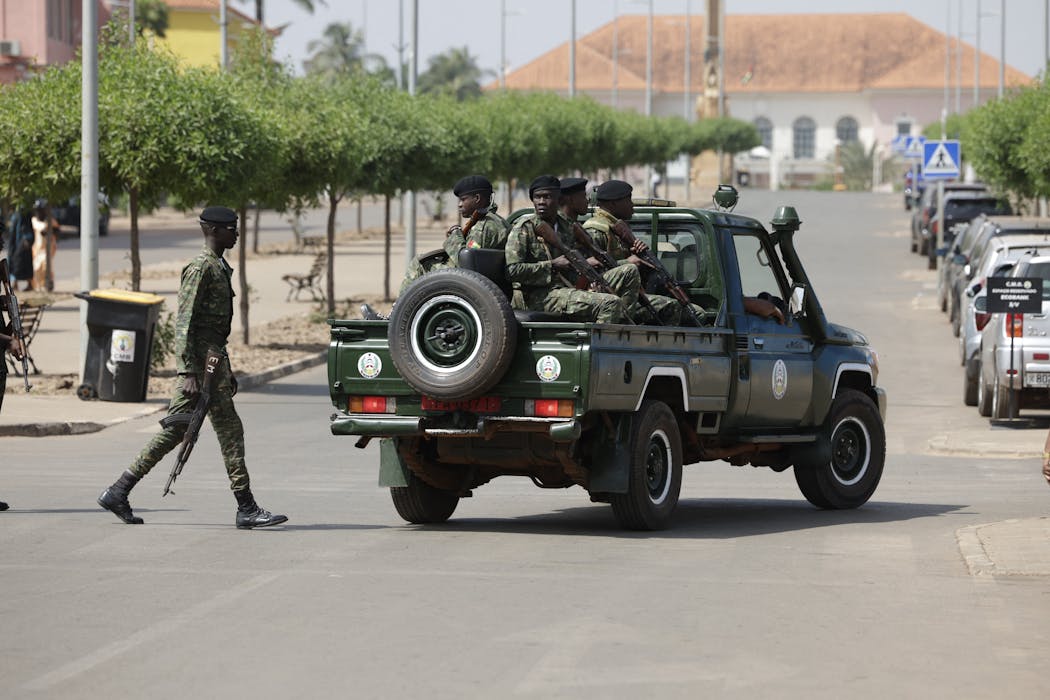
Soldiers patrol the streets in Guinea-Bissau on Nov. 26, 2025. Patrick Meinhardt/AFP via Getty Images

Army generals in Guinea-Bissau seized power on Nov. 26, 2025 – the eve of a scheduled official declaration of the winner in the West African nation’s presidential election.

Alleging a destabilization plot by unnamed politicians and drug lords, the military suspended the electoral process and blocked the results of a contest that both the now former president, Umaro Sissoco Embaló, and the opposition candidate had claimed victory in.

General Horta Inta-a, the head of the presidential guard, was subsequently sworn in as “transitional” leader and Ilídio Vieira Té, a close Embaló ally, was appointed prime minister. The timing of the development and Embaló’s connection to the new government figures have led domestic opposition groups and some West African political leaders to claim the coup was staged to facilitate Embaló’s continued rule by proxy.

Whatever the veracity of such claims, the events point to both a deepening regional crisis of democracy and the inability of Guinea-Bissau to escape its coup-prone history. Indeed, as a scholar who has compiled and updated a dataset of coup types and documented their history in Guinea-Bissau since its independence from Portugal in 1974, I believe the country is caught in a classic coup trap whereby poverty and coups d’etat are mutually reinforcing.

The Sahel coup belt keeps expanding

The events in Guinea-Bissau reflect a so-called polycrisis for countries in and around the Sahel belt, sandwiched between North Africa and sub-Saharan Africa. This region has, since 2020, become the global epicenter of both terrorism and coups – so much so that it is sometimes dubbed the Sahel “coup belt”.

The events in Guinea-Bissau, which is located just south of the Sahel region, represent the 11th successful coup in Africa since 2020 – and the second successful one in 2025 after the military takeover in Madagascar in October following a wave of Gen Z protests.

Indeed, nearly three-quarters of all coup attempts in the world since 2020 have taken place in West Africa or the Sahel. The region accounts for an even higher share of successful coups since 2020. This unprecedented cluster of coups comes in a region that accounts for less than 10% of both Africa’s population and the number of states in the world.

The Sahel region is responsible for around 75% of recent coups

Graph created from the Colpus Dataset.
John Joseph Chin, CC BY-SA

There have been many reasons for the various coups in the Sahel since 2020. Takeovers in Mali, Burkina Faso and Niger, for example, were driven in part by growing terrorist insurgencies, Russian disinformation and rising anti-French sentiment.

By contrast, data from the conflict monitoring organization Armed Conflict Location and Event Data, or ACLED, shows very little conflict or protest in Guinea-Bissau leading up to the coup. Instead, events appear to lie in political opportunism in the wake of an election marred by flaws and allegations of illegitimacy.

Guinea-Bissau’s ‘coup trap’

Before the latest military takeover, Guinea-Bissau was already the fourth-most coup-prone state in sub-Saharan Africa, having suffered five failed coup attempts and three successful ones since 1974. Coups toppled the single-party regime of the African Party for the Independence of Guinea and Cape Verde in 1980, the authoritarian regime of Kumba Yala in 2003 and overthrew democracy and installed an indirect military regime in 2012. Meanwhile, a failed coup attempt in 1998 sparked the country’s only civil war.

Since 2020, Guinea-Bissau had suffered one bona fide coup attempt, in February 2022, in addition to a mutiny in late 2022 that Embaló condemned as a coup attempt. The coup of November 2025 was itself foreshadowed by an alleged coup plot that was revealed at the end of October, when a number of senior officers were arrested.

All of that suggests a feature of this type of instability: Coups beget more coups. In fact, seven of the nine nations that have suffered successful coups since 2020 had already suffered a successful coup within the previous 20 years.

And whereas nearly 30% of nations with coups since 2005 suffered a coup again between 2020 and 2025, states that lacked a recent coup history – even poor countries in Africa – were much less likely to suffer a coup after 2020.

Coup as a feature, not a bug

Following the 2022 coup attempt in Guinea-Bissau, Embaló had moved to consolidate the government under his leadership and reduce constraints on the executive. Indeed, data on three key dimensions of democracy shows that electoral contestation, voter participation and executive constraints have all declined significantly in Guinea-Bissau since.

The Varieties of Democracy project, which surveys experts to measure different levels of democracy, declared in 2022 that Guinea-Bissau had become an “electoral autocracy” – a term to denote governments that are elected through unfair and fraudulent means and go on to rule in an authoritarian manner.

The nation has continued to slide into autocracy since then.

Embaló used an alleged coup plot in December 2023 as a pretext to dissolve the opposition-dominated legislature. The country has not had a sitting legislature since.

Earlier in 2025, Embaló went back on his promise to step down at the end of his first term and instead announced he was running for a second term. Given that Embaló had barred the main opposition party from running, many feared he might try to steal the election, if necessary, much like Paul Biya is alleged to have done in nearby Cameroon in October 2025.

Not a ‘good coup,‘ but a ‘veto coup’

When asked about recent coups in Africa, Rwandan President Paul Kagame insisted that some coups – those that oppose corruption and bad governance – are “good coups.” Though scholars have debated how frequent so-called good coups have been in Africa, there is little doubt that the recent case better fits the classic pattern of a so-called “veto coup,” meant to prevent the winner of the election from taking office.

Indeed, the presence of prominent Embaló allies in the interim Guinea-Bissau government lends credence to opposition cries of foul play. The new government’s promise of democratic elections in a year should likewise be treated with skepticism. The promised electoral timetable has not been kept in any other recent coup case in the Sahel, where juntas remain entrenched.

As such, even if Guinea-Bissau was becoming increasingly autocratic already, the latest takeover is likely a cure worse than the disease. Whether the international community that has condemned the coup – from the United Nations to the African Union to the Economic Community of West African Nations – is willing or able to take credible steps to help guide Guinea-Bissau back to constitutional rule looks uncertain, given the recent example of other coup-hit nations across the continent.

The Conversation

John Joseph Chin does not work for, consult, own shares in or receive funding from any company or organization that would benefit from this article, and has disclosed no relevant affiliations beyond their academic appointment.

– ref. Guinea-Bissau’s military takeover highlights the nation’s sorry history of coups and a deepening crisis across the region – https://theconversation.com/guinea-bissaus-military-takeover-highlights-the-nations-sorry-history-of-coups-and-a-deepening-crisis-across-the-region-270958

‘It’s wanting to know that makes us matter’: how Tom Stoppard made us all philosophers

Source: The Conversation – Global Perspectives – By Fergus Edwards, Lecturer in English, University of Tasmania

Tom Stoppard, who has died at 88, was one of the most critically acclaimed and commercially successful playwrights of our age. He won his first Tony Award for Rosencrantz and Guildenstern Are Dead in 1968, and his last for Leopoldstadt in 2023.

His life was extraordinary. Born Tomáš Straussler in Zlín, Czechoslovakia, in 1937, his Jewish family fled Nazi occupation to India and then England. He chose to become a journalist rather than go to university, and became close friends with Nobel Prize winners, presidents – and Mick Jagger.

The wit and intellectual curiosity of Stoppard’s plays was so distinctive that “Stoppardian” entered the Oxford English Dictionary in 1978. Hermione Lee’s biography of him contains a cartoon with annoyed audience members hissing: “Look at the Jones’s pretending to get all the jokes in a Stoppard play.”

Stoppard just assumed his audience was as well read and inquisitive as he was.

Philosophy is the foundation

As Stoppard said to American theatre critic Mel Gussow in 1974,

most of the propositions I’m interested in have been kidnapped and dressed up by academic philosophy, but they are in fact the kind of proposition that would occur to any intelligent person in his bath.

Philosophy is the foundation of Stoppard’s plays. They cite Aquinas, Aristotle, Ayer, Bentham, Kant, Moore, Plato, Ramsey, Russell, Ryle and Zeno. One philosopher in Stoppard’s radio play Darkside (2013) is never sure if he is spelling Nietzsche correctly.

In 2003, the actor Simon Russell-Beale recalled to a National Theatre audience Stoppard introducing a cast to

2,000 years of philosophy in an hour – it was rather brilliant – just to explain what the debate was and why it was dramatically exciting.

Philosophy – but not before life

Stoppard’s interest in philosophy began in 1968. He wrote to a friend that he was

in a ridiculous philosophylogicmath kick. I don’t know how I got into it, but you should see me […] following Wittgenstein through Tractatus Logico-Philosophicus.

The Austro-British philosopher Ludwig Wittgenstein (1889–1951) had a philosophy of philosophy. He argued lots of academic philosophy was literal nonsense. Some things we think are important are beyond words.

Stoppard saw theatre similarly, saying in a lecture to Canadian students in 1988 that “theatre is a curious equation in which language is merely one of the components”.

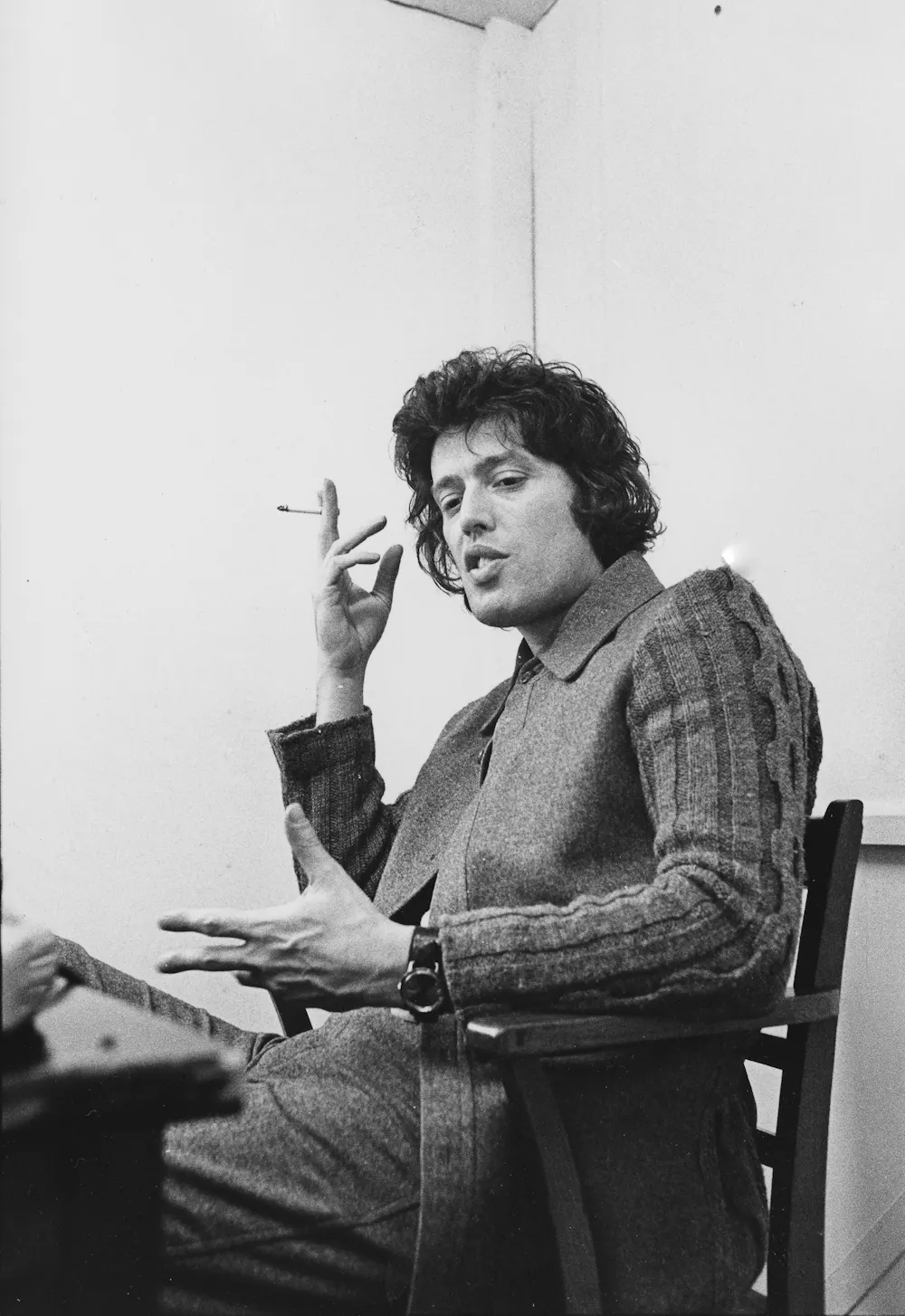
Stoppard  sitting at a table and smoking a cigarette.
Stoppard as a young playwright in 1972.
Clive Barda/Radio Times/Getty Images

Stoppard wrote philosophers who tie themselves into cerebral knots failing to prove what they want to believe about God, morals or consciousness in plays such as Jumpers (1972), Rock ‘n’ Roll (2006) and The Hard Problem (2015).

One of Stoppard’s philosophers dictates a lecture in Jumpers, saying “to begin at the beginning: is God? (To SECRETARY). Leave a space”.

Stoppard’s plays sympathise with this forlorn desire to know until it leads characters to ignore other people. Action in the world is more important than the search for knowledge if there is a marriage to be saved, a dying wife to be cared for, or an adopted child to be found. Wittgenstein’s Lecture on Ethics is complex – but Stoppard’s plays show it in effect.

What we know, and how

In his TV play Professional Foul (1977), Stoppard sent philosophers to a conference in Prague. Scholarly debate was contained by totalitarian censorship. The professor of ethics at Cambridge University makes his call for action by riffing on Wittgenstein’s Tractatus: “Whereof we cannot speak, thereof we are by no means silent.”

Stoppard also staged lines from Wittgenstein’s Philosophical Investigations in Dogg’s Hamlet, Cahoot’s Macbeth (1979). Some characters speak English, others use the same words but with different meanings. The audience observes and learns this new nonsense language, laughing at its jokes. They understand the philosophy of language as Wittgenstein did: social conventions between people, not words pinned on things.

What we can know, and how, is crucial to Stoppard’s plays even when the immediate subject matter isn’t philosophy.

It might be quantum physics in Hapgood (1988) or chaos theory in Arcadia (1993); European history in The Coast of Utopia (2002) or contemporary politics in Rock ‘n’ Roll; individual consciousness in The Hard Problem or even whatever we might mean by “love” in The Real Thing (1982). The characters really do want to know. They debate and interrogate but never find definite answers.

As Hannah suggests in Arcadia:

It’s all trivial […] Comparing what we’re looking for misses the point. It’s wanting to know that makes us matter. Otherwise we’re going out the way we came in.

But there are jokes too. Arcadia opens in 1809 with a precocious 13-year-old girl asking her dashing 22-year-old tutor: “Septimus, what is carnal embrace?” before the tutor (originally played by a smoldering Rufus Sewell) pauses, and cautiously replies “Carnal embrace is the practice of throwing one’s arms around a side of beef”.

The audience erupted in laughter. I was one of them.

And as the play draws to a close, a waltz in 1809 happens in the same room as a waltz in the present. As the two dancing couples circle each other, Stoppard’s play suggests that what one person can share with another is more meaningful than justified true belief.

It is a beautiful, theatrical moment. And it is beyond words.

The Conversation

Fergus Edwards does not work for, consult, own shares in or receive funding from any company or organisation that would benefit from this article, and has disclosed no relevant affiliations beyond their academic appointment.

– ref. ‘It’s wanting to know that makes us matter’: how Tom Stoppard made us all philosophers – https://theconversation.com/its-wanting-to-know-that-makes-us-matter-how-tom-stoppard-made-us-all-philosophers-270952

How England’s Premier League is trying to stop football’s financial arms race – without a salary cap

Source: The Conversation – Global Perspectives – By James Skinner, Dean Newcastle Business School/Professor of Sport Business, University of Newcastle

Debates about financial regulation in sport often begin with salary caps: strict, transparent cost-control mechanisms common in North American and Australian leagues.

They’re credited with improving competitive balance and financial sustainability, so many might assume English football would follow suit.

While England’s Premier League is preparing the most significant overhaul of its financial rules in a generation, it is avoiding a hard salary cap in favour of a bespoke framework designed for Europe’s promotion and relegation ecosystem and globally fluid transfer market.

So why have these rules been implemented, and will they help address football’s financial arms race, given one of the world’s richest and most financially unequal sporting competitions still refuses to introduce a salary cap?

What’s changing in the Premier League?

The Premier League recently announced that from 2026–27, clubs will move away from the Profitability and Sustainability Rules (PSR) introduced in the 2015–16 season, and towards a model centred on controlling football-related spending and ensuring long-term financial health.

The league’s stated aims are clarity, predictability and resilience. They shift focus from backward-looking accounting to real-time cost control and robust balance-sheet strength, with closer alignment to the approach of the Union of European Football Associations (UEFA).

Owners will retain freedom to invest in stadiums and infrastructure, but will face tighter constraints on wages, agent fees and “transfer amortisation” – an accounting practice where clubs spread the cost of a player’s transfer fee over the length of their contract to reduce annual costs and stay within spending limits.

Introducing the ‘squad cost ratio’

At the heart of the reforms, the squad cost ratio (SCR) caps how much a club may spend on its first-team squad (wages, agent fees and transfers) relative to its football revenue.

The headline limit is 85% of eligible income, with a small buffer for newly promoted sides to ease the transition.

In practice, a club generating £300 million (A$609 million) from match day, commercial and league distributions could spend around £255 million (A$518 million) on its squad.

Overspending can result in sanctions, including points deductions.

Unlike PSR’s three-year, business-wide profitability test, this squad cost ratio isolates football costs and is monitored during the season, making it easier to understand and harder to game.

Infrastructure and academy investment sit outside the ratio, which means the rule will likely curtail short-term arms races in player wages and fees.

The intent is to stop clubs overspending to keep pace with rivals, enhancing competitive balance without prescribing a hard salary cap.

The second pillar

The second pillar — sustainability and systemic resilience (SSR) — introduces financial health checks aimed at ensuring clubs are solvent and can survive unexpected financial shocks.

Three tests apply:

1. Working capital test. This verifies clubs hold enough cash and commitments to meet month-to-month obligations.

2. Liquidity test. This assesses whether a club can withstand an £85 million (A$173 million) adverse shock, such as lost broadcast income or failure to sell a player during the transfer window.

3. Positive equity test. This requires phasing in the replacement of owner loans with real investment – for example, instead of an owner lending £100 million that must be repaid, the owner invests £100 million as equity, making the club financially stronger.

Together, these measures push for stronger balance sheets, reduced reliance on risky debt and greater transparency, vital after years of insolvency threats across England’s football ecosystem.

By embedding resilience alongside cost control, the framework aims to curb boom-and-bust cycles and protect competitive integrity.

Some concerns remain

Despite its promise, the framework raises practical and strategic concerns.

First, English clubs may face competitive disadvantages in European markets if the rules around how they can generate and spend revenue are stricter than those used abroad. Minor differences may compound in a global talent race, potentially constraining investment in elite players over time.

Second, mandating equity injections while phasing out soft loans raises the cost of capital and narrows financial engineering options, making clubs more expensive to run and less attractive to private equity investment, especially mid-table teams with limited profits.

Third, and most acute, is valuation risk: SSR gives regulatory weight to “squad market value”, a volatile and loosely defined metric. Without clear standards, player valuations can legitimately diverge by tens of millions, allowing clubs to manipulate these valuations to meet financial rules instead of improving real finances.

Closing loopholes on operating spend and debt may inadvertently open a larger one around player valuations, which are harder to audit and easier to manipulate.

Will these changes work?

The two key components shaping the Premier League’s path are the SCR, a cap-like limit tied to football revenue, and SSR, which measures liquidity, working capital, and equity strength to secure financial health.

Ultimately, the question is whether these changes will deliver the desired financial transparency, or just create new loopholes.

A traditional hard salary cap for Premier League clubs remains unlikely. The Professional Footballers’ Association has warned it would unlawfully restrict trade, and leading legal opinions argue rigid caps risk breaching UK or EU employment and competition law and don’t fit a football pyramid system.

The Premier League’s innovative approach could set a benchmark, but we will have to wait and see if it becomes a yardstick for other leagues.

The Conversation

The authors do not work for, consult, own shares in or receive funding from any company or organisation that would benefit from this article, and have disclosed no relevant affiliations beyond their academic appointment.

– ref. How England’s Premier League is trying to stop football’s financial arms race – without a salary cap – https://theconversation.com/how-englands-premier-league-is-trying-to-stop-footballs-financial-arms-race-without-a-salary-cap-270666

The Hong Kong high-rise fire shows how difficult it is to evacuate in an emergency

Source: The Conversation – Global Perspectives – By Milad Haghani, Associate Professor and Principal Fellow in Urban Risk and Resilience, The University of Melbourne

Tommy Wang/Getty

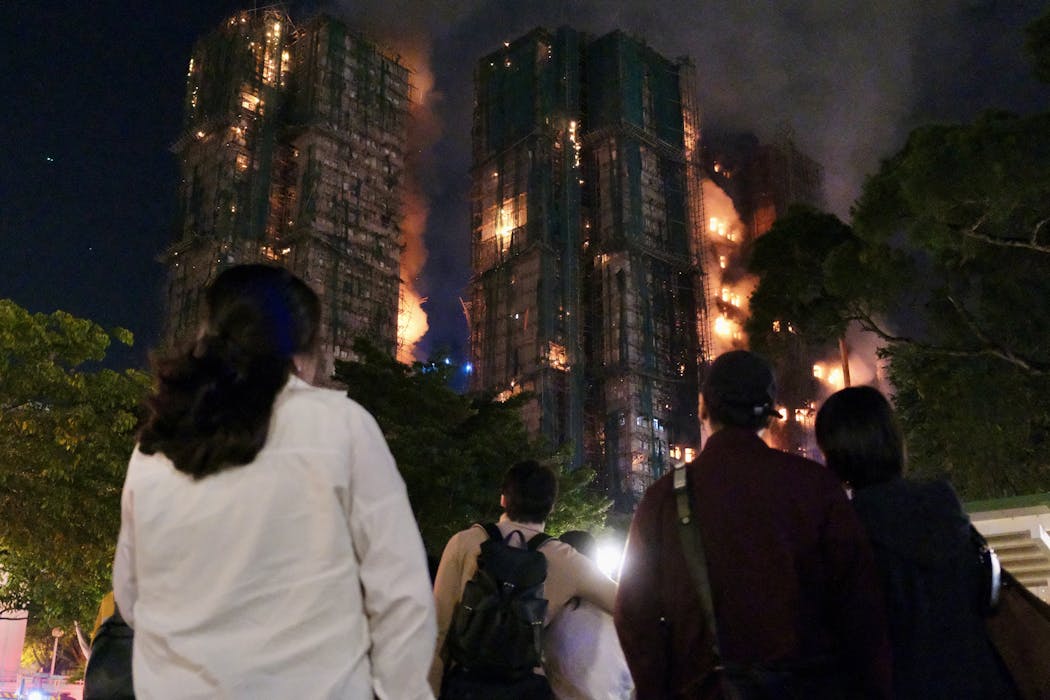
The Hong Kong high-rise fire, which spread across multiple buildings in a large residential complex, has killed dozens, with hundreds reported missing.

The confirmed death toll is now 44, with close to 300 people still unaccounted for and dozens in hospital with serious injuries.

This makes it one of Hong Kong’s deadliest building fires in living memory, and already the worst since the Garley Building fire in 1996.

Although more than 900 people have been reportedly evacuated from the Wang Fuk Court, it’s not clear how many residents remain trapped.

This catastrophic fire – which is thought to have spread from building to building via burning bamboo scaffolding and fanned by strong winds – highlights how difficult it is to evacuate high-rise buildings in an emergency.

When the stakes are highest

Evacuations of high-rises don’t happen every day, but occur often enough. And when they do, the consequences are almost always severe. The stakes are highest in the buildings that are full at predictable times: residential towers at night, office towers in the day.

We’ve seen this in the biggest modern examples, from the World Trade Center in the United States to Grenfell Tower in the United Kingdom.

The patterns repeat: once a fire takes hold, getting thousands of people safely down dozens of storeys becomes a race against time.

But what actually makes evacuating a high-rise building so challenging?

It isn’t just a matter of “getting people out”. It’s a collision between the physical limits of the building and the realities of human behaviour under stress.

It’s a long way down to safety

The biggest barrier is simply vertical distance. Stairwells are the only reliable escape route in most buildings.

Stair descent in real evacuations is far slower than most people expect. Under controlled or drill conditions people move down at around 0.4–0.7 metres per second. But in an actual emergency, especially in high-rise fires, this can drop sharply.

During 9/11, documented speeds at which survivors went down stairs were often slower than 0.3 m/s. These slow-downs accumulate dramatically over long vertical distances.

Fatigue is a major factor. Prolonged walking significantly reduces the speed of descent. Surveys conducted after incidents confirm that a large majority of high-rise evacuees stop at least once. During the 2010 fire of a high-rise in Shanghai, nearly half of older survivors reported slowing down significantly.

Long stairwells, landings, and the geometry of high-rise stairs all contribute to congestion, especially when flows from multiple floors merge into a single shaft.

Slower movers include older adults, people with physical or mobility issues and groups evacuating together. These reduce the overall pace of descent compared with the speeds typically assumed for able-bodied individuals. This can create bottlenecks. Slow movers are especially relevant in residential buildings, where diverse occupants mean movement speeds vary widely.

Visibility matters too. Experimental studies show that reduced lighting significantly slows down people going down stairs. This suggests that when smoke reduces visibility in real events, movement can slow even further as people hesitate, misjudge steps, or adjust their speed.

Human behaviour can lead to delays

Human behaviour is one of the biggest sources of delay in high-rise evacuations. People rarely act immediately when an alarm sounds. They pause, look for confirmation, check conditions, gather belongings, or coordinate with family members.

These early minutes are consistently some of the costliest when evacuating from tall buildings.

Studies of the World Trade Center evacuations show the more cues people saw – smoke, shaking, noise – the more they sought extra information before moving. That search for meaning adds delay. People talk to colleagues, look outside windows, phone family, or wait for an announcement. Ambiguous cues slow them even further.

In residential towers, families, neighbours and friend-groups naturally try to evacuate together. Groups tend to form wider steps, or group together in shapes that reduce overall flow. But our research shows when a group moves in a “snake” formation – one behind the other – they travel faster, occupy less space, and allow others to pass more easily.

These patterns matter in high-rise housing, where varied household types and mixed abilities make moving in groups the norm.

Why stairs aren’t enough

As high-rises grow taller and populations age, the old assumption that “everyone can take the stairs” simply no longer holds. A full building evacuation can take too long, and for many residents (older adults, people with mobility limitations, families evacuating together) long stair descents are sometimes impossible.

This is why many countries have turned to refuge floors: fire- and smoke-protected levels built into towers as safe staging points. These can reduce bottlenecks and prevent long queues. They give people somewhere safe to rest, transfer across to a clearer stair, or wait for firefighters. Essentially, they make vertical movement more manageable in buildings where continuous descent isn’t realistic.

Alongside them are evacuation elevators. These are lifts engineered to operate during a fire with pressurised shafts, protected lobbies and backup power. The most efficient evacuations use a mix of stairs and elevators, with ratios adjusted to the building height, density and demographics.

The lesson is clear: high-rise evacuation cannot rely on one tool. Stairs, refuge floors and protected elevators should all be made part of ensuring vertical living is safer.

The Conversation

Erica Kuligowski is affiliated with the Society of Fire Protection Engineers (SFPE) as a Section Editor for their Handbook of Fire Protection Engineering (Human Behaviour Section) and as a member of the Board of Governors for the SFPE Foundation. From 2002 to 2020, Erica worked as a research engineer and social scientist in the Engineering Laboratory of NIST, where she contributed to NIST’s Technical Investigation of the 2001 WTC Disaster and received US government funding to study occupant evacuation elevators.

Ruggiero Lovreglio receives funding from the Ministry of Business, Innovation and Employment (New Zealand), Royal Society Te Apārangi (New Zealand) and NIST (USA)

Milad Haghani does not work for, consult, own shares in or receive funding from any company or organisation that would benefit from this article, and has disclosed no relevant affiliations beyond their academic appointment.

– ref. The Hong Kong high-rise fire shows how difficult it is to evacuate in an emergency – https://theconversation.com/the-hong-kong-high-rise-fire-shows-how-difficult-it-is-to-evacuate-in-an-emergency-270774

Why is bamboo used for scaffolding in Hong Kong? A construction expert explains

Source: The Conversation – Global Perspectives – By Ehsan Noroozinejad, Senior Researcher and Sustainable Future Lead, Urban Transformations Research Centre, Western Sydney University

At least 44 people have died and more than 270 are missing after a major fire engulfed an apartment complex in Hong Kong’s Tai Po district. The fire, which swept through multiple high-rise towers, is still burning.

The exact cause of the blaze, which broke out just before 3pm local time on Wednesday, is still unknown. Hong Kong Police have arrested three construction company executives on suspicion of manslaughter.

The apartment blocks are 31 stories tall. Opened in 1983, they were undergoing renovations at the time of the blaze, and were covered in bamboo scaffolding and green protective mesh.

Bamboo scaffolding has been a feature of the city for centuries. But why? The answer is part history, part engineering and part economics.

But the recent tragedy has sharpened the focus on fire safety, and when and where bamboo should be used.

A fast-growing grass

Bamboo is a fast-growing grass with hollow, tube-like stems (known as “culms”). Those tubes give it a high strength-to-weight ratio. A pole is light enough to carry up a stairwell, yet strong enough, when braced and tied correctly, to support platforms and workers.

Crews lash poles together in tight grids and tie them back to the buildings with brackets and anchors. Properly designed, a bamboo scaffold can resist wind and working loads.

Hong Kong’s Buildings Department and Labour Department publishes clear guidelines on the design and construction of bamboo scaffolds.

Bamboo scaffolding is also used in parts of mainland China, India, and across Southeast Asia and South America.

A cheap and flexible material

There are three main reasons why bamboo scaffolds are used in Hong Kong.

First, speed. An experienced team can “wrap” a building quickly because poles are light and can be cut to fit irregular shapes. That matters in tight streets with limited crane access.

Second, cost. Bamboo is a fraction of the price of metal systems, so contractors can keep bids low. The material is also easy to source locally, which keeps routine repairs and repainting within budget.

Third, tradition and skills. Bamboo scaffolding features in a famous piece of Chinese art, Along the River During the Qingming Festival, painted by Zhang Zeduan who lived between 1085 and 1145. Hong Kong still trains and certifies bamboo scaffolders, and the craft remains part of the city’s construction culture.

These factors explain why bamboo has remained visible on the city’s skyline even as metal systems dominate elsewhere.

Unlike metal made in blast furnaces, bamboo also grows back, and turning a stalk into a pole takes little processing. This means its overall climate impact is smaller.

What are the risks?

There are two main risks of bamboo scaffolding.

The first, as this tragedy in Hong Kong highlights, is fire.

Dry bamboo is combustible, and the green plastic mesh often draped over scaffolds can also quickly burn.

In the Tai Po fire, footage and reports indicate the fire quickly raced up the scaffolding and mesh, and across the facade of the buildings.

This is why there are calls for non-combustible temporary works on occupied towers – or at minimum, flame-retardant nets, treated bamboo, and breaks in the scaffold so fire can’t easily jump from bay to bay.

The second risk of using bamboo scaffolding is related to variability and weather.

Bamboo is a natural material, so strength varies with species, age and moisture. Lashings can loosen and storms are a common risk.

Hong Kong’s updated guidelines and code try to manage this with material rules (such as age, diameter and drying), mandatory ties to the structure, steel brackets and anchor testing, and frequent inspections – especially before bad weather.

A high-rise apartment covered in bamboo scaffolding and white mesh.
Bamboo has been used for scaffolding in Hong Kong for centuries.
Frank Barning/Pexels

A shift to metal

In March 2025, Hong Kong’s Development Bureau directed that metal scaffolds be adopted in at least 50% of new government public-works building contracts. It also encouraged metal use in maintenance where feasible.

Subsequent government replies to the Legislative Council in June and July reiterated the 50% requirement and described a progressive transition based on project feasibility.

Private projects may still use bamboo under existing codes. But for public works the baseline is now metal, signalling a move toward non-combustible systems.

The lesson from Hong Kong is not that bamboo is “good” or “bad” for scaffolding – it’s about context. It has clear advantages for small-scale, short-duration, ground-anchored work where streets are tight and budgets are lean. But on tall, occupied residential blocks, especially with mesh-wrapped facades, its fire risk and variability demand much stronger controls.

Bamboo scaffolding helped build Hong Kong’s skyline because it was fast, clever and affordable. The science behind fire and the realities of high-rise living now demand a tighter line: use the right tool for the job, and when the risks climb, switch to non-combustible systems.

That way the city can honour a proud craft, while keeping people safe in the homes those scaffolds surround.

The Conversation

Dr Ehsan Noroozinejad has received funding from both national and international organisations. His most recent funding on integrated housing and climate policy comes from the Australian Public Policy Institute (APPI). He also serves on the Executive Committee of the Early- and Mid-Career Academic and Practitioner (EMCAP) Network at Natural Hazards Research Australia, the Australian government-funded national centre for natural hazard resilience and disaster risk reduction.

– ref. Why is bamboo used for scaffolding in Hong Kong? A construction expert explains – https://theconversation.com/why-is-bamboo-used-for-scaffolding-in-hong-kong-a-construction-expert-explains-270780