Beyond Evolution: Alfred Russel Wallace’s critique of the 19th century world

Source: The Conversation – France (in French) – By Marshall, A., Visiting professor, Mahidol University

Alfred Russel Wallace was a British naturalist renowned for co-developing the theory of evolution alongside Charles Darwin – and for mapping out the biodiversity of the Indonesian Archipelago. However, his legacy extends far beyond science.

Wallace’s observations of social exploitation in Wales and the Archipelago compelled him to take a stand against the British establishment in his homeland and its colonial ventures abroad. He also recognised the ecological destruction caused by colonialism, making him one of the world’s first global environmentalists.

In the 19th century, Wallace’s observations were striking. British imperialism was at its zenith, and the Industrial Revolution was fueling a titanic amplification of human impact upon nature.


Baca juga:
Wallacea is a living laboratory of Earth’s evolution – and its wildlife, forests and reefs will be devastated unless we all act


Wallace’s observations are probably even more noteworthy today. While European colonialism has largely collapsed, the world is industrialising at breakneck speed, intensifying the environmental damage Wallace warned about.

The Butterfly Effect (a film about Alfred Russel Wallace. Produced & provided by the author with the assistance of AI software).

Witness to poverty: Wales

Wallace was born in 1823, and his early life in Wales exposed him to 19th-century rural struggles.

Historians have noted that Wales was one of the first regions to suffer English colonisation, dating back to medieval times.

By Wallace’s time, industrialisation had reshaped the Welsh landscape, with factories, mines, and railways supplanting its pristine mountains and valleys. While displaced farmers found work in these industries, the jobs were poorly paid, perilous, and often dehumanising. Wallace saw the ongoing struggle of Welsh communities to protect their farming rights and preserve their language.

Young Wallace initially worked as a mapmaker. His employers were usually wealthy landlords who hired him to map their estates to determine how much their tenant farmers owed them in rent or taxes.

At work, he witnessed how British landlords in Wales were becoming ‘more commercially minded’ (in other words, more money-grubbing). They often evicted impoverished tenant farmers to make way for profitable livestock, or mining and railway projects. If they weren’t pushed off the land altogether, the tenants faced rising rents and heavier taxes. Whatever the situation, it was usually the tenant farmers who were distressed.

Wallace was sometimes sent to collect rent and taxes from tenants, many of whom lived in poverty and barely spoke English to understand the circumstances they were in.

Wallace felt anguished for being part of the wretched business.

Eventually, after the private estates in Wales were just about entirely mapped, he decided to leave his career as a mapmaker.

At this point, Wallace became a full-time naturalist, collecting insect specimens and selling them to museums.

This new role led him to travel all across the world – including to the Indonesian Archipelago – where he spent eight years immersing himself in local cultures and languages such as Malay.

Sympathy for the colonised: The Archipelago

Initially, Wallace perceived Dutch colonialism as less exploitative than British practices. For the most part, this was because Wallace was comparing the state-run enterprises that dominated the economy of the Dutch East Indies with the avaricious companies that dominated the economies of British India and British Malaya. This preference for state capitalism versus laissez-faire capitalism even led Wallace to sympathise with the Cultivation System (Cultuurstelsel) imposed by the Dutch government.

Under this system, local farmers grew cash crops for the Dutch East Indies government. In exchange, they received some small payments below the market rate.

Wallace acknowledged that Dutch middlemen and local chiefs sometimes abused the system, but it often provided the growers with a reliable income. As well, the Dutch overlords were often obliged to build infrastructure and schools.

The system was criticised as a form of monopolistic serfdom. But Wallace saw it as less brutal than the ‘dog-eat-dog’ economies of Britain’s overseas free-trade colonies.

However, his perspective evolved. In later writings, Wallace rallied against the premise that any nation in the tropics need be colonised. He also realised colonised peoples didn’t gain much from the deal, if ‘deal’ we might call it.

In his 1898 book summarising human achievement in the 19th century, Wallace declared that the worst aspect of the century was the way Europeans mistreated native peoples worldwide.

Wallace noted that colonised lands worldwide were usually gained in dubious manners, and various abusive labour practices maintained their economies. By the turn of the century, Wallace was calling for all colonies to be handed back to indigenous peoples.

At the same time, in his homeland, Wallace also became a leading figure in the land nationalisation movement. In an effort to address rural poverty in Britain, Wallace advocated the nationalisation of all farmlands.

Entrusted to the state, farming rights could then be distributed fairly and democratically among the entire national community of farmers. In this manner, every farming family could grow their own food, either for themselves or to sell, without being impoverished by taxes and rents claimed by the gentry.

Destruction of nature

As a naturalist deeply connected to the environment, Wallace also documented colonial ventures disastrous impact on wildlife. When European ventures established estates in the tropics, the native rainforests were swiftly cleared.

In his own words:

The reckless destruction of forests, which have for ages been the protection and sustenance of the inhabitants, seems to me to be one of the most shortsighted acts of colonial mismanagement—Wallace in The Malay Archipelago.

Wallace also condemned the environmental impact of colonial mining in the Archipelago, especially those targeting gold and tin, which he witnessed in Borneo and the Malay Peninsula:

The rapid degradation of fertile valleys and the poisoning of streams by mining waste serve as stark reminders of the greed of commerce unchecked by reason or compassion—Wallace in The Malay Archipelago.

These observations, penned in the late 19th century, clearly anticipated 21st-century environmental problems and their causes.

Wallace’s foresight was rare at his time, and his warning was even more striking. He believed that nature’s destruction could only be avoided by taking much more equitable approaches to resource use.

Life lessons

Modern historians and scientists hail Wallace as one of the bravest figures of the 19th century. He possessed enough physical courage to cross vast oceans and live for years away from home in remote, untamed forests. This courage allowed Wallace to explore the natural world deeply enough to uncover its hidden forces.

Equally impressive was Wallace’s moral courage. At a time when criticising the British elite or questioning imperialism was far from popular, Wallace did not shy away from challenging the status quo. Many of his books envision a better, fairer world.

Wallace’s moral courage is something we can all learn from today, especially as we realise that scientific knowledge alone is not enough to protect nature from relentless industrialisation.

The Conversation

Marshall, A. tidak bekerja, menjadi konsultan, memiliki saham, atau menerima dana dari perusahaan atau organisasi mana pun yang akan mengambil untung dari artikel ini, dan telah mengungkapkan bahwa ia tidak memiliki afiliasi selain yang telah disebut di atas.

– ref. Beyond Evolution: Alfred Russel Wallace’s critique of the 19th century world – https://theconversation.com/beyond-evolution-alfred-russel-wallaces-critique-of-the-19th-century-world-243372


Weighing the green cost: How nickel mining in Indonesia impacts forests and local communities

Source: The Conversation – France (in French) – By Michaela Guo Ying Lo, Postdoctoral Researcher in Environment, Conservation, and Development, University of Kent

Indonesia produced nearly four times the amount of nickel in recent years compared to a decade earlier — following the global push for a low-carbon revolution that drives the mining for the mineral essential for electric vehicles, renewable energy technologies, and stainless-steel production.

This boom, however, takes a toll on nickel-rich regions like Sulawesi, threatening a one-of-a-kind biodiversity hotspot, known as ‘Wallacea’.

Our recent study raises questions about the sustainability of nickel mining practices as we highlight its environmental and social impacts in Sulawesi, based on data from 7,721 villages.

Sulawesi’s forests and biodiversity at risk

Our study shows that between 2011 and 2018, villages near nickel mines experienced deforestation at nearly double the rate of non-mining areas. The loss is attributable to land acquisition needed to mine the mineral.

Deforestation will not only worsen global warming but also destroy habitats and threaten wildlife populations. Among the species potentially affected are Sulawesi’s 17 primate species, such as Celebes crested macaque and Peleng tarsier—all of them are endemic to the island. If this trend continues, it could set back efforts to both mitigate greenhouse gas emissions and conserve biodiversity.

A video showcasing the Peleng tarsier, one of 17 endemic primates threatened by nickel-driven deforestation.

The costs and benefits to local communities

Our research reveals that unsustainable nickel mining practices have increased the pollution and the frequency of mining-related disasters, such as landslides and flash floods. They directly impact local communities that rely on agriculture, fishing, and other natural resource-based livelihoods.

The effects of nickel mining, however, are nuanced. Environmental damage and land acquisition have triggered conflicts.
But while social well-being declined in areas near nickel mines, the impact varied significantly across regions, and was positive in some areas.

This implies that communities across Sulawesi can experience both positive and negative impacts. In villages with high poverty levels, for example, the environmental and health impacts of mining have been particularly severe. In these villages, adverse health effects are more likely to occur due to limited resources and capacity to cope with pollution associated with mining activities.

However, our study also shows that these poorer regions have also gained the greatest benefits from mining, including improved infrastructure and living conditions. Revenue from mining has likely added to investments into public goods, such as improving water systems and transportation networks.

More information is needed to understand what is driving this variation, but it underscores the precarious balance posed by nickel mining. While it provides vital development opportunities, it also threatens vulnerable ecosystems and exposes communities to significant environmental and health risks. Achieving progress without deepening hardship remains a complex challenge for sustainable development in Indonesia and other nickel producing countries.

Towards sustainable nickel mining

Tackling these challenges requires a just and sustainable approach to nickel mining. If the harm continues, it could undermine efforts to conserve Sulawesi’s unique biodiversity. That’s why protecting its ecosystems is critical.

Several recommendations have been proposed by other academics and actors, three of which we emphasise through our mining evaluation:

1. Strengthening environmental and social standards

Governments and mining companies must follow strict environmental and social standards to minimise harm to ecosystems and communities. This includes strict regulations on deforestation and water management, along with protections for workers and affected communities.

For mining companies, frameworks like the OECD Due Diligence Guidelines can ensure that businesses carry out the necessary protocols to identify, prevent, and account for adverse impacts that result from their mining practices. At the same time, state actors should continue to fulfil their obligations to protect and respect the rights of those affected by mining.

2. Ensuring community participation

Local communities must be central to decision-making around mining projects. Inclusive consultation and consent processes can help mitigate harm and ensure that mining operations do not harm those who rely on the environment for their livelihoods.

Involving communities in decision-making helps mining companies build trust and share benefits. As one case study has shown in Sulawesi, engaging local populations in evaluating the nickel production process can lead to corrective actions. Community feedback can ensure that mining projects not only achieve compliance but also align with the aspirations and well-being of affected communities.

3. Establishing robust monitoring and accountability

Regular monitoring and evaluation of mining operations, from start to finish, is crucial — not just for nickel but other mining commodities too. Companies should be held accountable for environmental damage and social harm, while successful practices should be highlighted to serve as models for the industry. Independent oversight by NGOs and local groups can boost transparency, ensure accountability, and promote best practices.

Time is crucial. With the low-carbon transition speeding up, swift action is needed to prevent environmental and social harm worldwide.

By reforming nickel mining practices, Indonesia can play a vital role in building a just, sustainable, low-carbon future, and provide a model for other countries.

This is a chance to balance economic prosperity, environmental protection, and social equity — ensuring the green energy transition’s benefits outweigh its costs.

The Conversation

Michaela Guo Ying Lo received funding from the University of Kent Global Challenges Doctoral Centre.

Jatna is also a member of Indonesian Academy of Sciences (AIPI) and lecturer in University of Indonesia

Matthew Struebig received funding from Natural Environment Research Council UK and Leverhulme Trust UK.

– ref. Weighing the green cost: How nickel mining in Indonesia impacts forests and local communities – https://theconversation.com/weighing-the-green-cost-how-nickel-mining-in-indonesia-impacts-forests-and-local-communities-246259

Trump is not like other presidents – but can he beat the ‘second term curse’ that haunts the White House?

Source: The Conversation – Canada – By Garritt C. Van Dyk, Senior Lecturer in History, University of Waikato

Getty Images

While he likes to provoke opponents with the possibility of serving a third term, Donald Trump faces a more immediate historical burden that has plagued so many presidents: the “second term curse”.

Twenty-one US presidents have served second terms, but none has reached the same level of success they achieved in their first.

Second term performances have ranged from the lacklustre and uninspiring to the disastrous and deadly. Voter dissatisfaction and frustration, presidential fatigue and a lack of sustainable vision for the future are all explanations.

But Trump doesn’t quite fit the mould. Only one other president, Grover Cleveland in the late 19th century, has served a second nonconsecutive term, making Trump 2.0 difficult to measure against other second-term leaders.

Trump will certainly be hoping history doesn’t repeat Cleveland’s second-term curse. Shortly after taking office he imposed 50% tariffs, triggering global market volatility that culminated in the “Panic of 1893”.

At the time, this was the worst depression in US history: 19% unemployment, a run on gold from the US Treasury, a stock market crash and widespread poverty.

More than a century on, Trump’s “move fast and break things” approach in a nonconsecutive second term might appeal to voters demanding action above all else. But he risks being drawn into areas he campaigned against.

So far, he has gone from fighting a trade war and a culture war to contemplating a shooting war in the Middle East. His “big beautiful bill” will add trillions to the national debt and potentially force poorer voters – including many Republicans – off Medicaid.

Whether his radical approach will defy or conform to the second term curse seems very much an open question.

No kings

The two-term limit was enacted by the 22nd Amendment to the Constitution in 1951. Without a maximum term, it was feared, an authoritarian could try to take control for life – like a king (hence the recent “No Kings” protests in the US).

George Washington, James Madison and Thomas Jefferson all declined to serve a third term. Jefferson was suspicious of any president who would try to be re-elected a third time, writing:

should a President consent to be a candidate for a 3d. election, I trust he would be rejected on this demonstration of ambitious views.

There is a myth that after Franklin Delano Roosevelt broke the de facto limit of two terms set by the early presidents, the ghost of George Washington placed a curse on anyone serving more than four years.

At best, second-term presidencies have been tepid compared to the achievements in the previous four years. After the second world war, some two-term presidents (Eisenhower, Reagan and Obama) started out strong but faltered after reelection.

Eisenhower extricated the US from the Korean War in his first term, but faced domestic backlash and race riots in his second. He had to send 500 paratroopers to escort nine Black high school students in Little Rock, Arkansas, to enforce a federal desegregation order.

Reagan made significant tax and spending cuts, and saw the Soviet Union crumble in term one. But the Iran-Contra scandal and watered down tax reform defined term two.

Obama started strongly, introducing health care reform and uniting the Democratic voter base. After reelection, however, the Democrats lost the House, the Senate, a Supreme Court nomination, and faced scandals over the Snowden security leaks and Internal Revenue Service targeting of conservative groups.

Truly disastrous examples of second term presidencies include Abraham Lincoln (assassination), Woodrow Wilson (first world war, failure of the League of Nations, a stroke), Richard Nixon (Watergate, impeachment and resignation), and Bill Clinton (Lewinsky scandal and impeachment).

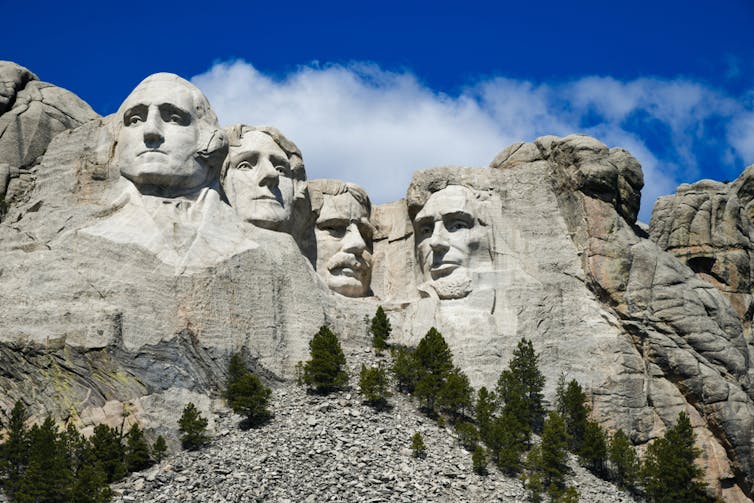
Room for one more? Trump has joked about being added to Mount Rushmore.
Shutterstock

Monumental honours

It may be too early to predict how Trump will feature in this pantheon of less-than-greatness. But his approval ratings recently hit an all-time low as Americans reacted to the bombing of Iran and deployment of troops in Los Angeles.

A recent YouGov poll showed voters giving negative approval ratings for his handling of inflation, jobs, immigration, national security and foreign policy. While there has been plenty of action, it may be the levels of uncertainty, drastic change and market volatility are more extreme than some bargained for.

An uncooperative Congress or opposition from the judiciary can be obstacles to successful second terms. But Trump has used executive orders, on the grounds of confronting “national emergencies”, to bypass normal checks and balances.

As well, favourable rulings by the Supreme Court have edged closer to expanding the boundaries of executive power. But they have not yet supported Trump’s claim from his first term that “I have an Article 2, where I have the right to do whatever I want as President”.

Some supporters say Trump deserves a Nobel Peace Prize. And he was only half joking when he asked if there is room for one more face on Mount Rushmore. But such monumental honours may only amount to speculation unless Trump’s radical approach and redefinition of executive power defy the second-term curse.

The Conversation

Garritt C. Van Dyk has received funding from the Getty Research Institute.

– ref. Trump is not like other presidents – but can he beat the ‘second term curse’ that haunts the White House? – https://theconversation.com/trump-is-not-like-other-presidents-but-can-he-beat-the-second-term-curse-that-haunts-the-white-house-260002

The Dalai Lama is a cisgender man – yet he has an unexpected connection to the trans community

Source: The Conversation – Canada – By Stephen Kerry, Lecturer in Sociology, Charles Darwin University

Tenzin Gyatso, the 14th Dalai Lama, turns 90 this week – a milestone that’s reigniting speculation over his eventual successor.

While the Dalai Lama is the face of Buddhism to many people across the world, he is actually the head of just one tradition within Tibetan Buddhism known as the Gelug school.

Tibetans believe the Dalai Lama to be the manifestation of Avalokiteśvara, the bodhisattva of compassion, and the “one who hears the cries of the world”.


Read more:
What is a bodhisattva? A scholar of Buddhism explains


Avalokiteśvara is prayed to across Asia, and is known as Chenrezig in Tibet, Guanyin in China, and Kannon or Kanzeon in Japan.

A statue of Avalokiteśvara.
Wikimedia, CC BY-SA

In Buddhism, a bodhisattva is a person, or a mythic representation of a person, who denies themselves enlightenment until all beings can achieve enlightenment. Avalokiteśvara appears to living beings in whatever form could best save them.

Although Avalokiteśvara originated in India as a man, they can be depicted as either a man, woman, or non-binary being. This gender fluidity has led to them being revered as a trans icon in the West.

I have spent the past five years investigating the lives of queer Buddhists in Australia. As part of this research, I have surveyed and interviewed 109 LGBTQIA+ Buddhist Australians.

The words of these individuals, and my own experience as a genderqueer Buddhist person, reveal how the Dalai Lama emerges an an unlikely inspiration for individuals sharing a trans and Buddhist identity.

The Big Buddha is a large bronze sculpture located near the Po Lin Monastery on Lantau Island, Hong Kong.
Joshua J. Cotten/Unsplash

Letting go of binaries

Through my work I have found LGBTQIA+ Buddhist Australians are generally reluctant to disclose their queer identities to their Buddhist communities, and may be told to remain silent about their identities.

For some, Avalokiteśvara’s gender fluidity has been important for reaffirming both their queer and Buddhist selves.

One Buddhist trans woman, Annie*, told me Guanyin had special significance for her. Annie spoke about Avalokiteśvara travelling from India to China as a male, before “transitioning” to the mainly female presentation of Guanyin over centuries. Annie said:

I pray to her regularly and often find I get a response. Of course the enlightened state is beyond all manner of worldly binaries, including gender, and is immensely important in letting go of binaries in my journey towards enlightenment.

Walter* has had a long fascination with depictions of Avalokiteśvara that “showed ‘him’ looking effeminate and handsome, with a cute moustache […] A little bit homoerotic, a little bit provocatively gender fluid, as seen through my eyes”.

Walter adds:

A great many people in different cultures, across history, worship these figures. Clever how this figure can morph into a radical trans! We all want to feel comforted, safe and saved from suffering.

As queer Buddhists, we turn to to Avalokitesvara to feel “comforted, safe and saved”.

Another interviewee, Brian*, told me about a Tibetan invocation practice he did with a senior Tibetan monk, in which he encountered Guanyin:

[She] took my right hand and passed some sort of power into it. She never spoke to me but just returned the way she had come. I was given some sort of gift, that’s all I know.

Since this experience, Brian has “always felt a strong connection to the feminine through her”. He has a special Guanyin altar on his farm.

You can’t be what you can’t see

Some Buddhists deny Avalokiteśvara’s queerness.

Asher*, a genderqueer Buddhist I interviewed, told me about a teacher who said to them, “there was absolutely no way a gay person could be enlightened”.

Asher retorted:

What about Kanzeon, the bodhisattva of compassion, who has manifested as both male and female and, in the stories from Japan, has had erotic relationships with monks?

The teacher dismissed this, replying, “those are just stories”.

A black statue of Avalokiteśvara outside a Japanese temple.
Wikimedia, CC BY

In her 1996 book Transgender Warriors, trans activist Leslie Feinberg writes: “I couldn’t find myself in history. No one like me seemed to have ever existed.”

Similarly, Annie evoked the statement: “You can’t be what you can’t see.”

I, too, experience this need to see myself as a genderqueer, non-binary practitioner of Zen Buddhism. It was only through doing these interviews with other queer Buddhists that I came to realise Guanyin, a trans icon, is a statuette which adorns the altar of the Buddhist group I belong to.

Knowing Avalokitesvara may be depicted as a man, woman, or non-binary being lets us queer Buddhists know we exist – and have always existed – within Buddhism.

Despite being a cisgender man who has been somewhat inconsistent in his support of queer people, the Dalai Lama, as the manifestation of the bodhisattva of compassion, is a possible spiritual link between today’s queer Buddhists and centuries-long traditions of gender transition and fluidity.

*Names have been changed.

The Conversation

Stephen Kerry does not work for, consult, own shares in or receive funding from any company or organisation that would benefit from this article, and has disclosed no relevant affiliations beyond their academic appointment.

– ref. The Dalai Lama is a cisgender man – yet he has an unexpected connection to the trans community – https://theconversation.com/the-dalai-lama-is-a-cisgender-man-yet-he-has-an-unexpected-connection-to-the-trans-community-260106

Too much vitamin B6 can be toxic. 3 symptoms to watch out for

Source: The Conversation – Canada – By Nial Wheate, Professor, School of Natural Sciences, Macquarie University

Selena3726/Shutterstock

Side effects from taking too much vitamin B6 – including nerve damage – may be more widespread than we think, Australia’s medicines regulator says.

In an ABC report earlier this week, a spokesperson for the Therapeutic Goods Administration (TGA) says it may have underestimated the extent of the side effects from vitamin B6 supplements.

However, there are proposals to limit sales of high-dose versions due to safety concerns.

A pathologist who runs a clinic that tests vitamin B6 in blood samples from across Australia also appeared on the program. He told the ABC that data from May suggests 4.5% of samples tested had returned results “very likely” indicating nerve damage.

So what are vitamin B6 supplements? How can they be toxic? And which symptoms do you need to watch out for?

What is vitamin B6?

Vitamin B6, also known as pyridoxine, plays an important role in keeping the body healthy. It is involved in the metabolism of proteins, carbohydrates and fats in food. It is also important for the production of neurotransmitters – chemical messengers in the brain that maintain its function and regulate your mood.

Vitamin B6 also supports the immune system by helping to make antibodies, which fight off infections. And it is needed to produce haemoglobin, the protein in red blood cells that carries oxygen around the body.

Some women take a vitamin B6 supplement when pregnant. It is thought this helps reduce the nausea associated with the early stages of pregnancy. Some women also take it to help with premenstrual syndrome.

However, most people don’t need, and won’t benefit from, a vitamin B6 supplement. That’s because you get enough vitamin B6 from your diet through meat, breakfast cereal, fruit and vegetables.

You don’t need much. A dose of 1.3–1.7 milligrams a day is enough for most adults.

Currently, vitamin B6 supplements with a daily dose of 5–200mg can be sold over the counter at health food stores, supermarkets and pharmacies.

Because of safety concerns, the TGA is proposing limiting their sale to pharmacies, and only after consultation with a pharmacist.

Daily doses higher than 200mg already need a doctor’s prescription. So under the proposal that would stay the same.

What happens if you take too much?

If you take too much vitamin B6, in most cases the excess will be excreted in your urine and most people won’t experience side effects. But there is a growing concern about long-time, high-dose use.

A side effect the medical community is worried about is peripheral neuropathy – where there is damage to the nerves outside the brain and spinal cord. This results in pain, numbness or weakness, usually in your hands and feet. We don’t yet know exactly how this happens.

In most reported cases, these symptoms disappear once you stop taking the supplement. But for some people it may take three months to two years before they feel completely better.

There is growing, but sometimes contradictory, evidence that high doses (more than 50mg a day) for extended periods can result in serious side effects.

A study from the 1990s followed 70 patients for five years who took a dose of 100 to 150mg a day. There were no reported cases of neuropathy.

But more recent studies show high rates of side effects.

A 2023 case report provides details of a man who was taking multiple supplements. This resulted in a daily combined 95mg dose of vitamin B6, and he experienced neuropathy.

Another report describes seven cases of neuropathy linked to drinking energy drinks containing vitamin B6.

Reports to the TGA’s database of adverse events notifications (a record of reported side effects) shows 174 cases of neuropathy linked with vitamin B6 use since 2023.

What should I do if I take vitamin B6?

The current advice is that someone who takes a dose of 50mg a day or more, for more than six months, should be monitored by a health-care professional. So if you regularly take vitamin B6 supplements you should discuss continued use with your doctor or pharmacist.

There are three side effects to watch out for, the first two related to neuropathy:

  1. numbness or pain in the feet and hands

  2. difficulty with balance and coordination as a result of muscle weakness

  3. heartburn and nausea.

If you have worrying side effects after taking vitamin B6 supplements, contact your state’s poison information centre on 13 11 26 for advice.

The Conversation

Nial Wheate in the past has received funding from the ACT Cancer Council, Tenovus Scotland, Medical Research Scotland, Scottish Crucible, and the Scottish Universities Life Sciences Alliance. He is a fellow of the Royal Australian Chemical Institute. Nial is the chief scientific officer of Vaihea Skincare LLC, a director of SetDose Pty Ltd (a medical device company) and was previously a Standards Australia panel member for sunscreen agents. He is a member of the Haleon Australia Pty Ltd Pain Advisory Board. Nial regularly consults to industry on issues to do with medicine risk assessments, manufacturing, design and testing.

Slade Matthews provides scientific evaluations to the Therapeutic Goods Administration as a member of the Therapeutic Goods Assessment and Advisory Panel. Slade serves on the NSW Poisons Advisory Committee for NSW Health as the minister-nominated pharmacologist appointed by the Governor of NSW.

– ref. Too much vitamin B6 can be toxic. 3 symptoms to watch out for – https://theconversation.com/too-much-vitamin-b6-can-be-toxic-3-symptoms-to-watch-out-for-260400

How Europe dropped the ball on its own defence and was left fawning over Donald Trump – podcast

Source: The Conversation – Canada – By Gemma Ware, Host, The Conversation Weekly Podcast, The Conversation

The language from European leaders was fawning and obsequious. At one point, the head of Nato, Mark Rutte, even called Donald Trump “daddy”. But when the US president left the Nato summit in late June, there was a sigh of relief that he had not made any more angry criticism of the alliance.

After months of American pressure, Nato members – with the exception of Spain – agreed to increase their spending on defence to 5% of GDP by 2035. Trump called it “very big news”, and even reconfirmed his commitment to Nato’s article 5, which means an attack on one Nato country is an attack on them all.

 How did Europe become so unable to defend itself that it was forced to resort to outright flattery of an American president?

In this episode of The Conversation Weekly podcast, we report from the recent Siena Conference on the Europe of the Future in Italy about how the EU dropped the ball on its own defence and what its options are now.

 The European Commission, the executive branch of EU government, only appointed its first commissioner for defence in December 2024. There is no EU army, and no consensus as to whether democratic nations could ever allow one to be built.

But in the period after the second world war, ambitions for a united European defence policy were much grander, as Ana Juncos Garcia, professor of European politics at the University of Bristol in the UK, explains:

There was this idea to establish a European Defence Community which would pool competencies at the national level in defence to the European level, creating a supranational organisation with its own minister of defence, its own military committee.

That failed in 1954 when the French national assembly rejected ratification of the treaty and progress on a pan-European defence strategy stalled. Nato, founded in 1949, became the core military alliance organising Europe’s defence, with the US as its main guarantor.

Ever since, the EU has tried to balance the need for maintaining that transatlantic relationship, and figuring out a way to organise, and procure, its own defence capabilities in a joined up way.

Listen to The Conversation Weekly podcast, which includes interviews with Francesco Grillo, academic fellow in political science at Bocconi University in Italy, and François Lafond, former assistant professor at  Sciences Po University in Paris and former advisor to the Western Balkans on European integration.

This episode of The Conversation Weekly was written and produced by Gemma Ware with assistance from Katie Flood and Mend Mariwany. Mixing and sound design by Eloise Stevens and theme music by Neeta Sarl.

Newsclips in this episode from National Defence, NBC News, CNBCtelevision, Forbes Breaking News, CBS News and Critical Past.

Listen to The Conversation Weekly via any of the apps listed above, download it directly via our RSS feed or find out how else to listen here. A transcript of this episode is available on Apple Podcasts or Spotify.

The Conversation

Ana Juncos Garcia has received UKRI funding for a MSCA Doctoral Network and funding from Horizon Europe, ESRC IAA and WUN. She is also a visiting professor at the College of Europe.

Francesco Grillo is associated to VISION think tank.

– ref. How Europe dropped the ball on its own defence and was left fawning over Donald Trump – podcast – https://theconversation.com/how-europe-dropped-the-ball-on-its-own-defence-and-was-left-fawning-over-donald-trump-podcast-260152

Australia’s cutest mammal is now Australia’s cutest three mammals

Source: The Conversation – Canada – By Cameron Dodd, PhD Student in Evolutionary Biology and Taxonomy, The University of Western Australia

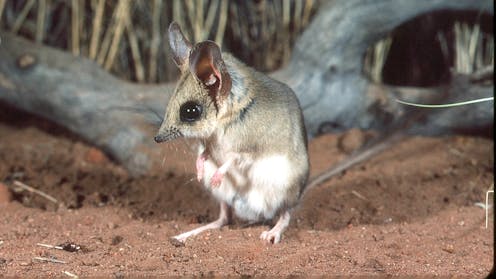
The long-eared kultarr (_A. auritus_) is the middle child in terms of body size, but it has by far the biggest ears. Ken Johnson

Australia is home to more than 60 species of carnivorous marsupials in the family Dasyuridae. Almost a quarter of those have only been scientifically recognised in the past 25 years.

Other than the iconic Tasmanian devil, chances are most of these small, fascinating species have slipped under your radar. One of the rarest and most elusive is the kultarr (Antechinomys laniger), a feisty insect-eater found in very low numbers across much of the outback.

To the untrained eye, the kultarr looks very much like a hopping mouse, with long legs, a long tail and a tendency to rest on its hind legs. However, it runs much like a greyhound – but its tiny size and high speed makes it look like it’s hopping.

Kultarr or kultarrs?

Until now, the kultarr was thought to be a single widespread species, ranging from central New South Wales to the Carnarvon Basin on Australia’s west coast. However, a genetic study in 2023 suggested there could be more than one species.

With backing from the Australian Biological Resources Study, our team of researchers from the University of Western Australia, Western Australian Museum and Queensland University of Technology set out to investigate.

We travelled to museums in Adelaide, Brisbane, Darwin, Melbourne, Sydney and Perth to look at every kultarr that had been collected by scientists over the past century. By combining detailed genetic data with body and skull measurements, we discovered the kultarr isn’t one widespread species, but three distinct species.

Three species of kultarrs

The eastern kultarr (A. laniger) is the smallest of the three, with an average body length of about 7.5cm. It’s darker in colour than its relatives, and while its ears are still big, they are nowhere near as big as those of the other two species.

The eastern kultarr is now found on hard clay soils around Cobar in central NSW and north to around Charleville in southern Queensland.

A small mouselike creature.
The eastern kultarr (A. laniger) is the smallest of the three species.
Pat Woolley

The gibber kultarr (A. spenceri) is the largest and stockiest, with an average body length of around 9cm. They are noticeably chunkier than the other two more dainty species, with big heads, thick legs and much longer hindfeet.

As its name suggests, the gibber kultarr is restricted to the extensive stony deserts or “gibber plains” in southwest Queensland and northeast South Australia.

A small mouselike creature.
The gibber kultarr (A. spenceri) is largest and stockiest.
Ken Johnson

The long-eared kultarr (A. auritus) is the middle child in terms of body size, but its ears set it apart. They’re nearly as long as its head.

It’s found in patchy populations in the central and western sandy deserts, living on isolated stony plains.

A very cute mouse-like animal in front of a fallen branch.
The long-eared kultarr (A. auritus) is the middle child in terms of body size, but it has by far the biggest ears.
Ken Johnson

Are they threatened?

All three species of kultarr are hard to find, making it difficult to confidently estimate population sizes and evaluate extinction risk. The long-eared and gibber kultarrs don’t appear to be in immediate danger, but land clearing and invasive predators such as cats and foxes have likely affected their numbers.

Map of Australia showing past and present ranges of the three species of kultarr.
The three species of kultarr seem to now inhabit smaller areas than in the past.
Cameron Dodd

The eastern kultarr, however, is more of a concern. By looking at museum specimens going back all the way to the 1890s, we found it was once much more widespread.

Historic records suggest the eastern kultarr used to occur across the entirety of arid NSW and even spread north through central Queensland and into the Northern Territory. We now think this species may be extinct in the NT and parts of northwest Queensland.

What’s next?

To protect kultarrs into the future, we need targeted surveys to confirm where each species still survives, especially the eastern kultarr, whose current range may be just a shadow of its former extent. With better knowledge, we can prioritise conservation actions where they’re most needed, and ensure these remarkable, long-legged hunters don’t disappear before we truly get to know them.

Australia still has many small mammal species that haven’t been formally described. Unless we identify and name them, they remain invisible in conservation policy.

Taxonomic research like this is essential – we can’t protect what we don’t yet know exists. And without action, some species may disappear before they’re ever officially recognised.


The authors wish to acknowledge the important contributions of Adjunct Professor Mike Westerman at La Trobe University to the research discussed in this article.

The Conversation

Cameron Dodd receives funding from the Australian Biological Resources Study and Society of Australian Systematic Biologists.

Andrew M. Baker receives funding from the Federal Government, State Governments, Australian Biological Resources Study and various Industry sources.

Kenny Travouillon receives funding from Australian Biological Resources Study.

Linette Umbrello receives funding from the Australian Biological Resources Study (ABRS) National Taxonomy Research Grant Program (NTRGP)

Renee Catullo does not work for, consult, own shares in or receive funding from any company or organisation that would benefit from this article, and has disclosed no relevant affiliations beyond their academic appointment.

– ref. Australia’s cutest mammal is now Australia’s cutest three mammals – https://theconversation.com/australias-cutest-mammal-is-now-australias-cutest-three-mammals-260006

Around 250 million years ago, Earth was near-lifeless and locked in a hothouse state. Now scientists know why

Source: The Conversation – Canada – By Andrew Merdith, DECRA Fellow, School of Earth Sciences, University of Adelaide

Some 252 million years ago, almost all life on Earth disappeared.

Known as the Permian–Triassic mass extinction – or the Great Dying – this was the most catastrophic of the five mass extinction events recognised in the past 539 million years of our planet’s history.

Up to 94% of marine species and 70% of terrestrial vertebrate families were wiped out. Tropical forests – which served, as they do today, as important carbon sinks that helped regulate the planet’s temperature – also experienced massive declines.

Scientists have long agreed this event was triggered by a sudden surge in greenhouse gases which resulted in an intense and rapid warming of Earth. But what has remained a mystery is why these extremely hot conditions persisted for millions of years.

Our new paper, published today in Nature Communications, provides an answer. The decline of tropical forests locked Earth in a hothouse state, confirming scientists’ suspicion that when our planet’s climate crosses certain “tipping points”, truly catastrophic ecological collapse can follow.

A massive eruption

The trigger for the Permian–Triassic mass extinction event was the eruption of massive amounts of molten rock in modern day Siberia, named the Siberian Traps. This molten rock erupted in a sedimentary basin, rich in organic matter.

The molten rock was hot enough to melt the surrounding rocks and release massive amounts of carbon dioxide into Earth’s atmosphere over a period as short as 50,000 years but possibly as long as 500,000 years. This rapid increase in carbon dioxide in Earth’s atmosphere and the resulting temperature increase is thought to be the primary kill mechanism for much of life at the time.

On land it is thought surface temperatures increased by as much as 6°C to 10°C – too rapid for many life forms to evolve and adapt. In other similar eruptions, the climate system usually returns to its previous state within 100,000 to a million years.

But these “super greenhouse” conditions, which resulted in equatorial average surface temperatures upwards of 34°C (roughly 8°C warmer than the current equatorial average temperature) persisted for roughly five million years. In our study we sought to answer why.

The forests die out

We looked at the fossil record of a wide range of land plant biomes, such as arid, tropical, subtropical, temperate and scrub. We analysed how the biomes changed from just before the mass extinction event, until about eight million years after.

We hypothesised that Earth warmed too rapidly, leading to the dying out of low- to mid-latitude vegetation, especially the rainforests. As a result the efficiency of the organic carbon cycle was greatly reduced immediately after the volcanic eruptions.

Plants, because they are unable to simply get up and move, were very strongly affected by the changing conditions.

Before the event, many peat bogs and tropical and subtropical forests existed around the equator and soaked up carbon

However, when we reconstructed plant fossils from fieldwork, records and databases around the event we saw that these biomes were completely wiped out from the tropical continents. This led to a multimillion year “coal gap” in the geological record.

These forests were replaced by tiny lycopods, only two to 20 centimetres in height.

Enclaves of larger plants remained towards the poles, in coastal and in slightly mountainous regions where the temperature was slightly cooler. After about five million years they had mostly recolonised Earth. However these types of plants were also less efficient at fixing carbon in the organic carbon cycle.

This is analogous in some ways to considering the impact of replacing all rainforests at present day with the mallee-scrub and spinifex flora that we might expect to see in the Australian outback.

A slab of grey rock marked with fossils.
Post-extinction lycopod fossils.
Zhen Xu

Finally, the forests return

Using evidence from the present day, we estimated the rate at which plants take atmospheric carbon dioxide and store it as organic matter of each different biome (or its “net primary productivity”) that was suggested in the fossil record.

We then used a recently developed carbon cycle model called SCION to test our hypothesis numerically. When we analysed our model results we found that the initial increase in temperature from the Siberian Traps was preserved for five to six million years after the event because of the reduction in net primary productivity.

It was only as plants re-established themselves and the organic carbon cycle restarted that Earth slowly started to ease out of the super greenhouse conditions.

Maintaining a climate equilibrium

It’s always difficult to draw analogies between past climate change in the geological record and what we’re experiencing today. That’s because the extent of past changes is usually measured over tens to hundreds of thousands of years while at present day we are experiencing change over decades to centuries.

A key implication of our work, however, is that life on Earth, while resilient, is unable to respond to massive changes on short time scales without drastic rewirings of the biotic landscape.

In the case of the Permian–Triassic mass extinction, plants were unable to respond on as rapid a time scale as 1,000 to 10,000 years. This resulted in a large extinction event.

Overall, our results underline how important tropical and subtropical plant biomes and environments are to maintaining a climate equilibrium. In turn, they show how the loss of these biomes can contribute to additional climate warming – and serve as a devastating climate tipping point.


Zhen Xu was the lead author of the study, which was part of her PhD work.

The Conversation

Andrew Merdith receives funding from the Australian Research Council as part of the Discovery Early Career Researcher Award.

Benjamin J. W. Mills receives funding from UK Research and Innovation.

Zhen Xu receives funding from UK Research and Innovation and the National Natural Science Foundation of China.

– ref. Around 250 million years ago, Earth was near-lifeless and locked in a hothouse state. Now scientists know why – https://theconversation.com/around-250-million-years-ago-earth-was-near-lifeless-and-locked-in-a-hothouse-state-now-scientists-know-why-260203

More and more tourists are flocking to Antarctica. Let’s stop it from being loved to death

Source: The Conversation – Canada – By Darla Hatton MacDonald, Professor of Environmental Economics, University of Tasmania

VCG via Getty Images

The number of tourists heading to Antarctica has been skyrocketing. From fewer than 8,000 a year about three decades ago, nearly 125,000 tourists flocked to the icy continent in 2023–24. The trend is likely to continue in the long term.

Unchecked tourism growth in Antarctica risks undermining the very environment that draws visitors. This would be bad for operators and tourists. It would also be bad for Antarctica – and the planet.

Over the past two weeks, the nations that decide what human activities are permitted in Antarctica have convened in Italy. The meeting incorporates discussions by a special working group that aims to address tourism issues.

It’s not easy to manage tourist visitors to a continent beyond any one country’s control. So, how do we stop Antarctica being loved to death? The answer may lie in economics.

Future visitor trends

We recently modelled future visitor trends in Antarctica. A conservative scenario shows by 2033–34, visitor numbers could reach around 285,000. Under the least conservative scenario, numbers could reach 450,000 – however, this figure incorporates pent-up demand from COVID shutdowns that will likely diminish.

The vast majority of the Antarctic tourism industry comprises cruise-ship tourism in the Antarctic Peninsula. A small percentage of visitors travel to the Ross Sea region and parts of the continent’s interior.

Antarctic tourism is managed by an international set of agreements together known as the Antarctic Treaty System, as well as the International Association of Antarctica Tour Operators (IAATO).

The Treaty System is notoriously slow-moving and riven by geopolitics, and IAATO does not have the power to cap visitor numbers.

Pressure on a fragile continent

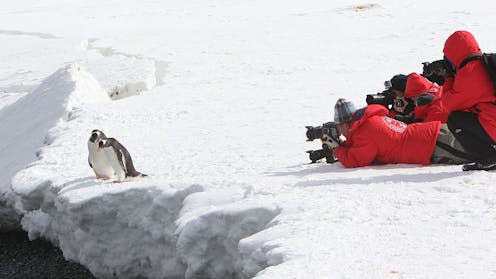
About two-thirds of Antarctic tourists land on the continent. The visitors can threaten fragile ecosystems by:

  • compacting soils
  • trampling fragile vegetation
  • introducing non-native microbes and plant species
  • disturbing breeding colonies of birds and seals.

Even when cruise ships don’t dock, they can cause problems such as air, water and noise pollution – as well as anchoring that can damage the seabed.

Then there’s carbon emissions. Each cruise ship traveller to Antarctica typically produces between 3.2 and 4.1 tonnes of carbon, not including travel to the port of departure. This is similar to the carbon emissions an average person produces in a year.

Global warming caused by carbon emissions is damaging Antarctica. At the Peninsula region, glaciers and ice shelves are retreating and sea ice is shrinking, affecting wildlife and vegetation.

Of course, Antarctic tourism represents only a tiny fraction of overall emissions. However, the industry has a moral obligation to protect the place that maintains it. And tourism in Antarctica can compound damage from climate change, tipping delicate ecosystems into decline.

Some operators use hybrid ships and less polluting fuels, and offset emissions to offer carbon-neutral travel.

IAATO has pledged to halve emissions by 2050 – a positive step, but far short of the net-zero targets set by the International Maritime Organization.

Can economics protect Antarctica?

Market-based tools – such as taxes, cap-and-trade schemes and certification – have been used in environmental management around the world. Research shows these tools could also prevent Antarctic tourist numbers from getting out of control.

One option is requiring visitors to pay a tourism tax. This would help raise revenue to support environmental monitoring and enforcement in Antarctica, as well as fund research.

Such a tax already exists in the small South Asian nation of Bhutan, where each tourist pays a tax of US$100 (A$152) a night. But while a tax might deter the budget-conscious, it probably wouldn’t deter high income, experience-driven tourists.

Alternatively, a cap-and-trade system would create a limited number of Antarctica visitor permits for a fixed period. The initial distribution of permits could be among tourism operators or countries, via negotiation, auction or lottery. Unused permits could then be sold, making them quite valuable.

Caps have been successful at managing tourism impacts elsewhere, such as Lord Howe Island, although there are no trades allowed in that system.

Any cap on tourist numbers in Antarctica, and rules for trading, must be based on evidence about what the environment can handle. But there is a lack of precise data on Antarctica’s carrying capacity. And permit allocations amongst the operators and nations would need to be fair and inclusive.

Alternatively, existing industry standards could be augmented with independent schemes certifying particular practices – for example, reducing carbon footprints. This could be backed by robust monitoring and enforcement to avoid greenwashing.

Looking ahead

Given the complexities of Antarctic governance, our research finds that the most workable solution is a combination of these market-based options, alongside other regulatory measures.

So far, parties to the Antarctic treaty have made very few binding rules for the tourism industry. And some market-based levers will be more acceptable to the parties than others. But doing nothing is not a solution.


The authors would like to acknowledge Valeria Senigaglia, Natalie Stoeckl and Jing Tian and the rest of the team for their contributions to the research upon which this article was based.

The Conversation

Darla Hatton MacDonald receives funding from the Australian Research Council, the Australian Forest and Wood Innovations Centre, the Department of Climate Change, Energy, the Environment and Water, and the Soils CRC. She has received in-kind support from Antarctic tour operator HX.

Elizabeth Leane receives funding from the Australian Research Council, the Dutch Research Council, and DFAT. She also receives in-kind support and occasional funding from Antarctic tourism operator HX and in-kind support from other tour operators.

– ref. More and more tourists are flocking to Antarctica. Let’s stop it from being loved to death – https://theconversation.com/more-and-more-tourists-are-flocking-to-antarctica-lets-stop-it-from-being-loved-to-death-258294

Thumbs up: good or passive aggressive? How emojis became the most confusing kind of online language

Source: The Conversation – Canada – By Brittany Ferdinands, Lecturer in Digital Content Creation, Discipline of Media and Communications, University of Sydney

The Conversation, CC BY

Emojis, as well as memes and other forms of short-form content, have become central to how we express ourselves and connect online. Yet as meanings shift across different contexts, so too does the potential for misunderstanding.

A senior colleague of mine recently encountered some commentary about the “slightly smiling” face emoji: 🙂

They approached me, asking whether it represented joy, as they had assumed, or if it had a more ominous meaning.

As a chronically-online millennial, who unironically identifies as a gen Z, I bore the news that I, along with most younger internet users, only ever use it sarcastically.

“It doesn’t actually signify happiness – more so fake happiness, or dry humour,” I explained.

I also told them how the thumbs up emoji is often interpreted as passive aggressive, and that the only time I’d use the laughing-crying (“face with tears of joy”) emoji is under duress.

Despite seeming like a universal language – and sometimes they do function that way – emojis can be at once more vague, and more specific, than words. That’s because you can’t separate the meaning of a smiley from the person who sent it, nor from the person receiving it.

Markers of age and identity

While emojis were originally developed in the late 1990s by Japanese artist Shigetaka Kurita to add emotional nuance to text-based messaging, their function has since evolved.

Today, emojis are not just emotional cues; they also operate as cultural symbols and markers of identity.

Research published last year highlights how these symbols can create subtle communication barriers across age groups. For instance, a study of Chinese-speaking WeChat users found younger and older people differed not only in how frequently they used emojis, but in how they interpreted and aesthetically preferred them.

One emoji that’s increasingly becoming a distinct marker of age is the previously mentioned laughing-crying emoji (😂). Despite being named Oxford Dictionary’s 2015 word of the year, and frequently topping the most-used emoji charts, this smiley is on the decline among gen Z – who decided in 2020 that it wasn’t cool anymore.

Instead, they prefer the skull emoji (💀), which is shorthand for the gen Z catch phrase “I’m dead”. This means something is funny (not that they’re literally deceased).

Such shifts may understandably be perplexing for older generations who are unfamiliar with evolving norms and slang.

A digital body language

Emojis can also take on distinct meanings on different platforms. They are embedded within “platform vernaculars”: the ever-evolving styles of communication that are unique to specific digital spaces.

For example, a thumbs up emoji (👍) from your boss at work is seemingly more acceptable, and less anxiety inducing, than from a romantic interest you’ve just sent a risky text to.

This dilemma was echoed in a recent viral TikTok by user @kaitlynghull, which prompted thousands to comment about their shared confusion over emoji use in the workplace.

This reaction highlights a deeper communication issue.

A survey of 10,000 workers across the US, France, Germany, India and Australia, conducted by YouGov and software company Atlassian, found 65% of workers used emojis to convey tone in the workplace. But while 88% of gen Z workers thought emojis were helpful, this dropped to 49% for baby boomers and gen X.

The survey concluded some emojis can be interpreted in multiple ways, and these double meanings aren’t always safe for work.

In with the ‘it’ crowd

Another example of platform-specific emoji use comes from social media content creators who deploy emojis to curate a certain aesthetic.

Under the Tiktok tag #emojicombo, you’ll find thousands of videos showcasing emoji combinations that provide aesthetic “inspo”. These combinations are used to represent different online identities or subcultures, such as “that girl”, “clean girl” or “old money”.

Users may include the combinations in their captions or videos to signal their personal style, or to express the mood or vibe of their online persona. In this way, the emojis help shape how they present themselves on the platform.

This example of emoji use is also a display of symbolic capital. It signals social alignment, in an environment where a user’s visibility (and popularity) is determined by their platform fluency.

Emojis, then, aren’t just tools for expression. They are badges of identity that index where a user stands in the online cultural hierarchy.

There’s a fragmentation in how we relate

A single emoji might communicate irony, sincerity or sarcasm, depending on who is using it, what platform they’re using it on, and what generation they belong to.

This gap points to deeper questions around online access and participation, and the systems that shape online cultures.

And when the meaning of an emoji is platform-dependent and socially stratified, it can become as much about fitting in with a cultural in-group than conveying emotion.

The Conversation

Brittany Ferdinands does not work for, consult, own shares in or receive funding from any company or organisation that would benefit from this article, and has disclosed no relevant affiliations beyond their academic appointment.

– ref. Thumbs up: good or passive aggressive? How emojis became the most confusing kind of online language – https://theconversation.com/thumbs-up-good-or-passive-aggressive-how-emojis-became-the-most-confusing-kind-of-online-language-259151