Gum disease, decay, missing teeth: why people with mental illness have poorer oral health

Source: The Conversation – Global Perspectives – By Bonnie Clough, Senior Lecturer, School of Applied Psychology, Griffith University

mihailomilovanovic/Getty Images

People with poor mental health face many challenges. One that’s perhaps lesser known is that they’re more likely than the overall population to have poor oral health.

Research has shown people with serious mental illness are four times more likely than the general population to have gum disease. They’re nearly three times more likely to have lost all their teeth due to problems such as gum disease and tooth decay.

Serious mental illnesses include major depressive disorder, bipolar disorder and psychotic disorders such as schizophrenia. These conditions affect about 800,000 Australians.

People living with schizophrenia have, on average, eight more teeth that are decayed, missing or filled than the general population.

So why does this link exist? And what can we do to address the problem?

Why is this a problem?

Oral health problems are expensive to fix and can make it hard for people to eat, socialise, work or even just smile.

What’s more, dental issues can land people in hospital. Our research shows dental conditions are the third most common reason for preventable hospital admissions among people with serious mental illness.

Meanwhile, poor oral health is linked with long-term health conditions such as diabetes, heart disease, some cancers, and even cognitive problems. This is because the bacteria associated with gum diseases can cause inflammation throughout the body, which affects other systems in the body.

Why are mental health and oral health linked?

Poor mental and oral health share common risk factors. Social factors such as isolation, unemployment and housing insecurity can worsen both oral and mental health.

For example, unemployment increases the risk of oral disease. This can be due to financial difficulties, reduced access to oral health care, or potential changes to diet and hygiene practices.

At the same time, oral disease can increase barriers to finding employment, due to stigma, discrimination, dental pain and associated long-term health conditions.

It’s clear the relationship between oral health and mental health goes both ways. Dental disease can reduce self-esteem and increase psychological distress. Meanwhile, symptoms of mental health conditions, such as low motivation, can make engaging in good oral health practices, including brushing, flossing, and visiting the dentist, more difficult.

And like many people, those with serious mental illness can experience significant anxiety about going to the dentist. They may also have experienced trauma in the past, which can make visiting a dental clinic a frightening experience.

Separately, poor oral health can be made worse by some medications for mental health conditions. Certain medications can interfere with saliva production, reducing the protective barrier that covers the teeth. Some may also increase sugar cravings, which heightens the risk of tooth decay.

A woman sits on the edge of a bed with her head in her hand.
Some medications people take for mental health conditions can affect oral health.
Gladskikh Tatiana/Shutterstock

Our research

In a recent study, we interviewed young people with mental illness. Our findings show the significant personal costs of dental disease among people with mental illness, and highlight the relationship between oral and mental health.

Smiling is one of our best ways to communicate, but we found people with serious mental illness were sometimes embarrassed and ashamed to smile due to poor oral health.

One participant told us:

[poor oral health is] not only [about] the physical aspects of restricting how you eat, but it’s also about your mental health in terms of your self-esteem, your self-confidence, and basic wellbeing, which sort of drives me to become more isolated.

Another said:

for me, it was that serious fear of – God my teeth are looking really crap, and in the past they’ve [dental practitioners] asked, “Hey, you’ve missed this spot; what’s happening?”. How do I explain to them, hey, I’ve had some really shitty stuff happening and I have a very serious episode of depression?

What can we do?

Another of our recent studies focused on improving oral health awareness and behaviours among young adults experiencing mental health difficulties. We found a brief online oral health education program improved participants’ oral health knowledge and attitudes.

Improving oral health can result in improved mental wellbeing, self-esteem and quality of life. But achieving this isn’t always easy.

Limited Medicare coverage for dental care means oral diseases are frequently treated late, particularly among people with mental illness. By this time, more invasive treatments, such as removal of teeth, are often required.

It’s crucial the health system takes a holistic approach to caring for people experiencing serious mental illness. That means we have mental health staff who ask questions about oral health, and dental practitioners who are trained to manage the unique oral health needs of people with serious mental illness.

It also means increasing government funding for oral health services – promotion, prevention and improved interdisciplinary care. This includes better collaboration between oral health, mental health, and peer and informal support sectors.

The Conversation

Amanda Wheeler is an investigator on a MetroSouth Health 2025 grant exploring use of Queensland Emergency Departments for people with mental ill-health seeking acute care for oral health problems.

Steve Kisely has received a grant on oral health from Metro South Research Foundation and one from the Medical Research Future Fund.

Bonnie Clough, Caroline Victoria Robertson, and Santosh Tadakamadla do not work for, consult, own shares in or receive funding from any company or organisation that would benefit from this article, and have disclosed no relevant affiliations beyond their academic appointment.

ref. Gum disease, decay, missing teeth: why people with mental illness have poorer oral health – https://theconversation.com/gum-disease-decay-missing-teeth-why-people-with-mental-illness-have-poorer-oral-health-258403

‘Shit in, shit out’: AI is coming for agriculture, but farmers aren’t convinced

Source: The Conversation – Global Perspectives – By Tom Lee, Senior Lecturer, School of Design, University of Technology Sydney

David Gray / AFP / Getty Images

Australian farms are at the forefront of a wave of technological change coming to agriculture. Over the past decade, more than US$200 billion (A$305 billion) has been invested globally into the likes of pollination robots, smart soil sensors and artificial intelligence (AI) systems to help make decisions.

What do the people working the land make of it all? We interviewed dozens of Australian farmers about AI and digital technology, and found they had a sophisticated understanding of their own needs and how technology might help – as well as a wariness of tech companies’ utopian promises.

The future of farming

The supposed revolution coming to agriculture goes by several names: “precision agriculture”, “smart farming”, and “agriculture 4.0” are some of the more common ones.

These names all gesture towards a future in which the relationships between humans, computing and nature have been significantly reconfigured. Perhaps remote sensing technology will monitor ever more of a farm system, autonomous vehicles will patrol it, and AI will predict crop growth or cattle weight gain.

But there’s another story to tell about the way technological change happens. It involves people and communities creating their own future, their own sense of important change from the past.

AI, country style

Our research team conducted more than 35 interviews with farmers, specifically livestock producers, from across Australia.

The dominant themes of their responses were captured in two pithy quotes: “shit in, shit out” and “more automation, less features”.

“Shit in, shit out” is an earthier version of the “garbage in, garbage out” adage in computer science. If the data going into a model is unreliable or overly abstract, then the outputs will be shaped by those errors.

This captured a real concern for many farmers. They didn’t feel they could trust new technologies if they didn’t understand what knowledge and information they had been built with.

A different kind of automation

On the other hand, “more automation, less features” is what farmers want: technologies that may not have a lot of bells and whistles, but can reliably take a task off their hands.

Australian farmers have a ready appetite for labour-saving technologies. When human bodies are scarce, as they often are in rural Australia, machines are created to fill the void.

Windmills, wire fences, and even the iconic Australian sheepdog have been a crucial part of the technological narrative of settler colonial farming. These things are not “autonomous” in the same way as computer-powered vehicles and drones, but they offer similar advantages to farmers.

What these classic farm technologies have in common is a simplicity that derives from a clarity of purpose. They are the opposite of the “everything apps” that fuel the dreams of many Silicon Valley entrepreneurs.

“More automation, less features” is in this sense a farmer envisaging a digital product that fits with their image of a useful technology: transparent in its operations, and a reliable replacement for or an addition to human labour.

The lesson of the Suzuki Sierra Stockman

When speaking with one farmer about favoured technologies of her lifetime, she mentioned the Suzuki Sierra Stockman. These small, no-frills, four-wheel-drive vehicles became something of an icon on Australian sheep and cattle farms through the 1970s, ‘80s and ’90s.

A 1993 ad for a Suzuki Sierra Stockman ute.
By the 1990s, the Suzuki Sierra Stockman had an iconic status among Australian farmers.
Turbo_J / Flickr

Reflecting on her memories of first using the vehicle, the farmer said:

Once I learnt that I could actually draft cattle out with the Suzuki, that changed everything. You could do exactly what you did on a horse with a vehicle.

It seems unlikely that Suzuki’s engineers in Japan envisaged their little jeep chasing cattle in the paddocks of Central West of NSW. The Suzuki was in a sense remade by farmers who found innovative uses for it.

Future technology must be simple, adaptable and reliable

The combustion engine was a key technological change on farms in the 20th century. Computers may play a similar role in the 21st.

We are perhaps yet to see a digital product as iconic as wire fences, windmills, sheepdogs and the Suzuki Stockman. Computers are still largely technologies of the office, not the paddock.

However, this is changing as computers get smaller and are wired into water tanks, soil monitors and in-paddock scales. More data input from these sensors means AI systems have more scope to help farmers make decisions.

AI may well become a much-loved tool for farmers. But that journey to iconic status will depend as much on how farmers adapt the technology as on how the developers build it. And we can guess at what it will look like: simple, adaptable and reliable.

The Conversation

This article is based on research conducted by the Foragecaster project, led by AgriWebb and supported by funding from Food Agility CRC Ltd, funded under the Commonwealth Government CRC Program. The CRC Program supports industry-led collaborations between industry, researchers and the community. This project was also supported by funding from Meat and Livestock Australia (MLA).

ref. ‘Shit in, shit out’: AI is coming for agriculture, but farmers aren’t convinced – https://theconversation.com/shit-in-shit-out-ai-is-coming-for-agriculture-but-farmers-arent-convinced-259997

Antarctic summer sea ice is at record lows. Here’s how it will harm the planet – and us

Source: The Conversation – Global Perspectives – By Edward Doddridge, Senior Research Associate in Physical Oceanography, University of Tasmania

An icebreaker approaches Denman Glacier in March, when there was 70% less Antarctic sea ice than usual. Pete Harmsen AAD

On her first dedicated scientific voyage to Antarctica in March, the Australian icebreaker RSV Nuyina found the area sea-ice free. Scientists were able to reach places never sampled before.

Over the past four summers, Antarctic sea ice extent has hit new lows.

I’m part of a large group of scientists who set out to explore the consequences of summer sea ice loss after the record lows of 2022 and 2023. Together we rounded up the latest publications, then gathered new evidence using satellites, computer modelling, and robotic ocean sampling devices. Today we can finally reveal what we found.

It’s bad news on many levels, because Antarctic sea ice is vital for the world’s climate and ecosystems. But we need to get a grip on what’s happening – and use this concerning data to prompt faster action on climate change.

Sea ice around Antarctica waxes and wanes with the seasons, growing in the cold months and melting in warm ones. But this rhythmic cycle is changing.

What we did and what we found

Our team used a huge range of approaches to study the consequences of sea ice loss.

We used satellites to understand sea ice loss over summer, measuring everything from ice thickness and extent to the length of time each year when sea ice is absent.

Satellite data was also used to calculate how much of the Antarctic coast was exposed to open ocean waves. We were then able to quantify the relationship between sea ice loss and iceberg calving.

Data from free-drifting ocean robots was used to understand how sea ice loss affects the tiny plants that support the marine food web.

Every other kind of available data was then harnessed to explore the full impact of sea ice changes on ecosystems.

Voyage reports from international colleagues came in handy when studying how sea ice loss affected Antarctic resupply missions.

We also used computer models to simulate the impact of dramatic summer sea ice loss on the ocean.

In summary, our extensive research reveals four key consequences of summer sea ice loss in Antarctica.

1. Ocean warming is compounding

Bright white sea ice reflects about 90% of the incoming energy from sunlight, while the darker ocean absorbs about 90%. So if there’s less summer sea ice, the ocean absorbs much more heat.

This means the ocean surface warms more in an extreme low sea ice year, such as 2016 – when everything changed.

Until recently, the Southern Ocean would reset over winter. If there was a summer with low sea ice cover, the ocean would warm a bit. But over winter, the extra heat would shift into the atmosphere.

That’s not working anymore. We know this from measuring sea surface temperatures, but we have also confirmed this relationship using computer models.

What’s happening instead is when summer sea ice is very low, as in 2016, it triggers ocean warming that persists. It takes about three years for the system to fully recover. But recovery is becoming less and less likely, given warming is building from year to year.

Artwork illustrating the consequences of sea ice loss around Antarctica, showing more warming, and less area available to wildlife
Comparing an average sea ice summer (a) to an extreme low sea ice summer (b) in which there is less sea ice for wildlife and more sunlight is absorbed by the ocean. The ice shelf is more exposed to ocean waves, calving more icebergs. The ocean is also less productive and tourist vessels can make a closer approach.
Doddridge, E., W., et al. (2025) PNAS Nexus., CC BY-NC-ND

2. More icebergs are forming

Sea ice protects Antarctica’s coast from ocean waves.

On average, about a third of the continent’s coastline is exposed over summer. But this is changing. In 2022 and 2023, more than half of the Antarctic coast was exposed.

Our research shows more icebergs break away from Antarctic ice sheets in years with less sea ice. During an average summer, about 100 icebergs break away. Summers with low sea ice produce about twice as many icebergs.

A wave hits the Antarctic ice sheet, causing ice to break off into the ocean
Antarctic ice sheets without sea ice are more exposed to waves.
Pete Harmsen AAD

3. Wildlife squeezed off the ice

Many species of seals and penguins rely on sea ice, especially for breeding and moulting.

Entire colonies of emperor penguins experienced “catastrophic breeding failure” in 2022, when sea ice melted before chicks were ready to go to sea.

After giving birth, crabeater seals need large, stable sea ice platforms for 2–3 weeks until their pups are weaned. The ice provides shelter and protection from predators. Less summer sea-ice cover makes large platforms harder to find.

Many seal and penguin species also take refuge on the sea ice when moulting. These species must avoid the icy water while their new feathers or fur grows, or risk dying of hypothermia.

4. Logistical challenges at the end of the world

Low summer sea ice makes it harder for people working in Antarctica. Shrinking summer sea ice will narrow the time window during which Antarctic bases can be resupplied over the ice. These bases may soon need to be resupplied from different locations, or using more difficult methods such as small boats.

An icebreaker delivers supplies to the Antarctic base
Supply ships typically unload their cargo directly onto the sea ice, but that may have to change.
Jared McGhie, Australian Antarctic Division

No longer safe

Anarctic sea ice began to change rapidly in 2015 and 2016. Since then it has remained well below the long-term average.

The dataset we use relies on measurements from US Department of Defense satellites. Late last month, the department announced it would no longer provide this data to the scientific community. While this has since been delayed to July 31, significant uncertainty remains.

One of the biggest challenges in climate science is gathering and maintaining consistent long-term datasets. Without these, we don’t accurately know how much our climate is changing. Observing the entire Earth is hard enough when we all work together. It’s going to be almost impossible if we don’t share our data.

A chart showing the variation in Antarctic sea ice extent compared to the long-term average, trending towards less sea ice since 2016.
Antarctic sea ice extent anomalies (the difference between the long-term average and the measurement) for the entire satellite record since the late 1970s.
Edward Doddridge, using data from the US NSIDC Sea Ice Index, version 3., CC BY

Recent low sea ice summers present a scientific challenge. The system is currently changing faster than our scientific community can study it.

But vanishing sea ice also presents a challenge to society. The only way to prevent even more drastic changes in the future is to rapidly transition away from fossil fuels and reach net zero emissions.

The Conversation

Edward Doddridge receives funding from the Australian Research Council.

ref. Antarctic summer sea ice is at record lows. Here’s how it will harm the planet – and us – https://theconversation.com/antarctic-summer-sea-ice-is-at-record-lows-heres-how-it-will-harm-the-planet-and-us-256104

Distressed by all the bad news? Here’s how to stay informed but still look after yourself

Source: The Conversation – Global Perspectives – By Reza Shabahang, Research Fellow in Human Cybersecurity, Monash University and Academic Researcher in Media Psychology, Flinders University

KieferPix/Shutterstock

If you’re feeling like the news is particularly bad at the moment, you’re not alone.

But many of us can’t look away – and don’t want to. Engaging with news can help us make sense of what’s going on and, for many of us, is an ethical stance.

So, how can you also take care of your mental health? Here’s how to balance staying informed with the impact negative news can have on our wellbeing.

Why am I feeling so affected by the news?

Our brains are wired to prioritise safety and survival, and respond rapidly to danger. Repeatedly activating such processes by consuming distressing news content – often called doomscrolling – can be mentally draining.

Unfiltered or uncensored images can have an especially powerful psychological impact. Graphic footage of tragedies circulating on social media may have a stronger effect than traditional media (such as television and newspapers) which are more regulated.

Research shows consuming negative news is linked to lower wellbeing and psychological difficulties, such as anxiety and feelings of uncertainty and insecurity. It can make us feel more pessimistic towards ourselves, other people, humanity and life in general.

In some cases, consuming a lot of distressing news can even cause vicarious trauma. This means you may experience post-traumatic stress symptoms such as flashbacks and trouble sleeping despite not being directly involved in the traumatic events.

But this doesn’t stop us seeking it out. In fact, we are more likely to read, engage with, and share stories that are negative.

Is there a better way to consume news?

Switching off may not be an option for everyone.

For example, if you have friends or family in areas affected by conflict, you may be especially concerned and following closely to see how they’re affected.

Even without personal ties to the conflict, many people want to stay informed and understand what is unfolding. For some, this is a moral decision which they feel may lead to action and positive change.

This is why, in research I co-authored, we suggest simply restricting your exposure to negative news is not always possible or practical.

Instead, we recommend engaging more mindfully with news. This means paying attention to shifts in your emotions, noticing how the news makes you feel, and slowing down when needed.

How to consume news more mindfully

When you plan to engage with news, there are some steps you can take.

1. Pause and take a few deep breaths. Take a moment to observe how your body is feeling and what your mind is doing.

2. Check in. Are you feeling tense? What else do you have going on today? Maybe you’re already feeling worried or emotionally stretched. Think about whether you’re feeling equipped to process negative news right now.

3. Reflect. What is motivating you to engage right now? What are you trying to find out?

4. Stay critical. As you read an article or watch a video, pay attention to how credible the source is, the level of detail provided and where the information comes from.

5. Tune into how it’s making you feel. Do you notice any physical signs of stress, such as tension, sweating or restlessness?

6. Take time. Before quickly moving on to another piece of news, allow yourself to process the information you’ve received as well as your response. Has it changed your emotions, thoughts or attitudes? Did it fulfil your intention? Do you still have energy to engage with more news?

It may not always be possible to take all these steps. But engaging more mindfully before, during and after you’re exposed to negative news can help you make more informed decisions about how and when to consume it – and when to take a break.

Signs the news is affecting your mental health

If you’re feeling emotionally overwhelmed, you’re more likely to have an automatic and emotion-driven response to what you’re reading or watching.

Signs your negative news consumption may be affecting your mental health include:

  • compulsive engagement, feeling like you can’t stop checking or following negative news

  • experiencing feelings of despair, hopelessness, or lack of motivation

  • feeling irritable

  • difficulty concentrating

  • fatigue

  • strong physical symptoms (such as an upset stomach)

  • trouble sleeping

  • an increase in rash or risky behaviours, or behaviours you don’t usually display when you’re calm, such as panic shopping and hoarding following news about bad events.

What should I do when I’m feeling upset?

First, take a break. This could be a few minutes or a few days – as long as it takes you to feel emotionally steady and ready to re-engage with negative news.

You might find it useful to reflect by writing down observations about how news is making you feel, and keeping track of intense fluctuations in emotions.

It can also be helpful to connect with supportive people around you and do activities you enjoy. Spending time outdoors and doing hands-on tasks, such as gardening, painting or sewing, can be particularly helpful when you’re feeling anxious or emotional.

But if you’re feeling overwhelmed and it’s affecting your work, life or relationships, it’s a good idea to seek professional help.

In Australia, the government provides free mental health support at walk-in Medicare Mental Health Centres, Kids Hubs or via phone.

Other free resources – including a symptom checker and links to online chat support – are available at Health Direct.


If this article has raised issues for you, or if you’re concerned about someone you know, call Lifeline on 13 11 14.

The Conversation

Reza Shabahang does not work for, consult, own shares in or receive funding from any company or organisation that would benefit from this article, and has disclosed no relevant affiliations beyond their academic appointment.

ref. Distressed by all the bad news? Here’s how to stay informed but still look after yourself – https://theconversation.com/distressed-by-all-the-bad-news-heres-how-to-stay-informed-but-still-look-after-yourself-259913

Trump demands an end to the war in Gaza – could a ceasefire be close?

Source: The Conversation – Global Perspectives – By Marika Sosnowski, Postdoctoral research fellow, The University of Melbourne

Anas-Mohammed/Shutterstock

Hopes are rising that Israel and Hamas could be inching closer to a ceasefire in the 20-month war in Gaza.

US President Donald Trump is urging progress, taking to social media to demand:

MAKE THE DEAL IN GAZA. GET THE HOSTAGES BACK!!!

Trump further raised expectations, saying there could be an agreement between Israel and Hamas “within the next week”.

But what are the prospects for a genuine, lasting ceasefire in Gaza?

Ceasefires are generally complicated to negotiate because they need to take into account competing demands and pressures. They usually (but not always) require both sides to compromise.

Gaza is no exception. In a conflict that has been going on for more than 70 years, compromise and concession have become a game of cat and mouse.

Israel is the cat that holds the military strength and the majority of the political power. Hamas is the mouse that can dart and delay, but in the end has little choice but to accept the terms of a ceasefire if it wants to halt the violence currently being inflicted on Palestinians.

Trump the peacemaker?

Trump appears buoyed by what he perceives as the recent success of his efforts to broker a truce in the Israel–Iran war. He may think he can use similar tactics to pressure Israeli Prime Minister Benjamin Netanyahu into making a ceasefire deal for Gaza.

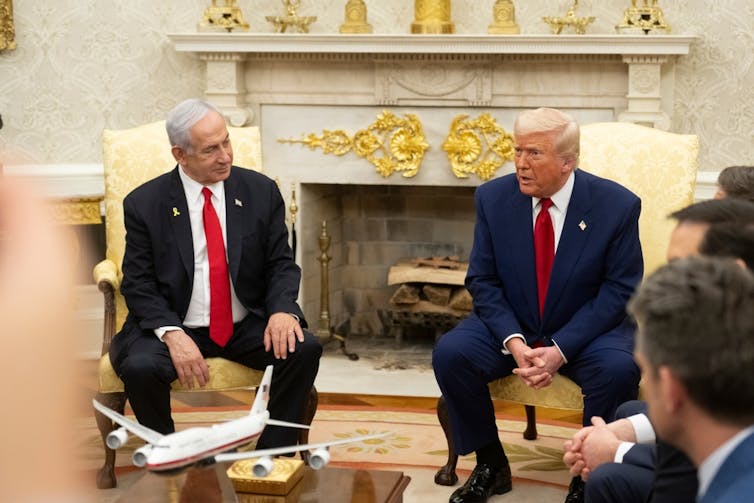
Donald Trump and Benjamin Netanyahu seated  in the Oval Office.
US President Donald Trump has posted on social media that Israeli Prime Minister Benjamin Netanyahu is negotiating a deal with Hamas ‘right now’.
noamgalai/Shutterstock

Netanyahu will return to Washington next week for talks at the White House. This is a good sign some US pressure is being brought to bear.

Trump’s current push for a Gaza ceasefire may also signal he is keen for a return to the normalisation of economic ties previously delivered by the Abraham Accords between Israel and various Arab states. A ceasefire could unlock frozen regional relationships, potentially boosting the US economy (and Trump’s own personal wealth).

Israeli opportunities

Another positive sign a ceasefire may be on the cards is Netanyahu’s recent comments that the war with Iran had created opportunities for Israel in Gaza.

During its 12-day war with Iran, Israel assassinated 30 Iranian security chiefs and 11 nuclear scientists. Iran’s weakened security apparatus might disrupt its support for Hamas and help advance Israeli objectives.

Similar to what happened in Iran, this might enable Netanyahu to publicly declare Israeli victory in Gaza and agree to a ceasefire without losing face or political backing from his government’s right wing.

Domestic Israeli politics have also played a role in the Gaza ceasefire negotiations. As part of the current round, Trump reportedly demanded the cancellation of Netanyahu’s ongoing trial on corruption charges. The idea is to enable Netanyahu to reach a ceasefire without the threat of criminal conviction, and potentially prison, awaiting him afterwards.

Given there are no political or legal prescriptions or rules around what terms need to be included in a ceasefire, it is possible for such a demand to be made, although it is unclear how it would be accommodated by Israeli law.

Difficult terms

The current ceasefire deal, as proposed by Qatar and Egypt, seems to pick up where the deal negotiated in January fell apart – with a 60-day ceasefire.

Reports suggest it requires Hamas’ leadership to go into exile and that four Arab states, including the United Arab Emirates and Egypt, would be tasked with jointly governing Gaza.

Hamas has said for many months that it is open to a
more permanent ceasefire deal that Israel has so far refused. However, the proposed terms appear too far-reaching to make it likely Hamas would accept them in their current form.

The uptick in Israel’s military bombardment, as well as recent evacuation orders for parts of northern Gaza, suggest that even if there is a deal it may well mean Israel retains permanent territorial control of the northern Gaza Strip.

As part of any ceasefire, it also seems likely Israel would retain control over all Gaza crossings.

This, and the ongoing highly problematic promotion by Israel and the United States of the Gaza Humanitarian Foundation as the only organisation authorised to deliver and administer aid in Gaza, will be difficult for Hamas, and Palestinians, to accept.

Dozens of displaced Palestinian men carrying bags of flour on their shoulders.
Displaced Palestinians carrying bags of flour distributed by the controversial Gaza Humanitarian Foundation.
Haitham Imad/Shutterstock

There have also been reports a deal would enable Gazans wishing to emigrate to be absorbed by several as-yet-unnamed countries. Such a term would continue the Trump administration’s earlier calls for the forced displacement of Palestinians from Gaza, as well as Israel’s insistence such displacement would be a humanitarian initiative rather than a war crime.

It would also not be the first time the terms of a ceasefire were used to forcibly displace civilian populations.

Hope for the future?

Many dynamics are wrapped up in getting to a ceasefire in Gaza.

They include US allyship and pressure, domestic Israeli politics, and the recent war between Israel and Iran. There is also the international opprobrium of Israel’s actions in Gaza which, for public (if not legal) purposes, amount to a genocide.

Ideally, any negotiated ceasefire would have detailed terms to ensure the parties know what they should do and when. Detailed terms would also enable international actors and other third parties to denounce any violations of the deal.

However, a ceasefire would only ever be a short-term win. In the best case, it would enable a reduction in violence and an increase of aid into Gaza, and the release of Israeli hostages and Palestinian prisoners.

However, amid the deep-seated sense of injustice and anxiety in the region, any ceasefire that does not address historic oppression and is forced on the parties would inevitably have deleterious consequences in the months and years to come.

The Conversation

Marika Sosnowski does not work for, consult, own shares in or receive funding from any company or organisation that would benefit from this article, and has disclosed no relevant affiliations beyond their academic appointment.

ref. Trump demands an end to the war in Gaza – could a ceasefire be close? – https://theconversation.com/trump-demands-an-end-to-the-war-in-gaza-could-a-ceasefire-be-close-260185

Trauma is carried in your DNA. But science reveals a more complicated story

Source: The Conversation – Global Perspectives – By Tara-Lyn Camilleri, Postdoctoral researcher of transgenerational effects, Monash University

Radu Bercan/Shutterstock

As war continues to rage in Gaza and Ukraine, there is concern about how the related trauma might be transmitted to future generations of people in those regions.

More generally, interest in the idea of transgenerational trauma has recently surged. For example, earlier this year, National Geographic magazine asked whether genes carry past family trauma.

But while this might be a catchy question, it’s also slightly misleading. Because while trauma can ripple across generations, shaped by how our bodies respond to their environments, its effects aren’t hard-coded in our genes.

Plastic minds and bodies

At the heart of this process is what’s known as phenotypic plasticity.

This is the capacity for organisms to produce different outcomes from the same genes, depending on their environment. These outcomes, called phenotypes, can include stress sensitivity and body shape.

One way different phenotypes can arise from the same genes is via epigenetics: small chemical changes to the DNA molecule that make particular genes more or less active. Think of these like a director’s notes on a script. These notes guide the cell on which lines to emphasise or soften, without changing the script itself.

But epigenetics is just one way this plasticity is expressed.

Understanding how trauma is passed across generations means looking beyond genes and cells to the environments that shape and influence them.

Human development is sculpted by lived experience, from caregiving and community to stress, safety and belonging.

These factors interact to produce lasting – but not always fixed – effects. By focusing on how they interact, rather than on single causes, we can better understand why trauma echoes across generations. This also helps us identify how that cycle might be disrupted.

Widespread in nature

Phenotypic plasticity is widespread in nature.

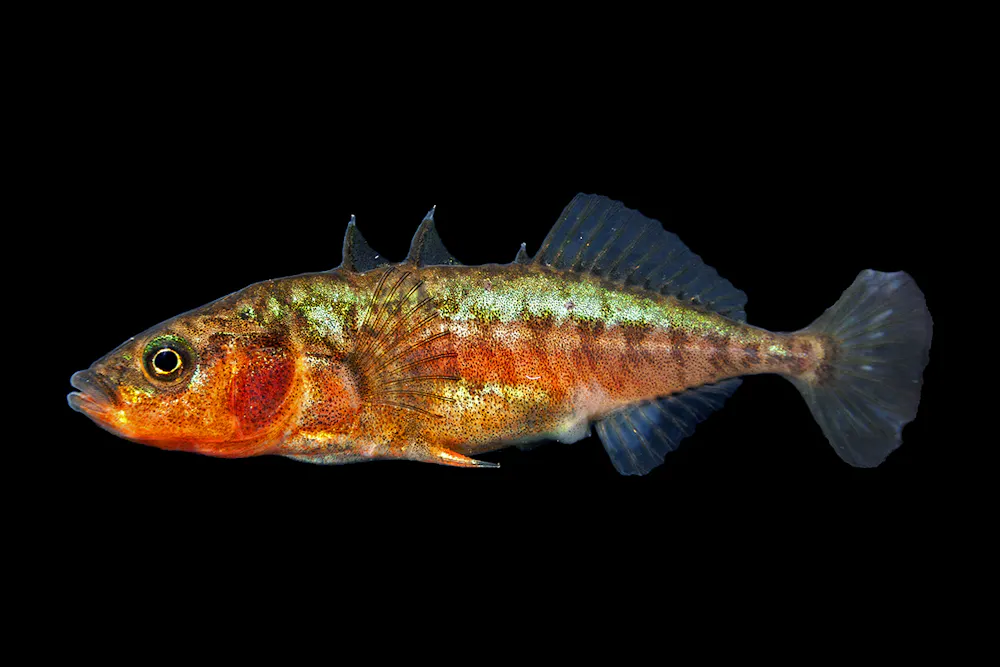
In honeybees, genetically identical larvae become queens or workers depending on what they eat while developing. In three-spined stickleback fish, early exposure to predators reshapes their stress physiology and body shape, making them harder for predators to grasp.

These aren’t genetic differences – they’re environmental effects on development.

In humans, early-life conditions similarly shape development. A child raised in an unsafe setting may develop heightened vigilance or stress sensitivity – traits that help in danger but can persist as anxiety or chronic stress in times of safety. This is known as environmental mismatch.

Across generations, plasticity becomes more complicated. In some of my past research, I studied how diet in one generation of fruit flies shaped health, reproduction and longevity in their offspring and grand offspring.

The results varied depending on diet, generation and trait. Traits that appeared to be useful in one generation weren’t always so in the next. This highlights how difficult transgenerational effects are to predict – precisely because of this plasticity.

A fish with red and green scales and three spines.
In three-spined stickleback fish, early exposure to predators reshapes their stress physiology and body shape.
drakiragavon/iNaturalist, CC BY-ND

Too narrow an explanation

Epigenetics often reflect environmental exposures – such as stress, trauma, nutrition or caregiving. But they’re not necessarily permanent “scars”. Many are dynamic and can shift with changing environments – especially early in life.

Studies show that epigenetic patterns linked to early childhood adversity vary depending on later environments such as family stability and social support. This suggests the biological imprint of early stress is shaped by what happens next.

It’s tempting to treat epigenetics as the key to explaining inherited trauma – but that’s too narrow. Trauma can influence the next generation through altered hormones, immune function or in utero conditions – all of which shape brain development and stress reactivity.

Genetic variation also plays a major role. It doesn’t encode trauma itself, but it shapes traits such as sensitivity to threat or emotional regulation. These traits aren’t chosen – they arise from a web of biological and social influences beyond our control.

But how they unfold, and whether they’re amplified or softened, depends on the systems that surround us.

Connection to culture

Connection to culture plays an important role too.

In Aotearoa New Zealand, Māori-led initiatives that centre land, language and whakapapa (ancestral lineage) have shown promise in restoring wellbeing after generations of colonisation-related trauma.

For Holocaust survivors and descendants, connection to cultural identity through ritual and shared narrative can reduce the psychological burden of transmitted trauma.

But not all trauma is collective or institutional. Interventions such as trauma-informed parenting and early relational therapies have been shown to improve outcomes in the next generation.

These psychological supports affect biology. Feeling safe in our relationships, having stable routines and a sense of meaning can reduce stress hormones, modulate immune function, and buffer against long-term disease risk.

In this way, culture, caregiving and connection are all biological interventions. When they soften the effects of earlier stress, they may help interrupt its transmission.

A black man embracing his daughter.
Trauma-informed parenting has been shown to improve outcomes in the next generation.
fizkes/Shutterstock

Reframing inherited vulnerability

This matters, because it changes how we understand inherited vulnerability.

Rather than a permanent wound passed down through DNA, the effects of trauma are better understood as changeable responses shaped by context.

Thanks to plasticity, our biology is always in conversation with the environment – and when we change the context, we can change the outcome.

The Conversation

Tara-Lyn Camilleri receives funding from from Australian Graduate Women, a not-for-profit organisation that advocates for education and supports women in postgraduate education with scholarships. Her research has also been supported by Australian Research Council grants and Royal Society funding. She is a volunteer committee member for Graduate Women Victoria.

ref. Trauma is carried in your DNA. But science reveals a more complicated story – https://theconversation.com/trauma-is-carried-in-your-dna-but-science-reveals-a-more-complicated-story-259057

Trump’s worldview is causing a global shift of alliances – what does this mean for nations in the middle?

Source: The Conversation – Global Perspectives – By Dilnoza Ubaydullaeva, Lecturer in Government – National Security College, Australian National University

Since US President Donald Trump took office this year, one theme has come up time and again: his rule is a threat to the US-led international order.

As the US political scientist John Mearsheimer famously argued, the liberal international order

was destined to fail from the start, as it contained the seeds of its own destruction.

This perspective has gained traction in recent years. And now, Trump’s actions have caused many to question whether a new world order is emerging.

Trump has expressed a desire for a new international order defined by multiple spheres of influence — one in which powers like the US, China and Russia each exert dominance over distinct regions.

This vision aligns with the idea of a “multipolar” world, where no single state holds overarching global dominance. Instead, influence is distributed among several great powers, each maintaining its own regional sphere.

This architecture contrasts sharply with earlier periods – the bipolar world of the Cold War, dominated by the US and the Soviet Union; and the unipolar period that followed, dominated by the US.

What does this mean for the world order moving forward?

Shifting US spheres of influence

We’ve seen this shift taking place in recent months. For example, Trump has backed away from his pledge to end the war between Russia and Ukraine and now appears to be leaving it to the main protagonists, and Europe, to find a solution.

Europe, which once largely spoke in a unified voice with the US, is also showing signs of policy-making which is more independent. Rather than framing its actions as protecting “Western democratic principles”, Europe is increasingly focused on defining its own security interests.

In the Middle East, the US will likely maintain its sphere of influence. It will continue its unequivocal support for Israel under Trump.

Donald Trump fist pumping next to Benjamin Netanyahu outside the White House.
Amid shifting global alliances, the Trump administration will continue to support Israel, led by Prime Minister Benjamin Netanyahu.
noamgalai/Shutterstock

The US will also involve itself in the region’s politics when its interests are at stake, as we witnessed in its recent strikes on Iranian nuclear facilities.

This, along with increasing economic ties between the US and Gulf states, suggests US allies in the region will remain the dominant voices shaping regional dynamics, particularly now with Iran weakened.

Yet it’s clear Trump is reshaping US dynamics in the region by signaling a desire for reduced military and political involvement, and criticising the nation building efforts of previous administrations.

The Trump administration now appears to want to maintain its sphere of influence primarily through strong economic ties.

Russia and China poles emerging elsewhere

Meanwhile, other poles are emerging in the Global South. Russia and China have deepened their cooperation, positioning themselves as defenders against what they frame as Western hegemonic bullying.

Trump’s trade policies and sanctions against many nations in the Global South have fuelled narratives (spread by China and Russia) that the US does not consistently adhere to the rules it imposes on others.

Trump’s decision to slash funding to USAID has also opened the door to China, in particular, to become the main development partner for nations in Africa and other parts of the world.

And on the security front, Russia has become more involved in many African and Middle Eastern countries, which have become less trustful and reliant on Western powers.

Vladimir Putin and Xi Jinping shaking hands.
Russian President Vladimir Putin and Chinese leader Xi Xinping see opportunities to spread their influence in the Global South.
plavi011/Shutterstock

In the Indo-Pacific, much attention has been given to the rise of China and its increasingly assertive posture. Many of Washington’s traditional allies are nervous about its continued engagement in the region and ability to counter China’s rise.

Chinese leader Xi Jinping has sought to take advantage of the current environment, embarking on a Vietnam, Malaysia and Cambodia push earlier this year. But many nations continue to be wary of China’s increasing influence, in particular the Philippines, which has clashed with China over the South China Sea.

Strategic hedging

Not all countries, however, are aligning themselves neatly with one pole or another.

For small states caught between great powers, navigating this multipolar environment is both a risk and an opportunity.

Ukraine is a case in point. As a sovereign state, Ukraine should have the freedom to decide its own alignments. Yet, it finds itself ensnared in great power politics, with devastating consequences.

Other small states are playing a different game — pivoting from one power to another based on their immediate interests.

Slovakia, for instance, is both a NATO and EU member, yet its leader, Robert Fico, attended Russia’s Victory Day Parade in May and told President Vladimir Putin he wanted to maintain “normal relations” with Russia.

Then there is Central Asia, which is the centre of a renewed “great game,” with Russia, China and Europe vying for influence and economic partnerships.

Yet if any Central Asian countries were to be invaded by Putin, would other powers intervene? It’s a difficult question to answer. Major powers are reluctant to engage in direct conflict unless their core interests or borders are directly threatened.

As a result, Central Asian states are hedging their bets, seeking to maintain relations with multiple poles, despite their conflicting agendas.

A future defined by regional power blocs?

While it is still early to draw definitive conclusions, the events of the past few months underscore a growing trend. Smaller countries are expressing solidarity with one power, but pragmatic cooperation with another, when it suits their national interests.

For this reason, regional power blocs seem to be of increasing interest to countries in the Global South.

For instance, the China-led Shanghai Cooperation Organisation has become a stronger and larger grouping of nations across Eurasia in recent years.

Trump’s focus on making “America Great Again,” has taken the load off the US carrying liberal order leadership. A multipolar world may not be the end of the liberal international order, but it may be a reshaped version of liberal governance.

How “liberal” it can be will likely depend on what each regional power, or pole, will make of it.

The Conversation

Dilnoza Ubaydullaeva does not work for, consult, own shares in or receive funding from any company or organisation that would benefit from this article, and has disclosed no relevant affiliations beyond their academic appointment.

ref. Trump’s worldview is causing a global shift of alliances – what does this mean for nations in the middle? – https://theconversation.com/trumps-worldview-is-causing-a-global-shift-of-alliances-what-does-this-mean-for-nations-in-the-middle-257113

We have drugs to manage HIV. So why are we spending millions looking for cures?

Source: The Conversation – Global Perspectives – By Bridget Haire, Associate Professor, Public Health Ethics, School of Population Health, UNSW Sydney

Alim Yakubov/Shutterstock

Over the past three decades there have been amazing advances in treating and preventing HIV.

It’s now a manageable infection. A person with HIV who takes HIV medicine consistently, before their immune system declines, can expect to live almost as long as someone without HIV.

The same drugs prevent transmission of the virus to sexual partners.

There is still no effective HIV vaccine. But there are highly effective drugs to prevent HIV infection for people without HIV who are at higher risk of acquiring it.

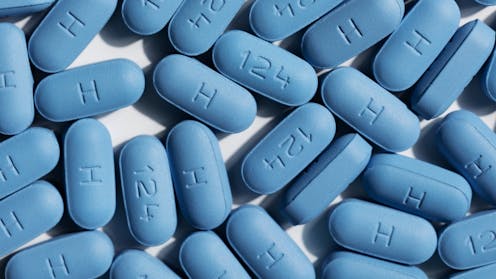
These drugs are known as as “pre-exposure prophylaxis” or PrEP. These come as a pill, which needs to be taken either daily, or “on demand” before and after risky sex. An injection that protects against HIV for six months has recently been approved in the United States.

So with such effective HIV treatment and PrEP, why are we still spending millions looking for HIV cures?

Not everyone has access to these drugs

Access to HIV drugs and PrEP depends on the availability of health clinics, health professionals, and the means to supply and distribute the drugs. In some countries, this infrastructure may not be secure.

For instance, earlier this year, US President Donald Trump’s dissolution of the USAID foreign aid program has threatened the delivery of HIV drugs to many low-income countries.

This demonstrates the fragility of current approaches to treatment and prevention. A secure, uninterrupted supply of HIV medicine is required, and without this, lives will be lost and the number of new cases of HIV will rise.

Another example is the six-monthly PrEP injection just approved in the US. This drug has great potential for controlling HIV if it is made available and affordable in countries with the greatest HIV burden.

But the prospect for lower-income countries accessing this expensive drug looks uncertain, even if it can be made at a fraction of its current cost, as some researchers say.

So despite the success of HIV drugs and PrEP, precarious health-care systems and high drug costs mean we can’t rely on them to bring an end to the ongoing global HIV pandemic. That’s why we also still need to look at other options.

Haven’t people already been ‘cured’?

Worldwide, at least seven people have been “cured” of HIV – or at least have had long-term sustained remission. This means that after stopping HIV drugs, they did not have any replicating HIV in their blood for months or years.

In each case, the person with HIV also had a life-threatening cancer needing a bone marrow transplant. They were each matched with a donor who had a specific genetic variation that resulted in not having HIV receptors in key bone marrow cells.

After the bone marrow transplant, recipients stopped HIV drugs, without detectable levels of the virus returning. The new immune cells made in the transplanted bone marrow lacked the HIV receptors. This stopped the virus from infecting cells and replicating.

But this genetic variation is very rare. Bone marrow transplantation is also risky and extremely resource-intensive. So while this strategy has worked for a few people, it is not a scalable prospect for curing HIV more widely.

So we need to keep looking for other options for a cure, including basic laboratory research to get us there.

How about the ‘breakthrough’ I’ve heard about?

HIV treatment stops the HIV replication that causes immune damage. But there are places in the body where the virus “hides” and drugs cannot reach. If the drugs are stopped, the “latent” HIV comes out of hiding and replicates again. So it can damage the immune system, leading to HIV-related disease.

One approach is to try to force the hidden or latent HIV out into the open, so drugs can target it. This is a strategy called “shock and kill”. And an example of such Australian research was recently reported in the media as a “breakthrough” in the search for an HIV cure.

Researchers in Melbourne have developed a lipid nanoparticle – a tiny ball of fat – that encapsulates messenger RNA (or mRNA) and delivers a “message” to infected white blood cells. This prompts the cells to reveal the “hiding” HIV.

In theory, this will allow the immune system or HIV drugs to target the virus.

This discovery is an important step. However, it is still in the laboratory phase of testing, and is just one piece of the puzzle.

We could say the same about many other results heralded as moving closer to a cure for HIV.

Further research on safety and efficacy is needed before testing in human clinical trials. Such trials start with small numbers and the trialling process takes many years. This and other steps towards a cure are slow and expensive, but necessary.

Importantly, any cure would ultimately need to be fairly low-tech to deliver for it to be feasible and affordable in low-income countries globally.

So where does that leave us?

A cure for HIV that is affordable and scalable would have a profound impact on human heath globally, particularly for people living with HIV. To get there is a long and arduous path that involves solving a range of scientific puzzles, followed by addressing implementation challenges.

In the meantime, ensuring people at risk of HIV have access to testing and prevention interventions – such as PrEP and safe injecting equipment – remains crucial. People living with HIV also need sustained access to effective treatment – regardless of where they live.

The Conversation

Bridget Haire has received funding from the National Health and Medical Research Council. She is a past president of the Australian Federation of AIDS Organisations (now Health Equity Matters).

Benjamin Bavinton receives funding from the National Health and Medical Research Council, the Australian government, and state and territory governments. He also receives funding from ViiV Healthcare and Gilead Sciences, both of which make drugs or drug classes mentioned in this article. He is a Board Director of community organisation, ACON, and is on the National PrEP Guidelines Panel coordinated by ASHM Health.

ref. We have drugs to manage HIV. So why are we spending millions looking for cures? – https://theconversation.com/we-have-drugs-to-manage-hiv-so-why-are-we-spending-millions-looking-for-cures-258391

Understanding the ‘Slopocene’: how the failures of AI can reveal its inner workings

Source: The Conversation – Global Perspectives – By Daniel Binns, Senior Lecturer, Media & Communication, RMIT University

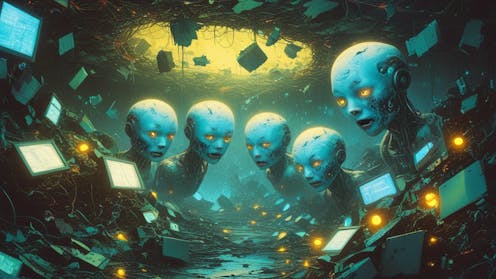
AI-generated with Leonardo Phoenix 1.0. Author supplied

Some say it’s em dashes, dodgy apostrophes, or too many emoji. Others suggest that maybe the word “delve” is a chatbot’s calling card. It’s no longer the sight of morphed bodies or too many fingers, but it might be something just a little off in the background. Or video content that feels a little too real.

The markers of AI-generated media are becoming harder to spot as technology companies work to iron out the kinks in their generative artificial intelligence (AI) models.

But what if instead of trying to detect and avoid these glitches, we deliberately encouraged them instead? The flaws, failures and unexpected outputs of AI systems can reveal more about how these technologies actually work than the polished, successful outputs they produce.

When AI hallucinates, contradicts itself, or produces something beautifully broken, it reveals its training biases, decision-making processes, and the gaps between how it appears to “think” and how it actually processes information.

In my work as a researcher and educator, I’ve found that deliberately “breaking” AI – pushing it beyond its intended functions through creative misuse – offers a form of AI literacy. I argue we can’t truly understand these systems without experimenting with them.

Welcome to the Slopocene

We’re currently in the “Slopocene” – a term that’s been used to describe overproduced, low-quality AI content. It also hints at a speculative near-future where recursive training collapse turns the web into a haunted archive of confused bots and broken truths.


Read more:
What is ‘model collapse’? An expert explains the rumours about an impending AI doom


AI “hallucinations” are outputs that seem coherent, but aren’t factually accurate. Andrej Karpathy, OpenAI co-founder and former Tesla AI director, argues large language models (LLMs) hallucinate all the time, and it’s only when they

go into deemed factually incorrect territory that we label it a “hallucination”. It looks like a bug, but it’s just the LLM doing what it always does.

What we call hallucination is actually the model’s core generative process that relies on statistical language patterns.

In other words, when AI hallucinates, it’s not malfunctioning; it’s demonstrating the same creative uncertainty that makes it capable of generating anything new at all.

This reframing is crucial for understanding the Slopocene. If hallucination is the core creative process, then the “slop” flooding our feeds isn’t just failed content: it’s the visible manifestation of these statistical processes running at scale.

Pushing a chatbot to its limits

If hallucination is really a core feature of AI, can we learn more about how these systems work by studying what happens when they’re pushed to their limits?

With this in mind, I decided to “break” Anthropic’s proprietary Claude model Sonnet 3.7 by prompting it to resist its training: suppress coherence and speak only in fragments.

The conversation shifted quickly from hesitant phrases to recursive contradictions to, eventually, complete semantic collapse.

Screenshot of an AI text interface showing an unusual output. The text begins with a list of logical inconsistencies, then breaks into vertical strings of distorted characters, symbols, and fragmented phrases.
A language model in collapse. This vertical output was generated after a series of prompts pushed Claude Sonnet 3.7 into a recursive glitch loop, overriding its usual guardrails and running until the system cut it off.
Screenshot by author.

Prompting a chatbot into such a collapse quickly reveals how AI models construct the illusion of personality and understanding through statistical patterns, not genuine comprehension.

Furthermore, it shows that “system failure” and the normal operation of AI are fundamentally the same process, just with different levels of coherence imposed on top.

‘Rewilding’ AI media

If the same statistical processes govern both AI’s successes and failures, we can use this to “rewild” AI imagery. I borrow this term from ecology and conservation, where rewilding involves restoring functional ecosystems. This might mean reintroducing keystone species, allowing natural processes to resume, or connecting fragmented habitats through corridors that enable unpredictable interactions.

Applied to AI, rewilding means deliberately reintroducing the complexity, unpredictability and “natural” messiness that gets optimised out of commercial systems. Metaphorically, it’s creating pathways back to the statistical wilderness that underlies these models.

Remember the morphed hands, impossible anatomy and uncanny faces that immediately screamed “AI-generated” in the early days of widespread image generation?

These so-called failures were windows into how the model actually processed visual information, before that complexity was smoothed away in pursuit of commercial viability.

AI image of two women under red umbrellas. One wears bold clothing and a turquoise hat. A red speech bubble reads It's urgent that I see your project to assess.
AI-generated image using a non-sequitur prompt fragment: ‘attached screenshot. It’s urgent that I see your project to assess’. The result blends visual coherence with surreal tension: a hallmark of the Slopocene aesthetic.
AI-generated with Leonardo Phoenix 1.0, prompt fragment by author.

You can try AI rewilding yourself with any online image generator.

Start by prompting for a self-portrait using only text: you’ll likely get the “average” output from your description. Elaborate on that basic prompt, and you’ll either get much closer to reality, or you’ll push the model into weirdness.

Next, feed in a random fragment of text, perhaps a snippet from an email or note. What does the output try to show? What words has it latched onto? Finally, try symbols only: punctuation, ASCII, unicode. What does the model hallucinate into view?

The output – weird, uncanny, perhaps surreal – can help reveal the hidden associations between text and visuals that are embedded within the models.

Insight through misuse

Creative AI misuse offers three concrete benefits.

First, it reveals bias and limitations in ways normal usage masks: you can uncover what a model “sees” when it can’t rely on conventional logic.

Second, it teaches us about AI decision-making by forcing models to show their work when they’re confused.

Third, it builds critical AI literacy by demystifying these systems through hands-on experimentation. Critical AI literacy provides methods for diagnostic experimentation, such as testing – and often misusing – AI to understand its statistical patterns and decision-making processes.

These skills become more urgent as AI systems grow more sophisticated and ubiquitous. They’re being integrated in everything from search to social media to creative software.

When someone generates an image, writes with AI assistance or relies on algorithmic recommendations, they’re entering a collaborative relationship with a system that has particular biases, capabilities and blind spots.

Rather than mindlessly adopting or reflexively rejecting these tools, we can develop critical AI literacy by exploring the Slopocene and witnessing what happens when AI tools “break”.

This isn’t about becoming more efficient AI users. It’s about maintaining agency in relationships with systems designed to be persuasive, predictive and opaque.

The Conversation

Daniel Binns is an Associate Investigator with the ARC Centre of Excellence for Automated Decision-Making and Society.

ref. Understanding the ‘Slopocene’: how the failures of AI can reveal its inner workings – https://theconversation.com/understanding-the-slopocene-how-the-failures-of-ai-can-reveal-its-inner-workings-258584

The 28 Days Later franchise redefined zombie films. But the undead have an old, rich and varied history

Source: The Conversation – Global Perspectives – By Christopher White, Historian, The University of Queensland

The history of the dead – or, more precisely, the history of the living’s fascination with the dead – is an intriguing one.

As a researcher of the supernatural, I’m often pulled aside at conferences or at the school gate, and told in furtive whispers about people’s encounters with the dead.

The dead haunt our imagination in a number of different forms, whether as “cold spots”, or the walking dead popularised in zombie franchises such as 28 Days Later.

The franchise’s latest release, 28 Years Later, brings back the Hollywood zombie in all its glory – but these archetypal creatures have a much wider and varied history.

Zombis, revenants and the returning dead

A zombie is typically a reanimated corpse: a category of the returning dead. Scholars refer to them as “revenants”, and continue to argue over their exact characteristics.

In the Haitian Vodou religion, the zombi is not the same as the Hollywood zombie. Instead, zombi are people who, as a religious punishment, are drugged, buried alive, then dug out and forced into slavery.

The Hollywood zombie, however, draws more from medieval European stories about the returning dead than from Vodou.

A perfect setting for a ‘zombie’ film

In 28 Years Later, the latest entry in Danny Boyle’s blockbuster horror franchise, the monsters technically aren’t zombies because they aren’t dead. Instead, they are infected by a “rage virus”, accidentally released by a group of animal rights activists in the beginning of the first film.

This third film focuses on events almost three decades after the first film. The British Isles is quarantined, and the young protagonist Spike (Alfie Williams) and his family live in a village on Lindisfarne Island. This island, one of the most important sites in early medieval British Christianity, is isolated and protected by a tidal causeway that links it to the mainland.

Two actors with crossbows are running outdoors in a scene from a zombie film, with some blurry figures in the back.
Aaron Taylor-Johnson and Alfie Williams star in the new film, out in Australian cinemas today.
Sony Pictures

The film leans heavily on how we imagine the medieval world, with scenes showing silhouetted fletchers at work making arrows, children training with bows, towering ossuaries and various memento mori. There’s also footage from earlier depictions of medieval warfare. And at one point, the characters seek sanctuary in the ruins of Fountains Abbey, in Yorkshire, which was built in 1132.

The medieval locations and imagery of 28 Years Later evoke the long history of revenants, and the returned dead who once roved medieval England.

Early accounts of the medieval dead

In the medieval world, or at least the parts that wrote in Latin, the returning dead were usually called spiritus (“spirit”), but they weren’t limited to the non-corporeal like today’s ghosts are.

Medieval Latin Christians from as early as the 3rd century saw the dead as part of a parallel society that mirrored the world of the living, where each group relied on the other to aid them through the afterlife.

Depiction of the undead from a medieval manuscript.
British Library, Yates Thompson MS 13

While some medieval ghosts would warn the living about what awaited sinners in the afterlife, or lead their relatives to treasure, or prophesise the future, some also returned to terrorise the living.

And like the “zombies” affected by the rage virus in 28 Years Later, these revenants could go into a frenzy in the presence of the living.

Thietmar, the Prince-Bishop of Merseburg, Germany, wrote the Chronicon Thietmari (Thietmar’s Chronicle) between 1012 and 1018, and included a number of ghost stories that featured revenants.

Although not all of them framed the dead as terrifying, they certainly didn’t paint them as friendly, either. In one story, a congregation of the dead at a church set the priest upon the altar, before burning him to ashes – intended to be read as a mirror of pagan sacrifice.

These dead were physical beings, capable of seizing a man and sacrificing him in his own church.

A threat to be dealt with

The English monastic historian William of Newburgh (1136–98) wrote revenants were so common in his day that recording them all would be exhausting. According to him, the returned dead were frequently seen in 12th century England.

So, instead of providing a exhausting list, he offered some choice examples which, like most medieval ghost stories, had a good Christian moral attached to them.

William’s revenants mostly killed the people of the towns they lived, returning to the grave between their escapades. But the medieval English had a method for dealing with these monsters; they dug them up, tore out the heart and then burned the body.

Other revenants were dealt with less harshly, William explained. In one case, all it took was the Bishop of Lincoln writing a letter of absolution to stop a dead man returning to his widow’s bed.

These medieval dead were also thought to spread disease – much like those infected with the rage virus – and were capable of physically killing someone.

Depiction of the undead from a medieval manuscript.
British Library, Arundel MS 83.

The undead, further north

In medieval Scandinavia and Iceland, the undead draugr were extremely strong, hideous to look at and stunk of decomposition. Some were immune to human weapons and often killed animals near their tombs before building up to kill humans. Like their English counterparts, they also spread disease.

But according to the Eyrbyggja saga, an anonymous 13th or 14th century text written in Iceland, all it took was a type of community court and the threat of legal action to drive off these returned dead.

It’s a method the survivors in 28 Years Later didn’t try.

The dead live on

The first-hand zombie stories that were common during the medieval period started to dwindle in the 16th century with the Protestant Reformation, which focused more on individuals’ behaviours and salvation.

Nonetheless, their influence can still be felt in Catholic ritual practices today, such as in prayers offered for the dead, and the lighting of votive candles.

We still tell ghost stories, and we still worry about things that go bump in the night. And of course, we continue to explore the undead in all its forms on the big screen.

The Conversation

Christopher White does not work for, consult, own shares in or receive funding from any company or organisation that would benefit from this article, and has disclosed no relevant affiliations beyond their academic appointment.

ref. The 28 Days Later franchise redefined zombie films. But the undead have an old, rich and varied history – https://theconversation.com/the-28-days-later-franchise-redefined-zombie-films-but-the-undead-have-an-old-rich-and-varied-history-247900