The triumph of the Oasis reunion: Resilience rules the day as the Gallaghers end their feud

Source: The Conversation – Canada – By Ramona Alaggia, Professor, Social Work, University of Toronto

Noel and Liam Gallagher are seen on the jumbo screen at a recent concert in Edinburgh. (Lee-Anne Goodman)

The long-awaited Oasis reunion tour is a rousing success. Since launching in Wales in July, the band has been selling out shows across four continents, including two stops in Toronto.

Reviews have been glowing, and fans are thrilled not just with the music but also with the sight of Noel and Liam Gallagher showing each other genuine brotherly affection on stage — something that once seemed impossible.

This is a far cry from 2009, when Oasis broke up after an epic fallout. Noel, the elder brother, announced he could no longer put up with Liam’s drug-fuelled antics and frequent no-shows. The brothers then spent nearly 15 years estranged.


Read more:
Oasis reunion: How to stop your sibling feud from becoming a lifelong estrangement


Painful childhood

Their conflict isn’t surprising when you consider their childhood. Research shows that family violence and abuse can have lasting effects on sibling relationships.

In the Gallaghers’ case, Noel has spoken of being abused by their father, and both brothers witnessed domestic violence against their mother. Growing up with these adversities can make close family bonds harder to sustain — and may help explain the long rift between them.

So what’s made the difference? How have they managed to heal wounds and reunite? One answer may be resilience.

In my research, I’ve found that resilience is what allows some people, with the right support and circumstances, to rise above adversity and come out stronger. Back in 2017, I explored how this might apply to the Gallagher brothers, who grew up in a difficult and sometimes violent home.


Read more:
The Oasis brothers: Father’s abuse explains feud, resilience could end it


Parental influence

Resilience is a complex idea, and one way to understand it is through social learning theory. The basic idea is that we learn from the examples around us.

For the Gallaghers, growing up in a violent and chaotic home meant they were exposed to unhealthy patterns of behaviour and relationships. But at the same time, they also had a powerful positive influence in their lives through their mother, Peggy.

By ultimately leaving her abusive husband, despite the difficulties that followed, she modelled to her children that there are alternatives to destructive relationships.

This balance of negative and positive role models matters. Harmful examples can damage development, but protective role models can demonstrate healthier ways of coping, relating and moving forward.

In 2024, when the brothers announced their reunion tour, I revisited their story offering ideas on how they might get along to make the tour a success and how they might finally put their long-running feud behind them.

I suggested that counselling focused on conflict resolution could help. These approaches often include learning skills like open communication, active listening, exploring options together, collaborating, compromising, and aiming for a win-win solution.

Apologizing and avoiding casting blame are also important parts of the process. While we may never know if the Gallagher brothers were provided any of these supports, or used them to resolve their conflicts, it’s clear they’ve achieved some significant measure of reconciliation.

Noel has even recently talked about how much he enjoys being around his brother and how proud he is of him.

Not looking back in anger

The combined raw talent of the Gallagher brothers, along with the drive and persistence to form a band, captured the hearts of a generation of music-lovers and is continuing to attract new and younger fans around the world.

After years apart, their return to the stage shows that reconciliation is possible and that even the most fractured relationships can find a way forward.

Watching the Gallaghers side by side on stage, frequently laughing and embracing, it seems clear that resilience, combined with a genuine desire to reconcile, has helped bring them back together.

Their reunion is more than a comeback tour; it’s a story of overcoming adversity that speaks to a universal hope. They’re showing that even long-standing family conflicts can be healed.

The Conversation

Ramona Alaggia’s studies have been funded by the Social Sciences and Humanities Research Council of Canada.

ref. The triumph of the Oasis reunion: Resilience rules the day as the Gallaghers end their feud – https://theconversation.com/the-triumph-of-the-oasis-reunion-resilience-rules-the-day-as-the-gallaghers-end-their-feud-263789

Is your diet influencing your dreams? Here’s what our research says about food and nightmares

Source: The Conversation – Canada – By Jade Radke, PhD Student, Behavioral Sustainability Lab, University of British Columbia

Have you ever wondered if a bizarre dream was caused by something you ate the night before? If so, you’re not alone. We all have strange or unsettling dreams now and then, and when we do, we want to know what might cause them.

For centuries, people have believed that what and when they eat can influence their dreams. A prominent example of this can be found in the early 20th-century comic strip Dream of the Rarebit Fiend, in which characters often blamed their strange dreams on having eaten a cheese dish — like Welsh rarebit — the night before.

But even though folklore has long suggested that food and dreams are connected, scientific research into this notion has been limited.

A few exploratory surveys have provided preliminary, suggestive results. One study from 2007 found that people who ate more organic food reported having more vivid and bizarre dreams than those who consumed more fast food.

Similarly, a 2022 survey linked fruit consumption to more frequent dream recall, high fruit and fish intake to more lucid dreams, and sugary food consumption to more nightmares. And in our 2015 study, we found that nearly 18 per cent of participants endorsed the idea that what they ate influenced their dreams, with dairy being the most frequently cited culprit.

As a follow-up to that study, we recently conducted an online survey with 1,082 Canadian psychology students that asked them about their food habits, general health, sleep quality and dreams. We tested several hypotheses about how diet and food sensitivities might influence dreaming — including possible influences on the severity of nightmares.

What we found

Just over 40 per cent of participants told us that certain foods either worsened or improved their sleep quality. Around five per cent believed food affected their dreams, with desserts, sweets and dairy being the most frequently cited culprits.

People with food allergies or gluten intolerance were more likely to perceive that food influenced their dreams, while participants with lactose intolerance were more likely to report that food worsened their sleep.

We also found that participants with a food allergy or lactose intolerance reported more frequent and severe nightmares. Interestingly, the frequency of gastrointestinal symptoms, such as abdominal pain and bloating, was associated with both lactose intolerance and nightmares, thereby possibly explaining the relationship between the two.

These findings support a growing body of evidence suggesting a connection between the gut microbiome and the central nervous system (the gut-brain axis). What is novel about our findings is that they suggest gut discomfort can manifest psychologically during sleep as nightmares.

This connects to developing research examining the relationship of diet to post-traumatic stress disorder (PTSD), one symptom of which is frequent nightmares. While research in this area has focused on the relationship of overall dietary patterns to PTSD, our findings suggest that specific foods, such as dairy and sweets, could exacerbate nightmares in particular.

This suggests that treatments for PTSD might usefully include an assessment of dietary habits, allergies and intolerances, and making dietary changes.

While our research provides insight into how food might affect dreaming, the results are correlational. Experiments are needed to test the extent to which certain foods can impact dreams.

The next steps could involve controlled experiments that test what happens when people consume certain trigger foods, such as cheese that contains lactose versus cheese that does not contain lactose, especially among those with lactose intolerance or who have frequent nightmares. Similar experiments could be done for participants with various types of food allergies.

Some practical takeaways

Beyond dreaming, our findings, combined with what we know from previous research, suggest a few things you could do to help minimize food-related sleep disruptions:

  1. Avoid eating late at night, especially heavy, sugary or spicy foods. We found that evening eating was associated with more negative dream content and poorer sleep quality.

  2. If you’re lactose intolerant, try avoiding dairy before bed or switching to lactose-free options. For example, hard, aged cheeses tend to be lower in lactose than soft, fresh cheeses.

  3. If you have food allergies, consider minimizing your intake of culprit foods before bed. Fears and anxieties associated with potential allergic reactions could creep into your dreams.

  4. Keep track of any foods that seem to influence your sleep or dreams, and experiment with removing them for intermittent periods of time to see if they influence your sleep or dream quality.

In general, eating a nutrient-dense, balanced diet with fibre, fruits, vegetables and lean proteins could help support sleep or dream quality. Overall, the main takeaway is to listen to your body. If certain foods or dietary habits consistently lead to poor sleep or strange dreams, it’s worth taking these symptoms seriously.

The Conversation

The authors do not work for, consult, own shares in or receive funding from any company or organisation that would benefit from this article, and have disclosed no relevant affiliations beyond their academic appointment.

ref. Is your diet influencing your dreams? Here’s what our research says about food and nightmares – https://theconversation.com/is-your-diet-influencing-your-dreams-heres-what-our-research-says-about-food-and-nightmares-260796

What, exactly, is space-time?

Source: The Conversation – Canada – By Daryl Janzen, Observatory Manager and Instructor, Astronomy, University of Saskatchewan

Few ideas in modern science have reshaped our understanding of reality more profoundly than space-time — the interwoven fabric of space and time at the heart of Albert Einstein’s theory of relativity.

Space-time is frequently described as the “fabric of reality.” In some accounts, this fabric is referred to as a fixed, four-dimensional “block universe” — a complete map of all events, past, present and future.

In others, it’s a dynamic field that bends and curves in response to gravity. But what does it really mean to say that space-time exists? What kind of thing is it — is space-time structure, substance or metaphor?

The heart of modern physics

These questions aren’t just philosophical. They sit at the heart of how we interpret modern physics and quietly shape everything from how we understand general relativity to how we imagine time travel, multiverses and our origins.

These questions inform the emergence of space-time itself and radical new proposals that treat it as the universe’s memory. And yet the language we use to describe space-time is often vague, metaphorical and deeply inconsistent.


Read more:
Why do metaphors of space help us understand time?


Austrian-British philosopher Ludwig Wittgenstein once warned that philosophical problems arise when “language goes on holiday.” Physics, it turns out, may be a prime example.

Over the last century, familiar words such as “time,” “exist” and “timeless” have been repurposed in technical contexts without examining what baggage they carry from everyday speech.

This has led to widespread confusion about what these terms actually mean.

The problem with language

In the philosophy of physics, particularly in a view known as eternalism, the word “timeless” is used literally. Eternalism is the idea that time doesn’t flow or pass — that all events across all time are equally real within a four-dimensional structure known as the “block universe.”

rows of blocks
Eternalism understands that everything, everywhere, exists atemporally and all at once.
(Rick Rothenberg/Unsplash), CC BY

According to this view, the entire history of the universe is already laid out, timelessly, in the structure of space-time. In this context, “timeless” means that the universe itself does not endure or unfold in any real sense. There is no becoming. There is no change. There is only a block, and all of eternity exists atemporally within it.

But this leads to a deeper problem. If everything that ever happens throughout eternity is equally real, and all events are already there, what does it actually mean to say that space-time exists?

An elephant in the room

There’s a structural difference between existence and occurrence. One is a mode of being, the other, of happening.

Imagine there’s an elephant standing beside you. You’d likely say: “This elephant exists.” You might describe it as a three-dimensional object, but importantly, it is a “three-dimensional object that exists.”

In contrast, imagine a purely three-dimensional elephant that flashes into the room for an instant: a cross-sectional moment in the life of an existing elephant, appearing and disappearing like a ghost. That elephant doesn’t really exist in the ordinary sense. It happens. It occurs.

An existing elephant endures over time, and space-time catalogues every moment of its existence as a four-dimensional world line — an object’s path through space and time throughout its existence. The imaginary “occurring elephant” is just one spacelike slice of that tube; one three-dimensional moment.

Now apply this distinction to space-time itself. What does it mean for four-dimensional space-time to exist in the sense that the elephant exists? Does space-time endure in the same sense? Does space-time have its own set of “now” moments? Or is space-time — the manifold of all the events that happen throughout eternity — merely something that occurs? Is space-time simply a descriptive framework for relating those events?

Eternalism muddies this distinction. It treats all of eternity — that is, all of space-time — as an existing structure, and takes the passage of time to be an illusion. But that illusion is impossible if all of space-time occurs in a flash.

To recover the illusion that time passes within this framework, four-dimensional space-time must exist in a manner more like the three-dimensional existing elephant — whose existence is described by four-dimensional space-time.

Every event

Let’s take this thought one step further.

If we imagine that every event throughout the universe’s history does “exist” within the block universe, then we might ask: when does the block itself exist? If it doesn’t unfold or change, does it exist timelessly? If so, then we’re layering another dimension of time onto something that was supposed to be timeless in the literal sense.

To make sense of this, we could construct a five-dimensional framework, using three spatial dimensions and two time dimensions. The second time axis would let us say that four-dimensional space-time exists in exactly the same way we commonly think of an elephant in the room as existing within the three dimensions of space that surround us, the events of which we catalogue as four-dimensional space-time.

At this point, we’re stepping outside established physics that describes space-time through four dimensions only. But it reveals a deep problem: we have no coherent way to talk about what it means for space-time to exist without accidentally smuggling time back in through an added dimension that isn’t part of the physics.

It’s like trying to describe a song that exists all at once, without being performed, heard or unfolding.

From physics to fiction

This confusion shapes how we imagine time in fiction and pop science.

In the 1984 James Cameron film, The Terminator, all events are treated as fixed. Time travel is possible, but the timeline cannot be changed. Everything already exists in a fixed, timeless state.

In the fourth film in the Avengers franchise, Avengers: Endgame (2019), time travel allows characters to alter past events and reshape the timeline, suggesting a block universe that both exists and changes.

That change can only occur if the four-dimensional timeline exists in the same way our three-dimensional world exists.

But regardless of whether such change is possible, both scenarios assume that the past and future are there and ready to be travelled to. However, neither grapples with what kind of existence that implies, or how space-time differs from a map of events.

Understanding reality

When physicists say that space-time “exists,” they are often working within a framework that has quietly blurred the line between existence and occurrence. The result is a metaphysical model that, at best, lacks clarity, and at worst obscures the very nature of reality.

None of this endangers the mathematical theory of relativity or the empirical science that confirms it. Einstein’s equations still work. But how we interpret those equations matters, especially when it shapes how we talk about reality and how we approach the deeper problems in physics.

These understandings include attempts to reconcile general relativity with quantum theory — a challenge explored both in philosophy and popular science discussions.

Defining space-time is more than a technical debate — it’s about what kind of world we think we’re living in.

The Conversation

Daryl Janzen does not work for, consult, own shares in or receive funding from any company or organisation that would benefit from this article, and has disclosed no relevant affiliations beyond their academic appointment.

ref. What, exactly, is space-time? – https://theconversation.com/what-exactly-is-space-time-259630

Until Haiti tackles systemic corruption and bad governance, its people will remain impoverished

Source: The Conversation – Canada – By Ruolz Ariste, Adjunct Professor, School of Public Policy and Administration, Carleton University

Haiti’s Patriotic Congress for National Rescue, launched by the academic community and civil society organizations, recently held a nearly month-long period of consultations across Haiti and its diaspora over the worsening crisis in the Caribbean nation.

It concluded on June 27 with 25 proposals on three points: 19 on the security crisis and six on reforms to public governance and endless transitions.

While these three points are key for a national rescue and are interconnected, they don’t carry the same weight. Based on the number of proposals, the security crisis takes priority over governance reforms and endless power transitions.

As a public policy and administration expert, I believe governance reforms are crucial because Haiti’s insecurity, lawlessness and constant political transitions are rooted in poor governance and corruption.

Corruption at the core

Excessive corruption is the cancer that eats away at Haiti. It hinders private investment, slows the production of goods and services, and triggers social unrest, criminal activity and poverty. It’s the root cause of the Haitian crisis, not the symptom.

In his book The Great Escape: Health, Wealth, and the Origins of Inequality, British-American economist and Nobel laureate Angus Deaton argues that a well-functioning national government is what allows people to escape misery.

His views echo a study by researchers from the International Monetary Fund and the World Bank that found an increase in corruption significantly reduces the income growth of impoverished people.

This research clearly illustrates that it’s not poverty that breeds corruption, but rather the reverse. In other words, to truly tackle poverty, we must go to the source of the problem and tackle corruption.

I’ve made the same argument in my self-published book Contemporary Events Related to Equity and Inclusion: A focus on Blacks, the Haitian diaspora, and locals.

It’s clear, therefore, that most of the recommendations from the Patriotic Congress should focus on bad governance and corruption.

Up close and personal with Haitian corruption

Corruption is the norm in Haiti, not the exception. It is rooted in the country’s institutions and remains systemic. The US$2 billion Petro Caribe scandal is a major case in point.

Well-intended investors trying to do business in Haiti often face myriad corrupt officials. I have personal experience with this phenomenon.

I launched a company in Haiti, Biogaz pour une Solution Intégrée, with some well-meaning classmates and colleagues who specialize in the science of soil management and crop production.

When founding and presiding over the business, we’d hoped for political stability due to the election of President Jovenel Moïse in 2017.

Instead, we faced unscrupulous offers, even from a former university classmate who had become a high-ranking member of the government. Blatant corruption in the form of elected individuals or civil servants requesting substantial kickbacks was ubiquitous. The company did not survive this hostile environment.

The point I want to make here is that some people in Haiti exhibit corrupt behaviours without any discomfort or maybe even without realizing it.

Moïse, meantime, was assassinated four years later. Several suspects have been indicted in his murder, including his widow Martine, former acting prime minister Claude Joseph and former police chief Léon Charles.

Haiti’s painful descent

Three specific conditions are required to attract private investments in any country: political stability, good governance and anti-corruption measures. With bad governance and systemic corruption, political stability becomes elusive. This again emphasizes the importance of focusing on improved governance to vanquish systemic corruption and lift Haiti out of its current and longstanding misery.

As the first Black independent nation and one that once supported many other Caribbean and Latin American countries in their own quests for independence, it’s troubling that Haiti is experiencing such a dire situation.

The country is the poorest in the Western Hemisphere, with its GDP per capita declining by two per cent a year from 2014 to 2024.


Read more:
Haiti on the brink: Gangs fill power vacuum as current solutions fail a nation in crisis


The situation calls for urgent action. But it will not be easy.

National entities need to face facts about systemic corruption and stop playing the blame game. They must reform their institutions, accept accountability for managing public funds and eradicate corruption. International allies and organizations need to set up, not with boots on the ground, but with institutional reforms, mostly in the judiciary system.

Specifically, the mandate of the International Criminal Court should be extended to make substantial money theft and embezzlement a prosecutable international financial crime, one with the same rank as genocide.

Educating citizens about corruption

This will happen only with the mobilization of civil society to force changes in both national and international institutions. A massive educational campaign is also required among the Haitian population, from elementary schools all the way to university level, to educate and train citizens about what constitutes corruption and what are its disastrous impacts.

Taking steps to eradicate systemic corruption will also address the Haitian insecurity crisis and the endless power transitions because they’re so closely connected.

Haiti needs to build on its glorious history of resilience and resistance to tackle this challenging task, turn the tide and offer its citizens prosperous and peaceful lives and a much brighter future.

The Conversation

Ruolz Ariste does not work for, consult, own shares in or receive funding from any company or organisation that would benefit from this article, and has disclosed no relevant affiliations beyond their academic appointment.

ref. Until Haiti tackles systemic corruption and bad governance, its people will remain impoverished – https://theconversation.com/until-haiti-tackles-systemic-corruption-and-bad-governance-its-people-will-remain-impoverished-262264

How businesses deflect responsibilities for addressing modern slavery in their supply chains

Source: The Conversation – Canada – By Kam Phung, Assistant Professor of Business & Society, Beedie School of Business, Simon Fraser University

Despite growing awareness and legislation aimed at eradicating modern slavery — including forced labour, bonded labour and other extreme forms of human exploitation — efforts to combat the issue remain largely ineffective.

The United Kingdom, the first to enact a modern slavery act in 2015, is a case in point. The latest government figures show 5,690 potential victims in the U.K. were referred to the Home Office between April and June. This is the highest quarterly figure since the national referral mechanism began in 2009.

This could be attributed to a multitude of reasons, including an actual rise in exploitation, growing awareness of the issue and more training being provided for frontline services. But the effectiveness of transparency and disclosure laws in achieving substantive change in businesses’ behaviours has long been questioned.


Read more:
Ten years after the Modern Slavery Act, why has this ‘world-leading’ legislation had so little impact?


Canada also has a modern slavery act, Fighting Against Forced Labour and Child Labour in Supply Chains Act, which came into effect in 2024. It requires certain private-sector and government entities to report on efforts to prevent and reduce the risk the issues.


Read more:
Canada’s Modern Slavery Act is the start — not the end — of efforts to address the issue in supply chains


It’s still too early to tell if Canada’s approach has amounted to any real change. However, since its onset, experts have cautioned that such a transparency and disclosure law “falls short of what is required to make large corporations exercise due diligence to prevent labour abuse from occurring within their supply chains.”

Deflecting responsibilities

When confronted with modern slavery risks, some companies justify their inaction or adopt ineffective measures that do little to address the problem.

In a recent book chapter published in the The Routledge Companion to Responsible Business, my co-researchers and I explore three rationalizations used by businesses and professionals to deflect responsibility for addressing modern slavery and other pressing societal issues, even as pressure to do so increases.

Our insights emerged from interviews we conducted with a range of businesses operating in Canada with global supply chains leading up to Canada’s enactment of modern slavery legislation. They represent some, but not all, of the ways businesses deflect responsibilities for addressing modern slavery.

Deflection involves redirecting attention, blame or responsibility away from oneself to avoid taking accountability or confronting uncomfortable truths and negative feelings. Rather than addressing an issue, focus is shifted elsewhere, enabling an organization to get away with inaction or sub-par action that can enable modern slavery.

In everyday organizational life, these deflections can be hard to spot. They manifest in subtle ways, and may sound reasonable on the surface but ultimately serve to sidestep meaningful responsibility.

Perceptual rationalizations

“Perceptual rationalization” occurs when businesses resist addressing modern slavery because they fear negative perceptions and consequences.

In our interviews, some businesses worried that acknowledging the issue might be seen as an admission of guilt, making their company vulnerable to media criticism and public backlash.

To some companies, modern slavery is considered so toxic and stigmatized that they prefer to avoid the topic altogether. In the face of media coverage on linkages to modern slavery, some businesses fear that bringing attention to the issue will become a public relations nightmare.

This is despite evidence that broader society may, in fact, praise businesses for detecting and publicly disclosing such information.

Ironically, this suggests the media’s role as “watchdogs” of corporate behaviour may actually deter some businesses from taking action rather than deter socially irresponsible behaviours.


Read more:
Modern slavery is endemic in global supply chains. Companies should be praised – not shamed – for detecting it


Structural rationalizations

“Structural rationalizations” happen when businesses claim that industry factors like regulations or systemic factors absolve them of responsibility.

For example, company representatives in highly regulated industries like transportation argued their supply chains are already monitored and therefore have a “low risk” of modern slavery — despite using high-risk materials like rare minerals, including conflict minerals, in their parts.

Meanwhile, others claimed that modern slavery is a “system issue” that requires government intervention and changes in consumer behaviours, not corporate action.

While acknowledging the systemic nature of the problem is important, we found some companies use this perspective to shift responsibility to external entities like governments, consumers and other businesses instead of taking proactive steps.

In this way, the systemic nature of issues such as modern slavery, and other issues like climate change, may actually be leveraged by some as a way to avoid doing their part to address them. System issues are all-hands-on-deck issues. Everyone needs to be doing their part.

Territorial rationalizations

“Territorial rationalization” was one of the most common rationalizations in our interviews. It occurs when individuals or organizations argue modern slavery falls outside their scope of responsibility, leaving it for others to address.

At the individual level, someone might say their performance indicators don’t include addressing the issue, so it’s outside the scope of their work. At the organizational level, companies may claim the issue is simply irrelevant to them. However, such dismissals are often based on false assumptions or misunderstandings.

Some companies, for example, believe that because their products are high quality goods, they are shielded from the issue despite legitimate risks.

Yet, modern slavery is not confined to low-quality goods. In 2024, for instance, the Democratic Republic of Congo accused Apple subsidiaries in France and Belgium of using conflict minerals. Similarly, Italy’s competition authority is investigating claims of worker exploitation linked to Armani and Dior.

Taking ownership means shifting from “that’s not my job” to “how can I help solve this?” while still maintaining reasonable boundaries.

Transforming inaction into accountability

The fight against modern slavery in supply chains reveals a troubling paradox: the very factors that should drive corporate action, like moral urgency and the systemic nature of the issue, often become excuses for inaction and deflection.


Read more:
Here’s what businesses and consumers can do to tackle modern slavery in supply chains


Progress requires business leaders to embrace accountability within their sphere of influence. The path forward demands three critical shifts:

  1. Business education must evolve to prepare professionals, managers and executives with moral frameworks and practical tools to address systemic challenges. They must be taught to view social issues as an opportunity rather than a challenge or threat.

  2. Companies must resist the temptation to hide behind the systemic nature of problems and instead focus on what they can control and influence.

  3. Stakeholders like leadership teams and regulators must design incentive structures that encourage engagement, not avoidance.

Successful managers and businesses recognize that social responsibility is not about shouldering blame for every systemic issue, but contributing to solutions within their operational reach.

An important first step is being able to spot deflections on the ground, whether it involves you, a colleague or any other stakeholder, and understand how it can perpetuate any given issue.

The Conversation

Kam Phung receives funding from the Social Sciences and Humanities Research Council of Canada (SSHRC), Humanity United Action, and the Ford Foundation.

ref. How businesses deflect responsibilities for addressing modern slavery in their supply chains – https://theconversation.com/how-businesses-deflect-responsibilities-for-addressing-modern-slavery-in-their-supply-chains-262859

5 vital leadership takeaways from the life of Chief Poundmaker

Source: The Conversation – Canada – By Andrew J. Karesa, Adjunct Professor, Indigenous Business, The King’s University Canada

Chief Poundmaker photographed outside the North-West Mounted Police barracks, Regina, 1885. (O.B. Buell, Library and Archives Canada, C-001875 /Flickr), CC BY

In the 21st century, leadership is typically framed in the position of power, strategy and authority and oftentimes considered interchangeable with management.

What if there was a different way to perceive and demonstrate our leadership in a way that empowers and supports others?

For Pitikwahanapiwiyin (Chief Poundmaker), leadership was about something more: it was about service, peace and an unwavering, relentless commitment to his people.

Throughout the late 1800s, Cree Chief Poundmaker used his unique leadership abilities to navigate political and cultural tensions while successfully advocating for the survival of his community. His legacy, while often misunderstood or unknown, has the potential to provide significant value in the leadership development of contemporary leaders globally.

Legacy of leadership, love, conciliation

Because Chief Poundmaker is a distant relative, my family often discusses him, but we lacked the intimate knowledge of his story and experiences. The pursuit of understanding my great-great-granduncle has led me to see that how we currently describe leadership is missing some important elements.

In my recent article, “Poundmaker — A Legacy of Leadership, Love and Conciliation,” I explore how considering the events of Poundmaker’s life can be used to understand how specific leadership traits give us new insights when seen against the current leadership paradigms. This is accomplished by using a two-eyed seeing (Etuaptmumk) approach, blending Indigenous and western leadership theory to make insights relevant to multiple audiences. The article is published in Indigenous Business and Public Administration.

In western society, leadership is typically viewed as either based on governance and process, or connection and collaborative relationships.

On the other hand, Indigenous leadership is a temporary “sphere of influence” that is based in our need-fulfilling roles within a community in order to ensure communal well-being.

Lesson 1: Embrace diverse perspectives

A woman and a man stand in front of a tipi
Chief Poundmaker and his wife standing in front of a tipi, wrapped up in Hudson’s Bay blankets, circa 1884.
(Library and Archives Canada/Norman Denley collection/a066596)

Before he was a chief, Poundmaker went through a process of adult adoption to become the son of Chief Crowfoot and a member of the Blackfoot Confederacy. This process of adult adoption was not uncommon, according to my community discussions, but typically happened within the same communities. Cree would adopt Cree, Blackfoot would adopt Blackfoot. In this case, the adoption of a Cree individual by a Blackfoot chief led to a historic moment politically and culturally.

This adoption set the stage for further unity between Cree and Blackfoot nations and an ability for Poundmaker to navigate multiple worldviews to make effective leadership decisions.

For a modern leader, embracing different perspectives is important. It builds team trust and fosters long-term success personally and organizationally. Effective leadership requires that an individual can step outside their comfort zone to engage with different perspectives, ensuring understanding and unity.

Lesson 2: Balance firm advocacy with strategic engagement

During the 1876 negotiation of Treaty 6 with the Crown, Poundmaker was a fierce defender of Indigenous land rights, famously stating “this is our land, not a piece of pemmican to be cut off and given in little pieces.” While he believed that his people should not have to give up any of their land, he also recognized that engagement with the Crown was necessary for the Cree’s long-term survival.

Today, leaders also face dilemmas calling for high-stakes decisions: Should we hold firm to our values or give in for a strategic reason?

Poundmaker’s example shows that strong leadership is not about all or nothing. Instead, it is about being deliberate in choosing when to push back and when it is time to engage.

Lesson 3: Prioritize peace and long-term consequences

During the Battle of Cut Knife in 1885, the attacking 325 Canadian troops fled after the unexpectedly strong defence presented by the Cree and Assiniboine camps.

As his troops were ready to chase down the retreating soldiers, Poundmaker made a choice that, while being profound, is very difficult. Instead of leading to more bloodshed, he told his warriors to stand down and prioritize peace over vengeance.

This moment of restraint is important for the modern leader. Often, our acts of retaliation or aggression lead to short-term gains but cause long-term losses.

Regardless of the industry or space, choosing de-escalation over conflict, while difficult, can prevent lasting damage and open doors for future reconciliation.

Two men seated, one with short hair and one with long hair.
Chief Poundmaker (right) at Stony Mountain Penitentiary after being arrested for felony treason circa 1886. The photo also includes Chief Big Bear (left).
(Archives of Manitoba/Big Bear 3/N16092).

Lesson 4: Lead with compassion and community focus

Poundmaker’s leadership was rooted in service to his community and the overall well-being of his people. During the North-West Resistance, he sought food relief for the starving Cree communities instead of participating in a violent rebellion. This was further emphasized during his trial on felony treason charges for his actions at the Battle of Cut Knife, when he maintained: “Everything I could do was done to stop bloodshed.”

Modern leaders are often pressured to focus on financial or political gains instead of the benefit of their people. Poundmaker’s leadership is a reminder that sustainable success comes from putting our people first. Through a compassionate, community-centred approach, you can create loyalty, resilience and long-term success.

Painting of a group of people in a circle, some seated and some standing, in front of a seated soldier in uniform.
‘The Surrender of Poundmaker to Major-General Middleton at Battleford, Saskatchewan,’ painting by Robert William Rutherford, 1887.
(Library and Archives Canada, MIKAN 2837188, 2895893/Flickr), CC BY

Lesson 5: Stand firm in principles for lasting impact

Poundmaker was wrongly convicted of felony treason and sentenced to three years in prison. He accepted this punishment knowing that his people were safe. Ultimately, the poor prison conditions contributed to his worsening health, in part leading to his death a few months later.

In 2019, the Canadian government formally exonerated Chief Poundmaker and recognized the injustices he faced.

Group of men standing in a line focused on one man in the centre.
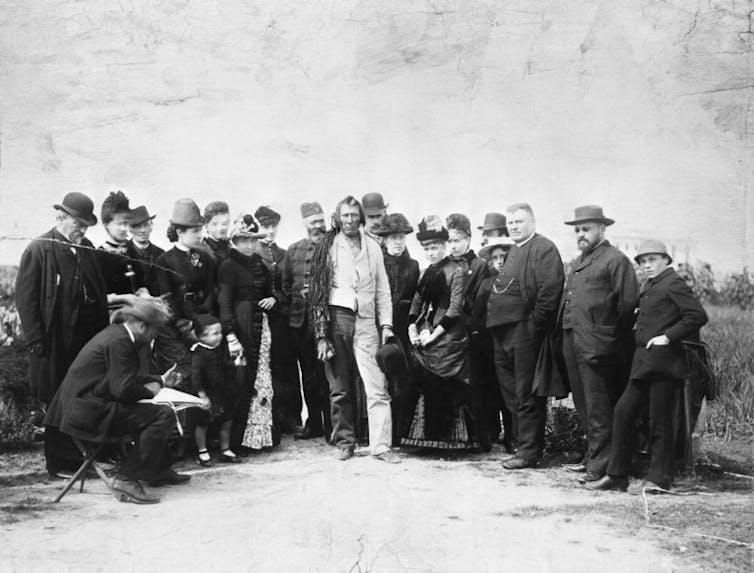
In 1886, French journalists visited Chief Poundmaker (centre) at the Stony Mountain Penitentiary.
(CU1124754/Glenbow Archives, University of Calgary)

While it took more than a century, his story proves that principled leadership outlasts momentary defeats.

Today, leaders can be inspired by this. When we choose to stand firm in our values, we may not see immediate victories. We may see struggles, but what’s important is doing what’s right. Regardless of whether this relates to social justice, ethical business practices or organizational change, leaders must be prepared to hold their ground when it matters most.

Chief Poundmaker’s leadership was rooted in love, reconciliation and an unwavering commitment to his people. His ability to unify nations, navigate high-stakes negotiations and prioritize peace over conflict offers timeless leadership lessons for the modern leader.

In our world, which is often divided by power struggles and short-term thinking, Poundmaker’s legacy should challenge us to lead differently — with humility, courage and a focus on the greater good.

The question we as leaders must ask ourselves is: what kind of leader do we want to be? Poundmaker’s example gives us a path forward.

The Conversation

Andrew J. Karesa does not work for, consult, own shares in or receive funding from any company or organisation that would benefit from this article, and has disclosed no relevant affiliations beyond their academic appointment.

ref. 5 vital leadership takeaways from the life of Chief Poundmaker – https://theconversation.com/5-vital-leadership-takeaways-from-the-life-of-chief-poundmaker-249343

Climate change is profoundly affecting livelihoods across Canada

Source: The Conversation – Canada – By Sara Dorow, Professor of Sociology, University of Alberta

For years, the International Labour Organization (ILO) has been sounding the alarm: climate change is having significant effects on the conditions, characteristics and availability of work.

As wildfires and other extreme weather events are destroying forests and threatening communities, ocean heating is impacting marine habitats and fisheries. Across these and other impacts of climate change, there is an undeniable relationship between the degradation of the environment and the degradation of work.

A research project I led with colleagues, Work-Life in Canada, reinforces this truth, revealing how climate change shapes not just what we do for work and under what conditions, but who we are and how we understand ourselves.

Over the last four years, our research team has photographed and interviewed more than 100 people from diverse walks of life across seven provinces. While we focused on the social meanings of their work, we constantly bumped into the ways, both subtle and direct, that changing environmental conditions are unravelling the social and economic fabric of people’s work lives.

We draw on two of our project sites to illustrate how climate change is impacting livelihoods — Lac La Ronge in northern Saskatchewan and Grand Manan Island in New Brunswick. The stories of participants, gathered by me, gender and women’s studies professor Angele Alook and sociology professor Karen Foster, are paired with the evocative documentary photography of our project collaborator, Martin Weinhold.

Together, words and images convey both the beauty of, and threats to, work-nature relations.

Wildfire

Cathy Clinton-Ratt and Julia Clinton are a Cree mother and daughter from the Lac La Ronge Indian Band who participated in the Work-Life in Canada project. Both held strong connections to Robertson Trading.

For nearly 60 years, Robertson Trading sustained the livelihoods of Indigenous people in the region through fur trade and buying their craft work.

Even after it closed in December 2023 (six months after our team visited the community), it still operated as a town bank and, importantly, housed hundreds of unique Indigenous artworks and traditional craft items collected since its inception.

Cathy’s moose hides and beadwork were sold and displayed at Robertson Trading for decades, and back in the day, she worked out of the craft co-operative just down the street.

Julia learned traditional hide making and beading skills from her mother and also worked at Robertson Trading for many years.

On June 4, 2025, Robertson Trading burned down in one of the many wildfires that tore through the area.

Wildfires are a natural occurrence in the boreal forest, but their frequency and spread in recent decades has been unprecedented.

Indigenous communities are especially affected. In June, La Ronge and nearby communities received a mandatory evacuation notice.

The fire destroyed the store’s entire collection of handcrafted items, including some of Cathy’s work.

As former manager Scott Robertson put it:

“The building was just a building, but the loss of the remaining contents — hundreds of pieces of Indigenous art and historical artefacts — is catastrophic … the beaded moosehide jackets and moccasins, the birch bark baskets, the antler carvings, the original paintings, etc., represent thousands of hours of handwork done by talented Indigenous artists and craftspeople, and are absolutely irreplaceable.”

That these items cannot simply be remade tells us that work is more than effort exchanged for a paycheque. It carries tradition, memory, identity and meaning — the stuff that social life is made of.

The loss of Roberston Trading highlights how meaningful work is enmeshed in a web of social-natural relations threatened by climate change.

Warming oceans

Grand Manan Island in New Brunswick, another of our project sites, further illustrates the threat to this web of work-life. Weir fishing — a sustainable practice of guiding fish into trap nets — has been practised for hundreds of years in Atlantic Canada.

While it declined significantly by the 1980s, some could still make a go of it.

Jeff Foster, a participant in our project, was one of those people. He knew everything about herring — not just as a resource to make a living on, but as a species with unique traits and behaviours.

When Martin Weinhold first photographed him in 2016, his weir fishing business was in full swing. A couple years later, Jeff turned over the fishery to his sons, happy to see a tradition continued.

But in 2023, Jeff’s sons reluctantly told him there were neither herring nor mackerel in their nets. A combination of warming waters and overfishing, especially by larger purse seiner operations, had greatly depleted the stocks.

For a while, Jeff’s sons had been able to keep the family weir going by working side jobs. But by 2024, when the Work-Life team visited Jeff, he was heartbroken.

His sons had switched to seasonal work with the lobster industry, which itself had only become an option as lobsters moved further north due to warming waters. What’s more, the weirs Jeff had built for a larger fish operation were being sold off to a lobster outfit.

Since then, the family has made the difficult decision to take down the family weir at the end of this year’s season. It will be the last time that they work together as a family at sea, and it spells the end of a specific story of who the Fosters are and where they belong.

‘Good’ work

In a 2018 paper, the ILO asserted that “a good future for work requires a stable and healthy environment.” The question is what “good” means.

Government policy tends to focus on things that can be easily quantified, like wages and hours of work. Our research reinforces that people and communities are attached to work in deeper ways, and that economic and social viability are enmeshed in the inevitable connections to nature that all forms of work depend on.

Primary research shows that climate and employment policies often remain mutually blind to each other. However, when we view work as “the fundamental interface between society and nature,” we understand how essential this relationship is to building an equitable future where people are able to do decent work.

This means ensuring that the policies and principles of a just energy transition are applied to all forms of work, not just green jobs, and that the stories of working people serve as important evidence in this endeavour.

The Conversation

Sara Dorow does not work for, consult, own shares in or receive funding from any company or organisation that would benefit from this article, and has disclosed no relevant affiliations beyond their academic appointment.

ref. Climate change is profoundly affecting livelihoods across Canada – https://theconversation.com/climate-change-is-profoundly-affecting-livelihoods-across-canada-262704

Managing soil fertilization levels can make for more efficient and productive crops

Source: The Conversation – Canada – By JT Cornelis, Associate Professor, Applied Biology (Soil Science), University of British Columbia

Modern crops are often excessively fertilized, which boost yields in the short term but also harms the environment due to nutrient runoffs and greenhouse gas emissions.

Additionally, fertilizers are often inefficient because much of the applied fertilizers become bound to soil particles over the long term, making them unavailable for plants.

The application of high doses of easily soluble fertilizers may ensure crop productivity, but it comes at the cost of environmental quality and agroecosystem resilience. This fertilization strategy often results in “lazy” crops with underdeveloped root systems and reduced ability to acquire nutrients from native soil reserves.

As a pedologist (someone who studies soil formation) and biogeochemist, my research focuses on the multiscalar and interdisciplinary study of soil systems.

Improving resiliency

In Canada’s vast forests, the trees thrive in nutrient-impoverished soils because of the capacity of their deep root systems to acquire nutrients and water. In natural ecosystems, plants have evolved and developed root strategies that help to absorb nutrients.

One way they do this is by growing bigger, stronger and more active roots, which help them access more nutrients from the soil. Sometimes, they team up with soil micro-organisms to increase their capacity to access nutrients. As roots absorb nutrients, they also release certain molecules in the soil called root exudates.

These compounds contribute to breaking down organic matter and dissolving soil particles, making trapped nutrients accessible for plant root uptake. Root exudates are also a source of energy for soil microorganisms, which down the road also support soil carbon storage and enhance general soil health.

The SoilRes3 Lab at the University of British Columbia carries out interdisciplinary research on soil genesis to uncover how microscale processes shape macroscale ecosystem properties and resilience. Grounded in soil–plant feedbacks, our pedological work examines the complex relationships between land and people across diverse eco-cultural contexts, with the goal of strengthening ecosystem resilience, resistance and restoration.

Examining soil-plant feedback in natural ecosystems, we found that using a bit less fertilizer could actually benefit crops in the long run. By decreasing fertilizer, we could increase the production of root exudates. This enhances the plants’ ability to absorb nutrients on their own, rather than depending on external inputs.

By increasing microbial activity in the rhizosphere (the area surrounding plant roots) and acting as a direct carbon source into the soil, increased root exudates could also contribute to healthier soils.

plant roots in a forest
The rhizosphere is the area surrounding plant roots where the roots, soil organisms, nutrients and water interact.
(Jordan Fernandes/Unsplash), CC BY

Alternative strategies

Nitrogen and phosphorus are the two most important nutrients for plant growth, and they are the most used fertilizers around the world.

Our team of soil scientists reviewed 36 studies encompassing 30 different crops and soil contexts. We compared how plants responded under two fertilization conditions: one with the usual amount of fertilizer to maximize yield, and another with less fertilizer, especially less nitrogen and phosphorus.

We found that cutting phosphorus fertilizer by up to half boosted root exudation by 30 per cent, while only slightly reducing crop growth by just two per cent. In contrast, reducing nitrogen fertilizer raises root exudation by seven per cent, but lowers plant growth by 20 per cent.

Our findings show that optimizing phosphorus use in agriculture can stimulate more active root systems and increase exudate production.

Soil types

Optimizing phosphorus fertilizer to boost root exudation without sacrificing yield depends heavily on soil type. Soils in British Columbia differ significantly from those in Manitoba, Québec and Saskatchewan, and the impact of root exudates on nutrient uptake and carbon capture varies with soil conditions (soil pH, mineralogy, moisture, texture).

That’s why our proposed strategy — limiting fertilizers to maximize root activity — must be tested in real-world settings, with farmers, across diverse soils and crop systems.

The next step will be to examine root exudation responses and effects under varying soil physicochemical and eco-cultural contexts. Field trials are essential to tailor this approach to local conditions and ensure its effectiveness and scalability.

The Conversation

JT Cornelis works for the Faculty of Land and Food Systems at the University of British Columbia, as an Associate Professor in soil science. He receives funding from NSERC Discovery Grant, NSERC Alliance, Killam Trusts and BC Genome.

ref. Managing soil fertilization levels can make for more efficient and productive crops – https://theconversation.com/managing-soil-fertilization-levels-can-make-for-more-efficient-and-productive-crops-253298

Here’s why Canada’s parents and grandparents reunification program is problematic

Source: The Conversation – Canada – By Megan Gaucher, Associate Professor, Department of Law and Legal Studies, Carleton University

Immigration, Refugees and Citizenship Canada’s recent announcement that it’s accepting 10,000 sponsorship applications under the Parent and Grandparents Program (PGP) comes with an important caveat.

Due to persistent backlog, invitations will only be sent to the 17,860 potential sponsors who submitted an interest-to-sponsor application back in 2020.

While good news for some, it means yet another cycle of uncertainty for thousands of families who have waited years for the PGP to finally reopen.

Migrant families seek permanent reunification for reasons other than a desire to live with their parents and grandparents in the same country. Those reasons include a need for child-care support and a desire to care for their older family members as they age.

As international conventions dictate, families have a right to be together.

From permanent to temporary

Grandparents have been part of Canada’s formal “family class” pathway since 1976, but current policy favours spouses and dependent children. This makes reunification for extended family members difficult.

Grandparent admissions through the PGP have comprised around 25 per cent of total family class admissions for the past 10 years.

Unlike other family class categories, there is a predetermined cap on accepted PGP applications. The PGP has also undergone a series of program freezes to deal with an application backlog, the most recent announced in January 2025. The government’s latest update included no commitment to receive new interest-to-sponsor declarations.

As an alternative to the PGP, the government recommends the super visa, a multi-entry visa valid for up to 10 years. However, the super visa requires grandparents to reapply and meet medical inadmissibility rules every five years.

The super visa also places responsibility for financial and health care of grandparents entirely on the sponsoring children, sometimes with devastating consequences.

Most importantly, the super visa does not guarantee permanent residence upon expiration. Permanent grandparent reunification remains a lottery draw, at the mercy of sponsorship intake caps.

Celebrating, denigrating migrant grandparents

Our preliminary research on grandparent sponsorship explores how elected officials consider the place of migrant grandparents in Canadian society. We’ve so far found they regard permanent family class migration as “good for business” as it attracts economic migrants. At the same time, elected officials believe that certain dependants monopolize health and social safety nets.

Grandparents, in particular, are treated by governments as human liabilities who must be admitted “responsibly.”

Admitting grandparents to Canada is tied to their perceived ability to support their sponsors by performing unpaid domestic labour. Our research has found elected officials celebrate sponsored grandparents for the substantial unpaid care work they provide like meal preparation, child care and cleaning.

In a recent survey on grandparent sponsorship, sponsors describe the unpaid work conducted by grandparents as essential to their participation in the Canadian workforce.

an older dark-haired woman plays with a boy at a playground
Grandparents can be key to helping younger family members become active in the Canadian workforce.
(Kateryna Hliznitsova/Unsplash)

Migrant grandparents are also positioned as providers of cultural care for their grandchildren. Our research draws attention to elected officials often invoking memories of their own migrant grandparents passing along languages, practices and values that shaped their unique cultural identities.

Despite the benefits migrant grandparents provide, sponsored grandparents are consistently suspected of taking advantage of Canada’s health care and social welfare systems. This is why the super visa is promoted as an alternative pathway.

Dependent on sponsors

Grandparents who come to Canada through the super visa are financially reliant on their sponsors. Even though the government recognizes that the number of sponsored grandparents applying for old age security is relatively small, treating migrant grandparents as economic burdens allows governments to justify caps and application pauses on PGP sponsorship.

Contrary to governments’ framing of the super visa as aligning with migrants’ families demands for temporary care, our research shows that grandparents often resort to humanitarian and compassionate applications to obtain permanent residence once their super visa has expired. In these cases, their ability to perform care work is further scrutinized.

In terms of grandparent sponsorship, care is largely understood as temporary and one-directional — in other words, migrant grandparents are welcomed when they provide care, but are seen as liabilities when they need care themselves.


Read more:
Canada halts new parent immigration sponsorships, keeping families apart


Prioritizing the needs of migrant families

How do we reconcile government claims that family reunification is a “fundamental pillar of Canadian society” with the reality that permanent grandparent reunification remains difficult to obtain?

Intake announcements like the most recent one in July allow governments to celebrate permanent grandparent migration. At the same time, the inconsistency of the PGP and solutions like the super visa keep migrant grandparents in a state of legal, political and economic precarity.

With the Liberal government announcing cuts to family class admissions over the next three years, the impact of these changes on grandparent reunification warrants attention.

Rather than temporary reforms and routes, the government needs to consider structural changes to Canada’s family class pathway that focus on the needs and interests of families seeking permanent reunification.

The Conversation

Megan Gaucher receives funding from the Social Sciences and Humanities Research Council.

Asma Atique receives funding from Mitacs and the College of Immigration and Citizenship Consultants. She is affiliated with CERC Migration and Integration and volunteers for South Asian Women and Immigrants’ Services.

Ethel Tungohan receives funding from the Social Sciences and Humanities Research Council.

Harshita Yalamarty receives funding from Social Sciences and Humanities Research Council.

ref. Here’s why Canada’s parents and grandparents reunification program is problematic – https://theconversation.com/heres-why-canadas-parents-and-grandparents-reunification-program-is-problematic-262263

Is it wrong to date a coworker? Not necessarily — but it can get complicated

Source: The Conversation – Canada – By Leda Stawnychko, Associate Professor of Strategy and Organizational Theory, Mount Royal University

The workplace has long been a setting for connection — and sometimes romance. In Canada, these relationships are far from rare.

A 2019 ADP Canada survey of 885 employees found that one in three have been romantically involved with a colleague. Younger workers aged 18 to 34 were especially likely to report such relationships (41 per cent).

Similar patterns emerge in the United States and the United Kingdom, where surveys have found that 18 per cent of partnered respondents (those married, living with a partner or in a committed relationship) met their significant other at work.

It’s no surprise. We spend much of our waking lives with colleagues, building shared experiences and discovering common values and interests. At a time when finding and keeping love seems harder than ever, the office can feel like a rare place where authenticity and comfort come naturally.


Read more:
How rising living costs are changing the way we date, live and love


Workplace relationships can contribute to a range of positive workplace outcomes. Most notably, they are linked to increased job satisfaction, stronger organizational commitment, improved morale and enhanced collaboration and teamwork.

However, workplace relationships can also create significant organizational challenges, which is why knowing how to handle them is key.


Dating today can feel like a mix of endless swipes, red flags and shifting expectations. From decoding mixed signals to balancing independence with intimacy, relationships in your 20s and 30s come with unique challenges. Love IRL is the latest series from Quarter Life that explores it all.

These research-backed articles break down the complexities of modern love to help you build meaningful connections, no matter your relationship status.


When work and love mix

Workplace romance refers to sexual or romantic relationships between members of the same organization that both parties recognize as more than strictly professional.

These relationships can include dating, extramarital affairs, casual hook-ups, flings or friends-with-benefits arrangements.

While many romances have minimal impact, some erode organizational trust by creating perceptions of favouritism, exclusion or manipulation, especially when they involve a power imbalance.

When trust is undermined, research shows that collaboration suffers, morale declines and workplace culture deteriorates. This is why organizations often have policies surrounding workplace romances.

The risks of workplace romance

In Canada, there are no laws that prohibit consensual relationships at work, and most countries similarly don’t have laws governing workplace relationships.

However, Canada does have legal frameworks that require employers to maintain a safe, respectful workplace. These include the Canadian Human Rights Act, provincial human rights codes, and occupational health and safety legislation.

To meet these obligations, many organizations implement policies that prohibit supervisor-subordinate relationships or require disclosure.

These policies exist for good reason: workplace romances can blur professional boundaries, increase the risk of sharing confidential information inappropriately, allow personal feelings to influence decisions, or create situations where one partner feels pressured to act in ways that conflict with organizational policies or ethical standards.

For individuals, the risks can also be just as real. While some workplace romances lead to enduring partnerships — Michelle and Barack Obama famously met at a Chicago law firm when she was a junior associate and he was an intern — others can end less happily.

Failed relationships can leave both people vulnerable to reputational damage, career derailment and, in the worst cases, allegations of harassment that can result in termination.

These concerns are underscored by the prevalence of misconduct. According to a 2024 Statistics Canada report, almost half of women and nearly one-third of men say they have experienced inappropriate sexualized behaviour at work.

Why some couples keep it quiet

Many employees choose not to disclose their workplace relationships. According to the ADP Canada survey, nearly half (45 per cent) of those in workplace relationships kept it secret from someone at work, most often management or human resources.

Similarly, a 2023 survey of more than 600 working Americans from the Society for Human Resource Management across a variety of ages, industries and job levels found that 82 per cent of workers who had been in a workplace romance kept it secret from their employer.

Reasons for secrecy range from a desire for privacy to concerns about gossip, judgment or professional repercussions.

This lack of disclosure means employers may be unaware of relationships and therefore less able to protect all parties if conflicts, ethical concerns or allegations arise.

Making love work in the workplace

If you find yourself navigating romance at work, here are five steps to protect both your relationship and your career:

1. Reflect on your motivations. Ask yourself why you want to pursue the relationship and whether it aligns with your personal and professional goals. Consider how it might affect your career, the people you work with and the overall workplace culture. This kind of honest self-check can help you make clear, confident decisions.

2. Know the rules. Review your organization’s policy on workplace romance. While the law may not always address it directly, many employers require disclosure or limit relationships within reporting lines. Understanding these rules early can help you avoid misunderstandings or career surprises.


Read more:
Workplace romance: four questions to ask yourself before dating someone from the office


3. Be transparent. If disclosure is required, share the news directly with your manager or human resources, rather than letting it spread through gossip. Research shows that others in the workplace respond more positively when they hear it from you directly.

4. Manage perceptions and set boundaries. Even if your relationship doesn’t affect your work, others may see it differently. Agree with your partner on boundaries, communicate thoughtfully and commit to upholding professional conduct.

5. Think long-term. Relationships can change. Decide in advance how you’ll handle working together if it ends, and consider how it might shape your reputation, network and opportunities beyond your current role.

Handled well, these steps won’t just protect your career but also help your relationship stand on solid ground.

Falling for someone at work can be both exciting and rewarding. With mindfulness, open communication and respect for professional boundaries, it can become a story you cherish and proof that romance and professionalism can flourish together.

The Conversation

Leda Stawnychko receives funding from the Social Sciences and Humanities Research Council of Canada.

Shawna Boyko does not work for, consult, own shares in or receive funding from any company or organisation that would benefit from this article, and has disclosed no relevant affiliations beyond their academic appointment.

ref. Is it wrong to date a coworker? Not necessarily — but it can get complicated – https://theconversation.com/is-it-wrong-to-date-a-coworker-not-necessarily-but-it-can-get-complicated-262675