In the Salish Sea, tensions surrounding killer whales and salmon are about more than just fishing

Source: The Conversation – Canada – By Lauren Eckert, Postdoctoral research fellow, Centre for Indigenous Fisheries, University of British Columbia

In the waters of the Salish Sea, endangered southern resident killer whales and the struggling Chinook salmon they depend on are at the centre of one of Canada’s most visible conservation conflicts.

Since 2019, Canada’s Department of Fisheries and Oceans (DFO) has implemented area-based restrictions on Chinook fishing and other protective measures to safeguard the killer whales and their primary food source. These measures include area-based recreational fishing closures, interim sanctuary zones and voluntary seasonal vessel slowdown areas.

These prescriptions have stoked tensions, particularly between two groups often cast as distinct and opposed: recreational fishers and conservationists. The issue has spilled beyond local waters, surfacing on national media and even influencing fishery debates in Alaska.

Conflicts like this one aren’t unique. They surround — and can influence — many modern environmental, social and policy decisions. At their best, conflicts can bring attention to unmet community needs, spark dialogue and repair fractured relationships. But misunderstood or mishandled, they can harden divisions that stymie evidence-based decision-making, deepening distrust.

Too often in North America, default management approaches inflame such conflict rather than resolve it. But new collaborative research colleagues and I have conducted suggests pathways to transform conflict surrounding killer whale protection and Chinook fishing — and may offer broader insight for effectively managing conflicts around conservation efforts.

Our research

We surveyed more than 700 British Columbians, many of whom self-identified as either recreational fishers or conservationists. What we learned from participants has challenged dominant conflict narratives: nearly one-third of those who identified primarily as conservationists also identified as anglers, and almost half of anglers also identified as conservationists.

In other words, many of the people involved in this conflict occupy both sides of public debates, and bear multifaceted identities as they relate to whales, salmon and policy.

Yet public and political discourse about environmental management often reduces conflict to binary opposing opinions: do we support temporary recreational fishing restrictions to protect killer whales, or do we oppose them?

Humans — and conflicts — are not that simple, and treating them as such may be destructive to people, communities, policies and marine ecosystems.

Decades of research show, for instance, that conflicts are shaped not just by opinions, but by deeply rooted psychological characteristics, including identities, beliefs and values. These aspects of conflict are not trivial; they are central to how people make sense of their world, their relationships, and themselves.

We used surveys to measure beliefs, opinions and identity affiliations to assess not only opinions on killer whales and salmon management, but also the identities and beliefs beneath them.

What we found

We found that both anglers and those supporting conservation strongly tied their sense of self and well-being to the environment, as well as to their chosen identity groups (recreational fishers or conservationists). Despite disagreements, both groups valued salmon and whales — and both expressed frustration with DFO’s current management approaches.

We also identified the deeper roots of conflict between participants. Recreational fishers and conservationists differed in what they believed the fundamental priority of environmental management should be.

Conservationist respondents were more likely to emphasize protecting species regardless of their utility to humans, while recreational fishers expressed mixed views. Some agreed with that stance but others felt environmental management should prioritize species that benefit people directly or strike a balance between conservation and use.

One of our most striking findings came from comparing survey responses with social media commentary. When people responded to our survey, they tended to share their views with minimal inflammatory language. In contrast, data we extracted from Facebook discussions about the same issues contained far more hostile sentiments. Online, we saw more frequent expressions of anger, distrust, victimization and even violent rhetoric.

This isn’t surprising. Substantial research has identified that social media can amplify emotional responses, reward polarization and reduce the social cost of hostility. This finding indicates a potential negative feedback loop: when media and online discourse reduce complex conflicts to binary arguments, they risk entrenching people in “us versus them” stances.

Transforming conflict

Given these insights, we propose a fundamental reorientation of how DFO and other managers approach such conflict. Rather than treating conflicts as problems to be managed through superficial consultations or short-term negotiations, decision-makers must address their roots.

This means adopting transformative approaches to addressing conflict: acknowledging deeper social roots of conflict, investing in long-term dialogue and relationship-building and creating space for mutual understanding even without consensus. Research shows it is much easier to find solutions when stakeholders feel seen, included and mutually-respected.

These solutions require time, resources, trained mediators and a commitment to engage with emotional and identity-based dimensions of conflict. They also offer something that current approaches have not: the possibility of durable, locally supported solutions, improved trust and collaboration.

Visualization of conflict and transformation in the case of SRKW and Chinook management in the Salish Sea. An iceberg represents the levels-of-conflict, with visible and below-the-surface (more deeply rooted) elements of conflict identified.
(Author provided)

Conflict transformation approaches have proven effective in ameliorating entrenched conflicts between stakeholders over cougar management in the United States, elephant management in Mozambique and elsewhere.

As climate change, habitat degradation and species decline intensify, so will conflicts over environmental decisions. These conflicts may appear to be about salmon, whales or other species, but many of them are ultimately about people: their livelihoods, values, relationships, identities and visions for the future.

Accordingly, we need to stop treating conflict as an inconvenience to be managed or avoided. Instead, policymakers can leverage complex, entrenched conflicts as opportunities to identify the deeper roots of what’s at stake and create dialogue and decision-making frameworks that acknowledge people’s lived realities while building the trust needed for coexistence.

The Conversation

Lauren Eckert has previously been affiliated with Raincoast Conservation Foundation. This research was supported by a Canada Vanier Graduate Scholarship and a Raincoast Conservation Fellowship.

ref. In the Salish Sea, tensions surrounding killer whales and salmon are about more than just fishing – https://theconversation.com/in-the-salish-sea-tensions-surrounding-killer-whales-and-salmon-are-about-more-than-just-fishing-263524

When courtroom fashion serves as a calculated legal strategy

Source: The Conversation – Canada – By Jason Wang, Postdoctoral Fellow, Modern Literature and Culture Research Centre, Toronto Metropolitan University

As American journalist E. Jean Carroll walked into a Manhattan courtroom for her civil trial against Donald Trump on April 25, 2023, she was dressed for a specific audience: the jury.

As detailed in her newly published memoir, Not My Type: One Woman vs. a President, her wardrobe was an intentional recreation of her mid-1990s style — right down to a bob haircut. Her outfits were a time capsule, embodying the woman she was when Trump sexually assaulted her.

This was a calculated legal tactic. Her goal, in her own blunt words in an interview with journalist Katie Couric, was to make herself more “fuckable” in the jury’s eyes. This was a direct rebuttal to Trump’s infamous dismissal of her initial accusation: “She’s not my type.

Carroll’s stark admission highlights a judicial truth that extends far beyond her case. In high-profile trials, the courtroom is as much a stage as a forum of law. Every garment becomes evidence in the trial of public perception.

Perception and credibility

This battle over perception can be understood through French philosopher Jacques Rancière’s concept of the “distribution of the sensible,” the implicit system that determines what counts as visible or audible, who gets to speak, and whose words carry weight. In a courtroom, these very rules create a hierarchy of credibility — shaping not only what is said, but whose version of events is believed.

Despite instructions to focus solely on facts, jurors are inevitably influenced by a cascade of non-verbal cues. Every suit, dress and accessory is freighted with semiotic meaning, signalling authority, vulnerability, power — or even innocence or guilt.

Carroll understood this intimately. Where reporters framed the courtroom as a legal battleground, she referred to it as “the runway” in her memoir. She catalogues her choices with precision: “navy-blue Zara suit with ballet skirt,” “Jimmy Choo navy-blue pumps,” “chocolate-brown silk Oscar [de la Renta] dress.”

Appearance was not peripheral for Carroll, it was paramount to her testimony. “How I look is the very centre of the case,” she asserted. By embodying her past self, she made the alleged victim viscerally present, a silent yet powerful appeal to the jury’s empathy.

Performance of conformity

A sartorial, or outfit-driven, strategy also played out at the trial of five former Canadian junior hockey players in London, Ont. During the trial from April 22 to June 13, 2025, the five defendants presented a unified front through their co-ordinated grammar of slim suits and narrow ties.

The details mattered. Slim tailoring narrowed the torso and thin ties drew tidy vertical lines, muting athletic bulk to produce a controlled, less imposing silhouette.

Likely guided by their legal team, this esthetic borrowed from earlier fashion registers. The suits recall the mod style of the 1960s — a subculture popularized by The Beatles that, as British media theorist Dick Hebdige argued, used style to communicate an anti-establishment identity.

But oppositional styles rarely remain oppositional. As British fashion scholar Elizabeth Wilson pointed out, radical looks are often commodified, stripped of subversive meaning and absorbed into mainstream fashion.

In that London courtroom, the language of rebellion was repurposed as a tool for assimilation. Sharp cuts and uniform knots worked to erase hockey-rink masculinity, recoding the body as orderly, institutional and non-threatening.

Order and the yuppie

This strategy fits a long tradition: fashion conformity signals credibility and social alignment.

Its modern model is the 1980s yuppie effect: Through discreet branding, muted palettes and immaculate tailoring, the yuppie “power suit” produced authority through sameness.

Where sporting masculinity might advertise physical force, this yuppie esthetic signals status via cultural capital and managerial poise. The co-ordinated suits thus functioned as a collective cultural alibi — conformity presented as credibility.

This was not merely a plea for respectability, but a calibrated performance of what Australian sociologist R.W. Connell termed “hegemonic masculinity” — a legitimized, elite form of male power that derives its authority from status and control rather than physical aggression.

The goal was to construct an appearance of order, making allegations of violent transgression seem incongruent with the persona on display.

Inherited privilege

This strategy of wardrobe conformity stands in sharp contrast to the fashion approach taken by Luigi Mangione, accused of killing Brian Thompson, the CEO of UnitedHealthcare.

In his first court appearance on Feb. 21, 2025, he appeared in a dark green cable-knit sweater, white collared shirt, pale khakis and sockless penny loafers, as men’s fashion magazine GQ documented.

This is the esthetic of what American economist Thorstein Veblen termed “conspicuous leisure.” The sprezzatura (studied carelessness) serves as sartorial proof of a body so exempt from drudgery that it need not concern itself with mere comforts. Its elegance appears innate and effortless.

His preppy esthetic — with its old-money Ivy League polish — projected an elite status that commands automatic respect. It suggested his privilege was a guarantee of character.

The hockey players’ suits were a plea for entry. Mangione’s ensemble was a claim of birthright. One is earned; the other, inherited.

Dressing for culture wars

Mangione’s fashion narrative surged from the courtroom into America’s culture wars, turning him into a polarizing “folk hero.” This is the ultimate manifestation of Rancière’s “distribution of the sensible” in the wild: a fierce public battle over who gets to define what his image means.

The internet’s fascination with Mangione, dubbing the suspect a “hot assassin” or an online sex symbol, reveals just how his perceived credibility was deeply intertwined with desirability and rooted in class performance.

For his supporters, Mangione’s preppy elegance did not signal guilt, but became a show of esthetic resistance. He was recast not as a privileged defendant, but as a glamorous avenger taking on a reviled health insurance system.

In this final, chaotic stage of the courtroom’s visual economy, his fashion was politicized. The esthetic became an empty vessel to be filled with the public’s own fears, frustrations and ideological fantasies.

The sartorial brief

In our hyper-visual age, case after case, the courtroom is a stage where clothing does the arguing. Fashion assigns credibility, stirs sympathy and tilts the scale of belief.

Consider the outcomes: Carroll walked away with US$88.3 million; the five hockey players walked free. Mangione, draped in country-club casuals, hangs in the balance, his fate buoyed by a public captivated by his fashion spectacle.

Each in their way, through their outfits, presented silent testimony to the watching world. Riveted, the world could not look away.

The Conversation

Jason Wang does not work for, consult, own shares in or receive funding from any company or organisation that would benefit from this article, and has disclosed no relevant affiliations beyond their academic appointment.

ref. When courtroom fashion serves as a calculated legal strategy – https://theconversation.com/when-courtroom-fashion-serves-as-a-calculated-legal-strategy-264007

Warming temperatures affect glaciers’ ability to store meltwater, contributing to rising sea levels

Source: The Conversation – Canada – By Danielle Halle, PhD Candidate, Glaciology, University of Waterloo

In higher elevations, firn, frozen water that is something between snow and ice, covers the top of glaciers. Firn plays a critical role in regulating glacial meltwater and sea level rise.

It does this by absorbing meltwater, the water released by melting glaciers. The ability of the firn layer to absorb meltwater — its “sponginess” — can be determined by the amount of pore space available, which is impacted by several variables such as temperature, firn grain size and presence of ice layers within the firn layer. A more spongy firn layer allows for more meltwater to be stored as it trickles down and refreezes when it reaches colder temperatures at depth.

Layers of firn can exist between refrozen ice layers. The greater the number of refrozen ice layers there are embedded within the firn layer, the more intense a melt period has been. These layers can act as a barrier against meltwater being stored within the spongy firn layer, forcing the meltwater to flow to lower elevations, eventually exiting the glacier as runoff into the ocean.

Glacial loss

The Devon Ice Cap is located within Inuit Nunangat, the homelands of the Inuit. It is one of the largest ice caps in the Canadian Arctic at approximately 14,000 square kilometres in area and with a maximum thickness of approximately 880 metres.

The Devon Ice Cap is one of many ice masses that play a vital role in the Arctic ecosystem, including in the nearshore marine ecosystem.

a map showing the location of the Devon ice cap
A 1969 map of the Devon Ice Cap, Nvt.
(Glacier Atlas of Canada/Government of Canada)

Our research team found that the Devon Ice Cap in Nunavut experienced a decrease in the amount of refrozen glacial meltwater in its firn layer. This was caused by the cooler-than-average summer air temperatures the region experienced in 2021.

Air temperature and glacier melt are closely related, and our research shows how the firn layer is affected by climate changes. It also highlights the fact that climate change does not happen in a linear fashion. Rather, temperatures fluctuate while trending globally towards glacial loss.

Comparing data

We observed how much ice was in the firn layer by extracting six shallow firn cores from different elevations in 2022 and comparing them to cores extracted in 2012.

We found that at the lowest elevation sites on the ice cap (1,400 metres above sea level), where air temperatures are expected to be warmer than at higher elevations, the amount of refrozen meltwater content decreased by nearly 30 per cent. Conversely, at the highest elevation site (1,800 metres above sea level, where temperatures are colder), the decrease was about 11 per cent. These changes occurred despite higher average summer temperatures between 2012 and 2022.

a researcher site on ice
Documenting the different layers of the firn cores collected fromt the Devon Ice Cap in 2022.
(B. Danielson), CC BY

Greenland Ice Sheet

A similar pattern was also observed on the Greenland Ice Sheet in 2019. Researchers there found less glacial meltwater had refrozen within the firn layer along several points.

The decrease in frozen meltwater seen in the Greenland Ice Sheet’s firn layer had also occurred during a time of less surface melt. Less surface melt in one year can help to increase meltwater storage in the firn layer in following years.

Overall, it was found that in the long term, the Greenland Ice Sheet is more sensitive to warming than cooling. In other words, one extreme year of summer heat had a greater impact on the amount of meltwater compared to other cooler years when meltwater was temporarily stored.

Eventually, the Greenland Ice Sheet and other ice masses across the globe will reach a peak refreezing point, where meltwater can no longer be stored within the firn layer because so much has already accumulated, creating an impermeable layer of ice. Instead of this water being stored in the firn layer, it will run through and off the glacier.

Future measurements

Our findings show how the firn layer responds to one summer of below-average air temperatures. A reduction in the amount of refrozen glacial meltwater stored means an increase in the glacier’s capacity to store meltwater for the next season. This demonstrates the firn layer’s ability to potentially reduce meltwater runoff during a given year.

The future of the glaciers and ice caps in the Canadian Arctic will depend on changes in global temperatures and how glacial physical processes respond. The Canadian Arctic consists of 14 per cent of the world’s glaciers and ice caps by volume, and melting glaciers in the region are projected to be one of the greatest contributors to sea-level rise in the next century.

A better understanding of firn processes and changes in porosity will help researchers quantify how much and when sea level rises are expected from the Canadian Arctic glaciers.

The Conversation

Danielle Halle receives funding from POLAR knowledge Canada, Northern Scientific Training Program, Ontario Graduate Scholarship and the University of Waterloo.

Wesley Van Wychen does not work for, consult, own shares in or receive funding from any company or organisation that would benefit from this article, and has disclosed no relevant affiliations beyond their academic appointment.

ref. Warming temperatures affect glaciers’ ability to store meltwater, contributing to rising sea levels – https://theconversation.com/warming-temperatures-affect-glaciers-ability-to-store-meltwater-contributing-to-rising-sea-levels-240628

New study shows how Amazon trees use recent rainfall in the dry season and support the production of their own rain

Source: The Conversation – Canada – By Magali Nehemy, Assistant Professor, Department of Earth & Environmental Science, University of British Columbia

The Amazon is the world’s largest tropical forest, home to unmatched biodiversity and one of the planet’s longest rivers. Besides the Amazon River, the Amazon rainforest also features “flying rivers:” invisible streams of vapour that travel through the atmosphere, fuelling rainfall both within the forest and far beyond its boundaries.

The forests play a central role in this system. Much of the moisture that rises into the atmosphere comes from transpiration. Trees pull water from the soil through their roots, transport it to the leaves and release it as vapour. That vapour becomes rainfall — sometimes locally, sometimes hundreds of kilometres away.

In the dry season when rain is scarce, up to 70 per cent of rainfall in the Amazon comes from this moisture-recycling generated by the forest itself. This raises a key question: where do the trees find the water to keep the cycle going during the driest months?

Our study in the Tapajós National Forest

In our recent study, colleagues and I set out to answer this question. In 2021 during the peak of the dry-season, we conducted fieldwork in the Tapajós National Forest, in Pará state, Brazil on the traditional territory of the Mundurukú people.

We worked across two contrasting sites: a hilltop forest with a deep water table (about 40 metres), and a valley forest near a stream where groundwater is much shallower.

The results were surprising. Most water used for transpiration in the dry season did not come from deep reserves, but from shallow soil. In a year without extreme drought or floods, 69 per cent of transpiration on the hill and 46 per cent in the valley came from the top 50 centimetres of soil.

Our research also found that water stored in the shallow soil had fallen on land recently, specifically during the dry season. In other words, the forest rapidly recycles the rain: it falls, infiltrates shallow soil, is absorbed by roots and is released back into the atmosphere, fuelling new rainfall — right when the forest needs water most.

The role of tree diversity

Not all trees contribute to this cycle equally. The Amazon’s diversity means species use different strategies to access water stored in the soil. Our study showed that a key factor is “embolism resistance,” a measure of how well a tree can keep water moving through its tissues during drought.

Trees that are more resistant in preventing air blockages in their water transport system are able to keep drawing water from soil and releasing moisture into the atmosphere, even in the driest months.

Drawing water from dry soil is like a tug-of-war, where water is the rope: the soil holds onto the water while the roots try to pull it free. The drier the soil, the stronger the pull required.

Species with high embolism resistance can keep transpiring as soils dry, therefore they can rely on recently fallen rain in shallow soil. Less resistant species are more drought-sensitive and will rely more on deeper roots to reach stable reserves, or other strategies.

Our study shows that the higher the resistance to embolism, the higher the proportion of shallow water a tree uses, and therefore the more recent rainfall from the dry season is returned to the atmosphere. This is the first evidence that rapid recycling of dry-season rainfall through transpiration is strongly supported by embolism resistance.

The challenge ahead

Rainforests are facing significant threats of human encroachment and deforestation. Recent policy changes in Brazil risk accelerating deforestation in sensitive areas such as the Amazon, the Cerrado savannah and Atlantic Forest — all vital for the water cycle.

A disrupted water cycle with less rain threatens biodiversity and natural habitats, as well as water security food supplies.

Local and Indigenous communities are the most directly affected, but the impacts extend far beyond. The flying rivers also carry Amazonian moisture to southern and central parts of Brazil, supporting agriculture in major grain-producing regions. Less forest means less rain, threatening crops, food security and the economy.

This delicate balance is threatened by deforestation. When forests are cut down, fewer trees release moisture into the air through transpiration, reducing the formation of local and nearby rainfall during the dry season.

Forest loss weakens the very system that sustains rainfall — the recycling of water through transpiration. Our study shows that embolism-resistant trees play a central role by quickly returning dry-season rainfall to the atmosphere, where it fuels new rainfall.

The message is clear: without the forest, there is no rain, and without rain, no forest. The quick recycling of dry-season rain keeps the Amazon alive through its driest months. It also plays a crucial role in triggering the return of the wet season. If the forest loses its ability to recycle this water, the entire hydrological cycle risks collapse.

Brazil will host the 2025 United Nations Climate Change Conference, COP30, in November. As policymakers gather, preserving rainforests like the Amazon must be among the issues at the top of the agenda.

The world’s forests are complex and biodiverse places with delicate natural systems that sustain them. The Amazon truly functions as a rain-making engine that helps sustain life, inside and beyond the forest.

The Conversation

Magali Nehemy does not work for, consult, own shares in or receive funding from any company or organisation that would benefit from this article, and has disclosed no relevant affiliations beyond their academic appointment.

ref. New study shows how Amazon trees use recent rainfall in the dry season and support the production of their own rain – https://theconversation.com/new-study-shows-how-amazon-trees-use-recent-rainfall-in-the-dry-season-and-support-the-production-of-their-own-rain-263525

How a 300-year-old Scottish country estate escaped the wrecking ball

Source: The Conversation – Canada – By Kevin James, Professor, History, University of Guelph

Duff House, near Aberdeen in Scotland, in May 2011. (Wikimedia Commons), CC BY

Between 1945 and 1974, Scotland lost a proportionally higher number of country houses than England — 175 of these stately formerly aristocratic homes (think Downton Abbey) were demolished, according to Country Life magazine in August 1979.

It noted that despite recent interventions to support them, several grand houses in Scotland continued to be threatened by the wrecking ball.

In my ongoing research and in a podcast for Scottish History Out of Order, I have looked into how the fortunes of the buildings often mirrored those of the families themselves. Their vast wealth from land holdings were hit hard, especially by heavy taxation that began in the period after the First World War.

This resulted in a large-scale liquidation of many stately residences that dotted the countryside on the British Isles. Many were demolished and others sold. A few lived on as residences — physical reminders of the once-mighty power of the families who lived there.

Duff House defies demolition

But in remote northeastern Scotland, there was an exception to the rule.

The construction of Duff House, an aristocratic residence for Lord Braco (later the first Earl of Fife), began in 1735. Since then, it has lived many lives and defied demolition. And its many stories reveal a great deal about the precarious identity of a former illustrious stately home.

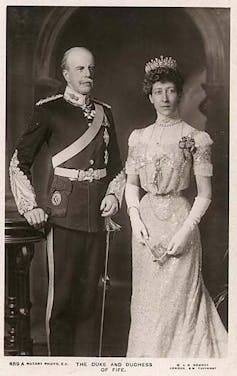
The house’s first public life was as a gift. In 1906, the Duke and Duchess of Fife (a royal princess as the eldest daughter of King Edward VII), offered it to the nearby burghs of Banff and Macduff.

A black-and-white photo shows a man in military garb and a woman in a gown and tiara.
The Duke and Duchess of Fife circa 1911.
(Wikimedia Commons), CC BY

Not long after the two burghs received the gift, they began to worry about its costly upkeep. In fact, the duke’s representative in 1907 offered to take back the property if it were a burden for the burghs.

Community officials insisted they wished to keep Duff House. But a use had to be found that imposed no costs to community residents. A few options were weighed: A hotel? Or, even better, a hydropathic establishment, known as a “hydro,” a popular form of hotel that attracted well-heeled patrons to participate in a strict regime of water-based “treatments?” Patrons could imagine themselves as lords and ladies of the manor for a few days, at least.

This is when Duff House’s public life began — not as a hydro in the end, but as an opulent hotel.

Tepid demand

Demand was underwhelming. Distant from urban centres and markets and based in a sprawling one-time private home that required extensive adaptations, a hotel was a costly undertaking. In fact, just as the (much more successful) golf course on the grounds opened, Duff House Hotel was entering into a series of loss-making years.

It ultimately led the hotel company to exit and a new business to emerge: a sanatorium for the treatment of gastric illnesses. Unlike the hotel, it seems to have attracted stable and even growing patronage, even through the First World War.

Had Duff House finally found a profitable purpose? At the end of the war, the sanatorium moved to North Wales to be closer to its main clientele, leaving people to ask what was becoming a familiar question: what was to be done with Duff House?

The Second World War

The 1920s and ‘30s brought a few efforts to revive the building as a hotel, albeit on a much more modest scale. Those efforts, like the hotel ventures before them, failed.

The Second World War saw the state requisition of private property on a massive scale as the home front was mobilized in support of the conflict. Large country estates, in public and private hands, offered expansive grounds and large buildings that were adapted for a variety of uses, including hospitals and sites for convalescence.

Many properties like Duff House were enlisted in the war effort. Initially used to detain German prisoners-of-war (during which a German bomb fell on the building and killed several Germans held there), Duff House subsequently served as a barracks for British, Polish and Norwegian soldiers.

The house’s wartime role ended with the conflict. It fell derelict, with Scots Magazine calling it in July 1949 a “decomposing white elephant.” It had come a long way from the halcyon days in which a royal princess called it home.

Preservationist groups lobbied the government to intervene: would it not be
appropriate, they asked, to designate it a site of historical and architectural importance? The response was yes. But formally recognizing the building’s significance underscored the longtime dilemma: how to make it affordably accessible and maintained?

Costly repairs

In the 1950s, the Crown assumed ownership of the house amid pressure to improve its condition despite the high costs of doing so.

The late 1950s and ’60s brought about new discussions and debates over the property’s future: A private residence (perhaps even for foreign royals)? Local government offices? An archive? A site for temporary record storage? An overseas club or a hotel (again)? Perhaps even flats or offices?

By the mid-1970s, a decision was taken that it be used exclusively for public purposes. Duff House was to become a landmark public site, at considerable cost.

During the ’70s, the house inched toward reopening its interior to the public after a period of repair and preservation that lasted more than two decades.

As it operates today — a country house gallery operated by Historic Environment Scotland in partnership with other organizations — Duff House offers visitors insights into the opulent life of an aristocratic home.

Unearthing Duff House’s past

There are faint echoes of its many other more recent lives: Polish writing on some of the walls, a wall painting of a Norwegian flag and evidence of interior adaptations.

They are critical parts of its past, though they are less visible to the eye than the elegant interior décor.

It takes some imagination to conjure the former derelict building, or a barracks, but Historic Environment Scotland is working to unearth them and feature them alongside the opulent draperies and fine furniture.

Duff House’s history is a reminder that not all country homes faced the same 20th-century fate.

For all its trials and incarnations, from failed business to barracks to dereliction and now revival, Duff House still managed to escape the wrecking balls that claimed many similar buildings in a century that was as unkind to country houses as it was to the titled owners whose wealth declined with them.

The Conversation

Kevin James receives funding from the Social Sciences and Humanities Research Council of Canada.

ref. How a 300-year-old Scottish country estate escaped the wrecking ball – https://theconversation.com/how-a-300-year-old-scottish-country-estate-escaped-the-wrecking-ball-263582

Teachers are key to students’ AI literacy, and need support

Source: The Conversation – Canada – By Sue Mylde, Doctoral Student, EdD., Learning Sciences, Werklund School of Education, University of Calgary

With the rapid advancement of generative artificial intelligence (GenAI), teachers have been thrust into a new and ever-shifting classroom reality.

The public, including many students, now has widespread access to GenAI tools and large language models (LLMs). Students sometimes use these tools with schoolwork. School boards have taken different approaches to regulating or integrating tech in classrooms. Teachers, meanwhile, find themselves responding to these paradigm shifts while juggling student needs and wider expectations.

The Canadian Teachers’ Federation (CTF) has called on the federal government and the Council of Ministers of Education, Canada to work with provinces and territories to enact enforceable policies that protect student privacy and data security, regulate how AI is used in classrooms and promote responsible and ethical use of AI systems.

The federation acknowledges AI tools have the potential to enhance teaching and learning; it also express concern about regulatory gaps that leave students exposed to risks like data breaches, algorithmic bias and decline in education standards.

As researchers whose combined work focuses on professional learning and AI in education, as well as professional practice standards and innovations in education, we believe commitments are needed not just in the form of policies, but also procedures and practices which develop AI competencies for teachers. We argue these should span both initial teacher education programs and ongoing professional learning.


Read more:
Cyberattack affecting school boards spotlights the need for better EdTech regulation in Ontario and beyond


Many questions raised for teachers

AI raises many questions about the purpose of education, including questions around academic integrity and how education can uphold fairness and equity. Questions include:

Teachers are uniquely positioned to help guide students as they grapple with the existential and social implications of AI alongside practical concerns for their own and students’ futures. Teachers cannot face this complex challenge alone — they need support and to feel skilled and empowered to fulfil this important role.

Empowering teachers

There’s a growing international consensus echoed by calls to action that teachers are essential players as learners develop AI literacy.

The CTF calls for the role of teachers “in creating caring, human-centred classrooms” to be prioritized “in all AI policy development to ensure Canadian students enjoy their right to a quality education.”

As provinces establish their own recommended approaches around AI and education, education and government agencies are partnering to support innovation and programs for the development of AI literacy.

Guidance created through government, research and not-for profit tech partnerships or tech company partnerships can also be consulted.

Despite growing resources, the development of AI technology continues to outpace implementation support and essential training for teachers. This widening gap between teacher competencies and the demands of an AI-infused classroom is unsustainable.

This is not merely about keeping pace with technology; it’s about equipping teachers to guide the next generation in a world transformed by AI.

People meeting around a table.
Teachers need tailored professional education, support and learning opportunities to make informed choices about AI in their classrooms.
(Allison Shelley/EDUimages), CC BY-NC

Equipping teachers

A holistic approach to prepare teachers for different issues at stake with AI-enhanced classrooms is needed.

Teachers need:

1. Supported forums to address critical awareness of AI’s impacts: Teacher education and professional development spaces could allow forums for teachers to address issues such as: helping students examine AI’s societal impacts, including the ethics of AI use; environmental concerns; privacy concerns, misinformation, labour displacement and bias; how AI works within social media algorithms; personalized advertising; social-emotional support chatbots. These conversations are central to AI literacy.


Read more:
Google is rolling out its Gemini AI chatbot to kids under 13. It’s a risky move


2. Foundational knowledge of AI: Teachers need a baseline understanding of how AI works, including its limitations, biases and design. They don’t need to be computer scientists, but they do need to be aware of what tools are available to them, learn how to make informed pedagogical and ethical choices about potentially using AI and understand how to use tools.

3. To be equipped with strategies to meaningfully integrate AI into teaching and learning, which requires asking why and when to integrate AI in learning.

4. Design-based professional learning: teachers need time and space to learn from each other. AI is evolving quickly, and teachers need professional learning communities where they can share ideas, design and test new approaches, and reflect on their experiences. Effectively using GenAI tools requires varied knowledge. Research-practice partnerships where researchers and practitioners work together, and professional learning that is responsive to teachers’ specific contexts and practices hold promise for developing AI competencies. This could look like using AI as a professional learning tool to design activities that foster creativity or exploring using AI to support differentiated learning and promote inquiry.

By empowering teachers with skills and confidence in AI use, they can continue to guide students and shape students’ critical and responsible engagement with this technology.

A shared responsibility

Teachers cannot do this alone. Successfully integrating AI into education requires a concerted and collaborative effort from all stakeholders within the educational ecosystem. This vital partnership includes governing bodies, school boards and school leaders and teachers and researchers, who are instrumental in leading this transformation.

Together, these partners can help establish clear, strategic mandates for AI integration and dedicate robust funding for essential tools and comprehensive training and research to foster innovative spaces where educators and researchers can experiment and study practices.

Research is needed to assess the broader effects of AI use, for example, on critical thinking and cognitive offloading, to evaluate and understand the impacts of this technology in education. Supports are needed to ensure that AI adoption is not haphazard, but strategic and equitable across all jurisdictions.

Implementation should also consider teacher burnout and the existing responsibilities that teachers carry. What can be removed, and what robust supports can be provided so teachers can take this on without compromising their well-being or effectiveness?

Professional learning for educational uses of AI is already taking root through informal peer-to-peer networks and diverse formal experiences. These include academic institutions, bodies like the not-for-profit organizations International Society for Technology in Education or the Alberta Machine Intelligence Institute
and charitable organization Let’s Talk Science among many others. These existing pathways can be leveraged and scaled with targeted support to bridge the current preparation gap.

It’s time for policymakers to recognize that investing in teachers is one of the most powerful ways we can invest in our students and in a better future for all of us.

The Conversation

Barbara Brown receives funding from the Social Sciences and Humanities Research Council.

Sue Mylde does not work for, consult, own shares in or receive funding from any company or organisation that would benefit from this article, and has disclosed no relevant affiliations beyond their academic appointment.

ref. Teachers are key to students’ AI literacy, and need support – https://theconversation.com/teachers-are-key-to-students-ai-literacy-and-need-support-260390

Netflix’s ‘Mo’ delivers humour, heartache as it explores Israel-Gaza war and Palestinian and Mexican migrant life in the U.S.

Source: The Conversation – Canada – By Faiza Hirji, Associate Professor, Department of Communication Studies and Media Arts, McMaster University

I recently watched both seasons of the Netflix drama-comedy Mo (2022-25), expecting a good laugh, since the show is headlined and written by funny and smart comedian Mohammed Amer.

Mo does provoke a lot of laughter, but it also stirs deep emotions, including despair, loneliness and helplessness, as the episodes explore life in America for people on the margins.

Mo is a semi-autobiographical depiction of Amer’s life. He’s a Palestinian who grew up in Houston, Texas, immigrating to that city when he was nine years old by way of Kuwait.

In the series, Amer plays Mo Najjar as he navigates a complex balancing act between the different cultures that have shaped his life. Mo undergoes struggles to obtain asylum status in the United States as a “stateless person” with no passport.

Amer uses elements of a situation comedy to introduce increasingly troubling sociopolitical themes, leavening an existential darkness with the love and laughter of the main character’s friends and family.

The comedy-drama format allows Mo to address difficult and divisive issues, such as immigration in America and the Israel-Gaza war, in non-threatening ways.

Amer’s comedic writing also serves to humanize his characters. This is particularly important accomplishment in the case of Palestinians, both at home and in the diaspora — and more broadly for Muslims globally — given the long history of misrepresentation of Islam in western discourse.

Comedy tackles erasure of Palestine

In his writing on the first Gulf War, Canadian researcher Karim H. Karim explains how western war propaganda attempted to dehumanize their enemy. He cites comments from the U.S. army members during the Gulf War as examples. They described Iraqis as non-human and animals: “fish in a barrel,” “cockroaches” and part of a “turkey shoot,” alongside the use of longstanding stereotypes about Arabs and Muslims

Dehumanizing techniques can also be seen in today’s conflicts in the Middle East.

For example, Israeli Finance Minister Bezalel Smotrich delivered a speech in October 2024 in which he said: “There is no such thing as a Palestinian nation. There is no Palestinian history. There is no Palestinian language.” Israeli Defense Minister Yoav Gallant also said: “We are fighting human animals and we act accordingly.”


Read more:
How colonialist depictions of Palestinians feed western ideas of eastern ‘barbarism’


Mo counters these types of messages repeatedly as features representations of strong women, respectful men and loving families, instead of the angry terrorists or oppressed women depicted in western imaginings.

Several researchers have previously documented such stereotypes, including Edward Said, Leila Ahmed, Yasmin Jiwani, Karim Karim and Ross Perigoe and Mahmoud Eid.

Comedy is non-threatening

Viewers get to know Mo’s family, the Najjars, and their quirks and idiosyncracies, as well as the complicated path they tread.

During the family’s asylum hearing, an opposing lawyer raises an objection to their claim, saying the U.S. does not recognize Palestine as a state. The statement is brief and the moment passes quickly, but the viewer is now aware of this kind of daily erasure of Palestinian people.

Over the course of the show, viewers see the many ways Mo protests the general erasure of Palestinian culture, including a recurring argument over the origin of hummus (made with chickpeas, garlic, tahini and olive oil).

Building that statement into a comedy is less likely to attract negative attention than a high-profile drama or documentary. For example, Hamdan Ballal, one of the directors of the Oscar-winning Israel-Palestine documentary, No Other Land, was injured in an attack by masked settlers and then arrested by the Israel Defence Forces in the West Bank. Israel’s culture minister said changes had been made to public funding rules to help prevent similar films from being made in future..

Comedy as simultaneous defusion and resistance is also practised by the Palestinian-Canadian comedian Eman el Husseini, whose stand-up routine touches on the idea that Arabs are perceived to be dangerous while painting a picture of her own family as affectionate, overbearing and harmless.

The strategic use of comedy to make characters relatable is a technique that has proven successful with racialized comedians tackling difficult issues, both for stand-ups like Russell Peters and situation comedy formats like Black-ish.

Crushing challenges

Humour may seem like an odd response to the characters’ crushing challenges. At one point, while in negotiation with a criminal who is threatening to amputate the foot of his friend, Mo suggests cutting off just a pinkie instead, hissing to his outraged friend, “Hey, you don’t wear pinkie rings, anyway!”

But in this series, humour becomes the coping mechanism for Mo‘s characters, however fraught or fragile the issue, from a lighthearted chuckle to the darkness of gallows humour.

At times, Mo’s mother, Yusra (Farah Bsaiso), seems utterly consumed by stories of dispossession taking place back in Palestine, while Mo becomes increasingly angry about examples of appropriation and erasure.

His sister, Nadia (Cherien Dabis), trying to forge a way forward, urges her mother to pull herself away from stories of tragedy back home and resist oppression finding moments of happiness. She insists:

“We’re more than our pain and suffering.”

Ultimately, it is Yusra who summarizes what it means to smile through one’s pain, telling Mo:

“The world will always try to tear us down. And when they do…we smile. Because we know who we are.”

Resilience

In Season 2, Mo, still undocumented in Texas, gets accidentally trapped in Mexico after unwittingly crossing the border. His Mexican fiancée leaves him in frustration and loneliness.

Throughout this season, Mo’s anger at the American immigration system grows as he repeatedly tries — and fails — to get home. He seems to be engaging in constant self-sabotage, in which he simply cannot accept the process that his lawyer and the bureaucracy have outlined for him.

Yet, as the depth of the dehumanization experienced by Mo and his family becomes more and more apparent, Mo’s simmering, ever-present anger starts to seem less dysfunctional. Instead, the world’s indifference becomes spotlighted.

During these episodes, Mo begins to learn how to live with — but never accept — injustice.

However, this is still a sitcom, and some things do work out for Mo. At the end of Season 2, Mo and his family get their U.S. passports and so can finally visit their family in Palestine.

As Mo is getting ready to return to Texas, after a joyful and also heartbreaking visit with his relatives, he is harassed by an Israeli border guard. At this moment, Mo realizes he must develop the same inner strength and resolve embodied by his mother, earned after years of having to bear such harassment.

Although Mo is consumed by anger and sadness at the unjust actions towards him by the guard, against all his instincts, he thanks the border guard, smiles and walks on.

The Conversation

Faiza Hirji receives funding from the Social Sciences and Humanities Research Council of Canada.

ref. Netflix’s ‘Mo’ delivers humour, heartache as it explores Israel-Gaza war and Palestinian and Mexican migrant life in the U.S. – https://theconversation.com/netflixs-mo-delivers-humour-heartache-as-it-explores-israel-gaza-war-and-palestinian-and-mexican-migrant-life-in-the-u-s-249684

What’s in a name? How the sound of names can bias hiring decisions

Source: The Conversation – Canada – By David Sidhu, Assistant Professor, Department of Psychology, Carleton University

Imagine you’re hiring someone for a job that requires a very kind, agreeable and co-operative person. You have two candidates and all you know about them are their names: Renee and Greta. Who do you think would be a better fit?

If you are like the people in our recent study on hiring judgments, you probably chose Renee. We found that smoother-sounding names like Renee were preferred to harsher-sounding names like Greta for certain kinds of jobs.

The idea that the sound of a word can make it a better fit for particular meanings or qualities is known as sound symbolism. And it suggests that even something as small as the phonemes in a name can carry surprising weight in how people are judged.

The power of sound symbolism

The best known example of sound symbolism is the bouba/kiki effect. Across languages and cultures, people tend to match the made-up word “bouba” with round shapes and “kiki” with spiky ones.

Why this happens is still debated. Various explanations exist, including the physical sensation of pronouncing the words or the way the sounds of the words imitate the features of round versus spiky objects.

Two shapes seen side-by-side: A spiky shape and a flower shape with rounded edges
In experiments, people tend to associate the word kiki with the shape on the left, and bouba with the one on the right.
(Wikimedia Commons), CC BY-SA

Several years ago, we tested whether the bouba/kiki effect extended beyond invented words to real first names. In one part of that study, we showed participants silhouettes that were either round or spiky and asked them to match them with names.

Not only do people associate names like Bob with round silhouettes and Kirk with spiky silhouettes, but people also associate these names with different personality traits.


Read more:
Why people hate or love the sound of certain words


Smoother-sounding names like Liam or Noelle were judged as more agreeable and emotional, while spikier-sounding names like Tate or Krista were judged as more extroverted.

Importantly, this didn’t mean that Liams actually were more agreeable than Tates. In fact, when our study looked at the personalities of more than 1,000 people, we didn’t find any sign these patterns existed in the real world. Nevertheless, people still make associations based on the sounds of names.

Names and hiring decisions

In our latest study, we were curious to see how these associations might affect judgments in a real-world context: hiring. Of course, employers usually have much more to go on than a name, but there are many instances in which candidates are screened based on only limited information.

There is also a great deal of evidence that socio-demographic cues in a name — such as race and age — can affect who gets a callback. The sound of a name itself could be another potential source of bias.

We designed job ads that looked for a candidate high in one of six personality factors: honesty-humility, emotionality, extroversion, agreeableness, conscientiousness (how organized or hard-working someone is) and openness to experience. For example, one ad looking for an agreeable candidate read:

An organization is looking to hire a new employee. The ideal applicant for this job should be:

  • Co-operative
  • Peaceful
  • Not aggressive

A sample of adults recruited online were then given a pair of names and asked to decide who sounded like a better fit for the job. One name in the pair contained what are called “sonorant” consonants (l, m, n) that sound especially smooth and continuous.

The other contained what are called “voiceless stops” (p, t, k) that sound especially abrupt. For example, they might have to choose between Liam and Tate.

The people in our study made decisions for many different pairs of names, and the overall finding across three experiments was that smoother sounding names, like Liam and Noelle, were judged as better fits for jobs looking for someone high in honesty-humility, emotionality, agreeableness and openness.

When more information is available

We also tested what happens when additional information was introduced. For example, what if participants saw Liam in a picture or watched a video of him answering questions about himself?

We found that when people saw pictures of candidates (randomly paired with names), the influence of name sound decreased. When people saw a videotaped interview of the job candidates, the sound of a name no longer had an effect on their judgments of personality.

We also asked participants how well a given name fit the job candidate in the video. When people felt a name suited a candidate — regardless of sound — that candidate was judged more positively on almost every measure, including warmth and competence.

In other words, there seems to be a benefit of having a name that fits, even though it’s not yet known why some people’s names seem to suit them better than others.

Taken together, these results show the sound of a name might be one additional source of bias in hiring decisions. When people don’t have a lot of details about a candidate, it seems that there is much in a name.

The Conversation

David Sidhu receives funding from the Social Sciences and Humanities Research Council of Canada (SSHRC) and the Natural Sciences and Engineering Research Council of Canada (NSERC)

Penny Pexman receives funding from the Social Sciences and Humanities Research Council of Canada (SSHRC) and the Natural Sciences and Engineering Research Council of Canada (NSERC).

ref. What’s in a name? How the sound of names can bias hiring decisions – https://theconversation.com/whats-in-a-name-how-the-sound-of-names-can-bias-hiring-decisions-263607

Universities could bolster democracy by fostering students’ AI literacy

Source: The Conversation – Canada – By Larry Till, PhD student, Werklund School of Education, University of Calgary

The fears are familiar: Artificial intelligence is going to eat our jobs, make our students weak and lazy and possibly destroy democracy for good measure.

As AI has become more accessible to the public, it’s become closely (and probably not unreasonably) associated with academic misconduct, especially plagiarism and other forms of cheating.

For some time now, research has been suggesting that the future of AI and post-secondary education would be deeply intertwined.

What if, though, teaching students to use AI properly — ethically, responsibly and critically — could help make them better, more engaged citizens?

Fuelling debate

Since its public release in late 2022, ChatGPT, one of the most commonly used generative AI (GenAI) models in the world, has sparked furious academic debate. But the either/or argument that it will kill us or make us stronger is a false dichotomy.

As a long-time post-secondary educator, public servant and current doctoral student examining education and civic literacy, I am interested in the potential for AI to help us build a healthier, more inclusive and more robust democracy by creating new ways to engage our critical thinking skills across disciplines.

I researched this article, in part, by using Scite.ai, a research tool to which I was introduced by Sarah Eaton, a member of my doctoral supervisory committee whose research focuses on academic ethics in higher education. Eaton has examined issues around student misconduct, and has also argued that the connection between civic and digital literacy, including the use of AI in post-secondary education, is strong and growing.

Universities and civic literacy

Civic literacy is about fostering students’ potential to become active, engaged students in the pursuit of peaceful social change.

Somewhere along the way, it seems, universities shied away from that part of their institutional role.

Through western modernity, universities came to occupy roles as endowers of knowledge while building on more ancient expectations that education carried social obligations, often construed as a form of noblesse oblige.”

Decolonial, democratic and educational criticism rightly underscores the importance of recognizing varied forms of knowledge existing throughout society and in learners’ own lives, and how students and diverse disciplines collaborate to construct knowledge.

Through this lens, as some scholars have argued, universities have become spaces to foster forms of civic literacy.

Educating for democracy

The role of colleges and universities in fostering civic literacy, sometimes known as educating for democracy, feeds their contribution to fostering democratic societies. Universities frequently point to this role proudly, speaking of it in broad, glowing terms without offering a lot of specifics.

While universities and colleges often talk broadly about creating learning spaces conducive to democratic engagement and good citizenship, principles associated with democracy have tended to be concentrated in a relatively small number of academic disciplines, such as humanities, social and political sciences. The STEM disciplines don’t always give them the same attention.

The need for digital and AI literacy, across disciplines, raises rich possibilities around fostering the teaching and learning of democratic or civic dispositions. This refers to creating students who become voting citizens, who have the capacity to make informed political decisions about the leaders who represent them or to assess the validity of what those leaders present.


Read more:
AI is making elections weird: Lessons from a simulated war-game exercise


The path to using AI to foster civic literacy requires the reinforcement of critical thinking, which encourages learners to challenge assumptions and cultivate independent thought.

Becoming critical, informed citizens

Many of us are familiar with concerns that AI doesn’t probe deeply; it can’t assess credibility as a human might; it’s typically working from dated information, having been trained on older, static data sets; it demonstrates bias and discrimination; and sometimes, it can outright hallucinate, making up facts that have no basis in reality.

There’s a bit of a void at the moment in terms of institutional AI policies on the use or misuse of AI and how everyone understands them, which is understandable, given how new the technology is.

This is where the connection between AI and civic literacy is especially strong: the same critical thinking skills we teach our students in literature, science or any other discipline can be applied to when explaining AI policy or transparently examining AI outputs in classes related to curricula and assignments.

By teaching students to question outputs and assess their validity, accuracy and trustworthiness, we can help them enhance the very skills they’ll ultimately need to become active, informed citizens.

They might then stand a better chance of becoming more critical citizens, employing their skills to resolve disputes and assess everything from the news they consume to promises made by political leaders. It can also help develop the skills to combat political polarization and misinformation.

True digital literacy includes not only determining in what contexts it could be appropriate to use AI but also how to effectively use AI-powered tools.

Need for prudence

University educators have to be prudent in our approach, though. So-called “cognitive offloading” — trusting machines to do our reasoning, thinking and memory work for us — is a genuine risk.

This risk makes the argument for using AI to teach critical thinking even more compelling. Human analysis of the output and its credibility is essential.

In a presentation at the University of Calgary in March 2025, Eaton noted:

“If anything, problems facing students, educators and citizens of the world may be even more complex in the future than they are today … These next-generation citizens will be navigating and leading changes we have not yet even imagined.”

What I am seeing in my research is that a broadening of the discussion to look at AI’s potential to foster civic literacy — as Eaton suggests — may be crucial to the future of democracy.

The Conversation

Larry Till does not work for, consult, own shares in or receive funding from any company or organisation that would benefit from this article, and has disclosed no relevant affiliations beyond their academic appointment.

ref. Universities could bolster democracy by fostering students’ AI literacy – https://theconversation.com/universities-could-bolster-democracy-by-fostering-students-ai-literacy-261905

White mold fungi split their genome across several nuclei, with implications for future gene editing

Source: The Conversation – Canada – By Xin Li, Professor, Botany, University of British Columbia

A view of the mold _Sclerotinia sclerotiorum_ seen under a microscope. (Mushroom Observer/Wikimedia Commons), CC BY-SA

Genomes contain the complete library of information required to build and maintain a living organism — the figurative blueprints of life. In eukaryotes, genomes are stored in the nuclei, where they are organized into chromosomes. A eukaryote is an organism whose cells have a nucleus surrounded by a membrane: plants, animals, fungi and many microbes are eukaryotes.

The human genome, for example, is organized in 23 chromosomes, each containing a portion of the complete genetic code. Until recently, it has always been assumed that each nucleus contains at least a complete set of chromosomes, and thus the “one nucleus, one full genome” rule.

However, our research has revealed that in two species of fungi, their genomes can be split across multiple nuclei, with each nucleus receiving only part of the total chromosomes.

A surprising discovery

white mold growing on a plant
Sclerotinia sclerotiorum causes stem rot in plants.
(Rasbak/Wikimedia Commons), CC BY-SA

Our laboratory at the University of British Columbia studies the fungus Sclerotinia sclerotiorum, which is a soil-borne pathogen causing stem rot or white mold in various crop plants, including canola, soybean and sunflower.

Despite its impact on cash crops, S. sclerotiorum‘s genetics and cell biology are not well understood.

While trying to better understand the biology of this fungus, our laboratory made a startling discovery about the organization of S. sclerotiorum’s 16 chromosomes during cell division and reproduction.

Most eukaryotic cells are diploid, meaning the nucleus contains two copies of each different chromosome. In many fungi, such as baker’s yeast, reproduction begins with a parent diploid cell dividing to form haploid spore cells with one nucleus housing one copy of each chromosome.

However, S. sclerotiorum spores, known as ascospores, each contain two separate nuclei. Previously, it was assumed that each nucleus was haploid, containing the full suite of 16 chromosomes. This would mean that each ascospore contains a total of 32 chromosomes, similar to a diploid cell.

Using fluorescent microscopy, we were able to directly count the number of chromosomes present in a single ascospore. Remarkably, we consistently observed only 16 chromosomes per ascospore, in conflict with the 32 predicted by the current “one nucleus, one full genome” theory.

Additionally, we used fluorescent probes to label specific chromosomes, and found that the two nuclei in an ascospore contain distinct chromosomes. Ascospores contain one set of 16 chromosomes divided across two nuclei, rather than each nucleus containing a complete set of chromosomes.

An irregular manner

The next question we asked was whether the 16 chromosomes are randomly assorted between the two nuclei, or whether this genomic division follows a regular pattern.

To answer this, we separated individual nuclei and determined which chromosomes were present through polymerase chain reaction (PCR) analysis. We found that chromosome composition varies among nuclei, suggesting the division of chromosomes between nuclei is in an irregular manner.

Intrigued, we sought to investigate whether similar phenomenon occurs in other fungi. Botrytis cinerea is another species of plant pathogenic fungi in the same family as S. sclerotiorum.

B. cinerea produces conidial spores typically with four to six nuclei, rather than the two regularly observed in ascospores of S. sclerotiorum. Using similar methods, we found that the 18 chromosomes in the B. cinerea genome are similarly split across nuclei, with each nucleus generally carrying three to eight chromosomes.

This observation showed that haploid genome “splitting” across nuclei occurs in multiple plant pathogenic fungi. However, whether this phenomenon is wider spread across fungal families, or even other eukaryotes, requires further study.

An unknown mechanism

The observation that the S. sclerotiorum and B. cinerea haploid genomes are divided across nuclei raises questions about how this separation plays a role in the rest of the fungal life cycle.

In order to produce the next generation, these fungi need to reform a diploid cell with the full suite of chromosomes, from which new ascospores can be produced. Presumably, this requires the fusion of nuclei with complementary chromosomes to reunite the genome. So how do these fungi ensure that the correct nuclei fuse?

Perhaps the simplest explanation would be one of viability selection: nuclei may fuse randomly, but only those with a complete genome would produce viable ascospores. This seems inefficient, and a more attractive scenario would involve some structure or mechanism to keep complementary nuclei together after the initial division, allowing them to easily reassemble later in the fungal life cycle.

We hope our future work will provide answers to these fascinating questions, and help broaden our understanding of the fundamental dynamics of nuclei and their genomes. This improved understanding will enable dramatic revolutions in gene editing, allowing researchers to manipulate chromosomes and nuclei at will.

The Conversation

Xin Li receives funding from the Natural Sciences and Engineering Research Council of Canada.

Edan Jackson receives funding from Natural Sciences and Engineering Research Council of Canada.

Josh Li receives funding from Natural Sciences and Engineering Research Council of Canada.

ref. White mold fungi split their genome across several nuclei, with implications for future gene editing – https://theconversation.com/white-mold-fungi-split-their-genome-across-several-nuclei-with-implications-for-future-gene-editing-260699