Why Iran keeps turning off the internet during mass protests

Source: The Conversation – Canada – By Niloofar Hooman, PhD candidate, Communication Studies and Media Arts, McMaster University

What began on Dec. 28 in Iran as a revolt against economic hardship and the collapse of the national currency quickly spread across dozens of other Iranian cities and provinces. People from diverse socioeconomic, religious and ethnic backgrounds joined what has become the largest anti-regime protest since the 1979 revolution.

Chants of “death to the dictator” and “death to Khamenei” echoed far beyond Tehran’s Grand Bazaar. As a response, the government shut off all internet services, leaving roughly 92 million Iranians in a digital blackout since Jan. 8.

The protests are not an isolated eruption but the latest chapter in a continuous cycle of uprisings from the 1999 student movement, the Green movement of 2009, the protests of 2017 and the bloody November of 2019, the “uprising of the thirsty” in 2021 and the Woman, Life, Freedom uprising of 2022. Each was driven by different grievances but united by a deepening crisis of legitimacy and governance.

For authoritarian regimes, internet blackouts are a powerful political tool of repression that conceal state violence.

Violence justified for ‘security’

As the protests spread, the regime responded by unleashing lethal violence on the streets. Security forces fired live ammunition and pellet guns at demonstrators, deployed tear gas, carried out mass arrests and raided medical facilities where injured protesters were being treated, including hospitals in Illam and Tehran.

Arrests have surpassed 40,000, while estimates of the death toll vary widely, with reports suggesting that tens of thousands have been killed during the most intense days of repression. In cities such as Rasht, witnesses documented massacres as protesters attempted to flee security forces.

At the same time, state media outlets and senior political and judicial officials labelled protesters “terrorist agents” serving the United States and Israel, rhetoric that helped legitimize extreme violence in the name of national security.

The internet blackout as political strategy

Plunging millions of people into digital darkness was not a security precaution but a deliberate strategy used to disrupt collective action, prevent the documentation of state violence and control what both domestic and international audiences could see.

Mobile data, broadband connections and even phone lines were cut across the country, leaving families unable to contact loved ones, protesters cut off from one another and the outside world largely blind to events inside Iran. This was neither an unprecedented move nor a temporary security response. Iranian authorities have repeatedly restricted or disabled internet and telephone access during periods of sociopolitical unrest.

Under blackout conditions, the internet is not simply a space for expression, it is vital infrastructure that allows for information to flow.

By fragmenting connectivity, the state does not need to erase every image or silence every voice. It only needs to prevent a shared public record from forming. Violence becomes harder to document, deaths harder to count and accountability easier to evade.

Diaspora activism under blackout conditions

Outside Iran, this enforced silence prompted a wave of digital mobilization.

Iranians in the diaspora and their allies turned to platforms such as X and Instagram, circulating the hashtag #DigitalBlackoutIran to draw global attention to the shutdown and the escalating repression inside Iran. The hashtag became a way to make absence visible, revealing that the lack of images, videos and updates was itself the product of deliberate regime suppression and crackdown.

As the blackout continues, what’s at stake is not simply connectivity but the ability to bear witness. The struggle over internet access in Iran is therefore a deeply political one: it’s a struggle over who’s allowed to narrate, who’s allowed to be seen and whose suffering is allowed to register as real.

This use of #DigitalBlackoutIran didn’t emerge in vaccuum. It drew on previous movements and uprisings in Iran, where independent journalists are tightly restricted and repressed, public dissent is criminalized and uprisings are often followed by violent crackdowns and information blackouts.

When people cannot safely gather, publish or speak openly, and when documentation is actively disrupted, hashtags become a way of speaking out and of preserving what might otherwise disappear.

They allow dispersed users to find one another and construct a shared narrative of what’s happening. In this sense, hashtags function as a tool for mobilization and advocacy and as living archives of protest, keeping a record of repression and resistance alive when the state seeks to fragment, deny or erase it.

Yet the very visibility that gives hashtag activism its power also makes it vulnerable under authoritarian rule.


Read more:
What Iran’s latest protests tell us about power, memory and resistance


In Iran, the regime does not rely solely on blocking platforms or cutting access. It also actively manipulates online conversations from within. Alongside internet shutdowns, blocking social media platforms and filtering news websites, the state deploys co-ordinated networks of pro-regime accounts, often referred to as a “cyber army,” to disrupt protest hashtags.

These accounts flood hashtags with abusive and degrading language, disinformation and conspiracy narratives. The aim is to make participation emotionally, psychologically and socially costly.

This strategy reflects a broader shift in how autocratic regimes manage dissent online. Rather than silencing opposition, they increasingly seek to dominate digital spaces by overwhelming them, blurring truth with falsehood, intimidation with debate and visibility with noise.

The communications blackout and the disruption of online space point to the same reality in Iran: both operate as deliberate strategies of repression embedded in the regime’s broader architecture of control and discipline.

Under these conditions, the role of Iranians in the diaspora, along with sustained international media coverage, becomes critical not only in countering the silencing of dissent within Iran, but also in resisting the systematic erasure, distortion and fragmentation of the country’s ongoing history of defiance.

The Conversation

Niloofar Hooman does not work for, consult, own shares in or receive funding from any company or organisation that would benefit from this article, and has disclosed no relevant affiliations beyond their academic appointment.

ref. Why Iran keeps turning off the internet during mass protests – https://theconversation.com/why-iran-keeps-turning-off-the-internet-during-mass-protests-273793

Scientists have identified unique sounds for 8 fish species

Source: The Conversation – Canada – By Darienne Lancaster, PhD Candidate – Marine Ecology and Acoustics, University of Victoria

Have you ever wished you could swim like a fish? How about speak like one?

In a paper recently published in the Journal of Fish Biology, our team from the University of Victoria deciphered some of the strange and unique sounds made by different fish species along the coast of British Columbia.

Researchers have known for centuries that some fish make sounds, and the ancient Greek philosopher and scientist Aristotle even mentioned fish sounds in his writings. However, our understanding of which sounds are made by which fish species is extremely limited because it is difficult to pinpoint where a sound comes from underwater.

To accurately identify which sound is made by which fish, our team deployed an underwater acoustic localization array at sites in Barkley Sound, B.C. The localization array was designed by our project collaborator, Xavier Mouy, and it allowed us to precisely triangulate sounds to specific co-ordinates.

Using this triangulation and paired underwater video recordings, we were able to tie fish sounds to the correct species. We identified more than 1,000 fish sounds during our study, and successfully tied those sounds to eight different rocky reef fish species: copper, quillback, black, canary and vermillion rockfish, as well as lingcod, pile perch and kelp greenling.

We were particularly excited to identify sounds for canary and vermillion rockfish since these species had never been documented making sounds.


Read more:
Grunts, boops, chatters and squeals — fish are noisy creatures


Differentiating fish sounds

We also wanted to investigate if different species sounds were unique enough to be differentiated from each other. We created a machine learning model using 47 different sound characteristics, like frequency (how high- or low-pitched the sound is) and duration (how long the sound is), to understand the unique differences in species calls.

For example, black rockfish make a long, growling sound similar to a frog croak, and quillback rockfish make a series of short knocks and grunts. The fish sound model was able to predict which sounds belonged to which species with up to 88 per cent accuracy. This was surprising and exciting to our team since many rocky reef fish species are very closely related.

Some fish species are known to make unique sounds during specific activities like courtship or guarding territory. Our research found that many species are also making sounds while fleeing from other fish.

For example, the copper and quillback rockfish both make significantly more grunting type sounds while being pursued by larger fish. We also documented sounds made during feeding activities and during aggressive activities like chasing.

Using sounds in future research

We also used stereo cameras in our research which allowed us to measure the length of the fish. We found that smaller fish make higher frequency (pitched) sounds than larger fish, which means scientists may eventually be able to estimate how big a fish is just by listening to its sounds. This discovery could be used in conservation in the future because estimating fish size is an important tool for effectively managing fish populations.

Our team plans to apply this research to improve marine conservation efforts. Now that we understand fish species sounds can be differentiated, there are many exciting possibilities for developing these acoustic tools into monitoring methods.

We can create species-specific fish sound detectors that will tell us where fish live without disturbing them. This has important implications for future conservation efforts, and the techniques we used can be adapted by scientists all over the world to decipher other fish calls.

Going forward, our team plans to develop a method of counting fish using acoustic recordings by examining the number of calls each species makes.

We also plan to compare the fish sounds we collected in Barkley Sound to fish calls made in other areas of British Columbia to see if fish have unique accents or dialects.

Using underwater sound recordings to study fish is highly beneficial. It is minimally invasive and acoustic recorders can collect information for months or years in hard to access or low visibility locations underwater. With more development, underwater acoustic monitoring could become an important new tool for conservationists and fisheries managers.

The Conversation

Darienne Lancaster has received funding from the Natural Sciences and Engineering Research Council of Canada (NSERC) and Fisheries and Oceans Canada Competitive Science Research Fund (CSRF). She is affiliated with Fisheries and Oceans Canada.

ref. Scientists have identified unique sounds for 8 fish species – https://theconversation.com/scientists-have-identified-unique-sounds-for-8-fish-species-272880

Air pollution crosses borders, and so must the policies aimed at tackling it

Source: The Conversation – Canada – By Harshit Gujral, Ph.D. Student, Department of Computer Science, University of Toronto

Parts of India, including the capital Delhi, were once again covered in thick smog recently as toxic pollution from industry and crop-burning engulfed the region. Even though India’s National Clean Air Programme has advanced clean air action, air pollution remains a reoccurring problem.

Reliably protecting public health will require tighter co-ordination across orders of governments and departments. Air pollution is shaped by different economic sectors, weather, geography and siloed institutions. Single-sector fixes alone, like pausing construction or banning older vehicles, are unlikely to deliver system-wide change.

That’s why our team conducted a study to map air quality governance in India as an interconnected system, linking the parts that determine what gets measured, what gets enforced, what gets funded and what persists beyond city boundaries.

In addition to the authors of this article, our research team included Christoph Becker and Teresa Kramarz from the University of Toronto, Om Damani and Anshul Agarwal at the Indian Institute of Technology Bombay and Ronak Sutaria from the environmental consultant Respirer Living Sciences.

Our goal was to identify leverage points in current governance where shifts could deliver the greatest pollution-related health benefits.

If we want clean air to be a public service, we need pathways for communities to participate meaningfully. Our research argues for steady funding and training to build community monitoring literacy so accountability and action persist beyond political cycles.

Developing hyper-local monitoring

One hopeful example comes from the city of Bengaluru in the south of the country.

In this case, community groups installed monitors near schools and hospitals, using the data to spotlight the problem and seek court-mandated enforcement — underscoring the need for clear pathways to use community-generated data in enforcement.

The efforts by the communities aren’t meant to be a substitute for government enforcement. The point is to empower communities and give them a real choice in a system where they have very little voice.

The government monitors air pollution to track pollution levels over time and across locations, and to evaluate whether policies and enforcement are improving air quality.

Although India does need to scale monitoring capacities and make them equitable, we already have enough data streams from satellite observations, reference-grade monitors and low-cost sensors.

The real governance gap is in how these data streams can be used for action: standards for calibration in local conditions, quality assurance and control, and protocols for integrating evidence into enforcement and planning.

We recommend certification and quality assurance and control protocols for hyper-local monitoring so agencies can rely on the data for decisions and enforcement.

Cities elsewhere in the world have treated hyper-local monitoring as more than an awareness tool. In London, the Breathe London programme deployed hundreds of sensors alongside existing reference-grade monitors under a defined quality-assurance framework.

This data played a critical role in identifying street-level pollution hotspots, evaluating traffic interventions and assessing the impacts of policies such as the city’s Ultra Low Emission Zone. Indian governments can learn from this example.

When data is standardized for defined-decision contexts, it enables decision-making.

Governing the airshed

Air pollution does not respect regional or city boundaries. Yet, the National Clean Air Programme often assigns actions to cities, even when cities cannot control a large share of the pollution they face. For example, even when Delhi tightens local restrictions of cars or construction, at least a dozen coal-fired power plants near the city continue to operate without key pollution filters.

This is why we need governance at the airshed scale. An airshed is a region where local weather and geography, such as mountains, influence how air and pollutants move.

Governments must look at how air pollution spreads in an area, then develop rules for co-ordinating across jurisdictions. That means setting out clear roles for different departments, establishing shared data standards and creating dispute-resolution mechanisms so co-ordinated efforts can address the issue effectively.

Right now, the Clean Air Programme is centred on cutting the level of particulate matter in the air by roughly 20-30 per cent. A more actionable approach is figuring out which sectors are driving the airshed pollution — namely transport, construction, industry, power, waste and household fuels — and what sector-specific targets and timelines would actually lead to healthier air.

India’s Commission for Air Quality Management (CAQM), for example, was created specifically to put airshed-level management into practice across state and jurisdictional boundaries under the National Clean Air Programme.

The hardest part is assigning enforceable responsibilities across ministries (like power, transport, agriculture, industry, urban development) at the national, state and local levels, as well as across states.

For instance, agencies like CAQM (and NCAP more broadly) can take airshed-wide pollution inventories (estimates of how much pollution comes from different sources and sectors across an airshed) and translate them into short-term, sector-by-sector targets for each ministry, with deadlines and clear accountability.

Rewrite the objective to protect health

In our paper, we recommend expanding regulatory goals to include public health protection, in addition to meeting particulate matter targets. Putting health at the centre can shape governmental priorities, pushing agencies to focus first on the sources people are most exposed to.

As Ronak Sutaria, the founder and CEO of Respirer Living Sciences and a co-author of our study, told us:

“Air pollution isn’t an environmental statistic; it’s a public-health emergency that shows up in asthma, heart disease and hospital admissions. When we map air quality at the neighbourhood level and link it to health outcomes, clean air can move from a promise to a right — because communities can see what they’re breathing and what it means for their health, and that changes what polluters can get away with.”

A health-first objective also pushes governance toward equity, because exposure burdens are unevenly distributed across different segments of the population.

This an opportunity to align clean-air action with climate goals, while the up-front costs for mitigation are almost always offset by avoided health costs and higher productivity.

Airsheds differ, and so must actions to clean up the air. The value of systems thinking is that it offers a common way to understand what is limiting progress locally and design governance that fits local realities.

The Conversation

The authors do not work for, consult, own shares in or receive funding from any company or organisation that would benefit from this article, and have disclosed no relevant affiliations beyond their academic appointment.

ref. Air pollution crosses borders, and so must the policies aimed at tackling it – https://theconversation.com/air-pollution-crosses-borders-and-so-must-the-policies-aimed-at-tackling-it-273094

Geopolitics will cast a long shadow over the 2026 Milan Cortina Winter Olympic Games

Source: The Conversation – Canada – By Noah Eliot Vanderhoeven, PhD Candidate, Political Science, Western University

This winter’s Olympic games will not be a normal international sporting event. A cloud of geopolitical tension looms over the Milan Cortina Winter Olympics, as well as the upcoming FIFA Men’s World Cup.

The tension escalated after Prime Minister Mark Carney’s speech at the World Economic Forum, where he spelled out his vision for a new world order for middle powers. It stood out starkly against United States President Donald Trump’s own speech at Davos, where he continued expressing his interest in acquiring Greenland from Denmark.

As a result, the 2026 Winter Olympics will likely disrupt the International Olympic Committee’s stated goal of sport bringing the world together under one banner in unique ways. Rather than muting political conflict, the Games may amplify it.

The politics behind Olympic host nations

The unifying mission of the Olympics already sits uneasily alongside previous debates over the morality of hosting the Games in repressive states. For decades, critics have argued that such regimes use the Games to improve their global image and advance their political and economic goals.

International sports events provide widespread media coverage and brand exposure. That spotlight is particularly attractive for authoritarian and repressive regimes seeking legitimacy on the world stage.

Access to a western audience provides these states with the opportunity to “sportswash” their legitimate authority through a carefully curated image.


Read more:
How repressive regimes are using international sporting events for nation-building


Repressive regimes have increasingly pursued this strategy. Research shows that the share of international sporting events hosted by autocracies fell from 36 per cent in 1945-88 to 15 per cent in 1989-2012, but has rebounded to 37 per cent since 2012.

Sportswashing and the Olympic bargain

Sportswashing involves the use of sport to redirect public attention away from unethical conduct. In the case of international sporting events, the aim is typically to improve the reputation of the host nation by using the immense popularity of sport to “wash” away scrutiny linked to human rights abuses or democratic backsliding.

Sportswashing can also work to establish broader global acceptance of repressive regimes, particularly when western institutions accept their wealth and acquiesce to their goals.

International sporting organizations also stand to gain from this arrangement as well. Authoritarian hosts are more likely to acquiesce to demands to build costly, single-use sport facilities, as they do not face the kind of democratic backlash that could arise after using public funds for an event that carries little public benefit.

In some cases, these regimes have even been willing to bribe officials to gain the votes necessary to win bids to host these sporting events.

From sportswashing to nationalism

There is often a symbiotic relationship between repressive regimes and international sporting organizations. However, the Milan–Cortina Games are unlikely to serve up the sportswashing narratives we have seen recently. Instead, the political stories of the 2026 Winter Olympics are likely to be more explicitly nationalist.

Sport is a powerful vehicle for national rhetoric. It can reinforce a person’s social identity or how they see themselves in relation to others by encouraging people to see themselves as a member of a team or country, and celebrating victory as a collective success or interpreting defeat as a symbolic loss.

Sport also possesses powerful symbolism that can be exploited to great affect in forming a coherent national identity. In this way, sporting events can reinforce national identity as an objective symbol that connects to primitive forms of national ideology.

Political tensions heading into Milan Cortina

In the lead-up to the 2026 Winter Olympics, a series of geopolitical flashpoints has intensified political tensions surrounding the Games. These include the U.S. invasion of Venezuela, Trump’s desire to annex both Greenland and Canada and his ongoing trade disputes with traditional allies.

Whether it’s tension between the European Union and the U.S. or between Canada and the U.S., there are many story lines that can serve as galvanizing moments for nationalist rhetoric.

The 4 Nations Face-Off, won by Canada a year ago, demonstrated how quickly Canada and the U.S. can mobilize Canadian nationalism amid tense trade negotiations. Any Olympic ice hockey matchup between the two countries will feed into the national imagination of both countries and their political leaders.

Denmark and the U.S. are also in the same group in the men’s ice hockey tournament, meaning they are guaranteed to play each other in the round-robin phase.

The men’s ice hockey tournament at the 1980 winter Olympics in Salt Lake City, Utah, served as a pivotal moment in the Cold War. When the underdog U.S. beat the favoured Soviet Union Red Army team, it was deemed the “Miracle on Ice.”

Given Trump’s threats against Greenland, a Danish territory, the Olympics matchup between the two teams could serve as Denmark’s own “miracle on ice” moment.

A medal table ripe for political spin

Beyond ice hockey, this is shaping up to be a Winter Olympics the U.S. is likely to perform quite well in. Traditional winter powerhouses Norway and Russia are both facing scandals or exclusion.

Norway, the all-time leader in medals in Winter Olympics history, is facing a massive cheating scandal in ski jumping but is generally a powerhouse in the nordic sports and skiing events. Russian athletes remain barred from competing under their national flag due to the war in Ukraine and are only permitted to participate as vetted Individual Neutral Athletes.

Trump is likely to make a big deal about any strong American performance, framing any success in contrast to both the EU and Canada.

During his second term in office, Trump has welcomed numerous athletes to the White House and publicly linked sporting success to national strength. He celebrated American participation at the Ryder Cup golf tournament and the 4 Nations Face-off, even when those contests ended in U.S. defeats.

A successful Winter Olympics could therefore provide political capital at a sensitive moment. Amid his attack on Venezuela and stated goal of acquiring Greenland, major soccer countries and EU powerbrokers — including France and Germany — have started to tentatively reconsider their participation in the 2026 Men’s World Cup, hosted in large part by the U.S.

But first, the 2026 Winter Olympics will serve up a menu of matchups that stand to serve the nationalist goals of Trump, Carney and leaders across the European Union.

The Conversation

Noah Eliot Vanderhoeven does not work for, consult, own shares in or receive funding from any company or organisation that would benefit from this article, and has disclosed no relevant affiliations beyond their academic appointment.

ref. Geopolitics will cast a long shadow over the 2026 Milan Cortina Winter Olympic Games – https://theconversation.com/geopolitics-will-cast-a-long-shadow-over-the-2026-milan-cortina-winter-olympic-games-273764

Book Talk: Q&A with a psychologist who argues ‘guilt is a helpful emotion, not a harmful one’

Source: The Conversation – Canada – By The Conversation Canada, The Conversation

Guilt is often treated as a feeling to turn away from, something that is detrimental to our pursuit of happiness. But Chris Moore, psychologist and professor in Dalhousie University’s department of psychology and neuroscience, argues that guilt can be a powerful force for accountability, repair and healing. In his new book, The Power of Guilt: Why We Feel It and Its Surprising Ability to Heal, Moore challenges popular assumptions about guilt and explains why this uncomfortable, even painful, feeling may be one of our most socially useful emotions.


The Conversation Canada: From an evolutionary perspective, why does guilt exist at all? What function does it serve?

Chris Moore: Guilt is a complex set of emotions. One of those emotions is fear for the health of a relationship. Second is empathy. If you do something to hurt somebody else, you feel sadness for them. Then third is remorse — the wish that we hadn’t done it. Those three emotions combined into a cocktail is guilt.

Human beings are arguably the most social of all species, and social networks depend upon healthy relationships between individuals. You have to have mechanisms for keeping social networks healthy because, inevitably, there’s going to be conflict. Guilt is one of those mechanisms. It serves to motivate the individual to repair relationships that are important to them. Psychopathic individuals don’t feel guilt, for example, and the corollary of that is that they tend to have dysfunctional relationships.

TCC: You distinguish between shame and guilt. What is the difference, and why is the distinction important?

CM: Guilt is feeling bad about something that you did (an action), whereas shame is feeling bad about yourself (being a bad person). Shame is more person-focused; guilt is more action-focused. And if you think about what those emotions are for and how they motivate our behaviour, they can have different effects.

If you feel guilt because you performed a bad action, then you can work to heal that by reaching out and apologizing, for example. Shame makes people shy away from relationships because they feel like they’re a bad person. Shame is much more destructive, particularly for relationships.

TCC: You argue that guilt is not a harmful emotion. How so? Why, then, has guilt developed such a bad reputation?

CM: The ultimate point of guilt is to motivate us to try to heal our relationships. That’s why guilt is good for us if we act on it honestly and with genuine motives, although it feels bad. But I do want to emphasize that there are two sides. The antidote to guilt is forgiveness from the other person.

There are a number of reasons for its bad reputation. One is that it feels bad, and so we don’t want to experience it. We may try to ignore it, or we may try to push it away or not act on it. Additionally, it’s often associated with objectively bad things — things that have been deemed to be bad actions by society, whether that’s through religion or through the law. The notion of guilt under the law, for example, is that you’ve done a bad thing and that you need to be punished for it. That is a negative connotation.

TCC: What should we do with guilt when we feel it in the moment? Lean into it? Question it?

CM: Certainly lean into it. I do want to emphasize, however, that guilt is a gut reaction, so we also need to interrogate its accuracy. Do we really have responsibility in the situation for the harm that has come to the relationship that we care about? That’s especially important in situations where other people may be inclined to take advantage of our guilt through guilt-tripping, or what is called guilt induction.

Have you done all that you should do in the context from which the guilt arose? If you have, then you need to be able to let go of the guilt. That is an important part of it because people who are very guilt-prone — people-pleasers or people who score very high on agreeableness — tend to feel guilt a lot. It may not always be justified, but that doesn’t mean that they don’t feel it.

TCC: How do power dynamics in families shape how guilt is experienced?

CM: The origin of guilt, according to Freudian psychoanalytic thought, is that the child first feels guilt in relation to their parents — something that they did which led to anger from their parents. Guilt can arise when there’s an asymmetry in power, but if you’re feeling guilt all the time in the context of a particular relationship, then it may not be you.

That can happen in child-parent relationships, particularly when parents have a very strong sense of filial obligation, which means that the children should be doing what the parents say they should be doing. And if they use guilt to achieve those ends, that can quickly lead to resentment as the child ages into adolescence and adulthood. That is quite a toxic situation for child-parent relationships, and it can lead to estrangement. Estrangement is obviously very unfortunate, but the question becomes: is it for the best?

TCC: How does guilt intersect with collective responsibility such as historical guilt tied to colonialism?

The term “collective guilt” was popularized after the Holocaust in the context of German guilt. Collective guilt has two aspects. “Objective collective guilt” can be thought of as a legal form of guilt. For example, after the Second World War, Germany accepted its collective guilt for the Holocaust and paid reparations to the state of Israel for what was done to the Jewish population. But then there is also the “subjective collective guilt,” which is the guilt that individual people may feel because of their identification with the group that did the damage.

Interestingly, subjective collective guilt can occur in people who have no individual responsibility for those acts. There was a great increase in German guilt in the 1970s in the generation born after the Second World War, for example. There is no clear antidote for subjective collective guilt. There’s nothing you can do, ultimately, that will lead to forgiveness because there’s nobody who can actually act on behalf of the group that was oppressed to offer that forgiveness. There are a number of writers, for example, who have written on white guilt, in relation to racial issues, being dysfunctional.

There’s no point in continuing to harbour collective guilt if you’ve done all that can be done. Now, determining whether you’ve done all that can be done … that is complicated.

This interview has been condensed for length and edited for clarity.

The Conversation

The Conversation Canada does not work for, consult, own shares in or receive funding from any company or organisation that would benefit from this article, and has disclosed no relevant affiliations beyond their academic appointment.

ref. Book Talk: Q&A with a psychologist who argues ‘guilt is a helpful emotion, not a harmful one’ – https://theconversation.com/book-talk-qanda-with-a-psychologist-who-argues-guilt-is-a-helpful-emotion-not-a-harmful-one-274001

New study: Some crimes increased, others decreased around Toronto supervised consumption sites

Source: The Conversation – Canada – By Dimitra Panagiotoglou, Associate Professor, Department of Epidemiology, Biostatistics, and Occupational Health, McGill University

There have been more than 53,000 opioid-related deaths across Canada since 2016. As part of public health efforts to reduce these deaths, many cities offer overdose prevention and supervised consumption sites.

These centres allow people who use illegal drugs to do so under the supervision of a person trained to reverse opioid poisonings. They also offer clean drug use equipment, safe disposal of used equipment and take-home naloxone, a drug that can reverse the effects of opioid overdose.

Between 2020 and 2025, 48 overdose prevention and supervised consumption sites operated in Canada. While studies show they can reduce mortality and health service use for people who use drugs, they are controversial.

People opposed to these sites worry they increase local crime and disorder by attracting drug-related activity like theft, assault, open drug use and hazardous discarded equipment. In Toronto, opposition to the sites increased after a woman was killed near one in east-end Toronto in 2023. The facility later closed after the Ontario government mandated sites within 200 metres of schools or daycare be shuttered.

Recently, our team at McGill University published a study looking at the association between these sites and crime near nine Toronto locations.

For this study, we used publicly available data from the Toronto Police Service and looked at the five major crime indicators (assault, break and enters, auto theft, robbery and theft over $5,000), as well as thefts from motor vehicles and bicycle thefts. These geo-coded data included all incidents reported at the offence or victim level.

What we found

We looked at the number of crimes within 400 metres of a site in the three years after they were opened, and compared that with the number of crimes expected for each neighbourhood had the sites not begun operating. To determine that figure, we accounted for the trends in crime occurring in each neighbourhood in the three years before the sites opened.

In other words, we looked for changes in crime trends as well as crime spikes immediately after sites were opened. We reported our findings for each site, and summarized results across all nine sites.

The results were mixed. The sites were not consistently associated with changes in local crime.

Summarizing the situation at all sites, we found they were associated with a 50 per cent increase in break and enters, and it would take approximately 34 months to return to levels normally expected around the sites. Meanwhile, monthly trends in robbery, theft over $5,000 and bicycle theft declined after sites were implemented.

There were also site-specific associations. Assaults rose about one per cent faster than expected per month near the South Riverdale and St. Stephen’s sites. While that may seem like a modest increase, after three years, assaults were approximately 43 per cent higher than expected in these neighbourhoods. At the same time, the Regent Park site was associated with declines in assault, robbery and bicycle theft trends.

More research needed

While our study provides more insight into how overdose and supervised consumption sites impact their surrounding areas, it also has its limitations. We cannot explain why crime increased near some sites but declined at others. We couldn’t look at changes in open drug use, discarded equipment or mental health act apprehensions because of data availability and quality issues or a lack of geo-co-ordinates.

Nevertheless, our results match what other researchers have found when looking at the associations between sites and crime. In the United States, a 2021 study found that reports of assault, burglary, larceny theft and robbery decreased in the area near one site.

In New York, some researchers have found overdose prevention sites did not cause significant increases in crimes. Other research, however, did find that there was an increase in property crimes near a supervised consumption site.

Here in Canada, recently published research found that there was not a significant change in the rate of fatal shootings and stabbings near supervised consumption sites in Toronto.

Our findings also corroborate what people have observed locally – crime can increase following the opening of overdose prevention or supervised consumption sites. But it doesn’t always.

Instead, the relationship between these sites and crime is complicated. Further research needs to focus on understanding why crime declined in some neighbourhoods but increased in others. These distinctions can help policymakers and public health service providers understand what works, where and why. This is crucial if we are to continue to work with communities.

The Conversation

Dimitra Panagiotoglou receives funding from the Canadian Institutes of Health Research and Health Canada.

ref. New study: Some crimes increased, others decreased around Toronto supervised consumption sites – https://theconversation.com/new-study-some-crimes-increased-others-decreased-around-toronto-supervised-consumption-sites-273320

Canada’s new Grocery Code of Conduct is here, but don’t expect any instant price drops

Source: The Conversation – Canada – By Michael von Massow, Professor, Food Economics, University of Guelph

Canada’s Grocery Code of Conduct came into full effect as of Jan. 1, 2026. Governed by an independent organization, the code sets out guidelines for dealings between retailers and suppliers.

It’s intended to provide transparency and predictability in the relationship between food retailers and their suppliers. All five of Canada’s largest grocers — Empire, Loblaw, Metro, Walmart Canada and Costco Canada — have registered with the code.

The code sets out specific objectives: to contribute to a “thriving and competitive grocery industry,” promote trust between grocery value chain stakeholders, allow for informed business decisions and provide an effective and fair dispute settlement mechanism.

That dispute resolution mechanism, administered by the Office of the Grocery Sector Code of Conduct (OGSCC), is intended as a last resort. The possibility of mediation may encourage parties to resolve disagreements informally before they escalate to formal adjudication.

In addition, the OGSCC will publish an annual report highlighting key trends, challenges, recommendations for code improvements and anonymized case studies of disputes, without naming specific companies.

Was the code ever about food prices?

Public discussion of the code was often conflated with a desire to reduce food prices. While food price regulation is not part of the code, it has been raised in wider discussions about food price inflation.

Statistics Canada data shows that food prices continued to rise across the country in 2025. Prices increased by 3.4 per cent across Canada’s 10 provinces and three territories between May 2024 and May 2025.

Concerns about food price inflation have been longstanding. In 2023, the federal Standing Committee on Agriculture held a meeting to investigate the issue. Members questioned Walmart Canada CEO Gonzalo Gebara and Galen Weston, then president and CEO of Loblaws (and now chair of the board).

Liberal MP Heath MacDonal asked Gebara:

“What do you say to us when we’re seeing the hesitation of Walmart to sign on to the grocery code of conduct? How do we relay that message back to our constituents, who, over the past couple of years, due to all the items and many of the issues you talked about, have been facing a lot of challenges, including the price of groceries?”

While this question does not explicitly tie the code to food prices, many interpreted this, and other statements, as suggesting the code might lower food prices.

Could the code raise prices?

Some industry leaders, however, have suggested the code could increase prices. For example, Weston says he was hesitant to participate in the code due to fears that prices would go up.

The mechanism of potential price inflation is relatively straightforward. The code discourages certain charges and states payment schedules should be negotiated. If grocers lose some benefits due to the limitations of the code, it will cost them money. In such a scenario, it is difficult to imagine that grocers would forgo money from consumers by lowering prices.

Walmart and Loblaws, who were originally resistant, eventually accepted the code after further negotiations. Loblaws’ new president, Per Bank, said the company was content with the revised code and no longer felt it would raise prices. It is worth noting, however, no one has said the code will reduce prices.

Some observers have suggested the code could lower food prices over the longer term. But they were commenting about the benefits of lower charges to suppliers and the potential for investment and innovation in the Canadian food processing sector. These indeed may be long-term benefits, but they’re not written into the code and would take time to materialize.

Are there any benefits to consumers?

There will likely to be some indirect consumer benefits. A more predictable and transparent relationship between retailers and their suppliers could increase choice for consumers by reducing the barriers to new product introduction.

Price stability and predictability make life easier on suppliers and could help sustain Canadian food processors. A loss of food processing capacity in Canada would lead to increased prices.

The code would also help smaller retailers with less bargaining power. By limiting the concessions large grocers can extract from suppliers, it narrows the gap between big and small chains and makes smaller grocers more viable. This is especially important in under-served neighbourhoods where limited retail options restrict consumer choice.

What actually drives food prices?

Food price inflation is primarily driven by supply-side factors and, to a lesser extent, demand. Between Jan. 1 and Dec. 31, 2025, food prices rose by four per cent — faster than the rate of general inflation. Much of that increase was driven by sharp price rises in beef (16.8 per cent), coffee (30.8 per cent), and sugar and confectionery (12.5 per cent).

Beef and coffee prices have been affected by the increasing frequency and severity of extreme weather events. Beef cow herds are at their lowest point in almost 40 years, due in part to drought in Western Canada and the midwestern United States. High beef prices have also pushed consumers toward other proteins, such as pork and chicken, which saw smaller price increases. Turkey prices remain relatively flat, providing an option for those feeling protein price pressure.

Coffee prices tell a similar story. Extreme weather and disease pressures have reduced yields in producing regions and led to increased prices.

Sugar and confectionery prices increased largely due to tariffs. The U.S. already had protection for its sugar industry, but introduced significant new tariffs on Brazil, Argentina and Columbia, raising organic sugar prices and pulling conventional sugar prices up with them.

Canada responded with reciprocal tariffs, increasing prices here. While some of the tariffs have been reduced, there remains considerable uncertainty. Notably, despite the 12.5 per cent annual increase in prices, prices for sugar and confectionery fell by 4.1 per cent in December 2025.

What comes next?

Canada has experienced significant food price inflation, but the drivers are largely external to and outside the scope of the Grocery Code of Conduct.

While the code may enhance transparency, fairness and competition in the grocery sector, it is not a tool for controlling or lowering grocery prices directly.

But there is room for optimism about grocery costs. The rate of food price increases will slow and we might see some price reductions. Beef cow herds are expected to recover over time, which should ease prices. Beef prices went down marginally in December by 0.2 per cent. Weather remains unpredictable, but in the absence of new extreme events, supply issues should improve and prices should ease for those commodities.

These changes, however, will not be due to the Grocery Code of Conduct, though they will be welcome nonetheless.

The Conversation

Michael von Massow does not work for, consult, own shares in or receive funding from any company or organisation that would benefit from this article, and has disclosed no relevant affiliations beyond their academic appointment.

ref. Canada’s new Grocery Code of Conduct is here, but don’t expect any instant price drops – https://theconversation.com/canadas-new-grocery-code-of-conduct-is-here-but-dont-expect-any-instant-price-drops-272878

Ontario’s Bill 33 raises serious concern about campus equity and student rights

Source: The Conversation – Canada – By Aasiya Satia, Doctoral candidate, Higher Education Leadership, Western University

Ontario’s Bill 33, passed in November 2025, could change how post-secondary admissions decisions are made, as well as how student fees are managed and what campus services they fund.

Each year, tens of thousands of university and college applicants come from communities that are historically underrepresented in higher education.

These policy changes could shape who gains access to programs, supports and opportunities for success.

The Council of Ontario Universities (COU) and many other educational groups and advocates and students have raised serious concerns about how the bill reaches into educational affairs. Some note that the bill comes at a time when there are ongoing public debates about institutional independence and decision-making.


Read more:
Ontario’s Bill 33 expands policing in schools and will erode democratic oversight


The provincial government says Bill 33, which it termed the Supporting Children and Students Act, will make education more transparent and consistent. The law affects school boards, colleges and universities.

For us as scholars whose combined expertise spans strategic planning, equity, anti-oppressive forms of education and learning accessibility, the bill’s reach into admissions raises serious concerns about equity and student rights.

Discussion of ‘merit’

A section of the bill “requires colleges of applied arts and technology and publicly assisted universities to assess applicants based on merit and to publish the criteria and process to be used for assessment into programs of study.”

Greater transparency in admissions is positive. But if merit is defined too narrowly, it could block diverse pathways to post-secondary admissions that recognize different kinds of achievement, leaving out students from marginalized communities.

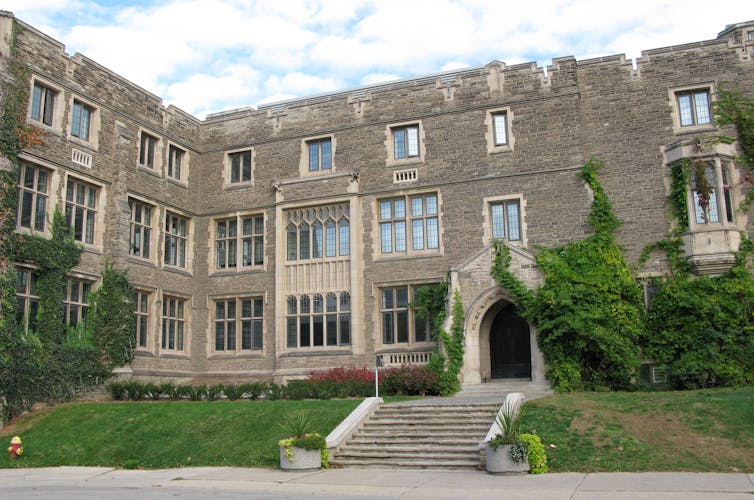
Steps leading up to an archway.
If merit is defined too narrowly, it could block diverse pathways to post-secondary admissions.
(Saforrest/Wikimedia Commons), CC BY-SA

Studies in professional and medical education show that relying only on grades can miss other signs of potential, like life experience, community work and meeting the needs of society.


Read more:
Resisting the backlash against equity in medicine will improve health outcomes for all


Grades seem objective, but they depend on many factors like family income and access to school and community resources — along with teacher and parent expectations and how much time students have to study while balancing work, family, community and other responsibilities.

Students from low-income, Black, Indigenous, rural or otherwise marginalized communities often face big challenges even before applying to college or university. These challenges reflect longstanding gaps in income and education.

Bill 33 doesn’t explain what “merit” means. Without a clear definition, admissions could end up favouring students who already have advantages. New rules will soon define how merit is measured, and these rules will be very important. If they don’t protect equity-focused pathways, the law could make existing gaps even worse.

Student fees and risk to campus services

Fair admissions are only part of the story. Bill 33 also changes how student fees are handled. These changes could harm students from marginalized communities.

Student groups have raised strong concerns about how Bill 33 could affect ancillary fees and the services they fund.

According to the Ontario Undergraduate Student Alliance, “ancillary fees are democratically approved by students, for students.” These are extra student fees that fund essential services such as food banks, wellness centres, accessibility programs, cultural programs, transportation and safety programs. These services could be at risk if the province gains more control over how fees are defined and charged.

In 2019, student groups successfully challenged Ontario’s Student Choice Initiativ. Through this measure, the province tried to limit ancillary fees but the court ruled it didn’t have the legal authority to do so at the time. Bill 33 responds to that ruling by changing the law itself, giving the province clear authority to regulate student fees.

The Canadian Federation of Students in Ontario has warned that focusing on fee oversight may distract from deeper problems in higher education, including chronic underfunding and high tuition costs.

Could weaken student-led supports, harm equity

Under Bill 33, the government can decide which fees can be charged and under what rules. Most universities clearly list how ancillary fees are used. For example, at McMaster University, these fees help fund transit passes, wellness services, career supports and refugee student programs.

How fees are managed is closely linked to the government’s broader oversight of universities, linking financial decisions to questions of accountability, governance and whose voices are heard in decision-making.

Student groups have long played a key role in raising equity concerns and ensuring local needs are addressed. If more decisions are made at the provincial level, student voices could carry less weight unless students are clearly included in new rules and decision-making processes.

Looking ahead: Equity is not automatic

As universities begin to apply Bill 33, students and faculty may notice changes in how admissions decisions are explained, how student fees are handled and how transparency rules are used.

These changes will not look the same at every campus. Their impact will depend on how the rules are interpreted and whether universities make equity a clear priority in their policies.

While the law may seem neutral, its real impact will depend on how it is put into practice and whose experiences are considered.

Ensuring equitable access to higher education requires careful planning, enough funding and meaningful input from students, faculty and communities most affected by these changes.

Equity will not happen by chance. It will depend on the choices universities and policymakers make now, and on whose voices are heard in those decisions.

The Conversation

The authors do not work for, consult, own shares in or receive funding from any company or organisation that would benefit from this article, and have disclosed no relevant affiliations beyond their academic appointment.

ref. Ontario’s Bill 33 raises serious concern about campus equity and student rights – https://theconversation.com/ontarios-bill-33-raises-serious-concern-about-campus-equity-and-student-rights-272548

DNA evidence: A double-edged sword that can actually deny justice for some wrongfully accused

Source: The Conversation – Canada – By Kent Roach, Professor of Law, University of Toronto

Jon-Adrian (JJ) Velazquez, a New York man who spent half his life in prison for a crime he didn’t commit, recently sued New York City and its police for US$100 million for his wrongful murder conviction. Velazquez may be known by film buffs for his role in the Oscar-nominated film Sing Sing.

Velazquez may be entitled to millions in compensation if he can prove his factual innocence, typically through DNA evidence at the crime scene. Alas, such evidence is often not available.

The United States has paid almost US$4 billion in damages and settlements to 901 people who have been exonerated of crimes since 1989. This history of wrongful convictions is a warped form of American exceptionalism that I document in my new book Justice for Some: A Comparative Examination of Miscarriages of Justice and Wrongful Convictions .

Proving innocence

Proven factual innocence is a powerful, populist idea. It’s easier to understand and more widely accepted than concepts such as miscarriages of justice, conviction safety or judicial error, which are used to address wrongful convictions in many other countries, including England, Canada and countries in continental Europe.

These more generous approaches used outside the United States better respect the fundamental principle of giving people the benefit of reasonable doubt about their guilt.

It’s very difficult to prove factual innocence. In 2016, a New York court held that Velazquez had failed to prove his innocence despite many weaknesses in the case that led to his 2000 murder conviction.

By 2016, two eyewitness who identifed Velazquez as the person who killed a retired New York police officer had recanted. Some witnesses had initially identified the perpetrator as a Black man with long braided hair; Velazquez is Hispanic and had very short hair. Some said the perpetrator used his right hand to shoot the victim; Velazquez is left-handed.

Consistent with the popular appeal of proven factual innocence, Velazquez was freed in 2021 not by the courts but by New York Gov. Andrew Cuomo, with President Joe Biden apologizing to him the following year. They were responding to investigative reporting and new DNA testing that excluded Velazquez from a betting slip that the killer touched.

The fact that politicians who may have been hoping for re-election were ahead of the American courts in exonerating Velazquez reveals a lot about the decline of the rule of law in the United States.

DNA exonerations

Prominent American lawyers Peter Neufeld and Barry Scheck, the founders of the Innocence Project, argued 26 years ago that DNA exonerations were largely a matter of luck. They predicted in a 2000 book that DNA exonerations would eventually dry up as police only use DNA testing in the small minority of crimes where the perpetrator leaves biological evidence at the crime scene.

Scheck and Neufeld may have been overly optimistic about the competence of American police and prosecutors in their book. Post-conviction, DNA-based exonerations, like Velazquez’s, continue to this day.

DNA is a double-edged sword: it offers compelling evidence of innocence while simultaneously raising the threshold for overturning wrongful convictions. In the U.S., the wrongfully convicted are often expected to prove their innocence through DNA, even though many crimes leave no biological evidence and existing samples are frequently mishandled or unavailable. DNA, in short, serves only a fraction of those wrongfully convicted.

Mass imprisonment in China and the U.S.

The country most closely resembling the U.S. in its insistence on proof of factual innocence is the People’s Republic of China.

Like the U.S., China typically remedies miscarriages of justice only after multiple court proceedings. Intervention by politicians also plays a critical role in obtaining justice for the wrongfully convicted, as it did in the Velazquez case. China has also begun providing more generous compensation to those who can prove their factual innocence.

In both countries, generous compensation for the few who can prove factual innocence risks legitimizing unjust systems that harshly punish the many, including those with wrongful convictions but no meaningful path to justice.

American legal reformers have proposed that a right to claim factual innocence should be added to international law. I argue in Justice for Some, however, that proof of factual innocence would have regressive implications in many other parts of the world that correct miscarriages of justice without such onerous proof. In short, factual innocence would provide justice for fewer people.


Read more:
The use of technology in policing should be regulated to protect people from wrongful convictions


Factual innocence spreads to England

Countries other than the U.S. and China are not immune from the populist appeal of factual innocence.

Since 2014, England has required proven innocence for compensation. This has drastically reduced compensation payments. It’s even resulted in the denial of compensation to people like Velazquez who have been exonerated by DNA.

Victor Nealon spent 17 years in a British prison after being convicted of attempted rape. His lawyers eventually discovered an unknown person’s DNA on clothing that had not been disclosed by investigators, and his conviction was quashed.

Nealon took his compensation claim to the European Court of Human Rights. It ruled in a divided decision that states can require proven innocence without breaching the presumption of innocence. In essence, this allows the wrongfully accused to be denied compensation without regard to the fundamental legal principle that people are presumed innocent until proven guilty. Factual innocence requirements can spread from compensation to appeals from convictions.


Read more:
Eyewitness misidentification is the leading cause of known wrongful convictions


Those who can prove their innocence deserve justice — but justice should not be limited to them alone. Proven innocence rations justice too narrowly.

It may be the best that mass-incarceration societies like the U.S. and China have to offer. But even though factual innocence is popular and easy to grasp, applying this standard broadly across liberal democracies would likely have regressive effects.

The Conversation

Kent Roach is affiliated with the Canadian Registry of Wrongful Conviction. His book received funding to assist in it being published in open access from the Jackman School of Law at the University of Toronto.

ref. DNA evidence: A double-edged sword that can actually deny justice for some wrongfully accused – https://theconversation.com/dna-evidence-a-double-edged-sword-that-can-actually-deny-justice-for-some-wrongfully-accused-273788

How to include fossil fuel communities in Canada’s clean energy transition

Source: The Conversation – Canada – By Ekaterina Rhodes, Associate Professor, School of Public Administration, University of Victoria

Fossil fuel-dependent communities in Western Canada sit at the centre of Canada’s energy decisions. A just and inclusive clean energy transition will depend on how well governments listen to these communities and how fast they deal with the forces working to slow down energy decarbonization.

When it comes to the energy transition, public discussion tends to focus on emissions targets and policies to achieve them. These are important, but they’re just one aspect of the issue. In the oil- and gas-producing regions of Western Canada, conversations and concerns centre on livelihoods, identity and a nagging doubt: does anyone in power grasp rural realities?

Our ongoing research across the region — based on large citizen surveys to focus groups with municipal leaders and analysis of disinformation — highlights that emotions, narratives and perspectives of communities at the heart of Canada’s energy transition politics. As we mark the United Nation’s International Day of Clean Energy today, these voices demand attention before divides deepen further.

Focus groups with municipal staff from 10 oil- and gas-producing communities in British Columbia and Alberta revealed a delicate balancing act. They’re actively pursuing diversification — geothermal projects, hydrogen pilots, tourism expansion, data centres, manufacturing hubs, even rare-earth mineral processing — but most of these efforts build around, rather than beyond, oil and gas.

For many communities, the industry isn’t just jobs. It’s the economic engine funding hospitals, schools, arenas, roads and the very existence of their towns. Abstract talk of an energy transition can feel threatening when it overlooks this.

An Alberta official captured the fear bluntly:

“If you took oil and gas out of our community, I would suggest that there would be no hospital. There would be no schools. There would be no town. The only reason our community exists is to service the oil and gas industry.”

Deep emotional divides

Our 2025 survey of 3,400 residents in non-metropolitan communities across British Columbia, Alberta, Saskatchewan and Manitoba helps explains why climate policy ignites public backlash.

Affective climate polarization, which describes the emotional distance between those who support and oppose climate policy, rivals partisan left-right divides in intensity. These emotional climate identities help explain differences in support for climate policy that ideology alone can’t capture — particularly on the political right, where views on climate action are more diverse.

Policy design nuances are critical but complicated by affective polarization. Clean technology mandates and renewable electricity requirements tend to draw broader backing than carbon taxes, which are generally less popular and spark fierce resistance from right-leaning citizens.

Bundling climate policies with just transition measures, such as government-funded training for new jobs, community-owned energy, low-carbon incentives and public transit, can boost support for carbon pricing among the less polarized. However, for those with stronger emotional commitments, these just transition supports are often ineffective and can even trigger backlash.

Climate policy details matter less to people who score high on affective climate polarization. This helps explain why climate policy debates remain so deeply politicized: when emotional attachments to climate identities are strong, people respond more to elite cues and identity-based judgments than to policy design itself.

Municipalities grapple with limitations

Municipal officials battle structural voids. Officials in northeastern B.C. and Alberta juggle economic ambitions and governance limitations. They craft economic strategies and chase low-carbon investments, while being hamstrung by thin staffing and permitting delays stalling projects for years.

The sharpest barrier to the clean energy transition is the absence of coherent, regionally tailored visions from other levels of government. Federal clean growth plans promote critical minerals and hydrogen. Provincial strategies mix liquefied natural gas with renewables.

Locally, these strategies ring hollow — they seem contradictory and urban-centric. A municipal official in B.C. we spoke to decried a “one-size-fits- all” approach, citing propane-powered electric vehicle chargers in -40 C winters: “How do you gain the support … when even the province isn’t actually addressing” regional realities?

We’ve found that public attitudes differ by age, with youth embracing climate sustainability but veterans of oil-tied lives viewing transition as a “hard sell.” Without a common vision recognizing municipal governance limitations, community leaders hesitate on bold plans, wary of backlash in towns deeply connected to the promise and precarity of oil’s boom–bust cycles.

These tensions are being wilfully intensified by the fossil-fuel industry’s propaganda machine, which uses bad-faith arguments to suggest that climate policies and fossil-fuel communities are at odds.


Read more:
Fossil-fuel propaganda is stalling climate action. Here’s what we can do about it


These arguments often ignore the potential for a well-managed energy transition to improve public health, foster regional development and increase community resilience in these regions.

These are not the only narratives the fossil-fuel industry is using to slow climate action. Our research on Canada’s climate delays shows that fossil-fuel propaganda is being used to falsely portray Canadian oil as low-emissions, to urge Canada to wait for others to act first and to claim that climate policies are more detrimental to workers more than climate change.

Fostering a just energy transition

Governments must engage in genuine listening. Fossil-fuel communities aren’t barriers, but key participants in all energy transition risks and benefits. Co-creating policies with them rather than imposing top-down visions can help grow jobs, revenues and services in Western Canada.

Engagement with communities must also be emotionally attuned. Overcoming climate polarization means restoring trust via local messengers, consistent follow-through and deliberative forums like public assemblies.

At the same time, governments must confront misinformation and propaganda. They can can step in with policies that challenge disinformation legally, regulate ads and fund community energy transformations beyond fossil fuel extraction.

The International Day of Clean Energy spotlights promise. In Western Canada, it also spotlights peril. The energy transition’s success hinges on centring fossil fuel communities as protagonists, not peripherals — turning the transition into a shared opportunity.

The Conversation

Ekaterina Rhodes receives funding from Canada First Research Excellence Fund as part of the University of Victoria-led Accelerating Community Energy Transformation Initiative.

Megan Egler received funding from the Canada First Research Excellence Fund as part of the University of Victoria-led Accelerating Community Energy Transformation Initiative.

Rowan Hargreaves received funding from the Canada First Research Excellence Fund as part of the University of Victoria-led Accelerating Community Energy Transformation Initiative.

Samuel Lloyd receives funding from the Canada First Research Excellence Fund as part of the University of Victoria-led Accelerating Community Energy Transformation Initiative. He also received funding from the Pacific Institute for Climate Solutions for a research project that inspired one of the papers included in this article.

ref. How to include fossil fuel communities in Canada’s clean energy transition – https://theconversation.com/how-to-include-fossil-fuel-communities-in-canadas-clean-energy-transition-273331