Universities’ work towards Indigenous identity policies signals difficult conversations

Source: The Conversation – Canada – By Frank Deer, Professor, Faculty of Education, University of Manitoba

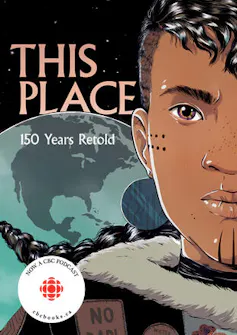
In recent years, members of the Canadian public have witnessed the misrepresentation of Indigenous identities.

Recently, we learned that University of Guelph professor emeritus Thomas King is not Indigenous. The highly regarded author of literary works such as The Inconvenient Indian: A Curious Account of Native People in North America and The Back of the Turtle captured the imagination of readers interested in Indigenous experiences.

Both non-Indigenous readers, either less or more familiar with Indigenous lives, and Indigenous readers trusted and respected King. Many of us revered him.

In King, we had a source of literary representation that informed knowledge of the Indigenous experience, and inspired curiosity about who Indigenous people are — and how we might understand “their” or “our” knowledge, histories and experiences.

King’s situation is yet another in a queue of high-profile individuals such as Buffy Sainte-Marie, Carrie Bourassa and Vianne Timmons who have made dubious claims about Indigenous identities.


Read more:
Thomas King: As we learn another ‘hero’ is non-Indigenous, let’s not ignore a broader cultural problem


Some Canadian universities have begun to develop policies to address erroneous claims to indigeneity. Some have already been affected by the fallout of such cases, while others wish to mitigate potential problems of misrepresentation.

Our respective research interests are in Indigenous education related to Indigenous identity and languages and interdisciplinary research related to intersectional justice, decolonization and equity.

We are both “Status Indian,” who consider ourselves to have connections to our respective communities, in Kanienkeha’ka (Frank) and Wendat (Annie) territories. In our own cases, and many others, these connections are also made complicated by migration, work/life changes and relationships.

Universities address Indigenous identity

Many universities are attempting to develop appropriate policies for Indigenous identity verification that will address and possibly prevent false claims to Indigenous identity.

For example, community consultations at the University of Manitoba and working groups at the University of Winnipeg have provided some valuable input into the problem of false claims of Indigenous identity and potential approaches to address them.

The University of Montréal is also in the process of developing a policy on Indigenous self-declaration, although it has not yet been formally adopted.

While there are many aspects to take into consideration, policies may vary from one institution or community to another. Yet across contexts, policy development about Indigenous identity will often lead to difficult conversations.

Indentity is personal and complex

As such policies emerge, it ought to be acknowledged that Indigenous identity is profoundly personal and complex. For instance, some Indigenous people may lack connections due to the Sixties Scoop phenomenon.


Read more:
How journalists tell Buffy Sainte-Marie’s story matters — explained by a ’60s Scoop survivor


Viewing the complexities that may exist when considering an individual’s Indigenous identity as “challenges” might adversely affect our orientations toward the exercise.

Fundamentally, the constituent elements of one’s Indigenous identity ought to be treated charitably. This approach should not be understood as a dismissal of the problems experienced when one misrepresents their identity as being Indigenous. The concern here is the impact that such dialogue has upon Indigenous people and Peoples at large.

Rights of individuals, nations

We acknowledge the prevailing notion that claims of Indigenous identity ought to be consistent with the rights of nations: this has become an important concern for how Indigenous Peoples understand membership in their communities.

The current prevailing view among many is that some sort of national affiliation is central to any personal declaration to Indigenous identity.

Many academics have expressed confidence in the notion that Indigenous communities are in the best positions to determine how Indigenous identity may be understood in their respective communal or national contexts.

It is also important to include the rights of individuals in the conversation on Indigenous identity. This reflects what is contained in Article 33 of the United Nations Declaration on the Rights of Indigenous Peoples which affirms Indigenous peoples’ right to define their own identity and membership based on their customs and traditions.

Although connections to Indigenous communities are regarded as essential to claims of Indigenous identity, many Indigenous people may not be connected to their community.

Thus, claims to indigeneity made by those without such apparent connections must be considered carefully.

Non-material harms of false claims

While prospective policies around Indigenous identity are developed to regulate situations that would lead a person to make a false claim for material benefits — like access to funding or Indigenous-specific hiring — we believe that non-material impacts, such as community well-being and trust, should also be considered.

False declarations unquestionably impact the person and, sometimes, the reputation of the institution. These also also harm other groups like Indigenous academics, and wider research communities, through division and the erosion of confidence.

Impacts of misrepresentation

Although the Tribal Alliance Against Frauds highlighted the dubiousness of King’s claims to indigeneity, King has owned up publicly to his misrepresentation.

In an essay in The Globe and Mail, King shared what he had learned of his non-Cherokee ancestry, family stories shared about his darker skin, as well as the impacts that his misrepresentation has had on others.

Perhaps we can be charitable to a man who has learned about himself, set the record straight and contributed to a difficult conversation.

The Conversation

Frank Deer receives funding from the Social Sciences and Humanities Research Council of Canada.

Annie Pullen Sansfaçon receives funding from the Canada Research Chair Program. She is member of the National Indigenous University Senior Leaders’ Association (NIUSLA)

ref. Universities’ work towards Indigenous identity policies signals difficult conversations – https://theconversation.com/universities-work-towards-indigenous-identity-policies-signals-difficult-conversations-271074

After Canada legalized cannabis, police caught more drunk drivers

Source: The Conversation – Canada – By Michael J. Armstrong, Associate Professor, Operations Research, Brock University

When Canada legalized cannabis in October 2018, there were many concerns about its potential impacts. One of them involved cannabis-impaired driving.

Before legalization, police were already catching more drug-impaired drivers each year. So, people naturally worried that more stoned drivers would appear on the road after legalization.

To lower that risk, the federal government updated its driving laws. Impairment by alcohol or drugs separately was already illegal. In December 2018, Canada also banned impairment by combinations of alcohol and drugs, or by unspecified substances.


Read more:
Cannabis-impaired driving: Here’s what we know about the risks of weed behind the wheel


The government likewise helped police to better enforce those laws. For example, it gave them more power to obtain breath and blood samples from drivers. And it funded more training to help them recognize symptoms of drug impairment.

However, it was unclear how much impaired driving would really increase due to legalizing cannabis.

For example, drivers injured in collisions often test positive for cannabis, but also for other drugs. Cannabis consumers claim they are driving less often after use. And police say that drivers’ symptoms more often imply impairment by stimulants or narcotics than by cannabis.

Given this uncertainty, I decided to dig into the police data.

Police-reported impairment

My research analyzed the annual rates of impaired driving cases that police investigated between 2009 and 2023. The reporting covered four substance categories: alcohol, drugs, drugs-and-alcohol combined and unknown substances.

Note that “drugs” includes cannabis but also other chemicals like opioids and amphetamines. Publicly available data unfortunately don’t name the drugs involved.

I first estimated the trends in alcohol and drug impairment up until 2018. I then calculated how much rates changed from 2019 onward.

I also checked several potential explanations for those changes. Those included the level of legalized cannabis sales and the share of adults consuming cannabis in each province. I also considered each province’s number of police trained in drug recognition and their degree of COVID-19 pandemic restrictions.

The data showed that during the 15-year study period, alcohol remained the most common impairment category. But its share of all cases dropped from 98 per cent in 2009 to 95 per cent in 2017 and to just 80 per cent in 2023.

Up until 2018, the total impairment rate also fell each year.

This line chart shows how Canada's impaired driving rates were decreasing from 2009 until 2018, jumped higher in 2019, and then resumed their downward trend from 2020 onward.
Canadian average police-reported impaired driving incidents per million population aged 16+, comparing actual rates to the 2009-2018 trend.
Statistics Canada, CC BY

More drinks and drugs

But in 2019, rates jumped substantially. As a result, police reported 31 per cent more impairment cases during 2019-23 than the 2009-18 trend had projected.

The impairment increases varied between provinces. For example, there was no significant change in Québec and Saskatchewan. But rates doubled in British Columbia and Newfoundland.

Percentage-wise, the drugs category saw the most growth. It averaged 42 per cent higher during 2019-23 than had been projected.

But alcohol impairment rose too. It averaged 17 per cent above its previous trend.

And when counting drivers, alcohol’s growth was larger. The increase in drinking drivers caught by police was four times the increase in drugged drivers.

The new offenses for impairment by drugs and alcohol combined, or by unspecified substances, also contributed to the higher rate.

So, police clearly found more impaired drivers after 2018. But was that because more impaired drivers were on the road? Because police got better at catching them? Or both?

This bar chart shows that overall impairment rates were lower in 2023 than in 2009, but with an increasing proportion due to drugs or drugs and alcohol combined.
Canadian average police-reported impairment rates in 2009, 2017, and 2023, broken down by substance category.
Statistics Canada, CC BY

Constables, COVID and cannabis

My analysis showed the impairment changes were correlated most strongly with the number of police trained in drug recognition. Not surprisingly, when provinces gave police more training, they caught more impaired drivers.

The restrictions that provinces imposed during the COVID-19 pandemic showed the second biggest correlations with impairment. But interestingly, alcohol and drugs diverged: when provinces tightened restrictions, they got less impairment from alcohol but more from drugs.

Presumably, lockdowns meant fewer bars open, and so fewer people driving home drunk. But perhaps lockdowns also meant more laid-off workers using drugs at home before going grocery shopping.


Read more:
Alcohol sales changed subtly after Canada legalized cannabis


Alcohol impairment showed no relationship with the numbers of Canadians consuming cannabis or the amount of cannabis legally sold. That’s not surprising. Canadians didn’t suddenly replace their cabernet with cannabis after legalization.

But it was surprising that drug impairment likewise showed no relationship with cannabis consumer numbers. And it was only weakly correlated with legal sales.

This might imply that most drug impairment came from chemicals other than cannabis. Or perhaps most legal cannabis purchases simply replaced existing illegal ones, rather than adding to total usage.

Consuming responsibly

Overall, Canadian police reported noticeably more drug-impaired and alcohol-impaired driving after 2018. But the growth seemed related mostly to enhanced enforcement and pandemic disruptions, rather than to legalized cannabis. And fortunately, the long-term decline in impaired driving resumed in 2020.

All road users benefit from that continuing decline. And we each play a role in maintaining it. Whether your preferred intoxicant is booze, weed or something else, please consume responsibly. And use designated drivers or public transit to get home.

After all, flashing coloured lights look much nicer on a tree standing in your home than on a police car pulling you over.

The Conversation

Michael J. Armstrong does not work for, consult, own shares in or receive funding from any company or organisation that would benefit from this article, and has disclosed no relevant affiliations beyond their academic appointment.

ref. After Canada legalized cannabis, police caught more drunk drivers – https://theconversation.com/after-canada-legalized-cannabis-police-caught-more-drunk-drivers-272244

Sex, jazz, liquor and gambling: How Montréal’s nightlife shifted in the mid-20th century

Source: The Conversation – Canada – By Matthieu Caron, Postdoctoral Fellow, Department of History, Simon Fraser University

Montréal street at night, 1963-1967. (BiblioArchives /LibraryArchives/4943640/Flickr), CC BY

The history of Montréal’s night-time regulation reveals how managing nightlife expanded police power and budgets — and how burdensome effects of these changes fell disproportionately on sex workers, the queer community and hospitality industry workers.

For much of the first half of the 20th century, Montréal built a reputation as a North American nightlife capital. Tourists sought out cabarets, jazz clubs and after-hours bars, and moved through the red-light district where sex, gambling and liquor were openly available.

This permissiveness relied on a well-understood but illicit arrangement: police officers, politicians, madams, taxi drivers, performing artists and business owners all participated in a protected nighttime economy.

By the mid-1950s, however, this tolerance became the starting point for one of the largest expansions of police authority in Canadian urban history.

As I examine in my book Montreal After Dark: Nighttime Regulation and the Pursuit of a Global City, Montréal’s political leadership came to see nightlife control not as a marginal issue but as a central measure of civic order and modernity. And that shift transformed the police force.

When night became a policing problem

In the 1940s, the Montréal Police Department was already stretched thin. Officers enforced wartime blackouts, guarded industrial sites and cracked down on sexually transmitted infections among soldiers and civilians.

The Morality Squad (“Escouade de la moralité”) — enlarged during wartime fears over delinquency — patrolled theatres, bars, parks and known queer or youth meeting places.

Young women were frequently arrested for “immoral” behaviour, while queer men faced entrapment and harassment. In this, Montréal’s squad resembled its North American counterparts, variously labelled vice squads — or, in Toronto’s case, the Morality Department, disbanded in the 1930s.

Pursuing a new urban order

Pacifique “Pax” Plante, a city prosecutor, took over the Morality Squad at this time.

He insisted that officers apply laws long ignored, raiding brothels, gambling houses and nightclubs that had operated under longstanding police protection. His crusade threatened the partnerships that sustained Montréal’s nighttime economy, and this led to his dismissal in 1948.


Read more:
Defunding the police requires understanding what role policing plays in our society


But the damage had been done; his campaign pushed the city into the 1950–53 Caron Inquiry, which laid bare a police force deeply entangled in the very nightlife it was meant to regulate.

Cleaning up the city required more than moral zeal. Reformers pursued a new urban order which led to hiring, retraining, centralizing authority and expanding the budget. Nightlife policing became one of the clearest justifications for growth.

Building a modern police force

Two men in black robes with white ties in a black and white photo.
Pacifique Plante, on the right, with Jean Drapeau, left, who served as Montréal mayor between 1954–57 and 1960–86.
(WikiMedia/Le Mémorial du Québec)

After the inquiry, Jean Drapeau’s Civic Action League won the 1954 municipal election on a promise to restore honesty and order. But doing so required rebuilding the police. At mid-century, the force was large but demoralized, discredited by scandal and mistrusted by residents.

Throughout the 1950s and 1960s, the city invested heavily in police professionalization. European consultants from London and Paris reorganized the department, streamlined command structures and introduced new standards of training and discipline — reforms similar to those underway in Chicago and Los Angeles. Hundreds of new officers were hired and night patrols increased. Raids on cabarets, clubs and small bars became routine.

By the late 1960s, the police budget had risen sharply. Montréal’s political atmosphere — defined by protests, marches, labour disputes, dissent and fears of radical activity — gave elected officials strong incentives to keep expanding the force.

The 1969 police and firefighter strike plunged the city into chaos: looting, fires and riots. The municipal administration used the event to argue for further investment in policing, reinforcing an upward spiral in budget growth and authority.


Read more:
Canadian cities continue to over-invest in policing


Growing police budget

Moments of unrest were not daily occurrences, but they created a climate in which constant budget increases appeared necessary.

Tellingly, between the mid-1950s and 1970, Montréal’s police budget grew from $9.6 million to $49.7 million — an increase of more than 400 per cent and far outpacing overall municipal spending.

Yet, the everyday, not the exceptional, absorbed the department’s time. Officers spent their nights patrolling streets, parks, clubs and cabarets, enforcing morality laws and municipal bylaws.

They targeted sex workers, queer men and women and performing artists working after dark. Street checks, like arrests for prostitution charges, shaped the routine work of policing, linking the department’s growth directly to the governance of nighttime public space.

Nighttime surveillance — from enforcing bar hours to policing street sex work — became part of a broader municipal project that linked order, cleanliness and safety to global ambitions.

Expo 67, 1976 Olympics

Women in pastel-coloured 60s mod-inspired matching jackets and skirts.
Hostess uniforms of Expo 67.
(Library and Archives Canada/Bibliothèque et Archives Canada), CC BY

As Montréal formalized its place on the global stage, first during Expo 67 and later during the 1976 Olympics, the policing of nightlife intensified.

For example, fearing that Expo would attract sex workers and petty crime, the city adopted a controversial “anti-mingling” bylaw.

This forbade employees in licensed establishments from sitting, drinking or even talking with customers. Because this bylaw was designed to curb sex workers from soliciting in drinking establishments, police enforced the regulation most aggressively against women.

Dancers, singers, barmaids and hostesses were arrested for ordinary workplace interactions. The bylaw blurred the line between hospitality work and sex work, effectively criminalizing women’s participation in the nighttime economy.

Anti-prostitution bylaws

By the early 1980s, the city — along with other Canadian urban centres — introduced “anti-prostitution” bylaws to expand police powers despite limits imposed by the Supreme Court of Canada. This led to a pan-Canadian review of sex work in society.

These local tools disproportionately targeted women, transgender people and racialized sex workers, who were increasingly arrested simply for being in public spaces at night.

Whose night?

By the ‘80s, Montréal presented itself as a global cultural hub — home to major festivals, theatres and a thriving, “respectable” nightlife. That transformation, however, rested on the continued policing of many of the people who had historically sustained the nighttime economy.

The police department had become one of the city’s largest expenses, and nighttime enforcement one of its most visible activities.

The legacy is visible today. Independent venues face noise complaints, rising regulatory costs and the threat of closure.

The city’s recent support fund for small venues offers some relief, but it doesn’t answer the central question: who is allowed to shape Montréal and its nights, and who is pushed out in the name of order?

Seen from a nocturnal angle, Montréal’s history — like the history of many cities — shows that “safety” is never neutral. From the 1940s onward, expanding police budgets rested on the idea that the night was inherently unruly and needed constant control.

Debates about rights

Rather than allocating resources toward the concerns raised by the feminist Take Back the Night movement or by emerging queer organizations, the city focused on moral regulation — a pattern that consistently targeted those living and working after dark.

A group of women seen walking in the streets, some with protest signs like 'no rape' and 'a nous la nuit' (the night is for us)
The ‘Take Back the Night’ movement stands against sexual violence and asserts the rights of women and gender-diverse people to move freely in, and enjoy, the night.
(Howl Arts Collective/Flickr), CC BY

As cities debate how to sustain their nighttime economies while keeping residents safe, Montréal’s past reminds us that the way we govern the night determines who gets to belong in it.

For policymakers and residents today, the lesson is simple: debates about nightlife are also debates about rights, inclusion and the fair use of public space. Safer nights are built not only through policing, but through investment, participation and recognition of the communities that bring the city to life after dark.

The Conversation

Matthieu Caron does not work for, consult, own shares in or receive funding from any company or organisation that would benefit from this article, and has disclosed no relevant affiliations beyond their academic appointment.

ref. Sex, jazz, liquor and gambling: How Montréal’s nightlife shifted in the mid-20th century – https://theconversation.com/sex-jazz-liquor-and-gambling-how-montreals-nightlife-shifted-in-the-mid-20th-century-268733

Universities’ work towards Indigenous identity policies signal difficult conversations

Source: The Conversation – Canada – By Frank Deer, Professor, Faculty of Education, University of Manitoba

In recent years, members of the Canadian public have witnessed the misrepresentation of Indigenous identities.

Recently, we learned that University of Guelph professor emeritus Thomas King is not Indigenous. The highly regarded author of literary works such as The Inconvenient Indian: A Curious Account of Native People in North America and The Back of the Turtle captured the imagination of readers interested in Indigenous experiences.

Both non-Indigenous readers, either less or more familiar with Indigenous lives, and Indigenous readers trusted and respected King. Many of us revered him.

In King, we had a source of literary representation that informed knowledge of the Indigenous experience, and inspired curiosity about who Indigenous people are — and how we might understand “their” or “our” knowledge, histories and experiences.

King’s situation is yet another in a queue of high-profile individuals such as Buffy Sainte-Marie, Carrie Bourassa and Vianne Timmons who have made dubious claims about Indigenous identities.


Read more:
Thomas King: As we learn another ‘hero’ is non-Indigenous, let’s not ignore a broader cultural problem


Some Canadian universities have begun to develop policies to address erroneous claims to indigeneity. Some have already been affected by the fallout of such cases, while others wish to mitigate potential problems of misrepresentation.

Our respective research interests are in Indigenous education related to Indigenous identity and languages and interdisciplinary research related to intersectional justice, decolonization and equity.

We are both “Status Indian,” who consider ourselves to have connections to our respective communities, in Kanienkeha’ka (Frank) and Wendat (Annie) territories. In our own cases, and many others, these connections are also made complicated by migration, work/life changes and relationships.

Universities address Indigenous identity

Many universities are attempting to develop appropriate policies for Indigenous identity verification that will address and possibly prevent false claims to Indigenous identity.

For example, community consultations at the University of Manitoba and working groups at the University of Winnipeg have provided some valuable input into the problem of false claims of Indigenous identity and potential approaches to address them.

The University of Montréal is also in the process of developing a policy on Indigenous self-declaration, although it has not yet been formally adopted.

While there are many aspects to take into consideration, policies may vary from one institution or community to another. Yet across contexts, policy development about Indigenous identity will often lead to difficult conversations.

Indentity is personal and complex

As such policies emerge, it ought to be acknowledged that Indigenous identity is profoundly personal and complex. For instance, some Indigenous people may lack connections due to the Sixties Scoop phenomenon.


Read more:
How journalists tell Buffy Sainte-Marie’s story matters — explained by a ’60s Scoop survivor


Viewing the complexities that may exist when considering an individual’s Indigenous identity as “challenges” might adversely affect our orientations toward the exercise.

Fundamentally, the constituent elements of one’s Indigenous identity ought to be treated charitably. This approach should not be understood as a dismissal of the problems experienced when one misrepresents their identity as being Indigenous. The concern here is the impact that such dialogue has upon Indigenous people and Peoples at large.

Rights of individuals, nations

We acknowledge the prevailing notion that claims of Indigenous identity ought to be consistent with the rights of nations: this has become an important concern for how Indigenous Peoples understand membership in their communities.

The current prevailing view among many is that some sort of national affiliation is central to any personal declaration to Indigenous identity.

Many academics have expressed confidence in the notion that Indigenous communities are in the best positions to determine how Indigenous identity may be understood in their respective communal or national contexts.

It is also important to include the rights of individuals in the conversation on Indigenous identity. This reflects what is contained in Article 33 of the United Nations Declaration on the Rights of Indigenous Peoples which affirms Indigenous peoples’ right to define their own identity and membership based on their customs and traditions.

Although connections to Indigenous communities are regarded as essential to claims of Indigenous identity, many Indigenous people may not be connected to their community.

Thus, claims to indigeneity made by those without such apparent connections must be considered carefully.

Non-material harms of false claims

While prospective policies around Indigenous identity are developed to regulate situations that would lead a person to make a false claim for material benefits — like access to funding or Indigenous-specific hiring — we believe that non-material impacts, such as community well-being and trust, should also be considered.

False declarations unquestionably impact the person and, sometimes, the reputation of the institution. These also also harm other groups like Indigenous academics, and wider research communities, through division and the erosion of confidence.

Impacts of misrepresentation

Although the Tribal Alliance Against Frauds highlighted the dubiousness of King’s claims to indigeneity, King has owned up publicly to his misrepresentation.

In an essay in The Globe and Mail, King shared what he had learned of his non-Cherokee ancestry, family stories shared about his darker skin, as well as the impacts that his misrepresentation has had on others.

Perhaps we can be charitable to a man who has learned about himself, set the record straight and contributed to a difficult conversation.

The Conversation

Frank Deer receives funding from the Social Sciences and Humanities Research Council of Canada.

Annie Pullen Sansfaçon receives funding from the Canada Research Chair Program. She is member of the National Indigenous University Senior Leaders’ Association (NIUSLA)

ref. Universities’ work towards Indigenous identity policies signal difficult conversations – https://theconversation.com/universities-work-towards-indigenous-identity-policies-signal-difficult-conversations-271074

Healthy habits and the holiday season: Tips for families to navigate eating, physical activity and sleep

Source: The Conversation – Canada – By Holly Noelle Schaafsma, Postdoctoral Research Fellow, University of Guelph

The holiday season is a time of exciting activities, family get-togethers and a time away from the normal work and school routine. As a result, your family, like many others, may feel like your usual routines are lost in the holiday hustle. Possible disruptions that can affect well-being and cause household stress include irregular meals, more snacking and screen time and later bedtimes.

The good news is, integrating simple, healthy household habits over the holidays can help your family maintain healthy eating, sleep and activity behaviours to feel your best during this busy holiday season.

As registered dietitians and family health researchers, we have conducted studies on family health and learned a number of effective strategies that can help your family create healthy habits. Here are our three top tips to help your family maintain healthy eating, physical activity and sleep habits while still enjoying everything this special season has to offer.

1. Make meals a family affair

Hectic schedules during the holidays can make it feel almost impossible to find time to cook and sit down for a family meal. However, during the holiday season, when there are many chances to snack on cookies and candies, making time to sit down for at least one family meal a day is key. This simple habit helps your family maintain healthier eating patterns and gives everyone a valuable chance to connect.

Remember, the family meal doesn’t have to happen at dinner time. Work around your holiday schedule; if breakfast together works best, that’s great.

Involve the whole family, including young children, in food preparation. This can include holiday baking, cooking a family meal or making a dish for a holiday get-together. Involving children in meal preparation, such as stirring food, measuring ingredients or even helping with grocery shopping, can improve their likelihood of trying the food they create and may reduce picky eating.

For ideas on simple, family-friendly recipes with tips for involving kids, check out the series of free cookbooks developed by researchers at the Guelph Family Health Study.

2. Find moments to move, play and unplug

Get outside! Children who spend more time outside are more physically active. Spending time in nature also supports brain development and helps kids relax.

Plan a family hike, go skating and sledding; walk to nearby events and through your neighbourhood to enjoy holiday lights. These brief opportunities for movement add up!

When it’s time to come inside to warm up, have a plan for screen time. Children spend less time in front of screens when their parents set screen time limits. While this may sound like a tough feat during the school break, setting specific screen-time limits for the holiday season can help kids know what to expect, which may reduce day-to-day arguments about screens.

Keep meals screen-free. Turn off the TV and put phones and tablets in a designated place away from where you eat.

Setting screen limits doesn’t mean you can’t enjoy your favourite holiday movies. Purposeful, time-limited screen use has its benefits. In fact, co-viewing movies or TV together has been associated with many cognitive benefits for kids. Asking content-related “what if” and “why” questions can help develop vocabulary and critical thinking.

3. Balance festivities with family sleep routines

A good night’s sleep can help everyone, parents included, make the most of the holiday season. Children with sufficient sleep report less stress and hyperactivity, and better physical and mental health. Depending on their age, children and adolescents need between eight and 17 hours of sleep per day, while adults need seven to nine hours of sleep. Research shows that one in four children are not getting enough sleep.

Between festivities, keeping a consistent bedtime routine can help your children get enough sleep. Make time to unwind from a busy day with calm, screen-free activities such as reading a book before going to bed.

Maintaining a consistent bedtime routine can also help children fall asleep when sleeping away from home. Giving children a “few-minutes warning” can help them navigate their emotions when it’s time to stop a fun activity to get ready for bed. Children who are more sensitive to change may need extra closeness with their parents to feel safe and fall asleep in a new environment.

We hope these simple routines can help your family connect, slow down and find joy even during the busiest days of the holidays.

The Conversation

Jess Haines receives funding from Canadian Institutes of Health Research, National Institutes of Health, Danone Institute International, Protein Industries Canada, Health Canada, and Canadian Foundation for Dietetic Research.

Kathryn Walton receives funding from the Canadian Foundation for Innovation, the New Frontiers in Research Fund and the Canadian Institutes of Health Research.

Raphaëlle Jacob received funding from the Canadian Institutes of Health Research.

Holly Noelle Schaafsma does not work for, consult, own shares in or receive funding from any company or organisation that would benefit from this article, and has disclosed no relevant affiliations beyond their academic appointment.

ref. Healthy habits and the holiday season: Tips for families to navigate eating, physical activity and sleep – https://theconversation.com/healthy-habits-and-the-holiday-season-tips-for-families-to-navigate-eating-physical-activity-and-sleep-271723

What happens when managers don’t act? New research reveals the consequences can be severe

Source: The Conversation – Canada – By Christine C. Hwang, Postdoctoral scholar in the Department of Management, Lang School of Business and Economics, University of Guelph, University of Guelph

Most people recognize that we shouldn’t actively harm others at work. Yet people tend to assume that failing to act is relatively benign or inconsequential.

Imagine witnessing an employee being belittled by a coworker. As a manager, should you step in or could staying on the sidelines give employees room to resolve conflict themselves?

Our new research demonstrates that “perceived managerial inaction” — the belief that a manager has failed to act in response to a negative experience — can have devastating consequences in the workplace. We examined how employees react when they believe their manager has failed to respond to a harmful or disrespectful incident.

Across an experiment and surveys involving hundreds of employees, we measured whether people felt their manager had a duty to intervene, whether they believed that duty was violated and how this shaped their trust, well-being and behaviour.

What is perceived managerial inaction?

Because of their formal position of authority, managers have the obligation to protect their employees from harm and maintain a safe and ethical work environment.

We use the term perceived employee-directed managerial inaction to describe situations in which employees believe their managers have not acted to prevent or address potential harm to them. Three conditions need to be present for employees to perceive managerial inaction:

  1. There was a potential for harm to the employee;

  2. The manager was aware of this potential for harm, and

  3. The manager violated perceived managerial responsibilities or obligations by failing to act in response to this potential for harm.

When these conditions are met, employees interpret the absence of a response as a meaningful choice.

Why it matters for individuals and organizations

Perceived managerial inaction has real, measurable effects on employees’ well-being and their relationship with the manager.

Our research reveals that even a single instance of perceived managerial inaction can result in profound consequences. Employees can lose trust in their manager, even if there was a pre-existing positive relationship and their manager had demonstrated positive leadership behaviours.

Perceived managerial inaction can also undermine managers’ effectiveness. Our studies indicated that it can motivate employees to protect themselves from the manager by withdrawing support, engaging in negative gossiping and resisting work-related requests.

Organizations also face risks, as there is increasing momentum to hold them accountable for managers’ inaction. As high-profile cases show — such as the California lawsuit alleging that Activision Blizzard managers failed to “take reasonable steps” to protect employees from discrimination — inaction can escalate from an interpersonal issue to a legal and reputational one.

Addressing common misconceptions

Many managers underestimate the impact of doing nothing. Our research highlights four misconceptions that often keep leaders from acting and the reality behind them.

Misconception #1: Inaction is benign, and employees won’t notice or negatively react to managerial inaction.

Reality: Employees can be highly attuned to inaction because it has significant implications for how they perceive their manager and navigate their work environment.

Misconception #2: Inaction can empower employees or help them grow.

Reality: Even if managers withheld action with positive intentions, employees experience inaction as a violation of managerial responsibilities.

Misconception #3: The negative effect of managerial inaction is short-lived.

Reality: Managerial inaction can cause short- and long-term damage to employees’ well-being, managerial effectiveness and organizations at large.

Misconception #4: The negative effect is limited to the employee who perceived that the manager failed to act.

Reality: By failing to address harmful experiences, managers may inadvertently signal that mistreatment will be tolerated, which can normalize mistreatment within the workplace and increase its frequency.

Practical recommendations for managers

Managers are not only responsible for their actions, but also for failing to act to protect employees from harm. If inaction occurs or is perceived to have occurred, managers can take steps to repair trust and prevent harm:

1. Talk to the affected employee about inaction and address the source of the harm.

Listen to and support employees, including acknowledging their experience and any harm that occurred. Provide a clear explanation for why you did not act, without being defensive. Be honest if you were not sure what was happening at the time or if you did not know how to act. Take appropriate steps to remedy the situation: apologize, acknowledge responsibility and clearly communicate the steps you will take to repair harm and prevent future occurrences.

2. Recognize that the impact of the situation may include coworkers and the team.

Those who witnessed or heard about the incident may need support or benefit from debriefing the incident. If the negative experience involved employee mistreatment, reinforce that any mistreatment is against organizational norms will not be tolerated and consistently apply negative consequences.

3. Set an appropriate tone for the team to mitigate the negative impact of inaction.

Set clear expectations for appropriate organizational conduct and encourage employees to voice unpleasant work experiences while also addressing employees’ concerns.

Managers must recognize that “with great power comes great responsibility.” Fulfilling managerial obligations is critical to support employees as well as avoid negative implications for managers and organizations. Action, even if it is not perfect, can enable managers to fulfil their responsibilities and help create workplaces where people feel safe and valued.

The Conversation

Christine C. Hwang receives funding from the Social Sciences and Humanities Research Council of Canada.

Laurie J. Barclay receives funding from the Social Sciences and Humanities Research Council of Canada.

Daniel L. Brady and Robert J. Bies do not work for, consult, own shares in or receive funding from any company or organisation that would benefit from this article, and have disclosed no relevant affiliations beyond their academic appointment.

ref. What happens when managers don’t act? New research reveals the consequences can be severe – https://theconversation.com/what-happens-when-managers-dont-act-new-research-reveals-the-consequences-can-be-severe-271477

Who benefits from ‘nation-building’ projects like Ksi Lisims?

Source: The Conversation – Canada – By Sibo Chen, Associate Professor, School of Professional Communication, Toronto Metropolitan University

When the Canadian government added the proposed Ksi Lisims LNG terminal on Nisg̱a’a territory in northwest British Columbia to its new list of fast-tracked “nation-building” projects this fall, it resurrected an idea many British Columbians thought had quietly faded away: that liquefied natural gas (LNG) exports are central to the economic future of both B.C. and Canada.

A decade ago, then-B.C. premier Christy Clark promised up to 20 LNG export plants, 100,000 jobs and a sovereign-wealth “prosperity fund,” turning B.C. LNG into one of the most polarizing issues in the province between 2011 and 2018.

My research on this period reveals how competing coalitions of industry, governments and environmental groups struggled over whether B.C. LNG represented a climate solution or a risky fossil-fuel lock-in.

In reality, most of those projects were shelved; only one major export terminal in Kitimat has now entered its first phase of operation.

In recent years, public debate over LNG has largely slipped from view. Media analysis of Canadian climate coverage during the COVID-19 pandemic, for example, shows a sharp drop in climate stories in 2020 compared to 2019 as COVID-19 dominated the news agenda. Ksi Lisims brings those debates back with a twist. It is promoted as an Indigenous-led project and as a pillar of a more “diversified,” resilient Canadian economy.

However, the rhetoric around Ksi Lisims as a “nation-building” project masks unresolved questions about who actually benefits, who bears the risks and how such projects fit within a rapidly changing global LNG market.

Ksi Lisims LNG is frequently described as an Indigenous-led project proposed “in partnership” by the Nisg̱a’a Nation, Rockies LNG and Western LNG and an example of what reconciliation can look like. Those aspirations deserve to be taken seriously. Yet, public documents tell a more complex story about who ultimately controls the project and where profits will flow.

What is resource nationalism?

As American political geographers Natalie Koch and Tom Perreault describe, resource nationalism is when “the people of a given country, rather than private corporations or foreign entities, should benefit from the resources of a territorially defined state.”

Scholars have used the related concept of petro-nationalism to describe how fossil fuel industries and their allies frame oil, gas and bitumen extraction as a national public good, casting critics as “anti-Canadian” or “foreign to the body politic.”

A key tactic in this tactic is what Canadian communications scholar Shane Gunster and his colleagues call “symbolic nationalization:” a “thoroughly capitalist enterprise organized to profit private corporations and shareholders” is presented as if it were a public enterprise serving citizens and the common good.

The language surrounding Ksi Lisims LNG fits this pattern. In a September news release announcing the project’s environmental certificate, the B.C. government called Ksi Lisims “Indigenous-led.” Premier David Eby emphasized that there has “never been a more critical time to diversify our economy and reduce reliance on the U.S.,” framing the project as part of “the next chapter of a stronger, more resilient Canada.”

Federal messaging has similarly bundled Ksi Lisims into a package of “nation-building” megaprojects intended to reshape Canada’s economy and trade patterns. Such narratives are classic markers of resource nationalism: the project is cast as serving the people and the national interest, even as its ownership and risk profile are far more complicated.

Who owns and controls Ksi Lisims?

The Nisg̱a’a leadership has framed the project as a vehicle for “sustainable economic self-determination” and as an example of what reconciliation can look like: “a modern Treaty Nation moving from the sidelines of our economy” to leading a major project.

Filings from B.C.’s Environmental Assessment Office show that Ksi Lisims LNG is a “wholly owned” subsidiary of Texas-based company Western LNG.

Under the partnership agreement, the Nisg̱a’a Nation and Calgary-based company Rockies LNG sit on a steering committee until construction begins; only then do they become limited partners with specified governance rights. In other words, the project’s governance structure grants Nisg̱a’a important influence and potential revenues, but it does not resemble a nationalized public utility.

Moreover, Indigenous support is not unanimous. Along the route of the planned Prince Rupert Gas Transmission pipeline that would supply Ksi Lisims, several First Nations — including the Gitanyow — have opposed the project and launched legal challenges. This raises a crucial question for any “nation-building” story: which nation, and whose consent, are we talking about?

A crowded global LNG market

The economic case for Ksi Lisims is being made at a moment when the global LNG market is undergoing rapid change — and not in ways that favour new, high-cost projects in British Columbia.

The International Energy Agency (IEA) forecasts that over 300 billion cubic metres of additional annual export capacity will become operational between 2025 and 2030 from projects currently under construction, primarily led by the United States and Qatar.

A 2024 study by the think tank Carbon Tracker, commissioned by the Pembina Institute and the David Suzuki Foundation, stated that B.C. is a late entrant to an LNG market “dominated by lower-cost competitors.”

The study found that all four B.C. terminals still awaiting final investment decisions — including Ksi Lisims — sit high on the global cost curve. B.C. projects are, on average, about 26 per cent more expensive than competing projects in countries like Qatar, the United States and Mozambique.

Carbon Tracker also notes that the world’s existing LNG capacity is sufficient to meet projected demand under all three of the IEA’s main scenarios, with no new LNG export projects needed to satisfy demand through 2040.

This fragile economic base for Ksi Lisims complicates the notion that LNG expansion is a reliable source of public revenue. It highlights that long-term LNG export contracts — often touted as a way to lock in stable prices — cannot fully shield against global market fluctuations.

Rethinking “nation-building”

Ksi Lisims LNG has been presented as a reconciliation project for the Nisg̱a’a Nation, a diversification tool for Canada’s economy and a clean fuel solution for Asian buyers. But the project’s ownership structure concentrates control and profits in foreign-backed corporate hands, even as its public branding emphasizes Indigenous leadership.

Regional First Nations remain divided, highlighting an unresolved debate over consent and the meaning of “the people” in resource nationalist narratives. B.C. is entering a crowded, increasingly risky LNG market late and at a cost disadvantage.

If we take climate commitments and economic justice seriously, nation-building in the 2020s should mean something different: investing in infrastructure and industries that reduce emissions rather than lock them in, and supporting Indigenous and local communities in ways that do not depend on highly volatile fossil fuel markets.

Public discussions about the Ksi Lisims LNG project offer an opportunity to question whether the government’s approach to “nation-building” still makes sense in a warming and changing world.

The Conversation

Sibo Chen receives funding from Toronto Metropolitan University and the Social Sciences and Humanities Research Council of Canada. He is affiliated with International Environmental Communication Association and the Environment, Science, and Risk Communication Section of International Association for Media and Communication Research.

ref. Who benefits from ‘nation-building’ projects like Ksi Lisims? – https://theconversation.com/who-benefits-from-nation-building-projects-like-ksi-lisims-271272

What has — and hasn’t — changed in the way news addresses sexual violence

Source: The Conversation – Canada – By Tuğçe Ellialtı-Köse, Assistant Professor of Sociology, University of Guelph

Despite decades of commitments to gender equality, women remain marginalized in news media. According to the latest report of the Global Media Monitoring Project (GMMP) — the largest research study on gender equality in the media — women constitute only 26 per cent of news subjects and sources.

This imbalance is especially concerning in Canada where local news outlets are increasingly shuttered and national newsrooms continue to shrink. As such, whose voices make it into the headlines matters now more than ever.

The problem, however, is not only underrepresentation but also misrepresentation. The GMMP report notes news stories that challenge simplistic, widely held beliefs about women and men are rare, indicating that gender stereotyping in news coverage is more pronounced than at any point in the past 30 years.

Equally alarming is the finding that stories of gender-based violence seldom make the news. In fact, fewer than two out of every 100 news articles, and only a third of these, focus on sexual assault and harassment against women.

These findings challenge the myth of post-feminism in 21st-century media and raise important questions such as:

Our research explored these questions.

Examining sexual assault reporting after 2017

We analyzed news articles published after the viral spread of the #MeToo hashtag in 2017. We examined how Canadian news media report, portray and comment on sexual violence, primarily its causes, contexts and consequences.

The results are mixed.

On the one hand, there has been increased recognition of sexual violence as a widespread social problem.

On the other hand, news coverage remains fraught with sympathetic portrayals of perpetrators, skepticism toward victims/survivors and a reluctance to contextualize sexual violence within broader gender norms and inequities.

This creates a paradoxical picture, where the integration of feminist ideas and the much-discussed “narrative shift” — a transformation in how the public perceives and discusses sexual violence that moves from silence and stigma to validation and demands for accountability — that remains inconsistent.

Subtle language choices reinforce old myths

Our key finding is that news coverage still reinforces false, stereotypical beliefs about rape, rape victims and rapists that minimize, deny or justify sexual violence, often shifting blame from the perpetrator to the survivor.

Although victim-blaming and “overt sexism” seem to finally be diminishing in prevalence, news articles continue to cast doubt on the credibility of victims’/survivors’ accounts. This helps sustain the myth of false allegations and of the lying (female) victim.

In our study, the term “allege” and its derivatives appeared 525 times across 106 out of 162 articles, and words like “accuse” and its variations were used 240 times across 72 articles. While such language reflects legitimate legal precautions, its repeated and unexamined use in sexual violence reporting can shift attention away from victims’ experiences.

We also found that news coverage often casts perpetrators in a positive light, underscoring, for example, their social status even when it adds little to the case.

Across our pool of samples, accused perpetrators were described in flattering ways including “a top pain specialist during his four decades at Toronto Mount Sinai Hospital,” “the biggest stars of the Canadian entertainment industry” and “one of the wealthiest and most famous soccer players in the world.” These portrayals feature successful careers and draw attention to credentials and accomplishments.

Given the incorrect societal perception that high-status individuals are less likely to commit sexual assault, this complimentary language is problematic.

The consequences of selective storytellling

Our research shows that news articles tend to give the most attention to high-profile cases involving popular figures or celebrities.

While this selective focus often reflects the media outlets’ strategies to boost readership, it has real consequences. It shapes which stories get told and which do not, leaving many ordinary yet equally important cases without coverage.

This unequal attention can make sexual violence seem like an issue confined to a few “high-profile” settings such as film sets, business corporations or professional sports.

In doing so, it risks overlooking the fact that sexual victimization affects people across all backgrounds, with low-income, Indigenous and racialized women being at higher risk. It also echoes long-standing critiques of #MeToo for centring the experiences of white, affluent, young and able-bodied women, and lacking an intersectional perspective.

This can be mitigated through small but intentional efforts such as explicitly addressing known inequities in reporting.

Toward more responsible journalism

Prior research noted that news coverage relied heavily on political and criminal justice officials when relaying crime stories, including gender-based violence. Our research shows this is starting to change.

Notably, we are starting to hear from the victims/survivors, who have largely been left out from media accounts for being “unreliable narrators and testifiers.” This is significant as it sheds light on the firsthand experiences of the victims/survivors.

Our work, however, suggests that reporting on sexual violence remains inconsistent.

One significant observation is that even the articles that recognize the lasting impact that sexual violence has on victims/survivors tend to fail to provide support-service information. Only 10 out of the 162 articles in our study included such information. This is concerning given the significant positive impact that victim services have for victims/survivors and the media’s role in raising awareness on this topic.

It is timely to call for more news coverage that is not only accurate and reliable but also socially conscious and gender-equitable.

Editorial guidelines, for example, recommend using specific language that reflects the violating nature of sexual assault and avoids euphemisms like “inappropriate behaviour,” “sex scandal” or “sexual incident” to describe it.

This work is particularly important as the news remains the place Canadians turn to for information that they trust the most.

The Conversation

The authors do not work for, consult, own shares in or receive funding from any company or organisation that would benefit from this article, and have disclosed no relevant affiliations beyond their academic appointment.

ref. What has — and hasn’t — changed in the way news addresses sexual violence – https://theconversation.com/what-has-and-hasnt-changed-in-the-way-news-addresses-sexual-violence-270008

Canada’s exile of Japanese Canadian citizens: A shameful 80-year anniversary few remember

Source: The Conversation – Canada – By Jordan Stanger-Ross, Professor, History and Director, Past Wrongs, Future Choices, University of Victoria

In the closing weeks of 1945, months after the Second World War had ended, the Canadian cabinet enacted executive orders to banish more than 10,000 Canadians of Japanese descent to Japan, stripping many of them of Canadian citizenship in the process.

At the same moment that Canada began to turn its attention to the importance of human rights in the post-war world, it contemplated a brazen rights violation at home of enormous scale and cruelty. Canadian history has mostly forgotten about the exile of Japanese Canadians.

Our book Challenging Exile: Japanese Canadians and the Wartime Constitution delves into those dark days.

The end of a crisis often draws less attention than its onset. Dec. 7, 1941 has become, as United States President Franklin D. Roosevelt predicted, a date that lives in infamy.

Japan’s attacks on Hong Kong and Pearl Harbor plunged Canada and the Allies into war in the Pacific. In the months that followed, amid fears that the North American West Coast might become a new front in the Second World War and following decades of entrenched racism in law and policy, Canada ordered the uprooting of every Japanese Canadian from their home in coastal British Columbia.

Rendered stateless, homeless

The uprooting is largely remembered for the internment of more than 22,000 Japanese Canadians in more than a dozen sites scattered across the interior of British Columbia. But that was just the beginning of a cascade of injustice which followed.

Unlike in the U.S., internment did not end in 1945 in Canada. When the Second World War ended, Japanese Canadians had no homes to return to. Years earlier, the Canadian government had made the fateful decision to dispossess uprooted Japanese Canadians of everything they owned, including many of their personal possessions, as well as their businesses, farms and houses.

Dispossession carved the path to exile. As Canada contemplated how to end the internment of a dispossessed people, it settled on scattering and exile. Japanese Canadians would be encouraged to relocate to uncertain lives in eastern Canada or accept banishment to Japan.

To ensure as many Japanese Canadians as possible opted for exile, government officials toured internment camps stressing that rights to voting, the education of children and secure housing or employment would not be assured to Japanese Canadians in post-war Canada.

a smiling asian woman with her arm around a young girl with mountains in the background
Irene Kato, right, was born in Vancouver in 1925. She was uprooted from Vancouver to the Tashme internment camp in 1942 and exiled to Japan after the war.
(Image courtesy of Carol L. Tsuyuki), CC BY

The policy was devastatingly effective. More than 10,000 Canadians of Japanese descent, all of whom had been uprooted and dispossessed from their homes, signed up for exile in the summer of 1945. When thousands wrote to the government to withdraw those signatures in the months that followed, Canada enacted the orders of exile on the premise that anyone who signed — and their children along with them — were no longer fit to reside in Canada.

As courts grappled with whether the exile was legal, Canada arranged for the exile of nearly 4,000 Japanese Canadians from May to December 1946. RCMP officers loaded men, women and children onto decommissioned warships and sent them to Japan.

Naturalized citizens were stripped of status, rendered stateless and placeless. Families arrived to a Japan devastated by war and wracked by famine. Many would never set foot in Canada again.

Rationales rooted in racism

Canada’s expulsion of thousands of Japanese Canadians offers lessons in a world of sharpening borders, insecurity and talk of who does and does not belong in a national community.

In the U.S., arguments have resurfaced about denaturalizing citizens, deporting people based on status and about the supposed racial character of citizenship. The same perspectives can be found in the legal and political arguments the governments of Canada and British Columbia employed to justify the exile of Japanese Canadians.

Turning our historical attention to the end of conflict rather than the beginning reminds us of the ways in which harms set in motion in one moment can twist and persist long after the originating crisis has abated.

An Asian woman reaches up to clasp the hand of an unseen person on a train.
Japanese Canadians in the British Columbia interior bid farewell to community members bound for Japan in 1946.
(Library and Archives Canada)

It reminds us that rationales rooted in racism can become security claims, whether real or imagined. The history of exile should give us pause too about arguments we are hearing again that human rights should never prevent a government from implementing a policy favoured by the majority.

In December 1945, neither courts, legislatures, cabinets nor civil servants stopped the exile of Japanese Canadians. But here too is a final lesson worth remembering.

Although Canada claimed the legal power to exile many more than the 4,000 Canadians it banished to Japan, our book describes how it abandoned the policy when newspapers across Canada began to denounce the policy as fundamentally un-Canadian, anti-democratic and contrary to the equal promise of Canadian citizenship without discrimination.

Fragile rights to citizenship

If Canadian law allowed exile to occur, Japanese Canadians argued, then fundamental Canadian laws needed to change. Eighty years later, the consequences of the exile of Japanese Canadians lingers largely unseen — the trajectories of the lives of thousands of Canadians and the Japanese Canadian community would never be the same.

The Canada that emerged from the exile changed too. It was not that racism or rights abuses disappeared. And yet in the growing movement demanding greater protection for constitutional rights lay recognition of the harms vulnerable communities are exposed to, especially in moments of insecurity and its aftermath.

On the 80th anniversary of the exile of Japanese Canadians, we should remember the harmful way Canada’s Second World War ended for so many thousands. And we should remember that the fragile rights to citizenship we sometimes take for granted were hard won and emerged, in part as a result of their denial. In that sense, we all live in the shadow cast by exile.

The Conversation

Jordan Stanger-Ross receives funding from the Social Sciences and Humanities Research Council of Canada. He is affiliated with the University of Victoria.

Eric M. Adams receives funding from SSHRC.

ref. Canada’s exile of Japanese Canadian citizens: A shameful 80-year anniversary few remember – https://theconversation.com/canadas-exile-of-japanese-canadian-citizens-a-shameful-80-year-anniversary-few-remember-272202

School breaks privilege Christmas, and classroom strategies are needed to foster inclusion

Source: The Conversation – Canada – By Amina Yousaf, Associate Head, Early Childhood Studies, University of Guelph-Humber

What some school boards now call the “winter break,” over the days leading up to and after Christmas, is approaching.

But in Canada’s diverse public schools, centring one religious holiday sends a subtle message to many children: your family’s traditions don’t quite belong here.

Our publicly funded schools are designed to be welcoming to everyone. Ministries of education and school curricula acknowledge the importance of equity and inclusion in supporting student learning, yet how this is applied in different contexts and classrooms can vary widely.

The focus around Christmas — experienced as holidays that privilege this festival, and sometimes also experienced as winter-themed events that pick up Christmas aspects — can make students from different cultural and religious backgrounds feel marginalized or left out.

As educators look to best practices for implementing guidance around supporting inclusion and affirming diversity in their classrooms, there are opportunities to build in-classroom activities that genuinely reflect and embrace every learner in our vibrant pluralistic communities.

The real impact of feeling left out

When a child’s family life, traditions or identity are missing from the school environment, this can have adverse consequences.

Research shows that school social exclusion is consistently linked to poorer well‑being, higher emotional distress and even changes in adolescent brain development. Large-scale studies have also shown that exclusion undermines belonging, while belonging acts as a protective factor for mental health and engagement. In other words, inclusion isn’t optional, it is essential for students’ emotional safety and academic success.

On the flip side, when students feel they belong, they thrive. Feeling personally accepted and socially valued at school is associated with better mental health and stronger academic trajectories, including lower depression, anxiety and stress into young adulthood. Creating a truly inclusive school environment is therefore not just an extra step, it’s fundamental to student well-being.

Four simple, powerful strategies for inclusion

While overhauling the entire school calendar may be out of reach, educators can start with four classroom changes that research shows are meaningful.

1. Start a storytelling circle with a trauma-informed lens.

Where generic holiday parties exist near the end of term, instead consider a storytelling circle: invite students to share “something special I enjoy in winter,” “a tradition from my community” or “a tradition I’d like to create.”

This keeps open invitations for students who may not have stable family contexts, such as children in foster care or those who’ve experienced loss.


Read more:
What ‘The Lion King’ teaches us about children’s grief


Why storytelling? Oral storytelling, especially when culturally referenced and developmentally scaffolded, builds identity, empathy and early literacy and has shown measurable gains for Indigenous learners. Story‑based routines are also a powerful vehicle for culturally responsive teaching across subjects.

Guidance from the the National Association for the Education of Young Children, a non-profit organization in the U.S., emphasizes that holiday activities should be approached through an anti-bias lens, ensuring they affirm all children’s identities rather than privileging one tradition.

Evidence shows that storytelling circles can support both cultural identity and emotional safety when implemented thoughtfully, through predictable routines and student choice. Trauma-informed classroom frameworks emphasize safety, trust and empowerment as core principles — all of which align with open-ended storytelling prompts.

So, instead of focusing on family-centric tasks, try the following:

  • Make participation voluntary and provide alternative options;

  • Use broad prompts that don’t require family disclosures;

  • Embed predictable routines and emotional safety as recommended by trauma-informed frameworks.

2. A “celebrations wall.”

Mindful of open-ended prompts and children’s emotional safety, create a “celebrations wall” or “seasonal traditions corner” that invites students and families to share images, artifacts or descriptions of winter or year‑end traditions.

These could include religious and cultural festivals such as Hanukkah, Kwanzaa and Lunar New Year.

It could also include personal family traditions such as a special recipe or a trip.

Culturally responsive environments and tasks increase engagement and participation among diverse learners.

Feeling recognized in affirmative ways also strengthens belonging, which relates to motivation and persistence. Practical exemplars from classrooms show how inclusive displays foster voice and connection.

3. Use language that includes everyone.

Language signals who belongs. Replace event names and communications that tie activities to one tradition with neutral, inclusive terms (for example, “winter celebration,” “year‑end gathering”) alongside culturally affirming practices.

Canadian federal guidance provides explicit strategies for inclusive wording that avoids bias across gender, culture, religion and ability. Equity, diversity and inclusion resources align with these practices and emphasize mirroring how people self‑identify. Resources such as Celebrate! An Anti-Bias Guide to Including Holidays in Early Childhood Programs provide practical steps for creating inclusive celebrations.

4. Partner with communities.

Reach beyond school walls. School‑community partnerships bring cultural expertise, resources and authentic experiences into classrooms, and are associated with better attendance, engagement, social‑emotional outcomes and academics.


Read more:
If I could change one thing in education: Community-school partnerships would be top priority


This reduces the burden on educators while widening access to experiences that enrich curriculum and affirm diversity.

Examples could include nurturing community partnerships that support Indigenous storytelling, Lunar New Year presentations or settlement supports for refugee children.

A call for active inclusion

Fostering an inclusive environment is an active choice. It means examining inherited structures and building classroom cultures that affirm every student’s sense of self.

By celebrating the many narratives students bring, educators counteract the emotional toll of exclusion, strengthen resilience and equip young people to navigate a pluralistic society with confidence and respect.

The most important message schools can offer during holidays, and year round, is the certainty that every child belongs.

The Conversation

Amina Yousaf does not work for, consult, own shares in or receive funding from any company or organisation that would benefit from this article, and has disclosed no relevant affiliations beyond their academic appointment.

ref. School breaks privilege Christmas, and classroom strategies are needed to foster inclusion – https://theconversation.com/school-breaks-privilege-christmas-and-classroom-strategies-are-needed-to-foster-inclusion-271671