
‘Making decisions closer to the wharf’ can ensure the sustainability of Canada’s fisheries and oceans

Source: The Conversation – Canada – By Matthew Robertson, Research Scientist, Fisheries and Marine Institute, Memorial University of Newfoundland
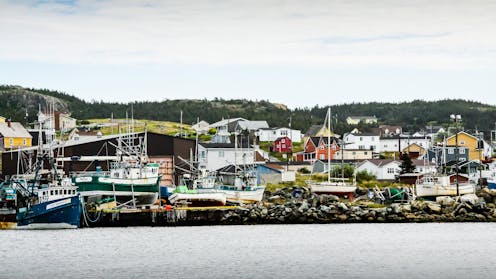
The harbour in Bonavista, Newfoundland. Major reforms could fundamentally reshape fisheries science and management in Canada (Sally LeDrew/Wikimedia commons), CC BY-SA

During the federal election campaign, Canadian Prime Minister Mark Carney announced that if elected, he would look into restructuring Fisheries and Oceans Canada (DFO). Carney stated that he understood the importance of DFO and of “making decisions closer to the wharf.”

Carney’s statement was made in response to protesting fish harvesters in Newfoundland and Labrador who decried recent DFO decision-making for multiple fisheries, including Northern cod and snow crab.

Although addressing industry concerns is important, any change to DFO decision-making must serve the broader public interest, which includes commitments to reconciliation and conserving biodiversity.

Major reforms could fundamentally reshape fisheries science and management in Canada, yet most Canadians are unaware of how DFO’s science-management process works, or why change might be needed.

The DFO’s dual mandate

DFO has long been criticized for its dual mandate, which involves both supporting economic growth and conserving the environment.

For organizations like DFO to be trusted by the public, they need to produce information and policies that are credible, relevant and legitimate.

However, DFO’s dual mandates have been viewed as antithetical and have at the least created a perceived conflict of interest. The issue at stake is how science advice from DFO can be considered independent, if it is also supposed to serve commercial interests.

One solution to this problem would be to shift control over the economic viability of fisheries to provinces. This is not a radical idea by any means, as most of the economic value of the fishery arises after fish are brought to harbour.

fishing boats in a harbour
Fishing boats in the town of Clarke’s Harbour, located on Cape Sable Island, Nova Scotia in July 2011.
(Dennis G. Jarvis/Wikimedia commons), CC BY-SA

For example, licences to process groundfish like cod, haddock and halibut —which Nova Scotia has just announced will be opened for new entrants following decades of a moratorium — as well as policies governing the purchase of seafood already fall to provinces.

In 2024, all 13 ministers from the Canadian Council of Fisheries and Aquaculture Ministers indicated a desire for “joint management” between provinces and DFO.

This was driven driven by a concern that the department has not focused enough on provincial and territorial fisheries issues. This shouldn’t be seen as a criticism of DFO, but rather an opportunity to embrace differentiated responsibility.

DFO could maintain regulatory control for fisheries, like enforcing the Fisheries Act, defining licence conditions and performing long-term monitoring and assessments. As included in the modernized Fisheries Act, it could still consider the social and economic objectives in decision-making.

Regional decision-making

DFO is structured into regions with their own science and management branches, but many decisions end up being made by staff at DFO headquarters in Ottawa. In addition, the federal fisheries minister retains ministerial discretion for almost every decision, something that has been criticized as being inequitable.

During an interview with researchers looking into fisheries management policy, a regional manager stated that they no longer make decisions:

“Because of…risk aversion, much more of the decision-making has now been bumped up to higher levels. So I like to facetiously state that I am no longer a manager, I am a recommender.”

Centralized decision-making can limit communication between regional scientists and managers and federal government policymakers.

This communication gap can make it difficult for managers to use the latest science and adjust policies quickly and it can also lead to recommended policies that are challenging to implement at the local level.

Handing management decision-making power to regional fisheries managers could therefore benefit science and policy, and contribute to decisions that are deemed more equitable by those impacted.

a map of Canada showing the country divided into seven regions: Arctic, Pacific, Ontario and Prairies, Québec, Newfoundland and Labrador, the Gulf and the Maritimes
A map representing DFO’s regional structure.
(Fisheries and Oceans Canada)

Other countries use a regional management approach. In the United States, marine fisheries are managed by eight regional fishery management councils that use scientific advice from the National Marine Fisheries Service. Although not without their flaws, the successful rebuilding of overfished stocks in the U.S. has been attributed, in part, to the regional council system.

Governance systems that have multiple but connected centres of decision-making are generally expected to be more participatory, flexible to respond to changes and have improved spatial fit between knowledge and policy actions.

This type of approach could shift the focus of Ottawa-based managers and the fisheries minister to ensuring national consistency.

Local stakeholder involvement

Canada’s current methods for inclusion of social and economic considerations are limited and have produced scientific advice that is not fully separable from rights holder and stakeholder input.

Most of DFO’s scientific peer-review process is focused on ecological science conducted by DFO scientists. The peer-review process often also involves rights holders and stakeholders. While Indigenous rights holders and community stakeholders may not be trained in the presented analyses, they often contribute to these meetings by describing their knowledge and experiences.

However, because the meetings are focused on DFO ecological science, they are not designed to formally consider stakeholder and rights holder knowledge. This can lead to two key issues. First, it may blur the line between peer-reviewed science and rights holder and stakeholder input, reducing the credibility of the scientific advice.

Second, the valuable information provided by rights holders and stakeholders may be overlooked since it is not shared in a setting designed to incorporate it.

The lack of review of alternative Indigenous knowledge sources and social and economic science during peer-review processes inherently limits the advice that can be provided. It suggests that the government is not benefiting from the opportunity to incorporate diverse knowledge bases.

These problems could be addressed by developing procedures through which stakeholders and rights holders contribute their local and traditional knowledge to better inform ecological and socio-economic considerations.

By increasing the number of peer-review platforms, rights holder and stakeholder input could be reviewed similarly to ecological science. This change would likely increase the credibility, legitimacy and salience of information used to inform fishery managers.

Regardless of how rights holders and stakeholders perspectives are included, the process should be clearly structured and documented.

By reconsidering DFO’s mandate, decentralizing management decision-making and improving the scientific consideration of varied forms of knowledge, DFO could make decisions that are closer to the wharf.

The Conversation

Matthew Robertson receives funding from the Canadian Natural Sciences and Engineering Research Council of Canada (NSERC) Discovery Grant and the Fisheries & Oceans Canada (DFO) Atlantic Fisheries Fund (AFF).

Megan Bailey receives research funding from multiple sources, including NSERC, SSHRC, CIRNAC, Genome Atlantic, Nippon Foundation Ocean Nexus Centre, Ocean Frontier Institute (through a Canada First Research Excellence Fund), and the Canada Research Chairs program.

Tyler Eddy receives funding from the Natural Sciences and Engineering Research Council of Canada (NSERC) Discovery Grant, Fisheries & Oceans Canada (DFO) Atlantic Fisheries Fund (AFF) and Sustainable Fisheries Science Fund (SFSF), the Canada First Research Excellence Fund (CFREF), and the Crown Indigenous Relations and Northern Affairs Canada (CIRNAC) Indigenous Community-Based Climate Monitoring (ICBCM) Program.

ref. ‘Making decisions closer to the wharf’ can ensure the sustainability of Canada’s fisheries and oceans – https://theconversation.com/making-decisions-closer-to-the-wharf-can-ensure-the-sustainability-of-canadas-fisheries-and-oceans-254874

Haiti on the brink: Gangs fill power vacuum as current solutions fail a nation in crisis

Source: The Conversation – Canada – By Greg Beckett, Associate Professor of Anthropology, Western University

Haiti is facing a multifaceted crisis unlike any in the country’s modern history.

Haiti recently marked the one-year anniversary of Haiti’s Presidential Transitional Council’s (CPT) new government — an internationally backed effort to restore governance in the country after Prime Minister Ariel Henry was ousted by gangs.

But rather than charting a path to stability, the CPT remains mired in dysfunction as Haiti’s crisis deepens with no end in sight. Armed gangs now control most of the capital, more than a million Haitians have been displaced and half the country faces acute food insecurity.

Criminal gangs have taken control of most of the capital city of Port-au-Prince and significant parts of the country. Since 2021, gangs have killed more than 15,000 people and forcibly displaced over a million people.

Beyond the security situation, there is a dire humanitarian emergency as more than half the country faces severe food insecurity.

The United Nations says the country may be reaching a point of no return and risks falling into “total chaos.”

Haitian friends tell me their whole country feels as blocked as the barricaded streets and choke points used by the gangs to control the capital.

A security crisis paralyzing everything

The impasse is undoubtedly shaped by entrenched gang violence. Armed groups have been used by political players for political ends in Haiti for decades.

But now, new, well-organized armed gangs have emerged as political entities in their own right.

For example, the G9 Alliance, the most notorious of gangs — actually a federation of gangs — is led by former police officer Jimmy “Barbecue” Chérizier.

Chérizier presents himself on social media as a revolutionary figure fighting the elites, but in the streets of Port-au-Prince most, see him as a violent criminal.

Last year, the G9 merged with rivals to form a coalition called Viv Ansamn (Live Together). Led by Chérizier and others, the group forced Prime Minister Ariel Henry from power. Henry had become prime pinister after the assassination of Haiti’s last elected head of state, President Jovenel Moïse, in July 2021, despite himself being implicated in the assassination.

Both Henry and Moïse were accused of paying gangs to maintain control.

Viv Ansamn’s takeover of the capital confirms gangs have become an autonomous political force. They have since expanded their power through their control over fuel supplies, critical infrastructure and key choke points.

It’s telling that the gangs have become so powerful despite the presence of a UN-approved, Kenya-led Multinational Security Support (MSS) mission. The mission has been in Haiti since shortly after Henry was forced out of power.

But with limited scope and funding from donor countries, including the United States, Canada and Ecuador, the mission has failed to achieve any major successes. Indeed, by the UN’s own estimates, gang violence continues to have a “devastating impact” on the population, despite the presence of the mission.

Last month, the U.S. government designated Viv Ansamn and Gran Grif, Haiti’s two most powerful armed gangs, as terrorist organizations. Canada and others have also imposed sanctions on politicians and gang leaders, and perhaps this could lead to more sanctions against those who most directly benefit from the crisis. But for residents of Port-au-Prince, little has changed on the ground, where many feel the gangs are holding the country hostage.

Democratic vacuum with no clear path forward

A common saying in Haiti goes like this: peyi’m pa gen leta, my country has no state. Once a criticism of a particular government, it now feels literal. Haiti has no elected national officials.

The CPT was established by the Organization of American States after Henry’s ousting, but has has done little to restore democracy. Elections are impossible under the current security conditions.

Instead, the CPT has become another obstacle to resolution. Mired in internal conflict, some members have been accused of bribery. With no framework for political compromise, the council reflects a system where some key players actually benefit from the political impasse.

Governing structures that can’t govern

Haiti is now in uncharted territory. The CPT operates in a legal vacuum, making decisions without a clear mandate or authority.

Still, the council is moving forward with a controversial plan to rewrite the Haitian constitution. The proposed changes will fundamentally alter Haiti’s government structure, including abolishing the senate and the prime minister, allowing presidents to hold consecutive terms, changing election procedures and allowing dual citizens and Haitians living abroad to run for office.

This constitutional reform highlights the paradox at the heart of Haiti’s crisis: an institution with questionable legitimacy is attempting to redesign the very framework that would determine its own authority.

These aren’t just procedural problems: they represent fundamental questions about who has the authority to govern and how decisions get made in a country where democratic institutions have always been fragile.

International responses miss the mark

International groups, including the UN, the Organization of American States and the Core Group that includes the United States, Canada and France, have overseen Haiti’s politics for decades. But their influence has often backfired. Many in Haiti see the international community as directly responsible for the current crisis.

Whatever internal problems have given rise to the current crisis, the role played by the international community in Haiti has undoubtedly contributed to the impasse.

The MSS mission is a stop gap at best and a liability at worst. It is insufficient for the scale of the crisis.

Some observers have called for a full UN peacekeeping mission, but there is little support for it and such a mission would likely face resistance within Haiti given the country’s fraught history with international interventions.

Can the international community undo the damage it has already done? And can Haiti make it through the impasse without the international community?

Beyond the impasse: What needs to change

There are no easy solutions. Addressing gang violence without legitimate governing institutions won’t create lasting stability. Yet the path to a legitimate government remains unclear as organizing elections without basic security is unrealistic.

The international community must stop treating Haiti as a series of separate crises requiring separate responses. The current piecemeal approach treats symptoms while ignoring the underlying causes that block political resolutions.

For Haitians, the stakes could not be higher. The question isn’t whether change is needed, but whether the international community and Haitian leaders can move beyond the impasse before the situation deteriorates even further.

The Conversation

Greg Beckett receives funding from the Social Sciences and Humanities Research Council of Canada.

ref. Haiti on the brink: Gangs fill power vacuum as current solutions fail a nation in crisis – https://theconversation.com/haiti-on-the-brink-gangs-fill-power-vacuum-as-current-solutions-fail-a-nation-in-crisis-257948

Why Canada’s Strong Borders Act is as troublesome as Donald Trump’s travel bans

Source: The Conversation – Canada – By Benjamin Muller, Professor & Program Coordinator in Migration and Border Studies, King’s University College, Western University

Was it just a coincidence that within days of Canada’s Liberal government announcing Bill C-2, the Strong Borders Act, Donald Trump’s administration in the United States released its long anticipated travel ban?

Perhaps. But the timing also highlights the longtime shared border saga between Canada and the U.S. — and should compel Canada to carve its own path.

Like Trump’s 2017 travel ban, his 2025 directives significantly prevent or limit access to the U.S. for citizens from 12 mostly African and Middle Eastern countries, with more possibly on the horizon. It’s likely to face judicial challenges and may not survive for long.

In contrast, Bill C-2 could lead to several significant and broad statutory changes that Canadians will contend with for years to come.

Data privacy concerns

Days before Trump’s announcement, the Canadian government advanced the controversial Strong Borders Act covering a wide swath of proposed legislative changes, from intensified border security measures to more restrictive immigration and asylum policies.

Embedded within the proposed legislation, as Canadian law professor Michael Geist and others have pointed out, are significant risks to digital privacy, along with increased executive authority — also known as “warrantless” powers — without judicial or civilian oversight.

In these respects, the proposed Canadian legislation could be considered more worrisome than Trump’s travel bans.

In the fog of the ongoing trade war between the U.S. and Canada, the focus is on American tariffs and their economic impact. But little attention is being paid to Canada’s longstanding co-ordination and co-operation with the U.S. in terms of border management.

Unfortunately, Canada has a history of appeasing the U.S. on the border. The period following 9/11 is worth noting.

Increased co-ordination post 9/11

Successive Canada-U.S border agreements have brought about significant institutional change and reform. These include the Smart Border Declaration — signed shortly after 9/11 — and Beyond the Border, inked a decade later between the Barack Obama and Stephen Harper governments.

These agreements included greater reliance on biometric and surveillance technology, binational information-sharing and accelerated, robust co-ordinated and co-operative border enforcement (specifically the Shiprider program and the Integrated Border Enforcement Team or IBET).

The early 2000s saw the rise of new institutions such as the Canada Border Services Agency (CBSA) and the Canadian Air Transport Security Authority (CATSA), along with significant policy changes that included prolific and more robust American pre-clearance of people and goods, and authorizing CBSA agents to carry firearms (which was once controversial).

Frequently, these reforms were in response to American pressure or reactionary U.S. policies. The Western Hemisphere Travel Initiative (WHTI), for example, is an American policy that has compelled travellers to produce passports when crossing the U.S. border for almost 20 years.

In contrast to the “elbows up” rhetoric of the last several months, Canada hastily made changes to its border policies.

The narrative of co-operative and collaborative Canada-U.S. border management, however, has not always been as it appeared. Frequently, negotiations and co-operation were difficult, and not without cost to some autonomy in Canada’s border management.

Asylum seekers

In the past year, there have been increasing concerns about the impact of potential increases in asylum claims in Canada because of American policies. Those raising concerns often make reference to Roxham Road, the unofficial border crossing that thrived during the last Trump administration due to a loophole in the Safe Third Country Agreement (STCA).


Read more:
Roxham Road: Asylum seekers won’t just get turned back, they’ll get forced underground — Podcast


Such gaps in legislation were modestly addressed, including in the proposed Bill C-2, which will require arriving migrants to claim asylum within 14 days of arrival. After that time, claimants will not receive a hearing and be subject to deportation.

It’s troubling to contemplate deporting asylum seekers amid the ongoing deportation spectacle in the U.S. being carried out by Immigration and Customs Enforcement during the Trump administration

Amid renewed American pressures under Trump and a history of border co-operation, it’s not surprising Prime Minister Mark Carney is following his predecessor in trying to appease the U.S. president via Canadian border policy. And because asylum claimants often languish for up to two years in Canada’s immigration and asylum system, it’s clear there are problems.

But that doesn’t preclude the need to think critically about the sweeping powers proposed in Bill C-2.

In particular, enhanced executive powers — in many cases by institutions that have no civilian oversight — must be scrutinized.

Many of these changes are reminiscent of the kind of co-operative — and sometimes coercive — border policies that emerged in the post-9/11 years. It could be argued that Canadians should have expressed “elbows up” responses to American pressures to reimagine our border almost 25 years ago.

Furthermore, these changes serve as reminder that co-operative and co-ordinated management of our border is increasingly “baked in,” and despite tariff rhetoric, that’s unlikely to change dramatically without significant pushback from Canadians.

Revisionist history

It’s worth reflecting on the nostalgic and revisionist accounts of the coercive — not truly co-operative and collaborative — post-9/11 era of border security management, especially in the heat of the ongoing Canada-U.S. trade war.

Canadians should remember they live during a time of deep integration in border management — but Canada can always assert its own interests and marshal its own resources to manage borders and those who cross it.

In the long Canada-U.S. relationship, coercion has often masqueraded as co-operation. There are far fewer coincidences in border policy than we might think, possibly including the timing of the Strong Border Act. But Canada must always evaluate its policies in terms of whether they serve Canadian, not American, interests.

Unlike the Trump administration’s travel bans and deportations, Bill C-2 introduces a wide swath of changes Canadians could grapple with for decades.

The Conversation

Benjamin Muller receives funding from SSHRCC and King’s University College at Western University.

ref. Why Canada’s Strong Borders Act is as troublesome as Donald Trump’s travel bans – https://theconversation.com/why-canadas-strong-borders-act-is-as-troublesome-as-donald-trumps-travel-bans-258366

The politics of blame: Accusing immigrants won’t solve Germany’s antisemitism problem

Source: The Conversation – Canada – By Oliver Schmidtke, Professor, Director of the Centre for Global Studies, University of Victoria

In response to a report on the virulence of antisemitism in Germany, Chancellor Friedrich Merz recently cast the blame on attitudes held by immigrants.

Merz stated in a Fox News interview that Germany has “imported antisemitism with the big numbers of migrants we have within the last 10 years.”

Merz is pointing to a real and pressing issue. Yet his emphasis on so-called “imported antisemitism” serves as a convenient diversion from Germany’s persistent failure to confront home-grown antisemitism.

His remarks also risk emboldening those who weaponize antisemitism as a rhetorical tool to fuel anti-immigrant sentiments.

Antisemitism in Germany

Antisemitic incidents in Germany have been on the rise since the Oct. 7, 2023 attack on Israel by Hamas and the subsequent war in Gaza.

According to a survey by the Research and Information Centre on Antisemitism (RIAS), antisemitic occurrences rose by more than 80 per cent in 2023. That year, 4,782 occurrences were documented, the highest number since the organization began tracking such cases in 2017.

However, RIAS’s most recent report found that the primary motive behind antisemitic crimes remained right-wing extremist ideology (48 per cent). It also noted that, since 2023, there has been a marked increase in incidents attributed to “foreign ideology.” These are understood as originating outside Germany and often linked to Islamist or anti-Israel sentiments, which accounted for 31 per cent of cases in 2024.

It should be noted that RIAS’s approach to classifying antisemitism has been subject to controversy, especially with regard to its treatment of criticism of or protest against the Israeli government’s actions.

The ‘imported antisemitism’ narrative

A recent survey of antisemitic attitudes among immigrants in Germany found that such attitudes are more prevalent among Muslim respondents compared to their Christian or religiously unaffiliated counterparts. The study revealed particularly high levels of antisemitism among individuals from the Middle East and North Africa.

Approximately 35 per cent of Muslim respondents — especially those with strong religious convictions and lower levels of formal education — “strongly agreed with classical antisemitic statements.” These statements reflect classical antisemitic tropes, such as attributing too much influence over politics or finance to Jews, accusing Jews of driving the world into disaster or relativizing the Holocaust.

At the same time, there is evidence that immigrants successfully integrating into German society is associated with lower levels of antisemitism.

Yet blaming a rise in antisemitism on “imported” attitudes or “foreign ideologies” signals a crude simplification. Antisemitism has remained prevalent in German society even after the Second World War, and political movements or leaders can easily mobilize it.

Although Holocaust education is mandatory in German schools, knowledge about the Shoah and the legacy of antisemitism remains limited among younger generations. A recent study by the Jewish Claims Conference found that among Germans aged 18 to 29, around 40 per cent were not aware that approximately six million Jews were killed by the Nazis and their collaborators.

According to a 2023 MEMO survey, more than 50 per cent of 14- to 16-year-old students in Germany did not know what Auschwitz was.

Blaming immigrants for challenges in Germany’s memory culture oversimplifies a deeper issue: the growing difficulty of making the country’s dominant remembrance — centred on the horrors of the Nazi dictatorship and the Holocaust — politically meaningful and emotionally resonant for younger generations.

For many young Germans, the memory of the Holocaust feels increasingly remote, lacking the emotional immediacy that vanishing eyewitnesses once provided.

This problem is further exacerbated by the absence of innovative, impactful teaching capable of conveying the continued relevance of Holocaust memory and its political message.

In a 2023 article, American journalist Masha Gessen highlighted how Holocaust remembrance in Germany was becoming an elite-driven ritual, one that risks preventing a meaningful connection between its moral imperatives and today’s political realities.

The threat from Alternative for Germany

At the same time, the rise of the far-right Alternative for Germany (AfD) party poses a direct threat to Germany’s culture of remembrance.

The AfD has made it a central objective to challenge the primacy of Holocaust memory, calling for a U-turn in Germany’s remembrance culture.

Leading party members have labelled Holocaust memorials “monuments of shame,” reflecting the party’s broader effort to promote nationalist reinterpretations of history.

Furthermore, the AfD’s staunchly anti-immigrant stance exposes a fundamental flaw in the imported antisemitism narrative. Across Europe, populist right-wing movements have increasingly mobilized anti-Muslim rhetoric under the banner of defending so-called “Judeo-Christian values,” even as they simultaneously draw on classic antisemitic tropes targeting “globalist elites” and conspiratorial power structures.

This use of Jewish identity as a rhetorical weapon against Islam, while perpetuating antisemitism in other forms, reveals the deep contradictions and opportunism underlying imported antisemitism claims.

Blaming Muslim immigrants for the rise of antisemitism offers German political leaders a convenient excuse for their own failure to confront entrenched antisemitic beliefs within German society.

In addition, Holocaust remembrance can sometimes exclude immigrants. For example, Germany recently added questions about the Holocaust and Nazi crimes to its citizenship test, committing newcomers to its memory culture.

Research shows this kind of policy can have unintended effects. It can make immigrants feel excluded if they are seen as not fully sharing in “our” nation and “our” history. Given the universalist values it is meant to embody, the commemoration of the Holocaust can also serve to alienate immigrants from full cultural citizenship.

Framing antisemitism primarily as an imported problem risks strengthening those forces that actively seek to undermine and ignore Germany’s confrontation with its Nazi past.

Instead, what is needed is a more nuanced approach, one that bridges the divide between antiracist and anti-antisemitism efforts, and aligns more faithfully with the moral and political commitments that this collective memory is meant to uphold.

The Conversation

Oliver Schmidtke receives funding from the Social Sciences and Humanities Research Council of Canada.

ref. The politics of blame: Accusing immigrants won’t solve Germany’s antisemitism problem – https://theconversation.com/the-politics-of-blame-accusing-immigrants-wont-solve-germanys-antisemitism-problem-258705

Canadian international relations experts share their views on global politics and Canada’s role

Source: The Conversation – Canada – By Anessa L. Kimball, Professor of Political Science; Director, Centre for International Security, ESEI, Université Laval

A survey of Canadian international relations professors has found they disagree on how to respond to potential Chinese aggression against Taiwan and which global regions will matter most to Canada in the future.

For the past 20 years, the Teaching, Research and International Policy (TRIP) survey has asked university professors about how they teach international relations and what they think about global affairs. Originally based in the United States, the survey expanded to Canada in 2006 and is now conducted regularly in many countries.

The Canadian faculty survey was conducted from March 5 to July 12, 2024. Of the 109 who participated, most held permanent academic positions, including 22 full professors, 31 associate professors and six emeritus professors.

Participants were asked to agree or disagree with statements about global politics. Seventy-five experts agreed that states are the main players in global politics, but there was less agreement on the importance of domestic politics.

Most felt that international institutions help bring order to the chaotic global system. However, whether globalization has made people better off — even if there are some losers — divided experts, with 21 believing no one is better off due to globalization while two-thirds believed the opposite.

Major themes

When it came to more critical or less mainstream ideas — such as whether major international relations theories are rooted in racist assumptions — opinions were split.

More than 50 agreed, but more than a third disagreed, and many gave neutral responses. Disagreement over the role of racism in shaping world politics highlights the difficulty of decolonizing international relations and incorporating post-colonial perspectives — particularly when trying to understand complex “failed cases” like United Nations peacekeeping efforts in Haiti.


Read more:
For Haitian migrants in the Dominican Republic, ‘reproduction is like a death sentence’


Professors were also asked where they get their international news. Most rely on major newspapers, international media and internet sources.

When asked which world region is strategically most important for Canada today, nearly half — or 43 of 97 experts opting to respond to the question — chose North America (excluding Mexico); in other words, the United States. Sixteen selected the Arctic and another 16 chose East Asia.

Very few picked regions like the Middle East, Europe or Russia. Looking ahead 20 years, 10 experts shifted their answer from North America to the Arctic.

Views on China and Taiwan, and Justin Trudeau

Experts were asked what Canada should do if China attacks Taiwan. Most supported non-military responses: 72 supported sanctions and 69 supported taking in refugees.

About half supported sending weapons or banning Chinese goods. Fewer supported cyberattacks (18), sending troops (15) or a no-fly zone (14).

Surprisingly, six said Canada should launch military action against China.

Justin Trudeau was prime minister when the survey was conducted. When asked about his performance, 50 per cent rated him poorly or very poorly, 30 per cent were neutral and only a small minority rated him positively.

Key takeaways

Canadian international relations professors don’t always agree, but a few trends stand out.

Despite recent government focus on the Arctic in terms of its Our North, Strong and Free policy, many professors still view the U.S. as Canada’s most important strategic region. East Asia drew some attention, but few see it growing in importance.

With a new government under Prime Minister Mark Carney, there may be opportunities to improve on areas where Trudeau was seen as weak by respondents to the survey.

For example, despite having developed a strategy for the Indo-Pacific region, vital Canadian trade and maritime security interests were minimized by the previous Liberal government. Carney could therefore contemplate expanding Canada’s maritime assets, improving its artificial intelligence and cybersecurity capacity and investing in digital infrastructure and quantum computing.


Read more:
Defence policy update focuses on quantum technology’s role in making Canada safe


Carney had pledged to fulfil Canada’s commitment to NATO’s target of two per cent of GDP spent on defence, saying Canada will meet the threshold by the end of 2025.

However, Canada will still lag behind. NATO is calling on allies to invest five per cent of GDP in defence, comprising 3.5 per cent on core defence spending as well as 1.5 per cent of GDP per year on defence and security-related investment, including in infrastructure and resilience.

Canada’s 2024 GDP was $2.515 trillion, which means a five per cent defence investment of nearly $125 billion annually would have accounted for more than a quarter of a federal budget (which was under $450 billion in 2024-2025).

Canada, a founding NATO member, leads a multinational brigade in Latvia and supports Ukraine in other ways.

Ukraine seems on an irreversible path towards NATO membership. Though 69 per cent of respondents supported NATO membership for Ukraine, only 44 per cent felt it was likely. Though the U.S. tariff crisis attracts attention, some experts are increasingly looking to the Arctic to understand Canada’s strategic interests — a trend sure to be reflected in future surveys of Canadian international relations experts.

The Conversation

Anessa L. Kimball does not work for, consult, own shares in or receive funding from any company or organisation that would benefit from this article, and has disclosed no relevant affiliations beyond their academic appointment.

ref. Canadian international relations experts share their views on global politics and Canada’s role – https://theconversation.com/canadian-international-relations-experts-share-their-views-on-global-politics-and-canadas-role-257949

Canada’s ‘jail not bail’ trend: 4 ways to support victims

Source: The Conversation – Canada – By Carolyn Yule, Associate Professor of Sociology, University of Guelph

Tough-on-crime rhetoric is reshaping bail laws to correct a perceived imbalance that “tips the scales in favour of the criminals against the victims.”

But do these changes reflect what victims actually want and need?

We argue that victims are positioned as both “sword and shield” in bail reform debates — as a sword, to advocate for more restrictive laws, and as a shield, to defend those laws from criticism.

The appeal of ‘jail not bail’

Victims have been a central focus of those arguing in favour of changes to the bail system as they suggest a need to “crack down with tougher rules” to “protect victims” and to stop turning “loose the most violent, rampant criminals into our communities to destroy our families.”

These concerns culminated in the passage of the federal government’s Bill C-48, which introduced additional reverse-onus provisions — shifting the burden onto the accused to demonstrate why they should be released as opposed to the Crown — in cases involving weapons and repeat intimate partner violence.

Largely absent from these discussions is the possibility that more restrictive measures may actually have negative consequences for victims.

In cases of intimate partner violence, for instance, dual charging policies — when both parties involved in a domestic incident are charged with an offence, even when one person may be primarily the victim and the other primarily the aggressor — risks criminalizing and incarcerating women pre-trial. These victims are also disproportionately Indigenous, Black and racialized. This risks deepening systemic inequalities rather than providing meaningful protection for survivors.

Furthermore, victims may hesitate to call the police, knowing that doing so may result in indeterminate detention before trial. Expanding reverse-onus provisions could also lead to false guilty pleas to avoid pre-trial detention.

Politicizing crime victims

While media coverage on victims’ experiences at bail hearings is emotionally compelling and expedient, it does not necessarily reflect what victims want with any accuracy.

Certainly, some victims view the bail system as a slap in the face. Others call for a stronger social safety net to address the root causes of crime.


Read more:
The grieving mother of a murdered teen pleads for a stronger social safety net


Our preliminary research exploring how victims are presented in news media amid bail proceedings supports other evidence that victims’ voices are often used strategically by politicians and lobbyists to amplify concerns about public safety.

News media can be an effective tool to provide education about the causes and consequences of victimization. When it comes to bail, however, victims are often characterized as “ideal types” — people who were subjected to severe violence at the hands of a stranger while engaging in “respectable” activities at the time of the offence.

In reality, victims represent a diverse group, with a wide range of needs, identities and experiences that are not always captured in media coverage or political debates.

What do victims really need at bail hearings?

Prior research focuses on the rights of the accused concerning bail reform, yet pre-trial decisions are a pivotal moment for crime victims. They can determine whether those accused of crimes are detained or released with conditions.

The Canadian Victims Bill of Rights stipulates victims have the right to be informed of case matters, to express their views and to have their perspectives considered at all stages of the legal process, including at bail. During bail proceedings, justices must record that they have considered victim safety and security when imposing conditions, and victims may receive a copy of a bail order upon request.

In practice, however, victims are rarely consulted on how the release of an accused may affect their safety, and are often left unaware of bail outcomes. That’s because there’s no legal requirement for police or Crown attorneys to inform them.

While programs are available to support victims during the pre-trial phase — such as those offered by Victims Services and Victim/Witness Assistance — access can vary widely across jurisdictions.

4 ways to support victims’ needs at bail

We offer four strategies to create more responsive and equitable bail processes to better support victims:

  1. Better understand victims’ needs: Victims have diverse perspectives and differing priorities regarding how to protect their safety, and their voices deserve to be meaningfully included in decision-making processes.
  2. Uphold victims’ rights: Protecting the rights of the accused at bail is not incompatible with upholding victims’ rights. Access to information and communication concerning bail decisions should be better prioritized to position victims to undertake informed safety planning.
  3. Invest in victim resources: Dedicated and sustained funding for community-based supports will directly enhance the safety and well-being of victims, including access to social services, advocacy and legal resources, as well as counselling.
  4. Address the causes of crime: Long-term victim and community safety depends on addressing underlying causes of crime like poverty, mental health, addiction, trauma and systemic discrimination.

Systemic reform needed

Throughout the criminal legal system, victims’ voices are frequently ignored, disbelieved or dismissed. Too often, victims are excluded from the very policy decisions made in their name.

While high-profile bail cases tend to dominate media coverage, policy on criminal and legal matters must be guided by evidence, not headlines.

Without broader systemic reform, legislation will remain an important but insufficient tool for upholding victims’ rights and community safety.

The Conversation

Carolyn Yule receives funding from the Social Sciences and Humanities Research Council (SSHRC).

Kaitlin Humer, Laura MacDiarmid, and Sophia Lindstrom do not work for, consult, own shares in or receive funding from any company or organisation that would benefit from this article, and have disclosed no relevant affiliations beyond their academic appointment.

ref. Canada’s ‘jail not bail’ trend: 4 ways to support victims – https://theconversation.com/canadas-jail-not-bail-trend-4-ways-to-support-victims-258365