UN backs Trump’s plan for Gaza but Palestinian statehood remains a distant prospect

Source: The Conversation – UK – By Leonie Fleischmann, Senior Lecturer in International Politics, City St George’s, University of London

The UN security council has voted to adopt a resolution endorsing US president Donald Trump’s plan to end the war in Gaza. However, while the resolution references a credible pathway to Palestinian self-determination and statehood, the road to such an outcome is far from determined.

The resolution, which received 13 votes in favour and none against, with abstentions from Russia and China, paves the way for a Trump-chaired transitional authority to supervise Gaza’s reconstruction and recovery. It also authorises the arrival of peacekeepers for an international stabilisation force to oversee border areas, provide security and demilitarise the Gaza Strip.

These proposals were first outlined in late September, when Trump unveiled a 20-point plan to end the conflict in Gaza. The White House reported at the time that the plan had “galvanised a chorus of international praise as the potential pivotal turning point” for ending the war between Israel and Hamas.

It was a result of this plan and diplomatic efforts led by Steve Witkoff, the US special envoy to the Middle East, that a ceasefire was put into effect on October 10. This ceasefire has seen a partial withdrawal of Israeli troops from parts of Gaza and the return of all the living – and most of the deceased – hostages to Israel.

However, the ceasefire remains fragile and Israel has reportedly violated it consistently with continued attacks. Torrential rain is also causing floods across the Gaza Strip, bringing more devastation to the war-torn area. It is thus vital that progress is made towards rebuilding the lives of Palestinians in Gaza.

But it remains uncertain whether Trump’s plan will provide a complete solution. As is often the problem with internationally imposed plans, the wording is vague and therefore open to interpretation and manipulation. Specifically, clause 19 of the plan is ambiguous.

It states that only once the Palestinian Authority (PA), the body that exercises administrative responsibility over Palestinians in the West Bank, has reformed itself and the rebuilding of Gaza is under way, “the conditions may finally be in place for a credible pathway to Palestinian self-determination and statehood”. This leaves plenty of room for the path to be knocked off course.

Barriers to statehood

There are four significant barriers to establishing a Palestinian state. First is that there are no concrete details within Trump’s plan about what a future Palestinian state will look like. None of the main sticking points around achieving a two-state solution have been ironed out.

These include questions around the status of Jerusalem, which Israelis and Palestinians both want as their capital city. There are also disagreements around where to draw the line between Israel and a future Palestine, as well as the “right of return” for the millions of Palestinian refugees currently living abroad.

A second barrier to Palestinian statehood is that it will not be quick or easy to meet the conditions required for a political process towards a two-state solution to begin. The PA is accused of facing a “crisis of legitimacy”. The president of the PA, Mahmoud Abbas, and Fatah, its dominant political party, are deeply unpopular among Palestinians.

In a September 2024 poll conducted by the Palestinian Centre for Policy and Survey Research, just 6% of Palestinians said they would vote for Abbas in an election. And the PA itself is widely criticised for systemic corruption, nepotism, clientelism and bureaucratic malfeasance. Reform and regaining the support of Palestinians will be difficult to achieve.

Rebuilding Gaza will also be no easy feat. The UN estimates that reconstruction alone will cost US$50 billion (£38 billion), with even the most optimistic projections suggesting it will take a decade to rebuild. At what point during these processes will it be deemed the appropriate time to return to the question of a Palestinian state?

The third barrier is Hamas which, having rejected the UN’s resolution, threatens to derail the peace plan entirely. Hamas wrote on Telegram after the resolution passed that the plan “imposes an international guardianship mechanism on the Gaza Strip, which our people and their factions reject”.

Some commentators have argued that the imposition of external control over Gaza, and the tying of Palestinian statehood to externally generated conditions, reflects “a continuation of colonialist logic rather than a genuine pathway to self-determination”. If the Palestinians are going to achieve self-determination, they need to do so on their own terms.

Hamas has now reiterated its refusal to disarm, arguing that its fight against Israel is legitimate resistance. Israel and its western allies have made the disarmament of Hamas a non-negotiable demand for ending the war.

The fourth, and probably most significant, barrier is that the Israeli government remains staunchly opposed to the formation of a Palestinian state. Israel’s prime minister, Benjamin Netanyahu, did applaud Trump for his efforts to secure peace in a social media post following the UN vote.

However, he then told his cabinet that Israel’s opposition to a Palestinian state remains “firm and unchanged”. Netanyahu later confirmed that Israel supported only the steps within the plan that insist upon “full demilitarisation, disarmament and the deradicalisation of Gaza”.

Far-right leaders in his governing coalition, alongside violent settlers, are at the same time changing facts on the ground in the West Bank. They are doing so by establishing Israeli government-sanctioned settlements on Palestinian land, which are considered illegal under international law. The construction of these settlements amounts to de facto annexation, thwarting the possibility of future Palestinian sovereignty.

We are a long way off from concrete discussions of Palestinian statehood. But despite the many problems in Trump’s plan, it does provide some hope that at least the Palestinians in Gaza will be able to begin to rebuild their lives. Efforts must be made to ensure neither Hamas or Israel make any moves to derail this potential.

The Conversation

Leonie Fleischmann does not work for, consult, own shares in or receive funding from any company or organisation that would benefit from this article, and has disclosed no relevant affiliations beyond their academic appointment.

ref. UN backs Trump’s plan for Gaza but Palestinian statehood remains a distant prospect – https://theconversation.com/un-backs-trumps-plan-for-gaza-but-palestinian-statehood-remains-a-distant-prospect-270116

ADHD: even one bout of physical activity might help kids better learn in school

Source: The Conversation – UK – By Karah Dring, Senior Lecturer in Exercise and Health, Nottingham Trent University

The cognitive benefits of exercise even lasted into the next day. Lopolo/ Shutterstock

Attention deficit hyperactivity disorder (ADHD) is the most common disability diagnosis in children globally. It’s estimated to affect around 8% of children aged 3-12 years, and around 6% of teenagers aged 12-18 years.

ADHD can make school difficult for children – affecting their behaviour in class, their attendance and their academic performance. But research my colleagues and I conducted has shown why physical activity may be one way of helping children with ADHD to thrive in school.

To conduct our research, we had 27 children aged 9-11 years (all with ADHD) complete two trials.

The first trial involved a 30-minute exercise circuit that also engaged their brains. The exercise circuit involved several stations. For instance, at one station the children played “Simon Says,” while at another, they did a coordination task where they had to bounce and pass a basketball with alternating hands with a classmate.

The second trial acted as a control, so the children didn’t do any activity but instead rested in their seats in their classroom.

To determine whether the one-off exercise game supported the children with ADHD, they also completed three cognitive tests on a laptop. These were done before the exercise, immediately after the exercise and the morning after the exercise. The tests were also repeated at the same time of day during the rested control period for comparison.

The first cognitive test was the Stroop test, which measures a person’s ability to suppress an impulse. The second test was the Sternberg Paradigm, which measured short-term memory. The third was a visual search test, which measured perception (the process of organising and interpreting information).

Interestingly, the children with ADHD performed better on each of the cognitive tests following the exercise activity when compared with doing no exercise.

But while the children answered the questions accurately, it did take them slightly longer to do so. This is an important finding, given that children with ADHD typically struggle with impulsivity (those hasty acts that occur without thought). Showing that exercise can help these children to slow down and achieve more correct answers feels promising for supporting them in the school environment.

Another important finding from our study was that the benefits of the cognitively engaging exercise (which was performed in the afternoon) extended into the following morning. This is one of the first studies to show that the benefits of exercise in children with ADHD persist into the next day.

This was a small study and more research is needed. But it again feels promising that these benefits continue into the day after the exercise has taken place supporting both children and their teachers for an extended period.

Our study has also shown that it doesn’t take a lot of intense exercise to help children with ADHD in the classroom. The activity was short, simple and could easily be delivered by teachers during the school day.

Exercise and learning

Importantly, our study does not stand alone in showing that one-off bouts of exercise are beneficial for supporting children with ADHD.

Other studies have shown that games-based activities in particular tend to be more beneficial in improving cognitive outcomes in children with ADHD.

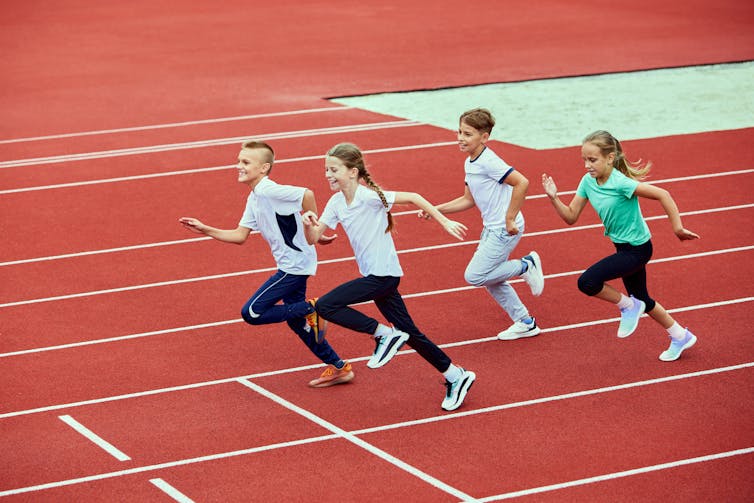
Four children running on an outdoor track.
Other types of exercise, such as running, can also have benefits for learning.
Master1305/ Shutterstock

For instance, a review we conducted revealed that physical activity which has a cognitive component has greater cognitive benefits for children with ADHD compared with longer-duration exercises (such as running and cycling).

That said, there are also benefits observed from doing longer bouts of exercise. For instance, research has shown that a one off bout of running or cycling for between 20-45 minutes at a moderate intensity also benefits inhibitory control and cognitive flexibility (defined as switching between thinking patterns and managing multiple concepts simultaneously).

But current evidence suggests that just 20 minutes of endurance exercise is sufficient to boost cognitive benefits in children with ADHD.

A growing body of evidence also suggests that not only can a one-off bout of exercise be useful, but that the benefits of movement can extend across several different domains of cognitive function – all of which tend to be impaired with ADHD. These include attention, inhibitory control (related to impulsivity) and cognitive flexibility.

This may all sound promising, but the physical activity levels of children with ADHD are a major concern. It has recently been reported that children with ADHD are 21% less likely to meet the physical activity guidelines than their peers.

Some of the barriers to physical activity for children with ADHD include low motivation, low self-efficacy (a belief in their ability) and difficulties managing big emotions in an environment that can feel overwhelming.

Much more research is needed to support children with ADHD to engage with exercise. But what is promising is the variety of exercises that can improve cognitive function in children with the condition – from endurance sports to mixed martial arts and games-based activities.

The Conversation

Karah Dring receives funding from The Waterloo Foundation to conduct some of the studies included in this article.

This work was supported by The Waterloo Foundation.

ref. ADHD: even one bout of physical activity might help kids better learn in school – https://theconversation.com/adhd-even-one-bout-of-physical-activity-might-help-kids-better-learn-in-school-269315

How household contracts could be fueling UK inflation

Source: The Conversation – UK – By Lorenza Rossi, Professor in Economics, Lancaster University

Dean Clarke/Shutterstock

UK inflation has dropped to 3.6% but it remains well above the Bank of England’s 2% target. Beyond broader global uncertainties, there are also factors within our own homes that are quietly sustaining this stubborn issue. Namely, automatic annual price uplifts in everyday contracts for things like mobile phones and utilities.

UK inflation is expected to become the highest in the G7 this year and next. In turn, surging costs for fuel, raw materials and transport are putting pressure on businesses.

And these pressures can seriously threaten profits. This is particularly true for fixed-price contracts for anything from telecoms and insurance services to utilities and public procurement agreements.

To safeguard themselves, many suppliers now seek to include automatic price-adjustment provisions (known as indexation clauses) in their agreements. These link contract prices to an external index such as consumer prices or their own costs.

Inflation-linked pricing has already driven above-inflation increases in mobile and broadband bills. Communications regulator Ofcom banned mid-contract price rises linked to inflation from this year. This came after it found that around six in ten broadband and mobile customers faced annual rises linked to inflation plus a fixed 3.9%.

As a result of the move, many companies have switched to fixed annual price rises, stated in pounds and pence, at the time of signing. This change has improved transparency, but the underlying issue remains.

Annual price increases are often set above the actual inflation rate. When prices are automatically adjusted by more than inflation (through inflation-plus clauses, or what has been called “turbo price indexation”) they can create a multiplier effect. Higher prices feed into higher costs and expectations, which in turn push inflation up further.

This self-reinforcing cycle makes it harder for inflation to return to the Bank of England’s 2% target and amplifies cost-of-living pressures.

The problem extends far beyond telecoms. Public-sector and business-to-business contracts often include similar clauses, embedding annual price increases regardless of economic conditions. For instance, one UK catering contract we saw stated: “All prices quoted are subject to a 10% increase as of 1 October annually.”

Government procurement rules acknowledge the practice. The Ministry of Defence’s spending watchdog instructs defence contractors and the MoD to build in an “escalation factor” to reflect expected inflation when determining allowable costs. At least for government contracts, this escalation factor is meant to capture the estimated effects of inflation rather than being fixed at an earlier date or detached from a price index.

Although these clauses were originally meant to protect firms from rising costs, they now risk locking in inflation. This sustains price increases even when cost pressures ease.

It also weakens the effectiveness of monetary policy – in this case, interest rate changes – because when companies automatically increase prices, higher interest rates take longer to slow inflation. And of course, it erodes the purchasing power of households on fixed incomes.

Breaking the inflation loop

New regulation aimed at improving transparency (as with the Ofcom case) is an important precedent. It’s also a model for other regulators in sectors such as energy, insurance and public procurement, where competition remains weak. However, Ofcom’s approach could be refined in three ways.

First, where consumers lack bargaining power (especially in sectors such as utilities, insurance or business services) regulators should act more broadly to limit unfair contract terms and prevent automatic price increases that go beyond inflation. And they should continue to pursue more competition in their sectors as a long-term goal.

Second, regulators could restrict unconditional price increases that are not linked to inflation or clear cost measures. Inflation caps could be introduced instead. For example, price increases could track the Bank of England’s 2% target, with a small margin of adjustment based on the previous year’s average. This would still give suppliers some flexibility to cover real cost changes, while preventing excessive or uneven increases.

Third, transparency is essential. Beyond Ofcom’s ban on inflation-linked price rises in telecoms, regulators could force suppliers to separate the original base price from the uplifted portion that reflects inflation or indexation.

Showing both figures would make it easier for customers to see how the increase has been calculated. This would allow clearer comparisons within a company’s own deals – for example, between flexible and fixed-price contracts – and across producers.

Beyond this, the rules around public bodies’ contracts could be modernised. Automatic annual price increases written into “escalation clauses” should be replaced with adjustments explicitly linked to recent or forecast inflation. This would ensure that public contracts reflect actual economic conditions, rather than guaranteeing price increases by default.

Voluntary codes of practice could also have a place. Industry bodies, for example in telecoms or catering, could adopt clearer and more transparent pricing standards. Requiring firms to publish the formulas they use in consumer and business-to-business contracts would make it easier for customers to compare.

Most recently, the Competition and Markets Authority launched a major consumer-protection drive focused on online pricing practices – a sign that regulators are scrutinising how companies present and justify price increases.

woman signing a contract on her phone
Dot the Is, cross the Ts and check the indexation clause.
KT Stock photos/Shutterstock

For consumers, it’s worth checking contracts carefully before signing – especially small-print clauses referring to “annual adjustments”, “indexation” or “inflation-linked increases”. These can lock in automatic price hikes that may exceed inflation. Asking providers to explain how these clauses work, or negotiating fixed-price terms, can help avoid unexpected costs later on.

At the end of the day, the government, Bank of England and regulators should be working together to ensure that indexed contracts do not undermine efforts to bring inflation down. Recognising and reviewing inflation-linked pricing practices could help explain why UK inflation remains stubbornly above target – and why monetary policy and interest rate changes alone may not be sufficient to bring it down.

The Conversation

The authors do not work for, consult, own shares in or receive funding from any company or organisation that would benefit from this article, and have disclosed no relevant affiliations beyond their academic appointment.

ref. How household contracts could be fueling UK inflation – https://theconversation.com/how-household-contracts-could-be-fueling-uk-inflation-269146

Five ways to make the ocean economy more sustainable and just

Source: The Conversation – UK – By Susan Gourvenec, Royal Academy of Engineering Chair in Emerging Technologies – Intelligent & Resilient Ocean Engineering, University of Southampton

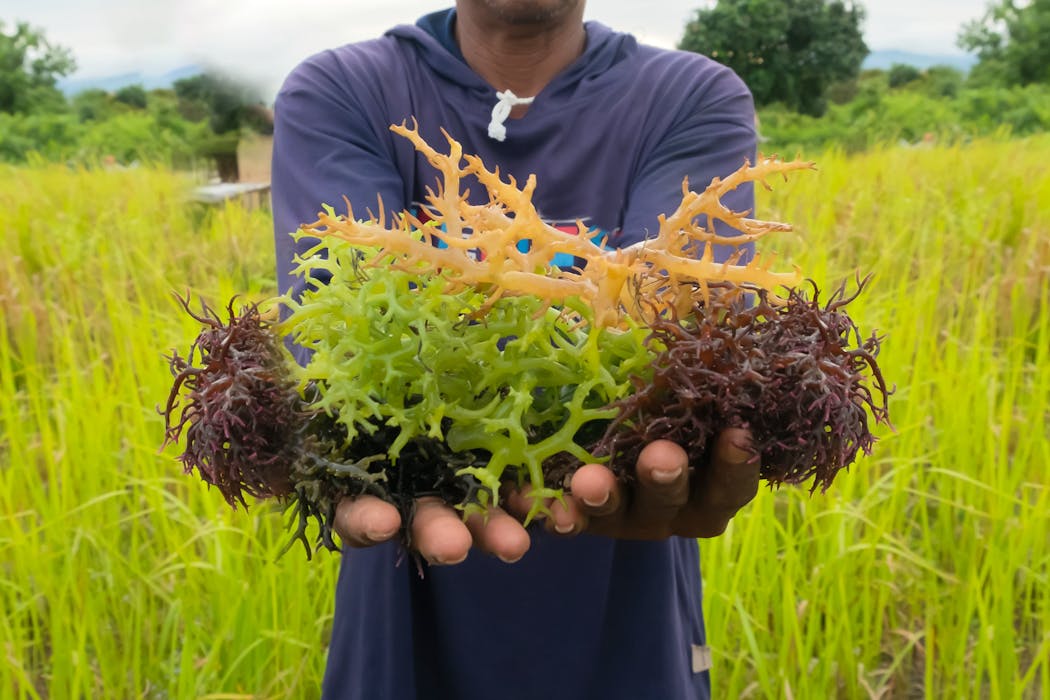
Sustainable seaweed farming contributes to a blue ocean economy. Kanurism/Shutterstock

The ocean has long been treated as boundless – a frontier for extraction and a sink for waste. This perception has driven decades of exploitation and neglect, pushing marine systems toward irreversible decline. Yet with urgent, collective action, recovery remains within reach, offering renewed global benefits for people, nature and economies.

The world is at a fork in the road regarding the environmental and economic health of our ocean, and the welfare of those who depend on it. Decisions made now will determine whether we perpetuate an unsustainable “grey” ocean economy (one that is dominated by unsustainable and unjust practices) or take a path to a regenerative and just “blue” economy that supports equitable outcomes for communities, ecosystems and economic systems.

Our team’s recent study captures a snapshot of the current ocean economy, forecasts to the mid-century, and outlines different ways forward.

If the world carries on the “business as usual” path, the ocean economy will remain dominated by fossil fuel extraction, overfishing, unsustainable aquaculture and polluting shipping. Ocean health will be further burdened by the influx of land-based waste.

This raises the risk of environmental collapse and deepens global inequality by disproportionately affecting people who are least responsible for those damaging activities. This destabilises the ocean economy.

Even a probable path shaped by optimistic changes won’t meet mid-century decarbonisation and sustainability targets, and will exacerbate global inequalities. Fossil fuels are still expected to supply over 70% of offshore energy by 2050, while offshore wind growth remains too slow to meet climate targets.

Seafood production will rise through aquaculture as climate change, overfishing and illegal, unregulated and unreported fishing reduce potential for wild catch, with forecasted harvests still exceeding sustainable limits. And shipping emissions remain a major challenge, as International Maritime Organization’s targets face delays due to slow technological progress and adoption.

From grey to blue

But it doesn’t have to be this way. Growing pressure from civil society, non-governmental organisations and grassroot campaigners is prompting corporations, private sector coalitions, financiers and governments to make the bold shifts needed for a blue economy.

Future ocean strategies must address the inequities at the heart of unsustainable ocean-based sectors that create a persistent tension between environmental protection and rising global demands.


Read more:
The world has finally noticed that the ocean is a finite resource


The blue economy offers a path forward. Responsible ocean stewardship can drive prosperity, reduce inequality and safeguard ecosystems. Evidence shows that investing in offshore wind, sustainable seafood, cleaner shipping, and mangrove restoration could yield benefits over five times the cost by 2050. Transformative action can break from a legacy of extractivism and shift the grey ocean economy toward a blue economy that benefits all.

Moving towards a blue economy now will be easier, cheaper and fairer than dealing with the consequences later. This involves five key steps: reduce fossil fuels, increase renewables, improve the sustainability of fishing and shipping, plus cut polluting waste from land-based agriculture and coastal cities – which must be planned and implemented inclusively and equitably.

offshore wind turbines, blue sea
Offshore wind is an engineered solution that contributes to a blue economy.
fokke baarssen/Shutterstock

Five key steps

Glimmers of blue already exist in the ocean economy around the globe.

Countries such as Denmark, France, Ireland and Costa Rica have banned fossil fuel exploration and production. This proves that with strong political will, nationwide transformation is possible.

While New Zealand was one of the first to go down this path, the current government recently reversed the ban – demonstrating that without additional legally binding requirements or collective responsibility, governments can always backtrack.

Denmark, once the EU’s largest oil producer, is now the country with the largest proportion of electricity produced from wind power, with nearly half of that capacity offshore. A transformation that took less than two decades.

International policy to eliminate government subsidies that support environmentally destructive fishing practices can drive global action. Communities can also drive initiatives for sustainable food production. For example, hundreds of fishers in Mauritius, are diversifying and growing seaweed as a nutrient-rich food source and sustainably sourced fertiliser.

mangroves trees, calm sea
Mangroves play a key role in building ocean resilience and contribute to a blue economy.
Craig139/Shutterstock


Read more:
Mauritius needs stewardship, not leadership, to keep global respect


Shipping innovations include internationally coordinated green corridors. At a local level, harnessing a natural sandbar at Lekki, Nigeria protects port infrastructure and enhances coastal ecosystems without needing to manufacture a harbour wall made from concrete or steel.

Countries including Pakistan and Madagascar have restored mangroves to reduce flood risk and support sustainable fishing while benefiting biodiversity and storing carbon.

Some UN initiatives are tackling ocean pollution from land-based activities such as litter, including plastic pollution, run-off from fertilisers and sewage. For example, farmers in countries including Ecuador, India, Kenya and Vietnam are switching to less polluting fertilisers and reducing agricultural plastic waste. This has prevented over 51,000 tonnes of hazardous pesticides and 20,000 tonnes of plastic waste from being released into the ocean.

Intentional change in policies, laws, and institutions that manage human activities affecting marine environments can curb corporate control and promote equity in ocean governance – helping shape a blue economy. This can include recognising the ocean as a living entity with its own rights, planning ocean use with fairness in mind, and sharing knowledge and money to support nature-based solutions.

Charting a path to a blue economy is essential to prevent severe climate disruption and irreversible harm to marine ecosystems and society. The health of our ocean – and our planet – hinges on the strategies we adopt and the decisions we make now.


Don’t have time to read about climate change as much as you’d like?

Get a weekly roundup in your inbox instead. Every Wednesday, The Conversation’s environment editor writes Imagine, a short email that goes a little deeper into just one climate issue. Join the 47,000+ readers who’ve subscribed so far.


The Conversation

Part of the research contributing to this article was funded by the UK Government Development, Concepts and Doctrine Centre to support the Global Strategic Trends Programme https://www.gov.uk/government/publications/global-strategic-trends-out-to-2055. Susan Gourvenec is supported by the Royal Academy of Engineering through the Chairs in Emerging Technologies scheme.

Wassim Dbouk is affiliated with the Green Party

ref. Five ways to make the ocean economy more sustainable and just – https://theconversation.com/five-ways-to-make-the-ocean-economy-more-sustainable-and-just-268803

Game of Wool: Fair Isle knitting row reveals why culture and tradition matter

Source: The Conversation – UK – By Lynn Abrams, Chair of Modern History, School of Humanities, University of Glasgow

Knitters and crafters had been anticipating Channel 4’s new craft show Game of Wool for some time. Knitting, so long the poor relation of the textile crafts, was finally to take centre stage on primetime television.

Hosted by former Olympic diver and knitting convert Tom Daley, the show draws on the creative and technical skills of Di Gilpin and Shelia Greenwell – two of Scotland’s most high-profile hand-knitting specialists as judges. Game of Wool was set to join the BBC’s Great British Sewing Bee as a window onto the skills of amateur makers.

Yet, shortly after the first episode aired, the show found itself at the centre of a right old stooshie (a good Scottish word for a row). Advocates of Fair Isle knitting – the two-coloured stranded knitting technique and style with its origins in the eponymous island in Shetland – made their feelings known about the competitors’ first task: to knit a Fair Isle tank top in just 12 hours.

Online discussion groups were scathing about the task itself and the workarounds required – chunky wool, large gauge needles – to knit such a garment in such a short space of time.

The distinctive Fair Isle technique and style, with rows of two-coloured stranded design containing large motifs such as the “OXO” pattern alternating with “peerie” (small) patterned rows, had been misleadingly represented, it was claimed.

So why did a competitive task on a game show engender such a spirited debate?

Fair Isle motifs have been deployed frequently outside Fair Isle and Shetland by top designers and knitwear manufacturers. The term Fair Isle is often used to denote almost any kind of multi-coloured knitwear. And yet while its origins are disputed, inhabitants of this small island and the larger archipelago of Shetland have been knitting Fair Isle garments for generations, developing individual colourways and motifs.

Traditionally Fair Isle garments were knitted using local wool from Shetland sheep, in natural harmonising colours such as black, moorit (brown) and fawn, or with yarn dyed indigo (blue), madder (red) and yellow.

It was in the 1920s that the “all-over” Fair Isle sweater (a garment knitted entirely in stranded colourwork) was popularised by the Prince of Wales, leading to high demand for the colourful styles far beyond their original location. By the 1930s Shetland knitters were experimenting with new patterns, colours and materials. And manufacturers in Shetland and elsewhere (including overseas), appropriated the hand-knitted designs for machine-knitted garments once machines capable of knitting Fair Isle patterns became available.

Culture, tradition and livelihoods

So what is at stake for the knitting community in Shetland when a game show seemingly misappropriates a traditional craft practice? The issues for Shetland’s contemporary knitting community concern the economic and cultural viability and authenticity of a craft with long and deep associations with this place.

Knitting here through the 19th and much of the 20th centuries, before the arrival of the oil industry, was an essential occupation for the majority of women. Whether knitting was conducted on needles or on a hand-operated knitting machine, it was poorly rewarded. Knitters still struggle to command fair prices for their garments in a marketplace dominated by mass-produced knitwear.

The modern knitting economy of the islands has a vibrant face, attracting thousands of textile tourists and knitting practitioners each year, not least during the annual Shetland Wool Week in October. But this craft needs protecting and maintaining if it is to survive.

Just one example of the vulnerability of this indigenous craft to the economic and cultural power of the fashion industry was the incorporation of independent knitwear designer-maker Mati Ventrillon’s designs into Chanel’s 2016 Métiers d’art collection without attribution.

For Ventrillon, her designs, referencing historic local motifs and colours, are inseparable from Fair Isle the place, and her own life there as a knitter, crofter (a smallholding farmer in the Highlands) and member of a community of just 60 people.

In the wake of the furore that followed the Chanel show, she told the Business of Fashion: “All of these extra things – the things that I have to do, that I can’t ignore – they’re all part of the reason why these are luxury items. You’re not only paying for the quality of the knitting, but for the hardship and the challenging lifestyle that is required to live and work off this island. And it has to be from this island because where else can Fair Isle knitwear come from, but Fair Isle?”

Ultimately Game of Wool has cast a valuable spotlight on a heritage craft under threat despite its global profile. SOK, the Shetland Organisation of Knitters, has been founded in the wake of this debate, to preserve, promote and protect Shetland’s heritage knitting skills and culture.

Place matters. The craft product and the skills required to make a knitted garment embody a relationship between maker and place expressed through distinctiveness of materials, style, colourways, motifs and techniques. And although the power and reach of mass production has, in many cases, diluted this relationship, the original context of Fair Isle production remains important to both those who make it and those who wear it.


Looking for something good? Cut through the noise with a carefully curated selection of the latest releases, live events and exhibitions, straight to your inbox every fortnight, on Fridays. Sign up here.


The Conversation

Lynn Abrams received funding from UKRI for the research project “Fleece to Fashion. Economies and Culture of Knitting in Scotland” https://fleecetofashion.gla.ac.uk/

ref. Game of Wool: Fair Isle knitting row reveals why culture and tradition matter – https://theconversation.com/game-of-wool-fair-isle-knitting-row-reveals-why-culture-and-tradition-matter-270108

The growing paranoia of British politics

Source: The Conversation – UK – By Matthew Flinders, Founding Director of the Sir Bernard Crick Centre for the Public Understanding of Politics, University of Sheffield

Conspiratorial narratives have always swirled around the corridors of Number 10. Studies of the British style of government have, for decades, explored the role of unofficial briefings and the leaking of information to embarrass colleagues or put an issue on the agenda.

Recent allegations of a plot by associates of Keir Starmer were designed to smoke out a perceived impending leadership challenge to the prime minister, and focused attention squarely on Wes Streeting who denied being involved in a plot.

It was a pre-emptive strike in the form of a briefing strategy in an attempt to forestall a phantom coup. This odd episode quickly fizzled out. But now the furore has calmed down, a question emerges: what does it tell us about the state of Starmer’s government and British politics more generally?

The answer is that it points to the emergence of a new and increasingly paranoid style in British politics – one which revolves around exaggeration, suspicion and conspiratorial fantasy.

The notion of a paranoid style was first developed by historian Richard Hofstadter in relation to American politics, especially in the context of fears of communist sympathies during the early cold war. Put simply, it describes a model of political reasoning in which everything is seen through a conspiratorial lens.

All prime ministers are paranoid. Such paranoia comes from having to sit and smile around a cabinet table when you know that most of your hyper-competitive colleagues hanker after your job.

John Grigg’s biographies of the first world war prime minister David Lloyd George suggest he was generally convinced his colleagues were always about to oust him. Anthony Eden entered into a paranoid atmosphere over what became the 1956 Suez canal crisis that saw Britain humiliated on the world stage.

Harold Wilson governed with a profound and persistent suspicion about the security services, and in the the late 1960s his levels of paranoia spiked whenever Roy Jenkins received positive reviews for his helmsmanship of the Treasury. Towards the end of her time in No. 10, Margaret Thatcher developed a fortress mentality based on a belief that ministers were “not on her side”.

Health secretary Wes Streeting
Health secretary Wes Streeting at the centre of the latest drama.
Fred Duval/Shutterstock

If this is the traditional or “old” style of paranoia, Starmer is now projecting something very different. His is not a paranoia primarily born of concern for external threats or stalking horses. It reflects a deeper awareness that a vacuum exists at the apex of British government, and at some point this weakness will lead to a challenge.

Being a vanilla politician was good for Starmer in opposition. Being bland, avoiding contentious topics and promoting pragmatism provided very little for opponents to attack. But there is a widespread feeling in Westminster that, in office, the lack of clear ideological conviction has left the government rudderless and notably unable to offer the British public a positive vision about where they want to take the country and why (and at what cost).

It is in this context that Starmer now faces more challenges from backbench Labour MPs, after unveiling an overhaul of the UK’s asylum policies. Not a good position for a prime minister with the worst popularity ratings since polling began.

Systemic conspiracism

For Hofstadter, a paranoid style was characterised by apocalyptic crisis language, conspiratorial explanations of political events and attribution of national decline to hidden forces. It involved moral dualism (“patriots v traitors”) and an existential sense of dispossession (“the country is being stolen”).

See the link to British politics? Think I’m paranoid?

This paranoid style is not linked to an individual politician’s supposed clinical or psychological condition. This is systemic conspiracism, not personal suspicion.

It emerges out of a wider social-psychological pathology and a collapse in trust in the institutions and processes of democratic politics, combined with the social amplification of siege narratives that constantly promote polarisation.

Since Brexit, this paranoid style has become normalised in Britain. A country once famed for its stability, governing competence and broadly balanced civic culture is now dominated by a paranoid culture. Unlike historical instances that were confined to individual leaders, this is is now diffuse, populist-inflected and embedded across the political spectrum.

This is the deeper story that exists behind bungled briefings – and it’s a worrying one. It risks generating permission structures for norm-breaking, accelerating radicalisation and polarisation, weakening policy capacity and fuelling a doom loop cycle of failure – which creates more paranoia.

The climate of British politics has and is therefore changing. It is in recognising this broader shift that we can have a deeper understanding of the slow death of Starmer’s government. The old rules no longer apply, and the “good chaps” don’t know how to govern.

Or maybe I am just paranoid.

The Conversation

Matthew Flinders does not work for, consult, own shares in or receive funding from any company or organisation that would benefit from this article, and has disclosed no relevant affiliations beyond their academic appointment.

ref. The growing paranoia of British politics – https://theconversation.com/the-growing-paranoia-of-british-politics-269867

Bébés abandonnés : deux tragédies récentes révèlent l’urgence de services pour parents en détresse

Source: The Conversation – in French – By Nicole Racine, Associate Professor, School of Psychology, Scientist, Children’s Hospital of Eastern Ontario Research Institute, L’Université d’Ottawa/University of Ottawa

En l’espace d’un mois, deux bébés ont été abandonnés à Longueuil. Ces tragédies ne sont pas des événements isolés : elles révèlent la détresse croissante des femmes enceintes et parents vulnérables, et soulignent l’urgence de services spécialisés pour protéger ces vies fragiles.

Le premier, un petit garçon prématuré de 34 semaines, a été laissé devant la porte d’une maison le 5 octobre. La famille qui habite cette maison a trouvé le bébé et a immédiatement appelé la police. Le 27 octobre, le deuxième bébé a été découvert dans un abribus. Le bébé a été transporté d’urgence à l’hôpital où son décès a été prononcé. Une femme de 33 ans, qui fréquentait un refuge voisin, a été arrêtée dans le hall d’entrée, puis relâchée afin de recevoir un soutien psychologique et médical.

Le nombre de femmes et de futures mères sans domicile fixe est en augmentation au Québec et dans tout le pays. Psychologues communautaires et psychologues pour enfants, nous travaillons avec des organismes qui soutiennent ces femmes et constatons chaque jour les difficultés du personnel à leur trouver un logement.

Nous avons publié plus tôt cette année une analyse dans le Journal de l’Association médicale canadienne sur la hausse du nombre de femmes enceintes et de parents sans abri, les effets néfastes de l’itinérance sur la santé des femmes et le développement des enfants, ainsi que sur les stratégies pour répondre à cette crise.


À lire aussi :
Logement : les partis municipaux prisonniers de la logique du marché


Le profil de l’itinérance se féminise

Il est difficile de déterminer le nombre de femmes enceintes sans domicile fixe au Canada, car les principales sources de données ne posent pas de questions sur la grossesse. Toutefois, selon des données fédérales récentes, le nombre de personnes sans domicile fixe au Canada a augmenté de 20 % entre 2018 et 2022. Parmi les personnes recensées, 10 % déclarent avoir une famille. Si la plupart des personnes sans domicile au Canada sont des hommes, une analyse menée par Statistique Canada en 2022 a révélé que le nombre de femmes en âge de procréer sans domicile a augmenté.

Il existe de nombreuses raisons qui peuvent expliquer cette hausse. L’itinérance se situe à l’intersection de plusieurs autres inégalités sociales : pauvreté, troubles mentaux, traumatismes, statut de réfugié et consommation de substances psychoactives. Les difficultés financières accrues, l’exposition à la violence familiale et les problèmes de santé sont les principaux facteurs associés à l’itinérance en général. Plus précisément, l’exposition à la violence – y compris la violence sexuelle, la traite des êtres humains et la pauvreté – est un facteur majeur à l’origine de l’itinérance chez les femmes et les filles.

Une étude réalisée en 2013 comparant les femmes sans domicile avec et sans enfants a révélé que celles qui ont des enfants sont plus susceptibles de souffrir de problèmes physiques, de santé mentale et de toxicomanie. C’est la dernière étude comparant directement ces deux groupes.


À lire aussi :
Nous avons offert 7 500 dollars à des personnes sans domicile fixe. Voici ce qu’elles ont fait avec cet argent


Cependant, au cours de la dernière décennie, les chercheurs se sont concentrés sur les femmes sans enfants et les femmes avec enfants de manière isolée, et continuent de montrer que les femmes sans domicile, qu’elles aient ou non des enfants, continuent d’être confrontées à des taux disproportionnés de maladies, de traumatismes et de dépendances.

Ces tragédies ne peuvent être réduites à la seule détresse individuelle. Elles découlent d’interactions complexes entre les conditions sociales, parcours marqués par les traumatismes et lacunes profondes dans les services, des défaillances qui laissent tomber les femmes précisément lorsqu’elles sont le plus vulnérables.

Les femmes enceintes et les mères décrivent le système comme déroutant, peu réactifs à leurs besoins et pas sécuritaire. Elles peinent à trouver un logement temporaire ou permanent adapté, avec un soutien avant et après l’accouchement. Cela augmente les risques de fragmentation des soins, de stress et de conséquences négatives sur la santé tant pour les mères que pour les nourrissons.

Les obstacles et la stigmatisation dans les services de santé contribuent en outre à l’insuffisance des soins prénataux et augmentent le risque de complications telles que les hémorragies, les accouchements prématurés et l’insuffisance pondérale à la naissance.

Des aides pour répondre à des besoins complexes

Les femmes et les personnes enceintes sans domicile fixe ont besoin d’un soutien spécialisé répondant à leurs besoins multiples et interdépendants. Bien que l’accès au logement soit une exigence fondamentale, il est urgent que ces logements offrent des services qui s’attaquent aux causes profondes de l’itinérance maternelle.


Déjà des milliers d’abonnés à l’infolettre de La Conversation. Et vous ? Abonnez-vous gratuitement à notre infolettre pour mieux comprendre les grands enjeux contemporains.


Les aides au logement doivent être accompagnées de services de santé physique et mentale qui ciblent ces causes : troubles mentaux, dépendance, traumatismes, exposition à la violence et besoins parentaux. Les femmes doivent pouvoir accéder à des services répondant à leurs besoins périnatals, ainsi qu’à des aides pour la santé et le développement de leur enfant. Elles doivent également avoir accès à des soins leur permettant de faire des choix libres concernant leur santé et leur désir d’être parent ou non.

Idéalement, ces services sont fournis en partenariat avec d’autres services sociaux, notamment la protection de l’enfance, afin d’assurer aux familles un soutien complet. Un soutien intégré peut transformer profondément l’expérience des femmes enceintes en situation de vulnérabilité. Comme le raconte une ancienne cliente d’un centre pour femmes à Toronto, interviewée dans le cadre de nos travaux :

« Ils avaient tout ici. Pas seulement de l’aide pour ma toxicomanie, mais aussi pour devenir mère… Je n’avais jamais été autour de bébés ou de jeunes enfants, je n’avais aucune idée de ce qui m’attendait. »

Ces témoignages montrent à quel point un service sans jugement est essentiel à la réussite à long terme. Une autre femme décrit ainsi son parcours :

« J’étais au plus bas, je n’avais rien, je n’avais personne, je suis venue demander de l’aide, et aujourd’hui, je peux dire que je suis très reconnaissante. Sans eux, je ne serais pas ici… Ils ne vous jugent pas. »

Un exemple de services intégrés au Canada

Les services de santé, de santé mentale et de développement de l’enfant doivent être regroupés et fournis en tandem avec des aides au logement. Il existe au Canada certains modèles qui ont adopté cette approche intégrée.

Par exemple, le centre de santé communautaire Maxxine Wright à Surrey, en Colombie-Britannique, offre des services de santé maternelle et infantile, un soutien en santé mentale, un accompagnement parental et une aide pour les besoins fondamentaux, tout en proposant un hébergement. Grâce à ce modèle, les femmes confrontées à des problèmes de toxicomanie ou de violence peuvent obtenir un logement pendant deux ans après la naissance de leur enfant. Ce type de soutien et de stabilité est essentiel pour aider les familles confrontées aux plus grandes difficultés.

Pour faire face à ces réalités, il ne suffit pas de sensibiliser l’opinion publique : il faut une coordination communautaire, avec une action concertée des services de santé, de santé mentale, de traitement des dépendances, de logement, d’emploi et des organismes communautaires, appuyée par les gouvernements municipaux et provinciaux. Ces réponses doivent être fondées sur la compassion, la bienveillance et un engagement commun à garantir qu’aucune femme et aucun enfant ne soient privés de sécurité, de soutien ou de dignité.

La Conversation Canada

Nicole Racine a reçu des financements de l’Instituts de recherche en santé du Canada et le Conseil de recherches en sciences humaines.

Stéphanie Manoni-Millar a reçu des financements du Conseil de recherches en sciences humaines.

ref. Bébés abandonnés : deux tragédies récentes révèlent l’urgence de services pour parents en détresse – https://theconversation.com/bebes-abandonnes-deux-tragedies-recentes-revelent-lurgence-de-services-pour-parents-en-detresse-268718

L’IA générative, un moyen de développer l’approche par compétences

Source: The Conversation – in French – By Chrysta Pelissier, Maîtresse de conférences en sciences du langage et sciences de l’Education, Université de Montpellier

En aidant à personnaliser les parcours, l’intelligence artificielle enrichit la dimension interactive des dispositifs d’apprentissage, permettant à l’approche par compétences de se déployer pleinement.


Si les changements débutés dans l’enseignement avec et par le numérique constituent depuis leur émergence un phénomène intéressant à étudier, la sortie de ChatGPT 5 (GPT-5), le 7 août 2025, par OpenAI, donne à ces questions de recherche une acuité particulière. Les évolutions des pratiques éducatives se sont en effet considérablement accélérées ces derniers mois, laissant une plus large place aux outils technologiques issus notamment de l’intelligence artificielle (IA) générative.

Les enseignants, les élèves, les étudiants et les responsables de formation se sont emparés de ces nouvelles conditions de transmission d’informations, et de partages d’idées.

Cette palette d’outils peut-elle aider à développer de nouvelles manières d’envisager les apprentissages, en privilégiant une approche par compétences ?

L’approche par compétences, une démarche en pleine mutation

L’approche par compétences a pris forme avec le texte de cadrage national des formations conduisant à la délivrance des diplômes nationaux de licence, de licence professionnelle et de master, en 2014. Elle a été complétée, en 2018, par l’arrêté relatif au diplôme de licence et, en 2019, par celui relatif au diplôme de licence professionnelle.

Cette approche impulse des changements nouveaux et profonds dans les universités. Elle se définit comme un mode de conception de l’enseignement qui tente de dépasser certaines limites de la pédagogie par objectifs.

Pour les enseignants, les changements associés à l’approche par compétences se situent notamment dans les modalités de transmission des connaissances et de l’aide apportée à chacun des étudiants. Au niveau des modalités de transmission, l’approche par compétences apparaît comme un mouvement où les objectifs d’enseignement ne se définissent plus comme des contenus à transmettre mais plutôt comme des capacités d’actions qu’un apprenant doit développer afin de pouvoir accomplir ses activités dans une situation professionnelle.

Confronté à ces situations professionnelles nouvelles, l’étudiant est amené à appréhender ses propres besoins en termes de savoirs, savoir-faire et savoir-être pour ensuite mettre en place une démarche de sélection de connaissances personnelles (déjà acquises), de recherches documentaires et de questionnements auprès de professionnels.

Des exemples d’usages de l’IA générative, pour les apprenants

D’abord, dans des activités stimulant l’apprentissage par la découverte, l’apprenant peut explorer et questionner. Il peut par exemple demander à une IA générative de lui proposer des situations propres à un métier, celui qu’il envisage, afin de lui permettre d’entrevoir toute leur diversité, mais aussi de s’entraîner dans la formulation d’hypothèse de résolution pour chacune d’entre elles.

Ensuite, l’apprenant peut demander à l’IA de lui donner des exemples de métiers en lien avec ses propres compétences, qu’il aura lui-même identifiées. Attention, il ne s’agit pas d’imposer un métier en particulier mais plutôt de le renvoyer vers des métiers possibles. Restera à sa charge alors, la nécessité de vérifier les missions associées à ces métiers et les compétences qui lui sont rattachées.

Enfin, ChatGPT peut l’aider à « apprendre à apprendre » en lui permettant de planifier ses révisions (« Quelles sont tes priorités ? »), d’identifier une répartition du temps (« Quels sont tes temps de pause ? »), d’envisager une méthode de travail (« Qu’as-tu trouvé facile aujourd’hui ? », « Pourquoi ? », ou « Aurais-tu pu faire différemment ? »), de bénéficier d’un encouragement dans la formulation d’objectifs personnels (« Que veux-tu comprendre aujourd’hui ? », « Quel était ton objectif du jour ? », « Es-tu fier de toi ? »)

Des exemples d’usages de l’IA générative, pour les enseignants

D’abord, des scénarios pédagogiques peuvent être envisagés à partir de données originales, amenant les enseignants à proposer des escape games (jeux d’évasion), quiz, jeux de société ou encore des contextes immersifs, propres à un métier ciblé par la formation.

Ensuite, des pratiques d’usage d’IA génératives peuvent proposer des activités visant à développer des compétences que l’apprenant a lui-même sélectionnées, celles que cible l’enseignant, mais aussi de répondre à des questions en lien avec un concept particulier qui n’aurait pas été compris en classe.

En analysant plusieurs supports, les outils d’IA peuvent aider à identifier des besoins collectifs (sur une même classe) ou encore créer des supports de formations, des explications, des retours sous différents formats (textes, podcasts, vidéos et montages d’images), adaptés à différents apprenants ou groupes d’apprenants.

Enfin, l’enseignant peut envisager de proposer des activités visant l’esprit critique, en utilisant différentes méthodologies de création de prompts, en comparant les résultats de plusieurs IA tout en développant la capacité d’argumentation.


Cet article est publié dans le cadre de la Fête de la science (qui a eu lieu du 3 au 13 octobre 2025), dont The Conversation France est partenaire. Cette nouvelle édition porte sur la thématique « Intelligence(s) ». Retrouvez tous les événements de votre région sur le site Fetedelascience.fr.

The Conversation

Chrysta Pelissier ne travaille pas, ne conseille pas, ne possède pas de parts, ne reçoit pas de fonds d’une organisation qui pourrait tirer profit de cet article, et n’a déclaré aucune autre affiliation que son organisme de recherche.

ref. L’IA générative, un moyen de développer l’approche par compétences – https://theconversation.com/lia-generative-un-moyen-de-developper-lapproche-par-competences-267766

Pourquoi les adolescentes se sentent-elles moins bien que les garçons ?

Source: The Conversation – in French – By Alejandro Legaz Arrese, Catedrático Área de Educación Física y Deporte, Universidad de Zaragoza

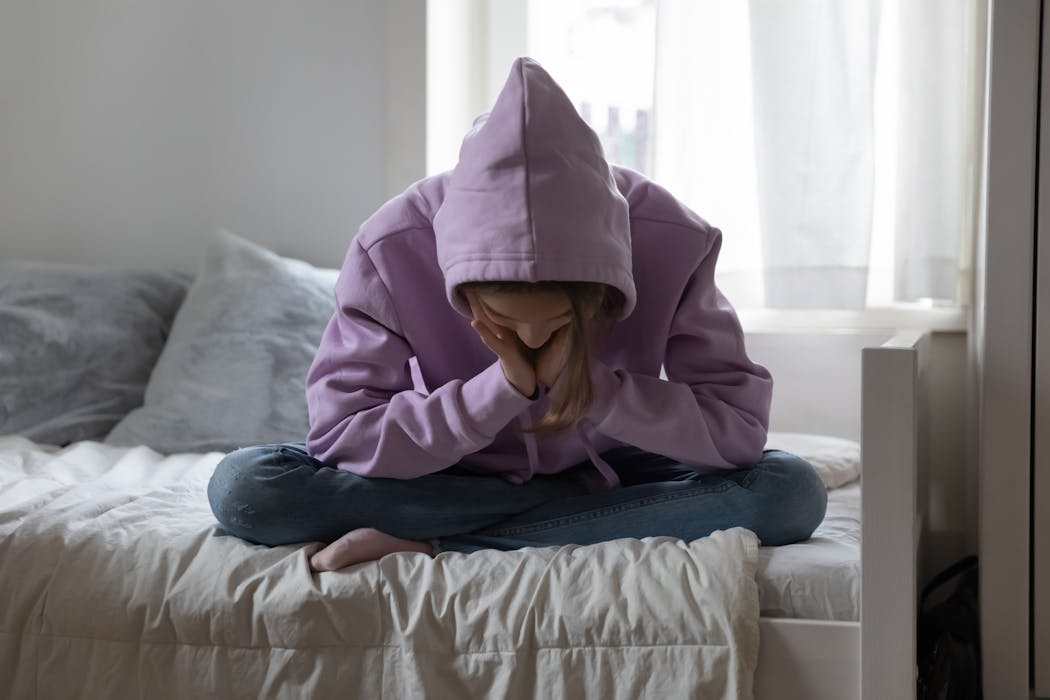
La puberté marque une rupture nette dans le bien-être émotionnel : chez les filles, l’anxiété et les troubles du sommeil augmentent dès 14 ans. Fizkes/Shutterstock

Dans l’ombre de la hausse du mal-être chez les jeunes, une réalité persiste : la puberté marque une rupture nette entre filles et garçons. Des études menées auprès de plus de 10 000 adolescents en Espagne révèlent un écart émotionnel qui s’installe tôt – et qui ne cesse de se creuser.


Ces dernières années, on observe une hausse préoccupante des problèmes de santé mentale chez les jeunes. Pourtant, un aspect essentiel passe souvent inaperçu : cette crise psychique ne touche pas les adolescents et les adolescentes de la même manière.

Dans nos récentes études sur le sommeil, l’anxiété, la dépression, la qualité de vie et le risque de troubles alimentaires, nous avons analysé les données de plus de 10 000 adolescents espagnols âgés de 11 à 19 ans. Les résultats sont sans équivoque : non seulement le fossé émotionnel entre filles et garçons existe, mais il se manifeste tôt et s’intensifie avec l’âge.

Le fossé apparaît à la puberté

La différence entre les sexes n’est pas innée. Elle apparaît avec les changements hormonaux et sociaux de la puberté. Au départ, filles et garçons affichent un bien-être émotionnel similaire. Cependant, à partir de l’âge de 14 ans environ chez les filles, lorsque la puberté bat son plein et que les changements physiques et hormonaux s’accélèrent, les trajectoires commencent à diverger. À partir de ce moment, les filles dorment moins bien, manifestent davantage d’anxiété et rapportent plus de symptômes dépressifs.

Pour beaucoup d’entre elles, l’adolescence devient une période émotionnellement plus intense. De nombreuses jeunes filles décrivent un sentiment de vide, une confusion identitaire et une plus grande difficulté à comprendre ou à réguler leurs émotions. Il ne s’agit pas simplement d’un mal-être passager : à ce stade, l’équilibre émotionnel se fragilise et la réponse au stress s’amplifie.

Un sentiment d’autonomie et de contrôle en recul

Cette phase s’accompagne également d’un changement notable dans la perception de leur autonomie. Certaines adolescentes expriment le sentiment d’avoir moins de prise sur leur temps, leur corps ou leurs décisions. Alors que, pour beaucoup de garçons, la maturité rime avec indépendance, elle s’accompagne chez les filles d’une pression accrue, d’attentes plus fortes et d’exigences plus lourdes envers elles-mêmes.

L’estime de soi chute nettement, tandis que la relation au corps devient plus critique. Les préoccupations liées au poids, à l’apparence ou à l’auto-évaluation constante se multiplient, augmentant le risque de troubles alimentaires. Parallèlement, de nombreuses adolescentes disent se sentir plus fatiguées, avec moins d’énergie et une forme physique en déclin par rapport à la période précédant la puberté.


À lire aussi :
Las chicas adolescentes presentan más síntomas de depresión que los chicos


Ce schéma rejoint les conclusions internationales du rapport de l’Organisation mondiale de la santé (OMS), qui souligne une détérioration plus marquée du bien-être psychologique des femmes à partir de la puberté, ainsi qu’une sensibilité émotionnelle accrue pendant cette période.

Ce n’est pas l’environnement qui change, mais la perception de soi

Un point clé ressort : la sphère sociale n’explique pas cet écart. Les relations familiales, scolaires et amicales évoluent de manière similaire chez les deux sexes. Les données ne révèlent pas de différences significatives en matière de soutien social, d’amitiés ou d’expériences de harcèlement.

Le fossé émotionnel ne provient donc pas d’un environnement plus hostile pour les filles. Il émerge de l’intérieur : dans la manière dont elles se sentent, se perçoivent et évaluent le contrôle qu’elles exercent sur leur vie. Il s’agit d’un déséquilibre intime, plutôt que social.


À lire aussi :
Instagram de chicas, instagram de chicos


Hormones et pression esthétique

Pourquoi cette divergence ? L’explication est complexe et multifactorielle. La puberté féminine survient plus tôt et s’accompagne de changements hormonaux plus intenses qui influent sur le sommeil, l’humeur et la gestion du stress. Mais ces transformations, naturelles et communes aux deux sexes, ne constituent ni la cause unique ni la solution. La différence tient à la manière dont elles sont vécues et interprétées dans un environnement social saturé d’attentes autour du corps féminin.

À cela s’ajoute un contexte contemporain dominé par la pression esthétique, l’exposition permanente aux réseaux sociaux et l’injonction à « être parfaite » sur tous les plans. Les dernières études disponibles établissent un lien entre ces dynamiques et la hausse du mal-être émotionnel chez les jeunes filles.

La puberté devient ainsi une période biologique et culturelle particulièrement exigeante pour elles.

Un fossé qui persiste à l’âge adulte

Ce schéma ne disparaît pas avec les années. Les données de notre groupe de recherche et les travaux scientifiques portant sur la population adulte montrent que les femmes continuent de présenter une qualité de sommeil moindre, des niveaux d’anxiété et de dépression plus élevés, ainsi qu’une insatisfaction corporelle plus marquée que les hommes.

Le fossé émotionnel qui s’ouvre à la puberté ne se comble pas spontanément avec le temps.

Le sport, un facteur de protection

Nos données montrent que l’activité physique, et en particulier la pratique du sport de compétition, est associée à un meilleur sommeil, une plus grande satisfaction de vie et un moindre mal-être émotionnel, aussi bien chez les garçons que chez les filles. Lorsque la pratique sportive est équivalente, les bénéfices le sont aussi : le sport protège de la même manière.

Cependant, l’écart de bien-être entre filles et garçons demeure. Non pas parce que le sport serait moins efficace pour elles, mais parce que les adolescentes font globalement moins d’exercice et participent moins aux compétitions sportives, comme le confirment notre étude et d’autres travaux antérieurs.

Le sport, à lui seul, ne peut compenser les facteurs sociaux qui pèsent plus lourdement sur les adolescentes. En revanche, encourager leur participation, notamment à des niveaux compétitifs, permet de réduire l’écart en leur donnant accès aux mêmes bénéfices que les garçons.

D’autres leviers pour réduire l’écart

La bonne nouvelle, c’est que d’autres stratégies contribuent également à diminuer cet écart émotionnel. Les études montrent que les interventions les plus efficaces sont celles qui renforcent la relation au corps, réduisent la comparaison sociale et améliorent l’estime de soi.

Les programmes scolaires axés sur l’éducation à l’image corporelle et à la perception de soi ont permis de réduire le risque de troubles alimentaires et d’améliorer le bien-être émotionnel des adolescentes.

Les initiatives visant à enseigner une utilisation critique des réseaux sociaux et à identifier les messages nuisibles à l’image de soi se révèlent également efficaces pour limiter la pression esthétique et numérique.


À lire aussi :
Cómo mejorar el bienestar de los universitarios con psicología positiva


Enfin, les stratégies de régulation émotionnelle et de pleine conscience, axées sur l’apprentissage de la gestion du stress, l’apaisement de l’esprit et la connexion avec le présent, ont été associées à une amélioration du bien-être psychologique et à une diminution des niveaux d’anxiété chez les adolescentes.

Ce n’est pas seulement leur responsabilité

Mais tout ne dépend pas d’elles. Les recherches montrent également que le contexte joue un rôle clé. Les familles qui écoutent, valident les émotions et encouragent l’autonomie protègent la santé mentale de leurs filles.

Quand les écoles enseignent des compétences socio-émotionnelles universelles, telles que la reconnaissance des émotions, la résolution des conflits ou le renforcement de l’estime de soi, les symptômes d’anxiété et de dépression dus à l’adolescence diminuent.

Et les médias et les réseaux sociaux ont une énorme responsabilité : la manière dont ils représentent les corps et la réussite influence directement la façon dont les jeunes filles se perçoivent.

En outre, les politiques publiques qui encadrent les messages liés au corps et à l’image, tout en favorisant des environnements éducatifs et sportifs inclusifs, contribuent à réduire la pression esthétique et à améliorer le bien-être des adolescentes.

Une période critique (et une occasion à saisir)

L’adolescence est une étape décisive. En soutenant les filles à ce moment clé, en renforçant leur autonomie, leur estime de soi et leur relation à leur corps et à leurs émotions, nous posons les bases d’un bien-être durable.

Il ne s’agit pas de leur demander d’être fortes. Il s’agit de créer des environnements qui ne les fragilisent pas. Investir aujourd’hui dans la santé mentale des adolescents, c’est construire une société plus juste et plus équilibrée demain.

The Conversation

Alejandro Legaz Arrese a reçu des financements du Groupe de recherche sur le mouvement humain financé par le gouvernement d’Aragon.

Carmen Mayolas-Pi a reçu des financements associés au groupe de recherche Movimiento Humano de la part du gouvernement d’Aragon.

Joaquin Reverter Masia a reçu des financements du programme national de recherche, développement et innovation axé sur les défis de la société, dans le cadre du plan national de R&D&I 2020-2025. Le titre du projet est : « Évaluation de divers paramètres de santé et niveaux d’activité physique à l’école primaire et secondaire » (numéro de subvention PID2020-117932RB-I00). En outre, la recherche bénéficie du soutien du groupe de recherche consolidé « Human Movement » de la Generalitat de Catalunya (référence 021 SGR 01619).

ref. Pourquoi les adolescentes se sentent-elles moins bien que les garçons ? – https://theconversation.com/pourquoi-les-adolescentes-se-sentent-elles-moins-bien-que-les-garcons-269663

Sols appauvris : l’autre menace qui pèse sur l’agriculture ukrainienne

Source: The Conversation – in French – By Mark Sutton, Honorary Professor in the School of Geosciences, University of Edinburgh

Un usage du fumier plus efficace fait partie des mesures proposées pour lutter contre l’appauvrissement des sols ukrainiens. Oleksandr Filatov/Shutterstock

L’Ukraine a longtemps été l’un des piliers de l’approvisionnement alimentaire mondial, mais la guerre et des décennies de déséquilibres dans l’usage des engrais ont profondément appauvri ses sols. Une crise silencieuse qui menace la reprise agricole du pays.


Pendant des décennies, l’Ukraine était connue comme le grenier du monde. Avant l’invasion russe de 2022, elle figurait parmi les principaux producteurs et exportateurs mondiaux d’huile de tournesol, de maïs et de blé. Ces productions contribuaient à nourrir plus de 400 millions de personnes. Mais derrière l’enjeu actuel des blocus céréaliers se cache une crise plus profonde et plus lente : l’épuisement même des nutriments qui rendent si productive la terre noire d’Ukraine.

Alors que la guerre a attiré l’attention mondiale sur les chaînes d’approvisionnement alimentaires de l’Ukraine, on sait bien moins de choses sur la durabilité des systèmes agricoles qui les sous-tendent. Si on ne se penche pas rapidement sur l’état de son sol, le pays pourrait perdre son rôle d’acteur majeur de la production alimentaire. Et cela pourrait avoir des conséquences bien au-delà de ses frontières.

Pour nos recherches, nous avons examiné la gestion des intrants dans l’agriculture ukrainienne au cours des 40 dernières années et constaté un renversement spectaculaire. Pendant l’ère soviétique, les terres agricoles ukrainiennes étaient suralimentées en engrais. Des intrants comme l’azote, le phosphore et le potassium étaient appliqués à des niveaux bien supérieurs à ce que les cultures pouvaient absorber. Cela a engendré une pollution de l’air et de l’eau.


À lire aussi :
Crimes contre l’environnement dans la guerre en Ukraine : que dit le droit ?


Mais depuis l’indépendance en 1991, le balancier est reparti dans la direction opposée. L’usage d’engrais, en particulier le phosphore et le potassium, s’est effondré à mesure que les importations diminuaient, que le cheptel déclinait (réduisant la disponibilité du fumier) et que les chaînes d’approvisionnement se désagrégeaient. En 2021, juste avant l’invasion, les sols ukrainiens montraient déjà des signes de fatigue. Les agriculteurs apportaient beaucoup moins de phosphore et de potassium que ce que les cultures prélevaient, environ 40 à 50 % de phosphore en moins et 25 % de potassium en moins, et la matière organique des sols avait chuté de près de 9 % depuis l’indépendance.

Dans de nombreuses régions, les agriculteurs utilisaient trop d’azote, mais souvent pas assez de phosphore et de potassium pour maintenir la fertilité à long terme. En outre, bien que le cheptel ait fortement diminué au cours des dernières décennies, notre analyse montre qu’environ 90 % du fumier encore produit est gaspillé. Cela équivaut à environ 2,2 milliards de dollars américains (1,9 milliard d’euros) d’engrais chaque année. Ces déséquilibres ne sont pas seulement un enjeu national. Ils menacent la productivité agricole de l’Ukraine à long terme et, par extension, l’approvisionnement alimentaire mondial qui en dépend.

La guerre a nettement aggravé le problème. L’invasion russe a perturbé les chaînes d’approvisionnement en engrais et endommagé des installations de stockage. Les prix des engrais ont flambé. De nombreux agriculteurs ont volontairement réduit leurs apports en engrais en 2022-2023 pour limiter les risques financiers, sachant que leurs récoltes pouvaient être détruites, volées ou rester invendue si les circuits d’exportation étaient fermés.

Nos nouvelles recherches mettent en lumière une tendance inquiétante au niveau national. En 2023, les cultures récoltées ont prélevé dans le sol jusqu’à 30 % d’azote, 80 % de phosphore et 70 % de potassium de plus que ce qu’elles recevaient via la fertilisation, les microbes du sol et l’air (y compris ce qui tombe avec la pluie et ce qui se dépose depuis l’atmosphère). Si cette tendance se confirme, le sol ukrainien, réputé pour sa fertilité, pourrait subir une dégradation durable, compromettant la capacité du pays à se relever et à approvisionner les marchés alimentaires mondiaux une fois la paix revenue.

Reconstituer la fertilité des sols

Certaines solutions existent et beaucoup sont réalisables même en temps de guerre. Notre équipe de recherche a élaboré un plan pour les agriculteurs ukrainiens qui pourrait rapidement faire la différence. Ces mesures pourraient améliorer sensiblement l’efficacité des intrants et réduire les pertes, en maintenant des exploitations productives et rentables tout en limitant la dégradation des sols et la pollution environnementale.

Ces solutions s’appuient sur :

  1. Une fertilisation de précision – appliquer les engrais au bon moment, au bon endroit et en bonne quantité afin de répondre efficacement aux besoins des cultures.

  2. Une meilleure valorisation du fumier – mettre en place des systèmes locaux pour collecter le fumier excédentaire et le redistribuer à d’autres exploitations, réduisant ainsi la dépendance aux engrais de synthèse (importés).

  3. Un meilleur usage des engrais – utiliser des engrais à l’efficacité renforcée, qui libèrent les nutriments lentement, limitant les pertes dans l’atmosphère ou dans l’eau.

  4. La plantation de légumineuses (comme les pois ou le soja). Les intégrer dans les rotations améliore la santé des sols tout en apportant naturellement de l’azote.

Certaines de ces actions nécessitent des investissements, notamment pour créer de meilleures installations de stockage et pour améliorer le traitement ou l’application du fumier sur les parcelles. Mais beaucoup peuvent être mises en œuvre, au moins partiellement, sans avoir à injecter d’argent. Le fonds de relance de l’Ukraine, soutenu par la Banque mondiale pour aider le pays une fois la guerre terminée, inclut l’appui à l’agriculture et il pourrait jouer, ici, un rôle essentiel.

Pourquoi est-ce important au-delà de l’Ukraine ?

La crise des intrants en Ukraine est un avertissement pour le monde. Une agriculture intensive et déséquilibrée, qu’il s’agisse d’un usage excessif, insuffisant ou inadapté des engrais, n’est pas durable. Une mauvaise gestion contribue à l’insécurité alimentaire comme à la pollution de l’environnement.

Nos travaux s’inscrivent dans le cadre du futur International Nitrogen Assessment, attendu en 2026, qui soulignera la nécessité d’une gestion mondiale efficace de l’azote et présentera des solutions concrètes pour maximiser les bénéfices de l’azote : amélioration de la sécurité alimentaire, résilience climatique, qualité de l’eau et de l’air.

Soutenir les agriculteurs ukrainiens offre l’occasion non seulement de reconstruire un pays, mais aussi de transformer l’agriculture mondiale afin de contribuer à un avenir plus résilient et durable.


À lire aussi :
Les politiques climatiques, ces autres victimes de la guerre de Poutine en Ukraine


The Conversation

Mark Sutton travaille pour le UK Centre for Ecology & Hydrology, basé à sa station de recherche d’Édimbourg. Il est professeur honoraire à l’Université d’Édimbourg, au sein de l’École des géosciences. Il reçoit des financements de UK Research and Innovation (UKRI) via son Global Challenges Research Fund (GCRF), du ministère britannique de l’Environnement, de l’Alimentation et des Affaires rurales (Defra), du Programme des Nations unies pour l’environnement (PNUE) et du Fonds pour l’environnement mondial (FEM). Il est directeur du Système international de gestion de l’azote (INMS), financé par le FEM/PNUE, ainsi que du South Asian Nitrogen Hub du GCRF. Il est coprésident du groupe de travail de la CEE-ONU sur l’azote réactif (TFRN) et du Partenariat mondial pour la gestion des nutriments (GPNM), convoqué par le PNUE.

Sergiy Medinets reçoit des financements de UKRI, de Defra, de DAERA, de la British Academy, du PNUE, du FEM, du PNUD et de l’UE.

ref. Sols appauvris : l’autre menace qui pèse sur l’agriculture ukrainienne – https://theconversation.com/sols-appauvris-lautre-menace-qui-pese-sur-lagriculture-ukrainienne-269970