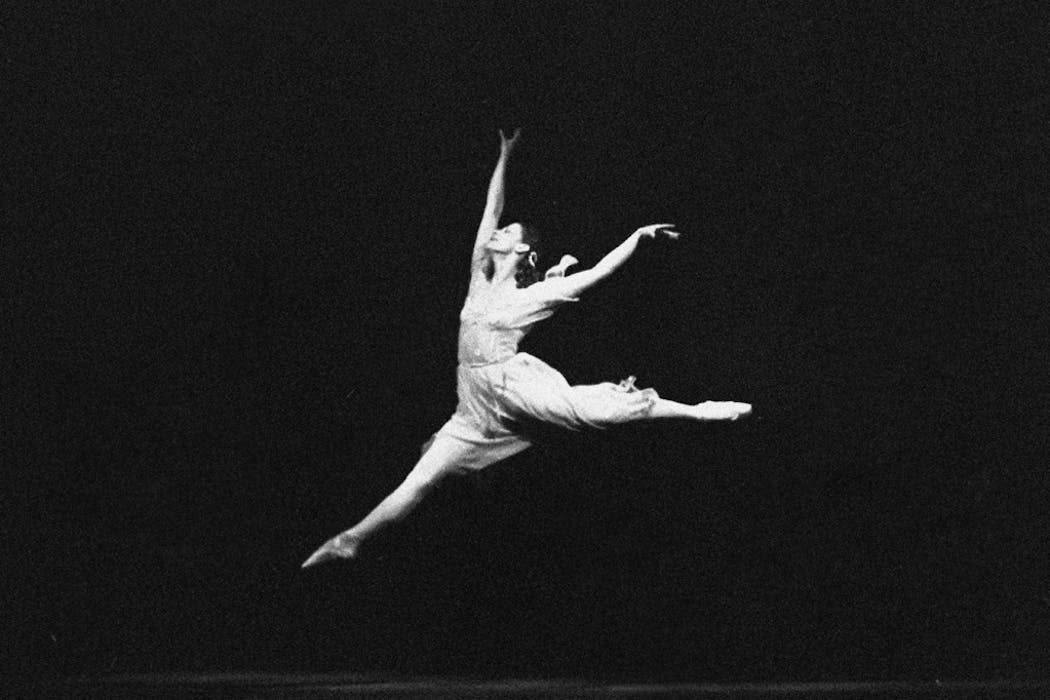
Cuando se subía a un escenario, era diferente. Podía ser más brusca en los pasos y, pese a tener un movimiento magistral de brazos, solo bordear la corrección técnica con los pies. Era rebelde, imponía su criterio artístico y se negaba a amoldarse a lo establecido. Pero tenía una capacidad interpretativa que, de alguna manera, conectó con el público de forma extraordinaria. Por eso Maya Plisetskaya ocupa un lugar destacado en la historia de la danza.
Plisetskaya nació en Moscú el 20 de noviembre de 1925 en una familia muy relacionada con las artes escénicas. Su madre era actriz de cine mudo y sus tíos maternos, Asaf y Sulamith, fueron bailarines destacados del Bolshoi, el legendario teatro de la ópera ruso. Maya, al igual que sus dos hermanos, tomó el camino de la danza, convirtiéndose para muchos en una de las mejores bailarinas del siglo XX.
Después de graduarse en 1943 en la escuela coreográfica de Moscú como alumna aventajada de Elizaveta Gerdt, ingresó en el ballet del Bolshoi. En esta compañía ocupó la categoría de prima ballerina assoluta desde 1960, un título honorífico y raro que se da a las bailarinas que son consideradas excepcionales.
En 1958 se casó con el compositor Rodión Shchedrín (1932-2025), que escribió y orquestó varios ballets creados y protagonizados por ella, como Anna Karenina (1972), basado en la novela homónima de Tolstoi.
Los brazos y los saltos
Plisetskaya destacó por tener una personalidad desafiante, arrolladora y rebelde, aspectos que le permitieron abordar con éxito personajes dramáticos cargados de temperamento y con una gran demanda interpretativa como Odile ([conocido popularmente como el cisne negro])(https://www.youtube.com/watch?v=6PI4mWIoQMo&t=2s) de El lago de los cisnes, Zarema de La fuente de Bachisarai, Laurencia y Carmen.
En el plano técnico destacó por su arrojo a la hora de enfrentarse a las dificultades técnicas, por la altura de sus saltos, la flexibilidad de su espalda y la elegancia en los movimientos de sus brazos (llamados port de bras en ballet), que la hicieron brillar en el solo “La muerte del cisne”. En él demostró tener capacidad para interpretar papeles de mayor lirismo y consiguió con ello conquistar al público. Así sucedió durante una gira por Japón (en 1989 y ya con 64 años), donde realizó hasta cinco bises de esa pieza. Era –y es– poco frecuente encontrar esta doble faceta en una misma bailarina, y quizás esto la hizo tan especial.
La muerte del cisne en El lago de los cisnes.
Pero Plisetskaya no solo bailó el repertorio clásico que se escenificaba en Rusia. También participó en montajes de danza moderna, trabajando directamente con coreógrafos como Alberto Alonso, Roland Petit y Maurice Béjart, quienes crearon especialmente para ella obras emblemáticas como Carmen suite (1967), el dúo La rose malade (1973) e Isadora (1976).
Eso sí, nunca bailó aquello que no le gustaba; por ejemplo, Giselle, un personaje que consideraba opuesto a ella por ser demasiado resignada y apacible.
Una íntima relación con España
Aunque actuó por todo el mundo, España fue un país especialmente cercano para ella, y confesaba lo mucho que disfrutaba bailando coreografías de tema español.
Protagonizó el ballet Don Quijote y, desde 1956, bailó Laurencia, una obra creada por el bailarín y coreógrafo georgiano Vakhtang Chabukiani en 1939 basada en la Fuenteovejuna de Lope de Vega. Paradójicamente, se convirtió en uno de los ballets preferidos de Stalin. Es antológica la sucesión de saltos que Plisetskaya ejecutaba en la variación de la boda con Frondoso, en la que casi tocaba la cabeza con el pie.
Maya Plisetskaya en un momento de Laurencia.
En cuanto a Carmen, fue un personaje que siempre la atrajo y ansiaba interpretar. Ella misma eligió al cubano Alberto Alonso –después de ver una de sus coreografías durante las representaciones del Ballet Nacional de Cuba en Moscú– para que le creara este ballet a partir de las adaptaciones de la ópera de Bizet que hizo Rodión Shchedrín. Su última función del mismo fue en Taiwán (1990), durante su etapa como directora del español Ballet del Teatro Lírico Nacional.
Según Alonso, la Carmen de Plisetskaya destacaba por la firmeza, la madurez, el enfrentamiento y la valentía. Era completamente diferente a la que poco después él creó para su cuñada, la gran bailarina y coreógrafa cubana Alicia Alonso. Precisamente yo tuve el honor de protagonizar esta última versión en muchas ocasiones mientras fui primera bailarina.
Foto de la bailarina Maya Plisetskaya actuando en Carmen Suite Ballet, de Alberto Alonso-Bizet-R. Shchedrin. Wikimedia Commons
Mientras dirigió el Ballet del Teatro Lírico Nacional (entre 1987 y 1990), José Granero creó para ella María Estuardo (1988), una impresionante producción con escenografía y vestuario de Hugo de Ana. La bailarina aseguró que disfrutó con la precisión dramática del maestro Granero.
En 1993 Maya Plisetskaya recibió la nacionalidad española por Real Decreto. Sin embargo, nunca llegó a hablar el idioma y solo chapurreaba un poco inglés. Esta barrera impidió que su trabajo de dirección fuera más fluido y directo, por lo que en esta tarea se apoyó mucho en su hermano Azari y en el estadounidense Ray Barra, ya que ambos hablaban español.
Plisetskaya se retiró de la escena pasados los 80 años. Antes había ido abandonando las zapatillas de puntas y adaptando las coreografías que interpretaba para hacerlas técnicamente más asequibles a su edad y condición física.
Por su 75 aniversario, Maurice Béjart le compuso el solo Ave, Maya, que todavía bailó en un festival español con 81 años, la última vez que actuó en el país.
El 2 de mayo de 2015 falleció en Múnich, donde residía con su esposo. Afortunadamente, dejó escrita una autobiografía –dividida en Yo, Maya Plisetskaya (1995) y Trece años después (2006)–, que se tradujo a más de diez idiomas y que aporta infinitos detalles personales y profesionales sobre su vida.
Maya Plisetskaya fue una bailarina independiente que desafió las normas y que bailó de una forma muy diferente a la de otras artistas soviéticas de su época. Adorada por unos y menos admirada por otros, está claro que no dejó a nadie indiferente.
Laura Hormigón no recibe salario, ni ejerce labores de consultoría, ni posee acciones, ni recibe financiación de ninguna compañía u organización que pueda obtener beneficio de este artículo, y ha declarado carecer de vínculos relevantes más allá del cargo académico citado.
Source: The Conversation – (in Spanish) – By Tulio Alberto Álvarez-Ramos, Profesor/Investigador Instituto de Investigaciones Jurídicas de la Universidad Católica Andrés Bello. Jefe de Cátedra de Derecho Constitucional de la Universidad Central de Venezuela, Universidad Católica Andrés Bello
La COP30, que se desarrolla en Belém do Pará (Brasil) entre el 6 y el 21 de noviembre de 2025, representa un momento crucial para redefinir el rol de los Estados y organizaciones protagonistas en la arquitectura ambiental global. En medio de un escenario de negociaciones aún en desarrollo, esta edición no solo revisa los compromisos del Acuerdo de París, sino que abre espacio para propuestas estructurales que vinculen justicia ambiental, equidad intergeneracional y gobernanza efectiva.
Los derechos de la naturaleza
Este es el tiempo de retar los modelos dominantes de gobernanza climática. Una vía es la adaptación de la normativa internacional mediante criterios de equidad. Para ello, hay que utilizar la función creadora y correctora de los tribunales frente a los vacíos normativos y la inacción estatal ante la crisis climática.
Es lo que he calificado como pretorianismo ambiental, que se traduce en utilizar a la jurisprudencia como fuente transformadora del derecho. Esto garantiza una ecología integral mediante principios generales y mecanismos judiciales innovadores. No solo se trata de la protección de la naturaleza como objeto, sino en reconocerla como sujeto de derechos y definir este parámetro como principio de dignidad ecológica.
Arquitectura institucional para la justicia climática
El reto es combinar mecanismos jurisdiccionales y financieros con base regional y alcance global. Esta arquitectura parte de una premisa ética: frente a la magnitud del daño ambiental y su efecto diferido sobre generaciones futuras, es necesario repensar los fundamentos de la responsabilidad en contextos transnacionales.
La justicia ambiental no se reduce al reconocimiento de derechos, sino que exige la creación de estructuras institucionales que permitan su ejercicio y reparación efectiva. Considero que explorar esta posibilidad debería ser uno de los objetivos básicos de la COP30. Y hacerlo desde una dimensión indemnizatoria, dirigida a la reparación económica y moral por los daños derivados del incumplimiento de deberes ambientales.
Pero hay que incorporar dos dimensiones complementarias. Por un lado, la precautelar, dirigida a diseñar y ejecutar medidas eficaces para prevenir o contener prácticas con riesgo razonable de daño ambiental, incluyendo omisiones estatales. Por otro, la redistributiva, en función de la asignación equitativa de cargas según la responsabilidad histórica y la capacidad económica de los actores involucrados. Este último aspecto implica corregir desigualdades estructurales que se evidencian, tanto en la responsabilidad acumulada como en la capacidad actual de los Estados y actores económicos.
Fondo Internacional de Reparación Ambiental, ¿un sueño realizable?
No se trata solo de definir montos a la reparación del daño, sino de ponderar formulas de buen gobierno internacional para la administración de esos fondos. Estos se constituirían principalmente por medio de aportes de los países históricamente más contaminantes. Su cuantía estaría en función de indicadores como emisiones acumuladas, huella de carbono y modelos de producción. La participación proporcional de países en desarrollo podría ajustarse por parámetros objetivos como el Producto Interior Bruto (PIB), el índice de vulnerabilidad climática y el impacto local del daño ambiental.
Este fondo internacional estaría vinculado a las decisiones reparatorias dictadas por tribunales ambientales internacionales. A través de él se financiarían medidas de saneamiento ecológico, educación ambiental y acceso a la justicia.
Se trataría de un modelo de gobernanza horizontal y plural, alejado de esquemas de voto ponderado por contribución como los del FMI o el Banco Mundial. Los órganos de dirección podrían estar integrados por Estados, comunidades autóctonas, organizaciones científicas independientes y representantes de comunidades climáticamente vulnerables.
El “pretorio” ambiental
El concepto pretorio viene del jus praetorium latino. Este era el derecho creado por el pretor romano a través de sus edictos. Hoy lo quiero utilizar en relación con la creación normativa ambiental bajo una dinámica distinta, en constante transformación por la manufactura judicial.
El paso inmediato para crear este “pretorio” ambiental sería la implantación de tribunales internacionales para la protección de los bienes comunes globales. Tendrían competencia para resolver disputas interestatales y conocer denuncias de actores no estatales (organizaciones indígenas, comunidades afectadas u ONGs) relacionadas con el incumplimiento de obligaciones climáticas. Esta jurisdicción debe referir la ejecución de sus decisiones vinculantes al Fondo Ambiental Regional, garantizando que las medidas no resulten ilusorias por falta de recursos o voluntad política.
La ejecución efectiva de las sentencias ambientales requiere que el fondo esté regulado por un tratado internacional especial que le otorgue personalidad jurídica propia. Este recurso monetario serviría para ofrecer soporte económico a las condenas por daño ambiental, así como para financiar acciones de mitigación, adaptación y restauración ecológica.
En caso de sentencia firme, el fondo estaría obligado a liberar los recursos asignados sin autorización ulterior, garantizando así que las decisiones judiciales tengan impacto material inmediato.
En el contexto de la COP30, estas propuestas adquieren relevancia frente a los debates sobre financiamiento climático, mercados de carbono y mecanismos de compensación.
La agenda oficial incluye discusiones sobre la implementación del artículo 6 del Acuerdo de París, la protección de los bosques tropicales y la participación de comunidades locales en la gobernanza climática. Sin embargo, persisten tensiones entre los enfoques tecnocráticos y las demandas de justicia estructural.
Una ética ambiental para la esperanza
La propuesta del pretorio ambiental no pretende sustituir los mecanismos existentes, sino complementarlos con una visión ética, jurídica y operativa que permita enfrentar los desafíos del cambio climático con herramientas institucionales robustas.
Estamos en una nueva encrucijada planetaria y pareciera que la humanidad aparta su mirada hacia otras aspiraciones. Se aleja de esa naturaleza revelada como testimonio silencioso del misterio creador. Defender sus derechos implica el ejercicio de una custodia de la casa común. Ese santuario compartido donde la vida se manifiesta y donde todo ser —por humilde que parezca— tiene algo que decir de su origen. Reconocerlo in extremis no es solo un acto de justicia, sino de escucha profunda.
Tulio Alberto Álvarez-Ramos no recibe salario, ni ejerce labores de consultoría, ni posee acciones, ni recibe financiación de ninguna compañía u organización que pueda obtener beneficio de este artículo, y ha declarado carecer de vínculos relevantes más allá del cargo académico citado.
¿Se imagina necesitar el permiso por escrito de su marido o de su padre para abrir una cuenta bancaria? ¿Que casarse signifique abandonar su trabajo para dedicarse a las tareas del hogar? ¿Que no pueda salir a la calle sin maquillarse, peinarse y arreglarse? No, con Franco no se vivía mejor.
Esas cosas ocurrían en el mejor de los casos, si se era de “familia bien”. Si se era una mujer de clase social baja, las opciones vitales y profesionales estaban aún más limitadas.
El trabajo fuera de casa estaba mal visto por el régimen y legalmente restringido, pero la necesidad económica obligaba a muchísimas mujeres a buscar cualquier ingreso posible para subsistir. La mayoría de las mujeres pobres trabajaba desde muy joven en labores duras y mal remuneradas, muchas veces en la economía sumergida o como sirvientas, limpiadoras, costureras, vendedoras en mercados o ayudando en el campo y la industria, siempre con salarios inferiores a los de los hombres.
Hoy, décadas después, esos derechos han sido recuperados y ampliados, y recordar este pasado resulta esencial, sobre todo para las nuevas generaciones, ante discursos que idealizan aquel régimen o proponen retrocesos en materia de igualdad.
Los derechos en la Segunda República
La Segunda República fue un periodo de grandes avances para las mujeres en España. Se aprobaron leyes que permitieron su acceso a cargos públicos, el divorcio, la patria potestad compartida y la no discriminación por el estado civil en el acceso al empleo o en el despido.
Por primera vez, la Constitución de 1931 establecía la no discriminación jurídica por razón de sexo, el derecho al voto femenino, la igualdad ante la ley, el derecho a trabajar en igualdad de condiciones con los hombres y la igualdad de derechos en el matrimonio.
Se promulgó la Ley de Divorcio de 1932, que permitía la disolución del matrimonio por mutuo acuerdo o por justa causa y reconocía derechos igualitarios para ambos cónyuges.
Durante los años veinte y treinta surge la figura de la mujer moderna, principalmente de clase burguesa o alta, que desafía los roles tradicionales femeninos de matrimonio para buscar autonomía, educación y participación cultural.
Estas mujeres accedieron progresivamente a espacios antes masculinos como universidades, tertulias, espectáculos artísticos y el deporte. La moda y los nuevos hábitos (fumar, trabajar, viajar solas) se convierten en símbolos de su independencia.
Se produjeron episodios simbólicos de rebeldía, como el de “Las Sinsombrero”, en el que mujeres rompieron abiertamente con las convenciones sociales y estéticas, buscando la visibilidad y una identidad artística y profesional autónoma.
Este grupo incluye, por ejemplo, a las pintoras Maruja Mallo y Margarita Manso, entre otras. Rosa Chacel y María Zambrano destacaron en la literatura, la filosofía y el pensamiento, conectando las tendencias de la vanguardia europea con la realidad intelectual española.
De esta época también son Clara Campoamor, abogada, diputada y principal impulsora del sufragio femenino en España; Victoria Kent, jurista y diputada, que fue la primera mujer del mundo en ejercer la abogacía ante un tribunal militar y la primera Directora General de Prisiones en España; Federica Montseny, escritora, militante anarquista y la primera mujer ministra en España; María Teresa León, escritora, intelectual y militante republicana, conocida por su labor en la Alianza de Intelectuales Antifascistas; o Margarita Salas, una de las grandes pioneras de la ciencia española.
Retrocesos y represión durante el franquismo
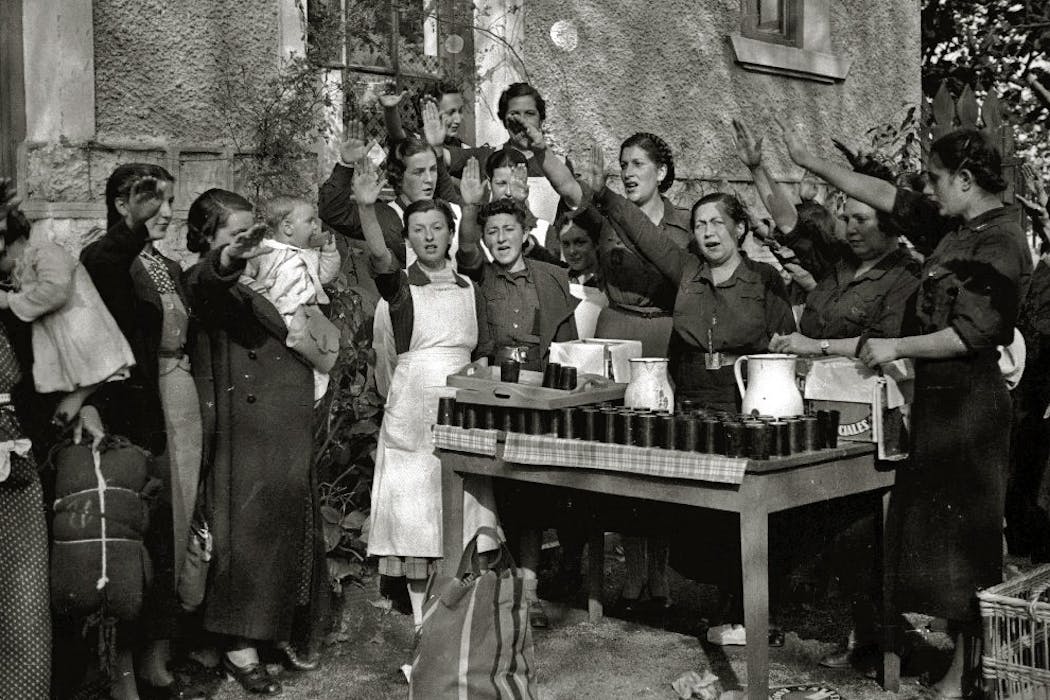
Con el franquismo, a partir de 1939, todos estos avances fueron sistemáticamente suprimidos. El régimen devolvió a las mujeres a la condición de menores tuteladas: toda acción relevante, como trabajar, disponer de patrimonio, viajar al extranjero o incluso ejercer la patria potestad de sus hijos o hijas, requería la llamada licencia marital (la autorización del marido o del padre). Las intelectuales y artistas de la República fueron borradas por la historiografía dominante y discriminadas en el ámbito profesional.
La educación y los medios de comunicación reforzaban la idea de que la única función femenina era la de madre y esposa abnegada.
La “Sección Femenina” –rama femenina de la Falange Española de las JONS, fundada en 1934 y liderada por Pilar Primo de Rivera– imponía una estricta reeducación basada en la sumisión y el servicio al hogar. Su hermano José Antonio Primo de Rivera, fundador de Falange, definía la función de las mujeres en estos términos:
“Tampoco somos feministas. No entendemos que la manera de respetar a la mujer consista en sustraerla a su magnífico destino y entregarla a funciones varoniles. A mí siempre me ha dado tristeza ver a la mujer en ejercicios de hombre, toda afanada y desquiciada en una rivalidad donde lleva –entre la morbosa complacencia de los competidores masculinos– todas las de perder. El verdadero feminismo no debiera consistir en querer para las mujeres las funciones que hoy se estiman superiores, sino en rodear cada vez de mayor dignidad humana y social a las funciones femeninas”.
Estos estudios relatan cómo la violencia sexual se utilizó, tanto durante la Guerra Civil como en la posguerra, para castigar y atemorizar a mujeres vinculadas al bando republicano o consideradas peligrosas para el régimen.
Se describen casos de violaciones individuales y grupales, a menudo seguidas de asesinatos, humillaciones públicas o castigos adicionales. Muchas mujeres presas sufrieron abusos sexuales de manera recurrente en cárceles, cuarteles o durante traslados.
El robo de bebés fue una medida institucionalizada: miles fueron arrebatados a sus madres republicanas y entregados a familias afines al régimen o a instituciones controladas por la Iglesia católica.
Un decreto de 1940 permitía quitar a las madres la patria potestad de su descendencia por “malos antecedentes”, provocando pérdidas y desapariciones masivas, documentadas por historiadores y organizaciones de memoria histórica.
Durante el franquismo, las condiciones de vida fueron muy duras en barrios obreros o en chabolas: las mujeres tenían que buscar agua, hacer largas colas por alimentos, cuidar de una numerosa descendencia –porque en muchos casos no tenían acceso a la planificación familiar– y sortear enfermedades, sin apenas acceso a centros médicos, todo ello siempre bajo vigilancia social y sin horarios ni protección social efectiva.
El empleo propio apenas suponía autonomía personal: los salarios ayudaban a la economía familiar, pero prácticamente ninguna mujer humilde podía permitirse soñar con independencia real ni con romper el ciclo de la pobreza y el sometimiento.
Recuperación de derechos y nueva ciudadanía
Aunque el franquismo no fue un periodo uniforme y, hacia el final, hubo avances, la recuperación de derechos no empezó hasta después de la muerte de Franco y de la Constitución de 1978.
A partir de entonces, la igualdad legal entre hombres y mujeres se reconoció constitucionalmente y se fueron suprimiendo las leyes discriminatorias. Se recuperaron el divorcio, el acceso igualitario al empleo y a la educación, y se fueron aprobando leyes para avanzar en igualdad salarial, permisos de maternidad y paternidad, y protección frente a la violencia machista.
Hoy, si bien la igualdad plena aún es un reto, España cuenta con leyes de igualdad, cuotas de representación y derechos reproductivos (como el aborto y la anticoncepción regulados) y es referente europeo en políticas de género.
Es fundamental recordar que votar a partidos ultraderechistas que minimizan, cuestionan o atacan los avances feministas –aunque también estén representados por mujeres– puede poner en peligro derechos que costaron décadas y luchas para recuperar.
Con Franco, las mujeres no vivían mejor, no, sino que estaban sometidas, sin derechos civiles, políticos ni laborales. Solo la democracia y el feminismo han hecho avanzar la igualdad: una sociedad justa no puede permitirse olvidar su pasado.
Miren Gutiérrez no recibe salario, ni ejerce labores de consultoría, ni posee acciones, ni recibe financiación de ninguna compañía u organización que pueda obtener beneficio de este artículo, y ha declarado carecer de vínculos relevantes más allá del cargo académico citado.
Incumbent Prime Minister Dr ‘Aisake Eke, who took on the role nine months ago, and his predecessor Hu’akavameiliku Siaosi Sovaleni, who resigned ahead of a no-confidence motion, are contesting the election.Photo: RNZ Pacific
Polls have opened in Tonga on Thursday for voters to elect their 17 representatives in the Legislative Assembly, while the kingdom’s nobles will also elect nine of their own representatives today.
More than 200 polling stations are operating across the country’s islands, with a team of about 600 officials co-ordinating voting. About half of the polling stations are on Tongatapu.
There are 71 candidates vying for a seat in parliament, including eight women.
The electoral roll has more than 64,000 voters, however Supervisor of Elections Peter Vuki does not expect that many ballots to be cast.
Voter participation has declined in the past 15 years, which Vuki said was due to a range of reasons, including large numbers of registered voters being overseas on polling day.
He said with a polling station in every village, anyone who is registered to vote should be turning up today.
“It should be easy for them to get to either the community hall or church hall that we’re using for these elections. So hopefully they will turn up and cast [a ballot],” Vuki said.
“It is very important to vote – it’s very important for all of us.”
Incumbent Prime Minister Dr ‘Aisake Eke, who took on the role nine months ago, and his predecessor Hu’akavameiliku Siaosi Sovaleni, who resigned ahead of a no-confidence motion, are contesting the election. Both men are being touted as key players for the prime ministership. Two nobles’ representatives – Lord Fakafanua and Lord Tu’ivakano – have also expressed interest in being prime minister.
Following the election, the newly convened Legislative Assembly is responsible for nominating one of its elected members to be appointed by the King as the Prime Minister. Following that, the prime minister picks his Cabinet, up to four of whom may be from outside parliament.
Polling stations for the general public will close at 4pm local time.
The nobles’ election process runs from 10am to 12pm. Results are announced at each polling station once voting finishes.
The overall count is then tallied at the Electoral Commission’s office in Nuku’alofa.
Vuki said he expected the results to be announced tonight.
– Published by EveningReport.nz and AsiaPacificReport.nz, see: MIL OSI in partnership with Radio New Zealand
Source: The Conversation – USA (2) – By Shelley Mitchell, Senior Extension Specialist in Horticulture and Landscape Architecture, Oklahoma State University
Pecans have a storied history in the United States. Today, American trees produce hundreds of million of pounds of pecans – 80% of the world’s pecan crop. Most of that crop stays here. Pecans are used to produce pecan milk, butter and oil, but many of the nuts end up in pecan pies.
Throughout history, pecans have been overlooked, poached, cultivated and improved. As they have spread throughout the United States, they have been eaten raw and in recipes. Pecans have grown more popular over the decades, and you will probably encounter them in some form this holiday season.
I’m an extension specialist in Oklahoma, a state consistently ranked fifth in pecan production, behind Georgia, New Mexico, Arizona and Texas. I’ll admit that I am not a fan of the taste of pecans, which leaves more for the squirrels, crows and enthusiastic pecan lovers.
The spread of pecans
The pecan is a nut related to the hickory. Actually, though we call them nuts, pecans are actually a type of fruit called a drupe. Drupes have pits, like the peach and cherry.
Three pecan fruits, which ripen and split open to release pecan nuts, clustered on a pecan tree. IAISI/Moment via Getty Images
The pecan nuts that look like little brown footballs are actually the seed that starts inside the pecan fruit – until the fruit ripens and splits open to release the pecan. They are usually the size of your thumb, and you may need a nutcracker to open them. You can eat them raw or as part of a cooked dish.
The pecan derives its name from the Algonquin “pakani,” which means “a nut too hard to crack by hand.” Rich in fat and easy to transport, pecans traveled with Native Americans throughout what is now the southern United States. They were used for food, medicine and trade as early as 8,000 years ago.
Pecans are native to the southern United States, and while they had previously spread along travel and trade routes, the first documented purposeful planting of a pecan tree was in New York in 1722. Three years later, George Washington’s estate, Mount Vernon, had some planted pecans. Washington loved pecans, and Revolutionary War soldiers said he was constantly eating them.
Meanwhile, no one needed to plant pecans in the South, since they naturally grew along riverbanks and in groves. Pecan trees are alternate bearing: They will have a very large crop one year, followed by one or two very small crops. But because they naturally produced a harvest with no input from farmers, people did not need to actively cultivate them. Locals would harvest nuts for themselves but otherwise ignored the self-sufficient trees.
It wasn’t until the late 1800s that people in the pecan’s native range realized the pecan’s potential worth for income and trade. Harvesting pecans became competitive, and young boys would climb onto precarious tree branches. One girl was lifted by a hot air balloon so she could beat on the upper branches of trees and let them fall to collectors below. Pecan poaching was a problem in natural groves on private property.
Pecan cultivation begins
Even with so obvious a demand, cultivated orchards in the South were still rare into the 1900s. Pecan trees don’t produce nuts for several years after planting, so their future quality is unknown.
To guarantee quality nuts, farmers began using a technique called grafting; they’d join branches from quality trees to another pecan tree’s trunk. The first attempt at grafting pecans was in 1822, but the attempts weren’t very successful.
Grafting pecans became popular after an enslaved man named Antoine who lived on a Louisiana plantation successfully produced large pecans with tender shells by grafting, around 1846. His pecans became the first widely available improved pecan variety.
The variety was named Centennial because it was introduced to the public 30 years later at the Philadelphia Centennial Expedition in 1876, alongside the telephone, Heinz ketchup and the right arm of the Statue of Liberty.
This technique also sped up the production process. To keep pecan quality up and produce consistent annual harvests, today’s pecan growers shake the trees while the nuts are still growing, until about half of the pecans fall off. This reduces the number of nuts so that the tree can put more energy into fewer pecans, which leads to better quality. Shaking also evens out the yield, so that the alternate-bearing characteristic doesn’t create a boom-bust cycle.
US pecan consumption
The French brought praline dessert with them when they immigrated to Louisiana in the early 1700s. A praline is a flat, creamy candy made with nuts, sugar, butter and cream. Their original recipe used almonds, but at the time, the only nut available in America was the pecan, so pecan pralines were born.
During the Civil War and world wars, Americans consumed pecans in large quantities because they were a protein-packed alternative when meat was expensive and scarce. One ounce of pecans has the same amount of protein as 2 ounces of meat.
After the wars, pecan demand declined, resulting in millions of excess pounds at harvest. One effort to increase demand was a national pecan recipe contest in 1924. Over 21,000 submissions came from over 5,000 cooks, with 800 of them published in a book.
Pecan consumption went up with the inclusion of pecans in commercially prepared foods and the start of the mail-order industry in the 1870s, as pecans can be shipped and stored at room temperature. That characteristic also put them on some Apollo missions. Small amounts of pecans contain many vitamins and minerals. They became commonplace in cereals, which touted their health benefits.
In 1938, the federal government published the pamphlet Nuts and How to Use Them, which touted pecans’ nutritional value and came with recipes. Food writers suggested using pecans as shortening because they are composed mostly of fat.
The government even put a price ceiling on pecans to encourage consumption, but consumers weren’t buying them. The government ended up buying the surplus pecans and integrating them into the National School Lunch Program.
While you are sitting around the Thanksgiving table this year, you can discuss one of the biggest controversies in the pecan industry: Are they PEE-cans or puh-KAHNS?
Shelley Mitchell does not work for, consult, own shares in or receive funding from any company or organization that would benefit from this article, and has disclosed no relevant affiliations beyond their academic appointment.
Source: The Conversation – UK – By Estrella Luna-Diez, Associate Professor in Plant Pathology, School of Biosciences, University of Birmingham
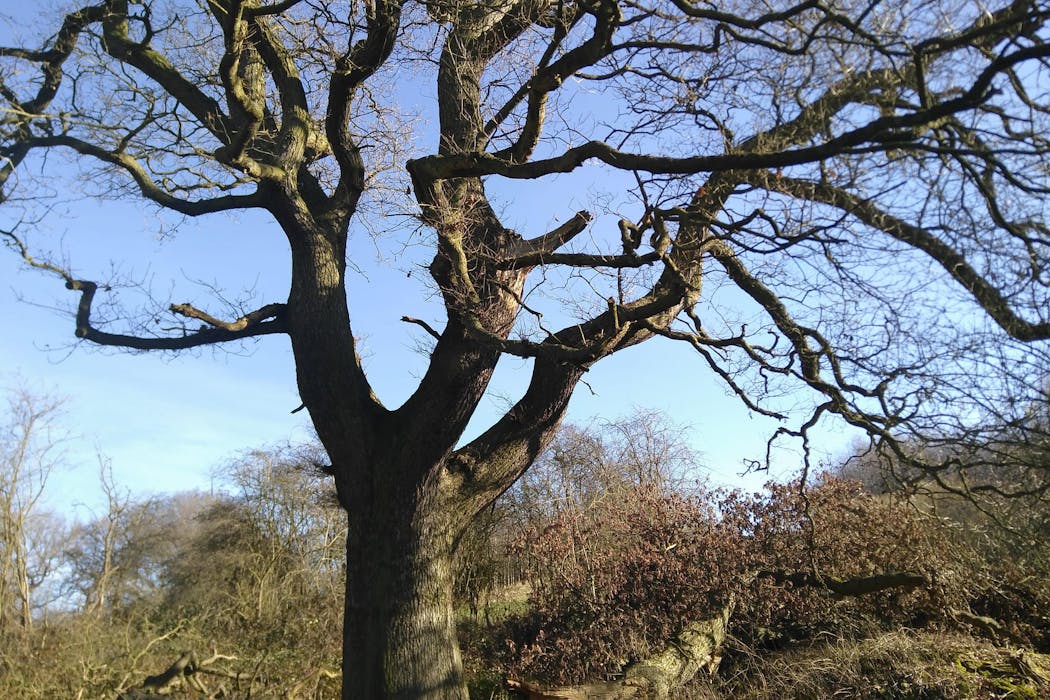
The mighty Feanedock Oak in Derbyshire has provided an anchor habitat for many lifeforms, including people, for more than 200 years.Lucy Neal, CC BY-NC-SA
The Feanedock Oak stands out so clearly in Derbyshire’s section of the National Forest, you’d think it was calling to you. Surrounded by open fields, hawthorn hedges and young beech forest, a majestic old oak like this anchors the English countryside.
As the highest expression of our woodlands, oaks support more life in the UK than any other native tree. At the foot of the Feanedock oak, you can hear and see – at a glance – wrens, blackbirds, spiders, squirrels, song thrush, hoverflies, butterflies, blackcaps, woodlouse, ants and chiffchaffs. For more than two centuries, it has provided an anchor habitat, including for humans – a tumbled-down dwelling lies under its shade.
How well any English oak (Quercus robur) thrives affects everything living on and around it, from canopy to soil. In recent years of heat and drought, the Feanedock Oak has lost two large boughs.
In the summer of 2023, dendrochronologists – who research and date trees through their growth rings – took samples from the tree’s trunk to study its “healthy” and “poor” years of growth. They counted 195 rings but did not get to the centre of the tree – so it was probably seeded in the early 19th century, if not earlier. As a sapling, it would have greeted Derbyshire miners walking across the fields from nearby villages to work in the newly-dug coal shafts or the many industrial potteries in the area.
More than 200 years later, in July 2023, the Feanedock Oak (now measuring around 120 feet) played a central role in Ring of Truth. This creative collaboration between tree scientists and artists from the Walking Forest collective imagined a legal case set in the year 2030 between a claimant, the oak (in whose shadow the case was heard), and the UK government.
Ring of Truth’s imagined court case is heard at the Timber Festival, July 2023. RB Films, CC BY-NC-SA
The counsel for the claimant – real-life rights of nature lawyer Paul Powlesland – set out his argument to the judge and jury, claiming the government had breached legal obligations set out in the 2008 Climate Change Act. Scientists from the University of Birmingham – including one of us (Bruno) – acted as expert witnesses, bringing evidence of the threats posed to the tree from increased heat, atmospheric CO₂, soil damage and disease.
After hearing all the evidence, the assembled audience – in the role of jury – voted for their verdict. Many were acutely conscious that the claimant had been standing in this spot far longer than anyone else present – a silent witness to the damage done by humans on the environment and landscape. They ordered the secretary of state for climate and ecological breakdown (as the job is known in 2030) to cease breaching legal obligations to protect this and all “anchor oaks”, and the communities that thrive or suffer with them.
That powerful moment under the Feanedock Oak opened a door to a deeper question: how and what do trees remember?
Until recently, little was known about how memory might function in long-lived organisms like trees which experience decades, even centuries, of shifting environmental pressures. So this is what our multidisciplinary research collaboration – featuring artworks, performances and even a musical composition as well as groundbreaking science – set out to discover.
On the Memory of Trees, by Scott Wilson, was composed using data collated by the Membra project.
How trees’ memories work
For trees, memory is not a metaphor but a biological reality, written into their cells. One of the most remarkable forms this takes is epigenetic memory: the ability of a tree to record its life experiences and allow those experiences to shape its future, without changing the sequence of its DNA.
As Membra (full name: Understanding Memory of UK Treescapes for Better Resilience and Adaptation), we’ve studied a number of ecologically vital and culturally significant UK species including oak, ash, hazel, beech and birch. Together, they have helped us understand how trees register and respond to environmental stress, offering a powerful glimpse into how their memories are carried through woodlands.
At the heart of this process is DNA methylation, where chemical tags known as methyl groups are added to the tree’s DNA over time. While not rewriting the genetic code, they do alter how it is read. These chemical signatures can turn genes on or off, dial responses up or down, and fundamentally shift how a tree grows, adapts, or defends itself. In oaks, for example, long-term drought exposure over decades is associated with changes in DNA methylation, suggesting that trees may adjust their gene expression in response to repeated stress.
These epigenetic memories may allow trees to respond more quickly to drought, disease or climate extremes, and could even be passed to the next generation. In some plant species, this kind of inheritance is well documented, but in long-lived trees, it remains an open question – one with critical implications for forest regeneration and resilience.
The Insights section is committed to high-quality longform journalism. Our editors work with academics from many different backgrounds who are tackling a wide range of societal and scientific challenges.
So far, our research has shown trees respond to stress in ways that can extend well beyond the immediate event. Exposure to drought or high CO₂, for example, can leave lasting marks on a tree’s growth and internal chemistry, and may shape how it responds to future conditions. But the strength of this memory appears to depend on the nature of the stress: it is more pronounced when the stress is particularly strong, such as disease, or when it occurs repeatedly over time, such as chronic drought.
A surprising result came from oak, where we observed that DNA methylation itself changes depending on the time of year – with methylation levels lowest in early spring, then increasing as the seasons progress. This suggests the imprinting of memory in trees may be far more dynamic than previously thought, and that the timing of stress events within the growing season could influence how strongly that memory is encoded.
All our studied species and associated environmental conditions have now been sequenced. In every case, we have found evidence of these memories of past stresses. In ash trees, for example, we’ve begun to detect methylation changes linked to ash dieback pressure, offering clues as to how trees regulate their defences over time as a disease progresses.
Trees are certainly resilient. They bend, adapt and endure, holding the memory of storms and seasons within their very bodies. But even their deep-rooted strength has limits. The challenges they now face are faster, more frequent and more severe than at any point in their evolutionary history.
This means what we are learning from their memories is not just a story of survival, but a warning. They are telling us there could come a point when they can no longer cope.
Even young trees remember
It is easy to be awed by a centuries-old oak. But what often goes unnoticed is the quiet crisis beneath the canopy. Across many UK woodlands, the next generation is missing.
Surveys show steep declines in most species of young trees (seedlings and saplings) due to a growing list of pressures: prolonged drought, warming temperatures, shifting herbivore populations, and an expanding wave of pests and pathogens. According to a study of nine sites in England and Scotland, co-authored by one of us (Bruno) and currently under review, the sapling mortality rate has increased from 16.2% in the period up to 2000 to 30.9% two decades later.
In some species such as elm and now ash, diseases have brought populations close to the point of lack of regeneration – when a woodland can no longer sustain itself. To counter this threat, young trees must be highly adaptable – not just in form, but at the molecular level. At Membra, scientists are exploring whether young trees imprint environmental stress more readily than older ones, and whether that memory, recorded through changes in DNA methylation, influences their survival.
One way we have tested such transgenerational changes is to expose trees (oak and hazel) to the elevated levels of CO₂ that are expected in the UK by 2050. This was done in the Birmingham Institute for Forest Research (Bifor) facility in a Staffordshire woodland – one of the world’s largest climate change experiments, where tree “arrays” (circular patches of woodland) are exposed to 150 parts per million (ppm) of CO₂ above ambient concentrations.
Membra’s research there has found that the offspring of trees exposed to these CO₂ levels respond very differently to further environmental stressors – in ways that can make them more resilient. For example, acorns from CO₂-exposed oaks were notably larger and their seedlings showed both faster growth and improved resistance to pathogens like powdery mildew – a strong sign that environmental conditions experienced by parent trees can shape offspring resilience.
To date, molecular analysis shows the inherited memory of this exposure is imprinted in the tree genes that are involved in defence mechanisms. The direct link with resilience should be identified in the next few years as our data analysis progresses.
Strikingly, these beneficial effects were most pronounced during “mast” years, when trees produce a bumper crop of seeds, suggesting that the reproductive cycles of mature oaks as well as resource availability are key to the oaks’ successful inheritance of stress-adaptive traits. Similarly, seedlings from oak trees that had undergone repeated drought exposure have shown increased drought tolerance – which suggests some trees may “prime” their offspring to be more resilient in the face of repeated climate stress.
Our work also shows that young trees can be artificially primed for resilience. For instance, early treatment with certain natural compounds enhances oak seedlings’ resistance to powdery mildew disease, triggering biochemical and transcriptional responses that allow them to mount a faster and stronger defence. This priming acts like a kind of immunological memory – in this case not inherited but induced – and could potentially open up new avenues for improving forest health and regeneration.
Importantly, species differ widely in how they pass on environmental experiences to their progeny. Hazel trees subjected to the same elevated CO₂ conditions in the Bifor woodland produced both smaller nuts and seedlings that often failed to thrive after germination. So, rather than assuming a one-size-fits-all strategy for seed sourcing, forestry managers may need to tailor decisions based on species-specific responses to past environmental stresses. Recognising the importance of parental environmental history, especially for stressors like drought, could shape how we select and prepare the next generation of trees.
This may also mean rethinking how and when we collect seeds. In species such as oak, collecting from mast years may improve the odds of transmitting beneficial adaptive traits. In all cases, understanding how trees’ memory works, not just within a tree’s lifetime but across generations, offers a crucial tool for building more adaptive, resilient treescapes in this rapidly changing world.
Tree rings such as those sampled from the Feanedock Oak record much more than just a tree’s age. They hold evidence of how trees respond to changing climates, rising carbon levels and extreme events.
Studies using these natural archives (the rings) have shown that rising atmospheric CO₂ is already changing how trees grow and photosynthesise. In some oaks, it has led to faster growth and more carbon being stored – a hopeful sign.
But this acceleration may come with hidden costs. Trees that grow quickly not only reach maturity sooner but may also die younger, potentially limiting the long-term stability of forest carbon storage.
And these shifts are not just a concern for the trees themselves – they ripple outward. Faster growth can alter forest structure, affecting biodiversity and resilience. In the UK and globally, trees face an escalating cascade of challenges including pollution, drought, storms and disease – and increasingly, these pressures overlap.
Understanding how different trees’ memories will mediate their responses to new, more stressful conditions is key to predicting which species will thrive, adapt or decline. Artificially priming young trees by exposing them early to stress may enhance their memory and survival.
In recent years, a wave of tree planting, often tied to carbon offsetting schemes, is rapidly reshaping landscapes across much of the UK. National and local governments have launched large-scale initiatives such as the England Tree Action Plan. These programmes aim to restore canopy cover, improve biodiversity and contribute to net-zero goals. Local authorities, environmental charities, landowners and corporate offsetting partners are among those overseeing the planting, with guidance and funding provided by the Forestry Commission and Defra.
However, the choice of species is often constrained by budget and availability, which can result in limited diversity and mismatches between trees and local ecological conditions. Fast-growing species like sycamore, alder, and hybrid poplar are frequently used, while slower-growing native species with deeper ecological value may be underrepresented.
Planting trees without understanding their long-term ecological roles – or their capacity to remember and adapt – also risks repeating old mistakes that could compromise long-term resilience. Selecting the right trees to face future climate threats requires more than just numbers. A forest full of fast-growing, short-lived trees may have a very different effect on the local ecosystem than one with long-lived, memory-bearing individuals. In the worst-case scenario, such woodlands will fail to regenerate and die out.
Climate models indicate a future of warmer, wetter winters and hotter, drier summers in the UK, which will challenge many native species. Diseases such as ash dieback have already transformed landscapes, with over 80% of ash trees expected to be lost in many areas. This is not just a loss of a species but a loss of the biodiversity that depends on it.
Our work highlights the value of sourcing seed from trees that have survived historic drought and understanding how memory, resilience and adaptation are embedded in the biology of many older individuals. Future woodlands will need to blend ancient wisdom with modern science, combining genetic diversity, environmental memory and community stewardship to thrive.
This legal shift complements the scientific insight from Membra: that mature woodlands, with deep memory and biodiversity, are not replaceable. And as Ring of Truth’s imagined court case made clear, it is a travesty if trees such as the Feanedock Oak are thought of as little more than machines to extract human-created carbon from the atmosphere.
Their social, cultural and ecological roles are vast. Listening to Indigenous and local communities with long-held tree knowledge, and empowering tree guardians in cities and villages alike, is vital to fostering a meaningful public practice of tree stewardship.
As one Walking Forest participant put it, time spent with trees creates space and renewed agency for surviving the climate and nature crises: “We are like trees. The stronger we root and allow ourselves, like them, to be nurtured by those around us, the better we are at withstanding the strongest of storms”.
Another said: “I see the bigger picture now, of how we are related to the forest – at one with nature because we too are part of the ecosystem.”
By weaving together artistic performance, scientific insight and ancestral knowledge, the Walking Forest collective has sought to expand how we understand our relationship with woodlands – connecting women, trees and ecological justice across time.
One powerful example is the 107-year-old Monterey Pine planted by suffragette Rose Lamartine Yates, the last known survivor of a historic arboretum planted by women activists at Eagle House in Batheaston, Somerset. A place of recovery for women who were politically active as part of the suffrage movement, this was the home of the Blathwayt family – and known as the Suffragettes’ Retreat.
Suffragettes Adela Pankhurst and Annie Kenney at Eagle House in Batheaston, Somerset, in 1910. Linley Blathwayt/Wikimedia
Between April 1909 and July 1911, at least 47 trees were planted in the grounds of Eagle House to commemorate individual suffragists and suffragettes, many of whom had been imprisoned and tortured. The arboretum afforded the suffragettes an opportunity to imagine the future into which their young trees would grow.
The trees were all bulldozed in the late 1960s to make way for a housing estate – other than Lamartine Yates’s Monterey Pine, planted in 1909, which survives to this day, protected in a private garden. The seeds of this tree are a touchstone of Walking Forest: we have gathered and propagated them, shared them with communities, and created performances and ceremonies that honour the tree’s legacy – connecting past and future generations (of trees and people) in a project to create a woodland that mirrors the original Eagle House arboretum.
Since 2018, Walking Forest artists have travelled overland to UN climate talks to gift seeds from the Monterey Pine to women and youth activists, climate negotiators, Indigenous community leaders and environmental campaigners – connecting with them in this story of resilience and renewal.
In another act of collective mourning and protest, a 100-year-old silver birch cut down for the HS2 rail link was carried through Coventry by more than 40 women during Coventry’s year as City of Culture in 2021. The act made visible the loss of ancient woodland and connected it with human grief, resistance and care.
These stories are not isolated. Across the UK, trees have become flashpoints for protest and protection – from the Sycamore Gap tree at Hadrian’s Wall to Sheffield Council’s felling of more than 5,000 healthy street trees between 2014 and 2018 as part of road maintenance.
Walking Forest has collaborated with Membra not only to share scientific knowledge but to offer new ways of knowing through storytelling, ritual and creative action. As climate pressures grow, so too does public awareness of how irreplaceable mature trees are.
We are still only beginning to uncover the complexity of tree memory. Future research may reveal exactly how memory is transferred between generations, how trees prepare for challenges they’ve never seen, and how entire forests might adapt together.
But our collaboration between scientists, artists and communities is already helping to shift how people think about trees, from passive backdrop to learning beings. Through this work, we understand that trees are not just survivors – they are storytellers, record keepers and even teachers.
As our understanding of their memory deepens, so too does our responsibility to listen, learn and act. The future of forests depends not just on what trees can remember, but on what we choose not to forget.
A recent return to the Feanedock Oak, two years after its case was argued in Ring of Truth, found the tree still standing but visibly altered. Its two large, fallen limbs lay cloaked in bramble and nettle. But under its canopy, foxes burrowed, birds sang and fruit trees flowered.
Though imbalanced, this grand old oak holds its ground – a tree of memory and now a symbol of care. We will return again and again to honour its survival, and admire its provision for so many other species in the natural world. The tree reminds us that people need ways to anchor ourselves too, as we navigate uncertain times ahead.
Estrella Luna-Diez receives funding from UK Research & Innovation (UKRI) and the Natural Environment Research Council (NERC).
Anne-Marie Culhane receives funding from UKRI and the NERC.
Bruno Barcante Ladvocat Cintra receives funding from the NERC.
Additional thanks to Lucy Neal, member of the Walking Forest collective, for her written and photographic contributions to this article. Lucy was the creator of Ring of Truth, performed at the Timber Festival in July 2023.
The International Criminal Court in The Hague, Netherlands. Canada and the EU have legal remedies at hand that could help the ICC thrive in the years ahead.(Wikimedia Commons), CC BY-SA
Four key staff of the court — including Canadian judge Kimberly Prost — have been sanctioned by President Donald Trump’s administration because of their involvement in investigations related to alleged war crimes committed by American and Israeli officials.
Other allies, including France, Belgium and the European Union have publicly opposed the sanctions, issuing statements in support of the ICC.
Canada has publicly backed Prost, and has recently joined a number of states at the United Nations in supporting the overall work of the court. But Canadian officials have been silent about the American sanctions.
Sanctions fallout
The current wave of sanctions has forced the court to take extraordinary measures, such as paying staff ahead of time and changing email software to openDesk which was developed by the Germany-based Centre for Digital Sovereignty.
This would mean that any American company — including financial institutions — or even Canadian companies with subsidiaries in the U.S. that deal with the court may be subject to penalties and legal action.
Shielding businesses
Not all is lost, however. There are two legal remedies that could be be used to shield the ICC. Canada and the EU could amend key laws designed to protect companies from such actions, which could significantly aid in the operation of the court.
A FEMA amendment was passed in 1996 in response to the Helms-Burton Act in the U.S. that prohibited companies from trading or conducting business in Cuba.
FEMA shields Canadian businesses affected by the Helms-Burton Act and contains specific provisions to protect companies from retaliatory action by the U.S. Similarly, the EBS was passed in the European Parliament to shield European companies from American sanctions.
It was introduced initially as a result of the Helms-Burton Act, and then later revised when the U.S. withdrew from the Iran nuclear deal in 2018.
Canada and the EU could amend both FEMA and the EBS to ensure that Canadian and European companies are shielded from the effects of American sanctions and can continue to provide key services to the court.
In the case of the EU, most of the ICC’s contractual arrangements with entities like banks, insurers, service providers, technology providers and landlords are with European firms because the court is located in Europe — in The Hague, Netherlands.
Amending the EBS, therefore, would protect these companies from further American sanctions and would ensure they can still provide services to the ICC.
These legal remedies are a proportional response to the U.S. sanctions. They would allow all parties — the U.S. and the ICC’s supporters — to continue to negotiate instead of bringing international criminal justice to a grinding halt.
Ensuring the survival of the ICC
It’s important to note that including the need to shield businesses from U.S. sanctions in any amended legislation in both Canada and the EU legislation isn’t aimed at helping governments in either Cuba or Iran.
The goal is to protect Canadian and European companies from possible legal action or economic fallout if more sanctions are applied. Most importantly, the aim is to ensure that the ICC continues to operate with as little interruption as possible.
Sanctions may have significant effects on businesses, and what’s been identified as Trump’s penchant for “retributive diplomacy” may compel states — and businesses — to think twice before they act.
But FEMA and EBS provide appropriate countermeasures if and when broader U.S. sanctions on the entire ICC are introduced, or if Canadian and European companies unjustifiably suffer due to the imposition of new sanctions.
The ICC is the international organization with the ability to deliver justice and support victims. It’s the “court of last resort” that only gets involved when offending states are unwilling or unable to do so.
National security concerns in the U.S., Canada and the EU stem as much from the committing of mass atrocities as they do from other types of global crimes. That’s why it’s so important for states to support international criminal justice efforts by fulsomely supporting the ICC.
Laszlo Sarkany does not work for, consult, own shares in or receive funding from any company or organisation that would benefit from this article, and has disclosed no relevant affiliations beyond their academic appointment.
Source: The Conversation – UK – By Parveen Akhtar, Senior Lecturer: Politics, History and International Relations, Aston University
Just 74 days into her new role as home secretary, Shabana Mahmood has unveiled what she calls “the most substantial reform to the UK’s asylum system in a generation”.
Immigration is currently viewed as the most important issue facing the country, followed by the economy. While many, especially within the Labour party, have long found border control an awkward terrain, Mahmood’s stance is unambiguous: “I just don’t know why we’ve got ourselves in a tangle talking about migration controls on the left of politics … it’s really pretty fundamental to the way a lot of our voters think.”
Her proposals are, broadly, intended to deter illegal immigration by making the UK a less attractive destination for asylum seekers. Mahmood has proposed, among other things: making refugee status more temporary, reforming human rights legislation to make it harder for illegal migrants to remain in the UK and suspending UK visas for countries that refuse to accept returned migrants.
Some on the left of Labour have already condemned the proposals. But figures on the political right have applauded Mahmood’s assertion that uncontrolled asylum and immigration are contributing to social division.
Beyond the policy substance, Mahmood’s Commons delivery attracted praise from the right: confident, assured and like a future leader. Former Conservative minister Michael Gove has called Mahmood the “standout figure” of the current government, describing her as having “a totally coherent worldview”.
How did Mahmood, who once stated that she personally supported a general amnesty for all undocumented workers, become the face of a hardline Labour migration policy, lauded by the political right?
Journey of a politician
Born in Birmingham, to Kashmiri Pakistani Muslim parents, Mahmood spent part of her early childhood in Saudi Arabia, where her father worked as a civil engineer, before returning to Birmingham.
Her family life was steeped in politics. Her father chaired the Birmingham Labour Party and was known locally as an honest broker who mediated neighbourhood disputes. Her mother ran the family’s corner shop – giving Mahmood a “shopkeeper’s daughter” background reminiscent of another formidable woman in British politics. She cites Margaret Thatcher as one of her heroes, alongside Benazir Bhutto, Pakistan’s first female prime minister.
Her political consciousness sharpened after 9/11. She found herself being held “accountable” by strangers for events thousands of miles away. She had experienced racism before, her first encounter was at age eight. But the post-9/11 shift was of a different magnitude, which she described as a “shock to the system”.
Elected in 2010 as one of the first female Muslim MPs, she quickly entered the shadow cabinet. She avoided frontbench roles under Jeremy Corbyn, citing incompatible economic views. Under Keir Starmer, she served as national campaign coordinator and worked closely with strategist Morgan McSweeney. She is also seen as having played a significant role in the crucial 2021 Batley and Spen byelection.
Mahmood speaks openly about her British Muslim identity and the sense of responsibility that comes with public visibility. “You have to accept the broader role that you have to play,” she has said, noting that many British Muslims instinctively look to her as a representative figure.
And yet, Mahmood’s own electoral base has shifted dramatically. Her majority in Birmingham Ladywood fell from nearly 30,000 in 2019 – one of the largest in the country – to just 3,400 in 2024, after a strong challenge from an independent pro-Gaza candidate.
She has also faced strong criticism for her abstention from a November 2023 vote on an amendment to the King’s Speech calling for an immediate ceasefire in Gaza.
Mahmood has in recent years assumed a markedly tougher line on immigration. This shift is reflected as much in her language and style, as in the policies she is advocating. Her presentation leans heavily into a no-nonsense, get-the-job-done approach.
She has stressed that she is the “the child of immigrants” whose parents “came here legally” and played by the rules. She establishes a firm boundary between lawful migration and the illegal immigration she argues now defines the broken asylum system.
Reputational shield?
Before becoming home secretary, she had already earned admiration for her handling of what was arguably the most daunting early assignment of the 2024 Labour government. As justice secretary, she faced a prison system running at 99% capacity. She introduced an early release programme that risked perceptions of being “soft on crime,” yet navigated the controversy with minimal turbulence.
A trained barrister who once dreamed of becoming “Kavanagh QC”, Mahmood brings legal expertise and a rule-of-law approach to immigration debates. Themes of “fairness” and “public consent” appear throughout her asylum policy proposals.
Her style is precise, technocratic and intellectually disciplined. These are qualities which help Labour toughen its immigration platform without appearing purely performative.
But Mahmood also plays a symbolic role. When political parties move rightwards on immigration, they often place minority politicians in prominent roles to provide a “reputational shield”. This allows them to advance stricter policies while deflecting accusations of intolerance.
Conservative governments spent more than a decade deploying this strategy in the Home Office. Sajid Javid, Priti Patel and Suella Braverman all embodied the dynamic. Labour, historically, has placed far fewer minorities in top portfolios, which makes Mahmood’s appointment all the more notable. In some respects, Labour now appears to be adopting an approach previously associated with its opponents.
Despite her experience in electoral strategy, Mahmood insists the asylum reforms are not an attempt to win back Reform UK voters or to position Labour tactically. Instead, she frames them as a response to “the genuine concerns of the British people” and an effort to rebuild trust in a system that has lost public confidence. It is a gamble that places the weight of Labour’s promise of competence squarely on the Home Office, and on Mahmood’s ability to deliver it.
Parveen Akhtar has previously received funding from the Economic and Social Research Council and the British Academy
During the first COVID-19 lockdown, we were both mothers trying to stay sane. Our chats often revolved around nappies, feeding, sleep deprivation and motherhood chaos. Between laughter and exhaustion, cloth nappies kept coming up in conversation.
Just the thought of all that laundry was enough to make us tired. Sure they would help reduce the 4,000–6,000 disposable nappies sent to landfill per child each year, but would they be detrimental to our wellbeing?
Perhaps our initial hesitation stemmed from the prevalent narrative that sustainability means sacrifice. You do something because it’s good for the planet, but that often comes at a cost to you: eat less meat, fly less, buy less stuff. When a sustainable choice feels like a daily sacrifice, it’s no surprise people end up quitting.
Yet something about cloth nappies felt different. As we became familiar with the online community of #ClothBumMums, the tone was refreshingly upbeat. These mums were driven to use cloth nappies because they enjoyed doing so, not because they felt guilty about throwing away reusables. They certainly didn’t appear to be missing the convenience of throwaway nappies. If anything, they radiated happiness and beamed with pride.
Curious about this, we set out to explore what was going on behind the scenes. Our study captured the daily experiences of 27 mothers using cloth nappies. Over seven days, participants recorded their routines through visual and verbal diaries, followed by group discussions where they reflected on their journey.
Our findings flipped the sacrifice narrative completely. Yes, the early days might be daunting. As one mum told us: “Sometimes it can be quite a lot of work, and I’ve always said that to people, especially in the early days of having a baby … If it’s too much for you and it’s proving detrimental to your mental health, buy a disposable.”
But once parents developed their own systems over time — figuring out routines, storage and washing hacks — a transformation occurred. This was evident during our focus group conversations following the seven-day diary period, when many mums said they had started to find joy and reassurance in the process. “The rest of the house can be absolute chaos, but my nappy box is tidy,” one told us, “and that makes me really, really happy.”
The joy of reusables
Through these stories, we identified the “wellbeing cycle of sustainable engagement”. This pattern starts with initial motivation, followed by a trial-and-error phase when the challenges can temporarily lower wellbeing.
However, once people establish effective routines — the mastery stage — wellbeing spikes significantly. This cycle often ends with advocacy, where parents become champions of the practice, helping others to get started.
Underpinning this process is what we call the “burden–reward paradox”: chores that once felt like a burden, once under control, can become a source of pride and satisfaction. What once looked like inconvenience transforms into a symbol of capability, care and purpose. Another parent told us:
I love it … I like it when there’s a big pile of nappies and they’re all dry enough, and I’m watching TV stuffing them … [I] definitely enjoy the washing of nappies more than I thought I would – definitely a niche hobby, I think.
Using cloth nappies can be a joyful experience for parents and baby. Soft Light/Shutterstock
In the case of cloth nappies at least, our research challenges the sacrifice-based narrative of eco-environmental messaging. Guilt or pressure might encourage people to start making sustainable choices – but only when these choices bring joy, happiness, pride or a sense of purpose are these actions likely to last.
And the environmental benefits are hard to ignore. UK children go through the equivalent of roughly 700 million car miles a year in disposable nappies. Switching to reusables, even for part of the time, can make a real dent in household emissions.
By flipping the sacrifice-based narrative, brands, campaigners and policymakers can be more serious about sustaining long-term green behaviour. Rather than telling people what to give up, show them what they can gain: wellbeing, confidence and community.
The lesson here goes far beyond nappies. As author Isabel Losada writes in The Joyful Environmentalist, sustainability doesn’t have to be grim or guilt-ridden. It can be creative, empowering – even joyful. The #ClothBumMum community illustrates that positive emotions — pride, mastery, connection — can be more powerful motivators than guilt or sacrifice.
So, perhaps it’s time we stop asking people to sacrifice things for the planet — and start showing them how living sustainably can feel good. Cloth nappies may seem like a niche item, but they hold a powerful insight: when sustainability is joyful not duty, everyone wins.
This article features a reference to a book that has been included for editorial reasons, and may contain links to bookshop.org. If you click on the link and go on to buy something from bookshop.org, The Conversation UK may earn a commission.
Don’t have time to read about climate change as much as you’d like?
The authors do not work for, consult, own shares in or receive funding from any company or organisation that would benefit from this article, and have disclosed no relevant affiliations beyond their academic appointment.
Watching a film about dementia is, ordinarily, a sobering activity. We watch someone become imprisoned in the temporal chaos of their mind. We empathise with the family members nobly trying their best to do what’s right. We leave the film in a fog of melancholia, having been reminded of how sad the condition is.
And dementia is sad. But the stories we tell about it need not only be a premature elegy for someone still living. There is more for filmmakers to think about here: when does “the rest of our lives” stop mattering? How do we love those profoundly changed by illness? What is it like when the concept of “now” itself becomes unfamiliar?
A Kind of Madness, from director Christiaan Olwagen, examines how love is redefined when dementia shatters a shared sense of reality. The film follows elderly couple Elna (Sandra Prinsloo) and Dan (Ian Roberts) as they flee from the great obstacle to their joint happiness: residential care.
After breaking Elna out of the care home where she was placed by her adult children, the couple escapes across the South African countryside, Elna reliving the exploits of the rebel bride she once was (and sometimes believes she still is), as Dan tries to save them both from a life flattened by loss.
The trailer for A Kind of Madness.
In one moving scene, Elna insists: “We can start over; it’s never too late.” Dan decides she might just be right. His own reality, overburdened by loss, pales beside Elna’s, a world which, though certainly clouded by confusion and fear, is also filled with beauty, affection, playfulness and the hope in a better future that once defined their love.
While the film does not minimise the horrors dementia brings into family life, it also does not linger there. Instead, it turns toward a deeper question: what do we do with the love we have for someone who faces this illness? A Kind of Madness suggests that a person’s wellbeing may depend as much on how that question is answered as on any form of medical care.
Dementia in Rose of Nevada
A Kind of Madness steers clear of the melancholy dread characteristic of many films about dementia. Rose of Nevada, directed by Mark Jenkin, is steeped in it, but in an entirely new and unsettling way.
A casual viewing of the film might consider dementia thematically peripheral to the central storyline, which follows three Cornish fishermen stranded in 1993, a time-slip three decades past. Yet I would argue that Rose of Nevada is less a tale of supernatural time travel and more about what it really means when someone’s relationship to time is dramatically altered through disease or otherwise.
This theme is embodied by Mrs Richards (Mary Woodvine), an elderly woman seemingly affected by dementia. Mrs Richards’s presence primes the viewer to consider the time-slip not simply as a supernatural phenomenon, but as something profoundly human.
When Nick (George MacKay), a young fisherman, finds himself in what should be his home, but isn’t, he understandably protests: “My name is Nick Dyer! I was born in 1996!” Mrs Richards, appearing as her younger self in 1993, regards him with the same pity that will one day be turned on her.
Through this eerie inversion, which sees a young, healthy fisherman entrenched in the same kind of disorientation that often characterises dementia, Jenkin opens a new avenue for relating to dementia – the uncanny sensation of not knowing where, when or who you are, of being a stranger in once-familiar surroundings.
The cast of Rose of Nevada discuss the film.
What makes Jenkin’s new film so unusual is how it takes those experiences and relocates them away from the one character actually suffering from dementia. The young are not treated as outsiders in the same way that the elderly are. Nick and Mrs Richards could not be more different on the surface, but there is a poignant parallel between the two characters.
In showing a young man met with pity as he struggles to assert the basic facts of his identity, the film invites us to set aside our habitual assumptions about dementia and reconsider how we relate to those who live with it. The result is that dementia symptoms are defamiliarised – made strange and unsettling – and a pervasive sense of dread emerges as both characters and audience confront the unsettling possibility that no single, stable reality exists.
Any successful film provides new spaces in which to think about and relate to human experiences. Both A Kind of Madness and Rose of Nevada shift the viewing platform away from the stale master narrative of dementia we know so well, to consider new perspectives.
This is important. How we think about dementia is coloured not only by the stories we see in popular culture, but by the perspectives these stories privilege. These two films are a corrective to a body of cinematic and literary work that has yet to fully recognise the persistent humanity of people living with a disease that renders life non-linear, confounding and painful, but nevertheless resiliently human.
Looking for something good? Cut through the noise with a carefully curated selection of the latest releases, live events and exhibitions, straight to your inbox every fortnight, on Fridays. Sign up here.
Andrea Holck does not work for, consult, own shares in or receive funding from any company or organisation that would benefit from this article, and has disclosed no relevant affiliations beyond their academic appointment.