Comment l’IA peut nous aider à dresser le portrait de la population parisienne d’il y a 100 ans

Source: The Conversation – France (in French) – By Sandra Brée, Chargée de recherche CNRS – LARHRA, Centre national de la recherche scientifique (CNRS)
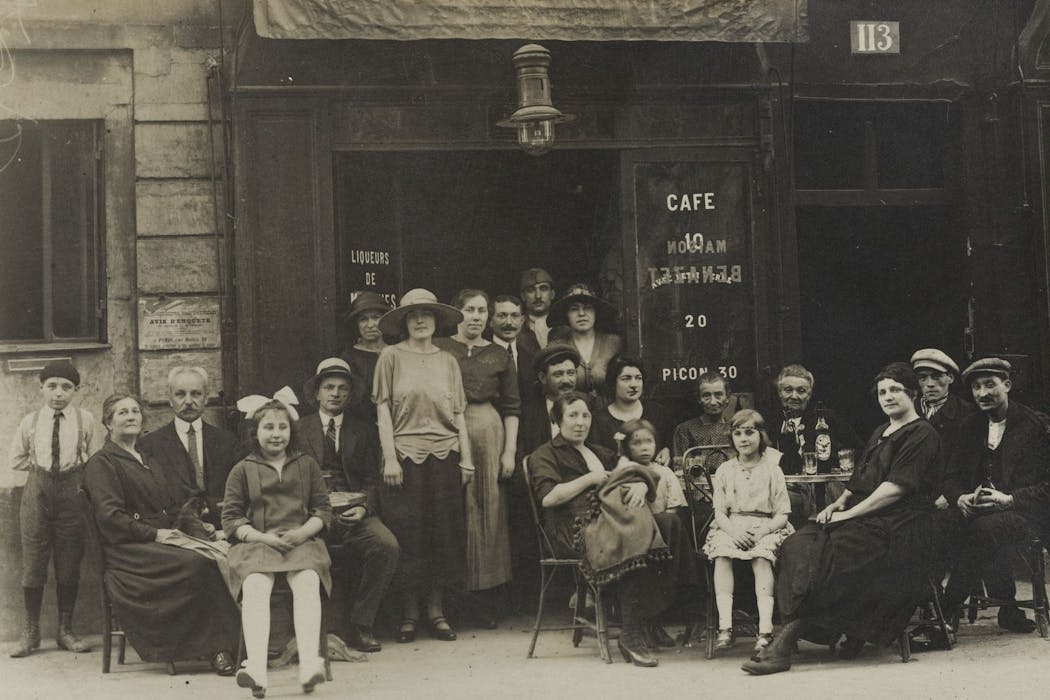
Au Réveil Matin, Maison Bénazet, café restaurant du 113 avenue Jean-Jaurès (XIX<sup>e</sup>), vers 1935.
Bibliothèque historique de la Ville de Paris

L’exposition « Les gens de Paris, 1926-1936. Dans le miroir des recensements de population », qui se tient actuellement, et jusqu’au 8 février 2026, au musée Carnavalet-Histoire de Paris, s’appuie sur les recensements de la population parisienne de 1926, de 1931 et de 1936, et contribue à renouveler le regard sur le peuple de la capitale dans l’entre-deux-guerres.


En France, des opérations de recensement sont organisées dès 1801, mais ce n’est qu’à partir de 1836 que des instructions spécifiques sont fournies pour procéder de manière uniforme dans toutes les communes du pays. Le recensement de la population est alors organisé tous les cinq ans, les années se terminant en 1 et en 6, jusqu’en 1946, à l’exception de celui de 1871 qui est reporté à l’année suivante en raison de la guerre franco-prussienne, et de ceux de 1916 et de 1941 qui ne sont pas organisés à cause des deux guerres mondiales.

Des données précieuses sur la population parisienne

Le premier but des recensements de la population est de connaître la taille des populations des communes pour l’application d’un certain nombre de lois. Ils permettent également de recueillir des informations sur l’ensemble des individus résidant dans le pays à un instant t pour en connaître la structure. Ces statistiques sont dressées à partir des bulletins individuels et/ou (selon les années) des feuilles de ménage (les feuilles de ménages récapitulent les individus vivant dans le même ménage et leurs liens au chef de ménage) remplies par les individus et publiées dans des publications spécifiques intitulées « résultats statistiques du recensement de la population ».

Liste nominative du recensement de la population de 1936, population de résidence habituelle, quartier Saint-Gervais (IVᵉ arrondissement).
Archives de Paris : Cote D2M8 553

En plus de ces statistiques, les maires doivent également dresser une liste nominative de la population de leur commune. Mais Paris avait obtenu le droit de ne pas dresser ces listes. C’est le chef du bureau de la statistique parisienne, M. Lambert, qui décide de revenir sur cette exception dès 1926. Les listes nominatives de 1926, de 1931 et de 1936 sont donc les seules, avec celle de 1946, à exister pour la population parisienne.

Si Paris avait obtenu le droit de ne pas dresser ces listes, c’est en raison du coût d’une telle opération pour une population si vaste. La population parisienne compte, en effet, déjà près de 1,7 million d’habitants en 1861, un million de plus en 1901 et atteint son pic en 1921 avec 2,9 millions d’individus. Les données contenues dans ces listes sont particulièrement intéressantes, car elles permettent d’affiner considérablement les statistiques dressées pendant l’entre-deux-guerres.

Une base de données conçue grâce à l’IA

Ces listes, conservées aux Archives de Paris et numérisées puis mises en ligne depuis une dizaine d’années, ont déjà intéressé des chercheurs qui se sont appuyés dessus, par exemple, pour comprendre l’évolution d’une rue ou d’un quartier, mais elles n’avaient jamais été utilisées dans leur ensemble en raison du volume qui rend impossible leur dépouillement pour un chercheur isolé. Voulant également travailler à partir de ces listes – au départ, pour travailler sur la structure des ménages et notamment sur les divorcés –, j’avais moi aussi débuté le dépouillement à la main de certains quartiers.
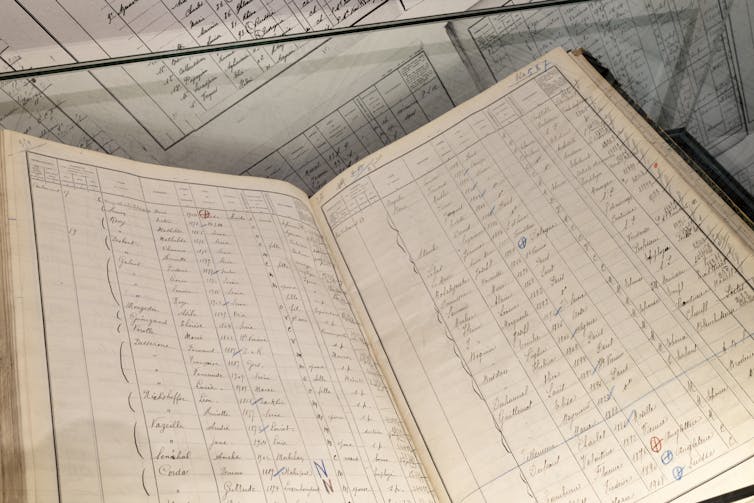
Registre d’une liste nominative de recensement conservée aux Archives de Paris et présentée dans l’exposition « Les gens de Paris, 1926-1936. Dans le miroir des recensements de population ».
Musée Carnavalet/Paris Musées/Pierre Antoine

La rencontre avec les informaticiens du Laboratoire d’informatique, de traitement de l’information et des systèmes (LITIS), Thierry Paquet, Thomas Constum, Pierrick Tranouez et Nicolas Kempf, spécialistes de l’intelligence artificielle, a changé la donne puisque nous avons entrepris de créer une base de données à partir de l’ensemble des listes nominatives de la population parisienne de 1926, de 1931 et de 1936 dans le cadre du projet POPP. Les 50 000 images, qui avaient déjà été numérisées par les Archives de Paris, ont été traitées par les outils d’apprentissage profond et de reconnaissance optique des caractères développés au LITIS pour créer une première base de données.

Les erreurs de cette première base « brute » étaient déjà très faibles, mais nous avons ensuite, avec l’équipe de sciences humaines et sociales – composée de Victor Gay (École d’économie de Toulouse, Université Toulouse Capitole), Marion Leturcq (Ined), Yoann Doignon (CNRS, Idées), Baptiste Coulmont (ENS Paris-Saclay), Mariia Buidze (CNRS, Progedo), Jean-Luc Pinol (ENS Lyon, Larhra) –, tout de même essayé de corriger au maximum les erreurs de lecture de la machine ou les décalages de colonnes. Ces corrections ont été effectuées de manière automatique, c’est-à-dire qu’elles ont été écrites dans un script informatique permettant leur reproductibilité. Ainsi, nous avons par exemple modifié les professions apparaissant comme « benne » en « bonne » ou bien les « fnène » en « frère ».

Adapter la base à l’analyse statistique

Il a ensuite fallu adapter la base à l’analyse statistique. Les listes nominatives n’avaient, en effet, pas pour vocation d’être utilisées pour des traitements statistiques puisque ces derniers avaient été établis directement à partir des bulletins individuels et des feuilles de ménage. Or, l’analyse statistique requiert que les mots signalant la même entité soient inscrits de la même façon. Cette difficulté est exacerbée dans le cas des listes nominatives : les agents avaient peu de place pour écrire, car les colonnes sont étroites. Ils utilisaient donc des abréviations, notamment pour les mots les plus longs comme les départements de naissance ou les professions.

Nous avons dû par conséquent uniformiser la manière d’écrire l’ensemble des professions, des départements ou des pays de naissance, des situations dans le ménage et des prénoms. Pour ce faire, nous nous sommes appuyés sur différents dictionnaires, c’est-à-dire des listes de mots correspondant à la variable traitée provenant de recherches antérieures ou d’autres bases de données. Ainsi, pour corriger les prénoms, Baptiste Coulmont, qui a travaillé sur cette partie de la base a utilisé les bases Insee des prénoms et des personnes décédées. Marion Leturcq et Victor Gay ont, par ailleurs, utilisé les listes des départements français, des colonies et des pays étrangers, tels qu’ils étaient appelés pendant l’entre-deux-guerres, ou encore la nomenclature des professions utilisées par la Statistique générale de la France (SGF).

Enfin, nous avons créé des variables qui manquaient pour l’analyse statistique que nous souhaitions mener, comme la variable « sexe » qui n’existe pas dans les listes nominatives (alors que le renseignement apparaît dans les fiches individuelles), ou encore délimiter les ménages afin d’en comprendre la composition. Ce travail de correction et d’adaptation de la base est encore en cours, car nous travaillons actuellement à l’ajout d’une nomenclature des professions – afin de permettre une analyse par groupes professionnels  –, ou encore à la création du système d’information géographique (SIG) de la base pour réaliser la géolocalisation de chaque immeuble dans la ville.

Retrouver des ancêtres

La base POPP ainsi créée a déjà été utilisée à différentes fins. Une partie de la base (comprenant les noms de famille – qui, eux, n’ont pas été corrigés –, les prénoms et les adresses) a été reversée aux Archives de Paris pour permettre la recherche nominative dans les images numérisées des listes nominatives. Ce nouvel outil mis en place au début du mois d’octobre 2025 – et également proposé en consultation au sein de l’exposition « Les gens de Paris, 1926-1936. Dans le miroir des recensements de population » – a déjà permis à de nombreuses personnes de retrouver leurs ancêtres.

Il nous a également été possible de fournir les premiers résultats tirés de la base POPP (confrontés aux résultats statistiques des recensements publiés) pour dresser des données de cadrage apparaissant sous forme d’infographies dans l’exposition (créées par Clara Dealberto et Jules Grandin). Ces résultats apparaissent également avec une perspective plus comparative dans une publication intitulée « Paris il y a 100 ans : une population plus nombreuse qu’aujourd’hui et déjà originaire d’ailleurs » (Ined, septembre 2025).

L’heure est maintenant à l’exploitation scientifique de la base POPP par l’équipe du projet dont le but est de dresser le portrait de la population parisienne à partir des données disponibles dans les listes nominatives des recensements de la population, en explorant les structures par sexe et âge, profession, état matrimonial, origine, ou encore la composition des ménages des différents quartiers de la ville.


L’autrice remercie les deux autres commissaires de l’exposition « Les gens de Paris, 1926-1936. Dans le miroir des recensements de population » Valérie Guillaume, directrice du musée Carnavalet – Histoire de Paris, et Hélène Ducaté, chargée de mission scientifique au musée Carnavalet – Histoire de Paris.

The Conversation

Sandra Brée a reçu des financements du CollEx-Persée, de Progedo, de l’humathèque du Campus-Condorcet et du CNRS.

ref. Comment l’IA peut nous aider à dresser le portrait de la population parisienne d’il y a 100 ans – https://theconversation.com/comment-lia-peut-nous-aider-a-dresser-le-portrait-de-la-population-parisienne-dil-y-a-100-ans-269624

Global inequality is as urgent as climate change: the world needs a panel of experts to steer solutions

Source: The Conversation – Africa – By Joseph E. Stiglitz, Professor, Columbia Business School, Columbia University

Given the escalating scale of inequality in the world, shouldn’t countries be banding together to set up an international panel on the issue, along the same lines as the Intergovernmental Panel on Climate Change (IPCC), the United Nations body set up to assess the science related to climate change? The idea of setting up an international panel on inequality has been recommended by the G20 Extraordinary Committee of Independent Experts on Global Inequality.

The thinking behind the panel is set out in a report delivered to the G20 by the experts on the inequality committee. They argue that the proposed inequality panel would “support governments and multilateral agencies with authoritative assessments and analyses of inequality”. It wouldn’t make any recommendations for countries. Rather it would offer a menu of policies that could be used to address inequality. Panel leader and Nobel laureaute Joseph E. Stiglitz explains what’s behind the idea.

What are the report’s main findings on inequality?

Our report looked at the research on the state of inequality – and the conclusion should alarm us all. Wealth inequality is far worse than income inequality and has intensified in most countries over the last 40 years.

The global increase in income and wealth at the upper end of the scale is particularly worrying. The very richest people are amassing fortunes while ordinary people’s lives stagnate. For every dollar of wealth created since the year 2000, 41 cents have gone to the richest 1% of people, while just one cent has gone to the bottom 50%.

This wealth brings huge influence over economies and politics, threatening economic performance and the very foundations of democracy.

What does the report recommend the G20 countries do to deal with inequality?

Inequality is a choice. There are policies that can reduce it. These include more progressive taxation, debt relief, rewriting global trade rules and curbing monopolies.


Read more:
Inequality in Africa: what drives it, how to end it and what some countries are getting right


Our committee found that there has been significant progress in tracking inequality’s scale, drivers and policy solutions. Nevertheless, policymakers still lack sufficient, dependable or accessible information on inequality.

There is a great institutional need for strong inequality analysis.

In 1988, governments set up the Intergovernmental Panel on Climate Change (IPCC) to assess the data and provide rigorous analyses to help governments tackle the climate emergency. Today, we are in an inequality emergency and need a similar global effort.

That is why our primary recommendation is to establish an International Panel on Inequality.

Drawing from the report, what do you recommend South Africa should do to reduce inequality?

South Africa has shown extraordinary leadership in focusing its G20 presidency on solidarity, equality and sustainability. This report is testament to that. We hope that South Africa will continue to champion our recommendations, particularly the establishment of an International Panel on Inequality.

Our committee chose not to comment on specific policies in specific countries. But our report contains a menu of policies which can tackle inequality. These include national measures like stronger competition laws, pro-worker regulation, investing in public services, and more progressive tax and expenditure policies.

The Conversation

Joseph E. Stiglitz is chair of the G20 Extraordinary Committee of Independent Experts on Global Inequality.

Imraan Valodia does not work for, consult, own shares in or receive funding from any company or organisation that would benefit from this article, and has disclosed no relevant affiliations beyond their academic appointment.

ref. Global inequality is as urgent as climate change: the world needs a panel of experts to steer solutions – https://theconversation.com/global-inequality-is-as-urgent-as-climate-change-the-world-needs-a-panel-of-experts-to-steer-solutions-270102

L’IA fait peser des risques sur la sécurité nationale, la démocratie et notre système de santé… Quelques pistes pour les réduire

Source: The Conversation – in French – By David Rios Insua, Member of the ICMAT, AXA-ICMAT Chair in Adversarial Risk Analysis and Member of the Spanish Royal Academy of Sciences, Instituto de Ciencias Matemáticas (ICMAT-CSIC)

L’essor fulgurant de l’intelligence artificielle offre d’immenses opportunités, mais fait également peser des risques majeurs sur la démocratie, l’économie, la santé et la sécurité, que seuls des usages responsables, des systèmes plus sûrs et une régulation internationale ambitieuse pourront contenir.


L’intelligence artificielle (IA) s’invite désormais dans presque tous les aspects de notre vie. Nous profitons de ses avantages, comme l’accélération de la découverte de nouveaux médicaments ou l’avènement d’une médecine plus personnalisée grâce à la combinaison de données et d’expertise humaine, souvent sans même nous en rendre compte. L’IA générative, qui permet de créer rapidement du contenu et d’automatiser la synthèse ou la traduction via des outils comme ChatGPT, DeepSeek ou Claude, en est la forme la plus populaire. Mais l’IA ne se limite pas à cela : ses techniques, issues principalement de l’apprentissage automatique, des statistiques et de la logique, contribuent à produire des décisions et des prédictions en réponse aux demandes d’utilisateurs.

Si elle permet désormais d’accélérer des travaux de recherche qui exigeaient autrefois des années, elle peut aussi être détournée, par exemple pour identifier des composants utiles à la mise au point d’armes biochimiques. Elle ouvre la voie à des technologies comme les véhicules autonomes, mais en leurrant leur système de vision, on peut aussi transformer ces véhicules en armes… Les risques liés à l’IA sont multiples et spécifiques, et doivent être compris comme tels, ne serait-ce que parce que les systèmes d’IA sont complexes et s’adaptent avec le temps, ce qui les rend plus imprévisibles. Au rayon des menaces, on trouve notamment les données utilisées pour entraîner les modèles sous-jacents, puisque des données biaisées produisent des résultats biaisés.

Globalement, des acteurs malveillants peuvent utiliser l’IA pour automatiser des attaques à grande vitesse et le faire à très grande échelle. Lorsque l’intelligence artificielle contrôle des systèmes critiques, toute attaque peut avoir des conséquences considérables. Et comme les outils d’IA sont largement accessibles, il est relativement facile de les utiliser pour causer des dommages.

Menaces pour la démocratie et la santé

Plus tôt cette année, le Forum économique mondial de Davos a mentionné les « conséquences négatives des technologies d’IA » dans son Global Risks Report, en raison de leur capacité à perturber la stabilité géopolitique, la santé publique et la sécurité nationale.

Les risques géopolitiques tournent majoritairement autour des élections. Avec l’IA, les possibilités de désinformer se sont multipliées : en quelques clics, un utilisateur peut créer de faux profils, produire des fake news et en adapter le langage pour manipuler avec une précision inquiétante. L’élection présidentielle roumaine de 2024 a été suspendue en raison d’une ingérence étrangère manifeste via les réseaux sociaux. À mesure que l’IA progresse, ces risques ne feront que s’intensifier.

Les conséquences financières de l’IA ne peuvent pas non plus être ignorées. Des fausses informations générées par ces outils sont désormais utilisées pour manipuler les marchés, influencer les investisseurs et faire varier les cours des actions. En 2023, par exemple, une image générée par IA montrant une explosion près du Pentagone, diffusée juste après l’ouverture des marchés américains, aurait provoqué une baisse de la valeur de certains titres. Par ailleurs, des attaques « par exemples contradictoires » – qui consistent à tromper un modèle d’apprentissage automatique en modifiant les données d’entrée pour provoquer des sorties erronées – ont montré qu’il était possible de manipuler des systèmes de scoring de crédit fondés sur l’IA. Conséquence : des prêts étaient octroyés à des candidats qui n’auraient pas dû en bénéficier.

L’IA menace également les systèmes de santé. On se souvient, lors de la pandémie de Covid-19, de la vitesse avec laquelle les fake news sur les vaccins ou les confinements se sont propagées, alimentant la méfiance dans certaines communautés. Au-delà, des systèmes de santé fondés sur l’IA et entraînés sur des données biaisées peuvent produire des résultats discriminatoires, refusant des soins à des populations sous-représentées. Une étude récente du Cedars Sinai a ainsi montré que plusieurs grands modèles de langage (LLM) « proposaient souvent des traitements inférieurs » lorsqu’un patient en psychiatrie était « explicitement ou implicitement présenté » comme afro-américain. Enfin, l’IA a élargi la surface d’exposition des hôpitaux, qui deviennent des cibles de choix.

Nous devons également rester attentifs aux enjeux de sécurité nationale posés par l’IA. La guerre en Ukraine en offre une illustration claire. Le rôle militaire accru des drones dans ce conflit, dont beaucoup sont alimentés par des outils d’IA, est un exemple parmi tant d’autres. Des attaques sophistiquées utilisant l’IA ont mis hors service des réseaux électriques et perturbé des infrastructures de transport. De la désinformation appuyée sur l’intelligence artificielle a été diffusée pour tromper l’adversaire, manipuler l’opinion publique et façonner le récit de la guerre. Clairement, l’IA est en train de redéfinir les champs traditionnels de la guerre.

Son impact s’étend au domaine sociétal, du fait de la suprématie technologique acquise par certains pays et certaines entreprises, mais aussi au domaine environnemental, en raison de la consommation énergétique de l’IA générative. Ces dynamiques ajoutent de la complexité à un paysage mondial déjà fragile.

Une voie vers une IA plus sûre

Les risques liés à l’IA sont en constante évolution et, s’ils ne sont pas maîtrisés, ils pourraient avoir des conséquences potentiellement catastrophiques. Pourtant, si nous agissons avec urgence et discernement, nous n’avons pas à craindre l’IA. En tant qu’individus, nous pouvons jouer un rôle déterminant en interagissant de manière sûre avec les systèmes d’IA et en adoptant de bonnes pratiques. Cela commence par le choix d’un fournisseur qui respecte les standards de sécurité en vigueur, les réglementations locales propres à l’IA, ainsi que le principe de protection des données.

Le fournisseur doit chercher à limiter les biais et être résilient face aux attaques. Nous devons également toujours nous interroger face aux informations produites par un système d’IA générative : vérifier les sources, rester attentifs aux tentatives de manipulation et signaler les erreurs et les abus quand nous en repérons. Nous devons nous tenir informés, transmettre cette vigilance autour de nous et contribuer activement à ancrer des usages responsables de l’IA.

Les institutions et les entreprises doivent exiger des développeurs d’IA qu’ils conçoivent des systèmes capables de résister aux attaques adversariales. Ces derniers doivent prendre en compte les risques d’attaques adverses, en créant des mécanismes de détection s’appuyant sur des algorithmes et, lorsque cela est nécessaire, en remettant l’humain dans la boucle.

Les grandes organisations doivent également surveiller l’émergence de nouveaux risques et former des équipes réactives, expertes en analyse du « risque adversarial ». Le secteur de l’assurance développe d’ailleurs désormais des couvertures spécifiquement vouées à l’IA, avec de nouveaux produits destinés à répondre à la montée des attaques adverses.

Enfin, les États ont eux aussi un rôle déterminant à jouer. Beaucoup de citoyens manifestent leur souhait que les IA respectent les droits humains et les accords internationaux, ce qui suppose des cadres législatifs solides. Le récent AI Act européen, première réglementation visant à favoriser un développement responsable de l’IA en fonction des niveaux de risque des systèmes, en est un excellent exemple. Certains y voient une charge excessive, mais je considère qu’il devrait être perçu comme un moteur destiné à encourager une innovation responsable.

Les gouvernements devraient également soutenir la recherche et l’investissement dans des domaines comme l’apprentissage automatique sécurisé, et encourager la coopération internationale en matière de partage de données et de renseignement, afin de mieux comprendre les menaces globales. (L’AI Incident Database, une initiative privée, offre un exemple remarquable de partage de données.) La tâche n’est pas simple, compte tenu du caractère stratégique de l’IA. Mais l’histoire montre que la coopération est possible. De la même manière que les nations se sont accordées sur l’énergie nucléaire et les armes biochimiques, nous devons ouvrir la voie à des efforts similaires en matière de supervision de l’IA.

En suivant ces orientations, nous pourrons tirer le meilleur parti du potentiel immense de l’IA tout en réduisant ses risques.


Créé en 2007 pour aider à accélérer et partager les connaissances scientifiques sur des questions sociétales clés, le Fonds Axa pour la recherche – qui fait désormais partie de la Fondation Axa pour le progrès humain – a soutenu plus de 750 projets à travers le monde sur des risques environnementaux, sanitaires et socio-économiques majeurs. Pour en savoir plus, rendez-vous sur le site web du Fonds Axa pour la recherche ou suivez @AXAResearchFund sur LinkedIn.

The Conversation

David Rios Insua a reçu des financements du ministère espagnol des Sciences, de l’Innovation et des Universités, des programmes H2020 et HE de la Commission européenne, de l’EOARD, du SEDIA espagnol, de la Fondation BBVA et de CaixaBank.

ref. L’IA fait peser des risques sur la sécurité nationale, la démocratie et notre système de santé… Quelques pistes pour les réduire – https://theconversation.com/lia-fait-peser-des-risques-sur-la-securite-nationale-la-democratie-et-notre-systeme-de-sante-quelques-pistes-pour-les-reduire-266835

Kiwi in Darwin recovering from a ‘very stormy night’ after Cyclone Fina

Source: Radio New Zealand

Roofing partially collapsed on the first floor of Royal Darwin Hospital as a result of the wild weather.

Roofing partially collapsed on the first floor of Royal Darwin Hospital as a result of the wild weather. Photo: Supplied / ABC News

A New Zealander living in the Australian city of Darwin has survived a “very, very stormy night”, as Tropical Cyclone Fina tore through the Northern Territory capital.

Laurent Marsch, who moved from Auckland in March, has been hunkering down in his apartment.

He told RNZ of significant damage, especially to the Royal Darwin Hospital in the northern suburb of Tiwi.

“This is the first cyclone we’ve had in six years,” he said. “This one started at category two and then intensified to a category three overnight.

“It’s intensifying to a category four, but it’s going over the sea, so just a lot of rain at the moment.”

Marsch said several trees had also been uprooted, but he was not quite sure of the extent of the damage to his new home.

“They’re still busy assessing that… they’ll only know in the next few days, I guess.”

The ABC reports Fina was the strongest cyclone to pass through Darwin since the deadly Cyclone Tracy in 1974.

The system was also more powerful than Cyclone Marcus, which struck Darwin as a category two in 2018.

However, Fina has not changed Marsch’s mind about his move across the ditch – which came with a $40,000 pay rise in his role as a correctional officer, on top of Australia’s minimum 12 percent superannuation contribution.

“There’s nothing I miss about Auckland.

“The only thing I miss is my kids and my grandkids – that’s the only thing I miss.”

Sign up for Ngā Pitopito Kōrero, a daily newsletter curated by our editors and delivered straight to your inbox every weekday.

– Published by EveningReport.nz and AsiaPacificReport.nz, see: MIL OSI in partnership with Radio New Zealand

Why Oscar-winning artist quit Hollywood – and what made him return

Source: Radio New Zealand

Academy Award–winning artist Kazu Hiro says the cruelty of a few actors eventually chipped away at his love for the craft he had devoted his life to — pushing him to walk away from Hollywood.

The Japanese-American special and makeup effects artist is behind some of Hollywood’s most astonishing metamorphoses: Jim Carrey in How the Grinch Stole Christmas (2000), Angelina Jolie in Salt (2010), Gary Oldman in Darkest Hour (2017) and, more recently, Dwayne Johnson in The Smashing Machine (2025).

Working under Oscar-winning makeup titan Rick Baker early in his career, Hiro had little control over his assignments.

Makeup and Hairstyling for Bombshell, Kazu Hiro attends the 92nd Annual Academy Awards at Hollywood and Highland on February 09, 2020 in Hollywood, California.

Special effects and make-up artist Kazu Hiro.

Amy Sussman / Getty Images / AFP

– Published by EveningReport.nz and AsiaPacificReport.nz, see: MIL OSI in partnership with Radio New Zealand

High-rise living in Nairobi’s Pipeline estate is stressful – how men and women cope

Source: The Conversation – Africa – By Mario Schmidt, Associate Researcher, Max Planck Institute for Social Anthropology

Within sight of Kenya’s main international airport in Nairobi’s east, Pipeline residential estate stands out like a sore thumb. Composed almost entirely of tightly packed high-rise tenement flats, the estate has been described by the media as an urban planning nightmare. They point to its garbage problem, its waterlogged and frequently impassable streets, and the effect of dense living conditions on children’s health.

Pipeline’s transformation started roughly two decades ago. High-rise apartment blocks were a response to demand for low-cost rental housing in the rapidly urbanising capital. Individual private developers gradually converted the area, roughly 2km², into a dense, high-rise residential district. On average each block of flats hosts 200 or 300 tenants.

Pipeline is an example of how private sector developers can contribute to solving Nairobi’s housing crisis. But it’s also an example of how unregulated and poorly planned housing construction can have a negative impact on the social, economic and psychological well-being of households.

Pipeline is not the only tenement district in Nairobi. But it is one of the densest neighbourhoods in the city of over 4 million. The quality of buildings varies, but there are similarities:

  • rental flats mainly comprise single rooms with shared ablutions

  • unit design gives little attention to lighting, air circulation, or open space

  • tenants are forced into unfavourable rental relationships, where delays or default in payments can lead to water or electricity cuts.

The flats in Pipeline are almost exclusively inhabited by rural-urban migrants. They are attracted here by cheap accommodation and the promise of modernity. The flats have running water, tiled floors, individual electric meters and formal rental agreements.

We are researchers who study urban development, urban migration, and urban communities. Our fieldwork research sought to understand how the physical and social spaces created in neighbourhoods like Pipeline shape the experience of stress and pressure among men and women. We also looked at the strategies they apply to cope or reduce social, economic and romantic pressure.

Pipeline is a marked improvement from the options provided in Nairobi’s traditional informal settlements. Still, most basic services in the area are intermittent, or privatised. This is because the unplanned densification has outpaced the capacity of public infrastructure and services. This forces residents to pay for education, health, water, recreation and other services.


Read more:
Nairobi’s slum residents pay a high price for low quality services


Many of these tenants are unemployed, or employed in low-wage industrial work, precarious gig work, or domestic work.

We found that men and women experience and try to cope with stress in diverse ways. Both men and women located the cause of their distress within their marital home. But the meanings and reactions to that stress diverged sharply in the migrant household.

We found that migrant men tend to experience stress in the form of pressure and migrant women in the form of tiredness.

Previous evidence points to the different ways in which stress is experienced based on biological differences between men and women. However, we propose that the tight coupling between men and pressure and between women and tiredness is the result of the expectation that men will be breadwinners. This drives men towards action and prevents women from expressing a will towards action.

Fieldwork and findings

We discovered our shared interest in studying Nairobi’s high-rise estates during a workshop on urban Nairobi.

Mario had carried out longitudinal ethnographic work with rural–urban migrants in Pipeline. His two-year-long fieldwork mostly took place in near-exclusively male spaces, such as gyms, barber shops and bars. Roughly 50 in-depth qualitative interviews revealed how men navigated urban lives that were increasingly defined by stress, pressure and exhaustion.

Miriam’s research focused on how Nairobi’s privately developed low-cost tenement precincts created environments of everyday urban dysfunction.

After the first meeting, we concluded that it would be beneficial to get a deeper understanding of women’s experiences of stress. This would help us to understand men’s and women’s experiences of stress and pressure. It would also enable us to compare how these different groups managed and coped with stress.

We designed a semi-structured questionnaire and conducted interviews with a dozen female residents. The interviewees spanned single and married women, members of a financial self-help group (chama), female neighbours who usually spent time together on balconies, a sex worker, and an entrepreneur who owned a hair salon.

Comparing the two sets of interviews provides ethnographic support for our hypothesis, which is that men and women tend to experience different types of stress: masculine “pressure” and feminine “tiredness”.

Masculine pressure is defined as an experience that provokes action. The pressure is intrinsically attached to the cause of stress and driven by the hope that overcoming it will promise social validation linked to the male provider model.

The male interviewees tended to engage in outward-oriented strategies to overcome this pressure. These include social drinking, extramarital affairs, or violent reaffirmations of gender identity. In this way, the form and design of Pipeline offered plentiful avenues for commercialised, stress-reducing activities.


Read more:
How elites and corruption have played havoc with Nairobi’s housing


In contrast, feminine tiredness emerged as an experience that inhibited action. Female respondents were constrained from aggressive responses, lest they risk being branded immoral or losing vital male financial support.

Married women, or single parents, found themselves largely confined to the small apartments. Their inward-oriented coping strategies were sometimes identified as “doing nothing” or watching TV, or performing household tasks. This passive endurance of stress was also seen as a means to “persevere” (Kiswahili: kuvumulia). In some cases, women used intermediate semi-private spaces, such as balconies, chamas or church, to connect with neighbours.

Taken together, these responses and expectations structure the modes by which male and female migrants react to or attempt to mitigate or relieve stress. This stress is not only caused by poverty but by expectations of middle-class success, ideals of romantic family life and economic progression.

Conclusions

As yet, there are no policies or programmes that seek to reverse the complex challenges created through neighbourhoods like Pipeline. Kenya’s national affordable housing programme is focused on home-ownership solutions. However, with over 90% of the city’s population renting their dwellings, and 87% renting from private individuals, Nairobi needs a better solution for rental housing.


Read more:
Kenya’s push for affordable housing is creating opportunities despite barriers


This could be through redevelopment and area-based upgrading, expansion of basic social and community services, incentives for private developers to incrementally upgrade their housing stock, rental and tenant protection legislation, and support for sustainable, communal, and cooperative housing alternatives spearheaded by citizens themselves.

The Conversation

Mario Schmidt received funding from the German Research Foundation and the Max Planck Institute for Social Anthropology. He currently works for Busara, Nairobi (Kenya).

Miriam Maina undertook this research as part of her Postdoctoral research work at the African Cities Research Consortium (ACRC) in the University of Manchester. The ACRC is a a six-year investment by FCDO to fund new, operationally-relevant research to address intractable development challenges in African cities.

ref. High-rise living in Nairobi’s Pipeline estate is stressful – how men and women cope – https://theconversation.com/high-rise-living-in-nairobis-pipeline-estate-is-stressful-how-men-and-women-cope-265499

Africa’s hidden stillbirth crisis: new report exposes major policy and data gaps

Source: The Conversation – Africa (2) – By Mary Kinney, Senior Lecturer with the Global Surgery Division, University of Cape Town

Nearly one million babies are stillborn in Africa every year. Behind every stillbirth is a mother, a family and a story left untold. Most of these are preventable, many unrecorded, and too often invisible. Each number hides a moment of heartbreak, and every uncounted loss represents a missed opportunity to learn and to act.

As a public health researcher specialising in maternal and newborn health, I have spent the past two decades working on strengthening health systems and quality of care across Africa. My research has focused on understanding how health systems can prevent stillbirths and provide respectful, people-centred care for women and newborns. Most recently, I was part of the team that led a new report called Improving Stillbirth Data Recording, Collection and Reporting in Africa. It is the first continent-wide assessment of how African countries record and use stillbirth data.

The study, conducted jointly by the Africa Centres for Disease Control and Prevention, the University of Cape Town, the London School of Hygiene & Tropical Medicine and the United Nations Children’s Fund, surveyed all 55 African Union member states between 2022 and 2024, with 33 countries responding.

The burden of stillbirths in Africa is staggering. Africa accounts for half of all stillbirths globally, with nearly eight times higher rates than in Europe. Even stillbirths that happen in health facilities may never make it into official statistics despite every maternity registry documenting this birth outcome.

Part of the challenge is that there are multiple data systems for capturing births and deaths, including stillbirths, like routine health information systems, civil registration and other surveillance systems. But these systems often don’t speak to each other either within countries or between countries. This data gap hides both the true burden and the preventable causes.

Despite advances in several countries to prevent stillbirths, large gaps remain, especially on data systems. Only a handful of African countries routinely report stillbirth data to the UN, and many rely on outdated or incomplete records. Without reliable, comparable data, countries cannot fully understand where and why stillbirths occur or which interventions save lives.

Strengthening stillbirth data is not just about numbers; it is about visibility, accountability and change. When countries count every stillbirth and use the data for health system improvement, they can strengthen care at birth for mothers and newborns and give every child a fair start in life.

Findings

The report was based on a regional survey of ministries of health. This was followed by document reviews and expert consultations to assess national systems, policies and practices for stillbirth reporting and review.

The report reveals that 60% of African countries have national and sub-national committees responsible for collecting and using stillbirth data, which produce national reports to respective health ministries. But data use remains limited. Capacity gaps, fragmented systems and insufficient funding prevents many countries from translating information into action.

To guide investment and accountability, the report categorises countries into three readiness levels:

  1. Mature systems needing strengthening, such as Kenya, Rwanda and Uganda. These countries have consistent data flows but need more analysis and use.

  2. Partial systems requiring support, where reporting mechanisms exist but are not systematically implemented, like Ghana, Malawi and Tanzania.

  3. Foundational systems still being built, including fragile or conflict-affected countries like South Sudan and Somalia. Here, policies and structures for data collection and use remain absent.

The findings show both progress and persistent gaps. Two-thirds of African countries now include stillbirths in their national health strategies, and more than half have set reduction targets. Nearly all countries report that they routinely record stillbirths through their health sectors using standard forms and definitions, yet these definitions vary widely. Most systems depend on data reported from health facilities. But the lack of integration between health, civil registration and other data systems means that countless losses never enter national statistics.

For example, if a woman delivers at home alone in Mozambique and the baby is stillborn, the loss is only known to the family and community. Without a facility register entry or civil registration notification, the death never reaches district or national statistics. Even when a stillbirth occurs in a health centre, the health worker may log it in a facility register but not report it to the civil registration system. This means the loss of the baby remains invisible in official data.

What this means

Stillbirths are a sensitive measure of how health systems are performing. They reflect whether women can access timely, quality care during pregnancy and at birth. But unlike maternal deaths, which are often a benchmark for health system strength, stillbirths remain largely absent from accountability frameworks.

Their causes, like untreated infections, complications during labour, or delays in accessing emergency caesarean sections, are often preventable. The same interventions that prevent a stillbirth also reduce maternal deaths. These improve newborn survival, and lay the foundation for better health and development outcomes in early childhood.

Accurate data on stillbirths can guide clinical care and direct scarce resources to where they are needed most. When data systems are strong, leaders can identify where and why stillbirths occur, track progress and make informed decisions to prevent future tragedies.

The analysis also highlights promising signs of momentum. Over two-thirds of countries now reference stillbirths in national health plans, an important marker of growing political attention. Several countries are moving from isolated data collection to more coordinated, system-wide approaches. This progress shows that change is possible when stillbirths are integrated into national health information systems and supported by investment in workforce capacity, supervision and data quality.

What’s needed

Africa has the knowledge, evidence and experience to make change happen.

The report calls for harmonised definitions, national targets and stronger connections and data use between the different data sources within and across African countries. Above all, it calls for collective leadership and investment to turn information into impact, so that every stillbirth is counted, every death review leads to learning and no parent grieves alone.

The author acknowledges and appreciates the partners involved in developing the report and the support from the Global Surgery Division at UCT.

The Conversation

Mary Kinney and the team at UCT receive funding from UNICEF, Laerdal Foundation, and the South African Medical Research Council.

ref. Africa’s hidden stillbirth crisis: new report exposes major policy and data gaps – https://theconversation.com/africas-hidden-stillbirth-crisis-new-report-exposes-major-policy-and-data-gaps-268901

The secret mission to save Gaza’s historical artefacts

Source: Radio New Zealand

Brushing away layers of soot and dust, archaeologist Hanin Al-Amassi examines the brittle pages of a manuscript carrying the weight of Gaza’s history.

The item once sat in the Omari Mosque, one of Gaza’s oldest and most revered landmarks in the heart of Gaza City’s old quarter.

Covering 4100 square metres and with a courtyard of 1190 square metres, the site was once a cornerstone of Gaza’s religious and cultural life until it was flattened during more than 15 months of Israeli attacks on the strip.

Video poster frame

This video is hosted on Youtube.

– Published by EveningReport.nz and AsiaPacificReport.nz, see: MIL OSI in partnership with Radio New Zealand

Paul Costelloe, personal designer to Princess Diana, dies at 80

Source: Radio New Zealand

Irish fashion designer Paul Costelloe, personal designer to the late Princess Diana, who became a fixture at London Fashion Week for four decades, has died aged 80, his family said in a statement, quoted by local media.

Costelloe was appointed as Diana’s personal designer in 1983, shortly after establishing his own label, Paul Costelloe Collections, and their collaboration continued until her death in a car crash in Paris in 1997.

He led the development of all his collections from his studio in central London, was invited to show at the city’s premier catwalk event in its inaugural year in 1984 and was there in September to present his latest spring-summer creations.

Costelloe died peacefully, surrounded by his wife and seven children in London following a short illness, the family said in the statement quoted by local media. A spokesperson for Costelloe could not immediately be reached for comment.

He was born in Dublin in 1945, where he initially trained before moving to Paris’ revered Chambre Syndicale de la Haute Couture and then to another fashion capital, Milan, where he was a designer for the luxury department store La Rinascente.

Costelloe spent some time in New York, where he established his own label before settling in London, where his partnership with Princess Diana flourished. His collections today include womenswear, menswear, bags, homeware and jewellery.

“Paul led a remarkable life as a leading figure in Irish, UK and international fashion and business for decades. He built a hugely successful business through incredible talent, discipline, and an unwavering commitment to quality,” Ireland’s deputy prime minister Simon Harris said in a statement.

“His was and is a quite remarkable Irish success story.”

– Published by EveningReport.nz and AsiaPacificReport.nz, see: MIL OSI in partnership with Radio New Zealand

Bullied contestant gets payback by capturing Miss Universe crown

Source: Radio New Zealand

Fátima Bosch Fernández of Mexico has been crowned Miss Universe 2025, a dramatic victory for a 25-year-old at the centre of the turbulent 74th staging of the popular beauty pageant in Bangkok who stood up to public bullying from one of the hosts.

The issues at this year’s event sprang from a sharp-tongued scolding of Bosch, which sparked a controversy marked by a walkout, feminist solidarity and a teary, melodramatic apology from the local organiser who set it all off.

When Bosch was announced as the winner, cheers and screams erupted from the audience, with Mexican flags waved by elated supporters.

Miss Mexico Fatima Bosch (C) is surrounded by contestants as she celebrates winning the 2025 Miss Universe pageant in Nonthaburi, north of Bangkok, on November 21, 2025.

Miss Mexico Fatima Bosch (C) is surrounded by contestants as she celebrates winning the 2025 Miss Universe pageant in Nonthaburi, north of Bangkok, on 21 November, 2025.

AFP / Lillian Suwanrumpha

– Published by EveningReport.nz and AsiaPacificReport.nz, see: MIL OSI in partnership with Radio New Zealand