Source: The Conversation – UK – By Sarah Trott, Senior Lecturer in American Studies and History, York St John University
The US president Donald Trump’s domestic and foreign policy has surprised much of the world, particularly US allies. It breaks with expectations about how the US has traditionally behaved.
This is mainly due to Trump’s speed and bluntness of decisions, his breaks with longstanding norms and his unpredictable style. But the capture of Venezuelan president, Nicolás Maduro, and the mounting tension over America’s threatened occupation of Greenland are not isolated events. Neither is the government’s stance over immigration policy and citizenship. They’re rooted in longstanding struggles for power, justice and equality.
This is what makes the academic subject of American studies – in decline in UK universities – so relevant. American studies examines the nation’s history, literature, politics and social movements. By doing so, it helps contextualise current conflicts. Political polarisation, racial tensions, culture wars and debates over identity are placed within a broader historical framework.
During Trump’s presidencies, the US has projected a more muscular, transactional approach to global affairs. At the same time, it has also reconfigured its own traditional ideals. This shift has affected everything from security and trade to climate and technology.
Expanding our understanding of how American society, culture and politics works helps us anticipate instability. This could be through formal education like an American studies course or through building our own knowledge.
The American experiment
America has long understood itself as an “experiment” rather than a finished nation. It’s a political project constantly being tested, revised and debated. This idea is embodied in the US Constitution. It was designed not as a fixed blueprint but as a living framework, capable of change through amendments.
American history is rife with examples of how democracy has been an ongoing (and flawed) project, not a completed one. The nation’s history is marked by struggles over who gets to participate in the democratic process. This includes the exclusion of women, the LGBTQ+ community, African Americans and Native Americans, and the fight for voting rights and civil liberties. Understanding this history can help contextualise the current political landscape. It reminds us that the issues we face today are not entirely new.
American studies can’t fully explain the present without grounding students in the Constitution’s foundational architecture. This includes the separation of powers into equal branches, the system of checks and balances, and the assumption that no single person or institution should dominate the republic.
These principles have been challenged before. During the Civil War, the survival of constitutional democracy itself was at stake. During the McCarthy era – a period of persecution of people with left-wing views in the 1940s and 50s, led by US senator Joseph McCarthy – fear eroded civil liberties. Understanding what is occurring during the Trump administration therefore requires situating him not as an anomaly outside the system, but as a stress test within the American experiment. This stress reveals both the vulnerabilities and the resilience of the constitutional order.
Past and present
Trump’s recent capture of Maduro follows months of military campaigning and years of strained relationships. The possibility of a US-led invasion of Venezuela stems back to 2017, when Venezuela slid towards political unrest. The erosion of democracy, accusations of human rights violations and economic collapse led to humanitarian crises.
The US has a long history of interventions, peace operations and force-backed diplomacy that long predates this event, such as in Cuba (1961), the Dominican Republic (1965), Grenada (1983) and Panama (1989). These examples all fit into a long tradition of US intervention rooted in the Monroe Doctrine (1823) and later expanded by the Roosevelt Corollary (1904). Together, these doctrines supplied the ideological and legal justification for US involvement in Latin America.
The mounting tension over America’s heavy strategic interest in Greenland echoes cold war anxieties. It is reminiscent of the great-power rivalry, strategic geography and militarisation that defined that era.
More significantly for global relations and stability, it potentially jeopardises the future of Nato. As The US is one of Nato’s principal architects, guarantors, and its military backbone, this is alarming. America’s historical association with the alliance has been defensive and leadership-driven.
The recent killing of Renee Good by a US Immigration and Customs Enforcement (ICE) agent in Minneapolis has refocused the debate over America’s immigration enforcement. The expansion in power and visibility of ICE fits into a long history of questioning “What is an American?”. It’s been a topic of debate since the 18th century.
Debates over immigration reflect deeper questions about national identity. The US vice-president, J.D. Vance, questioned New York City’s then-mayoral candidate Zohran Mamdani’s American citizenship. He linked American identity to the American civil war. This raised a highly problematic – if not shocking – interpretation of “Americanness”.
By looking back at these historical moments, we can better understand the root causes of contemporary problems. In short, understanding America’s past is a vital tool for understanding and navigating the global present.
Sarah Trott does not work for, consult, own shares in or receive funding from any company or organisation that would benefit from this article, and has disclosed no relevant affiliations beyond their academic appointment.
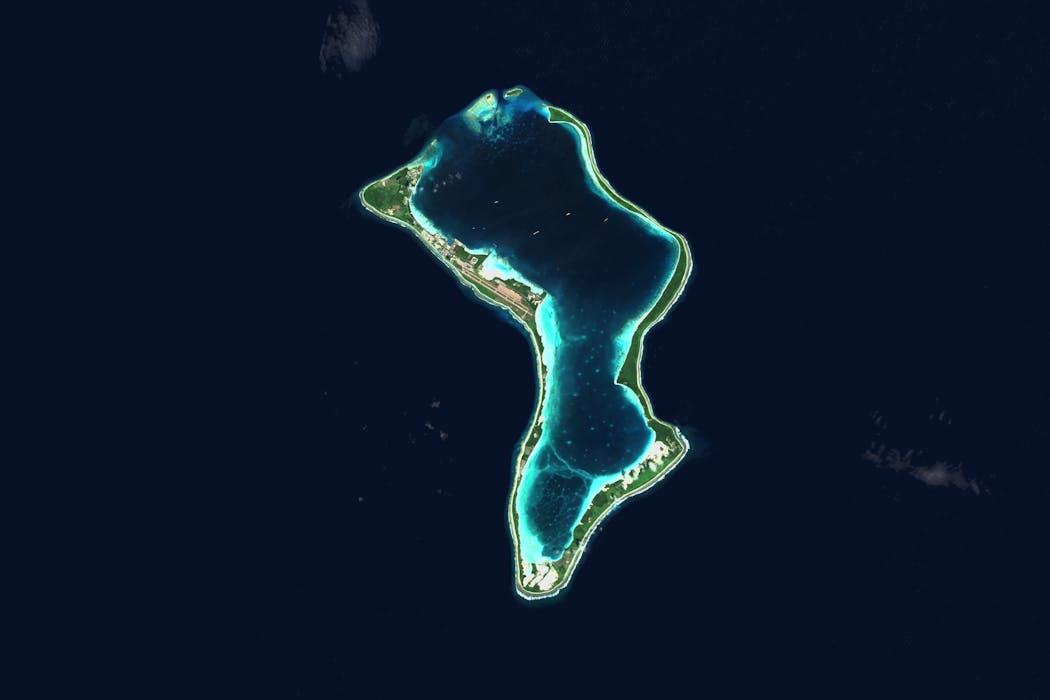
The US and UK maintain a joint naval base on Diego Garcia.zelvan/Shutterstock
The UK formally agreed to transfer sovereignty over the Chagos Islands to Mauritius in May 2025. With the Trump administration’s explicit support, this move ended one of the longest-running territorial disputes in Britain’s remaining overseas territories.
The decision has been hailed by some as a long-overdue act of decolonisation, condemned by others as a strategic misstep. Unexpectedly, Donald Trump has now reignited the debate, branding the deal an “act of great stupidity”.
Why has this small chain of remote Indian Ocean islands become such a flashpoint?
The roots of the crisis lie in the dismantling of Britain’s empire in the 1960s. The Chagos archipelago was historically administered as part of colonial Mauritius, then a British colony. In 1965, three years before Mauritian independence, the UK separated Chagos from Mauritius to create a new territory: the British Indian Ocean Territory.
The creation of a new colony was an act shaped by cold war strategy. Mounting economic and strategic pressures in the late 1960s – including the devaluation of the pound in 1967 and the Labour government’s 1968 decision to withdraw British forces east of the Suez Canal – together curtailed Britain’s regional defence role in the Indian Ocean.
As Britain retreated “east of Suez”, it still wanted a secure military foothold in the Indian Ocean, particularly one that could be used jointly with the US. Diego Garcia, the largest island in Chagos, was ideal: isolated, strategically positioned between Africa and Southeast Asia, near major trade routes and capable of hosting a major naval and air facility.
The costs were met by the UK, with £3 million paid to Mauritius to cede the islands. But the price of this strategy was paid by the Chagossians. Between 1967 and the early 1970s, the islanders were forcibly removed from their homes and relocated to Mauritius and the Seychelles. Their removal was brutal: families were separated, livelihoods destroyed, and a distinct island community effectively erased.
Why the UK changed course
By the 21st century, Britain’s legal position was increasingly untenable. In 2019, the International Court of Justice ruled that the separation of the Chagos archipelago from Mauritius had been unlawful and that the UK should “terminate” its administration “as rapidly as possible”. The UN General Assembly backed this view with an overwhelming but non-binding vote.
Mauritius has consistently argued that the islands are a stolen part of its national territory, and therefore their decolonisation is incomplete. Over time, this case gained traction – Britain’s continued control of Chagos came to symbolise the unfinished business of empire.
By 2022, James Cleverly, then the UK’s foreign secretary, opened negotiations with Mauritius to “resolve all outstanding issues” over the archipelago. In October 2024, the Labour government under Keir Starmer concluded that a negotiated settlement was preferable to decades more legal wrangling.
The deal struck with Mauritius did two things: it transferred sovereignty over the archipelago to Mauritius, while securing a 99-year lease on Diego Garcia to allow the existing US-UK military base to continue operating at a cost of £3.4 billion.
On paper, this protected British (and by extension US) strategic interests in the region while satisfying the legal argument from the UN. However, while the deal was initially supported by the US, the deal has come under attack from other UK political parties, and increasingly jars with Trump’s vision of the world.
Why the islands matter strategically
The significance of Chagos is its location. Diego Garcia is one of the most important western military installations outside Europe and North America. It has been described as “an all but indispensable platform” for US interests in the Middle East and East Africa, with B-52 bombers recently used from the base to strike Yemen.
In an era of renewed great-power rivalry, the island’s value has increased. As China expands its naval presence in the Indian Ocean, western governments see Diego Garcia as a counterweight. However, critics of the deal have raised questions about the China-Mauritius relationship, arguing this would allow China a crucial foothold in the region.
For the UK, the base also underpins its claim to still be a meaningful military actor beyond Europe. For this reason, sovereignty transfer was carefully managed. Britain was not abandoning the base, but ensuring an arrangement that kept western military access intact while removing the colonial stain.
On one level, the Chagos deal looks like a model of decolonisation. Britain accepted international law, acknowledged a historic wrong and negotiated a settlement.
Yet this is happening at a moment when global politics is becoming more overtly imperial in style. Russia’s invasion of Ukraine, China’s assertive regional ambitions and Trump’s expansionist rhetoric about Greenland all suggest a world less governed by law and more by power.
In that context, Britain’s attempt to “do the right thing” over Chagos risks looking out of step. It reflects a rules-based worldview that is under pressure.
This creates a dilemma for Britain, which on January 20 vowed to “never compromise on national security”. The UK government defended the deal, saying it had to hand over the Chagos Islands because the military base was “under threat” from international legal action.
Britain is no longer an imperial sovereign with uncontested control over distant territories. It is a mid-sized power that must balance history, law, alliances and strategy.
This situation also exposes Britain’s continued dependence on the US for its global military clout and economic advantages. Without the US, Diego Garcia would be far less significant. The US substantially provides most of the base’s military capability. Trump’s criticism underscores a deeper vulnerability: Britain’s post-imperial identity remains tethered to American power.
James Brocklesby does not work for, consult, own shares in or receive funding from any company or organisation that would benefit from this article, and has disclosed no relevant affiliations beyond their academic appointment.
Source: The Conversation – UK – By Marc Hudson, Visiting Fellow, SPRU, University of Sussex Business School, University of Sussex
The Trump administration recently announced it would pull out of around 150 international and global organisations, including two foundational pillars of global climate organisations: the political United Nations Framework Convention on Climate Change (UNFCCC) and the scientific Intergovernmental Panel on Climate Change (IPCC). In terms of media coverage this was a one-day wonder, understandably overshadowed by mass government killings in Iran and the actions of Immigration and Customs Enforcement (Ice) in Minneapolis.
But the acronym Ice brings to mind a different history. Thirty five years ago another “Ice” – the Information Council for the Environment – was created to spread confusion and hostility. As the late Pulitzer-prize winning journalist Ross Gelbspan revealed, this Ice was funded by coal companies as part of a targeted effort to cultivate doubt around the “greenhouse effect” among low information voters, especially older white men without college educations.
Ice was eventually exposed and melted away. But the broader effort continued, spearheaded by the Global Climate Coalition, formed by oil companies and carmakers. Their goal was rational: to protect their profits by softening US carbon reduction commitments, such as those agreed at the 1997 Kyoto conference.
Bad for the public, bad for capital
For decades, US engagement with climate change was characterised by delay. This “made sense” for certain interests. When George H.W. Bush weakened the UNFCCC or his son pulled out of the Kyoto protocol, they were operating on a certain economic logic: protect American industry from regulation.
Trump is very different.
Over the past 20 years “clean tech” has gone mainstream and is now seen as a way for corporations to secure market share. This was matched by policymakers, and the Biden administration’s Inflation Reduction Act (IRA) threw enormous sums – grants, loans, tax-breaks – at “green” reindustrialisation.
Big companies were making loads of money. The true capitalist move would surely be to keep profits flowing. Yet Trump is rolling back the IRA.
This is not in the interests of the public, but it’s not generally in the interests of capital either. At best, Trump’s moves favour a dying form of capitalism over the emerging one.
Insurers facing uninsurable risks, carmakers who had committed to electric vehicles, and the clean tech sector all lobbied to keep the IRA. They would be making more money had the green industrial policy continued. Even major oil companies seem lukewarm towards a policy of total isolationism.
Things were better before
So, if it isn’t about money, what’s going on?
Trump and his allies share a worldview shaped by conservative backlash against civil rights, feminism, environmentalism and even scientific authority itself. The nostalgia they invoke is for a partly-imagined 1950s, a time when white technocratic men were in charge, schools were segregated, women were in the kitchen, and polluting industries could do as they pleased.
In my own academic research, I found something similar played out in Australia. For many older white men used to industrial dominance, the transition to renewables represents a psychological loss of control similar to the social upheavals of the 1960s. Their war on climate policy is less about economics and more about reasserting a “natural order” where traditional hierarchies remain unchallenged.
Whether in Australia or the US, being too young to have lived through these changes provides no immunity to the myth that everything was better before they were born. For a long time, however, this reactionary impulse was kept in check by political realities.
In the 1980s, Reagan appointees learned that pitched battles with environmental interests can be costly. They learned to use the language of technology, and to cast doubt rather than issue outright denials. Crucially, they learned the value of under-funding institutions to the point of incapacity, rather than abolishing them entirely, so that environmentalists had no easy-to-explain causes to rally behind.
Trump’s administration is unwilling to pretend. Alongside the UNFCCC and IPCC pullout, it has been attempting to dismantle the state’s ability to measure reality through key scientific institutions such as the National Oceanic and Atmospheric Administration or the Environmental Protection Agency. Trump and those around him are not doing this because it saves money, but because the science itself offends their worldview. It is a refusal to admit the political enemies they have derided for decades might actually have been right.
We are used to thinking of politicians and bureaucracies as captives of vested interests with predictable economic motives. But Trump’s climate policy suggests something different is also at work. It recalls the moment when former UK prime minister Boris Johnson is reported to have dismissed corporate concerns about Brexit with a blunt “fuck business”.
Trump’s climate policy is the geopolitical equivalent. It is a scorched earth strategy that sacrifices the climate to win a culture war. And the terrifying reality is they seem willing to do this just to avoid admitting they were wrong.
Marc Hudson was previously employed as a post-doctoral researcher on two separate Industrial Decarbonisation Research & Innovation Centre projects.
Every January, the same wave of “detox” promises rolls in. Juice cleanses, detox teas, charcoal capsules and liver “resets” all sell a familiar story: you overdid it over Christmas, your body is full of toxins, and you need a product to flush them out.
Here is the inconvenient truth. Your body already has a detox system. It is called your liver, supported by your kidneys and gut, and it has been doing this job your entire life.
I am a liver researcher. I study how this organ works, how it gets damaged and how it repairs itself. So if you are wondering whether you need to detox, my honest answer is that most healthy people do not. In fact, some popular detox trends are not just unnecessary, they can cause harm.
When people talk about detoxing, they usually mean getting rid of harmful substances. That is a real biological process, but it is not something you can switch on with a tea, a supplement or a three day cleanse. Detoxification happens continuously. The liver neutralises chemicals and breaks them down into forms the body can use or safely remove, with waste leaving mainly through urine and faeces. This process is well described in human physiology and toxicology research, including detailed accounts of liver metabolism.
If you are generally healthy and not repeatedly overwhelming your system, you do not need a reset. What the liver needs most is time and consistency, meaning fewer repeated insults and enough recovery time to repair itself between them.
Alcohol: the liver can cope, until it can’t
Alcohol is a useful example of how detoxification works, because everything you drink is processed directly by the liver. After drinking, alcohol is absorbed through the gut and carried in the bloodstream straight to this organ. Liver cells, called hepatocytes, break alcohol down in stages. One intermediate product, acetaldehyde, is toxic and contributes to hangover symptoms before being broken down further into acetate, which the body can use or eliminate.
Problems arise with binge drinking or sustained heavy drinking. Under these conditions, the liver relies more heavily on alternative processing pathways that generate larger amounts of acetaldehyde and increase oxidative stress. This means toxic by-products are produced faster than they can be cleared. Over time, this damages liver cells, triggers inflammation and contributes to fibrosis, which is the build-up of scar tissue. If scarring becomes extensive, it can progress to cirrhosis, a stage where normal liver structure and function are severely disrupted, increasing the risk of liver failure and liver cancer.
This is why how you drink matters, not just how much. Spacing drinks out keeps blood alcohol levels lower and gives the liver a better chance to keep up with detoxification.
Liver ‘cleanses’
When people replace alcohol and ultra-processed foods with liquids made from fruit, vegetables and herbs for a few days, they often feel better. That does not mean toxins have been pulled out of the liver. More often, it reflects lower calorie intake, fewer additives, increased fluid consumption and sometimes more fibre.
A short, sensible “cleanse” is unlikely to harm most healthy adults, but risks increase with very low calorie regimens, poorly regulated herbal ingredients or repeated long-term use.
Some supplements have evidence in specific clinical settings. Vitamins D and E have been studied in certain liver diseases, and antioxidants such as N-acetylcysteine are used medically in cases of acute liver injury. These are targeted interventions used under medical guidance, not general detox tools, and they do not offset ongoing harmful behaviour.
Some high-dose detox “natural” supplements, such as green tea extract, can lead to liver inflammation, reflected in elevated liver enzymes on blood tests. This indicates liver cells are under stress or being damaged and, in severe cases, supplement-induced liver injury can progress to liver failure requiring a transplant.
Milk thistle and turmeric
Milk thistle and turmeric contain biologically active compounds with antioxidant and anti-inflammatory properties, and there is some evidence suggesting potential benefits in specific liver conditions. Milk thistle, for example, has been studied in alcohol-related liver disease and non-alcoholic fatty liver disease, but results are mixed and not strong enough to support routine use.
The main issues with both substances are dosing, formulation and study quality. Turmeric in food is poorly absorbed, which is why supplements often use concentrated extracts or additives to boost absorption. At that point, a culinary spice becomes a pharmacological dose. Higher doses increase the risk of side effects and interactions, and turmeric supplements, which are often concentrated sources of the active compound curcumin, have been linked to cases of acute liver injury. The UK Committee on Toxicity has warned about a potential risk to human health from turmeric and curcumin supplements. “Natural” does not automatically mean safe.
Activated charcoal
Activated charcoal binds substances, which is why it is used in medical settings for certain poisonings. It is non-specific, however, binding whatever is present rather than targeting toxins alone. That makes it useful in emergencies and risky in everyday use. Taking charcoal alongside medication may reduce how much of that medication your body absorbs. Charcoal supplements are not a safe response to suspected poisoning and do not replace medical advice.
Coffee enemas
Coffee, when consumed normally, is associated with better outcomes in several liver diseases and may be protective in some contexts. That evidence does not support putting coffee into the colon.
Enemas can cause burns, infections, dangerous imbalances in the salts your body needs to control nerves, muscles and heart rhythm, and bowel perforation. If you want coffee for potential liver benefits, drink it.
For most healthy people, the best liver support is unglamorous. It means keeping alcohol within recommended limits, avoiding binge patterns, eating a diet rich fibre and fresh fruit and vegetables, staying hydrated and allowing regular rest days from alcohol.
The liver is an extraordinary organ. It detoxifies the body every day without needing a cleanse, a tea or a reset. If you want to support it, focus less on dramatic short-term detox routines and more on reducing repeated strain over time. Consistency beats gimmicks.
And whatever you do this January, do not put coffee where it does not belong.
In the first episode of Strange Health, a new visualised podcast from The Conversation, hosts Katie Edwards and Dan Baumgardt put detox culture under the microscope and ask a simple question: do we actually need to detox at all?
Strange Health explores the weird, surprising and sometimes alarming things our bodies do. Each episode takes a popular health or wellness trend, viral claim or bodily mystery and examines what the evidence really says, with help from researchers who study this stuff for a living.
Katie Edwards, a health and medicine editor at The Conversation and Dan Baumgardt, a GP and lecturer in health and life sciences at the University of Bristol share a longstanding fascination with the body’s improbabilities and limits, plus a healthy scepticism for claims that sound too good to be true.
Strange Health is hosted by Katie Edwards and Dan Baumgardt. The executive producer is Gemma Ware, with video and sound editing by Sikander Khan. Artwork by Alice Mason.
Dan and Katie talk about two social media clips in this episode, one from 30.forever on TikTok and one from velvelle_store on Instagram.
Listen to Strange Health via any of the apps listed above, download it directly via our RSS feed or find out how else to listen here. A transcript is available via the Apple Podcasts or Spotify apps.
Trish Lalor does not work for, consult, own shares in or receive funding from any company or organisation that would benefit from this article, and has disclosed no relevant affiliations beyond their academic appointment.
Source: The Conversation – UK – By Matthew Mokhefi-Ashton, Lecturer in Politics and International Relations, Nottingham Trent University
The key difference between Donald Trump’s first and second presidencies can be summed up by his two official portraits. The first after his victory in 2016 shows a smiling Trump, probably delighted to have won against the odds and, at least in theory, willing to work with his opponents.
The second shows a more brooding figure glaring into the camera – a man who recognises that a sizeable chunk of the country is never going to like him and does not care. This second image encapsulates what I see as the twin themes of Trump’s second term: revenge and legacy.
In 1973, American political scientist Arthur M. Schlesinger Jr introduced the concept of the “imperial presidency”. He argued that the separation of powers that lies at the heart of US democracy had become overbalanced under the presidency of Richard Nixon in favour of the executive branch.
In response to the Vietnam war and the Watergate scandal, where operatives working for Nixon bugged the Democrat National Committee’s headquarters and he tried to cover it up, Congress reasserted itself. The war powers resolution of 1973, for example, required the president to consult with Congress before committing US armed forces to conflict.
The Obama administration also shows how effectively a president’s agenda can be derailed when one party puts its mind to it. Republicans blocked Obama’s appointments to the judiciary and significantly watered down his main achievement, the Affordable Care Act.
However, Trump’s second administration has seen the imperial presidency reach its peak. He has wielded this power against his political enemies, whether other politicians, media organisations or foreign governments, more forcefully than at any point during his first presidency.
This has been shown by various legal cases, as well as his threat to sue Paramount over a pre-election interview with rival presidential nominee Kamala Harris on CBS News that Trump felt unduly favoured her. Paramount settled by agreeing to pay US$16 million (£11.9 million) to Trump’s future library.
It is also striking how much more organised Trump’s second administration has been. There will forever be a debate about whether Trump really expected to win back in 2016, but it’s obvious there had been a lack of planning. This was shown by the disjointed policy agenda and appointments to key positions of people who were either not as loyal as he would have wished or not up to the roll.
Trump’s first national security advisor, Michael Flynn, lasted only 24 days in his post, while communications director Anthony Scaramucci lasted ten. Trump’s government is staffed by ultra-loyalists this time round, including Deputy Chief of Staff Stephen Miller, FBI Director Kash Patel and Secretary of Defense Pete Hegseth.
There have still been embarrassing mistakes, including the leak of information about imminent military strikes in Yemen. But Trump’s government has been notably more focused and organised than in his initial presidency.
Miller’s America First Legal Foundation, for example, spent the Biden years creating policy agendas and drafting executive orders. Because of this pre-planning, Trump could appoint his second cabinet much faster than his first and hit the ground running. What followed was a flurry of executive orders and legislation on immigration, federal regulations and the economy.
On January 20 2025, Donald Trump was sworn in as the 47th president of the United States. His first year in office has seen profound changes both in his own country and across the globe. In this series, The Conversation’s international affairs team aims to capture the mood after the first year of Trump’s second coming.
Cementing his legacy
Trump cannot run for the presidency again according to the US constitution, despite his trolling on the subject. While his first presidency was focused on his ultimately failed efforts at reelection, the next three years are all about legacy.
Every US president has actions that can be undone by their successors. In Trump’s case, future Democratic presidents can change the renamed Gulf of America back to the Gulf of Mexico. But Trump’s second term has also seen him aim for seismic changes that cannot be easily reversed.
Chief among these is Greenland. What was initially perhaps a passing fancy to bring the Danish-administered territory under US control has turned into a key pillar of his post-presidency ambitions. If Trump succeeds in making Greenland part of the US, then he will have increased the size of the US’s land possessions by roughly 22%.
It would be difficult for any future president to hand it back without being accused of weakness and ceding territorial gains. Similarly, cementing Venezuela as a client state would reshape regional dynamics in ways that will be difficult to reverse. Appointing himself as chair of the Gaza “peace board” for life again speaks to a man trying to create a permanent legacy.
Another aim is reconfiguring the federal government. This process was started during his first term by reshaping the Supreme Court to give it a conservative majority that, barring accidents or illness, will last over 20 years. Trump has now turned his attention to the rest of the system.
His aim is to appoint judges and administrators that cannot be removed easily by future administrations, cementing his policy agenda on a generation. Trump has repeatedly stated his wish to fire Jerome Powell, the chair of the Federal Reserve, and replace him with someone more in tune with his thinking.
The main obstacle is Congress. Trump’s first term taught him that the much-lauded checks and balances of the US constitution are stronger on paper than in practice. With strength of will, billionaire supporters and a disposition to take legal action, these mechanisms can be circumvented or ignored. But they can slow him down.
This is why the midterm elections in November are so important. If a president’s party holds the House and Senate when they enter office, as was the case for Trump after the 2024 election, they often lose it two years later. And if the Democrats gain control of the House then they can hobble his legislative agenda.
In some ways, Trump’s biggest legacy will be the resurgence of the imperial presidency. He has shown future administrations what can be done if they’re willing to ignore political norms. On many occasions during his first term Trump voiced variations of “nobody has done what I’ve been able to do”. In his second term, he seems set on turning political rhetoric into indisputable fact.
Matthew Mokhefi-Ashton does not work for, consult, own shares in or receive funding from any company or organisation that would benefit from this article, and has disclosed no relevant affiliations beyond their academic appointment.
One year into his second term of office, Donald Trump’s foreign policy aspirations have led him to variously lay claim to Canada, the Panama Canal and, most contentiously at present, Greenland. He has kidnapped the head of state of Venezuela, saying that the US can run the country and exploit its oil, and he has issued threats against the sovereignty of Colombia, Mexico and Cuba.
Whatever the 47th president’s motivations, his expansionist vision has echoes of a little-known organisation that flourished briefly in the middle decades of the 19th century: the Knights of the Golden Circle. The Knights were a secret society founded in Lexington, Kentucky, in 1854 by Virginian doctor George W.L. Bickley.
Membership of the group is largely hidden from historians due to the secretive nature of the organisation. But legend suggests that its leaders included the likes of confederate general Nathan Bedford Forrest (who would go on to be the first Grand Wizard of the Ku Klux Klan) and Abraham Lincoln’s assassin, John Wilkes Booth.
The society’s name was chosen to reflect the wealth that would be created by establishing a slaveholding empire that would initially consist of Mexico, Central America and the Caribbean. The so-called “Golden Circle”, with its headquarters in Havana, Cuba, would encompass much of the world’s supply of cash crops such as tobacco, rice, cotton, sugar and coffee, and the production of each depended on significant enslaved workforces.
The initial intention was not to have an independent empire but to annex the area to the American south, strengthening the cause of slavery. But the group shifted tactics as tensions escalated in the late 1850s, especially after the the Supreme Court’s Dred Scott decision (1857) that ruled that African Americans were not and could never be citizens. And as the abolitionist movement in the north gathered pace, the Golden Circle society adapted to support the secession of the southern states from the Union to be absorbed into the other Golden Circle territories.
The exact number of members of the Knights of the Golden Circle is unknown. Bickley claimed it had 115,000 members at one point – although this seems unlikely due to Bickley’s failure to raise troops to invade Mexico.
The Knights’ goals were not simply territorial expansion. They were ambitions of ideological conquests rooted in the continuation of slavery, as viewed through the lens of a “manifest destiny”: the idea that the white man should expand its dominance across the continent of America to the exclusion of native populations.
While the organisation’s influence was limited, it reflected the 19th-century American premise that territorial expansion could forever secure a social order built on hierarchy and chattel slavery.
Trump’s Maga vision
Fast forward to the present day, and American imperialist expansion no longer wears the uniform of secret societies such as the Knights. Instead, it emerges through presidential rhetoric, policy signalling and deliberate ambiguity.
On January 20 2025, Donald Trump was sworn in as the 47th president of the United States. His first year in office has seen profound changes both in his own country and across the globe. In this series, The Conversation’s international affairs team aims to capture the mood after the first year of Trump’s second coming.
Under Trump, America’s ambitions in the western hemisphere have been framed as annexations driven by hemispheric dominance. Trump unironically called it the “Donroe doctrine”, a personalised and transactional reinterpretation of the Monroe doctrine’s core claim: that the Americas are solely within the United States’ sphere of influence.
Where the 1823 Monroe doctrine warned European powers against further colonisation while professing American restraint, Trump’s version dispenses with the pretence of mutual sovereignty. It treats neighbouring states not as equals but as strategic assets or bargaining chips. The language is typically Trumpian (blunt and improvised) but it argues that external powers have no role in the governance of the western hemisphere, and that the United States has the final say-so.
Cuba is at the centre of this worldview. While Trump has not openly advocated annexing the island, he has attempted to use coercive pressure as a substitute for territorial control. Efforts to disrupt Cuban energy supplies and renewed talk of regime change echo traditional American treatment of Cuba as an unfinished project. Consequently, Trump’s Cuba policy resembles the establishment of an informal American empire.
The Golden Circle was to consist of the southern US, Mexico, Central America, Cuba, Haiti, the Dominican Republic, Caribbean South America and most other islands in the Caribbean. Spesh531/Wikipedia, CC BY-ND
The Knights of the Golden Circle imagined Cuba not just within the American sphere of influence but as territory to be absorbed. Their obsession with Havana as the Golden Circle’s centre reflected an understanding that southern power depended on control of the Caribbean. Trump’s posture is less explicit, but the strategy is very similar. Cuba is viewed as a prize within America’s reach and yet denied.
The same logic appears elsewhere in the Americas. Trump’s threats toward Mexico blur the line between cooperation and coercion. America’s neighbours’ sovereignty becomes negotiable when framed as an American security problem. Pressure on Venezuela and Columbia also reflects a willingness to treat political outcomes in the Americas as matters of US entitlement.
What distinguishes the so-called Trump corollary from previous American hemispheric dominance is its tone. It is unapologetically hierarchical and dismisses multilateral norms. It harks back to a time when the US could act first and justify itself later. Where cold war policymakers cloaked intervention in ideological language, Trump’s rhetoric is strikingly transactional. Influence is something to be purchased or compelled.
This brings the comparison with the Knights of the Golden Circle into sharper focus. The Knights had a secret vision of empire, brought to life by slavery and racial hierarchy. Trump’s ambitions are in the public sphere, filtered through state power. But both reflect that geography confers entitlement and that the Americas exist in a fundamentally different moral category.
In this light, Trump’s policy is not a radical break with American history but an unvarnished return to its imperial ambitions. The map may no longer be redrawn by conquest, but the logic that once animated the Golden Circle, one of hemispheric control as destiny, has not disappeared. It has merely learnt to speak in the idiom of modern populism.
Dafydd Townley does not work for, consult, own shares in or receive funding from any company or organisation that would benefit from this article, and has disclosed no relevant affiliations beyond their academic appointment.
For the UK after Brexit, it is tempting to imagine that regulation no longer comes from Brussels. Yet one of the most significant pieces of digital legislation anywhere in the world – the EU’s Artificial Intelligence Act – is now coming into force, and its effects will reach UK companies, regulators and citizens.
AI is already threaded through daily life: in how loans are priced, how job applications are sifted, how fraud is detected, how medical services are triaged, and how online content is pushed.
The EU’s AI Act, which is entering into force in stages, is an attempt to make those invisible processes safer, more accountable and closer to European values. It reflects a deliberate choice to govern the social and economic consequences of automated decision-making.
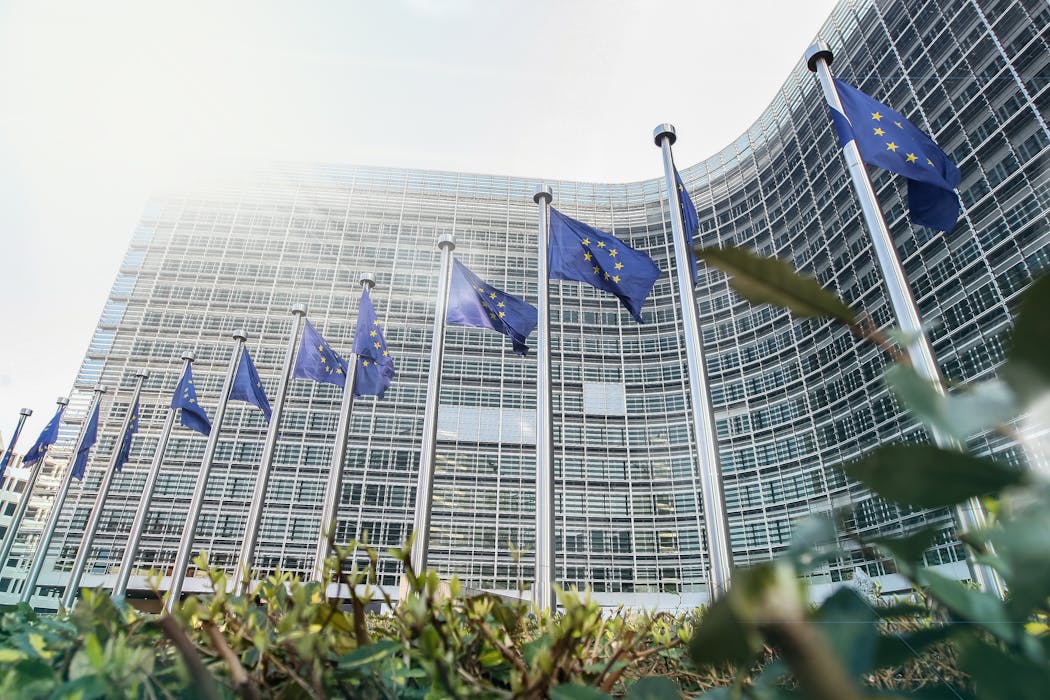
The act aims to harness the innovative power of AI while protecting EU citizens from its harms. The UK has chosen a lighter regulatory path, but it will not be immune from the act’s consequences. Through the AI Office and national enforcement authorities, the EU will be able to sanction UK companies that have operations in the bloc, regardless of where they have their headquarters.
The act enables authorities to impose fines or demand that systems be changed. This is a signal that the EU is now treating AI governance as a compliance issue rather than a matter of voluntary ethics. My research outlines the power of the enforcement provisions, particularly their influence on how AI systems will be designed, deployed or even withdrawn from the market.
Many of the systems most relevant to everyday life, such as those used in employment, healthcare or credit scoring, are now deemed “high-risk” under the act. AI applications in these scenarios must satisfy demanding standards around data, transparency, documentation, human oversight and incident reporting. Some practices, such as systems that use biometric data to exploit or distort people’s behaviour by targeting vulnerabilities such as age, disability or emotional state, are simply banned.
The regime also extends to general-purpose AI – the models that underpin everything from chatbots to content generators. These are not automatically classified as high-risk but are subject to transparency and governance obligations alongside stricter safeguards in situations where the AI could have large-scale or systemic effects.
This approach effectively exports Europe’s expectations to the world. The so-called “Brussels effect” operates on a simple logic. Large companies prefer to comply with a single global standard rather than maintain separate regional versions of their systems. Firms that want access to Europe’s 450 million consumers will therefore simply adapt. Over time, that becomes the global norm.
The UK has opted for a far less prescriptive model. While its own comprehensive AI legislation appears to be in doubt, regulators – including the Information Commissioner’s Office, Financial Conduct Authority and Competition and Markets Authority – examine broad principles of safety, transparency and accountability within their own remits.
This has the virtue of agility: regulators can adjust their guidance as required without waiting for legislation. But this also shifts a greater burden on to firms, which must anticipate regulatory expectations across multiple authorities. This is a deliberate choice to rely on regulatory experimentation and sector-specific expertise rather than a single, centralised rulebook.
Agility has trade-offs. For small and medium-sized firms trying to understand their obligations, the EU’s clarity might seem more manageable.
There is also a risk of regulatory misalignment. If Europe’s model becomes the global reference point, UK firms may find themselves working to both the domestic standard and the European one demanded by their clients. Maintaining this will be costly and is rarely sustainable.
Why UK companies will be affected
Perhaps the most consequential – but least widely understood – aspect of the EU’s AI Act is that extraterritorial scope that I mentioned earlier. The act applies not only to companies based inside the EU but also to any provider whose systems are either placed on the EU market or whose outputs are used within the bloc.
This captures a vast range of UK activity. A London fintech offering AI-driven fraud detection to a Dutch bank, a UK insurer using AI tools that inform decisions about policyholders in Spain, or a British manufacturer exporting devices to France – all of these fall squarely within European regulation.
My research also covers the obligations for banks and insurers – they may need robust documentation, human-oversight procedures, incident-reporting mechanisms and quality-management systems as a matter of course.
Even developers of general-purpose AI models could find themselves under fire, particularly where regulators identify systemic risks or gaps in transparency that warrant closer scrutiny or corrective action.
For many UK firms, the more pragmatic choice will be to design their systems to EU standards from the outset rather than produce separate versions for different markets.
Firms will be required to ensure that any decisions informed by AI do not discriminate between clients. Andrey_Popov/Shutterstock
Although this debate often sounds abstract, its effects are anything but. Tools that determine your access to credit, employment, healthcare or essential public services increasingly rely on AI. The standards imposed by the EU – particularly requirements to minimise discrimination, ensure transparency and maintain human oversight – are likely to spill over into UK practice simply because large providers will adapt globally to meet European expectations.
Europe has made its choice: a sweeping, legally binding regime designed to shape AI according to principles of safety, fairness and accountability. The UK has chosen a more permissive, innovation-first path. Geography, economics and shared digital infrastructure all ensure that Europe’s regulatory pull will reach the UK, whether through markets, supply chains or public expectations.
The AI Act is a blueprint for the kind of digital society Europe wants – and, by extension, a framework that UK firms will increasingly need to navigate. In an age when algorithms determine opportunity, risk and access, the rules that govern them matter to all of us.
Maria Lucia Passador does not work for, consult, own shares in or receive funding from any company or organisation that would benefit from this article, and has disclosed no relevant affiliations beyond their academic appointment.
Imagine Max, a well-trained border collie, manages to ignore a squirrel in the park
when his owner tells him to sit. His owner says, “Max, stop chasing that squirrel and sit down,” and Max obeys. Can dogs learn and understand words the way humans do?
A new study found dogs like Max may have learnt the names of objects (like a squirrel) from overhearing their owners talking. The study is the latest to try and understand whether intelligent dogs and humans can have real conversations.
A widely reported case in 2004 brought this question into the spotlight. Rico, an eight-year-old border collie was the first dog who demonstrated under experimental conditions that he knew the names of over 200 different toys.
Dogs like Rico seem different to other ones. Scientists have a name for them: label-learner dogs. They seem so exceptional, it’s easy to wonder if they’re learning words in a similar way to humans. Research is starting to give us some answers. But first, it’s important to understand how these dogs have been studied.
In 2004, researchers, including myself, wanted to make sure Rico wasn’t simply reacting to subtle, unconscious signals from people. So Rico was tested in a room where he couldn’t see anyone. He still fetched the correct toys upon hearing the command “Fetch, xy”. That meant he was not using visual cues from his owner.
The next big question was whether Rico could learn new name-object combinations the way young children do. Children often learn new words through a process called fast mapping. They hear a new word, look at the options and figure out what it must refer to. For example, if a child knows what “blue” means but not “olive,” and you show them a blue object and an olive-green one, they’ll probably choose the olive-green one when you ask for “olive”.
Rico showed something similar in his behaviour. When researchers placed a brand-new toy among familiar ones and asked for a name he had never heard before, he picked the new toy. He even remembered some of these new name-object pairs weeks later. That means Rico could pick up new names for things without seeing people point at them or look at them or give any other obvious hints.
He just heard a new name and figured out what it referred to.
It seems that there is a group of gifted dogs that have realised that objects have names. These dogs appear to have an exceptional ability to learn the names of many objects. Like Rico’s ability to learn names through a process of elimination, these dogs can also learn independently, without needing additional cues to identify the object being named.
But what is it, that makes these dogs gifted in this way? To explore this question, my colleagues and I recently studied a group of these unusually talented dogs, of various breeds (border collies, mixed breeds, a Spanish water dog and a pug). Many label-learner dogs are border collies but lots of other breeds seem to have this ability too.
My colleagues and I gave them a set of cognitive puzzles to solve. Each dog completed eight tasks designed to measure curiosity, problem solving, memory, learning ability and their ability to follow human communicative cues like pointing or gazing. A second group of dogs – matched by age, sex and breed – (and without any special name-learning skills) took the same tests so we could compare the two groups.
The label-learner dogs consistently showed three key traits. They were obsessed with new objects. They showed strong, selective interest in particular items. And they were better at controlling their impulses when interacting with objects. However, more research will need to investigate whether these traits appear naturally in some puppies or whether they can be shaped through training as a dog grows.
The findings may eventually lead to something like a puppy “IQ test” that identifies young dogs with the potential to learn many object names. This could help trainers select dogs well suited for important roles such as assisting people with sight or hearing impairments or supporting police work.
But does this all now mean dogs learn words like children do? After all the new paper about overhearing used a approach designed to study understanding in human toddlers.
The answer is: not quite. Children learn thousands of words, and they do it rapidly and flexibly. Even at 18 months, children don’t just match a word to whatever they see at the moment.
They can understand what an adult intends to talk about by realising when a person is referring to something that isn’t there. For example, if a parent says, “Where’s the teddy we played with this morning?” even though the teddy is not in the room, the child may still understand what the parent means and go look for it. Children use shared context to understand others.
Even the highly skilled label-learner dogs seem to struggle to understand object-name links this way.
Although there is ample evidence that dogs seem specifically adapted to human use human given gestural communicative cues, like pointing and gazing, when it comes to “word-learning” the evidence we have is just that dogs can form object-name associations. We also know that some dogs can acquire hundreds of these associations or might have understood a rule that objects have names.
This is not comparable to word learning in children. By around age two, typical English-speaking children learn approximately ten new words each day, reaching an average vocabulary of about 60,000 words by the age of 17.
When they learn words, children apply rules and principles. Their language acquisition is based on the understanding of others as “intentional beings”, that other people have goals and intentions. They recognise that when someone talks, points or gestures, they are trying to share an idea, ask for something, or draw attention to something. For example, when a parent says “Look at the dog!” the child typically understands that the parent wants them to notice the dog, not that the words are just random sounds.
However, there is currently no conclusive evidence to suggest that this core principle, underpins dogs’ interactions with humans.
Dogs are amazing learners, but their abilities are not the same as human language learning. They learn names for objects, not language.
Juliane Kaminski does not work for, consult, own shares in or receive funding from any company or organisation that would benefit from this article, and has disclosed no relevant affiliations beyond their academic appointment.
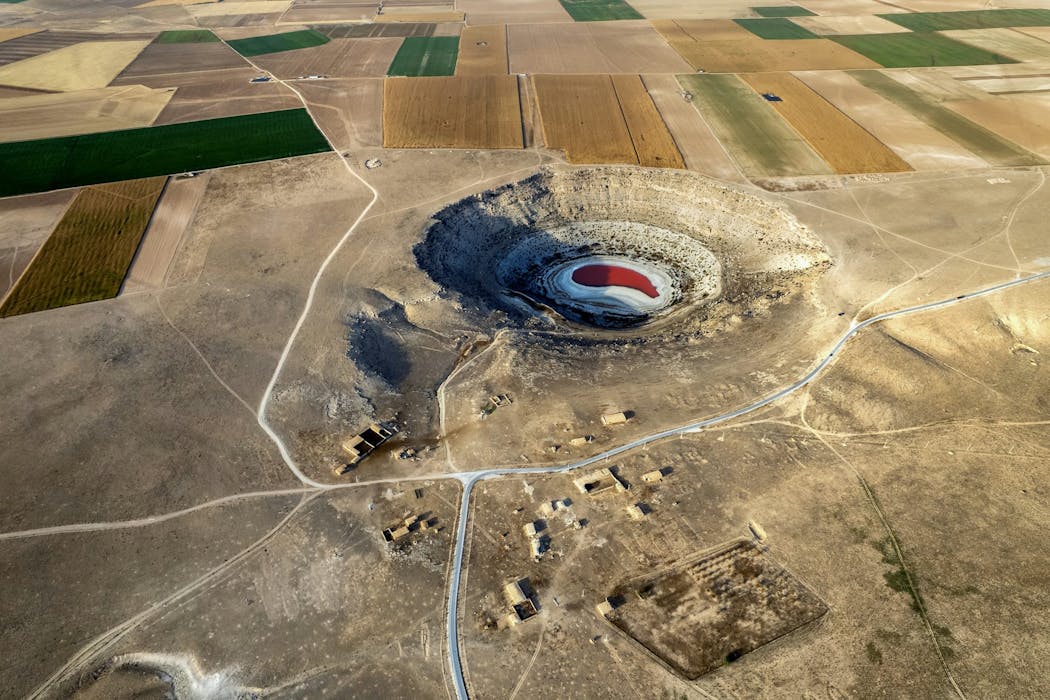
Ce gouffre dans le cœur agricole de la Turquie montre comment le paysage peut s’effondrer lorsque l’on extrait plus d’eau souterraine que la nature ne peut en reconstituer.Ekrem07, 2023/Wikimedia Commons, CC BY-SA
De Téhéran au fleuve Colorado, les signes d’un effondrement durable des ressources en eau se multiplient. La planète consomme aujourd’hui plus d’eau douce qu’elle n’est capable d’en renouveler. Sous l’effet du changement climatique et de décennies de surexploitation, de nombreuses régions du monde ne parviennent plus à se remettre des périodes de manque d’eau. Cette situation, que nous qualifions de « faillite hydrique », est omniprésente : elle touche déjà des milliards de personnes avec des conséquences déjà visibles sur les sociétés, l’agriculture et les écosystèmes.
Le monde utilise aujourd’hui tellement d’eau douce, dans un contexte de changement climatique, qu’il est désormais en situation de « faillite hydrique ». Par là, il faut comprendre que nombreuses régions ne sont plus en mesure de se remettre des pénuries d’eau à mesure que celles-ci deviennent de plus en plus fréquentes.
Environ 4 milliards de personnes, soit près de la moitié de la population mondiale, vivent dans des conditions de grave pénurie d’eau (c’est-à-dire sans accès à une quantité d’eau suffisante pour répondre à tous leurs besoins) pendant au moins un mois par an.
En réalité, beaucoup plus de personnes subissent les conséquences du déficit hydrique : réservoirs asséchés, villes englouties, mauvaises récoltes, rationnement de l’eau, incendies de forêt et tempêtes de poussière dans les régions touchées par la sécheresse.
Les signes de faillite hydrique sont partout, de Téhéran, où les sécheresses et l’utilisation non durable de l’eau ont épuisé les réservoirs dont dépend la capitale iranienne, alimentant les tensions politiques, jusqu’aux États-Unis, où la demande en eau a dépassé les capacités du fleuve Colorado, une source cruciale d’eau potable et d’irrigation pour sept États.
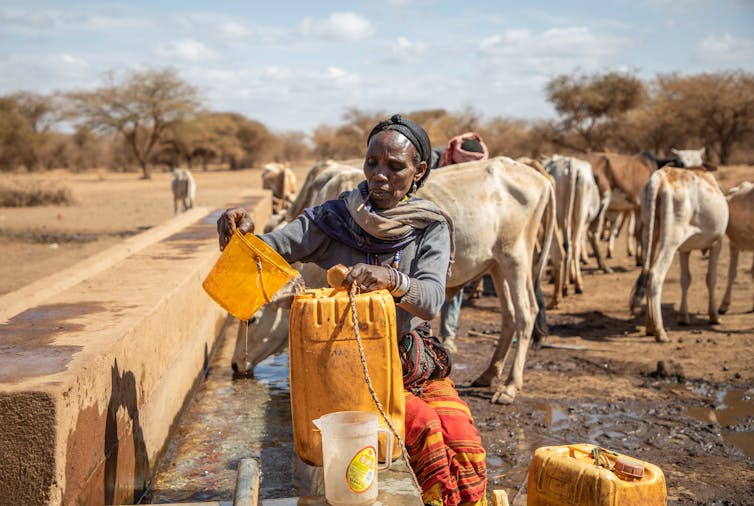
Les sécheresses ont rendu plus difficile l’approvisionnement en eau pour le bétail et ont entraîné une malnutrition généralisée dans certaines régions d’Éthiopie ces dernières années. En 2022, l’Unicef estimait que jusqu’à 600 000 enfants auraient besoin d’un traitement contre la malnutrition sévère. Demissew Bizuwerk/UNICEF Ethiopia, CC BY
La faillite hydrique n’est pas seulement une métaphore du manque d’eau. Il s’agit d’une situation chronique qui se développe lorsqu’un endroit utilise plus d’eau que la nature ne peut en remplacer de façon fiable, et lorsque les dommages causés aux ressources naturelles qui stockent et filtrent cette eau, comme les aquifères et les zones humides, deviennent difficiles à réparer.
Kaveh Madani, directeur de l’Institut de l’Université des Nations unies pour l’eau, l’environnement et la santé, explique le concept de « faillite hydrique » (interview en anglais)/TVRI World.
Reconnaître les signes de « faillite hydrique »
Lors d’une faillite financière personnelle, les signes avant-coureurs semblent au départ gérables : retards de paiement, compensés par des emprunts voire des ventes d’objets. Puis la spirale s’accélère. Les premières étapes d’une faillite hydrique sont assez similaires.
Cela commence doucement, d’abord les années sèches, où l’on augmente les prélèvements d’eau souterraine, on utilise des pompes plus puissantes ou encore des puits plus profonds.
Puis on va peut-être, pour répondre aux besoins, transférer l’eau d’un bassin à un autre. On assèche des zones humides et on rectifie le cours des rivières pour laisser de la place aux fermes et aux villes préexistantes.
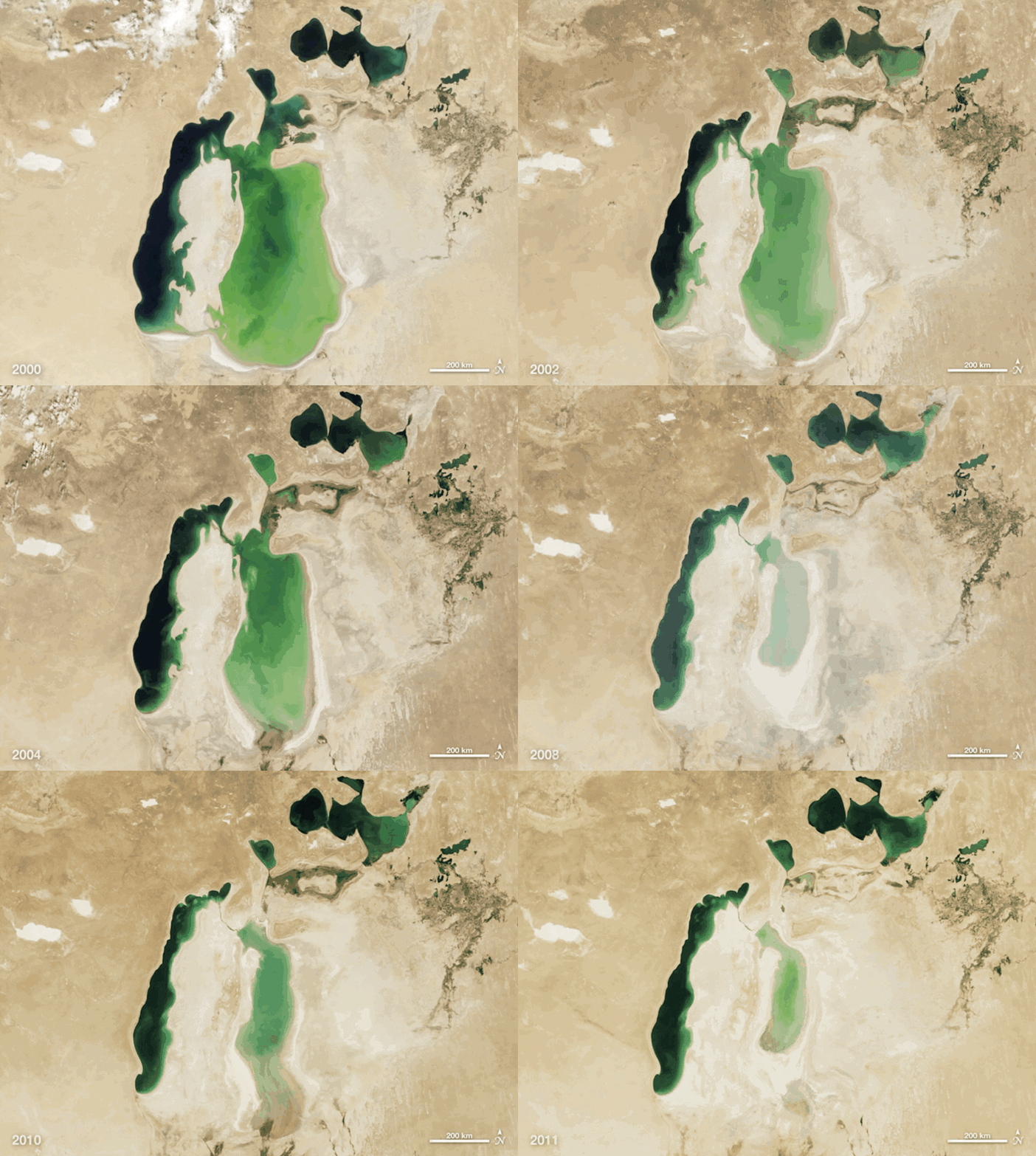
La mer d’Aral (Asie centrale) a considérablement rétréci entre 2000 et 2011. Ce lac d’eau salée était autrefois de forme ovale et couvrait les zones claires jusqu’aux années 1980, mais la surexploitation agricole de plusieurs pays l’a fait disparaître. NASA
Ce dernier phénomène, appelé subsidence, surprend souvent les gens. Il s’agit pourtant d’un signe caractéristique lié au manque d’eau. Lorsque les nappes phréatiques sont surexploitées, la structure souterraine, qui retient l’eau presque comme une éponge, peut s’effondrer. À Mexico, le sol s’affaisse d’environ 25 centimètres par an. En effet, une fois que les « pores » du sol sont compactés, leur recharge en eau est plus difficile et moins efficace.
Le Global Water Bankruptcy report, publié ce 20 janvier 2026, montre à quel point ce phénomène est en train de se généraliser. L’extraction des eaux souterraines a contribué à un affaissement important du sol sur plus de 6 millions de kilomètres carrés, y compris dans les zones urbaines où vivent près de 2 milliards de personnes. Jakarta (Indonésie), Bangkok (Thaïlande) et Hô Chi Minh-Ville (Vietnam) sont parmi les exemples les plus connus en Asie.
L’agriculture est le plus grand consommateur d’eau au monde, responsable d’environ 70 % des prélèvements mondiaux d’eau douce. Lorsqu’une région est confrontée à un manque d’eau, l’agriculture devient plus difficile et plus coûteuse. Dans certains cas, les agriculteurs peuvent perdre leur emploi, les tensions peuvent augmenter et la sécurité nationale peut être menacée.
Environ 3 milliards de personnes et plus de la moitié de la production alimentaire mondiale sont concentrées dans des régions où les réserves d’eau sont déjà soit en déclin, soit instables. Plus de 1,7 million de kilomètres carrés de terres agricoles irriguées sont déjà soumises à un stress hydrique élevé ou très élevé. Cela menace la stabilité de l’approvisionnement alimentaire dans le monde entier.
En 2021, en Californie, une grave sécheresse et une pénurie d’eau ont contraint certains agriculteurs à abandonner les cultures nécessitant beaucoup d’irrigation, notamment les amandiers. Robyn Beck/AFP
Chaque année, la nature offre à chaque région une « rente » d’eau sous forme de pluie et de neige. On peut la considérer comme un compte courant : c’est la quantité d’eau à dépenser et à partager avec la nature dont nous disposons chaque année.
Lorsque la demande augmente, nous pouvons puiser dans notre compte d’épargne. Nous prélevons alors plus d’eau souterraine que ce que les milieux peuvent reconstituer. Autrement dit, nous volons la part d’eau dont la nature a besoin et asséchons les zones humides au cours du processus. Cela peut fonctionner quelque temps, tout comme l’endettement peut financer un mode de vie dépensier pendant un certain temps.
Le 10 novembre 2025, le niveau d’eau du barrage de Latyan, près de Téhéran, était particulièrement bas. Ce réservoir, qui alimente en partie la capitale iranienne en eau potable, a connu une forte baisse en raison d’une sécheresse prolongée et d’une demande d’eau croissante dans la région. Bahram/Middle East Images/AFP
Ces sources d’eau sont aujourd’hui en train de disparaître, en tout cas à long terme. En cinq décennies, le monde a perdu plus de 4,1 millions de kilomètres carrés de zones humides naturelles. Les zones humides ne se contentent pas de retenir l’eau. Elles la purifient, atténuent les inondations et servent d’abri à la faune et la flore.
La qualité de l’eau diminue également. La pollution, les intrusions d’eau salée et la salinisation des sols peuvent rendre l’eau trop souillée et trop salée pour être utilisée, contribuant ainsi à la pénurie d’eau.
Le changement climatique aggrave la situation en réduisant les précipitations dans de nombreuses régions du monde. Il augmente aussi les besoins en eau des cultures et la demande en électricité pour pomper davantage d’eau. Il provoque enfin la fonte des glaciers qui stockent l’eau douce.
Malgré ces problèmes, les États continuent de prélever toujours plus d’eau pour soutenir l’expansion des villes, des terres agricoles, des industries et désormais des data centers.
Tous les bassins hydrographiques du monde ne sont heureusement pas en situation de faillite hydrique. Mais n’oublions pas que ces bassins sont interconnectés du fait de la géographie, du commerce, mais également des migrations et du climat. La faillite hydrique d’une région exercera une pression supplémentaire sur les autres et peut ainsi accroître les tensions locales et internationales.
Arrêter l’hémorragie : la première étape consiste à reconnaître que le bilan est déséquilibré. Cela implique de fixer des limites de consommation d’eau qui reflètent la quantité d’eau réellement disponible, plutôt que de simplement forer plus profondément et reporter le problème sur les générations futures.
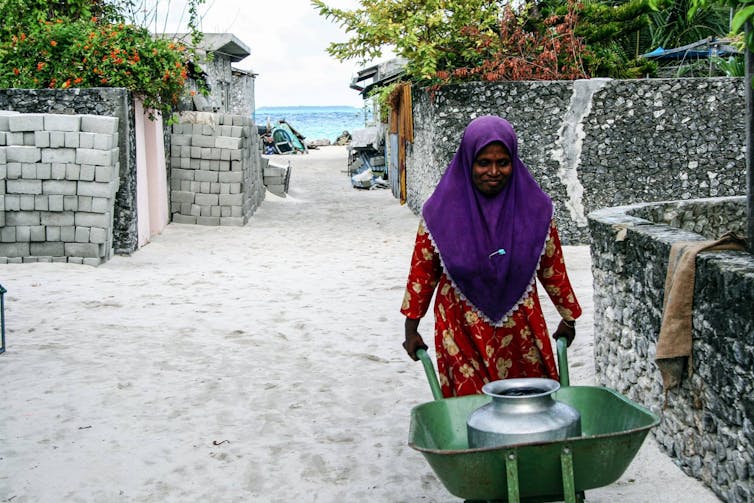
Dans les petits États insulaires, comme les Maldives, l’élévation du niveau de la mer menace l’approvisionnement en eau lorsque l’eau salée s’infiltre dans les aquifères souterrains, détruisant les puits. UNDP Maldives 2021, CC BY
Consommer moins d’eau, mais la partager de façon plus équitable : la gestion de la demande en eau est devenue inévitable dans de nombreux endroits, mais les plans qui réduisent l’approvisionnement des populations pauvres tout en protégeant les plus puissants sont voués à l’échec. Les approches sérieuses comprennent des mesures de protection sociale, un soutien aux agriculteurs pour qu’ils se tournent vers des cultures et des systèmes moins gourmands en eau, et des investissements dans l’efficacité hydrique.
Mesurer ce qui compte vraiment : de nombreux pays gèrent encore l’eau avec des informations partielles. Pourtant, des méthodes modernes, comme la télédétection par satellite, facilitent la surveillance des réserves d’eau et des tendances globales. Cela permettrait d’émettre des alertes précoces concernant l’épuisement des nappes phréatiques, l’affaissement des sols, la disparition des zones humides, le recul des glaciers et la détérioration de la qualité de l’eau.
Prévoir moins d’eau : le plus difficile aspect d’une faillite est l’aspect psychologique. C’est cette dimension qui nous oblige à abandonner ce qu’on tenait pour acquis. La faillite hydrique implique de repenser les villes, les systèmes alimentaires et les économies pour respecter de nouvelles limites et éviter que celles-ci ne se resserrent encore davantage.
En matière d’eau, comme de finance, la faillite peut être un tournant. L’humanité peut continuer à dépenser comme si la nature offrait un crédit illimité, ou elle peut apprendre à vivre sans outrepasser les limites de ses ressources hydrologiques.
Kaveh Madani ne travaille pas, ne conseille pas, ne possède pas de parts, ne reçoit pas de fonds d’une organisation qui pourrait tirer profit de cet article, et n’a déclaré aucune autre affiliation que son organisme de recherche.
Canada has announced an agreement to reduce its 100 per cent tariff on electric vehicle (EV) imports from China to 6.1 per cent. The tariffs will be replaced by an annual import quota of 49,000 EVs in 2026, rising gradually to 70,000 by 2030.
This phased opening is designed to help Canada diversify its supply chain and accelerate EV adoption without relying on subsidies. In return, China will lower tariffs on Canadian canola to 15 per cent by March and remove tariffs on a few other Canadian goods.
The rollback of Canada’s EV tariff wall marks a significant shift in the Canadian trade relationship with China. It also represents a notable de-escalation of trade tensions during a period of intense economic uncertainty, driven largely by protectionist American policy.
It will not, however, reshape Canada’s auto market overnight.
A modest opening with outsized effects
The initial 2026 quota amounts to about 2.5 per cent of total new vehicle sales in Canada, which was just below two million vehicles in 2025. In global terms, it’s also a modest amount, equivalent to only 2.2 per cent of BYD’s estimated 2025 EV sales (2.26 million vehicles) and three per cent of Tesla’s estimated 2025 EV sales (1.65 million vehicles).
For Canada’s struggling EV market, however, the policy change could provide a meaningful boost. The end of the federal Incentives for Zero-Emission Vehicles program in 2025 increased EV prices by roughly eight to 12 per cent. Higher upfront costs slowed demand, and EVs now account for about nine per cent of new vehicle sales, down from 15 per cent in 2024.
By opening the market to innovative EVs from China, the new policy should expand access to lower-cost models and help revive demand. China’s EV market includes more than 100 EV brands, including BYD, which recently overtook Tesla as the world’s largest EV maker.
The new policy also features other major brands like Geely, SAIC Group, Nio and XPeng, with several models priced within at about $30,000. Increased price competition could narrow the affordability gap that has slowed adoption since incentives were withdrawn.
Pivoting to China for diversification
The quota system likely reflects concern within Ottawa that unrestricted access for Chinese EVs could flood the Canadian market and disrupt local manufacturing. A phased opening gives automakers time to adjust and helps consumers become familiar with new Chinese brands.
It may also encourage foreign manufacturers to expand local assembly or partnerships to cater to growing EV demand. The government expects the deal to catalyze Chinese joint-venture investment that will deepen and diversify Canada’s EV supply chain.
The agreement also signals an effort to reduce Canada’s dependence on the United States, which is the destination for about 92 per cent of Canada’s auto and auto parts exports. This shift, however, starts from a very low base.
While China is Canada’s second-largest trading partner, merchandise exports to China were only $29.9 billion in 2024, or about 7.3 per cent of exports to the U.S.
For that reason, the seemingly ambitious target of increasing merchandise exports to China by 50 per cent by 2030 will not materially change Canada’s reliance on the U.S.
It is better understood as one element of a broader strategy to reduce exposure to an increasingly inward-looking and unpredictable partner.
The deal could also complicate Canada’s position ahead of future renegotiations of the Canada–United States–Mexico Agreement. Prime Minister Mark Carney can reasonably argue that import volumes are small relative to total auto sales in Canada and the U.S. At the same time, deeper engagement with China signals alternatives and may modestly strengthen Canada’s leverage.
More EV adoption at lower government cost
The trade opening could support EV adoption at lower fiscal cost. The Incentives for Zero-Emission Vehicles program, which stalled after its funding was exhausted, cost the government $2.6 billion and supported approximately 546,000 EV purchases.
When rebates lapsed, annual EV sales declined by more than one-quarter, falling from 264,000 in 2024 to 191,000 in 2025.
As Canada contends with a growing fiscal deficit, expanding consumer choice through trade may prove more durable than relying on subsidies.
It not only reduces the need for public spending but also reduces the future cost of adoption by putting pressure on incumbents such as Tesla and GM to cut prices to compete with new entrants like BYD.
A wider set of affordable models should lift demand and, as the customer base expands, strengthen the case for faster charging network expansion. This could help Canada return to its mandate of 50 per cent EV sales by 2030 and 100 per cent by 2035, which was recently paused.
Why the quota needs a hard end date
Tariffs and quotas are often framed as temporary protections that give domestic producers breathing room amid competitive pressure. In practice, they can be difficult to unwind because beneficiaries lobby to preserve them.
Canada’s rollback of its tariff wall on Chinese EVs is unusual, precipitated by trade tensions with the U.S. and punishing reciprocal tariffs by China on its canola imports.
Absent similar pressure, the newly introduced quotas could outlive the intended five-year window. Automakers and their political allies will defend them, just as they defended the blanket EV tariffs that denied Canadians of access to affordable EVs.
Canada should explicitly commit to eliminating the quota by 2030. Moving to an open market regime will benefits consumers, strengthens competitiveness and supports environmental goals.
Addisu Lashitew does not work for, consult, own shares in or receive funding from any company or organisation that would benefit from this article, and has disclosed no relevant affiliations beyond their academic appointment.


















.png)