Fairness for whom? The impact of Alberta’s trans-exclusionary sports law

Source: The Conversation – Canada – By Gio Dolcecore, Assistant Professor, Social Work, Mount Royal University

Alberta’s Fairness and Safety in Sport Act promises protection. We believe that it discriminates and decides who gets to belong in sport.

The act, which received royal assent in December 2024 and came into effect on Sept. 1, 2025, requires organizations like school divisions, post-secondary institutions and provincial sport bodies to create and implement policies for athlete eligibility, including limiting eligibility for female-only divisions to people assigned female at birth.

While framed by the province’s United Conservative Party government as a measure to protect competition and ensure athletes “are able to participate in the sports they love fairly, safely, and meaningfully,” the act bans transgender girls aged 12 years and older from participating in competitive sports for women.

As there is no consistent or conclusive scientific evidence to show that transgender athletes have an inherent advantage, the act appears to be part of an organized anti-trans backlash occurring across the country, and a broader targeting of transgender and gender-nonconforming athletes internationally.

Far from just a local or niche issue, the implementation of this act exposes inconsistencies in sport policy and raises urgent questions about how anti-trans politics are shaping access to sport.

The impact on youth

The Fairness and Safety in Sport Act empowers just about anyone to file a complaint related to an organizations’ eligibility determinations. Incidents like one in British Columbia in 2023
a man attending a girls’ track and field meet demanded that a nine-year-old cisgender girl with a pixie cut prove she was not a boy through documentation — demonstrate the impact of this type of gender policing.

The consequences fall on transgender and gender non-conforming youth. For them, being banned from participation brings not only the loss of athletic opportunities, but also heightened experiences of exclusion and stigma.

Teammates and coaches must also navigate fractured team dynamics and a school-based athletic culture that risks becoming less about belonging and more about surveillance. The policy undermines the very developmental and educational values that sport is meant to cultivate.

It also places heavy and often invisible demands on the people who support these children. Parents and caregivers are left to shoulder the emotional work of helping their children process the psychological repercussions of exclusion in ways that surpass the normal responsibilities of parenting.

Research consistently shows that parents of transgender and gender-diverse children face significantly elevated levels of stress compared to parents of non-transgender children. This is largely due to the chronic strain of stigma, discrimination and navigating hostile environments along with the emotional labour of advocating within schools, health care and peer groups.

The impact on society

The act also has implications for varsity athletics and broader sporting cultures at post-secondary institutions.

Universities across the province have been forced to create new internal policies and procedures to align with the act, which place incoming and existing athletes participating in women’s varsity sport under increased scrutiny.

An inconsistency emerges when Alberta athletes step onto fields, rinks and courts outside the province.

Since the national institution for post-secondary sport in Canada (U Sport) still allows transgender athletes to compete according to their gender identity, Alberta now risks excluding its own youth while requiring them to compete under different eligibility standards when facing athletes from other provinces.

In addition, implementing this act will eventually create financial strain for organizations. Administering exclusionary rules requires new systems of eligibility verification, monitoring and appeals — an administrative burden that smaller leagues in particular are ill-equipped to manage.

A 2024 statement by the Alberta 2SLGBTQI+ Chamber of Commerce even urged the government to reject this trans-exclusionary legislation on the basis that it would also reduce Alberta’s market share of tourism and 2SLGBTQI+ travel revenue.

Resistance is necessary

Public response so far to the Fairness and Safety in Sport Act has been mixed.

Since it’s provincial law, school districts and universities have complied, creating internal policies and processes to fulfil the requirements of the act even while its trans-exclusionary nature runs counter to many of their values and commitments to equity, diversity and inclusion.

Some, however, have taken action. One University of Lethbridge faculty member, for example, resigned from the Board of Governors after it was forced to accept the new act.

Egale Canada, a national 2SLGBTQI organization — which, along with Calgary-based non-profit support organization Skipping Stone — has launched legal action against the Alberta government, challenging the constitutionality of the province’s anti-trans laws, and released a statement condemning the Fairness and Safety in Sport Act.

On Nov. 17, the Alberta government tabled legislation that seeks to invoke the notwithstanding clause of the Charter of Rights and Freedoms to insulate its laws from legal challenges. Using the clause would prevent courts from striking down laws for being unconstitutional, and in this context specifically, overrides the Charter rights of gender-diverse people.

This action has spurred widespread condemnation, including from the Canadian Civil Liberties Association and the Alberta Medical Association. Albertans are also making their views heard through MLA recall petitions and public protests.

The human toll of the Fairness and Safety in Sport Act must be recognized and challenged. When people refuse to accept exclusion and the overriding of basic human rights in sport, it can become a space for play, belonging and personal growth.

The Conversation

The authors do not work for, consult, own shares in or receive funding from any company or organisation that would benefit from this article, and have disclosed no relevant affiliations beyond their academic appointment.

ref. Fairness for whom? The impact of Alberta’s trans-exclusionary sports law – https://theconversation.com/fairness-for-whom-the-impact-of-albertas-trans-exclusionary-sports-law-265565

Shots fired outside Sydney shopping centre, police swarm area

Source: Radio New Zealand

Images from the scene on Steer Road show officers setting up an exclusion area, with particular focus on a gym at the centre.

Images from the scene on Steer Road show officers setting up an exclusion area, with particular focus on a gym at the centre. Photo: ABC News

Police are on scene in Gregory Hills after a shooting outside a shopping centre.

Images from the scene on Steer Road show officers setting up an exclusion area, with particular focus on World Gym.

NSW police said in a statement officers were called to the area about 8:35am (Sydney time) after reports of shots fired.

“Officers attached to Camden Police Area Command attended and found a number of shots had been fired towards a man outside the gym,” the statement said.

“The man is believed to have left the scene immediately.”

There were no reports of injuries, police said.

More to come…

-ABC

– Published by EveningReport.nz and AsiaPacificReport.nz, see: MIL OSI in partnership with Radio New Zealand

Pete Hegseth could be investigated for illegal orders by 5 different bodies – but none are likely to lead to charges

Source: The Conversation – USA – By Joshua Kastenberg, Professor of Law, University of New Mexico

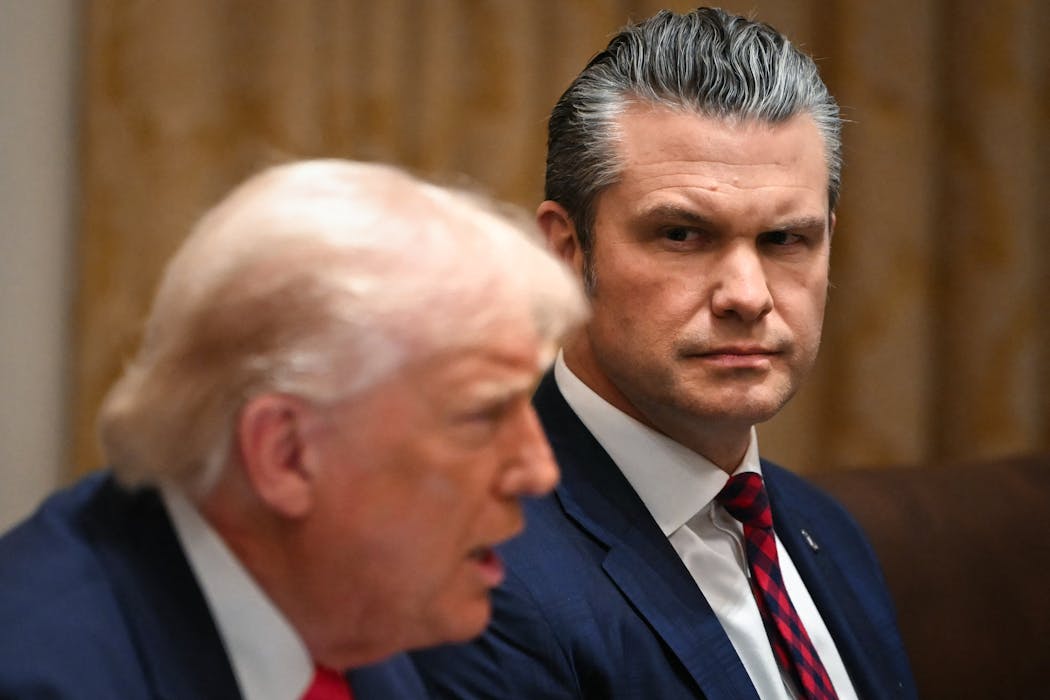
Defense Secretary Pete Hegseth attends a cabinet meeting with President Donald Trump at the White House in Washington, DC on December 2, 2025. Carolyn Van Houten/The Washington Post via Getty Images

News reports about a U.S. military attack on a boat in the Caribbean allegedly carrying drugs have raised critical questions about the military campaign against drug smugglers being carried out by the Trump administration in that region.

Among them: whether Secretary of Defense Pete Hegseth or others face criminal liability for any of the attacks. Those attacks killed people alleged to have been involved in illegal narcotics trafficking.

Congressional investigations have begun into allegations that a Sept. 2, 2025, follow-up attack on two survivors of an earlier attack was illegal and ordered by Hegseth. Some legal scholars have cited violations of international and United States criminal law that could come into play.

But as a military law scholar who spent 20 years as a lawyer and judge in the U.S. Air Force, I know that there aren’t enough facts known yet to determine who is responsible for what. There are five investigative mechanisms that could be used to determine the facts and whether there is criminal liability on the part of both senior civilian officials and military members involved in the now extensively reported second strike on the suspected drug boat that resulted in the deaths of civilians.

There are two caveats to this analysis. The first is that the Constitution says a person is to be presumed innocent before being proved guilty. The second is that the story from the White House and the Pentagon has changed over time.

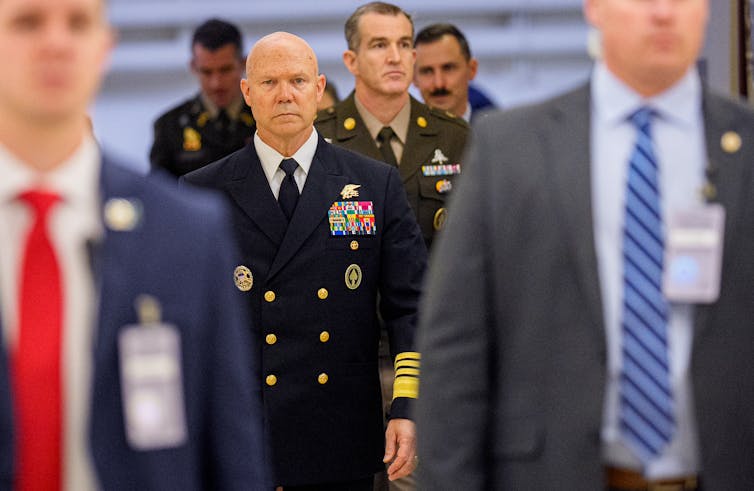
A man in a dark blue military uniform walks among a number of men in suits.
Navy Adm. Frank Bradley, center, arrives for a closed-door classified meeting with lawmakers on Capitol Hill on Dec. 4, 2025.
Andrew Harnik/Getty Images

Congressional committees investigate

The first investigative mechanism is the Congress itself.

The House of Representatives and the Senate each have an armed services committee and a foreign relations or foreign affairs committee. In theory, any of these committees can place people under oath and have them testify, as well as issue subpoenas to obtain information.

This concept isn’t new.

Multiple committees examined the country’s lack of preparedness preceding the Japanese attack on Pearl Harbor and other military installations in 1941.

Almost every month during the Vietnam War, one or more of these committees investigated military matters, including one of the most notorious war crimes in U.S. history. In 1968, Army Lt. William Laws Calley commanded a platoon of soldiers who murdered close to 500 villagers in My Lai, including children and the elderly, none of whom posed a threat and none of whom were lawful targets.

But congressional investigations can be highly political. Even during the My Lai investigation, at least one member of the House, Mendel Rivers, a South Carolina Democrat who was at that time chairman of the Committee on Armed Services, attempted to shield officers in the chain of command. There is little reason to believe that a current investigation, conducted by a dramatically polarized Congress, will be free of partisan politics.

Attorney general investigates

A second means of investigating is for the U.S. attorney general to preliminarily conclude that crimes have been committed and to convene a grand jury to investigate. A federal grand jury is a constitutional body consisting of ordinary adult citizens. Its operations are governed by the Federal Rules of Criminal Procedure, and its role is to investigate whether there is probable cause to determine that a person has violated the criminal laws.

A federal statute prohibits murder. As far back as 1820, if not before, federal grand juries have investigated the crime of “murder on the high seas.”

No member of the president’s administration is immune from the criminal laws of the country, with the exception of the president himself when he has acted in the capacity of president or commander in chief. The Supreme Court in 2024 determined that the president is mostly immune from prosecution under criminal law.

But I believe this type of investigation is unlikely. That’s because members of the administration have argued that their actions were legal and that the men killed in the second strike were continuing in their mission and posed a threat.

Moreover, the attorney general is supposed to act in an independent capacity from the White House. But Trump’s attorney general, Pam Bondi, has demonstrated her loyalty to the president and his agenda in many instances.

Another consideration is that federal agency heads who rely on their attorneys in good faith are presumed to be immune from the law. This may be why Hegseth has stated that lawyers had advised the mission’s commanders.

Congress and the AG work a case

It is possible that during a congressional investigation one or more witnesses will be accused of lying under oath or accused of contempt.

Congress has the authority to hold individuals in contempt and fine and sentence them, but this is rare. Usually, Congress forwards the claim to the attorney general. Contempt of Congress is a federal misdemeanor offense, meaning a person cannot be sentenced to more than a year. Again, I believe it is unlikely that the attorney general would pursue a contempt charge in a federal court from these events.

Inspector general investigates

The Department of Defense’s inspector general can investigate allegations of wrongdoing in the department, and this includes the secretary. In the past, inspectors general have discovered criminal activity, written a publicly releasable report, and then a senior official was prosecuted.

In 2003, the Department of Defense investigated Darleen Druyun, a senior contracting official, for wrongly steering multimillion-dollar contracts to Boeing. The investigative report resulted in criminal charges from the Justice Department, and Druyun was found guilty in a criminal trial. Boeing officials also left the company, and the company was fined.

The military can investigate its civilian members but cannot prosecute them. The Uniform Code of Military Justice does not apply to civilians. That includes the president and secretary of defense, even though they are at the pinnacle of the chain of command.

International courts investigate

Finally, an investigation could be mounted through international law as enforced by courts outside of the United States.

Superpowers such as the United States and Russia often get a free pass from international law enforcement. In 1986, the International Court of Justice – a body partly created by the United States – ruled that the United States under the Reagan administration violated Nicaragua’s sovereignty during its civil war.

The Reagan administration’s response was that because other nations had disregarded the court, so too would the United States. No American official was ever held to account for the mining of Nicaragua’s main port or for the arming of rebels that led to the deaths of Nicaraguans.

It’s not clear which, if any, of these mechanisms will be used to hold accountable those who ordered and carried out the September 2025 operation in the Caribbean that killed two survivors of an earlier attack. What is clear is that the methods exist to find the facts – and make judgments based on them.

The Conversation

Joshua Kastenberg does not work for, consult, own shares in or receive funding from any company or organization that would benefit from this article, and has disclosed no relevant affiliations beyond their academic appointment.

ref. Pete Hegseth could be investigated for illegal orders by 5 different bodies – but none are likely to lead to charges – https://theconversation.com/pete-hegseth-could-be-investigated-for-illegal-orders-by-5-different-bodies-but-none-are-likely-to-lead-to-charges-271284

Appeals court lets Donald Trump keep National Guard troops in DC for now

Source: Radio New Zealand

By Devan Cole, CNN

National Guard members patrol in Washington, DC, on November 27.

National Guard members on patrol in Washington Photo: Alex Wroblewski/Bloomberg/Getty Images via CNN Newsource

National Guard troops deployed to Washington, DC, can remain there for now, after a federal appeals court on Thursday temporarily froze a judge’s ruling that would have soon required them to leave the city’s streets.

The DC Circuit Court of Appeals said it was keeping the lower-court decision on hold for now to give it time to consider whether to pause the ruling indefinitely.

Implementation of the decision, issued on November 20 by US District Judge Jia Cobb, was already delayed by Cobb for 21 days to allow for appeals. Under the new ruling from the DC Circuit, Cobb’s directive for President Donald Trump and the Defense Department to remove the troops from the District will be on hold “pending further order of this court.”

The appeals court noted in its unsigned order that the decision was intended to give the court more time to consider whether to issue a more lasting pause on Cobb’s order and “should not be construed in any way as a ruling on the merits” of the request for a longer pause.

The presence of several thousand National Guardsmen in DC – both from the city and from Republican-led states – has come under renewed scrutiny in recent days following a shooting of two troops last week that left one guard member dead and another in critical condition.

Just after the shooting, lawyers for the administration asked the DC Circuit to freeze Cobb’s ruling, but made no mention of the attack in court papers.

But on Tuesday, DC Attorney General Brian Schwalb’s office seized on the “horrific attack” as it urged the DC Circuit to reject the Trump administration’s request, arguing that allowing the troops to remain in the city any longer “requires the diversion of scarce police resources, and exposes both the public and Guard members to substantial public safety risks.”

They pointed to the fact that DC police officers have had to coordinate with and escort guardsmen in the city to minimize threats, a task they say has “redoubled” following last week’s attack.

The legal wrangling over troops in the nation’s capital is playing out as a series of separate cases over Trump’s deployment of troops in other Democratic-led cities and states around the US continues. Those cases have entangled all levels of the federal judiciary, with the Supreme Court currently considering an emergency appeal in a challenge to Trump’s deployment of National Guard troops to Chicago.

CNN

– Published by EveningReport.nz and AsiaPacificReport.nz, see: MIL OSI in partnership with Radio New Zealand

Racism allegations could derail right-wing populist Nigel Farage’s bid to become Britain’s next PM

Source: Radio New Zealand

By Christian Edwards, CNN

Reform UK leader Nigel Farage, pictured in London in October, has been accused of deeply offensive, racist and antisemitic behavior throughout his teenage years at school.

Reform UK leader Nigel Farage, pictured in London in October, has been accused of deeply offensive, racist and antisemitic behavior throughout his teenage years at school. Photo: Jack Taylor/Getty Images via CNN Newsource

Andrew Field recalls how his school in south London used to hand out a little blue book listing all the students enrolled that year. He says one boy used to go through the book to count how many children had the common English surname Smith, and how many had the Indian surname Patel.

“When there were more Patels than Smiths… he made a public ceremony of burning that school roll in protest,” Field told CNN.

That former student – remembered by Field as a “pompous, isolated loner” who enjoyed “strutting about” in school uniform – grew up to become arguably the most influential politician in Britain this century: right-wing populist Nigel Farage.

After leaving a career trading commodities in London’s financial district, Farage became a long-serving Member of the European Parliament before campaigning successfully for Britain’s exit from the European Union. But today’s 61-year-old Farage, now leader of the anti-immigrant Reform UK party, has set his sights on something bigger: If an election were held tomorrow, most polls suggest that he would stand a good chance of becoming the country’s next prime minister.

Field is among some 20 of Farage’s contemporaries at the elite Dulwich College who have recently and publicly accused him of deeply offensive, racist and antisemitic behavior throughout his teenage years in the 1970s and 1980s. Farage has denied the allegations, first reported on the record and at this scale by the Guardian newspaper last month.

But as more former students make fresh accusations, the scandal is threatening to stick to the typically Teflon-coated Farage. Analysts say the allegations pose the biggest challenge yet to Reform’s bid to convince Britain that it is not just a protest-vote party, but one responsible enough to govern a multi-ethnic nation of around 70 million people.

Field, a doctor with Britain’s National Health Service, is not convinced. Farage’s “burning the scroll” ritual is one of several alleged racist instances he recalls. He said he often saw Farage giving Nazi salutes and goose-stepping, adding, “those were really common sights.” A nine-year-old boy – the only Black child in his year – was “recurrently picked on” by the much older Farage, Field claimed, “who would go to him and say, ‘Africa is that way. Why don’t you f**k off there?'”

One incident sticks in Field’s mind. When he was made a prefect – a senior student trusted to enforce school rules and act as a role model to others – he said that Farage, already a prefect, took it on himself to show Field how to make use of his new powers.

“He guided me to lower school, where the younger children played, and he put an Indian child in detention completely at random. There was no reason whatsoever for him doing that,” Field said. “I was deeply shocked by that.”

Unlike Field, who was two years younger than Farage, Peter Ettedgui, now an award-winning film director, was in the same class as him from the ages of 13 to 14. He said they sat in alphabetical order, meaning the future politician was never far away.

Nigel Farage attended the elite Dulwich College in south London in the 1970s and 1980s.

Nigel Farage attended the elite Dulwich College in south London in the 1970s and 1980s. Photo: Dan Kitwood/Getty Images via CNN Newsource

“As soon as he found out I was Jewish – that was it,” Ettedgui told CNN. “He would say, ‘Hitler was right,’ in a sneering, contemptuous way. In other words, ‘You shouldn’t be here.'” Farage would also say “gas them,” Ettedgui said, sometimes adding a long hiss to emulate the sound of a gas chamber.

Farage has previously denied the allegations from Field, Ettedgui, and others first reported in the Guardian. In a statement to CNN, Farage said: “I can categorically say that the stories being told about me from 50 years ago are not true.” Richard Tice, Reform’s deputy leader, told the BBC on Thursday that the allegations are “made-up twaddle” and accused Ettedgui of lying, without providing evidence.

Claims of this kind were first made about Farage more than a decade ago. In 2013, the journalist Michael Crick reportedly uncovered a letter from an English teacher at Dulwich College, where annual fees today can reach around $85,000, opposing a decision in 1981 to make the 17-year-old Farage a prefect, on the grounds of his “publicly professed racist and neo-fascist views.”

At the time, Farage admitted saying “some ridiculous things… not necessarily racist things – it depends how you define it.” In response to the latest allegations, the usually forthright and forceful Farage was at first uncharacteristically evasive, offering a cocktail of heavily caveated denials.

“Have I ever tried to take it out on any individual on the basis of where they’re from? No,” Farage said last month in a broadcast interview in response to the new claims. Asked what his comments meant, he told ITV he had never abused anyone “with intent,” nor “directly really tried to go and hurt anybody.” He said the claims related to a period “49 years ago,” when he had “just entered” his teens. In the later statement, Farage categorically denied the allegations against him.

If some thought Farage was being evasive, many of his contemporaries say he is simply lying. Field said Farage’s racism was at its “most florid” when he was aged 17 and 18 and had been made a prefect – not just when he was in his early teens. “It’s when he had a little bit of power, and he was picking on much younger children,” Field said.

Ettedgui also said Farage’s claim never to have targeted anyone “directly” is untrue. “The abuse was directed and deeply personal. And it was venomous, which why I always remembered it,” he said. “Whenever I hear the guy speak today, my blood turns cold.”

It is unclear whether these allegations will dent Farage’s hopes to enter Downing Street after the next election, which is not due until 2029. Sunder Katwala, director of British Future, a think tank in London that researches integration, immigration and race, noted that Farage has routinely been able to win around 15% of the vote – some 4 million people – in general and European elections, first when he led the UK Independence Party (UKIP), and then for the Brexit Party, which became Reform UK in 2021.

Peter Ettedgui, pictured at the 68th BFI London Film Festival in 2024, said Nigel Farage would make antisemitic comments when they were at school together.

Peter Ettedgui, pictured at the 68th BFI London Film Festival in 2024, said Nigel Farage would make antisemitic comments when they were at school together. Photo: Jeff Spicer/Getty Images via CNN Newsource

While his hardcore supporters might not be put off by claims that Farage was allegedly a teenage bully who used racist slurs at school, turning Reform from a “15% party” to a “30% party” – one that could potentially win a general election – means attracting a different, moderate kind of voter, Katwala said.

That task could be even more difficult against a concerted campaign of tactical voting, he said, if an “Anyone But Reform” coalition mobilizes to try to keep Farage from power. Although UK Prime Minister Keir Starmer’s Labour party won a landslide election last year with just over a third of the vote, that victory was made possible by the “indifference” of most voters to a Labour victory, Katwala noted.

“There’s more danger for them than they’d realized,” he said of Reform. “If it’s not unthinkable that Farage can win, if a third of the public think trying him as prime minister is a dice worth rolling, I think the majority of people need to be indifferent to letting people roll the dice in that way.”

Reform is not there yet, he added. Although Farage has tried to “detoxify” Reform’s reputation, the latest polling from YouGov in September found that a plurality of white British voters sees Reform as a racist party with racist policies, by about 46% to 36% seeing the party as generally not racist. Meanwhile, just 13% of ethnic minority voters have a favorable opinion of Farage, while eight in 10 see him negatively, according to YouGov.

Farage, center, celebrates after being elected the member of parliament for Clacton in eastern England, on July 5, 2024.

Farage, center, celebrates after being elected the member of parliament for Clacton in eastern England, on July 5, 2024. Photo: Henry Nicholls/AFP/Getty Images via CNN Newsource

Farage, however, could benefit from the political distance he has maintained from what lies further to his right. He has refused to ally with Tommy Robinson, an extreme anti-Islam activist championed by X owner Elon Musk. While much of the online right in Britain is debating whether Black and Asian people are “really” British, and whether foreign-born politicians should be allowed in parliament, Farage has long welcomed people from ethnic minorities into his party and proudly spotlighted them. “In a way, he’s on the mainstream side of those arguments,” Katwala said.

But Farage’s former schoolmates say the public should be just as concerned by his denials as by the allegations themselves. “On the one hand, it’s actually almost funny that he’s trying to deny something that has been so widely corroborated,” said Ettedgui. “But on the other hand, it’s deeply upsetting because this man could be the prime minister of the UK.”

Some former Dulwich College pupils have told British media outlets that they do not recognize the allegations of racism levelled against Farage. Some of Farage’s allies have accused his former classmates of a “political” attempt to smear him. But the accusers say they were approached independently of each other, with Ettedgui saying he finally came forward because he wanted voters to do their “due diligence” before they vote in the next general election, due by 2029.

“We’re all saying exactly the same thing,” Ettedgui said of the accusers. “Certainly, for me, it boils down to something intensely personal: I don’t want my school bully to become my prime minister.”

CNN

– Published by EveningReport.nz and AsiaPacificReport.nz, see: MIL OSI in partnership with Radio New Zealand

Elecciones en Honduras: el empate técnico y la demora del recuento elevan la tensión política y social

Source: The Conversation – (in Spanish) – By Mariana Ramos Algarra, Asesora de procesos académicos de la Especialización en Derechos Humanos, Derecho Internacional Humanitario y Justicia Transicional y Profesora de la Facultad de Estudios Jurídicos, Políticos e Internacionales, Universidad de La Sabana, Universidad de La Sabana

A tres días del cierre de las urnas, Honduras continúa sin un ganador oficial de sus elecciones generales. Tras la reanudación del escrutinio, y con un poco más del 79 % de las actas procesadas, el Consejo Nacional Electoral anunció un “empate técnico” entre los dos principales candidatos presidenciales: Salvador Nasralla, del Partido Liberal, con el 40,33 %, y Nasry Asfura, del Partido Nacional, con el 39,59 %. Por detrás se encuentra Rixi Moncada, la ex ministra de Defensa y candidata de Libre, el partido oficialista, con un 19 %.

En un escenario tan estrecho, el Consejo Nacional Electoral (CNE) no ha podido proclamar a un ganador y la declaración oficial podría tardar hasta 30 días, tal como lo permite la normativa electoral hondureña. Esta combinación de conteo lento y a veces suspendido, margen mínimo y ausencia de resultados definitivos ha alimentado un clima de tensión social y política.

Para muchos, la lenta transmisión de resultados ha rememorado los episodios de 2017, cuando el retraso en el escrutinio generó protestas, muertes y una grave crisis de legitimidad.

Riesgos de disputa narrativa y contestación del resultado

Los riesgos de disputa aumentan como consecuencia del estrecho margen, de la falta de definición oficial ante la votación y de un oficialismo que no reconoce su derrota. Sobrevuelan este escenario factores desestabilizantes: denuncias de irregularidades, cuestionamientos sobre la transparencia del recuento de votos, comunicados acerca de posibles hackeos al sistema del CNE, presión de simpatizantes y peticiones de recuento e impugnaciones. En un país con instituciones debilitadas, cualquier percepción de opacidad puede convertirse rápidamente en un detonante de conflictividad.

Un proceso electoral en tela de juicio

Honduras llegó a las elecciones del 30 de noviembre de 2025 en un ambiente marcado por una fuerte polarización y profundas tensiones institucionales. El Consejo Nacional Electoral había enfrentado meses de divisiones internas, retrasos logísticos y cuestionamientos sobre su capacidad operativa.

Estos factores afectaban directamente la credibilidad del proceso. Las primarias de marzo, que registraron fallas significativas en la entrega de material electoral, la transmisión de resultados y en la gestión de actas, seguían pesando en la memoria de la ciudadanía y la comunidad internacional. Por ello, cualquier error en los comicios del 30 de noviembre remitiría inevitablemente al antecedente electoral inmediato.

A este escenario se sumaban presiones políticas provenientes de distintos actores, incluida la presidenta del país, Xiomara Castro, y el presidente estadounidense, Donald Trump, quien ha llegado a lanzar amenazas veladas desde Truth.

La preocupación era mayor debido al papel de las Fuerzas Armadas, en un contexto de estado de excepción prolongado en gran parte del territorio, que había limitado libertades civiles.

La confianza en la integridad del voto resultaba tan decisiva como el propio resultado. Sin la certeza de transparencia, las posibilidades de impugnaciones, descontento social o una crisis poselectoral seguían siendo altas.

Polarización y denuncias de fraude

La elección de noviembre de 2025 se celebró en un clima político profundamente polarizado. Los principales bloques partidarios (Libre, el Partido Nacional y el Partido Liberal) llegaron con una narrativa de desconfianza mutua y acusaciones cruzadas de posible fraude.

Diversos sectores políticos habían advertido, incluso antes de la apertura de las urnas, sobre eventuales irregularidades en la transmisión de datos, el papel del Consejo Nacional Electoral (CNE) y la transparencia del escrutinio.

La competencia cerrada entre candidatos alimentó esa percepción de riesgo. Este ambiente previo, no solo estuvo atravesado por la disputa partidista, sino por una batalla narrativa en la que cada actor buscó imponer su propia interpretación del proceso.

La pugna discursiva terminó condicionando la legitimidad de cualquier dato oficial, incluso antes de que fuera divulgado. El terreno estaba preparado para que la contienda electoral se decidiera no solo en las urnas, sino también en la arena simbólica. Allí donde se define qué versión de los hechos resulta creíble a la ciudadanía.

Hartazgo y demandas ciudadanas

La jornada se desarrolló tras años de deterioro social acumulado, con niveles persistentes de violencia, migración masiva, precariedad económica e institucionales debilitadas. Para muchos hondureños, la elección representaba no solo un cambio de autoridades locales y nacionales, sino una oportunidad para redefinir los términos de la gobernabilidad democrática.

La ciudadanía reclamaba, ante todo, seguridad, oportunidades laborales reales, una justicia efectiva y un Estado menos permeable a la corrupción. Este cansancio generalizado configuró un electorado más exigente y menos dispuesto a tolerar fallas técnicas o decisiones opacas por parte de sus autoridades.

El estigma de las elecciones previas

Los comicios de 2017 , marcados por denuncias de fraude, recuentos demorados y una fuerte crisis de legitimadad, permanecían como un antecedente clave en la memoria colectiva. La victoria de Xiomara Castro en 2021 obtuvo un reconocimiento amplio y dio pie a una transición más estable, aunque persistieron las fuertes tensiones entre instituciones y partidos.

Esa historia reciente elevó drásticamente las exigencias sobre el CNE, creado en 2019 para garantizar mayor independencia técnica del órgano electoral. Pese a ello, este orrganismo sigue recibiendo críticas y denuncias, no siempre fundamentadas.

Tecnología electoral, desigualdades y capacidades limitadas

Los comicios de 2025 introdujeron un sistema de verificación biométrica y transmisión electrónica de resultados. Este representó un avance para fortalecer la integridad del proceso. Sin embargo, los problemas de conectividad y la infraestructura precaria en zonas rurales han supuesto un reto estructural.

Algunas fallas, como caída de red, colapso del sistema, demoras y errores en la lectura de la huella o el rostro, pueden ser interpretadas como indicios de manipulación o interferencia. Reportes de observación nacional e internacional advirtieron sobre estás desigualdades y problemáticas tecnológicas, que no son incidentales sino estructurales y que convirtieron la implementación de herramientas biométricas en un desafío técnico y político a la vez.

Observación ciudadana y seguimiento mediático como contrapeso

Pese a las dificultades institucionales del proceso, la elección contó con la presencia de 6.300 observadores electorales. Según el CNE, 43 organizaciones nacionales y 25 internacionales, hasta completar un total de 68, participaron en la observación electoral. Este hecho ha aportado vigilancia directa sobre el terreno.

La labor de estas misiones y plataformas de observación se volvió especialmente relevante en momentos en los que se reportaron incidentes graves. Entre ellos, la expulsión de observadores internacionales dentro de un centro de votación por parte de colectivos afines al partido oficialista o los fallos en el seguimiento del proceso por parte de jurados e integrantes de mesas electorales.

La intensa cobertura mediática ha permitido exponer irregularidades, contrastar discurso de actores políticos y mantener la presión pública para exigir transparencia. Aunque este seguimiento constante no elimina riesgos inherentes a un proceso tan ajustado, sí ha contribuido a contener abusos, visibilizar irregularidades y brindar un contrapeso frente a la incertidumbre institucional.

Papel clave de la fase postelectoral

Lo que suceda en los próximos días será determinante para la estabilidad política de Honduras. La definición clara de un ganador, la aceptación de los resultados por parte de los diferentes actores políticos y la divulgación íntegra y verificable de las actas constituirán pruebas cruciales para evaluar la solidez de su sistema electoral.

En procesos recientes en la región, organismos como la OEA y la UE han enfatizado que la fase poselectoral resulta igual de relevante y delicada que la jornada de votación. En ella suelen concentrarse los mayores riesgos de conflictividad y erosión institucional.

Como observadora internacional acreditada e invitada por el Consejo Nacional Electoral para estas elecciones generales, pude constatar directamente que la complejidad del contexto hondureño no reside únicamente en las fallas técnicas o en los retrasos del escrutinio, sino en la fuerte desconfianza que antecede, rodea y condiciona cada decisión del sistema electoral y el gobierno.

La combinación de denuncias reiteradas de fraude, vulnerabilidades tecnológicas, narrativas contrapuestas y declaraciones sobre el no reconocimiento de resultados, configura un escenario en el que cualquier error, por menor que sea, se convierte en un detonante político.

Un punto de inflexión para la democracia

Persisten en Honduras posiciones irreconciliables entre los partidos, mensajes contradictorios de sus dirigencias y presión de bases movilizadas. Este escenario podría desembocar en una nueva crisis institucional si no se gestiona con responsabilidad. En un país donde las Fuerzas Armadas han tenido un rol históricamente determinante en momentos de inestabilidad, su comportamiento frente al desenlace electoral también será un elemento clave para preservar el orden democrático.

La pregunta central hoy no es solamente quién será finalmente declarado presidente, sino si Honduras logrará transformar este momento crítico en un punto de inflexión. La verdadera prueba para la democracia hondureña radica en la capacidad de sus instituciones para ofrecer certezas. También reside en la responsabilidad pública con la que actúen los partidos políticos y sus liderazgos, y en la madurez ciudadana para sostener la exigencia de transparencia sin caer en una polarización más destructiva.

The Conversation

Mariana Ramos Algarra no recibe salario, ni ejerce labores de consultoría, ni posee acciones, ni recibe financiación de ninguna compañía u organización que pueda obtener beneficio de este artículo, y ha declarado carecer de vínculos relevantes más allá del cargo académico citado.

ref. Elecciones en Honduras: el empate técnico y la demora del recuento elevan la tensión política y social – https://theconversation.com/elecciones-en-honduras-el-empate-tecnico-y-la-demora-del-recuento-elevan-la-tension-politica-y-social-270669

Tongan filmmakers make last minute grab for Oscars nomination

Source: Radio New Zealand

A pair of Tongan creatives are edging closer to the Academy Awards with their award-winning short film Lea Tupu’anga / Mother Tongue, inspired by a personal true story.

Director Vea Mafile’o (The Panthers, For My Father’s Kingdom) and actress-writer Luciane Buchanan (Chief of War, The Night Agent) teamed up to explore loss of language and a young woman’s journey back to her roots.

To help elevate the film on a global stage, Buchanan called on her friend and Chief of War co-star Jason Momoa, who has signed on as executive producer and to champion the project to Academy members — a group of more than 10,500 people that decides the nominees.

Video poster frame

This video is hosted on Youtube.

– Published by EveningReport.nz and AsiaPacificReport.nz, see: MIL OSI in partnership with Radio New Zealand

Managing food allergies and dietary restrictions during the holidays

Source: The Conversation – Canada – By Jennifer LP Protudjer, Associate Professor and Endowed Research Chair in Allergy, Asthma and the Environment, University of Manitoba

A plate of freshly baked cookies, a glass of perfectly garnished eggnog. For many, these images may conjure up warm memories and the anticipation of the forthcoming holiday season.

But for those with dietary restrictions, these goodies — and other holiday treats — can contribute to other emotions as well. During a season filled with parties and food, navigating the holidays while avoiding certain foods can be harrowing.

Well-intentioned hosts may prepare a selection of treats in a kitchen that includes flavours of the season. But without clear communication, detailed food labels and assurance of good practices to prevent cross-contact of foods, navigating a holiday tray or buffet line involves risk.

As an allergy researcher, my focus is on understanding the impacts of a food allergy diagnosis on people, families and communities, and what types of food allergy supports are most meaningful.

Many Canadians are increasingly aware of the foods they are eating, for reasons including but not limited to food costs, health and medical dietary restrictions. This latter reason can include efforts to reduce sodium or refined sugars, or avoid certain carbohydrates such as lactose or gluten for those with lactose intolerance or celiac disease, respectively.

But for the seven to nine per cent of Canadians with food allergies, the need to avoid is critical because of the risk of an acute allergic reaction. The most severe presentation of allergic reaction is anaphylaxis, which is potentially life-threatening.

Allergies and diet restrictions during holidays

Canadian research shows that, unlike holidays like Halloween and Easter during which children “hunt” for candy, rates of emergency department visits due to anaphylaxis during the winter holiday season are similar to the rates seen throughout the year. But that doesn’t mean food allergy restrictions don’t have an impact during these holidays.

Dietary restrictions can involve the need to avoid a range of foods. Health Canada has identified 11 priority allergens that are commonly associated with food allergies and allergic reactions: milk, eggs, peanuts, tree nuts, crustaceans and molluscs, fish, mustard, sesame seeds, soy, sulphites, and wheat and triticale. Notably, many of these foods commonly appear as ingredients in a holiday recipe, or as a single food item.

In a series of interviews with 21 families, colleagues and I identified that families dealing with food allergy learn quickly how to “decline something politely” stressing that they cannot eat the food, rather than being a picky eater. Nonetheless, they note feelings of grief, depression and anxiety as they strive to navigate events with their extended family and social circles. In some cases, families who manage multiple food allergies feel isolated, while some note that they are not invited to events because of their food allergy.

There are many ways that both those with dietary restrictions, and hosts, can lessen these impacts.

Practical actions

For anyone with a dietary restriction, there are certain actions that make holiday visiting more enjoyable and safer.

First, be certain to clearly communicate, in writing, any dietary restrictions to the host, at the time of accepting the invitation. Detailing which food options work within your dietary restrictions provides opportunity for the host to consider the menu, and to ask any questions at a calmer time than with a room full of guests.

You may also wish to bring a holiday treat that meets your restrictions. Eating a small snack ahead of any festivities can keep hunger at bay in case there are limited safe food options available. When in doubt about a food, do not consume it. Even if you have previously consumed the food, ingredient lists change occasionally.

Specific to those with food allergies, additional steps are warranted. Before leaving home, ensure that you have at least one epinephrine autoinjector that a trusted person can easily locate and use if anaphylaxis is suspected.

Food Allergy Canada offers some other practical tips for dining out. Awareness of the potential for co-factors to worsen the severity of a reaction is also needed. In addition to co-existing medical conditions, such as heart disease or asthma, research supports that alcohol, exercise, medication/drugs and possibly emotional stress may influence reaction severity.

Hosting this holiday season?

Welcoming guests can be joyful. But as the Canadian Psychological Association notes, there may be expectations of perfection, which — when not achieved — can contribute to stress. When inviting guests, ask about any dietary restrictions and bear these in mind while planning menus. Single food items or simple dishes may help your guests navigate food choices. Having a list of ingredients on hand, and adding labels and dedicated serving utensils to each dish, are similarly helpful.

The holiday season often involves sharing festive treats. By emphasizing joy and togetherness, memories can be made to cherish for a lifetime. With greater awareness of the needs of those with dietary restrictions, we can collectively work to ensure that everyone can safely indulge.

The Conversation

Jennifer LP Protudjer receives funding from from Canadian Allergy, Asthma and Immunology Foundation; Canadian Institutes of Health Research; Research Manitoba; Health Sciences Centre Foundation (Manitoba); Children’s Hospital Research Institute of Manitoba; University of Manitoba; and, Social Sciences and Humanities Research Council of Canada.

JLP Protudjer is Section Head, Allied Health; and Co-Lead, Research Pillar for the Canadian Society of Allergy and Clinical Immunology, and is on the steering committee for Canada’s National Food Allergy Action Plan. She reports speaker fees from Ajinomoto Cambrooke, Novartis, Nutricia, ALK Abelló, and FOODiversity, and Texas Children’s Food Allergy Symposium . She is an associate editor for Allergy, Asthma & Clinical Immunology; and, and editorial board member, Pediatric Allergy & Immunology; and, Journal of the Academy of Nutrition and Dietetics.

ref. Managing food allergies and dietary restrictions during the holidays – https://theconversation.com/managing-food-allergies-and-dietary-restrictions-during-the-holidays-270265

Iran’s record drought and cheap fuel have sparked an air pollution crisis – but the real causes run much deeper

Source: The Conversation – Global Perspectives – By Sanam Mahoozi, Research Associate, City St George’s, University of London

Air pollution is the latest environmental crisis causing havoc across Iran. Large parts of the country are already suffering from a drought, one of the worst in decades. Its wetlands are dry, and its land is subsiding at alarming rates.

Now the fallout is also affecting the air that the country’s more than 85 million people breathe. As lakes, wetlands, and riverbeds dry out, their exposed surfaces turn into major sources of dust. Strong winds can lift this dust and transport it across cities and even distant regions.

The extremely dry conditions have worsened Iran’s already high levels of air pollution. In recent weeks, the capital Tehran was ranked as the most polluted city in the world, according to global air quality monitors. In November, its air quality index hit 200 – a level classified as “very unhealthy”.

The terrible air quality has forced authorities to close schools, universities and offices to reduce exposure. Hospitals are reporting rising numbers of cases of respiratory and cardiac complications across the country.

Local media have reported more than 350 deaths within ten days linked to worsening air quality in recent weeks. Demand for emergency services in the capital has also increased by more than 30% during November 2025, according to local statistics.

Other major Iranian cities, including Tabriz, Mashhad and Isfahan, have recorded readings above 150 in the last few weeks. These levels are considered dangerous for all age groups. In Ahvaz and Zabol, air pollution from sand and dust storms has blanketed the southern cities, putting lives and livelihoods at risk.

Studies indicate more than 59,000 Iranians die prematurely every year from air pollution-related illnesses.

As well as dust rising from dried out lakes and wetlands, ageing cars and low-quality fuel in Iran’s major cities are contributing to the air pollution.

But focusing on these causes misses the bigger picture.

Iran’s air-pollution emergency is caused by the same governance failures that have destabilised the nation’s water systems, emptied its aquifers, dried out its wetlands, and accelerated land subsidence.

Just as Iran’s water crisis is not simply the result of drought, Iran’s polluted air is not simply the product of traffic.


Read more:
Iran’s capital faces unprecedented water shortages and even possible evacuation. What changes could help?


In most major cities, a key burden comes from pollutants (such as nitrogen oxides, sulfur dioxide, and fine particulates produced by burning low-quality fuel) as well as outdated engines, and heavy industrial fuels such as mazut.

These toxic emissions accumulate in cities and directly contribute to respiratory disease, and cardiovascular illness. Recent global satellite analyses, which are currently being reviewed by the journal Nature Cities, suggest that most mega cities (population more than 10 million) with significant levels of nitrogen dioxide pollution in the lower atmosphere (the layer of air we breath) have cut pollution levels in recent years.

How Tehran’s residents are coming with the drought.

However, Tehran is among the few large cities worldwide where these concentrations have increased between 2019 and 2024.

But combustion engines in old cars are only half the story. In many regions, a substantial share of PM₁₀ and PM₂.₅ (particles smaller than 10 micrometers and 2.5 micrometers which penetrate the lungs and bloodstream) now originates from dust and salt storms generated by shrinking lakes, rivers and wetlands. These particles can travel hundreds or even thousands of kilometres within hours, affecting cities far beyond their points of origin.

Our research, on Lake Urmia – once the Middle East’s largest saltwater lake – shows this clearly: as the lake bed dried, salt-laden dust plumes were capable of travelling hundreds of kilometres and even crossing national borders in less than 12 hours. This is a vivid illustration of how tightly Iran’s water crisis is intertwined with its air-pollution crisis.

Key causes of Iran’s air pollution

Iran’s air-pollution problem is not just a transport problem, a technological shortfall or a meteorological misfortune. It is fundamentally the predictable outcome of decades of government priorities, distorted incentives, and institutional inertia.

First, Iran’s government priorities have shaped a foreign policy that ultimately led to international sanctions and deepened the country’s economic and international isolation.

This isolation has had direct environmental consequences. It restricts access to modern air‑quality monitoring systems, industrial filtration technologies, and low‑emission engines, while deterring the foreign investment needed to upgrade transport and industry.

As a result, while other countries have reduced NO₂ and particulate pollution through cleaner technologies and tighter standards, Iran’s options remain severely limited by the political choices that produced its isolation.

Second, Iran’s extremely low fuel prices, sustained by immense subsidies, have made the national economy dependent on cheap energy, a key driver of the country’s inefficient electricity generation and excessive consumption. Vehicles with fuel inefficiencies unimaginable elsewhere remain commercially viable.

This is not an accidental policy outcome. It is part of a broader economic cycle in which subsidised fuel sustains outdated domestic car production and high-emitting industries, some of which are tied to powerful institutions whose financial interests depend on maintaining the status quo.

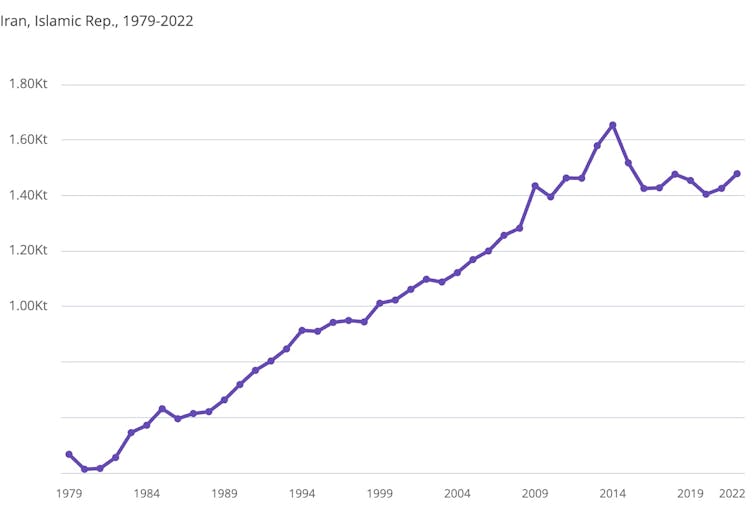
Nitrogen oxide levels in Iran (tonnes):

A graph showing NO2 levels in Iran.

World Bank data, CC BY

Resetting national priorities

Many countries have cut urban pollution through stricter emissions standards, cleaner transport, and integrated city planning, but Iran cannot do this without addressing the structural forces driving its emissions.

Reversing Iran’s air-quality crisis requires a fundamental shift in government priorities, placing environmental security and public health at the centre of policymaking. Iran’s challenge is not technical capacity but distorted incentives and national priorities. Only by reducing international isolation, strengthening transparency, and dismantling subsidy-driven distortions can Iran unlock the technologies and investment needed to clean its air.

Once these structural barriers are addressed, real progress becomes possible. This would include gradually changing fuel prices to curb high-emission vehicles, restoring access to global technology and finance to modernise the vehicle fleet and public transport, and reviving wetlands, lakes, and soils through water-governance reform to cut dust pollution.

Complementing these measures with advanced satellite monitoring, AI-based analysis, air monitoring stations, and better urban planing.

The air is not polluted because Iranians drive too much – it is polluted because the system that shapes the country’s priorities and choices is broken.


Don’t have time to read about climate change as much as you’d like?

Get a weekly roundup in your inbox instead. Every Wednesday, The Conversation’s environment editor writes Imagine, a short email that goes a little deeper into just one climate issue. Join the 47,000+ readers who’ve subscribed so far.


The Conversation

The authors do not work for, consult, own shares in or receive funding from any company or organisation that would benefit from this article, and have disclosed no relevant affiliations beyond their academic appointment.

ref. Iran’s record drought and cheap fuel have sparked an air pollution crisis – but the real causes run much deeper – https://theconversation.com/irans-record-drought-and-cheap-fuel-have-sparked-an-air-pollution-crisis-but-the-real-causes-run-much-deeper-270923

La IA y el futuro del trabajo: buscar el equilibrio entre la gestión humana y la gestión del algoritmo

Source: The Conversation – (in Spanish) – By Adrián Serrano Sanz, Personal Docente e Investigador, Universidad San Jorge

Doriano Solinas / iStock

Cuando se habla de trabajo e inteligencia artificial la opinión parece oscilar entre un tecnooptimismo exacerbado y un tecnopesimismo profético. Lejos de los grandes debates, la relación entre la IA y el futuro del empleo plantea problemáticas no tan evidentes a las que es necesario dedicar tiempo de análisis.

En este artículo se reflexiona sobre la incipiente tensión entre la gestión algorítmica y humana de las organizaciones partiendo de la opinión de la parte de la relación laboral a la que habitualmente se presenta como damnificada: los trabajadores.

Inteligencia artificial y el futuro del trabajo

En febrero de 2025 se publicó el Eurobarómetro 554 sobre IA y el futuro del trabajo. Entre otras cuestiones, los encuestadores preguntaron a los más de 25 000 ciudadanos europeos participantes cuál era su opinión sobre el uso de las tecnologías digitales y la IA.

La percepción global sobre su uso en el puesto de trabajo fue, en términos generales, favorable. El informe señala que el 62 % de los participantes manifestaron una actitud positiva frente a un 32 % que respondió negativamente. A simple vista, podría decirse que los ciudadanos europeos están notablemente a favor de la inteligencia artificial en el trabajo. No obstante, los resultados por países dan un color distinto a estos datos.

Mientras que en el norte de Europa las actitudes son claramente positivas, el optimismo desciende a medida que se avanza hacia el sur. A modo de ejemplo, en Dinamarca el 86 % de los encuestados valoran de modo favorable esta cuestión mientras que en Portugal solamente el 48 % opina lo mismo.

¿Qué opiniones genera el impacto de la IA en el mercado de trabajo?

A nivel europeo, el 66 % de los participantes están de acuerdo en dos cosas. En primer lugar, que la IA eliminará más puestos de trabajo de los que creará. En segundo lugar, que robará puestos de trabajo de las personas.

Aquí los resultados por países se invierten y aquellos que anteriormente mostraban una postura menos conforme están de acuerdo con estas afirmaciones. Para continuar con las diferencias entre norte y sur, el 80 % de los griegos concuerdan en que desaparecerán más puestos de trabajo de los que se crearán a consecuencia de la inteligencia artificial, frente a un 45 % de los daneses.

¿Y sobre los impactos en áreas críticas del puesto de trabajo?

Independientemente de las diferencias anteriores, existe una opinión notablemente compartida sobre este punto. Cuando se pregunta sobre la utilización de la IA para despedir empleados, el 78 % de los encuestados muestran posicionamientos en contra. En Dinamarca, el 94 % de los entrevistados muestran su desacuerdo, mientras que en Portugal ese porcentaje es del 70 %. Polonia y Rumanía son los países en los que los encuestados se muestran más conformes con el uso de la IA para el proceso de despido de trabajadores (33 y 28 % respectivamente).

Se pregunta también sobre el uso de sistemas de inteligencia artificial para la monitorización de los trabajadores. Los resultados van en el mismo sentido con un 63 % de los entrevistados en desacuerdo. En cuanto a la selección automática de candidatos y la evaluación del desempeño, el porcentaje de valoraciones desfavorables es del 57 %.

En contraste con la ilusión de unanimidad, en esta revisión de algunos de los resultados del Eurobarómetro se aprecia que las opiniones están lejos de ser homogéneas. Variables como la idiosincrasia, la confianza o los valores asociados al trabajo de cada país influyen en la postura de los ciudadanos europeos, poniendo en tela de juicio ese supuesto consenso global.

Gestión algorítmica y gestión humana: una tensión incipiente

La diferencia entre la aparente unanimidad social sobre la bondad de la IA y lo que muestran los datos es algo que las organizaciones deben recordar. En su proyección hacia el futuro, a las compañías les conviene no olvidar la parte humana que las conforma ni la necesidad de que determinadas acciones sigan siendo ejecutadas por personas y no de manera automatizada y mediada por la racionalidad algorítmica.

En el ámbito laboral, las promesas de la inteligencia artificial y sus desarrolladores están destinadas a potenciar la productividad y agilizar los procesos, algo que no implica necesariamente la mejora de los puestos de trabajo ni del empleo en general, aunque esta asociación se realice a menudo.

Si bien el uso de la IA puede parecer positivo en un nivel superficial, también puede tener consecuencias contraproducentes para la organización. A modo de ejemplo, podría generar un incremento de los niveles de estrés hasta derivar en cuadros de burnout (un estado de agotamiento emocional, despersonalización y pérdida de eficacia en el trabajo), contribuir al aislamiento y la soledad en el empleo o aumentar la carga de trabajo. Así lo señalan Sue Cantrell, Jason Flynn y Nic Scoble-Williams (2025) en su contribución al informe “Tendencias Globales de Capital Humano 2025” publicado por Deloitte, donde uno de los resultados más preocupantes de los efectos silenciosos de la inteligencia artificial era que el 77 % de los trabajadores encuestados afirmaban que el uso de la misma había aumentado su carga de trabajo y disminuido su productividad.

En los últimos años, desde la gestión de personal se ha hecho hincapié en la necesidad de potenciar aspectos del trabajo que no son los puramente productivos, como la cohesión interna o la construcción de trabajos con significado, entre otros. Estos aspectos “humanos” del empleo son aún más relevantes en la actualidad, considerando las expectativas laborales de las futuras generaciones de trabajadores. A modo de ejemplo, de acuerdo a los datos, la ausencia de percepción de propósito en el empleo es un factor que genera ansiedad y estrés en buena parte de los trabajadores pertenecientes a la llamada generación Z, así como también en los millennials.

En muchos aspectos, el enfoque de gestión basado en lo humano choca frontalmente con la racionalidad que impone la gestión algorítmica. Como señala el filósofo francés Eric Sadin: “lo humano representa (…) el agente con el cual hay que negociar continuamente y que termina inevitablemente por hacer más lenta la gran máquina económica”, por lo que en muchas ocasiones la oposición entre gestión humana y gestión algorítmica se resuelve en “descalificar la acción humana en beneficio de un ‘ser computacional’ que se juzga superior”.

Parece claro entonces que el futuro del trabajo deberá pasar también por resolver la tensión entre la productividad aumentada propuesta por la IA y sus promotores, y los ritmos humanos. Esto es, resolver la tensión entre la gestión algorítmica y la gestión humana.


Una versión de este artículo se publicó en la revista Telos de la Fundación Telefónica.

The Conversation

Adrián Serrano Sanz no recibe salario, ni ejerce labores de consultoría, ni posee acciones, ni recibe financiación de ninguna compañía u organización que pueda obtener beneficio de este artículo, y ha declarado carecer de vínculos relevantes más allá del cargo académico citado.

ref. La IA y el futuro del trabajo: buscar el equilibrio entre la gestión humana y la gestión del algoritmo – https://theconversation.com/la-ia-y-el-futuro-del-trabajo-buscar-el-equilibrio-entre-la-gestion-humana-y-la-gestion-del-algoritmo-267677