Why a flu transmission experiment didn’t spread the flu

Source: The Conversation – UK – By Conor Meehan, Associate Professor of Microbial Bioinformatics, Nottingham Trent University

TetianaKtv/Shutterstock.com

A group of volunteers spent days locked in a small hotel room with people actively infected with flu. They played games, shared objects and exercised together in conditions designed to help the virus spread. Yet not a single person caught influenza.

The unexpected finding comes from a well-designed study that set out to answer a basic question: how does flu really spread?

Influenza, the virus responsible for flu, is known to spread through aerosols (microscopic droplets) released when an infected person coughs, sneezes or even breathes normally. It can also pass from person to person via contaminated surfaces such as door handles or phones, known as fomite transmission.

How efficiently the virus spreads depends on several factors, including how much virus an infected person sheds, the temperature and humidity of a room and how close people are to one another.

To tease apart which of these factors matter most, researchers at the University of Maryland in the US ran a real-world transmission experiment using people who had caught flu naturally.

They brought together groups of participants in a hotel room, mixing people with active influenza infections, referred to as donors, with uninfected volunteers, referred to as recipients. The aim was simple: see whether flu would spread under conditions designed to favour transmission.

Despite prolonged close contact over several days, no recipient became infected.

This approach differed from earlier studies in which healthy volunteers were deliberately infected with influenza for research. By using naturally infected “donors”, the researchers hoped to better reflect how flu spreads outside the laboratory.

Two versions of the experiment were carried out. In one, a single donor shared a room with eight recipients. In the other, four donors shared with three recipients. Donors were aged 20 to 22, while recipients were aged between 25 and 45.

The room was kept at temperatures and humidity levels thought to favour influenza transmission, at 22°C to 25°C, and 20% to 45% humidity. Before quarantining the participants, the researchers closed off major uncontrolled air pathways – such as windows, doors and a leak in the fan coil units – to deliberately create low ventilation and poor air quality.

Over three to seven days, participants spent hours together in the confined space. They played card games at close range, took part in dance or yoga classes and passed around shared objects such as markers, microphones or tablet computers.

The researchers monitored transmission by measuring virus levels in exhaled air, saliva and mouth swabs from donors. Shared objects and the room air were also tested for viral particles. Participants recorded symptoms including coughing, sneezing, headaches and other common signs of flu.

A swabbing their mouth.
The researchers took mouth swabs to check for viral spread.
Microgen/Shutterstock.com

Why transmission failed

Several samples from donors confirmed active influenza infection. But none of the recipients tested positive. A few reported mild symptoms such as headaches, but there was no clear evidence of flu infection in any of them.

The researchers suggest three main reasons why transmission may not have occurred: low virus shedding from donors, partial immunity among recipients and the way air circulated in the room.

Children are widely thought to drive the spread of influenza, but this study involved only adults. Adult donors in the experiment released relatively small amounts of virus. This may reflect the strains they were infected with, their age or the fact that they showed few symptoms. Very little coughing or sneezing was observed, which would have limited the amount of virus entering the air.

Recipients may also have been less susceptible. They had all lived through many flu seasons and several had received flu vaccinations in previous years, with one vaccinated in the current season. This prior exposure may have given them some background immunity.

Although temperature and humidity were set to favour transmission, the high level of air recirculation caused by fans may have disrupted clouds of virus-laden air. Instead of lingering around donors, these plumes may have been broken up and diluted, reducing how much virus recipients inhaled.

Taken together, the findings point to coughing and sneezing as key drivers of influenza spread, particularly from people who shed large amounts of virus, sometimes described as super spreaders. Immunity in those exposed and air movement in indoor spaces also appear to be crucial.

The study does not suggest that influenza is harmless or difficult to catch. Each year, millions, and possibly billions, of cases occur worldwide, with strong evidence that aerosol transmission plays a central role. Instead, it shows that the circumstances that allow flu to spread are more nuanced than simply sharing a room with an infected person.

Not everyone sheds virus at the same level and not everyone is equally vulnerable. Aerosol spread is most likely during coughing and sneezing, so people with these symptoms should isolate where possible and wear a well-fitted mask to reduce virus release into the air. Good ventilation and air circulation are especially important in small, poorly ventilated spaces.

When in doubt, it is safest to assume you could either catch or spread flu and to follow public health guidance, including vaccination and mask use where appropriate.

The Conversation

Conor Meehan does not work for, consult, own shares in or receive funding from any company or organisation that would benefit from this article, and has disclosed no relevant affiliations beyond their academic appointment.

ref. Why a flu transmission experiment didn’t spread the flu – https://theconversation.com/why-a-flu-transmission-experiment-didnt-spread-the-flu-273859

Donald Trump’s ‘board of peace’ looks like a privatised UN with one shareholder: the US president

Source: The Conversation – UK – By Stefan Wolff, Professor of International Security, University of Birmingham

It is hard to believe that Donald Trump has only been back in the White House for a year. His accomplishments are many – but most of them are of questionable durability or benefit, including for the United States.

Even his UN-endorsed 20-point ceasefire and transition plan for Gaza released on September 29 2025 is now in danger of being subsumed in yet another grandiose fantasy of the American president: the so-called “board of peace” to be chaired by Trump.

This group of international dignitaries was originally intended to oversee the work of a more technical committee, comprising technocrats responsible for the day-to-day recovery and rebuilding of Gaza. But the board of peace’s charter makes no mention of Gaza at all.

Instead, its opening sentence declares that “durable peace requires pragmatic judgment, common-sense solutions, and the courage to depart from approaches and institutions that have too often failed”.

To make this break with such an unseemly past, the board of peace proclaims itself to be “an international organization” to “secure enduring peace in areas affected or threatened by conflict” and commits to conducting its operations “in accordance with international law”.

To which the immediate reaction is that unilateralism is increasingly the hallmark of Trump’s second administration. Settling conflicts is the prerogative of the UN. And, over the past year, the US has shown itself to be unconcerned about international law.

Membership of the board is by invitation from the chairman: Donald Trump – who has broad and flexible discretion on how long he will serve for and who will replace him when he does decide to go. Those invited can join for free for three years and buy themselves a permanent seat at the table for US$1 billion (£740 million) – in cash, payable in the first year.

With Trump retaining significant power over the direction of the board and many of its decisions it is not clear what US$1 billion would exactly buy the permanent members of the board – except perhaps a chance to ingratiate themselves with Trump.

There is no question that established institutions have often failed to achieve durable peace. Among such institutions, the UN has been a favourite target for Trump’s criticism and disdain, as evident in a recent directive to cease participating in and funding 31 UN organisations. Among them were the peace-building commission and the peace-building fund, as well as office of the special representative for children in armed conflict.

Is this the end for the United Nations?

The deeper and more tragic irony in this is threefold. First, there is strong evidence that the UN is effective as peace builder, especially after civil war, and that UN peacekeeping does work to keep the peace.

Second, there is no question that the UN does not always succeed in its efforts to achieve peace. But this is as much, if not more often, the fault of its member states.

There’s a long history of UN member states blocking security council resolutions, providing only weak mandates or cutting short the duration of UN missions. They have also obstructed operations on the ground, as is evident in the protracted crisis in Sudan, where the UN endlessly debates human suffering but lacks most of the funds to alleviate it.

Third, even though he is unlikely to ever admit it publicly, Trump by now has surely found out for himself that making peace is neither easy nor straightforward despite his claim to have solved eight conflicts.

And the more so if the “pragmatic judgement” and “commonsense solutions” that the charter to his board of peace subscribe to end up being, as seems likely, little more than a thin disguise for highly transactional deals designed to prioritise profitable returns for an America-first agenda.

Part of the reason why the UN has success as a peacemaker and peacebuilder is the fact that it is still seen as relatively legitimate. This is something that is unlikely to be immediately associated with Trump or his board of peace if it ever takes off.

Such scepticism appears well founded, particularly considering that among the invitees to join the board is the Russian president, Vladimir Putin, who is not particularly well known for his love of peace. Even Trump, on rare occasions, admittedly, seems to have come to this realisation. But it did not stop him from inviting Putin to join the board of peace.

What’s in it for Trump?

So, what to make of it all? Is it just another of Trump’s controversial initiatives that he hopes might eventually earn him the Nobel peace prize after all? Is it merely a money-making opportunity for Trump personally, or is it designed for his political and corporate allies, who might benefit from projects implemented by his board of peace? Ultimately, it might be any of these.

The real question needs to be about the consequences for the current system. What Trump is effectively proposing is to set up a corporate version of the UN, controlled and run by him. That he is capable of such a proposal should not come as a shock after 12 months of Trump 2.0.

More surprising is the notion that other political leaders will support it. This is one of the few opportunities they have to stop him in his tracks. It would not be a cost-free response, as the French president, Emmanuel Macron, has found when he did not appear sufficiently enthusiastic and Trump threatened the immediate imposition of 200% tariffs on French wine.

But more leaders should consider whether they really want to be Trump’s willing executioners when it comes to the UN and instead imagine, to paraphrase a well-known anti-war slogan, what would happen if Trump “gave a board of peace and no one came?”

The Conversation

Stefan Wolff is a past recipient of grant funding from the Natural Environment Research Council of the UK, the United States Institute of Peace, the Economic and Social Research Council of the UK, the British Academy, the NATO Science for Peace Programme, the EU Framework Programmes 6 and 7 and Horizon 2020, as well as the EU’s Jean Monnet Programme. He is a Trustee and Honorary Treasurer of the Political Studies Association of the UK and a Senior Research Fellow at the Foreign Policy Centre in London.

ref. Donald Trump’s ‘board of peace’ looks like a privatised UN with one shareholder: the US president – https://theconversation.com/donald-trumps-board-of-peace-looks-like-a-privatised-un-with-one-shareholder-the-us-president-273856

Trump is testing Europe – and the clock is ticking

Source: The Conversation – UK – By Georgios Samaras, Assistant Professor of Public Policy, King’s College London

A year into Donald Trump’s second presidency, he is pressing ahead with a volatile agenda that tests the limits of the international order.

Europe, by contrast, looks disorganised in the face of the threats Trump is making to annex Greenland and strategically hesitant overall. Rather than setting out a coherent approach, the response risks splintering into reactive moves shaped by domestic constraints.

If this pattern continues, the fallout could be far more serious than many seem to grasp – especially as Trump appears willing to brush aside international law and go after European leaders personally whenever it serves his political brand.

European leaders are sending markedly inconsistent signals. French president Emmanuel Macron has been more assertive than most. He has framed Trump’s posture as a “new colonial approach”, rejecting what he depicts as politics conducted through intimidation rather than rules.

Perhaps his deep unpopularity at home helps explain his more decisive stance against Trump – an attempt to project himself as a tougher, more explicitly pro-European leader.

By contrast, German chancellor Friedrich Merz has prioritised de-escalation. He warns against a spiral of retaliation, while still signalling that Europe could respond if coercion intensifies.

Like Macron, Merz has had a difficult year since winning the 2025 federal election. But his cautious style suggests he is inclined to test the waters and avoid escalating tensions with the US. After all, most of his policy moves over the past 12 months have done little to lift his popularity.

Italian prime minister Giorgia Meloni, meanwhile, has positioned herself as a potential mediator, seeking to manage the confrontation rather than confront it head-on. Unlike Macron and Merz, she remains popular in Italy, and her voters appear to approve of her approach to Trump and the US so far. Her recent comments suggest she intends to stay the course.

That lack of coherence is compounded by the strategic hedging of Trump-aligned leaders inside the EU. Viktor Orbán of Hungary and Robert Fico of Slovakia have avoided explicit pushback on threats to Denmark’s sovereignty, focusing instead on their bilateral channels with Trump and other agenda items. This behaviour risks weakening collective deterrence by signalling disunity at the very moment unity is most consequential.

Different dynamics

A similar pattern was clearly visible after the US abducted Nicolás Maduro from Venezuela. While EU and UK responses emphasised process and dialogue, they avoided taking a stance on the legality of those actions – even as legal scholars and public institutions raised serious concerns about compliance with international law.

Europe has a narrowing window to treat these episodes as a single strategic problem. Downplaying the threats coming out of the White House as bluster does not reduce the risk – it in fact lowers the political cost of escalation on the US’s part and makes an eventual attempt at annexation easier to present as “inevitable”.

If threats of territorial revisionism are met with hedging by Europe and talk of “monitoring”, they begin to look like another negotiating style rather than what they are – a direct challenge to the post-war European security order.

Trump has never disguised his contempt for the contemporary political mainstream. He has repeatedly lent political oxygen to far-right projects across Europe, treating them as ideological kin rather than as democratic outliers. Europe therefore needs to face a blunt reality: this crisis is politically damaging whatever course leaders choose. More power for Trump is more power for the far right.

Hostility towards Trump is widespread among the general public in Europe. This should not be treated as background noise. It is a political signal that voters expect clarity. When that clarity does not materialise, the message received by the public is that the political system is either unable or unwilling to defend basic principles and security.

In that context, institutional credibility erodes fast, and the far right gains. If the mainstream appears weak, evasive and unserious in the face of the gravest security risk Europe has confronted since the second world war, it appears illegitimate.

Very few far right figures (with the exception of the French National Rally’s Jordan Bardella) have said anything about the current situation. Silence is not necessarily a weakness here, because it often looks strategic.

Trump wants allies, and much of the European far right also wants Washington’s blessing. Yet this creates an awkward tension: when a US president openly threatens European territory, the far right’s usual claims about the primacy of sovereignty could be thrown off balance.

The direct approach

One obvious place for the centre to look is to the left – not for comfort, but for political clarity. Across Europe, many leftwing parties have responded to Trump’s imperialist posture in direct, unambiguous terms.

In the UK, Green party leader Zack Polanski has called for the removal of US forces from British bases. In Germany, Die Linke has argued for European unity and resistance in the face of Trump’s threats. In France, senior figures in La France Insoumise have gone further, openly raising Nato withdrawal in response to US policy.

The point is not that every one of these positions is a blueprint. It is that responses exist – credible, legible, and politically coherent – for a continent facing an escalating threat, including the prospect of coercion against Greenland.

While the centre fragments, parts of the left have been willing to name what is happening and set out lines of action. The centre should pay attention – and catch up, fast.

The Conversation

Georgios Samaras does not work for, consult, own shares in or receive funding from any company or organisation that would benefit from this article, and has disclosed no relevant affiliations beyond their academic appointment.

ref. Trump is testing Europe – and the clock is ticking – https://theconversation.com/trump-is-testing-europe-and-the-clock-is-ticking-273990

What should education look like today? 6 essential reads on learning together

Source: The Conversation – Africa – By Lyrr Thurston, Copy Editor, The Conversation

Kelly Skema, Unsplash, CC BY

The United Nations made 24 January the International Day of Education to highlight the role of education in peace and development. In 2026 the theme is “the power of youth in co-creating education”. This refers to “involving young people and students in global decision making in education” and to young people’s initiatives to safeguard everyone’s right to education.

To mark the occasion, we’re sharing some of the articles our authors have contributed in the past year.

Learning to flip

School children don’t always seem too enthusiastic about their role in learning. An official education policy might encourage active learning and critical thinking, but all too often the reality in schools is “chalk and talk”, or rote learning, where only the teacher’s input counts.

What stops educators from using more effective methods? Lizélle Pretorius tells the story of what happened when she asked teachers to “flip the classroom” – getting learners to contribute more.


Read more:
Chalk and talk vs. active learning: what’s holding South African teachers back from using proven methods? 


Nigeria’s private school closures

Simply getting into school and staying there is a challenge for many children in Nigeria, where authorities have been shutting down private schools on safety and quality grounds. Thelma Obiakor studied the reasons that children are enrolled in these schools in the first place, and what the consequences of closing them could be.


Read more:
Nigeria’s low-cost private schools are the only option for millions: is closing them a good idea?


Violence at school

It’s hard to imagine young people being able to co-create their education if they are exposed to violence at school. This is a problem in southern African countries like South Africa, Zimbabwe, Mozambique, Namibia, Eswatini, Zambia, Malawi and Angola, according to researchers. Gift Khumalo, Bokang Lipholo and Nosipho Faith Makhakhe reviewed the studies to learn more about what’s creating this problem and how it can be solved.


Read more:
School violence doesn’t happen in isolation: what research from southern Africa is telling us


The dangers of AI

What does co-creating education mean in a world where artificial intelligence (AI) can do so much? Well, human expertise and critical thinking matter more than ever, argue Sioux McKenna and Nompilo Tshuma. They outline four dangers facing students, and three steps universities can take to prepare them.


Read more:
AI can be a danger to students – 3 things universities must do


AI as an opportunity

AI is actually an opportunity to learn critical thinking, writes Anitia Lubbe. Let AI take some pressure off educators by doing certain kinds of tasks, freeing up more time for self-directed learning. And test the uniquely human skills and attributes of students.


Read more:
Universities can turn AI from a threat to an opportunity by teaching critical thinking


Measuring what matters

In the academic world, you get what you test for. Researchers are judged and rewarded on the basis of indicators like citation counts and journal impact factors – and these are biased against African scholarship, according to Eutychus Ngotho Gichuru and Archangel Byaruhanga Rukooko. They propose a new, complementary metric which puts a value on the local relevance and community impact of academic output. This would also measure co-creation of knowledge with communities, interdisciplinary teamwork and other cooperative efforts.


Read more:
Measures of academic value overlook African scholars who make a local impact – study


The Conversation

ref. What should education look like today? 6 essential reads on learning together – https://theconversation.com/what-should-education-look-like-today-6-essential-reads-on-learning-together-273941

Suplemento cultural: no todos los seres vivos tenemos arte para el arte

Source: The Conversation – (in Spanish) – By Claudia Lorenzo Rubiera, Editora de Cultura, The Conversation

Estudio y taller del artista Juan Miro, en el Museo de la Fundación Miró, Palma de Mallorca. Mark Green/Shutterstock

La verdad es que la coincidencia estuvo, cuando menos, simpática. Hace un mes edité para The Conversation una entrevista con la historiadora del arte Estrella de Diego en la que ella consideraba que, de un tiempo a esta parte, se habían superado muchos de los prejuicios del público general hacia el arte abstracto. Y decía, textualmente: “Ahora ya sabemos que no, que su niño no puede pintar un Miró. Ojalá”.

No quiero yo estar tirando de la entrevista con esta sabia mujer todos los suplementos, pero fue inevitable no pensar en ella cuando días más tarde, hablando en un entorno totalmente ajeno a esta publicación, una persona expresó su enfado por la vez que había ido a una exposición de Miró y al ver lo que estaba colgado pensó: “Eso lo podría haber hecho mi hijo”. No sé qué tendrá Miró para ser receptor de tanta ira, pero imagino que el arte contemporáneo todavía tiene un salto que dar a la hora de acercarse a parte del público y explicarle su razón de ser.

Centrándose en una expresión parecida a esa de los niños, Juan Olvido Perea García y Larissa M. Straffon plantearon un estudio para determinar si a la hora de observar cuadros abstractos, los seres humanos sabemos distinguir si su autoría corresponde a una persona o a un animal. Pueden leer en su artículo las conclusiones de su investigación y asumir que no, un mono no puede pintar como un ser humano ni un niño (a no ser que sea un genio precoz) como un artista consolidado, incluso si este se aleja de lo figurativo.

Amenazas de paz

Aunque en el resto del mundo la mayor parte de las fiestas navideñas acaban con el inicio de año, en España estábamos todavía en plenas celebraciones cuando el presidente de Estados Unidos decidió secuestrar al mandatario de Venezuela y causar una conmoción internacional. Las implicaciones sociales, geopolíticas y económicas de esa actuación son muy complejas y en The Conversation hemos ido desgranando todos sus matices.

Pero además, casi dos semanas antes de la incursión habíamos publicado un artículo de Enrique García Riaza, historiador de la Antigüedad, en el que comparaba la paz que Donald Trump preconiza (y cree que merece un Nobel) con la de Augusto, que se pavoneó sin disimulo de sus éxitos como pacificador. Pero, ay, si uno consigue que sus adversarios dejen de pelear a fuerza de amenazarles con su extinción, ¿se sigue considerando eso paz?

Haríamos mucho mejor en echar la vista un poco más atrás, a la antigua Grecia, y rescatar dos conceptos: la isegoria, el derecho a hablar desde la responsabilidad y el compromiso, y la parresía, la libertad de expresarse desde la valentía ética.

Keep Drawing Palestine

Hablando de decir la verdad, incluso cuando esta provoca incomodidad, prestemos nuevamente atención a Gaza. Más de 400 personas han sido asesinadas en la Franja a manos de Israel desde que se anunció el alto el fuego, y 21 niños (incluyendo bebés) han muerto de frío desde el inicio de la ofensiva en 2023, los últimos en estas semanas. Siguen las injusticias en el territorio palestino, pero otras noticias ocupan ya las portadas de los medios.

Por eso Elena Pérez Elena y Francisco Saez de Adana aprovechan su análisis de las viñetas que han informado y denunciado este genocidio en medios y redes sociales para mandar un mensaje: que los ilustradores e historietistas sigan dibujando lo que sucede en Gaza.

Un idioma para unirlos a todos

No parece ser una sorpresa para nadie, después de ver cómo arrasan los artistas latinoamericanos en la península ibérica, pero ahora los datos confirman el éxito de la música de ambos lados del Atlántico. Desde el Observatorio Nebrija del Español, Lourdes Moreno Cazalla ha podido constatar lo que muchos percibimos al poner la radio o abrir las listas de Spotify: cada vez se escucha más música en español, pero esta ya no proviene, mayoritariamente, de España.

El vuelco se explica por múltiples razones y todas ellas tienen un vínculo común: los nacionalismos han dado paso a un sentimiento de identidad compartida basado en el idioma. Y eso, creo, nos enriquece a todos.

Las mujeres que leen y las mujeres que escriben

Yo misma lo anuncié hace quince días. 2026 va a ser el año de la Odisea y Homero. Pero estaríamos equivocados si considerásemos que el padre de la tradición literaria occidental es el primer autor conocido. Porque mucho antes, hace más de 4 000 años, una mujer, Enheduanna, firmó su obra con su propio nombre.

Una osada, si me preguntan. Porque aunque ahora parezca que las mujeres copan las librerías, es una percepción errónea. En 2024 en España, un 39,7 % de los libros con un solo autor estaban escritos por mujeres, frente a un 60,1 % de hombres. Y eso sabiendo que nosotras somos la mayoría del público lector.

Sin embargo, a dos autoras de éxito me remito. Por un lado, la visionaria Margaret Atwood lanzó sus memorias hace un par de meses, una perspectiva de la vida narrada por una señora ya entrada en años. La vejez es, precisamente, un tema recurrente en su obra, y de eso se ocupa el análisis de Daniel Nisa Cáceres, en un momento en el que se oyen voces que enfrentan a unas generaciones con otras. Atwood sabe mucho, porque ha visto mucho, y nunca está de más prestarle atención.

Otra escritora que triunfa entre público y crítica es la argentina Mariana Enriquez, quien ha colocado la literatura de género en un lugar de prestigio hasta ahora poco transitado. ¿Cuál es entonces el secreto de su éxito? Tal vez que utiliza un marco insospechado para hablar de la esencia de los seres, estén vivos o muertos.

Me despido no sin antes recomendar una de las películas más gozosas que se han estrenado en los últimos tiempos: Nouvelle Vague. Estamos en temporada alta para los cinéfilos, así que les deseo una buena visita a las salas.

The Conversation

ref. Suplemento cultural: no todos los seres vivos tenemos arte para el arte – https://theconversation.com/suplemento-cultural-no-todos-los-seres-vivos-tenemos-arte-para-el-arte-273650

The only thing limiting Taylor Swift’s popularity is partisan polarization

Source: The Conversation – USA – By Laurel Elder, Professor of Political Science, Hartwick College

Around the world, Taylor Swift’s fan base skews female. AP Photo/Heinz Peter Bader

Taylor Swift’s latest album, “The Life of a Showgirl,” generated a cultural whirlwind: chart-topping success, social media saturation and frenzied debate over her artistic evolution.

Nonetheless, despite this warm reception, opinions on Swift are deeply polarized by party. Democrats are far more likely to view her positively; Republicans are more likely to hold negative views. This partisan divide remains in place even after accounting for age, gender and other demographic differences.

We are political scientists who conduct research on public opinion. In our just-published study, “Mirrorball Politics,” we draw on national survey data to examine how Americans feel about Swift and what those feelings reveal about our politics. What we find is striking: Swift has become a cultural mirror, reflecting our society’s deepest social and political fault lines.

In other words, liking or disliking Swift has become yet another way Americans signal who they are politically. Young women love her, but young men don’t – and that gap matters.

This is part of a broader trend in which cultural preferences and political identity have collapsed into each other. The type of beer you drink, the kind of car you drive, the stores you shop at and now the musical artists you admire have become markers of political belonging – and difference.

Popular entertainment used to be a common space where Americans, regardless of whether they were Republicans or Democrats, could come together and have some fun. Those shared spaces are shrinking – and with them the opportunity for connection across partisan divides.

The Swifties gap

That’s why feelings toward Swift offer warning signs for the future of American politics.

One of the starkest divides we found is between young men and young women. Gen Z women – those born between 1997 and 2012 – admire Swift. Gen Z men, not so much. On a 100-point scale measuring attitudes toward Swift, young women averaged 55, while young men averaged 43 – a statistically significant difference that was not present among older Americans.

This gender gap mirrors the widening political divide among younger Americans that played a pivotal role in the 2024 presidential election. Although a modest gender gap has been a consistent, defining feature of American electoral politics since 1980, the gap among young Americans is huge.

Young women are markedly progressive in their politics. Young men, by contrast, are trending rightward.

Four young women pose for a selfie in front of a mural depicting Taylor Swift.
Young women pose for a selfie in front of a Taylor Swift mural.
AP Photo/Alistair Grant

Many young men express skepticism toward feminism, discomfort with shifts in gender norms and a growing attraction to more conservative cultural messaging.

Haters gonna hate

This yawning gender gap is also reflected in views regarding Swift.

The strongest predictor of negative views of the singer, aside from partisanship, is “hostile sexism.” This is defined as negative attitudes toward women and a sense that men should dominate.

Our study finds that individuals who believe that women’s achievements come at men’s expense, or that women have too much power, are far more likely to dislike Swift. This effect is especially strong among men and particularly among Republican men.

Swift’s enormous success, artistic autonomy and cultural influence appear to trigger anxieties about women’s power in public life. The backlash is not about her lyrics or her image. It’s about what she represents: a confident, self-directed woman at the center of American culture.

Taylor Swift swings her legs up during a concert performance.
The scope of Taylor Swift’s success may have triggered a backlash among some Americans.
Lewis Joly/AP

This dynamic reveals the broader challenges facing women in positions of authority, including in politics. Hostile sexism remains a force in American society and a formidable barrier for any woman aspiring to the presidency.

Swift as a visible symbol

Swift didn’t create these divisions – she is simply reflecting them back. But the intensity of the reaction to her success reveals how conflicted America remains about women’s power.

Our study also shows that people who scored high on hostile sexism were much more likely to hold negative views of Kamala Harris during the presidential election of 2024. This mirrors findings from earlier research showing that hostile sexism was one of the strongest reasons voters did not support Hillary Clinton in 2016.

That conflict is not abstract. It is shaping who we elect and whether women can lead without triggering backlash. As the United States marks its 250th anniversary as a democractic nation, we have yet to elect a woman as president, and women remain significantly underrepresented in high-level political positions.

Democracy depends on some measure of shared reality and common ground. When even pop stars become partisan litmus tests, that common ground keeps shrinking.

The Conversation

The authors do not work for, consult, own shares in or receive funding from any company or organization that would benefit from this article, and have disclosed no relevant affiliations beyond their academic appointment.

ref. The only thing limiting Taylor Swift’s popularity is partisan polarization – https://theconversation.com/the-only-thing-limiting-taylor-swifts-popularity-is-partisan-polarization-272884

Filming ICE is legal but exposes you to digital tracking – here’s how to minimize the risk

Source: The Conversation – USA – By Nicole M. Bennett, Ph.D. Candidate in Geography and Assistant Director at the Center for Refugee Studies, Indiana University

If you’re going to record ICE agents, recognize that the risks go beyond physical confrontation. Madison Thorn/Anadolu via Getty Images

When an Immigration and Customs Enforcement agent shot and killed Renee Nicole Good in south Minneapolis on Jan. 7, 2026, what happened next looked familiar, at least on the surface. Within hours, cellphone footage spread online and eyewitness accounts contradicted official statements, while video analysts slowed the clip down frame by frame to answer a basic question: Did she pose the threat federal officials claimed?

What’s changed since Minneapolis became a global reference point for bystander video in 2020 in the wake of George Floyd’s murder is how thoroughly camera systems, especially smartphones, are now entangled with the wider surveillance ecosystem.

I am a researcher who studies the intersection of data governance, digital technologies and the U.S. federal government. The hard truth for anyone filming law enforcement today is that the same technologies that can hold the state accountable can also make ordinary people more visible to the state.

Recording is often protected speech. But recording, and especially sharing, creates data that can be searched, linked, purchased and reused.

Video can challenge power. It can also attract it.

Targeting the watchers

Documentation can be the difference between an official narrative and an evidence-based public record. Courts in much of the U.S. have recognized a First Amendment right to record police in public while they perform official duties, subject to reasonable restrictions. For example, you can’t physically interfere with police.

a man wearing a tactical vest and face mask points in the direction of the viewer
An ICE officer tells a photographer to back up.
AP Photo/Adam Gray

However, that right is uneven across jurisdictions and vulnerable in practice, especially when police claim someone is interfering, or when state laws impose distances people must maintain from law enforcement actions – practices that chill filming.

While the legal landscape of recording law enforcement is important to understand, your safety is also a major consideration. In the days after Good’s killing, Minneapolis saw other viral clips documenting immigration enforcement and protests, along with agents’ forceful engagement with people near those scenes, including photographers.

It’s difficult to know how many people have been targeted by agents for recording. In Illinois in late 2025, the U.S. Press Freedom Tracker, operated by advocacy group Freedom of the Press Foundation, documented multiple incidents in which journalists covering ICE-facility protests reported being shot with crowd-control munitions or tackled and arrested while filming.

These incidents underscore that documentation isn’t risk-free. There is an additional layer of safety beyond the physical to take into account: your increased risk of digital exposure. The legal right to record doesn’t prevent your recording from becoming data that others can use.

Both camera and tracking device

In practical terms, smartphones generate at least three kinds of digital exposure.

The first is identification risk, including through facial recognition technology. When you post footage, you may be sharing identifiable faces, tattoos, voices, license plates, school logos or even a distinctive jacket. That can enable law enforcement to identify people in your recordings through investigative tools, and online crowds to identify people and dox or harass them, or both.

That risk grows when agencies deploy facial recognition in the field. For example, ICE is using a facial recognition app called Mobile Fortify.

Facial recognition accuracy also isn’t neutral. National Institute of Standards and Technology testing has documented that the technology does not perform equally across different demographic groups, meaning the risk of misidentification is not evenly distributed across groups. For example, studies have shown lower recognition accuracy for people with darker skin color.

Second is the risk of revealing your location. Footage isn’t just images. Photos and video files often contain metadata such as timestamps and locations, and platforms also maintain additional logs. Even if you never post, your phone still emits a steady stream of location signals.

This matters because agencies can obtain location through multiple channels, often with different levels of oversight.

Agencies can request location or other data from companies through warrants or court orders, including geofence warrants that sweep up data about every device in a place during a set time window.

Agencies can also buy location data from brokers. The Federal Trade Commission has penalized firms for unlawfully selling sensitive location information.

Data brokers collect location data from people’s phones and sell it, including to law enforcement and federal agencies.

Agencies also use specialized “area monitoring” tools: ICE purchased systems capable of tracking phones across an entire neighborhood or block over time, raising civil liberties concerns. The tools could track a phone from the time and place of a protest – for example, to a home or workplace.

There are more pathways for tracking than most people realize, and not all are constrained by the courtroom rules people picture when they think “warrant.”

The third type of potential exposure is the risk of having your phone seized. If police seize your phone, temporarily or for evidence, your exposure isn’t just the video you shot. It can include your contacts and message history, your photo roll, location history and cloud accounts synced to the device.

Civil liberties groups that publish protest safety guidance consistently recommend disabling the face and fingerprint unlocking features and using a strong passcode. Law enforcement officials can compel you to use biometrics more easily in some contexts than reveal memorized secrets.

Digital safety when recording police

This isn’t legal advice, and nothing is risk-free. But if you want to keep the accountability benefits of filming while reducing your digital exposure, here are steps you can take to address the risks.

Before you go, decide what you’re optimizing for, whether it is preserving evidence quickly or minimizing traceability, because those goals can conflict. Harden your lock screen with a long passcode, disable face and fingerprint ID, turn off message previews and reduce the risk of what you carry by logging out of sensitive accounts and removing unnecessary apps. Even consider leaving your primary phone at home if that’s realistic.

If you’re worried about having your recording deleted, plan ahead for how you’ll secure footage. You can either send it to a trusted person through an encrypted app or keep it offline until you’re safe.

While filming, keep your phone locked when possible using the camera-from-lock-screen feature and avoid livestreaming if identification risk is high, since live posts can expose your location in real time. Focus on documenting context rather than creating viral clips: Capture wide shots, key actions and clear time-and-place markers, and limit close-ups of bystanders. Assume faces are searchable, and if you can’t protect people in the moment, consider waiting to share until you can edit safely.

Afterward, back up securely and edit for privacy before posting by blurring faces, tattoos and license plates, removing metadata, and sharing a privacy-edited copy instead of the raw file. Think strategically about distribution because sometimes it’s safer to provide footage to journalists, lawyers or civil rights groups who can authenticate it without exposing everyone to mass identification. And remember the “second audience” beyond police, including employers, trolls and data brokers.

A new reality

Recording law enforcement in public is often a vital democratic check, especially when official narratives and reality conflict, as they have in Minneapolis since Jan. 7, 2026.

But the camera in your pocket is also part of a maturing surveillance ecosystem, one that links video, facial recognition and location data in ways most people never consented to and often don’t fully recognize.

In 2026, filming still matters. The challenge is ensuring the act of witnessing doesn’t quietly become a new form of exposure.

The Conversation

Nicole M. Bennett is affiliated with the Center for Refugee Studies at Indiana University.

ref. Filming ICE is legal but exposes you to digital tracking – here’s how to minimize the risk – https://theconversation.com/filming-ice-is-legal-but-exposes-you-to-digital-tracking-heres-how-to-minimize-the-risk-273566

From ancient Rome to today, war-makers have talked constantly about peace

Source: The Conversation – USA – By Timothy Joseph, Professor of Classics and the Director of Peace and Conflict Studies, College of the Holy Cross

When is war peace? When someone in power says it is. Dimitri Otis, DigitalVision via Getty Images

In a week filled with news about President Donald Trump’s aggressive moves to take control of Greenland, the world got a window into his thinking about the concept of “peace.”

“Considering your Country decided not to give me the Nobel Peace Prize for having stopped 8 Wars PLUS, I no longer feel an obligation to think purely of Peace, although it will always be predominant, but can now think about what is good and proper for the United States of America,” Trump said in the message to Norway’s prime minister, Jonas Gahr Støre.

Trump has long coveted the Nobel Peace Prize. In his second term as president, he has styled himself as a peacemaker, as his message to Støre demonstrates. But as I have learned from my work as a scholar of Roman history and rhetoric, the word “peace” can mean something entirely different when used by those wielding power.

In the year 98 CE, the Roman historian Tacitus wrote, “With lying names they call theft, slaughter, and plunder ‘control,’ and when they make a wasteland, they call it ‘peace.’”

This line, said of the Romans by an enemy of Rome in Tacitus’ work “Agricola,” has had a long and varied afterlife among those commenting on imperialism.

Nearly 2,000 years after Tacitus’ time, U.S. Sen. Robert Kennedy used the phrase in a 1968 speech questioning the U.S. war in Vietnam; the Irish poet Seamus Heaney echoed it in a 1974 poem figuring his homeland’s centuries of desolation; more recently still, the HBO series “Succession” reworked the words into a critique of the show’s despotic central character.

The quotation has had staying power because it cuts to the core of how talk of peace can be used as a tool of war and power acquisition.

At the one-year mark of the second Trump administration, these words from two millennia ago speak as presciently as ever.

Time and again over the last year, Trump has branded acts of war with the language of peace. More broadly, his administration’s persistent styling of Trump as a “President of Peace” and his continuous claims of entitlement to the Nobel Peace Prize have moved in tandem with a growing agenda of military aggression, both foreign and domestic.

‘War is peace’

A large stone building that is an altar, with wide steps up to it.
The Altar of Augustan Peace, dedicated by the Roman emperor Augustus in 9 BCE after his victories in civil and foreign wars.
Andrea Jemolo, Electa / Mondadori Portfolio via Getty Images

Tacitus, who lived from c. 55 to c. 120 CE, places his critique of Roman imperial rhetoric into the mouth of Calgacus, the possibly fictionalized chief of the Caledonians in northern Britain. The words, delivered in a speech before the Battle of Mons Graupius in 83 CE, anticipated what was to come: a crushing Roman victory and the devastation of the Caledonian people.

Calgacus’ aphorism gets at something fundamental about Roman imperial propaganda, which presented the cessation of war – on their terms – as “peace.” A physical representation of this is the Altar of Augustan Peace, from 9 BCE, which was built after the warlord Augustus’ victories in foreign and civil wars. A reconstruction of one of the monument’s friezes includes the personified goddess Roma sitting atop war spoils. Peace for Rome was tantamount to victory for Rome – or, as in this case, for one of Rome’s strongmen.

And while Tacitus, an accomplished Roman politician and provincial governor, was himself no opponent of Roman imperialism, it is significant that he crafts a speech for an enemy of Rome that gives the lie to the Roman rhetoric of peace. The non-Roman’s perspective on Romans’ “lying names” cuts through the posturing of the imperialist.

Calgacus’ critique thus puts into relief the jarring juxtapositions the world has seen and heard from Trump over the last year.

On Dec. 31, 2025, Trump declared that his New Year’s resolution for 2026 was “peace on Earth.” Three days later, he invaded Venezuela and captured President Nicolás Maduro, a military action that left 100 dead and a humanitarian crisis looming. Apart from claiming control of some $2.5 billion of Venezuela’s oil reserves, Trump has provided few details about how he will personally “run the country.”

A similarly striking disconnect between rhetoric and reality came earlier in 2025 with the U.S.’s June 21 bombing of Iran, which the White House X account celebrated with the declaration “CONGRATULATIONS WORLD, IT’S TIME FOR PEACE!” Some seven months later, as the Iranian regime violently suppresses broad protests, Trump is weighing additional acts of war, saying that “the military is looking at it and we’re looking at some strong options.”

In Gaza, Trump is chairing a “Board of Peace” to oversee the ceasefire between Israel and Hamas and to implement a new government. The Israel/Hamas War is one of eight wars Trump claims credit for ending.

As with the seven other cases, the claim to have brought peace in Gaza lacks substantiation.

From the announcement of the ceasefire on Oct. 10, 2025, through Dec. 30, 2025, 414 Palestinians have been killed and 1,145 injured by Israeli attacks. That is, the war rages on.

Now Trump, apparently out of resentment at not being award the Nobel, declares that he will seize Greenland “one way or the other” and that Cuba must accept his terms on Venezuelan oil shipments “before it is too late.”

At home, Trump ramps up the presence of ICE, whose violent approach to enforcement has had deadly consequences for 32 people in custody and one woman protester.

All this as FIFA, the international governing body for soccer, awards Trump its first-ever Peace Prize; and as he stamps his name on – after defunding – the U.S Institute of Peace.

Spread of ‘peace’ rhetoric

Today’s dizzying clashes in word and deed are illuminated by Calgacus’ searing words, which show how easily the rhetoric of peace can be used to cover for or distract from acts of war.

At the same time, Tacitus points readers to the prevalence and thus the normalization and commonness of this rhetoric, which can become an inseparable corollary of a program of making war.

Indeed, Tacitus presents similar indictments of Roman imperial rhetoric twice elsewhere in his writing, again from the perspectives of those threatened by Rome.

For both the Batavians, of modern-day Netherlands, in the “Histories” and another group of Britons in the “Annals,” the great menace to their peoples is Roman “peace.”

The Conversation

Timothy Joseph does not work for, consult, own shares in or receive funding from any company or organization that would benefit from this article, and has disclosed no relevant affiliations beyond their academic appointment.

ref. From ancient Rome to today, war-makers have talked constantly about peace – https://theconversation.com/from-ancient-rome-to-today-war-makers-have-talked-constantly-about-peace-273095

America’s next big clean energy resource could come from coal mine pollution – if we can agree on who owns it

Source: The Conversation – USA (2) – By Hélène Nguemgaing, Assistant Clinical Professor of Critical Resources & Sustainability Analytics, University of Maryland

Acid mine waste turns rocks orange along Shamokin Creek in Pennsylvania.
Jake C/Wikimedia Commons, CC BY-SA

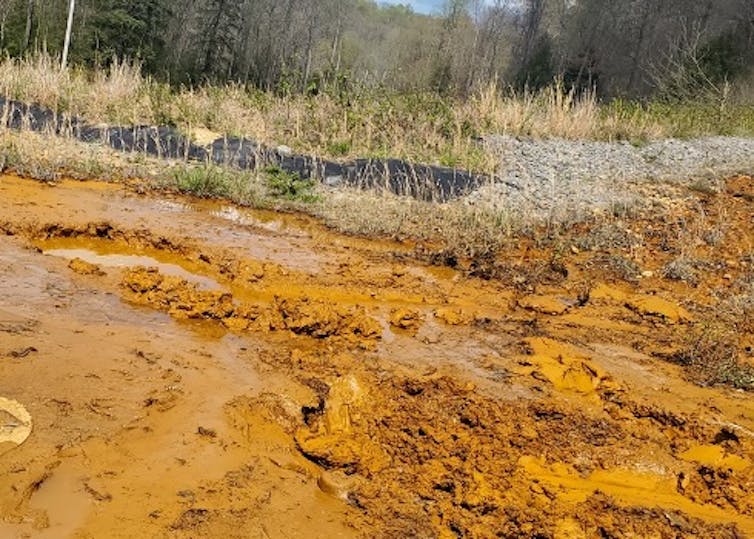
Across Appalachia, rust-colored water seeps from abandoned coal mines, staining rocks orange and coating stream beds with metals. These acidic discharges, known as acid mine drainage, are among the region’s most persistent environmental problems. They disrupt aquatic life, corrode pipes and can contaminate drinking water for decades.

However, hidden in that orange drainage are valuable metals known as rare earth elements that are vital for many technologies the U.S. relies on, including smartphones, wind turbines and military jets. In fact, studies have found that the concentrations of rare earths in acid mine waste can be comparable to the amount in ores mined to extract rare earths.

Scientists estimate that more than 13,700 miles (22,000 kilometers) of U.S. streams, predominantly in Pennsylvania and West Virginia, are contaminated with acid mine discharge.

A closer look at acid mine drainage from abandoned mines in Pennsylvania. Pennsylvania Fish and Boat Commission.

We and our colleagues at West Virginia University have been working on ways to turn the acid waste in those bright orange creeks into a reliable domestic source for rare earths while also cleaning the water.

Experiments show extraction can work. If states can also sort out who owns that mine waste, the environmental cost of mining might help power a clean energy future.

Rare earths face a supply chain risk

Rare earth elements are a group of 17 metals, also classified as critical minerals, that are considered vital to the nation’s economy or security.

Despite their name, rare earth elements are not all that rare. They occur in many places around the planet, but in small quantities mixed with other minerals, which makes them costly and complex to separate and refine.

A mine and buildings with mountains in the background.
MP Materials’ Mountain Pass Rare Earth Mine and Processing Facility, in California near the Nevada border, is one of the few rare earth mines in the U.S.
Tmy350/Wikimedia Commons, CC BY-SA

China controls about 70% of global rare earth production and nearly all refining capacity. This near monopoly gives the Chinese government the power to influence prices, export policies and access to rare earth elements. China has used that power in trade disputes as recently as 2025.

The United States, which currently imports about 80% of the rare earth elements it uses, sees China’s control over these critical minerals as a risk and has made locating domestic sources a national priority.

The U.S. Geological Survey has been mapping locations for potential rare earth mining, shown in pink. But it takes years to explore a locations and then get a mine up and running.
USGS

Although the U.S. Geological Survey has been mapping potential locations for extracting rare earth elements, getting from exploration to production takes years. That’s why unconventional sources, like extracting rare earth elements from acid mine waste, are drawing interest.

Turning a mine waste problem into a solution

Acid mine drainage forms when sulfide minerals, such as pyrite, are exposed to air during mining. This creates sulfuric acid, which then dissolves heavy metals such as copper, lead and mercury from surrounding rock. The metals end up in groundwater and creeks, where iron in the mix gives the water an orange color.

Expensive treatment systems can neutralize the acid, with the dissolved metals settling into an orange sludge in treatment ponds.

For decades, that sludge was treated as hazardous waste and hauled to landfills. But scientists at West Virginia University and the National Energy Technology Laboratory have found that it contains concentrations of rare earth elements comparable to those found in mined ores. These elements are also easier to extract from acid mine waste because the acidic water has already released them from the surrounding rock.

Metals flowing from acid mine waste make a creek look orange.
Acid mine drainage flowing into Decker’s Creek in Morgantown, West Virginia, in 2024.
Helene Nguemgaing

Experiments have shown how the metals can be extracted: Researchers collected sludge, separated out rare earth elements using water-safe chemistry, and then returned the cleaner water to nearby streams.

It is like mining without digging, turning something harmful into a useful resource. If scaled up, this process could lower cleanup costs, create local jobs and strengthen America’s supply of materials needed for renewable energy and high-tech manufacturing.

But there’s a problem: Who owns the recovered minerals?

The ownership question

Traditional mining law covers minerals underground, not those extracted from water naturally running off abandoned mine sites.

Nonprofit watershed groups that treat mine waste to clean up the water often receive public funding meant solely for environmental cleanup. If these groups start selling recovered rare earth elements, they could generate revenue for more stream cleanup projects, but they might also risk violating grant terms or nonprofit rules.

To better understand the policy challenges, we surveyed mine water treatment operators across Pennsylvania and West Virginia. The majority of treatment systems were under landowner agreements in which the operators had no permanent property rights. Most operators said “ownership uncertainty” was one of the biggest barriers to investment in the recovery of rare earth elements, projects that can cost millions of dollars.

Not surprisingly, water treatment operators who owned the land where treatment was taking place were much more likely to be interested in rare earth element extraction.

A map shows many acid mine drainage sites, largely in the column from the southwest to the northeast.
Map of acid mine drainage sites in West Virginia.
Created by Helene Nguemgaing, based on data from West Virginia Department of Environmental Protection, West Virginia Office of GIS Coordination, and U.S. Geological Survey

West Virginia took steps in 2022 to boost rare earth recovery, innovation and cleanup of acid mine drainage. A new law gives ownership of recovered rare earth elements to whoever extracts them. So far, the law has not been applied to large-scale projects.

Across the border, Pennsylvania’s Environmental Good Samaritan Act protects volunteers who treat mine water from liability but says nothing about ownership.

A map shows many acid mine drainage sites, particularly in the western part of the state.
Map of acid mine drainage sites in Pennsylvania.
Created by Helene Nguemgaing, based on data from Pennsylvania Spatial Data Access

This difference matters. Clear rules like West Virginia’s provide greater certainty, while the lack of guidance in Pennsylvania can leave companies and nonprofits hesitant about undertaking expensive recovery projects. Among the treatment operators we surveyed, interest in rare earth element extraction was twice as high in West Virginia than in Pennsylvania.

The economics of waste to value

Recovering rare earth elements from mine water won’t replace conventional mining. The quantities available at drainage sites are far smaller than those produced by large mines, even though the concentration can be just as high, and the technology to extract them from mine waste is still developing.

Still, the use of mine waste offers a promising way to supplement the supply of rare earth elements with a domestic source and help offset environmental costs while cleaning up polluted streams.

Early studies suggest that recovering rare earth elements using technologies being developed today could be profitable, particularly when the projects also recover additional critical materials, such as cobalt and manganese, which are used in industrial processes and batteries. Extraction methods are improving, too, making the process safer, cleaner and cheaper.

Government incentives, research funding and public-private partnerships could speed this progress, much as subsidies support fossil fuel extraction and have helped solar and wind power scale up in providing electricity.

Treating acid mine drainage and extracting its valuable rare earth elements offers a way to transform pollution into prosperity. Creating policies that clarify ownership, investing in research and supporting responsible recovery could ensure that Appalachian communities benefit from this new chapter, one in which cleanup and clean energy advance together.

The Conversation

The authors do not work for, consult, own shares in or receive funding from any company or organization that would benefit from this article, and have disclosed no relevant affiliations beyond their academic appointment.

ref. America’s next big clean energy resource could come from coal mine pollution – if we can agree on who owns it – https://theconversation.com/americas-next-big-clean-energy-resource-could-come-from-coal-mine-pollution-if-we-can-agree-on-who-owns-it-272029

Despite its steep environmental costs, AI might also help save the planet

Source: The Conversation – USA (2) – By Nir Kshetri, Professor of Management, University of North Carolina – Greensboro

The rapid growth of artificial intelligence has sharply increased electricity and water consumption, raising concerns about the technology’s environmental footprint and carbon emissions. But the story is more complicated than that.

I study emerging technologies and how their development and deployment influence economic, institutional and societal outcomes, including environmental sustainability. From my research, I see that even as AI uses a lot of energy, it can also make systems cleaner and smarter.

AI is already helping to save energy and water, cut emissions and make businesses more efficient in agriculture, data centers, the energy industry, building heating and cooling, and aviation.

A tractor moves alongside a field with rows of crops.
Agricultural irrigation accounts for an enormous amount of the world’s water use.
AP Photo/Luca Bruno

Agriculture

Agriculture is responsible for nearly 70% of the world’s freshwater use, and competition for water is growing.

AI is helping farmers use water more efficiently. Argentinian climate tech startup Kilimo, for example, tackles water scarcity with an AI-powered irrigation platform. The software uses large amounts of data, machine learning, and weather and satellite measurements to determine when and how much to water which areas of fields, ensuring that only the plants that actually need water receive it.

Chile’s Ministry of Agriculture has found that in that country’s Biobío region, farms using Kilimo’s precision irrigation systems have reduced water use by up to 30% while avoiding overirrigation. Using less water also reduces the amount of energy needed to pump it from the ground and around a farm.

Kilimo is one example that shows how AI can create economic incentives for sustainability: The amount of water farmers save from precision irrigation is verified, and credits for those savings are sold to local companies that want to offset some of their water use. The farmers then earn a profit – often 20% to 40% above their initial investment.

Data centers

U.S. data centers consumed about 176 terawatt-hours of electricity in 2023, accounting for roughly 4.4% of total U.S. electricity use. This number increased to 183 TWh in 2024. This growing energy footprint has made improving data center efficiency a critical priority for the operators of the data centers themselves, as well as the companies that rely on them – including cloud providers, tech firms and large enterprises running AI workloads – both to reduce costs and meet sustainability and regulatory goals.

AI is helping data centers become more efficient. The number of global internet users grew from 1.9 billion in 2010 to 5.6 billion in 2025. Global internet traffic surged from 20.2 exabytes per month in 2010 to 521.9 exabytes per month in 2025 – a more than 25-fold increase.

Despite the surge in internet traffic and users, data center electricity consumption has grown more moderately, rising from 1% of global electricity use in 2010 to 2% in 2025. Much of this is thanks to efficiency gains, including those enabled by AI.

AI systems analyze operational data in data centers – including workloads, temperature, cooling efficiency and energy use – to spot energy-hungry tasks. It adjusts computing resources to match demand and optimizes cooling. This lets data centers run smoothly without wasting electricity.

At Microsoft, AI is improving energy efficiency by using predictive analytics to schedule computing tasks. This lets servers enter low-power modes during periods of low demand, saving electricity during slower times. Meta uses AI to control cooling and airflow in its data centers. The systems stay safe while using less energy than they might otherwise.

In Frankfurt, Germany, Equinix uses AI to manage cooling and adjust energy use at its data center based on real-time weather. This improved operational efficiency by 9%, The New York Times reported.

An overhead view shows a power substation with wires and equipment.
Artificial intelligence systems use a lot of energy, but they can also analyze energy use to find efficiencies.
Joe Raedle/Getty Images

Energy and fuels

Energy companies are using AI to boost efficiency and cut emissions. They deploy drones with cameras to inspect pipelines. AI systems analyze the images to more quickly detect corrosion, cracks, dents and leaks, which allows problems to be addressed before they escalate, improving overall safety and reliability.

Shell has AI systems that monitor methane emissions from its facilities by analyzing methane concentrations and wind data, such as speed and direction. This helps the system track how methane disperses, enabling it to pinpoint emission sources and optimize energy use. By identifying the largest leaks quickly, the system allows targeted maintenance and operational adjustments to further reduce emissions. Using that technology, the company says it aims to nearly eliminate methane leaks by 2030.

AI could speed up innovation in clean energy by improving solar panels, batteries and carbon-capture systems. In the longer term, it could enable major breakthroughs, including advanced biofuels or even usable nuclear fusion, while helping track and manage carbon-absorbing resources such as forests, wetlands and carbon storage facilities.

Shell uses AI across its operations to cut emissions. Its process optimizer for liquefied natural gas analyzes sensor data to find more efficient equipment settings, boosting energy efficiency and reducing emissions.

People talk in a room with many computer screens and large diagrams on the wall.
Buildings in central Copenhagen are heated in a coordinated system with a complex control room.
Bernd von Jutrczenka/picture alliance via Getty Images

Buildings and district heating

The energy needed to heat, cool and power buildings is responsible for roughly 28% of total global emissions. AI initiatives are starting to reduce building emissions through smart management and predictive optimization.

In downtown Copenhagen, for instance, the local utility company HOFOR deployed thousands of sensors tracking temperatures, humidity and building energy flows. The system uses information about each building to forecast heating needs 24 hours in advance and automatically adjust supply to match demand.

The Copenhagen system was first piloted in schools and multifamily housing, with support from the Nordic Smart City Network and climate-innovation grants. It has since expanded to dozens of sites. Results were clear: Across participating buildings, energy use fell 15% to 25%, peak heating demand dropped by up to 30%, and carbon dioxide emissions decreased by around 10,000 tonnes per year.

AI can also help households and offices save energy. Smart home systems optimize heating, cooling and appliance use. Researchers at the Lawrence Berkeley National Laboratory found that by adopting AI, medium-sized office buildings in the U.S. could reduce energy use by 21% and cut carbon dioxide emissions by 35%.

Aviation

About 2% of all human-caused carbon dioxide emissions in 2023 came from aviation, which emitted about 882 megatons of carbon dioxide.

Contrails, the thin ice clouds formed when aircraft exhaust freezes at cruising altitudes, contribute more than one-third of aviation’s overall warming effect by trapping heat in the atmosphere. AI can optimize flight routes and altitudes in real time to reduce contrail formation by avoiding areas where the air is more humid and therefore more likely to produce contrails.

Airlines have also used AI to improve fuel efficiency. In 2023, Alaska Airlines used 1.2 million gallons less fuel by using AI to analyze weather, wind, turbulence, airspace restrictions and traffic to recommend the most efficient routes, saving around 5% on fuel and emissions for longer flights.

In short, AI affects the environment in both positive and negative ways. Already, it has helped industries cut energy use, lower emissions and use water more efficiently. Expanding these solutions could drive a cleaner, more sustainable planet.

The Conversation

Nir Kshetri does not work for, consult, own shares in or receive funding from any company or organization that would benefit from this article, and has disclosed no relevant affiliations beyond their academic appointment.

ref. Despite its steep environmental costs, AI might also help save the planet – https://theconversation.com/despite-its-steep-environmental-costs-ai-might-also-help-save-the-planet-272474